Monday, April 27, 2026

Canada Just Opened North America's First Battery-Grade Lithium Refinery

  • Mangrove Lithium's Delta, BC facility is the first commercial electrochemical lithium refinery in North America, with capacity to produce 1,000 tonnes of battery-grade lithium a year.

  • China still controls roughly half of the global lithium market, and the Canadian government is backing Mangrove as part of a broader critical minerals push under PM Mark Carney.

  • A planned Eastern Canada expansion would scale output to support up to 500,000 EVs annually by refining lithium and processing spodumene sourced from Canadian mines.

China has been consolidating its control over global lithium supplies for years now. As the lithium-ion battery sector continues to grow at a massive pace, the extreme concentration of lithium supply chains gives China a major economic and geopolitical advantage. It also creates worrying vulnerabilities for the rest of the world that has come to rely on imports of the ‘white gold’ to keep their tech and energy sectors running.

Half of the global lithium market is controlled by China alone. “For over a decade, China has meticulously orchestrated a strategic ascent in the global electric vehicle (EV) batteries market, culminating in a dominance that now presents a formidable challenge to Western manufacturers,” the EE Times reported last year. This dominance functions  as “almost a moat” around battery production in China, protecting the sector from any external competition.

Lithium-ion batteries have become omnipresent, powering everything from your smartwatch and your phone to electric vehicles and grid-scale energy storage. As oil and gas prices skyrocket against the backdrop of the Strait of Hormuz closure, the EV and energy sectors are poised for takeoff – making competition for lithium, and the resultant benefits for China, even more pronounced. But even before the current energy crisis breathed new life into the global clean energy transition, 2026 was already shaping up to be a ‘hot year for lithium.’ 

Incentive has never been higher for other nations around the world to step up their own lithium production and processing efforts. And this year, Canada may have made a major step toward breaking up China’s near-monopoly on lithium-ion battery production, thereby helping to relieve a “major choke point” in the EV supply chain. Mangrove Lithium, a lithium refining platform in Delta, British Columbia, just opened North America’s first-ever commercial-scale electrochemical lithium refining facility. 

The venture capital-backed company says that it will be able to produce 1,000 tonnes of refined battery-grade lithium per year, or about enough to support 25,000 electric vehicles. The venture reportedly uses a cutting-edge electrochemical technology that allows for more economical, flexible, and sustainable lithium refining as compared to traditional methods. 

“This is a landmark moment not just for Mangrove, but for Canada,” Dr. Saad Dara, CEO and Founder of Mangrove Lithium, was recently quoted by Interesting Engineering. “By commissioning the first commercial electrochemical lithium refinery in North America, we are proving that lithium can be refined domestically, sustainably, and competitively.”

The Delta plant is just the beginning for Mangrove, which has grand plans of creating an entire homeshored mine-to-cathode lithium supply chain. The company plans to develop a larger facility in Eastern Canada capable of producing enough material to support 500,000 EVs annually through the refining of lithium and the processing of spodumene, a raw source of lithium. These primary materials would also be sourced from Canadian mines.

Mangrove’s projects have the full support of the Canadian government, which sees these developments as critical to the country’s own energy security and independence goals. Canada’s national and energy security priorities have become heightened under the shadow of the Trump administration, and were a central platform for current Prime Minister Mark Carney. 

“Canada is leveraging our critical mineral resources — including our lithium — to unlock supply chain security, job creation and clean energy innovation,” said Tim Hodgson, Canadian Minister of Energy and Natural Resources. “Mangrove Lithium’s new headquarters will house North America’s first commercial electrochemical lithium refining facility — exactly the type of cutting-edge, sovereign Canadian project we need. By supporting projects like these, our new government is advancing Canada’s low-carbon potential, creating new careers, strengthening our security and creating reliable Canadian jobs in an uncertain time.”

While domestic lithium production and extraction will be hugely beneficial for energy independence and resilience, it does come with some significant downsides. Lithium extraction tends to be extremely environmentally costly, posing major risks for local communities and water resources. Of course, homeshoring these processes instead of outsourcing them to poorer countries is not necessarily a bad thing – in fact, it’s ethically a far sounder approach. But questions remain about which communities will host these extraction sites, and under what protections.

By Haley Zaremba for Oilprice.com


Scientists at Rice pioneer faster, greener method to recycle lithium-ion batteries


Rice University

Simon M. King 

image: 

Simon M. King, a sophomore studying chemical and biomolecular engineering and first author of the study (Photo and video credit: Jorge Vidal/Rice University).

view more 

Credit: Jorge Vidal/Rice University


As global demand for lithium-ion batteries continues to surge, a team of Rice University researchers has developed a faster, more energy-efficient way to recover critical minerals from spent batteries, potentially easing supply chain pressures and reducing environmental harm.

In a new study published in Small, researchers from Rice’s Department of Materials Science and Nanoengineering introduce a class of water-based solutions that can extract valuable metals from battery waste in minutes rather than hours. The work centers on aqueous solutions of “amino chlorides,” which mimic the performance of commonly studied green solvents like deep eutectics, while avoiding their key limitations.

“Traditional recycling methods often rely on harsh acids or slow, energy-intensive processes,” said the study’s first author, Simon M. King, a sophomore studying chemical and biomolecular engineering who completed this work as a summer research fellow at the Rice Advanced Materials Institute. “What we’ve shown is that you can achieve rapid, high-efficiency metal recovery using a much simpler, water-based system.”

King worked closely with corresponding authors Pulickel Ajayan, the Benjamin M. and Mary Greenwood Anderson Professor of Engineering, and Sohini Bhattacharyya, a research scientist in Ajayan’s lab.

Lithium-ion batteries power everything from smartphones to electric vehicles, but recycling them remains a major challenge. Only a small fraction of battery materials, including lithium, cobalt, nickel and manganese, are typically recovered during the recycling process, despite growing demand and limited global reserves.

Hydrometallurgical recycling, which dissolves metals into solution followed by their chemical precipitation, is considered one of the most scalable approaches. However, commonly used solvents can be toxic and proposed green alternatives (DESs) can be inefficient. To address this, the Rice team explored aqueous amino chloride salts as alternative “lixiviants,” or leaching agents. Among the candidates tested, a solution based on hydroxylammonium chloride (HACl) delivered standout performance.

“We were surprised by just how fast the reaction occurs, especially without the involvement of high temperatures,” King said. “Within the first minute, we’re already seeing the majority of the metal extraction take place.”

The HACl-based solution achieved roughly 65% extraction of key battery metals in just one minute at room temperature with efficiencies climbing above 75% for several metals under slightly longer processing times. And unlike many existing approaches, the process does not require high temperatures or long reaction times — two major drivers of cost and environmental impact.

“A big advantage of this system is that it works under relatively mild conditions,” Ajayan said. “That opens the door to more sustainable and scalable recycling technologies.”

The team found that replacing traditional organic solvents with water significantly reduced viscosity, allowing faster movement of molecules and improving reaction speed. This shift also simplifies waste handling and lowers environmental risk.

Through a combination of experiments and modeling, the researchers identified why the HACl solution performs so well: While acidity and chloride ions help dissolve metals, the key factor appears to be a built-in redox-active nitrogen center in HACl that actively participates in the reaction.

“While the rapid metal dissolution is very interesting, what is most exciting is that this highlights the generic chemical properties that are the major drivers for efficient leaching,” Bhattacharyya said. “That redox capability gives it a major advantage over other similar systems we tested.”

The study also shows that factors like solvent polarity or pH can be outweighed by the presence of reactive chemical groups and efficient mass transport to facilitate rapid leaching.

After extraction, the team demonstrated that the recovered metals could be reprocessed into new battery materials, completing the recycling loop. The findings point to a broader design strategy for next-generation recycling systems: combining low-toxicity solvents with targeted chemical functionality to maximize efficiency.

Lithium market to enter deficit until 2035, says Canaccord
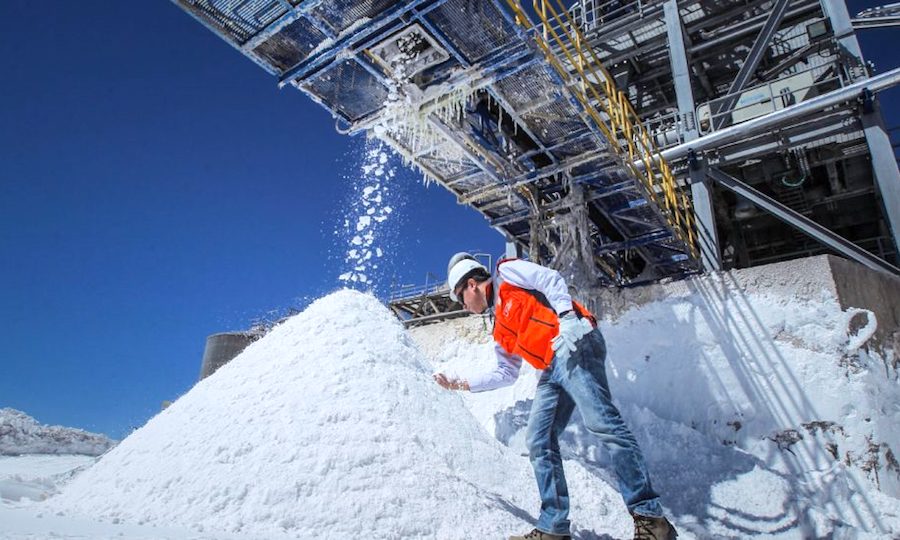

Image courtesy of SQM.

The global lithium market is set to enter a near-decade-long deficit as a lack of mine investment weighs on supply of the EV battery metal, according to Canaccord Genuity.

In a note published Wednesday, Canaccord analysts said they expect to see a “material market deficit” starting in 2026, given that tightening supply has more than offset the weakness in near-term demand.

This deficit, they added, could last until 2035. Even if rising lithium prices through 2027-28 could ignite a supply response, that would still fall short of their demand growth forecasts, the analysts said.

In recent months, lithium prices have shot up on persistent worries over supply, led by the suspension of a key mine in China, one of the world’s leading suppliers. Earlier this year, Zimbabwe, another top producer, introduced a ban on raw lithium exports, exacerbating the market conditions.

Canaccord’s outlook assumes no further disruptions in China and elsewhere, which could well extend the deficit beyond the projected period.

According to Canaccord analysts, the lithium market would require “significant” investment in new supply in the long term, even if there are no more supply risks and drastic changes to demand forecasts.

The World’s Data Lifelines Are Increasingly Exposed to Sabotage

  • Undersea cables carry roughly 99% of global internet and AI traffic and are essential for offshore renewable energy transmission.

  • The network is expanding rapidly, with 119 new cables expected in 2026, but it remains vulnerable to damage from human activity, natural events, and sabotage.

  • Governments are increasing investment in monitoring and redundancy, but rising geopolitical tensions are heightening concerns about targeted disruptions.

Undersea cables are vital for delivering renewable power from offshore projects and providing cross-country telecommunications connectivity. The rapid growth of undersea cable networks is helping to boost regional connectivity worldwide. However, more must be done to reduce vulnerabilities in these networks and combat the threat of sabotage.

There are various types of cables running under the sea, each with its own purpose. The first undersea cables were put in place in the 19th century, with over 400 cables now active worldwide. Some submarine cables provide the primary means of cross-region connectivity, while others transport renewable energy from offshore projects to onshore transmission networks.

Currently, undersea cables carry around 99 percent of global internet and artificial intelligence traffic. As the network continues to grow at a rapid pace, largely in response to the growing demand for AI, 119 new undersea cables are expected to be developed worldwide in 2026, up from 66 in 2020.

Conventional submarine power cables measure between 7 cm and 21 cm in diameter with a cross-section of a three-core power cable. Each cable is armoured with a steel wire and protected by an oversheath layer. Meanwhile, telecommunications cables are thinner, at between 4 cm and 5 cm in diameter, with optical fibres covered by layers of polyethene, copper and, often, protective steel wire.

These cables are placed on the seabed in the deep-sea, around 2 km below the surface, where they are not at risk of disturbance from fishing activities, or are buried in shallower waters. The average cost of installing a submarine power cable is high, at around $1.2-3.5 million per kilometre and for internet cables between $29,000 to $53,000 per km.

While these subsea cables are vital for providing energy and connectivity, several risks are associated with their use. Each year, there are between 150 and 200 unintentional damages to submarine cables, typically caused by human activity, such as fishing. They can also be affected by geological events, such as volcanic eruptions and earthquakes. However, the more concerning risk is the threat of malicious acts by foreign actors.

In recent years, there have been several reports of sabotage in the media, although it is often hard to assess whether damage is intentional or accidental. For example, state actors have sometimes been accused of weaponising fishing or oil vessels to cause damage to subsea infrastructure. Subsea cables can be fixed using cable repair vessels or submersibles, but these operations are expensive and can delay power or internet delivery.

In the European Union, regional powers introduced the EU Action Plan on Cable Security in 2025 to boost subsea cable resilience, mitigate risk and improve detection, response, recovery, and deterrence. Meanwhile, Taiwan, Japan, South Korea, and the United States have all updated their laws to address vulnerabilities in subsea cable systems.

However, while the “submarine cable industry goes to great lengths to protect cables, provide resilient networks and minimise disruptions… bad actors too can cause disruptions if they really wanted to,” the chairman of the International Cable Protection Committee, Dean Veverka, explained.

Countries and private companies are investing more each year in technology that helps to monitor cables and prevent attacks. One such technology is distributed acoustic sensing, which transforms optical fibres into long-range microphones to detect and warn of nearby ships or other disruptions. Sonar arrays are also being used to monitor the cables’ surroundings and warn of nearby vessels.

However, many governments believe that more must be done to reduce the risk of sabotage to undersea cables, such as establishing deterrent measures. This is particularly important as constant technological improvements are likely to make sabotage easier. To mitigate the impact of potential sabotage, governments are also increasing the number of cable connections to make it easier to switch from one cable to another in an emergency.

The conversation around undersea cable security threats is more pertinent than ever as the escalating U.S.-Israeli war against Iran has raised broader security concerns. There are major concerns about the fibre-optic cables running through the Strait of Hormuz and the Red Sea. Although Iran has not officially threatened to cut the communication cables, it has been flagged as a possibility that could have a devastating effect.

If the telecommunications cables were cut, it would have a major impact on India, as around 60 percent of the country’s internet traffic is connected to a link that passes through the Gulf region. This could significantly disrupt India’s cloud services, digital payments, and AI devices and have a major knock-on economic effect.

Despite the significant investment needed for cable maintenance and repair, governments and private companies must spend more on these activities to mitigate risks and strengthen power and telecommunications networks. In addition, greater regional and international cooperation to develop international subsea cable policies could help reduce the threat to these networks.

By Felicity Bradstock for Oilprice.com

Structural Gas Demand Destruction Threatens Global LNG Market

  • The Middle East war is disrupting gas supply and driving demand destruction, with LNG imports—especially in Asia—falling sharply due to high prices and supply shortages.

  • Short-term shocks risk becoming structural, as prolonged conflict could permanently alter demand patterns and delay or erase the expected global gas oversupply.

  • Alternative suppliers can’t fully fill the gap, with U.S. LNG stepping in while African and other producers remain underutilized, prolonging market tightness.

The impact of the war in the Middle East could lead to structural demand destruction on the world’s natural gas markets, the head of the Gas Exporting Countries’ Forum warned in the latest sign of the far-reaching impacts of the hostilities between the United States and Israel, and Iran.

The war has already disrupted international gas flows because of the Strait of Hormuz closure and the strikes on energy infrastructure in the Persian Gulf, which were Iran’s retaliation for U.S. and Israeli strikes that began at the end of February. Resumption of gas exports would take months, according to the GECF’s Philip Mshelbila—if the war ends soon. If it drags on, however, the effects of the supply disruption could become permanent.

“If the conflict ended today, the world would recover in six months to a year. But if it lasts six months, those knee-jerk changes we are seeing could become structural,” Mshelbila said, speaking at an industry event in Paris, as quoted by Reuters.

The executive also recalled that most predictions for the gas market saw it flipping into oversupply this year. The glut was, according to analysts, going to be the result of new capacity coming online in the United States while demand grows more slowly. “Clearly this conflict has done something ‌to that, and it's not yet clear whether it's just a delay, or whether in fact that glut will ever come,” the secretary-general of the Gas Exporting Countries’ Forum said.

Even if a glut comes, it will not be coming anytime soon. The latest data for Asia suggests that imports of liquefied natural gas are on course to record their lowest monthly level in close to six years, Reuters’ Clyde Russell reported this week. The numbers come from Kpler and are evidence of demand destruction resulting from the war. In some cases, this is voluntary demand cuts, such as in the case of China, for instance. In others, such as Pakistan, the destruction is organic, prompted by the higher prices that LNG is fetching amid the supply cuts.

Asia is set to import some 19.03 million tons of liquefied gas this month, which would be down from 20.69 million tons for March and a seasonal high of 26.34 million tons for December 2025, the Kpler data showed. For China, however, the drop is much more marked, with the April total seen at 3.36 million tons. That would be down from 7.66 million tons for December 2025 and the lowest since April 2018, Reuters’ Russell noted.

With Qatari LNG mostly gone, importers are switching to U.S. gas and, to a lesser extent, Russian gas. Volumes from other producers are not changing, even though they have the resources, GECF’s Philip Mshelbila noted.

“Sadly while some African countries have excess capacity in both LNG and pipeline gas, the majority of them if not all are not producing at full capacity,” he said, adding that “If you look at the export pipelines to Europe, from Algeria or from Libya, not one of them is full.” Because of this, it is U.S. liquefied that is replacing most of the lost volumes from the Middle East.

The executive pointed out that this is because African LNG producers are operating below capacity, without elaborating on the reasons for that. However, Nigeria has been exporting more LNG to Asia since the war in the Middle East began, and there are plans in place to boost the capacity of its LNG plant from 22 million tons to 30 million tons.

Algerian gas deliveries to Europe are also on the rise—even before the war began. Last year, Algeria exported a total 39-40 billion cu m of natural gas via pipeline and as LNG. That represented 13 to 14% of Europe’s total gas imports, Euronews reported recently, comparing it to 12 billion cu m in Qatari gas imports, which translates into a share of between 7% and 9% of total gas imports.

The problem comes from the fact that Algeria could not boost its exports to Europe fast enough to plug the hole left by the force majeure at QatarEnergy’s Ras Laffan complex. Yet the North African country is making steps in that direction: earlier this week, Algiers launched an oil and gas tender for seven blocks, with bids due by November. This is part of the government’s plan to increase natural gas production to 200 billion cu m annually by 2030. The investment required to do this is estimated at between $50 and $60 billion.

Yet these are long-term plans, while the supply pain is quite immediate. It is this immediacy of the problem that could transform into chronic demand weakness. “Normally in a situation of crisis this is an opportunity: Fill it up! Seize the market! Unfortunately, we are missing out, because we don't have the upstream molecules to fill the infrastructure,” GECF’s Mshelbila said. “The reserves are there, but they are still in the ground.”

By Irina Slav for Oilprice.com


Europe Emerges As Key Buyer Of U.S. Strategic Petroleum Reserve Oil

  • IEA-led SPR release is underway, with the U.S. already distributing ~80 million barrels—much of it going to major traders and European buyers amid tight supply.

  • European refiners are benefiting from discounted U.S. crude, as SPR barrels (often sour grades) are offered below local prices and shipped to hubs like Rotterdam

  • Impact is limited and temporary, as the release only offsets supply losses briefly while the Strait of Hormuz disruption continues to constrain global flows.

Last month, the International Energy Agency (IEA) announced the coordinated release of over 400 million barrels of oil from global strategic reserves to combat high energy prices amid the Middle East turmoil. The U.S. was to contribute approximately 172 million barrels of this total, with the release taking place over 120 days starting late March 2026 to help lower gasoline costs. And now reports have emerged that theTrump administration has authorized the release of millions of barrels of oil from the Strategic Petroleum Reserve (SPR), with Europe emerging as a key buyer. According to Bloomberg, the U.S. has so far released 79.7 million barrels to 12 companies, with nearly 50 million barrels going to UK’s Vortexa Ltd. Global trading houses and Big Oil companies have been the main recipients of the oil, with Trafigura receiving 21.4 million barrels; Shell Plc (NYSE: SHEL) has received 18.1 million while Marathon Oil (NYSE:MRO) and BP Plc (NYSE:BP) have purchased 9.7 million barrels and 6.0 million barrels, respectively.

According to shipping data and maritime intelligence firm Kpler, supertanker Eagle Versailles is currently en route to Rotterdam, Netherlands, carrying a cargo of approximately 2.1 million barrels of Bryan Mound medium sour crude oil. The oil is sourced from the Bryan Mound Strategic Petroleum Reserve (SPR) site in the US. The Texas SPR site holds approximately 250 million barrels of crude oil, making it the largest repository in the U.S. reserve system. The oil is also flowing to Asia and Latin America, with Peru’s state oil company purchasing a cargo of Bayou Choctaw crude in March to be delivered in May. However, the recent fall in oil prices might dampen Asian demand.

U.S. sour crude from the SPR is being offered to European buyers at discounts of about $5 per barrel relative to local grades, providing some relief as Brent crude remains elevated near $105 per barrel. The oil is being sold on an exchange basis, to be returned at a later date. A Strategic Petroleum Reserve oil exchange is a legal mechanism utilized by the U.S. Department of Energy (DOE) to address supply shortages, such as during severe weather events or pipeline disruptions. Under this mechanism, the government loans oil from the emergency stockpile to refiners or traders, who are then required to return the same quantity of crude oil plus a premium, usually additional barrels, at a specified future date.

The return of loaned oil is expected in tranches. For some 2026 loans, the DOE requires high sulfur (sour) crude to be returned by 2028 with up to 22% interest, often in sweeter, more valuable crude grades. Following the outbreak of the Ukraine conflict in 2022, the Biden administration loaned out millions of barrels, with returns delayed until 2026 to avoid market tightening. Europe was the destination of ~21 million barrels of crude from America’s SPR release four years ago, good for 10% of the total.

The U.S. SPR has a total authorized storage capacity of approximately 727 million barrels of crude oil. These reserves are stored in 60 underground salt caverns located at four sites along the Texas and Louisiana Gulf Coast, designed for long-term emergency supply. The SPR held ~415 million barrels before the release began, good for roughly 60% of total capacity.

That said, SPR releases often fail to significantly impact oil prices because they are short-term, temporary solutions deployed to address structural supply issues. SPR releases constitute only a fraction of global demand: Standard Chartered estimates that the war has cut off ~8 million barrels of crude from global markets, meaning the IEA’s combined strategic release would be enough to bridge the deficit for only 50 days.

The Strait of Hormuz remains effectively closed to most commercial shipping, with Iranian officials stating it will remain closed because of blatant violations of the current ceasefire by the U.S. and Israel. Iran has granted priority passage to vessels from non-hostile nations, including China, Russia, India, Iraq, and Pakistan provided they pay tolls and follow Islamic Revolutionary Guard Corps (IRGC) protocols. Iranian authorities are reportedly charging tolls of over $1 million per ship and requiring all vessels to secure permits from the IRGC. Shipping firms remain hesitant due to the presence of sea mines, drone attacks, and the threat of seizure, with only about 5% of pre-conflict shipping levels currently transiting the waterway. Meanwhile, insurance premiums have surged up to 10x since the war began, rendering the route untenable.

By Alex Kimani for Oilprice.com

Laps of icy roads in China show sodium batteries making an EV breakthrough


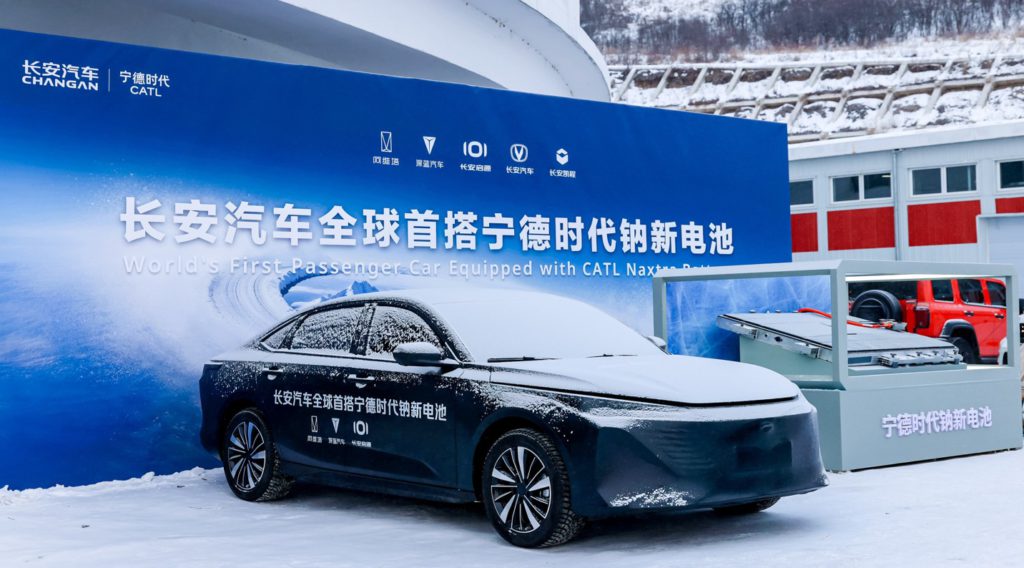
CATL, in partnership with CHANGAN Automobile, unveiled the world’s first mass-production passenger vehicle equipped with sodium-ion batteries earlier this year. Credit: CATL

With a thick outdoor jacket to protect against -30C (-22F) temperatures and bitter winds, Calvin Quek joined car and technology enthusiasts huddled by a test track on the outskirts of a picturesque ski region in Inner Mongolia.

They watched Chongqing Changan Automobile Co. electric SUVs and a sleek battery-powered coupe effortlessly navigate icy roads and steep snow-dusted slopes at the facility in Yakeshi, northeastern China. Yet for the crowd at the February demonstration, the most impressive factor was out of view.

Batteries powering the vehicles used sodium as their key raw material component, rather than lithium — the metal that’s become synonymous with electrified transportation and the storage of renewable energy. The tests were a showcase for one of the world’s first mass-production passenger EVs fitted with the alternative technology — an innovation that’s long promised to deliver safer and low-cost rechargeable cells.

“I think this signaled a breakthrough moment for sodium-ion battery technology in EVs,” said Quek, executive director for nature finance at the Oxford Sustainable Finance Group, and a veteran observer of the energy transition.

By the middle of this year, Changan — a state-owned Chinese automaker and a local partner of Ford Motor Co. — will begin sales of models fitted with sodium-ion technology from Contemporary Amperex Technology Co. Ltd., the world’s dominant EV battery manufacturer.

Innovations by CATL have increased the energy density of sodium batteries by 50%, overcome engineering challenges, and brought the products to a “milestone stage,” chief technology officer Gao Huan told reporters Tuesday at an event in Beijing. “The era of sodium and lithium shining together has arrived” and the supplier will begin mass-production in the fourth quarter of this year, he said.

2026 “could prove to be a pivotal year” for sodium batteries, and see the category begin to displace at least some demand for more familiar lithium-ion technology, according to the International Energy Agency.

“There has been increasing interest in adopting sodium-ion cells into EVs and stationary storage applications” over the past three years, said James Frith, principal at Volta Energy Technologies, a US-based venture capital fund. “We’re at the point now where we’re seeing sodium-ion systems being commercialized in these applications.”

Sodium-based batteries have become more appealing with advances in energy density, which mean they’re now capable of powering vehicles and no longer restricted to less demanding categories like energy storage. The equipment also has a driving range between recharging that’s almost comparable with some conventional equipment. For a typical SUV, a sodium-ion battery would likely offer about 350 kilometers (217 miles) of driving, compared to between 400 and 600 kilometers for lithium-based options, the IEA calculates.

Equally important is the technology’s role as a potential shield from volatility in lithium prices. While still far below a peak touched in late 2022, prices of lithium carbonate in China surged almost 190% from a recent low last June to April 20, adding to pressure on battery costs from more expensive raw materials.

While not yet necessarily cheaper than the lowest-cost lithium options, sodium can help bolster supply chain resilience as the material is globally abundant. Batteries using sodium-based chemistries can also require a different mix of additional raw materials to some lithium-based technologies. ​​​​​​

CATL, which has added more than 300 staff and invested almost 10 billion yuan ($1.5 billion) in sodium-ion research and development in the past decade, has described the segment as “alternative risk management,” offering a hedge against wild swings in lithium.

Yet even with recent advances, the sodium sector faces challenges. The technology isn’t likely to compete against lithium on energy density — and therefore on battery performance — and may only achieve cost parity with traditional options around 2030, according to CRU Group, a consultancy. Continued improvement in lithium iron phosphate, or LFP, batteries “poses a moving target for sodium-ion,” said Sam Adham, head of battery materials at CRU.

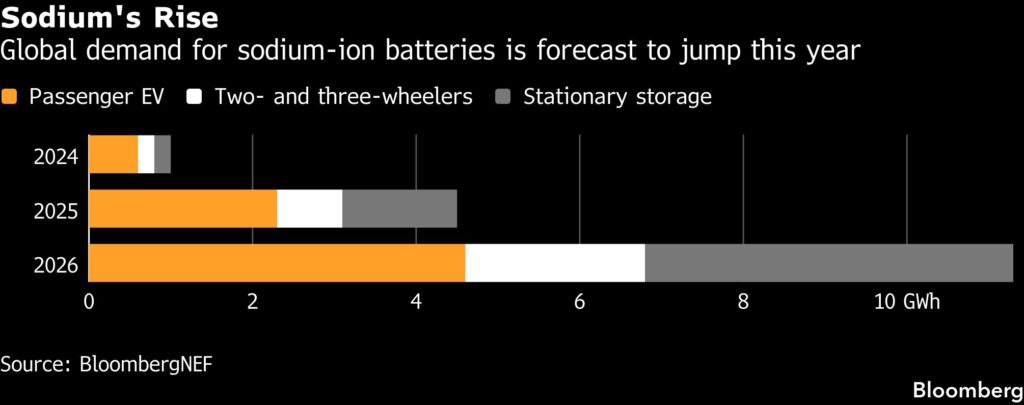
Demand for sodium-ion is expected to increase 2.5 times this year to about 11 gigawatt-hours, BloombergNEF said in a January report. Even so, that forecast annual deployment is a tiny fraction of the overall battery market, and sodium-ion may only account for about 2% of total cell demand by 2030, according to Benchmark Mineral Intelligence, an industry researcher.


In April last year, Chicago-based sodium startup Bedrock Materials returned capital to investors and halted development. “Even in the best case, it didn’t yield a product meaningfully better than today’s lithium iron phosphate,” co-founder Spencer Gore said in a LinkedIn post explaining the decision. In September, US sodium battery manufacturer Natron Energy Inc., which had planned a $1.4 billion production facility, also ceased operations.

Still, demand for sodium is projected to rise swiftly and to capture a slice of an increasingly diverse market as renewable energy storage grows and as sales of electric two- or three-wheelers and long-distance trucks add to requirements for passenger cars.

Sodium products can offer better performance than lithium alternatives in extreme cold climates, opening up opportunities to expand EV sales in frigid locations like northern Europe, Canada and parts of Japan. The products are also likely to win adoption in budget models that require a shorter range.

CATL’s biggest competitor, BYD Co., is also advancing the technology, while South Korea-based LG Energy Solution Ltd. in January said it aims to achieve commercial production of sodium batteries, and has announced a pilot manufacturing line in Nanjing, China.

“It absolutely is an emerging technology now that can’t be discounted,” said Evan Hartley, senior analyst at Benchmark Mineral.

(By Annie Lee)

Komatsu becomes first OEM to commission 1,000 ultra-class autonomous haul trucks

Image: Komatsu

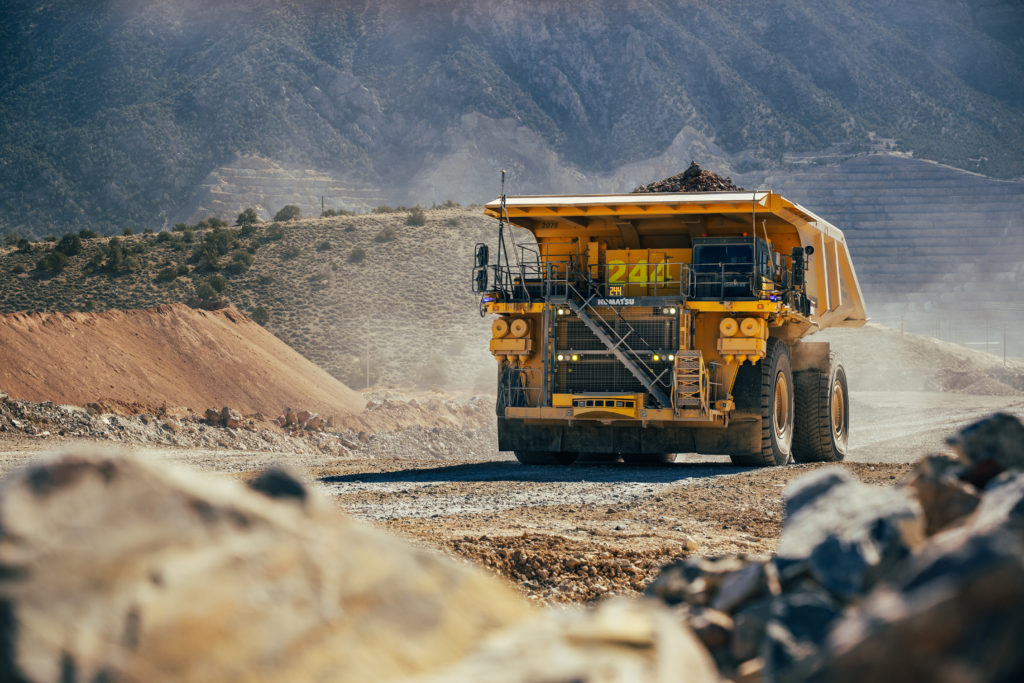
Komatsu has reached a historic milestone in autonomous mining, commissioning its 1,000th autonomous ultra-class haul truck equipped with the company’s industry-leading FrontRunner autonomous haulage system.

The milestone reinforces Komatsu’s position as the pioneer and global leader in autonomous haulage, having been first to market with a commercial autonomous mining solution in 2008 and now the first OEM to commission 1,000 autonomous ultra-class trucks worldwide.

The 1,000th commissioned autonomous haul truck is a Komatsu 930E-5AT, an ultra-class electric drive truck (EDT) with a 290-metric-ton payload, deployed at Barrick’s Nevada Gold Mines operation in the United States, marking a significant milestone that extends Komatsu’s autonomous haulage into gold mining with a key strategic partner.

The 930E-5AT is part of Komatsu’s electric drive haul truck lineup that underpins FrontRunner deployments around the world. The 930E ultra-class EDT stands as the most widely deployed model, representing more than 500 autonomous trucks across customer sites today.

Beyond haulage, Komatsu continues to expand automation across mine-site operations, including autonomous water trucks to help further improve safety, reduce manual equipment interactions and support road maintenance. Additional autonomous and remotely operated equipment within Komatsu’s unified control and fleet management framework extends automation beyond individual machines to deliver mine-wide performance gains at the system level.

Since its commercial introduction, Komatsu customers using FrontRunner have collectively moved over 11.5 billion metric tons of material, demonstrating the scale, reliability and productivity of autonomous haulage across some of the world’s most demanding mining environments. Deployed at mine sites across North America, South America, Australia and Europe, FrontRunner’s global footprint and support infrastructure spans diverse commodities and operating conditions.

Beyond operational performance, FrontRunner generated approximately $2.4 billion in social impact globally in 2024 based on impact accounting methodologies developed jointly by Capitals Coalition and Value Balancing Alliance, analyzed by ABeam Consulting Ltd., and reported in the Komatsu Report 2025.

This milestone builds on Komatsu’s recent achievement of autonomously operating a power agnostic electric drive truck while connected to a dynamic trolley line, an industry first that demonstrated the integration of autonomous haulage with advanced electrification technologies. Together, these accomplishments underscore Komatsu’s ability to deliver solutions that enhance productivity while supporting customers’ decarbonization and sustainability objectives.

“Commissioning our 1,000th autonomous haul truck is a defining moment for Komatsu and for the mining industry. It reflects nearly two decades of innovation, collaboration with our customers and a relentless focus on creating real operational value,” said Peter Salditt, president of Komatsu’s mining business division and CEO of Komatsu Mining Technologies.

“We are incredibly proud of this milestone, and even more excited about what lies ahead as we continue to advance autonomous, electrified and software-defined solutions that help our customers operate more safely, productively and sustainably.”