Wednesday, May 06, 2026

The sea that is vanishing in real time

Fatemeh Roshan
DW
05/05/2026

The world's largest inland body of water is retreating at an alarming speed. From stranded buildings to vanishing habitats, scientists warn the Caspian Sea may be approaching a tipping point.

The current drop in water levels in the Caspian Sea began in the 1990s, and some models predict potential drops of up to 21 meters before 2100


As a child, Iranian environmental journalist Maryam spent much of her time by the Caspian Sea. From her coastal home in the northern city of Rudsar, she witnessed how the water levels would fluctuate, so much so that in the 1990s, flooding along parts of Iran's northern shoreline left some of her relatives homeless.

All that shape-shifting felt normal, yet on a recent trip back to the area after years away, the body of water was suddenly very unfamiliar.

"I kept walking further from the shore, but the water only reached my knees," said Maryam, whose real name DW has chosen not to reveal for security reasons. "For someone who grew up by this sea, it was frightening."

What she experienced on that visit was not an anomaly. The Caspian Sea, the world's largest inland body of water, bordered by Iran, Russia, Azerbaijan, Turkmenistan and Kazakhstan is shrinking fast.
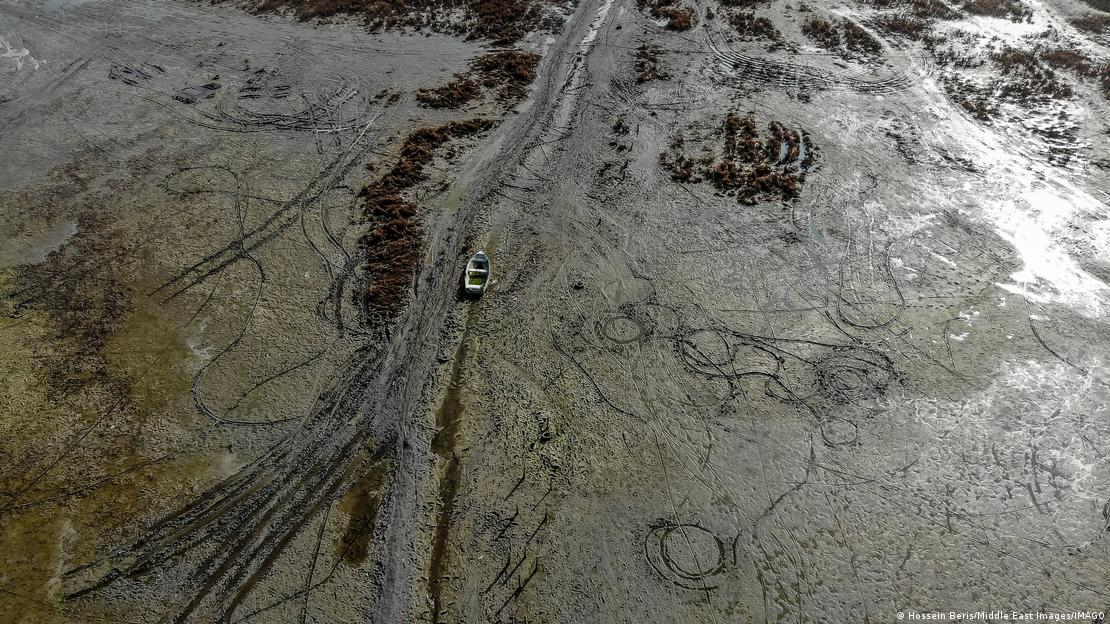

For Iranians like Maryam, the Caspian coastline has become unfamiliar
Image: Hossein Beris/Middle East Images/IMAGO

Although the brackish Caspian has fluctuated in the past, scientists say the current drop in water levels, which began in the 1990s, is unlikely to reverse. Predictions point to an even greater retreat this century, with some models indicating potential drops of up to 21 meters (about 70 feet).

"To put that into perspective, an 18-meter drop, for example, would be greater than the height of a six-story building," said Simon Goodman, an evolutionary biologist at the UK's University of Leeds. "That level of decline would have substantial impacts on ecosystems, as well as on human health, well-being and economic activity."

Why is the Caspian Sea declining?

Several factors are driving the retreat. Several rivers flow into the Caspian, but about 80% of its freshwater comes from the north via the Volga in Russia. For decades, the volume of incoming water has been influenced by dams, irrigation and other forms of water management — particularly in the Volga River basin — but Goodman said the situation ahead is more complex.

"Projections for the rest of this century suggest that ongoing declines will have a much stronger climate change component," he said.

Rising global temperatures connected to planet-heating emissions from the burning of oil, gas and coal are increasing evaporation from the sea's surface. Coupled with lower levels of precipitation and runoff into the Volga basin, more water is leaving the Caspian than entering it.

Declining fish stocks, blocked ports

And that, said Goodman, is a problem. "The impacts will apply across the entire Caspian Sea," he said, adding that some are already visible. That's especially true in the northern region of the massive lake, bordered by Russia and Kazakhstan.

"Many ports around the Caspian require significant dredging to maintain shipping access," he said, adding that such issues "are likely to intensify even within the next five to 10 years."

Fishing communities are also under pressure. In the shallow northern basin, continued decline could make fishing increasingly unviable, Goodman explained. And if levels drop as far as 10 meters, large parts of the northern basin could dry up entirely, eliminating nearly a third of the sea's surface area.

In some places, that process is already underway. A site in the northeastern Caspian, once used by tens of thousands of seals for spring molting, is now dry land. "We are already losing ecologically important habitats due to sea-level decline," Goodman said.

The effects are visible along the Iranian coastline to the south, too. With wetlands under pressure, fish stocks have declined and the markets Maryam remembers as once being big and vibrant are now a shadow of their former selves. And she has seen other undeniable changes.

"The coastline we saw as children is very different from what we see today," she said, adding that a cafe that once stood at the water's edge now sits several meters inland.
Could the Caspian face an Aral-style crisis?

Goodman said there are already early signs of the Caspian going the way of the Aral Sea, some 1,000 kilometers (600 miles) to the east.

Once one of the world's largest inland water bodies — located between Kazakhstan and Uzbekistan — it has largely dried up due to water diversion. Besides destroying livelihoods and ecosystems, the vanishing lake has had serious consequences for human health, including from toxic dust storms.
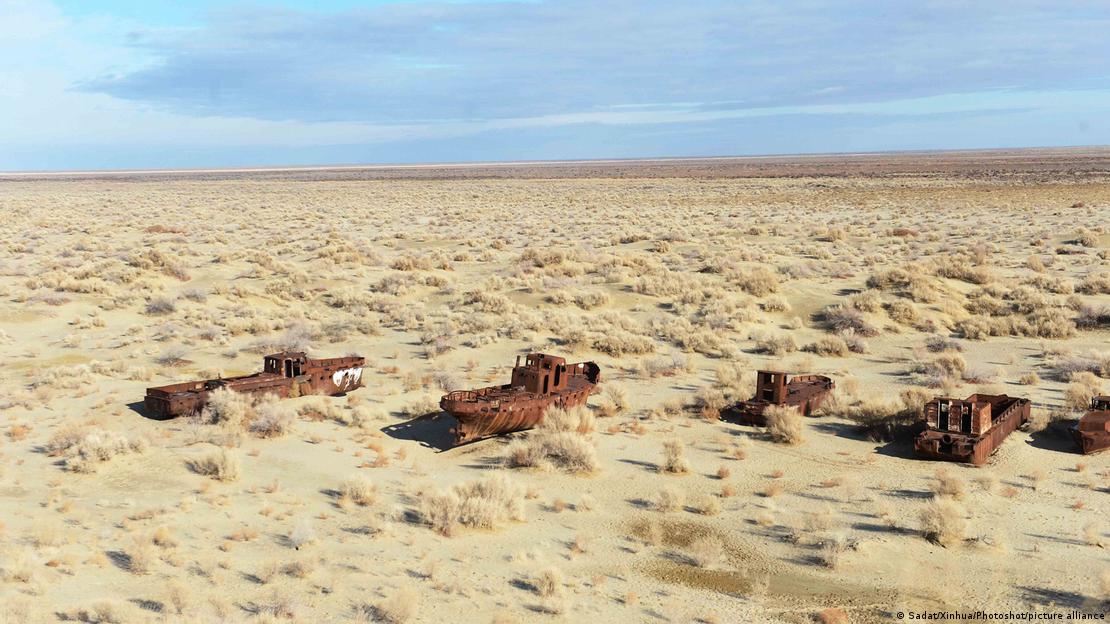

The Aral Sea, once one of the world's largest inland water bodies, has largely dried up
Image: Sadat/Xinhua/Photoshot/picture alliance

"We are absolutely already at the beginning of that process," Goodman said.

If the northern Caspian were to dry out, the consequences would extend beyond the loss of water. Large stretches of exposed seabed could alter the regional climate and release significant amounts of dust into the air, some of which could contain pollutants.
Policy action not keeping up with environmental change

As the Caspian spans five countries, meaningful management will require coordination.

Goodman said that although "governments seem to be at the beginning of developing collaborative frameworks," it is still at an early stage.

He said long-term adaptation will require sustained investment in scientific research and strategies that address both ecological and economic dimensions. And that it must happen quickly.

"The pace of policy must match the speed of environmental change," said Goodman.

Edited by: Tamsin Walker
Germany cracks down on neo-Nazi networks

DW
06.05.2026


Police and prosecutors have launched a nationwide crackdown on young right-wing extremists. They are alleged to have formed 
criminal organizations and attacked members of the left-wing scene.

Members of the far-right group 'Deutsche Jugend Voran' are young, male, and prone to violence

Image: Jeremy Knowles/Eventpress/IMAGO

With names like "Deutsche Jugend Voran" (German Youth Lead the Way ) or "Jung und Stark" (Young and Strong): far-right extremists are banding together across Germany to spread hatred and violence. For the past two years, security agencies and experts have been monitoring mounting acts of violence and far-right propaganda from within these circles.

The young perpetrators primarily target the LGBTQ+ community, individuals they think are immigrants, or young people they suspect to be leftists. Attacks have repeatedly happened in Berlin and other cities — especially during Christopher Street Day and Pride parades.

With the nationwide raids on the morning of May 6, Germany's top prosecutors cracked down on organized far-right networks: 600 police officers searched a number of apartments across twelve German states, targeting 36 suspects. No arrests have been made.


Young, male and prone to violence

According to the Federal Prosecutor's Office, because groups such as "Deutsche Jugend Voran" and "Jung und Stark" voice support for violence against political opponents and, as a result, it is investigating them as suspected criminal organizations.

In the wake of the raids, the Federal Prosecutor General said members of the groups networked via social media and held regular meetings. They did not stop at calls for violence, according to a press release: "Some of the accused are alleged to have attacked members of the left-wing scene," the Federal Prosecutor's Office said. "The victims were each beaten by several attackers and sustained significant injuries."

German Justice Minister Stefanie Hubig welcomed the measures: "Once again, it is clear: We are talking about a nationwide threat posed by violent right-wing extremism."

The center-left Social Democratic Party (SPD) issued a statement reiterating that right-wing extremism is the greatest danger threatening Germany from within: "Militant right-wing extremist groups are gaining support — shockingly, especially among young people," the statement read.

A few days before the raids, DW spoke with law enforcement officials about young far-right extremists and their networks in the German capital, Berlin. The city has seen repeated marches by right-wing extremist groups — including alleged members of "Deutsche Jugend Voran" or "Jung und Stark."

Wolfram Pemp is the head of the Right-Wing Extremism Division at the Berlin State Criminal Police Office. He observes that the far-right scene today is less structured than in the past. Far-right youth groups, in particular, pose a challenge for the police: "The youth groups are founded, renamed, re-founded, and then quickly disappear into obscurity again," says Pemp in an interview with DW.


Germany has stepped up its fight against right-wing extremism by establishing specialized units, allowing authorities to act quickly in cases of politically motivated crime — especially when it comes to juveniles. Searches or arrests are followed by prompt indictments or summary judgments: "Our goal is always to prevent a career in extremism," says Wolfram Pemp.

For about two years now, the groups "Deutsche Jugend Voran" and "Jung und Stark" have been trying to recruit young people. Their ideology is characterized by hatred and misanthropy: it draws onNational Socialism under Adolf Hitler. From 1933 to 1945, German Nazis murdered millions of Jews, Sinti and Roma, people with disabilities, and political opponents throughout Europe. The young members of today's neo-Nazi groups stand out by wearing clothes and brands known to be typical of neo-Nazis and skinheads.

"We do not accept calls for violence or violent attacks; instead, we take decisive action against them," said Interior Minister Alexander Dobrindt on Wednesday.

Children and adolescents are often victims of racist violence


The rise in support for right-wing violence among young people has long sparked concern for security authorities. In a report from April 2026, the Berlin victim counseling service "ReachOut" notes that children and adolescents are increasingly becoming victims of right-wing attacks. As a result, counseling centers have been set up.

However, in an interview with DW, Parto Tavangar of "ReachOut" pointed out that victims face many difficulties, especially when dealing with the police. "We observe that victims are very often even listed as perpetrators in the investigation files," Tavangar said.

Tavangar calls for victims of racist and far-right violence to be given more of a voice in German society: "These are human rights that must be recognized!"


This article was translated from German.


Hans Pfeifer DW reporter specializing in right-wing extremism

France calls for trans-Atlantic unity after Trump's 25% tariff threat

06.05.2026, DPA

Photo: Michael Kappeler/dpa-Pool/dpa

France called for solidarity between the United States and Europe at a meeting of trade ministers from the Group of Seven (G7) leading Western industrialized nations on Wednesday, after President Donald Trump said he would hike US tariffs on EU car and truck exports.

French Trade Minister Nicolas Forissier stressed the importance of trans-Atlantic relations at the end of the G7 talks in Paris.

"They must continue to build on trust, predictability, mutual respect, and listening to one another. This naturally leaves no room for unilateral decisions or threats that create uncertainty and call into question carefully established balances," Forissier said.

On Friday, Trump announced his intention to raise tariffs on cars and trucks exported to the US from the EU from 15% to 25%, accusing the bloc of failing to adhere to a trade agreement struck last July.

Myanmar: What's behind Suu Kyi's transfer to house arrest?
DW
06.05.2026

The transfer of Aung San Suu Kyi from prison to house arrest has been welcomed cautiously abroad, but experts say Myanmar's military may be using it to boost legitimacy as the nation remains engulfed in civil war.


Aung San Suu Kyi's move to house arrest marks a rare concession by the military juntaImage: Jorge Silva/REUTERS

Former Myanmar leader Aung San Suu Kyi has been moved to house arrest after spending over five years in prison, the country's state media reported last week.

The 80-year-old Nobel laureate, who led the country between 2016 and 2021 as state counselor, had been detained in a military coup in February 2021.

Suu Kyi was subsequently convicted on a series of charges, including corruption, election fraud and breaching official secrets rules. She had been serving her sentence at an undisclosed location in the capital, Naypyitaw.

Her supporters say the cases were fabricated to keep her out of politics.

Suu Kyi is a world-renowned activist and the daughter of Myanmar's independence hero, General Aung San.She had been clashing with Myanmar authorities for decades, and spent nearly 15 years in detention between 1989 and 2010. Her release in 2010 was greeted internationally as a watershed moment for Myanmar, making Suu Kyi one of the world's best-known symbols of peaceful resistance.

Her National League for Democracy (NLD) was also severely repressed under the country's previous military-run governments. In 2015, the party scored a landslide victory in the general elections and was allowed to take office, with Suu Kyi serving as the highest civilian leader.

However, Suu Kyi's international reputation was left in tatters after she made comments that were seen her defending the country's military and dismissing its atrocities against the Muslim Rohingya minority.

Domestically, she was also criticized for the slow pace of reforms, limited progress on the rights of ethnic minorities, and the fact that the military still had a major influence over Myanmar's politics.


Coup plunges country into civil war


After her NLD won another landslide victory in late 2020, the military claimed electoral fraud and soon staged a coup, locking Myanmar into complex civil war.

UN figures indicate that nearly 8,000 people have been killed and around 3.6 million displaced since 2021. The conflict remains ongoing, despite the junta's efforts to project stability.

On April 30, the military-run government granted amnesty to 1,519 prisoners, including 11 foreigners, as part of a regular annual release tied to a Buddhist holiday.

Another large amnesty was granted earlier in April, including to Win Myint, who served as president during the NLD's time in office.

A signal to ASEAN?

The junta oversaw elections in December and January that were widely dismissed by opponents, Western governments and rights groups as neither free nor fair.

Suu Kyi's NLD was barred, the junta couldn't hold ballots in many opposition-run areas of the country, and the military-backed Union Solidarity and Development Party dominated the process.

Still, the vote allowed Min Aung Hlaing, the junta chief, to recast himself as president of a new administration, giving the military a civilian facade as it seeks to reengage its regional partners.

Most analysts see Suu Kyi's transfer to house arrest as part of that diplomatic effort, particularly within the Association of Southeast Asian Nations (ASEAN).

Some member states, notably Thailand, have pushed the bloc to fully re-engage with the new military-run government after ASEAN partially suspended Myanmar from its high-level events in 2021.


The Philippines, the bloc's chair this year, has taken a more ambiguous position.


"This announcement came just before the ASEAN Summit in the Philippines, suggesting that the authorities in Myanmar may have timed the move for more maneuvering space within ASEAN," Moe Thuzar, senior fellow and coordinator of the Myanmar Studies Program at the ISEAS–Yusof Ishak Institute in Singapore, told DW.

However, Thuzar noted that Suu Kyi was still in detention, even after being moved home, and has several years left on her prison sentence. Her NLD remains outlawed, with the party's leadership decimated by arrests, exile and repression.

That has not stopped the junta from using her status as a bargaining chip, analysts say.

"These narratives do travel, and I have heard diplomats from ASEAN countries present such moves as noteworthy, potentially signaling a willingness by the military to engage, even if the underlying realities remain unchanged," Kristina Kironska, an assistant professor at Palacky University Olomouc, told DW.

Calls for Suu Kyi's unconditional release


The decision to move Suu Kyi to house arrest is a "meaningful step" towards a "credible political process," a spokesman for United Nations Secretary-General Antonio Guterres said in a statement.

The United States has previously called for Suu Kyi's immediate and unconditional release. More recently, however, there are rumors that Washington is seeking ways to expand access to Myanmar's abundant rare earth minerals, which might involve a deal with the regime.

Myanmar's Ministry of Information has recently contracted Roger Stone, a longtime lobbyist and ally of President Donald Trump, to represent the new quasi-civilian administration in Washington.

The EU last week extended its extensive sanctions on military-linked businesses and individuals for another 12 months, and has been adamant that only wholesale democratic reform in Myanmar would change its policy. The bloc also restated their demand for Suu Kyi's release after the news of her transfer to house arrest.

"We call for full respect of her physical and mental wellbeing, regular access to family and legal counsel, and reiterate our demand for her full release and of all remaining political prisoners," an EU spokesperson said in a statement.


China's role in Suu Kyi's transfer?

There have also been reports that Beijing may have pressured Naypyitaw to ease Suu Kyi's detention.

Chinese Foreign Minister Wang Yi visited Myanmar on April 25, and there are unconfirmed reports that he met with Suu Kyi. Beijing has not commented on such a meeting.

A Chinese Foreign Ministry spokesperson said at a press conference on April 30, the day of her reported transfer, that Suu Kyi is "an old friend of China. Her circumstance has always been on our minds."

Beijing is widely seen as wanting to stabilize its border, expand trade routes and advance major infrastructure projects in Myanmar.

China has previously tried to shape the conflict by supporting different ethnic armed groups, and it has taken an interventionist approach to the expansion of scam compounds inside Myanmar that target Chinese citizens.

It's plausible that Beijing encouraged Suu Kyi's release to house arrest since China "has significant leverage over the military regime," Kironska told DW.

"Beijing may be pushing the junta toward cosmetic de-escalation and controlled political management to stabilize the country enough for Chinese interests to be protected," she added.

Whether the move changes Myanmar's political trajectory is another matter. While Suu Kyi and the NLD remain popular, the pro-democracy movement has, in many ways, moved beyond her in the five years since the start of the civil war.

Rather than focusing on her fate, civilian militia and ethnic armed organizations have increasingly turned their attention to issues such as federalism, minority rights, and the dismantling of the military's political dominance.

Edited by: Srinivas Mazumdaru

David Hutt Journalist covering Europe-Southeast Asia relations
Could Ghana outlaw 'sex for jobs' demands?

Bouba Jalloh
DW
06.05.2026

President John Mahama wants to criminalize employers demanding sex in exchange for work. But can a new law — that falls into a legal grey zone — be enforced?


'Sex for jobs' refers to the sexual coercion of women by prospective employers

 [FILE PHOTO]Image: Anna Griessel/PantherMedia/IMAGO


President John Mahama's call to criminalize so‑called "sex for jobs" marks one of the clearest signals yet that Ghana's leadership is willing to confront a practice that is widely acknowledged but rarely addressed head‑on.

The issue came up during a town hall in Koforidua on May 1, when a female student challenged persistent gender inequality in hiring. Mahama used the moment to argue that existing norms and policies are insufficient, framing the practice as both exploitative and intolerable.

"One of the worst things, and I think we should pass a bill to make it punishable, is that sometimes if the employer or the person responsible for employing is a male, they demand some romantic relationship before they give them jobs," Mahama said. "It is unacceptable. It must stop."

The significance lies not only in the rhetoric but in the proposed legal response. Ghana already prohibits sexual harassment under its Labour Act and criminal code, and it has broader protections under the Domestic Violence Act. However, activists say these laws tend to focus on harassment after employment has begun or on coercion in domestic settings. The specific scenario of conditioning access to employment on sexual compliance has largely remained in a legal grey area.

Why 'sex for jobs' practices persist


Youth unemployment remains high, competition for public and formal‑sector jobs is intense, and recruitment processes are often opaque. In this environment, activists note, employers wield enormous power over applicants, particularly young women.

"I'm very happy that the president has taken this stance," said Victoria Bright, a lawyer and former legal advisor to John Kufuor, a former president of Ghana. "It is exploitative behavior; it is unacceptable."

Civil society organizations point to cultural barriers: victims may fear stigma, reputational damage, or retaliation, while institutions often lack clear reporting mechanisms. As a result, abuse is widely discussed informally but seldom prosecuted, reinforcing a sense of impunity. "When a person in authority conditions employment on sex, I think it's a form of corruption, and we cannot tolerate that in a civilized society," Bright said.

For Nii Kwartei Glover, a member of parliament and a former deputy transport minister, "patriarchal influence of men over women has contributed" to the spread of the practice.


What a targeted law could change

A standalone law criminalizing "sex for jobs" demands would represent a notable expansion of Ghana's workplace‑rights framework. Activists say it would provide a precise legal definition of the offence, distinguishing it from general harassment or bribery. It would also attach explicit criminal penalties, elevating the practice from misconduct to prosecutable abuse of power.

Legal experts argue that this clarity matters. According to Bright, when conduct is clearly named and penalized, institutions are more likely to adopt internal safeguards, and victims gain a stronger basis to seek justice.

Mahama has positioned the proposal as part of a broader push for gender parity, including the implementation of the Affirmative Action Act and an ambitious target of achieving equal representation in public appointments by 2028. International observers have noted that Ghana has often been praised for gender legislation that is progressive compared to regional peers.

According to Bright, symbolic progress does not automatically dismantle entrenched power dynamics, especially where recruitment remains discretionary and largely male‑dominated. "At the end of the day, I guess the test will be in how the law is actually structured, because in Ghana we have a lot of beautiful laws, but it is at the enforcement stage that the whole thing breaks down," she told Ghana's My Joy television.

Roland Affail Monney agrees that the core challenge lies in enforcement. The former president of the Ghana Journalists Association argues that "sex for jobs" cases are notoriously difficult to prove. But with new technologies, gathering evidence has become simpler. "As for evidence, we can now get gadgets or electronic means of communication," Monney said.


The role of parliament and civil society

However, Ghana's patchy record on enforcement fuels skepticism. The country is widely viewed as having strong laws on paper, while prosecution rates for gender‑based offences remain low. Without well‑designed standards, whistleblower protection and confidential reporting channels, activists fear that a new offence risks becoming another symbolically important but practically underused statute.

Nonetheless, the severity of the problem has not gone unnoticed: "To the extent that the president of the land is calling for an enactment to deal with this issue," said Kofi Benteh Afful, a member of parliament for Sefwi Wiawso. "I think it means from wherever the president has information, it has become a canker for us to go to."

For Mahama's proposal to move forward, it must be translated into a bill and passed by parliament. This raises key questions: Will lawmakers opt for a narrow amendment to existing labor and criminal laws, or introduce a comprehensive new statute?

If enacted and meaningfully enforced, the law could alter recruitment norms, empower job seekers and reinforce the idea that abuse of authority in hiring is not just unethical, but criminal. As Monney put it: "We expect boards of directors [and] the authorities of such workplaces to activate such ethical laws and deal with… the stinky fish."


Edited by: Benita van Eyssen
The queer scandal that shook the German Empire
DW
04/26/2026

Germany's last emperor, a gilded porcelain vase and a general who had a heart attack in a pink tutu: The Eulenburg Affair shook the German Empire and Europe to its core and paved the way for the downfall of the monarchy.


Kaiser Wilhelm II (at left) was known for his fecklessness, indiscretion and obsession with his own media coverage
Image: Photo12/Ann Ronan Picture Library/IMAGO

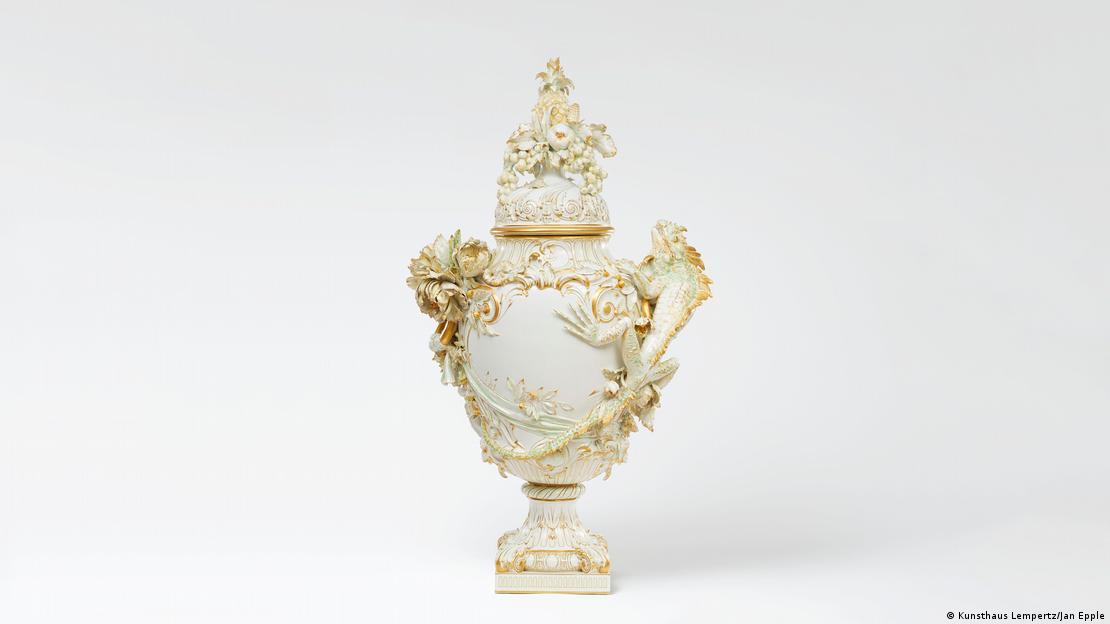
Embellished with a gilded iguana and a bouquet of fruits topped with a pineapple, an ostentatious piece of queer history was sold on April 24 for €300,000 ($350,000) at the Berlin branch of Germany's Lempertz auction house. The just over 116-centimeter-tall porcelain vase is thought to have been made as a gift from Kaiser Wilhelm II, the last emperor of Germany, to his friend Prince Philipp of Eulenburg-Hertefeld.


Little known about today, the relationship between the emperor and the prince was at the center of a scandal, the so-called Eulenburg Affair, that German historian Norman Domeier, said shook all of Europe to the core and transformed public opinion on the monarchy.

Wilhelm II ascended to the German throne in 1888. As Kaiser, Wilhelm had a reputation as a feckless, insecure and erratic leader obsessed with his own press coverage, who developed increasingly authoritarian tendencies.

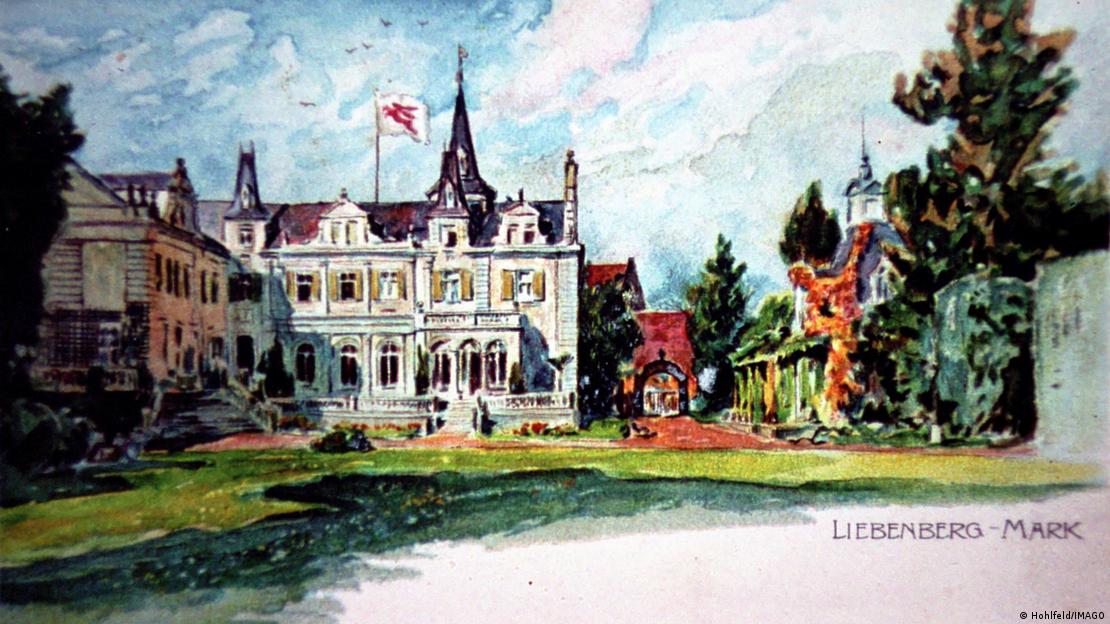
Eulenburg was a diplomat who quickly rose to become the Kaiser's most important extra-parliamentary adviser. He often hosted hunting and artistic retreats for a close circle of friends at Liebenberg Castle, north of Berlin. As would later be revealed in court, members of that circle would refer to Eulenburg as "Phili" or "Philine" and Kaiser Wilhelm as "Liebchen" ("sweetheart").

The gilded porcelain vase, a gift from Kaiser Wilhelm II to Prince Eulenburg, is an important piece of queer history
Image: Kunsthaus Lempertz/Jan Epple


"It also became clear that they cultivated a cult of neo-romantic male friendship, and their correspondence was filled with seemingly homoerotic attestations of friendship," writes historian Robert Beachy in his book "Gay Berlin: Birthplace of a Modern Identity."
Scandalous plot to bring down the monarchy

The Liebenberg group of friends was despised by the Kaiser's many critics who framed them as sycophants who abused their proximity to the Kaiser to influence policymaking.

Those critics included influential Berlin journalist Maximilian Harden, an ardent German nationalist. He was convinced that the German threat to go to war with France over Morocco during the First Moroccan Crisis (1905-06) had been brushed aside as a bluff by the French based on information leaked to the French ambassador at a Liebenberg hunting party.

"Harden thought there needed to be a way to implement change and he was quite cynical in that he thought that the only option he had, as a journalist and publisher, was to scandalize these people with the aim of bringing them down," said Domeier, author of "The Eulenburg Affair: A Cultural History of Politics in the German Empire."

On November 17, 1906, Harden published an article entitled "Prelude" in which he accused the Kaiser's entourage of having "spun threads from invisible quarters, threads that make it difficult for the German Reich to breathe." He singled out Eulenburg in particular as a corrupting influence. They "don't dream of a world in flames, they are warm enough already," wrote Harden in his widely read and very influential weekly journal Die Zukunft. "Warm" was common slang for homosexual at the time.


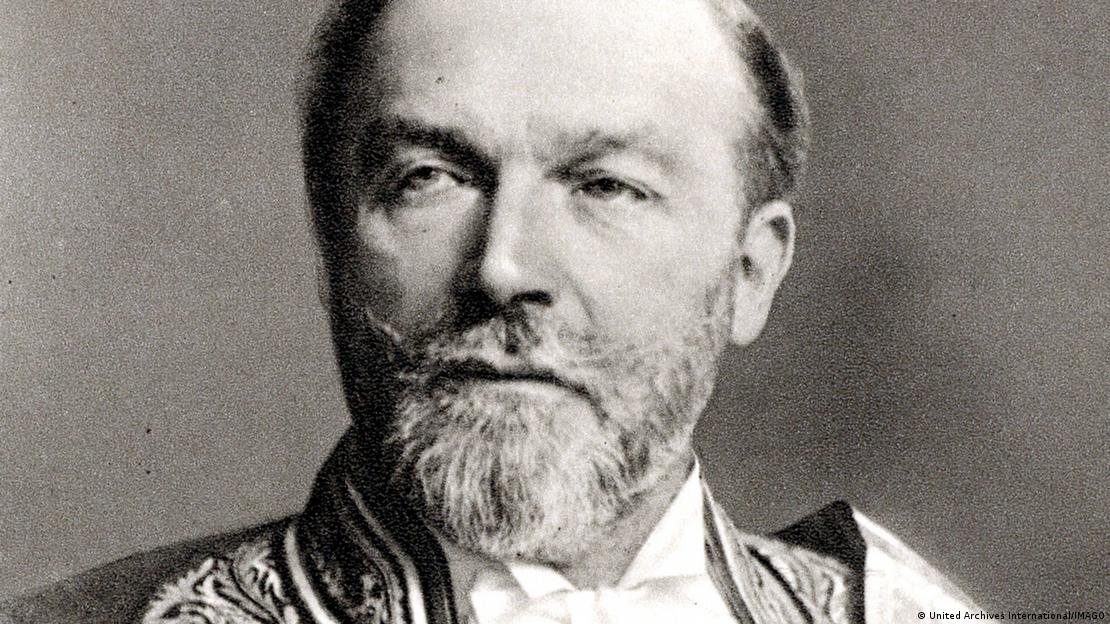
The Kaiser, who had few close friends, elevated Eulenburg (seen here) to the rank of prince in 1900
Image: United Archives International/IMAGO

Eulenburg promptly left Berlin for Switzerland, supposedly for "health reasons." But he could not keep away for long and returned to Berlin in 1907, infuriating Harden.

What followed was a series of courts martial and public trials that drew worldwide attention and resulted in a scandal with an impact comparable to the 1895 trial of Oscar Wilde in England for "gross indecency" and the Dreyfus affair, which began in 1894 and which came to symbolize injustice and antisemitism, in France.

"It really is fascinating how much the scandal divided German society. You can see how the German Empire, which was outwardly so pompous and ostentatious, inwardly was such a weak and unstable entity, with huge differences between north and south, east and west. The scandal cracked those divides wide open," Domeier told DW.

One of the most sensational trials of the Eulenburg affair involved General Kuno von Moltke, who would eventually resign from his role as city commandant, responsible for Berlin's military security, and sue Harden for libel. In the Berlin courtroom, Harden said von Moltke, who was apparently known as "Tutu" among the Liebenberg circle, liked to wear rouge and "striking costumes" such as kimonos and long skirts at home.

The Liebenberg Roundtable enjoyed hunting and artistic retreats at Eulenburg's country estate north of Berlin
Image: Hohlfeld/IMAGO

During the trial, von Moltke's ex-wife, Lili von Elbe, blamed the commandant's close friendship with Eulenburg for the failure of her marriage and claimed von Moltke refused to share a bed with her.

Harden also brought in sexologist Magnus Hirschfeld to give expert testimony on the issue of von Moltke's sexuality. In 1897, Hirschfeld had founded the Scientific-Humanitarian Committee in Berlin, the world's first homosexual rights organization. His assessment, based on his observations in the courtroom, was that von Moltke had a feminine side and displayed "unconscious homosexuality." Harden was acquitted.

Hirschfeld's theories about gender and sexuality, brought to wider public attention by the trial, were groundbreaking at the time. For him, sexual orientation was an innate, natural biological trait and not a lifestyle choice, an illness or a crime. "In a sense it's an early version of the 'born this way' concept, as various emancipatory movements have since asserted," said Frederik Doktor, a historian at the Europa-University Flensburg.

Important part of queer history


Long before its Weimar heyday, Berlin had already garnered a reputation as the party capital of Europe with a vibrant queer scene. At a time when sexual acts between men were criminalized under Paragraph 175 of the German Criminal Code, the city even had a special police unit — not to prevent homosexual activity, but to protect high-ranking members of society from potential blackmailers.

The Eulenburg Affair had unintended consequences for Berlin's gay scene, according to Doktor. "It ultimately led to more homophobia, the pervasive idea of 'degeneracy,' of homosexuals defined as effeminate men and debates about the tightening of Paragraph 175 — which the Nazis decades later in 1935 implemented — and ultimately on queer men's freedom to live their sexuality," he told DW.

Homosexuality also became associated with a lack of patriotism and even treason. In 1908, the New Yorker Staatszeitung, an important voice for Germans in the US, even recommended a "bright and cheery little war" to rid Germany of homosexuality.

In a grim foreshadowing of Nazi Germany, the press also spewed antisemitic invective against Harden, his lawyer Max Bernstein, and Hirschfeld. "We cannot allow this German man [von Moltke] to be dragged through the mud by Jewish fellows," raged German daily newspaper Die Staatsbürgerzeitung.

The scandal destroyed Eulenburg's reputation and he was later the subject of defamation case brought by Harden. During that trial, an elderly fisherman and a petty criminal testified to having had sexual relations with the prince in their youth. After he collapsed in court in 1909, Eulenburg was regularly found by court physicians to be too ill to stand trial. He was shunned by friends until his death in 1921.

The Liebenberg circle of friends continued to gather around Kaiser Wilhelm II, who was never far from a scandal.

During a hunting dinner at Donaueschingen palace in 1908, a Prussian general, Dietrich Graf von Hülsen-Haeseler, the head of the Kaiser's military cabinet, dropped dead of a heart attack while waltzing. By some accounts, he was dressed in the hostess' ballgown and a hat adorned with peacock feathers; by others, in a pink tutu and a crown of roses.

The incident caused the Kaiser, who was already under pressure after the publication of very undiplomatic comments about the British, to suffer a nervous breakdown.

He was ultimately sidelined by the military during World War I and abdicated the throne in 1918. The last emperor of Germany, he died in exile in the Netherlands in 1941.

Edited by: Cathrin Schaer
Japanese PM Takaichi in push to revise pacifist constitution as regional tensions rise


Issued on: 05/05/2026 -
13:14 min From the show


Due to its wartime past, Japan adopted a pacifist constitution that limits its military to self-defence. Now Prime Minister Sanae Takaichi is calling for "advanced discussions" on revising the constitution, setting up a panel tasked with reviewing the country's security and defence policies as regional tensions escalate. FRANCE 24's Sharon Gaffney speaks with Giulio Pugliese, Lecturer in Strategic Communications at King's College London and Director of the EU-Asia Project at the European University Institute.


VIDEO BY:  Sharon GAFFNEY


'We've been poisoned': Babies exposed to pesticides in the womb

Issued on: 05/05/2026 - FRANCE24
06:08 min From the show

Rates of cancer, birth defects and cognitive disorders are on the rise among French children. The use of pesticides has been recognised as a major risk to mothers and their babies, including in utero. Since 2020, victims of pesticides can request compensation from a government fund for their illness. But families say authorities are not doing enough to protect the most vulnerable. Our Down to Earth team reports.


Iran Nobel winner Mohammadi 'between life and death' after hospitalisation


Jailed Iranian Nobel Peace Prize winner Narges Mohammadi is fighting for her life after being hospitalised under guard for the last five days with a heart condition, her supporters said on Tuesday.


Issued on: 05/05/2026 
By: FRANCE 24

Nobel Peace Prize laureate Narges Mohammad is seen after receiving a medical certificate in Tehran, Iran, on Wednesday 4 December 2024. © File photo from the Narges Foundation via AP

A support committee for Narges Mohammadi, who is imprisoned in Iran, said on Tuesday, May 5, that she was “between life and death”.

Mohammadi's deteriorating health has raised the worst fears among those close to her.

Now in her early 50s, Mohammadi won the 2023 Nobel Peace Prize while in detention for her campaign in favour of women’s rights and the abolition of the death penalty in Iran. She ⁠suffered a suspected heart attack in late March and was taken to a hospital in northwestern Iran on May 1 amid rapidly deteriorating ‌health, her family has said.

"We are not just fighting for the freedom of Narges, we are fighting so that her heart continues to beat," said her Paris-based lawyer Chirinne Ardakani at a news conference of her supporters.

Jonathan Dagher of Paris-based press freedom group Reporters Without Borders (RSF), which is also part of her support committee, said: "This is the first time we are saying that she is between life and death, that there is a risk of death."

"We must act before it is too late," he added.

Mohammadi, who has spent much of the past two decades in and out of prison for her activism, was arrested most recently in December after denouncing the Islamic republic at a funeral for a lawyer.

Mohammadi is experiencing an "unprecedented degradation" of her health, said Ardakani.

"We have never been so afraid for Narges's life; she could leave us at any moment," she added.

Mohammadi has lost 20 kilogrammes (44 pounds) in prison, has difficulty speaking and is currently "unrecognisable" from her former state before her latest arrest.

Her supporters want Mohammadi to be transferred to Tehran for treatment by her personal medical team but there has been no sign of her being moved from Zanjan.

Mohammadi's twin teenage children and her husband live in Paris and Ardakani urged the French foreign ministry and President Emmanuel Macron to take a tougher line on her case.
Arms deliveries and Africa Corps training: How Russia is bolstering its presence in Madagascar

From deliveries of drones and armoured vehicles to training sessions led by Russian Africa Corps instructors, security cooperation between Madagascar and Russia has intensified since the October 2025 coup. Russia’s growing influence is expanding into other sectors as well, raising questions within parts of Malagasy civil society.


Issued on: 06/05/2026 -
The FRANCE 24 Observers/
Lise KIENNEMANN

Left: an image shared by the Russian Embassy in Madagascar shows two Russian armoured vehicles delivered to Madagascar on April 1, 2026. Right: an image released on January 14, 2026, by the Malagasy transitional presidency shows Russian instructors during training for the Malagasy army. © Russian Embassy in Madagascar / Presidency of the Refoundation of the Republic of Madagascar

Two tracked BMP-3 infantry fighting vehicles and various pieces of protective gear were among the items showcased during a "Russian military-technical aid handover" ceremony held at the Ivato military camp in Madagascar on April 1.

The images were released by the Russian Embassy in Madagascar, which noted that "small arms" were also included in the delivery. According to the embassy, the equipment is intended to "strengthen [Madagascar’s] defence capabilities and develop the potential of the national armed forces".

The delivery was attended by the transitional president, Colonel Michaël Randrianirina, who seized power in October 2025 following weeks of youth-led Gen Z protests and a military takeover that ousted the former president.

The move is one of the latest signs of deepening ties between Russia and the African island nation. Last November, Randrianirina indicated he was open to all international partnerships, provided the arrangement is “win-win”.

These images show the handover ceremony of Russian equipment to Madagascar. They were posted on Telegram by the Russian Embassy in Madagascar on April 1, 2026. © Russian Embassy in Madagascar

Russian delegation and military equipment

The rapprochement between the two countries materialised in December 2025 with the arrival of Russian personnel and equipment.

On December 20, an aircraft operated by the Russian Ministry of Defence and currently under US sanctions, registration RA-86572, landed at Madagascar’s Antananarivo-Ivato International Airport.

By the next day, Siteny Randrianasoloniaiko, President of the National Assembly, announced that a 40-member Russian delegation had arrived on the island. He further noted that equipment had been provided to the presidential guard "within the framework of legitimate state cooperation". Randrianasoloniaiko, known for his close ties to Moscow, is regarded as a pivotal figure in this deepening partnership.

Images released by Randrianasoloniaiko show crates containing an assault rifle, a Russian-made Boomerang drone, and a drone controller, according to details provided by the investigative collective All Eyes on Wagner. Randrianasoloniaiko said that "16 kamikaze drones, 50 handguns and 50 Kalashnikovs" were delivered.
These images were posted by Siteny Randrianasoloniaiko on Facebook on December 21, 2025. © Facebook / Siteny Randrianasoloniaiko


The news caused a significant stir, particularly as the Russian delegation was reportedly led by Andrei Averyanov. Averyanov serves as the deputy head of Russian military intelligence and is the alleged commander of Africa Corps, the paramilitary group that succeeded the Wagner organisation.

Training by ‘Africa Corps instructors’

Less than a month later, on January 14, the transitional presidency announced that Russia had supplied weapons to the Malagasy military. They further noted that a "Russian delegation" had arrived to "train the Malagasy army on the use of this new equipment".

They confirmed that training commenced that same day, releasing images featuring masked Russian instructors alongside drones, assault rifles, and sniper rifles. According to the presidency, 140 Russian instructors have reportedly been deployed across the island.
These images were posted on Facebook by the Presidency of the Refoundation of the Republic of Madagascar (transitional presidency) on January 14, 2026. © Presidency of the Refoundation of the Republic of Madagascar


According to African Initiative – a Russian news agency branding itself as an "information bridge" between Russia and Africa – 140 Malagasy soldiers have completed this "initial training" conducted by "Africa Corps instructors”. The media outlet reported that this eight-week program is expected to be followed by a secondary training phase.

A report by Russian state television channel RT, aired on March 15, detailed that the instruction provided by these "Russian Africa Corps military instructors" covers a wide range of specialities, from military engineering and assault units to snipers, reconnaissance teams, and attack-drone operators.

In the report, a masked Russian instructor says he teaches the use of reconnaissance drones, techniques for dropping payloads on targets and the deployment of kamikaze drones. The footage also depicts military drills involving Kalashnikov rifles.

Screenshot of an RT report on the training provided by Africa Corps to the Malagasy army. It was published on March 15, 2026. © RT

“This training ... could strengthen the Malagasy military, primarily for our own protection and subsequently to combat zebu rustlers in the south and west of the country,” Randrianirina stated in the report.

Separately, the presidency announced on April 23 the conclusion of a seven-week training program conducted by "Russian soldiers". The session was held for 14 members of the presidential guard with the aim of "bolstering the security of the Guard of Honour".
Trucks and helicopters to ‘deliver humanitarian aid’

Following the cyclones that struck Madagascar, Russia delivered additional equipment in February. Images released on February 27 by the transitional presidency show the unveiling of six Kamaz trucks and two Mi-8 helicopters, alongside food aid, at Antananarivo airport. The equipment arrived via two separate shipments reported on February 18 and 21 by the Russian Embassy and the African Initiative.

Meanwhile, on February 19, the Malagasy president was received with full honours by Russian President Vladimir Putin in Moscow, where he announced "a new era of cooperation" with Russia.
Top left: an image posted by the Russian Embassy on February 18, 2026, shows a Kamaz truck. Bottom left: an image released by African Initiative on February 21 shows the delivery of an Mi-8 helicopter. Left: photographs shared by the presidency of the Refoundation of the Republic of Madagascar on February 27 show the reception of two Mi-8 helicopters and six Kamaz trucks. © Observers


"These vehicles will be deployed immediately to deliver humanitarian aid to Toamasina and remote areas," the presidency stated, noting they will "subsequently be handed over to security forces to combat insecurity and crime".

"This humanitarian component is important as it bolsters the image of a government taking action for its people,” Ivan Klyszcz, a researcher at the International Centre for Defence and Security in Estonia, told our team.
Protection for the authorities?

While the government openly communicates regarding the provision of Russian training and equipment, it remains more discreet about the role Russian personnel may play in protecting officials.

According to French daily Le Monde, "mercenaries" from Africa Corps are providing "close protection" for the transitional president.

In late March, Malagasy social media users circulated photos of the president of the National Assembly flanked by white bodyguards – alleged by some to be Russian mercenaries. The images sparked accusations that the official lacks confidence in the Malagasy military. "The President of the National Assembly is being escorted by them," said Thierry Vircoulon, an associate researcher at the French Institute of International Relations (IFRI) Sub-Saharan Africa Centre.

Vircoulon suggests this "personal security" was the primary reason the government invited them. "He is afraid of another coup," he said.

Regardless, Russian personnel have seemingly become part of the landscape, according to the local press.


‘Opaque cooperation’

As civil society denounces a lack of reform and eroding freedoms, and Amnesty International warns of "arbitrary arrests", this strengthened cooperation is being met with scepticism by a segment of the population.

We spoke with a resident, who requested anonymity:

"Our problem is access to water and electricity. Madagascar is an island. We wonder why they are sending us tanks [armoured vehicles] – that isn't the priority. And why are they hiring Russian mercenaries when we have our own Malagasy soldiers?"

The Collective of Citizens and Civic Organisations (CCOC), through its Secretary-General, Hony Radert, is also calling for "much more transparency" on the matter. "We don't understand this militarisation," Radert told our team. "What justifies it? Is this truly the priority, given the development needs of the population? Currently, there is no clear explanation for the Russian presence or the military buildup."

Seta Dera, general coordinator of the Liberty 32 association, also described an “opaque cooperation”.

"Partnering with Russia is one thing, but the agreements must be transparent. We are concerned. We question what is being given in exchange for these donations, as well as their actual utility – how exactly these weapons will be used."

Furthermore, the CCOC believes that this type of cooperation falls outside the current administration's mandate. "Their mission is to successfully lead the transition and achieve a genuine overhaul of the governance system," Radert said. "In our view, they should be focusing on consultations and managing day-to-day affairs. Now is not the time to be forging new ties that bind the country's future."
The narrative of a ‘benevolent global power’

What drives Russia’s interests in Madagascar?

"As seen in the Central African Republic, once they have seized the levers of power, they will drive out Europeans in general – and the French in particular. Then, they will make money," said Vircoulon, pointing to the island’s deposits of gold and other minerals.

The island also borders the Mozambique Channel, a corridor that is becoming "all the more significant today due to instability in the Middle East", said Klyszcz. "Ships bypassing the Red Sea via the Cape of Good Hope pass right through it."

However, according to the researcher, this involvement extends beyond commercial interests:


"Russia is seeking to bolster its narrative as a benevolent global power that supports governments striving for sovereignty. They want to shift the foreign policy of African nations toward a stance that is more favourable to Russia."
Cultural and economic influence

Russia’s interest in the island is not entirely unprecedented; in 2018, Moscow attempted to influence the outcome of the presidential elections. However, the current expansion of its influence is unfolding with remarkable speed, extending beyond the military sector into the cultural and economic spheres.

"Russia has secured a slot on national radio and is currently in the process of acquiring several private media outlets," Vircoulon said.

A new pro-Russian political party, the “Patriotic Awakening of a United Madagascar”, was also launched in early March. It serves as the political wing of "The Friends of Russia in Madagascar", an organisation that acts as a key intermediary for Russian influence within the country's power circles.
African initiative posted images of the launch ceremony of the “Patriotic Awakening of a United Madagascar” party on March 6, 2026.

Furthermore, a Russian-Malagasy Chamber of Commerce was established in late March to bolster trade between the two nations.

These deepening ties come at a time when diplomatic relations with France have faced turbulence. While a historical partner to the island, Paris has faced sharp criticism following the exfiltration of former president Andry Rajoelina aboard a French aircraft.

On April 28, Madagascar called for the expulsion of a French embassy official suspected of involvement in "acts of destabilisation”. The move followed a wave of rumours circulating on social media, which the French Embassy denied, stating it "questioned the origins and motives of those spreading" the reports.

On April 29, the Malagasy transitional presidency announced that the Malagasy and French presidents were reaffirming their commitment to ensuring that "this episode does not undermine the momentum of cooperation between the two countries".