Wednesday, May 06, 2026


Lloyds Metals eyes reopening of giant PNG copper mine
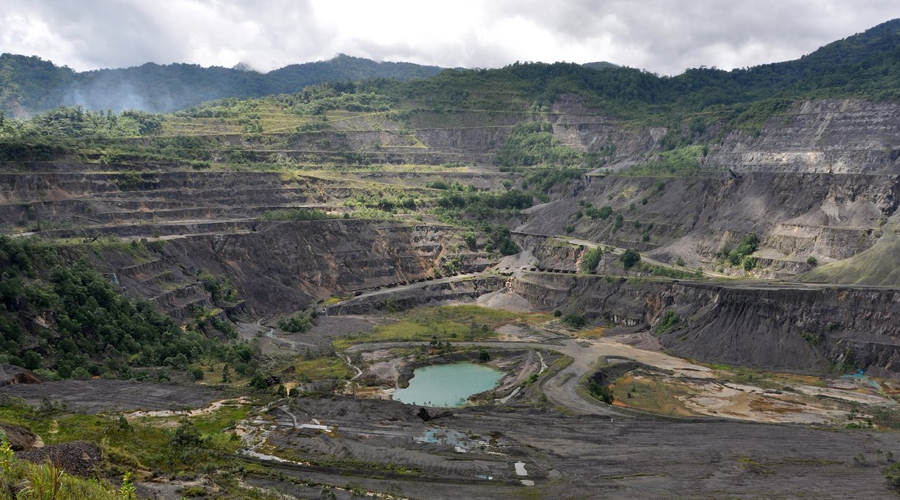
The idled Panguna copper-gold mine was once a major producer and one of the largest open pit mines in the world. (Image from archives via Bougainville Copper Ltd)

An Indian iron ore producer has set up a subsidiary in Papua New Guinea to redevelop a massive copper mine that’s been shuttered for almost four decades and was at the heart of a bloody civil war.

Lloyds Metals and Energy Ltd. on Tuesday said the wholly owned unit will “pursue a long-term cooperation and mining agreement in respect of the Panguna mine.” The fast-growing Indian firm has seen off competition from China’s much larger CMOC Group Ltd. to become the local authorities’ preferred partner for the ambitious project.

The move is part of a global dash for copper as the trend toward electrification is expected to boost demand for the metal in the years ahead. The discussions around the dormant asset’s future also reflect the desire for economic development in Bougainville – impoverished South Pacific islands that are currently an autonomous region within PNG but seeking independence.

Bougainville Copper Ltd., which holds the licenses containing the mine site, said last month it had signed a non-binding agreement with Lloyds that granted the Indian firm a 90-day exclusivity period to undertake due diligence. The Autonomous Bougainville Government controls almost 73% of BCL.

Panguna’s remaining reserves are estimated at 5.3 million tons of copper and 19.3 million ounces of gold, which would be worth about $160 billion at today’s prices. However, the mine was closed down in 1989 under the ownership of Rio Tinto Group due to local protests over environmental damage and revenue distribution, which degenerated into a civil conflict that killed as many as 20,000 people. Rio gave away its 54% interest in BCL in 2016.

Lloyds said on an earnings call on Wednesday that its new PNG company is “very active,” describing Panguna as a “very rich copper and gold deposit.” It cautioned investors that the firm is still in discussions with the government about acquiring the project.

BCL’s first choice to revive Panguna was CMOC, one of the world’s biggest producers of copper and the top supplier of cobalt from two giant operations in the Democratic Republic of Congo.

That plan was scuppered when President Ishmael Toroama, who’s run Bougainville since 2020, and his cabinet endorsed Lloyds. In November, the company signed a memorandum of understanding with the autonomous region focused on development opportunities.

BCL said in January that Lloyds was “bypassing” the company’s selection process but a month later acknowledged the decision and terminated its own search for a partner. Henan-based CMOC mined nearly 750,000 tons of copper last year – about 3.3% of the global total.

Lloyds recently invested in two copper joint ventures in Congo, which the company says could eventually reach annual output of 100,000 tons. The firm also produced nearly 22 million tons of iron ore in India last year.

Lloyds Panguna Metals and Energy Ltd. was incorporated on April 20. The entity “will serve as the dedicated project and engagement vehicle for executing cooperation, MOU, and joint venture agreements with BCL and holding any rights, licenses, or equity interests arising from the Panguna engagement,” the firm said.

The cost of bringing Panguna back to life will be steep. A BCL study in 2021 found it would need at least $6 billion and seven years of work. A phased approach could be quicker and cheaper.

(By William Clowes and Paul-Alain Hunt)


Mining Association of British Columbia touts economic impact, presses province on DRIPA


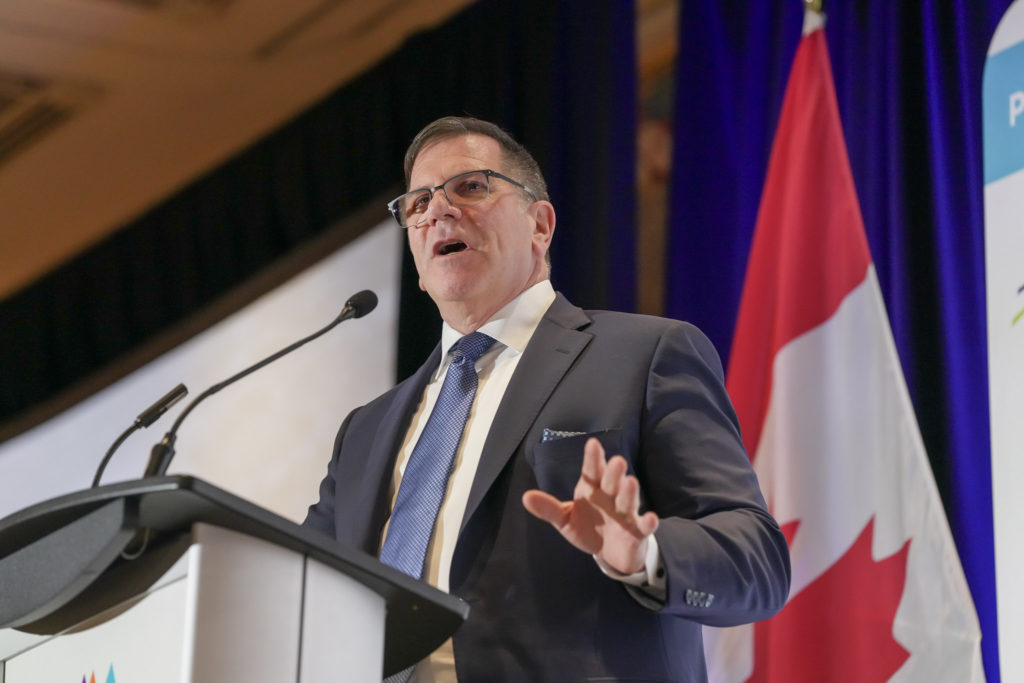
MABC CEO Michael Goehring. Image credit: Matt Brock/ Greater Vancouver Board Of Trade.

British Columbia’s mining industry says the province is gaining momentum on major project development, but warned that regulatory uncertainty and rising costs could jeopardize future investment.

Speaking at a Greater Vancouver Board of Trade event at the Fairmont Hotel Vancouver on Tuesday, Mining Association of B.C. (MABC) CEO Michael Goehring highlighted figures from its new Economic Impact Study released the same day, showing the sector generated C$19.6 billion ($14.4 billion) in economic output in 2024, supported 56,000 jobs and contributed nearly C$6 billion in government revenue.

“All of that from 18 mines and two smelters,” Goehring said. “Mining has a small physical presence, but a large economic impact in B.C. Our mines punch well above their weight.”

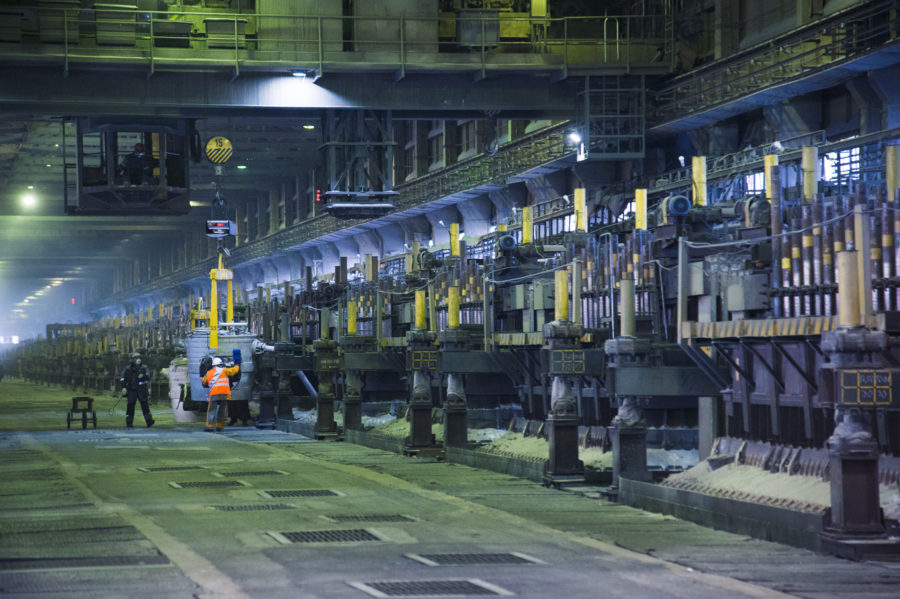
Ther smelters operating in British Columbia are the Rio Tinto BC Works aluminium smelter in Kitimat and Teck Resources’ zinc-lead smelting and refining complex in Trail. 

While BC is a major producer of copper, there are currently no operational copper smelters in the province, and Goehring pointed out the economics of a build are currently unviable. 

The industry is pointing to signs of progress after the provincial government  fast-tracked  projects earlier this year, part of the federal Major Projects Office.

Of the four mining projects included on the province’s list of 18 priority developments, three have now received permits and two are under construction.

Among them are Teck Resources’ Highland Valley Copper extension near Logan Lake, Skeena Gold and Silver’s Eskay Creek project in northwestern B.C., and Centerra Gold’s Mount Milligan mine life extension near Prince George.

The projects are part of what the industry says is a broader surge in mining activity across the province, particularly in northern B.C., where 24 proposed projects are in various stages of development.

Industry leaders say the scale of potential investment is enormous. Construction of those northern projects alone could generate more than $67 billion in economic output, according to figures cited in MABC’s report. 

Goehring also emphasized mining’s growing importance to Metro Vancouver’s economy.

The new economic impact report, also  released Tuesday, found B.C.’s operating mines and smelters supported more than 12,300 jobs in Metro Vancouver in 2024 and generated more than C$3.5 billion in annual economic output for Metro Vancouver and Vancouver Island. 

The report also noted Metro Vancouver is home to nearly 1,000 mining and exploration companies with a combined market capitalization of roughly C$449 billion.

“While Calgary has oil and gas, Vancouver has mining,” Goehring said. “Metro Vancouver is a global mining centre.”

Anglo American’s proposed $53-billion mega-merger with Teck Resources would create a global copper giant headquartered in Vancouver.

Calls for clarity on DRIPA

The optimism surrounding new projects and strong global demand for copper and critical minerals was tempered, however, by ongoing concerns over permitting delays and policy uncertainty.

Goehring said lengthy regulatory processes remain the “primary barrier” to new mine development in BC, despite recent improvements.

“There’s more work to do to build on this momentum and drive systemic change and durable improvements to accelerate our province’s mine permitting process,” he said.

The industry is also closely watching the implications of recent court decisions tied to B.C.’s Declaration on the Rights of Indigenous Peoples Act, or DRIPA, which mining executives say has created uncertainty around project approvals.

The British Columbia Court of Appeal determined in a new ruling in December 2025 that DRIPA incorporates the United Nations Declaration on the Rights of Indigenous Peoples (UNDRIP) and creates legally enforceable obligations. 

Premier David Eby is facing significant pressure and criticism regarding his handling of DRIPA, and has been under fire for “flip-flopping” on plans to amend or suspend parts of the act. 

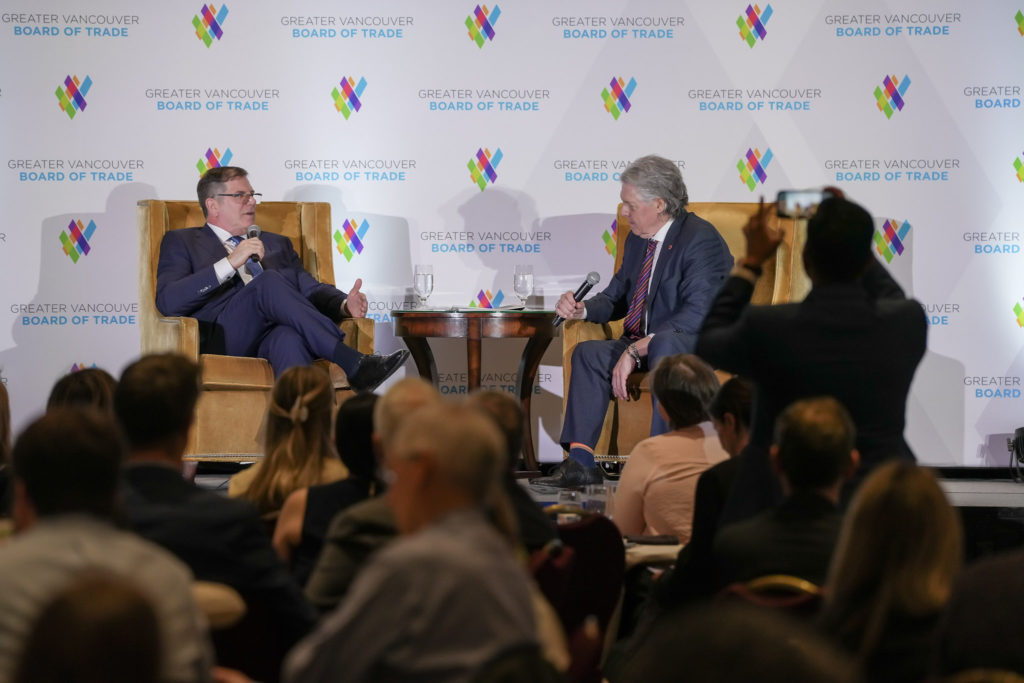
MABC CEO Michael Goehring in conversation with Conversations Live host Stuart McNish at Fairmont Hotel Vancouver on Tuesday. Image credit: Matt Brock/ Greater Vancouver Board Of Trade.

“We need clarity, we need certainty,” Goehring said during a panel discussion  moderated by Conversations Live host Stuart McNish following his remarks. “Investment hates uncertainty.”

Goehring stressed that mining companies continue to work closely with First Nations communities through partnership agreements, Indigenous employment initiatives and equity participation opportunities, but said governments must provide clearer policy direction.

The sector is also pushing back against provincial tax changes, arguing that the expansion of the provincial sales tax to some professional services will increase costs for mining projects already facing financing pressures.

One advanced-stage mining company estimates the changes could add between C$2 million and C$3 million in costs between 2027 and 2030, Goehring said.

At the same time, the industry faces looming labour shortages. According to the Mining Industry Human Resources Council, B.C. will require 5,000 net new workers over the next decade to meet expected demand.

Despite the challenges, mining executives said B.C. remains well-positioned to capitalize on rising global demand for critical minerals and metals needed for electrification and energy transition projects.

“It’s a once-in-a-lifetime opportunity,” Goehring said. “But now more than ever, we need to remain focused, committed and determined.”


Trafigura in talks to build aluminum smelter in Egypt


Contemporary large aluminum foundry with casting cells. Adobe Stock image.

Commodity trading giant Trafigura says it is in negotiations with the Egyptian Aluminium Company (Egyptalum) and the Metallurgical Industries Holding Company (MIH) to build a new aluminum smelter in Egypt.

Under a term sheet signed on Wednesday, the parties said they will look to establish a newly incorporated company that will construct, own and operate a 300,000-tonne-per-annum (tpa) primary aluminum smelter, alongside a 150,000-tpa anode plant, at Egyptalum’s Nag Hammadi complex.

Once built, the new facilities would nearly double the site’s current annual production capacity, Trafigura said.

$750-$900M investment

Trafigura will participate as a minority equity investor in the new company, as well as a debt provider and long-term offtake and feedstock supply counterparty. Total investment costs for the project are estimated at between $750-$900 million.

The new smelter would serve as an additional source of aluminum supply for an industry that has been rattled by the war in the Middle East. Strikes on key smelters in both the UAE and Bahrain have already crippled output in the Gulf region, which accounts for about 9% of the world’s supply.

While China has provided an alternative route for aluminum buyers globally, with its exports set to hit a record this year, most of its primary aluminum supply is still expected to remain within the domestic market due to Beijing’s existing tariffs.

As a result, available primary aluminum remains low. Trafigura estimates that over the past decade, the world outside China has drawn down 6 million tonnes of aluminum inventory, leaving stocks at historically low levels.

Against this backdrop, the new smelter will provide an important additional source of primary aluminum — supporting supply chain diversification and resilience across global markets, the firm said.

Longstanding relationship

The smelter project builds on Trafigura’s longstanding commercial relationship with Egypt, where the company has been present for over 20 years and is currently one of the largest suppliers into the country of metals — including alumina, which it has supplied since 2005 — and liquefied natural gas (LNG), it added.

“A significant milestone has been reached with the signing of the term sheet and the start of exclusive negotiations. We are pleased to be working with Egyptalum, a counterparty with proven expertise in the aluminum industry, and to have the support of the Egyptian government through MIH,” Gonzalo De Olazaval, Trafigura’s head of metals and minerals, said in a press release.

“By building on existing facilities, Egypt has the potential to become a major producer, and we look forward to supporting the country in realizing that ambition.”

The term sheet follows Trafigura’s recent investment in a new smelter under development in Indonesia, underscoring the company’s strategy to secure long-term flows of metal to supply customers around the world.


Guinea agrees payout to EGA for bauxite trade to resume

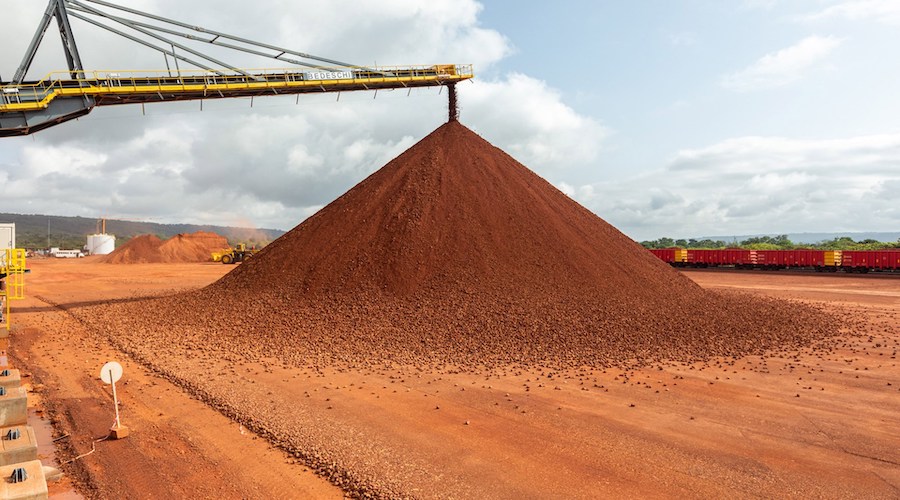
EGA’s Guinea Alumina Corporation bauxite mine in Guinea. (Image courtesy of Emirates Global Aluminium.)

Guinea has reached a settlement with Emirates Global Aluminium to resolve a long-running dispute over the seizure of its local operations and enable the resumption of bauxite shipments, the two said in separate statements on Wednesday.

Under the deal, which remains subject to conditions, Guinea will pay a lump sum to the Abu Dhabi-based miner in exchange for transferring Guinea Alumina Corporation’s assets to the state-owned Nimba Mining Company. Financial details were not disclosed.

Guinea, the world’s top supplier of the aluminum feedstock, seized GAC’s bauxite operations last year after a dispute over plans to build an alumina refinery, and transferred the assets to state-backed Nimba Mining Company, which has since resumed mining and exports on the concession.

Following the halt in exports, EGA sought alternative supplies, including potential sourcing from Ghana.

Reuters previously reported that Conakry and EGA were close to a deal to resolve the standoff and allow bauxite shipments to restart.

The agreement includes Guinea’s payment to GAC in exchange for the asset transfer tied to the SangarĂ©di bauxite project, and the renewal of bauxite supply agreements between Compagnie des Bauxites de Guinee and EGA under mutually beneficial terms, the statements said.

EGA, jointly owned by Abu Dhabi’s Mubadala Investment Company and the Investment Corporation of Dubai, is the Gulf’s largest aluminum producer and depends on stable bauxite supplies.

Guinea has tightened mining regulations in recent years to secure greater value from its mineral wealth, revoking licences and pushing companies to build local refining capacity.

The agreement aligns with the objectives of the Simandou Strategic Committee, aimed at stabilizing and strengthening commercial partnerships in the mining sector, said the statement.

(By Maxwell Akalaare Adombila and Samb Saliou; Editing by Bate Felix and Louise Heavens)

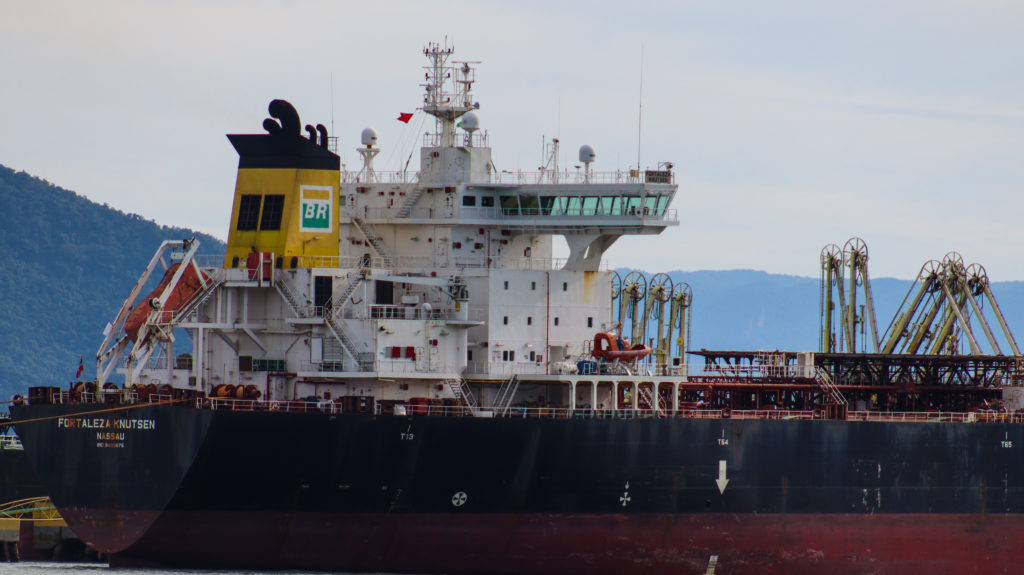
Direct diesel sales in Brazil surge after Petrobras–Vale deal, distributors push back

Stock image.

Direct sales of diesel by Brazilian producers to large consumers surged in the first quarter, after state-run oil firm Petrobras signed a contract with miner Vale, triggering a backlash from fuel distributors.

In letters sent to oil regulator ANP and seen by Reuters, distributors group Sindicom said direct fuel sales by producers generate competitive distortions.

The group represents distributors such as Vibra, Raizen and Ultrapar.

Sindicom argued that such producers, unlike distributors, are not required to purchase decarbonization credits, known as CBios, under the RenovaBio national program. Current legislation only requires distributors to buy them.

In a document seen by Reuters, ANP reported that direct sales of diesel B (blended with the mandatory biodiesel mix) by producers to large consumers totaled 22.39 million liters in the first quarter, from 1.1 million liters in the previous quarter.

ANP, asked to comment, confirmed the figures but said it does not disclose which producers made the sales for competition-related reasons. Petrobras is Brazil’s main diesel producer.

In January, Petrobras announced an agreement with Vale to supply diesel for the miner’s operations in the Minas Gerais state.

According to ANP, Minas Gerais accounted for 19.49 million liters of diesel purchased directly from producers between January and March, or nearly 90% of the total reported for the period.

“As producers are not obligated agents under RenovaBio, the direct sale of fossil fuels by these agents to large consumers takes place in an asymmetric manner compared with distributors,” Sindicom said in one of the letters sent to ANP.

Petrobras said it continually evaluates the possibility of carrying out direct sales to large consumers, always in compliance with current legislation. It did not confirm the volumes sold.

Vale said the diesel purchase deal with Petrobras is subject to confidentiality clauses. The miner also did not disclose purchased volumes.

Petrobras has been seeking to sell fuels directly to large consumers, according to previous statements by executives. The strategy would be a way to access a larger share of the market and move closer to end customers in a more profitable manner.

Executives from the state-run firm have said that the company lost direct contact with end consumers after it fully sold BR Distribuidora – now Vibra – in 2019.

(By Marta Nogueira and Fernando Cardoso; Editing by David Gregorio)


France convenes G7 on critical minerals to curb China’s grip

Palais Lumiere in Evian, France. Stock image.

France has called an online meeting of G7 countries for Thursday to discuss how to break China’s stranglehold on critical materials, Finance Minister Roland Lescure said, announcing plans to rebuild the industry in France.

The online meeting with relevant ministers is intended to prepare for a mid-June summit of the G7 leaders in the French spa town of Evian, Lescure told reporters. He was speaking in Lacq, a town in southwestern France that is being primed to be the centre of the country’s rare earth processing activities.

Lescure said China had captured a huge share of the market through heavy investment and pricing policies that drove potential competitors out.

“One of the projects we have in mind within the G7 is to ensure – much as the International Energy Agency was created in the 1970s when OPEC held a production monopoly – that we develop alternatives through international cooperation,” Lescure said.

France’s strategy, which intends to underpin the country’s position in those talks, aims to rebuild a domestic rare earths and permanent magnets supply chain, curbing dependence on China for materials critical to electric vehicles, wind turbines, electronics and defence.

The plan targets the entire value chain, from securing overseas mineral supplies to refining, alloy production and magnet manufacturing in France.

By 2030, France aims to produce rare earth oxides covering 100% of European demand for heavy rare earths and about a quarter of demand for light rare earths, as well as alloys meeting around 10% of European needs.

To boost supply security, the state will loosen access to guarantees for strategic projects, extend and simplify tax credits for green industrial investment until 2028, and channel additional funding through an existing long-term investment program and a dedicated metals fund.

The government also plans to approach international traders about securing critical minerals, potentially offering a French state project finance guarantee.

(By Leigh Thomas, Inti Landauro and Gus Trompiz; Editing by Makini Brice and Susan Fenton)


G7 in talks to set up permanent unit to oversee critical minerals agenda


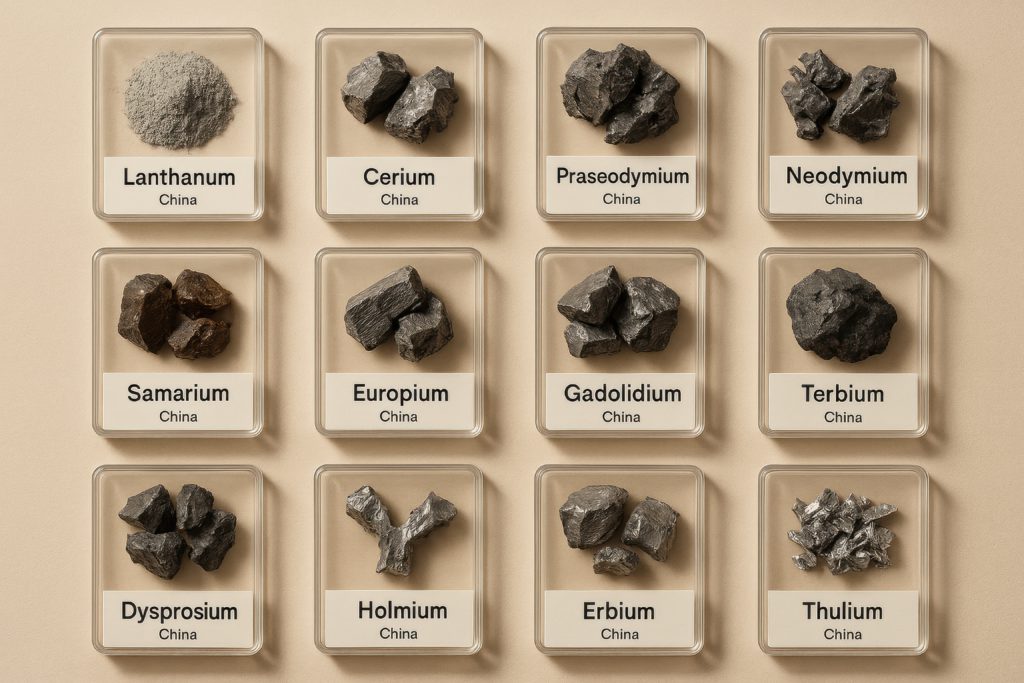
A display of various rare earth elements in labeled containers, showcasing their distinct forms and origins, primarily from China. Stock image.

The Group of Seven countries are in ‌talks to create a permanent secretariat to ensure initiatives to increase critical mineral supplies survive beyond the bloc’s rotating presidencies, five sources familiar with the discussions said.

Developed countries around the world are seeking to cut their reliance on China, which dominates production of the minerals needed for defence, the energy ​transition and manufacturing.

The United States and the European Union last month agreed to deepen their coordination on critical minerals, such ​as lithium, cobalt and rare earths.

But two of the sources familiar with the discussions said Europe had ⁠rejected the idea of single shared stockpile in favour of each country controlling its own reserves.

European governments also do not want ​the US to lead the project because they are worried access to critical minerals could be restricted in a crisis, the ​sources said.

The EU since the start of this year has been working on its own pilot stockpile project, spearheaded by Italy, France and Germany.

Secretariat based in Paris?

The sources, who spoke on condition of anonymity because they were not authorized to speak publicly on the issue, said the secretariat could ​be housed at the International Energy Agency or the OECD. Both are based in Paris.

The five sources said it was unclear ​when the secretariat could be established but that it could help to execute any decisions on critical raw materials taken at the June G7 ‌leaders’ meeting, ⁠which may include stockpiling measures.

A spokesperson for France’s finance ministry declined to comment.

France, which holds the G7’s rotating presidency, called an online G7 meeting for Thursday to discuss how to break China’s stranglehold on critical materials. The meeting is intended to prepare for a mid-June summit of the G7 leaders in the French town of Evian, Finance Minister Roland Lescure told reporters.

The IEA declined to comment ​on the G7 talks. The OECD ​did not immediately respond to ⁠a request for comment.

What the OECD will propose is unknown, but the IEA is already working on plans to align stockpiling and production of critical minerals, two of the four sources said.

A ​workshop in Brussels on the IEA’s plans was scheduled for Tuesday, according to documents seen by ​Reuters, which the ⁠IEA confirmed.

“The IEA is holding a workshop in Brussels with government and industry participants to discuss mineral stockpiling,” a spokesperson said.

The meeting aimed to examine technical aspects and understand “industry perspectives for designing effective stockpiling systems,” the spokesperson added.

As of April 20, governments registered to attend ⁠the workshop ​included the United States, Germany and France as well as Canada, Italy and ​Spain. The European Commission, the EU executive, was also registered to attend.

Companies expected to attend included General Motors, Glencore, Leonardo and Umicore, IEA documents sent to participants ​showed.

(By Pratima Desai, Julia Payne, Leigh Thomas and Ernest Scheyder; Editing by Veronica Brown and Barbara Lewis)


Op-Ed: The copper supply crisis is a sulfur management crisis

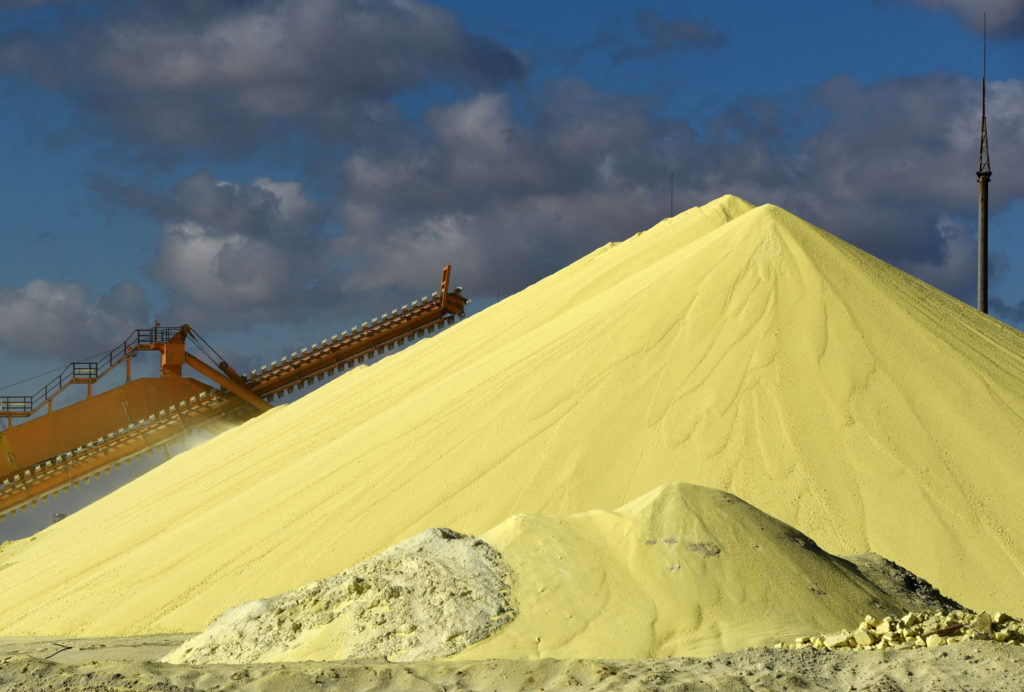
Stock image.

On May 1, China halted exports of sulfuric acid. The reaction across commodity markets has been immediate and severe. But the deeper significance of this moment extends far beyond a single trade restriction. It reveals something the mining industry has been slow to acknowledge: sulfur is not waste. It is one of the most strategically important materials on Earth. And the inability to manage it is the binding constraint on copper production today. Geologists have been remarkably successful at finding copper deposits; the challenge has never been locating the ore but processing it without the sulfur becoming a liability.

The chemical that underpins everything

“The king of chemicals” is what sulfuric acid is called, and for good reason. Global production exceeds 260 million metric tonnes annually. Roughly 60% feeds fertilizer manufacturing: without sulfuric acid, there are no phosphate fertilizers, and without phosphate fertilizers, global crop yields collapse. The remainder is essential for copper and nickel extraction, uranium processing, semiconductor fabrication, steel pickling, and petroleum refining. No industrial economy on Earth functions without it.

This is where mining and agriculture share a deep, often invisible dependency. Copper ore processing can produce the sulfuric acid and ferrous sulfate that the agricultural sector needs for fertilizers and soil amendments. When that processing happens domestically, both industries benefit. When it happens on the other side of the world, both are exposed.

China has been the world’s largest exporter of sulfuric acid. In 2025, Chinese exports surged 73% to 4.65 million tonnes. Much of that acid is a byproduct of copper smelting: about 40% of these exports stem from metal smelting. Over the past two decades, China built nearly half the world’s copper smelting capacity. Those smelters feed not just global copper supply but China’s fertilizer industry, rare earth processing, and downstream chemical manufacturing. The acid is not a side effect. It is an economic engine.

Now consider what has happened in a matter of weeks. The closure of the Strait of Hormuz has blocked seaborne sulfur from the Persian Gulf. Russia has extended its own export ban through June 2026. Turkey has announced restrictions. The DRC has cut volumes. And China, facing a domestic deficit, has halted sulfuric acid exports entirely to protect fertilizer production. From record exports to a near-total ban in less than a year. Chile imports more than a million tonnes of

Chinese sulfuric acid annually for the heap-leach operations that produce roughly a fifth of global copper. Spot prices for acid delivered to Chile have doubled since February. The same squeeze is hitting miners in the DRC and Zambia.

The fundamental problem with sulfur

Sulfur is usually not seen as valuable. We recoil from the stench it brings to rotten eggs, flatulence, and feces. It has also been the waste product that the copper industry actively manages perpetually. The main method for processing copper sulfides has been concentration and then combustion: enrich the copper while pushing most sulfur to waste piles, smelt the enriched ore at extreme temperatures while capturing whatever sulfur dioxide you can. The industry has invested heavily in mitigation. Scrubbers, lined tailings facilities, water treatment systems, and systems to convert sulfur dioxide to sulfuric acid are fortunately all standard with modern processing.

Billions of dollars have gone into trying to contain the consequences. But the fundamental chemistry of smelting makes complete sulfur containment extraordinarily difficult. The consequences persist: acid mine drainage poisoning watersheds for decades, fugitive emissions degrading air quality near smelting operations, tailings facilities storing sulfide-laden waste that remains a liability for generations. These are not abstract environmental concerns. They are the reason mining companies face organized community opposition, permitting delays measured in decades, and the erosion of social license that EY has identified as the industry’s number one business risk. When a community has watched sulfur contaminate its water for a generation, no amount of economic argument will earn permission for the next project.

The analogy I keep returning to is cooking over an open flame indoors. You can install the most sophisticated ventilation money can buy, but combustion will always produce smoke. The question is not whether you can build a better exhaust hood. The question is whether there is a fundamentally different way to cook.

When sulfur becomes a revenue stream

The economics of this reframe are striking. For every tonne of copper produced from sulfide concentrates, roughly 3 to 3.5 tonnes of sulfuric acid are generated via smelting or select hydrometallurgical alternatives. That acid has a market. The potential is even greater for operations that can convert co-located pyrite to sulfuric acid and iron-based co-products like ferrous sulfate for agriculture and iron oxide pigments for construction. An orebody that was valued solely for its copper content becomes a polymetallic operation with multiple revenue streams: copper cathode, sulfuric acid, elemental sulfur, ferrous sulfate, precious metals. The sulfur that was once a cost center becomes the economic instrument that makes the project viable.

From dependency to self-sufficiency

The path forward is not to find a new supplier of sulfuric acid. It is to stop needing one. Copper-producing nations can process their own sulfide ores at or near the mine site, capturing copper, sulfuric acid, and every co-product domestically. In Chile, locally produced acid could feed directly into leaching operations. In Arizona, it could supply the semiconductor fabs of TSMC, Intel, Onsemi, and Amkor, alongside agricultural operations and existing leaching facilities. These are not hypothetical markets. They are existing industries exposed to a supply chain that just proved its fragility.

Emerging hydrometallurgical approaches are making this possible. Pressure oxidation and electrochemical reductive leaching can both capture copper while converting sulfides into valuable products without combustion. These approaches build on decades of hydrometallurgical development while capitalizing on the relatively low electricity costs in many copper-producing regions. The throughline is converting sulfur to value instead of to waste: every output stream becomes a revenue stream. Achieving the full promise of no sulfur dioxide emissions and no acid mine drainage requires upstream adjustments and collaboration across the value chain, but the direction is clear.

The industry that figures out how to manage sulfur completely will be the industry that unlocks the copper the world needs. Not by fighting communities for permission to pollute. Not by depending on a single nation’s willingness to export a critical chemical. But by treating every element in the orebody as what it actually is: a resource with value, deserving of technology equal to the challenge.

The wake-up call

As a father of two young boys, I am not only highly familiar with the stench of sulfur, but also constantly thinking about the future and what industrial inheritance we are building. I want to make sure we are actively enabling a future that makes communities wealthier, not sicker. Where the sulfur in the ore leads to feeding crops rather than poisoning rivers. Where resource-rich nations retain the full value of what lies beneath their land.

China’s export ban is a wake-up call. The copper the world needs is bound to sulfur, but that sulfur is not a curse. It is an asset waiting for the right technology. That technology is here. The question is whether the industry seizes this moment or waits for the next disruption to make the same point.

Ranulfo (Randy) Allen, PhD, MBA, is the co-founder and CEO of Still Bright, a seed-stage deep-tech company leveraging proprietary electrochemical reductive leaching of rougher concentrates to recover copper locally without the typical risks to the local community.


Guyana president warns of mineral ‘dependence’ as Iran war speeds shift from oil


Stock image.

Guyana President Irfaan Ali warned that shifting too quickly to renewable energy in the wake of the Strait of Hormuz oil crisis could create a new dependence on critical minerals such as lithium, copper and cobalt.

The effective closure of the Persian Gulf waterway, through which about 20% of the world’s oil and liquefied natural gas is shipped, has caused fuel prices to spike around the world, prompting countries to reduce demand in the short term while pursuing other sources of energy in the longer term.

Key markets like China and the European Union are accelerating investment in wind and solar power because they are domestic sources of energy as well as being better for the environment. But this is potentially a mistake, according to Ali, who leads one of the world’s fastest-growing producers of oil.

“The world is at risk of moving from one form of dependence to another,” he said at the the Offshore Technology Conference in Houston on Monday. “We are not eliminating dependence, we are relocating it. From fuels beneath the ground to minerals within it.”

The Iran war and surge in crude prices to the highest in four years are pushing the question of energy security to the top of many governments’ agendas. Energy-importing countries are now being forced to consider the cost and availability of fuels like oil and liquefied natural gas as they build out their infrastructure.

But Ali stressed that renewables also carry significant risk.

“We are moving from a system that is fuel intensive to one that is mineral intensive,” he said. “We’ve already begun to see the emergence of resource nationalism as countries seek to secure domestic control over critical resources.”

The price of copper, used in electrical wiring, is trading near an all-time high but lithium and nickel, also major energy transition minerals, remain significantly lower than their 2022 highs. Brent crude, the global benchmark, rose 6% to $114 a barrel on Monday after Iran struck an energy facility in the United Arab Emirates.

Guyana, which now supplies about 900,000 barrels of oil a day just six years after it first started producing, is one of the fiscal winners from the Iran war. Government revenues for country are expected to surge due to higher crude prices.

Ali said the country is pursuing a “dual track” approach to its energy system, which struggles to supply enough power to its population of about 850,000 people. Guyana will extract “full value” from its oil and gas while building renewable and lower-carbon energy “that will define our future.”

He proposed switching the term “energy transition” for “energy balance” in recognition of the importance of supplying current needs while also planning for the future.

“The world does not simply need cleaner energy,” he said. “It needs significantly more energy.”

(By Kevin Crowley)


Eagle Nuclear Energy kicks off environmental baseline studies at Aurora uranium project


Eagle Energy’s Aurora uranium project in southeast Oregon. credit: Eagle Energy Metals

Eagle Nuclear Energy (NASDAQ: NUCL) has launched a comprehensive environmental baseline studies campaign at its flagship Aurora uranium project site located along the Oregon–Nevada border.

The studies will be conducted prior to its planned 27,000-foot drill program to support an upcoming feasibility study (PFS), the company said.

Aurora is the largest conventional, measured and indicated uranium deposit in the US, the company has said. To date, it has defined an indicated resource of 32.75 million lb. and nearly 5 million lb. inferred.

Uranium is a crucial source of reliable baseload power as nuclear energy, and the US requires an estimated 32 million lb. of uranium annually for its current nuclear reactors. In 2024, the US purchased 50 million lb. of uranium, but only produced 677,000 lb., according to the Energy Information Administration.

Energy Fuels’ White Mesa Mill in Utah is the only producing mill in the US.

“Initiating environmental baseline studies marks an important milestone in the responsible advancement of Aurora toward a PFS,” Eagle’s VP of operations Vishal Gupta said in a news release.

“These studies are designed to collect critical environmental data across multiple disciplines, including hydrology, hydrogeology, surface water quality, groundwater quality, flora and fauna, wetlands delineation, geochemistry, meteorology and cultural heritage.”

Eagle has started the permitting and procurement process for a 10-meter-high meteorological station that is expected to be installed at the project by early June. Once installed, the MET station will collect ambient weather-related data, including wind speed, direction, temperature and temperature contrasts, relative humidity, barometric pressure, and solar radiation.

“Once collected, this data will support environmental impact assessments, mine design optimization, and future permitting activities at Aurora,” Gupta said.

By market close in New York, Eagle Nuclear Energy’s stock was down 8.6%. The company has a $295.8 million market capitalization.


Colombia coal mine explosion kills 9 workers


Stock image by Anas.

A coal mine explosion in Colombia’s central Cundinamarca province killed nine workers, only weeks after regulators warned the about gas risks at the site.

The blast occurred at the La Ciscuda mine, operated by Carbonera Los Pinos, leaving six others injured who were taken to a regional hospital, the national mining agency (ANM) said.

“As the ANM has warned during its inspection visits, coal deposits can present accumulations of gases such as methane, as well as concentrations of coal dust,” the agency said. “They can become dangerous if not properly controlled.”

The six workers who survived were taken to a regional hospital for treatment.

The incident underscores persistent safety challenges in Colombia’s coal mining sector, where accidents remain common, particularly at smaller or poorly regulated operations, even as the country ranks among the world’s top thermal coal exporters, led by Glencore’s (LON: GLEN) CerrejĂ³n mine.