Sunday, May 10, 2026

Have posters for Kneecap’s album ‘Fenian’ been censored by London transport?
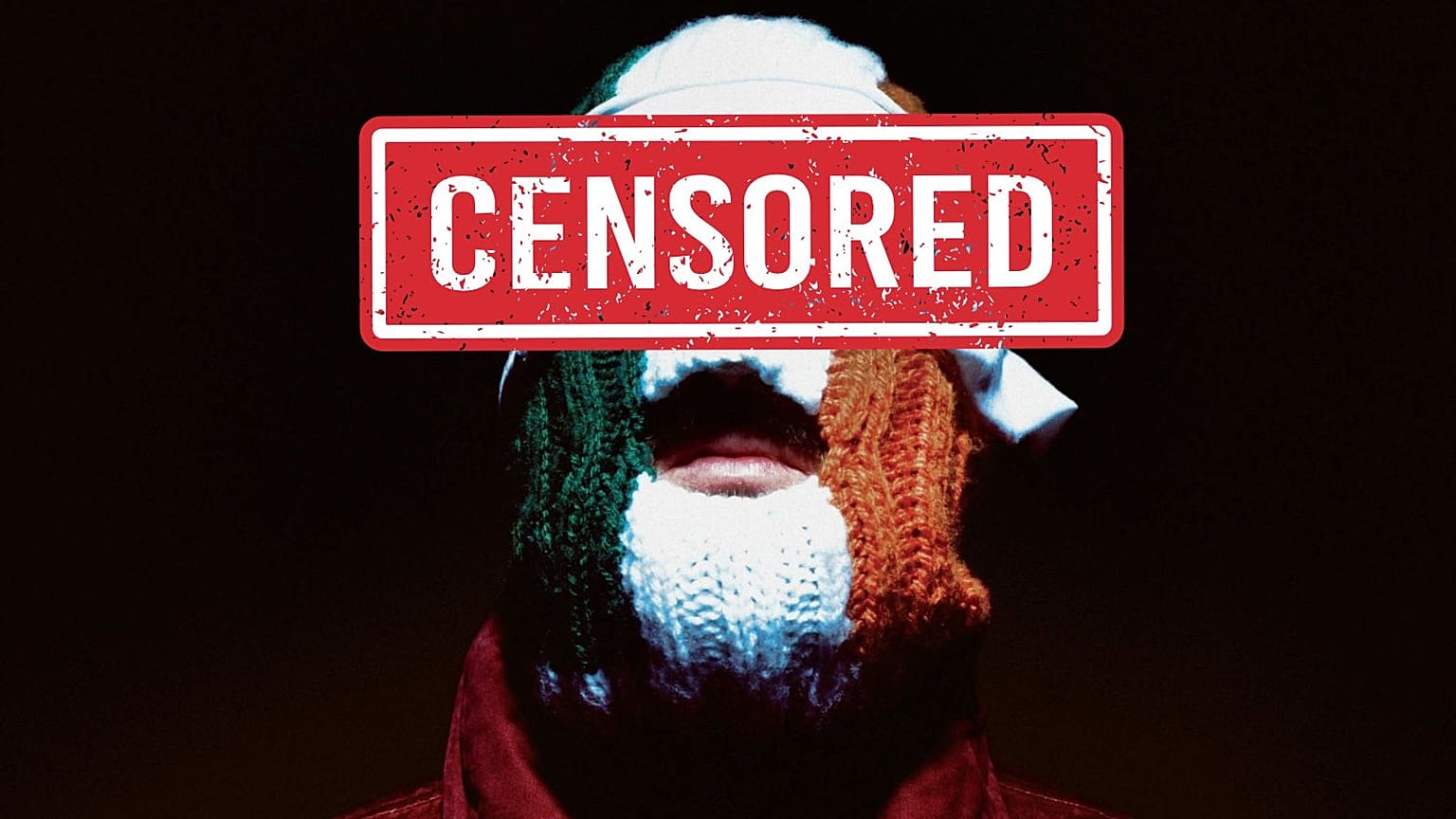
Posters for Kneecap’s new album ‘Fenian’ censored in London transport
Copyright Heavenly - Canva

By David Mouriquand
Published on 


The band’s manager Daniel Lambert has claimed that Transport For London would not allow promotional posters for Kneecap's new album 'Fenian'.

Warning: This article contains language some readers may find offensive.

Irish hip-hop trio Kneecap are no strangers to controversy, as evidenced by their recent legal woes, which eventually saw the charges against member Mo Chara dropped, with the UK government losing its appeal.

However, beyond the headlines, they can back up their engaged verve with artistic mastery, as their new album ‘Fenian’ can attest.

However, Transport For London (TfL) doesn’t seem to be letting them off the hook.

The band’s manager has said that the posters for ‘Fenian’ had to be censored as the local government body responsible for most of the transport network in London would not allow them.

Daniel Lambert has claimed that they had to censor the promotional posters, which originally featured the album artwork, the title, and review pull quotes – including one from UK Prime Minister Keir Starmer, who branded Kneecap as “completely intolerable”.

Kneecap - Fenian album cover
Kneecap - Fenian album cover Heavenly

Lambert revealed on X that the design was not permitted by TfL and that they had to submit amended versions that censored both the word ‘Fenian’ and the Keir Starmer’s name.

TfL shared a statement with Belfast Telegraph, claiming that they had only ever received the censored version, and did not ask the band’s management to make any adjustments.

“The redacted style of the poster reflects the version that was submitted to us for approval. We did not request any changes to the artwork before the current advertising campaign commenced,” a TfL spokesperson told the outlet.

However, Lambert claims that the band was rejected when they put forward the non-censored design.

“The company we book London tube ads with confirmed our original artwork was NOT accepted by TFL & ‘FENIAN’ had to be removed,” he wrote. “We then provided a redacted poster – took a week for approval and deadlines missed. Delay was then TFL making the decision to even approve redacted one.”

Lambert added in a subsequent post: “The facts here are pretty clear. I said they ‘only accepted with them blanked out’. Which is true and accurate”.

The post included a screenshot of an email with the subject “KNEECAP Tube Ads’ with a response that read: “I can confirm TFL will not allow the word FENIAN to be displayed unfortunately. All ads have to be completely impartial and non-political of any movement.”

Despite their criticism of England, Starmer and the UK justice system, what could possess TfL to ban the image?

It could be something to do with the word “Fenian”, which refers to the 19th-century Irish revolutionaries who fought to overthrow British rule to achieve an independent Irish republic.

The term has been used as an insult. However, the album 'Fenian' sees Kneecap reclaim the word.

In the informative, tongue-in-cheek and foul-mouthed liner notes for ‘Fenian’, the band provide some context for the word: “Origin: name of an ancient Irish people. Historical: Irish Republican revolutionaries that fought for Irish independence from the British Empire (and the church). Modern: Member of a secret socialist society of sound cunts active globally. Offensive: A derogatory term for an Irish nationalist - ‘You Fenian cunt’.”

Released on 1 May, Euronews Culture called the album “engrossing”, “incredibly catchy” and “a masterful album”.

“Yes, they rap about “international law they were abusing”. Yes, they’ve provoked tabloid outrage. And yes, they’ve released ‘Fenian’, a masterful album which proves they know exactly what they’re doing, and that they have the range to match their verve.”

Read the full review here.

This is not the first time that an advert for the band has been banned in London.

Last year, the trio said that they were “banned” from advertising one of their posters on the London Underground.

TfL deemed the Kneecap poster, showing their frequently used logo depicting a balaclava, "would likely cause widespread or serious offence to reasonable members of the public".

In an Instagram post, the group shared a picture of the offending poster.

“[It] has been rejected because: ‘it is likely to cause widespread or serious offence to reasonable members of the public on account of the product or services being advertised, the content or design of the advertisement, or by way of implication’,” they wrote. “See it. Say it. Censored.”

The group, longtime supporters of Palestine, suggested at the time that they had been repressed for speaking up about the ongoing genocide in Gaza.

“Speak out against genocide and they’ll use every single angle they can to silence you. Join the IOF [pejorative term for the Israeli Defence Force], murder kids, fly to London and nothing happens – you’ll be welcomed and applauded.”

Kneecap’s ‘Fenian’ is out now.


'David Attenborough Effect': Meet the wildlife artists inspired by the legendary broadcaster

David Attenborough (left) and Skip Khangurra (right).
Copyright AP Photo and Libra Fine Arts.

By Liam Gilliver
Published on 

As David Attenborough turns 100, Euronews Earth explores the real-life impacts of his extraordinary career.

Sir David Attenborough will likely go down in history as the most treasured wildlife broadcaster on planet Earth – and tomorrow, he turns 100

Starting his TV career as a trainee producer for the BBC in 1952, Attenborough oversaw the first-ever colour broadcast in Europe, and quickly became the leading voice of the world’s most popular nature documentaries.

To date, he has written, presented or narrated more than 100 films, including the award-winning ‘Life’ series which tracks the “extraordinary ends” to which animals and plants go in order to survive.

Alongside his melodic storytelling and clear passion for the natural world, Attenborough has ended up inspiring a new generation of conservationists, animal-lovers, and environmental activists.

The ‘David Attenborough Effect’

Attenborough’s work is so persuasive that fans have coined the term ‘the David Attenborough Effect’, demonstrating how the issues he highlights in his work have brought about real change.

A 2019 poll by GlobalWebIndex, which surveyed 3,833 people in the US and the UK, found that when Attenborough issued a call to action to combat plastic waste in the second series of Planet Earth, searches for “plastic recycling” spiked by 55 per cent in the UK.

In the wake of the documentary, survey participants reported a 53 per cent drop in their single-use plastic consumption.

But it isn’t just ordinary people sitting at home watching TV who have been inspired by Attenborough’s work.

Following galvanising footage of bottom trawling in ‘Ocean’ – where boats drag heavy, weighted nets across the seabed to catch fish and kill everything in their wake – a ban on deep-sea fishing in parts of the Atlantic rich with marine life was upheld by the EU’s General Court.

David Attenborough is a ‘constant source of inspiration’

Artists Skip and Katherine Khangurra lives were changed by the David Attenborough effect. They set up their company Libra Fine Arts after watching the broadcaster’s shows.

“We both grew up watching Attenborough’s programmes on TV, captured by his remarkable voiceovers,” Katherine, 42, tells Euronews Earth.

“Skip, 57, is often inspired to draw after watching a series – whether it’s penguins from ‘Frozen Planet’ or gorillas from ‘Gorillas Revisited’. The filmmaking in these programmes is extraordinary, revealing incredible detail in every scene, sometimes even down to the individual hairs of each animal.

Katherine (left) and Skip (right) Supplied by Libra Fine Arts

The couple, who live in Windsor, England, say Attenborough’s work has been a “constant source of inspiration” for them, as it has been for many other artists around the world.

They once gifted Attenborough some of their wildlife cards, and received a “beautiful” handwritten note in response. “The time and care he put into writing to us personally really touched us,” Katherine says.

The next generation learning about wildlife

Now, Katherine and Skip use their art as a learning resource for families – helping parents to teach their children the names of different species and their traits and “connect” with wildlife.

“It’s wonderful to watch those moments of curiosity and connection, and especially lovely to see the next generation learning about animals and building that connection for the future,” Katherine says.

Skip drawing a giraffe. Supplied by Libra Fine Arts.


A 2022 study of 842 primary school students, which was published in the science journal Global Ecology and Conservation, found that children's willingness to conserve wild animals was positively associated with both direct (time spent outdoors) and indirect (watching nature programmes or reading nature books) nature contact frequency, their knowledge of species, and their likeability of species.

“Children's knowledge and likeability of species were also positively associated with nature contact frequency (direct and indirect forms),” the study states.

“Therefore, wildlife conservation would benefit from environmental education and child care policies that enable children to spend time outdoors and learn about nature in multiple ways.”


Franciscan order owning several Madrid flats evicts elderly resident amid protests

Manuel Ordaz, evicted pensioner in Madrid, 7 May 2026
Copyright Sindicato de inquilinas


By Jesús Maturana
Published on 


On 7 May, the Venerable Third Order of Saint Francis carried out a fifth eviction attempt against 67‑year‑old pensioner Mariano Ordaz, who had lived all his life in the same flat in Madrid’s Embajadores district. The case has sparked protests and reignited the housing debate.

Mariano Ordaz, a 67-year-old pensioner, was finally evicted last Thursday from the home where he had lived all his life in the Embajadores neighbourhood, in Madrid’s central district, when the fifth eviction order was carried out. On four previous occasions, pressure from local residents had managed to halt the process; this time it was not possible.

From early in the morning, a large deployment of National Police cordoned off the area with up to eight vans and four patrol cars. The spokesperson for the Madrid Tenants’ Union, Carolina Vilariño, summed it up bluntly: far too many officers to throw a pensioner out of his home.

Ordaz now does not know what he is going to do. He thinks he will be able to go to a shelter for a few weeks and a friend has offered him a room for around 400 euros. He has no other housing option.

A landlord with vows of poverty and more than 300 flats

The owner of the building is the Venerable Third Order of Saint Francis of Assisi (VOT), a religious institution which, according to its critics, manages its assets according to a logic closer to that of an investment fund than to that of a religious congregation. The order owns more than 300 flats in central Madrid alone.

Several tenants in VOT properties point to its peculiarities as a landlord: they were offered a rent slightly below market price in exchange for refurbishing the flat themselves, because the properties were in a very poor state. Maintenance of the communal areas was a mess: leaks, broken windows, lights that did not work, pipes full of rust.

Ordaz’s story fits that pattern. After the pandemic, he lost his job and could not afford the rent increases. When he was told he had to pay 800 euros a month plus an accumulated debt of 15,000 euros, it was clear to him it was impossible. He still had to eat and pay for electricity and water.

The order justifies the eviction by claiming that work is needed because of the deterioration of the building. But the Tenants’ Union takes the opposite view: it says the “deplorable state” of the property is due to the owners’ own lack of maintenance, and that they have used that deterioration as a pretext to carry out the eviction and empty the building.

The organisation argues that the Franciscan order is not a small landlord, but a body with vast, tax-exempt property holdings which also manages healthcare centres such as the VOT San Francisco de Asís Hospital.

No moratorium and the door open to thousands of evictions

Mariano’s case cannot be understood without the political context surrounding it. The anti-eviction moratorium lapsed in Congress on 26 February after right-wing parties voted against it. With its repeal, the Tenants’ Union warns that people like Mariano have lost one of the few tools they had to defend themselves.

The Union warns that this case opens the door to a wave of up to 60,000 evictions of vulnerable families across the country. Tenants’ organisations hold several tiers of government responsiblethe Government Delegation, the central government for failing to repeal the Gag Law, the Housing Minister, the Community of Madrid and Madrid City Council.

A demonstration has been called in Madrid on 24 May under the slogan “Housing is costing us our lives. Let’s bring prices down”, starting from Atocha at 12:00.

Madrid, the most strained housing market in Spain

Mariano’s eviction is not an isolated case; according to neighbourhood organisations, it is a symptom of a broken market. The rental market has seen 44 consecutive months of year-on-year increases, a streak that began in March 2022. Since then, prices have soared by 33%, pushing more and more families out of the market.

In Madrid, the central district has seen a 21% rise in rents in just one year, with prices rarely falling below 2,000 euros a month. That a religious order with hundreds of flats in that same city centre chooses to raise rents until they become unaffordable, and then turns to the courts to carry out evictions, gives the case a significance that goes far beyond a dispute between landlord and tenant.

The rise in rents and house prices is pushing many Spaniards out of the housing market, despite the recent economic upswing. Wages have not grown at the same pace and, according to analysts, the boom in tourism and population growth in the cities, driven by immigration, have tightened supply even further.


Cattle theft in Germany: organised gangs target farms

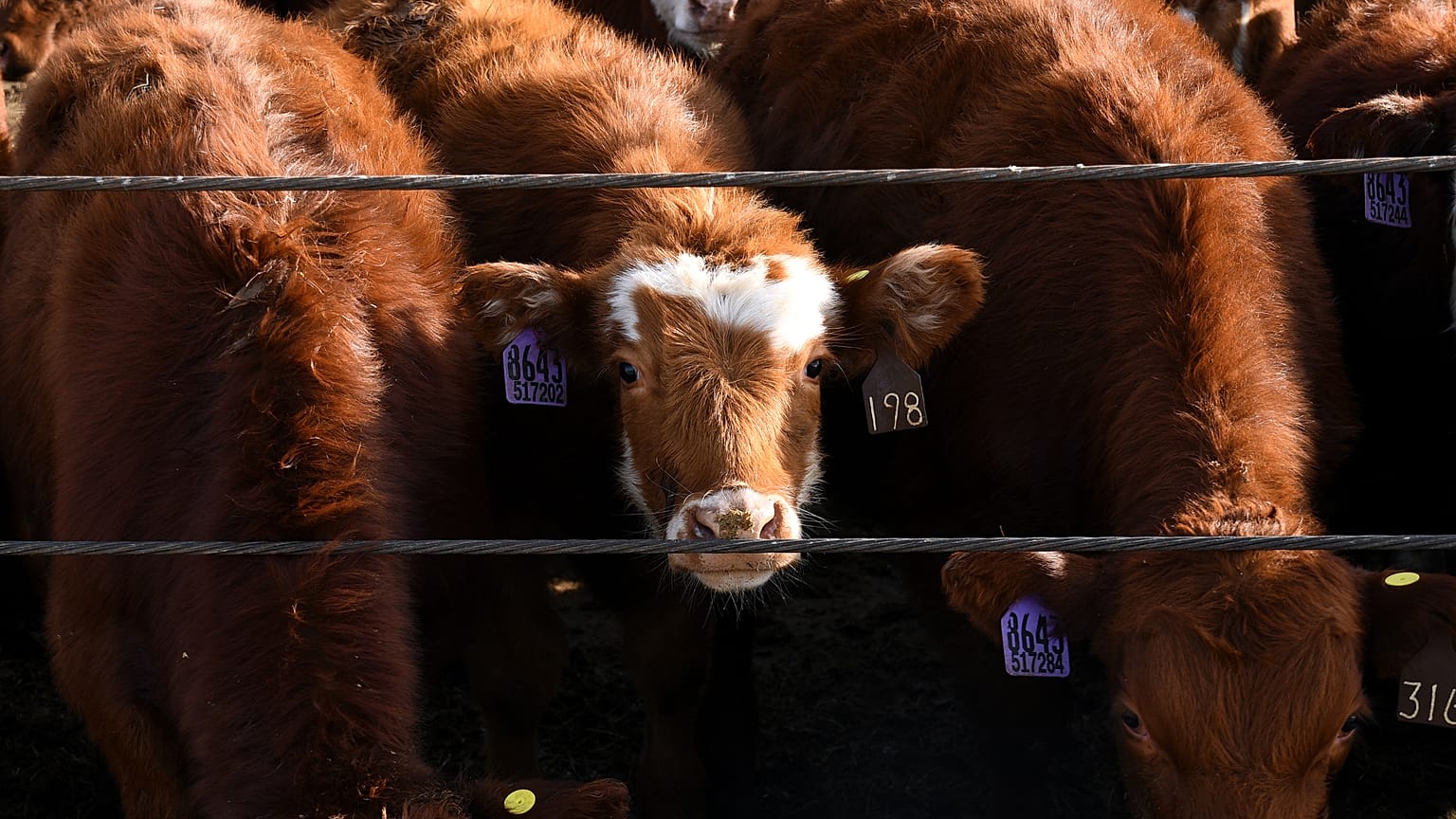
Cattle are lined up along a feed chute at the Darr Feedlot Ranch in Cozad, Nebraska, USA, on Friday, 5 December 2025.
Copyright AP Photo

By Nela Heidner
Published on 

Livestock theft is becoming a problem in German agriculture, with entire herds disappearing overnight in some cases. In addition to financial losses, the offences also have an emotional impact on farmers. Investigators believe that organised gangs from abroad are involved.

A farmer from Raddusch in the Oberspreewald-Lausitz district reported to the police on Friday morning that his herd of 48 cattle had been stolen from the pasture. The loss is estimated at around 75,000 euros.

Just 14 days earlier, unknown perpetrators had stolen 74 cattle near Herzberg in the Elbe-Elster district of Brandenburg. Lorry tracks were found at the scene.

In April, there was a case in Falkenberg, also in the Elbe-Elster district, in which 69 calves disappeared from a breeding farm. The perpetrators apparently used a remote access road to drive a large lorry onto the premises, which investigators believe was probably a 40-tonne articulated lorry, and drove directly up to the barn door. Inside, they specifically selected female calves aged between three and six months, and finally herded 69 animals onto the lorry.

Police suspect organised groups of offenders

The theft of livestock in Germany – sheep, cattle, geese and even bee colonies – is increasingly becoming a serious problem.

According to current findings, there has been a growing number of cases, particularly in eastern Germany, in which larger herds are apparently targeted and stolen by organised groups of offenders. Brandenburg is currently considered a particular hotspot.

Investigators believe that these are often professionally organised gangs. The perpetrators strike at night. To conceal the animals’ origin, ear tags are removed or replaced with forged identifiers.

In some cases there are indications that sedatives are used so that the animals remain calm while they are being loaded.

“Farm crime” is becoming an increasing burden for farmers

The rise in rural crime is now often summed up under the term “farm crime”. In addition to livestock theft, expensive agricultural machinery and GPS systems from tractors are increasingly coming into criminals’ sights.

While some federal states such as Lower Saxony and Mecklenburg-Western Pomerania are recording rising numbers of cases, other regions such as Schleswig-Holstein have recently reported a slight decline – albeit from a high level. In November last year, NDR broadcast a report entitled “Tatort Bauernhof: Diebstahl auf dem Land” (“Crime scene farm: theft in the countryside”). It stated that well over half of farmers in northern Germany had been affected by theft, with not only animals but also harvests and agricultural machinery being stolen.

Farmers unsettled

Many farms are now responding with additional security measures. These include video surveillance, better lighting of barns and digital warning networks among farmers, for example via regional WhatsApp groups. The aim is to share suspicious observations more quickly and to prevent thefts as early as possible.

Because livestock in Germany is centrally registered, the police suspect that many of the stolen animals are taken to Eastern European countries or to states outside the EU. In principle, animal transports must be checked when crossing borders. It is possible that the animals are smuggled across the border in closed lorries that are not licensed for livestock transport.

In fact, according to the federal government there is no official statistical record of all cases and crime scenes relating to the theft of farm animals. The reason is that, because animals are legally regarded as “property” in Germany, such offences are recorded in crime statistics under theft of “objects”.


At least 39 killed in fresh Israeli strikes on Lebanon

THE REAL REASON FOR THE WAR ON IRAN
COVER FOR ISRAELS WIDER WAR
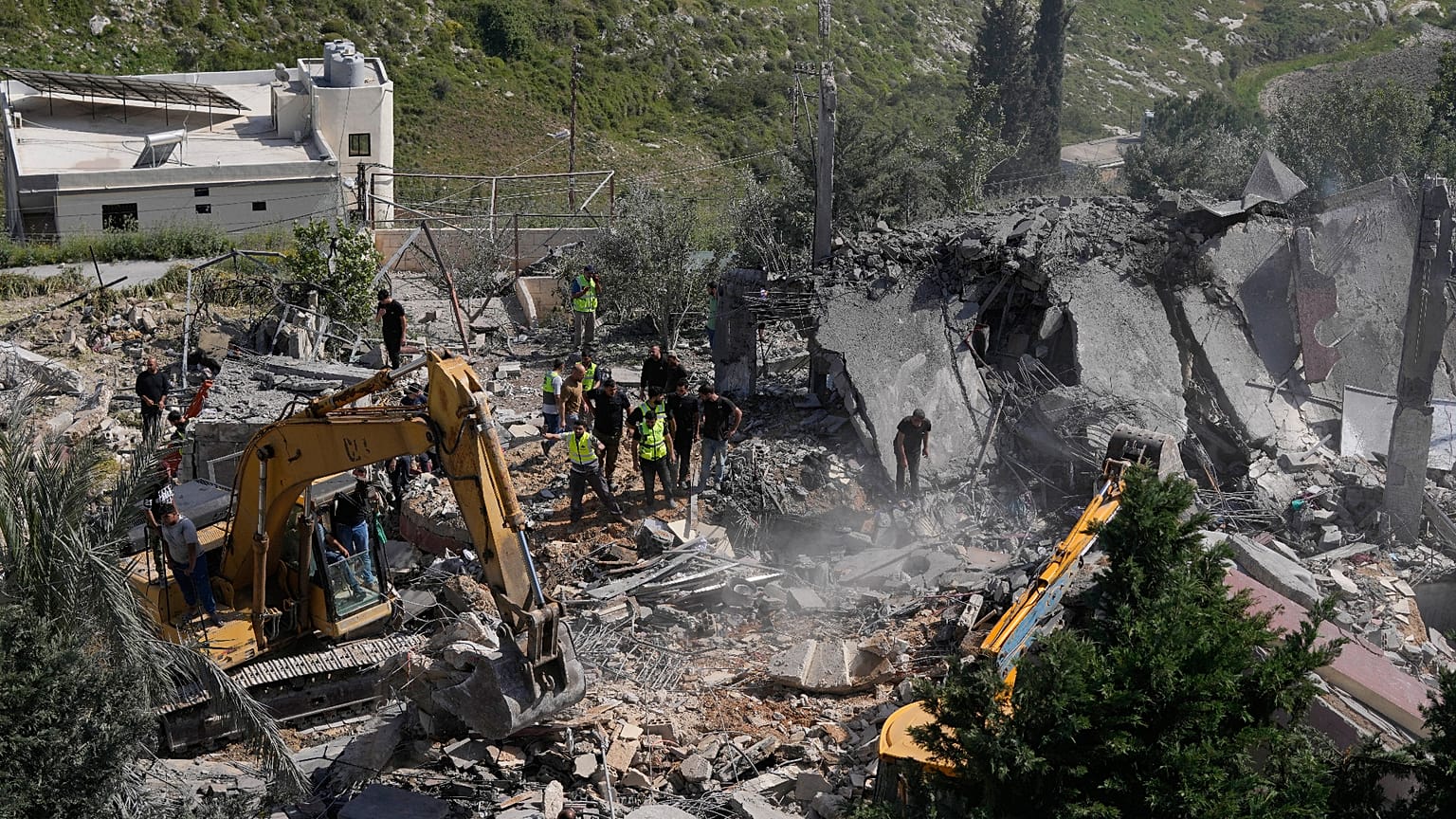
Rescue workers search for survivors using heavy machinery in the rubble of houses damaged by an Israeli airstrike in the village of Saksakieh, south Lebanon, Saturday, May 9,
Copyright Copyright 2026 The Associated Press. All rights reserved

By Rory Elliott Armstrong with AFP
Published on 

Despite a three-week-old ceasefire, Israel struck Lebanon repeatedly on Saturday killing at least thirty-nine people, while Hezbollah retaliated with drone attacks on northern Israel.

Israel carried out strikes across Lebanon on Saturday, killing at least thirty-nine people in the south of the country, according to local authorities.

The fresh attacks were some of the most intense since the start of a three-week-old ceasefire between Israel and Iran-backed Hezbollah that has done little to halt daily exchanges of fire, mostly in southern Lebanon.

Hezbollah said Saturday that it had targeted troops in northern Israel with drones on at least two occasions in response to the continued strikes.

The Israeli military said "several" explosive drones were launched into Israeli territory, with one army reservist severely wounded and two others moderately injured in one of the attacks.

Lebanon's state-run National News Agency (NNA), meanwhile, reported a series of Israeli strikes across the south, including one on the town of Saksakiyeh.

The health ministry said that raid "resulted in an initial toll of seven martyrs, including a girl, and 15 wounded, including three children".

The Israeli military said it struck "Hezbollah terrorists operating from within a structure used for military purposes" in Saksakiyeh.

It added it was "aware of reports regarding harm to uninvolved civilians in the structure in which the terrorists were struck. The details of the incident are under review."

The health ministry reported that another Israeli strike on a motorbike in the city of Nabatieh hit "a Syrian national and his 12-year-old daughter".

"After they managed to move away from the site of the first strike, the drone attacked a second time," killing the father, the ministry said, adding the drone then targeted the girl "directly for a third time".

The girl was undergoing life-saving surgery, it added.

In the southern town of Bedias, the health ministry said one person was killed in an Israeli strike and 13 wounded, including six children and two women.

Israel's military had called on residents of nine villages to evacuate, saying it would act "forcefully" against Hezbollah, though neither of the two locations of the fatal strikes were included in the warnings.

NNA also reported that the "Israeli enemy launched two strikes on the Saadiyat highway", referring to a location around 20 kilometres (12 miles) south of Beirut and outside areas where Hezbollah has traditionally held sway. It later reported a third strike nearby.

A new phase

Under the terms of the ceasefire released by Washington, Israel reserves the right to act against "planned, imminent or ongoing attacks".

Earlier on Saturday, its military said it had struck more than 85 Hezbollah infrastructure sites in the past 24 hours.

Its troops are also operating inside an Israeli-declared "yellow line", running around 10 kilometres (six miles) inside Lebanon along the border, where residents have been warned not to return.

Hezbollah lawmaker Hassan Fadlallah on Saturday warned of "a new phase, in which the resistance (Hezbollah) will not accept a return to pre-March 2".

Hezbollah drew Lebanon into the Middle East conflict on March 2 when it launched rockets at Israel to avenge the killing of Iran's supreme leader in US-Israeli strikes.

Even before then, Israel had carried out regular strikes targeting the group - accusing it of seeking to rearm - in spite of a 2024 ceasefire intended to end the last war between the foes.

Until March, Hezbollah had largely refrained from firing back.

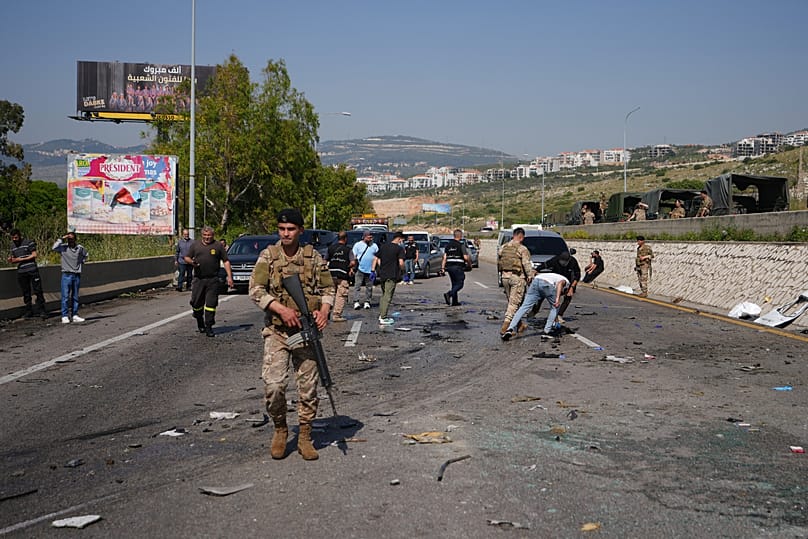
Security forces and residents inspect and clear debris scattered across a road at the scene of an Israeli airstrike that hit a car in the coastal town of Saadiyat.
Security forces and residents inspect and clear debris scattered across a road at the scene of an Israeli airstrike that hit a car in the coastal town of Saadiyat. Copyright 2026 The Associated Press. All rights reserved

"When it attacks our villages and suburbs, the enemy must expect a response, and this is what the resistance is doing," Fadlallah said, alluding to an Israeli attack this week on Beirut's southern suburbs that it said killed a Hezbollah commander.

In addition to its drone attack in northern Israel, Hezbollah on Saturday also claimed several attacks on Israeli military targets inside Lebanon using rockets and drones.

Lebanese and Israeli representatives are set to hold a fresh round of direct talks in Washington next week.

A first meeting was held days before US President Donald Trump announced the ceasefire in Lebanon, and the second round as he announced a three-week extension.

Fadlallah said the meetings amounted to a "path of concessions", reiterating his party's call for the government to withdraw in favour of indirect talks.

Israeli attacks on Lebanon have killed nearly 2,800 people since March 2, including dozens since the truce went into force, according to Lebanese authorities.


Trump open to shifting US troops from Germany to Poland

Donald Trump told reporters that relocating American troops from Germany to Poland is possible
Copyright Jose Luis Magana

By Jan Bolanowski
Published on 

Will US troops withdrawn from Germany be moved to Poland? When asked, US President Donald Trump said Warsaw favours the idea, and it is feasible.

US President Donald Trump has admitted he is considering moving some of the American troops being withdrawn from Germany to Poland.

The statement was made during a conversation with journalists at the White House and fits into a broader debate over a new NATO balance of power in Central and Eastern Europe.

When asked about the possibility of relocating some of the forces to Poland, Trump replied that "it's possible," stressing the very good relations with the Polish authorities. In his remarks, he also referred to President Karol Nawrocki, whom he had previously backed publicly.

"Poland would like that. We have excellent relations with Poland. I have excellent relations with President [Nawrocki]. Remember, I endorsed him, and he won – even though he was trailing badly, he still won. He's a great fighter, a terrific guy, I like him a lot, so it's possible... I might do it," Trump said.

Trump announces partial withdrawal

According to media reports, the US administration plans to withdraw around 5,000 troops from Germany over the next six to twelve months. Trump has suggested, however, that the scale of the reduction could be even greater. At present, some 35,000 to 37,000 American service personnel are stationed in Germany.

A few days ago, Nawrocki declared that Poland is ready to host American troops withdrawn from Germany and has the necessary military infrastructure. Warsaw views any increase in US forces as a way to strengthen regional security and NATO's eastern flank.

"We already have the infrastructure in place, and it is in the interests of Poland, Lithuania and the Baltic states for as many American troops as possible to be stationed here," Nawrocki says.

The decisions are set against a backdrop of tensions between the Trump administration and Berlin. As early as his first term, Trump criticised Germany for spending too little on defence and announced a reduction in the US military presence on its territory. In 2020, however, a similar plan for a partial withdrawal of troops ultimately did not go ahead.

Experts point out that what may prove crucial is not only the number of troops, but also where they are deployed.

"The US forces in Germany have their military importance, and an even greater political and historical significance. From our point of view, the American military presence in Germany should remain, that is clear. But once this reduction is underway, we should be making a strong case for those troops to be moved to Poland. That is in our interest. And Poland should send a clear signal on this," Tomasz Szatkowski, a former Polish ambassador to NATO, said recently in an interview with Euronews.


Can US law stop Trump from withdrawing troops from Europe?


By Tamsin Paternoster
Published on 

A 2026 US defence law does not prevent troop withdrawals from Europe, but imposes consultations and justifications for major cuts that make such a move more difficult.

The US is set to withdraw around 5,000 troops from Germany, according to the Pentagon — a move that has raised concerns about a broader reduction of US forces across Europe.

There are around 36,000 US troops currently in Germany alongside several key military hubs, including Ramstein Air Base, command headquarters and a medical centre that treated casualties from wars in Afghanistan and Iraq.

An estimated 80,000 to 100,000 US service members are stationed across Europe, depending on rotations.

Such bases consolidate NATO's presence in Europe, hosting US forces and supporting joint training and operations with allies.

The planned reduction of 5,000 troops amounts to around 14% of the total number of service members stationed in Germany. Those set to withdraw include a brigade combat team and a long-range fires battalion that the Biden administration planned to deploy when it was in power. They will now not be stationed in Europe.

Sean Parnell, spokesperson for the Pentagon, which houses the US Department of Defense, said that the decision follows a "thorough review of the Department's force posture in Europe and is in recognition of theatre requirements and conditions on the ground."

The announcement to withdraw troops — which came after German leader Friedrich Merz issued a rebuke of the Trump administration's actions in Iran — is in line with threats US President Donald Trump has made in the past.

At the end of his first term in 2020, the president announced plans to withdraw around 9,500 US troops from Germany. The idea faced backlash from Congress before it was ultimately halted by the Biden administration, which took power in 2021.

Despite criticism from Republican and Democratic lawmakers of his recent proposal to pull troops, Trump doubled down on Saturday, telling reporters in Florida that his administration would be "cutting a lot further" than the 5,000 already mentioned.

Is Trump able to wind down large numbers of US troops in Europe?

Several analysts and commentators have pointed out that a piece of US defence legislation, which became law this year, places restrictions on the Pentagon from making significant cuts to the number of troops deployed in Europe.

Under Section 1249 of the National Defense Authorisation Act for 2026, administrations are limited in how they can use Pentagon funds to cut troop numbers.

According to the law, the Pentagon cannot use its budget to reduce troop levels in Europe to below 76,000 for more than 45 days unless it meets certain conditions.

These include certifying that the cuts are in the interests of US national security, consulting NATO allies on the move beforehand and submitting a detailed report to Congress.

There is also a waiting period, meaning large reductions in troop numbers cannot take place immediately.

Beyond legal limits, analysts note that withdrawing troops from Europe is complex and expensive.

Analysis by Liana Fix from independent US think tank the Council on Foreign Relations, notes that US forces in Germany are embedded in global command structures, meaning that relocating them is logistically complex, costly and could weaken military readiness.

On the German side, officials have so far downplayed the immediate impact of losing 5,000 troops, with Defence Minister Boris Pistorius describing the move as "foreseeable", and pushing for Europe to take more responsibility for its own safety.

German Foreign Minister Johann Wadephul and Chancellor Friedrich Merz equally projected calm in the wake of the news, with Merz telling a television interview on Sunday: "They are constantly redeploying their troop units worldwide, and we are affected by that too."

Critics and politicians pointed out that the threat of not stationing Tomahawk missiles on German soil poses a bigger risk than troop withdrawal, as it leaves Berlin with a missile gap that it could not replace on its own accord.