Wednesday, July 15, 2026


Greenland research centre halts new collaborations with US to protect its scientists

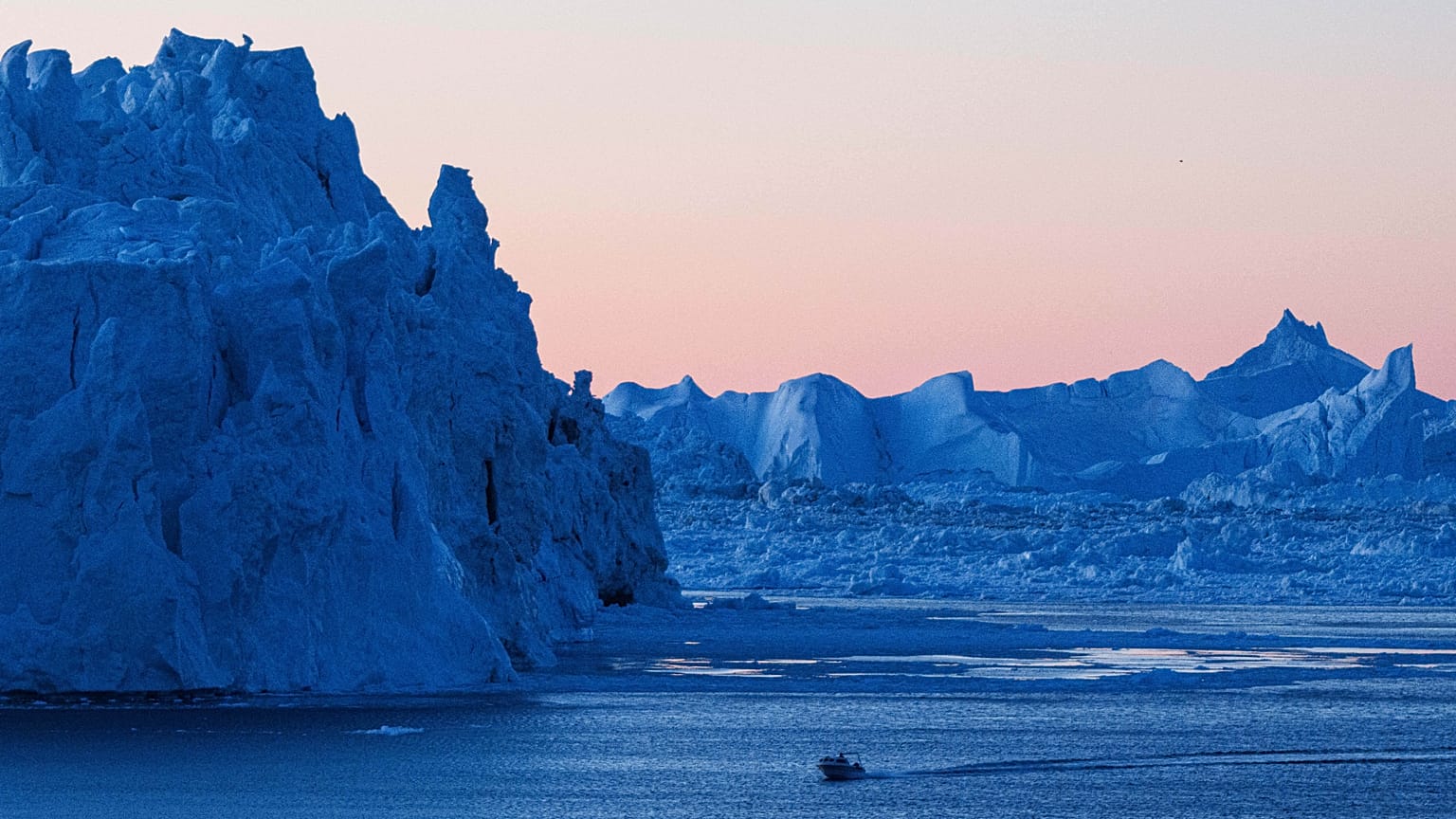
FILE -A boat rides in front of an iceberg at Disko Bay near Ilulissat, Greenland, on 28 Jan. 2026. (AP Photo/Evgeniy Maloletka, File)
Copyright AP Photo

By Greta Ruffino with AFP
Published on


The Trump administration has cut billions of dollars in public research funding and fired government scientists.

The Greenland Institute of Natural Resources, the Arctic island's leading environmental and natural-resource research centre, is halting new collaboration with US partners to protect its data and scientists.

"I can confirm that we... made the decision to only engage in projects with US partners that we already are or have been working with," Josephine Nymand, director of the institute, told news agency AFP.

The decision comes amid tension over US President Donald Trump's vows to seize the mineral-rich island.

In an interview with Greenland's public broadcaster, KNR, she said the decision was based on a need to protect the institute's data and scientists, citing the Trump administration's deletion of troves of scientific data and refusal to allow some foreign scientists into the United States.

"I can't do much to help our compatriots if they are detained" on arrival in the United States, she told KNR.

"That's why we decided the best thing was not to go there in the current situation."

The decision comes amid renewed tensions over Greenland.

Last week, Trump revived his claim from earlier this year that Greenland, the semi-autonomous Arctic territory of Denmark, “should be controlled by the United States”, apparently reversing months of diplomacy earlier this year to get him to drop the demand.

Reports and data on climate and the environment have been targeted for large-scale deletion from government websites.

The Greenland Institute of Natural Resources carries out research on Arctic ecosystems and monitors the island's environment and biological resources.


Former Hungarian foreign minister Szijjártó resigns from parliament to join Chinese carmaker


By Malek Fouda & Greta Ruffino
Published on

Péter Szijjártó announced his resignation and details of his new position with the world's largest electric carmaker, China's BYD, on his Facebook page on Wednesday, detailing that he'll be filling an "international executive position".

Hungary's former foreign minister Péter Szijjártó has resigned from his seat in parliament and taken an executive position with Chinese electric automaker BYD.

Szijjártó, who served as Hungary's top diplomat for nearly 12 years under former Prime Minister Viktor Orbán, wrote on Facebook that he had received “a highly prestigious offer” from the world's top electric carmaker “to fill an international position”.

“BYD is one of the greatest success stories in the automotive industry over the past 20 years,” Szijjártó wrote. “Starting today, I will continue to work as the executive responsible for the group’s external relations and the development of new business lines.”

Szijjártó lost his job as foreign minister after opposition leader, and now prime minister, Péter Magyar, won in a landslide election against Orbán's Fidesz party back in April.

Since then, Szijjártó had been absent for most parliamentary votes and rarely appeared in public or posted on social media. He has held a seat in Parliament since 2002.

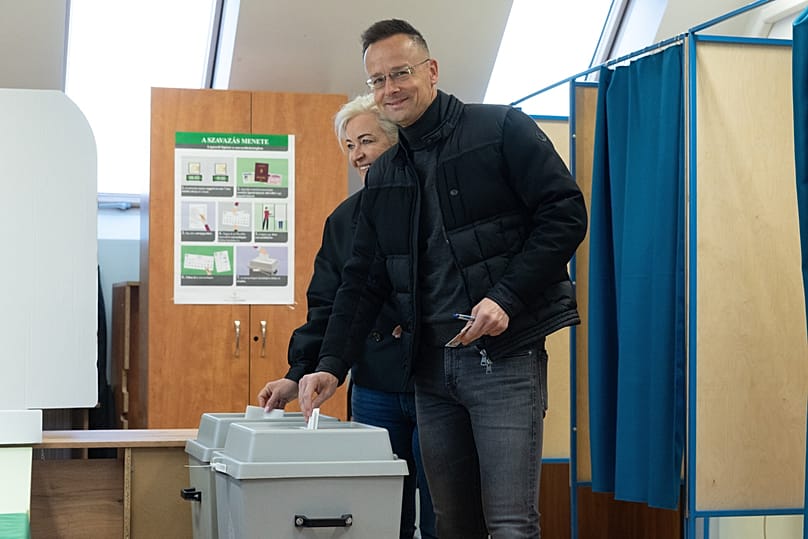
Hungarian Foreign Minister Peter Szijjarto and his wife cast their votes during the general election in Dunakeszi, Hungary, Sunday, April 12, 2026 Zoltan Kocsis/MTI - Media Service Support and Asset Management Fund

In 2023, Szijjártó announced that his now-employer BYD would open its first European factory in Hungary — allowing the conglomerate to skirt European Union import tariffs on Chinese electric vehicles imposed to protect the continent's domestic auto manufacturing sector.

As Hungary's foreign affairs and trade minister, he played a central role in talks with BYD to bring the plant to Hungary, and said at the time that the decision came after 224 rounds of negotiations between the company and Hungary’s government.

Szijjártó called the project “one of the largest investments in Hungarian economic history,” and said the government would provide financial incentives to BYD for building the plant.

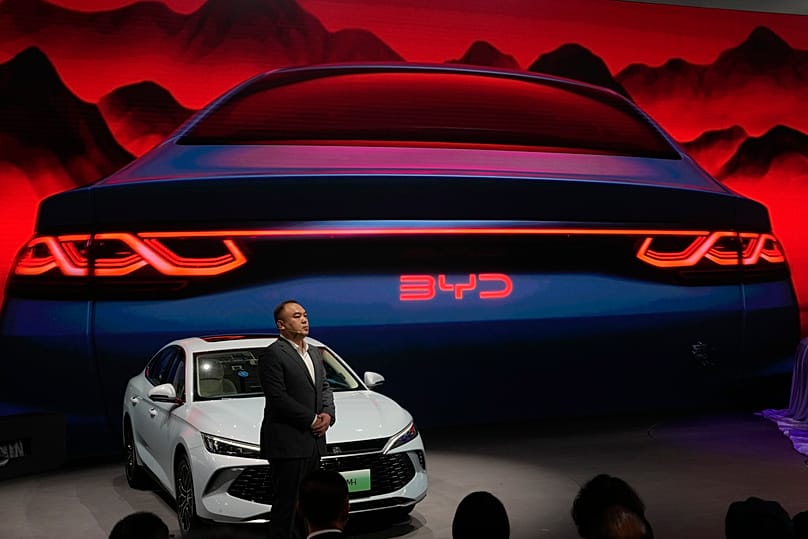
Global automakers and EV startups unveiled new models and concept cars at China's largest auto show in Beijing, Thursday, April 25, 2024 Ng Han Guan/Copyright 2024 The AP. All rights reserved

While in office, Szijjártó and Orbán opposed EU tariffs against Chinese products and sought major investment from Beijing, opening a series of Chinese EV battery manufacturing plants across the country.

Orbán's government and Beijing also jointly developed a rail corridor between Hungary and Serbia that is part of China’s “Belt and Road” global trade initiative.

EU-China trade tensions

The announcement comes amid growing trade tensions between Brussels and Beijing, with the latter repeatedly threatening to retaliate against EU moves to protect its market from Chinese overcapacity.

The EU is facing a growing trade deficit with China, which across the bloc has reached a record €1 billion a day, and engagement with Beijing has become a top priority for Brussels.

At the end of June, EU Trade Commissioner Maroš Šefčovič said Brussels would seek to achieve "tangible" results through dialogue with China by October.

The extent to which that deadline is achievable, however, has been questioned. German MEP Bernd Lange (S&D), chair of the European Parliament's trade committee, said the October deadline set by the European Commission in trade talks with China was "not realistic at all" if the EU wanted a binding agreement.


Foxconn subsidiary drives growth in Hungary’s industrial exports

Foxconn subsidiary drives growth in Hungary’s industrial exports
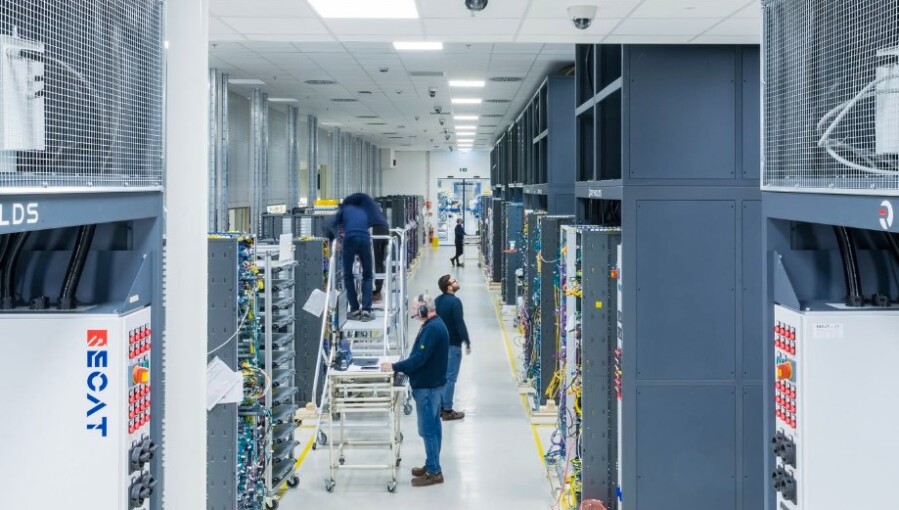
Cloud Network Technology was Hungary's third-largest company by revenue in 2025. / Facebook/Cloud Network Technology

By bne IntelliNews July 14, 2026

Hungary's recent export recovery has been driven primarily by AI-related server manufacturing rather than the country's automotive industry, financial website Portfolio.hu wrote after the KSH released industrial data for May.

The detailed reading by the statistics office showed the production of the computer, electronics and optical equipment segment, which accounted for 15% of manufacturing, surged 43%, boosted by production of peripherals.

Growth was reportedly fuelled by rising output by Cloud Network Technology, a Foxconn subsidiary operating a manufacturing facility in Komarom, bordering Slovakia. The company produces server systems used in AI infrastructure and is a major global cloud service provider.

The company, set up in 2017 has become one of Hungary's fastest-growing electronics manufacturers as global demand for AI servers, cloud computing infrastructure and networking equipment has surged. Foxconn says headcount exceeded 2,000 in 2025 after hiring more than 900 workers, making it one of the largest employers in the region.

The plant forms part of Foxconn's strategy to diversify manufacturing closer to European customers while reducing dependence on Asian production. The company also fits into Hungary's broader strategy of attracting high-value electronics manufacturing alongside automotive investments, with the government supporting expansion through investment incentives and workforce development.

The company says it is investing in advanced manufacturing technologies and AI-enabled production processes. It has also taken part in discussions with the Hungarian government on AI and industrial policy.

Public data showed that Cloud Network Technology is Hungary's third-largest company by revenue in 2025, behind energy groups MOL and MVM as it booked HUF2.6 trillion (€7.2bn) in sales.

The KSH on July 14 confirmed that headline industrial output edged down 0.4% y/y in May, but rose 5.4% when adjusted for the number of workdays. On a monthly basis output increased by 2.3% and edged up 0.7% in the first five months.

Broken down by sectors, output of the automotive industry, Hungary's biggest manufacturing sector with a 25% weight, inched up 0.7% y/y.

After bottoming out in late 2025, Hungary's industrial sector has returned to growth, boosting exports. While the recovery has coincided with a rebound in vehicle production, the automotive sector accounts for only about 28% of export growth recorded so far this year.

Output of the food, drinks and tobacco products segment, making up 12% of manufacturing, slipped 4.5%. Output of the electrical equipment segment, accounting for 8.6% of manufacturing, declined 5.3%.

New orders in the manufacturing sectors surveyed rose 13.6% y/y in May, driven by a 15.8% increase in export orders, while domestic orders edged up 1.6%. Total order books at the end of the month were 41% higher than a year earlier.


BEYOND THE BOSPORUS: Imamoglu, jailed challenger to Erdogan, given 3 minutes per criminal charge to defend himself

BEYOND THE BOSPORUS: Imamoglu, jailed challenger to Erdogan, given 3 minutes per criminal charge to defend himself
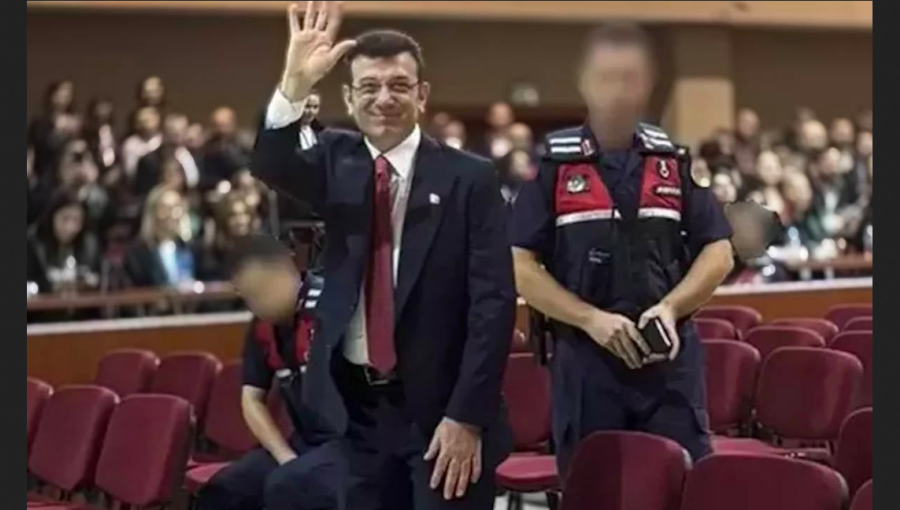
Imamoglu in court. The jailed politician also indicated astonishment at the world leaders who last week visited Ankara for a NATO summit, but said nothing about the Erdogan regime's crushing of Turkey's opposition. / social mediaFacebook
By Akin Nazli in Belgrade July 15, 2026

Elected mayor of Istanbul Ekrem Imamoglu, the opposition politician jailed before he could step up his campaign to end the grip of Recep Tayyip Erdogan on Turkey’s presidency, on July 13 launched a blistering attack on the country’s judiciary from his prison cell.

From Silivri prison, Imamoglu warned that Turkey faces a "multifaceted judicial collapse" that will silence political dissent ahead of future elections.

In an AI-generated video message targeted at young voters, Imamoglu – who would be widely expected to defeat Turkish leader of 23 years Erdogan in a head-to-head contest – explained the tight constraints he faces in his ongoing trial over supposed extensive corruption in his Istanbul municipal administration. The court, he said, has severely restricted his ability to defend himself against a mountain of state accusations.

Three minutes per charge

Imamoglu revealed how the court has allocated a single session of seven to eight hours for his entire defence. The time must be divided up between himself, three defence lawyers and cross-examinations conducted by judges, prosecutors and co-defendants.

"They tell me, 'make your defence'. They expect a defence in this timeframe against 143 criminal charges and a 4,000-page pile of nonsense," said Imamoglu.

"Under this schedule, I am being given barely three minutes to defend myself against each charge levelled against me. They make it so hopeless, the prosecution has no questions to ask me and neither does the court panel. Their only required path is to prevent a defence so that no one hears Ekrem."

Case “architect” Erdogan is “afraid”

The massive trial has become a flashpoint in Turkish politics. The first hearing commenced in March, as the court moved to deal with more than 400 defendants. After three months, the court insisted that it would end the first hearing on July 9, even as Imamoglu, accused of being the leader of a gang of organised criminals, awaited his moment as the last defendant to present his defence.

Remarked Imamoglu: “Erdogan, who is afraid of both live broadcasts and his [political] rival, and is the architect of all these [prosecution] files, has gone down in history as the perpetrator of the pinnacle of this lawlessness organised by the justice minister [Akin Gurlek], who is a candidate to be his successor, and as the perpetrator of the legal ‘murder’ committed in every judicial process.”

Judicial collapse threatens all

He added: “Turkey is facing a many-sided threat of judicial collapse. The threat does not discriminate, it is a threat to businessmen, artists, journalists, dissidents, students, politicians, mayors and presidential candidates.

“Practices that disregard everyone's rights and freedoms loom over our nation. The justice ministry has been turned into a 'ministry of collapse'. With phrases like 'the bigger radish is still in the saddlebag' [a Turkish proverb somewhat equivalent to “The worst is yet to come”—Ed.] or 'the arms of the octopus', I don't know for the how-many-eth time but I think there is deceit with Erdogan once again."

Jarring silence of world leaders who came and went

Imamoglu – speaking in the week that brought the 10th anniversary of the failed coup attempt that foreshadowed Erdogan’s huge crackdown on opponents in all fields up and down the country – concluded: “While Turkey was experiencing this judicial disgrace, world leaders [attending the Nato leaders’ summit in Ankara] came and went.

“What was the result? [Donald] Trump said: 'I can't say Erdogan is friends with [Benjamin] Netanyahu, but he left Israel alone, he is a wonderful ally. They [Turkey] have the largest land forces [in Nato apart from those of the US] ready to fight'.”


Albania to amend protected areas law after protests and EU pressure

Albania to amend protected areas law after protests and EU pressure
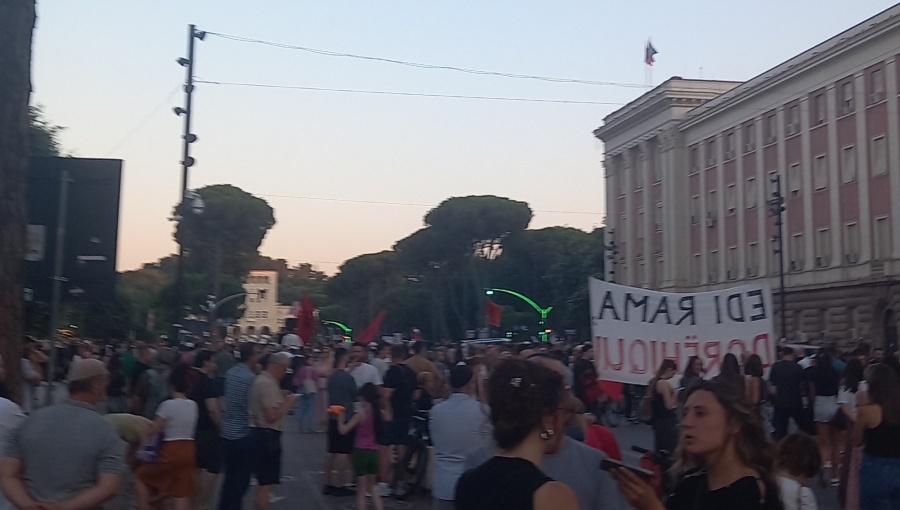
'Flamingo Revolution' protesters in Tirana in mid-July. / IntelliNewsFacebook
By IntelliNews July 15, 2026

Albanian Prime Minister Edi Rama said on July 14 that his government would amend legislation governing protected areas to bring it into line with European Union standards, in a move welcomed by protesters who have opposed a controversial luxury tourism project linked to US investors.

Speaking at a joint press conference in Brussels with EU Enlargement Commissioner Marta Kos, Rama said Albania would repeal its strategic investments law and revise the protected areas law after criticism from environmental groups, opposition activists and the European Parliament, an Albanian government statement said.

The announcement came after 45 days of protests in Albania, known as the “Flamingo Revolution”, initially sparked by plans for a luxury resort in the protected Vjosa-Narta lagoon area on the Adriatic coast. The project is backed by investors including Jared Kushner, US President Donald Trump’s son-in-law.

Protesters accuse Rama’s government of putting the interests of developers ahead of environmental protection and have called for greater transparency over major tourism developments.

Kos said the protests would not derail Albania’s EU accession path but stressed that environmental reforms were necessary for the country to progress.

“Even before these protests started, we had agreed with Albania that during this year the 2024 amendments to the law on protected areas would be repealed,” Kos said. “The law on strategic investments would also be repealed and these changes would have to be made in order to close the negotiations on chapter 27, which deals with the environment and climate change.”

She added that public protests were part of democratic processes and encouraged the Albanian government “to take steps forward, to address the concerns of citizens”.

Rama said the strategic investments law had completed its purpose and would be replaced, while the protected areas law would be adjusted rather than abolished.

“We need to repeal the Strategic Investments Law, which is something we have agreed on, because this law has fulfilled its mission and we are working closely with the Commission on the new law,” Rama said.

“As for the Protected Areas Law, we have nothing to repeal, even though there was a resolution in the European Parliament that requested this, but in fact we will review this law based on all European standards and we will change within this law everything that is not in line with European standards.”

The European Parliament last month criticised Albania over legal changes that lawmakers said weakened environmental safeguards. It called for the repeal of 2024 amendments to the protected areas law, arguing they allowed large-scale tourism infrastructure in sensitive areas.

It also raised concerns over the extension of the strategic investments law, which it said allowed accelerated permitting procedures and reduced environmental scrutiny.

Rama defended the government's approach, saying projects would be assessed according to EU rules.

“The Commission remains in fact the one that firmly maintains objectivity because the Commission works based on facts, works based on data, works based on verified sources,” he said.

“The idea that Albania would move forward with something that would not be in full compliance with the standards and principles of the EU is a baseless claim, so there is nothing to worry about. Zero.”

He said the Vjosa-Narta project was still under development and that environmental assessments were ongoing.

“We will do a project that will be a source of pride for Albania and for Europe,” Rama said. “We will only ask for something that will make everyone proud to have this thing in the middle of Europe. Otherwise it will not happen.”
 

Strong El Niño threatens Latin American inflation and rate cuts, UBS warns

Strong El Niño threatens Latin American inflation and rate cuts, UBS warns
Colombia was ranked as the most vulnerable economy under that framework, citing a combination of high inflation, a weak fiscal position and significant exposure to swings in food and electricity prices. / Global Water PartnershipFacebook
By bnl editorial staff July 14, 2026

Latin American economies face renewed inflationary pressure and possible delays to interest rate cuts if a strong El Niño weather pattern disrupts food production, electricity generation and infrastructure this year, Swiss bank UBS said in a research note on July 13, singling out Colombia as the region's most exposed economy.

The bank's emerging markets team said the climate cycle, which shifts warm Pacific waters towards South America and alters regional rainfall patterns, could bring flooding to some areas and drought to others, with knock-on effects for agriculture, fishing, hydropower and transport links.

The US National Oceanic and Atmospheric Administration (NOAA) has put the probability of the current episode reaching a very strong intensity at 63%, with effects expected to persist until late 2026 and into early 2027.

UBS assessed countries in the region on two measures: their physical exposure to the weather pattern and their macroeconomic capacity to absorb any resulting shock.

Colombia ranked as the most vulnerable economy under that framework, UBS said, citing a combination of high inflation, a weak fiscal position and significant exposure to swings in food and electricity prices. Brazil and Peru also featured among the more at-risk economies, though for different reasons: Brazil due to broader macroeconomic fragility and Peru because of heavier direct exposure to climate effects on crops, fisheries and infrastructure, according to the bank.

Mexico's exposure was described as mixed. UBS said the effect on inflation there would depend on whether key food-producing regions were hit during a period of already-high prices, pointing to a previous episode involving tomato prices as a precedent.

The bank flagged additional risks for Venezuela, where drought could strain hydroelectric generation, the country's main power source, and for Panama, where lower water levels could disrupt canal traffic, although it said dynamic toll pricing at the waterway would limit the fiscal impact. Argentina, by contrast, could see a boost to grain and oilseed output from higher rainfall, while Chile's exposure was assessed as limited.

UBS analysts Alejo Czerwonko, Alberto Rojas and Laura Assis Iragorri said in the note that El Niño "changes where the water goes," affecting crops, hydroelectric power, fisheries and, in some cases, roads and buildings, with knock-on effects for prices and central bank policy.

The bank said that if the weather pattern were to trigger an inflation shock, either directly through food prices or indirectly via supply disruption, markets would likely price in higher policy rates, as regional central banks have tended to favour a restrictive stance to protect credibility and limit currency depreciation.

The Latin American assessment forms part of a broader set of warnings from economists about the potential global impact of the 2026-27 El Niño cycle, which forecasters have described informally as a "super" event given the scale of warming projected in the Pacific. Goldman Sachs has estimated the cycle could drive a 15.8% increase in global food commodity prices, with the full effect not expected to be realised until the second half of 2028 due to lags in planting and harvest cycles. UniCredit analysts have separately estimated that an extreme scenario could cut global agricultural output by 14.3%, equivalent to around $342bn in lost production.

UBS said forecasting the precise path of El Niño remained difficult despite advances in modelling technology, and recommended assessing each economy's vulnerability across a range of scenarios rather than assuming a single outcome.

"Even the strongest El Niño events do not lead to the typical impact everywhere, but stronger events can more significantly tilt the odds in favour of expected outcomes," the US Climate Prediction Center said.


Op-Ed 

After Controversial Egypt Match, Many Fans From the Global South Are Done With the World Cup


Feelings of injustice around the international tournament are a symptom of geopolitics in 2026.

Published
July 13, 2026

6
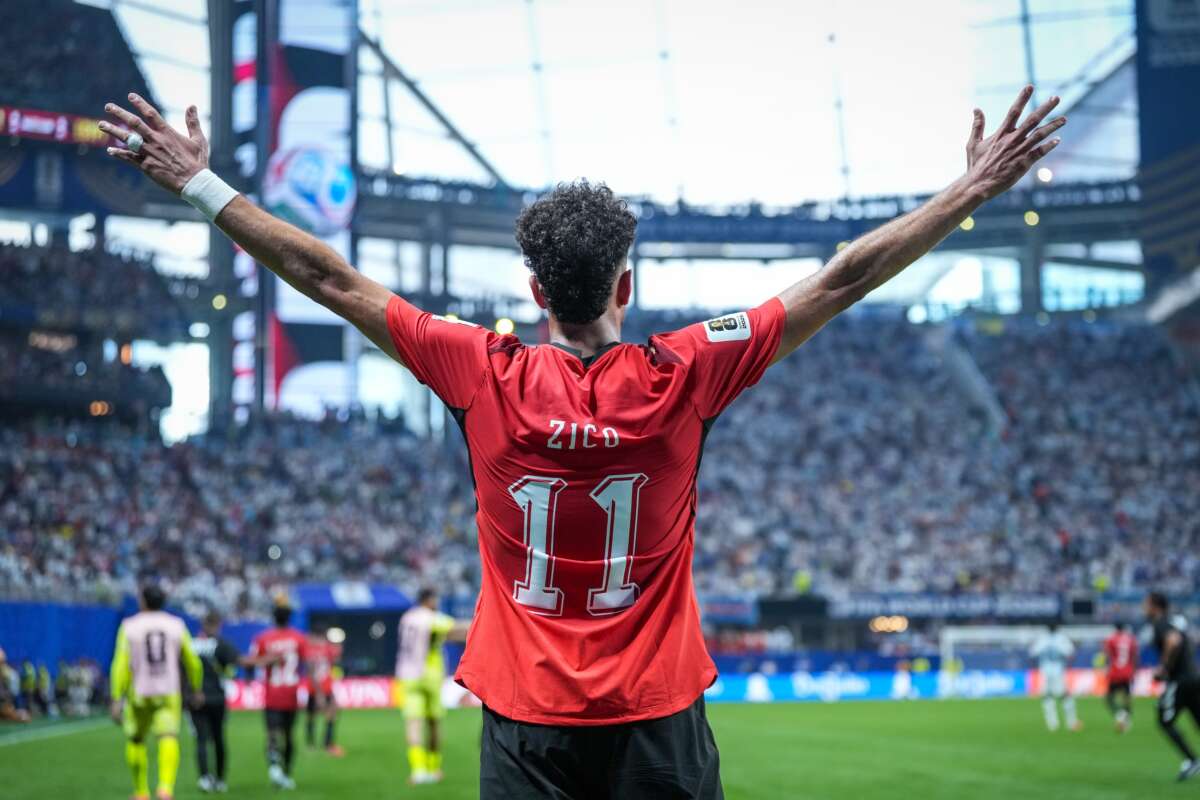
Mostafa Zico of Egypt celebrates after scoring the second goal during the 2026 World Cup match between Argentina and Egypt at Atlanta Stadium in Atlanta, Georgia, on July 7, 2026.Ayman Aref / NurPhoto via Getty Images


It’s hard to say for sure because of the wizardry involved. But Egyptian forward Haissem Hassan took what looked like eight touches of the ball on every part of his left foot imaginable, dancing in between and around two Argentine defenders, before ever putting it on his right. One touch on that right foot, followed by a final move from his left, and the Egyptian forward had done most of the legwork for what will go down as one of the most memorable moments of the 2026 World Cup.

The crowd where I was, outside a jam-packed cafe in New York’s Little Egypt, was by this point in the midst of a crescendo that peaked a few seconds later: three dribbles and a pass from Egyptian icon Mohamed Salah, followed by a glorious goal by Mostafa Zico.

Utter joy broke out in the cafe. Egypt was beating Lionel Messi’s Argentina 2-0, and everyone at the cafe knew we would remember where we were when we saw Zico’s shot hit the back of the net.

And we still will — but not for the reasons we thought. A video review ruled out the goal because of a foul committed in its buildup. And though Zico did later score a goal that wasn’t disallowed, Argentina quickly scored three and won the match.

In the space of about half an hour, the cafe went from feeling like a party to a funeral. A dramatic loss in the dying minutes of a game would be devastating for any fan base. But when it happens in the context of dubious refereeing decisions, in a tournament run by a famously corrupt organization, the despair can take on an extra edge.

Allegations of Rigging

The words “rigged” and “corruption” filled Little Egypt’s Steinway Street after the match and were all over social media feeds as well. “It needs to be a fair game, and today I don’t think it was a fair game. It’s really a shame on FIFA … something doesn’t feel right,” said Mohamed Bakar, who drove from Pennsylvania to New York just to watch the game among Egypt’s fans on Steinway.

Members of the Egyptian team did not hold back either.

“The referee was not fair. The injustice was clear. There’s been an unfairness right from the start of the match. A 2-0 lead is not enough to beat Argentina. It’s clear that the tournament has been fixed,” said an emotional Zico in a post-match interview.

Coach Hossam Hassan felt similarly. “The result was influenced by internal factors on the pitch and external factors off it,” he said. “Perhaps they wanted to keep the world champion in the competition. Perhaps they wanted Messi to stay in the running.”

To be clear, there is no evidence that definitively supports those claims. But the people making the allegations point to a pattern of decisions that seem to have favored the defending champions, and in the case of this match, come at Egypt’s expense. The focal point of the controversy was the foul committed ahead of Zico’s goal that happened about 20 seconds earlier, and roughly 100 yards away — factors that usually mean they are no longer relevant. And many point out that when similar incidents seemed to occur before Argentina’s goals — both during the Egypt match, and earlier in the tournament — the same decision was not made.


FIFA has repeatedly gotten into bed with authoritarian leaders while prioritizing commercial aspirations over human rights.

As Stefan Szymanski, my co-host on “The Soccernomics Podcast” said in our most recent episode, there is a bias that exists because of the fact that Messi is the best player in the world, and perhaps in the history of the sport. “It will always be the case that the best players will get asymmetric treatment,” Szymanski said. “They’re going to get better treated than the rest because they’re the moneymakers…. Even just the selection of the referee is something that a player like Messi can influence, and this is kind of well-known as a fact.”

The bias Szymanski is talking about isn’t necessarily conscious. One cannot just look at these incidents and definitively conclude the World Cup is rigged, and yet so many people do. What’s interesting is to consider why.

FIFA’s Shady Past Makes People Believe the Worst


In a series for Zeteo called “The Dark Side of the World Cup,” my colleagues and I detail FIFA’s history of corruption, criminality, and corporate greed. The organization has repeatedly gotten into bed with authoritarian leaders while prioritizing commercial aspirations over human rights. The most high-profile example was the U.S. Department of Justice–led investigation about a decade ago that resulted in nine FIFA executives being indicted for racketeering, wire fraud, and money laundering conspiracies — and the eventual resignation of former FIFA President Sepp Blatter. Fans of the sport know this, and are constantly in a struggle with the Zurich-based behemoth over who really owns the game.

The result? A breeding ground for conspiracy based on the belief, held widely among fans of the sport, that FIFA is willing to do anything in the name of money.

In the lead-up to the World Cup, current FIFA President Gianni Infantino cozied up to Donald Trump while the U.S. president bombed seven countries after retaking office and allowed his secret police force to round up immigrants and kill U.S. citizens at home. Though all of this flies in the face of FIFA’s human rights policy, Infantino seemed happy to selectively ignore it all to ensure the smooth operation of a tournament that’s expected to generate almost $9 billion for the organization.

In the opening weeks of the tournament, the biggest controversy was the treatment of the Iranian team, which was forced by U.S. visa restrictions to travel back and forth between Mexico and the U.S. between its games. This travel killed the Iranian players’ preparation and recovery time, and when a goal that would have sent them to the next round of the World Cup was ruled out — the same day that the World Cup’s host country was bombing their own — many Iranians felt the decision was another injustice.


As this tournament reaches its apex, controversies that feed into that idea that the World Cup is not fair seem to be everywhere you look.

But as this tournament reaches its apex, controversies that feed into that idea that the World Cup is not fair seem to be everywhere you look. The fallout from Egypt’s exit from the tournament wrestled the headlines from another story that hadn’t exactly improved the optics: Trump’s meddling in the suspension of U.S. star Flo Balogun for the host nation’s match with Belgium.

Balogun wasn’t supposed to play in the match, after picking up a red card against Bosnia-Herzegovina. But after Trump put in a call to Infantino, suddenly he was able to play.

Like some of the theories doing the rounds about Egypt’s loss, we can’t say definitively that Trump’s call was the decisive factor in the decision. And Infantino insists it was made independently and autonomously by the FIFA Disciplinary Committee. But in the context of FIFA’s dodgy past, people find it easy to believe the worst.

The rhetoric from the U.S. hasn’t helped with the optics.

While Trump openly advertised that he requested that FIFA review the decision, Andrew Giuliani — the head of the White House Task Force on the FIFA World Cup 2026 — somehow thought invoking Trump’s record on electoral integrity was the right way to defend him, saying: “We believe in a level playing field … I can tell you President Trump takes it extremely seriously, whether it’s on the pitch or whether it’s in the ballot box.”

Feelings of Injustice From the Global South


I am among the people angered about what happened in the Egypt match, and many others who also have ties to the Global South have felt the same way. And just as is true for all sports fans who pay attention to broader geopolitics, the emotions we feel about sports are often about something bigger than whatever’s happening on the field of play.

And whether it’s Egypt, Iran, or Ghana in its match against England, there is a deep sense for many who support these teams that it’s smaller, poorer, less powerful countries that are disproportionately on the receiving end of injustice in sport — up to and including refereeing decisions.

People from these parts of the world are already on the receiving end of so many of the world’s inequalities. Whether it’s Western militarism — from the ongoing genocide in Gaza to the U.S.’s illegal war in Iran — or the effects of colonialism, which continue to shape inequity and political stability around the globe, people feel these injustices in their bodies every day.

Sports are supposed to be an escape from all of that — a place in which countries that have been on the receiving end of imperial brutality have a rare chance to compete with each other and with world powers on a level playing field, and dream they can actually pull off what is often deemed to be impossible. And when they do so well and get so close, to have it then taken away because of a questionable refereeing decision on the field is a gut punch. And when even sport proves to be unfair, what do we have left?

Sports are supposed to be a place in which countries that have been on the receiving end of imperial brutality have a rare chance to compete with each other and with world powers on a level playing field.

Last month, Stefan Szymanski and I co-wrote a piece in The Economist that this may just be the last World Cup, arguing that football’s world order could break down as a result of FIFA enabling American bellicosity.

But could widespread feelings that the tournament is rigged be the breakage point instead? If many in the Global South now refuse to watch what remains of the World Cup because they no longer see it as a fair competition, where does that leave the tournament? And will those fans return for 2030?

Chances are that for many, the answer is yes. Because what history has shown us is that no matter what they’re served by FIFA and the authoritarian nations that host World Cups, most people keep coming back. We love the game too much. Perhaps our mistake was to ever believe the illusion that sport could be an escape from the cruel world it inhabits.

Putting the World at the Heart of the World Cup

When North African teams win World Cup matches, Astoria’s Steinway Street is a party. But in the hour after Tuesday’s match, most people were in a state of shock. Slowly but surely though, they began to gather — chanting, singing, letting off fireworks. They were still proud of their team.

While Bakar stood in the middle of the street waving an Egyptian flag, many around him waved Palestinian flags as well.

In Gaza, watch parties for Egypt games during this World Cup became a source of joy for Palestinians who have endured a genocide over the past two and a half years. Egyptian Coach Hassan’s use of his platform at the World Cup to speak out about their plight only increased the connection to the team.

“If there is anyone in the world who does not feel for the Palestinian people, then they are not human — whether they are Arab, European, or American,” he said ahead of the match with Argentina.

For many in Gaza, Hassan’s words and actions were particularly powerful because of where they were happening.

“When Hossam Hassan raised the [Palestinian] flag in the very land that funded the genocide and was a strong ally for the genociders and the children killers — this moment stands like a reminder that Palestine [is] in the heart, Palestine will not be forgotten, that Palestine is always seen,” says Hend Salama Abo Helow, a writer based in Gaza whose work has appeared in Truthout and other outlets. “It was so uplifting. Such a satisfying moment to see Palestine resurface again, and Gaza resurface again [on the world stage].”

The controversy over the refereeing seems to have struck a chord with Palestinians, many of whom even believe the refereeing decisions were a form of retribution for the Egyptian team’s pro-Palestine advocacy.

The joy Palestinians have derived from the Egyptian team has even been marred by Israeli violence: Before the match, Mohamed al-Wahidi, an aid worker who had been key in organizing those watch parties in Gaza, was killed in an Israeli airstrike — another reminder that even as the World Cup brings people together in many ways, violent powers continue to prevail.

And in that context, the controversy over the refereeing seems to have struck a chord with Palestinians, many of whom even believe the refereeing decisions were a form of retribution for the Egyptian team’s pro-Palestine advocacy.

“Every Gazan felt the injustice imposed on the Egyptian team. They were punished for being brave enough to stand on the right side of history,” Abo Helow told me. “Regardless of the final score, Egypt’s team won something far greater in the eyes of Palestinians: the test of humanity.”

That solidarity was returned by Egyptian fans in New York, for whom the best antidote to a post-match malaise seemed to be singing and dancing to the popular song, “Ana Dammi Falasteeni” (My Blood Is Palestinian).

Somehow, in the wake of a devastating loss, they still found a way to come together. I will always remember that moment, as well as the celebrations after Zico’s disallowed goal.

It was a beautiful moment. It was an iconic goal. And whether it shows up on the scoresheet or not, nobody can ever take away the fact that those of us in New York’s Little Egypt all experienced it together.


This article is licensed under Creative Commons (CC BY-NC-ND 4.0), and you are free to share and republish under the terms of the license.


Ashish Malhotra

Ashish Malhotra is the host of “The Soccernomics Podcast,” and the series creator of “The Dark Side of The World Cup” for Zeteo. He was previously a producer for Al Jazeera English programs such as “The Stream,” “UpFront,” and “The Take,” and has written for The Guardian, The Los Angeles Times, The Washington Post, and others.
McConnell’s Been on Sick Leave for a Month. US Workers Aren’t Guaranteed a Day.

The US is the only wealthy country in the world that does not guarantee paid sick leave for workers.
July 13, 2026

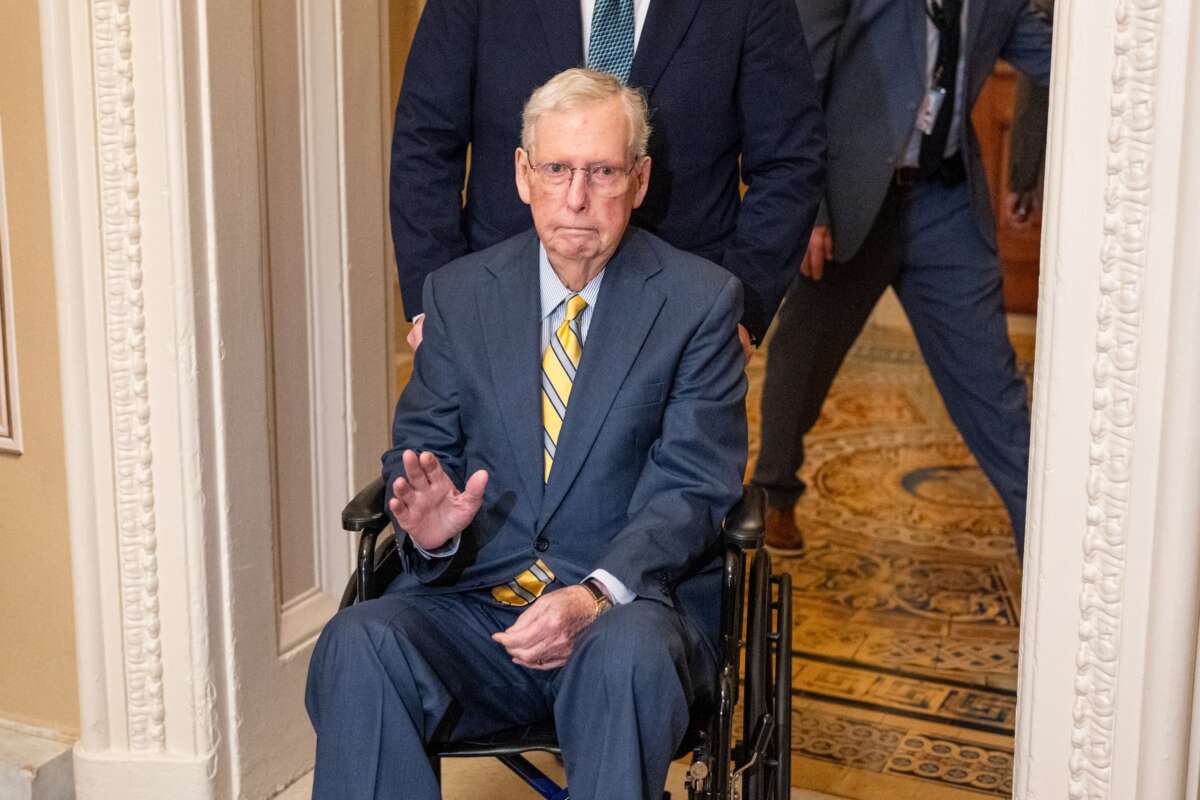
Sen. Mitch McConnell (R-Kentucky) arrives for the Senate Republicans' lunch meeting in the U.S. Capitol on Tuesday, April 14, 2026.Bill Clark / CQ-Roll Call, Inc via Getty Images

Did you know that Truthout is a nonprofit and independently funded by readers like you? If you value what we do, please support our work with a donation.

Sen. Mitch McConnell (R-Kentucky) has been absent from his congressional duties for nearly a month, in what he finally explained on Sunday has been an extended period of sick leave.

But McConnell, the high-powered former majority leader in the Senate, has previously worked to bar U.S. workers from being able to have similar benefits at work, such as guaranteed sick leave — including during the height of the COVID-19 pandemic.

McConnell has been hospitalized since June 14. For weeks, his office provided no explanation on his condition, sparking wild speculation concerning his physical health or even whether or not he was alive. Fellow members of Congress released cryptic statements claiming to have spoken with him, while others said they had no information on his health status.

Finally, on Sunday, McConnell’s office released a statement saying that he’s been in the hospital for weeks after suffering a fall, during which he was “briefly unconscious,” and contracting a case of pneumonia. He described both conditions as minor, and promised to return to the Senate floor for votes soon — though he did not provide a date for when he may return, meaning that he may be absent for weeks longer before his retirement this upcoming January.

“When you elected me to a seventh term and made me our Commonwealth’s longest serving Senator, you did so trusting that I’d keep showing up to fight for you every day,” he said. “But at the same time, I’ve had more than my share of experience with physical vulnerabilities. Surviving childhood polio meant spending my entire life with mobility challenges. They haven’t exactly gotten easier to manage with age.”

Another Republican, Rep. Tom Kean Jr. (New Jersey), has also faced scrutiny for his ongoing absence from the House. Kean has been absent from the House floor since March 5, only reappearing once late last month to explain that he has been struggling with depressionand hasn’t provided an explanation for his absence because he is a “private person.”

Americans facing the same health challenges across the U.S. aren’t as privileged. The U.S. is the only wealthy country in the world that doesn’t guarantee a single day of paid sick leave for workers — in part due to policy positions by McConnell and his party, for which he was a de facto leader for years.

As Senate majority leader in late 2020, just months into the COVID-19 pandemic and as illness and deaths were soaring, McConnell blocked a Democratic effort to extend federal paid family and sick leave benefits, preventing it from being included in Congress’s second relief bill. Ultimately, House Majority Leader Nancy Pelosi (D-California) swapped out the provision in exchange for extending a tax credit for businesses paying out sick leave.

In 2022, McConnell was one of many Senate Republicans who voted against a proposal to give railway workers seven days of sick leave amid a faceoff between freight carriers and rail workers, who were threatening a nationwide strike.

McConnell, a champion of anti-union “right to work” laws, has also obstructed pro-union policies like the Protecting the Right to Organize Act that could have given workers much more power in the workplace to demand benefits like sick leave.

The Republican lawmaker has said he has been receiving “excellent care” while in the hospital. But McConnell has worked to obstruct Americans from being able to access that same care, having rather infamously been a major champion of repealing the Affordable Care Act, waging many efforts to do so after its passage in 2010.


Follow the money: US Surgeons keep performing knee surgery despite evidence it doesn't work


Photo by Anna Auza on Unsplash
July 14, 2026 

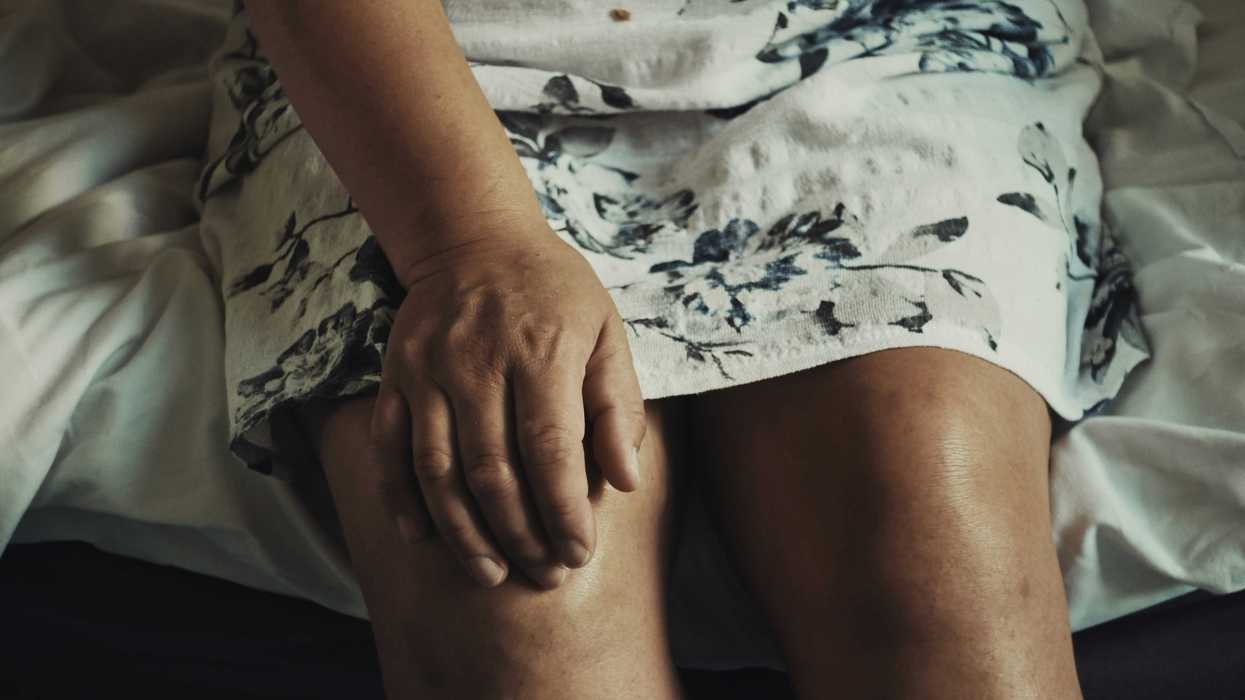
Thousands of Americans who undergo a common knee surgery might be making their problems worse rather than better.

Researchers who followed patients for 10 years after they received either the actual procedure, arthroscopic knee surgery to trim degenerative cartilage tears, or merely “sham surgery” — a skin incision — for knee pain, found that the surgery provided little or no benefit and was, in fact, associated with accelerated osteoarthritis and higher rates of reoperation. That generally meant a total knee replacement.

“I don’t know how I would defend this procedure at all,” said one of the study’s authors, Teppo Järvinen, an orthopedist and the head of the Finnish Centre for Evidence-Based Orthopaedics. “What has been shown dramatically is that patients who have this procedure have more pain — they do worse. All the scores pointed in the same direction.”

Järvinen said the Finnish study, published in April in the New England Journal of Medicine, was the first to show the surgery left many patients worse off. Though the study was small, the results were compelling, he said, because his team picked the patients “most likely to benefit.”

The study does not apply to cartilage tears incurred from an acute pain-causing injury. It included subjects middle-aged or older who were experiencing knee pain and whose MRIs showed cartilage tears.


Evidence has been accumulating steadily for over a decade that arthroscopic knee surgery to shave torn, degenerative cartilage does not help more than physical therapy. Arthroscopic rates in Finland have dropped 90%, Järvinen said. They have been falling in the U.S., too, but at a far slower rate.

One study of commercial claims in the U.S., which counted over 2 million meniscus surgeries from 2010 to 2020, found the number decreased by about 4% each year. Most procedures were performed on women and patients in their 50s.

In the traditional Medicare fee-for-service program, the number of procedures has declined steadily in recent years, from about 169,000 in 2014 to 91,000 in 2024, federal data shows. These figures do not include beneficiaries in Medicare Advantage, private insurance plans that cover more than half of Medicare enrollees.


Prior studies of scans have found that such tears are common in people over 50, the result of wear and tear and often not painful.

“Nothing supports the idea that a patient’s pain comes from the meniscus,” Järvinen said.

Robert Brophy, director of the Orthopaedic Clinical Research Center at Washington University in St. Louis, said that “evidence is growing for judicious use of this surgery in this population.” But, he noted, “many patients do benefit.”


All the same, he acknowledged that current practice among his peers is “all over the map.” For example, data shows that surgery for meniscus tears in the Medicare population is far more common in the South than in the Northeast.

A massive study committee of orthopedic societies in Europe and the U.S. last June released a consensus statement noting that “degenerative meniscus lesions can be treated with comparable results with either non-operative (including physical therapy) or surgical approach.” It recommended a trial of physical therapy before surgery but still endorsed the operation.

A concerted campaign by orthopedic specialty societies called the Save the Meniscus Society has been ongoing for years. The group advocates for protecting and maintaining long-term knee health through nonsurgical treatments, surgical repair, and other therapies.

One inherent issue in all medical specialties is that appropriate treatment is often in the eye of the physician beholder, meaning that specialists create the guidelines for when a treatment is in order. And financial considerations may influence that decision, Järvinen said.


In the U.S., physician payments are decided by the Relative Value Scale Update Committee, or RUC, a committee of the American Medical Association composed largely of specialists. Department of Health and Human Services Secretary Robert F. Kennedy Jr. and his advisers have reportedly looked into wresting control of that committee from the association, though it’s not clear how that could be done, since the AMA owns the billing codes used to calculate patients’ charges.

Arthroscopic knee surgery takes 30 to 60 minutes in the operating room, and the patients spend a few hours recovering in a surgery center or in a hospital outpatient department. Medicare allots on average $2,159 to $3,875 for the procedure, depending on where it is performed; patients pay 20% of the fee as coinsurance. There may be additional costs, for example, if more than one doctor is involved in the procedure. Commercial insurers average well more than twice that, said Marcus Dorstel, a senior vice president at the data analytics firm Turquoise Health, adding that the amount providers charge for the procedure varies widely. Those charges do not include the fees of the surgeons and the anesthesiologist.

Treating chronic knee pain has a variegated history.

Fifty years ago, the treatment for cartilage tears, from acute injury or from wear and tear, was to remove the entire piece of cartilage. At that time, doctors did not consider it a shock absorber but a useless, vestigial piece of tissue like the appendix.


Today, the first-line therapy for a painful knee with degenerative tears is physical therapy and, for some people, weight loss. Then there is arthroscopic surgery, depending on the view of the surgeon about its utility.

There is also a menu of injections: Steroids have proved scientifically valuable in the short term. And injections of stem cells and plasma-rich protein are widely offered but are controversial — and not covered by most insurance — because studies have been at best inconclusive about their benefit.

And as orthopedists are backing away from shaving off meniscus tears, they are highlighting a newer procedure — sewing the torn cartilage back into a whole. But that is typically an option for patients under 50 with acute injuries and clean tears, and it is unclear exactly which patients might benefit.

When all else fails, there’s a different surgery that’s also a big moneymaker for hospitals and doctors: knee replacement.


KFF Health News is a national newsroom that produces in-depth journalism about health issues and is one of the core operating programs at KFF—an independent source of health policy research, polling, and journalism. Learn more about KFF.