SPACE/COSMOS
France co-hosts major space summit with Germany despite US firms' withdrawals and Merz absence
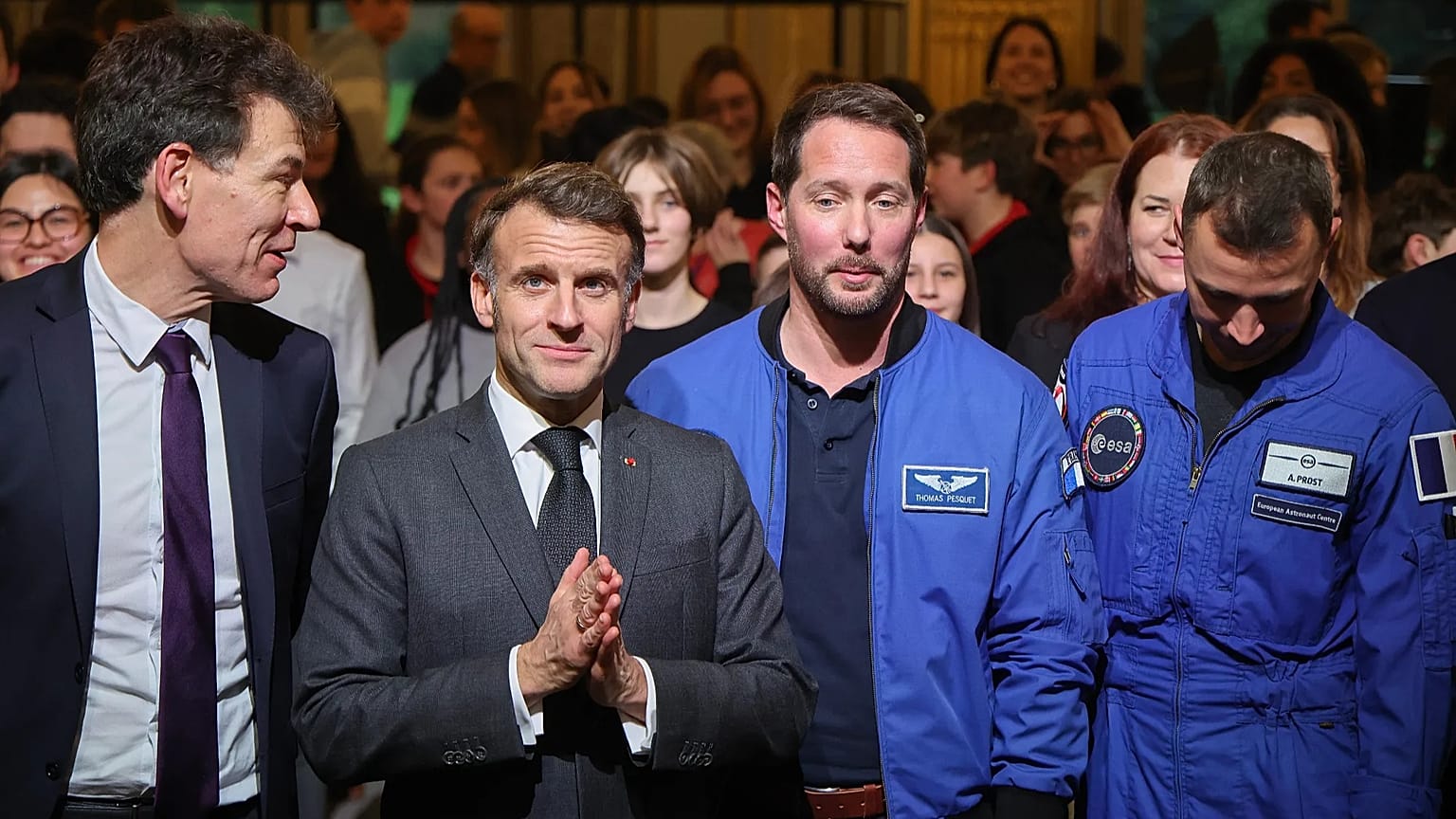
France is co-hosting a major space summit with Germany this week, as Europe finds itself at a strategic crossroads.
Astronauts, heads of state, as well as major economic players in the space industry united in Paris on Wednesday for the international space summit, co-hosted by France and Germany, at Paris’ Grand Palais.
On Wednesday afternoon, French President Emmanuel Macron announced that more than 50 projects are expected to be signed over the course of the two-day event, stressing the need to "strengthen the European and space research", but also to deepen partnerships with other countries around the world.
Alongside Greek Prime Minister Kyriakos Mitsotakis, he also welcomed the European Space Agency’s (ESA) next private astronaut mission, PAM-6, to the International Space Station (ISS), scheduled for 2027 — which will mark the first ever journey to space by a Greek astronaut, Adrianos Golemis.
Taking to X Wednesday evening, he also hailed a major deal signed between Amazon Leo and Arianespace, stating that “Amazon Leo is renewing its trust in Arianespace with 6 additional launches, 24 in total."
Ahead of the summit, several US companies reportedly withdrew from the event, due to pressure from Washington over support for "EU policy positions."
Challenging US dominance
Despite this, the summit comes at a strategic crossroads for the European space industry, described by President Emmanuel Macron as an opportunity to "bring Europeans together around a common ambition" and develop a "shared vision of Europe's place on the map of global space powers by 2035" when he announced the event in October 2025.
According to the Elysée, the summit will focus on international space cooperation and strengthening space security. In recent years, Europe has increasingly sought to challenge US dominance of the global space market: developing its own homegrown rockets and increasing funding for space at both a state and bloc-wide level.
Europe has historically invested 0.07% of GDP into space programmes, compared with 0.24% by the US.
But 2025 marked a turning point, as the European Space Agency (ESA) approved a record-breaking €22.3 billion budget for its three-year funding cycle (2026–2028) in November, with €35 billion for space for security and defence.
Lunar mining has also emerged as a potential avenue for securing clean-energy resources and critical raw materials, as Europe works to move away from Chinese and Russian dependencies.
Divergence between France and Germany
Nearly a year after Macron announced the summit, it encountered some bumps in the road before the event had even begun. Germany's Chancellor Friedrich Merz confirmed on Friday that he would not attend the summit due to domestic commitments, with defence minister Boris Pistorius and space minister Dorothee Bär set to go in his place.
Behind the scenes, France and Germany have faced a number of disagreements over space and defence projects, ditching the Future Combat Air System (FCAS) project in June 2026, after years of disagreements.
Macron has consistently stressed the importance of building up Europe's strategic autonomy, backing programs like Ariane 6, rather than relying on US providers such as Elon Musk’s SpaceX.
Meanwhile, Germany has expressed a greater willingness to rely on lower-cost US alternatives, such as SpaceX. On Saturday, German startup Isar Aerospace launched the first commercial rocket to reach orbit from mainland Europe, marking a major turning point in Europe's quest to secure independent access to space. Merz described the launch as “the beginning of a new era.”
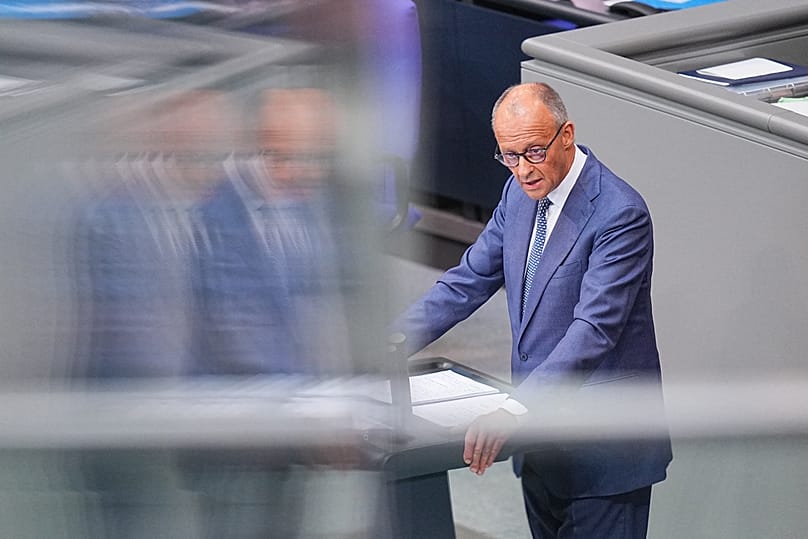
US companies withdraw from event
A number of US companies also withdrew from the event, after a White House official reportedly warned them that their attendance "could look like tacit support for EU policy positions," Politico reported.
A spokesperson for France's Ministry of Higher Education and Research, which oversees national space policy, told the AFP news agency that SpaceX, Blue Origin, Stoke Space, and Starcloud had withdrawn from the event, stating "it’s hard not to link it to the rumours of pressure in the press.”
Speaking to Euronews, Hermann Ludwig Moeller, Director of the European Space Policy Institute described France as a "driving force" in Europe's space sector, providing "strong political support" to the industry, stressing that the "relevance of space is only increasing."
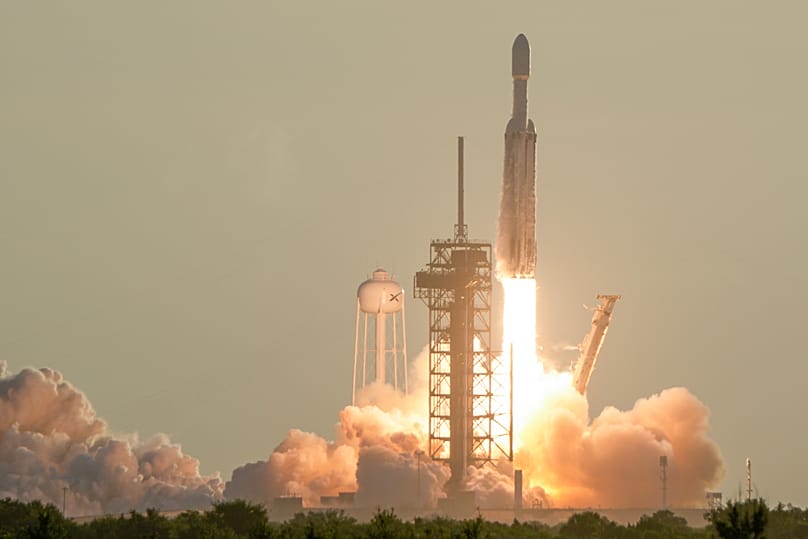
"It is increasingly becoming a war fighting domain, while at the same time it has become evident also to the general public that conflict has become hybrid in nature, for instance through attacks on critical infrastructures in transport, energy, digital. This is where space can provide increased resilience."
Moeller stressed the role that space technologies such as satellite navigation have in terms of both civilian and military usage.
"While they are essential to everyday life, the war in Ukraine has also highlighted their strategic importance in modern warfare", he said.
Kyiv's reliance on Musk's Starlink following Russia's full-scale invasion of Ukraine has underlined the strategic importance of space services during wartime — that the satellite network provides resilient internet connectivity even when infrastructure is damaged or destroyed.
This reality also pushed Europe to develop its own independent satellite networks, notably the secure internet constellation known as IRIS².
Macron, von der Leyen call for stronger European space sector amid rising security concerns
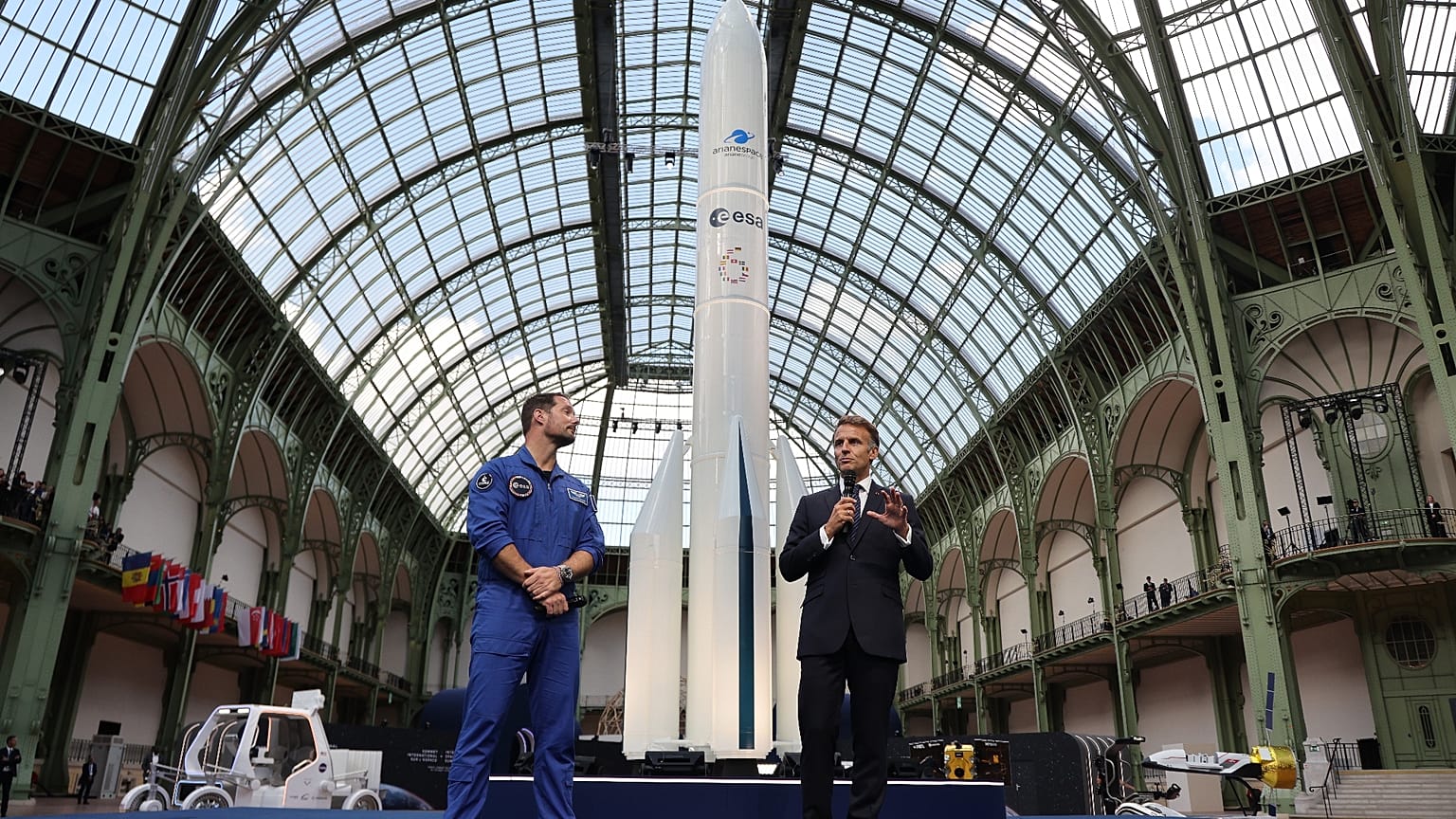
French President Emmanuel Macron and European Commission President Ursula von der Leyen reaffirmed their commitment to space at a major summit co-hosted by France and Germany in Paris.
French President Emmanuel Macron and European Commission President Ursula von der Leyen called on Europe to strengthen its space industry on Thursday, the second day of the international space summit, co-hosted by France and Germany, at Paris’ Grand Palais.
Speaking at the summit, Macron described Europe’s space sector as “fragile” and emphasised the need to bolster its capabilities, calling for “shared governance” of the industry.
“Outer space remains the only major global commons that is not subject to regulations that match the stakes,” he said. “Shared governance is necessary to address these challenges.”
Macron reiterated that more than 51 deals are set to be signed over the course of the summit, with some €20 billion of investments, listing a series of future milestones for Europe.
"In two years' time, I want to see the first European cargo capsule, Nyx, dock with the International Space Station; in five years' time, the first European lunar lander, Argonaut, land on the Moon's surface."
"And in 10 years' time, the first European manned capsule take off from Kourou with European astronauts and those from other nations on board," he added, referring to Europe's spaceport in French Guiana.
Meanwhile, von der Leyen stressed the importance of Europe stepping up, as she emphasised the crucial role space plays both in terms of both scientific exploration, but also defence — pointing to Russia's war in Ukraine.
"The ability to access and act in space not only underpins our prosperity, it increasingly determines our security and independence. Nowhere is this clearer than in Ukraine."
"Satellite communications keep soldiers connected, while satellite imagery reveal movements hundreds of kilometres away"."
Europe's Space push comes amid aim to cut dependence on US
Europe's push to build up its military space assets has been driven by Russia's war in Ukraine, as well as its decision to distance itself from its longstanding dependence on the US in the space domain.
Europe has historically invested 0.07% of GDP into space programmes, compared with 0.24% by the US. But 2025 marked a turning point, as the European Space Agency (ESA) approved a record-breaking €22.3 billion budget for its three-year funding cycle (2026–2028) in November, with €35 billion for space for security and defence.
"Security on Earth increasingly depends on our security in space", said von der Leyen, as she went on to underline the significance of IRIS², the European Union's upcoming flagship satellite constellation programme.
"Last month, we decided to accelerate the system, by expanding it to more than 350 satellites."
Von der Leyen also underlined the need for the Commission, the European Space Agency and national governments to "pool" their strengths, while also calling for investment "at scale."
Macron and Joseph Aschbacher, Director of the European Space Agency (ESA) — who also addressed the summit — were joined for a live call with astronaut Sophie Adenot, who is currently on a nine-month mission aboard the the International Space Station (ISS) named the εpsilon mission.
Chinese Space Promises Come With Financial, Sovereign Risks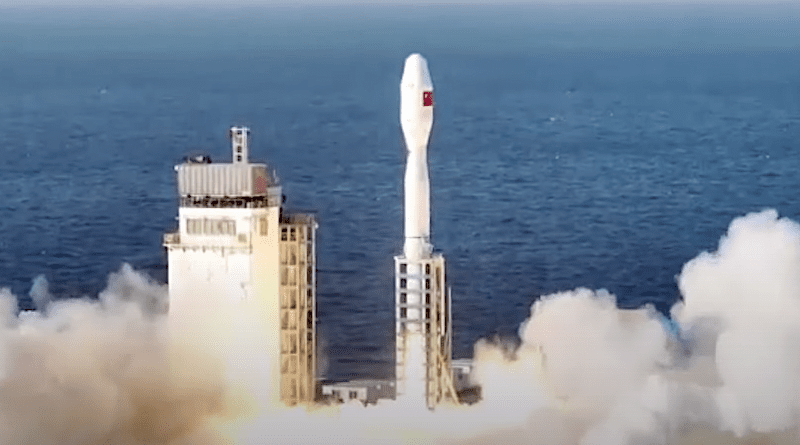
Launch of China's Smart Dragon-3 (Jielong-3) Yao-1 carrier rocket. Photo Credit: China News Service video screenshot
September 10, 2026
By Africa Defense Forum
Key Takeaways:
Analysts cited (RAND, CSIS) warn of uneven deals and military overlap. Examples include Egypt’s Space City and MisrSat-2 being China-managed, Chinese tracking sites in several African states, and a planned $1 billion Djibouti spaceport to be run by a Chinese firm for 30 years.
Nigeria’s dispute with China Great Wall over about $11.44 million in NigComSat-1R operating costs is presented as a caution: partners can face debt, service cutoff threats, and limited access to their own systems.
“China’s space collaborations are structured to advance its own industrial and military goals at the cost of asymmetric outcomes to foreign partners,” researchers Cortney Weinbaum, Christopher G. Pernin, Camille Reeves, Libby Weaver and Shanshan Mei wrote in a recent Rand Corp. report.
Countries that work with China on space projects typically find that funding depends on using Chinese vendors and launch services. Tracking and operations also must flow through China’s systems, raising questions about a nation’s ability to access its own data. In some cases, financing comes from the Export-Import Bank of China, the same facility tied to billions of dollars in loans for BRI projects across the continent.
Countries can find themselves the junior partners in the arrangement with China. An example: Argentina’s national space commission hosts a Chinese satellite tracking ground station tied to the Chinese military. The facility has the same legal status as an embassy, meaning Argentinian authorities cannot enter without permission. Argentinian researchers have access during only 10% of its operating time, limiting their work, according to the Rand researchers.
Africa’s Space City, east of Cairo, Egypt, is an example of China’s relationship with African space agencies. The facility is home to the African Union’s Africa Space Agency and the Egyptian Space Agency. It also hosts satellite construction facilities.
Space City was developed with the help of China, which has, so far, been the complex’s primary beneficiary. Chinese workers staff Space City, and its first locally produced satellite, Egypt’s MisrSat-2, was launched and managed from China.
China has established space-related partnerships with nearly half of Africa’s 54 countries. In addition to manufacturing and launching African satellites, China has satellite tracking and receiving facilities in Algeria, Egypt, Ethiopia, Mozambique, Namibia, South Africa, Sudan and Tunisia. Tunisia also hosts a ground station for BeiDou, China’s version of GPS.
In 2023, Djibouti signed a memorandum of understanding with China’s Hong Kong Aerospace Technology to build Africa’s first spaceport, a $1 billion facility on the Obock peninsula near the Bab el-Mandeb Strait.
Under the agreement, Hong Kong Aerospace would operate the facility for 30 years before releasing it to Djibouti.
“Beijing is rapidly stitching together a network of specialized outposts, positioning itself as a gateway to space for developing countries. Yet the deep integration of China’s space sector with the People’s Liberation Army (PLA) means these partnerships carry risks,” researchers Matthew P. Funaiole, Brian Hart and Aidan Powers-Riggs recently wrote for the Center for Strategic and International Studies.
Nigeria is experiencing firsthand the risk of working with China as the government finds itself embroiled in a financial dispute with China Great Wall Industry Corp. over the cost of operating Nigeria’s NigComSat-1R.
The Chinese-built NigComSat-1R supports broadcasting, internet connectivity and security communications across Nigeria. It was launched in 2011 and is expected to reach the end of its operational life later this year.
The satellite is active and sits in a geostationary orbit above South Sudan, according to tracking data.
The Chinese government-owned company, a subsidiary of China Aerospace Science and Technology Corp., recently warned Nigeria that it might stop supporting NigComSat-1R due to an outstanding $11.44 million debt.
The company gave Nigeria 30 days to resolve its debt earlier this year under the threat of deactivating the satellite’s transponders.
Nigeria has denied that it owes the Chinese company money. It has approached France and Israel for help in developing future communications satellites.
“Government, commercial, and academic researchers should approach space cooperation with China with rigorous due diligence,” the Rand researchers wrote.
Using Helium, Astronomers Blow Certainty Into Early Big Bang Conditions
Key Takeaways:
The improved measurement supports the standard model: the number of neutrino species present seconds after the Big Bang is consistent with known particle physics.
About 90% of cosmic helium formed in the Big Bang; the rest came later from stars. The team cut the uncertainty in helium abundance from about 2% to roughly half a percent.
Researchers used data from The Large Binocular Telescope (LBT) to measure the amount of helium — the second-most common element in the cosmos and a vital ingredient for the formation of life — in metal-poor nebulas, clouds of gas and dust in space where stars are sometimes born. Their findings strengthen long-held theories about how ancient elements, such as carbon and nitrogen, may have been dispersed in the period following the Big Bang.
Astronomers did this by analyzing helium signals in optical and infrared light to determine the temperature and density of the gases within faraway systems. After collecting 48 high-quality galactic samples, the team created a dataset aimed at significantly expanding researchers’ ability to infer the universe’s primordial helium abundance.
“Everything that we need to live here on Earth was once fused inside of a star,” said Miqaela Weller, lead author of the study and a PhD student in astronomy at The Ohio State University. “Understanding precisely where those elements come from helps inform us of how our universe evolved and how it will evolve in the future.”
The study was recently published as part of a series of papers in The Astrophysical Journal.
The work was completed as part of the LBT Yp project, a collaboration designed to accurately determine how much primordial helium was created at the universe’s beginning, an amount theorized to be largely dependent on the types of neutrinos, tiny and abundant subatomic particles, that were likely formed when the universe was only a second old.
If, for example, the amount of helium found in metal-poor galaxies is vastly different from astronomers’ current predictions, their results might challenge current theories about the universe’s early conditions as well as open the door to new, undiscovered physics, said Weller, who leads the infrared data reduction for the project
Still, it can be extremely difficult to peer into the universe’s past, as astronomers can only see up to about 400,000 years after the Big Bang, or when the universe became transparent enough to form the cosmic microwave background (CMB). Thus, by comparing their new observations with archival ones of the CMB, they can determine if current models of the universe are accurate.
“The importance of galactic archaeology cannot be understated,” said Weller. “The stars are within us, and learning more about them helps us determine our place within the universe.”
Roughly 90% of the universe’s helium formed during the Big Bang, with 10% originating from stars that have undergone nuclear fusion over the last 13.5 billion years. While researchers had previously only been able to estimate the universe’s helium abundance to a precision of about 2%, this work reduces that error to almost half a percent, a development that amounts to a huge leap in computational astrophysics, said Richard Pogge, a founding member of the project and a professor of astronomy at Ohio State.
“By making this exciting measurement, we’ve learned something fundamental about the universe,” said Pogge.
Scientists have theorized that all the raw materials of the universe emerged in the first few moments after its birth, including neutrinos. Until this paper’s result, it had been unclear whether the many subatomic particles that drive our modern grasp of particle physics appeared simultaneously or arrived later in an alternative, sequential way.
In searching for the answer, the team was challenged to locate extremely rare metal-poor galaxies, such as the tiny Leo P, as well as account for how Earth’s atmosphere could affect their data. Ultimately, their research confirmed that the number of neutrino species present at the Big Bang is, in fact, consistent with the standard model of particle physics, said Pogge.
“Finally having atomic data precise enough to show how the universe worked seconds after it began gives us the ability to make meaningful constraints on the nature of physics itself,” he said.
According to the team, the LBT Yp project plans to continue deciphering cosmic mysteries by constraining less-explored parameters of undiscovered metal-poor galaxies, likely with the aid of vast astronomical archives of collaboration projects like DESI.
“It’s going to take us many years to try to explore new galaxies and turn the techniques we’ve developed onto them,” Pogge said. “So it’s an enormous pleasure to be able to pass these decades-long findings onto those who are going to be the future of this field.”

No comments:
Post a Comment