Which European countries import the most crude oil?
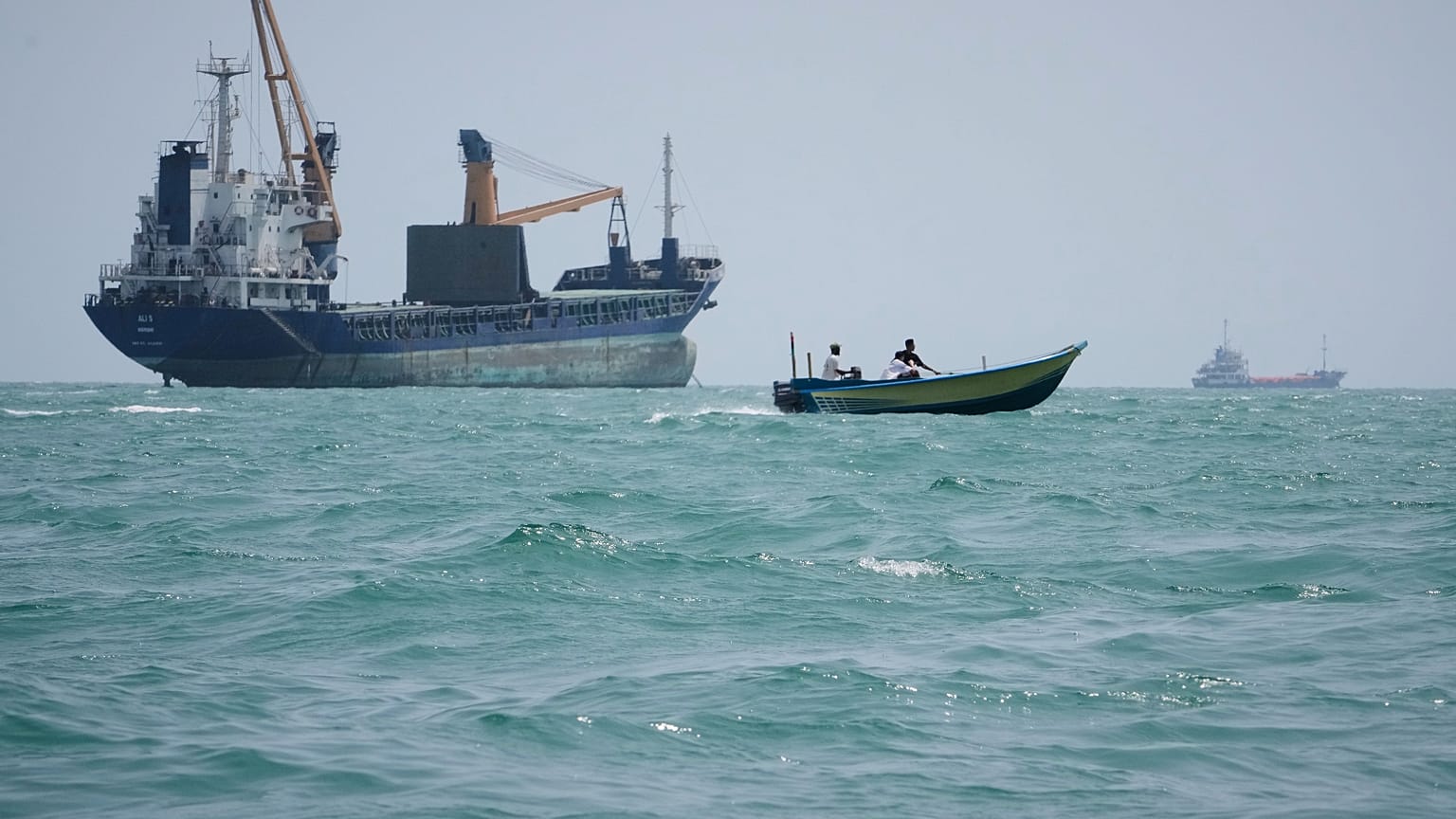
Brent topped $100 after fresh Strait of Hormuz attacks. Eurostat data shows which European countries buy the most oil and who is most exposed.
Brent crude topped $100 a barrel on Wednesday and held firm on Thursday morning after renewed attacks on shipping around the Strait of Hormuz.
It has held above $70 since mid-February, almost seven months, and is up 65.7% since the end of 2025, when it closed the year at $60.85.
But this is no longer simply an energy market story.
More expensive crude raises the cost of diesel, petrol and jet fuel. Those increases then spread through transport networks, supply chains and eventually consumer prices.
For Europe, the timing could hardly be worse.
Eurozone inflation was already 3.3% in August, its highest since September 2023. Energy prices alone rose 14.3% over the year.
That is why the European Central Bank is expected to raise its deposit rate by a quarter of a point to 2.50% on Thursday. In the United States, futures put the odds of a Federal Reserve hike on 16 September at about 60%.
But which European countries are most exposed to the oil price shock?
Europe’s near-total dependence on foreign oil
Europe’s fundamental vulnerability to fossil fuels is easy to see.
The European Union imported 471.3 million tonnes of crude oil in 2024, while producing just 15.5 million tonnes domestically.
Its overall oil import dependency reached 96.6%, according to Eurostat.
In other words, almost every additional barrel consumed in the bloc must effectively come from abroad.
The United States, Kazakhstan and Norway were the three largest suppliers. Each accounted for between 12% and 15% of imports.
Libya followed at over 9%, Saudi Arabia at 6.8%, Nigeria and Iraq at 5.8% each.
Only around 7% of EU crude imports came from Gulf Cooperation Council countries in 2025, according to the Council of the European Union.
Europe is therefore less directly dependent on Gulf producers than many Asian economies. But oil trades in a global market.
A disruption in the Strait of Hormuz raises prices for US or Norwegian crude as well as Middle Eastern barrels.
Which European countries import the largest volumes?
By volume, the Netherlands imports more oil than any other European country by a wide margin.
Eurostat figures for 2024, the most recent full year available, show that it imported 138.3 million tonnes of oil and petroleum products.
Germany followed with 117.8 million tonnes, Spain with 85.8 million, France with 82.4 million, Italy with 73.3 million and Belgium with 56.7 million.
However, these figures require some context.
Rotterdam is one of the world’s largest energy hubs. Much of the crude entering Dutch ports is refined or transported onwards to other European countries.
The Netherlands exported 101.1 million tonnes of the 138.3 million it imported. Belgium also re-exported more than half of its imports.
Germany is the real major importer because of the size of its industrial economy, transport network and refining sector.
Spain, France and Italy also import substantial volumes to supply domestic consumption and large refineries.
Eurostat data show that Germany accounted for 20.1% of the EU’s final consumption of oil and petroleum products in 2024. France followed with 15.3%, while Italy and Spain each represented 11.1%.
Together, those four economies consumed almost 58% of the EU total.
Smaller economies may suffer the larger relative shock
Volumes tell you who buys most. They do not tell you which economies suffer the most.
A more useful measure of vulnerability compares net energy imports with the size and structure of the domestic economy.
Eurostat tracks the net trade balance in energy products as a share of GDP. Malta recorded the bloc’s largest deficit in 2025, equivalent to 5.4% of its economic output.
Bulgaria followed with a deficit of 3.5% of GDP, Croatia with 3.4%, Hungary with 2.9%, Belgium with 2.6%, Luxembourg with 2.5% and Cyprus with 2.4%.
The large economies were clustered closer to the middle. Italy’s energy trade deficit was equivalent to 1.9% of GDP, followed by Spain and Poland at 1.7%. Germany and France both recorded deficits of 1.5%.
The smallest deficits were recorded by Denmark at 0.1% of GDP, Sweden at 0.5% and the Netherlands at 0.6%.
Denmark benefits from domestic oil and gas production, while the Netherlands’ position reflects its role as a major refining and re-export hub.
Tourism-dependent countries are also heavily hit
Spain’s oil import dependency, which measures the share of consumption covered by net imports, reached 100.3% in 2024
Portugal’s rate was 99.9%, while Ireland registered 101%.
All three economies rely on imported crude or refined products for almost their entire oil supply.
Malta imported 99.6% of its oil requirements in 2024. Cyprus imported 97.3%.
Their exposure is amplified by the importance of transport, aviation and tourism.
Almost two-thirds of the oil consumed in the EU goes towards transportation.
Road transport alone accounted for 47.7% of total consumption in 2024, according to the Council of the European Union.
Aviation represented another 9.2%, while maritime transport accounted for 8.4%.
That composition matters for southern Europe.
Rising jet-fuel prices increase costs for airlines serving Spain, Portugal, Greece, Cyprus and Malta.
Higher diesel prices affect hotels, restaurants and retailers through more expensive supply chains.
Tourism companies may initially absorb part of the increase. If oil remains above $100, however, higher costs are more likely to reach consumers through airfares and accommodation prices.
Denmark is the least dependent at 58.1%, followed by Romania at 77% and Hungary at 83.5%.
Italy sits at 89.8%, Germany at 96.9% and France at 99.8%.

No comments:
Post a Comment