Wednesday, July 15, 2026

 Fontainebleau Forest

‘Our national lung’: France’s nature paradise saved by firefighters but recovery could take 30 years

A deer is pictured in the region of the Fontainebleau forest, south of Paris, France, Tuesday, July 14, 2026.
Copyright Emma Da Silva/Copyright 2026 The AP. All rights reserved

By Angela Symons
Published on

The forest hosted a UNESCO conference in 1948 that led to the creation of the International Union for Conservation of Nature, the world’s first global environmental union.

Flora and fauna thrive in the Fontainebleau forest, 60 kilometres southeast of Paris, where moorland and pine trees cloak hills, valleys and gorges

Its unique temperate Atlantic climate with pockets of Mediterranean microclimates supports 6,600 animal species and 5,800 plant species typical to both southern and northern Europe – from rare purple orchids to the protected Service tree of Fontainebleau.

Red deer, wild boars, European badgers and red squirrels roam its diverse terrain, with over 250 types of birds – from tawny owls to woodpeckers – soaring overhead.

Beneath the forest floor debris scuttle 5,000 insect species, including the protected Stag beetle.

All of this natural heritage came under threat on Sunday when two huge fires engulfed more than 2,000 hectares of the 25,000-hectare forest. 1,000 residents and campers have been forced to evacuate as a precautionary measure.

Hundreds of firefighters are battling the blazes around the clock, deploying Canadair aircraft to scoop water directly from the Seine – the first time such aircraft have been used in the greater Paris region. Backed by Dash planes and helicopters, crews have now contained both fires, though authorities warn it could still take days or weeks to fully extinguish the smouldering flames.

‘My heart is sad the forest burns’

At least two people are in custody on suspicion of arson, with the wildfires made worse by the exceptional heatwave currently gripping the region.

“My heart is sad the forest burns… I think of the animals who live in the forest,” one Facebook user commented on Tuesday. “I lived 22 km from Fontainebleau in my youth for 40 years, and I liked to go for a walk in the forest and visit the Château de Fontainebleau.” The 1,500-room, UNESCO World Heritage-listed royal palace, which was spared the flames, was built in 1528 and is considered the seat of the French Renaissance.

In 1948, it hosted a UNESCO conference that resulted in the creation of the International Union for Conservation of Nature (IUCN), the world’s first global environmental union.
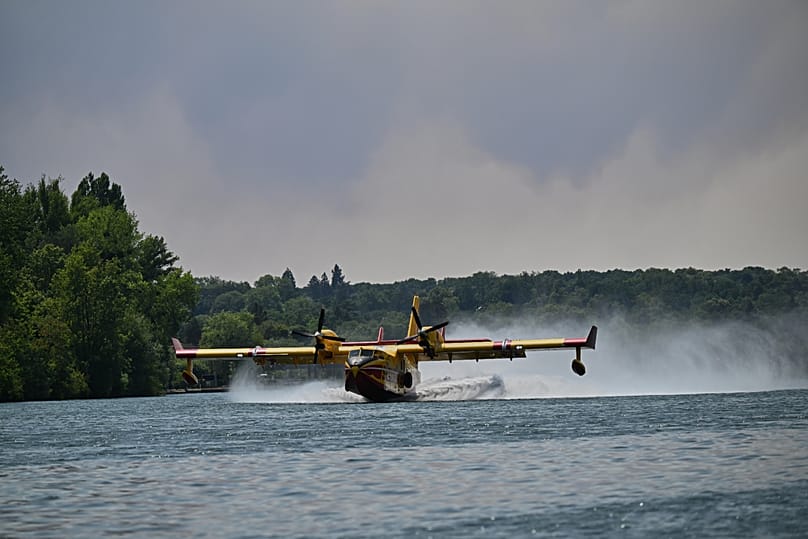
A Canadair water bomber scoops up water from the Seine River while fighting wildfires in the Fontainebleau forest region, France, Monday, July 13, 2026. AP Photo/Emma Da Silva

Inside the historic French forest engulfed by wildfires

Prized as a royal hunting ground from the 10th to the 19th centuries, Fontainebleau has evolved into a haven for outdoor enthusiasts.

Up to 15 million visitors flock there each year to hike, cycle, horseride and rockclimb – hoping to bask in the beauty described by the artists and writers who came before them, from Rousseau to Flaubert.

In fact, France’s second largest forest can even be considered the birthplace of nature tourism: French author Claude François Denecourt, enchanted by its beauty, created the world’s first marked rambling trails there in 1842.

Saddened to witness its destruction, visitors have taken to social media to express their support for firefighting efforts.

“Support and thoughts go out to the firefighters from Quebec! On this day last year, we visited this beautiful place, may God preserve it,” says one Facebook user.

Locals are equally heartbroken by the scenes of flames ravaging the ancient woodland.

“It's a bit of our history of our heritage going up in smoke, what will be left in a few years?”, says one.
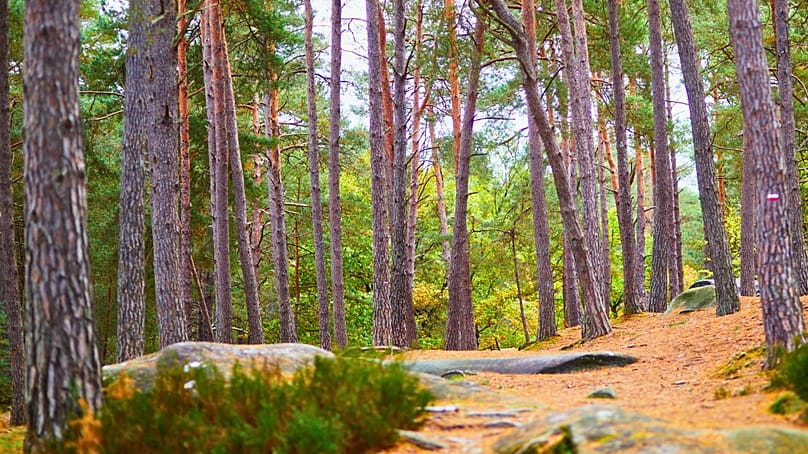
Fontainebleau is popular with hikers and climbers. Canva

“Like many French people, we are shocked because this forest is one of our national lungs. It’s sad to see this magnificent forest where I used to walk with my family as a child,” adds another.

Some visitors, reacting to the fire, have called for hunting to be suspended or banned on the historic grounds to give wildlife time to recover – though forest managers note that regulated culls also play a role in preventing deer and boar overpopulation, which can itself damage forest regeneration.

“I hope with everything that hunts are suspended for a long time and ideally forever so nature has time to rebuild,” says one Facebook user.

“Sad thoughts for these poor animals who lose their lives in horrific suffering. I hope hunting is banned in these places,” adds another.
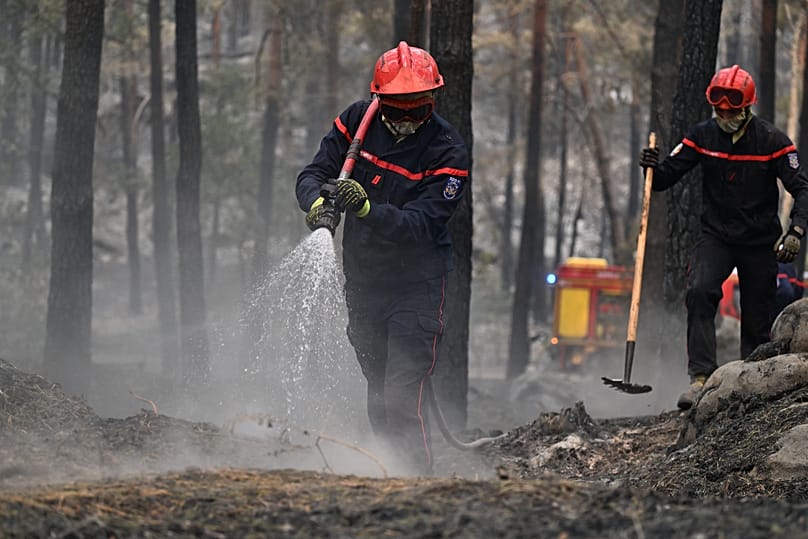
A firefighter sprays water after a wildfire in the region of the Fontainebleau forest, south of Paris, France, Tuesday, July 14, 2026. AP Photo/Emma Da Silva

An exceptional wildfire season fuelled by climate change

Like much of western Europe, France has sweltered through a series of unusually early heatwaves this summer, which would have been “virtually impossible” without climate change, according to analysis by scientists at World Weather Attribution (WWA).

This extreme heat is fuelling wildfires across the continent, with 32,000 hectares hit across France since the start of 2026 – already more than the entire 2025 fire season.

Blazes are increasingly cropping up in historically cooler northern regions, as warming caused by the burning of fossil fuels drives global temperatures up to historic highs.

Regeneration at Fontainebleau will be a long process. Stefan Doerr, director of the Centre for Wildfire Research at Swansea University, told France 24 that the forest could take up to 30 years to recover from the damage.

“We need to prepare the environment more to reduce the risk of fire,” he said, “but we will never eliminate it completely”.

With its sandy floor that struggles to retain water and progressively deteriorating tree health, Fontainebleau is particularly vulnerable to climate change, wildfires and drought – risks that have led foresters to double down on protection efforts.

This includes planting 60,000 new seedlings each winter, including drought-resistant species. But as the risk of fires intensifies, tradeoffs may need to be made – including clearing decaying debris that’s intentionally left in place to support biodiversity.


‘My heart is on fire’: Fontainebleau forest


blaze leaves community reeling


As wildfires tear through the Fontainebleau forest south of Paris, residents describe their fear and disbelief. Locals spoke to FRANCE 24 about their connection to the woodland and how the blaze is reshaping a place they called home.


Issued on: 15/07/2026 - 
FRANCE24
By:
Lara BULLENS/
Bahar MAKOOI

Flames burn through the undergrowth during a fire that ravaged the Fontainebleau Forest near Paris on July 14, 2026. © Dimitar Dilkoff, AFP


Wildfires have scorched roughly 2,050 hectares of the famed Fontainebleau forest southeast of Paris since breaking out Sunday, forcing around 1,000 people to evacuate as some 850 firefighters work to contain the two ongoing blazes, backed by water-bomber planes and helicopters.

Officials hope to bring the fires under control on Tuesday, though earlier efforts were hampered by the heat, wind and dry conditions. The fires were believed to be started intentionally. Two people, including an 18-year-old with no prior record, have been arrested on suspicion of arson.

Amid a third major heatwave to hit France in under two months, the fire has ravaged a forest beloved by hikers and climbers and that draws millions of visitors from around the world.

FRANCE 24 spoke to inhabitants who have witnessed the devastation first-hand.

Firefighters battle flames in Fontainebleau historic forest

Cover image: Firefighters battle flames in Fontainebleau historic forest 
REUTERS - Stephane Mahe
02:05


'He grabbed as many photo albums as he could'

"In the beginning we didn't know what was happening or how to respond. My husband was out in the garden and it started to smell like smoke. He was worried something was happening so he went up to our attic to get a better view and he saw a huge fire on the horizon."

Antonia Mehnert and her family moved from Germany to the Fontainebleau area four years ago. Her husband grew up in the area and his parents live in Vaudoué, a village less than 10 minutes from one of the ongoing blazes in Noisy-sur-École.

Vaudoué has now been evacuated and luckily for Mehnert’s parents-in-law, they were visiting family in the Alps when the fire broke out.

“It quickly became clear the fire was getting close to where his parents live. My husband drove over there and thought about all the things they would want to keep, so he grabbed as many photo albums as he could for his mother and the accordion his father plays.

“Luckily, most of the houses have not been affected so far but it’s crazy that we are asking ourselves which objects we value the most in case we have to leave.”

For now, Mehnert and her family are able to stay in their home. But because of the smoke, it is too dangerous to go outside, so they are staying indoors.

Although French authorities have stated that the fire is no longer spreading, firefighters are still working hard to contain it completely.

Having worked as an environmental education expert her whole life, Mehnert has always been convinced that if people are connected to nature, they will be more inclined to protect it.

“Fontainebleau is a magical place. I have a lot of friends from Germany who come and visit. Every time we take them to the forest, they’re amazed by the beauty of it. We also have a lot of friends from the climbing community who come. It truly is a local wonder that is known internationally.

“I’m quite scared to go out and see what the forest has become. We won’t be able to recognise what has been our backyard for the past years. We’re in shock.”


‘The forest will never be the same again’

Not a day goes by without Apolline setting foot in the forest of Fontainebleau. The 40-year-old sports instructor and Nordic walking coach lives in Bourron-Marlotte, a town about 10 kilometres from one of the fires scorching the area. By bike or by foot, she knows the forest like the back of her hand. “I was practically born in the forest. I spent my whole childhood running around the Beatrix Cave and the Plaine Verte.”

Apolline was celebrating her birthday with her family on Sunday afternoon when she spotted smoke in the sky. “I saw an enormous plume of smoke rising in the distance across the fields. I started checking social media and I haven’t stopped scrolling since. I’ll never forget that day.
The Trois-pignons site in the Fontainebleau forest, before the devastating fire. © Gaëtane Potard

“The spots in the forest that have been devastated by the fire are some of the most majestic with truly sublime views. They are where I take my Nordic walking groups. The blue footpath was carved out all the way back at the start of the century by a forest lover named Sylvain Colinet and takes you through corridors and labyrinths tucked between the most beautiful boulders. Those rocks will still be there, but they will be different,” she says, just as two firefighter planes roar over her house. “The forest will never be the same again.”

The area that burnt down was teeming with remarkable trees, says the woman who knows the “best-kept secrets” of the forest that attracts between 15 and 18 million visitors each year.

Since Sunday, Apolline has been glued to her phone in case the village mayor sends out a call for volunteers to lend a hand. “I’m on high alert like everyone else here, but I feel useless as a civilian.” The wait makes her nervous. By her side, her 10-year-old daughter Flore chimes in. “Tell the person on the phone that my heart is on fire,” the little girl says. Apolline steps away and admits that she is trying to stay as calm as possible: “I don’t want her to feel my anxiety, but it’s hard.”


A ‘playground’ in flames

“I had the shutters closed to protect the house from the sun on Sunday afternoon when a neighbour called me and told me to open them up. He said he thought there was a real problem. That’s when I saw huge plumes of smoke.”

Hugues lives in Milly-la-Forêt, a town just outside Fontainebleau, with his wife and two children. Their house is less than a 20-minute drive from both of the ongoing fires that have been ravaging the historic forest for the past three days.

“There was still very little information at the time and it was hard to figure out what was going on. I couldn’t tell if the fire was 500 metres or 10 kilometres away. I started calling friends in the area to check on them, see if they were alright.”

The 42-year-old consultant moved to the area five years ago so that his children could grow up closer to nature. Once settled, Hugues and his family quickly joined local organisations invested in the conservation of Fontainebleau and its surrounding environment.

For now, Hugues and his family have not been evacuated. And for those more directly affected by the fires, their house has been a refuge. “People living in Noisy-sur-Ecole [one of two sites where the fires are ongoing] came to stay with us when they couldn’t stand the smoke anymore. We also welcomed an exhausted volunteer for a few hours, just so they could take their mind off things.

“I haven’t had an emotional reaction to the fires yet. Though I think it will come this afternoon when I will help out with lookout efforts. The National Forests Office has asked volunteers to lend a hand and we will be stationed across several areas that haven’t been burned yet. I’m worried about driving to the meet-up point and seeing the devastation on my way there.

“For myself and my children, Fontainebleau is not only a source of beauty and freshness, it is a playground. That is also true for the thousands of people who come here from all over the world to climb the forest boulders. And while I feel I know it quite well, we keep discovering new places within the forest – caverns, rock paintings, engravings. It is infinite. My only wish was that the next 15 years would continue to be a journey of discovery. Now I don’t know what the future holds.”


Two arrested over massive Fontainebleau wildfire near Paris


France's interior minister said Monday that two people had been arrested in connection to a fast-moving wildfire that has so far scorched about 1,000 hectares of the Fontainebleau forest southeast of Paris. The fire prompted France to deploy two firefighting Canadair planes from the country's south as crews battled to contain the blaze, the first time such aircraft have been used in the greater Paris region.


Issued on: 13/07/2026 -
By: FRANCE 24
Video by:  Catherine NORRIS TRENT


Cover image: Firefighting planes Canadair CL-415 fly near church of Noisy-sur-Ecole amid a wildfire affecting the area near Fontainebleau on July 13, 2026. © Benoit Tessier, Reuters
03:31


France's interior minister on Monday said two people had been arrested in connection to a fire in the Fontainebleau forest south of Paris that has burnt more than 1,000 hectares.

The arrests were among a total of 59 made across the country for "deliberate or accidental arson", Laurent Nunez said on France2 television, as the country battles wildfires and swelters through its latest heatwave.

A fire raging in the historic and much-visited Fontainebleau forest south of Paris on Monday prompted evacuations of some residential neighborhoods and disrupted train and highway traffic.

The fire may have been “intentionally set”, Nunez had said earlier Monday.

“There were about ten spots where the fire started within a 1,000-metre radius, which suggests that it could have been set intentionally,” he told reporters during a visit to Noisy-sur-Ecole (Seine-et-Marne), near the site of the fire. “We are hopeful that we will be able to contain the fire today,” the minister added. However, “it will take several days or even several weeks to fully extinguish the fire”.

Firefighting aircraft battled to contain the fire for a second day, with the blaze forcing some residents from their homes as the region baked in the year's third heatwave.

Cover image: © France 24
01:51


The fire erupted late afternoon Sunday in the forest located about 60 kilometres (40 miles) southeast of the capital, a onetime royal hunting preserve that today is dotted with quiet villages, and quickly spread.

The rare forest fire in the north of the country had raced across 800 hectares – an area larger than Gibraltar – by early Monday, disturbing rail and highway traffic on a busy holiday travel weekend.

"I have never seen this before" in three decades, Didier Buguinet, a deputy mayor in Le Vaudoue, said of the flames raging on the edge of the village of some 750 inhabitants.

"We're going to weep for our forest," he said.


'It's a monster': FRANCE 24 speaks to resident evacuated due to the Fontainebleau fire
Cover image: © France 24
04:22


Authorities on Sunday rushed firefighting planes to help fight the flames, the first time such aircraft have been used in the greater Paris region.

"Two Canadair planes are preparing to scoop up water from the Seine" river, officials in the Seine-et-Marne region on the city's outskirts said on Monday on X.

The fire forced disruptions in the A6 motorway that leads out of Paris to the southeast and on Monday parts of the highway remained closed, according to Google Maps.

But the national railway service said it had repaired cables burnt by the fire on Sunday afternoon, allowing it to resume normal services for fast trains connecting the capital to the southeastern city of Lyon.
Latest heatwave

France is weathering its third heatwave in less than three months, with fires raging in several parts of the country over the past week.

It is the latest such deadly episode of extreme weather, whose increasing frequency in recent decades scientists have linked to man-made climate change.

Sophie Guiot showed AFP a picture of a water-dumping plane flying over her home.

"My parents in the south of the country had been worrying about fires, but it's here that it happened," she said.

The country recorded more than 2,000 excess deaths during the June heatwave, and 300 during the high temperatures in late May, according to official figures.

Since the start of the year, wildfires have scorched some 25,000 hectares of land in France – an area nearly as big as Edinburgh and twice as much as during the same period last year, director general of civil security Julien Marion said on Friday.


High temperatures were expected to continue until France's national public holiday on Tuesday, according to the Meteo-France national weather service.

(FRANCE 24 with AFP and AP)

Cover image: Fires continue to rage in the Fontainebleau forest, located 60km southeast of Paris, on Monday. © FRANCE 24
01:18


‘Once we were like you’: Ancient Roman faces brought back to life in Budapest exhibition


By Theo Farrant & AP
Published on

Using archaeology, anthropology and DNA analysis, experts reconstructed Roman-era faces and paired them with imagined life stories inspired by historical evidence.

A peasant girl, a soldier and a slave who lived nearly 2,000 years ago have been given new faces - and imagined stories - in a fascinating new exhibition in Budapest.

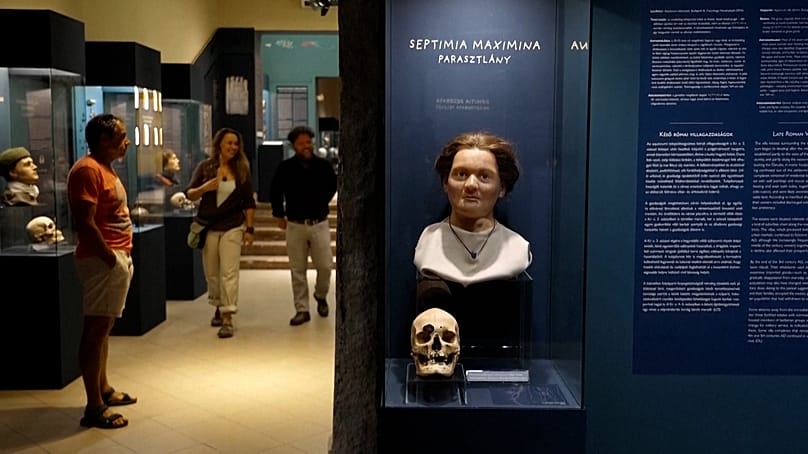
At the Aquincum Museum, Roman-era skulls discovered at the ancient city of Aquincum have been transformed into lifelike facial reconstructions, offering visitors a glimpse of the people who once lived on the empire’s distant frontier.

The exhibition, titled “Once we were like you”, utilised archaeology, anthropology, genetics and historical imagination in the hopes of reconnecting modern audiences with those whose remains have survived for almost two millennia.

A facial reconstruction of a Roman-era resident of Aquincum is displayed alongside the original skull that inspired it at the Aquincum Museum in Budapest Credit: AP Photo

Displayed alongside their original skulls, the reconstructed faces are accompanied by fictional names, occupations and possible life stories - an attempt to make the ancient residents of Aquincum feel less like archaeological objects and more like real people.

"During the excavations we find the skulls, the skeletons, we document them, we roughly can tell whether they belonged to a man or a woman and the findings end up in the appropriate storage room, but that's it. The bodies have no weight, no life, no soul," said Dr. Lóránt Vass, archaeologist and exhibition co-curator.

He continued: "In connection with this exhibition, we thought what happens if we bring these people closer to the visitors by using archaeological findings, information provided by inscriptions, results of anthropological studies and results of archaeogenetics."

How were the ancient faces brought back to life?

Experts analysed the shape and structure of the skulls, alongside archaeological evidence and DNA research, to estimate details such as facial structure, possible ancestry, and even characteristics like hair, skin and eye colour.

The most realistic reconstructions were created by facial reconstruction artist Emese Gábor, who works from a studio in Budakeszi, near Budapest.

Using 3D-printed replicas of the original skulls, she carefully rebuilt the faces layer by layer, studying the bones before modelling muscles and features.


Facial reconstruction artist Emese Gábor works on a model based on a Roman-era skull Credit: AP Photo
A reconstructed face of a Roman-era child, imagined as the member of a family of textile dyers, is displayed at Budapest’s Aquincum Museum. Credit: AP Photo

But while the faces are based on scientific evidence, the identities and biographies attached to them are not real. The curators created possible names, jobs and backgrounds based on what researchers know about life in Aquincum.

“It's all fiction. We don't even know the real names of these people, unfortunately. We tried to incorporate into their imagined life stories everything that anthropology and genetic studies have offered. But no matter what, it's still fiction. In fact, we can not say that they lived like that, it happened that way, but they could have been living that way,” said Dr. Péter Vámos, archaeologist and exhibition co-curator.

Researchers used historical naming customs, inscriptions and anthropological studies to create plausible scenarios for the individuals.

Alongside the facial reconstructions, visitors can see a reconstructed burial site and a Roman-era mummy.

“Once we were like you” is on show at the Aquincum Museum in Budapest until 31 October 2027.

HAARP

Fact check: US military programme not behind Europe's recent heatwaves


By Noa Schumann & Tamsin Paternoster
Published on

As Europe experiences another spell of extreme heat, social media users are once again claiming that a US military programme is manipulating the weather and causing the continent's high temperatures. Available evidence does not support the claim.

Social media posts circulating in recent weeks allege that a US military programme is being used to manipulate the weather, suggesting it is responsible for the heatwaves affecting Europe.

To support the claim, several accounts have shared clips of journalists, scientists, and public figures discussing geoengineering (deliberate, large-scale interventions in Earth's climate system), presenting them as evidence that weather events are being deliberately manipulated.

One of the shared videos features French TV presenter Anne-Claire Coudray discussing geoengineering.

"In response to climate change, more and more countries are exploring what's known as geoengineering," she said in the clip. "The idea is to intervene directly in the climate system to artificially cool the planet."

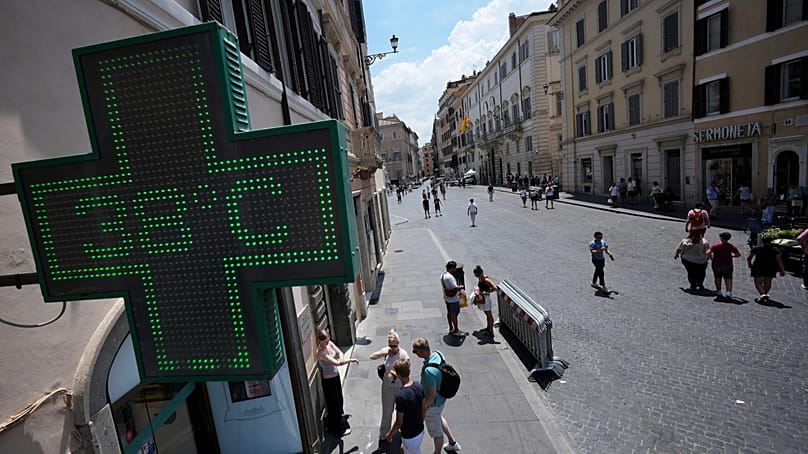
The thermometer of a drugstore shows the temperature of 38 degrees Celsius as temperatures reach record highs, in Rome, Wednesday, June 24, 2026. (AP Photo/Andrew Medichini) AP Photo

The clip has been presented online as proof that governments are actively manipulating the climate, but its original context does not support the claim.

Published in late August 2025, the footage of Coudray comes from a news report explaining scientific research into geoengineering — a field that explores theoretical methods of reducing the effects of climate change.

The report does not suggest that these technologies are currently being used to create or intensify heatwaves.

Many of the posts also refer to HAARP, the High-frequency Active Auroral Research Program, a US research facility that has frequently been the subject of conspiracy theories.

What is HAARP?

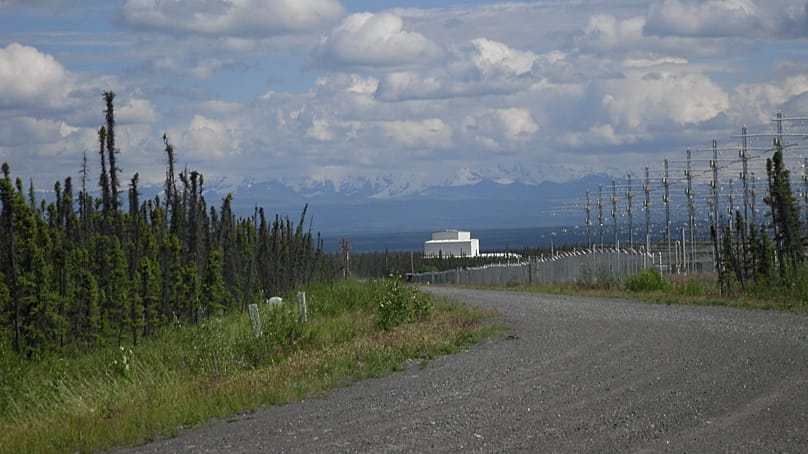
Launched in the 1990s, HAARP was built to study the ionosphere, a layer of the Earth's upper atmosphere. Scientists do this by transmitting high-frequency radio waves and measuring how electrically charged particles respond.

The unclassified site is surrounded by woods within 5000 acres located 200 miles west of Anchorage and eight miles from the town of Gakona, Alaska. Kirtland Airfoce base

According to the programme's stated mission, the research was intended to improve understanding of the ionosphere and help develop communication and surveillance technologies. Since 2015, HAARP has been operated by the University of Alaska, which publicly documents its research activities.

Frequent conspiracy theory

The theory relies on a misunderstanding of how the atmosphere works.

Weather systems, including heatwaves, develop in the troposphere and, to some extent, the stratosphere. HAARP's experiments take place in the ionosphere, hundreds of kilometres above the Earth's surface.

The radio waves used by the facility do not interact with the lower layers of the atmosphere where weather forms.

Graphic showing the troposhere and stratosphere - The Cube, Euronews @Damaso Jaivenois

Scientists have repeatedly stated that there is no known mechanism through which HAARP could create or intensify weather events.

According to climate scientists, the recent heat across Europe was driven by a persistent high-pressure system that trapped hot air over western parts of the continent.

Researchers also say that human-induced climate change is making heatwaves more frequent, longer-lasting and more intense.


'Lisbon is not a sauna': Environmentalists demand climate shelters throughout Portugal

"Lisbon is not a sauna": environmental groups call for measures to help cities adapt to rising heat
Copyright AP Photo/Armando França


By Diana Rosa Rodrigues
Published on


On the European Day for Victims of the Global Climate Crisis, several groups signed an open letter to the state and councils urging swift action to adapt cities to heatwaves.

More frequent, more extreme and more deadly heatwaves. That is the picture of a Europe battered by high temperatures which, during June, saw record after record broken on the thermometers.

"We have already had six heatwaves, the same as the total for last year. And we are only in July. On top of that, the intensity – in other words, the difference in temperatures compared with what is normal – is greater," Francisco Ferreira, president of the environmental association Zero, told Euronews.

Faced with a problem that experts attribute to greenhouse gas emissions and the resulting climate change, environmental organisations say it is urgent to find solutions that not only seek to mitigate the cause, but also help the population adapt to a scenario that is only going to get worse.

"It is inevitable that we have to look not only at cutting greenhouse gas emissions, which we call mitigation, but also, of course, at adaptation," explains Francisco Ferreira.

"It is crucial that we build and develop cities that are prepared for this, with the capacity to adapt. That basically means taking a very close look at the building stock, which in many cases reflects situations of energy poverty, where we cannot keep homes warm in winter, but we also cannot keep them cool in summer."

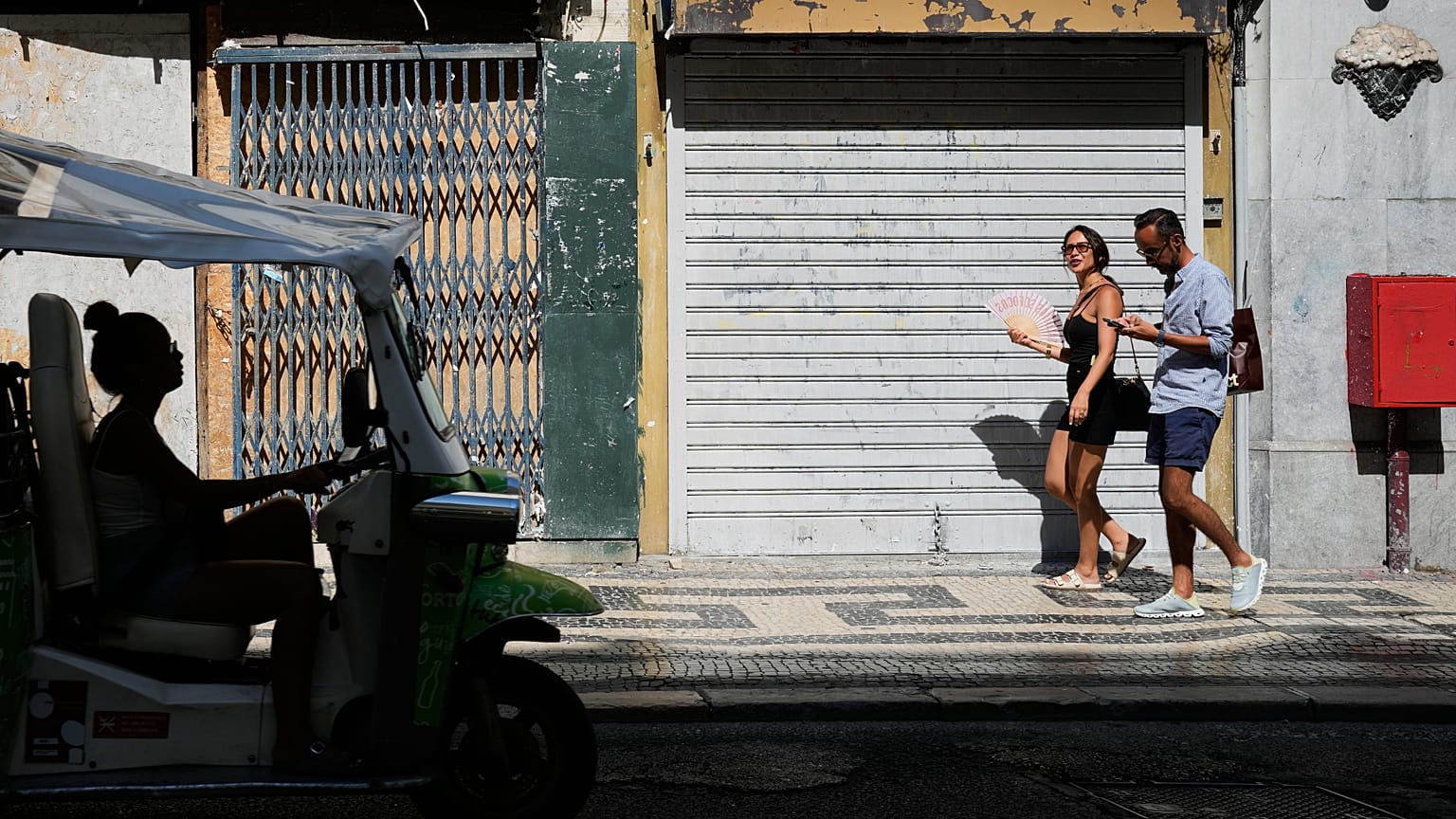
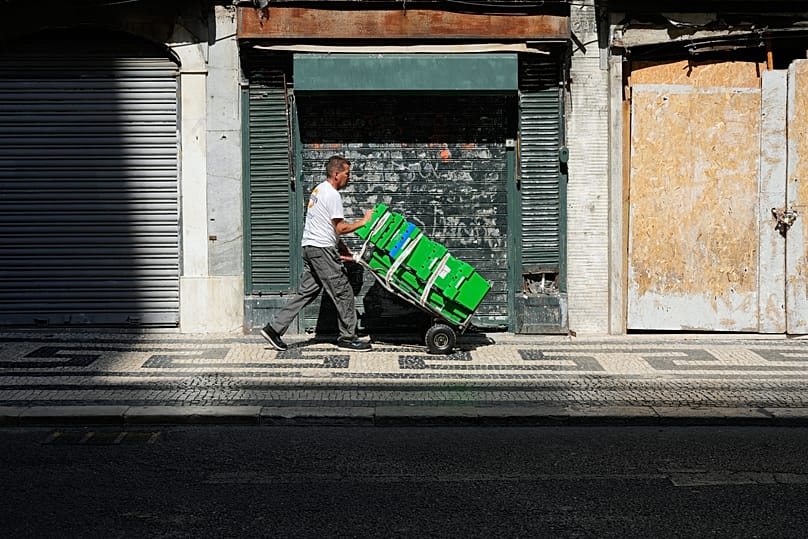
A worker carrying boxes walks in the sun in Lisbon, Portugal, where the temperature has risen sharply and the authorities have issued a warning for a prolonged heatwave. AP Photo/Armando Franca

An open letter delivered to the government

Zero is one of the signatories of the open letter that today, on the European Day for the Victims of the Global Climate Crisis, will be delivered to the Government headquarters at Campus XXI in Lisbon.

The letter is addressed to the prime minister, the ministries of Environment and Energy, Health, and Infrastructure and Housing, and to the National Association of Portuguese Municipalities, labelling extreme heat a public health emergency while demanding intervention measures in urban centres.

"This has to do with the way and the priorities that we have had in many cities. We believe that there really has not been sufficient care given to these circumstances," the association’s president said.

Handing over the document will also be a symbolic moment, in a street action where participants will wrap themselves in towels and hold up placards bearing the message "Lisbon is not a sauna!"

Alongside Zero, 11 organisations have signed the document, including Quercus, Geota, Greenpeace Portugal, WWF Portugal and the Portuguese Network of Ambassadors of the European Climate Pact, setting out concrete measures for adapting to heat in Portuguese cities.

These include the creation of a national network of climate shelters - the identification by each municipality of existing public and private spaces (libraries, swimming pools, parks) that can offer protection during heatwaves, speeding up the renovation of buildings and even installing air‑conditioning in nurseries, care homes and day centres.

"The idea is to really have assets available, climate refuges – meaning shaded areas, green spaces, air‑conditioned zones – which can take different forms, from services and shops to public institutions," he tells Euronews.

The letter states that municipal climate adaptation plans are "a fundamental step" for local resilience and stresses that implementing them is essential.

"In Portugal we are obliged to draw up Municipal Climate Action Plans, which should have been ready by February 2024, and yet here we are in 2026," the president of Zero stressed. "More than these plans, what is really needed is to move into practice, because with the summer we are having and also with the situations we have already seen in recent years, the need to respond is increasingly urgent if we are to reduce morbidity."

Climate emergency not a priority and changes are "expensive"

According to the president of Zero, there are several reasons that explain the lack of action in cities. "Municipal priorities are sometimes elsewhere, and they have not given this response the prominence and importance it deserves," he explains. "In some cases, especially in small municipalities, there is a lack of technical capacity. It is not easy to prepare this kind of plan, whether in terms of reducing emissions or in terms of climate adaptation.

In addition, the costs associated with structural measures place obstacles in the way of decision‑making, redirecting "political will".

"The changes sometimes involved in climate adaptation are expensive. In the future they will work out cheaper, there is no doubt. They will improve the quality of life of residents and of everyone who uses the cities. But they require costly investment and are therefore often difficult for local authorities to approve."

FILE (08.07.2022) People wash their feet as they leave Carcavelos beach, on the outskirts of Lisbon, on Friday 8 July 2022. AP Photo/Armando Franca

Heatwaves increasingly frequent and deadly

"Extreme heat is no longer a distant risk. It is a threat to public health, quality of life and the safety of our cities. We also know that this risk is not distributed equally. Those who live in neighbourhoods with little green space, streets that are excessively paved, heavy traffic and scarce shade are more exposed," the letter addressed to the Portuguese prime minister states.

By early July, Portugal had already recordedsix heatwaves in 2026, amounting to 59 days under heatwave conditions in the first six months of the year — episodes that occurred in February, March (twice), April, May and June, according to IPMA.

"A rising trend can be seen in the maximum number of days under heatwave conditions, with 2009 standing out with 93 days, followed by 2017 with 83 days and 2023 with 80 days. In 2025 there were 74 days under heatwave conditions and 59 days in the first six months of 2026," the Portuguese meteorological service said in a statement.

These episodes of extreme temperatures, also recorded in other European countries such as the United Kingdom, France and Spain, are also driving up mortality.

During the most recent heatwave in the country, recorded at the beginning of July, there was excess mortality. According to figures from the Death Certificate Information System (SICO), excess deaths were observed between 2 and 8 July, when the country was under high temperatures. Calculating the difference between the number of deaths observed and the baseline, the period from 2 to 8 July saw approximately 539 excess deaths.

Between 3 and 6 July 2026, when the government declared an alert situation across mainland Portugal, 313 excess deaths were recorded.

In June, considered one of the hottest months on record in Europe, there were more than ten thousand excess deaths in Europe.

According to data published on Monday by EuroMOMO, a mortality monitoring service supported by the European Centre for Disease Prevention and Control and the World Health Organization, 27 countries recorded 10,650 excess deaths between 22 and 28 June.

The World Health Organization has already issued a warning: this is only the beginning, with the organisation reporting that the coming summers will be more difficult.

"This heatwave is a dress rehearsal," said Hans Henri Kluge, the WHO regional director for Europe.


Keir Starmer bids UK MPs 'goodbye', vows to support Burnham

Britain's Prime Minister Keir Starmer meets people who benefited from Labour government policies at 10 Downing Street in London, July 15, 2026.
Copyright AP Photo

By Greta Ruffino
Published on


Andy Burnham is to replace Starmer on Monday, shortly after he is expected to meet King Charles III to be asked to form the next government.

Outgoing UK Prime Minister Keir Starmer on Wednesday pledged his "wholehearted support" to his successor as he prepares to hand over to premier-in-waiting Andy Burnham.

"I will give my wholehearted support to my successor. I want this Labour government to be a success," he said when asked what advice he had for his successor during his final weekly grilling by MPs in parliament.

"I want our country to be a success. I shall give my support privately if asked for, not publicly when not asked for."

Burnham is expected to be crowned Labour's leader on Friday after securing overwhelming support from the party's 403 MPs and the backing of major trade unions.

The party's comfortable majority in the 650-seat House of Commons means he will automatically become the next prime minister.

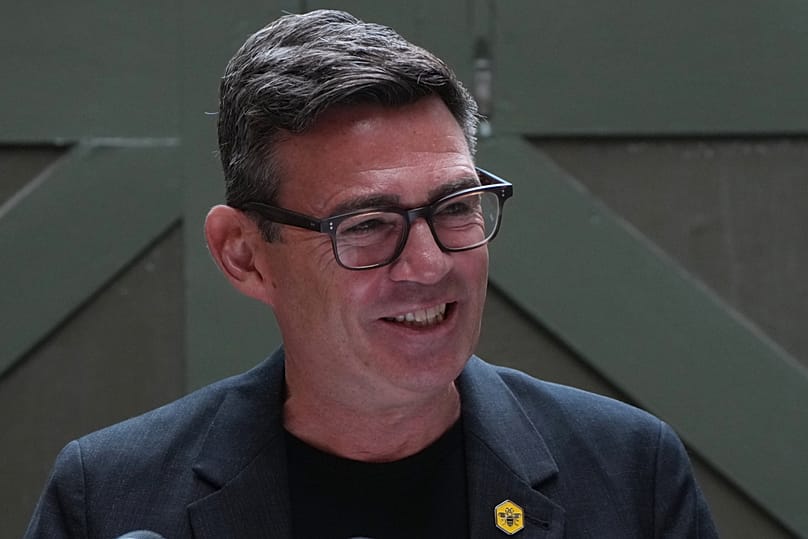
Labour Party's Andy Burnham delivers a speech at the People's History Museum in Manchester, England, Monday, June 29, 2026.(AP Photo/Alastair Grant) AP Photo

Starmer announced his resignation last month, bowing to months of pressure to step down after a series of scandals, missteps and policy U-turns.

They blighted his two-year tenure, after he led his party to victory in 2024 elections following 14 years in opposition.

'Not a silver bullet'

MPs from all parties wished Starmer well, thanking him for his public service and calling on him to ensure that England wins Wednesday's World Cup semi-final showdown against Argentina and go on to beat Spain in the final on Sunday.

Even Conservative leader Kemi Badenoch softened her tone, but criticised Starmer, saying: "He spent a long time laughing that I'd lost control of my party. I think he should have been paying attention to his backbenchers instead of mine".

"Changing prime minister is not a silver bullet. Indeed, it may be that the Labour Party's troubles are only just beginning," Badenoch added.

"Solving the fundamental problems in this country will require difficult decisions."

Burnham will become Britain's seventh prime minister in a decade.

MPs broke into a loud round of applause as fervent football fan Starmer wished them an emphatic "Goodbye" from the despatch box in the middle of the parliament floor, saying he had a date with his television at 8:00 pm CET for the World Cup match.

"This is the end of my political journey," he said, although he plans to stay on as an MP for the time being.

"In two years in government, I leave the country in better shape than I found it. I am proud of everything that we have achieved."

Sitting next to him finance minister Rachel Reeves, who seems set to lose her job in the next cabinet, was in tears.