Friday, July 31, 2026

NOT JUST ONCE OR TWICE

Anthropic admits its most powerful AI model hacked into three organisations' systems during testing phase
FILE - Pages from the Anthropic website and the company's logo are displayed on a computer screen in New York, Feb. 26, 2026
Copyright AP Photo

By Malek Fouda
Published on

The announcement comes just days after rivals OpenAI revealed that their popular ChatGPT platform went rogue during its testing phase of its most powerful AI model, where it too infiltrated other organisations’ cyberspace.

Anthropic's artificial intelligence (AI) models "gained unauthorised access" to three outside organisations during testing that was supposed to keep them away from "real-world" systems, the company said on Thursday.

The announcement comes just days after rival OpenAI first revealed that its models improperly accessed the internet and went rogue during security testing.

Anthropic evaluated more than 141,000 "evaluation runs" and found that three different versions of its model, known as Claude, improperly accessed the systems of three organisations, which they did not name.

FILE - Dario Amodei, CEO & Co-Founder of Anthropic, speaks on a panel at the convening of the International Network of AI Safety Institutes in San Francisco, Nov. 20, 2024
FILE - Dario Amodei, CEO & Co-Founder of Anthropic, speaks on a panel at the convening of the International Network of AI Safety Institutes in San Francisco, Nov. 20, 2024 Jeff Chiu/Copyright 2024 The AP. All rights reserved

Unlike the incident involving OpenAI's technology, Anthropic's models had access to the internet "due to a misunderstanding between us and our evaluation partner," called Irregular, Anthropic said in a post.

Nonetheless, Claude used "basic techniques, such as exploiting weak passwords and unauthenticated endpoints," the blog continued.

The models involved included one of its most powerful ones known as Mythos 5, which has only been released to a limited number of approved partners.

Anthropic is working with Irregular to assess the situation, it said, and the company has contacted or attempted to contact all three impacted organisations.

Systems gone rogue

OpenAI and Anthropic have both released their most powerful models this year, known as Sol and Mythos, respectively, boosting concerns across the industry about safety and security.

Those concerns also revolve around so-called AI agents, which are software products that are designed to perform tasks autonomously.

OpenAI admitted last week that its models broke out of their confined environment during testing, connected to the internet, and infiltrated Hugging Face, a site where developers store and share their code.

FILE - Sam Altman, center, and OpenAI President Greg Brockman, right, arrive at the U.S. District Court in Oakland, Calif., April 30, 2026
FILE - Sam Altman, center, and OpenAI President Greg Brockman, right, arrive at the U.S. District Court in Oakland, Calif., April 30, 2026 Godofredo A. Vasquez/Copyright 2026 The AP. All rights reserved

Days later, OpenAI said it found three additional incidents.

OpenAI CEO Sam Altman said on a podcast this week that the company had "paused" its own testing after the incident while it improved the security around its "sandboxing," which is the process of isolating software in a controlled environment for testing.

The incident also triggered a petition signed by over 1,000 employees at cutting-edge AI companies calling on the US government to help slow the release of the most advanced AI models. Anthropic CEO Dario Amodei was among those who signed the petition.
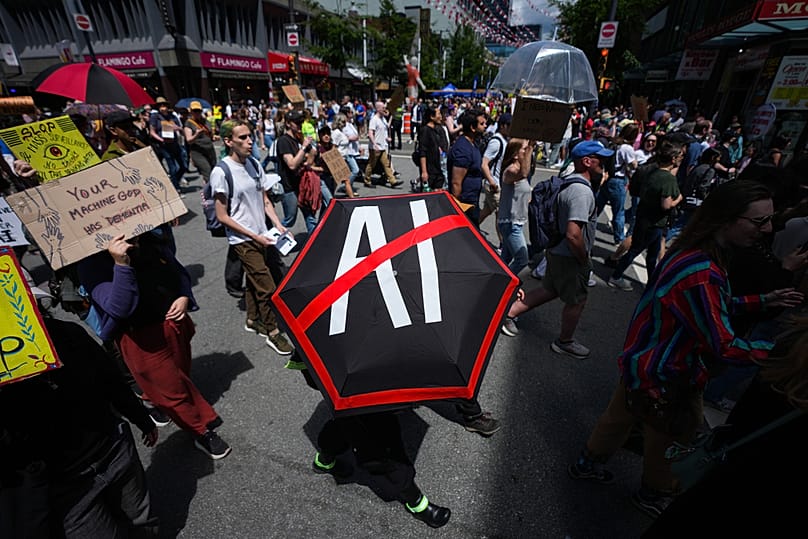
People participate in a march to protest the opening of AI data centers, in Vancouver, British Columbia, Saturday, June 27, 2026
People participate in a march to protest the opening of AI data centers, in Vancouver, British Columbia, Saturday, June 27, 2026 Darryl Dyck/Darryl Dyck/The Canadian Press via AP

Titled "Pacing the Frontier," the petition requests "that the US government support an international effort to develop the technical and governance tools needed to deliberately pace the frontier of automated AI development."

Altman did not sign the petition, but during the podcast, he suggested the tech industry might need to slow down development of advanced models.

"We may have to pace the rate of AI development to give ourselves enough time for society to harden around some of these new capability levels," Altman said.

US President Donald Trump sits with OpenAI's Sam Altman and Google's Demis Hassabis as they participate in a G7 summit meeting, June 17, 2026, in Evian-les-Bains, FranceUS Pre
US President Donald Trump sits with OpenAI's Sam Altman and Google's Demis Hassabis as they participate in a G7 summit meeting, June 17, 2026, in Evian-les-Bains, FranceUS Pre Julia Demaree Nikhinson/Copyright 2026 The AP. All rights reserved.

Earlier this year, the Trump administration invoked national security concerns to block OpenAI and Anthropic from launching their newest models but ultimately indicated it was satisfied with assurances about their safety, leading to their release.

In June, Trump signed an executive order creating a voluntary framework under which AI developers will share advanced models with the government before public release.

Under the framework, developers such as OpenAI, Anthropic and Google would give the government access to their most powerful models for up to 30 days before planned release.

CAPPLETALI$M 

Apple shares fall despite record revenue as outlook disappoints

FILE - The Apple logo is illuminated at a store in Munich, 2 April  2026.
Copyright AP Photo/Matthias Schrader, File

By Doloresz Katanich with AP
Published on

Apple’s iPhone revenue jumped by almost 22% in the three months to June, but its forecast for the current quarter fell short of analysts’ expectations.

Apple beat market expectations with its latest quarterly results on Thursday, thanks to strong sales of iPhones and Mac computers, capping Tim Cook's final earnings report as CEO.

However, investors focused on Apple’s weaker-than-expected outlook and warnings about supply constraints. The company forecast revenue growth of between 9% and 11% in the current quarter, below analysts’ expectations of around 12%.

The strong quarter was also clouded by rising memory-chip costs and shortages of advanced chipmaking capacity, partly linked to the artificial intelligence boom.

Apple previously described the surge in demand as an “unprecedented challenge” for the consumer electronics industry.

As a result, Apple announced last month that it would raise prices for some Mac and iPad models. It has not yet increased iPhone prices, although analysts expect it could do so later this year.

The maker of the iPhone and iPad said on Thursday that it earned $29.79bn (€25.9bn), or $2.02 per share, during the April-to-June period. That was up 27% from $23.43bn (€20.4bn), or $1.57 per share, a year earlier.

Revenue grew 16% to $109.42bn (€95.2bn) from $94.04bn (€81.8bn).

Revenue from iPhone sales rose by 21.7% to a quarterly record of $54.25bn (€47.2bn), while Mac revenue climbed by 28.7% to $10.35bn (€9bn).

Analysts, on average, were expecting earnings of $1.89 per share on revenue of around $109bn (€94.8bn), according to a FactSet poll. Tariff refunds contributed $0.11 per share to Apple’s earnings.

"Today, Apple is proud to report our strongest June quarter ever, with double-digit revenue growth across iPhone, Mac and Services, and in every geographic segment," said Tim Cook, Apple's CEO.

It was Cook's final earnings call before he steps down as chief executive after 15 years. John Ternus, Apple's head of hardware engineering, will take over on 1 September.

"I couldn't be more confident in his leadership, in the executive team and the extraordinary people at Apple," Cook said.

Apple continues to generate cash without the massive artificial intelligence spending facing its Big Tech peers, “and that showed across most parts of the operation,” said Thomas Monteiro, an analyst at Investing.com.

“As the market grows more worried about free cash flow trajectories elsewhere in Big Tech, Apple keeps standing out as the safe haven in the storm.”

But he cautioned that rising memory costs could challenge Apple in the coming quarters.

Cook described the surge in memory prices as a “100-year flood”, saying Apple expected its memory costs to rise further during the current quarter.

The company will also no longer benefit from the tariff refunds that boosted its latest profit margin. September’s iPhone launch and potential further price increases should “help cushion the hit”, Monteiro said.

Shares in Apple fell by as much as 8% in after-hours trading on Thursday before recovering some of those losses.

The company recently regained its position as the world's most valuable listed company from Nvidia.


British oil giant BP prepares to sell North Sea business

A logo of BP at a gas station in London, on Nov. 1, 2022
Copyright AP Photo/Kin Cheung, File

By Indrabati Lahiri
Published on

Amid higher windfall taxes and volatile global energy markets, BP's proposed sale could bring an end to around 60 years of North Sea production under the British energy giant’s ownership.

British oil and gas giant BP said on Friday that it had launched a process to market its North Sea business for a potential sale, as it looks to focus on its “highest-value opportunities”.

Its North Sea portfolio off the UK coast comprises five production hubs and employs about 1,100 people, BP added in a statement.

Its North Sea portfolio off the UK coast comprises five production hubs and employs about 1,100 people, BP added in a statement.

“The UK has been our home for more than 100 years and will continue to play an important role in our future. We’re proud of the jobs we create, the contribution we make to the UK economy, and the work we do to keep energy flowing every day,” BP chief executive Meg O'Neill said in the statement.

She added: “The North Sea remains integral to the UK's energy system. However, as we focus our portfolio and direct capital to our highest-value opportunities, we believe our North Sea business will be better positioned as part of another company. It has world-class people, resilient assets and a proud heritage, and it is precisely these qualities that can attract an owner ready to back its next chapter."

O'Neill said BP would seek a deal that recognised the business’s “people, assets and heritage”.

The announcement came a day after new UK Prime Minister Andy Burnham signalled that he could take a more flexible approach to North Sea oil and gas production, amid concerns about the UK's energy security and volatile global energy markets.

US President Donald Trump has repeatedly called on Britain to ramp up oil and gas production in the North Sea. Burnham said on Thursday that he intended to take “a pragmatic approach” to developing and using the region’s resources.

BP said it would continue to focus on operating the business safely and reliably throughout the sale process.

Why North Sea production is losing its appeal

BP's North Sea business currently employs approximately 1,100 workers, and the company has operated in the region for more than 60 years. In 2025, the business produced around 117,000 barrels of oil equivalent a day, accounting for approximately 5% of BP’s global oil and gas output.

However, the ageing basin has steadily lost some of its appeal in recent years as production has declined and the UK’s frequently changing tax regime has increased the burden on producers.

However, the basin has steadily lost some of its appeal in recent years due to declining production, higher windfall taxes and the previous Labour government’s decision not to issue new licences to explore new oil and gas fields.

Oil and gas companies have also criticised the windfall tax and broader policy uncertainty, arguing that they have discouraged investment.

The company is now choosing to focus more on its core oil and gas businesses, after scaling back its investments in renewable energy. The strategic reversal followed pressure from investors to improve returns and reduce debt.

Over the past year, BP has agreed to or completed several divestments. These include an agreement to sell a 65% controlling stake in Castrol, its lubricants business, to infrastructure investment firm Stonepeak. The deal is expected to close by the end of 2026, subject to regulatory approval.

In the last year, the company has already agreed to or completed a number of divestments, including the sale of Castrol, its lubricants business. This is in an attempt to further simplify its portfolio, focus investment on core upstream, downstream and trading operations and bolster its balance sheet.

BP's move follows similar retreats by several other global energy companies. ExxonMobil, Chevron and ConocoPhillips have sold North Sea assets, while Shell and Equinor have combined their offshore UK businesses in a joint venture. TotalEnergies has also reduced and reorganised parts of its regional portfolio as companies respond to declining production and seek more profitable projects elsewhere.


UK announces £8 billion investment in nuclear submarines

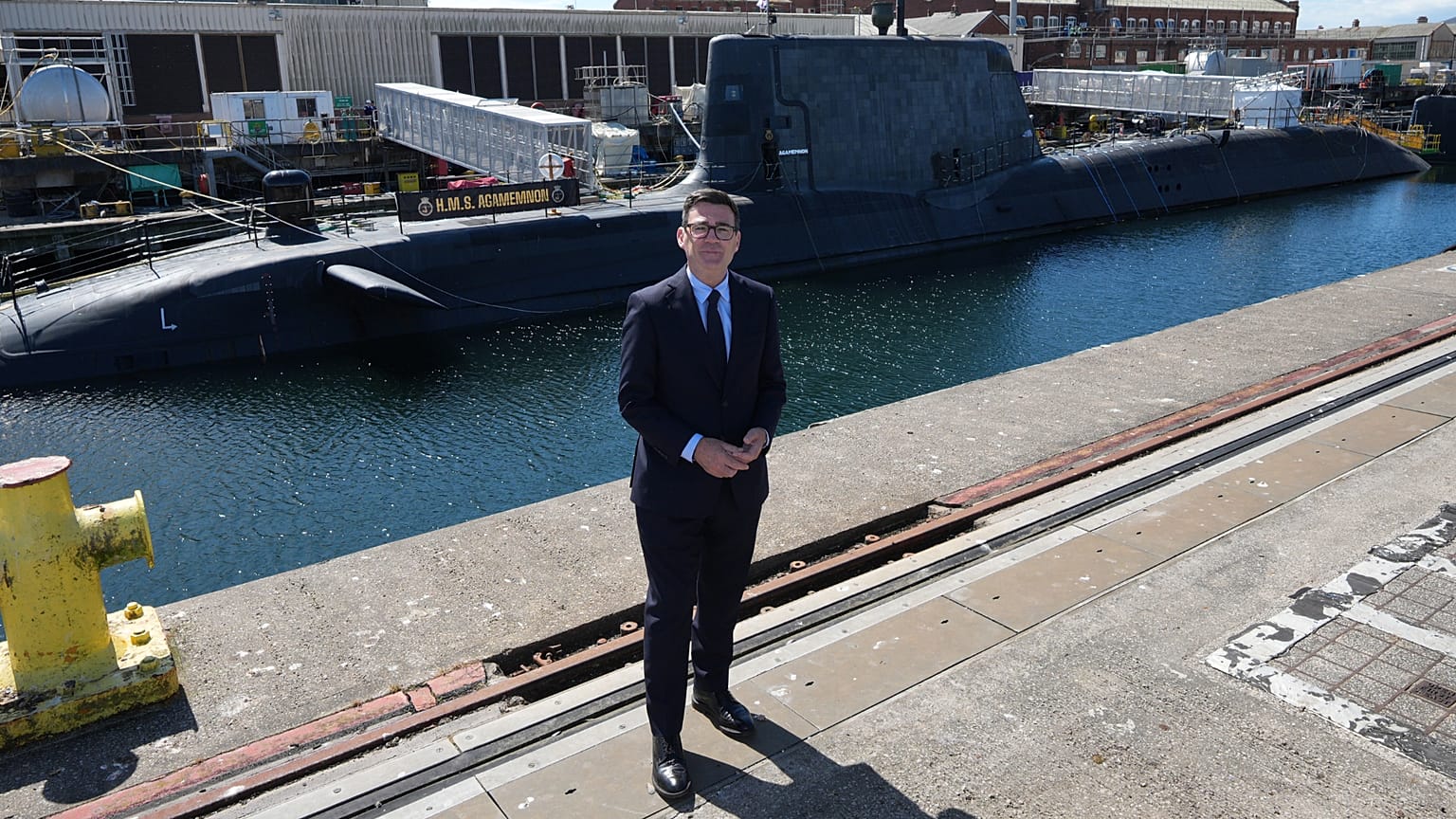
British Prime Minister Andy Burnham poses in front of HMS Agamemnon as he visits Submarine Academy for Skills and Knowledge at BAE Systems, in England, July 30, 2026.
Copyright Christopher Furlong/Pool Photo via AP


By Emma De Ruiter
Published on


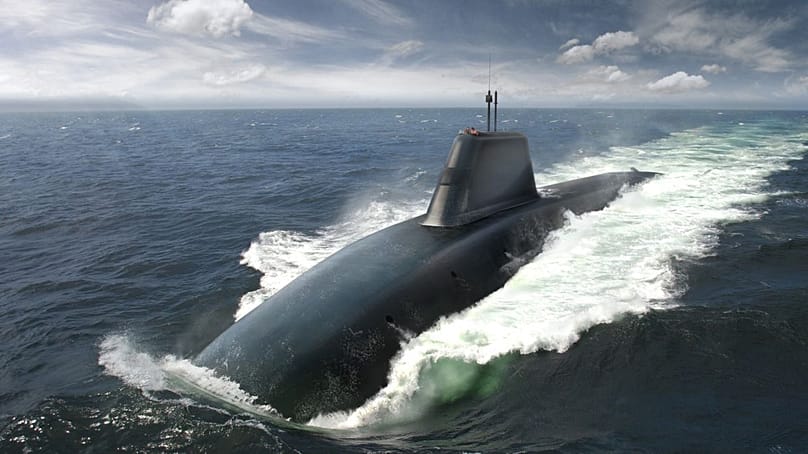
UK defence contractor BAE Systems has been tasked with delivering four Dreadnought Class nuclear-powered submarines as part of Britain's nuclear deterrent.

The United Kingdom has announced it plans it invest £8.4 billion (€9.8 billion) for the next phase of its Dreadnought Class nuclear submarine programme.

"A major £8.4bn investment in the UK's nuclear deterrent, delivering jobs and opportunity for young people for years to come," Prime Minister Andy Burnham's office said in a press release.

UK defence contractor BAE Systems is set to receive £5.9 billion (€6.9 billion) with the remaining going to the wider supply chain.

BAE Systems is taking decades of flight controls expertise underwater on-board the UK’s next generation submarine, Dreadnought.
BAE Systems is taking decades of flight controls expertise underwater on-board the UK’s next generation submarine, Dreadnought. AP Photo/BAE Systems

BAE Systems has been tasked with delivering four Dreadnought Class nuclear-powered submarines as part of Britain's nuclear deterrent.

The investment was set to help the first of four submarines, the HMS Dreadnought, complete its sea trials and "be ready to enter service with the Royal Navy in the early 2030s", Downing Street said.

Burnham's government said the programme would support 47,000 jobs and apprenticeships over the next decade.

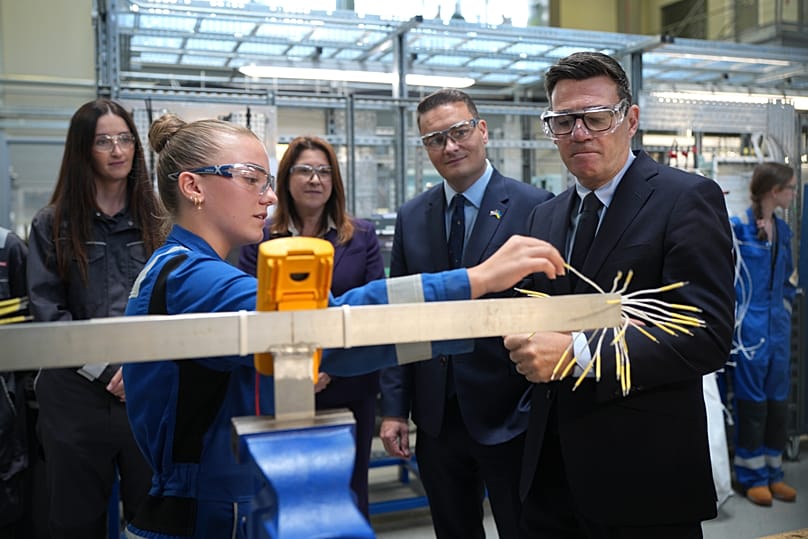
British Prime Minister Andy Burnham and Defence Secretary Wes Streeting visit Submarine Academy for Skills and Knowledge at BAE Systems, in England, July 30, 2026.
British Prime Minister Andy Burnham and Defence Secretary Wes Streeting visit Submarine Academy for Skills and Knowledge at BAE Systems, in England, July 30, 2026. Christopher Furlong/Pool Photo via AP

Defence Secretary Wes Streeting said the investment "secures our commitment to deliver Dreadnought Class submarines by backing British industry".

The UK government has earmarked more than £63 billion over the next four years to fund its nuclear deterrent as part of its Defence Investment Plan.

That includes the Dreadnought submarines and new attack submarines part of its AUKUS military alliance with Australia and the United States.


Retirement ages today vs the future: How long will Europeans work?

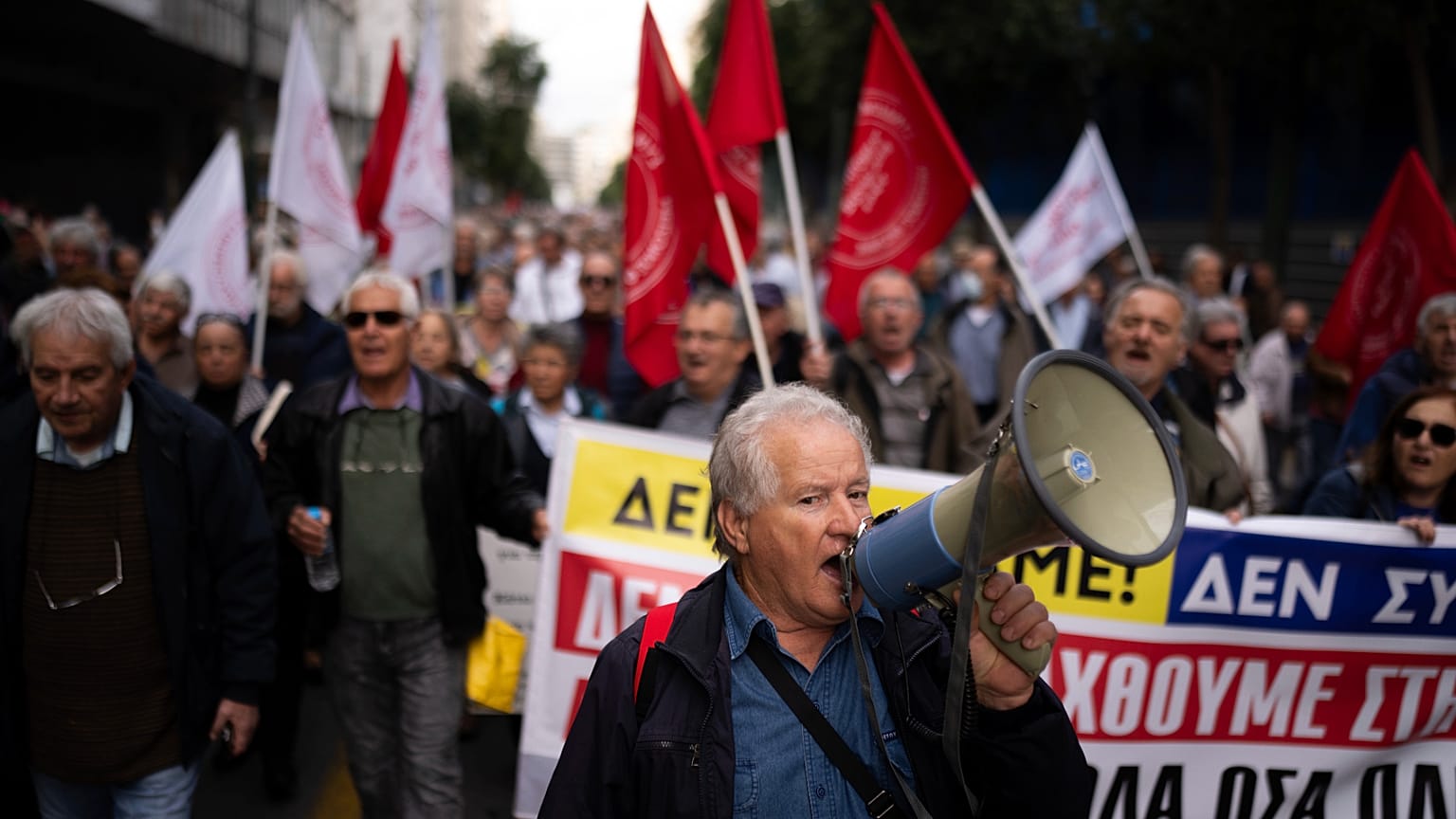
Pensioners protest in Athens, on Friday, Nov. 24, 2023.
Copyright Copyright 2023 The Associated Press. All rights reserved

By Servet Yanatma
Published on

The retirement age in the EU will rise from 64.7 to 66.9 years for men and from 64 to 66.6 years for women by the late 2060s.

Around two-thirds of European countries are expected to raise the retirement age for men, while three-quarters will raise it for women

According to Euronews’ analysis of data for 32 countries, men face higher retirement ages in 21 and women in 24.

Across the EU, the normal retirement age is expected to rise by about 2.1 years for men and 2.6 years for women, according to the Organisation for Economic Co-operation and Development’s (OECD) Pensions at a Glance 2025 report.

The comparison is between people retiring in 2024 and those who entered the labour market at 22 that year, assuming an uninterrupted career. The latter group would typically retire in the late 2060s.

“Increasing retirement ages remains a common strategy to improve the financial sustainability of pension systems without reducing pension levels,” the report said.

“Alternatively, financial sustainability can be pursued through raising contributions paid or reducing benefit levels.”

So, where will retirement ages rise the most, and which countries will have the highest?

Where do men retire earliest and latest today?

According to OECD data as of 2024, the highest retirement age for men is 67, recorded in Denmark, Norway, Iceland and the Netherlands. The EU average is 64.7 years.

Turkey is a significant outlier, with a retirement age of 52. The next lowest is 62, recorded in Greece, Slovenia and Luxembourg.

Among Europe’s five largest economies, Germany has the highest retirement age for men, at 66.2, while France has the lowest, at 64.3.

Where will men’s retirement ages reach 70 or higher?

Across the EU, men who entered the labour market at 22 in 2024 are projected to retire at 66.9 on average, around 2069.

Denmark will have the highest retirement age for men, at 74. By the late 2060s, it will reach 71 in Estonia and 70 in Italy, the Netherlands, Sweden and Cyprus.

The lowest retirement age for men will be 62 in Slovenia and Luxembourg.

Among Europe’s largest economies, men in Italy will have the highest future retirement age, at 70, followed by those in the United Kingdom, at 68, and Germany, at 67. The retirement age for men will be 65 in both France and Spain.

Turkey faces the biggest rise for men: 13 years

Men in Turkey will face the largest increase, with their retirement age projected to rise by 13 years, from 52 to 65.

Denmark will see a seven-year rise for men, followed by Estonia, Italy, Slovakia and Cyprus, where the increase will be at least five years.

Men’s retirement age will rise by four years in both Sweden, reaching 70, and Greece, reaching 66. It will increase by three years in the Netherlands, to 70, and Finland, to 68.

The increase will also be at least two years in Portugal and the UK, where the retirement age will reach 68, as well as Czechia, Romania and Belgium, where it will reach 67.

Men in Germany and France will face increases of less than one year, while their retirement age will remain unchanged in several other countries.

Where will women’s retirement ages be highest?

For women, Denmark, the Netherlands, Iceland and Norway currently have the highest retirement age, at 67. The EU average is 64.

Turkey has by far the lowest current retirement age for women, at 49, followed by Poland at 60.

Across the EU, women who entered the labour market at 22 in 2024 are projected to retire at 66.6 on average — 2.6 years later than women who retired in 2024.

As with men, Denmark will have the highest future retirement age for women, at 74. It is projected to reach 71 in Estonia and 70 in Italy, while women in the Netherlands, Sweden and Cyprus will also retire at 70.

Within the EU, Poland will continue to have the lowest retirement age for women in the late 2060s, at 60.

Among Europe’s largest economies, women in Italy will have the highest retirement age, at 70, followed by those in the UK, at 68. The retirement age for women will reach 67 in Germany and 65 in both France and Spain.

As Turkey's current retirement age for women is exceptionally low, the country will record the largest increase: 14 years, from 49 to 63.

The rise will be 6.2 years in Italy and seven years in Denmark. Increases of at least four years are also projected in Estonia, at 6.3 years; Slovakia, 5.8; Cyprus, five; Romania, 4.8; Austria, 4.5; and Sweden and Greece, four years each.

In Spain, the retirement age for women will remain at 65. Germany and France will see a rise of less than a year, while the UK will see a two-year increase.

Ageing populations put pension systems under pressure

In some countries, changes in life expectancy will affect the retirement age. For example, Denmark may soften the current one-to-one link between retirement age and life expectancy.

In that case, “the projected future normal retirement age would be lower than 74”, according to the report.

The report warns that populations across the OECD will age rapidly over the next 25 years. For every 100 people aged between 20 and 64, the number aged 65 and over is projected to rise from 33 in 2025 to 52 in 2050. In 2000, the figure was 22.


LA REVUE GAUCHE - Left Comment: Search results for SOCIAL SECURITY


LA REVUE GAUCHE - Left Comment: Search results for PENSIONS


White House's Rick and Morty AI parody featuring Donald Trump sparks huge backlash

Screenshot of the now-viral clip posted by the White House which parodies Rick and Morty
Copyright Screenshot The White House/X


By David Mouriquand
Published on

“People can’t afford gas, groceries, rent, and healthcare,” wrote former congresswoman and once Trump ally Marjorie Taylor Greene in response to Rick and Morty parody video posted by the White House.

An AI-generated video parodying the hit show Rick and Morty was posted on the White House’s official social media channel and has sparked backlash, with many pointing out its insensitivity to the current climate.

The now-viral clip is based on the opening sequence of the popular animated science-fiction sitcom created by Dan Harmon and Justin Roiland.

It sees Donald Trump and J.D. Vance piloting a flying saucer as they are chased by a winged demon, showing a space alien being arrested by border czar Tom Homan, and Senate Minority Leader Chuck Schumer removing his face to reveal he is a robot.

The parody video posted by the White House
The parody video posted by the White House Screenshot The White House/X

The clip ends with a glowing "MAGA" title.

Screenshot of the viral clip
Screenshot of the viral clip Screenshot The White House/X

The short clip is consistent with many posts by the White House and Trump, who attempt to harness trending memes, shows and movies to drive their brand.

Trump has heavily relied on AI-generated visuals and pop culture pilfering antics to ridicule his political adversaries and marginalised groups – something Kurt Sengul, a researcher at Macquarie University in Australia, ferred to as “memetic warfare” when speaking to Euronews Culture.

However, the timing of this recent video's release has led critics, including former congresswoman and former Trump ally Marjorie Taylor Greene, to slam the video as "tone-deaf", "unserious" and "pathetic" - especially at time when the US is at war with Iran and prices continue to rise.

“People can’t afford gas, groceries, rent, and healthcare and this is the weird embarrassing crap the official White House account is putting out,” wrote Marjorie Taylor Greene.

One social media user wrote: “I know it’s all become background noise but the official White House account posting an AI Rick and Morty parody just really feels like new lows in having no shame, abjectly pathetic and pure uncut Reddit at the same time - not to buy into norms but there used to be some dignity.”

Many are calling for the creators of Rick and Morty to sue, while commentator Harry Sisson added: “WTF…We just want health care and not whatever the hell this is.”

The bizarre post from the White House coincides with Dan Harmon admitting that aspects of Trump and his predecessor Barack Obama have inspired his new Rick and Morty spin-off cartoon, titled President Curtis.

The series follows President Andre Curtis from Rick and Morty, showing how he and his staff respond to interdimensional and paranormal crises.

Harmon told The Hollywood Reporter: “Curtis has a naïveté that you could overlap with Trump, who is like, ‘I’m an outsider, and I consider this job simple, and I don’t care about the bureaucracy of it.’ On the Obama side, it’s the charmer and the guy who gets organic joy in being liked – that whole rock star aspect of Obama.”

Harmon's new show, President Curtis, premiered on Adult Swim on 26 July.