Saturday, August 01, 2026

Russia begins mass production of cheap, upgraded Banderol cruise missile

Russia begins mass production of cheap, upgraded Banderol cruise missile
Ukraine's military intelligence says the 2026-model missile is faster and harder to intercept, and is now being fired from ground launchers in Crimea as well as drones and helicopters. / bne IntelliNewsFacebook
By bne IntelliNews August 1, 2026

Russia has begun mass production of its cheap but powerful Banderol cruise missile, with the 2026-model variant modernised and significantly different from the 2025 version, Ukraine's Main Intelligence Directorate (GUR) said.

The S8000 Banderol, developed by sanctioned defence contractor Kronstadt, reportedly carries a 150 kg warhead, flies 350-450 km and reaches speeds of 550-600 km/h.

The missile, which began development in 2021, is the latest addition to the Russian army as both sides are engaged in a drones arms race seeking to improve their cost-to-kill ratio by producing ever more cheap drones that have taken over the battlefield.

Russia’s workhorse Geran-2 drone, based on the Iranian-designed Shahed-136 loitering munition, have also had an upgrade to the Geran-4 and Geran-5, which are jet propelled and so fast they can evade Ukraine’s new class of interceptor drone. It is also faster and much more accurate Kh-101 cruise missiles, said Vladyslav Vlasiuk, President Volodymyr Zelenskyy’s commissioner for sanctions policy Bloomberg reports.

“This is a very dangerous gizmo,” Vlasiuk told journalists as he showed off part of a Banderol fired last year. “The majority of strikes on the port infrastructure in Odesa are with Banderols.” Vlasiuk said 80% of the strikes on the Greater Odesa port are made using this missile.

The speed of the Banderol is also the main problem for Ukrainian air defence: interceptor drones cannot catch the missile, and Ukraine lacks sufficient numbers of dedicated anti-aircraft missiles to bring it down instead. The Banderol was originally launched only from Orion medium-altitude drones and Mi-28 helicopters; it is now also being fired from ground-based launchers stationed in occupied Crimea.

The missile is also cheap, costing around $150,000-$300,000 each and relies on repurposed Chinese civilian mini jet engines. Ukraine estimates Russia is producing hundreds of Banderols per year, but production could be slowed if sanctions are tightened.

GUR has previously said 2025-built Banderol samples contained components sourced from the US, China, Japan, Switzerland, South Korea and Australia – a supply chain that continues into the 2026-model missile and points to persistent gaps in sanctions enforcement even as Moscow scales up output.


COMMENT: Ukraine's refinery campaign is turning oil into Russia's weakest economic link

COMMENT: Ukraine's refinery campaign is turning oil into Russia's weakest economic link
Riddle Russia's Vakhtang Partsvania argues that Kyiv's shift from export terminals to refineries has found the one part of Russia's oil sector that sanctions alone could never touch: domestic fuel supply. / bne IntelliNewsFacebook
By bne IntelliNews August 1, 2026

Ukraine's long-range drone campaign against Russia's oil industry is simultaneously hitting three sensitive areas of the war economy at once: fuel production, domestic logistics of petroleum products, and fiscal stability, Vakhtang Partsvania argues in a comment for Riddle Russia.

The strikes have not collapsed the oil sector as a whole and have not cut off Russia's export revenues – but they have shifted the structure of the losses, forcing Russia to export more crude instead of refining it domestically, at the cost of value added, regional fuel shortages, rising gasoline prices, accelerating inflation and ever more expensive compensatory budget payments.

The pivot point was the strike on the Moscow Refinery in Kapotnya, one of Russia's largest plants with annual capacity of around 11mn tonnes of crude. The Moscow region accounts for 14% of Russia's passenger cars – 7.4mn of 53mn nationwide – handles 19% of the country's road freight, and its aviation hub carries roughly 40% of Russia's passenger air traffic; a prolonged shutdown there is as much a logistics problem as a production one, since even fuel sourced from elsewhere must still reach the capital through an already-strained transport network.

"Russia's oil sector had long been considered one of the most resilient parts of the economy," Partsvania writes. "Strikes on refineries, however, exert a different kind of pressure. Sanctions reduce export margins and raise transaction costs. Drone attacks impair the physical ability to refine oil and supply the domestic market. This is no longer a question of a discount to Brent or freight rates — it is a question of the availability of gasoline, diesel, and jet fuel inside the country."

That is already reflected in the trade figures: Russian production of coke and petroleum products fell 13.5% y/y in May 2026, with the January-May decline running at almost 5%. More recent estimates published by the Financial Times put the fall in throughput at 45% in July.

Strikes intensified from late March, when the year-on-year decline was already around 9%; May marked the steepest fall in years. Repair is also harder than it looks – modern refining needs complex secondary processing units (isomerisation, cracking, hydrotreating) whose specialised components, pumps, catalysts and electronics were often sourced from Western suppliers now blocked by sanctions, producing what Partsvania calls a "double strike": the drone causes physical damage, and sanctions prolong recovery. Repeated hits compound the problem – the Ryazan and Saratov refineries have each been struck 15 times, accumulating equipment "fatigue" that raises failure risk even without new strikes.

The consequences have already reached households and the central bank. Fuel-purchase restrictions – per-person limits, jerry-can bans, priority supply for essential services – have spread to 83 Russian regions. Weekly gasoline prices rose 3.0% and 1.6% in the second half of June alone, with diesel up 2.7% and 2.2%, and price rises registered in 82 regions – sharpest in annexed Sevastopol, at 30%. The Bank of Russia's decision to cut its key rate by just 25 basis points on June 19, to 14.25%, reflected exactly this pressure: rising fuel prices amplifying inflation risk and narrowing the room for monetary easing. Nevertheless, political pressure on CBR governor Elvia Nabiullina by Russian President Vladimir Putin himself, who called for more rate cuts twice in two months, saw the governor cut rates again to 14% in July.

Partsvania argues there has been a shift in Ukrainian targeting logic: earlier strikes on export terminals produced dramatic visuals but limited economic effect, since tank farms are designed to lose individual tanks rather than whole facilities, and loadings usually resume once pipeline and rail links survive. Refineries sit at a narrower chokepoint between crude production and the domestic fuel market – knocking out processing capacity does not make the oil disappear, but it turns the oil itself into the problem, since not every refinery can absorb redirected volumes or produce the right product mix, and moving fuel to deficit regions strains the same railways and pipelines already under pressure elsewhere in the war economy.

Ukraine's refinery strikes settle into a routine of damage, repair and restart

Ukraine's refinery strikes settle into a routine of damage, repair and restart
Perm and Ryazan are the latest Russian refineries hit, with Kazakhstan now stepping in to refine some of Russia's crude as the campaign grinds on. / bne IntelliNewsFacebook
By Ben Aris in Berlin July 31, 2026

Ukraine's long-range drone campaign against Russian oil refineries has become routine enough that analysts are now describing it as a predictable cycle rather than a series of shocks: strike, assess damage, repair, restart - repeated across plant after plant for months.

As IntelliNews reported, Russia’s oil refining sector is battered but not broken. Ukraine’s long-range drones have now hit all 30 of Russia’s major refineries, but as it is firing drones, not the far more destructive ballistic missiles Russia has, Russia’s oil refineries are able to repair much of the damage fairly quickly.

"We seem to be getting more information than usual on drone-struck Russian refineries lately," the account according to the Russian Oil & Gas Monitor, noting Perm had lost 38% of its primary distillation capacity and Ryazan may be offline for two weeks after both were struck within days of each other. "This take-damage-repair-restart cycle is starting to become routine."

As IntelliNews reported, while the fall in oil refining through put has fallen from a 13.5% decline in May to an estimated 45% now, according to the Financial Times, the shortages and queues at tank stations are receding as more imported oil from Belarus, Kazakhstan and India begin to reach Russia.

Perm: a symbol of the campaign's reach

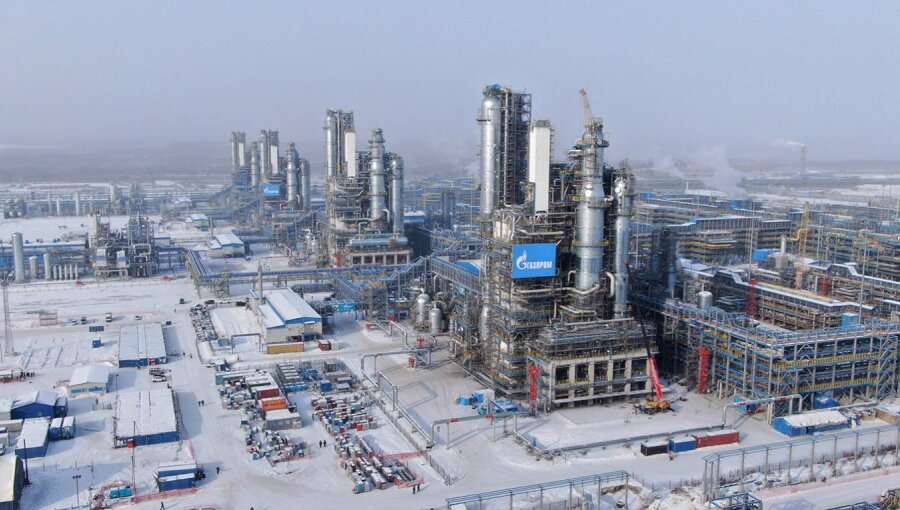
A drone attack caused a fire at Lukoil's Perm refinery on July 30 and forced the shutdown of its CDU-5 primary crude distillation unit, which has a throughput capacity of 12,930 tonnes a day and accounts for around 34% of the plant's total processing capacity, two industry sources told Reuters. Perm has a project refining capacity of about 13.1mn tonnes a year, ranking it among Russia's 10 largest refineries.

Ukrainian President Volodymyr Zelenskiy said his forces had also struck an export terminal and a military enterprise in Rostov region the same week, part of what Kyiv frames as a systematic effort to degrade the refining capacity and export infrastructure funding Russia's war effort.

The campaign has been running for months, including the Omsk refinery strike in July, at the time the largest and deepest strike of the campaign.

Tuapse: the strikes' visible legacy

Damage from earlier strikes on the Black Sea refinery at Tuapse - the plant Vladimir Putin once visited in 2013 to launch what was then Russia's most sophisticated oil-processing unit - remains visible from space months later, the Financial Times reported, calling the plant a symbol of how far Ukraine can now strike with precision deep inside Russian territory.

The cumulative effect across plants is genuine but not catastrophic in any single instance: Russian Oil & Gas Monitor cautioned there is "no way to estimate the impact on gasoline and diesel output" from any one strike in isolation, since damaged plants have also been coming back online over the same period, complicating any clean read on how much fuel Russia is actually producing at a given moment.

Friendly countries step in to refine Russian crude

Russia's escalating fuel shortages, driven by Ukraine's sustained drone campaign against its refineries, have forced Moscow to lean increasingly on Belarusian gasoline. Belarus shipped a record 141,000 tonnes of gasoline to Russia between June 1-25 alone - 2.4 times May's volume and a huge jump from the mere 1,000 tonnes it sent a year earlier - as Minsk's two modern refineries became a critical crutch for Moscow's stricken fuel market, reversing the two countries' traditional trade relationship. The windfall briefly made Belarusian fuel a fixture on the St Petersburg commodity exchange before Minsk's refineries sold out their July batches and sales collapsed.

India has also become a stopgap supplier. With roughly a quarter of Russia's refining capacity knocked offline and gasoline output down at least 13.5%, Moscow banned diesel exports until July 31 and imported at least 60,000 tonnes of petrol from India, on top of existing supply from Belarus and Kazakhstan. Deputy prime minister Alexander Novak has now admitted the shortages are directly tied to Ukrainian refinery strikes - a crisis spreading from filling-station queues into freight, agriculture and retail just as peak harvest season pushes diesel demand higher.

And Kazakhstan is in talks to refine Russian crude as Moscow faces fuel shortages, with the resulting products sold on the Kazakh domestic market and some potentially re-exported back to Russia, Reuters reported, though Kazakhstan says any deal must first guarantee supply for its own consumers. Astana's Kondensat refinery is already processing Russian oil and exported petrol to Russia for the first time in July - a small but symbolically significant reversal of the usual regional flow of refined products.



 

Turkey takes Russian firefighting jets while sanctions leave Spain's grounded

Turkey takes Russian firefighting jets while sanctions leave Spain's grounded
Ankara's refusal to join Western sanctions gets it two Be-200 aircraft from Moscow; Madrid's compliance has left its own Kamov helicopter fleet unable to fly. / bne IntelliNewsFacebook
By Ben Aris in Berlin August 1, 2026

Russia has sent two Be-200 amphibious firefighting aircraft to Turkey following a request from Turkish authorities, as wildfires burn across the country, the Daily Turkic reported on July 30.

The gesture is only possible because Turkey, a Nato member, has consistently declined to join Western sanctions on Russia over the war in Ukraine - a stance that has repeatedly drawn criticism from allies but has also kept channels open for exactly this kind of practical cooperation as extreme wildfires become a near-annual crisis across the Mediterranean and southern Europe, following Europe's record 2025 wildfire season and Turkey's own 50,000 evacuations in 2025.

Madrid, on the other hand, has joined the EU sanctions regime and is now paying the price. As a direct result, none of its ten contracted Russian-made Kamov Ka-32 firefighting helicopters - among the most capable aircraft of their kind - are currently flying. EU sanctions on manufacturer Kamov have cut off spare parts and barred the Russian technicians required to certify the aircraft airworthy, prompting Europe's aviation regulator EASA to pull the Ka-32's flight certificate, Newsbase reported. Spain's wildfires have already burned around 153,000 hectares this year, concentrated in the Madrid, Avila and Toledo provinces and the fires continue to rage, causing the government to declare a state of emergency.

The episode captures an uncomfortable trade-off for European sanctions policy: the same restrictions designed to squeeze Russia's economy have also stripped a frontline EU state of firefighting capacity precisely when climate-driven wildfires are becoming more frequent and more destructive.

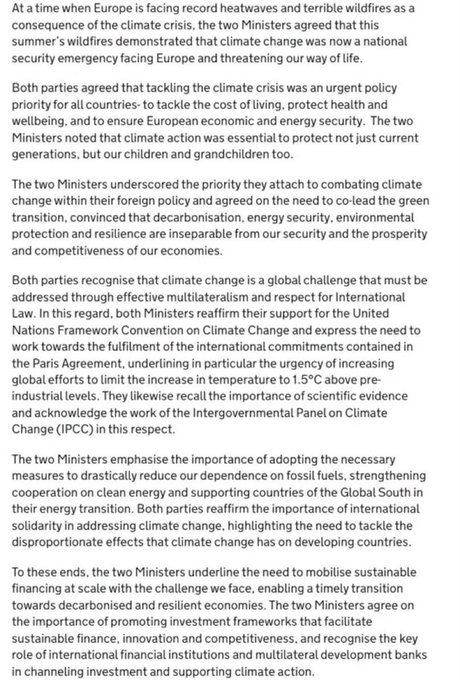
The UK and Spain issued a joint statement on the wildfires this week declaring that "this summer's wildfires demonstrated that climate change was now a national security emergency facing Europe and threatening our way of life," with both governments agreeing that tackling the climate crisis was "an urgent policy priority for all countries" and that climate action was essential "to protect not just current generations, but our children and grandchildren too."

Joint UK-Spain government statement on the 2026 European wildfires.

Wildfires are turning parts of Europe into an insurance nightmare

Beyond the immediate firefighting-capacity problem, Europe's insurers and policymakers are grappling with a harder question: who pays? As IntelliNews reported, one study estimates that extreme weather has already caused around $28 trillion of damage and that bill is getting bigger every year during the annual disaster season.

"What's happening in Europe this summer isn't unique," deputy governor of the Bank of France Agnes Benassy-Quere said, "these heatwaves and forest fires are part of a marked global increase in extreme weather events that imposes real costs on households, businesses, and governments," Politico reported.

Weather-related extremes cost the EU economy more than €200bn ($233bn) in economic losses between 2021 and 2024, according to European Environment Agency data cited in the report, and insurers are responding by raising prices and pulling out of higher-risk areas altogether - shifting the cost onto governments and individuals. Insurance companies are already reassessing the premiums needed for the popular catastrophe bonds and starting to review their risk assessments in general due to the literally off-the-chart weather events. In Europe, 75% of natural-disaster damages are not insured at all, according to NGO Reclaim Finance, citing European Insurance and Occupational Pensions Authority data.

Insured wildfire losses in Europe have grown by an estimated 8-11% a year in real terms since 1970, according to Swiss Re's Nikhil da Victoria Lobo, who called wildfires "the fastest-growing weather peril globally" even though they still account for a relatively small share of Europe's total insured catastrophe losses so far. In France, where a wildfire still burns through Gironde and Landes, at least 240 homes have been lost and around 130,000 workers are currently unable to work because of the fires, with the government promising to cover evacuees' accommodation and rebuilding costs.

The European Central Bank and the EU's insurance regulator have called on Brussels to set up an EU-level reinsurance scheme and a public natural-disaster fund - an acknowledgment that national insurance markets alone may not be able to absorb losses of this scale as extreme weather becomes the norm rather than the exception.


School head in Istanbul made persona non grata in first such move in history of diplomacy

School head in Istanbul made persona non grata in first such move in history of diplomacy
Turkey has provided Giuseppe Finocchiaro with an unsought place in the history books. / liceoitaliano.net
By Akin Nazli in Belgrade August 1, 2026

The principal of an historic foreign high school in Istanbul has become the first such figure in the history of diplomacy to be declared persona non grata.

Giuseppe Finocchiaro, principal of Istanbul’s Italian government-owned Ozel Italyan Lisesi (Liceo Italiano di Istanbul), is the subject of the unprecedented move made by Turkey’s foreign ministry, labour union Tez-Koop-Is (@tezkoopissndk) said on July 30.

The ministry acted against Finocchiaro in the wake of a 123-day strike by teachers at the school. The labour action was rare and protracted for Turkey's private education sector. An accord was brokered by the labour ministry to end the walkout, but the union then alleged that Finocchiaro and his Turkish deputy, Nida Intiba, subsequently launched a "retaliatory mobbing campaign" of harassment, isolation and the summary firing of 10 unionised teachers.

In response, the education ministry stripped both of the school administrators of their managerial licences. Acting at the request of the education ministry, the foreign ministry then formally designated Finocchiaro persona non grata under the Vienna Convention, revoking his diplomatic status and ordering him to leave the country.

Last December, IntelliNews reported how Italian teachers at the school earn salaries six times bigger than the salaries of their Turkish colleagues at the institution.

Liceo Italiano di Istanbul, or Ozel Italyan Lisesi, was founded as far back as 1861 during the Ottoman era. It is among schools for non-Muslim minorities in Turkey given permission by European governments to open during the 19th century.

‘Every Single Thing He Says Here Is a Lie’: Trump Adviser Claims Data Centers Are ‘Good for Towns’

“The disdain this administration has for the very people living in rural America who helped bring it to power is staggering,” wrote one critic.


National Economic Council Director Kevin Hassett speaks in the Oval Office of the White House on April 30, 2026 in Washington, DC.
(Photo by Andrew Harnik/Getty Images)

Brad Reed
Jul 31, 2026
COMMON DREAMS

National Economic Council Director Kevin Hassett on Friday drew sharp criticism after he claimed that energy-devouring artificial intelligence data centers are “good for towns” across the US.

During an appearance on Fox Business, Hassett made the case that Americans should welcome data centers into their communities because they would supposedly deliver real economic benefits.

“Data centers are very good for towns, because they create so many jobs and bring people in with high incomes that can buy houses and stuff like that,” said Hassett. “So if you take a sleepy town that hasn’t seen much in the last 20, 30 years and put a data center there, there are gonna be a whole bunch of happy residents in that town.”


A March Gallup poll found that 71% of Americans were opposed to building AI data centers in their local areas, with 48% registering strong opposition.

In the poll, many Americans cited concerns about data centers’ uses of local water and electricity resources as their primary reason for opposition, as well as general concerns about their impact on the environment and the local quality of life.

Additionally, data centers have not proven to be a significant source of job creation in communities where they are built because their systems are so automated that they require very little staff to maintain.

Trump administration critics were quick to slam Hassett for peddling such outright falsehoods about data centers.

“Every single thing he says here is a lie,” remarked Ben Collins, CEO of the satirical news website The Onion. “A Potemkin Village Imaginarium.”

Jeffrey Vagle, professor at the Georgia State University College of Law, similarly saw little connection between Hassett’s description of data centers and reality.

“Has Hassett ever been inside a data center?” Vagle asked. “He should do so then put together an employee per square foot analysis to compare with other businesses. Data centers are largely automated, operating with very few actual employees, none of them executives.”

Vagle’s analysis was echoed by journalist Philip Bump, who wondered “what high-paying long-term jobs do they pretend exist” when AI data centers move in.

“A data center isn’t a place where execs come and do Big Deals,” Bump explained. “Go to the server room at your workplace; are there lots of rich people in there spending money?”

Democratic pollster Stephen Clermont sarcastically encouraged Hassett to speak more about the purported virtues of data centers.

“The White House needs to keep with this messaging and keep using Hassett as a surrogate,” Clermont wrote. “The Forgotten Man will be forgotten no more in the data center utopia.”

Liberal Fox News personality Jessica Tarlov similarly argued that Hassett’s happy talk about data centers could be good for Democrats.

“Take the opening Democrats!” she wrote. “Americans hate data centers. The utility bills. The noise. The pollution.”

Glenn Elliott, former Democratic US Senate candidate in West Virginia, argued Hassett’s pitch for data centers showed what the Trump administration really thinks of its core voting base.

“The disdain this administration has for the very people living in rural America who helped bring it to power is staggering,” Elliott wrote.
AI Oligarchs Enjoy Superyachts as Their Data Centers Degrade Communities

Communities fighting data centers refuse to be sites for extraction that help megabillionaires purchase more mansions.

July 31, 2026

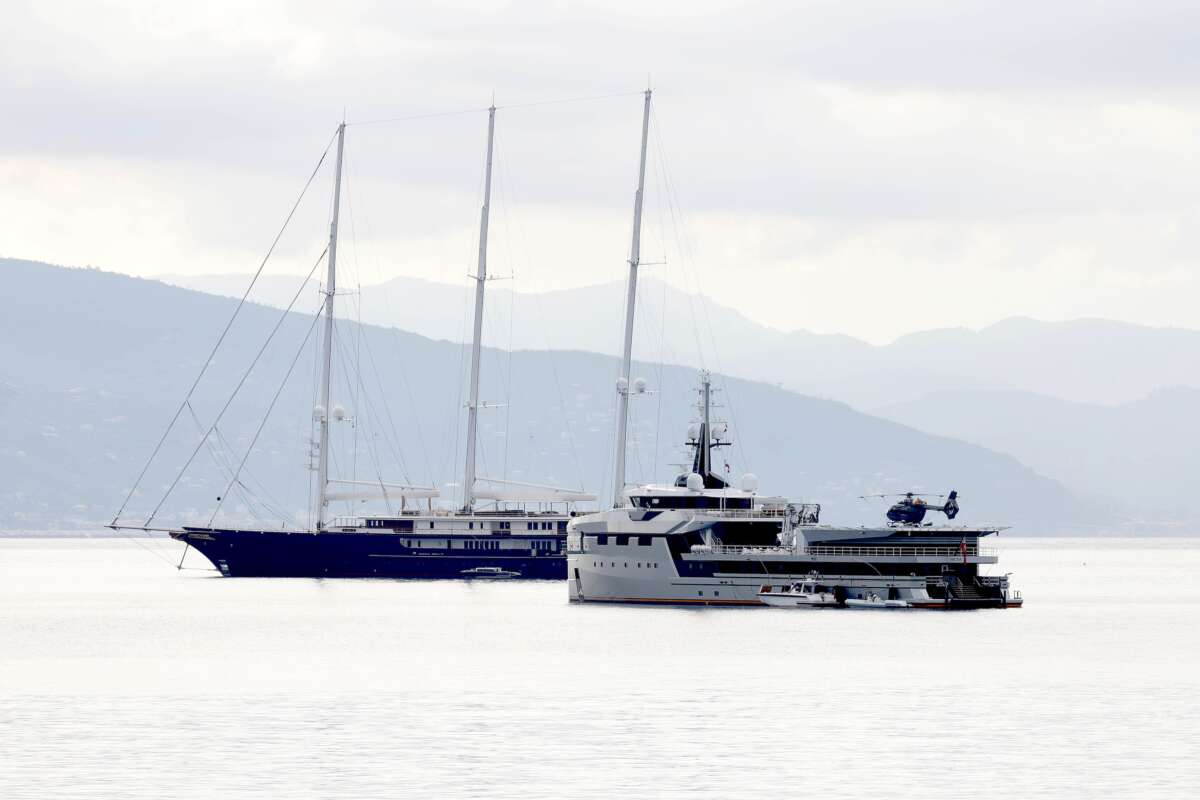
Koru and Abeona, Jeff Bezos’s yachts, are seen on June 13, 2023, in Portofino, Italy.Robino Salvatore / GC Image

Did you know that Truthout is a nonprofit and independently funded by readers like you? If you value what we do, please support our work with a donation.

The world’s top megabillionaires — a list dominated by Big Tech and Wall Street barons — enjoy a gamut of luxuries that are unfathomable for most of us.

Jeff Bezos owns a half-billion-dollar superyacht. Mark Zuckerberg’s portfolio of lush properties that stretches from Palo Alto to Miami Beach is worth nearly as much. Elon Musk’s wealth roughly equals the gross domestic product of Ireland or Belgium. Larry Ellison owns virtually an entire Hawaiian island.

Meanwhile, communities across the U.S. facing the construction and operation of hyperscaled data centers — from Tucson, Arizona, to Memphis, Tennessee, from rural Louisiana to Western New York — are confronting rising electric bills, depletion of water resources, loud and constant noise, ecological degradation, and pollutants, with Black and Brown communities historically impacted by environmental racism disproportionately bearing the brunt.

These two realities — the enormous luxuries enjoyed by the world’s top megabillionaires, and the hardships imposed on communities by data centers — are bound together, with the former resting on extraction from the latter.

The very same corporate moguls who rank among the world’s wealthiest people are also among the top profiteers off the data center boom.

The very same corporate moguls who rank among the world’s wealthiest people, enjoying the heights of opulence, are also among the top owners and profiteers off the data center boom. Positioned at the apex of Wall Street and Big Tech power, these data center oligarchs are overseeing the avalanche of data centers that Americans deeply and broadly oppose. While localities across the U.S. resist the impacts of the data center boom, these oligarchs, who have enormous personal ownership stakes in their companies and firms, experience windfall profits that sustain their opulent lifestyles.


New York Residents Are Fighting a Data Center Backed by a Billionaire Trump Ally
Residents in Western New York are opposing a data center backed by an Epstein-tied private equity firm. By Derek Seidman , Truthout  March 15, 2026


Wall Street’s Data Center Megabillionaires


Stephen Schwarzman oversees Blackstone, the world’s top private equity firm, which manages $1.3 trillion in assets. Schwarzman is worth over $40 billion.

Blackstone invests in a diverse array of sectors, from housing and health care to energy and retail. But in recent years, like other Wall Street firms, it’s been making large investments in AI and data centers.

Blackstone claims to be “the largest data center provider in the world,” with a $110 billion global data center portfolio. It owns QTS, one of the top data center colocation providers — which lease out data center space to client servers — and is steadily striking new data centers deals in the U.S. and around the world, and across the whole AI supply chain.

Schwarzman is raking in wealth from Blackstone’s operations: He took in a whopping $1.24 billion in 2025 alone.

Schwarzman has a history of deploying his vast wealth to enjoy multimillion-dollar birthday bashesreplete with live camels, trapeze artists, and celebrity performers — and gobble up expensive properties from Palm Beach to the English countryside. In Newport, Rhode Island, Schwarzman has been causing major headaches for his neighbors as he redevelops his mansion — called “Miramar” — that he purchased for $27 million in 2021.

In Palm Beach, Schwarzman has a fellow Wall Street data center billionaire as a neighbor: Henry Kravis, co-founder and longtime public face of KKR, another top global private firm overseeing $758 billion in assets. Kravis is worth over $12 billion.

Like Blackstone, KKR is splurging on the entire data center supply chain. It co-owns CyrusOne, another top data center developer, with over 50 facilities across the U.S., Europe, and Japan.

KKR is also raking in superprofits from data center cooling and energy projects to service data centers, among other data center-tied investments.

Around a decade ago, Kravis owned the seventh-most expensive home among Wall Street barons: a 26-room Park Avenue compound valued at $80 million (though he was outdone by Schwarzman, who held the top spot with a $120 million home). In 2020, Kravis made a cool $45 million by selling his 4,600-acre Colorado ranch to fellow billionaire Michael Bloomberg.

In June, Sen. Elizabeth Warren sent letters — which cited Truthout reporting — to both Blackstone and KKR expressing “concern about private equity firms’ increased involvement in the development and operation of data centers” and requesting answers to a range of questions.
Data Center Tech Oligarchs

Big tech companies that are driving the AI boom have their own archipelago of hyperscaled data centers and also purchase extensive server space from data center colocation firms.

Tech oligarchs like Amazon’s Jeff Bezos, Meta’s Mark Zuckerberg, and Oracle’s Larry Ellison — a trio worth nearly $650 billion — sit at the heights of Big Tech’s expanding data center empire.


Bezos owns a 417-feet superyacht named “Koru” that’s worth $500 million. It has three jacuzzis and a swimming pool.

Amazon is consistently ranked as the world’s top data center company. According to Bloomberg, as of 2025, Amazon’s “data center operation” consisted of “more than 900 [data center] facilities in more than 50 countries.” Meta also steadily ranks among the very top data center corporations, with 28 data centers in the U.S. alone. Amazon also chairs the Data Center Coalition, a powerful data center industry group, and Meta is also a board member (as is Blackstone’s QTS and KKR’s CyrusOne).

Both Bezos and Zuckerberg enjoy luxuries that are unimaginable to the communities that house their noisy, fossil fuel-burning data centers.

Bezos owns a 417-feet superyacht named “Koru” that’s worth $500 million. It has three jacuzzis and a swimming pool, which have made it ideal for throwing parties with tycoons like Bill Gates and celebrities like Katy Perry and Kim Kardashian. The superyacht is also joined by a second 250-foot “support yacht” named “Abeona” with a helipad. (Bezos has his own fleet of helicopters and private jets.)

For his part, Zuckerberg, who also flies in his own luxurious air fleet, owns a $300 million superyacht with a 387-foot launchpad. The Meta founder recently caused a stir when the superyacht passed by Seattle the same day Meta announced it was slashing around 1,400 jobs in Washington state.

Together, Bezos and Zuckerberg own a property portfolio worth well over $1 billion. For Bezos, this includes myriad homes in Seattle; Manhattan; Washington, D.C.; and Miami, among others.


Zuckerberg, who also flies in his own luxurious air fleet, owns a $300 million superyacht with a 387-foot launchpad.

In 2020, Bezos paid a record $165 million for a Beverly Hills mansion with “expansive terraces, sprawling gardens, several guest houses, a tennis court and its own 9-hole golf course.” In 2021, he bought a $78 million Maui estate that one realtor referred to as a “trophy property.”

In 2025, as Amazon was helping to accelerate the data enter boom, Bezos splurged an estimated $50 million on his star-studded wedding to Lauren Sanchez.

For his part, Zuckerberg owns a slew of properties that includes a massive estate in Kauai, Hawaii, with two mansions with a combined 57,000 square feet, 30 bedrooms and 30 bathrooms, a tennis court and multiple swimming pools, and a 5,000-square-foot underground shelter.

Zuckerberg also owns a Lake Tahoe compound, a Miami Beach estate, and a Washington, D.C. mansion, as well as a complex of adjacent Palo Alto homes.
Island Compounds and Trillionaires

Larry Ellison, the megabillionaire founder and chairman of Oracle, the database software and cloud computing giant, is also cashing on the data center and AI boom. Ellison is among the world’s top 10 wealthiest people, with his current net worth hovering close to $180 billion.

Oracle is building an empire of water-guzzling data centers and AI partnerships. According to Data Centre Magazine, the Oracle Stargate AI Initiative — working with Sam Altman’s OpenAI in a Trump-backed deal — is the second-fastest-growing data center company.

Ellison owns properties worth around $2 billion in total. In addition to mansions and estates in Florida, California, Rhode Island, Japan, England, and elsewhere, Ellison also owns virtually all of Lānaʻi, Hawaii’s sixth-biggest island.

According to a recent Wall Street Journal report, Ellison is also a poster child for the rising phenomenon of megabillionaires’ “quest to optimize one’s land holdings by acquiring more acreage” and gobbling up entire blocks or swaths of residential land.

Like other data center billionaires, Ellison also enjoys hundreds of millions of dollars’ worth of luxuries such as a superyacht and private jets, as well as a collection of art and artifacts that include Vincent Van Gogh paintings and historic Japanese artwork. (Ellison also owned a Japanese villa reportedly worth $86 million.)

And of course, there’s Elon Musk, the first trillionaire, whose wealth has been built, in part, on data centers. Musk’s wealth is roughly equal to the GDP of the states like Pennsylvania or Ohio and nations like Switzerland — or, around 3 percent of the entire U.S. GDP.

Musk owned seven mansions worth around $100 million that he claimed to sell as he settled into a more spartan adobe. But reports indicate that he’s been staying in and buying up lavish homes in Texas.

Musk has directed his massive wealth more toward intervening in politics. He spent a whopping $291 million on federal elections in 2024, making him by far the top donor in the last election cycle, and leading to his appointment by Donald Trump as the (now former) head of the so-called Department of Government Efficiency (DOGE).
Backland Against Data Centers Growing

While the data center oligarchs benefit from massive revenues undergirded by the data center boom they’re driving, they’re also facing an enormous, expanding wave of resistance from localities across the U.S. — regularly reported on by Truthout— that crosses partisan lines and is reaching the heights of state and national politics.

Polling shows that people in the U.S. overwhelmingly oppose data centers. In mid-July, communities staged at least 142 protests across 42 states against data centers. Black and working-class organizers in cities like Memphis and across the U.S. South are driving the opposition to some of the largest and dirtiest datacenter complexes in the entire nation.

This bottom-up insurgency has moved some elected officials to propose a federal moratorium on data centers. Support for state-level moratoriums is also rising. In July, Gov. Kathy Hochul, responding to constituent pressure, made New York the first state to implement a moratorium on new data centers. (Hochul’s executive order implements a “one-year pause.”)

With opposition to the data center boom and skepticism toward the corporate-driven AI bubble only growing, we will likely see more victories like this, as people fight for communities rooted in justice and sustainability, not as sites for extraction to help oligarchs purchase yet another superyacht or mansion.