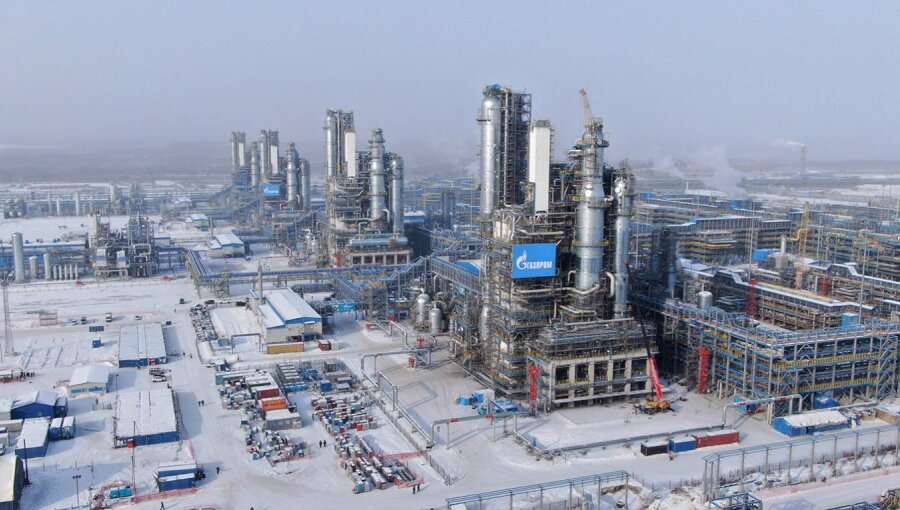
Ukraine's long-range drone campaign against Russia's oil industry is simultaneously hitting three sensitive areas of the war economy at once: fuel production, domestic logistics of petroleum products, and fiscal stability, Vakhtang Partsvania argues in a comment for Riddle Russia.
The strikes have not collapsed the oil sector as a whole and have not cut off Russia's export revenues – but they have shifted the structure of the losses, forcing Russia to export more crude instead of refining it domestically, at the cost of value added, regional fuel shortages, rising gasoline prices, accelerating inflation and ever more expensive compensatory budget payments.
The pivot point was the strike on the Moscow Refinery in Kapotnya, one of Russia's largest plants with annual capacity of around 11mn tonnes of crude. The Moscow region accounts for 14% of Russia's passenger cars – 7.4mn of 53mn nationwide – handles 19% of the country's road freight, and its aviation hub carries roughly 40% of Russia's passenger air traffic; a prolonged shutdown there is as much a logistics problem as a production one, since even fuel sourced from elsewhere must still reach the capital through an already-strained transport network.
"Russia's oil sector had long been considered one of the most resilient parts of the economy," Partsvania writes. "Strikes on refineries, however, exert a different kind of pressure. Sanctions reduce export margins and raise transaction costs. Drone attacks impair the physical ability to refine oil and supply the domestic market. This is no longer a question of a discount to Brent or freight rates — it is a question of the availability of gasoline, diesel, and jet fuel inside the country."
That is already reflected in the trade figures: Russian production of coke and petroleum products fell 13.5% y/y in May 2026, with the January-May decline running at almost 5%. More recent estimates published by the Financial Times put the fall in throughput at 45% in July.
Strikes intensified from late March, when the year-on-year decline was already around 9%; May marked the steepest fall in years. Repair is also harder than it looks – modern refining needs complex secondary processing units (isomerisation, cracking, hydrotreating) whose specialised components, pumps, catalysts and electronics were often sourced from Western suppliers now blocked by sanctions, producing what Partsvania calls a "double strike": the drone causes physical damage, and sanctions prolong recovery. Repeated hits compound the problem – the Ryazan and Saratov refineries have each been struck 15 times, accumulating equipment "fatigue" that raises failure risk even without new strikes.
The consequences have already reached households and the central bank. Fuel-purchase restrictions – per-person limits, jerry-can bans, priority supply for essential services – have spread to 83 Russian regions. Weekly gasoline prices rose 3.0% and 1.6% in the second half of June alone, with diesel up 2.7% and 2.2%, and price rises registered in 82 regions – sharpest in annexed Sevastopol, at 30%. The Bank of Russia's decision to cut its key rate by just 25 basis points on June 19, to 14.25%, reflected exactly this pressure: rising fuel prices amplifying inflation risk and narrowing the room for monetary easing. Nevertheless, political pressure on CBR governor Elvia Nabiullina by Russian President Vladimir Putin himself, who called for more rate cuts twice in two months, saw the governor cut rates again to 14% in July.
Partsvania argues there has been a shift in Ukrainian targeting logic: earlier strikes on export terminals produced dramatic visuals but limited economic effect, since tank farms are designed to lose individual tanks rather than whole facilities, and loadings usually resume once pipeline and rail links survive. Refineries sit at a narrower chokepoint between crude production and the domestic fuel market – knocking out processing capacity does not make the oil disappear, but it turns the oil itself into the problem, since not every refinery can absorb redirected volumes or produce the right product mix, and moving fuel to deficit regions strains the same railways and pipelines already under pressure elsewhere in the war economy.

Ukraine's long-range drone campaign against Russian oil refineries has become routine enough that analysts are now describing it as a predictable cycle rather than a series of shocks: strike, assess damage, repair, restart - repeated across plant after plant for months.
As IntelliNews reported, Russia’s oil refining sector is battered but not broken. Ukraine’s long-range drones have now hit all 30 of Russia’s major refineries, but as it is firing drones, not the far more destructive ballistic missiles Russia has, Russia’s oil refineries are able to repair much of the damage fairly quickly.
"We seem to be getting more information than usual on drone-struck Russian refineries lately," the account according to the Russian Oil & Gas Monitor, noting Perm had lost 38% of its primary distillation capacity and Ryazan may be offline for two weeks after both were struck within days of each other. "This take-damage-repair-restart cycle is starting to become routine."
As IntelliNews reported, while the fall in oil refining through put has fallen from a 13.5% decline in May to an estimated 45% now, according to the Financial Times, the shortages and queues at tank stations are receding as more imported oil from Belarus, Kazakhstan and India begin to reach Russia.
Perm: a symbol of the campaign's reach
A drone attack caused a fire at Lukoil's Perm refinery on July 30 and forced the shutdown of its CDU-5 primary crude distillation unit, which has a throughput capacity of 12,930 tonnes a day and accounts for around 34% of the plant's total processing capacity, two industry sources told Reuters. Perm has a project refining capacity of about 13.1mn tonnes a year, ranking it among Russia's 10 largest refineries.
Ukrainian President Volodymyr Zelenskiy said his forces had also struck an export terminal and a military enterprise in Rostov region the same week, part of what Kyiv frames as a systematic effort to degrade the refining capacity and export infrastructure funding Russia's war effort.
The campaign has been running for months, including the Omsk refinery strike in July, at the time the largest and deepest strike of the campaign.
Tuapse: the strikes' visible legacy
Damage from earlier strikes on the Black Sea refinery at Tuapse - the plant Vladimir Putin once visited in 2013 to launch what was then Russia's most sophisticated oil-processing unit - remains visible from space months later, the Financial Times reported, calling the plant a symbol of how far Ukraine can now strike with precision deep inside Russian territory.
The cumulative effect across plants is genuine but not catastrophic in any single instance: Russian Oil & Gas Monitor cautioned there is "no way to estimate the impact on gasoline and diesel output" from any one strike in isolation, since damaged plants have also been coming back online over the same period, complicating any clean read on how much fuel Russia is actually producing at a given moment.
Friendly countries step in to refine Russian crude
Russia's escalating fuel shortages, driven by Ukraine's sustained drone campaign against its refineries, have forced Moscow to lean increasingly on Belarusian gasoline. Belarus shipped a record 141,000 tonnes of gasoline to Russia between June 1-25 alone - 2.4 times May's volume and a huge jump from the mere 1,000 tonnes it sent a year earlier - as Minsk's two modern refineries became a critical crutch for Moscow's stricken fuel market, reversing the two countries' traditional trade relationship. The windfall briefly made Belarusian fuel a fixture on the St Petersburg commodity exchange before Minsk's refineries sold out their July batches and sales collapsed.
India has also become a stopgap supplier. With roughly a quarter of Russia's refining capacity knocked offline and gasoline output down at least 13.5%, Moscow banned diesel exports until July 31 and imported at least 60,000 tonnes of petrol from India, on top of existing supply from Belarus and Kazakhstan. Deputy prime minister Alexander Novak has now admitted the shortages are directly tied to Ukrainian refinery strikes - a crisis spreading from filling-station queues into freight, agriculture and retail just as peak harvest season pushes diesel demand higher.
And Kazakhstan is in talks to refine Russian crude as Moscow faces fuel shortages, with the resulting products sold on the Kazakh domestic market and some potentially re-exported back to Russia, Reuters reported, though Kazakhstan says any deal must first guarantee supply for its own consumers. Astana's Kondensat refinery is already processing Russian oil and exported petrol to Russia for the first time in July - a small but symbolically significant reversal of the usual regional flow of refined products.

No comments:
Post a Comment