Saturday, August 08, 2026


Video: Portugal Intercepts Maersk Boxship and Seizes 5 Tonnes of Cocaine
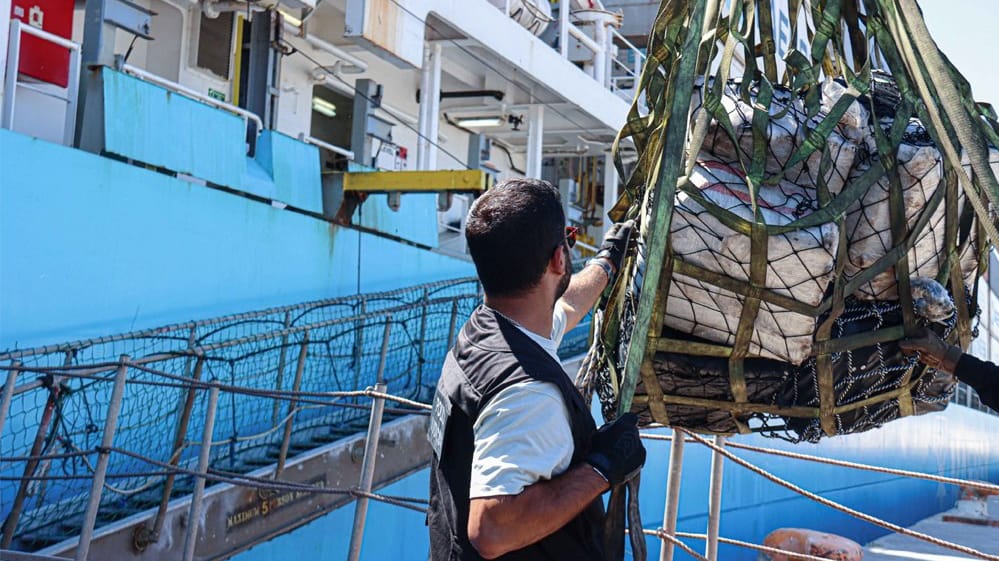
seized cocaine offloading from containership
Five tonnes of cocaine along with two stowaways and one crewmember were seized in the dryg bust (Judicial Police)

Published Aug 6, 2026 3:07 PM by The Maritime Executive


The Portuguese Judicial Police are reporting one of the country’s largest ever drug seizures completed aboard a Hong Kong-flagged containership while underway. The situation, however, has grown further complicated as a crewmember who had been arrested along with two stowaways was found dead hours later in a prison cell in Portugal.

The authorities reported they had been able to dismantle a criminal group dedicated to smuggling large quantities of drugs into Europe. It was part of an investigation shared at the Maritime Analysis and Operations Centre-Drugs, as well as working with the UK’s National Crime Agency and Spain’s Policia Nacional.

Working with the Portuguese Navy and Air Force, the operations intercepted the containership while it was underway at a position about 640 nautical miles off the coast of Portugal in the Atlantic. 

The vessel in question, identified as Maersk Nokwanda, serves the banana-trade ports of Ecuador and the Colombian Pacific coast - one of the most prolific drug-smuggling regions globally. On her most recent voyage, Maersk Nokwanda called at Posorja and Machala, Ecuador; Buenaventura, Columbia; Balboa and Colon, Panama; then crossed the Atlantic on an itinerary that would ordinarily take her to Tangier Med and other Mediterranean ports. 

The images showed the forces rappelling onto the vessel from helicopters. Once aboard, they reported finding two stowaways, which media reports identified as an Italian and a Colombian citizens. The two were reported to be undocumented and were believed to be involved in the smuggling operation, and were arrested. The police also seized objects for navigating, transporting the drugs, and throwing them overboard.

Searching the vessel, the police uncovered five tons of cocaine in void spaces. They also interviewed the crew and took one person, reported to be an Indian citizen, into custody. The Navy escorted the containership to the port of Sines where the vessel docked on August 4. The cocaine was offloaded.

The head of the police’s drug trafficking unit confirmed at a press conference on Wednesday, August 5, that the crewmember had been discovered hanging in his cell early on Wednesday morning. He was being detained alone in a cell. They pronounced him deceased and are investigating the circumstances of his death. Media reports said he was believed to have been the person with the most information about the smuggling operation.

European authorities have increased their efforts to intercept the large quantities of drugs being smuggled into Europe. Portugal has reportedly already confiscated approximately 28 tonnes in 2026, which surpasses the country’s total for all of 2025.

The Judicial Police suspect that the Maersk Nokwanda smugglers intended to conduct a high-seas "drop-off" to transfer the drugs to fast-boat operators, who would then move the illicit cargo to the littorals of the Spanish or Portuguese coasts. This transport model is increasingly popular for traffickerslooking to avoid heightened scrutiny at larger seaports, as it avoids all of the security measures that accompany port infrastructure. 

These high-seas boat transfers sometimes get disrupted or go awry, leaving the cargo to float at sea or wash up on public beaches. Just last week, Portugal's Maritime Police found and seized two tonnes of abandoned cocaine near the Troia Peninsula.

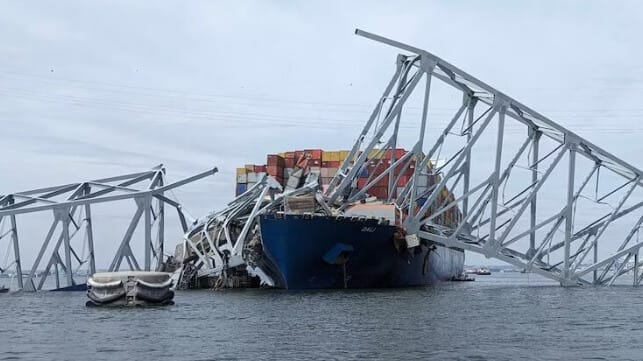
 

US Court Says Dali Lawsuit Against Hyundai Should Be Heard Elsewhere

Dali and wreckage of Francis Scott Key Bridge
The product liability claims seek to hold Hyundai Heavy Industries liable for manufacturing defects in the Dali (USACE photo)

Published Aug 4, 2026 1:19 PM by The Maritime Executive


Shipbuilder Hyundai Heavy Industries won a court decision on August 3 in a suit brought against it by the owners and operators of the containership Dali regarding defects in the construction of the vessel. The court dismissed the case on a legal ground that finds another location is much more convenient and proper for the suit, and not on the merits of the claims.

Grace Ocean, as the owner of the Dali, and Synergy Marine, as the operator of the Dali, had filed an admiralty and marine action on July 31, 2025, against Hyundai Heavy Industries related to the blackout on the Dali, which caused it to hit and destroy Baltimore’s Francis Scott Key Bridge. The complaint cites two product liability claims, one breach of implied warranties, one claim of negligent misrepresentation, and a claim related to indemnity. 

The owner and operator were in effect claiming that manufacturing defects in the vessel, which Hyundai built in 2014 and delivered in 2015, contributed to the failures on the ship and subsequent damage, which killed six roadworkers on the bridge. The National Transportation Safety Board in its investigation found that lose wire caused the ship to lose power, while a pending criminal complaint in Maryland cites the use of an improper pump that did not automatically restart after the blackout.

The product liability case was brought in the Eastern District of Pennsylvania, and the location was one of the issues that was under contention. In 2002, Hyundai Heavy Industries registered as a foreign business in Pennsylvania, and as such, Grace Ocean and Synergy argued it was a legitimate location to file the suit. The court ultimately agreed that it did have jurisdiction.

When the Dali was transferred in 2016 from its original owner to Grace Ocean, there was a contract that addressed the rights of the parties on issues such as future claims pertaining to the ship’s construction and warranty. A hearing held in July 2026 centered on the issues of this contract and whether Synergy Marine was a party to the contract. The contract also included a clause saying disputes would be submitted to arbitration in London.

The Pennsylvania court ruled that Synergy Marine was bound by the contract as well as Grace Ocean. Hyundai had also argued that it would be more appropriate for the case to be heard elsewhere, as the evidence and witnesses were in South Korea and Singapore. Hyundai was seeking a motion to dismiss or, alternatively, a stay pending arbitration.

In a ruling on August 3, the Eastern District of Pennsylvania dismissed the claims from Grace Ocean and Synergy Marine against Hyundai Heavy Industries on “forum non conveniens” grounds. It, in effect, agreed that the case would be more appropriate for another court. The Pennsylvania court did not comment on or rule on the product liability issues. The case was dismissed with prejudice, meaning the Pennsylvania court has permanently closed it.

It is the latest ruling in a tangled web of legal claims stemming from the March 26, 2024, incident. Grace Ocean and Synergy Marine have settled many of the civil claims with the U.S. federal government, Maryland, the families of the deceased workers, and others. They have argued in a District Court in Maryland that the remainder of the civil claims, mostly from businesses that cite a loss in revenue or were inconvenienced, should be dismissed.

The United States unsealed a criminal indictment in May 2026 against Synergy Marine and a technical supervisor on conspiracy and maritime safety violations, as well as obstruction by concealing information during the investigation. That case is currently scheduled to go to trial in October 2027. Both the company and the supervisor have entered pleas of not guilty.

The chief engineer of the Dali pleaded guilty to charges of failing to notify the U.S. Coast Guard of unsafe conditions on the vessel when it arrived in the United States. He has received a deferred prosecution, likely in exchange for testimony in the criminal trial.

India’s SCI Seeks Six Newbuild LNG Containerships in Its Biggest Tender

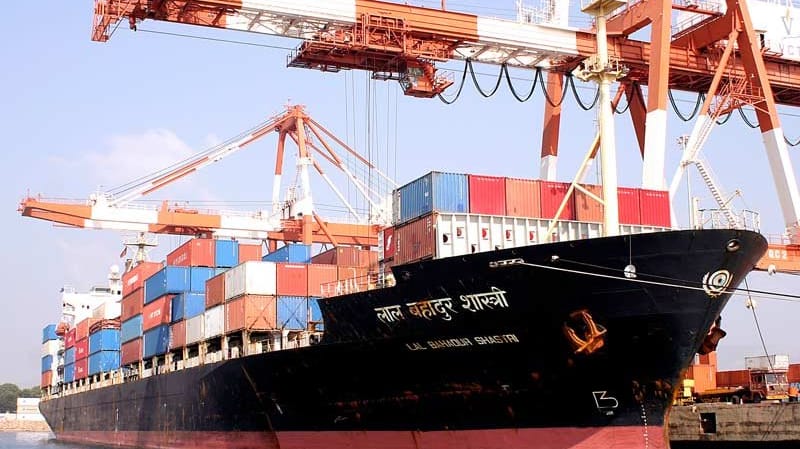
Indian-flagged containership
Shipping Corporation of India is seeking up to six large LNG-fueled containerships (SCI file photo)

Published Aug 4, 2026 5:59 PM by The Maritime Executive


India’s state-run Shipping Corporation of India (SCI) is continuing to move forward with its growth plans aligned with the country’s ambitions to reduce its dependence on foreign-flag carriers and to expand its shipbuilding capabilities. A new tender was released on July 31, which is the largest containership project in the history of the company and its second containership tender in recent months.

The new tender is open both domestically and internationally, seeking bids for up to six 8,000 TEU 14,000 dwt containerships. They would be among the largest containerships for the company and the Indian flag and would be dual-fuel LNG vessels. Among the characteristics described in the tender are vessels with 1,000 reefer slots and an air draft suitable to make entry into U.S. container ports. The ships would measure about 330 meters (1,083 feet) and have a service speed of 17 knots. They are designed with a range of 20,000 nautical miles. Responses to the tender are due by August 31.

Reflecting the government’s plans to make India into a world-class shipbuilder, the tender provides special considerations for Indian shipyards in the global competition. It permits the yard, if it does not have experience building containerships, to form a technical tie-up or collaboration with an established international shipbuilder that has containership experience. It will be a fixed-price contract for two firm orders and four options, but the yard cannot subcontract construction. Estimates set the value of the contract at $720 million.

As an additional nod to the Indian shipbuilders, the tender provides further competition with the international market. The lowest price qualified Indian shipbuilder will be offered a Right of First Refusal against the lowest foreign shipyard. If the lowest Indian bidder fails to match the bid from the lowest foreign shipyard, the same first right option will be extended in turn to each of the other Indian yards in the order of the lowest bid first.

The new containerships are part of the government’s broad plans for the shipping industry. This year alone, it expects commitments for 62 new vessels representing an investment of $5.3 billion. In May, it was reported that the government expects as many as 437 vessels to be built or acquired by 2042. The majority (over 200) will be for oil and gas, while SCI is slated to add 58 ships. Also, a new joint venture container operation, Bharat, is projected to add 51 vessels.

SCI has already launched a tender valued at $360 million for up to six 1,700 TEU vessels that are designed to be methanol dual-fuel feeders. That tender was published in April and also provided special consideration for the Indian shipbuilders. 

Another project that was recently opened proposes India’s first domestically built Aframax tankers. SCI called for proposals for four vessels.

The government has announced a series of financing plans to help the development of the shipbuilders. It is also providing financial incentives to the shipowners to build new vessels. 

Cochin Shipyard has already received an order from CMA CGM to build LNG-fueled containerships, and it is expected to be one of the key competitors. The newly launched Swan Defence and Heavy Industries is also seen as a key competitor, benefiting from the former Reliance yard, and L&T Shipbuilding is also a strong competitor for the new projects. Garden Research Shipbuilders is forming a consortium to bid for the projects, and the major South Korean builders have also shown strong interest in Indian partnerships. HD Hyundai has already announced agreements as it looks to contribute to the growth of shipbuilding in India, with the other major builders expected to also contribute to the Indian government’s plans.


WSF Celebrates Long-Awaited Steelcutting for New Hybrid-Electric Ferries

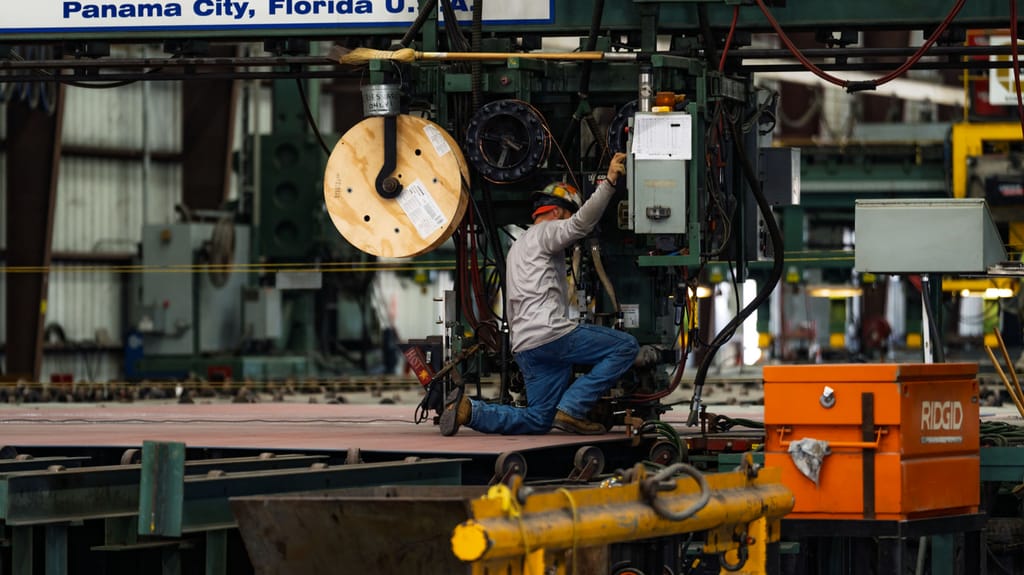
Eastern Shipbuilding
Courtesy ESG

Published Aug 5, 2026 10:03 PM by The Maritime Executive


After years of preparation, Washington State Ferries celebrated the steel-cutting for a series of hybrid-electric ferries at Eastern Shipbuilding Group's facility in Florida. The ferry service is buying three of the 160-vehicle vessels from Eastern, including a one-vessel option that it has decided to exercise.

"This is the first time in a decade that Washington State is building ferries," said WSF electrification program administrator David Sowers. "We restored our ferry system to full, domestic service. Now, we are taking a significant step toward rebuilding our fleet."

The steel-cutting ceremony is the first step in a long construction timeline, and the vessels will deliver starting in 2030. The current fleet is aging - more than half of its 21 ferries are over 40 years old - and reliability issues are becoming a problem.  WSF believes that its service will benefit from fleet renewal - in addition to the benefits of electrification. WSF has announced plans to keep building and acquire as many as 16 new vessels by 2040. 

The decision to build the ferries out of state was locally controversial, as prior orders had gone to a Washington yard. But the Washington State governor's office says that the sole local bid received would have had an all-in cost of $1.51 billion for three ferries - about $200 million more than the legislature provided for the project. The comparable all-in figure for Eastern's bid came in at about $360 million less. The state accepted the lower bid, and it wants to use the cost savings to help pay for a fourth ferry; it emphasizes that it still sends all ferry maintenance dollars to local shipyards. 

An initial plan to build five 144-car, plug-in hybrid-electric ferries was launched in 2019 with a local shipbuilder, Vigor Industrial. Deliveries would have started this decade, but the program came to an end in 2022 when the unit cost estimate exceeded the state's expectations. 


Med Marine's Latest RAmparts 2500-W Tugboat Takes to the Water

Med Marine

Published Aug 7, 2026 2:19 PM by The Maritime Executive


[By: Med Marine]


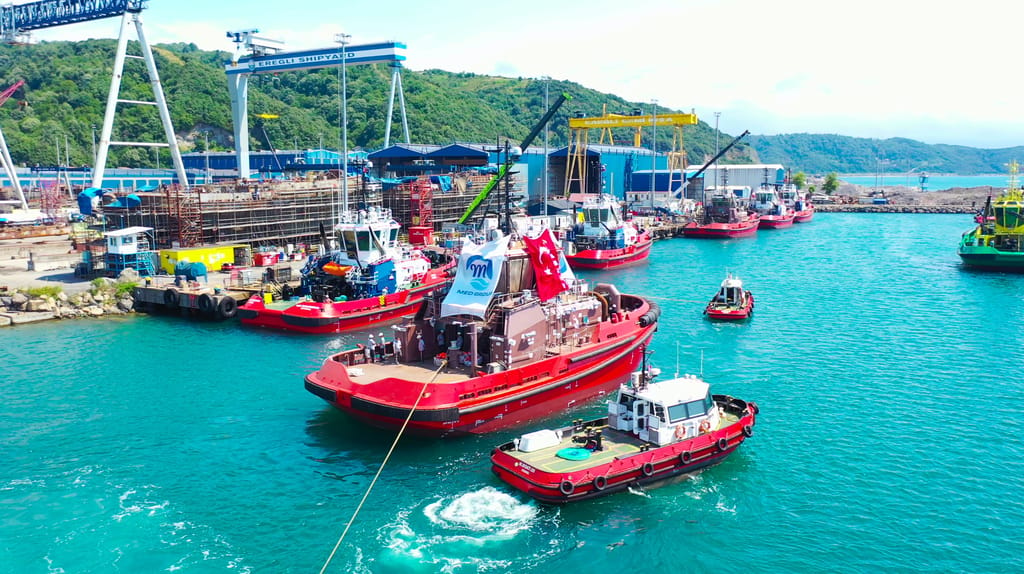
MED MARINE has launched a new RAmparts 2500-W tugboat from the slipways of EREGLI SHIPYARD, bringing another vessel built for its own fleet one step closer to service. Successfully launched at the end of July, the 25-metre harbour tug now moves into the next phase of her journey, with preparations continuing ahead of her entry into the fleet.

There is a particular meaning in watching a vessel built for your own fleet leave the shipyard. Every line drawn, every section assembled, and every system brought together at EREGLI SHIPYARD has been shaped with the vessel's future work in mind. This RAmparts 2500-W will soon move from construction to service, joining a fleet whose daily work depends on strength, precision, and the ability to respond when it matters.

Designed as a versatile harbour tug, the vessel delivers approximately 65 tonnes of bollard pull and is equipped to meet Class FiFi-1 requirements. Her capabilities cover ship handling, towing, pushing, mooring, and firefighting operations, supported by an azimuth stern drive propulsion system that gives her the agility needed to work confidently in demanding port environments.

Two main diesel engines drive Z-drive units fitted with high-efficiency fixed-pitch propellers, translating power into the controlled thrust required for harbour operations. Beneath the deck, the welded steel hull is arranged around watertight compartments, with dedicated spaces for accommodation, machinery, fuel, fresh water, and the propulsion system. Every part has its place, built around the simple purpose of keeping the vessel safe, dependable, and ready for the work ahead.

For MED MARINE, this vessel carries something beyond its technical specifications. It is being built to become part of the company's own working fleet, drawing directly on the shipbuilding experience developed at EREGLI SHIPYARD through years of building tugboats for operators around the world. The knowledge gained across those projects now returns to the MED MARINE fleet in a vessel shaped for the demands of life at sea.

Technical specifications of the tugboat:
Length: 25,20 m
Breadth: 12,00 m
Depth: 4,60 m
Gross Tonnage: <400
Bollard pull: 65 tons
Speed: 12 knots
Crew: 8 people

The products and services herein described in this press release are not endorsed by The Maritime Executive.


Petrobras Drives Record Growth in Brazil's Offshore Oil Production

Petrobras
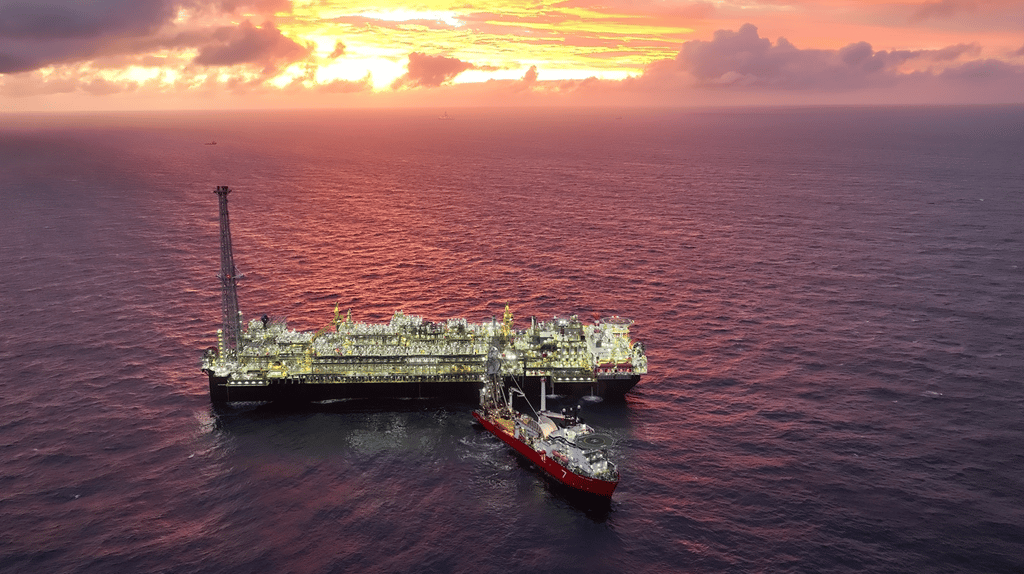
P-79 (Petrobras handout image)

Published Aug 4, 2026 9:10 PM by The Maritime Executive


Brazil's energy agency reports that monthly oil output hit a new record in June, driven by outstanding performance in Brazil's offshore oil patch. Almost all of that output comes from state oil and gas company Petrobras, which has been speeding up commissioning of its newest FPSOs and taking steps to get the most out of its existing fleet, capitalizing on high oil prices from the Hormuz crisis and boosting its sales. 

In June, Brazil's oil output set a new record at 4.5 million bpd - about 700,000 bpd higher year-on-year. This gain in itself is enough to offset roughly one-tenth of the overall supply deficit from the Strait of Hormuz crisis, and has played a material role in keeping benchmark prices contained.

About 80 percent of that output comes from Petrobras, and virtually all of Petrobras' oil production is offshore. Its success comes in part from a steady pipeline of new FPSO commissionings, which are helping expand production at its giant Buzios field as older wells mature. The eighth platform at Buzios, P-79, started up ahead of schedule in May and has been ramping up, increasing the field's maximum production capacity. Buzios has repeatedly beaten past performance records over the past few months, hutting 1.2 million bpd in late June. More is coming: FPSOs P-80, P-82, and P-83 are under construction for installation at Buzios, and Petrobras is taking bids for a 12th FPSO for the field.

The company is looking at ways to push the new P-79 platform past its rated output of 180,000 bpd - as it has already done at seven existing FPSOs around the region. The company's engineering director told Bloomberg that it has added about 130,000 bpd of production by exceeding nameplate capacity on seven FPSO installations, with careful management. It picked up the idea from a third-party FPSO operator, which has one platform in Guyana running 10 percent over design capacity, the official told Bloomberg. 

Like its upstream division, Petrobras' downstream operation is running its refineries above 100 percent of capacity, setting records and reaping the massive profit margins available for producers of gasoline and diesel in an undersupplied market.

First Russian Sanction Package from the New UK Government

LNG carrier
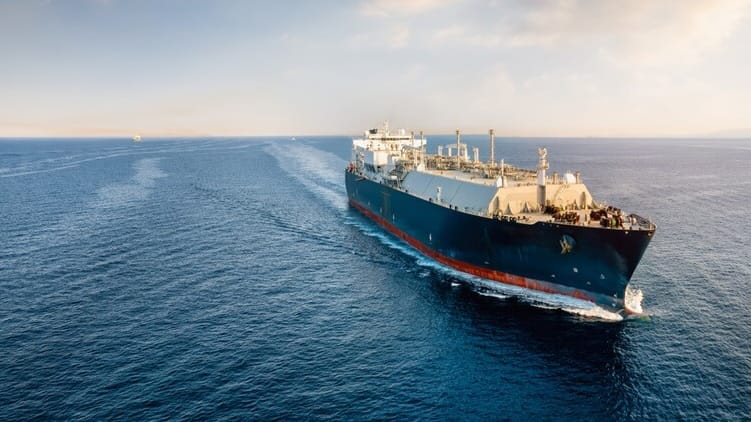
Demonstrating consistency the new UK government launched its first sanction package including a newly acquired Russian LNG carrier (file photo)

Published Aug 6, 2026 7:02 PM by The Maritime Executive


Two and a half weeks after the newest British government was officially formed, the newly named foreign secretary, Ed Miliband, announced the first Russian sanction package of the new government. The government of the new Prime Minister, Andy Burnham, is attempting to show solidarity and consistency in policy.

The new package is modest in scope but targets the shipping and energy sector as well as banks and what it terms “shady businesses” for their role in supporting the war in Ukraine. A total of 19 listings were added to the sanctions regime.

Miliband emphasized that the first package “reinforced the UK’s commitment to the people of Ukraine by announcing new measures against those supporting the Kremlin’s war effort.” Like their predecessors, the new government said they are continuing to target the networks and revenue streams on which the Kremlin relies.

As part of the effort, the new package is targeting the LNG operations by listing a recently acquired LNG carrier. The vessel, built in Korea, was acquired by Russian interests in May and transferred to the Russian flag as the Arctic Express (IMO 9333591). It is being managed by SMP Techmanagement of St. Petersburg. The 84,000 dwt vessel is reported to already be involved in the transport of Russian gas to third countries. The vessel’s AIS shows that it departed China’s Tieshan on Wednesday, August 5.

The UK also listed an Indian ship management company, Frion Ship Management, that it asserts supported the sale of the Arctic Express into Russian ownership and control. The package follows the latest efforts in the EU, as it lists vessels recently sold into the Russian register, as Europe looks to also crack down on vessel sales to Russia.

The five additional listings include four shadow fleet crude oil tankers reportedly registered in Palau, San Marino, and Barbados. It also included one product tanker registered in Barbados. These vessels join 644 other listings in the UK database of sanctions linked to the shipping sector. 

The other portion of today’s sanctions package includes four companies that the UK says are importing tantalum and niobium, rare metals critical for producing military equipment. It also lists six additional banks.

Miliband, who had been serving until July as Energy Minister in the prior government, highlights that since taking office, he has attended the ASEAN conference in Manila, where they focused on Ukraine, and, along with the Prime Minister, met with Ukrainian President Volodymyr Zelensky. He also flew to Washington, D.C., to meet with US Secretary of State Marco Rubio to discuss Russia and Ukraine.

The UK highlights that this year alone, it imposed sanctions on over 500 individuals, entities, and ships as part of the Russian sanctions regime. They are attempting to signal that there will be consistency in the effort as the new government moves forward.

Russian Navy Augments its Long-Term Presence in English Channel

NOT A SHADOW FLEET, THE REAL THING

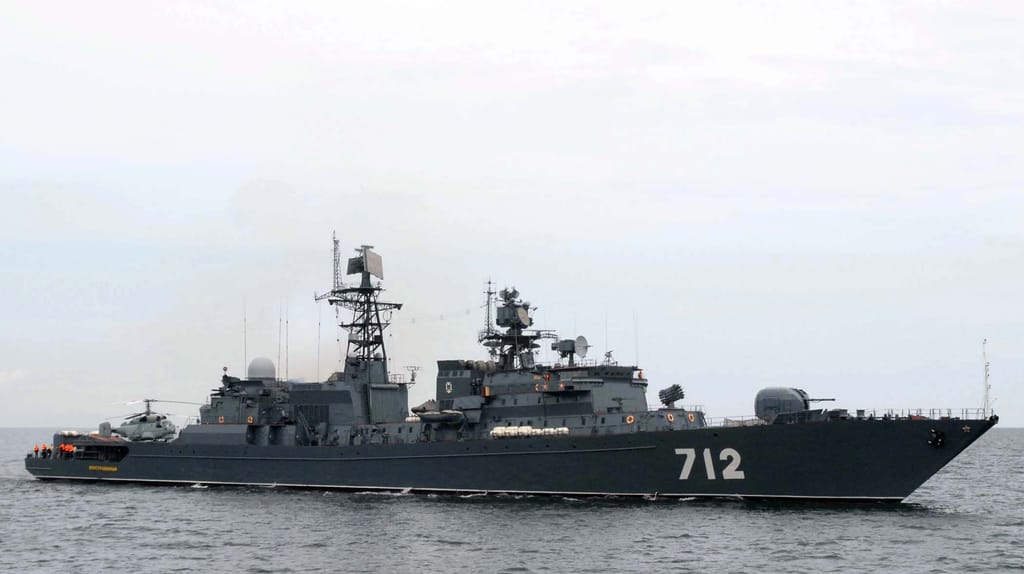
Neustrashimy and her embarked helicopter in friendlier times, exercising alongside NATO forces in the Baltic, 2008 (USN file image)

Published Aug 5, 2026 8:23 PM by The Maritime Executive


The Russian frigate RFS Neustrashimy (now F722) has settled into its role as the Russian Navy’s piquet ship stationed in the English Channel, suggesting she is a permanent replacement for RFS Admiral Grigorovich (F494), which arrived back in Baltiysk, its home port in the Kaliningrad enclave, on July 16. 

On August 1, the Neustrashimy was seen stationary and tied up alongside the Vishnya Class specialist intelligence collection vessel RFS Vasiliy Tatishchev (SSV-231) close up to the Galloper Wind Farm, 15nm off Clacton and the Suffolk coast.  It is not clear why the Russian Navy has chosen the Galloper Wind Farm as a regular logistics transfer point, possibly because it is difficult to miss as a rendezvous point, or because the wind farm provides some form of protection. 

The two vessels were not seen transferring fuel, although this could have been undetected, but the trans-shipment will have at least included fresh rations. The RFS Vasiliy Tatishchev appears to have come out the Baltic Fleet headquarters at Baltiysk in Kaliningrad to undertake the replenishment task. Hitherto, a full replenishment with fuel has been conducted by the warship tying up alongside the Amur Class base repair ship PM-82, which has now returned home.

 On August 3, the Neustrashimy revealed that it had been hiding a Ka-27 helicopter in its aircraft hangar, a type which this frigate class was designed to carry. The presence on board of a Ka-27 will prove something of a headache for the Royal Navy, as the Russians will now be able to maintain over-watch of two of their dark fleet merchant vessels simultaneously and over a wider area as they transit the English Channel. 

Without calling on the aid of the Sky News helicopter to help with the observation effort (Sky News having spotted a replenishment operation in the same area on July 17), it will make the Royal Navy’s task of keeping an eye on Russian activity more complex.  There is already a mismatch between the Russian capability at sea and their British escorts: often the Royal Navy fields a single minesweeper or patrol vessel, either armed with a 30mm cannon, or sometimes even an unarmed Royal Fleet Auxiliary, and there may now be a need for an onboard helicopter to respond to Russian aerial activity. Moreover, the Russian presence in the Channel and the North Sea now seems semi-permanent.

Ukraine Continues Attacks on Russia’s Black Sea Patrol Boats

sunk Russian patrol boat
Ukraine in July sank the patrol boat Izumrud used to protect Novorossiysk (Ukrainian Navy)

Published Aug 7, 2026 2:29 PM by The Maritime Executive


The Security Service of Ukraine is reporting that it damaged two more of Russia’s patrol boats used to protect key assets in the Black Sea. It is part of a series of systematic attacks targeting the boats and Russian shipping used to supply Crimea.

The Ukrainian Navy reported that it used long-range drones to attack two patrol boats in the port of Kerch. It said the vessels Balaklava and Kerch were damaged in these latest strikes. The SBU reports it is consistently working to reduce Russia’s strength and that military facilities, fuel and energy complexes, and other targets remain under attack.

Few details were provided on this latest attack, which was announced on August 6. The two vessels are part of the Project 10410 class used for coastal patrols. Reports said these two vessels were being used to protect the Crimean Bridge, a strategic logistics route and high-value military target. Ukraine has attacked the bridge in the past, seeking to interrupt the flow of military equipment, supplies, and fuel into Crimea.

The Project 10410 vessels, known as the Svetlyak class, date to the late 1980s and are approximately 50 meters (161 feet) in length. They are reported to be fast boats with a speed of approximately 30 knots and a crew of up to 28. Russia is believed to have as many as 33 of the vessels still in service, although the number could be less based on Ukraine’s claims of attacks.


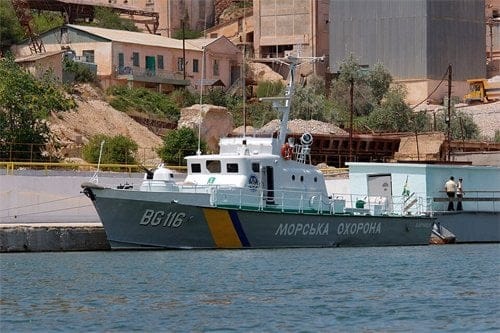
Balaklava Patrol boat (Alexxx1979 - CC BY-SA 3.0)


The most recent attack came as Ukraine reported it also launched drones against one of Russia’s largest fuel refineries. The Slavneft-YANOS refinery is more than 700 km (nearly 440 miles) inside Russia from the border with Ukraine. SBU said four fuel tanks were damaged and were leaking. Two tankers were said to be on fire

Ukraine’s Ministry of Defense reported in July that its forces had struck a record 236 ships. It highlighted that Ukrainian middle-strike drones now control not only land supply routes but sea routes as well, including in the Sea of Azov and around the Kerch Strait. It said the number of strikes at ranges of 50 km and beyond (over 30 miles) rose by 74 percent in July.

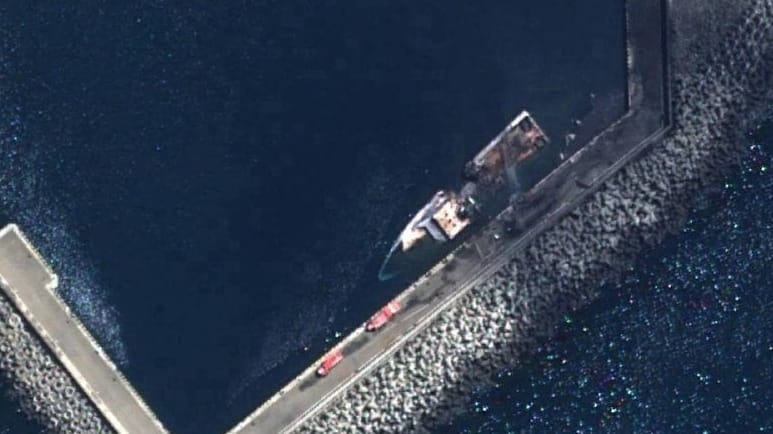
Among the strikes last month was the Russian patrol boat Izumrud. It was one of Russia’s newer vessels, having been built in 2014 and used to guard Novorossiysk. Ukraine claimed to have deployed one of its newest generation surface drones, the Sargan-3000, against the 62-meter (203-foot) patrol boat. Ukraine said sailors have been killed and injured in that attack and later released a satellite photo showing the severe damage and the vessel largely submerged at its dock.


Two Shipping Lines Suspend Service to Russia's Black Sea Ports

Damage to the Nadezhda (Turkish social media)

Published Aug 5, 2026 4:18 PM by The Maritime Executive


Facing an onslaught of Ukrainian drone attacks, Russian state shipping company Fesco and Turkish regional operator Kalyon have halted all sailings in the Black Sea, putting a stop to a substantial segment of the logistics network for Russian ports in the region. The suspension of Fesco's services is expected to significantly limit Russia's imports of goods from East Asia through Novorossiysk, forcing these cargoes to move overland by rail from the Far East or to pass through St. Petersburg.  

The announcement follows three recent casualties - the loss of the Fesco container ship Yanina on Saturday, an attack on the boxship LDR Yasar, and a drone strike on the Turkish ro/ro freighter Nadezhda off Novorossiysk. The attack on Nadezhda hit the accommodations block, seriously injuring three crewmembers.

Kalyon said that out of concern for the safety of its seafarers and the risk to their lives, it has temporarily suspended all voyages on Russian routes. Its employees share these concerns, the company said. "Due to the current security conditions, the great majority of ship crews have notified us that they do not wish to continue their duties, and this situation has rendered operational sustainability effectively impossible," explained Kalyon. 

Turkey's foreign ministry has issued a call to both sides of the Russia-Ukraine war to stop targeting merchant ships.

"We are deeply concerned that the war between Russia and Ukraine is spreading further into the Black Sea, also affecting civilian vessels, despite all our warnings. Unless preventive measures are taken, the escalation in the Black Sea will have multifaceted negative repercussions, including for food security," the ministry said in a statement. 

On the Ukrainian side of the Black Sea, merchant shipping has all but come to a halt under steady pressure from Russian drone and missile strikes, which have damaged both vessels and port infrastructure around the Odesa region. The shutdown has significant implications for Ukrainian grain and steel exports, with corresponding effects on GDP and tax revenue needed for the war effort. 

Both sides are feeling the effects of the counter-shipping strikes. Ukraine's persistent attacks on Russian tankers have cut crude oil loadings in the Sea of Azov and Black Sea ports by more than 60 percent, according to BIMCO. CPC loadings of Kazakh oil have also dropped by about 60 percent, the association assesses.


Operation Begins to Pull Wrecked MSC Baltic III Ashore for Dismantling

wreck removal Canada MSC Baltic III
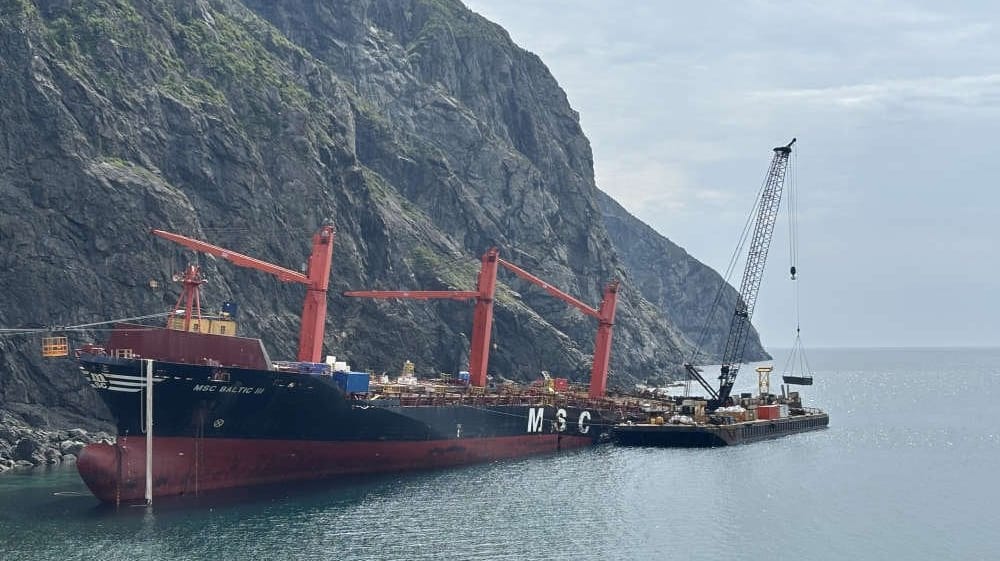
Final preparations for the pulling operation included removing the accommodation block and bridge as well as cargo equipment (Canadian Coast Guard)

Published Aug 7, 2026 11:42 AM by The Maritime Executive


The salvage effort to remove the wreck of the containership MSC Baltic III has begun pulling the hull of the vessel onto shore for dismantling. The Canadian Coast Guard reports that the pulling operation started on July 31 and that there has been some movement of the vessel towards shore.

It is a slow process to pull the 207-meter (679-foot) long hull onto the beach at Ceder Cove in Newfoundland. The ship came to rest in the remote cove in February 2025 after it blacked out during a fierce winter storm. Over the past two winter seasons, heavy weather and high waves took a toll on the ship, causing the hull to buckle, and a crack formed in the hull near midships.

This phase of the salvage operation, which is being paid for by MSC Mediterranean Shipping Company and its insurance companies, is being undertaken by Resolve Marine using twelve 300-tonne hydraulic chain-pullers. The supervisor for the salvage company explained that they attached three-inch stud link anchor grade chains to the hull near the bow. The hull is being pulled onto a rock bed on the shoreline, where the dismantling process will be undertaken.


Pulling operation is moving the 207-meter hull forward onto the shore for dismantling (Canadian Coast Guard)


To prepare for this phase of the operation, Resolve Marine completed over the past few months the removal of the remaining containers, which had been trapped in the hull of the vessel. They reported that the containers, in addition to being waterlogged, were deformed and in some cases had to be cut out of the racks. One container, which was transporting newsprint, remains in the hull of the ship, waterlogged and too badly damaged to be removed. They plan to deal with it as the ship is dismantled.

The holds were also drained of accumulated water during the preparations to begin pulling the ship. A water treatment operation was set up to deal with clearing the holds. The cargo hatches and other cargo equipment were also removed before the pulling began.

The superstructure containing the accommodations and bridge was also dismantled before the pulling operation began. Those sections have already been barged to the recycling operation in Stephenville, Newfoundland. As the hull is dismantled, sections will be trucked or moved by barge to the recycling operation.

The team also plans to address residual amounts of fuel and other contaminants that remain trapped aboard the ship. The majority of the fuel and contaminants were removed from the ship during the first phase of the salvage operation in 2025. Bruce English, who is overseeing the operation for the Canadian Coast Guard, notes there have been no major leaks from the vessel, and the operation has been successful in preventing a significant threat to the environment. Pollution response measures are in place should there be any additional release of contaminants during this phase of the operation.

Resolve Marine expects the operation to continue for another year as they clear the ship and restore the cove.