Saturday, August 08, 2026

Colombia oil, mining industries upbeat on new (RIGHT WING) government, seek swift changes 
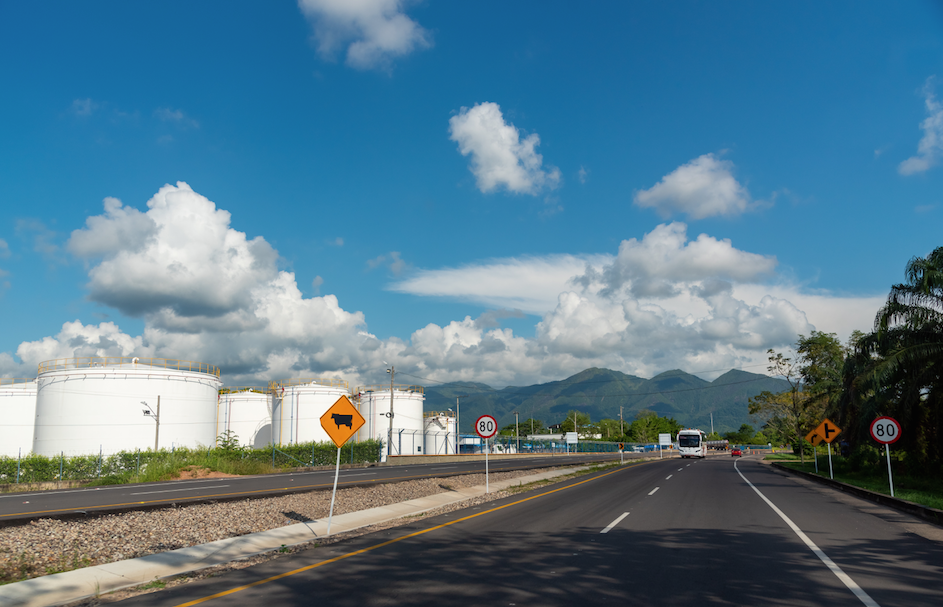

Oil storage in Colombia. Stock image.

 Mining and ​oil companies are ready to invest billions of dollars in Colombia after four years of paralysis in ‌new exploration, but the incoming government needs to act quickly to remove regulatory and security obstacles, industry executives and analysts said.

Right-wing President-elect Abelardo De La Espriella will be sworn in on Friday, replacing leftist Gustavo Petro, who banned new hydrocarbon exploration contracts and locked horns with multinational ​coal companies.

De La Espriella has pledged to revive exploration and could use decrees to simplify and shorten permitting ​processes, including public consultations.

That carries legal risks, while other sought-after measures, such as approving technical ⁠parameters for fracking, changing the royalty system, altering contract structures and introducing tax incentives, would require approval from a ​divided Congress, where he will face opposition from Petro’s party.

“We need to unblock all the bottlenecks that are closely tied to ​prior consultations, administrative decisions and delays in environmental licensing,” said Luz Stella Murgas, president of Colombia’s natural gas association Naturgas.

Major gas developments include the offshore Sirius project in Colombia’s Caribbean, a joint venture between state-controlled Ecopetrol and Brazil’s Petrobras. Production is expected to begin in 2030, ​but the project still requires the completion of 120 prior consultations with local communities.

Between 2023 and 2025, foreign investment ​in mining and oil fell 34% to about $6.9 billion, while Colombia’s oil output declined 4% to an average 746,000 barrels per day and ‌crude ⁠reserves dropped by 54 million barrels. Natural gas imports soared to 31% of domestic consumption from just 3% in 2023, industry data show.

Security is another key concern.

The Colombian Petroleum Association (ACP) said 580 attacks and blockades on oil infrastructure were recorded in 2025, causing losses exceeding 2.4 trillion pesos, about $749 million.

“The measures have to be comprehensive, aggressive and swift,” ACP president Frank ​Pearl said. “If one of the ​key variables is missing ⁠from the investment environment, it will not be attractive and we may fail to draw those resources.”

Nelson Castañeda, president of industry association Campetrol, also called for urgent government action, as “every ​decision we make today will be reflected in five, 10 and 15 years.”

Billions in mining investment stalled

In mining, ⁠Colombia has five gold, copper, coal and nickel projects that have completed exploration or obtained licenses but have not moved into construction because of legal and political uncertainty under Petro, said Juan Camilo Nariño, head of the Colombian Mining Association.

“The investments are ⁠on the ​verge of materializing and could amount to between $3.6 billion and $4 billion over ​the next four years,” Nariño said.

Efforts to accelerate permitting processes are highly likely to face legal challenges, said consultancy Colombia Risk Analysis.

“There will be no ​viable legal path to simplify, speed up or eliminate prior consultations,” it said.

(Reporting by Nelson Bocanegra, editing by Andrei Khalip)

Deutsche Bank, KBC freeze some Radiant World funds in Singapore


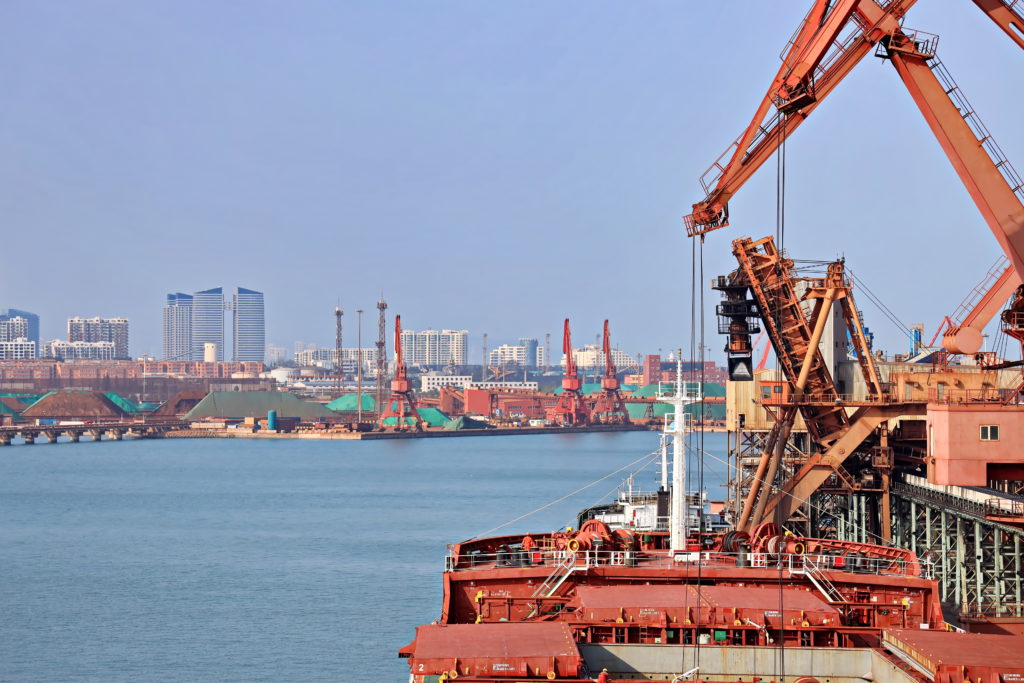
Iron ore cargo. Stock image.

Radiant World is under growing pressure after two of its key banks froze its funds and major miners moved to cut ties with the iron ore trading house. 

Deutsche Bank AG and KBC Group NV have frozen some of the company’s Singapore bank accounts, while some other banks have suspended credit lines, according to people familiar with the matter who asked not to be identified due to the sensitivity of the subject.

The moves came after Bloomberg reported last week that some of the largest commodity-trading firms had stopped dealing with Radiant World amid concerns it provided banks with falsified documents about iron ore trades, citing people familiar with the matter. 

Two of the world’s largest miners, Rio Tinto Group and Vale SA, have struck Radiant World off their lists of approved customers, people familiar with the matter said.

Commodity traders like Radiant World rely on credit from a wide range of suppliers, customers and financiers to handle huge quantities of goods whose value often dwarfs their own net worth. The private company grew quickly in recent years to become one of the world’s largest traders of iron ore with annual revenues of about $12 billion. Now, uncertainty about Radiant World’s business is already being felt in the iron ore market, where prices this week fell to the lowest in more than a year.

A spokesperson for Radiant World said: “Radiant World remains well capitalised with healthy liquidity, supported by a consortium of long-standing banking partners. We continue to meet our obligations to our financing and trading partners and remain well on track to deliver on our Q4 targets.” He declined to comment on individual counterparties. 

In response to Bloomberg’s previous coverage, Radiant World has denied wrongdoing and said it “conducts its business to the highest commercial and legal standards.”

While Radiant World is little known outside the metals industry, its scale in the iron ore market has put it at the center of a network of trade relationships involving some of the world’s top miners, traders and steelmakers. It has established ties with dozens of banks and funds that finance it through lending facilities backed by documents like invoices and shipping receipts, cash in its own bank accounts, or direct ownership of commodities in transactions known as repo financing, according to corporate filings and people familiar with the matter.

Pulled back

Several of Radiant World’s banks have pulled back from dealing with the company in the past week, the people said. Deutsche Bank and KBC have frozen some bank accounts while they carry out compliance reviews, the people said. 

In addition, Arab Bank Switzerland Ltd., a key financier of Radiant World’s business, has stopped issuing new letters of credit for the trading house’s iron ore shipments, according to two of the people. ICBC Standard Bank Plc has suspended repo financing with the company, several additional people familiar with the matter said, also asking not to be identified discussing sensitive information.

Societe Generale SA is also reducing its exposure to Radiant World, though it began the process several months ago after becoming aware of allegations of fraud in the market, separate people familiar with the matter said.

Spokespeople for Deutsche Bank, KBC, Arab Bank Switzerland, ICBC Standard Bank and Societe Generale declined to comment. 

Bloomberg previously reported that Intesa Sanpaolo SpA and Jefferies Financial Group Inc.’s Point Bonita fund were reviewing their exposure to the company, and that Intesa had taken a provision on its exposure.

Meanwhile, several key trading counterparties are also moving to cut ties with Radiant World, according to people familiar with the matter.

Rio Tinto and Vale, the world’s two largest iron ore miners, have stopped doing new deals with Radiant World, the people said, asking not to be identified due to the sensitivity of the matter. The two miners typically supply much of their iron ore directly to steelmakers under long-term contracts, but also sell additional cargoes to a relatively small group of approved trading houses in the spot market.

The miners have both removed Radiant World from those approved customer lists, the people said. Rio still has some limited pre-existing contractual commitments to fulfill to Radiant World, one person familiar with the company’s position said.

Both miners were listed in a December 2024 Radiant World presentation as being among the company’s “diverse network” of suppliers and counterparties. Other companies listed in that presentation include Glencore Plc, Cargill Inc., Trafigura Group, BHP Group and CSN Mineração. 

Bloomberg reported last week that Cargill had stopped dealing with Radiant World several months ago and that Glencore was not entering into new business with the company. On Wednesday, Glencore CEO Gary Nagle confirmed that the company had halted new business and was “checking how to exit” its outstanding exposures.

A spokesperson for Trafigura said: “We do not trade with Radiant World.” 

BHP hasn’t traded with Radiant World for at least several months, according to a person familiar with the matter, while Brazilian miner CSN hasn’t sold iron ore to Radiant World since the end of 2024, a person familiar with the matter said. 

Spokespeople for Rio Tinto, Vale, BHP and CSN declined to comment. 

(By Alfred Cang, Katharine Gemmell, Jack Farchy, Priscila Azevedo Rocha, Mark Burton and Arno Schütze)


Iron ore mine depletion to underpin prices next decade, Rio Tinto says


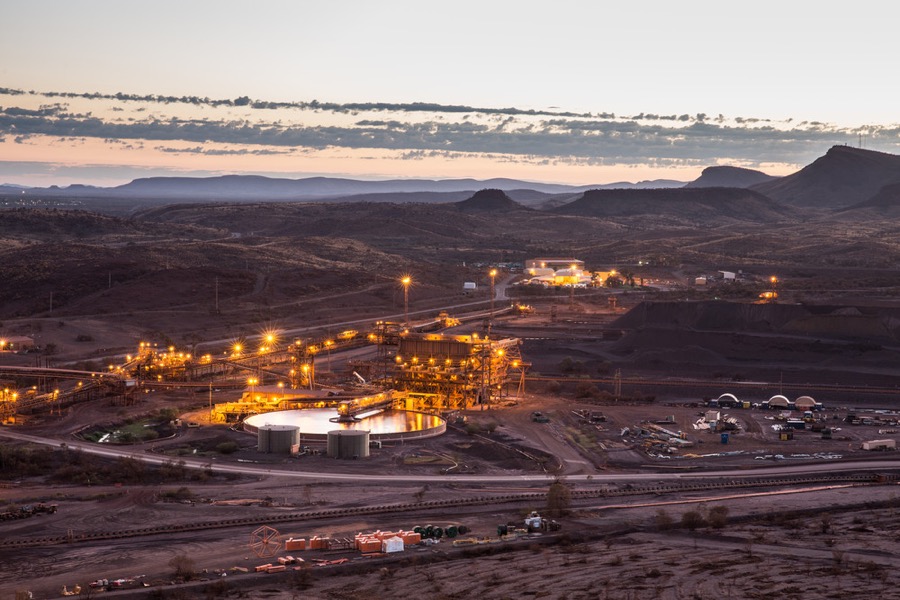
(Image of the Paraburdoo operation, in the Pilbara, courtesy of Rio Tinto)

Supply pressure stemming from the depletion of iron ore mines built earlier this century, such as those in Australia, is set to underpin the iron ore market and prices over the coming decade, a Rio Tinto (ASX: RIO) executive said on Wednesday.

Rio expects to invest more than $13 billion on new mines, plant and equipment in the Pilbara region from 2025 to 2027 while estimating that 800 million tonnes needs to be added globally across the next decade to maintain supply.

Only 300 million tonnes has been committed. 

“It feels like every year, the demise of iron ore is very much being exaggerated,” Matthew Holcz, Rio’s iron ore chief executive, told a lunch event at the Melbourne Mining Club.

“While I think the demand story has been reasonably well understood, I really think it’s been on the supply side, so disruptions have been underestimated,” he said, pointing to annual cyclones that strike Western Australia’s Pilbara coast from November to April.

“I think the rate of depletion is very much underestimated,” Holcz added.

“If we look at when the industry really boomed, 2005, 2010, 2015, a lot of those assets are now 15, 20 years old, and the scale of the iron ore industry … has increased.”

Investment in new supply is only a fraction of that seen at the start of last decade, Holcz said. 

“Marginal costs are a lot higher … so we think there’s good price support around the levels that we’re enjoying in recent years.”

China’s demand is expected to be stable until 2030 before declining slightly, but the Global South will bolster demand, particularly India, which Rio expects to be a net iron ore importer around 2035.

Change in leverage

On China’s state buyer, now more assertive in price talks with suppliers, Holcz said tension between buyers and sellers always prevailed but Rio was focused on long term ties and “win-win” opportunities.

“The supply-demand balance has shifted,” he told media in remarks on the sidelines. “You’ve got a market that is much more in balance, and certainly that’s shifted some of the leverage.”

Referring to union matters in the Pilbara, where workers are set to strike this weekend at BHP’s (ASX: BHP) Port Hedland operations, Holcz favoured a “direct relationship” with workers that he said has historically led to better outcomes.

Future capital spending decisions would hinge on competition, industrial relations and tax provisions elsewhere, areas in which Australia is falling behind.

Rio Tinto has no major exposure to iron ore trader Radiant World, Holcz added.

Trading houses Vitol Group and Cargill have stopped trading with Radiant World over concerns that invoices provided to its banks may not have been valid, Bloomberg News said last week, which Radiant world denies.

“From a Rio Tinto perspective, there isn’t any exposure there that we’re concerned about,” Holcz said. 

(Reporting by Melanie Burton in Melbourne; Editing by Clarence Fernandez)

CMRG tells some steel mills to halt talks with Rio Tinto, sources say

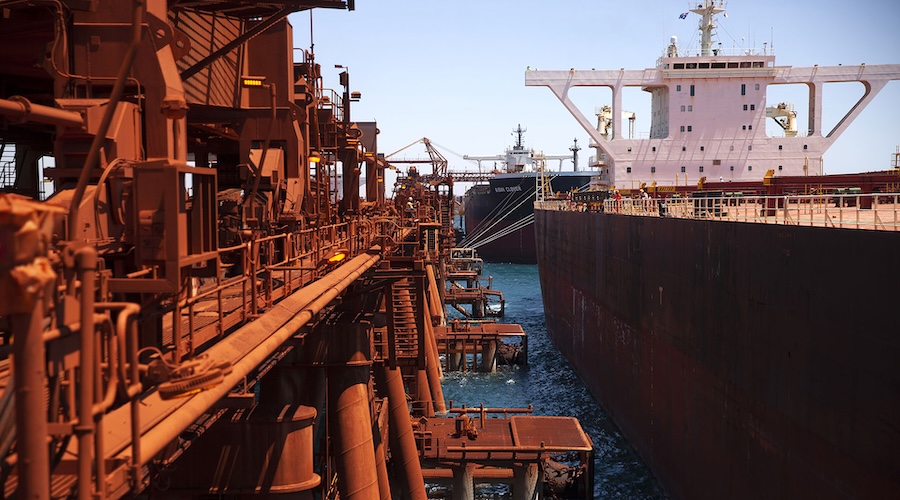
Rio operates 4 independent shipping terminals at 2 locations, Cape Lambert (pictured) and Dampier. (Image courtesy of Rio Tinto.)

China’s state iron ore buyer has directed some steel mills to halt negotiations with Rio Tinto (ASX, LON: RIO) for shipments from September, two sources with knowledge of the matter said, escalating pressure on the world’s top iron ore producer during annual supply talks.

China Mineral Resources Group (CMRG) has increasingly used its buying power to wrest better terms for its steel makers by restricting purchases from big iron ore miners while contract talks are underway.

In the run-up to the expiry of annual supply deals, miners typically discuss with customers their desired volumes and specific cargo and shipment dates for the next year, a trader said. CMRG has asked some mills not to settle those details, they said.

Larger procurement volume

CMRG is negotiating for more than half of China’s annual import volumes, according to commodity research group Wood Mackenzie’s estimates.

The push to stall talks with Rio Tinto was aimed at pressuring mills that have not given up negotiation rights to CMRG to do so, two traders and an analyst said, which would hand the state-run trader a larger procurement volume and boost its bargaining power.

The most active iron ore contract on China’s Dalian Commodity Exchange (DCE) DCIOcv1 closed daytime trade up by 2.57% to the highest since July 31 at 719 yuan ($106.54) per metric ton, while the benchmark September iron ore SZZFU6 on the Singapore Exchange jumped 2.15% to $96.45 a ton as of 0823 GMT, also the highest since July 31.

CMRG has already targeted Australia’s other top iron ore producers — (ASX: BHP), Fortescue (ASX: FMG) and privately held Hancock Prospecting, owned by Australia’s richest person, Gina Rinehart.

Australia supplies more than half of China’s iron ore imports, making it by far its largest source of the steelmaking ingredient, and the material is Australia’s most valuable commodity export.

CMRG did not immediately reply to a request for comment. Rio Tinto declined to comment.

Under pressure

BHP faced progressive purchasing bans on some products through late 2025 and early 2026 as its annual term contract negotiations dragged on. Restrictions were lifted following a visit by its then incoming CEO Brandon Craig in April.

Meanwhile, a top executive at Fortescue last week said CMRG’s actions were undermining China’s stable iron ore supply.

Rio Tinto had been seen as insulated from some of that pressure given its largest shareholder is China’s state-owned Chinalco, which also leads the consortium partnering Rio Tinto in the Simandou iron ore project in Guinea.

However, this week its chief executive of iron ore, Matthew Holcz, said negotiating leverage has shifted away from iron ore producers as growing supply has balanced the market.

Holcz said tension was always present between buyers and sellers, but Rio was focused on long-term ties and “win-win” opportunities.

Australia’s major miners and their lobbyists have asked Canberra for help in pushing back against Beijing’s efforts, including raising the prospect of a single selling desk for the country’s most valuable commodity export.

But the view from at least one miner was that Canberra has been trying to repair its relationship with China so might not want to take up this fight right now. China unofficially banned a swathe of Australia’s commodity exports, including coal, wine and beef, between 2020 and 2023.

($1 = 6.7489 Chinese yuan renminbi)

(Reporting by Melanie Burton and Reuters staff; Editing by Sonali Paul and David Holmes)


India’s Odisha state warns iron ore miners, steelmakers over grade manipulation

Steel mill in India. Stock image.

India’s top iron ore producing state of Odisha has warned steelmakers and miners of strict action over alleged grade manipulation and misdeclaration, according to documents reviewed by Reuters and three sources, a crackdown that analysts say could tighten domestic iron ore supplies.

India, the world’s second-largest crude steel producer after China, is expected to produce 340 million to 345 million metric tons of iron ore, the key raw material used in steelmaking, in 2026-27, up from about 316 million tons a year earlier, commodities consultancy BigMint said.

Any disruption to supplies from resource-rich Odisha could scupper those production targets.

The warning follows inspections that “revealed a consistent grade manipulation by the lessees,” which include major steel producers, resulting in a “substantial loss” of state revenues, according to a July 6 government document reviewed by Reuters.


The companies named in the July 6 letter included JSW Steel, Tata Steel, state-run Steel Authority of India (SAIL), Jindal Steel and ArcelorMittal Nippon Steel India.

A Tata Steel spokesperson denied any discrepancies, saying it pays royalties as per prescribed norms and that most of its iron ore dispatches are in the highest royalty grade.

JSW declined to comment. SAIL and Jindal Steel did not respond to Reuters‘ emails seeking comment. Odisha’s Directorate of Mines and Geology also did not respond to requests for comment.

Government officials met steel and mining associations and company executives last month to discuss the findings, according to July 13 meeting minutes and a source familiar with the matter.

“Any deliberate grade manipulation, misdeclaration or suppression of mineral value affecting government revenue shall be viewed very seriously and strictly dealt with,” the meeting minutes showed.

Odisha’s steel and mines department directed lessees to revise mining plans and seek approval from the Indian Bureau of Mines where actual ore grades differ from approved grades, according to the minutes.

Analysts say stricter inspections are already affecting lower grade ore availability.

Offers for lower grade ore have become limited in the merchant market over the past month because of intensified inspections by Odisha authorities, BigMint said.

“Since Odisha is the largest producer of iron ore in the country, if the issue escalates, it might impact the overall availability of iron ore in the country,” said B.K. Bhatia, a mining expert and former director general of the Federation of Indian Mineral Industries.

Industry representatives disputed the state’s allegations.

“Industry has raised concerns that the grades extracted are as per the geology and that is not under anyone’s control,” one industry representative said, declining to be identified because they were not authorized to speak to the media.

(By Neha Arora, Jatindra Dash and Arpan Chaturvedi; Editing by Mayank Bhardwaj and Saad Sayeed)

BAN DEEP SEA MINING

Glomar Minerals targets deep-sea production before end of Trump term


The RV Tangaroa at sea. Image: Earth Sciences New Zealand.

This week, Glomar Minerals announced its wholly owned subsidiary UK Seabed Resources Limited (UKSR) departed from Tahiti for the Pacific Clarion-Clipperton Zone (CCZ) to survey its license area for polymetallic nodules. 

Nodules found within the company’s two CCZ license areas – together the size of Louisiana – are rich in manganese, cobalt, nickel, copper, and rare earths – minerals critical to defense, aerospace, energy, and modern manufacturing, Glomar said.   

The campaign is the first comprehensive geological and biological survey of the UK2 license area in more than 40 years, the company said in a news release.

The 65-day campaign is being run with Earth Sciences New Zealand aboard the RV Tangaroa, which the company says is one of the most capable deep ocean research vessels in the world.

Glomar Minerals aims to begin processing polymetallic nodules before the end of US President Donald Trump’s term as it evaluates regulatory routes beyond the International Seabed Authority (ISA), chief executive Chris Williams told MINING.com in an interview.

The US seabed minerals company is looking at exclusive economic zones where it could launch a relatively small operation while the ISA continues negotiations over rules governing commercial mining in international waters.

“There’s a real question about whether there’ll be regulations at the ISA during that timeframe, so we are looking actively at other jurisdictions to see whether there is a faster regulatory path to production.”

The ISA has spent years trying to finalize its mining code and was still working through several outstanding regulatory issues during its July 2026 session. Its latest draft covers environmental protection, compliance, inspections and the financial terms that would apply to mining in international waters. The ISA released a third revision of the draft exploitation regulations in June..

Pacific campaign underway

Glomar owns UK Seabed Resources (UKSR), which holds two UK-sponsored exploration contracts covering about 133,000 sq. km in the Clarion-Clipperton Zone, a mineral-rich expanse of the Pacific Ocean between Hawaii and Mexico.

The company acquired UKSR from the bankruptcy estate of Norway’s Loke Marine Minerals in 2025. Lockheed Martin, which had previously owned UKSR, sold the subsidiary to Loke in 2023.

Williams managed Lockheed’s seabed minerals program from 2015 until the sale. He said Glomar’s licences cover the same areas he oversaw at the defence contractor.

UKSR has launched a 67-day expedition aboard the Earth Sciences New Zealand research vessel Tangaroa, including 45 days of active survey work. 

Historical US data indicates that UK2 contains a potentially strong nodule resource, Williams said, although the licence remains at an earlier exploration stage than UK1.

“UK1 is really pretty far advanced,” he said. “It doesn’t require an enormous amount of work to be ready for an application for a production licence — or an exploitation contract, as it’s known at the International Seabed Authority.”

US processing plans

In March, Glomar and Australian critical minerals developer Cobalt Blue Holdings said they plan to build a US refinery to process critical minerals extracted from the bottom of the Pacific Ocean within three years,  dubbed Project Infinity. 

The modular facility is being designed to process about 200,000 tonnes of polymetallic nodules and 7,500 tonnes of terrestrial cobalt hydroxide annually. Its proposed flowsheet would produce manganese, cobalt sulphate, nickel and copper, as well as a rare-earth-rich residue.

The companies said they have shortlisted four sites across Louisiana, North Carolina and Texas after reviewing more than 30 locations.

“We’d like to see nodules going through that processing plant before the end of the Trump term,” Williams said.

The facility would operate at roughly one-tenth the scale of a plant supplied by a full-size collection vessel working continuously, Williams said. Glomar sees the smaller initial development as a way to reduce risk before expanding capacity.

“The idea is that it’s modular and scalable, which lowers the risk out of the gate but gives us lots of opportunity to scale,” he said.

The company has not announced customers, financing arrangements or any talks with the US government concerning project funding.

Environmental debate

Deep-sea mining remains fiercely contested. Environmental groups and several governments have called for a moratorium or precautionary pause, arguing that too little is known about abyssal ecosystems to permit commercial extraction.

The UK, which sponsors Glomar’s ISA contracts, has supported a moratorium on exploitation licences until sufficient scientific evidence and strong environmental rules are in place.

Williams argues mining is likely to proceed regardless, driven partly by governments seeking secure supplies of critical minerals.

 “Anyone who spends time at the International Seabed Authority and hears how some member states — particularly China — are talking about it would recognize that there’s a really strong imperative to get these regulations done to enable seabed mining.”

“Given that it’s happening anyway, let’s make sure we do it the right way. Let’s lead by example.”

Williams pointed to research examining a 1979 pilot mining test in the Clarion-Clipperton Zone as evidence that some biological recovery is possible. Scientists returning to the site 44 years later found animals had begun recolonizing the disturbed ground.

The findings were not uniformly positive. The peer-reviewed study found persistent physical changes to the seabed and a mixed recovery among animal groups, underscoring the long duration of mining impacts. The research was published in Nature in 2025.

“The environment was a little different where the nodules had been taken away, but the recolonization was very real over that 40-year period,” Williams said. “That changes, I think, the assumption that after you do this, you’ve got a barren desert with no life.”

Glomar has pledged to submit its environmental findings for peer review and, where possible, fund open access to the resulting academic papers.

“We’d like people to see what we’re doing, and we’d like to be transparent about it,” Williams said.


Canadian-Led Operation Reveals Scope of Illegal Fishing in North Pacific

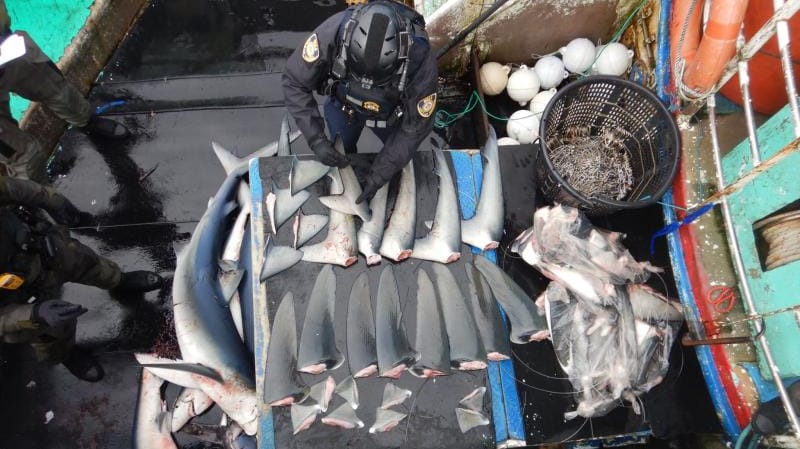
A boarding team crewmember inventories shark fins on a suspect vessel, May 2026 (NOAA Fisheries)
A boarding officer inventories shark fins on a suspect vessel, May 2026 (NOAA Fisheries)

Published Aug 6, 2026 10:57 PM by The Maritime Executive

A Canadian-led operation aimed at cracking down on illegal, unreported and unregulated (IUU) fishing has again exposed how the vast North Pacific continues to be a hotspot for criminal activity that poses a major threat to fish populations, marine environments and global seafood supply chains.

Following the completion of the annual multinational mission known as Operation North Pacific Guard (Op. NPG), which involved more than two months of patrolling North Pacific waters at sea, in the air and by satellite, the reality is that IUU fishing remains a deeply rooted menace.

The mission, which is led by Canada and brings together a range of partners including the U.S., Japan and Korea, saw Canadian fishery officers and crew aboard the multipurpose coast guard ship Sir Wilfrid Laurier patrol more than 23,000 kilometers of North Pacific waters.

At sea, the crew monitored hundreds of fishing vessels and conducted 30 high-seas inspections, which turned up 52 violations of international fisheries requirements. These included shark finning, use of prohibited gear to catch sharks, and misreporting or inaccurate reporting of catch, bycatch and discards, including of prohibited species. Violators also failed to take measures to protect seabirds while setting fishing gear.

In the air, aerial patrols surveyed a total of 344 fishing vessels and detected 21 violations. These included shark finning, illegal killing of dolphins, pollution and inadequate vessel markings.

Apart from monitoring and enforcement, officers also collected environmental data and water samples for analysis to support understanding of the high seas environment, including the migration range of species of interest such as Pacific salmon and the levels of microplastics in the water.

Canadian authorities say that Op. NPG, which has been conducted annually since 2019, is critical in enforcing international law against IUU fishing. The violations are investigated by flag states and may lead to sanctions, including total fishing bans for offending vessels.

Among the other objectives of the operation is identifying gaps in global fisheries governance — work that in recent years has contributed to prohibitions on shark finning and salmon retention, restrictions on pollution, and strengthened reporting requirements

"IUU fishing threatens the security of our oceans and the resources that coastal communities depend on. Operation North Pacific Guard demonstrates the strength of Canada's partnerships in addressing these threats and enforcing the rules that keep our waters safe," said David McGuinty, Canadian Minister of National Defence.

Op. NPG is funded by the Pacific Salmon Strategy Initiative, which aims to enhance conservation, protection and enforcement efforts in high-risk areas for Canada's Pacific salmon stocks. The initiative has received US$294 million over five years under a federal government strategy aimed at nature protection.


Rhine's Record-Low Water Level Exposes WWII-Era Bomb in Cologne

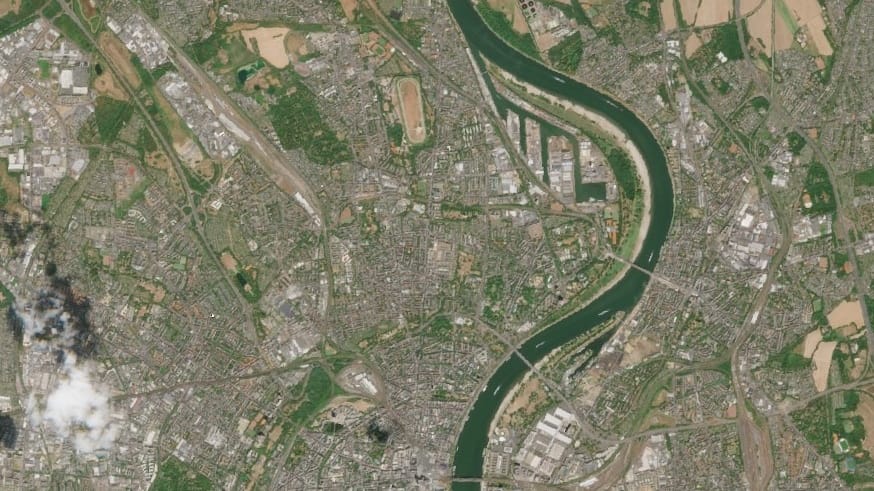
Sandbanks and barge traffic on the Rhine at Cologne, August 1 (Copernicus / Sentinel-2)

Published Aug 6, 2026 8:35 PM by The Maritime Executive


As summertime drought and heat eat away at water levels on Northern Europe's rivers, industries dependent upon river transport are feeling the effects - but it is making it simpler to clean up underwater hazards. On Thursday, a WWII-era bomb was removed from the bottom of the Rhine at Cologne, where wading-depth water made the aging explosive device easier to spot. 

The Second World War left Germany littered with unexploded bombs, and EOD teams still get regular calls today to deal with 80-year-old explosives. This particular device was an American-made 500-pound aerial bomb. 

Responders cleared residents from a 400-yard safety zone around the site before defusing the bomb, then brought in heavy equipment to pull the device out of the sand. 

River gage levels in Cologne hit just 26 inches on Thursday, a new record. The gage at Kaub - the limiting point for traffic between the Lower and Upper Rhine - hit just nine inches, a record low level, and well below the minimum required for standard commercial navigation. This diverts river commerce onto very limited road and rail resources for transport between the lower reaches of the river - including major industrial zones in Rotterdam, the Ruhr Valley, Frankfurt and Ludwigshafen - and the upper reaches as far upstream as Basel. Even on the Lower Rhine, water levels are so low that barges are unable to transit at full load. The net effect is a slowdown in production and a hit to the German economy, estimated in the range of 0.25 percent of GDP per month of drought - an unwelcome addition to existing economic pressure from foreign competition and elevated energy costs. 

Long term, the repeated droughts require a shift in thinking for industrial companies in Europe, starting with stockpiling and warehousing for key feedstocks and components. This allows manufacturers a bigger buffer for periods when transport shuts down, but it is a reversal for industries more used to a "lean," "just-in-time" manufacturing philosophy - and it increases operating costs. 

Other river users are feeling the pinch, too. Cruise operations are restricted or canceled on the Rhine and Danube. Hungary's sole nuclear powerplant - the source of 40 percent of its generating capacity - has had to shut down because of limited access to cooling water from the Danube. Next in line is Romania's sole operating nuclear reactor, which is within days of losing access to cooling water. The Romanian Navy is taking urgent action to divert more flow towards the powerplant and buy time, using explosives to blow up a submerged rock and preparing to sink four barges into the river to redirect water. These strenuous efforts might buy 10 more days of power generation, the plant's director told local media. 


Undersea Technology Innovation Consortium Celebrates 10 Years of Innovation

New brand reflects a decade of growth and positions UTIC for the future of maritime and defense technology collaboration

Undersea Technology Innovation Consortium

Published Aug 8, 2026 12:00 PM by The Maritime Executive


[By Undersea Technology Innovation Consortium]

The Undersea Technology Innovation Consortium (UTIC) is celebrating a decade of advancing undersea tech innovation with a milestone that reflects both its accomplishments and its future. As the organization marks its 10th anniversary, UTIC is unveiling a refreshed brand identity that symbolizes its evolution from a regional initiative into an internationally recognized consortium driving collaboration across government, industry, academia, and nonprofit organizations.

Founded with the vision of creating an ecosystem where breakthrough undersea technologies could move more quickly from concept to capability, UTIC has spent the past decade building partnerships that strengthen national defense, enhance maritime security, and support commercial innovation.

Today, the consortium's collaborative model has contributed to more than $1.5 billion in undersea technology innovation impact while connecting thousands of organizations working to solve some of the nation's most complex maritime challenges.

"Ten years ago, we set out to create an environment where collaboration could accelerate innovation. What we've built together over the past decade has exceeded those early aspirations." said Molly Donohue Magee, Chief Executive Officer of UTIC. "Our members have demonstrated that when government, industry, academia, and nonprofit organizations work together, we can develop and deliver technologies that strengthen our national security and advance the future of the maritime economy. As we mark this milestone, our new brand reflects the innovative, collaborative organization we have become and our continued commitment to solving the challenges ahead."

In its role managing the U.S. Navy’s Other Transaction Authority (OTA) Consortium for Undersea and Maritime Technology Innovation, in partnership with Advanced Technology International (ATI), UTIC has created new opportunities for member companies to work directly with the federal government to bring breakthrough innovation to market faster than traditional procurement processes allow.

In its first decade, UTIC has expanded beyond its original mission and developed new initiatives that strengthen the broader undersea ecosystem, including:

•    Launching an Undersea Tech Collaboration Database accessible to U.S., U.K., Australia (AUKUS) and Canadia companies/organizations to create new opportunities for industry partnerships

•    Establishing a thought-leadership series to boost information sharing

•    Creating a scholarship program and workforce development challenges to strengthen the talent pipeline of future undersea technology professionals

Coinciding with the anniversary, UTIC is introducing a refreshed visual identity developed in partnership with Thomas Roskelly and Roskelly, Inc. The updated brand reflects the organization's growth over the past decade while reinforcing its position as a catalyst for innovation across the maritime, defense, and technology communities.

The comprehensive rebrand spans UTIC's digital presence, communications materials, trade show exhibits, and headquarters, creating a cohesive identity that supports the organization's mission and vision for the future.

"This rebrand is about much more than a new look," said Thomas Roskelly, Creative Director of Roskelly, Inc. "It's about capturing the confidence, collaboration, and momentum that define UTIC today while creating a visual identity that will carry the organization into its next decade of leadership."

While its appearance has evolved, UTIC's mission remains unchanged: bringing together government, industry, academia, and nonprofit partners to accelerate innovation at the speed of need. As the consortium looks toward its second decade, it remains focused on expanding collaboration, supporting technology transition, and ensuring the United States maintains its leadership in undersea and maritime innovation.

The products and services herein described in this press release are not endorsed by The Maritime Executive.


Fitch Ratings Upgrades Canaveral Port Authority Revenue Bonds to A+

Upgrade Reflects Port’s Sustained Growth, Strong Operating Performance

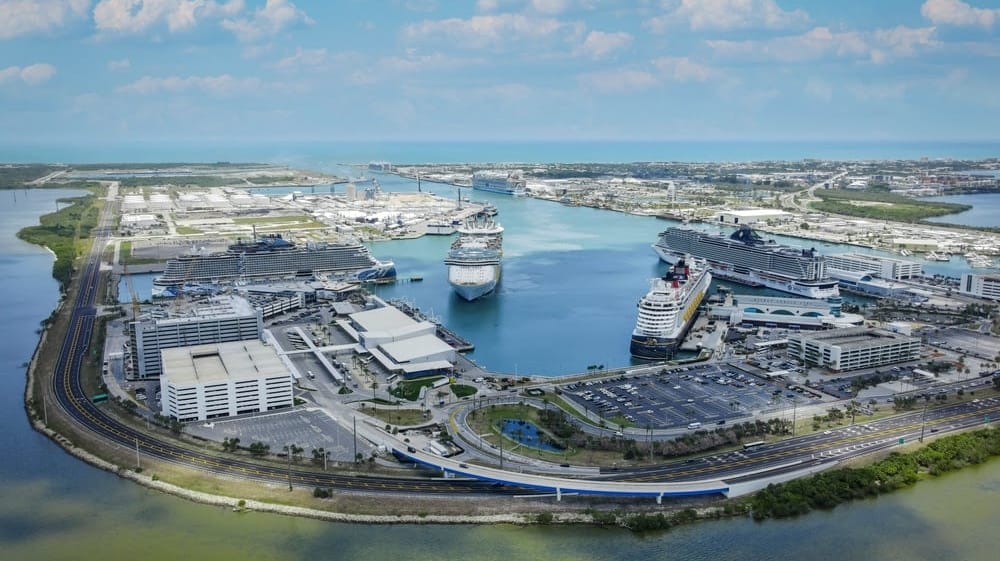
Port Canaveral, Florida

Published Aug 8, 2026 11:53 AM by The Maritime Executive

[By Canaveral Port Authority]


Fitch Ratings has upgraded the Canaveral Port Authority’s port improvement revenue bonds to “A+ with Stable Outlook” for the Port’s financial future.

The rating reflects the Port’s sustained growth and strong operating performance, supported by long-term minimum annual guarantees with cruise and cargo operators, a capital improvement program primarily funded by operating cash flow and grants, and a conservative debt structure, providing the Port with financial resilience and borrowing flexibility.

“This ratings upgrade by Fitch is the result of years of disciplined financial management, strong business planning and an ongoing commitment to intentional growth,” said Capt. John W. Murray, Port Canaveral CEO. “As we continue investing nearly $1 billion in infrastructure improvements, maintaining a strong financial foundation allows us to grow responsibly while delivering long-term value for our customers, business partners and the Central Florida community.”

With cruise traffic driven by Central Florida’s tourism market, particularly Orlando, Fitch’s report cited the Port’s “strong market position as a leading cruise port on the U.S. East Coast” and “significant infrastructure investments underway that are expected to support long-term revenue growth.”  Port Canaveral’s diverse cargo portfolio includes fuel, forest products, aggregates and other critical commodities.

The Port is currently advancing nearly $1 billion in capital improvements over the next five years through its Port Canaveral Advantage program that includes expanding and upgrading cruise and cargo facilities, technology enhancements, roadway improvements and other features across all aspects of its operations.

Fitch also noted that the “CPA’s current five-year capital improvement program is large and focused on expanding cruise and cargo infrastructure” and “these projects are expected to increase cruise capacity, support passenger growth and maintain cargo handling capabilities.”

The products and services herein described in this press release are not endorsed by The Maritime Executive.


USCG Announces Countdown to Opening Nation’s National Coast Guard Museum

US Coast Guard Museum

Published Aug 8, 2026 12:17 PM by The Maritime Executive


[By United States Coast Guard]

One year from today (August 4 2026), Americans will have the opportunity to experience the remarkable story of the United States Coast Guard in a way never before possible. The U.S. Coast Guard announced that the National Coast Guard Museum – the first national museum dedicated to preserving and sharing the history, heritage, and enduring missions of the Coast Guard – will open to the public during the week of Aug. 2, 2027, culminating with the Coast Guard’s birthday on Aug. 4.

“The Coast Guard has always stood as a military service and a vital instrument of national power,” said Adm. Kevin E. Lunday, commandant of the Coast Guard. “This museum is a permanent tribute to the Long Blue Line—the generations of crews who have saved lives, defended our borders and maritime approaches, facilitated vital commerce, and responded to crises with little or no warning.”

Currently under construction along the Thames River waterfront in New London, Connecticut, the 80,000-square-foot museum will feature five public decks with three exhibit floors, five thematic experience wings, a rotating gallery for special exhibitions, educational classrooms, and event space. Designed to immerse visitors in the Coast Guard experience, the museum will combine state-of-the-art interactive exhibits with breathtaking views of the waterfront.

"The National Coast Guard Museum represents incredible dedication, vision, and partnership," said retired U.S. Coast Guard Capt. Wes Pulver, president of the National Coast Guard Museum Association. "We are deeply grateful for the Coast Guard's steadfast support throughout this journey and look forward to continuing our collaboration as we build a museum worthy of the remarkable men and women who have served our nation. Together, we are ensuring their stories will inspire generations to come."

Visitors will explore more than 5,000 historic images, 600 artifacts, interactive exhibits and hands-on exhibits that bring to life the Coast Guard’s missions for all ages. Educational programming in STEM, leadership, civics, and maritime history will extend the museum's reach to classrooms and communities across the country.

Among the museum’s signature experiences will be a suspended MH-60T Jayhawk helicopter, complete with a life-sized aircrew modeled after an active-duty crew from Coast Guard Air Station Elizabeth City, North Carolina. Visitors will also encounter some of the service’s most treasured artifacts, including the Medal of Honor awarded to Signalman 1st Class Douglas Munro, the Coast Guard's only Medal of Honor recipient, whose extraordinary heroism during the Battle of Guadalcanal remains one of the defining acts of valor in Coast Guard history. 

More than a museum, the National Coast Guard Museum will serve as a place where Americans can connect with the people behind the uniform and gain a deeper appreciation for the Coast Guard’s unique role in protecting the nation every day. Through stories of courage, innovation, resilience, and selfless service, the museum will honor the Coast Guard’s legacy while inspiring future generations to answer the call.

Opening events throughout the week of Aug. 2, 2027, will culminate on Aug. 4, celebrating both the opening of the nation’s first National Coast Guard Museum and the Coast Guard’s birthday – a fitting moment to dedicate a permanent home to the service’s enduring legacy.

“This will be far more than a building of artifacts; it will illuminate the hard-earned lessons of the sea,” said Adm. Lunday. “By bridging our rich history with the challenges of tomorrow, we are creating a dynamic foundation to inspire the next generation of leaders ready to answer our nation’s call.”
 

The products and services herein described in this press release are not endorsed by The Maritime Executive.