Wednesday, September 09, 2026

Canada hits Trump where it hurts
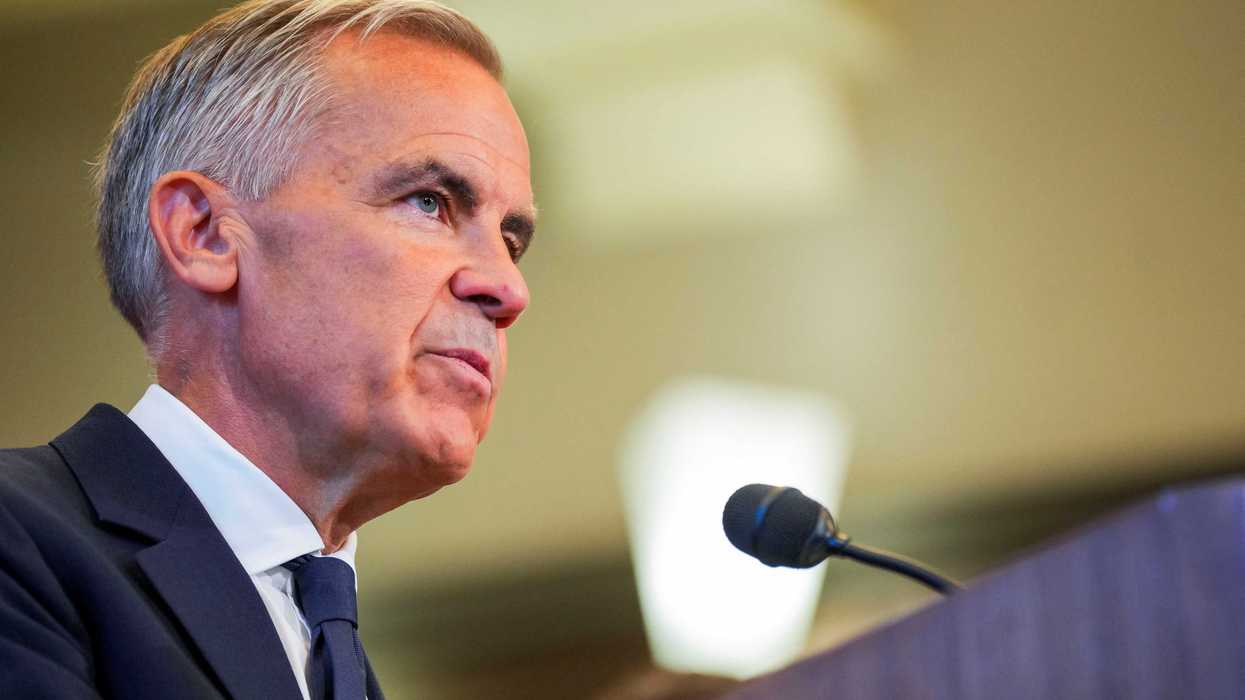


REUTERS/Chris Tanouye
September 09, 2026 

President Donald Trump’s escalating trade war with Canada is creating headaches for Republicans ahead of November’s midterms as high prices remain a top concern among voters.

Responding to Trump’s increased tariffs, Canadian officials have said they’re deliberately targeting goods from states where there are close elections. And GOP candidates in Kansas, Maine and Ohio among others have been forced to balance supporting Trump with defending local manufacturers.

Trump has repeatedly targeted Canada, traditionally a close American ally, since returning to the White House last year. But his August move to impose 50% tariffs on billions of dollars of Canadian imports has heightened tensions, pushing Canada to retaliate with its own tariffs on hundreds of American-made products that went into effect Tuesday.


Nearly $28 billion in U.S. exports to Canada now carry up to 50% tariffs, a dollar-for-dollar match on Trump’s taxes on Canadian goods imposed last month, according to Canadian officials.

Trump has long argued that Canada is taking advantage of the United States because of a longstanding trade deficit — meaning more Canadian products are imported here than American products are exported to Canada.


“They don’t pay for anything, and they want to be treated like a state, but they’re not a state,” Trump said last month after trade talks fell apart.

The fallout could affect consumers and businesses across the country, but Canada targeted many of its tariffs to inflict political pain just ahead of the crucial U.S. midterm elections that will determine control of Congress.

The trade standoff has put Republican candidates in a tough position with an electorate already fed up with high prices and underscores ongoing concerns about how federal trade policy will affect American business and state economies.


On Labor Day, Trump threatened to halt sales of the Canadian airplane manufacturer Bombardier, saying its planes weren’t good enough and the company was treating America as a “piggybank.”

That became immediate political fodder in Kansas, home to Bombardier’s U.S. headquarters and competitive races for governor and U.S. Senate this year. The company employs more than 1,000 people in Wichita, the state’s most populous city that calls itself the “Air Capital of the World” with a local economy dominated by aerospace and aviation manufacturing.

The state’s senior Republican U.S. Sen. Jerry Moran immediately defended Bombardier, as did Ty Masterson, the Republican nominee for governor and current state Senate presidentBut the issue has put pressure on the state’s junior Sen. Roger Marshall, a close Trump ally running for reelection in a competitive race.


“We cannot allow this chaotic economic policy to continue to hurt Kansans; they deserve so much better. As your Senator, I will always stand up for Kansas workers,” the Democratic nominee in the race, Adam Hamilton, wrote on X Monday.

On Tuesday, Marshall said he would fight to keep Bombardier’s jobs in Kansas, posting on social media, “I’ve already taken that concern inside the Oval Office.” Marshall said he agreed with Trump’s aim of bringing more manufacturing jobs, particularly in Bombardier’s case because the company sells half its products in the United States.

Tariffs on Canadian and American goods are poised to especially hurt Northern and Midwestern states, according to an analysis from Oxford Economics. It identified North Dakota, Montana, Michigan, Illinois and Vermont as the states most likely to be affected because they trade the most with Canada.

Minnesota State Auditor Julie Blaha, a Democrat, said the trade feud is just the latest federal move to push up costs for businesses, consumers and local governments. Her office oversees some $56 billion in local government spending through financial integrity audits and budget analyses. She said Minnesota cities and townships have had no choice but to raise property taxes as they encounter rising prices.


“It’s just one wave after another. And it’s piling up,” she said. “All these rising costs are just coming home to roost, and they’re hitting Main Street.”

Minnesota shares a 547-mile border with Canada. Blaha said the state’s crucial agricultural industry is especially threatened as businesses constantly send products back and forth for processing. She highlighted General Mills, the maker of well known cereals, including Cheerios. The firm buys Canadian grain that is processed in Minneapolis before being distributed to domestic cereal plants and sold across the U.S. and Canada.

Grain is not on Canada’s list of targeted products for retaliatory tariffs, but the country did enact new tariffs on agricultural equipment, dairy and other food products.

“These tariffs have a bigger impact than just one just one hit on a price,” she said.

Canada’s political pressure

Canada’s retaliatory tariffs were aimed at pressuring the White House by targeting certain states and industries.

“We’re being wise and strategic to put political pressure,” Canada’s Industry Minister Mélanie Joly said last week.

Canadian data show countermeasures will hit Ohio harder than any other state, the Canadian Broadcasting Corporation reported. Ohio is home to one of the most competitive Senate races this cycle as Republican Sen. Jon Husted defends his seat from former Democratic Sen. Sherrod Brown.


Husted has largely defended Trump’s tariffs in the Senate. In an August interview with MS Now, he acknowledged the president’s decision-making was not in line with how he would negotiate, but declined to second guess Trump’s stance on Canada.

“It depends on how it ends,” the senator said. “If we get a good deal, both Canada and America can come out of this well, but it’s going to require both sides.”

Canada is Ohio’s biggest export market, sending $17.5 billion in goods across the border — roughly a third of the state’s total exports. More than half of the state’s exports to Canada come from the equipment and machinery and the transportation industries. Ohio is a leading producer of automobiles, an industry deeply affected by tariffs because of interconnected supply chains that span American, Canadian and Mexican factories.

Trump’s tariff “decision is going to make it very difficult for folks in the automobile supply chain to be able to succeed in Ohio,” Rob Moore, principal at public policy firm Scioto Analysis, told the Ohio Capital Journal.

While Canada’s countermeasures were politically targeted, they will sweep across the country, affecting solidly conservative and liberal states.

Connecticut State Treasuer Erick Russell, a Democrat, said the trade war will especially hurt New England states that trade more with Canada. He said the tariffs could raise prices of everything from electricity to consumer goods.

Though tariffs will hit businesses and consumers first, Russell said they will eventually put more strain on local and state government budgets.

And the president’s on-and-off-again history with imposing and rescinding tariffs injects more uncertainty for both business and government, he said.

“Where things are right now, there isn’t any certainty or clarity around where this is ultimately going to land,” he said. “What is consistent through all of this is that consumers in Connecticut and all across the country are going to continue to pay for this tariff war.”
Concerns across New England states

The trade standoff could further hurt New England’s tourism industry that depends on steady Canadian traffic.

In New Hampshire, Maine and Vermont, tourism is big business year-round as travelers flock to beaches in the summer, leaf peeping in the autumn and skiing in the winter. Those businesses have suffered a drop in Canadian visitors amid Trump’s ongoing aggression with the country.

Steve Wright, general manager of Jay Peak Resort in Vermont’s Green Mountains, recently assured Canadians that they were welcome to the resort that sits just a few miles from the border and a roughly two-hour drive from Montreal.

“The border may feel different right now,” Wright wrote online. “We do not. You are our neighbors. You are our friends. You are part of this place.”

Vermont Republican Gov. Phil Scott recently characterized the president’s executive order to rename Lake Ontario to Lake America as “petty and disappointing.” Scott, who is favored in polls to win reelection in November, said the trade war harms communities on both sides of the border.

“Further escalating tensions does nothing to help American or Canadian families and businesses,” he added.

In neighboring Maine, U.S. Sen. Susan Collins has criticized the tariffs and urged the administration to resolve its dispute with Canada. A Republican in a competitive race for reelection, Collins grew up just 20 miles from the Canadian border.

Troy Jackson, her Democratic opponent, has blamed Collins for not stopping Trump’s trade policies.

Last week, Collins told reporters that the White House viewed tariffs in a macro sense without appreciating how damaging they are to border states such as Maine. Collins said Trump’s tariffs were already hurting local governments that rely on Canada for imported salt to treat roads in winter and could further hurt the state’s crucial lumber and blueberry industries.

While Maine’s important lobster industry was spared retaliatory tariffs, Canada did impose 50% tariffs on wood products and agricultural products.

“Canada is not China. It is not an adversarial nation,” Collins said. “It is our closest ally, our neighbor, our friend. And our economy is so intertwined with Canada that I am very worried about what the impact will be.”


 US bans Canadian alcohol, motorcycles and dairy products as trade spat escalates


The US and Canada escalated a bitter trade dispute on Tuesday, with Washington imposing new import bans on Canadian alcohol, motorcycles and dairy products as Ottawa's retaliatory tariffs on US goods took effect.


Issued on: 09/09/2026 
By: FRANCE 24

US President Donald Trump at the White House in Washington, DC on September 8, 2026. © Alex Wroblewski, AFP

The United States banned a broad swath of Canadian alcoholic beverages, motorcycles and dairy products from import on Tuesday, sharply escalating an already acrimonious trade spat.

The import bans, which go into effect on September 29 and were published on the White House's website, came after Canada's own retaliatory tariffs on US goods took effect after midnight on Tuesday.

Those Canadian levies themselves followed 50 percent tariffs that the United States imposed on some $20 billion of Canadian goods last month, after several rounds of negotiations collapsed.

The breakdown has widened a rift between the longtime allies, who have blamed each other for the failed talks, spurred Canadian Prime Minister Mark Carney to urge a further shift away from Canada's biggest trading partner, and cast doubt on the viability of the US-Mexico-Canada Agreement.

"We have everything we need to pivot and prosper," Carney said on Tuesday in a video posted on YouTube.

"That pivot will come at a cost. There's always a cost to action. But it doesn't come close to the cost of standing still," he said.

The US bans appeared to cover most alcohol products, including beer and various types of wine, whisky, bourbon, rum, vodka, vermouth, tequila, mezcal, and brandy. The dairy ban covers whey protein, invert molasses, cane molasses and non-alcoholic beer, per notices on the White House's website.

In addition to the import bans, various cheese products were added to a list of products subject to a 50 percent tariff, but not banned outright. Some paper, aluminium, wood, furniture, lighting and other products were also added to the list.

A US official said President Donald Trump's pre-existing threat to increase tariffs on Canadian autos from 25 to 50 percent on January 1 remained in effect. The official added that US Trade Representative Jamieson Greer had spoken with Dominic LeBlanc, Canada's minister responsible for bilateral US trade, over the past couple of days, and the pair were expected to speak again in the coming days to see if there was an alternative path for the two countries.

In a social media post on Tuesday night, LeBlanc criticised the latest US measures and said he was in contact with Greer regarding a path forward.

"As has been the case for the last 18 months, our first priority remains on protecting and supporting Canadian workers, farmers, families, and businesses from these unjustified actions," he wrote.

Ottawa strikes back


Ottawa's retaliatory measures, which in turn provoked Washington's move on Tuesday night, were designed to put economic and political pressure on Washington, Canadian government officials said.

Those counter-tariffs cover some $20 billion of US goods, with duties ranging from 15 to 50 percent across products from steel and furniture to clothing and electronics, and are expected to hit sectors in some competitive states such as Michigan and Ohio, ahead of US midterm elections in November.

While the tariffs affect a small amount of exports compared with total trade between the US and Canada, some analysts worry the standoff could destabilise the US-Mexico-Canada Agreement, the free-trade pact that succeeded NAFTA. Together they have underpinned commerce across North America for decades.

Cover image: BUSINESS © FRANCE 24
07:04


"What we are worried about is an escalatory spiral," said Michael Harvey, executive director of the Canadian Agri-Food Trade Alliance and a member of Carney's advisory committee on bilateral US economic relations.

"But at the same time, we totally understand that the prime minister needs to find areas of leverage."

Trump has been lobbing various attacks at Canada on Truth Social in recent days.

On Monday, he said Canadian private jet maker Bombardier would no longer be allowed to sell its planes in the United States unless it started manufacturing in the country.

He also shared a map of North America draped in the US flag, including Canada and Mexico, and an AI-generated image reviving a running jab at Carney, calling him "Governor", a reference to his repeated taunt that Canada should become the 51st US state.

On Tuesday, hours before the latest import bans, Trump directed the General Services Administration, a US government body responsible for providing services for the federal government, to coordinate with the US Trade Representative and "REMOVE Canadian-origin products from GSA’s Multiple Award Schedules unless Canada restores full and fair reciprocity for American Farmers and Companies."

Cover image: Canada gets ready to strike back at US REUTERS - Chris Tanouye
05:16

Various sectors hit

Trump's tariffs implemented last month hit sectors including wine, furniture, dairy products, cement, clothing, fishing rods and hockey equipment, covering $20 billion, or 5 percent, of Canadian exports to the US.

According to Canadian and US government data, Canada has shipped almost 68 percent of total exports to the US this year, out of which roughly 80 percent moved duty-free due to exemptions under the USMCA pact. Protections under the agreement have provided the domestic economy some resilience.

Last month's tariffs, imposed under a Depression-era US law, do not allow Ottawa to exercise USMCA exemptions.

Concerns about the USMCA's future have fuelled uncertainty about investment and growth, as Canada wages a trade war against an economy 13 times its size.

Cover image: © France 24
01:48


Polls also show Carney has broad support from Canadians, but that could disappear within months as the consequences of the trade war sink in, according to political analysts.

A new poll from Angus Reid on Tuesday showed that approval of Carney's performance jumped 11 points to 62 percent from an August poll.

Meanwhile, just 20 percent of Americans approved of Trump's tariffs on Canadian goods, a Reuters/Ipsos poll found.

Trump threatened last month to raise US tariffs on all cars, trucks and automotive parts from Canada to 50 percent starting January 1, and signed an executive order renaming Lake Ontario as Lake America.

(FRANCE 24 with Reuters)


Trump takes aim at Canadian alcohol in latest trade war escalation

FILE - President Donald Trump speaks during a Steel Across America event with the Tunnel to Towers Foundation on the Ellipse, 8 Sept 2026, in Washington.
Copyright Copyright 2026 The Associated Press. All rights reserved.

By Una Hajdari
Published on

The US president has escalated his standoff with Ottawa with new tariffs and an alcohol ban, prompting Carney to warn there will be a price to pay for standing firm.

Move over "Lake America." Donald Trump has opened a fresh front in his running battle with Canada, and this time the target is the drinks cabinet.

The US president on Tuesday escalated his trade war against Ottawa, banning imports of alcohol and other goods and hiking tariffs elsewhere, with the dispute showing no sign of cooling.

Canadian Prime Minister Mark Carney stood firm, acknowledging that loosening economic ties with the United States would come at a cost but insisting the benefits would outweigh the pain.

A range of Canadian products, from mattresses to motorboats and golf carts, will face a 50% surcharge from 15 September, according to Trump's executive order issued late Tuesday.

A separate import ban targeting various alcoholic beverages as well as dairy products such as whey will take effect on 29 September, under other executive orders issued at the same time.

Canada's retaliatory tariffs came into effect earlier on Tuesday, applying to C$27.6bn (€17.1bn) in US imports, including steel and aluminium products and dairy goods such as cheese, in response to duties Washington announced on 22 August.

Canada has "everything we need to pivot and prosper," Carney said in a video address. "That pivot will come at a cost. There's always a cost to action. But it doesn't come close to the cost of standing still."

Contracts on the chopping block

Responding to the latest Canadian levies, Trump pledged to bar Canadian companies from securing US government contracts.

In a social media post earlier on Tuesday, Trump said he was directing officials to "REMOVE Canadian-origin products" from the General Services Administration (GSA)'s Multiple Award Schedules programme for long-term contracts.

Such schedules account for more than $50bn (€43bn) a year in contracts, Trump added.

On Monday, Trump threatened to try to block sales of Canada's Bombardier Aviation unless the Quebec-based planemaker moves manufacturing to the United States.

In response, the aerospace company pointed to the tens of thousands of jobs it has created across the US, with direct employment in more than 20 states, including Kansas, Texas, Arizona and California.

The two Republican senators representing Kansas said they had conveyed their concerns to the White House.

"I'm going to fight to keep Bombardier's more than 1,200 Kansas jobs. I've already taken that concern inside the Oval Office," Senator Roger Marshall posted on X, with Senator Jerry Moran posting similar comments.

US tariffs pose a modestly negative risk to Canada's overall economy, analysts say, though the impact is sharper on central Canada's manufacturing sector.

A war of memes and maps

"I don't believe in escalating the conflict. That's not constructive," Carney said in his video statement on Tuesday. "But our tariffs are necessary to protect our workers, protect our companies, and protect our communities. This is about who we are as Canadians."

Canada's minister in charge of trade with the United States, Dominic LeBlanc, said late on Tuesday that Ottawa was "assessing the latest tariff measures".

Negotiations between the two sides broke down on 21 August after days of talks in Washington.

At the time, Carney said US negotiators had introduced restrictions on Canadian trade deals with other countries at the eleventh hour, along with unacceptable "threats" to the French language and "Quebec culture".

Ottawa and Washington have not resumed talks since.

On Sunday, Trump posted an illustration of himself towering over Carney as they played ice hockey, captioned "Get up, governor" — a nod to his ambition to turn Canada into another US state.

In August, he also signed an order renaming Lake Ontario, on the border with Canada, as "Lake America," sparking fury north of the border amid a broader wave of patriotism triggered by the US president's hostility.

Although Carney is backed by Canadian public opinion, his country remains reliant on its neighbour with nearly 60% of Canada's imports coming from the United States, and about 70% of its exports going to the US market.

Canada's government has unveiled an aid package worth C$7.5bn (€4.65bn) to help businesses and workers weather the fallout.


Trump slams door on Canadian goods in


escalating trade war: 'No reciprocity!'


Erik De La Garza
September 8, 2026 
RAW STORY


U.S. President Donald Trump participates in a Steel Across America event featuring a 21-foot steel beam recovered from the World Trade Centre South Tower, on the Ellipse near the White House in Washington, D.C., U.S., September 8, 2026. REUTERS/Evan Vucci

President Donald Trump ratcheted up his trade fight with Canada on Tuesday, threatening to cut Canadian products out of a massive U.S. government purchasing program.

The new threat came on Truth Social, where Trump accused Canada of running a “trade scam” by shutting American farmers and businesses out of its markets while enjoying broad access to government contracting in the United States.

“Everyone knows that Canada doesn’t let our Great Dairy Farmers sell into the Canadian Market,” Trump wrote Tuesday on his social media platform. He also claimed that Canada only produces automobiles “because of previous disastrous Trade Agreements while other Presidents were in Office.”

“Canada has been ripping us off for years, but what many do not realize is that the Canadian Government, including Canadian Provinces, have banned American Small Businesses and Companies from selling into their Government Procurement Markets,” he added.

“That is not reciprocity; it is a Canadian Trade Scam,” Trump declared. “From now on, NO RECIPROCITY – NO ACCESS!”


Trump said he was directing the General Services Administration and the Office of the U.S. Trade Representative to remove Canadian products from federal purchasing schedules unless Canada gives American farmers and companies “full and fair reciprocity.”

Trump said those schedules account for more than $50 billion annually before taking a familiar swipe at President Joe Biden.

“This should have been cut off years ago, by other Administrations, like it was by mine, only to (sic) reinstituted by Sleepy Joe Biden,” he wrote.

The threat came as Canadian retaliatory tariffs took effect Tuesday.


Canada relishing chance to deny Trump


electricity: 'Nothing would make me


happier'


Bennito L. Kelty
September 7, 2026 
RAW STORY


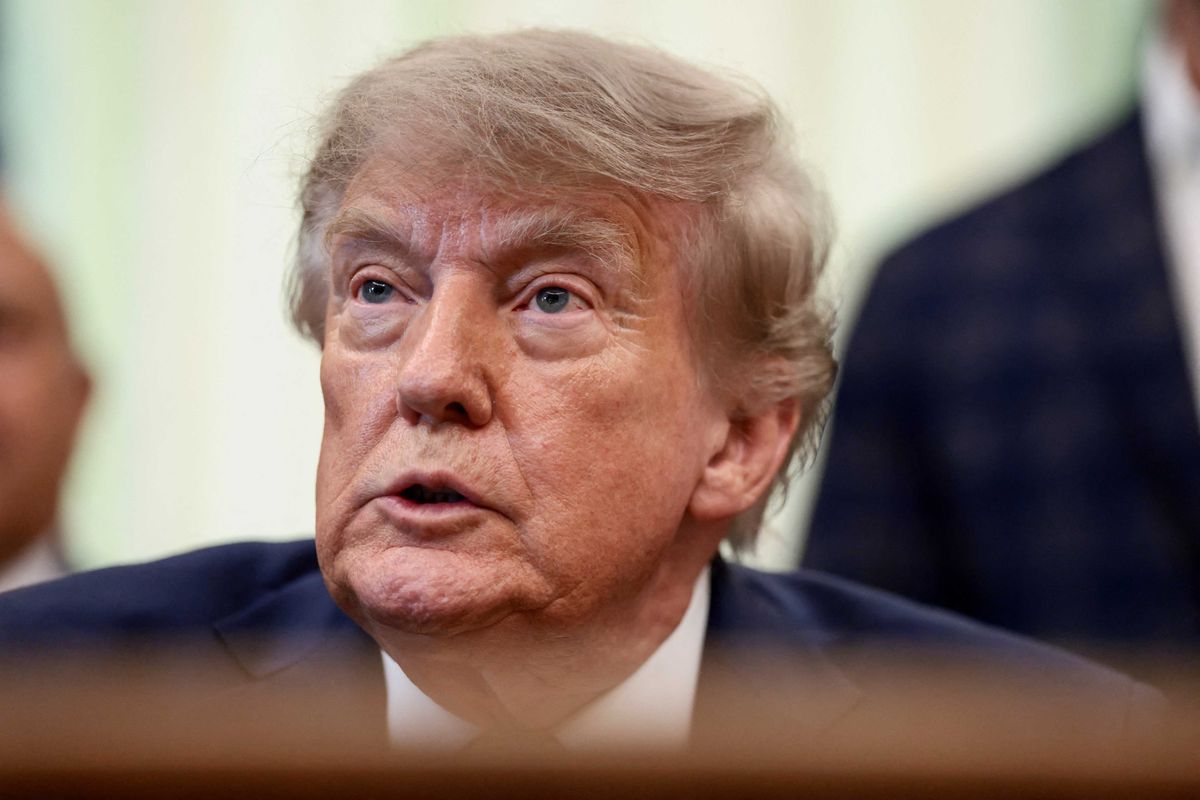
U.S. President Donald Trump speaks during an event to sign executive orders related to beef, in the Oval Office of the White House, in Washington, D.C., U.S., September 4, 2026. REUTERS/Evelyn Hockstein

Canada's energy minister is relishing the prospect of telling the United States "no" if it comes begging for more electricity.

According to an article by Politico, Canadian Energy and Natural Resources Minister Tim Hodgson said that his government is racing to build mines and electricity projects in response to President Donald Trump's economic aggression. Hodgson said that Canada doesn't plan to share the resources from those projects.

"Nothing would make me happier than when the United States asks us for more electricity to say, 'You know what, we've got a lot of mines we need to develop in northern British Columbia,'" Hodgson said. "Nothing would make me happier than just saying, 'You know what, we're going to use all our electricity here. We're going to build new mines, new processing facilities.'"

The defiance comes as Washington leans on Canadian resources despite Trump's insistence otherwise, Politico reported. Canada supplied more than 80 percent of U.S. electricity imports in 2025, according to the Canada Energy Regulator.

Canada just broke ground on the North Coast Transmission Line in Prince George, British Columbia. The line is an expanded grid that would double electricity capacity in British Columbia to power mines near the Alaskan border and liquefied natural gas shipments to Asia, according to Politico.

U.S. Ambassador to Canada Pete Hoekstra told Politico last year that Trump was "very interested" in Canada's energy and critical minerals, despite Trump's current conflict and tariff war with the country. According to Politico, Washington sees Canada's stockpiles as a defense against Chinese dominance of the global market in critical minerals, which are essential to defense, quantum computing, artificial intelligence, and almost every piece of technology.

"The president continues to denigrate and insult the massive contribution that British Columbians and Canadians make to American energy security," British Columbia Premier David Eby said, per Politico.

Now, Hodgson is looking for payback, telling Politico, "I don't get mad. I get even."


'Everyone is upset!' Red state candidate


 calls Trump's jet threat a 'no-win' move


Erik De La Garza
September 8, 2026 

RAW STORY


Rally for Republican presidential nominee and former U.S. President Donald Trump, in New York Source: REUTERS

President Donald Trump’s threat to ban a Canadian aircraft manufacturer from the American market would be “a disaster” for workers in deep-red Kansas, the state’s Democratic Senate nominee warned Tuesday.

“Everyone is upset about this!” Adam Hamilton told CNN’s Jake Tapper.

Trump threatened Canadian jetmaker Bombardier in a Truth Social post over the holiday weekend, saying the company must manufacture its aircraft in the United States to keep access to American buyers.

Bombardier maintains its U.S. headquarters in Wichita and employs more than 1,000 people in Kansas. Hamilton warned that many additional jobs depend upon those workers.

“A thousand, 1,200, 1,500 Kansas working for Bombardier, their headquarters in the United States in Wichita, and then every one of those has a whole series of other jobs that are dependent upon them,” Hamilton said. “It’s a disaster.”

Hamilton, a former pastor who is challenging Sen. Roger Marshall (R-KS), also criticized his opponent’s response to Trump’s threat. He argued that Marshall should have challenged the president, but instead offered only a “tepid response.”

“He should have been fighting for the people of Kansas, not fighting for the president and his erratic way of imposing tariffs and threatening our best trading partners,” Hamilton said Tuesday.

Hamilton also warned that the state’s trade relationship with Canada could be jeopardized.

“Four billion dollars’ worth of trade comes from Kansas into Canada every year, and this is at risk,” Hamilton said.

“It’s a no-win for Kansas,” he concluded.


FRANCE 24 report reveals Russia’s war on Ukraine’s books and cultural identity

Issued on: 09/09/2026 - FRANCE24


In Ukraine, the war is not being fought solely on the battlefield. This summer, Russian strikes severely affected the publishing industry, destroying dozens of warehouses and logistics centres. Millions of books and textbooks have been lost. For many Ukrainians, these attacks are part of an effort to erase their linguistic and cultural identity, as FRANCE 24’s Yegor Terletzkyi and Emmanuelle Chaze report.

Video by: Emmanuelle CHAZE

Eiffel Tower row over Hindu sect BAPS unites French politicians – but divides Indian diaspora


France got a crash course on the Bochasanwasi Akshar Purushottam Swaminarayan Sanstha (BAPS), a Hindu sect at the heart of an Eiffel Tower strike this week. But for Indians in France who have been trying to raise awareness of far-right Hindu groups, it comes too late. As the 2027 election campaign goes into high gear, some fear the issue will be politicised by the French far right.


Issued on: 09/09/2026 - FRANCE24
By: Leela JACINTO

Bochasanwasi Akshar Purushottam Swaminarayan Sanstha (BAPS) Hindu monks participate in a religious ceremony in front of the Eiffel Tower on September 3, 2026. © Kenzo Tribouillard, AFP


On Saturday, September 5, as members of a Hindu sect were set to make a splash visit to the Eiffel Tower, an organisation of progressive Indians living in France held a public meeting in Paris to shed some light on the religious group and the international spread of Hindu nationalism, which has been turbocharged during Prime Minister Narendra Modi’s tenure.

The French press was invited to the event organised by the Indian Alliance Paris (IAP) and co-hosted by three other organisations, including France’s CGT union. Speakers at the public meeting included activists and researchers from France, as well as the US and India, who joined via video link. They focused on the Bochasanwasi Akshar Purushottam Swaminarayan Sanstha (BAPS), a sect that was opening a large new temple in a Paris suburb. Issues were raised and addressed, a documentary was screened, and a press statement was released after the event.

But there was not much coverage in the French press of a weekend meeting held by one of many diaspora groups in Paris.

That changed on Monday, when the Eiffel Tower was closed after staff went on strike over female workers being removed and replaced by men during a private tour by a BAPS delegation of the Paris landmark.

Suddenly, BAPS and its giant temple in Bussy-Saint-Georges, an eastern suburb located between the French capital and Disneyland Paris, was all over the news. Audiences got a crash course on a sect practicing a “very conservative form of Hinduism” with “close links” to the Modi administration.

“We tried to highlight this issue. We tried to tell them that these people are very conservative and they are very misogynistic. But it didn’t really come into the spotlight,” said IAP secretary Joy Banerjee, listing the many ways his organisation attempted to reach out to left-leaning French political parties. “Suddenly, the mask was dropped on Monday because of the strike.”

The Eiffel Tower reopened to the public on Tuesday. BAPS released a statement noting that, “To our knowledge, at no time was access to the Eiffel Tower denied to anyone. Nevertheless, we sincerely apologise for any pain or inconvenience caused.”

By then, every French politician worth their salt – and with an eye on the 2027 election – had commented on the fracas. Socialist Paris Mayor Emmanuel Grégoire promised an investigation. Valérie Pécresse, president of the ÃŽle-de-France Paris metropolitan area and member of the conservative Les Républicains party, expressed her “shock” on X. French far-right leader Marine Le Pen also got into the act, noting that, “In France, we will never accept that the presence of women be limited."

Just days after many diaspora Indians in France opposed to Modi’s policies got together to raise awareness of BAPS, some were worried about a French far-right, anti-immigrant backlash. On Tuesday morning, the IAP took to X to warn that, “the Eiffel Tower story must not become fodder for more racism,” adding, “BAPS does not represent all Hindus and it certainly does not represent India.”

It was not the first time a progressive diaspora group in the West has tried to raise awareness of the inroads far-right ideologies from their homeland were making in their new countries. Many of them have spent months and years watching as Western leaders, driven by economic or geopolitical interests, ignore their warnings and lay out the red carpet for nationalist demagogues without raising human rights concerns. Now, as the far right extends its reach across Western Europe, many fear the awareness amounts to too little, too late.

From village temple to global network

Founded in 1907 with the consecration of a mandir, or temple, in the village of Bochasan in the western Indian region of Gujarat, BAPS is a denomination of the Swaminarayan Sampradaya, a Vaishnavite sect of Hinduism.

From a little-known village temple, BAPS has grown into a global organisation that manages more than 1,300 temples and more than 5,025 centres across India, North America, Europe, West Asia, Africa and Australia.

The BAPS temple on the outskirts of Paris – believed to be the biggest in Europe built in the traditional style – was inaugurated on Sunday with a video message delivered by the Indian prime minister.

The private Eiffel Tower visit was part of the events from September 3-14 marking the opening of the BAPS temple, billed as a 13-day “festival of culture” that included a procession of boats gliding down the Seine River last week.

In his inauguration address, Modi hailed the temple was as a symbol of bilateral cooperation. "A magnificent temple stands ready today in France and it will not only enrich France's diversity but also energise the cultural relations between India and France," he said.

Under the Modi administration, the construction of temples has been a potent emblem of Hindutva, or Hindu nationalism, propagated by India’s ruling Bharatiya Janata Party (BJP), the political wing of the Rashtriya Swayamsevak Sangh (RSS), a vast volunteer paramilitary group founded nearly a century ago.

The RSS is an umbrella organisation that includes trade unions, youth groups, prayer associations and women’s groups that are collectively known as the “Sangh Parivar”, or Sangh Family. In addition to the Sangh Parivar, there are also several Hindu right-wing groups and independent actors that follow and spread the Hindutva ideology without formal RSS connections, enabling BJP administrations to maintain plausible deniability when necessary.

“Since Modi came to power, when many BJP politicians do their world tours, they often stop and do a photo-op at a BAPS temple somewhere in the world. So somehow BAPS, even though it isn't traditionally considered part of the Sangh Parivar as such, has become an institution that has very openly been a place for the Indian government to kind of show off because these temples tend to be very big and opulent,” said Sunita Viswanath, co-founder of Hindus for Human Rights, a US-based NGO advocating for pluralism and social justice from a Hindu faith perspective.

On Saturday, for instance, as the IAP was holding its public awareness meeting in Paris, RSS Supreme Leader Mohan Bhagwat was visiting a BAPS temple in London’s Willesden area. Bhagwat was in London after a visit to the US, where he was the keynote speaker at a jam-packed event at New York’s Madison Square Garden. It was followed by a stop in Canada, where he addressed a major gathering in Toronto.

At a media briefing in New Delhi on Tuesday, Indian Foreign Ministry spokesperson Randhir Jaiswal was asked about the Eiffel Tower incident. “We are aware of the opening of the temple of BAPS in Paris. As to the particular issue, this is a matter purely between the entities concerned,” he said.

When asked whether India was now distancing itself even though Modi had participated in the inauguration, Jaiswal stated, “It is a common practice for [the] prime minister to convey his good wishes on such occasions. In this case it was done virtually. There is no cause for any comment in this regard.”

Controversy in the US

The Eiffel Tower incident is not the first controversy BAPS has faced abroad.

In May 2021, following an FBI raid on a BAPS temple construction site in Robbinsville, New Jersey, six Indian stone workers filed a lawsuit alleging that the sect “weaponised India’s caste system” by coercing men, mostly Dalits from the lowest rungs in India’s social hierarchy, to work under “abysmal” conditions.

Following reports by the New York Times detailing forced labour allegations, the lawsuit was later expanded to include BAPS temple construction sites across the US.

In September 2025, months after President Donald Trump’s second inauguration, the US Department of Justice closed the case without providing a cause.

BAPS North America welcomed the move, noting in a statement that the US government’s “decision to end this investigation sends a clear and powerful message” that their temple is “a place of peace, service, and devotion”.


Cover image: © France 24
01:42


‘Strategic partnership’ obscures scrutiny

Critics however say organisations promoting Hindutva overseas attempt to mobilise Hindu communities abroad to provide support to the RSS and BJP. Indian researchers, activists and journalists in the diaspora critical of Hindutva project face trolls, threats and accusations of promoting "Hinduphobia".

In their press statement following Saturday’s public event, the IAP noted that Hindutva groups overseas “also present a deceptive face of their politics by coating it in the language of multiculturalism and pluralism in order to broaden their appeal”.

Given the controversies and numerous reports of work conditions at BAPS temple sites, diaspora Indians opposed to far-right Hindu nationalism say they are surprised the sect got the green light from French authorities for the Paris temple project.

Viswanath, whose US-based NGO has closely monitored the BAPS case in New Jersey, said she was particularly dismayed by French authorities. “The case [in New Jersey] was only dismissed because we have Trump in power. Of course, he's going to dismiss this case. But France, I would think, would be different, since it’s not being run by a far right-wing party. I would think there are different ethical standards,” she said.

In 2023, when Modi made high-profile visits to the US and France, Viswanath was one among many activists calling on the Biden and Macron administrations to raise human rights issues. Their calls fell on deaf ears in Washington and Paris. Three years later, the co-founder of Hindus for Human Rights says she is not surprised by the BPS controversy in France. “It's not a surprise, but it’s certainly very disappointing that they weren't paying attention,” she said.

BAPS has a history of controversies over its gender policies. At a 2024 event in the eastern Indian city of Kolkata, women seated in the front rows of a gathering of chartered accountants were asked to move away before a speech by a religious leader affiliated with BAPS.

During BAPS religious ceremonies, the “enforcement of strict separation of men and women” has been described as one of the “distinctive features” of the sect, reported the Indian Express, quoting an academic study.

Given its history, Banerjee is particularly irked about conservative French politician Pécresse’s posts denouncing the gender discrimination at the Eiffel Tower. “She's the president of ÃŽle-de-France. She didn't inquire about BAPS?” he asked incredulously.

Pécresse, who presided over the temple’s inauguration in Bussy-Saint-Georges on Sunday, stated that the BAPS temple was part of the “strategic partnership” between India and France. “Have French authorities, at all levels, naively or deliberately turned a blind eye to the promoters of this temple construction project?” questioned an IAP statement released Tuesday.

“The French political parties, even the left parties, have not been very interested,” said Banerjee, admitting that economic interests, such as the sale of French Rafale fighter jets to India, enables politicians to celebrate “cultural exchanges” without careful scrutiny.

The one-day Eiffel Tower strike may usher in a change at long last, Banerjee says. “What is happening now is very interesting," he said. "Maybe they understand that they made some mistake rolling out the red carpet to this organisation which is really linked to the Hindutva programme.”


‘Was this a state visit?’ Indian opposition leader raises serious questions over Paris BAPS temple

Cover image: © France 24


Issued on: 09/09/2026 
Play (05:42 min) From the show

François Picard is pleased to welcome Anish Gawande. He sees the controversy surrounding the inauguration of the BAPS temple near Paris as more than an isolated dispute over the treatment of female staff at the Eiffel Tower. From his perspective, the incident exposes a broader and insufficiently scrutinized intersection of religion, diplomacy, political power, labor practices, and diaspora politics. At the center of his argument is an ambiguity over the boundary between private religious and state-sanctioned activity.

Gawande questions why senior Indian diplomatic representation and Prime Minister Narendra Modi’s remarks evoking India-France relations accompanied the inauguration if the ceremony was not official. He highlights Modi’s longstanding political association with BAPS, while also highlighting controversies and allegations surrounding the organization’s social, labour and political practices abroad.

Gawande challenges the notion that the new temple is solely representative of Hinduism in France, highlighting the country’s diverse Hindu traditions and Indian communities. He warns that the Eiffel Tower controversy may acquire a political life beyond BAPS itself, particularly if it becomes material for far-right narratives about immigrants, religion, and national identity in France. His central contention is therefore institutional as much as political: the controversy should prompt scrutiny of how the project was facilitated, how land was allocated, whether labour protections were respected, and where the boundaries between religious organizations and state power were drawn.

Macron hosts global space summit in Paris snubbed by US companies

French President Emmanuel Macron is hosting dozens of leaders, technology experts and scientists in Paris for a two-day global space summit that opens on Wednesday, as major US companies including SpaceX and Blue Origin stay away.


Issued on: 09/09/2026 - RFI

The European Space Agency's Ariane 6 rocket lifts off from the Guiana Space Centre in Kourou, French Guiana, on 9 July 2024. © JODY AMIET / AFP

Around 2,000 participants from 120 countries are expected at the International Space Summit at the Grand Palais, with Russia, Iran and North Korea among the notable absentees.

Germany is co-hosting the event with France, although Chancellor Friedrich Merz confirmed last Friday that he would not attend because of scheduling conflicts.

The summit aims to produce joint declarations laying the groundwork for future negotiations on issues including space traffic and the sharing of scientific data from space.

Contracts are also expected to be signed, while space ministers will discuss Europe's position in a sector dominated by the United States and China.

US companies absent

Some of the biggest names in the US space industry will not attend.

France's Ministry of Higher Education, Research and Space confirmed last Thursday that SpaceX and Blue Origin, along with startups Stoke Space and Starcloud, would not be among the attendees, citing political pressure.

"It's hard not to link it to the rumours of pressure," a ministry spokesperson told French news agency AFP.

The Crew Dragon spacecraft, launched by SpaceX's Falcon 9 rocket, carries astronauts to the International Space Station. REUTERS/Joe Skipper/

A White House official told companies during a private call that attending the two-day summit "could look like tacit support for EU policy positions", US news website Politico reported, citing three anonymous sources familiar with the call.

The companies on the call included billionaire Elon Musk's SpaceX, Stoke Space, K2 Space and Astra.

The official also said France had not coordinated with the US on the summit, accused the country of "anti-competitive practices" and suggested its panels were not designed to include the American perspective and could diminish US industry efforts, the sources told Politico.

Two of the sources were connected to space companies and the third was in politics, Politico said.

The White House did not immediately respond to an AFP request for comment.

European independence

France remains open to working with US partners and allies, the French ministry spokesperson said, "even though strategic about-turns and political pressures sometimes make the task needlessly complex."

Washington's decision to abandon or scale back some space programmes and reduce funding for Nasa in its 2027 budget has prompted Europeans to question their dependence on the United States and their own role in lunar exploration.

Human spaceflight has not previously been a priority for the European Space Agency (ESA), which has relied on the United States for astronaut access to space.

ESA director Josef Aschbacher warned last month of a potential shortage of European launch vehicles by 2030, pushing Europe to develop its own solutions.

Europe's heavy-lift Ariane 6 rocket could be adapted for human spaceflight, ArianeGroup executive president Christophe Bruneau told a press conference.

That would require modifications to the launcher, including a configuration "allowing astronauts to abort the mission in the event of danger."

Ariane 6 is set to reach a rate of nine to 10 launches a year from 2027, Bruneau said, with discussions under way on how to increase capacity.

Employees of ArianeGroup and ArianeSpace look at the Vulcain®2.1 engine of the Ariane 6 European expendable launch vehicle at the Europe's Spaceport, in Kourou in the French overseas department of Guiana, on 26 March 2024. AFP - LUDOVIC MARIN
Reusable capsule

Ariane 6 is also on track to meet the European Commission's sovereign targets, including the Iris² satellite constellation and several German projects, Arianespace head David Cavaillolès said.

Ahead of the summit, another European company announced it had raised record funding to develop a reusable space capsule.

The Exploration Company, founded in 2021 by former Airbus defence and space executive Hélène Huby, said on Tuesday it had raised €387 million, bringing its total capital raised to approximately €577 million.

The funds will allow the company to continue developing Nyx, a reusable space capsule designed to carry cargo to space stations and return it to Earth.

Huby is serving as Macron's special envoy to the space summit alongside astronaut Thomas Pesquet.

(with AFP)
A grain being developed in the US could offer farmers a way to improve soil health while making crops more resilient to drought and heavy rainfall."


By Yolaine De Kerchove Dexaerde & Ruth Wright with AP
Published on
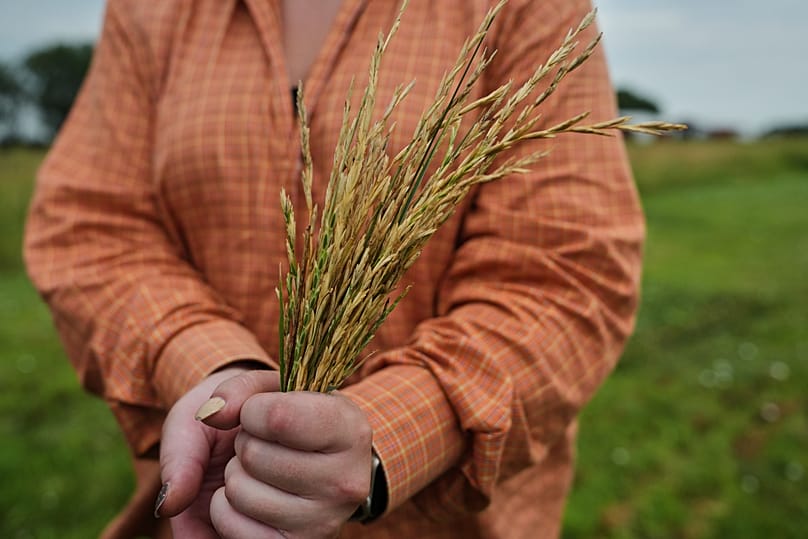
Skyler Grove holds a bundle of Kernza, Tuesday, July 28, 2026, at The Land Institute in Salina, Kan. AP Photo/Joshua A. Bickel

A grain being developed in the US could offer farmers a way to improve soil health while making crops more resilient to drought and heavy rainfall.

Bryce Black kneels in a wheat field battered by intense drought. He holds two strands, remarking on how small the seed head is compared with what's normal.

After a late October rain last year, the fourth-generation farmer was optimistic about his 1,800 acres (728 hectares) of winter wheat. But a dry winter and spring brought extreme drought when the wheat needed moisture to establish itself. He ended up harvesting about 1,500 acres (607 hectares), but the yield was the lowest he's had since taking over his family's farm in 2017.

“It was just a grit your teeth and get through it type of deal,” says Black, who also grows corn, soybeans and milo on his family’s 4,500-acre (1,821 hectare) farm. “It is disheartening, you know? And it’s kind of hard to know what to do.”

When these weather events occur, farmers often look for new ways to protect their crops and their bottom line.

What is a perennial grain?

Some farmers are putting perennial grains in rotation to build resilience against extreme weather like drought and intense rainfall. Researchers are working to develop perennial versions of common annual grains like wheat, sorghum and rice, but the work is slow. And widespread adoption by farmers is challenging because perennial crops don’t yield as much, harvesting can be difficult and the market is still developing.

Despite the challenges, Black is intrigued. “I’m in survival mode,” he says. “If you can plant something and then you don’t have to go back for four or five years … that would save so much money, so much labour, everything. That’s what makes it enticing.”

Five years ago, David Mueller planted a 12-acre (5 hectare) field of Kernza, a perennial grain similar to native grasses found in parts of Europe and western Asia.

Perennial grains don’t require yearly planting, harvesting and replanting. Instead, they are planted once every few years.

Researchers say their root systems, which can reach several feet down, can access water deeper in the ground. That helps them better withstand short-term drought. And when heavy rain hits, the larger root structures can absorb excess water that would otherwise run off and erode the soil. Those deeper roots also sequester more carbon, reducing pollution in the atmosphere.

Inside the institute developing perennial crops

Kernza is one of several perennial grains under development at The Land Institute in Salina, Kansas, about an hour’s drive north of Mueller’s farm. The institute, which formally began domesticating Kernza in 2001, works with researchers and farmers around the world to develop perennial versions of wheat, rice, sorghum and other grain and oil seeds.

Some farmers in Southeast Asia and parts of Africa have started planting and harvesting perennial rice in their fields. Kernza, though, is furthest along and was first harvested on a farm in 2010.

In the US last year, Kernza was cultivated on 3,511 acres (1,421 hectares), compared with 37.2 million acres (15.1 million hectares) of winter, spring and Durum wheat harvested or planted in 2025-26.

Mueller's Kernza field is one of almost 100 acres (40 hectares) he has planted since 2018. He's used the crop to rebuild soil with drainage issues or to reestablish organic matter on his family's farm in Halstead, Kansas, where they also farm about 600 acres (243 hectares) each of corn and soybeans.

He also said Kernza uses about a third of the fertiliser that wheat needs, and because it's planted once every few years, he doesn't have to run gas-burning farm equipment as often.

“Not only are we able to utilise those acres profitably, but then we also build up that soil and work on some benefits to make it hopefully profitable to raise other crops on those fields in the future,” Mueller said.

Soil degradation is a serious threat

A 2024 United Nations report suggests that by 2050, soil degradation could cause more than $20 trillion in losses to the global economy. Farming perennials is less disruptive to that carbon-capturing soil.

Soil serves as a reservoir, capturing planet-warming carbon dioxide from the atmosphere that plays a role in climate change, experts say. Annual cultivation - the plow, plant, harvest and repeat cycle - strains soil formation, which takes thousands of years and rapidly degrades the farmland. Perennial roots can also bring that carbon deeper into soils, where it is less likely to be disturbed, says Laura van der Pol, The Land Institute's lead soil ecologist.

And soil that has more carbon in it tends to be better for plants.

“Incorporating perennials into our agriculture seems like really the only option to have soil for generations if we want to continue to grow food,” van der Pol said. “It’s hard to imagine getting to a place where we could have soil and abundant food without a perennial option.”

Lower yields and harvesting can be challenging

Pilot programs involving perennial grains are in the works around the world, testing how to grow them in different regions, climates and soils, but the research is early and slow-moving.

Chief among the challenges is the crops' grain yield, says Lee DeHaan, who leads the Institute’s Kernza domestication program. Kernza farmers are getting yields of about 20 to 40 per cent of what they might get from a wheat crop in the area. That's because a perennial crop has to use energy not only to grow seeds for grain, but also to grow roots to penetrate the soil so it can survive for more than a year. That contrasts with annual crops, which are engineered to put as much energy as possible into making as much seed as they can in one growing season.

Researchers at Cornell University also have found that establishing a Kernza field can be difficult as it contends with weeds in its first year. Finding the right seeding rate to maximise yield i also still being studied, says Matthew Ryan, a sustainable cropping professor at Cornell University.

Mueller says new varieties of Kernza are yielding more than previous ones, but the yield can decline as the crop ages. Yields on perennial rice are similar to annual ones, officials at The Land Institute say.

Harvesting Kernza specifically can be challenging. The grain is smaller than wheat, for example, and farmers and researchers are still finding the best ways to adapt farm equipment so the kernel isn't damaged during harvest.

Still, Ryan says farmers who experience crop loss due to drought or major flooding may be prompted to think about ways to build more resilience into their operations.

“I think farmers, more than other people, realise that the climate is changing,” he says. “They prompt people to think, and I feel like they are driving farmers to practice this.”

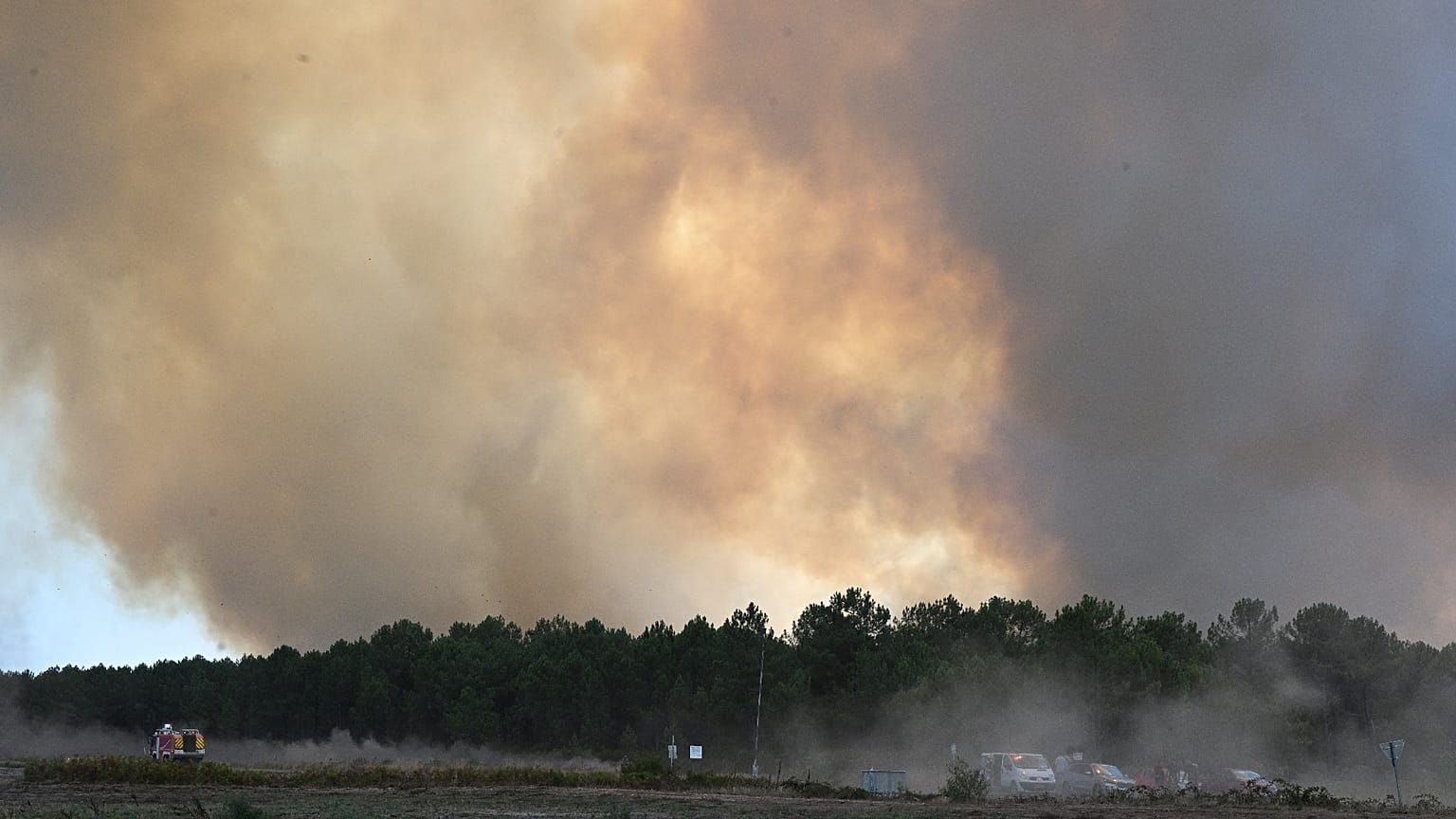
‘More toxic than car exhaust’: What’s the solution to Europe’s wildfire air pollution problem?


Copyright AP PhotoAP Photo/Caroline Blumberg

By Angela Symons with AFP
Published on 08/09/2026 - EURONEWS

Tackling air pollution and climate change together could save lives and boost economies, UN reports show.

Climate change-driven wildfires and heatwaves are worsening air pollution, with damaging consequences for nature and human health, according to the World Meteorological Organization (WMO).

Global warming is making these events worse as they release microscopic airborne pollutants that risk undermining international efforts to improve air quality, the United Nations' weather and climate agency warned on Monday (7 September).

"Extreme wildfires are increasing, leading to big health consequences because of the high toxicity of smoke," the WMO said in a statement accompanying its latest annual Air Quality and Climate Bulletin.

"Whilst regulations in Europe and North America have reduced industrial and transport PM2.5 emissions, exposure to fire-related PM2.5 has increased."

Particulate matter PM2.5 is composed of microscopic particles and droplets of less than 2.5 micrometres in diameter, which is a health hazard because it can penetrate deep into the lungs and bloodstream. It is emitted by fossil fuel-driven industrial activities, farming, domestic heating and transport, as well as by wildfires and dust storms.

The report said the world needs to better monitor air pollutants such as aerosol – including black carbon and microplastics – fine particles and ground-level ozone.

These pollutants "are not sufficiently monitored even though they are widespread and are potentially harmful to ecosystems", the WMO said.

"[We need] complementary and coordinated policies on air quality and climate because they cannot be dealt with in isolation."

Powerful wildfires are releasing toxic smoke


"Air quality and climate change can't be dealt with separately. If one worsens, the other does too," says Lorenzo Labrador, from the WMO's Global Atmosphere Watch network of scientists.

"In places where there are relatively powerful forest fires, we find a lot of fine particle pollution," he says.

Microparticles generated by burning vegetation are "much more toxic" than those emitted by other sources, even car exhaust, he stresses.

They damage the health of people and wildlife living far from the fire itself because they are carried by the wind, but their poisonous effect is not sufficiently taken into account in air quality assessments, Labrador says.

"Conventional risk models based on total PM2.5 concentrations may underestimate wildfire-attributable mortality by up to 93 per cent," the WMO says.

One study cited in the WMO Bulletin says extreme fire-smoke events have tripled globally since the 1990s, contributing to nearly 100,000 additional deaths per year between 2010 and 2018, although this may be an underestimate.

Ozone and microplastics worsen air pollution

Another source of air pollution that carries major health risks is ground-level ozone, which accumulates when temperatures rise, atmospheric conditions stagnate and solar radiation is intense, as seen during recent heatwaves in China, Europe and the southeastern United States.

"This increased exposure to ozone pollution has the potential to lead to tens of thousands of additional premature deaths," particularly due to respiratory diseases, the WMO warned.

Another growing concern is aerosol particles, which can also travel to oceans and continents far from their source.

They can alter the way the atmosphere reflects sunlight, change the chemical properties of land and water, and pollute otherwise clean environments.

"One example is the deposition of black carbon – or soot – on snow and ice, which reduces the amount of sunlight reflected by these surfaces and in turn can hasten the melting process," the WMO explained.

Another example is microplastics, formed when plastics break down because of sunlight or other factors, and found virtually everywhere – in the air, the soil and the oceans.

One simulation in the WMO Bulletin estimates there are "51 million tonnes for land and 22 million tonnes for the ocean – which are in turn a source of microplastics for the atmosphere".

"As plastic production and, critically, mismanaged plastic waste, continues to increase," monitoring the airborne paths that carry microplastics from their source and dump them in remote environments will be "crucial", the report said.
Economic benefit of tackling climate change and air pollution together

A separate report released on 7 September by the UN Environment Programme (UNEP) and the Climate and Clean Air Coalition (CCAC) highlighted the economic benefits of tackling climate change and air pollution as a joint problem.

It found that every $1 (€0.86) invested in climate and clean air action can return $15 (€12.92). This is higher than tackling climate and clean air separately, and it includes both market and non-market economic gains, split across health systems, productivity and avoided climate damage.

“For too long, we have treated climate action as a cost to be managed and air pollution as the unfortunate outcome of development," says Inger Andersen, Executive Director of UNEP. “This report shows the opposite: clean air is a key driver of development, health, food and energy security, and climate stability – an asset we must invest in.”

Targeting emissions in six sectors – energy and fossil fuel systems, industry, transport, agriculture and food systems, residential cooking and heating, and waste management – the report lays out measures that, by 2050, could halve global carbon dioxide emissions and prevent 144 million air pollution related premature deaths.

Renewable power, energy efficiency, electric vehicles, low-sulfur shipping fuels, more efficient fertiliser use, better wastewater management, and phasing down HFCs are among the 25 measures proposed.