Thursday, September 10, 2026

CCS

Delay tactic or genuine solution? Carbon capture under fire again as EU invests in ‘unproven’ technology
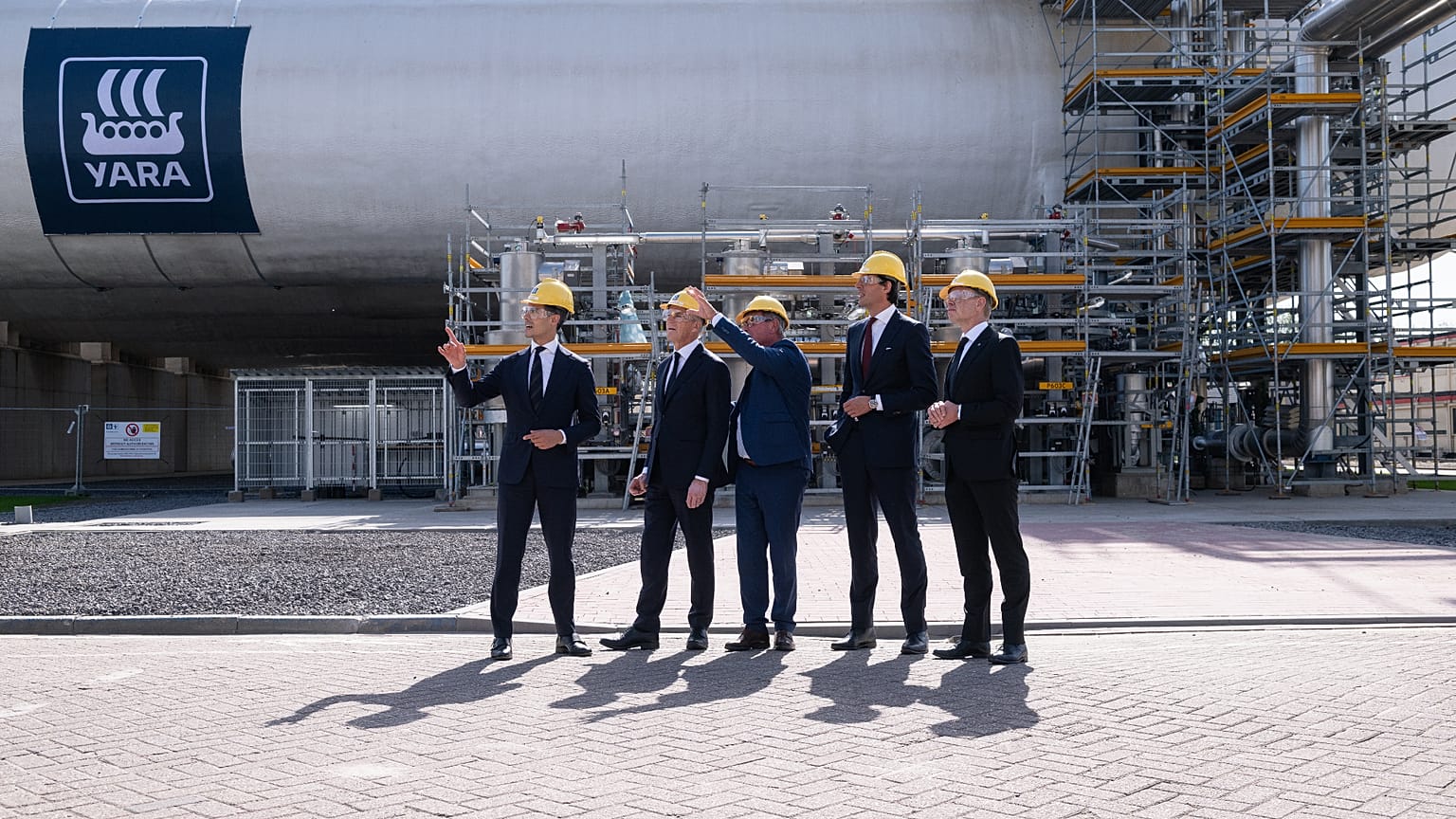
Wopke Hoekstra, European Commissioner for Climate, Net Zero and Clean Growth, second right, visits Yara Sluiskil, 7 September 2026
Copyright European Union, 2026, licensed under CC BY 4.0


By Ruth Wright with AFP
Published on

Carbon capture and storage has been found to be “technically uncertain and very high cost”.

CO2 emitted by a fertiliser factory in the Netherlands will be stored underneath the seabed in Norway, in what the owners are calling the “largest commercial carbon capture and storage (CCS) project in Europe”.

At an opening ceremony this week, the ammonia and fertiliser plant announced that it will capture 800,000 tonnes of CO2 a year then liquefy it to be sent by ship to Norway.

Having funded the project, the European Commission was keen to promote its investment – with the Commissioner for Climate, Net Zero and Clean Growth attending the inauguration alongside the Prime Ministers of both countries.

While the Commission says the Sluiskil plant, run by Norwegian chemical company Yara, is a “strategic investment”, opponents say it is “risking billions in taxpayers’ money to fund a dangerous distraction that delays climate action”.

As one of the most divisive topics in climate action, we look into the facts about carbon capture and how the EU came to be funding this experimental technology.

What is carbon capture and storage?

Carbon capture and storage (CCS) refers to technologies designed to prevent CO2 from entering the atmosphere in the first place and/or to remove it after it has been emitted.

As is done at the Sluiskil plant, most projects use a liquid to chemically remove the CO2 emitted from the production process, where it is then compressed into a liquid-like state and transported typically through a pipeline to a storage site. At that point, it’s either stored deep underground or is transformed into things like building materials or synthetic fuel. In the case of the latter, this technology is referred to as CCUS, where the ‘U’ stands for utilisation.

As of February 2026, there were 75 operational CCS projects around the world, according to climate change publication Carbon Brief. Almost all of them are at fossil-fuel extraction and processing sites, according to the IEA’s database. Together, these projects capture 62.5 million tonnes of CO2 (MtCO2) each year. This is equivalent to 0.2 per cent of total global emissions in 2025.

While Yara’s chief executive, Svein Tore Holsether, said in a statement, “The carbon capture facility in Sluiskil proves that large-scale industrial decarbonisation is possible today”, the cumulative emissions saved are a very, very tiny drop in the ocean.

US non-profit the Institute for Energy Economics and Financial Analysis (IEEFA) has conducted in-depth research into CCS. Their Energy Finance Analyst, Andrew Reid, says: “Despite the political and financial support that has been pointed to CCS over the past three to four years, it remains technically uncertain, very high cost, and reliant upon huge subsidies to move from feasibility to construction and operation.”

CCS: To help the fossil fuel industry to extract and sell more oil and gas

To understand its uses, it’s important to understand where carbon technology originates from. According to Carbon Brief, it “was originally rolled out at US and Canadian oil wells in the early 1970s as a way to achieve “enhanced oil recovery”. This involves injecting captured CO2 into depleted wells – a process that stores the gas, but also helps to extract more oil.” This is by far the most significant use for carbon capture worldwide, with three-quarters of it used for this purpose.

This means that “the majority of CO2 that is both captured and used today helps the fossil-fuel industry to extract and sell more oil and gas,” according to Carbon Brief.

How did the EU end up funding carbon capture and storage?

One of the arguments against CCS, which campaigners have been making for years, is that it is a way for polluters to keep polluting, rather than emitting less of the gases which are heating up the planet at alarming rates.

“All capture and storage projects suffer from the same problem: they distract attention and resources from cutting emissions at source and give polluting industries like fertiliser production a pass to keep on polluting,” says Rachel Kennerley, Senior International Carbon Capture Campaigner at the Center for International Environmental Law (CIEL).

Belén Balanyá, researcher and campaigner at Corporate Europe Observatory (CEO), has been tracking the lobbying efforts of the fossil fuel industry for 25 years. She has recently focussed on lobbying by the CCS industry. The outcomes of annual COP climate talks are known to be influenced by lobbyists representing industry. Balanyá found that around 500 CCS lobbyists were at COP29 in 2024. A year earlier, at COP28, CCS proponents (largely tied to fossil fuel industries) scored a significant win with the endorsement of “abatement and removal technologies” in the agreement.

Referring to fossil fuel industries, Balanyá says, “You look at what’s on the agenda and it’s always escape hatches to stay in business,” she tells Euronews Green. “It’s where they move when they’ve been forced to – when there’s more knowledge and more acceptance about climate change and their role and that they have to decarbonise.”

CCS being endorsed in a COP agreement may have contributed to its legitimacy in political circles within the EU. The CCUS Forum (now the Industrial Carbon Management (ICM) Forum), set up by the European Commission in 2021, is an annual event with working groups that feed directly into EU policymaking. CEO found that every group has been co-chaired by the fossil fuel industry or associated organisations.

A newly released report from the UN Environment Programme (UNEP) details the risks of overshooting 1.5°C of warming and how we can limit them. It assessed what it called Carbon Dioxide Removal and found that many issues remain with the technology, such as whether it can scale sustainably (due to costs, land and energy use), whether it would actually keep CO2 out of the atmosphere permanently and who’s responsible for regulation and leaks.

CCS: Good or bad?

Wherever commentators stand on CCS, there is some agreement that for some industries, the technology can be useful. Yara’s project targets emissions from ammonia production which “provides a relatively concentrated CO2 stream, making this one of the more straightforward industrial applications of carbon capture rather than an example of the very hardest emissions to abate,” according to Domien Vangenechten, Programme Lead in Clean Economy at E3G.

“The lesson should therefore not be that Europe needs CCS everywhere, but that we should pragmatically deploy it where it can cut substantial emissions today.”

 

From corals to saiga: Inside the recovery of threatened wildlife

Copyright Euronews
By Toby Gregory & Ruxshona Raxmatullayeva
Published on

From heat-resilient corals in the Gulf of Oman to saiga antelopes on the Ustyurt Plateau, scientists and conservationists are using research, technology and hands-on protection to safeguard threatened wildlife.

Studying the ocean of the future

On the UAE’s east coast, scientists at the Sharjah Marine Science Research Centre are studying marine ecosystems and recreating conditions that could become more common in the oceans of the future.

Some of the centre’s tanks simulate warmer, more acidic waters with lower oxygen levels. Professor Stephen Widdicombe, the centre’s director, says they offer an insight into how marine life could respond as ocean conditions change.

“The oceans are incredibly important, they represent 90% of the habitable space for life on this planet,” Widdicombe said. But he warned, they face pressures ranging from climate change and pollution to other human activities.

One area of research focuses on sea turtles. Every turtle has a unique pattern of scales on its face, much like a human fingerprint. Marine biologist Dr Jon Lapeyra photographs turtles along roughly one kilometre of coastline each week and uses artificial intelligence to help recognise individual animals.

“AI for us, and for this project in particular, has been a game changer,” Lapeyra said.

When the same turtle reappears, researchers can build a record of where it spends time and how it moves. Over six months, 95% of the turtles Lapeyra personally photographed were juveniles, which he described as an encouraging sign for the population.

Coral reefs are another focus. Corals in the Gulf of Oman already experience temperatures that would put many reefs elsewhere under severe stress, making them valuable for research into how reefs may respond to warmer oceans.

“The studies we do on coral reefs here can, of course, tell us something about future scenarios in other places of the world,” said Professor Henrik Stahl, the centre’s head of research and innovation.

Researchers are also working on restoration. Small coral fragments are placed on nursery tables anchored to the seabed, where they can grow into larger colonies under suitable conditions. Protecting threatened species often depends on understanding not only the animals themselves, but the habitats and resources they need to survive.

Protecting wildlife across vast landscapes

On Uzbekistan’s Ustyurt Plateau, the more than 600,000-hectare Saygachiy Complex Landscape Sanctuary protects part of the range of the saiga, a migratory antelope found across Central Asia.

“When we first arrived, we would see only two or three saiga antelopes,” said chief inspector Ortiqbek Saydullayev. “Today, we have managed to establish a resident population.”

Maintaining suitable conditions requires work throughout the year. Staff provide grain and other fodder when snow covers vegetation in winter, while water is pumped to watering points during the dry summer months. Saydullayev says 83 wells are spread across the sanctuary.

Saiga can also travel across national borders in search of food and milder weather. Their movements mean conservation depends not only on conditions within the sanctuary but also on the landscapes through which they migrate.

When protected habitats lose water

Further west, in Karakalpakstan, the Sudochye lake system shows another challenge facing protected wildlife.

Once connected to the Aral Sea, Sudochye became an independent lake system as the sea retreated and remains an important stopover for migratory birds.

“Water levels in the lakes have been declining year after year,” said Aymuradov Tokhtamurad, chief specialist at the Sudochye-Akpetki State Wildlife Sanctuary. “As inflows decrease, salinity increases. This affects wildlife and can force animals to leave the area.”

The changes can be seen along the shoreline, where vegetation remains green in areas still reached by water while reeds and plants further away have dried.

Sanctuary officials say Sudochye is the only nesting site for flamingos in Uzbekistan. If water levels continue to fall, they warn, the lakes could eventually stop functioning as a breeding site anced become primarily a passage point during migration.

Protected status can reduce some pressures, but it cannot replace the water on which an ecosystem depends.

Tracking recovery in the mountains

In southern Uzbekistan’s Kugitang mountains, Surkhan State Nature Reserve protects the markhor, a wild goat known for its corkscrew-shaped horns, and the Bukhara urial, a wild sheep.

The reserve was established in 1986 after populations of both species had fallen sharply. Wildlife censuses are now conducted twice a year.

“In November 2025, we counted nine hundred and eighty-one markhor and one hundred and thirty-seven Bukhara urial,” said deputy director Muhiddin Mamatqulov.

Researchers supplement those counts with 32 camera traps operating across the reserve. Senior researcher Umidjon Murtazayev says the devices record wildlife around the clock and help scientists study rare species, their behaviour, population dynamics and migration.

Technology has not replaced fieldwork. Ranger Bobur Eshoniyev says teams often remain in the mountains into the evening, when many animals become more active.

Reserve officials say the markhor population is growing, although threats including poaching, livestock pressure and fragmented habitat remain.

Across these projects, conservation increasingly combines long-term fieldwork with technologies ranging from artificial intelligence to remote cameras. The next test is whether recovering populations can continue to grow while the habitats they depend on face changing environmental pressures.


Spain endures 61 days of heatwave and records its hottest summer on record

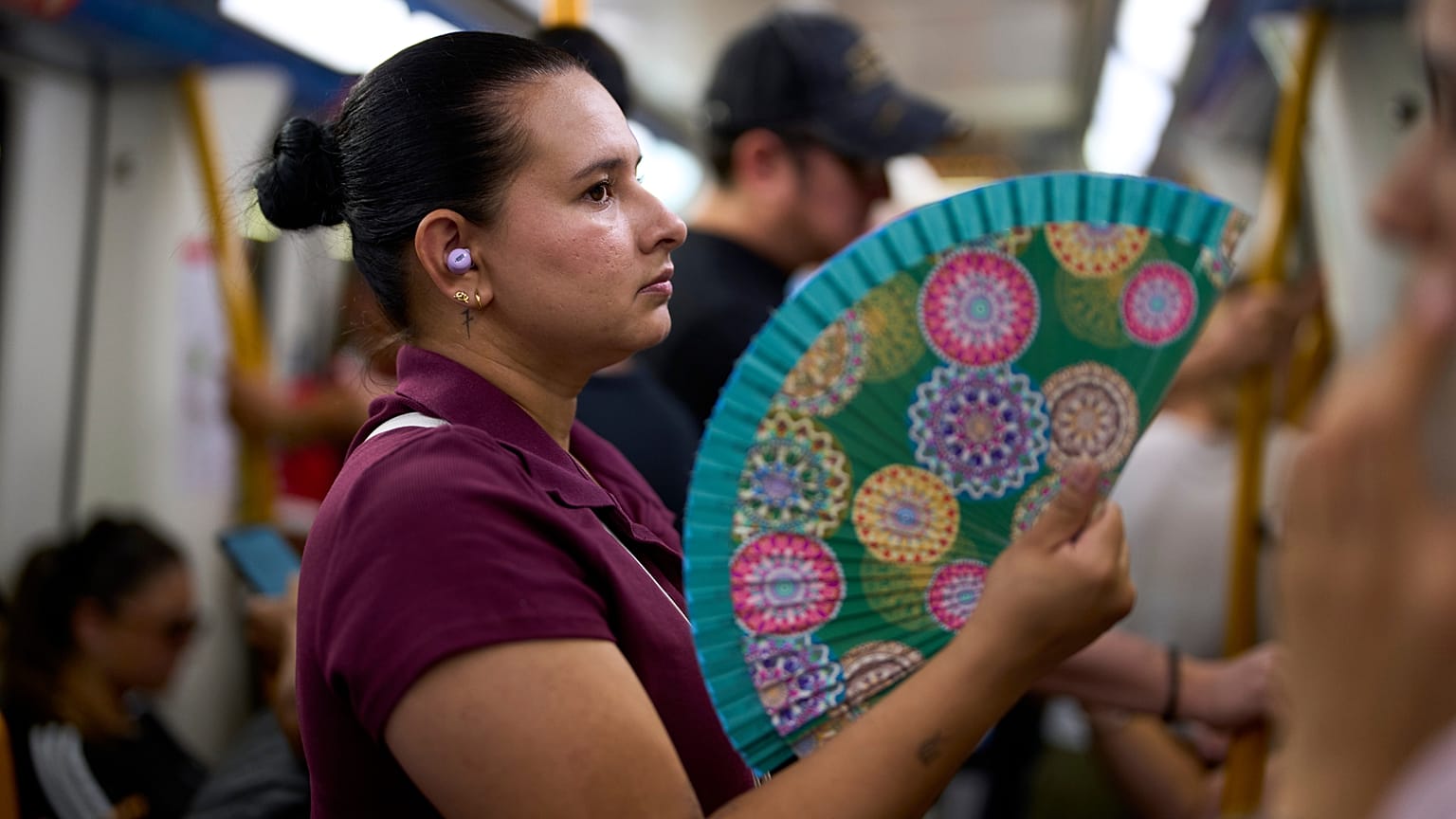
A woman uses a fan on the Madrid metro on 18 August 2026
Copyright Manu Fernández / AP

By Javier Iniguez De Onzono
Updated

Spain's weather agency has confirmed that Spaniards have already endured 61 days of heatwave conditions so far this year, more than in any other year.

Spain has surpassed the scorching summer of 2022, with a total of 61 heatwave days endured this year, compared with 41 previously, according to the State Meteorological Agency (Aemet).

The summer of 2026 has also recorded an average temperature of 24.5°C, making it the hottest since records began in 1961 and surpassing last year, 2025, by 0.3°C, and 2.4°C above the long-term average.

Aemet recalls that the 10 hottest summers on record have all occurred in the 21st century, and seven of the eight warmest have taken place since 2015. The agency also warns that the meteorological summer keeps getting longer.

"At the end of May, temperatures typical of July were recorded across large areas of the country. And then, in September, already in the meteorological autumn, there was another heatwave which, provisionally, ran from the 2nd to the 7th, lasting six days and affecting 16 provinces."

September heat, rainfall and wildfires: Spain outlook

Only in four other years has a month of September (1987, 1988, 2006 and 2016) seen such extreme heatwaves, more typical of the height of summer.

The heavy winter rains have meant that Spanish reservoirs have remained in very good condition after the summer season, with an average level of 62.58 per cent despite tourist pressure, and above half of their capacity in basins that are usually under stress, such as the Júcar, Segura, Andalusian Mediterranean and Catalan catchments.

Even so, this has not spared the country from suffering, as in the rest of Europe, large-scale fires that have exposed the lack of forest fire prevention and of sufficient personnel with good working conditions, in regions such as Madrid, Aragón or Castilla y León.

‘Summer has shaken us’: Nepal’s flood disaster hits close to home in the shadow of melting Mont Blanc

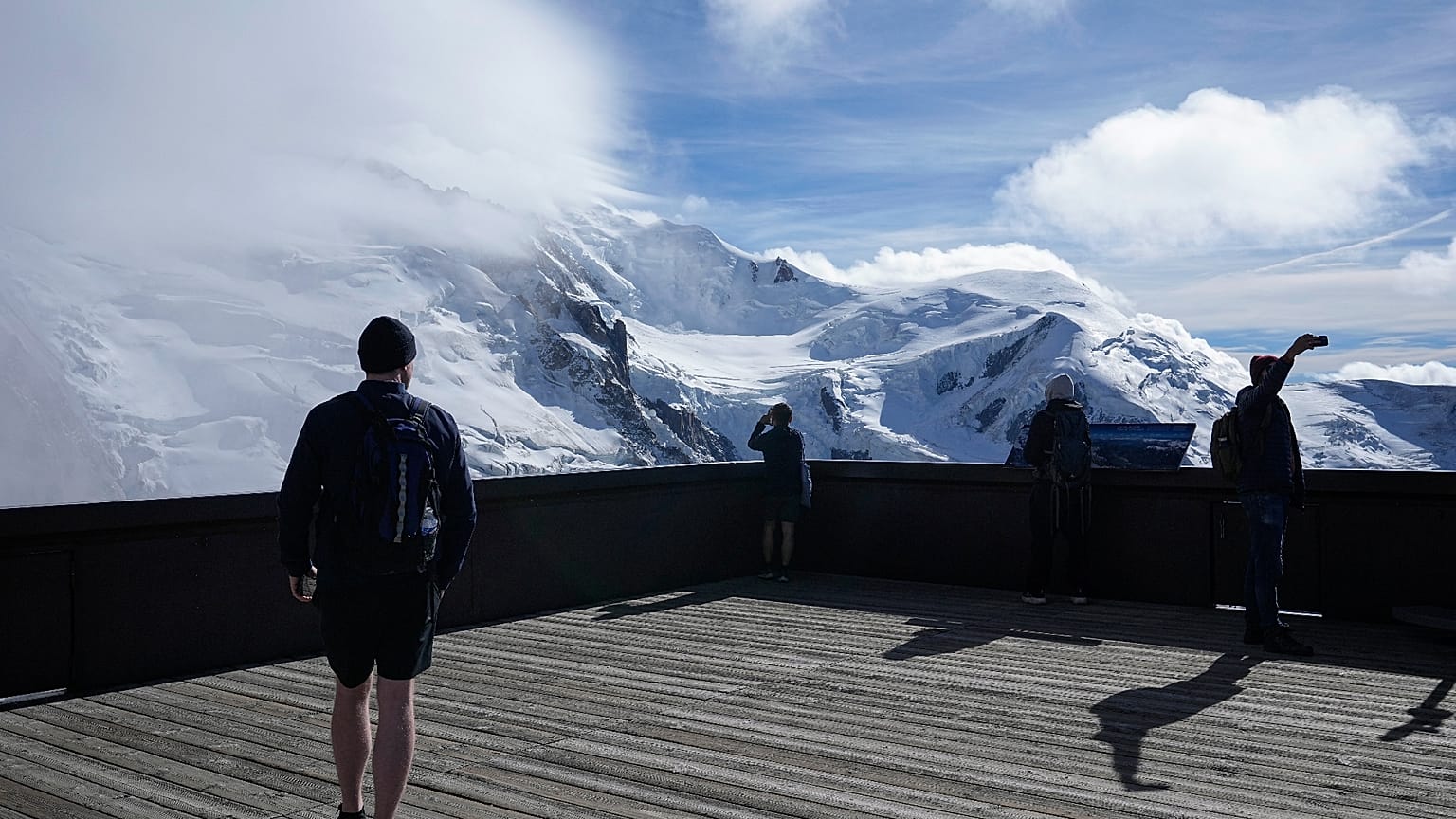
Tourists on the Mont-Blanc massif mountains from the Aiguille du Midi, in Chamonix, France, Saturday, Sept. 5, 2026.
Copyright AP Photo/Laurent Cipriani

By Angela Symons with AP
Published on

A Chamonix local official says his town urgently needs to prepare for the dangers of falling chunks of glacier or rock.

For centuries, French and Italian mountain communities have gazed upon the seemingly eternal glaciers and snow that gave Western Europe's highest peak its name: Mont Blanc, the white mountain.

But climate warming is dismantling the picture at alarming speed.

Europe's record heatwaves this summer savaged permafrost that for millennia has acted like glue on the Alpine landscape. Defrosting cliffs came apart, sending rock falls cascading from the heights. A famously dangerous gully that climbers have long braved on ascents to the summit, 4,805 metres up, became temporarily impassable.

“We weep for our mountain, the way it's changing. It hits us in the gut,” says Stéphane Bozon, a deputy mayor in Chamonix-Mont-Blanc, a French town at the foot of the giant that straddles France's border with Italy.

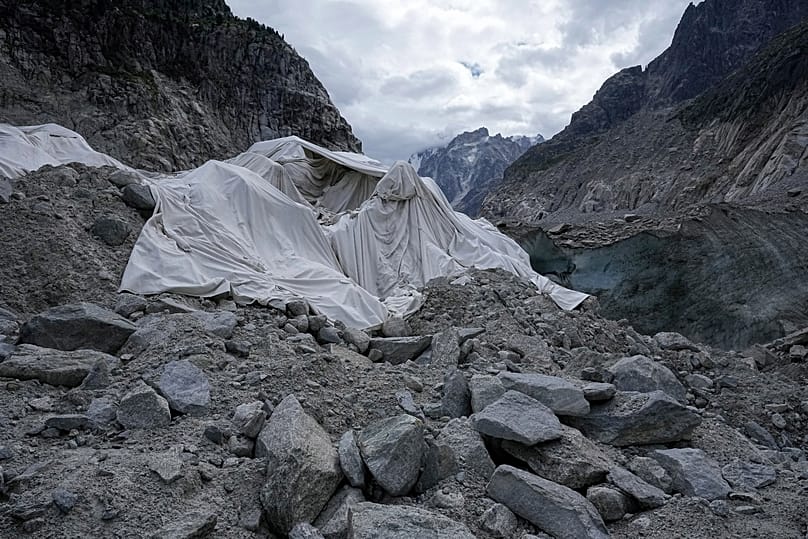
Tarpaulins cover the ice cave of the 'Mer de Glace' glacier to prevent it from melting, at the Montenvers station in Chamonix, France, Saturday, Sept. 5, 2026. AP Photo/Laurent Cipriani

“From mid-July onward, we saw an increase in rock falls. We saw areas becoming difficult to access because of glacial retreat and snowmelt on the glaciers, with crevasses opening up and rock collapses making some areas difficult to reach or traverse,” he says.

Each degree of warming can have an outsized impact. On the Aiguille du Midi peak, which rises to an altitude of 3,842 metres in the Mont Blanc range, average temperatures for July have soared. From a chilly 1.6°C in 1994, the monthly average for this July was the warmest ever recorded, at 3.3°C, says Meteo France, the national weather service.

“The mountain really dried out, with temperatures unlike any I had ever experienced,” Bozon says.

The Himalayan flood disaster hits close to home in the Alps

In the wake of devastating floods in the Himalayas, news agency The Associated Press talked to researchers, climbers and residents coping with the risks and uncertainties of climate change on Mont Blanc.

The floods that swept through Nepal and China on 26 August were triggered after a collapse of bedrock and glacier ice sent debris and water surging through multiple Himalayan rivers. Initial assessments of many scientists are that climate change played a key role in creating conditions for the catastrophe.

As Earth’s global average temperature rises because of the burning of oil, gas and coal, the chances of such disasters increase.

In the Alps, glaciers once admired for their icy majesty are being eyed with trepidation as they shrink and lose stability.

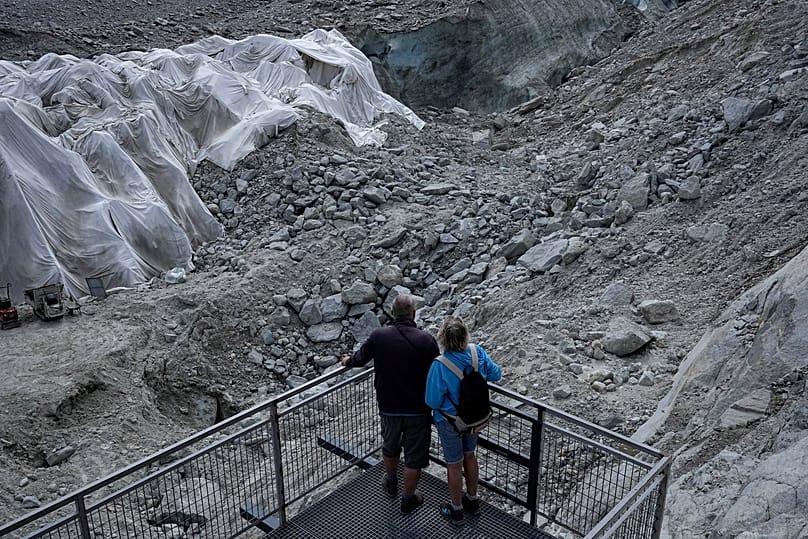
People look at the 'Mer de Glace' glacier as tarpaulins cover the ice cave to prevent it from melting, at the Montenvers station in Chamonix, France, Saturday, Sept. 5, 2026. AP Photo/Laurent Cipriani

Bozon, who is in charge of safety for Chamonix, says his town urgently needs to prepare for “serious scenarios” of chunks of glacier or mountain potentially falling onto inhabited areas.

“We have to move quite quickly because this summer has shaken us and year after year we’re being shaken by the glaciers’ retreat,” he says.

In Italy, researchers are also documenting dramatic damage wrought by heat on glaciers this year. In Lombardy, Alpine glaciers have lost more than 40% of their surface area since 1991, according to the region's glacier service.

“While it used to snow at high altitudes in the past, now it rains,” says Vanda Bonardo, head of the Italian branch of the International Commission for the Protection of the Alps, a nongovernmental organisation.

“So we’ve also seen the effects on the stability of the terrain,” she says.

Rock falls in the Mont Blanc area have surged

Permafrost that has held Alpine peaks in its icy grip for thousands of years acts as a cement, helping to hold their steep rock faces together. It took a beating from the succession of heatwaves.

“That doesn't mean that all the rock faces will collapse in the coming years or decades but quite a number of them are on the verge of becoming unstable and remain stable today only because of the presence of that ice,” says Ludovic Ravanel, a researcher at Savoie Mont Blanc University who specialises in climate change's impact on mountain snows, glaciers and frosts. "As the ice changes, we have seen a huge, huge number of rock falls and rock collapses this year."

A collapse is a major fall involving more than 100 cubic metres of rock – more than enough to fill a large shipping container. Ravanel expects this year's tally of collapses in the Mont Blanc massif “will probably reach around 400”. He says that is about 10 times more than two decades ago.

The last time things got close to this bad was the ’’catastrophic year″ of 2022, he says, with nearly 300 collapses.

“This has really been one of the defining features of the summer of 2026,” he says.

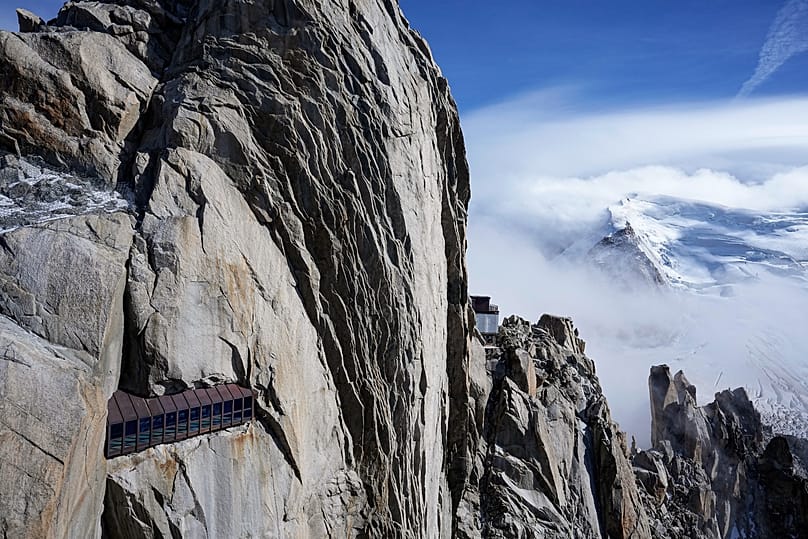
The Mont-Blanc massif mountains are seen from the Aiguille du Midi in Chamonix, France, Saturday, Sept. 5, 2026. AP Photo/Laurent Cipriani

A Mont Blanc climbing guide juggles the risks

Chamonix-based mountain guide Stuart MacDonald says it shocks him to see how rapidly and extensively glaciers that hang from the flanks of the Mont Blanc massif are retreating.

When he guides people up the peaks, he points them to “where the glacier was last year and this is where it was 10 years ago. And that usually has quite an effect”.

Melting and the risk of rock falls made his job “pretty challenging” this summer and forced him to cancel plans to lead a group to Mont Blanc's summit last week.

“You hear it before you see it and then you’ll turn round and you’ll just see an enormous cascade of rocks coming down a slope and it can be quite terrifying,” MacDonald says.

“What’s most scary is that sometimes these rocks are falling on routes that we used to be climbing at this time of year,” he adds. “It can be depressing sometimes when you look at something that you maybe climbed in July or August in the past and you see that it’s absolutely impossible to do it now.”


August 2026 was world’s joint hottest month on record, according to Copernicus


By Gregoire Lory
Published on

The global average air temperature in August was 1.65°C above the pre-industrial reference value. With prolonged and early heatwaves, Western Europe broke the summer temperature record set in 2003.

August was the hottest month on record, tied with July 2023, according to data published on Thursday by the European climate observatory Copernicus.

Last month, the global average air temperature reached 16.96°C, which is 1.65°C higher than the pre-industrial reference period of 1850–1900. August was the first month since November 2025 to exceed 1.5°C, the limit set by the Paris Agreement on climate change.

The extra-polar oceans also broke a record for their average temperature last month, due to global warming, Copernicus points out. The average temperature reached 21.07°C, the highest ever recorded for August, surpassing the record set in 2023.

"August 2026 was a remarkable month in the global climate record. It was both the warmest August and the warmest month ever recorded", declared Samantha Burgess, Strategic Lead for Climate at ECMWF (European Centre for Medium-Range Weather Forecasts).

"These observations show how climate change is driving extremes across both the atmosphere and the oceans. The impacts of these conditions are increasingly being felt by communities, economies and ecosystems across the world", she added.

Hottest summer ever in Western Europe

For the European continent specifically, these figures mark the end of the hottest summer ever recorded in Western Europe, with prolonged, intense and early heatwaves beginning as early as May. For the region, the summer of 2026 broke the record set during the same period in 2003.

In August this year, the average temperature reached 20.26°C over European land, making last month the fourth-warmest August on record, according to Copernicus.

The continent also suffered from widespread drought, with exceptionally low water levels in rivers such as the Rhine, the Danube, the Vistula, the Rhône and the Po. The drier-than-average conditions also led to numerous wildfires in several regions across Europe.

"The evidence is irrefutable: this is the spiralling price of humanity’s fossil fuel addiction, and the global climate crisis it is fuelling", declared, Simon Stiell, UN Climate Change Executive Secretary.

"Until humanity stops burning colossal amounts of coal, oil and gas, the pollution this causes will keep baking our planet, and extreme heat will keep smashing all-time records", Stiell added.

For the UN Climate Change Executive Secretary the solution to preventing new temperature records from being set is clear: "a faster shift to clean energy."


Which European countries import the most crude oil?

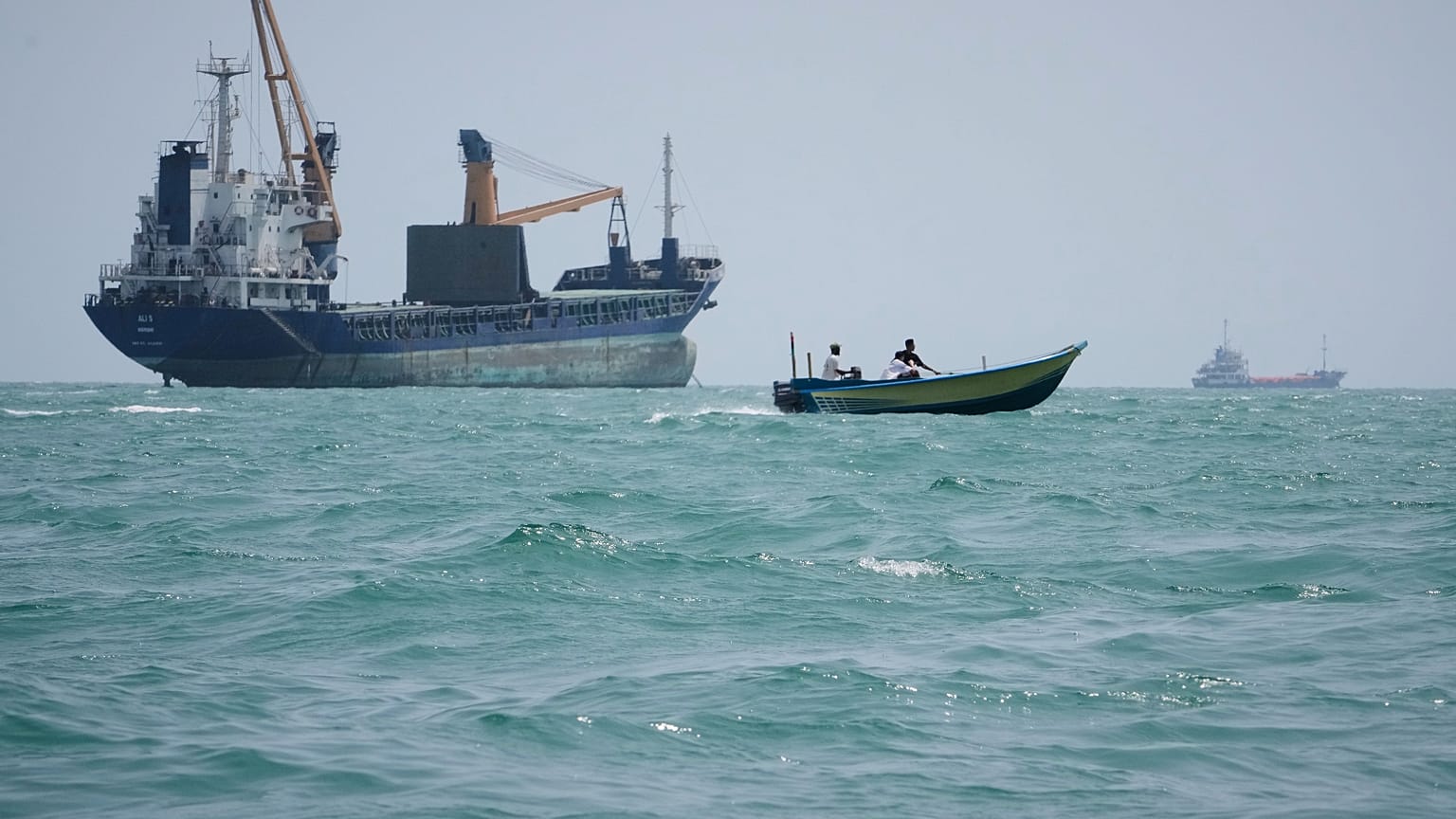
A motorboat passes a general cargo ship anchored in the Strait of Hormuz off Bandar Abbas, Iran, Sunday, Sept. 6, 2026.
Copyright AP

By Piero Cingari
Published on

Brent topped $100 after fresh Strait of Hormuz attacks. Eurostat data shows which European countries buy the most oil and who is most exposed.

Brent crude topped $100 a barrel on Wednesday and held firm on Thursday morning after renewed attacks on shipping around the Strait of Hormuz.

It has held above $70 since mid-February, almost seven months, and is up 65.7% since the end of 2025, when it closed the year at $60.85.

But this is no longer simply an energy market story.

More expensive crude raises the cost of diesel, petrol and jet fuel. Those increases then spread through transport networks, supply chains and eventually consumer prices.

For Europe, the timing could hardly be worse.

Eurozone inflation was already 3.3% in August, its highest since September 2023. Energy prices alone rose 14.3% over the year.

That is why the European Central Bank is expected to raise its deposit rate by a quarter of a point to 2.50% on Thursday. In the United States, futures put the odds of a Federal Reserve hike on 16 September at about 60%.

But which European countries are most exposed to the oil price shock?

Europe’s near-total dependence on foreign oil

Europe’s fundamental vulnerability to fossil fuels is easy to see.

The European Union imported 471.3 million tonnes of crude oil in 2024, while producing just 15.5 million tonnes domestically.

Its overall oil import dependency reached 96.6%, according to Eurostat.

In other words, almost every additional barrel consumed in the bloc must effectively come from abroad.

The United States, Kazakhstan and Norway were the three largest suppliers. Each accounted for between 12% and 15% of imports.

Libya followed at over 9%, Saudi Arabia at 6.8%, Nigeria and Iraq at 5.8% each.

Only around 7% of EU crude imports came from Gulf Cooperation Council countries in 2025, according to the Council of the European Union.

Europe is therefore less directly dependent on Gulf producers than many Asian economies. But oil trades in a global market.

A disruption in the Strait of Hormuz raises prices for US or Norwegian crude as well as Middle Eastern barrels.

Which European countries import the largest volumes?

By volume, the Netherlands imports more oil than any other European country by a wide margin.

Eurostat figures for 2024, the most recent full year available, show that it imported 138.3 million tonnes of oil and petroleum products.

Germany followed with 117.8 million tonnes, Spain with 85.8 million, France with 82.4 million, Italy with 73.3 million and Belgium with 56.7 million.

However, these figures require some context.

Rotterdam is one of the world’s largest energy hubs. Much of the crude entering Dutch ports is refined or transported onwards to other European countries.

The Netherlands exported 101.1 million tonnes of the 138.3 million it imported. Belgium also re-exported more than half of its imports.

Germany is the real major importer because of the size of its industrial economy, transport network and refining sector.

Spain, France and Italy also import substantial volumes to supply domestic consumption and large refineries.

Eurostat data show that Germany accounted for 20.1% of the EU’s final consumption of oil and petroleum products in 2024. France followed with 15.3%, while Italy and Spain each represented 11.1%.

Together, those four economies consumed almost 58% of the EU total.

Smaller economies may suffer the larger relative shock

Volumes tell you who buys most. They do not tell you which economies suffer the most.

A more useful measure of vulnerability compares net energy imports with the size and structure of the domestic economy.

Eurostat tracks the net trade balance in energy products as a share of GDP. Malta recorded the bloc’s largest deficit in 2025, equivalent to 5.4% of its economic output.

Bulgaria followed with a deficit of 3.5% of GDP, Croatia with 3.4%, Hungary with 2.9%, Belgium with 2.6%, Luxembourg with 2.5% and Cyprus with 2.4%.

The large economies were clustered closer to the middle. Italy’s energy trade deficit was equivalent to 1.9% of GDP, followed by Spain and Poland at 1.7%. Germany and France both recorded deficits of 1.5%.

The smallest deficits were recorded by Denmark at 0.1% of GDP, Sweden at 0.5% and the Netherlands at 0.6%.

Denmark benefits from domestic oil and gas production, while the Netherlands’ position reflects its role as a major refining and re-export hub.

Tourism-dependent countries are also heavily hit

Spain’s oil import dependency, which measures the share of consumption covered by net imports, reached 100.3% in 2024

Portugal’s rate was 99.9%, while Ireland registered 101%.

All three economies rely on imported crude or refined products for almost their entire oil supply.

Malta imported 99.6% of its oil requirements in 2024. Cyprus imported 97.3%.

Their exposure is amplified by the importance of transport, aviation and tourism.

Almost two-thirds of the oil consumed in the EU goes towards transportation.

Road transport alone accounted for 47.7% of total consumption in 2024, according to the Council of the European Union.

Aviation represented another 9.2%, while maritime transport accounted for 8.4%.

That composition matters for southern Europe.

Rising jet-fuel prices increase costs for airlines serving Spain, Portugal, Greece, Cyprus and Malta.

Higher diesel prices affect hotels, restaurants and retailers through more expensive supply chains.

Tourism companies may initially absorb part of the increase. If oil remains above $100, however, higher costs are more likely to reach consumers through airfares and accommodation prices.

Denmark is the least dependent at 58.1%, followed by Romania at 77% and Hungary at 83.5%.

Italy sits at 89.8%, Germany at 96.9% and France at 99.8%.


‘Clean energy is the surest path’: Europe should be leading the energy transition, says UN executive

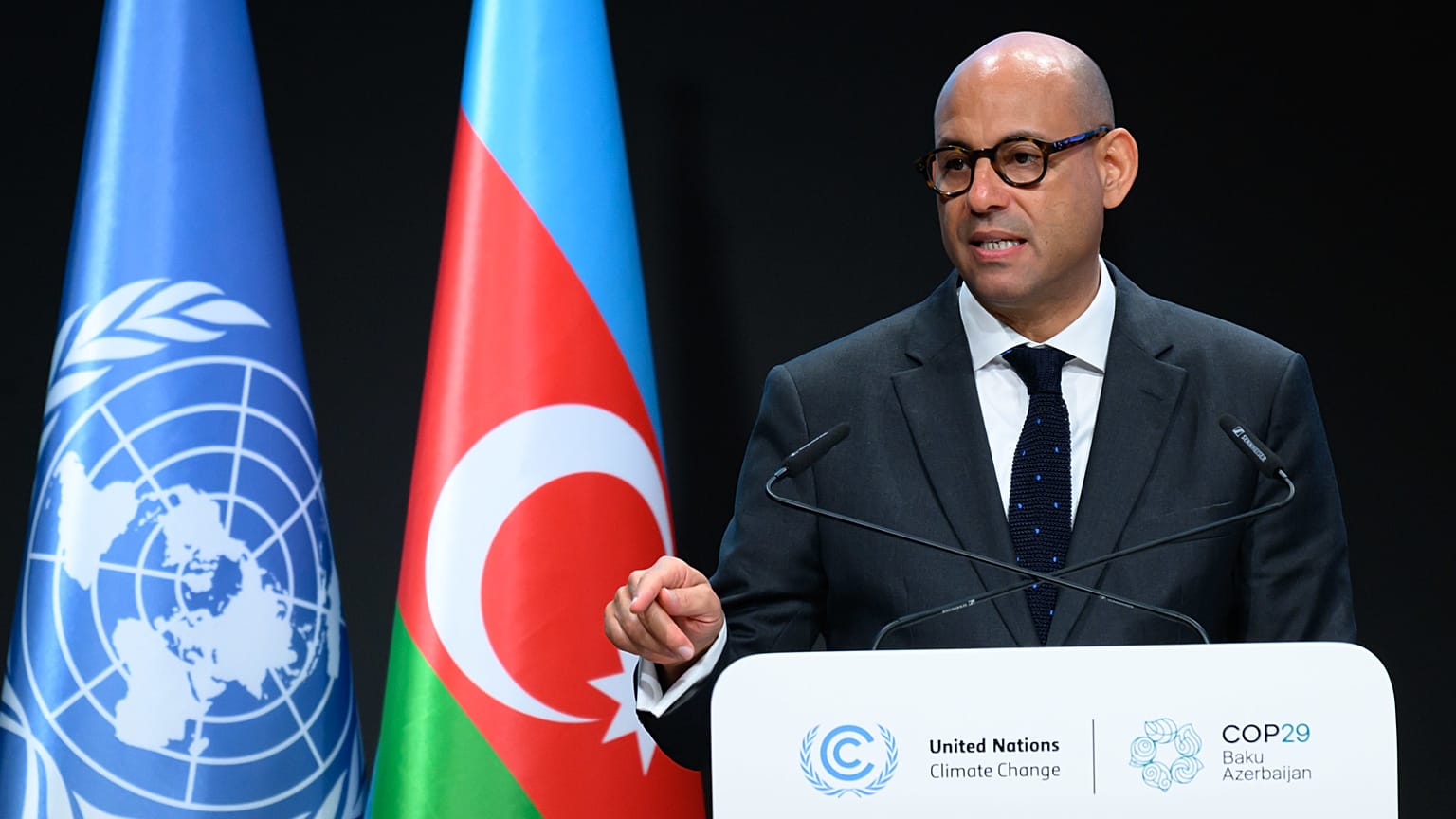
Simon Stiell, UN Climate Change Executive Secretary speaks at the World Leaders Climate Action Summit at COP29 Baku
Copyright COP29/Vuqar Ibadov

By Ruth Wright
Published on

“If humanity doesn't cut the fossil fuel pollution baking our planet, this summer's brutal heat, fires and droughts will seem mild compared to the permanent climate nightmare that will follow,” said Simon Stiell, UN Climate Change Executive Secretary.

“Europe’s summer has been hot as hell. This is the price of global fossil fuel addiction hitting home,” warns Simon Stiell, United Nations Framework Convention on Climate Change (UNFCCC) Executive Secretary.

Speaking to the European Parliament Committee on the Environment, Climate and Food Safety in Brussels, Stiell appealed to lawmakers to “double down” on “Europe’s longstanding climate leadership” and speed up the transition to clean energy.

“It’s entirely in Europe’s interests to stand firm behind climate action – and to boost it: to build resilience to climate impacts – protecting global supply chains, on which all economies depend. And to slash global emissions.”

Climate action is Europe’s cheapest insurance policy

Europe’s summer of extreme heat was the hottest on record for the UK and Italy, with more countries likely to announce the same. Stiell listed just some of the costs: “We’ve seen mass evacuations. Power stations closed. And trade routes choked. Crops lost. Yields down. And food prices up – and set to rise further.”

There were also tens of thousands of excess deaths across Europe, with 14,000 in Germany and 5,232 in Spain, its highest figure since 2015.

“Disasters are pushing up insurance premiums. Leaving some entirely uninsurable,” said Stiell. The cost of insuring a home in an area hit by extreme weather or climate-related disasters has been going up for years, with some insurers refusing to cover homes in areas hit by the 2025 wildfires in Los Angeles.

A 2024 report by Insure Our Future found that climate change was behind more than a third of all weather-related insurance losses in the previous 20 years. But it is not private insurers that absorb climate damage – it is the public budgets, which EU politicians are responsible for, that take the hit.

A study earlier this year found that between 1980 and 2021, extreme weather and climate events caused economic losses of over €560 billion in the EU’s 27 member states, of which only 25–33 per cent was insured. The Vienna University study was commissioned by MEP Lena Schilling (Greens/Austria).

“Investing just 1–2 per cent of global economic output can avert losses of 11–27 per cent of GDP, with every dollar spent delivering savings of five to 14 dollars,” says the study’s author Professor Sigrid Stagl. She explicitly describes climate action as “life insurance for the planet”, a systemic risk-management strategy in which the costs of mitigation and adaptation are small relative to the scale of potential losses.

Climate action boosts – or stalls – economies

No doubt aware of the importance of economic growth to the lawmakers he was speaking to, Stiell laid out the costs of extreme heat: “One study calculates this summer’s extremes will cost Europe €180 billion – in lost labour productivity, and disruption to food, energy and transport. That’s equivalent to carving a full percentage point from European GDP – the same amount the EU economy is forecast to grow.”

Stiell linked climate action with the economic markers politicians are often judged on when elections loom: “To be soft on climate action is to be soft on inflation and the cost of living, soft on sovereignty and security, and soft on economic growth and jobs.”

“Climate cuts across the core concerns of voters, whatever their politics: family health, community safety and economic stability. Affordable food and available water. Jobs, business costs, and household bills.”

So what is Stiell suggesting EU policymakers should do?

To achieve affordability, economic stability, energy security, and policy-making autonomy, Stiell asserts: “Clean energy is the surest path to deliver, cheaply and safely.“

While China leads the way on energy generated from clean sources, Stiell asserted that EU countries are doing well. “Thanks to growing investment, renewables now provide around half of Europe’s power. In the first six months of this Middle East conflict, solar alone saved Europe more than €30 billion in avoided gas imports.”

Stiell drove home the many economic opportunities in clean energy, saying Europe is already leading the way on clean tech.

What does the UN want Europe to focus on at COP31?

Stiell used his speech to emphasise the importance of “throw[ing] itself behind helping COP31 in Türkiye deliver further progress.”

This year’s UN-led climate talks – COP31 – will be held in Antalya from 9 to 20 November 2026.

The talks bring together governments and industry from all over the world, making them the catalyst for climate-related policy – the Paris Agreement was born at COP21 in 2015. Based around days of negotiation to reach the final deal, lawmakers’ commitment to attend and push for strong climate action during COPs is vital.

Stiell explained how each set of recent talks has built on the last: “No single COP can solve the climate crisis overnight, but each moves global efforts forward – building on the last, and looking to the next: From a global agreement in Dubai to transition away from all fossil fuels. To a new climate finance goal in Baku. And steps forward on a just transition in Belem, which ushered in the era of implementation.”

Stiell asked politicians to arrive at the talks prepared with what they want the final deal to include, and prepared to make compromises.

One of the COP Presidency’s priorities is for 35 per cent of final global energy demand to be met by electricity by 2035. Stiell emphasised the EU’s strength here: “Around one in four new cars sold in Europe is now electric. And battery deployment is accelerating.”

He also pointed to methane, food waste and security, and making cities more resilient to climate extremes as “areas where the impact and urgency are greatest”.