Tuesday, September 22, 2026

POSTMODERN FEUDALISM
Tata family feud reignites as battle for India’s corporate empire intensifies

Tata family feud reignites as battle for India’s corporate empire intensifies
/ IntelliNewsFacebook
By Aditya Pareek - IntelliNews September 23, 2026

India’s largest and oldest conglomerate, Tata Group, is engaged in a dispute with its own holding company and promoter Tata Sons.

Tata Sons is itself in a tussle with its largest shareholder an entity called Tata Trusts over three separate but related issues, the reappointment of the Chairman of Tata Sons, the extent of the powers of Tata Trusts’s nominated directors on the board of Tata Sons and Tata Sons’ prospects of becoming a publicly listed company on Indian stock exchanges.

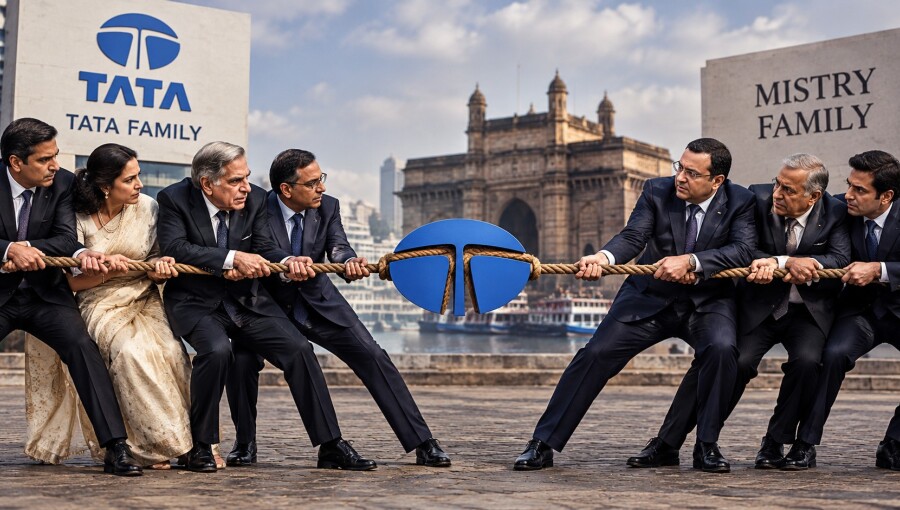
At its core the ongoing dispute is a tussle over the now decade-long and messy decoupling between the Tata family and the Mistry family which are both stakeholders under the broader Tata conglomerate umbrella.

While it has been brewing for a while, the dispute came to a boil with India’s central bank the Reserve Bank of India (RBI) on September 11 2026 rejecting Tata Sons' plea to give up its registration as a Core Investment Company (CIC).

Tata Sons operates as an upper layer Non Banking Financial Company (NBFC) and is thus regulated by the RBI, which has directed it to be listed as a publicly traded entity which will then bring it under the separate regulatory framework of the Securities and Exchange Board of India (SEBI) as well.

Tata Sons’ board led by the incumbent Chairman N. Chandrasekaran has been planning to comply with the RBI’s public listing regulatory requirement. However, that will require the consent of all shareholders of the company.

Tata Sons' largest single shareholder the Shapoorji Pallonji Group has also been pushing for the public listing as it has been trying to decouple from the Tata umbrella and realise monetisable value for its 18.37% stake.

The Shapoorji Pallonji Group and the Mistry family at its head used to be staunch allies and partners of the Tatas stretching back to the 1930s in what was then British India. However, that camaraderie purportedly came crashing down in 2021 when former Tata Sons Chairman Cyrus Mistry was removed over his handling of unprofitable but prestigious projects linked to the then Tata family patriarch Sir Ratan Tata.

Ratan Tata and his half brother Noel Tata likely saw some of those projects as key to his and the Tata family’s legacy - including producing what was at the time the world’s cheapest car, the Tata Nano and Tata Steel Europe. The Mystry family also has familial bonds with the Tatas, as Aloo Mistry the elder sister of Cyrus Mistry is married to Noel Tata.

Between 2016-2021 the first leg of the dispute ultimately ended in a legal battle which reached the Supreme Court of India which saw the Tatas ultimately able to wrestle back the chairmanship of Tata Sons with Sir Ratan Tata temporarily resuming the role he had vacated for Cyrus Mistry in 2012.

Cyrus Mistry was thus removed in 2016, and the board continued to serve under Sir Ratan Tata until the incumbent N. Chandrasekaran was finally appointed as a replacement in 2017.

Both Sir Ratan Tata and Cyrus Mistry have since passed away but the dispute still continues in the board rooms of those concerned. 

Purely on numbers, Tata Trusts which is a group of non-profit philanthropic entities based in Mumbai owns around 66% of Tata Sons.

Around 13% of Tata Sons is also owned by various Tata Group companies in which Tata Trusts doesn’t directly have any ownership and these companies have their own separate governing boards, promoters, and other structures as applicable. Setting aside the roughly 18.37% stake owned by the Mistry family and their Shapoorji Pallonji Group, this still leaves a 2.63% share which is believed to be owned by others, mainly Tata family members as individuals and their own separate structures.

However, while Tata Sons does hold varying sized stakes in almost all Tata Group companies, its largest shareholder Tata Trusts doesn’t directly dictate policy in their day-to-day affairs, which illustrates the typical level of corporate obfuscation in the control dynamics of the group. One lever of control that Tata Trusts does maintain over Tata Sons though is its right to nominate one third of its directors according to the Articles of Association (AoA) of Tata Sons.

As of September 2026 this has translated into Noel Tata and Venu Srinivasan the Chairman and Vice Chairman of Tata Trusts being two of the six members on the board of Tata Sons. Furthermore, the AoA of Tata Sons grants the two Tata Trusts nominated directors “special voting provisions” as recognised by the Supreme Court of India in the 2021 case.

This means that no majority vote can be passed by a simple majority motion by the Tata Sons board if the two directors don’t also vote in favour of it, thus giving them what is essentially a veto over the board’s decision making.

According to a Hindustan Times report, in a September 17 2026 board meeting the incumbent Chairman of Tata Sons N. Chandrasekaran’s term was renewed for another five years. This ran contrary to an announcement Chandrasekaran himself had announced in August 2026, in that he would not seek a renewal after his term ends on February 20, 2027.

Reportedly Noel Tata, one of the two nominated directors with the veto voted against Chandrasekaran’s renewal. Noel’s fellow veto holding nominated director Venu Srinivasan and the other board members of Tata Sons voting, instead backed the motion with Chandrasekaran recusing himself entirely.

Noel Tata is likely trying to preserve as much of the original legacy of his clan as possible, and according to a report in the local Economic Times is also ready to explore alternatives for Tata Sons, including splitting it, instead of listing it on public stock exchanges as the rest of the board and the Mistry family want.

As it stands, while the general image of the Tata family is one of respected nationalist industrialists in India, it is not without a degree of controversy especially dating back to the time of the British Raj. 

According to the book Why Empires Fall: Rome, America, and the Future of the West by Peter Heather and John Rapely, published by Yale University Press, after the British had secured control of many Chinese ports in the First Opium war in 1842, Nusserwanji Tata “had grand ambitions of shipping opium from the Indian region of Malwa into Chinese markets.”

In a later report by India Today, this ambition translated into Tata family members running businesses trading British Indian cotton and opium in exchange for Chinese tea, silks and porcelain, with the opium in question then being smuggled into China where the narcotic was officially banned by the ruling Qing Dynasty.

In post independence India too the Tata conglomerate thrived and even had minor frictions with the elected government of the day. The most iconic example of this was at the time of the nationalisation of the Tata Group’s airline into Air India by then Indian Prime Minister Indira Gandhi in 1953, even if the airline ultimately returned to the Tata Group in 2021 as the Government of India auctioned it off.

How the dispute ultimately plays out, and if the Tata family can preserve its carefully cultivated image of responsible Indian industrialists, will no doubt determine how the family and its legacy are viewed by the next generation.


 

World Economic Forum projects Indian economy’s expansion

World Economic Forum projects Indian economy’s expansion
/ Aditya Siva - UnsplashFacebook
By IntelliNews - Chennai Bureau September 23, 2026

India’s economy is expected to expand 6.7% in fiscal 2026-27, the fastest pace among major economies, as resilient domestic demand supports growth despite a challenging global backdrop, according to the World Economic Forum (WEF)’s latest Chief Economists Outlook released in September 2026 as cited by DD News.

The survey, covering 92 senior economists from the public and private sectors across 10 major economies and regions, found a marked improvement in expectations for India. About 74% of respondents now foresee strong or very strong growth, up from 52% in May.

Nearly 98% expect growth over the coming 12 months to remain at least moderate. Labour market conditions also appear broadly stable. About 70% of economists expect little change in unemployment over the next year.

India’s unemployment rate for people aged 15 and above eased to 5% in August from 5.1% in July, while the labour force participation rate increased to 55.6% from 55.4%. Inflation expectations have softened.

About 55% of respondents anticipate moderate price pressures over the next year, compared with 61% expecting high inflation in May. Consumer price inflation stood at 4.8% in August, within the Reserve Bank of India (RBI)’s 2%-6% tolerance band.

Policy expectations are similarly steady, with 67% anticipating no major monetary policy shift and 72% expecting fiscal policy to remain broadly unchanged. The survey closed on August 20 2026, subsequent first-quarter GDP growth of 7.8% prompted the US credit rating agncy Moody’s to raise India's fiscal 2026-27 growth forecast to 7% from 6%.

The data could reinforce expectations that India will retain its position as the fastest-growing major economy. India’s government has made it a point to attend many WEF summits with the 2026 Davos meeting in January being a show of force as well as an opportunity for diplomacy for the country.


Laos advances 100-MW Bolikhamxay solar project

Laos advances 100-MW Bolikhamxay solar project
/ Zbynek Burival - UnsplashFacebook
By IntelliNews - Phnom Penh Bureau September 23, 2026

Developers met residents and authorities on September 18 to discuss the proposed 100-MW Bolikhamxay solar facility, which will span 140.23 hectares across Nam Ngiep and Khuay Oudom villages in Paksan district.

As reported by The Laotian Times, the plant is planned to feature 211,007 dual-glass monocrystalline panels and produce an estimated 197 gigawatt-hours of electricity annually.

The Lao government and Thailand-based APDL Solar Power Sole Co Ltd signed a feasibility study agreement in February. APDL is developing the project alongside India's Kosher Climate India Private Limited.

The latest consultation involved provincial and district officials, local communities and project developers. Discussions included the proposed generation of carbon credits. No construction timetable has yet been announced.

The Bolikhamxay development is one of 12 locations identified under Laos's national solar development and power purchase programme.

In northern Laos, a separate 100-MW project is planned in Xay district, Oudomxay province. The facility is expected to cover parts of Ban Nalae and Ban Nasankham in the Hin Reservoir area, with a feasibility agreement already signed with South Korea's CTE Company.

Oudomxay is also home to Laos's largest solar facility, a 1,000-MW project covering 2,090 hectares across seven villages. It began operations in late 2025 and generates around 1.7bn kilowatt-hours annually, with power exported to China's Yunnan province through the Laos-China 500kV transmission line.

Other solar developments include a 100MW facility under construction near Kaysone Phomvihane in Savannakhet province, covering 158 hectares and prioritising locally manufactured panels.

The government's solar expansion aims to address electricity shortages during the dry season, particularly when hydropower output falls.


MOSCOW BLOG: Is Europe talking itself into war with Russia?

MOSCOW BLOG: Is Europe talking itself into war with Russia?
Ukraine is trying to raise more money and missiles. / bne IntelliNewsFacebook


By Ben Aris in Berlin September 22, 2026

Is Europe really going to war with Russia, or are we just talking ourselves into war like in the run up to the Iraq conflict in 2003? The media is full of banner headlines warning that Russia is getting ready to invade “any moment” as Ukrainian President Volodymyr Zelenskiy tours the world desperately trying to drum up support of what is widely expected ot be a brutal winter for Ukraine.

Senior politicians like Polish Prime Minister Donald Tusk and French President Emmanuel Macron have both gone on record this month warning that Europe needs to get ready for a direct conflict with Russia the number of arson and sabotage incidents do appear to be rising as drones increasingly cross the board into EU territory.

But is an attack really that close? More sober analysis warns that hyping the threat runs the danger of starting a war that no one intended to fight in the first place. That is what happened with Iraq.

Bob Woodward’s book Plan of Attack detailed how the Iraq invasion grew from a policy choice into military mobilisation thanks to a feedback loop of fear and rhetoric, while very little changed on the ground. After 9/11 America wanted revenge and began to hunt for a villain. The political atmosphere was intense and Afghanistan got the blame, but Iraq quickly came into focus, despite playing no role in the terrorist attack on New York 25 years ago this month.

Woodward traces how regime change became policy, how Dick Cheney and Doland Rumsfeld pushed the issue, and how intelligence about Iraq’s supposed weapons of mass destruction was turned into the justification for an invasion.

Russia’s threat of attacking Nato is WMD all over again. There is actually very little evidence that Russia preparing for war. The Guardian ran a story this week headlined: “European spy chiefs warn Moscow is planning more decisive action against Nato”, citing the hawkish warnings from Macron and Tusk. Polish Foreign Minister Radoslaw Sikorski, a well-known Russia hawk, has been pouring petrol on the fire saying on September 21 that if Russia attacks, the Euro Nato response would “not just be defensive; it would offensive.”

That’s fighting talk.

But in the same piece, the Guardian interviewed actual security professionals who downplayed the risk. “We don’t see indications of an imminent attack,” Normunds Mežviets, the director general of the VDD, Latvia’s state security service told The Guardian at the agency’s headquarters in Riga.

Security analysts at the China-Russia Report also dismissed the possibility of an attack because the practical problems it throws up.

“Russia’s ability to plan and execute a hybrid operation without substantial advance detection by Western (or PRC) intelligence services is highly doubtful,” the CRR said in its most recent note. “The Baltics’ own intelligence chiefs are themselves sceptical of an imminent hybrid contingency. In addition, the PRC, unlike in the run-up to Russia’s full-scale invasion of Ukraine in 2022, does not show signs of preparing the information environment. Finally, if Putin were going to escalate directly against the Nato alliance, risking a conventional military conflict with the world’s most powerful military alliance, why would he initiate a contingency before mobilization?”

There has been a lot of speculation that Putin might call a full mobilisation after the Duma elections finished this weekend, but until he does that he simply doesn’t have the men to fight on two fronts.

Milblogger Clement Molin made the same point: with 90% of Russia’s troops committed to the Ukraine war, the danger of an attack on Europe only becomes possible if the Armed Forces of Ukraine (AFU) defence collapses freeing up Russia’s forces for other duties.

But the media hype remains relentless. In the run up to Iraq war, the threat of Weapons of Mass Destruction (WMD) was hyped to the max – from “dual-use pipes” to Colin Powel waving phials of anthrax around at UN security council meetings. Eventually, an attack was launched by the “coalition of the willing" (sound familiar?) which quickly discovered the WMD troupe was a hoax. Yet the hype started a disastrous eight-year war costing trillions that destroyed a country and killed 100,000-200,000 people.

Woodward described the way these things work. Egged on by a political agenda, the politicians issue calls for action and the whole “something must be done” agenda kicks in. Plans are drawn up. “Preparations” are begun. Troops are moved around and hold “preparatory” military exercises. And new weapons are ordered. But these are real military assets being moved and pointed at the opponent – in this case Russia. Naturally, Russia will respond. During the Cold War a whole ballet of military choreography was developed as missile deployment was as much a language as it was a threat. In this increasingly toxic environment, the current moves are widely reported and only add fuel to the fire.

The bomb in a bag at Leipzig-Halle airport is a good example. It was taken as a demonstration of Russia’s escalating hybrid war against Europe. It was found on the tarmac next to a Ukrainian Antonov cargo plane that had been full of French ammunition on its way to Kyiv.

From the Russian perspective that is seen as a legitimate military target. What has changed this year is, having run its own stockpiles into the dirt, Europe is increasingly manufacturing arms and ammo on EU territory to supply Ukraine – something the Kremlin says moves Europe from “supporting” Ukraine to becoming an “active participant” in a war against Russia. The Leipzig bomb is the Kremlin pushing back at growing volumes of materiel made in Europe on its way to the wheatfields of the Donbas. But from the European perspective, this bomb is an encroachment on EU sovereign territory and another step closer to an Article 5 triggering attack on Europe. As far as Brussels is concerned it is still only supporting Ukraine not attacking Russia.

But this clash of views creates a descending slippery spiral of action, reaction, accusation and response. Ukrainian defence firms launch JVs with European companies under the Danish model. A German firm launched the production of drones for Kyiv. The Russians put a bomb on the ground in Leipzig and fly drones over Romania and Lithuania. The US opens a new military base in Poland. The Finns and Estonians build fortifications along the Russian border. Russia builds 10 new drone launch pads on the other side that can hit any target in Europe. The circle is already turning.

A hybrid attack is the spark that could light the fuse. According to the Center for Strategic & International Studies (CSIS) database the number of hybrid attacks are rising: three in 2022, 12 in 2023, 34 in 2024. Since the escalation started in August there have been 26 suspected hybrid attacks in just the last six weeks. But Russia was only formally blamed for two of those and in the most serious cases – explosive devices found in German substations at Jänschwalde, Bergheim, Dormagen and Graustein – local police have arrested Daniel V., 48, a German climate activist from Gevelsberg.

So, why is there so much hype about an imminent war now? As IntelliNews reported yesterday, the current around of hyperbole coming from both sides is almost certainly similar to the last round ahead of the Ankara Nato summit in July, when a coordinated “Ukraine has reached a turning point” campaign was orchestrated between Bankova, Ukraine’s presidential administration, Brussels and the Nato leadership. Going into the summit it was already clear the AFU was running dangerously low on air defence interceptors and Ukrainian President Volodymyr Zelenskiy was asking for more money and missiles.

He didn’t get them at the Turkish summit and now the need is even more pressing. The first snow will arrive in Kyiv in little over a month when the heating season starts. Russia has already destroyed two thirds of Ukraine’s generation capacity and is now systematically destroying Ukraine’s retail infrastructure as well targeting petrol stations and trains more recently. On the first of September, Russia’s high command announced it was restarting the mass destruction of Ukraine’s energy sector and will attempt to plunge the whole country into freezing darkness just as the temperatures plunge. In the last week, Zelenskiy has called for an energy sector ceasefire deal or face like-for-like retaliation, but the Kremlin has ignored him.

As IntelliNews reported, the Ukrainian president is starting to sound desperate as time is running out. To add to his headaches, Ukraine is also running out of money with a $27bn hole in its defence budget that it can’t fill. The Minister of Finance warned last week that Bankova may not be able to pay soldiers’ salaries just as winter starts. But the recent German regional elections and rising attacks on Ukrainian refugees in Poland show Ukraine fatigue is rising so squeezing even more help out of Brussels is become increasingly difficult. At Zelenskiy last meeting with Trump, the US president offered to send Ukraine “some” interceptors every month, without putting a figure on that.

An “enemy at the gate” message is very useful for focusing governments on the need to come up with the goods in Ukraine’s time of need. But the problem with this strategy as it comes with real military preparations and Russia is taking those seriously. And if no one is ready to backdown it could spiral out of control.

Will that happen? The Trump administration stepped back in to ceasefire negotiations this month, sending US envoys Steve Witkoff and Jared Kuchner to Moscow and Kyiv, but that trip has amounted to nothing. After the US took itself out of the game following the start of Operation Epic Fury in February, there was a brief attempt to find a European interlocutor, but that failed. Currently the EU has no one who is, or can, talk to the Kremlin at all.

This article originally appeared in Editor’s Picks, a free daily email digest of bne IntelliNews’ best stories from the last 24 hours. Sign up for free here.

https://to989.infusionsoft.com/app/form/editors-picks-subscribers

Taiwan exports hit $103bn - much of it on AI demand

IN ONE MONTH; AUGUST!

Taiwan exports hit $103bn - much of it on AI demand
/ Ian Taylor - UnsplashFacebook
By IntelliNews - New Taipei Bureau September 23, 2026

Taiwan's export orders soared 71.4% year on year to a record $102.96bn in August, driven by global demand for artificial intelligence hardware, Focus Taiwan reported on September 22.

The figure beat the previous peak of $97.94bn set in July and overshot the Ministry of Economic Affairs' own forecast range of $97.0bn to $99.0bn. August was the 19th straight month of annual growth for the island's order book, a leading indicator for global technology supply chains given Taiwan's dominance in advanced chipmaking and server assembly.

Orders in the first eight months of 2026 reached $704.99bn, up 55.0% from a year earlier.

Huang Wei-jie, head of the ministry's Department of Statistics, said the better-than-expected August reading came from rising demand for AI servers. Work by large US cloud service providers on application-specific integrated circuits (ASICs) lifted demand for chips designed in Taiwan, he added.

The electronics industry took $45.75bn in orders, an increase of 83.9% on the year, as demand for AI applications and high-performance computing pushed up business for IC manufacturing, IC design and memory chips. Orders for the information and communication technology sector doubled, rising 100.5% to $34.21bn. The two industries together made up roughly 78% of the August total.

Optoelectronics was the outlier, with orders down 5.0% to $1.97bn on persistently soft demand for flat panels.

Older industries fared better than in recent months. Machinery orders climbed 28.3% to $2.21bn as semiconductor manufacturers installed equipment to expand capacity. Base metals orders rose 26.8% to $2.34bn on demand for copper foils and copper-clad laminates used in AI products. Plastics and rubber grew 6.7% and chemical products 15.4%.

The United States was the largest source of orders at $42.13bn, up 88.9% year on year, with US orders for ICT products jumping 195.3%.

Huang said monthly orders could stay near the $100bn mark from September through December, which would put the 2026 full-year total within reach of $1.1 trillion, against $743.73bn in 2025. For September he forecast orders of $106.0bn to $109.1bn, growth of between 50.7% and 55.1%.

MONOPOLY CAPITALI$M

How Bill Gates’ Billions Shape US Medical Research – OpEd


Image: Grok


September 23, 2026

By Paul Thacker

Key Takeaways:

On the eve of Bill Gates’s private congressional testimony, RealClearInvestigations cites NIH whistleblower emails arguing the Gates Foundation, via the Foundation for the NIH, has steered U.S. biomedical priorities since a 2003 $200 million gift and later joint workshops, trials, and grant alignment across multiple NIH programs. The foundation and NIH did not comment to RCI.

Documents describe Gates-first billing on federal-campus meetings, a 2015 Ebola alignment that hired McKinsey through FNIH, and a 2016 visit where Francis Collins escorted Gates past NIH police; Fauci moderated a panel and another covered gene-drive mosquito work Gates had seeded. FNIH later honored Gates (~$413 million) and Pfizer.

The piece also flags foundation investments (CureVac, a BioNTech stake later sold at a large gain) as blurring charity and profit, quotes an official on a “merging” of NIH and Gates, and notes Target Malaria’s Burkina Faso pause. Critics ask who elected Gates to set federal research direction.


Bill Gates has long been one of the most admired people in the world, especially since he stepped down from his role running Microsoft to devote himself and much of his fortune to philanthropy. That reputation has been tarnished recently, however, by revelations of the billionaire’s close relation with sex offender Jeffrey Epstein, and exposés on his own fraught relationships with women.

On the eve of Gates’ private testimony with Congress scheduled for tomorrow, a trove of federal whistleblower documents provided to RealClearInvestigations is renewing questions about how Gates money has bought what critics complain is an untoward influence on government health policy. For almost a quarter of a century, his main vehicle of power, the Bill and Melinda Gates Foundation, has donated hundreds of millions of dollars to the National Institutes of Health (NIH), allowing Gates to shape the direction of the country’s health strategy in ways that have benefitted his own priorities and pet causes while polishing his image as a benevolent global do-gooder.

At a time of growing concern about the power of billionaires such as Elon Musk, Jeff Bezos, and Sam Altman, Gates’ efforts stand out. Instead of lobbying federal agencies for specific policies, Gates leveraged his wealth to work inside the government, partnering with high-ranking NIH officials to steer taxpayer research funding and design scientific policies for several federal programs.


The cache of several dozen emails and documents, made public for the first time by an NIH whistleblower, reinforces previous reports detailing Gates’s extensive influence over U.S. biomedical research. During the height of the COVID pandemic, Kate Elder, a senior vaccines policy adviser for Doctors Without Borders, complained to Politico, “What makes Bill Gates qualified to be giving advice and advising the U.S. government on where they should be putting the tremendous resources?”

Emails and internal plans, for example, show that the NIH – the world’s largest funder of biomedical research – gave the Gates Foundation first billing for the joint workshops and meetings held on federal property.


The Gates Foundation did not respond to repeated requests for comment. The NIH also declined to comment.


Leveraging Investments

Like most philanthropies, the Gates Foundation tries to grow its endowment through investments. Some of these efforts, especially its stake in vaccine companies, blur the lines between profit-seeking and the foundation’s mission to develop and deliver vaccines around the world. This symbiotic relationship between capitalism and charity also benefits Gates, whose power and position hinge in large part on the size of his foundation’s assets. Before the pandemic, The Nation magazine reported that the Gates Foundation had a $40 million stake in CureVac – this was not a grant but an investment. CureVac was one of many companies the nonprofit bought stock in that were working on COVID vaccines and therapeutics.

Around that same period, the Gates Foundation announced that it had begun to “leverage a portion of its $2.5 billion Strategic Investment Fund” to advance the nonprofit’s COVID work. The Gates Foundation also turned a $55 million investmentin Pfizer’s COVID vaccine partner, BioNTech, into over $550 million when it sold stock a couple of years later after the vaccine hit the market.

The Bill and Melinda Gates Foundation was established in 2000 with an initial endowment of $20 billion and a primary focus on reducing global health disparities. Rather than working exclusively through non-governmental agencies, the Gates Foundation began contributing to the NIH through the agency’s own nonprofit, the Foundation for the National Institutes of Health (FNIH). Congress created the FNIH in 1990 as a firewall between NIH officials and outside donors seeking to influence federal research.

That firewall is not ironclad. In 2018, for example, NIH officials, funded by beer and liquor companies through an FNIH grant, were in frequent contact with the alcohol industry while designing a study that seemed predetermined to find alcohol’s benefits but not potential harms, such as cancer. The NIH also declined money in 2018 from drugmakers to support a proposed $400 million research program to discover opioid alternatives and addiction treatments. Like the alcohol funds, that drugmaker money would have also been routed through the FNIH.

Major Grants to Government

In 2003, the Gates Foundation donated $200 million to the FNIH to fund NIH scientific programs, an unprecedented sum. Rice University researchers warned in 2008 that this Gates cash was shifting the NIH’s scientific priorities, even though the money was cycled through the FNIH. While FNIH manages and administers Gates money, they said, the Gates Foundation’s scientific board ultimately “oversees and selects the projects to be funded” at the NIH

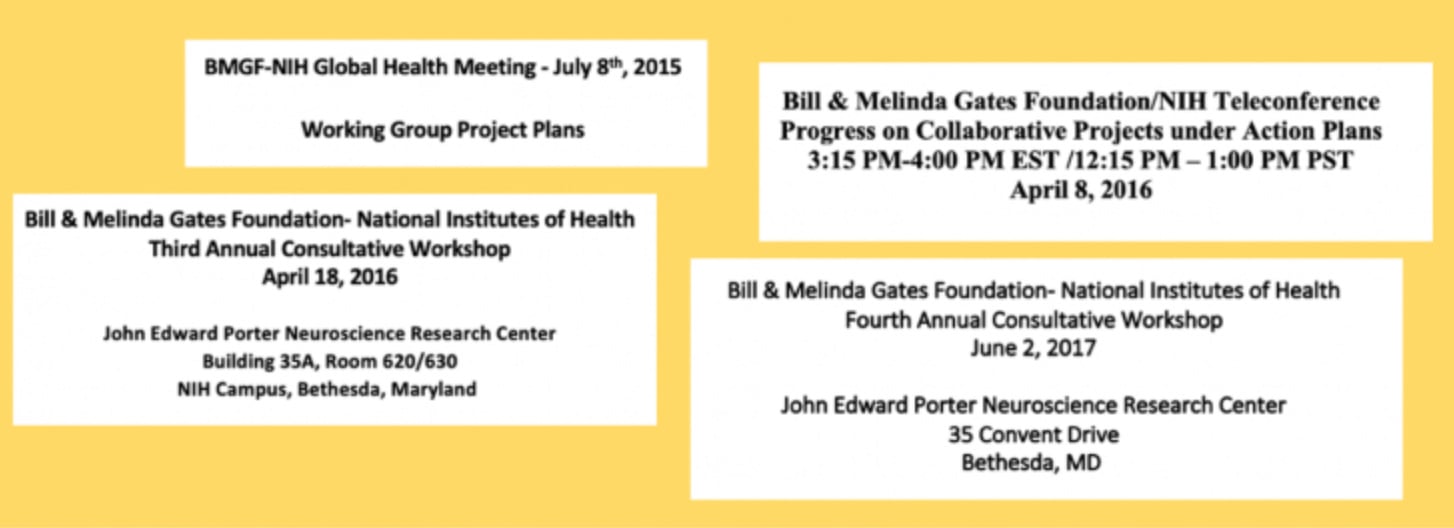
After Gates gave an NIH lecture in 2013, NIH documents show that the agency began hosting Gates-NIH Workshops, eventually synchronizing federal research programs with Gates, to include coordinating grant funding and science policies across 10 NIH programs.

“Bill Gates, along with the NIH, the Wellcome Trust, it was this cartel,” the whistleblower, a former NIH official who requested anonymity, told RCI. “This is a globalist movement. And that’s something that I don’t think the public knows.”

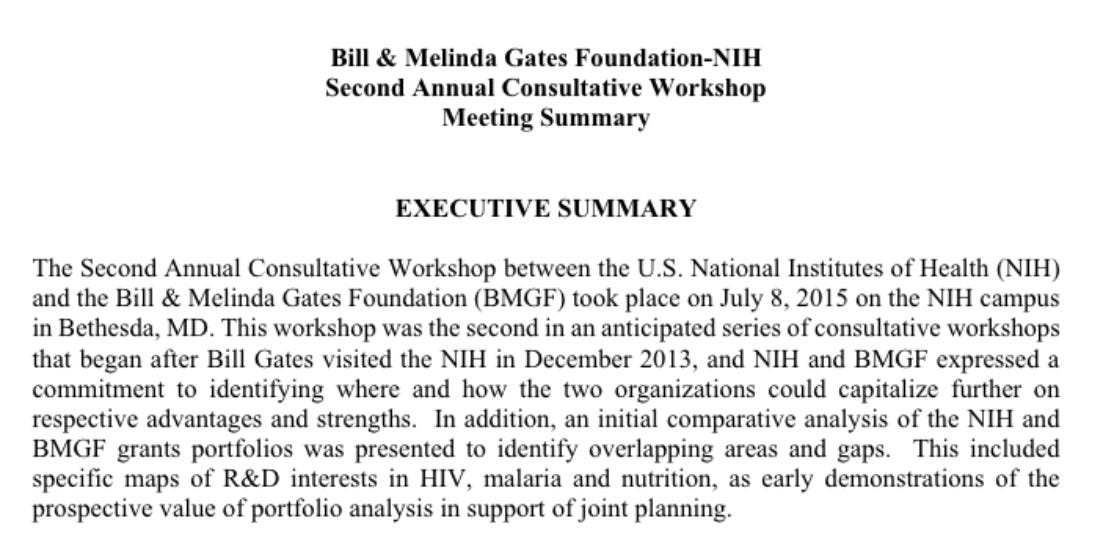
The Gates Foundation held its second annual meeting with the NIH in July 2105, with both sides proposing new areas of teamwork, and later agreeing to cooperate on funding and research policies for global health. One area of overlap was the West African Ebola outbreaks. To align the Gates Foundation’s Ebola research with the federal agency, Gates routed money through the FNIH so that NIH employees could hire the McKinsey consulting firm.

According to the NIH’s summary of the 2015 workshop, McKinsey’s study of the Ebola field found 20 therapeutics, eight diagnostics, and eight different vaccines, concluding that the Merck and GSK vaccines were the most advanced.


At no point in the several dozen emails and documents provided to RCI did NIH officials appear to raise any concerns about conflicts of interest regarding their work with Gates, nor the hiring of McKinsey to shape federal research and development policies. McKinsey is a global consulting firm whose clients include dozens of foreign governments and some of the world’s largest corporations.

House Democrats released an April 2022 investigation that documented McKinsey’s conflicts of interest during the opioid epidemic that killed tens of thousands of Americans, finding that McKinsey provided consulting advice to both Purdue Pharma and the Food and Drug Administration from 2008 to 2019. In one example, the report surfaced emails with McKinsey employees congratulating themselves for influencing a 2018 speech on opioid safety by then-FDA Commissioner Dr. Scott Gottlieb.


When Congress brought McKinsey managing partner Bob Sternfels before cameras during a 2022 public hearing, he alleged that his firm did not have a conflict of interestwhen it gave simultaneous advice to both OxyContin’s manufacturer and the government agency that regulated OxyContin. Two years later, McKinsey paid a $650 million fine to resolve a criminal and civil investigation into the firm’s consulting work with Purdue Pharma.

“The NIH and BMGF have had a long history of interaction, particularly with respect to vaccines and drugs,” reads the NIH summary of the 2015 Gates-NIH meeting.

A longtime NIH official said that the agency’s leadership initially held Gates at arm’s length, but eventually gave in. “They were very suspicious at first,” said the official, who requested anonymity. “But they got caught up in, ‘Wow, he’s the richest man in the world!”

The NIH official added, “What I saw, which really, I think, extends until this day, is a complete merging of NIH and Gates. And I’ve never seen that written anywhere. I don’t think people realize this incredible symbiotic relationship.”
Bill Gates Is Coming!

Bill Gates added a bit of splendor to the Gates-NIH workshop series when he made his first personal appearance at the April 2016 meeting. As part of the meticulous planning for the event, NIH Director Francis Collins held a 45-minute teleconference10 days prior to hash out the meeting’s details with Trevor Mundel, a former pharmaceutical executive in charge of global health at the Gates Foundation.

According to a list of key “milestones and accomplishments” sent at the time to Collins, the Gates Foundation was by then firmly entwined within the NIH ecosystem to include dual workshops, joint clinical trials, combined research policies, and collaborative funding efforts. For example, NIH staff and Gates employees worked together on clinical trials for TB treatment in Africa. Both Gates and NIH employees also began a joint study for TB with support from the Chinese Ministry of Science and Technology.

The night before the meeting, the NIH held a reception and a catered dinner, paid by the FNIH, for almost two dozen Gates executives at the Cloisters Mansion, a historic, stone castle in rural Maryland, where actor Will Smith married actress Jada Pinkett.

Emails show that the NIH continued scrambling that night to lock down the arrival of other attendees, which included Obama officials at the Department of Health and Human Services and the Commissioner of the Food and Drug Administration, Robert Califf.

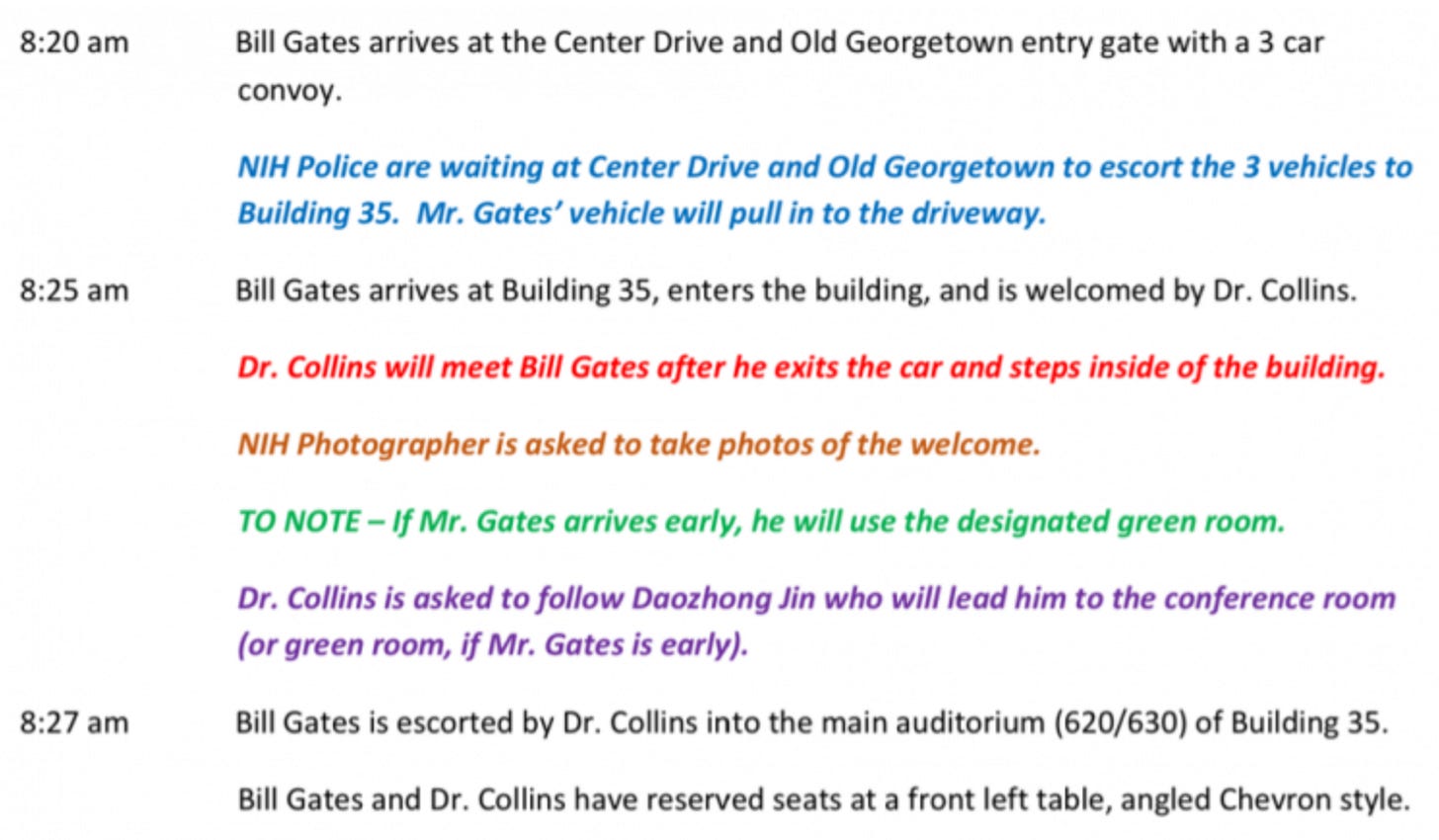
To provide Bill Gates a luxury experience, NIH staff prepared Collins – a Nobel Prize-winning scientist – a minute-by-minute itinerary for the arrival of Gates and his retinue the following morning. NIH police were ordered to greet Bill at the facility’s entrance and then escort the billionaire’s three-vehicle convoy the final half mile to one of the main research centers, where the Director lingered in waiting. Such deference to power, said a senior Trump official when reading the Collins itinerary over the phone, is normally reserved for the president, first lady, or visiting dignitaries of state.


“Dr. Collins will meet Bill Gates after he exits the car and steps inside of the building,” the itinerary read. After posing for a photo, Collins was bidden to escort the billionaire into the main auditorium and welcome the audience for Gates.

The agenda shows Collins and Gates Foundation’s Trevor Mundel gave a joint introduction before stepping aside for Bill Gates’s opening speech. Moderated by Dr. Anthony Fauci, the man who would later lead the U.S. medical response to COVID, the first panel included a mix of NIH and Gates executives discussing microbial outbreaks and public-private partnerships to develop pandemic-preventive vaccines.

Collins then moderated a panel on “Research on Engineered Gene Drives and Vector-Borne Disease Control: Status and Next Direction.” Gene drive technology involves inserting specific genetic traits to spread rapidly throughout a population. Gates has long been a fan of gene drives to control mosquitoes, but the technology is highly controversial as it could also drive species to extinction and irrevocably alter ecosystems. The NIH’s scientific program to control mosquitoes with genetic technology was apparently started with seed money from Gates in 2003.

Beginning in 2012, a Bill Gates-funded nonprofit called Target Malaria began a gene drive technology study to eradicate malaria-transmitting mosquitoes in Burkina Faso. Last August, Burkina Faso’s government suspended Target Malaria’s project over safety concerns and worries about the excessive influence of Bill Gates on the country’s sovereignty.


Gates only stayed the morning of the 2016 meeting and left before lunch. “Bill Gates is escorted, by Dr. Collins, out of the building through the same hallway he entered,” reads Collins’ itinerary. “NIH Police escort Mr. Gates and staff to the exit gate.”

The meeting ended with a wrap-up and review of next steps, led by Collins and a Gates executive.

Later that year, the FNIH honored the Bill & Melinda Gates Foundation and Pfizer with an award for supporting the NIH’s mission. Gates was recognized for $413 million dollars in donations and Pfizer for $73 million. In a press release announcing the honor, the NIH said, “Their gifts created cornerstone programs and paved the way for our partnerships with literally hundreds of other organizations dedicated to driving biomedical research worldwide.”


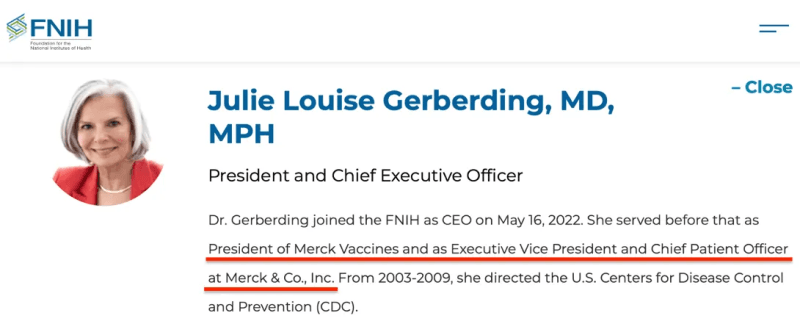
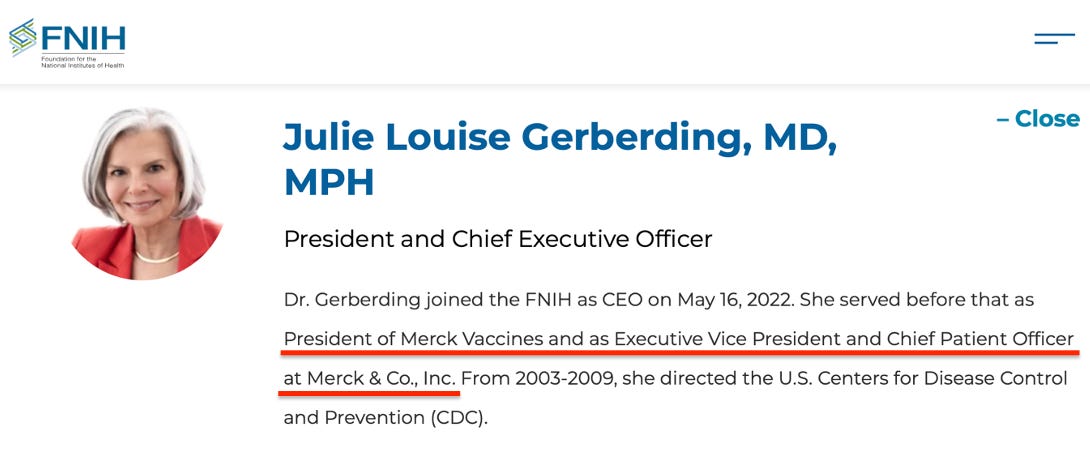
The FNIH continues to maintain close ties to pharmaceutical interests, a major NIH funder. The current CEO, Julie Gerberding, came to the FNIH during the COVID pandemic, having previously served as President of Merck Vaccines.


This article appeared at Brownstone Institute and republished from the author’s Substack


About Paul Thacker
Paul D. Thacker is an Investigative Reporter; Former Investigator United States Senate; Former Fellow Safra Ethics Center, Harvard University
View all posts by Paul Thacker →


Study Challenges Perception Of Matched Betting As ‘Risk-Free’ Income


Image: Grok


September 23, 2026

By Eurasia Review

Key Takeaways:

A Bournemouth University team (Bush-Evans, England, Bolat, Arden-Close, Wang) surveyed 2,112 UK adults who do matched betting and read 2,954 personal accounts; the study is in International Gambling Studies.

Many treat the practice—using bookmaker free-bet offers on both sides of an event—as “risk-free” or not really gambling, yet just over half said they had lost money, usually blaming miscalculations, promo rules, or wrong clicks rather than the activity itself.

Some described chasing results, staking extra cash, or moving into other gambling; the snapshot design cannot prove matched betting causes that later. The authors want more longitudinal work and scrutiny of social-media and affiliate promotion.


A new peer-reviewed study from Bournemouth University has found a striking gap between how people perceive the risks of matched betting and what some experience in practice.

Matched betting involves using free bets given out by online gambling companies as a promotion to attract new customers. This allows people to bet on different results for the same event, such as a football match. It is frequently promoted online as a controlled or even ‘risk-free’ way of making money.

Researchers surveyed 2,112 UK adults currently engaged in matched betting and analysed 2,954 personal stories about whether they considered matched betting to be gambling, the difficulties they had encountered, and losses they had experienced. The study was conducted by a team of researchers from Bournemouth University, including Dr Reece Bush-Evans, Dr Helen England, Dr Elvira Bolat, Dr Emily Arden-Close and Dr Ruijie Wang.


“The contradiction between perceived and experienced risk was striking”, said Dr Bush-Evans. “Many participants described matched betting as risk-free or controllable, yet just over half reported having losing money at some point while matched betting”.

The study, published in International Gambling Studies, found that participants frequently distinguished matched betting from conventional gambling. However, their accounts also described gambling-related harms such as financial losses, mistakes, mental strain and emotional impulses.

One of the most notable findings was how participants explained losses.

“More than half of those we surveyed reported losing money through matched betting, but the losses were commonly attributed to mistakes such as incorrect calculations, misunderstanding promotions or pressing the wrong button rather than to risk inherent in the activity,” Dr Wang explained.

“What we found particularly interesting was that losses did not necessarily undermine people’s belief that matched betting was risk-free”, she added.


Some participants also described chasing wins or losses, betting additional personal money, or moving from matched betting into other gambling activities. The research team caution, however, that the study captured people’s experiences at a single point in time and therefore cannot establish whether matched betting causes later gambling behaviour.

The research team noted that people who regard matched betting as a financial strategy or side hustle, rather than gambling, may be less likely to recognise potential harmful gambling behaviours.

The researchers argue that matched betting deserves greater attention in gambling research and consumer-protection discussions. “Matched betting remains surprisingly under-researched despite its visibility online”, Dr Bush-Evans concluded. “We would welcome further research following matched bettors over time and examining how matched betting is promoted through social media, online communities and affiliate marketing”.