Wednesday, September 23, 2026


Ukrainian Drone Force Commander Reports 300 Ships Disabled

Ukraine striking Russia shipping
In July, Ukraine claimed to have hit 159 vessels in 12 days, including 112 in the Sea fo Azov (USF)

Published Sep 22, 2026 6:24 PM by The Maritime Executive


Ukraine is reporting a new milestone in its campaign, launched during the summer, targeting Russian shipping on the Sea of Azov and the Black Sea. Both Ukraine and Russia accelerated their attacks this year on commercial shipping, greatly reducing movement on the Black Sea and leading to protests from Turkey and others.

Robert “Magyar” Brovdi, commander of Ukraine’s Unmanned Systems Force, released a statement on social media on September 22 asserting that his forces have now disabled 300 vessels supporting Russia. He says the campaign was launched on July 6 and since then they have focused on disabling ships supplying Crimea as well as carrying exports from Russia.

Brovdi asserts they have hit and disabled 134 vessels in the Sea of Azov and 166 vessels in the Black Sea. Most of the targets were either tankers moving fuel and energy products or dry bulk carriers. 

He writes, “The Sea of Azov stands and will stand (still), together with the Kerch Strait. The ‘maybe we’ll slip through’ regime operates in the northern and northeastern part of the Black Sea.” He asserts Ukraine has brought shipping to a standstill, saying the “maybe we’ll slip through mode is in shambles.”

The campaign has been controversial, with Russia saying it was worse than piracy, as Ukraine was just attacking, not stealing like pirates. Russia has responded with its own increase in attacks, claiming it is targeting ships moving military supplies for Ukraine. Almost a day doesn’t go by that the Russian Ministry of Defense does not claim hitting a cargo ship in one of Ukraine’s ports or attacking the port infrastructure.

Russia reportedly placed a halt on much of the regional shipping, especially in the Sea of Azov. A report by Reuters today, September 22, said that Russia has taken to repurpose fertilizer, coal, and cargo terminals in the Baltic and Arctic and is diverting its grain shipments to those ports. Historically, 90 percent of Russia’s grain exports went through the Black Sea.

Ukraine has also been forced to find alternate routes to ship its grain, including the Danube ports and channels. It is also reported to have increased shipments by truck and rail, but grain exports have fallen.

Brovdi wrote earlier in the campaign, “The goal is the irreversible paralysis of oil, fuel, and cargo logistics used to bypass sanctions. We want every self-propelled vessel to become a drifting barge – blind and deaf. The objective is not to pollute the sea with oil spills, so we are not sinking them.”

In one 12-day period at the beginning of July, Brovdi claimed his forces had hit 159 tankers. He asserts the campaign will continue and is contributing to Ukraine prevailing in the long conflict.

Turkey has attempted to broker a ceasefire to stop the attacks on commercial shipping. The deals have been repeatedly rejected, although there are new reports that Russia has indicated a willingness to work with Turkey. But for now, the strikes on commercial shipping are continuing.


More Problems for Scotland’s Ferry Replacement Program

ferry shipbuilding in Turkey
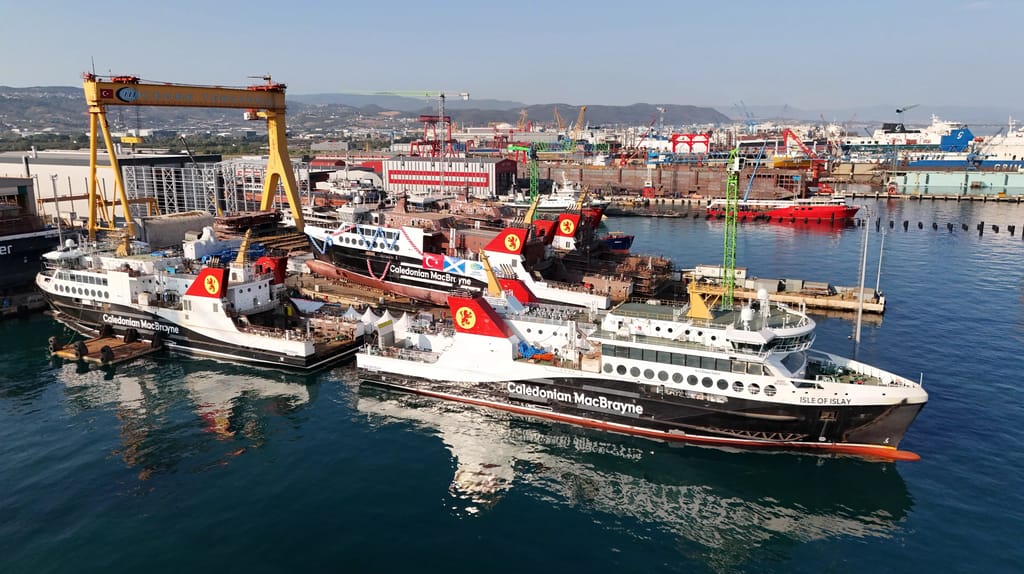
The four ferries while still under construction in Turkey (CMAL)

Published Sep 18, 2026 8:57 AM by The Maritime Executive


Scotland’s plan for the modernization and improvement of its vital ferries continues to encounter problems, with more reports of delays and cost overruns. The BBC says the next ferry will finally be delivered nearly two years behind schedule, while two others are being delayed until 2027. Costs for these newbuilds have also risen by approximately $27 million, or nearly a 10 percent increase for a project originally valued at approximately £200 million.

This comes even after the state-owned Caledonian Maritime Assets Limited (CMAL) took the unusual step in June 2026 of taking ownership of three incomplete ferries being built at Turkey’s Cemre Shipyard. The company said it was taking the steps because of the precarious financial situation of the yard. It cited economic challenges, including the conflicts in Ukraine and Iran and disruptions in the Red Sea, along with, the BBC says, falling currency exchange rates, supply chain difficulties, and labor shortages. CMAL paid a reported £23 million for full ownership of the three incomplete vessels.

“Taking ownership of the vessels at this stage is a precautionary move to reduce risk, protect the investment already made, and support our objective of bringing these vessels into service as quickly and efficiently as possible,” said Kevin Hobbs, the current chief executive of CMAL.

The Scottish government was fully supporting the move, with reports noting that if the yard collapsed financially, CMAL owned the ships and could tow them out for completion elsewhere.

Despite taking these steps, the BBC reports the problems persist in the program, which is nearly a decade in the making. The Scottish government announced plans for new vessels in April 2018, and by 2019, CMAL began design work for what has ultimately become a construction order for four passenger-car ferries to serve routes including to Islay, the southernmost of the Inner Hebrides islands, off the west coast of Scotland. 

The construction plan was part of a broad 10-year program of investment by CMAL, backed by the Scottish government, which committed £580 million for the five years between 2021 and 2026. They highlighted plans to deliver 21 new vessels to the fleet, along with upgrades to harbor infrastructure.


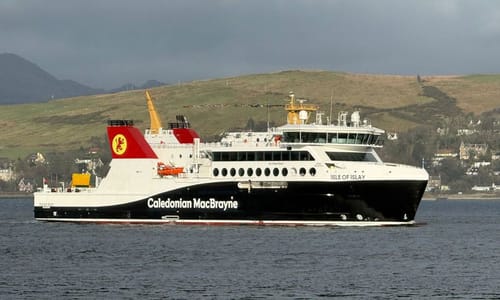
The first of the ferries, Isle of Islay, entered service approximately 15 months behind schedule (CMAL)


Cognizant of the debacle in the construction of the two advanced LNG-fueled ferries that became Glen Sannox and Glen Rosa, which would ultimately take a decade from order to delivery, CMAL highlighted a rigorous program for appointing the shipyard for the island ferry project. Started in 2021, it said 35 organizations expressed interest, and 11 responded during the first round. Ultimately, it was narrowed to four shipyards, Damen in Romania, Remontowa Shipbuilding in Poland, and the Turkish yards Sefine Denizcilik Tersanecilik Turizm and Cemre Marin Edustry.

Cemre was named the preferred bidder in March 2022, after what was reported to have been a “robust assessment of technical and financial criteria.” The £91 million contract to build two 95-meter (312-foot) ferries was awarded in March 2022. The vessels were designed to increase vehicle and freight capacity by 40 percent on the Islay route, with each of the two ferries able to accommodate 450 passengers and 100 cars or 14 commercial vehicles. The contract called for delivery of the first ferry in October 2024 and the second one in early 2025.

The government in October 2022 prioritized additional funding, saying it was working to accelerate plans for the replacement fleet. CMAL used that in February 2023 to finalize a second contract for two additional sister ships at the Cemre yard. These ships, scheduled for delivery in June and October 2025, were for the region of the Hebrides known as “The Little Minch.”

Speaking at the time of the progress, Jim Anderson, director of vessels at CMAL, said, “We have been encouraged by the timescales the yard is achieving on the Island vessels, with the most recent milestones being reached three weeks ahead of schedule.” 

The first of the vessels, Isle of Islay, was launched on March 16, 2024, with the company still reporting it was due for delivery in October 2024. Her sister, Loch Indaal, followed her into the water in June 2024, with her delivery scheduled for February 2025.

The delays began to creep into the program after that, with CMAL referencing the difficult global circumstances, which it said led to the ships falling behind schedule. Isle of Islay, originally scheduled for delivery in October 2024, was finally handed over on January 15, 2026, and after a trip from Turkey to Scotland, testing, and crew familiarization, finally entered service in March. 

As of June, the company said the second of the ferries, Loch Indaal, had just completed successful sea trials. The third ship, Lochmor, was launched on August 23, 2025, and the final ship of the group, Claymore, was launched in May 2026.

According to the latest update seen by the BBC, the second ferry, Loch Indaal, is likely to be delivered in October, and then it will take another two months before she carries her first passengers. Lochmor is scheduled for trials in November, with delivery in early 2027, and Claymor is expected to be delivered in the second quarter of 2027.

Despite all the challenges, CMAL continues to highlight that it is making progress on the long-promised vessel replacements. In addition to the deliveries of the island ferries, Glen Rosa, which had her first steel cut in 2016 and was launched in 2024, will be delivered before the end of 2026. CMAL said in June that it is progressing the Small Vessel Replacement Programme (SVRP) at Remontowa Shipyard in Poland and the construction in China of two new freight-flex vessels for the Northern Isles. At the end of August, CMAL announced the appointment of a ferry design consultancy for the concept design phase for new vessels for its route to Mull, as the fleet modernization continues.


Taiwan Tests Out Conversion of Coast Guard Cutters for Antiship Role

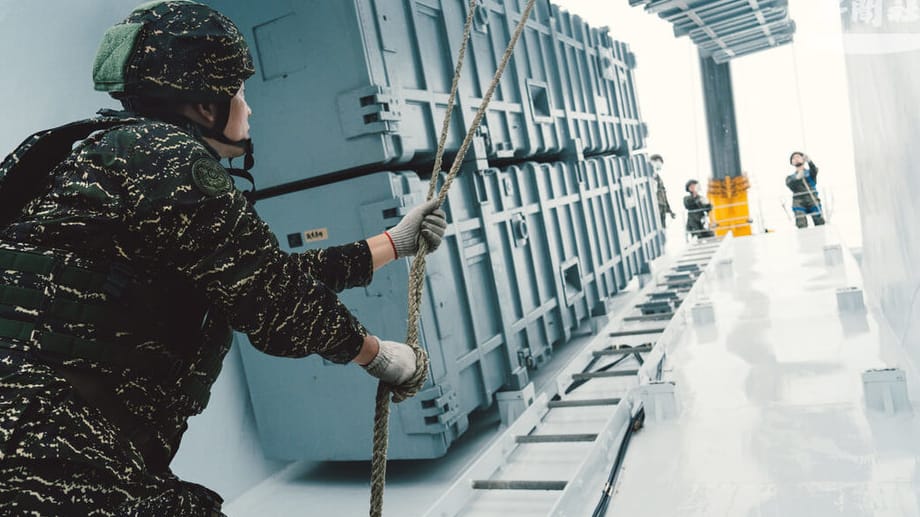
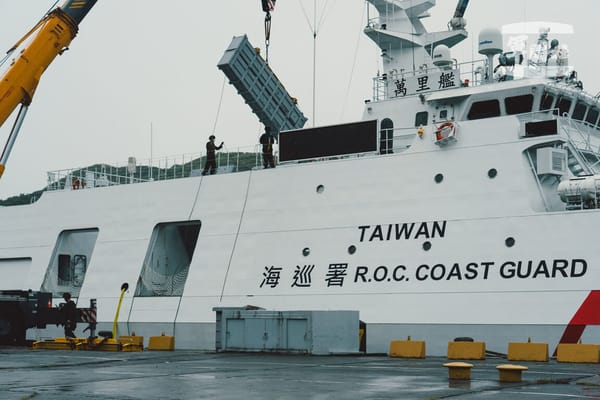
Servicemembers load antiship missiles aboard an Anping-class patrol vessel (Taiwan Ministry of National Defense file image)
Servicemembers load HF-2 / HF-3 antiship missiles aboard an Anping-class patrol vessel (Taiwan Ministry of National Defense file image)

Published Sep 22, 2026 4:55 PM by The Maritime Executive


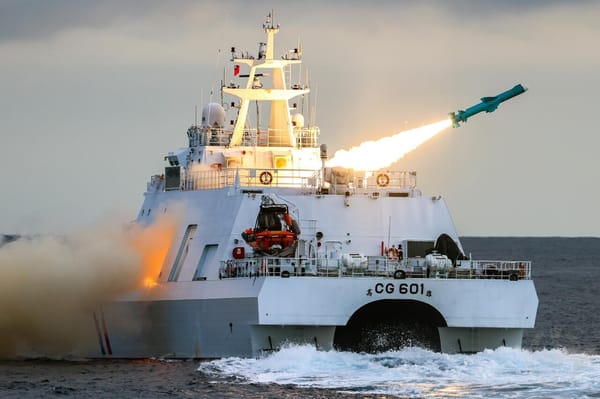
Last week, Taiwan's coast guard demonstrated its ability to use its coastal patrol vessels to launch locally-built antiship missiles, adding additional heft to its defensive capabilities. 

In a trial on Friday, the Taiwan Coast Guard patrol vessel Qijin test-launched a Hsiung Feng III supersonic missile at a decommissioned Taiwan Navy frigate in a sinking exercise. The missile traveled about 50 nautical miles - more than half the width of the Taiwan Strait - before striking its target. A coast guard unit followed up with the launch of a subsonic HF-2 antiship missile. 

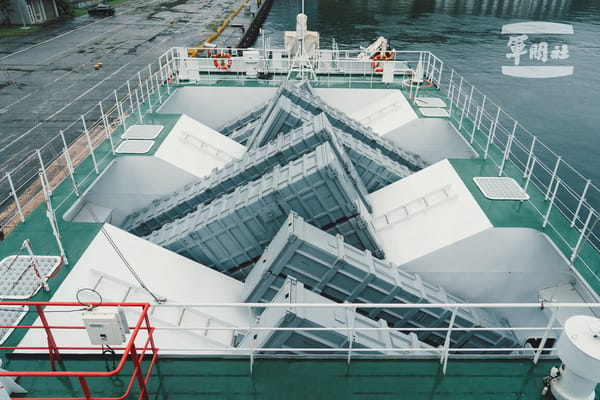
The Qijin is one of 12 ships (10 active) in the high-speed catamaran Anping-class, and several sister ships have also test-launched antiship missiles. They are capable of carrying up to 16 box launchers for the purpose and can be readily converted in wartime. Taiwan's Navy has only several dozen vessels capable of launching antiship missiles, and an additional 12 hulls with 16 launchers each would be a meaningful addition.  

Taiwan Ministry of National Defense / CNA file image

Taiwan Ministry of National Defense / CNA file image

Taiwan Ministry of National Defense

Few other coast guards have taken on a high-end antiship guided missile role, though a military role in time of war is common practice. The U.S. Coast Guard briefly carried the Harpoon antiship missile on some of its largest cutters in the 1980s, but has long since given it up. In major conflicts, the U.S. Coast Guard has historically been integrated into the U.S. Navy's command structure and assigned to combat missions, like convoy escort and antisubmarine warfare; it is formally a military service and the legal structure for transferring its control to the Navy remains in place. 

The China Coast Guard operates the world's largest fleet of seagoing cutters - some larger than the largest U.S. Navy destroyers and cruisers - and many are believed to be warships-in-waiting, ready for conversion into surface combatants in time of conflict. It operates under China's military command structure and carries out paramilitary missions, though it is nominally a "white-hull" law enforcement agency. 


IRGC Profiteer Babak Zanjani Skims Iran’s Hormuz Tolls

iStock

Published Sep 20, 2026 
 by The Maritime Executive

The US Treasury has once again targeted the sanctions evasion network master-minded by regime insider Babak Zanjani, linking him to Strait of Hormuz toll fees collected through his crypto exchange BitBank.

Babak Zanjani has featured frequently in previous reports carried by the Maritime Executive, which have highlighted how two sons of prominent Iranian hardliners have exploited their close connections to evade sanctions controls and fund the regime, but also to profit personally.

Mohammed Hossein Shamkani, son of the late Iranian National Security Advisor Ali Shamkani, and Babak Zanjani, who manages to be inter-married both with the family of the late Supreme Leader Ali Khamenei and also his son Mojtaba, named as the current Supreme Leader, have both made billions by heading up commercial networks that sell Iranian oil exports through sanctions evasion schemes.

Shamkani and Zanjani are merely the most prominent members of a small circle of equally well-connected sanctions evasion brokers, many of whom split their time between Iran and Dubai. An up-and-coming member of this circle is Ali Rezaei, son of hardliner Mohsen Rezaei, who was recently appointed Secretary of the National Security Council. Ali Rezaei is married into the family of Iran’s first Supreme Leader Ayatollah Khomeini, and leverages his connections within the Intelligence Ministry’s Directorate-General for Fuel and Energy, and what is known in Iranian exile circles as the Shayan Network.

Typically such black-market entrepreneurs have assistance through their family connections with false passports, travel arrangements and financial transactions. But their primary route to riches is their role in selling Iranian oil for export through networks of front companies and dark fleet tankers. While the arbitrage between the discounted price of Iranian oil for export and what it can be sold for used to provide enough profit, this new generation of traders also profits by avoiding payments due to the Iranian Ministries of Oil and Finance. The Iranian ministries are particularly vulnerable to non-payment as the foreign transactions of these networks get ‘lost’ as they are routed through opaque and unorthodox payments systems designed to avoid scrutiny and effective accounting.

With the blockade on exports through the Strait of Hormuz completely blocked, and stocks held afloat in Asia now running down, the sanctions-evasion business at the moment is a bit bleak. In its latest sanctions action on September 17, the US Treasury’s Office of Foreign Assets Control (OFAC) has designated Zanjani's crypto exchange BitBank, which it says has been used to move funds between ship managers seeking to use the northern transit channel in the Strait of Hormuz and the Persian Gulf Strait Authority (PGSA), which claims to control it. BitBank has been used both to collect toll fees passed through the so-called "HormuzSafe Marine Services Authority," according to OFAC.

OFAC’s designation, and the implicit understanding that OFAC is aware of transactions taking place within BitBank, means that anyone attempting to pay the PGSA could lose their money and might also find themselves subject to US Treasury penalties, with their ships identified as blockade runners subject to follow-up action by the US Navy positioned in the Gulf of Oman. Some Asian shipowners in particular might feel they can escape OFAC financial sanctions by avoiding transacting in US dollars and using front companies, but may be exposing their ships - generally manned by Indian seafarers - to direct challenge by the US Navy.

Included under the OFAC designation are the leading executives of BitBank, which has been widely promoted by Babak Zanjani in his social media postings, and both HormuzSafe and the Persian Gulf Marine Insurance Company.

The opinions expressed herein are the author's and not necessarily those of The Maritime Executive.


Africa’s Red Sea States Face Growing Risks as Houthis Expand Their Reach

Yemen
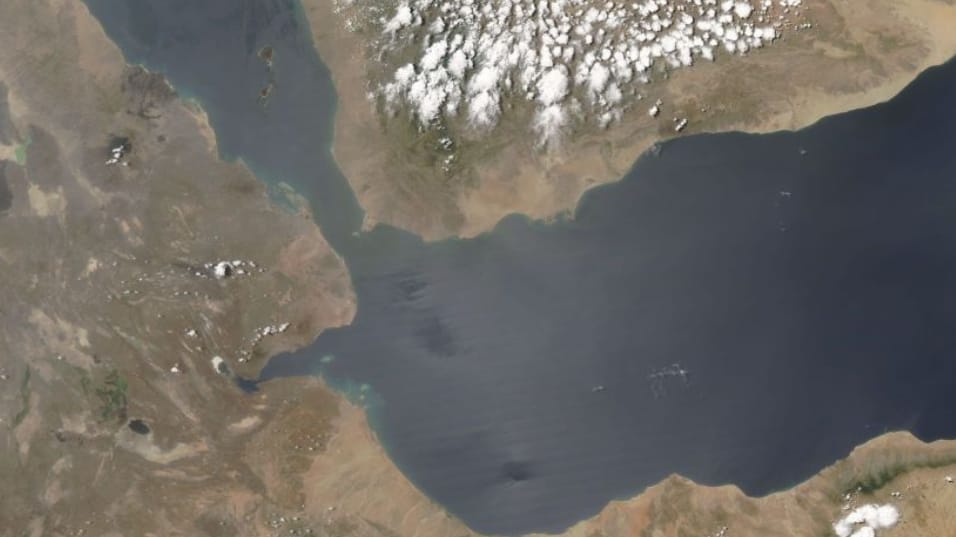
Bab el-Mandeb is a critical chokepoint for maritime trade (NASA)

Published Sep 18, 2026 7:09 PM by The Conversation


[By Burak Sakir Seker]

The Houthi takeover of parts of the Red Sea gives the armed group a new platform to challenge global shipping. The group has taken over the port of Mocha, the island of Mayyun, and the Zuqar and Hanish archipelago about 160km north of the Bab al-Mandeb Strait. These areas were previously controlled by Yemeni government forces.

The Bab el-Mandeb Strait is a narrow maritime chokepoint roughly 32km wide. Lying between the Arabian Peninsula to the north-east and the Horn of Africa to the south-west, it directly links the Red Sea to the Gulf of Aden and the Indian Ocean.

This geography matters. Mayyun Island, for example, divides a waterway that is used by international shipping. Historically, this passage accounts for about 12% of global trade.

The African side of the Bab el-Mandeb Strait hasn’t been taken over by the Houthis. But the group’s September 2026 advance has serious economic and security implications for Egypt, Ethiopia, Djibouti and Eritrea, with the potential to escalate existing conflicts in Somalia and Sudan.

The Houthis are an Iran-aligned armed movement that controls much of Yemen, and has been fighting the country’s internationally recognised government since seizing the capital in 2014.

I have studied global maritime geopolitics and security, including issues involving the Red Sea, for more than two decades. In my view, the Houthi threat is not just a logistical one. It also poses a strategic danger to Africa’s Red Sea states.
 
The African shoreline is suddenly much more valuable to outsiders who want to monitor, contain or outflank the waterway opposite them. The Houthis now occupy armed posts around the strait, bringing the threat closer to the critical shipping corridor.

As it stands, an Iran-backed non-state armed group may now be able to deploy missiles, mines and fast-attack craft along an extended length of the eastern Red Sea. At the same time, Iran retains the ability to block the Strait of Hormuz.

This raises the risk of simultaneous disruption at two important maritime chokepoints, potentially leaving ships with no safe route through the Red Sea.

The risks for Africa

Disruption on the Red Sea cascades through four channels of African economies: shipping and insurance costs, port revenue, energy and food prices, and maritime security risks.

Red Sea states

Egypt

Egypt bears the highest direct financial risk. In 2024, the decline in Red Sea traffic resulting from Houthi attacks on commercial shipping cost Cairo an estimated US$7 billion in lost Suez Canal revenue. Revenue reached US$4.67 billion for the fiscal year 2025-26, which represents a 23% increase compared to the previous year. But if the diversion of shipping continues, it will soon reverse the improvement in revenue.

Djibouti, Ethiopia and Eritrea

Over 2,000 people fleeing the hostilities in western Yemen have crossed over to Djibouti’s northern shores. Renewed fighting has pushed displacement since the escalation began in early September 2026 to nearly 94,000.

Djibouti is also a key external trade conduit for Ethiopia, which is landlocked. Ethiopia conducts approximately 95% of its trade via Djibouti.

Eritrea is also vulnerable along the frontlines. Its geographical position makes it attractive to Saudi Arabia and Egypt, which want to ensure that Iran and the Houthis don’t have too much influence on the African side of the Red Sea.

Somalia and Sudan

The Houthi crisis compounds the existing crises in Somalia and Sudan.

The Houthis and Somali terror group al-Shabaab have exchanged weapons, drone technology and training in exchange for facilitating piracy off the coast of Somalia. This happens while an African Union mission in Somalia is trying to keep al-Shabaab under control.

As a result, the number of piracy incidents off Somalia’s coast jumped to a 10-year high in 2026. Somalia approved an anti-piracy bill in September 2026, aimed at preventing maritime abductions.

In Sudan, Iranian support has reached parts of the Sudanese Armed Forces. The army is battling the United Arab Emirates-backed Rapid Support Forces.

By mid-2024, the Houthis had reportedly begun helping Iran supply weapons to the Sudanese army. The US Treasury has sanctioned key Sudanese figures over these ties to Iran.

The implication is uncomfortable: the Red Sea’s African shore is not only exposed to the Houthis, it has begun to serve them.

Competition for political control

The current geopolitical shifts in the Red Sea predate the Houthi offensive.

In January 2024, Ethiopia signed a memorandum with the breakaway region of Somaliland for access to its Red Sea coast and a naval base. This was in exchange for a path towards recognition.

Somalia, Eritrea and Egypt opposed the deal. Within a year, they had established a joint security mechanism.

Regional security cooperation has since accelerated. In July 2026, Saudi Arabia hosted talks at which 14 countries – including Egypt, Djibouti, Sudan and Somalia – established the Multinational Maritime Defence Alliance.

The UAE – following clashes with Saudi-backed forces in Yemen in December 2025 – and landlocked Ethiopia are excluded.
 
At the same time, a competing alignment involving the UAE, Israel and Ethiopia has emerged, strengthened by Israel’s recognition of Somaliland in December 2025. On the other side are Somalia, Turkey, Egypt and Saudi Arabia.

Iran has also sought a military foothold along the Red Sea corridor, including in Sudan. Eritrea, meanwhile, is using its strategic coastline to strengthen its regional position and counterbalance Ethiopia.

The result is a growing contest for influence in which Middle Eastern powers are making greater use of Africa’s strategic position.

What’s to be done

No single African state can protect the Bab al-Mandeb Strait, but governments can minimise some consequences by diversifying port access and inland trade routes. A more direct lever is improving maritime security capacity at the regional level.

In August 2026, state signatories to the Djibouti Code of Conduct and its expanded Jeddah Amendment committed to forming a combined task force to combat piracy.

The success of this initiative will rely on the ability of governments to provide the ships, intelligence, personnel and legal frameworks necessary to make this a functional security mechanism.

African states are not yet setting the broader strategic agenda, but their control of chokepoints increases their diplomatic leverage. The challenge is to use that leverage without becoming proxies in a wider Middle Eastern confrontation.
 

Burak Sakir Seker is Associate Professor, Department of International Relations, Ankara Haci Bayram Veli University

This article appears courtesy of The Conversation and may be found in its original form here


Tropical Storm Intensifies Into Cat-5 Hurricane Overnight Off Mexico

Hurricane Polo at the outset of an extreme rapid intensification cycle, Sept. 21 (NOAA / CIRA)

Published Sep 22, 2026 9:47 PM by The Maritime Executive

A tropical storm off the Pacific coast of Mexico has exploded into a dangerous Category 5 hurricane in less than 24 hours, according to the National Hurricane Center. It ranks among the most powerful storms ever recorded in the basin, and among the fastest-forming as well - a capstone to an unusually active Pacific cyclone season. 

On Monday morning, Polo was a common tropical storm with an intensity of about 45 knots. By Tuesday, following a "truly remarkable" stretch of extreme rapid intensification, it had sustained winds of 140 knots. 

On Tuesday afternoon, a NOAA Hurricane Hunter flight measured an extreme low pressure of 892 mb at the center of the storm and flight-level wind speeds of about 168 knots, with surface-level winds assessed "conservatively" at a powerful 155 knots. It was hovering over one patch of warm water, its drift assessed at just one knot. 

NHC forecasters predict that the hurricane will retain most of its strength for days, fueled by "extremely warm" El Nino waters and light vertical wind shear. The intensity forecast suggests that its wind speeds will remain above 125 knots through the 25th, and tropical storm warnings extend out as far as Mexico's western coastline. Heavy rainfall will likely have dangerous effects on shore, including flash-flooding and mudslides - and the plume of water vapor spun out by the storm is causing heavy rainfall events as far away as New Mexico, 1,000 miles to the north. 

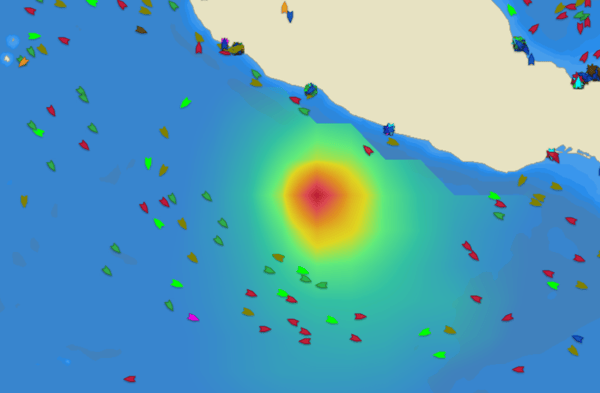
Steering forces are expected to move the hurricane to the northwest over the next several days, moving it off the coast of Baja California. The storm may briefly disrupt shipping on the lanes to and from Manzanillo, Mexico's biggest Pacific port, and force vessels on north-south routes along the coast to move further offshore. AIS data provided by Pole Star Global shows the routes that vessels have already adopted to avoid the hurricane's path, and most are giving its winds and waves a wide berth. 

Traffic navigates around a region of high estimated wave height in the vicinity of Hurricane Polo, Sept. 22 (Pole Star Global)

Polo is the third Category 5 hurricane in the Pacific this season; its speedy expansion ranks up near Hurricane Patricia's record for most extreme intensification in a 24-hour period (a 95-knot speed gain for Polo versus Patricia's 105 knots). 


Video: Chinese Fishing Vessel Survives Dangerous Encounter With a Bulker

Bulker contact
Via social media

Published Sep 20, 2026 7:46 PM by The Maritime Executive


On Thursday, a bulker made contact with the stern of a Chinese fishing vessel during a complex traffic situation off the coast of Singapore - but the smaller vessel appears to have miraculously escaped. 

At about 0800 hours GMT on Thursday, the bulker First Margaux got underway from a busy anchorage on the east side of Singapore, headed westbound (per AIS data provided by Pole Star Global). Fishing vessel Luqing Yuanyu 108 got under way at about the same time from a different anchorage just off Sentosa and headed south. There was heavy traffic in the vicinity, with limited room for maneuver. 

Both vessels reached the westbound lane of the TSS and set a typical course towards the Strait of Malacca. Luqing Yuanyu entered the TSS in front of First Margaux, and the bulker was moving about 2-3 knots faster. Slowly overtaking Luqing Yuanyu from the smaller vessel's port side, First Margaux passed astern of the fishing vessel and continued to close the distance as the crew watched and shouted. Sometime around 0900, First Margaux's bow made contact with Luqing Yuanyu 108 on the starboard quarter, then pushed the smaller fishing vessel sideways, turning her and forcing her to heel hard to port. Water flooded in over the low gunwales of the Luqing Yuanyu's main deck.

The video ended shortly after the moment of contact. The fishing vessel continued to transmit an AIS signal and was still visible on tracking as of Sunday, indicating that it survived the encounter and reached a nearby berth. No injuries or fatalities have been reported. 

First Margaux continued westbound at a steady 10 knots for another two hours after the collision before stopping, circling back and then going to anchor. 

First Margaux is a Japanese-owned, Chinese-managed 80,000 dwt bulker flagged in Panama. She is three years old and has a clean inspection record. 


Indonesia Takes Delivery of a "Free" Aircraft Carrier

Giuseppe Garibaldi arrives in Indonesian waters (TNI AL)

Published Sep 17, 2026 10:06 PM by The Maritime Executive


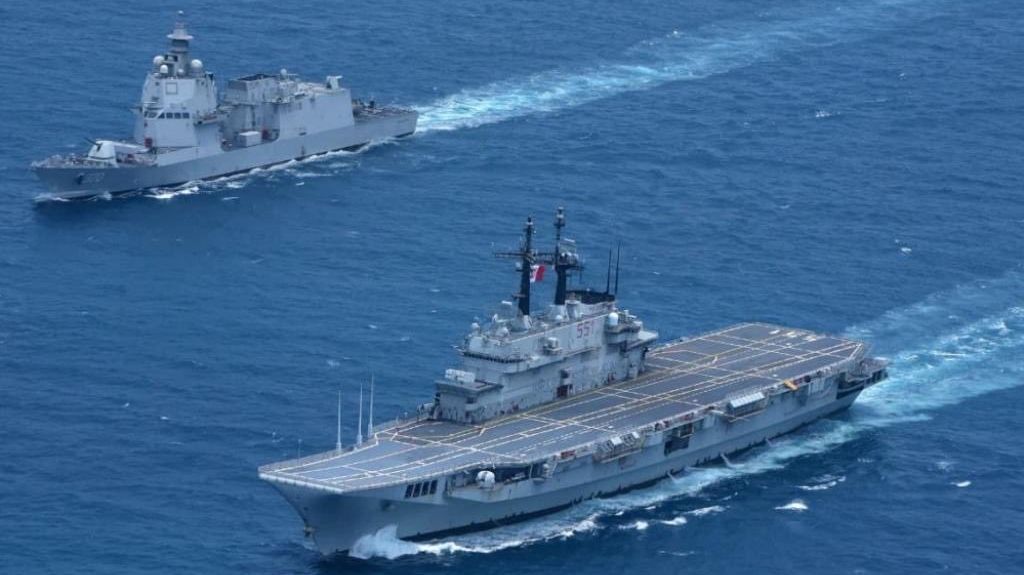
The Indonesian Navy is giving new life to Italy's first aircraft carrier, the 1985-built ITS Giuseppe Garibaldi, which arrived in Jakarta on Friday to begin a career as KRI Gajah Mada. The vessel served Italy in multiple conflicts over the span of 40 years, but has been out of commission since 2024; she has been gifted to the Indonesian government and will be revived as a helicopter carrier. 

Garibaldi was envisioned as a cruiser-carrier, capable of combat in her own right, and was fitted with torpedo tubes and missile launchers for self-defense against surface and aerial threats. In her prime, an air wing of up to 16 AV-8B Harrier jump-jets - a design also used by the U.S. Marine Corps and the Royal Navy - provided reach. She contributed to air support during the war in Kosovo, participated in the early stages of the U.S. occupation of Afghanistan after September 11, and joined the Italian contribution to the no-fly zone mission over Libya in 2011. 

Garibaldi's position as the Italian Navy's flagship came to an end in 2009 with the delivery of the Cavour, a larger carrier equipped for the modern F-35B stealth fighter. An even larger helicopter carrier, the Trieste - an amphib with a well deck as well as a flight deck - delivered in 2024; with Trieste's arrival, Garibaldi retired from service. 

Seeing an opportunity to acquire a carrier at a favorable cost, the Indonesian Navy expressed its interest in buying Garibaldi in early 2025. After study, the Italian Navy determined that the most economical course of action would be to gift the carrier to Indonesia, thereby avoiding the expense of upkeep and an approved demolition plan. Despite political opposition, the Italian Senate signed off on the transfer, and the Indonesian government became the owner of a carrier overnight. Indonesia paid for the long-distance delivery voyage at a cost of approximately $60 million, but the vessel itself was free of charge. She departed in late August and arrived Friday, in ample time for her formal renaming and commissioning ceremony. 

Indonesia still has to invest in the support infrastructure and upkeep that a carrier requires. Its navy is building out a pier and other support facilities at the naval base in Ratai Bay, Sumatra. It also plans to spend significant sums on modernization and refurbishment for the vessel's long-term use. 

Indonesia's plan is to use the vessel as a helicopter carrier - though she could also be adapted for use as a drone carrier, taking advantage of long-range drone aircraft that Indonesia already owns, as noted by The War Zone. Disaster response is a likely mission set: This week, President Prabowo Subianto called for a large investment in the nation's helicopter fleet for that purpose. 


Video: Indonesian Rescue Divers Comb Ferry's Wreck for Victims

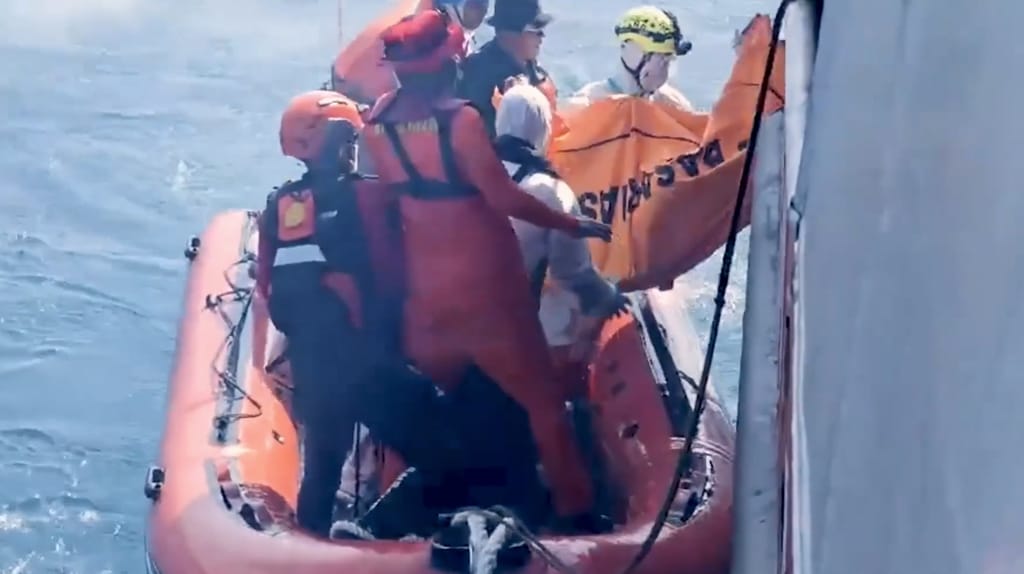
Rescue team transfers remains recovered from the Virgo Transport 8 (Basarnas)

Published Sep 22, 2026 11:34 PM by The Maritime Executive


More than a week after the sinking of the ferry Virgo Transport 8 off the coast of Indonesia, dive teams continue to comb the upside-down wreckage in search of additional victims. Despite rough surface conditions and the risk posed by strong underwater currents, salvage divers from Indonesian coast guard agency Basarnas retrieved an additional three bodies on Tuesday, the agency says. The discovery brings the total number of victims recovered to 18 people, nine of whom have been identified. More than 100 people remain missing and are believed to have gone down with the vessel. 

Progress at the site has been slow, but Basarnas has committed significant resources to an extended search. Earlier in the week, a dive team found one additional body behind the glass of an exterior window in the side of the hull. Divers broke through the glass to extract the remains. Additional bodies were recovered from an open deck area, where they appeared to have been caught by a railing. 

The dark interior, the currents around the wreck site, the inverted position of the ship, and the hazards of exploring an enclosed space have so far discouraged the divers from entering deeper into the structure. 


Additional search operations are planned for Wednesday, current and weather conditions permitting. 

Response agencies have considered the possibility of righting and refloating the ship to enable the search - an expensive and difficult proposition - if diving proves to be insufficient. The wreck is in comparatively shallow water, within reach with conventional diving techniques. But the strength of the currents is significant: the site is south of the Makassar Strait and squarely in the middle of the Indonesian Throughflow, the system of ocean currents that moves water from the Pacific to the Indian Ocean. Basarnas chief Mohammad Syafii told reporters last week that the currents at this specific site in the Java Sea could hit six to seven knots at peak, far above the normal safety threshold for divers.