Wednesday, September 23, 2026


Germany's Largest Offshore Wind Farm Inaugurated as Commissioning Proceeds

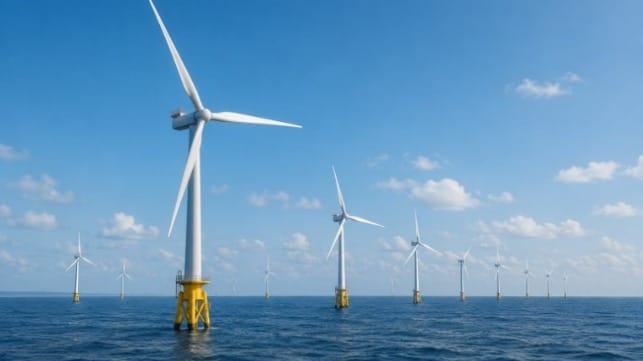
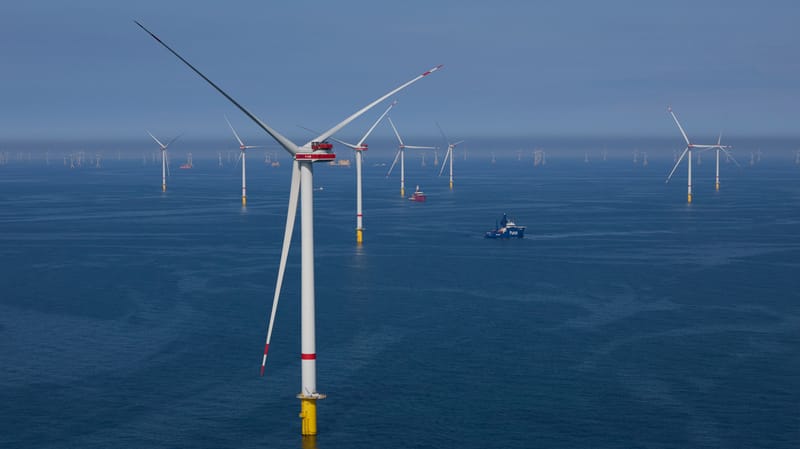
Germany's largest offshore wind farm
He Dreiht completed installation (Aerial photos by Rolf Otzipka courtesy of EnBW)

Published Sep 21, 2026 8:03 PM by The Maritime Executive


Germany’s largest offshore wind farm, He Dreiht, located in the North Sea, marked its inauguration last week as the project moves toward full commissioning. It comes as Germany continues to debate the form of its future offshore wind efforts and the role of government in the projects.

The project consists of 64 Vestas 15 MW wind turbines and is located just over 50 miles northwest of Borkum and is approximately 68 miles west of Heligoland. When fully commissioned, it will have a capacity to generate up to 960 MW.

“He Dreiht is the largest single investment made by EnBW in renewables,” said Georg Stamatelopoulos, Chairman of the Board of Management at EnBW. “We need more projects like He Dreiht, which deliver affordable, secure and clean electricity. At the same time, we have to gear Germany’s entire energy system toward these three aspects. And this will only be possible if we show courage combined with pragmatism.”

EnBW was awarded the contract back in 2017 for He Dreiht in the first round of auctions for offshore wind farms in Germany, with no entitlement to state funding. It was built without state funding and is being financed solely through long-term power purchase agreements. EnBW holds 50.1 percent of the shares through a project company. The remaining 49.9 percent are held by a consortium made up of Allianz Global Investors on behalf of Allianz entities, AIP Management and Norges Bank Investment Management. Around 2.4 billion euros were invested in developing the project.

The Long-term power purchase agreements (PPAs) signed for electricity production are designed to give companies long-term price stability and planning certainty. One key focus is the technology sector, where the project will help power the growth in digitalization and the growth of AI. Evonik, Google, the Telekom subsidiary PASM, Fraport, Bosch, Salzgitter, SHS Stahl-Holding Saar, Deutsche Bahn and DHL Group are among the contractual partners for He Dreiht.

Construction work on He Dreiht got underway in the middle of the North Sea in May 2024. At a hub height of 142 meters, the rotor with a diameter of 236 meters sweeps through an area of around 44,000 square meters per revolution – a single rotation of the rotor is enough to supply the equivalent of four households with electricity for a day. The network operator TenneT is responsible for connecting the wind farm to the electricity grid. The electricity reaches the coast via a platform in the sea and two submarine cables.

The task of transitioning He Dreiht into regular operation will be a gradual process that involves connecting the individual turbines to the grid one by one, testing them and starting them up. The first turbines are already feeding electricity into the grid, with the others set to follow. Based on current progress, the wind farm should be fully operational in the coming months.

EnBW highlights that the project is part of its overall strategy for expansion of renewable energies. The installed output is currently around eight gigawatts (GW), more than double the 2018 figure. Renewable energies account for over 70 percent of the total installed generation capacity.

At the same time, EnBW is already developing the next major offshore projects with Dreekant (1 GW) in the German North Sea and Morven (2.9 GW) in Scotland. By the end of 2030, around 80 percent of EnBW’s generation portfolio is set to consist of renewables. 

Germany has an operational offshore wind capacity of around 10.8 GW as of mid-2026, while the government has declared a long-term target of reaching 70 GW by 2045. The German Federal Cabinet recently adopted an updated amendment to the Offshore Wind Energy Act to recalibrate the build-out framework. The updated regulatory framework introduces two-way CfDs (Contracts for Difference) and extends the standard operating lifespan for new offshore installations from 25 to 35 years, but it has been met with criticism and calls to further revise the policy to support the required investments in renewable energy.


Nine States Sue Trump Administration to Stop Offshore Wind Buybacks

offshore wind farm
Nine states are participating in the three lawsuits challenging the buyback of offshore wind leases (file photo)

Published Sep 22, 2026 4:38 PM by The Maritime Executive


California and a coalition of eight eastern states filed a total of three lawsuits on September 22, each seeking to block deals made by the Trump administration to buy back offshore wind leases in exchange for investments in fossil fuel projects. These suits follow earlier ones, in which they each allege the deals are illegal, violate several federal laws, and redirect renewable energy investments in Democratic-led states to other areas of the country.

New York is leading a coalition that includes New Jersey, Connecticut, Delaware, Maine, Massachusetts, Rhode Island, and Vermont, calling the deals with Bluepoint Wind and Invenergy illegal. The federal government committed to reimbursing $1.4 billion in exchange for canceling four wind leases. Bluepoint received $765 million to cancel a project offshore from New York in exchange for investing in LNG projects. Invenergy got a total of $653 million for three offshore wind leases in exchange for investments in natural gas plants in Indiana, Wisconsin, Iowa, Kansas, and Missouri and geothermal projects in the western United States.

In addition to the two suits filed today, the eastern states also sued in June, challenging the deal struck by the Department of the Interior to buy back offshore wind leases from TotalEnergies. 

“Americans are facing increasing energy costs because this administration would rather pay off energy companies than let us build the new power sources we need,” said New York State Attorney General Letitia James, who is a vocal critic of Donald Trump and faced a personal suit by the administration. “These illegal backroom deals take money that should have gone toward lowering New Yorkers' bills and hand it to fossil fuel projects in other states, all while our energy demand continues to grow.”

New York argues that the canceled projects were expected to bring more than $16 billion in investments into the state and hamper the state’s efforts to meet energy demands. It cites information from New York’s energy planners that project electricity demand will grow eight percent by 2030 and 24 percent by 2040, driven in part by economic development and new large loads such as data centers. The state alleges that the administration is misusing taxpayer money and sabotaging the state’s ability to meet growing energy needs.

“The Trump administration's unlawful pay-to-not-play scheme to pressure companies to forego planned offshore wind projects in America is an outrageous abuse of taxpayer dollars that hurts our ability to meet our energy needs,” said New York State Governor Kathy Hochul.

The eastern state coalition is asking the court to stop the deals. California filed a separate suit that alleges that the administration is bypassing Congress and illegally using a general fund set up by Congress to settle lawsuits to fund these buybacks. It has been pointed out previously that none of the wind development companies had sued the United States.

California Attorney General Rob Bonta and the California Energy Commission (CEC) suit is against the Trump administration and Invenergy over the deal to pay the company $111 million to cancel the Morro Bay Wind Energy Area off the Central California coast and redirect the investments away from California.

The California suit calls it a “sham settlement” and asserts that it violates numerous federal laws. It cites rules established by Congress that govern the offshore energy leasing program, including stakeholder participation rights for affected states like California and a cap on how much the government can pay to a developer when it cancels a lease.

California had previously filed a Notice of Intent to Sue, which gave 60 days for the Department of the Interior and Inverengy to “cure any violations.” California followed a similar process before suing Golden State Wind and the federal government at the end of August over the cancelation of that lease.

The attorney general and energy commission argue that offshore wind is part of a strategic plan that calls for the state to develop 25 gigawatts of offshore wind power by 2045, enough to power roughly 25 million homes and to provide about 13 percent of the state’s electricity supply. They contend it would accelerate California’s clean energy transition, create local manufacturing jobs, and drive economic development.

The administration has continued to make unspecified claims that offshore wind turbines pose a national security risk, despite the Department of Defense having reviewed the plans for each project. It asserts that the wind turbines could create radar interference. 

The eastern state coalition was victorious in court previously when it challenged the Trump administration’s stopping wind leasing for a review. The court found that the administration was violating federal process with an open-ended review and that the companies were entitled to a timely review of applications.


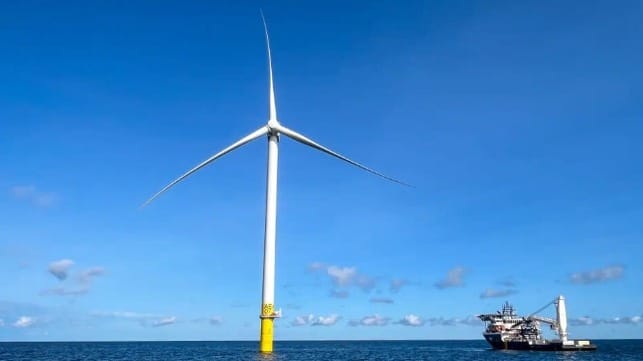
US Offshore Wind Project Revolution Wind Installs Last Turbine

offshore wind turbine installed
Revolution Wind installed its first turbine in September 2024 (Orsted)

Published Sep 18, 2026 6:51 PM by The Maritime Executive


One of the few large offshore wind projects proceeding in the United States, Revolution Wind completed the installation of its 65th and final wind turbine. The project began delivering power in March despite repeated opposition from the Trump administration and now expects to complete its commissioning by the end of the year.

Revolution Wind is being developed in a 50-50 partnership between Orsted and Global Infrastructure Partners’ Skyborn Renewables. Media reports indicate it represents an investment of $6.2 billion to develop and will become the third large, commercial-scale offshore wind farm in the United States to be completed. It is located in Rhode Island Sound, not too far from the Vineyard Wind and South Fork Wind projects, which have already been completed and commissioned.

The project received its final approvals in November 2023 after the companies noted more than nine years of planning and permitting. It has 20-year power purchase agreements to deliver 400 MW to Rhode Island and 304 MW to Connecticut.

The project started offshore construction in 2024, and by August 2025 it was reported to be nearly 80 percent complete. The first of its turbines was installed in September 2024, and by August 2025, Revolution Wind said 45 of the 65 Siemens Gamesa turbines were installed.

The Trump administration issued its first stop-work order to the project that same month, claiming irregularities in the permitting. The project went to court and, a month later, received a preliminary injunction against the Bureau of Ocean Energy Management from enforcing the order. Revolution Wind, however, was also included in the December 2025 move by the Department of the Interior, which ordered all five of the under-construction wind farms to stop work, this time citing undefined issues for potential interference from the turbines with radar and national security. Revolution Wind won a second injunction early in 2026 that permitted it to resume work again.

By March 2026, the project was reporting that it was more than 90 percent complete and that several key construction scopes were finished. By the middle of the month, it had begun delivering power to the grid, but the developers kept a lower profile after their two confrontations with the administration.

Rhode Island Governor Dan McKee issued a statement today calling the completion of the installation “another major milestone.” He commented, “We said we would see Revolution Wind through to the end,” while citing the promise for the state as it begins receiving power.

The full project is slated to generate 704 MW. An earlier analysis from the State of Connecticut’s Department of Energy and Environmental Protection found that Revolution Wind would save New England ratepayers as much as $500 million per year in wholesale energy costs, and that was before the recent increase in energy costs.

Orsted confirmed in a brief statement that this phase of construction had been completed. It said that commissioning would be continuing, with a target by the end of the year for full operations.

Revolution Wind is being followed by Coast Virginia Offshore Wind, being developed by Dominion Energy. It has also begun power generation and expects to complete construction by mid 2027. The only other offshore wind projects under construction in the United States, Empire Wind and Sunrise Wind, are also expected to complete construction in 2027.


Report: Saudi Aramco Achieves Partial Restart on Strategic Red Sea Pipeline

EIA
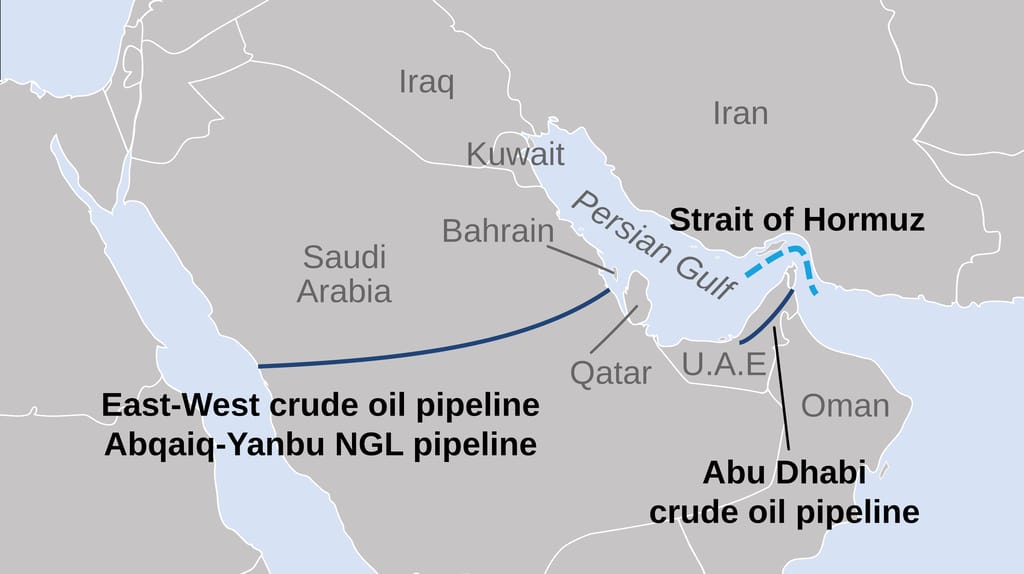
Courtesy U.S. EIA

Published Sep 22, 2026 7:12 PM by The Maritime Executive


Saudi Aramco has achieved the technical means for a partial restart on its strategic East-West Pipeline, which was significantly damaged in a drone attack on September 11, according to multiple outlets. The pipeline is now operating at reduced capacity or will be soon, industry sources confirmed to Reuters, Bloomberg and the FT. 

The interim objective is to achieve a pipeline transfer rate of about four million barrels per day - enough to supply Saudi Arabia's own refineries along the Red Sea, plus a small amount more. One crude export loading has already been scheduled at the key export hub at Yanbu, Reuters reports.

Fully regaining the pipeline's nameplate capacity of seven million barrels per day could take as long as six weeks because three damaged pumping stations will have to be restored. The remaining eight stations are enough to move crude at a reduced rate with reconnected temporary line sections. 

For now, the resumption of flow on the line has been enough to bring global benchmark oil prices down - in combination with increasing loading volumes at Ras Tanura, the appearance of a weakening Iranian blockade at the Strait of Hormuz, and the possibility of new diplomatic talks to resolve the Iran conflict. After spiking to $108 per barrel last week, the Brent crude benchmark receded to just $98 on Tuesday, reflecting trader expectations of a better-supplied global energy market. 


South Africa to Boost East London Port’s Competitiveness with LNG Terminal

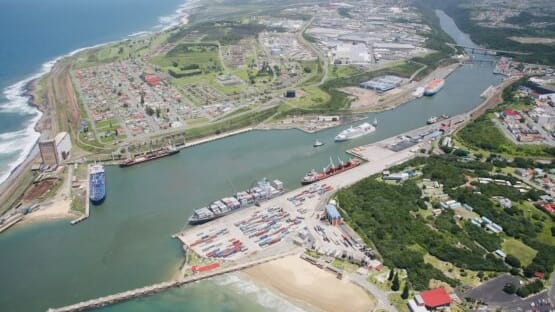
East London Port South Africa
South Africa looks to add an LPG termina at its East London port (Transnet)

Published Sep 18, 2026 6:08 PM by The Maritime Executive


South Africa is hoping to boost the fortunes and competitiveness of its East London river port. Port operator Transnet has decided to build a liquefied natural gas (LNG) import terminal at the facility.

Located at the mouth of the Buffalo River, the Port of East London is the only commercial river port in South Africa. Though consisting of diversified cargo handling facilities for containers, bulk liquids, dry bulk free-flowing grains, and general breakbulk, the port’s core business has been supporting the region's automotive manufacturing sector as the main export hub.

Last year, Transnet National Ports Authority (TNPA) completed a $3.6 million project to deepen and strengthen the port’s automotive terminal, allowing two new-generation automotive vessels greater than 200 meters (656 feet) in length to berth simultaneously and increasing the port’s capacity to handle 790,000 units annually. In terms of containers, ongoing investments aim to increase the port’s handling capacity to over 100,000 TEU from roughly 30,000 TEU currently.  

TNPA wants to further boost the Port of East London’s competitiveness after launching a tender seeking a private operator to invest in a small- to medium-scale LNG terminal. The operator will design, finance, develop, construct, operate, maintain, and transfer the terminal under a 25-year concession agreement. TNPA did not reveal the costs of the project, but stated the facility will be transferred to the state entity upon expiry of the concession.   

The terminal will be used for receiving and dispatching LNG via vessels, pipelines, and tankers and will incorporate facilities like storage tanks and other terminal infrastructure. It will be built on a greenfield site of approximately 8,900 square hectares located within the port’s West Bank precinct. Currently, the precinct accommodates the automotive terminal, the dry bulk terminal, and a tanker berth.

TNPA is highlighting that the LNG terminal forms part of its strategic direction to advance the port’s infrastructure development and support diversification for the future energy demand in the Eastern Cape, where demand for natural gas has been on the rise. Specifically, the terminal is expected to provide a reliable energy solution for niche LNG consumers and industrial users while reinforcing the port’s role in enabling industrial growth, job creation, and economic growth.

Of critical importance is that the terminal will help South Africa tackle the perennial challenge of load shedding owing to the country’s dependence on coal-fired power stations. The country has developed a strategy to replace coal with gas-fired and renewable electricity generation sources.

“This initiative represents a significant milestone in unlocking new investment opportunities within the port, further advancing its long-term growth and development objectives,” said Sphiwe Mthembu, East London Port Manager.

Mthembu added that by creating an enabling environment for new industries and emerging trade opportunities, TNPA is positioning the Port of East London to respond to evolving market needs while contributing to regional competitiveness and sustainable development. Interested operators have until the end of February next year to present their bids.


French Fishermen Block Med Ports in Fuel Protest, Disrupting Ferry Service

Sete France
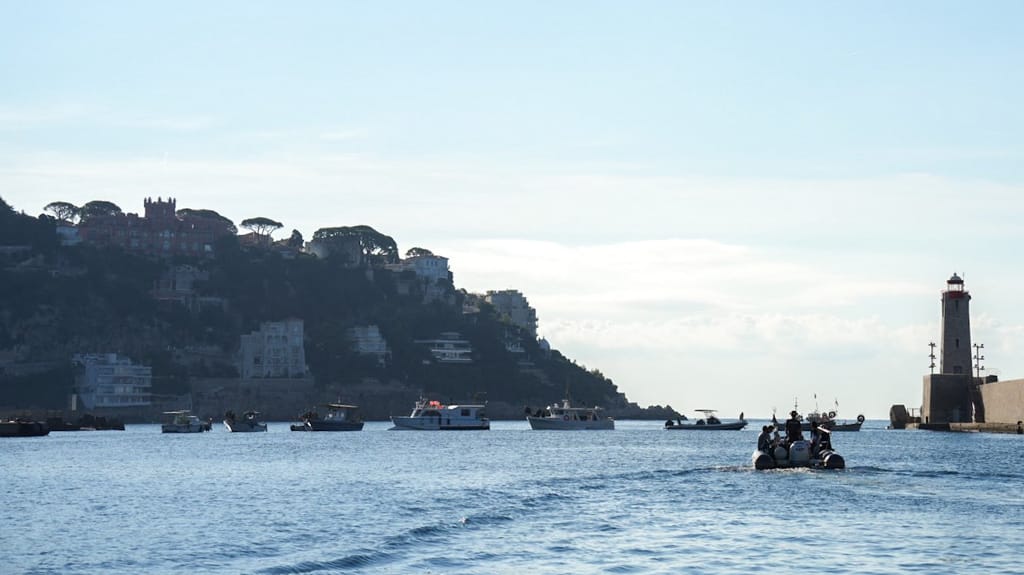
Small boats and fishing boats are blocking the harbor at Sete, France (Mayor Eric Ciotti)

Published Sep 17, 2026 3:09 PM by The Maritime Executive


France's fishermen have taken to the waters in a protest over fuel prices that was reported to be growing and disrupting Mediterranean ferry service. Ports from Sète to Nice have been blocked while the fishermen demanded action on fuel and other financial promises from the government.

One fisherman told the French AFP news agency the price of diesel fuel was the “last straw.” Another fisherman also cited the increased European regulations and the lack of government action. 

As a result, they took to their small boats and began blocking harbors at the beginning of the week. At Nice, reports said a ferry was being forced to wait offshore, while at Sète, Corsica Ferries announced service was canceled for the Tuesday night and Wednesday sailings. Corsica Ferries said it was unable to complete the crossing from L’Ile-Rousse and had been forced to cancel service. It was offering passengers alternatives to Nice and Toulon. A spokesperson told the media, “As for what happens next, we have no news.”

The protesters were also setting tires on fire and placing signs showing their dissatisfaction to block the entrances to the ports. They also targeted the oil depot at Fos-sur-Mer, near Sète.

The government has been blaming the U.S. war with Iran for the rising fuel prices. AFP reports the price of diesel fuel has skyrocketed to an all-time high in France, running between approximately $10 and $12 per gallon. 

The fishermen have been complaining for months about the financial strain while saying theirs was a dying way of life. The mayor of Nice, Eric Ciotti, visited the fishermen and told the media that they are an “endangered species” in the Mediterranean. 

Ciotti highlighted that the government had promised 35 cents per liter (approximately $1.40 per gallon) of fuel to support our fishermen in the face of soaring prices. He, however, writes that the fishermen are still waiting for it to be paid out. “Announcements are not enough. This aid must quickly reach those who need it,” said Ciotti.

The protests come as France is preparing for presidential elections in 2027. On Thursday, Catherine Chabaud, the Minister of the Sea and Fisheries, met with the protesters and said they had a good dialogue. She proposed zero-interest loans for the fishermen facing financial hardships. She announced that the fishermen "have committed to unblocking the ports," following a meeting lasting more than six hours.

The fishermen had threatened that the longer the protest continued, the larger it would get. There were also concerns that it would spread to other regions and industries as French citizens continue to complain about high costs.


Chattogram Port Workers Plan Protests Over Privatization Deal

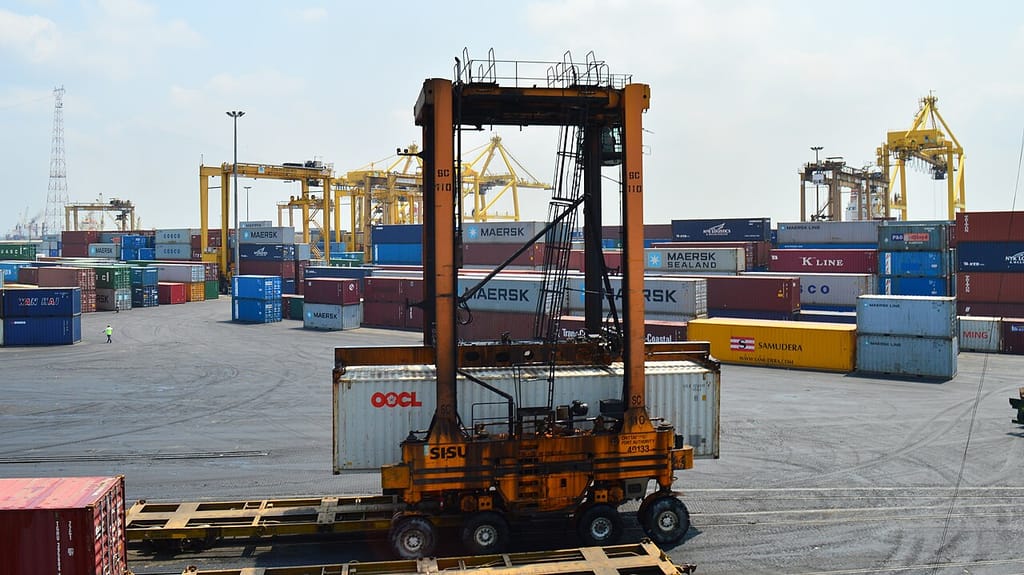
File image courtesy Moheen Reeyad / CC BY SA 4.0

Published Sep 20, 2026 4:51 PM by The Maritime Executive


Chattogram port workers have planned a fresh wave of protests as disagreement with the government over leasing of a container terminal mounts. The workers under the union, Chattogram Port Protection Movement Council, are opposed to the proposed leasing of the New Mooring Container Terminal (NCT) to the UAE-based port operator DP World.

NCT is Chattogram’s largest container terminal, handling nearly half of the port’s container volume. Currently, the terminal is operated by the state-owned Chittagong Dry Dock Limited (CDDL), a corporation under the Bangladesh Navy. As part of the ongoing port privatization drive, DP World has emerged as a front-runner candidate to operate NCT.

The port workers are concerned that the government has not carried out proper public consultation on the concession deal. In February, the Chattogram port workers’ union called for a strike, which impacted port operations for almost two weeks. At the time, the union claimed that its negotiations with the government had failed as its key demands concerning the lease were not met. The strike was called off mid-February when current Prime Minister Tarique Rahman took over from the interim government led by the Nobel Peace prize laureate Muhammad Yunus.

In a press conference over the weekend, the Chattogram Port Protection Movement Council said it would begin peaceful protests from September 22. The union is composed of several port-based workers’ organizations, which are pushing for greater transparency in the privatization plans. In addition, the union leaders demanded for the withdrawal of cases filed against fifteen port employees and union leaders for participating in the February strike.

Again, the union requested the government (through the finance and shipping ministers) to organize a national dialogue on the NCT deal. In a build-up to these consultations, the union leaders called for trade groups across all sectors to prepare for a day-long sit-in protest on October 5 in front of Chattogram Port headquarters.

With Bangladesh working to modernize its port sector, private operators are increasingly being awarded concessions to major terminals in the country. In July, the Saudi port operator RSGT launched operations at the Patenga Container Terminal in Chattogram Port. Last month, APM Terminals began construction of the new Laldia container terminal in Chattogram. Containerized trade at the port is increasing year on year, reaching a throughput of 3.56 million TEU in 2025.

Top image: Moheen Reeyad / CC BY SA 4.0


Conflict in Close Quarters: When Work is Also Home

iStock
iStock

Published Sep 17, 2026 3:35 PM by Giuseppe De Palo, Esq.


Extended U.S. Navy deployments have periodically drawn public attention to what accumulated months at sea can do to a crew. Reporting on one recent deployment — an aircraft carrier at sea for more than eight months with no announced return date — described sailors reaching a breaking point under the sustained strain of the assignment, and a family member who received a single call from the ship's family-support liaison after a serious incident, then heard nothing further from the Navy in the weeks that followed. The sailor involved, described as repeatedly overextended and burned out, worried the incident might end a career built over more than a decade.

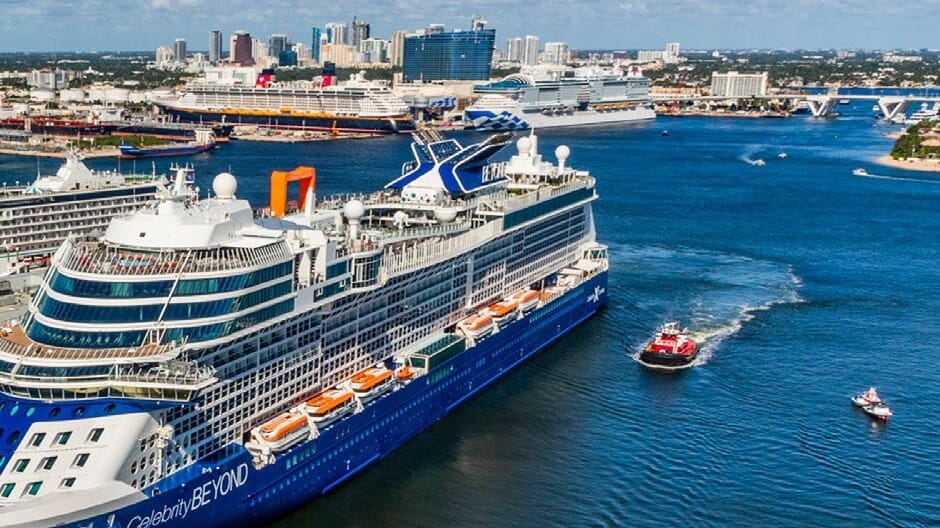
The specific episode will fade from the news cycle; the condition behind it will not. It is a familiar one to anyone who has worked in, or around, the cruise industry: what happens in workplaces where people cannot leave the room and cannot leave the people in it. A warship makes headlines because it's a warship. But the underlying condition — thousands of people living where they work, for months at a time, inside a hierarchy that also shapes how and whether they can ask for help — describes a cruise ship as accurately as it describes an aircraft carrier.

The Category We Already Know

Researchers studying isolated, confined and extreme — or ICE — environments offer a useful framework for the problem. NASA treats isolation and confinement as one of the five major hazards of human spaceflight, and Antarctic research stations are routinely used as ICE analogues in that literature.

Cruise ships are not spacecraft or Antarctic stations. But they share one feature that matters greatly for workplace conflict: work and life occur inside the same bounded social system for extended periods. The cruise industry shares several of the characteristics that ICE research identifies as significant — multinational crews working across language and cultural lines, pronounced rank and departmental hierarchy, shared accommodation, contracts running months at a time, hospitality's own layer of emotional labor on top of it all, and a workforce in which employees may perceive supervisors and department heads as influential to future assignments or contract renewal. Ordinary friction — a difficult supervisor, a conflict with a cabin mate, an unresolved grievance — doesn't dissipate the way it does for someone who goes home at the end of a shift. It accumulates.

The Data Is Not Anecdotal

Cruise-specific research exists, although thinner than the broader maritime literature. A peer-reviewed study of international cruise-ship employees, published in the International Journal of Hospitality Management, has examined workplace bullying directly, describing the ship as a particularly revealing environment because work and private life occur within many of the conditions associated with a "total institution." The study linked work-related bullying with presenteeism and examined social support as an important moderating factor.

What is still missing is the kind of large-scale, cruise-specific prevalence dataset that would allow the industry to say responsibly that X percent of cruise employees experience bullying or conflict. For that, the strongest evidence comes from sector-wide maritime research — not cruise-specific marketing or any single company's self-report.

A 2024 survey of 36,400 seafarers found that 16% had experienced bullying or harassment in the preceding two years, and roughly 25–30% did not feel psychologically safe enough to speak up after making a mistake. Data from the International Seafarers' Welfare and Assistance Network (ISWAN) tells a consistent story from a different angle: reports to its helplines involving abuse, bullying, harassment, discrimination or violence rose 45% quarter-on-quarter between Q4 2022 and Q1 2023, and a further 56% in Q3 2023. Roughly 70% of those cases involved verbal abuse or bullying, 16% sexual assault or harassment, and 12% physical assault. Women made up 38% of callers reporting mistreatment, despite being only 12% of callers overall — a gap that should give any crewing or HR department pause.

Regulators have reached the same issue from another direction. Since January 1, 2026, IMO training requirements have required seafarers to receive basic training on preventing and responding to violence and harassment at sea, including bullying, sexual harassment and sexual assault. Separately, the ILO adopted amendments to the Maritime Labour Convention in 2025 that explicitly strengthen protections and reporting mechanisms around shipboard violence and harassment; those amendments are scheduled to enter into force in December 2027. A recent U.S. National Academies review of maritime safety names bystander support, dispute resolution and early response as prevention tools, alongside workload and precarious employment as contributing conditions.

An Open Question Worth Investigating

There is no reliable data on how many cruise operators maintain a confidential, professionally staffed welfare or ombuds-style function — one separate from the department heads and HR staff who also make performance and contract decisions. But even where support resources exist, accessibility is a separate problem from existence. A support structure being present on paper doesn't guarantee it's reachable at the moment someone needs it, on a warship or a cruise ship alike — particularly where raising a concern can mean being seen doing so, scheduling it around a demanding rotation, or going through people connected to your own performance or standing.

That is the accessibility gap that confidential digital channels may help narrow, in other settings — not by replacing human judgment, but by lowering some of the barriers involved in being seen to ask for help in the first place. What that looks like in practice is worth examining directly.

The first step for the industry isn't to assume where the gap sits — whether in the absence of dedicated infrastructure, in its reachability once it exists, or both. It's to find out, and a confidential digital channel is one of the more direct ways an operator could do that: not as a conclusion, but as a way of surfacing the question its own crew would otherwise have no easy way to answer.

What Happens When Access Barriers Drop

This is where the sector has something genuinely useful to learn from elsewhere. Some international organizations — including several that already run well-staffed, professional human ombuds offices — have piloted offering staff a confidential digital channel alongside their existing human service. In one organization where a digital resource was offered alongside an established human ombuds service, the human office recorded approximately 20 direct contacts during a month in which the digital resource registered 484 interactions. 

The measures are not equivalent — an online interaction is not the same thing as an ombuds case, and the figures should not be treated as a controlled comparison. But the difference is large enough to raise an important question: how much latent demand for early conflict support remains invisible when accessing help requires an appointment, a telephone call, or being seen walking through someone's door?

One plausible explanation is privacy and friction: digital access allows an employee to explore a problem without first identifying themselves, scheduling a conversation, or visibly approaching an institutional resource. These were large, established organizations with long-running human welfare programs; the digital channel supplemented the human one rather than replacing it. The specific organizations matter less here than the observation — a similar uptake gap was seen even inside institutions that already had trusted professional support in place.

What This Means for Cruise Operators

For a cruise line, the practical stakes of getting this right aren't abstract. Crew retention, turnover cost, and the reputational and legal exposure of unresolved onboard conflict are all downstream of the same dynamic described above: a grievance that could have been surfaced and addressed in week two instead festers, unaddressed, until it becomes a resignation, a formal complaint, or worse.

The question now is whether operators navigating this condition — cruise operators included — should test, rigorously and at scale, whether adding a confidential digital front door helps problems surface earlier, while there is still time to resolve them informally.

Giuseppe De Palo, Esq., is an international mediator and arbitrator with JAMS, a leading provider of alternative dispute resolution (ADR) services worldwide. He has spent nearly 30 years helping companies, governments and NGOs resolve high-stakes conflicts quickly and cost-effectively. Recognized worldwide for his work, he has guided more than 2,500 disputes to settlement across 60 countries and among parties from more than 90 nations. In his decades-long career in ADR, he has mediated and arbitrated a wide spectrum of single- and multi-party cross-border disputes in diverse areas including complex business and commercial, intellectual property, banking/financial services, construction, energy, tort and insurance law.

The opinions expressed herein are the author's and not necessarily those of The Maritime Executive.
 

Maritime Renaissance

Governments around the world are investing billions in future maritime capabilities. But fleets of ships only imply maritime power. Education and training will determine whether a nation possesses the workforce necessary to transform ambition into reality

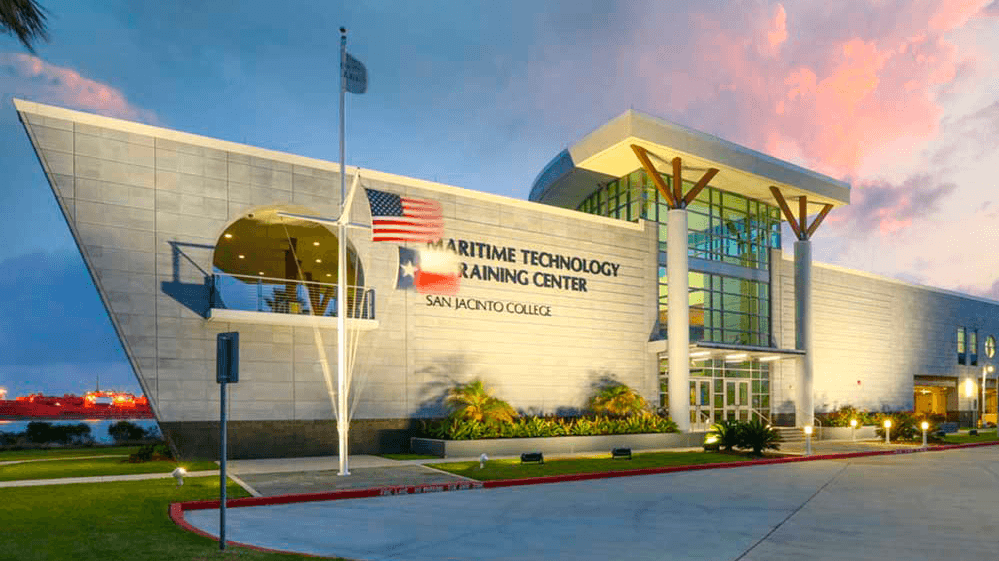
Maritime Technology Training Center San Jacinto College

Published Sep 22, 2026 11:35 PM by Chad Fuhrmann

(Article originally published in July/Aug 2026 edition.)


Amid volatile geopolitics and fast-paced innovation, maritime education has evolved as part of a much larger strategic challenge.

Governments around the world are dedicating significant resources to shipbuilding, domestic manufacturing, resilient supply chains, clean energy and autonomous technologies. In the U.S., recent federal initiatives directed toward revitalizing the nation's maritime industrial base have renewed focus on commercial and naval shipbuilding, port modernization, offshore energy and strategic sealift.

The renewed emphasis on the maritime industry has fundamentally changed the workforce conversation.

Success is increasingly dependent on personnel with diverse skills capable of designing, building, operating and maintaining increasingly sophisticated vessels and the related maritime infrastructure. With demand growing, the challenge is not simply finding enough people but finding people with the right combination of technical skills and digital literacy.

Maritime education has historically been measured by a single, clear metric: Produce enough licensed mariners to crew the world's merchant fleets. That mission, although still critical, is no longer sufficient. Ships are evolving into floating data centers where automation, artificial intelligence (AI), predictive maintenance and cybersecurity are becoming critical elements of a new version of seamanship.

The challenge comprises more than the shipboard mariners. While shipyards still require welders, pipefitters and electricians, these skills must now be integrated with expertise in automation and digital manufacturing. And, of course, ports themselves are becoming technology platforms.

BEYOND THE LICENSE PATH

To align with developing industry needs, maritime academies and institutes are educating not only ship operators but also the technology professionals, logisticians and emergency managers required to support the wider maritime enterprise.

In the U.S. and globally, the wide variety of maritime training centers are diversifying their approach, supporting and developing different components of the industry's workforce ecosystem. Collectively, they're redefining what a maritime education looks like.

At Massachusetts Maritime Academy, this paradigm shift is apparent. Roughly half of the academy's undergraduate students pursue licensed programs. The remainder study facilities engineering, international maritime business, emergency management and environmental protection, among other tracks.

"The maritime workforce challenge extends far beyond licensed mariners," says John Stauffer, Associate Vice Chancellor of Maritime at San Jacinto College. "Across the Gulf Coast and throughout the nation, employers need workers who understand automation and digital systems."

Workforce development has become both an economic development priority and a national security imperative. As Congress debates measures to expand domestic shipbuilding capacity and strengthen the U.S. Merchant Marine, education providers are increasingly viewed as strategic partners rather than simply academic institutions. Their role is multidimensional: Identify workforce shortages and potential gaps in curricula; create pathways that allow students to enter modern, high-demand careers, and continue to build workers' core skills throughout their professional lives.

"We see this as a natural extension of our mission," states Capt. Elizabeth Simmons, Vice President, External Affairs at Mass Maritime. "We embrace the opportunity to work alongside shipyards, maritime companies, governments, technical and trade schools, community colleges, workforce development organizations and other educational groups to develop the workforce America will need to strengthen its maritime industrial base for generations to come."

THE DIGITAL MARINER

Technology is driving perhaps the most dramatic transformation in maritime education.

AI, integrated bridge systems, remote diagnostics, digital twins and advanced automation are among the innovations becoming ubiquitous aboard modern vessels. At the same time, training itself is becoming increasingly digital through sophisticated simulation, virtual reality and cloud-based learning environments.

While many in the industry fear that these innovations may overshadow traditional seamanship, educators argue these technologies demand even greater critical thinking to complement existing skills.

Mass Maritime rejects the notion that institutions must choose between traditional seamanship skills and AI. Rather, graduates must master both.

"Ignoring this technology," notes Jim McKenna, Dean of Undergraduate Studies, "is a disservice to our students. We've been preparing students for careers supporting sealift capability, commercial shipping, offshore energy, logistics and maritime business for many years. Our mission isn't changing, but the demand for our graduates and the investment required to prepare even more of them is."

Adds San Jacinto's Stauffer: "Maritime education must evolve from teaching only procedures toward teaching systems thinking, problem-solving, data interpretation, leadership and continuous learning. Technology will change throughout a professional's career. The ability to adapt will become as important as technical proficiency itself."

SHARED RESPONSIBILITY

Much of the attention surrounding America's maritime revival focuses on the ships themselves. Yet vessels cannot be designed, built or operated without people.

That philosophy reflects a growing consensus. Workforce development is becoming a shared responsibility across educators at every level – from maritime schools and academies to labor organizations, shipbuilders, ports and private industry.

"Community colleges must serve as the workforce engine supporting America's maritime industrial base," says Stauffer. "We're uniquely positioned to provide accessible, affordable, employer-responsive education."

Industry partnerships are essential. Located within the Houston maritime complex, San Jacinto works directly with vessel operators, shipyards, engineering firms and manufacturers, whose feedback influences training and education at the school.

"Industry engagement is central to everything we do," Stauffer notes. "Employers participate in advisory committees supporting internships, donating equipment and providing insight on workforce needs and curricula."

Recent disruptions across the supply chain due to regional conflicts and growing geopolitical competition have reminded policymakers that commercial shipping remains fundamental to national security. These events highlight the importance of maintaining a highly skilled domestic maritime workforce as part of a larger strategic role.

Mass Maritime and other maritime academies maintain close partnerships with MARAD, the Military Sealift Command and the U.S. Navy, reinforcing the inextricable relationship between commercial maritime and national defense. "Maintaining a strong pipeline of well-trained, licensed mariners – not just ships – is crucial regarding both geopolitical tensions as well as disaster relief across the globe," states Capt. Simmons.

GLOBAL PERSPECTIVE

These underlying trends are global. Training institutions around the world are making similar investments in innovation while strengthening relationships with industry to ensure graduates remain relevant in rapidly changing operating environments.

Perhaps the biggest lesson from all of this is that maritime education is no longer a one-time event capped with a diploma or license – and no longer limited to one part of the industry. "The skills are highly transferable across sectors," adds Capt. Simmons. "We need to do a better job of demonstrating that maritime isn't a single career path. It's opening the door to an entire ecosystem of career opportunities."

Commercial and military fleets only symbolize maritime power. Ships alone do not move commerce, respond to disasters or strengthen national resilience. These responsibilities still ultimately belong to the indispensable human element.

As governments around the world invest in industrial capacity, they're inevitably returning to the knowledge that the most important investment is not steel but talent. And much of that investment must focus on training and skills development for an evolving industry.

Education is no longer simply preparing students for careers. It's building the workforce that will determine whether the next maritime renaissance succeeds.

Chad Fuhrmann is Vice President at Core Group Consulting.

The opinions expressed herein are the author's and not necessarily those of The Maritime Executive.