It’s possible that I shall make an ass of myself. But in that case one can always get out of it with a little dialectic. I have, of course, so worded my proposition as to be right either way (K.Marx, Letter to F.Engels on the Indian Mutiny)
Wednesday, September 23, 2026
Sunshine Silver Mining boosts mineral rights position in Idaho by 60%
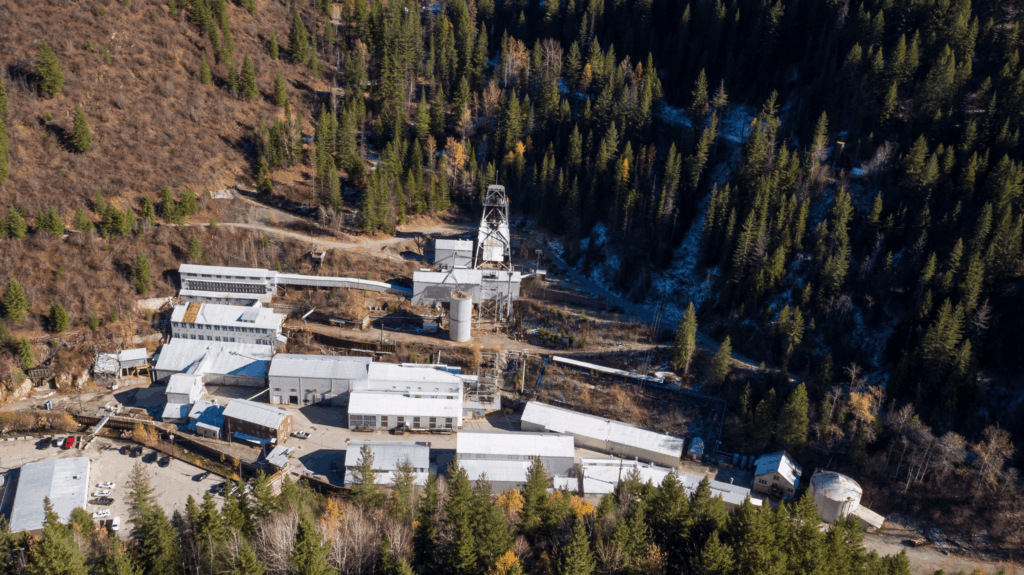
Sunshine Silver Mining & Refining (NYSE: SSMR) announced Monday it has expanded its consolidated mineral rights position in Idaho’s Silver Valley by approximately 14,100 acres, or 60%, to approximately 38,000 acres.
Sunshine is the largest mineral rights holder in the Silver Valley,located in Shoshone County in northern Idaho, the most prolific silver district in US history.
The company also said it is initiating a multi-year, 45,000-meter surface exploration drilling program across its expanded land position.
The program will initially target three drill-ready areas: East Sunshine, located immediately east of the Sunshine mine along strike of known mineralization, as well as Rock Creek and Pine Creek within the company’s broader land position.
These targets provide multiple opportunities to further evaluate the potential for new discoveries across the company’s highly prospective and underexplored district-scale land package, Sunshine said, adding that it expects surface drilling to begin in the fourth quarter of this year.
“The Sunshine Mine is already an extraordinary, world-renowned asset,” Sunshine Silver Mining & Refining CEO Heather White said in a news release. “The possibility that it may be only one part of our company’s much larger story is very exciting. We now control some 38,000 acres in one of the most important silver-yielding districts in America.”
“We have identified three drill-ready target areas, extending from the Sunshine Mine across our broader land package,” White said. “Much of that land position has seen limited modern exploration to date, leaving significant discovery potential beyond the current Sunshine Mine footprint.”
White said the company believes the extended land package could possibly expand the Sunshine story beyond a single mine.
“As such, our announced multi-year, 45,000-meter surface exploration program represents a pivotal and promising step toward rigorously evaluating the district’s multiple-mine potential,” White said.
In June, the company raised $270 million in its US initial public offering, joining a growing number of companies rushing to seize buoyant investor enthusiasm for fresh listings.
Sunshine Silver Mining & Refining’s stock was down 6% by market close in New York on Monday. The company has a $2.3 billion market capitalization.
Savannah raises $30M to advance Barroso lithium project
The Barroso project could be one of Europe’s first significant producer of spodumene, a hard-rock form of lithium. (Image courtesy of Savannah Resources.)
Savannah Resources (LON: SAV) has raised $30 million to advance its Barroso lithium project in Portugal through engineering, permitting and early development work.
The financing came as the company issued 408 million shares at £0.055 each. Savannah said it would also enter subscription agreements with institutional and individual investors, including four of its largest shareholders, to raise $11.2 million.
Combined with Savannah’s existing $15.5 million cash balance, the proceeds will fund early works including vendor data, fabrication notices for long-lead items and groundworks ahead of access road construction.
The company also plans to conditionally award engineering, procurement and management and bulk earthworks contracts while progressing front-end engineering design for the processing plant and infrastructure.
The fresh funds give Savannah additional capital to move Barroso towards construction following completion of a phase-one definitive feasibility study (DFS) in July, which outlined a 14-year operation producing an average 183,000 tonnes of spodumene concentrate grading 5.5% lithium oxide annually.
Development spending
Savannah also plans to use the funds for project financing, environmental submissions, industrial permit applications and bypass road designs, as well as geotechnical and resource work.
Other spending will cover land-use rights, community initiatives, general and administrative costs and additional working capital.
The phase-one DFS estimated Barroso could generate $3.2 billion in earnings before interest, taxes, depreciation and amortization and $1.9 billion in free cash flow over its initial mine life, based on an average sales price of $1,788 per tonne. It calculated a post-tax net present value of $913 million.
Those projections remain dependent on assumptions in the DFS, including lithium prices, project financing, permitting and Savannah successfully moving the development through construction and into production.
European supply
Barroso has been designated a Strategic Project under the European Union’s Critical Raw Materials Act and is described by Savannah as Europe’s largest spodumene lithium deposit. The project hosts a resource of 39 million tonnes grading 1.05% lithium oxide for an estimated 411,900 tonnes of contained lithium oxide.
Despite its strategic significance, Barroso has faced opposition from local communities and environmental groups concerned about potential effects on land use, water and biodiversity. The surrounding Barroso region has been recognized as a Globally Important Agricultural Heritage System since 2018.
Savannah has sought to build local support as it advances the development. In August, the company announced three benefit-sharing agreements with communities that hold and manage communal lands, known as baldios, near the project.
The agreements add a community component to Savannah’s efforts to advance a project positioned as a potential domestic source of lithium for Europe.
Zimbabwe secures funds for key commodity gateway upgrade
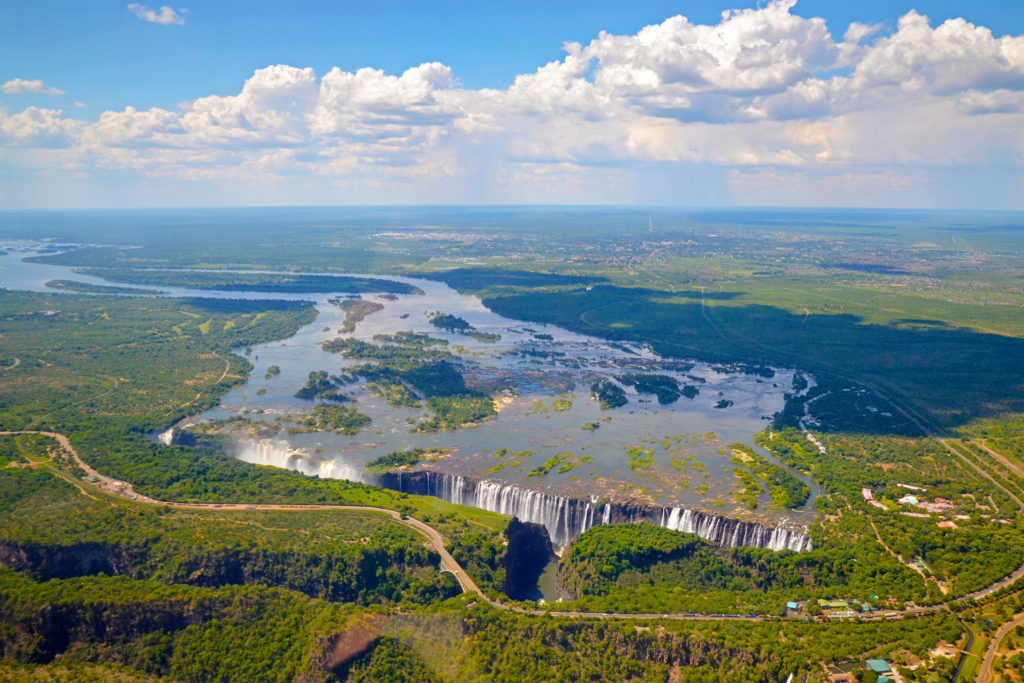
Aerial view of Victoria falls, Zambia. Stock image.
Zimbabwe’s government on Tuesday announced a funding agreement for the upgrade of the Chirundu border with Zambia, to reduce delays on a vital gateway connecting the central African copperbelt to southern African ports.
The deal between Zimbabwe and its private sector partners, the Chirundu Border Consortium, clears the path to construction work, the country’s transport and infrastructure development ministry said in a statement on Tuesday.
The Chirundu border, inaugurated as Africa’s first one-stop border post in 2009, is a key gateway on the North-South Corridor, handling freight between ports in South Africa and Mozambique and the Zambia-DRC Copperbelt.
Traffic through the crossing includes copper, cobalt, fuel, mining equipment, reagents, fertilizers and other traded goods, with trucks often facing bottlenecks and lengthy delays.
The border modernisation project will overhaul old infrastructure, introduce advanced operational and processing systems to reduce delays and congestion at one of Africa’s busiest transit points, the ministry said.
The ministry did not disclose the final investment for the public-private partnership project, but Zimbabwe’s Cabinet has previously said the project would cost $66.8 million and be operated by private investors for 20 years under a concession agreement.
Safaga International, which led the $300 million upgrade of Zimbabwe’s Beitbridge border with South Africa, is leading the Chirundu border project. South Africa’s Strategic Partners Group is also a strategic investor in the project.
Standard Bank (JSE: SBK) is the lead debt arranger and senior lender.
(Reporting by Nelson Banya, Editing by Louise Heavens)
Higher Santa Cruz capital costs weigh on Ivanhoe Electric
A view of the drill site at Ivanhoe Electric’s Santa Cruz copper project. Credit: Ivanhoe Electric.
A new prefeasibility study (PFS) shows Ivanhoe Electric’s (NYSE, TSX: IE) Santa Cruz copper project in Arizona has become more expensive to build while its economics improved modestly. The stock dropped.
Pre-production capital has risen to $1.43 billion from $1.24 billion a year ago, a 15% increase, while the project’s net present value (NPV) climbed to $1.5 billion from $1.4 billion despite the use of a higher copper price. Santa Cruz’s internal rate of return (IRR) slipped to 19% from 20% while the payback period increased to 4.8 years from 4.4 years previously.
Key assumptions in Ivanhoe Electric’s 2026 PFS, which was released Wednesday, include an 8% discount rate and a copper price of $4.75 per pound, which is below current spot prices. Last year’s study used a base-case copper price of $4.25 per pound.
Located in Casa Grande, about 77 km south of Phoenix, Santa Cruz is Ivanhoe Electric’s most advanced project. Led by billionaire founder and executive chairman Robert Friedland, the company is targeting first cathode production in 2029 – a year later than originally planned – to help meet demand for copper, a critical mineral essential for electrical wiring, at a time when Washington wants to strengthen domestic supply of the metal.
De-risking step
Release of the PFS marks “a key de-risking step for Santa Cruz, with the updated engineering, design, development and pricing paving the way for continued development towards first production in 2029,” National Bank Financial mining analyst Andrew Dusome said Wednesday in a note.
Key factors behind the higher capital spending figure include a redesigned access tunnel intended to lower groundwater risk, as well as construction materials and labour inflation, Ivanhoe Electric said.
“Although the refreshed capex came in above our estimates and may weigh on the stock near term, we see this largely offset by the higher life-of-mine production and greater confidence in the development and mine plan,” Dusome said.
U.S.-traded shares of Ivanhoe Electric fell 4.2% to $10.27 Wednesday afternoon in New York, valuing the company at about $1.6 billion. The stock has traded between $7.86 and $21.55 in the past year.
Design changes
Ivanhoe Electric has redesigned Santa Cruz’s mine plan by replacing a roadheader-based underground access system contemplated in last year’s study with a Robbins Crossover tunnel-boring machine. That change has increased average copper production to about 74,700 tonnes a year over the first 15 years from about 72,000 tonnes previously.
The revised plan supports a 24-year mine life, one year longer than calculated by the 2025 study. Santa Cruz holds 140.1 million probable tonnes grading 1.08% copper for contained metal of 1.52 million tonnes copper, according to a new resource prepared this month.
The mine plan leaves room for expansion. Resources outside the current reserves include 1.44 million indicated tonnes of contained copper and another 3.33 million inferred tonnes of contained copper across the Santa Cruz, East Ridge and Texaco deposits, Ivanhoe Electric says.
Life-of-mine cash costs are projected at $1.47 per lb., with all-in sustaining costs projected at $2.28 per pound.
Using a spot copper price of about $6.79 per lb., Santa Cruz’s NPV jumps to $3.5 billion with a 30% IRR and a payback period of three years.
Positive sentiment
Santa Cruz is being developed on about 24 sq. km of private land with surface, mineral and associated water rights. The property benefits from access to rail, highways, power and natural gas infrastructure.
Necessary permits to begin surface construction have been obtained and early development work has begun, Ivanhoe Electric says.
Executives are pursuing project financing, with “advanced discussions” over several alternatives already under way. The company received a preliminary project letter from the U.S. Export-Import Bank in August for potential debt financing of up to $1.1 billion. Its application has now advanced to a second phase of due diligence.
“As one of the most advanced U.S. copper projects with fully domestic cathode production, we continue to expect Ivanhoe Electric to benefit from the ongoing positive sentiment from U.S. government agencies supporting the development of domestic critical metals mines,” Dusome said.
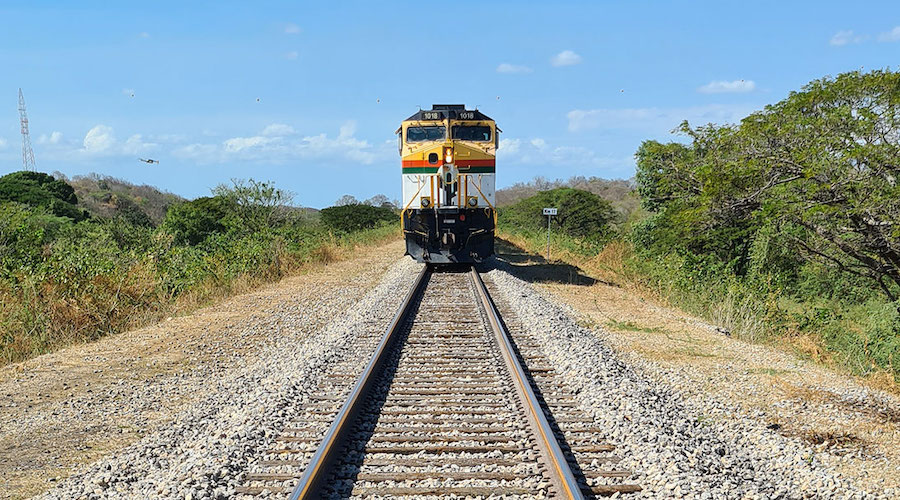
Glencore’s (LON: GLEN) Cerrejón coal mine in Colombia halted railway operations after explosives struck its network, marking the sixth attack on its infrastructure this year.
A train was affected by the attack, which happened on the evening of Sept. 22 near Uribia in the northern department of La Guajira. The company said no injuries were reported, adding that mine activities continue as normal.
“Since early this morning on September 23rd, the National Army has deployed troops to secure the area and oversee the inspection of the infrastructure,” the company said in a statement to Reuters. “This is the sixth attack we have recorded this year against our infrastructure.”
Its railway network runs for 150 kilometers, connecting the site to Puerto Bolívar, where production is exported to the international markets.
The company said that once the area is safe to enter, it will conduct a damage assessment.
Repeated disruptions
The explosives attack follows more than 80 blockades affecting Cerrejón this year, which have been related to protests against government authorities over the lack of basic services in nearby communities rather than disputes with the company itself.
Previous disruptions have caused the mine to completely shutdown operations which highlights the operation’s dependence on its transport corridor.
Depending on how long it takes to repair the damage, the attack could have a broader operational impact. Prolonged repairs could disrupt the movement of supplies and coal, potentially affecting production and exports.
Cerrejón is one of the world’s largest open-pit coal mines and produced 16.8 million tonnes of coal in 2025.
Shares in Glencore were up 5.2% to £550.8 ($730.4) apiece on Wednesday afternoon in London, valuing the company at £64.6 billion ($85.7 billion).
(With files from Reuters)
Op-Ed: Indonesia’s nickel production curbs leave market unconvinced
(The opinions expressed here are those of Andy Home, a columnist for Reuters)
Indonesia is learning that building a dominant position in the nickel market is the easy part. Leveraging its influence over supply to control prices is proving much trickier.
The Southeast Asian country now accounts for over 60% of global output of a metal used by both stainless steel makers and electric vehicle (EV) battery manufacturers.
Indonesia’s dramatic rise as a nickel power is the result of a 2020 ban on exports of ore, forcing operators to build domestic processing capacity. It’s become a template for other developing countries, particularly those in resource-rich Africa.
They may also want to note how difficult it is to match supply with demand once you’re the world’s largest producer.
Taming the tiger
Jakarta has this year cut mining quotas, stepped up environmental controls and adjusted ore pricing to rein in its runaway nickel sector.
A commitment to slash mining quotas from last year’s 379 million metric tons to 250 million to 260 million tons propelled the London Metal Exchange nickel price CMNI3 to a May high of $20,000 per ton.
The price is now back down at $16,500 as the market loses confidence that Jakarta can tame its nickel tiger.
Policymakers’ dilemma has been how to reduce mined output without disadvantaging their nickel processors, some of whom have only begun ramping up production this year.
A mid-year review of the quota system has resulted in higher allocations to specific operators.
French group Eramet, for example, is restarting operations at its Weda Bay mine after being forced to suspend work in May when it had exhausted its 2026 quota.
The full extent of the upward creep is difficult to ascertain since neither Jakarta nor its nickel operators disclose details.
Moreover, it’s clear some operators have adjusted to lower domestic mining rates by turning to imports, primarily from the Philippines.
Indonesia lifted imports of Philippine ore by 50% to 15.3 million tons last year and arrivals were up by another 67% year-on-year at 11.4 million tons from January to July, according to the World Bureau of Metal Statistics (WBMS), which collects data from official sources.
Another smaller stream of imports is now also arriving regularly from the Solomon Islands.
It’s worth remembering that if all the country’s nickel processing plants were operating at capacity, they would need 315 million tons of ore per year, according to the Indonesian Nickel Miners Association.
Balancing that captive demand with mining rates is still very much a work in progress.
Tempering expectations
The nickel market had high hopes at the start of the year that Jakarta could do enough to prevent another year of global supply surplus.
The International Nickel Study Group drastically revised its estimate of expected 2026 market balance in April to factor in lower output in Indonesia.
Its forecast was for a modest 32,000-ton deficit this year, compared with an expected 261,000-ton surplus when it previously met in October 2025.
Yet global exchange stocks of refined nickel have been creeping steadily higher.
Combined inventory held by the LME, both on-warrant and off-warrant, and the Shanghai Futures Exchange currently stands at 478,000 tons, enough to supply the global market for seven weeks.
In truth, the surplus may be higher than implied by visible stocks.
China shows every sign of stockpiling the metal to capitalise on the current low pricing environment.
The country imported 170,000 tons of refined nickel in the first seven months of this year, up 28% year-on-year and the highest import rate since 2016.
Given China’s own refined nickel output has been growing at a fast clip, thanks to Indonesian flows of raw material, the inference is that some of these imports are for strategic rather than commercial purposes.
Waiting for demand
The one positive takeaway for Jakarta is that the surplus would have been much higher this year had it done nothing to restrain its production growth.
At least the price is trading above $16,000 per ton rather than below, as was the case over much of 2025.
But prices are still barely above the break-even point for even some of Indonesia’s producers.
What Indonesia and the nickel market really need is more demand.
There are encouraging signs.
Stainless steel production grew by 5% year-on-year in the first half of 2026 according to industry association Worldstainless. EV sales are accelerating just about everywhere outside the US market.
But there’s a lot of nickel sitting in exchange storage to feed any short-term demand surge, which means that Indonesia’s work to control both production and pricing is far from over.
Indonesia nickel hub IMIP says nickel pig iron production cut because of water shortages
Indonesian nickel hub PT Indonesia Morowali Industrial Park (IMIP) on the island of Sulawesi said on Tuesday that a water shortage linked to this year’s El Niño weather pattern has forced some smelters to reduce their nickel pig iron production.
IMIP informed companies at the weekend that they would need to reduce production of nickel pig iron due to water shortages, Bloomberg reported on Tuesday, citing sources.
In response, IMIP spokesperson Dedy Kurniawan confirmed to Reuters that the shortage has led to the reduction of nickel pig iron production at some smelters.
IMIP has not received exact figures from tenants on the extent of the production cuts, Dedy said.
“However, the effect has not caused smelter operations to stop or even led to workforce reductions so far,” Dedy said, adding that the hub and some tenants are adjusting production targets and seeking alternative water supplies.
PT IMIP is the largest nickel-processing hub in resource-rich Indonesia and has over 50 tenants, mainly makers of nickel products used in stainless steel and EV battery materials, according to the company’s website.
Nickel pig iron, a low purity nickel metal and a key input for stainless steel, makes up the majority of Indonesia’s nickel exports.
(Reporting by Fransiska Nangoy; Writing by Stanley Widianto; Editing by David Stanway)
Congo plans centralized mining investment agency under US deal, sources say
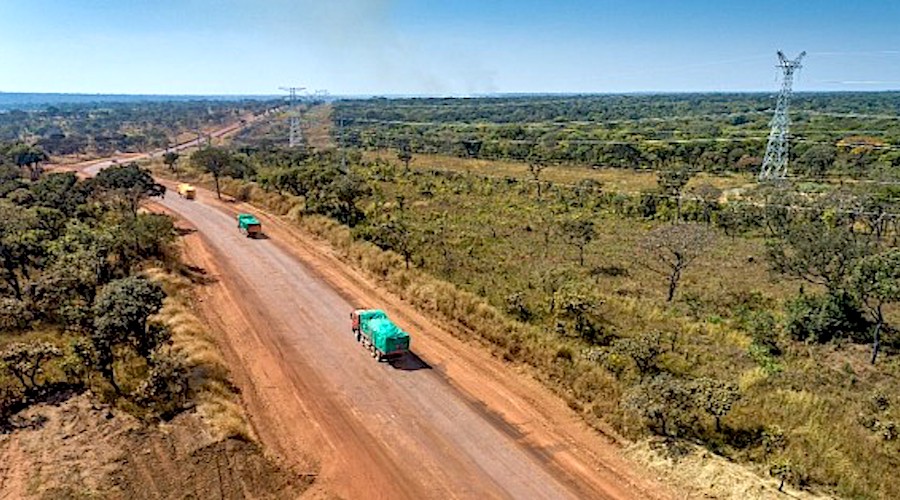
Trucks transporting bulk copper concentrate from the Kamoa-Kakula to the Lualaba smelter via by-pass road connecting the mine to Kolwezi. (Image courtesy of Ivanhoe Mines.)
Democratic Republic of Congo is preparing a one-stop agency for major mining investments as part of reforms linked to its minerals partnership with the US, aiming to cut red tape and attract more Western capital into a sector dominated by Chinese companies, four sources told Reuters.
Congo, the world’s largest cobalt producer and second-largest copper producer, is at the centre of competition among global powers seeking supplies of critical minerals vital to the energy transition and advanced manufacturing.
China, the US and the European Union have all signed minerals agreements with Kinshasa to secure access to its vast resources.
The US deal has already delivered a Washington-backed mining investment through Virtus Minerals and helped boost Congolese copper sales to US and Europe.
One-stop agency
The planned agency would be open to Chinese and other foreign investors as well as US and European firms, according to two government officials, a diplomat and a mining analyst.
The sources declined to be named because they were not authorised to speak publicly.
Congo’s mines and finance ministries did not respond to requests for comment.
The reform, led by the finance and economy ministries, would centralise company registration, licensing, taxation and compliance for major mining investments, reducing approval processes that can currently take months, said the government sources and the analyst.
One government official said the agency would initially focus on joint-venture projects worth more than $1 billion that operate under special fiscal regimes, citing the Chinese-controlled Sicomines copper and cobalt venture as an example.
The official added that legislation establishing the agency still requires promulgation.
“The one-stop shop is intended to cut through the bureaucratic silos that have long complicated mining investment in Congo,” said Eric Ndeh, international director of civil society group Afrewatch. The agency is meant to be operational this year, Ndeh added.
Congo has repeatedly said its drive to attract more Western investment is not intended to replace China but to diversify sources of funding and export markets.
“The paradox is that a reform partly driven by the US-DRC minerals partnership could ultimately make it easier for Chinese, European and American investors alike to do business,” Ndeh said.
(Reporting by Ange Adihe Kasongo and Maxwell Akalaare Adombila. Editing by Mark Potter)
BHP’s Escondida mine supervisors say collective contract deal far off
Unionized supervisors at BHP’s Escondida copper mine in Chile remain far from reaching a new collective contract agreement as time quickly runs out before a mandatory mediation period is set to begin, union leader Alexis Barrera said on Tuesday.
The company has until Wednesday to submit an offer for workers to vote on.
If workers reject the company’s offer, a mandatory government mediation process of at least five days will commence.
The mediation process can then be extended for another five days if no deal is reached, before workers are legally allowed to strike.
According to union calculations, the company’s latest proposal offers little beyond what the current collective contract already provides in terms of salary and benefits, Barrera said.
The union has rejected a company demand that supervisors train for plant operations — including driving trucks — arguing those roles belong to floor staff.
Escondida management is seeking a 14-days-on, 14-days-off shift rotation, which Barrera said the union will not accept.
“We are very far apart. We are still far from having an agreement,” Barrera said in a union statement. “Our people fully trust the board and if a strike vote is needed, it will surely succeed.”
(Reporting by Fabian Cambero; Editing by Anthony Esposito)
U.S. Landing-Drone Startup Gets Support From a Small Japanese Shipyard
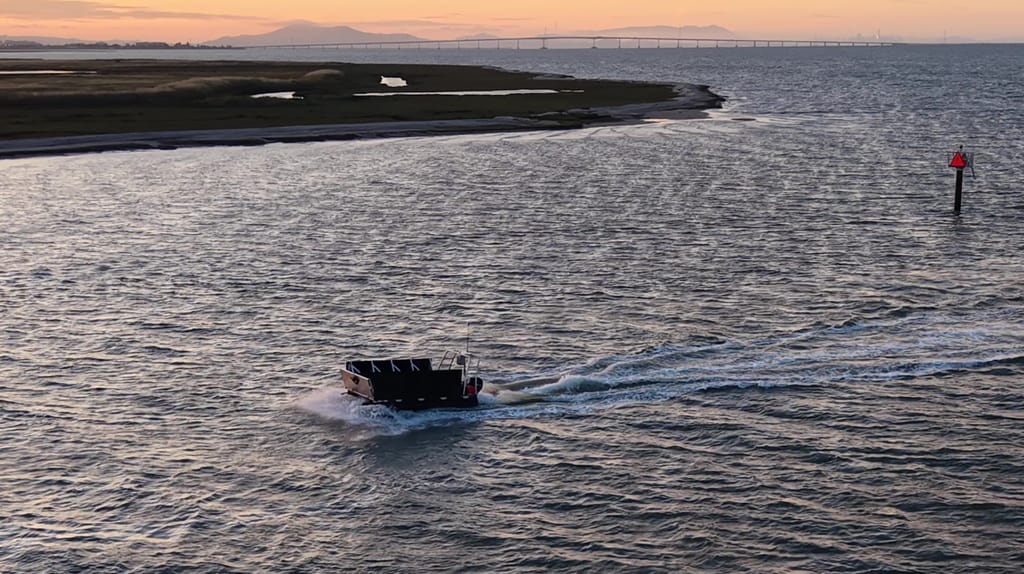
An early prototype of the Caravel landing-craft concept (Bulwark Dynamics)
American defense tech startup Bulwark Dynamics is working with a Japanese shipbuilder on an autonomous landing craft - a system that could bring cargo into the combat zone without putting servicemembers at risk.
Bulwark is in the very early stages of its evolution. Its Japanese partner, Onomichi Dockyard, is a mature small shipyard located towards the west end of Honshu, near Okayama; it is also an investor, having joined a group of VC funders in Bulwark's initial $6.8 million seed funding round. The proceeds will go towards building and testing its prototype Caravel autonomous landing craft.
Bulwark pitches its vessel as a solution to the Navy's distributed-logistics problem. In a battle in the littorals of the Western Pacific, the service would face concerted pressure, which it plans to counter through distributed maritime operations (DMO) - in essence, dispersing its forces to make them harder to hit. The dispersal strategy also has to include the logistics chain, Bulwark says, in order to prevent the enemy from targeting and destroying supply vessels and depots.
This is where a fleet of numerous, small, autonomous landing craft would come in. The idea isn't to land Marines onto the beach for an opposed landing - it's to move their cargo to austere locations, where there is no port infrastructure. It is designed to self-navigate, beach itself, lower its bow ramp and discharge cargo, then depart off the beach, all without human involvement on the ground.
"Sustainment has to survive to matter. Caravel takes people off the most exposed leg of the run and spreads the delivery across many low-cost hulls, so losing one is a bad day rather than the end of the resupply," said Nhat Lieu, co-founder and CEO of Bulwark Dynamics.
The product positions Bulwark in a new category, outside of the two main areas of U.S. Navy procurement competition: unmanned patrol craft (at the small end) and medium unmanned surface vessels (at the large end).
Beach-capable landing-vessel drones were first tested in combat in Ukraine, albeit at a small scale. In July, during an operation to attack Russian positions on the Kinburn Spit, Ukraine's 123rd Separate Territorial Defense Brigade dispatched a remotely-controlled landing vessel with a bow ramp and a single ground-attack robot on board. Video captured the beach landing and the first minutes of the operation that ensued (below).
RWE Speeds Up Offshore Turbine Servicing With Heavy-Lift Drone Deliveries
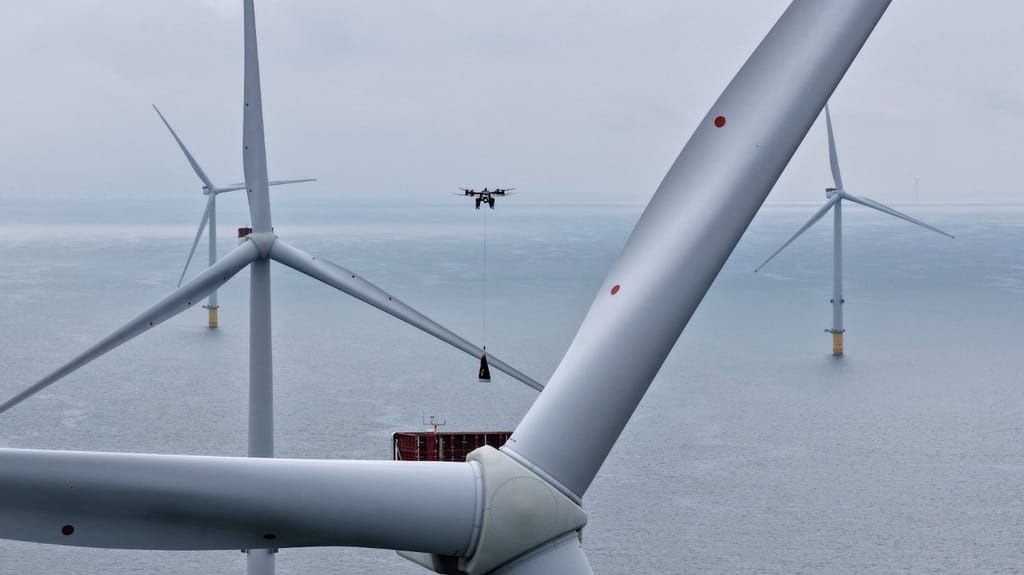
Heavy-lift drones have attracted widespread public attention in Ukraine, where they are a common platform for a variety of defense applications, but they are also making big inroads in the commercial market - including offshore wind. Dutch walk-to-work gangway firm Ampelmann has just finished up a maintenance project at RWE's Triton Knoll project, augmenting its traditional SOV equipment product line with a direct-to-nacelle drone lift service.
Over the course of six weeks, Ampelmann's drone fleet moved more than nine tonnes of cargo from deck level to turbine-top at the Triton Knoll site, making a total of more than 250 flights at loads of up to 80 kilos each (175 pounds). Even before the SOV's tech teams arrived at the turbine to do their work, the drones pre-staged parts, safety gear and tools on landing areas on top. At the end of the job, the drones would come and pick up their gear.
The advantage is in taking the basic task of lifting logistics off of the SOV crew and simplifying it through drone delivery instead. The vessel doesn't have to be positioned, its crane doesn't have to be spotted over the loading zone, and the personnel on board don't have to focus on cargo ops. The work can even be done in the dark.
"By working into the night, we can turn vessel idle time directly into productive lifting work. We can also deliver and retrieve cargo remotely from operating turbines, allowing power generation to continue while we conduct our operations. In addition to reducing vessel movements, crane lifts and manual cargo handling, we increase the effective tool time of technicians by 15 to 20 percent," said Thijs van ’t Geloof, Business Developer at Ampelmann, in a statement.
Most of the flight path is carried out autonomously, and contractor pilots handle any exceptions. RWE engineering manager Morten Christiansen added that his team is "delighted" at the results.