Wednesday, September 23, 2026


China rare earth exports to US drop before Xi-Trump meet
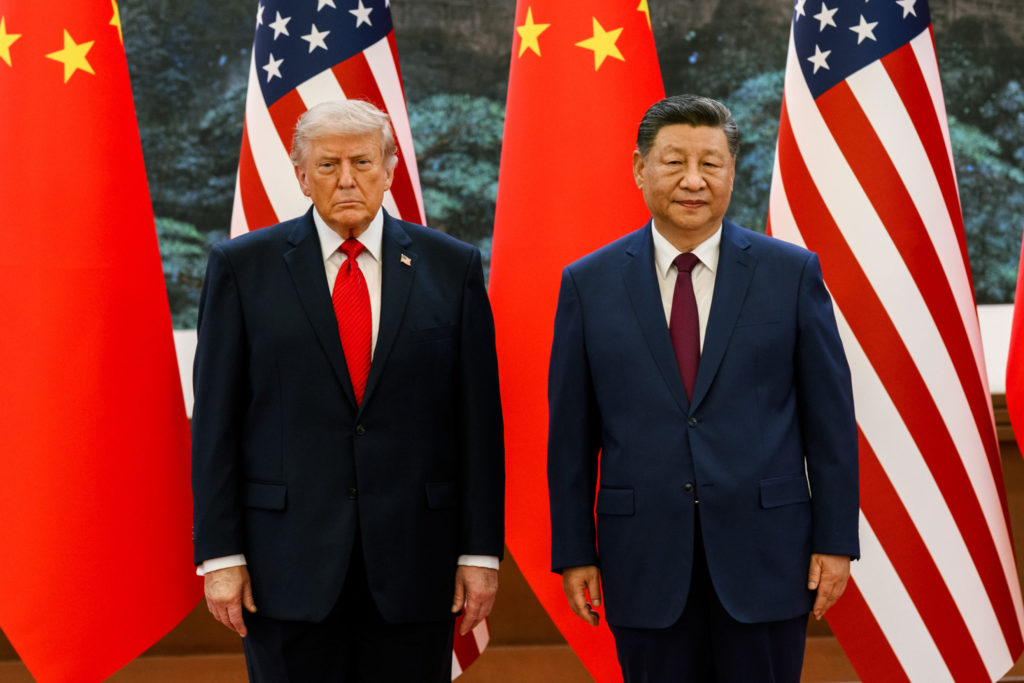

US President Donald J. Trump meeting with Chinese President Xi Jinping in China on May 14, 2026. Credit: The White House | X

China’s exports of rare-earth magnets to the US fell last month, underscoring concerns in the Trump administration that Beijing is still squeezing flows of the critical minerals despite last year’s trade truce.

Shipments of magnets to the US dropped 21% in August to 512 tons from the month before, according to Chinese customs data released on Sunday. The industrial components — along with other types of rare-earth products — became Beijing’s greatest point of leverage over Washington in trade negotiations last year.

President Donald Trump and Chinese leader Xi Jinping are due to meet in the US capital on Thursday to flesh out their approach to topics ranging from trade to artificial intelligence. Ahead of that, top US negotiators signaled rare earth flows were a sticking point and may mean that the truce — which expires November — may be extended only by three to six months.

“I think a lot of it is because China has created this uncertainty,” US Trade Representative Jamieson Greer said in a Monday interview with Bloomberg Television after talks in New York with his Chinese counterparts. “They have limited rare earths exports. They control them, we monitor them, and I think just saying we have full confidence and trust with each other at this point is a little naive.”

China imposed controls on exports of rare-earth magnets — used in everything from cars to consumer goods and weaponry — in April 2025, although they were subsequently eased. The industry is keenly waiting for the outcome of the Xi-Trump talks as they come before the expiration of a US-China trade truce, which includes commitments by Beijing to maintain flows of critical minerals by issuing more generous export licenses.

China hopes to offer more licenses for rare earth exports as a bargaining chip in talks, people with familiar with the matter said, without disclosing what Beijing would demand in return.

“Washington needs stability with Beijing to keep these critical inputs moving,” Chris Kennedy, lead for economic statecraft at Bloomberg Economics, said in a note. “Yet periods of calm that restore access to lower-cost Chinese material weaken the urgency for the US to break its dependence on China.”

Shipments slumped in May last year, but quickly recovered. They’re running at an average of about 504 tons a month this year, although that’s still below 621 tons in 2024 before the curbs. Chinese customs data shows that direct exports of rare earths including yttrium, dysprosium and terbium — subject to export controls — have also dropped compared with previous years.

In May, Greer gave Beijing a “passing grade” for its performance in keeping flows of critical minerals going. US Treasury Secretary Scott Bessent said in July that China should “fully meet its commitments.” Bessent and China’s Vice Premier He Lifeng are holding talks in New York ahead of the leaders’ meeting.

World’s top rare earth magnet maker gives Xi leverage over US


Baotou City: Epicentre of China’s rare earth industry. Image by Matthew Stinson Creative Commons CC BY-NC 2.0

Baotou, an industrial city near the Gobi Desert, is the Silicon Valley of rare earths. Off Rare Earth Street, research institutes sit alongside a museum devoted to the minerals. Nearby, JL Mag Rare Earth Co., the world’s top maker of high-performance magnets, is building its largest plant yet — an expansion that offers a glimpse of how China plans to defend its commanding position in the supply chain.

Over the past year, the US and its allies have pledged billions of dollars to develop new sources of rare earths outside China. Indispensable to everything from missiles to electric vehicles, the minerals are a potent source of Beijing’s economic leverage. As President Xi Jinping arrives in Washington this week, rare earths are at the top of the trade agenda, with China weighing whether to expand export curbs this fall.

But as the US and others attempt to replicate China’s supply chain, Beijing is trying to redefine it. The country already dominates magnet production, and companies like JL Mag are now expanding into increasingly sophisticated components that incorporate them.

That creates a moving target. Mining rare earths is only the first step. The minerals must be separated and refined, turned into high-performance magnets and then manufactured into usable parts. Even if countries outside China secure enough dysprosium or terbium from new mines in places like Brazil, for example, they could still depend on Chinese companies — and their technology, patents and manufacturing scale — to supply fast-growing industries like robotics.

China’s rare earth magnet exports to the US fell last month, and Beijing hopes to offer additional export licenses as a bargaining chip at the summit, Bloomberg News reported.

JL Mag is Exhibit A. Just a few years ago, the company was best known for making rare earth magnets for air conditioners and wind turbines. Today, it has more than 10 times the current production capacity of its closest US competitor and has emerged as a major supplier to the EV industry, with analysts linking it to customers including Tesla Inc. and Volkswagen.

A review of JL Mag’s corporate filings and interviews with magnet makers in Asia and North America, as well as those familiar with the company’s operations, found that the scale and scope of its expansion far eclipse the nascent projects underway in the West. Little known outside the industry, the company is extending its reach from Baotou to as far away as Monterrey, Mexico, where it wants to shift some processing closer to US clients.

“JL Mag can meet the needs of its customers in a way that US competitors just can’t,” said David Abraham, principal at Materium Strata, a critical minerals advisory and market intelligence firm. “Customers can just give them their specs, and JL Mag basically presses a few buttons on their machines and out comes the product. Catching up to that is incredibly hard.”

Estimates put JL Mag’s share of the global rare earth magnet market at 10% to 20%, with its products used across the world’s top 10 new-energy vehicle brands. By 2028, it plans to add as much as 20,000 tons of annual capacity in Baotou, a 50% increase that would extend its lead in an industry where its three closest rivals are also Chinese.

The expansion is already visible. JL Mag’s Baotou site sits on the block next to Rare Earth Park, where Chinese scientists are carved into a granite wall and stainless-steel cubes embossed with chemical symbols dot the flower beds. At the factory, a recruitment flyer hangs on the front gate. The plant takes more than half an hour to walk around.

Robotics shows where JL Mag wants to go next. Last year, the company launched a business unit dedicated to humanoid robots that reports directly to its chief executive, with plans to expand its presence in the sector. Daiwa Securities has identified the firm as the sole supplier of motor rotors for Tesla’s Optimus robots. Another analyst estimates that JL Mag supplies about 80% of the magnets used in Tesla vehicles.

“They came out of nowhere,” said Constantine Karayannopoulos, the former chief executive officer of Neo Performance Materials Inc., which also operates a magnet plant in China. “To me, there is JL and then there is everybody else. They are a juggernaut. They can take business at any price.”

JL Mag referred questions about its operations and expansion plans to its exchange filings.

The company has long been on Beijing’s radar. In May 2019, Xi stopped at some of JL Mag’s facilities in southern China, touring production lines and inspecting the furnaces used to make rare earth magnets. The visit was celebrated in state media and JL Mag’s publications. To remain “undefeated in fierce competition,” Xi said, according to state media, “we must firmly grasp technological innovation as a strategic foundation.” China’s top trade negotiator, Liu He, stood at his side.

The timing and choice of venue were provocative then and prescient in hindsight. Just 10 days earlier, US President Donald Trump had hiked tariffs on Chinese goods, escalating a trade war that would punctuate his first term in office.

It would take until last year — just after Trump’s “Liberation Day” tariffs — for Xi to pull the trigger. China imposed export controls on rare earths, choking off supplies and threatening swaths of US manufacturing before helping force a trade truce with Washington.

Yet JL Mag has been largely unfazed. US efforts to diversify rare earth flows still face “numerous challenges,” the company said in its latest annual report. Chinese magnet makers will remain the “dominant players.”

In 2024, China accounted for about 94% of global rare earth permanent magnet manufacturing — far exceeding its share of mining — according to the International Energy Agency. That same year, JL Mag says it became the world’s largest magnet producer by both output and sales. Between Xi’s visit in 2019 and 2025, the company’s annual capacity more than quadrupled, according to its historical reports. By next year, it wants to boost that by another 50%, to 60,000 tons.

That advantage is reinforced by clusters like Baotou, where processors, magnet makers and research institutes sit just a few hours by train from the giant Bayan Obo mine. The proximity cuts logistics costs and makes it easier to share suppliers, recruit specialized workers and tap decades of expertise.

By comparison, MP Materials Corp., which operates the only rare earth mine and processing facility in the US, started producing rare earths magnets from its plant in Fort Worth, Texas, last year. After the Trump administration invested $400 million in the company, for a roughly 15% equity stake, MP unveiled plans to spend more than $1.25 billion on a much bigger magnet-making plant in Northlake, Texas, that would eventually bring its production to about 10,000 tons a year. 

That expansion would equal about a third of JL Mag’s production in 2025, without factoring in the Chinese firm’s plans to expand. 

Other US companies have made similar pledges to build magnet facilities but have little experience and capital to show for it. 

Demand, meanwhile, is surging, benefiting JL Mag and Chinese rivals such as Ningbo Yunsheng Co. Ltd. Consumption of rare earths used in permanent magnets has doubled since 2015 and is projected to rise another third by 2030, according to the IEA. Outside China, demand is expected to climb 50% by 2035, with existing and planned magnet projects meeting less than a fifth of it.

“The Western companies are still developing their technology, doing everything from scratch,” said Derek Zhang, a Daiwa Securities analyst. “The Chinese companies can ramp up capacity very easily and the cost is maybe about 1/10th.”

JL Mag was founded by industry outsiders. Two decades ago, Cai Baogui was hunting for his next business opportunity. He grew up in Jiangxi province, the southern heartland of China’s rare earths sector, but had spent his career elsewhere — first as a university lecturer and later as a senior executive overseeing plastics manufacturing operations in Dongguan.

Renewable energy caught his attention after he met the chairman of emerging wind-turbine maker Goldwind, according to a rare interview Cai gave to a Chinese news outlet in 2020. Soon after, he teamed up with two friends, Hu Zhibin and Li Xinnong, to explore making rare earth magnets needed for such machines.

In 2008, the trio launched JL Mag by uniting opposite ends of the supply chain. Ganzhou Rare Earth provided a link to raw materials, while Goldwind became an important early customer. The idea was to move beyond the mining, separation and smelting that dominated the city of Ganzhou’s rare earth industry and capture more value by turning those resources into the magnets that make technologies actually work. JL Mag’s founding philosophy, Cai said, was “long-termism.”

Success was hardly assured. Rare earth prices surged more than tenfold in a matter of months in 2011 before collapsing, according to Cai, who remains the firm’s chief executive officer. If raw materials became too expensive, he said, it would be like having “flour more expensive than bread.”

By 2013 and 2014, Cai recalled, employees were leaving and he faced a choice over whether to abandon the industry.

But by the time Xi visited in 2019 — a moment Cai said “greatly boosted our confidence” — JL Mag had emerged from the downturn with a growing business supplying magnets for wind turbines, ACs and EVs. It had also gone public in Shenzhen the previous year.

Four years later, JL Mag raised about HK$4.2 billion ($540 million) in Hong Kong, giving it access to more capital as it embarked on a massive expansion.

In the years since, government support has accompanied JL Mag’s rapid expansion. The company received tens of millions of dollars in subsidies recognized over the past three years, while local authorities have repeatedly designated its factories as major projects.

Some describe JL Mag as unusually well-positioned to weather even the stormiest stretches in relations with Washington. When Beijing’s rare earth controls disrupted manufacturers abroad last year, JL Mag was among the first Chinese companies granted a general export license. Its US sales revenue rose 40%.

The firm has for years been one of the government’s “favorite sons,” said John Ebert, the longtime US representative for magnet producer Ningbo Yunsheng, which he left this year. “That’s why JL Mag grew so quickly from almost nothing into something.”

For potentially huge new markets like robotics, the company is going all-in.

JL Mag named humanoid robots as its next major growth pillar in its latest annual report. Their joints rely on magnet-powered motors that effectively act as muscles, allowing for precise, agile movement. JL Mag is pushing beyond simply supplying these magnets to making finished components, adding another layer of the supply chain for Western competitors to replicate.

“Moving forward the company will continue to increase its investment in research and development of magnetic components for humanoid robots,” JL Mag said.

China is already an early leader in humanoid robotics, accounting for 97% of global shipments in the first half of 2026, according to one survey.

The potential is substantial. Nomura says humanoids use significantly more rare earth material per motor than EVs. JL Mag expects China to remain dominant, telling Citigroup analysts it will likely still produce 80% of the world’s magnets in 2030.

“Even if Western projects materialize, management believes they may solve the ‘availability’ issue, but are unlikely to compete with China on costs, scale, quality and customization,” Citigroup said in a February report, summarizing JL Mag’s views.

That helps explain another US strategy for reducing China’s leverage: eliminating rare earths from magnets altogether.

Niron Magnetics, a Minnesota-based manufacturer, is pursuing that approach with magnets made from iron and nitrogen. The Pentagon is backing the company as it develops factories capable of eventually producing as much as 11,500 tons annually. Looming restrictions are also helping create a market for alternatives: Starting Jan. 1, the Pentagon will stop procuring certain defense technology containing Chinese rare earth magnets.

But the economics remain daunting. Niron has seen a “massive” influx of inquiries from prospective defense customers ahead of the deadline, said Tom Grainger, its vice president of commercial and corporate development. Demand has already overwhelmed the relatively small company — before it has even begun targeting robotics.

“If you take major economic buckets like labor, or government support, you just can’t compete with China,” Grainger said.


How Austria can loosen China’s grip over a key critical mineral


Erzberg mine in Austria. Stock image by dudlajzov.

Nestled between a turquoise-colored lake and the soaring peaks of the Austrian Alps, Plansee Group is building one of the West’s most formidable critical minerals operations outside China.

The closely held company, based in the town of Reutte, sells tungsten, a metal that attracts far less attention than rare earths but is no less vital to modern industry. The material’s exceptional hardness makes it ideal for tools that cut and shape car parts. Its resistance to heat is crucial to semiconductor manufacturing. And its extraordinary density, nearly twice that of lead, gives armor-piercing ammunition much of its penetrating power. 

Few metals can match that versatility, but sourcing it comes with a familiar vulnerability: Beijing dominates the supply chain. A series of moves by China over the past two years — restricting exports, drawing in more raw material and, most recently, cutting off key shipments to Japan — has intensified a global scramble for tungsten. In turn, its cost has soared.

That marks a stark turnaround after years of low prices forced many Western tungsten suppliers out of business. A similar shift is playing out across several critical minerals markets, as Chinese export controls and surging prices put a spotlight on the handful of alternative producers capable of quickly boosting supply.

Plansee is one of them. The company has built up its position in tungsten over decades, securing ore from a mine in South Korea and expanding US processing alongside its European operations. Today, it’s by far the largest manufacturer outside China, accounting for about 12% of global demand and supplying some of the world’s most valuable companies, including ASML Holding NV and SpaceX.

Increasingly, the company’s advantage is that much of its tungsten requires no new mining at all. More than 90% of the 15,000 metric tons it can produce each year comes from worn drill bits, milling inserts and other scrap, thanks to two decades spent developing ways to recycle used material into tungsten comparable in quality to that made from ore.

“Our starting point was China independence,” Chairman Karlheinz Wex said from the company’s headquarters, located a two-hour drive south of Munich. “The basis for becoming independent was recycling.”

That strategy gives Plansee greater control over its materials — and more leverage as competition for supply intensifies. China still accounts for more than 80% of mined tungsten, while its own supplies are tightening as mines age and domestic demand grows. After the country became a net importer last year, Chinese buyers began aggressively snapping up US scrap, in some cases outbidding domestic traders, according to Wex.

China also curbed exports of intermediate tungsten products. Wex estimates that about 20,000 tons of material that flowed annually to Western markets a decade ago has since disappeared.

Amid supply concerns, the Trump administration effectively halted US tungsten scrap exports in August, requiring sellers to offer all of it to domestic buyers.

Tungsten is a niche market on paper, valued at only around $16 billion globally — about 5% of copper’s. But its reach is far greater. Carbide tools made with the metal are used throughout modern manufacturing, from aircraft and automobiles to computers and phones.

“The world would stand still without these carbide tools,” said Simon Jost, managing director of Plansee’s Ceratizit unit in Reutte. 

Inside the highly-automated factory, robots navigate between hundreds of workers. They’re ferrying tungsten plates and rods to be stamped, pressed and polished. Some are as thin as a human hair and used by hospitals to perform surgeries. Others look like menacing claws and can bore tunnels through mountains. Nearly every manufactured product requires something to be drilled, cut or shaped along the way, Jost said.

Tungsten is hardly an isolated case of China’s dominance in critical minerals. The country is the leading refiner of the vast majority of strategic metals, according to the International Energy Agency. The IEA estimates that China’s rare earth export curbs alone could put $6.5 trillion in annual downstream production at risk. Ursula von der Leyen, President of the European Commission, warned this week about “dangerous dependencies” on Beijing for critical minerals.

Austria central bank Governor Martin Kocher said policymakers are paying closer attention to how shortages of critical materials can constrain production and fuel inflation. Central bankers have long factored oil and gas into their models. Now they’re looking at less visible inputs such as tungsten, where a shortage of a relatively cheap material can hold up production worth many times more.

Plansee has treated the squeeze as an opportunity to gain market share and advertise its services. The company’s global network makes it one of the few able to turn scrap and ore into usable tungsten without relying on China. Material collected in Europe can be processed in Austria, Finland or Pennsylvania before moving to factories and customers.

Recycling leaves Plansee less exposed to volatile mining markets and swings in Chinese exports. The company is a rarity in Europe.

“We are not particularly good at recycling in Europe right now,” said Román Arjona, chief economist at the European Commission’s internal-market and industry directorate. Too much critical material is still lost because Europe lacks the investment, skills and infrastructure to recover it, he said.

Recycling also cuts Plansee’s environmental footprint. Products made from recycled tungsten generate four to five times fewer carbon emissions than those made from newly mined material, Wex said. Renewable sources provide 98% of Plansee’s electricity, helping the group cut its carbon footprint by almost a third over the past five years.

Revenue rose 4% to €2.35 billion in fiscal 2026, and Plansee has invested €145 million in new capacity to process concentrate, make powder and produce higher-value tungsten products.

Plansee’s location explains some of its success. Jewish chemist and entrepreneur Paul Schwarzkopf founded the company in the Alpine town of Reutte in 1921, lured from Berlin by cheap hydropower from nearby Lake Plansee.

Schwarzkopf fled to the US as Nazi persecution intensified, and his factory was expropriated and converted into an armaments plant. He returned after World War II and eventually recovered ownership following a prolonged restitution struggle. A century later, the same access to low-carbon power remains a competitive strength.

Plansee’s ability to produce tungsten outside China is becoming more valuable for the US, in particular. This year, the company formed a joint venture with Manhattan Five Partners — a US property developer that works with the federal government — to build a strategic reserve of tungsten oxide. Plansee plans to expand its Pennsylvania plant to process about 12,000 tons annually, using recycled scrap and ore from approved sources.

The push is becoming more urgent ahead of January 2027, when new Pentagon restrictions will further limit the use of tungsten originating in China, Russia, Iran or North Korea. Defense suppliers will increasingly need to trace the metal back to where it was mined or recycled and processed — playing to Plansee’s decades of investment in tracking material across borders.

Plansee is also locking in new supplies. It recently extended a deal to buy tungsten concentrate for another 21 years from Almonty Industries Inc.’s Sangdong mine in South Korea. Plansee owns about 10% of Almonty, its largest shareholder, which is also restarting the long-shuttered Los Santos mine in Spain.

Sangdong is instructive of how tough it is to compete with China. The mine closed about three decades ago after cheap Chinese tungsten drove down prices. Now being revived, it could eventually supply as much as 20% of the tungsten concentrate produced outside China, according to Plansee.

This time, the deal includes protections designed to keep Sangdong viable if prices fall again.

“You must think long term,” Wex said.

The European Union is trying to build resilience more broadly. Its Critical Raw Materials Act calls for the bloc by 2030 to extract 10%, process 40% and recycle 25% of the strategic materials it consumes, while reducing dependence on any single foreign country.

Tungsten illustrates the challenge. Europe has mines, processors such as Plansee and a vast stock of the metal already embedded in tools and machinery. Almonty has been working to start up a major potential project in Spain since 2013, but the future of the operation has been thrown into doubt after a regional government issued a non-binding negative environmental assessment against it in July.

Ultimately, recycling more tungsten is key to reducing reliance on China — but only if the scrap remains in Europe long enough to be recovered.

“We need to make sure that all the used tools stay in the Western world,” Jost said.

(By Jonathan Tirone)

Australia gold output holds near decade average


Boddington moine led Australian gold output. Credit: Newmont

Australian gold output held around the same level it has averaged over the past decade in the year ended June, even as seismic disruptions at Newmont (NYSE, ASX: NEM; TSX: NGT)’s Cadia mine weighed on the latest quarter.

Production totalled 303 tonnes, or about 9.7 million oz., up four tonnes from the previous financial year and worth about A$60 billion ($42 billion) at current prices, Melbourne-based mining consultant Surbiton Associates said Sunday. Output in the quarter ended June 30 rose by nearly two tonnes from the previous three-month period to 76 tonnes.

“Most operations produced more gold in the June quarter than in the previous quarter, with several smaller producers also starting up,” Surbiton director Sandra Close said. “Toll treating, or the alternative of selling ore, are both popular with the smaller end of the list of producers.”

The steady national tally comes ahead of a larger expansion cycle highlighted by Surbiton last month. Northern Star Resources’ (ASX: NST) is working to expand the Super Pit processing plant to 27 million tonnes annually from 13 million tonnes, with commissioning already underway.

Boddington leads

Newmont’s Boddington mine was Australia’s largest gold producer in the financial year at 563,000 oz., followed by the Super Pit at 480,429 oz. and the AngloGold Ashanti (NYSE: AU)-Regis Resources (ASX: RRL) Tropicana mine at 478,095 ounces.

Newmont’s Tanami operation produced 395,000 oz., while Gold Fields’ (NYSE, JSE: GFI) St Ives mine produced 354,900 ounces.

Boddington also posted the largest quarter-over-quarter increase among major operations, adding 49,000 oz. from the March quarter. Tropicana gained 23,000 oz. and Northern Star’s Thunderbox-Bronzewing operation added 15,500 ounces.

Cadia moved in the opposite direction, with production falling by 60,000 oz. after seismic activity disrupted operations. National output would have been almost two tonnes higher if Cadia had matched its March-quarter production, Surbiton estimates.

Copper boost

High copper prices are also reshaping the economics of some Australian gold operations.

Evolution Mining’s (ASX: EVN) 80%-owned Northparkes mine in New South Wales treated ore grading 0.17 gram gold per tonne and 0.57% copper in the June quarter. Copper credits pushed its gold all-in sustaining cost to minus A$10,696 per ounce, according to Surbiton.

The result underlines the growing benefit of copper credits for Australian mines producing both metals as copper prices trade at historically high levels. Copper has gained about 46% in the past year to $6.72 per lb. as of Monday morning, according to data compiled by Trading Economics.


Larvotto begins gold, antimony production at Hillgrove


Hillgrove project. (Image courtesy of Larvotto Resources.)

Larvotto Resources (ASX: LRV) has produced its first gold and antimony concentrate at the Hillgrove mine in New South Wales, advancing a project expected to become Australia’s largest antimony producer as global supplies tighten.

Hillgrove is expected to produce about 4,900 tonnes of antimony and 40,500 oz. of gold annually over an initial eight-year mine life. Larvotto has secured binding offtake agreements with Wogen Resources for antimony and Glencore (LON: GLEN) for gold concentrate.

“With the successful production of first concentrate, we now move into the delivery phase of the offtake agreements we have secured, namely the antimony offtake with Wogen Resources and the gold concentrate offtake with Glencore,” managing director Ron Heeks said in a news release.

The mine is expected to supply about 7% of global antimony requirements, giving Hillgrove strategic importance as Western governments seek new sources of the critical mineral amid constrained global supply.

Ramp-up begins

First concentrate from the processing plant followed the commissioning of Hillgrove’s flotation circuit and concentrate filter presses, part of an extensive redevelopment and plant upgrade program at the operation.

“These partnerships are significantly important, providing Larvotto with established access to global commodity markets and supply chains,” Heeks said.

Larvotto is now focused on ramping Hillgrove up to its nameplate capacity while pursuing plans to extend the operation well beyond its initial mine life.

“Our focus remains on ramping up Hillgrove to nameplate capacity and growing the project into a multi-decade critical minerals operation,” Heeks said.

The start of production comes as antimony has gained greater strategic importance because of its role in industrial and defence applications and concerns about the concentration of global supply. Hillgrove gives Larvotto exposure to both the critical-minerals market and gold while providing a new Australian source of antimony.


Gold is tariff-proof. Canada has $11 billion a year of it stuck in permitting 


Aerial view of the Côté gold mine in Ontario. Credit: Iamgold via Facebook.

Canada spent the first half of September answering Washington’s trade escalation dollar for dollar after the United States imposed 50% tariffs on a broad range of Canadian goods that extend well beyond the stated grievances of autos, dairy and alcohol.  

Canada’s counter-tariffs on C$27.6 billion ($19.7 billion) of US imports took effect September 8 and this week the same government hosted the first Canada Investment Summit in Toronto, putting a 167-project prospectus in front of investors managing a suspiciously rounded C$100 trillion. 

American managed money, rather uncomfortably, accounted for the bulk even with the world’s richest sovereign wealth funds in the same room. Ottawa has been tight-lipped, but leaked reports count about $360 billion in pledges. Mining is the largest category by number with 63 entries, but cheap at the price at a little over $53 billion required.  

Mining is dwarfed by mega projects like the $57 billion expansion of the ice-free-for-four-months-of-the-year Port of Churchill, a $44 billion offshore wind farm off Nova Scotia to slow global warming (something those advocating for Churchill may want to work into their base case), and a $25 billion oil pipeline to the Pacific that would have to succeed where Northern Gateway did not. 

Sitting on gold mines 

Three gold projects have confirmed they are in the book: Troilus in Quebec, NexGold’s fully permitted Goldboro in Nova Scotia, and Canagold’s New Polaris in British Columbia. They belong to an entirely different category from the tentpole projects. These, and a dozen other Canadian gold projects we looked at, have mine plans and declared reserves, the capital required is barely in double-digit billions, the studies are done, and in five cases the only thing between the owner and a construction decision is one government signature.  

At today’s gold price they would produce a shade under $11 billion a year in revenue on an initial capital bill of $9.4 billion from thirteen published numbers (and another billion-odd estimated for the remaining two).  

That’s enough to buy almost 50 medium ice-breaker escorts, hook up a third of the nacelles (depending on prices for rare earth, which Canada is still attempting to mine) needed for phase one of Wind West and a decade’s worth of ESG red tape and lawsuits for the pipeline. 

Gold is the one major Canadian export for which the American market is optional. Bullion enters the US duty-free, and that status was even reaffirmed by a Trump executive order last September when Swiss kilobars were slapped with a 39% duty after a customs cock-up. 

In any case, it does not need the American market: doré poured in Canada is refined and sold into London and Zurich at the same price on the same day.  

At roughly $4,300 an ounce, Canada’s 213 tonnes of 2025 mined output ranked fourth in the world and was worth close to $30 billion. The question this piece asks: is how much more is sitting in the permitting queue, and how quickly it could fill Canadian coffers. 

We screened Canada’s gold development projects for three things: a prefeasibility or feasibility-level mine plan, which under CIM rules is the minimum for declaring a mineral reserve; a meaningful reserve; and no construction decision taken.  

That last test drops some of the country’s most talked-about projects. Kinross’ Great Bear was fast-tracked by Ontario in February but is still at PEA stage with no reserves. Agnico Eagle greenlit the $2.4 billion Hope Bay mine in May. Osisko Gold Group took the construction decision on Cariboo on September 14, the morning the summit opened. Fuerte’s Coffee project in Yukon is building its access road ahead of a feasibility study due in the fourth quarter. 

Fifteen projects survive, ranked on contained gold in proven and probable reserves (a measure of scale, not value): New Polaris at the bottom of the list grades 9.94 g/t, Hammond Reef near the top grades 0.84 g/t).  

Together they hold 36.6 million ounces of reserves. Using the owners’ published production profiles, or their own internal estimates where no study exists, they would produce around 2.5 million ounces a year at steady state, roughly 78 tonnes, or a 35–40% increase on Canada’s current output. At $4,300, that’s $146 billion over the mine lives.  

Crown achievement 

For a country counting tariff losses, quick wins before the trade winds change direction again should be a no-brainer. Gold mines are unusually good taxpayers. On top of the 26.5% corporate rate every other industry pays, a mine pays a provincial mining tax or duty on profit first, taking the combined government share of its operating margin to roughly 34% in Ontario, 37% in BC and the Northwest Territories, 40% in Nova Scotia and 42% in Quebec.  

Using an industry-average cost of $1,800 an ounce and $4,300 gold, the 15 projects would send on the order of $2.4 billion a year to federal and provincial treasuries, and something like $33 billion over their lives, about half of it to Quebec. Those are mature-year figures as a new mine writes off its construction capital before paying meaningful income tax, so the early years yield far less. All the more reason to start blasting sooner rather than later.  

The $2.4 billion is also a good chunk of what Finance Canada could raise from counter-tariffs, or put another way, how much more Canadians have to fork out for the same things they wanted up until September 7. Those who are doing their patriotic duty by forgoing Jack and coke want to know. 

The best laid plans  

First gold pour at these projects cluster at the end of the decade: Windfall in 2029 if its Quebec approval lands this year, Troilus, Springpole, Upper Beaver and Fenn-Gib around 2030, Goldboro as early as 2028, Marban and Wasamac in 2033-34. Almost all of those are management targets (or if we must import corporate speak from softer industries: “aspirational”) rather than study schedules.  

The construction periods behind them are short, one to three years, but in Canada’s permitting hell that hardly matters. S&P Global’s survey of mines that started up between 2020 and 2023 found they took an average of 17.9 years from discovery to first production, five years longer than a decade earlier, with almost all of the stretching out coming from permitting and the wait between feasibility study and construction. Gold mines were the fastest, at only 15 years (yes, only).  

Canada, on S&P’s small sample, was among the slowest countries in the world at 27. Not to put too fine a point on it, but that’s hitting pay dirt under Jean Chrétien and still waiting to be paid for dirt under Mark Carney. 

PwC’s Mine 2026 report puts the Canadian figure at about 20 years to permit and build, six more than Australia. Australia’s blanket tariffs are capped at 12.5% and Albanese decided against counter tariffs. Same insult, less injury.  

Waiting room 

Several projects on this list are already deep into that two-decade clock.  

Gold Fields’ Windfall has a Cree agreement, 12 km of underground and a $1.9 billion budget, and has been waiting since the first quarter for a COMEX decision. Falco’s Horne 5 has a three-month-old feasibility study and Glencore’s smelter next door and is waiting on a Quebec decree. First Mining’s Springpole cleared its federal review in June, eight years after it began, and is now waiting on Ontario. 

Agnico Eagle‘s Hammond Reef has both federal and provincial environmental approvals and, on Agnico’s own 2020 numbers, would produce a glittering 272,000 ounces a year; the company says it is not approved for development. Upper Beaver, Marban and Wasamac are on a schedule that runs to 2033. 

How much of that is Agnico’s own sequencing and how much is its read on how long the remaining permits will take is Agnico’s to say. What the numbers say is that a single company holds a quarter of the queue, and that its earliest-permitted project is the one with no date attached. 

Dead in the water 

Our 15 projects may well prosper soon, but examples of Canadian permit peril and regulatory ruin are not hard to find.  

Take Taseko Mines’ Prosperity copper-gold deposit at Fish Lake, one of the largest undeveloped in the country. It received British Columbia’s environmental certificate in January 2010. Ottawa rejected it that November over the plan to use a lake called FISH lake for tailings (sounds bad, sure, but Taseko was going to build a new lake with all 85,000 rainbow trout relocated).  

Taseko redesigned it, resubmitted it as New Prosperity, and was rejected again in February 2014. Four months later the Tŝilhqot’in Nation won the Supreme Court title case that reset the ground rules for the whole region.  

A decade of litigation followed, ending in June 2025. Taseko gave up and BC forked over C$75 million. Sixteen years after the provincial approval, the deposit is still in the ground and nobody is proposing to do anything in the area other than fly fishing. 

Don’t bother  

NexGold’s Goldboro, which just yesterday said hoes and dozers are now on site, is the exception that proves the rule. Fully permitted, with a Crown lease and a Mi’kmaq benefits agreement, it is waiting on financing rather than a signature. It is easy to blame permitting (guilty as charged) for the inertia in Canada’s mining industry, but TSX Venture juniors still have to raise the capital.  

The Productivity Mega Deduction (a name which veers into Big Beautiful Bill territory at a time Canada is trying to distance itself from bluster from the south) will help build mines, but the ambitions of the summit’s marquee vehicle, the C$50 billion Maple Fund launched by CPP Investments and Brookfield, are too lofty for the grassroots.  

The fund is looking for opportunities with more than C$5 billion of project equity. Not one of the fifteen gold projects clears that bar and six of them need less than C$500 million each: the kind of cheque that the MF cannot be bothered to write.  

Even the most expensive gold mine ever built in the country, Iamgold and Sumitomo’s Côté in Ontario, came in at a billion below. And that was after a C$2.3 billion budget blowout.  

The rest of the list is earlier. Thesis Gold’s Lawyers-Ranch, Mayfair’s Fenn-Gib, St Barbara’s 15-Mile hub and Canagold’s New Polaris all entered environmental review in the past year. Valor’s Courageous Lake has not applied.  

Queue the fast track 

Canada has four: the federal Major Projects Office, Ontario’s One Project One Process, Quebec’s new Filon stream and BC’s priority list. Two of the 15 are in one, Troilus and New Polaris. The other thirteen, including Windfall, Horne 5, Hammond Reef and Springpole, are on the standard track.  

Carney told reporters after the summit that the standard would now be “one project, one review, one year.” But much like those pesky interprovincial barriers Carney says cost “up to $200 billion” a year and promised to sweep away with “one Canadian economy, not thirteen,” and which the provinces have yet to dislodge no matter how loudly Trump’s tariffs are derided from podiums, it is often in the provinces that the fast track goes off the rails.  

Provinces control much of the review, and the 15 show where the test lies: Quebec holds the decisions on Windfall and Horne 5, Ontario on Springpole, and Agnico’s four sit in both. The projects are known, studied and in several cases already approved by one level of government.  

Everything on the table is at $4,300. The banks think that is low. J.P. Morgan’s research desk has gold averaging $5,400 by the end of 2027 and calls $6,000 a realistic longer-term target; Wells Fargo has $5,800 to $6,000 by the end of 2027. Goldman Sachs, after trimming, still has $4,900 for year-end.  

Ottawa, you can do the math. 


Trump says Belarus potash deal in works amid Canada fight


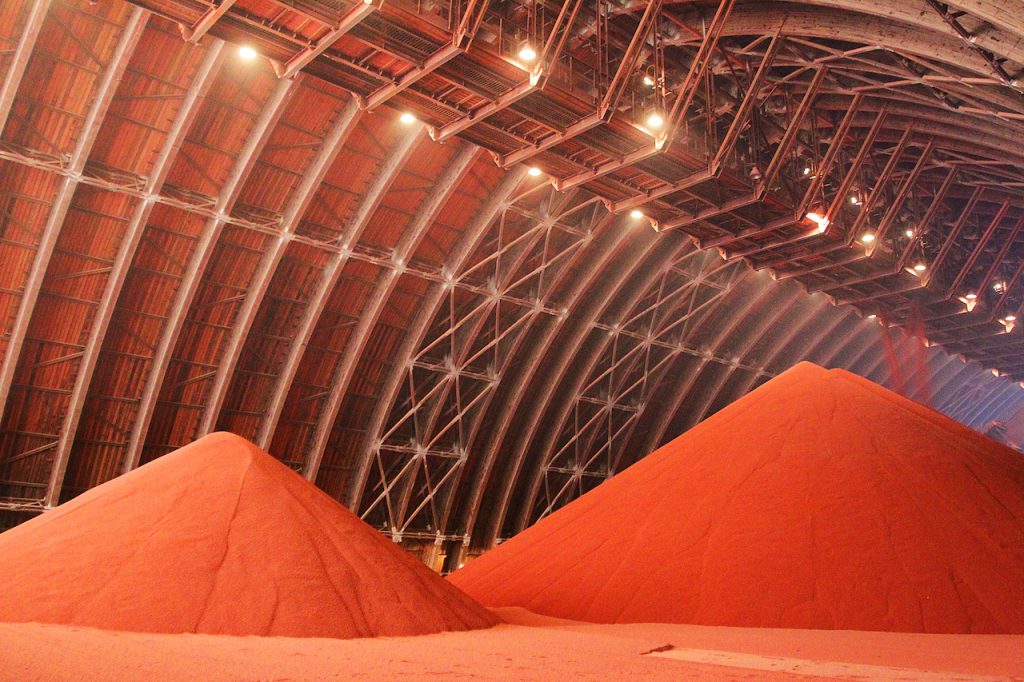
(Image courtesy of BPC.)

President Donald Trump said the US is working with Belarus to secure more supplies of potash amid a trade fight with Canada, a major supplier of the critical ingredient used in fertilizers.

“The United States is working on a massive Deal with respect to the purchase of Potash from Belarus,” Trump said in a social media post Monday. “The pricing would be for substantially less than we are currently paying to Canada, very good news for our Farmers and Ranchers.”

Trump’s comments come amid an escalating trade war with Canada that has seen the two countries impose tit-for-tat tariffs on imports. Trump’s levies, however, don’t apply to some of the most significant natural resources the US buys from Canada, such as oil, potash and critical minerals — an indication of their importance to the US economy.

Canada is one of the world’s largest exporters of potash and any move to restrict those supplies flowing to the US could have a major impact on the American agricultural sector.

The world’s largest reserves of potash, which is mined, are located in Saskatchewan. Shares of Canadian fertilizer producer Nutrien Ltd. dropped as much as 5.2%, while Tampa-based Mosaic Co. fell 5.9% intraday before paring losses. The two companies dominate North American potash production via their joint venture Canpotex.

Trump has sought to rebuild ties with Belarus and its authoritarian leader, Alexander Lukashenko, a close ally of Russian President Vladimir Putin. The US is pushing Ukraine to ease restrictions on imports of potash fertilizers from Belarus and has urged Kyiv to encourage other European allies to do the same.

Potash was a major source of foreign-currency revenue for Belarus before western sanctions over the government’s political repression and its help for Moscow in the war on Ukraine. The US lifted some of its own restrictions on fertilizer from Belarus earlier this year as part of a deal that saw Lukashenko’s regime release hundreds of political prisoners.

Belarus, prior to US trade restrictions, shipped over 700,000 tons of potassium fertilizers to the US in 2021. That’s a fraction of the roughly 13 million tons that the US imported in 2025, with nearly 90% coming from Canada, according to the US Department of Agriculture.

Whether Trump will be able to tap additional supplies is unclear. Belarus doesn’t have enough capacity to supply large volumes to the US, because production for the year is already under contract, Russian news agency Interfax reported, citing Lukashenko. The transport of Belarusian fertilizers has also faced logistical hurdles in recent years, after Lithuania’s rail system ended its contract with state-run Belaruskali OAO in 2022.

US farmers and ranchers, key constituencies for Trump’s Republican Party ahead of November’s midterm elections, are under strain from high costs for diesel, fertilizer and other inputs, as well as disruptions in export markets as the Iran war and Trump’s tariff policies squeeze supply chains. New Orleans potash spot prices are at their highest levels since July 2023, according to Bloomberg Green Markets.

Trump has taken steps to help ease the burden on those groups, with polls showing voters largely disapprove of his party’s handling of the economy and the war.

(By Jeff Mason and Ilena Peng)

Trump’s Belarus potash plan may have limited bite


Cory underground potash mine. (Image courtesy of Nutrien.)

US President Donald Trump’s proposed “massive” potash deal with Belarus rattled fertilizer stocks, but BMO Capital Markets says limited supply and costly export routes make the country an unlikely threat to Canadian producers.

Trump said Monday that the US was working to buy Belarusian potash for “substantially less” than it currently pays Canada, which supplies about 80% of US potash imports. He gave no details on volumes, timing or proposed prices.

Belarus could resume supplying some potash to the US as relations between Washington and Minsk thaw, but those tonnes would probably sell at prevailing market prices rather than at deep discounts, BMO fertilizer and chemicals analyst Joel Jackson said in a note.

“We expect those tonnes would be sold at market-based prices, not deep discounts, and in volumes unlikely to materially alter North American potash supply dynamics,” Jackson said.

The prospect hit North American fertilizer stocks after Trump’s announcement. Nutrien (TSX: NTR)(NYSE: NTR) fell about 2.3% Monday, while Mosaic (NYSE: MOS) slipped about 0.4%.

Supply limits

Belarus, one of the world’s largest potash producers, has rebuilt much of its export business since Western sanctions disrupted its traditional routes following Russia’s 2022 invasion of Ukraine. But the landlocked country remains dependent on more expensive Russian logistics because European Union sanctions restrict access to Lithuania’s Klaipeda port.

That makes Belarus a difficult replacement for Canadian potash, which benefits from established North American transportation infrastructure and Saskatchewan’s enormous production base. Belarus produces about 12 million tonnes annually, split between granular and standard grades, while the US consumes roughly 10 million tonnes, predominantly granular product, according to BMO.

Economics also work against Trump’s suggestion that Belarus could sell large quantities at steep discounts. US potash prices of about $350 to $360 per short ton at New Orleans have risen on strong demand and offer Belarusian suppliers competitive returns relative to other major markets, Jackson said.

Belarus therefore has little incentive to discount one of its largest sources of foreign currency simply to capture US market share.

There may also be little uncommitted product available.

Belarusian President Alexander Lukashenko said Monday the country had redirected exports east and its potash production was already committed under existing contracts. Even if Western markets reopened completely, Belarus lacked additional volumes to supply them, he said.

Lithuania, meanwhile, has shown no sign of reopening the cheaper Baltic export route. EU restrictions on Belarusian potash remain in place, meaning additional shipments to the US would probably have to move through Russian ports.

Pricing pressure

The more immediate risk for Canadian producers may be psychological rather than physical, Jackson wrote. According to the analyst, the prospect of additional Belarusian tonnes could make Nutrien and Mosaic think twice before pushing North American potash prices materially higher, even if Belarus cannot supply enough product to fundamentally reshape the market.

US demand remains robust and BMO still sees room for further potash price increases. But Trump’s announcement introduces another potential source of competition into a market where Canadian producers have long enjoyed a dominant position.

For Belarus to seriously challenge that dominance, it would need substantially greater export capacity, competitive logistics and enough uncommitted granular potash to serve US buyers. These conditions, BMO’s analysis suggests, are not currently in place.


Cameco may turn $2.1B into $24B with Westinghouse listing


An AP1000 reactor under construction. Credit: Westinghouse Electric.

Cameco’s (TSX: CCO)(NYSE: CCJ) $2.1-billion investment in Westinghouse Electric three years ago could soon be valued a dozen times that as the nuclear reactor maker prepares for a US stock market listing.

Westinghouse is seeking a valuation above $50 billion and could publicly file for an initial public offering as soon as October, Bloomberg News reported Friday. Cameco owns 49% of the company, implying a value above $24.5 billion for its holding before accounting for shares sold in the offering or potential dilution.

“A potential IPO comes a lot sooner than we previously envisioned,” Scotiabank analyst Orest Wowkodaw said after Cameco’s second-quarter results last month. “We have increased our medium- to long-term Westinghouse estimates.”

The proposed valuation would mark a dramatic re-rating even from analysts’ estimates last month. Desjardins valued Cameco’s share of Westinghouse at C$15.1 billion, while Scotiabank valued the entire reactor company at C$24.6 billion, putting Cameco’s 49% interest at about C$12 billion.

Cameco and Brookfield Renewable Partners (TSX: BEP.UN; NYSE: BEP), along with institutional investors, completed the acquisition in November 2023. The deal valued Westinghouse at $8.2 billion including debt after closing adjustments. Cameco paid $2.1 billion for its 49% interest, using $1.5 billion in cash and $600 million in term loans.

Reactor pipeline

The potential jump in value comes as Westinghouse builds a much larger pipeline for new reactor work than when Cameco bought into the company.

Westinghouse has identified opportunities for as many as 91 AP1000 reactors over more than 20 years, Cameco said in July. The pipeline includes as many as 20 US reactors under government programs, two units at the stalled V.C. Summer project in South Carolina, three in Poland, two each in Bulgaria and Ukraine and dozens of earlier-stage prospects.

Cameco also raised its estimate of the share of construction spending that could flow to Westinghouse on new AP1000 projects to 40% to 45%. Scotiabank estimated that could translate into $8 billion to $11 billion of Westinghouse revenue over roughly a decade for a two-reactor project and $1.6 billion to $2.2 billion of earnings before interest, taxes, depreciation and amortization.

The higher revenue share was a positive for Westinghouse over the medium term, BMO analyst Alexander Pearce said in August. Firm commitments for new AP1000 reactors remained more important in the near term than the timing of an IPO, he added.

The distinction matters because the 91 reactors represent a pipeline of opportunities rather than firm orders. A $50-billion-plus valuation would partly depend on investors assigning value today to projects that could stretch well into the 2030s.

Washington is trying to shorten that timeline. The U.S. Department of Energy in June made a conditional commitment for as much as $17.5 billion in financing for long-lead equipment for up to 10 AP1000 reactors. Westinghouse would work with utilities and energy companies on as many as five two-reactor projects, with the program intended to bring construction and commercial operation forward by as much as three years.

Government interest

The $24.5-billion figure doesn’t mean Cameco could simply pocket that amount in an IPO.

Westinghouse hasn’t disclosed how many shares would be offered, whether Cameco or Brookfield would sell existing holdings or how much new stock might be issued. It submitted a confidential draft filing to U.S. securities regulators July 31.

A separate agreement with Washington could also dilute the existing owners under certain conditions.

Cameco and Brookfield agreed last year on a strategic partnership under which the U.S. government would receive a participation interest if it makes a final investment decision and enters definitive agreements for at least $80 billion of new Westinghouse reactor construction in the U.S. before January 2029. Once vested, the interest would entitle Washington to 20% of Westinghouse cash distributions above $17.5 billion.

If the interest has vested and an IPO values Westinghouse at $30 billion or more, the government could require a listing. The interest would then be converted into a five-year warrant to buy shares equivalent to 20% of the public value above $17.5 billion.

Desjardins was more cautious than Scotiabank on timing, saying in July that the IPO window remained broad and could extend as far as 2029.

Cash returns

A listing could also sharpen questions over how Cameco uses rising cash flow.

Scotiabank forecasts Cameco’s free cash flow rising to C$1.3 billion in 2028 from about C$200 million this year. With the miner already holding a small net cash position, Wowkodaw said the bank anticipates “further improvements to dividends ahead.”

Cameco raised its annual dividend to 24¢ a share from 16¢ last year. The company’s strong balance sheet, improving free cash flow and limited internal need for capital should make shareholder returns an increasingly frequent discussion, Scotiabank said.

The uranium side of Cameco’s business could add another tailwind. Nuclear demand is beginning to outrun new mine supply, with Benchmark Mineral Intelligence forecasting a uranium shortfall equal to 18% of demand by 2027. Global reactor requirements could rise from about 64,500 tonnes uranium annually to as much as 143,900 tonnes by 2050, according to the OECD Nuclear Energy Agency and the International Atomic Energy Agency.

Much of the recent supply increase has come from restarting or expanding existing operations rather than developing new mines, which typically take 15 to 20 years from exploration through production.

Cameco shares rose 1.5% to C$130.02 in Toronto on Monday morning, valuing the Saskatoon-based company at about C$56.6 billion ($40.3 billion).