Sunday, October 01, 2023

Caregivers want answers to mystery link between ALS, military service

2023/10/01
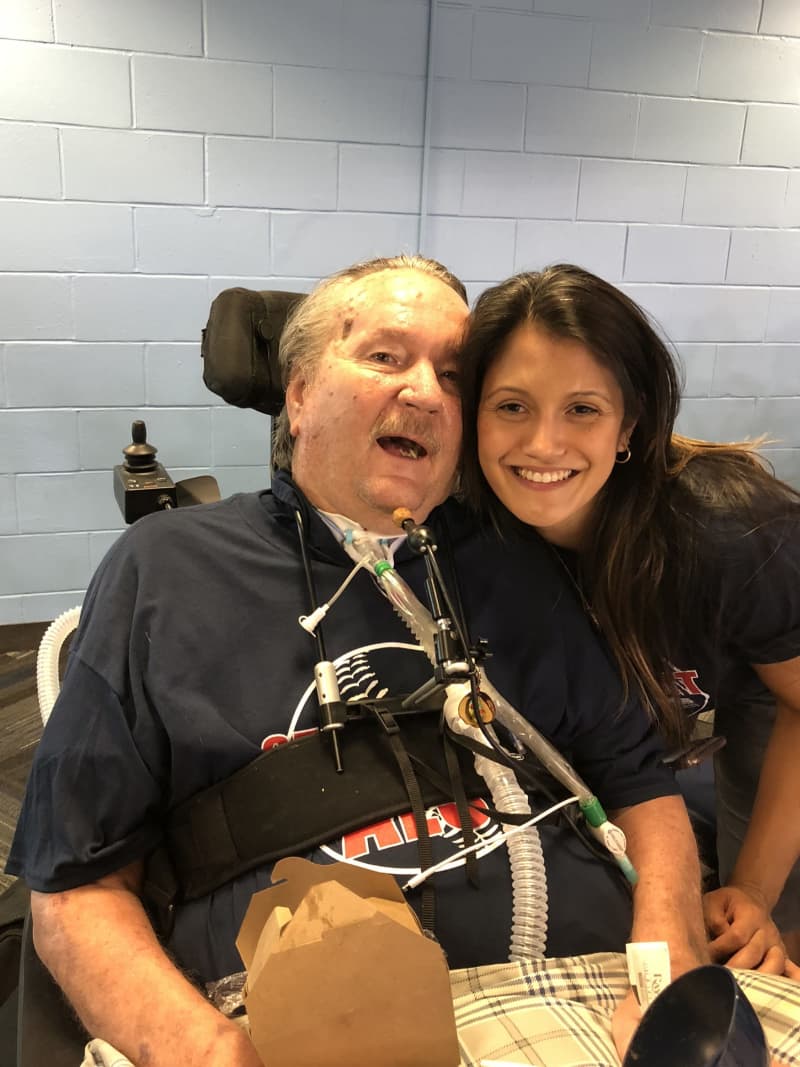
For the past several years, the Winter Garden resident been cared for with the help of the James A. Haley Veterans’ Hospital in Tampa, his daughter Ashley Lee and his granddaughter, Kaylei Lee, 18.. - Courtesy of Ashley Lee/Ashley Lee/TNS

Darrell Lee has lost almost all control over his body as he grapples with the relentless grip of amyotrophic lateral sclerosis (ALS), also known as Lou Gehrig’s disease.

Lying in his daughter Ashley Lee’s Winter Garden home, the 72-year-old is kept alive by a series of medical marvels: a ventilator, feeding tube and a catheter. Communication has evolved into a language of subtle gestures: a closed-eye response for “yes,” a slight mouth movement of “I love you,” the shadow of a smile on his face. It’s a poignant performance that requires a discerning eye to detect, but to Ashley Lee, it’s a testament to the resilience that defines her father.

Though his muscles have failed him, his mind is awake.

“He’s not one of those people that’s going to say, ‘I’m tired. I don’t want to do this,’” Ashley Lee said. “He always looks for a way to overcome.”

Darrell Lee was diagnosed with ALS in 2009. Each year, the neurogenerative disease strikes roughly 5,000 Americans. It often leads to respiratory failure and death within two to five years, according to the U.S. Centers for Disease Control and Prevention. Less than 10% live more than 10 years after diagnosis.

The quest for a cure or a cause remains elusive, with only a small fraction of cases showing hereditary links and a few medications that slow the disease’s progression. Yet, hidden in Darrell Lee’s past is a clue to why ALS chose him: he’s a Vietnam U.S. Air Force veteran.

Studies indicate that people who served in the military are 1.3 to 2 times more likely than the general population to die of ALS. Data suggests this elevated risk of death occurs regardless of war or branch, or even if a vet served during peacetime. The association holds true for other countries, too, such as Denmark. In 2008, recognizing ALS as a service-connected injury, the U.S. Department of Veterans Affairs began covering 100% of treatment for veterans who served 90 days or more.

Still, advocates are pushing for more research, more recognition and more support for veterans and their caregivers. Those in the end stages of the disease require full-time ventilation and in Florida, ventilator-equipped facilities are scarce.

Ashley Lee, Darrell’s daughter, laments the widespread lack of awareness: “It’s surprising how many people still don’t know” about service’s connection to ALS, she said. She found out about it when her dad was diagnosed.
A veteran’s struggle

Darrell Lee’s 15-year bout with ALS started, as all do, with the degeneration and death of motor neurons: nerve cells in the brain and spinal cord that control voluntary muscle movement. As these neurons died, they stopped sending signals to his muscles, causing them to weaken, twitch, and eventually atrophy.

It’s still unclear what may have contributed to his ALS, a disease thought to be caused by a variety of genetic and environmental risks. The disease is more common among people who are white, male, and over 60. Sporadic evidence suggests exposure to pesticides, chemicals, heavy metals and head trauma during service may contribute to veterans’ increased rates of this disease, according to a 2020 review of 19 studies on the topic, though the study’s authors said there wasn’t enough evidence to make a conclusion.

As Darrell Lee’s condition progressed, he persisted, aided by a chin-operated wheelchair and a sip-and-puff computer supplied by the Veterans Health Administration. (Though there’s no cure, the VA can provide equipment, support and a full treatment team.) He became ventilator-dependent in 2016 but didn’t lose the ability to talk or eat until two years ago, Ashley Lee said.

“When we asked him if he was scared, he said, ‘Of course I don’t want to not be able to talk, but the biggest thing that makes me sad is that I won’t be able to make people laugh anymore.’ He just never wanted to take anything too seriously,” she said.
A caregivers commitment

There are 37 veterans with ALS in the Orlando VA’s catchment area — Orange, Seminole, Osceola, Brevard, Lake, Volusia and parts of other surrounding counties. These patients have an average age of 67, and all but 1 are male, said Orlando VA Healthcare System Melanie Thomas.

Though the Orlando VA is closer, Lee’s family has chosen to commute from Winter Garden to the James A. Haley VA Hospital in Tampa for Darrell Lee’s treatment since the beginning. He has stayed at Ashley Lee’s home since his diagnosis, and she’s dedicated to caring for him until the end.

“It’s my dad and I’ll be with him however long I need to,” she said.

She talks to him, jokes with him, plays him ’70s rock music, and takes him out to experience the world as much as possible. Just a couple weeks ago, they went to a Tampa Bay Rays game.

“We can’t forget that even though the disease itself is devastating and awful, there’s still the person behind it,” said Lee, whose dad’s battle inspired her to get a doctorate in psychology. She’s focused on quality-of-life research for veterans with spinal cord injury and disease.
An increasing burden

In the final stages of this disease, however, Ashley Lee is finding it harder and harder to serve as a caregiver.

Since her husband died in a 2013 motorcycle accident, her 18-year-old daughter is often the only help she has.

Lee, a fellow for the Elizabeth Dole Foundation for veteran caregivers, is advocating for the passage of the Elizabeth Dole Home Care Act, a bill that aims to expand access to VA home and community services. In July, the U.S. House Veterans’ Affairs Committee passed it unanimously.

“The VA has been incredible for us over the years,” she said. “We always have considered ourselves very blessed to have them, but I have noticed, especially in the later years, that our biggest obstacle is help.”

Ashley Lee said she very rarely leaves home without taking her dad with her, typically only venturing out for necessities like her doctors’ or dentist appointments, during which her daughter watches him. Though the VA has a number of programs that aim to provide at-home assistance ranging from aides to trained RNs, and the agency pays Ashley Lee to be an at-home caregiver, she hasn’t been able to get a ventilator-trained nurse to the house to watch her father.

“I’ve been isolated and wouldn’t be able to leave my house ever, if not for my daughter, for three years now,” she said.

Dr. Neil Thakur, chief mission officer at the ALS Association, said that veterans have “the best ALS care coverage in the country” thanks to ALS’ designation as a 100% service-connected condition, but caregiver support is something that needs improvement.

ALS Association surveys indicate 68% of ALS caregivers spend more than 30 hours per week providing care and almost half feel unprepared for more intense caregiving duties as the disease progresses.
Florida falls short

It’s even harder to find support for Floridians with ALS who are ventilator-dependent.

Less than two dozen Florida nursing homes in total offer care for this group of people, according to data from the Agency for Healthcare Administration.

There aren’t any community nursing homes at all for ventilator-dependent veterans in the state of Florida, said Dr. Kevin White, who is the chief of Spinal Cord Injury Medicine at the Michael Bilirakis Spinal Cord and Disorders Center at the James A. Haley Veterans’ Hospital in Tampa.

“That’s a huge challenge,” White said. “In the future, that’s something that may be needed.”

Another hurdle: not every veteran with ALS realizes all the resources available to them, says White, who coordinates care for ALS patients throughout Central Florida, not just Tampa.

“Unfortunately, most veterans do not know that this is a 100% service-connected condition,” White said. “We’re hoping to do a lot more outreach to the community, and let them know that this is something that’s here. There’s a big difference in terms of what’s able to be provided for a veteran in the VA system versus outside of the VA system.”

He added that the VA system throughout Central Florida could accommodate more ALS patients than it currently sees.

“It’s rare that there would be any waitlist in terms of providing care for any of our patients,” White said.
Looking forward

Standing in a hospital hall at the Tampa VA where White works, Ashley Lee marvels at how long her dad has lived compared to others with the disease: 15 years.

“He’s the longest-living ALS patient at this Tampa VA right now, which, unfortunately, doesn’t seem like he’s going to be too much longer — but right now, it’s still true,” she said in a Tuesday phone call.

He suffered a serious health setback a couple of weeks ago, and has been hospitalized ever since.

As she looks back at her dad’s life, Ashley Lee laments that in the time from his diagnosis in 2009 to now, there is no firm answer as to why veterans worldwide experience this disease at higher rates than other populations.

“There have been so many advancements,” she said. “But in all of these 15 years, there’s been absolutely zero advancement in the answers to why.”

There has been progress on other fronts. Several drugs have been approved to slow the progression of ALS, with varying success rates. The 2014 ALS Ice Bucket Challenge increased awareness and amplified funding, advocates agree.

Researchers are continuing to ask why and have also begun to examine whether there’s a way to prevent veterans from developing the disease by targeting pre-symptomatic people who have biomarkers that suggest the disease is on its way.

“There’s a lot of hope on the horizon, and there’s better and better news coming out every day,” said ALS Association’s Thakur. “I do believe we can make dramatic improvements in the number of people who are able to live with ALS in a much more humane and comfortable way.”
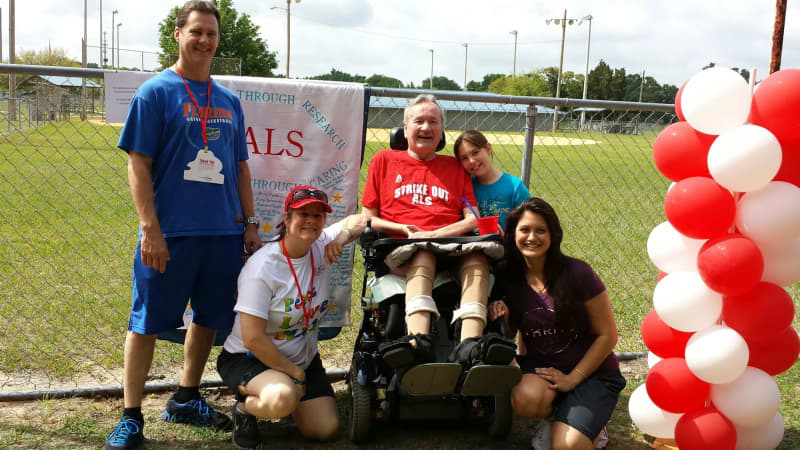
Courtesy of Ashley Lee/Ashley Lee/TNS

© Orlando Sentinel
Illinois is running out of volunteer firefighters: ‘It’s going to become very critical, very shortly’

IT'S A PROFESSION MAKE IT FULL TIME
HIRE WOMEN

2023/10/01
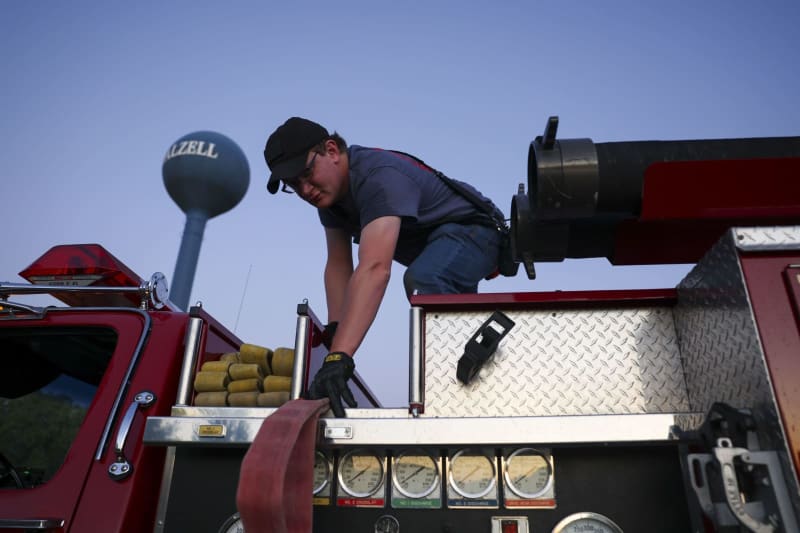
Assistant Chief Alex Justi puts away a hose after testing engine pumps and hoses in the Dalzell Grade School parking lot on Aug. 31, 2023. - Eileen T. Meslar/Chicago Tribune/TNS
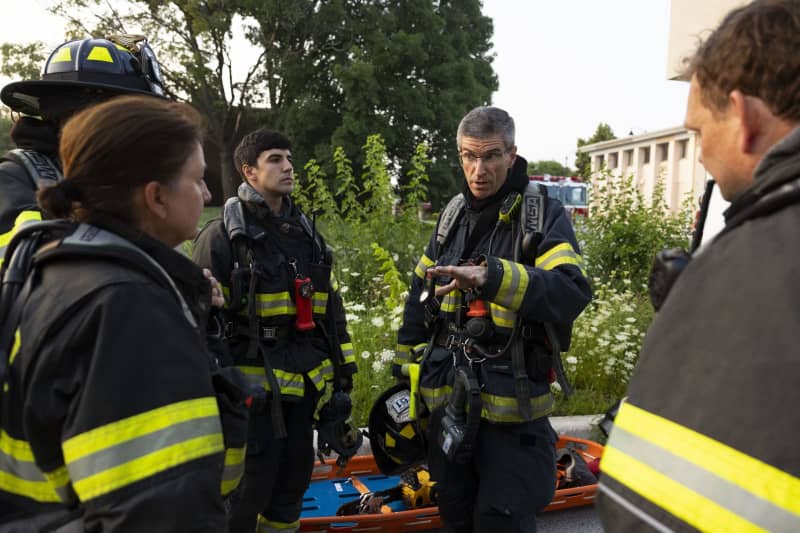
DALZELL, Ill. — The 76-year-old man was sitting at his kitchen table one Tuesday morning in June when he lost consciousness and fell to the floor.

A few blocks away, Alex Justi’s emergency pager went off. The 24-year-old firefighter and paramedic is one of only six people who make up Dalzell’s volunteer-run fire department, and one of only two who lives in the town of about 660 residents in north-central Illinois, near Starved Rock State Park.

Justi raced to the station, jumped in an engine and drove, solo, to the man’s house. Once there, he quickly realized the man wasn’t breathing. Justi placed a device over the man’s nose and mouth and manually pumped oxygen into his lungs, continuing for at least five minutes until first responders from a neighboring town arrived to help.

The man survived. But, Justi reluctantly acknowledged, the outcome could have been different.

“If somebody wasn’t breathing for him, he would have been dead by the time the ambulance showed up,” Justi said.

“That was when we realized that we need some help here.”

Just over half of all firefighters in the United States are estimated to be volunteers: men and women who, like Justi, leave their homes and jobs at any moment to respond to house fires and car crashes, medical emergencies and natural disasters.

In Illinois, about two-thirds of the state’s roughly 1,100 fire departments rely almost entirely on volunteers.

And, with few exceptions, those departments are running out of volunteers.

The fluctuating ranks of volunteer departments make it difficult to accurately track the losses. But fire chiefs across Illinois say they’re facing historic staffing lows.

In Dalzell, the roster of six should be 16 to be fully staffed, said Chief Tom Riordan. Over in Divernon, in central Illinois, Chief Randy Rhodes said he’s lost eight volunteers just in the past two years. And the bylaws for the Galena Fire Department, billed as the state’s oldest, cap volunteer membership at 62. They’ve got 24, Chief Bob Conley said.

The alarming shortages come amid increased service demands driven by rising medical calls attributed largely to the state’s growing senior population.

As a result, departments are increasingly relying on surrounding agencies to aid in their emergency responses, while some chiefs have tapped into federal grant dollars to pay for part-time help to augment their aging rosters of existing volunteers.

“It’s going to become very critical, very shortly,” said Kevin Schott, an Illinois Firefighters Association board member. “The county and the state are going to need to look at this because the public safety is going to be impacted.”

Firefighting organizations and some state lawmakers have tried over the years to address the dearth of volunteers, offering tax breaks and other incentives aimed at buoying department ranks.

Those efforts have thus far found little success. And some department leaders fear the worst is yet to come.

If nothing changes, fire chiefs in Dalzell and elsewhere say they’ll no longer have enough people to answer medical calls, ceding that responsibility to neighboring agencies or private ambulance services. Other departments are looking at mergers as a way to hopefully prolong their survival.

All this could put hundreds of thousands of Illinois residents in the dangerous position of having to wait longer for help to arrive.

“A lot of people think when they call 911, help is going to be there,” said Jim Gielow, chief of the volunteer fire department in Pinckneyville, in southern Illinois. “They may not realize one day that won’t be the case.”
A long tradition, a slow decline

It wasn’t always like this.

Veteran fire chiefs wax nostalgic about decades past when the volunteer fire service thrived, ensconced in a centuries-old tradition (Ben Franklin is credited with creating the model with his Union Fire Company in Philadelphia) and encapsulated in a 1931 “The Saturday Evening Post” cover illustration by famed artist and chronicler of Americana, Norman Rockwell.

They had full rosters and waiting lists back then. They had generations of the same last names in their ranks, and high school “explorer” programs, like internships, that infused their departments with a youthful energy.

The residents of those communities, meanwhile, enjoyed fire protection without the costs of salaries and benefits, which freed up tax dollars for police and parks and roads.

The system worked, until it didn’t.

To be clear, the long, steady decline of the volunteer fire service isn’t unique to Illinois. Headlines across the country tell similar stories of depleted ranks

In 1995, there were an estimated 838,000 volunteer firefighters in America, according to figures from the National Fire Protection Association.

Twenty-five years later, that number fell to 676,900.

The ratio of volunteers per 1,000 people dropped by nearly 25% in that same time, estimates show.

There are plenty of explanations for the downfall.

One obvious factor is Illinois’ shrinking population. The state lost a little over 104,000 residents between 2021 and 2022, U.S. Census Bureau estimates show. The losses were felt in all but 11 of the 102 counties.

Some chiefs believe the sense of community pride and civic duty that once motivated people to volunteer has vanished.

“It just seems to be getting harder and harder to get the younger generation to step up and donate their time,” said Eric Lancaster, fire chief in the central Illinois town of Girard, population 1,785. “It’s definitely been a struggle. And it is definitely getting worse.”

And while it’s true that volunteerism has generally fallen over the last decades, a report earlier this year from the U.S. Census and AmeriCorps found that Illinois was one of only two states (Wyoming the other) that did not see a drop in the percentage of Americans who formally volunteered with organizations between 2017 and 2021 (Illinois’ formal volunteering percentage went from 28.1% to 28.3% in that time).

Changing economic conditions also play a role. Families are increasingly unable to survive on one income. And with fewer job opportunities in rural communities most dependent on volunteer firefighters, people are forced to travel farther to work for employers who aren’t always as willing to let their staff answer emergency calls.

Then there’s the simple reality that being a volunteer firefighter is demanding on the person and their families. Emergency pagers can go off during family dinners and at 2 a.m., on Christmas morning and at a school recital.

“There were times I missed things,” said Lt. Chris Garza, 48, a father of two who has volunteered with the Galena department for the past 13 years. “And you can’t get those moments back. But I know I’m helping somebody when they’re having the worst day possible.”

Others say the training requirements have made the volunteer fire service a hard sell. A basic firefighter certification can take around 180 hours to obtain, and though volunteer firefighters aren’t required to be certified, they do have to be trained to the state standard.

That means departments typically ask their members to attend weekly training sessions, usually one night a week.

Emergency medical training, also not required, can take another six months, and is often crucial given that medical calls account for about 70% of the incidents Illinois fire departments respond to each year.

“Guys get burned out after a while,” said Pinckneyville’s chief, Gielow. “They’re a little more on edge, working their full-time jobs and running a bunch of calls. It’s hard on their personal lives. It all kind of adds up.”
‘We can’t let off the accelerator’

On the last Monday of July, about 30 members of the Glen Ellyn Volunteer Fire Company gathered for a weekly training exercise. In this particular session, they wore full protective gear, face masks and oxygen tanks strapped to their backs, and waited for their turns to go inside an abandoned motel to rescue one of their own from a room filled with smoke billowing from a machine.

There was Vinh Lu, 50, a freelance film location scout and father who started volunteering with the fire department nearly five years ago because, like his military service, it gave him the chance to be part of something bigger.

Richard Arehart, 49, wanted to be a firefighter as a kid but instead became a banker. Nearly three years ago, he saw an online ad looking for volunteers and moved his family to Glen Ellyn so he could make his childhood dream come true.

Clare Doran, 53, went to a department open house seven years ago thinking she’d file paperwork or tidy up the office, only to realize the ask was to be a firefighter.

“I was like, I don’t think that’s a good idea. I don’t think I could carry anybody out,” Doran remembered. “And chief said, we’ll teach you. And they taught me.”

The west suburban fire department is one of the few in the Chicago area that still relies almost entirely on volunteers. And with about 60 members, it’s thus far managed to avoid the shortages that have plagued other volunteer departments. About 35 people showed up to a recruitment open house earlier this month, said Matt Andris, second assistant chief. Seven submitted applications to join, with more expected.

“I can’t put a finger on why we’re successful other than really hard work,” Andris said.

There are, of course, other contributing factors.

For one, the village has a separate, paid ambulance service. That means fire department volunteers aren’t required to go through more intensive emergency medical training, nor are they faced with the added strain of answering medical calls, which state data show have climbed by 35% in the last decade.

Unlike in rural parts of the state, Glen Ellyn’s 28,000 residents offer a large pool of potential volunteers, plenty of whom work in professions with flexible schedules that allow them more opportunity to donate their time. Some department members volunteer elsewhere. Doran, for example, volunteers with four other community groups.

The department also hired a Glen Ellyn-based marketing company to lead its recruitment efforts, which include targeted mailers, Google ad campaigns and volunteer profiles posted on the department’s website.

“We can’t let off the accelerator,” Chief Chris Clark said. “We have to continue to recruit the way we do. That’s just a fact for any volunteer organization.”
‘The bigger conversation is coming at us’

For the volunteer fire service to survive, recruitment needs to be the focus of every person in the department, said Steve Hirsch, a volunteer firefighter in Kansas and chair of the National Volunteer Fire Council.

“That’s our success,” he said. “It’s all those who wear red helmets out there recruiting friends and bringing names to us all the time.”

Departments also need to make sure their recruitment efforts are geared toward women and people of color, two groups that have historically been underrepresented in the fire service.

“We’ve not done a good job of recruiting in those communities,” Hirsch said of the fire service. “You’re overlooking half your population.”

It also takes money. The federal Staffing for Adequate Fire and Emergency Response grant program offers departments money for recruitment, retention and hiring. Since 2015, a little over 70 fire departments in Illinois received SAFER grants totaling close to $55 million.

Some departments use those federal dollars to pay volunteers a small stipend based on the number of calls they answered. Others have spent the money on part-time firefighters to answer calls during weekday hours when volunteer availability is especially limited.

Even Glen Ellyn, with its 60-member roster, still needs to augment its volunteer force by paying contractors to staff a fire engine during those hours.

But for some, the money’s not enough. They exist on fundraisers — 50/50 raffles, cookouts and craft fairs. They drive used fire engines donated by more fortunate peers and wear protective gear they can’t afford to replace despite it being too old by state standards.

Near the Quad Cities, the Colona Fire Department had hoped a federal grant could help it hire two people to cover daytime shifts in the town of 5,300 residents. Even with the money, the department couldn’t do it, Chief John Swan said.

“We’d have to pick up the tab after three years, and we can’t afford to do it,” said Swan, who noted that the department tried and failed last year to persuade residents to pass a tax increase to pay for daytime help.

“I have people in the department who are in their 50s and 60s that have to stay on because there’s no one available in the daytime,” he continued. “The public doesn’t understand. It just does not seem to sink in.”

Elected leaders in Springfield have passed bills in recent years aimed at giving volunteer departments a lift. One bill allowed volunteers to buy discounted tires for their personal vehicles at a government-discounted rate; another protects volunteers from being fired if they’re late to work or absent because of an emergency call.

This session, they passed a $500 tax credit for volunteer firefighters and a bill that allows state employees to leave work to attend firefighter training.

“Some of these bills look gimmicky,” said state Sen. Patrick Joyce, D-Essex, who sponsored the training bill. “But you have to throw something out there as a benefit. The bigger conversation is coming at us, and it’s going to be a lot of money.”

Lawmakers could pull from ideas generated 20 years ago, when Illinois fire department leaders and a bipartisan group of House members released separate reports on how to preserve the future of the state’s fire service.

Among the recommendations: Pass “pensionlike” legislation. Establish a life insurance and disability plan for volunteers. Create a scholarship program for volunteers and their families to attend Illinois universities and community colleges. Develop an incentive program for employers when their employees need to leave to answer emergency calls.

“I think you’re going to have a handful of firefighter bills every session from here to the end of time,” Joyce said. “You chip away at it and you try to address it.”
‘A dying tradition’

Their efforts might not be enough to save what Justi, the assistant chief in Dalzell, called “a dying tradition.”

In Peoria Heights, trustees in the town of 5,900 have been embroiled in an ongoing debate over the future of their volunteer fire department, which, like many, is short on volunteers.

After significant public pushback, trustees recently backtracked on a plan to offset that shortage by contracting help from the neighboring Peoria Fire Department, staffed by career firefighters.

What they do next will depend on whomever is picked as the next fire chief, said Matt Wigginton.

“There’s a lot of identity wrapped up in a local fire department,” Wigginton said. “But overarching, the biggest concern is public safety. At what point does that identity and nostalgia run up against public safety?”

Illinois already has a model program, called the Mutual Aid Box Alarm System (MABAS for short), that instantly dispatches help from neighboring fire departments when needed. Some fire chiefs think that system will become increasingly necessary for every call, no matter the severity.

“As much as anybody hates to have to call out to assist, I see it happening more and more now,” said Lancaster, the fire chief in Girard.

Others see a future where volunteer departments merge with their neighbors, hoping the combination of resources could free up enough money to pay people to offset dwindling volunteers.

But Swan, the chief in Colona, fears department consolidation will lead to longer response times.

Colona has a roster of 17 volunteers, Swan said, well below the 32 needed to be considered fully staffed.

“If nothing changes, there will be calls where we don’t show,” said Swan, who also serves as past president of the Illinois Firefighters Association.

It’s already happened, he said, medical calls at night that his department couldn’t answer because there was no one to respond.

“We have an ambulance backup, but minutes count,” he said.

If nothing changes in Divernon, Chief Rhodes said his department could no longer have the ability to respond to emergency medical calls. Those would then fall to neighboring towns and private ambulance services, both of which are also facing paramedic shortages.

A few high school seniors have expressed an interest in taking emergency medical classes and volunteering at the department. But that wouldn’t be until next summer, he said, and “we don’t know if we could hold it until then.”

Back in Dalzell, the forecast looks no better.

Two hospitals in the area closed this year — one in Peru, the other in Spring Valley — and the fallout has hit Dalzell and surrounding departments hard, exacerbating their staffing woes as ambulance crews are now tied up with longer transport times to and from hospitals.

Riordan, the fire chief, said they, too, might have to abandon medical calls.

“It’s the first thing that’s going to stop,” he said. “To be blunt, people are going to die because there’s nobody to take care of them.”

On a Thursday night in August, all six department members sat around a table in the fire station (also village hall) while Justi led a training on how to identify the types of hazardous materials that could be carried in the semitrailer trucks that lumber along Interstate 80 at the town’s northern border.

“Unfortunately, we’re not able to really mitigate the incident,” he told them. “Our job is to pretty much protect ourselves and everybody else that hasn’t been involved yet.”

All six said they were concerned about the department’s future and perplexed that no one in town seemed to care about the dire circumstances it faced.

“It’s really rough,” said Chris Mason, 44, a lieutenant who’s been with the department for nearly 17 years. “There’s not enough people to do anything.”

Later, they drove two fire engines and a water tanker truck — two of the three donated from other departments — to the elementary school parking lot to test hoses and engine pumps.

The first fire engine they tested, built in 1989, barely pumped water into its 500-gallon tank. It could be an easy fix, they hoped. If not, it could cost a few thousand dollars, money they can barely afford to spend.

During the testing, a man who lived nearby walked up to a few of the members. He’d been a volunteer years earlier but was asked to leave, he said, for missing too many training sessions.

He blamed his work schedule at the time. Now, standing in the grass as water sprayed from a fire hose attached to a nearby hydrant, he blamed the testing for turning the water at his house a funny color.

He asked them to stop, then turned and left.

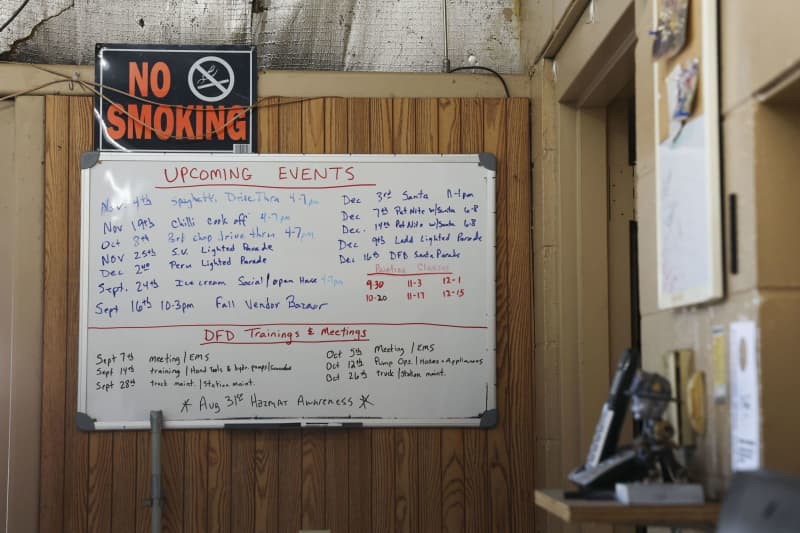
A list of upcoming fundraisers and training sessions are written on a whiteboard at the Dalzell fire station. - Eileen T. Meslar/Chicago Tribune/TNS

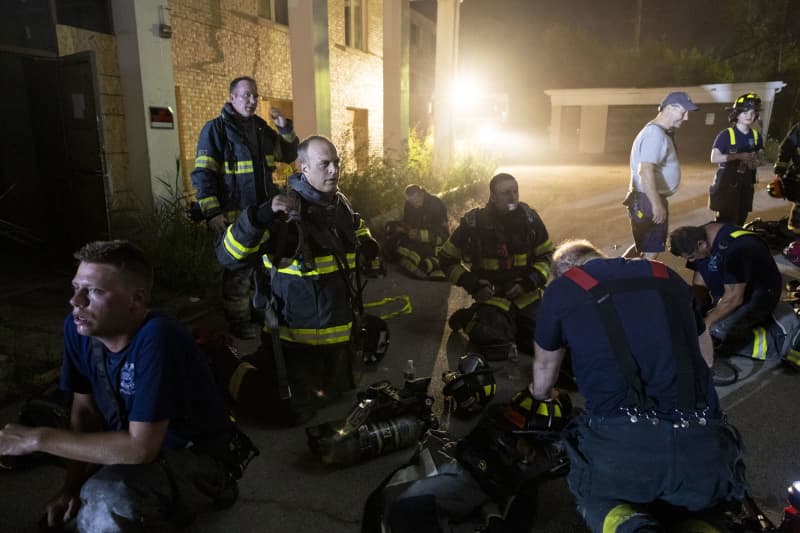
Glen Ellyn volunteer firefighters take a break after participating in a training at a vacant motel in Glen Ellyn on Aug. 30, 2023. - Eileen T. Meslar/Chicago Tribune/TNS


Kirk Huot speaks to other volunteer firefighters during the Glen Ellyn Volunteer Fire Company training on Aug. 30, 2023. - Eileen T. Meslar/Chicago Tribune/TNS


Assistant Chief Alex Justi helps test hoses and engine pumps in the Dalzell Grade School parking lot on Aug. 31, 2023. - Eileen T. Meslar/Chicago Tribune/TNS
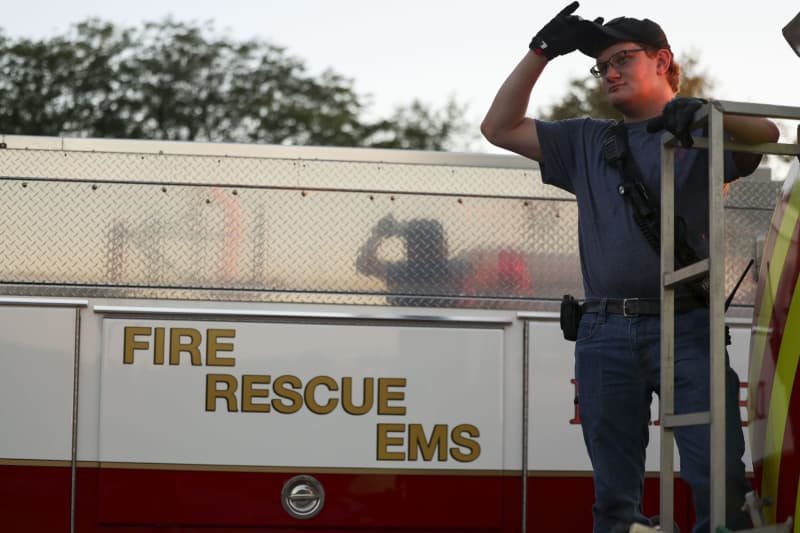
Volunteer firefighter Chris Mason helps test hoses and engine pumps in the Dalzell Grade School parking lot on Aug. 31, 2023. - Eileen T. Meslar/Chicago Tribune/TNS
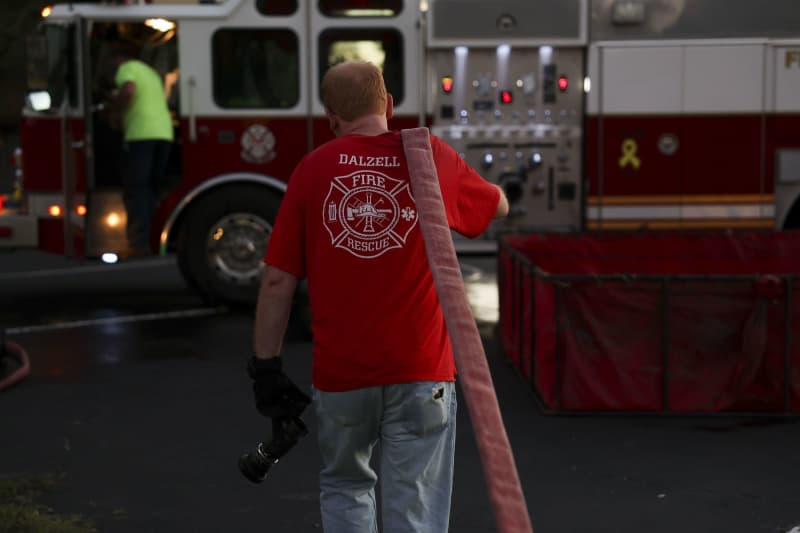
Assistant Chief Alex Justi helps test hoses and engine pumps in the Dalzell Grade School parking lot on Aug. 31, 2023. - Eileen T. Meslar/Chicago Tribune/TNS
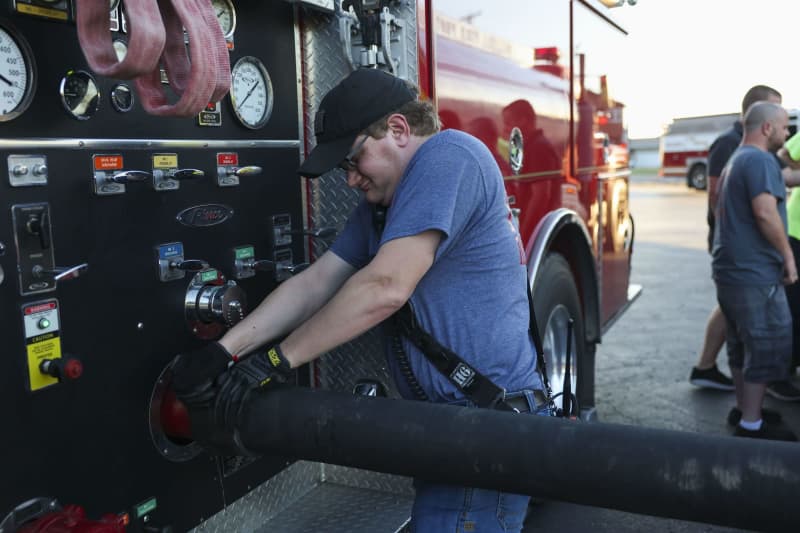
© Chicago Tribune
In face of corporate behemoths, an indie music festival thrives

2023/10/01
The All Things Go festival kicked off its 2023 edition on Saturday at Maryland's historic Merriwether Post Pavilion ampitheater, with headliners including Lana Del Rey, boygenius, Maggie Rogers and Carly Rae Jepsen, who is performing here

Columbia (United States) (AFP) - Back in 2006, Spotify was a nascent start-up, your average stateside concert tickets went for $40 and many fans learned about the best new music from blogs like All Things Go.

Nearly twenty years later, most people find new artists via algorithms and the average US concert ticket costs $250 -- double what it was just five years ago.

All Things Go, however, has grown into a thriving indie music festival in a world where live events are increasingly owned by a handful of companies.

Now in its ninth year, the festival -- whose name derives from a Sufjan Stevens lyric -- embodies the same ethos as that of music blogging's turn-of-the-millennium heyday.

It focuses on emerging artists while prioritizing the experience of live performance over creating viral moments or appealing to social media influencers, both now dominant forces at more corporatized festivals.

The event kicked off its 2023 edition on Saturday at Maryland's historic Merriweather Post Pavilion amphitheater, spanning two days for the first time, with a women-led bill and headliners including Lana Del Rey, boygenius, Carly Rae Jepsen and Maggie Rogers.

The festival's founders first began transitioning from their corner of the internet to live venues by holding monthly club nights in Washington DC, hosting artists who were popular on their blog.

They held their inaugural festival at Washington's Union Market in 2014, later expanding to the Capitol Waterfront in 2016 before moving in 2021 to Merriweather, which can host up to 20,000 people per day.

"I think for us it really is about the music," co-founder Stephen Vallimarescu told AFP. "It's about creating the experience where you want to see the artist at noon as much as you want to see the headliner at 10:00 pm."

And with two stages "we basically set it up so that you can see every single band on the bill."

That's a far cry from the experience fans get at festivals like Coachella, where hundreds of thousands of people gather annually in the California desert for two three-day weekends featuring dozens of artists and six stages, with overlapping set times.

At that event, music is not the only draw: there are giant Instagrammable sculptures, a Ferris wheel, special food and drink attractions, celebrity and influencer-filled VIP tents and after-parties.

All Things Go's organizers are going for a more boutique vibe, said Vallimarescu.

"It is pretty unique to look at our community -- like these are music fans who go to 10, 20, 30 shows a year, and they come to the festival early," he said.

"They're there for the music, they're not there for Ferris wheels, or Instagram posts."
Consolidating festival market

It's no small feat to host an independent music festival these days. All Things Go certainly isn't the only event of its kind, but the landscape is increasingly dominated by giant live performance promoters like AEG and Live Nation, the two largest in the world.

In 2018, a group of indie festivals in Britain decried Live Nation's dominance of the industry there, accusing the California-based behemoth of practices including exclusivity deals with venues that "stifle competition."

In 2022, Live Nation -- which in addition to controlling significant swaths of the touring industry also owns Ticketmaster, the American ticketing titan -- recorded $16.7 billion in revenue, promoting 43,644 events including concerts and festivals worldwide, according to data compiled by Statista.

Most major music festivals are under the umbrella of Live Nation -- Bonnaroo, Lollapalooza and Isle of Wight among them -- or AEG, which owns the company behind Coachella.

Vallimarescu noted that many indie festivals folded as the performance industry took a major hit, especially post-pandemic.

"The reality is that the larger festival ecosystem is very much being consolidated," said fellow co-founder Will Suter.

"Globally it's the reason you see kind of the same headliners across most of festival lineups these days."

All Things Go has lasered in on indie rock, a strategy Suter said works to help it stay competitive in the corporate-dominated festival scene.

"Doubling down on our genre, and really offering value to the consumer that justifies the ticket price" is a goal, he said, with the hope that fans are interested in 12 to 16 artists on the lineup, can actually manage to see them all, and are enticed to come back.

Tickets to All Things Go this year ranged from $105 to $500, the pricier end being heavy on perks.

The festival has also stood out by booking mostly women and non-binary artists -- from the headliners down the bill -- in an industry that's still heavily biased towards men.

Suter praised fellow indie festivals across the United States "that are working day in and day out" to keep live music accessible and eclectic.

"It's a community, including with shoulders to cry on," he said.

"It's cool to see different independent festivals still working."

© Agence France-Presse
Americans celebrate Jimmy Carter's 99th birthday as he receives hospice care
2023/10/01


By Jeff Mason

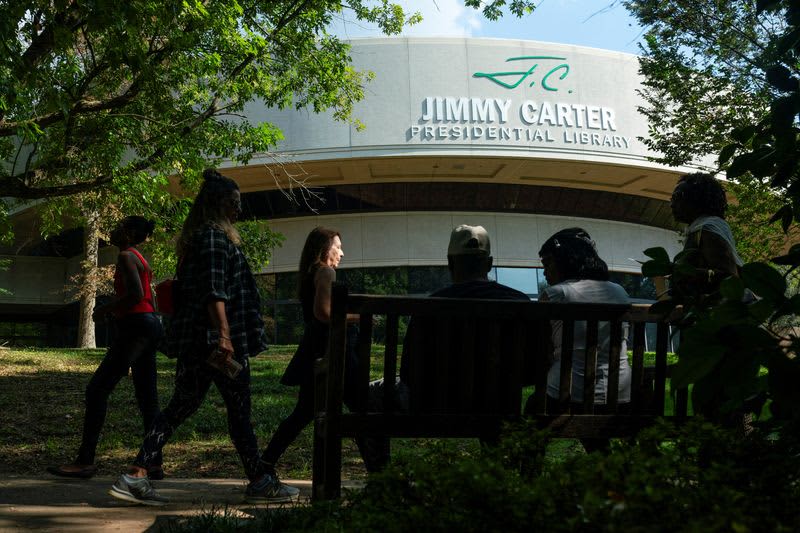
WASHINGTON (Reuters) - Americans celebrated the 99th birthday of former President Jimmy Carter this weekend, with the White House putting up a wooden cake display on its north lawn and the Carter library in Georgia hosting a party for the public.

Carter, a Democrat who served as U.S. president from January 1977 to January 1981, is in hospice care after deciding in February to decline additional medical intervention. He turns 99 on Sunday.

In Atlanta, the Jimmy Carter Presidential Library & Museum hosted a celebration that it said would feature cake, games, trivia and a food truck. The party was moved up to Saturday ahead of a possible government shutdown that could start around midnight on Sunday.

Back in Washington, a three-tiered wooden cake display, decorated in the red, white and blue colors of the American flag and featuring 39 candles in recognition of Carter's being the country's 39th president, festooned the White House lawn with a "Happy Birthday President Carter" message.

Carter, who was born on Oct 1, 1924, has lived longer after leaving office than any former president in U.S. history. He has garnered worldwide admiration for his post-presidency humanitarian work and won the Nobel Peace Prize in 2002.

Carter has faced health challenges in recent years, including melanoma that spread to his liver and brain, but he has continued to show resilience, even after his decision to start hospice care.

He and his wife, Rosalynn Carter, who has dementia, took an outing a week ago to attend the annual peanut festival in their hometown of Plains, Georgia.

Carter's grandson Jason told the New York Times that the former president faced physical limitations and was "coming to the end," but was home, with his wife, and at peace.

(Reporting by Jeff Mason; Editing by Leslie Adler)


© Reuters
Lake Tahoe’s biggest champion, Dianne Feinstein, secured its beauty for future generations

2023/09/30
Lake Tahoe during the 22nd annual Lake Tahoe Summit, at Sand Harbor State Park, near Incline Village, Nevada, on Aug. 7, 2018. 
- Cathleen Allison/Las Vegas Review-Journal/TNS

SACRAMENTO, Calif. — Lake Tahoe’s internationally revered blue waters — once described “the fairest picture the whole earth affords” by humorist Mark Twain — could instead be muddy brown if not for the late senior senator from California, who died Friday at the age of 90, environmental advocates said.

Sen. Dianne Feinstein, who spent her childhood and adult life in the mountainous region, was the “biggest champion Tahoe ever had and will ever have,” said Amy Berry, the CEO of the nonprofit Tahoe Fund. The state’s longest-serving U.S. senator secured more than half a billion dollars to keep Lake Tahoe from environmental harm.

“She used to say ‘Tahoe is in her blood,’” Berry said.

It was Feinstein’s sharp political acumen that brought Tahoe’s environmental threats to the national spotlight. Protecting Tahoe’s famed clarity was a symbol of protecting the environment, said Darcie Collins, the CEO for the League to Save Lake Tahoe, the oldest environmental organization tasked with protecting its waters commonly known for its slogan “Keep Tahoe Blue.”

“If we cannot protect Tahoe, what can we protect?” Collins said of the message at the time.

Feinstein spearheaded the 1997 Lake Tahoe Presidential Summit, now an annual event, and persuaded then-President Bill Clinton and Vice President Al Gore to attend. Their appearances helped to spark the efforts behind the Lake Tahoe Restoration Act passed in 2000, said Geoffrey Schladow, the director of Tahoe Environmental Research Center and a professor in the department of civil and environmental engineering at UC Davis.

Schladow added that Feinstein was an acute politician who leveraged federal funding to secure state and private monies for conservation efforts.

The restoration act is up for renewal again in Congress, this time through 2034.

Schladow said Feinstein took the environment personally — she allowed weather instruments to be attached to her private boat dock to collect real-time data.

Feinstein and her late husband, Richard Blum, who died last year, wrote the first checks for Tahoe Fund and came to fundraiser dinners, Berry said. She emphasized the bipartisanship needed behind supporting the efforts of Lake Tahoe.

Tahoe stretches across California and Nevada, which led Feinstein to work with Nevada Sen. Harry Reid, who was the Senate majority leader and other stakeholders from both states, said Julie Regan, the executive director of the Tahoe Regional Planning Agency. The respect Feinstein commanded from her colleagues, Regan said, helped to keep the protecting lake a nonpartisan issue.

Rep. Tom McClintock, R-Calif., noted in a statement Friday that Feinstein helped support legislation that saved the city of South Lake Tahoe from the destructive 2021 Caldor fire.

“We couldn’t have done it without her,” he said.

Collins noted more than 100,000 boats have been inspected over 25 years for the destructive quagga mussels, preventing the invasive species from running afoul. Keeping the lake clear is directly related to Feinstein’s dedication to Tahoe, Regan said, who remembered the times Feinstein would carry a pipe teeming with mussels on Capitol Hill to remind them of what could happen without their help.

“Tahoe is blue thanks to her,” Collins said.

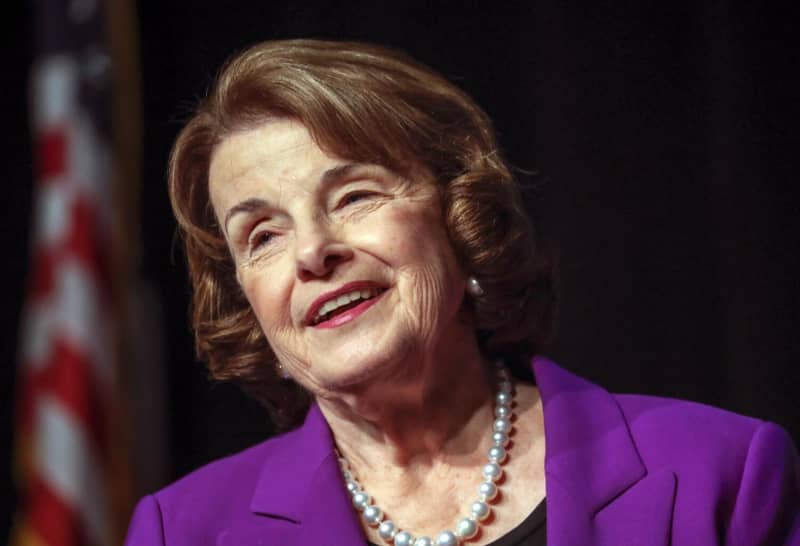
Dianne Feinstein, D- Calif., at a lunch hosted by the Greater Riverside Chambers of Commerce convention Center in Riverside, California, in October 2017. - Irfan Khan/Los Angeles Times/TNS

© The Sacramento Bee
'Will try to kill people': Expert warns Trump is using a known tactic to pass down marching orders

Adam Nichols
October 1, 2023 

Brian Klaas (MSNBC Screengrab)

A political analyst warned Sunday that Donald Trump’s followers “will try to kill people” as the former president’s violent rhetoric ramps up – and it's increasingly being normalized.

Brian Klaas, an associate professor in global politics at University College London, told MSNBC’s The Sunday Show with Jonathan Capehart that, while the nation apparently isn’t taking Trump’s threats seriously, a group of his followers is hanging on every word.

And Klaas warned that they will take action

“It has become the banality of crazy incitements of violence, a sort of normalcy,” he said.

He detailed recent outbursts from Trump: “You have him, you know, suggesting that you could execute America's top general. On Friday night, he joked about Paul Pelosi being attacked, the crowd laughed when he was referencing, you know, sort of an 82-year-old man being hit in the head with a hammer.

“He called to execute people who shoplift from stores, a very minor crime. One we need to take seriously, but not one where they should face execution. He has demonized a number of people in his outburst on Truth Social, and in front of crowds.

"This is related to a term called stochastic terrorism. It's an academic jargon term, what it basically means is that when someone who is very powerful and influential targets or demonizes individual groups in the public, at least a small number of their followers will take them as marching orders.

“What is highly likely, going into the 2024 election, a small subset of Trump's very well-armed extremists base will try to kill people.”

Watch the video below or at this link.


'Authoritarian' GOP has become 'dependent on violence for its identity': historian

Alex Henderson, AlterNet
September 30, 2023 

Paul Gosar (AFP)

During a Thursday, September 28 speech in Arizona, President Joe Biden paid tribute to the late conservative Sen. John McCain (R-Arizona) and sounded the alarm about the threats that "MAGA Republicans" pose to democracy in the United States.

Biden's tone was not anti-conservative. He was joined onstage by McCain's widow, conservative activist Cindy McCain, and Biden fondly recalled his years working with John McCain in the U.S. Senate. But the president attacked the MAGA movement as dangerously authoritarian — a warning that author/history professor Ruth Ben-Ghiat agreed with during an appearance on MSNBC's "The ReidOut" a few hours after Biden's speech.

Ben-Ghiat, known for her expertise on authoritarianism and her book "Strongmen: Mussolini to the Present," told liberal host Joy Reid, "We really need to take very seriously how this fusion between the Proud Boys and all these other extremist groups is going on. And so, this is part of the GOP's trajectory to become an autocratic party."

When Reid mentioned that former Rep. Paul Gosar (R-Arizona) joined former President Donald Trump in suggesting that Joints Chiefs of Staff Mark Milley should be executed, Ben-Ghiat responded, "Unfortunately, for us, in America…. we only have these two parties. And one of them has become an authoritarian party that is dependent on violence and on corruption for its identity."

READ MORE: Busted: Trump's fascist coup exposed again

Watch the video below 

Emails exposed Kansas police chief trying to find a law to justify his raid on a local newspaper

Sarah K. Burris
October 1, 2023

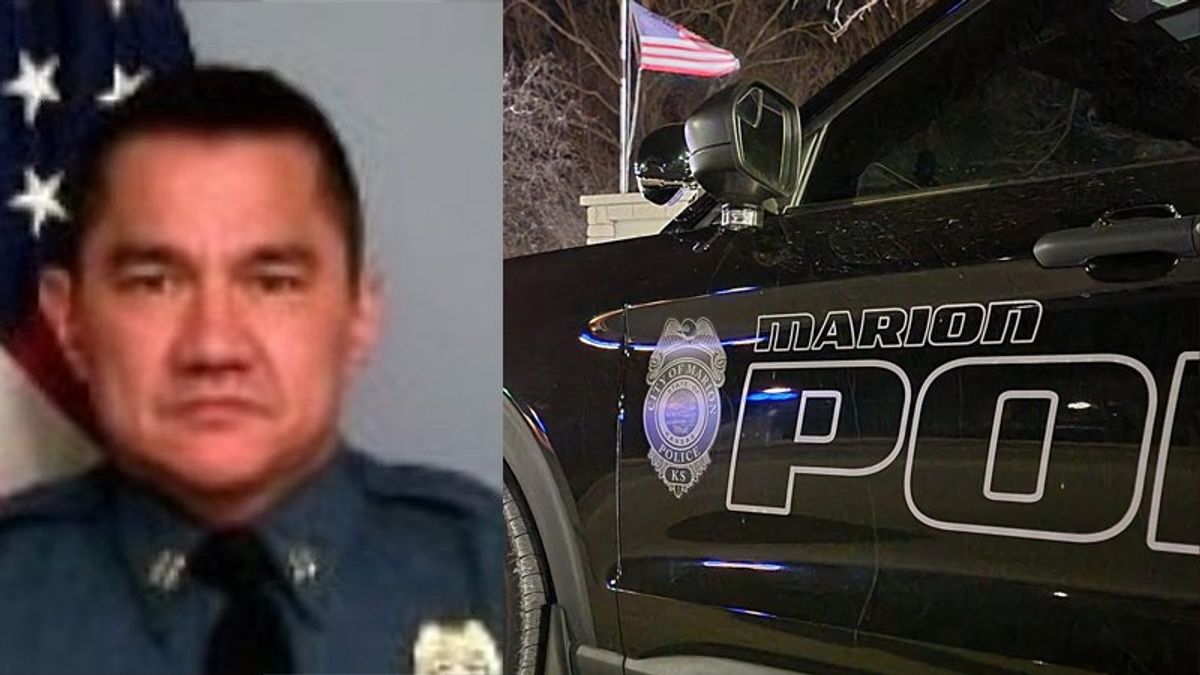
Photos: Official police photo/LinkedIn and via Mario County Police Facebook page.

The Messenger has obtained emails exposing the Marion County Police Chief trying to invent a justification for raiding the local newspaper.

The news site filed an open-records request seeking the emails of suspended cop Gideon Cody as he searched for a law that would enable him to get the FBI to back him up on a wide-ranging subpoena.

Cody, who joined the force after he said he was retiring from the Kansas City Police Department, began his work in June 2023. The documents include all emails beginning at that time as well as messages sent between city officials that were attached to the emails.

According to the Marion County Record, the owners were raided over a "tip" that the newspaper was going to write about a local restaurant owner, Kari Newell, who was accused of having a DUI and driving without a license. The source said that the local police were aware of it and ignored the violation. The newspaper didn't write the story, but reporters used the Kansas Department of Revenue website to confirm information about the accusations, the Kansas Reflector explained. The KDR website is public.

Newell later "acknowledged the accuracy of the information and said she understood that coming forward with allegations about it might expose the information rather than preserve its confidentiality."

The reporter then told police about the allegations they'd received. They did not seek out the information; it was merely sent to them along with Marion Vice Mayor Ruth Herbel, who was also raided.

The police chief claimed that they believed the reporters were engaged in criminal behavior based on a "tip." That criminal behavior he alleged was obtaining the information from the KDR website he claimed was unauthorized and illegal.

According to the documents obtained, Cody was searching for ways to allege wire fraud among the crimes committed for the information. In an email to Marion County lawyer Joel Ensey, titled "Crimes?" Cody asks if the paper violated the Driver Privacy Protection Act (DPPA) by looking up the information. The federal law governs the release of DMV records.

"He told Ensey that his understanding is that the DPPA 'establishes guidelines and restrictions on the release, use, and disclosure of personal information collected by DMVs, including driver’s license and motor vehicle records' — and that, in his interpretation, the newspaper might have committed wire fraud by entering the business owner's information into the website, accessing her records, and selecting an incorrect answer when asked for the 'verification of your eligibility to receive the requested records,'" said the Messenger report.

"Obtaining a DMV (Department of Motor Vehicles) report by falsely clicking on a reason for download, especially if done with the intent to deceive or defraud, could potentially be considered a form of wire fraud," Cody continues, according to the report.

The raid happened three days later.

The Kansas Department of Revenue released a statement after the raid saying it isn't illegal to access the records on their website.

See the text of the emails found here.
New book adds weight to view that play is vital for baby brain growth

2023/10/02

A child's body and brain is designed to be playful, and a new book illustrates that parents can facilitate the learning process by supporting playtime as early as possible. Mascha Brichta/dpa

When babies play, it not only keeps them amused and occupied, it helps their brains develop and mature in ways that are vital for later life.

The reasons why are set out in a new book called "The Brain That Loves To Play", in which Middlesex University’s Jacqueline Harding argues against any play-learning dichotomy.

"It seems that the young child’s body and brain are literally designed to be playful, and this is crucial for its development," Harding says, adding that play should not be seen solely as recreation.

She warned against anything that limits toddlers' ability to enjoy themselves, saying, "children are naturally wired to play and any sustained deviation from this masterful design comes at a price."

Rather, when at play, the child’s brain "starts to 'jump' and light up with joy as connections between neurons make impressive progress."

"Does this experience count as learning? Absolutely yes," Harding says. She adds that the Covid lockdowns mean there needs to be greater emphasis on play, for those youngsters who have lived through "such unprecedented times."

Doctors and health officials have also been promoting play as central to a child’s physical and intellectual growth.

"During play, children will learn to move, balance and lift things," according to Ireland’s Health Service Executive, which said play also "helps children develop their memory, thinking and reasoning skills."

"Evidence suggests that play can help boost brain function, increase fitness, improve coordination, and teach cooperation," according to Stephen Suomi of the National Institutes of Health in the US.


"Children are naturally wired to play and any sustained deviation from this masterful design comes at a price," writes Middlesex University’s Jacqueline Harding. Christin Klose/dpa

© Deutsche Presse-Agentur GmbH


CBS host laughs in Kevin McCarthy's face after he claims Democrats want to shut down government

David Edwards
October 1, 2023 

CBS/screen grab

CBS host Margaret Brennan laughed out loud after House Speaker Kevin McCarthy (R-CA) claimed Democrats "tried to do everything" they could to force a government shutdown.

While speaking to Brennan on Face the Nation, McCarthy blamed Democrats for problems passing a temporary government funding bill.

"I wasn't sure it was going to pass," he remarked. "You want to know why? Because the Democrats tried to do everything they can not to let it pass."

Brennan responded with laughter.

"Democrats were the ones who voted for this in a larger number than Republicans to keep the continuing resolution alive," she said.

"Did you watch the floor yesterday?" McCarthy asked.

"Yes," Brennan replied. "Ninety Republicans voted against it."

"OK, so let's walk through what actually happened," McCarthy responded. "First of all, the Democrats stood up and did dilatory actions, asked to adjourn. So was that supporting to adjourn? Then they used the magic minute. They went as far as pulling the fire alarm, not to try to get the bill to come up."

"We are going to make sure we keep it open while we finish the job we're supposed to do," he added.

Watch the video below from CBS.
PRIVATEERS OF HEALTHCARE
Longtime ally splits with GOP over culture war issues: 'We continue to see an attack on science'

Travis Gettys
September 30, 2023 

Doctor issues prescriptions to woman (Shutterstock)

The American Medical Association has split with the Republican Party over culture war issues.

The nation's most influential doctors' group has long aligned with the GOP on regulation and other topics, but disagreements on abortion, transgender care, gun rights and climate change has found Republican lawmakers accusing the group of practicing "wokeism," reported Politico.


“They do have some issues and some credibility to regain with those who practice,” said Rep. Greg Murphy, (R-NC), a urologist who co-chairs the GOP Doctors Caucus, who took a shot at the AMA's “social justice and equity agenda.”

One lobbyist for health providers said GOP lawmakers and staffers react to almost any mention of the AMA with an eye roll, while another lobbyist who represents a physician group said their employer hesitates to work with the AMA due to its reputation among conservatives.

“Their credibility is so diminished that it’s a liability,” that lobbyist said, adding that Republicans often ask: “What the hell is with the AMA?”

AMA president Jesse Ehrenfeld said the group has been forced to speak out against Republican attacks on science and due to concerns about gun violence.


“We continue to see an attack on science and evidence-based medicine,” Ehrenfeld said, "and we will always stand up for the science.”


But the AMA continues to donate generously to Republican candidates despite their opposing views on many social and health issues to avoid cuts to Medicare payments to doctors, which the group has warned could lead physicians to stop treating those patients.

Cuts to Medicare reimbursements would be “existential threats to our profession and to our patients," warned former AMA president Jack Resneck in his farewell address.