Wednesday, May 06, 2026

Hantavirus contact person to be brought to Germany for testing

06.05.2026, DPA

Hantavirus - FILE PHOTO - A warning sign with the inscription: "Attention danger!! (Hantavirus) Risk area!! Safety precautions must be observed!!!!!!" is attached to a door to a cellar room on the premises of the police headquarters in Goeppingen. (zu dpa: «Hantavirus contact person to be brought to Germany for testing»)

Photo: Alexander Woelfl/SDMG/dpa

A person who came into contact with hantavirus on the Hondius cruise ship is to be brought to Dusseldorf for medical testing, a hospital in the western German city said on Wednesday. 

The University Hospital in Dusseldorf said the transportation and precautionary medical testing of the person would take place on Wednesday. It added that the person concerned is asymptomatic and presumed not to be infected with the virus. 

"This is a contact person with no confirmed evidence of a hantavirus infection. Admission is purely precautionary for medical evaluation," the hospital emphasized.

Three passengers of the Hondius - which is anchored off Cape Verde after sailing across the Atlantic from Argentina with just under 150 people on board - have died amid an outbreak of hantavirus. 

Another passenger has tested positive for the virus after returning to Switzerland.

According to the World Health Organization (WHO), three people suspected of having hantavirus have been evacuated from the cruise ship. WHO head Tedros Adhanom Ghebreyesus said they are on their way to receive medical treatment in the Netherlands.

It was initially unclear whether the person who is to be transported to Dusseldorf had been in contact with one of these three people. 

The WHO is working with the operators of the Hondius to closely monitor the health of passengers and crew and to arrange evacuations if necessary.  

"At this stage, the overall public health risk remains low," the WHO head wrote on X.

Human Spread Of Hantavirus Not Ruled Out On Cruise Ship


By Dominika Tomaszewska-Mortimer

Hantavirus victims on a ship in the Atlantic Ocean may have been infected prior to joining the cruise and human-to-human transmission on board cannot be ruled out – although it is rare – the World Health Organization (WHO) said on Tuesday.

The deadly disease outbreak has triggered an international public health response. Seven individuals of the 147 passengers and crew have been reported ill and three have died in what remains a fluid situation, WHO’s chief of Epidemic and Pandemic Preparedness and Prevention Dr Maria Van Kerkhove told reporters in Geneva.

“One patient is in intensive care in South Africa, although we understand that this patient is improving,” she said, while two patients still on board the ship, which is currently off the coast of Cabo Verde, are being prepared for medical evacuation to the Netherlands for treatment. 

Dr Van Kerkhove stressed that the situation is being closely monitored. As a precaution, passengers have been asked to remain in their cabins while disinfection and other public health measures are carried out. Medical teams from Cabo Verde are providing support on board the ship.

“The plan is, and our highest priority is, to medically evacuate these two individuals” to make sure that they receive the required care, she insisted. 

There are no other symptomatic patients on board. A third suspected case who reported a mild fever at one point “is currently doing well”, the WHO official said.

Spain cooperation

The ship is set to continue on to the Canary Islands. Ahead of arrival, Dr Van Kerkhove said that WHO is working with the Spanish authorities who “have said that they will welcome the ship to do a full epidemiologic investigation, full disinfection of the ship, and of course to assess the risk of the passengers”. 

Hantaviruses are carried by rodents and can cause severe disease in humans. Thousands of infections are estimated to occur each year. People usually get infected through contact with infected rodents or their urine, their droppings, or their sali

Discussing the suspected origins of the outbreak, Dr Van Kerkhove said that the initial patients, a husband and wife, boarded the boat in Argentina. 

“With the timing of the incubation period of hantavirus, which can be anywhere from one to six weeks, our assumption is that they were infected off the ship,” she said. “This was an expedition boat… many of the people on board were doing bird watching” and “seeing a lot of different wildlife.”

The cruise stopped at several islands off the coast of Africa, Dr Van Kerkhove continued, some of which “have a lot of rodents”. 

“There could be some source of infection on the islands as well for some of the other suspect cases,” she said. “However, we do believe that there may be some human-to-human transmission that’s happening among the really close contacts” such as the husband and wife and others who have shared cabins.

Past outbreak lessons

Transmission of infection between people is uncommon, but limited spread has been reported among close contacts in previous outbreaks of the Andes virus, which is part of the hantavirus group.

There are no specific treatments for hantavirus other than supportive care. 

“Typically, people will develop respiratory symptoms, so respiratory support is really important,” Dr Van Kerkhove said, stressing that some people require mechanical ventilation. Intensive care may be required, especially if the condition of patients deteriorates.

Directing her message at the people on the boat, where more than 20 nationalities are represented, the WHO official said: “We just want you to know we are working with the ship’s operators” and with the travellers’ countries of origin.

“We hear you. We know that you are scared,” she said. “We’re trying to make sure that the ship has as much information as they can…that you’re cared for and of course, that you get home safely.”


Hantavirus cruise highlights the environmental risks of ‘last chance tourism’, scientists warn

By Ruth Wright with AP
Published on 06/05/2026 - EURONEWS

Trips to Antarctica “need to be regulated appropriately, as you would with any of the world’s sensitive and precious ecological sites,” says one expert.

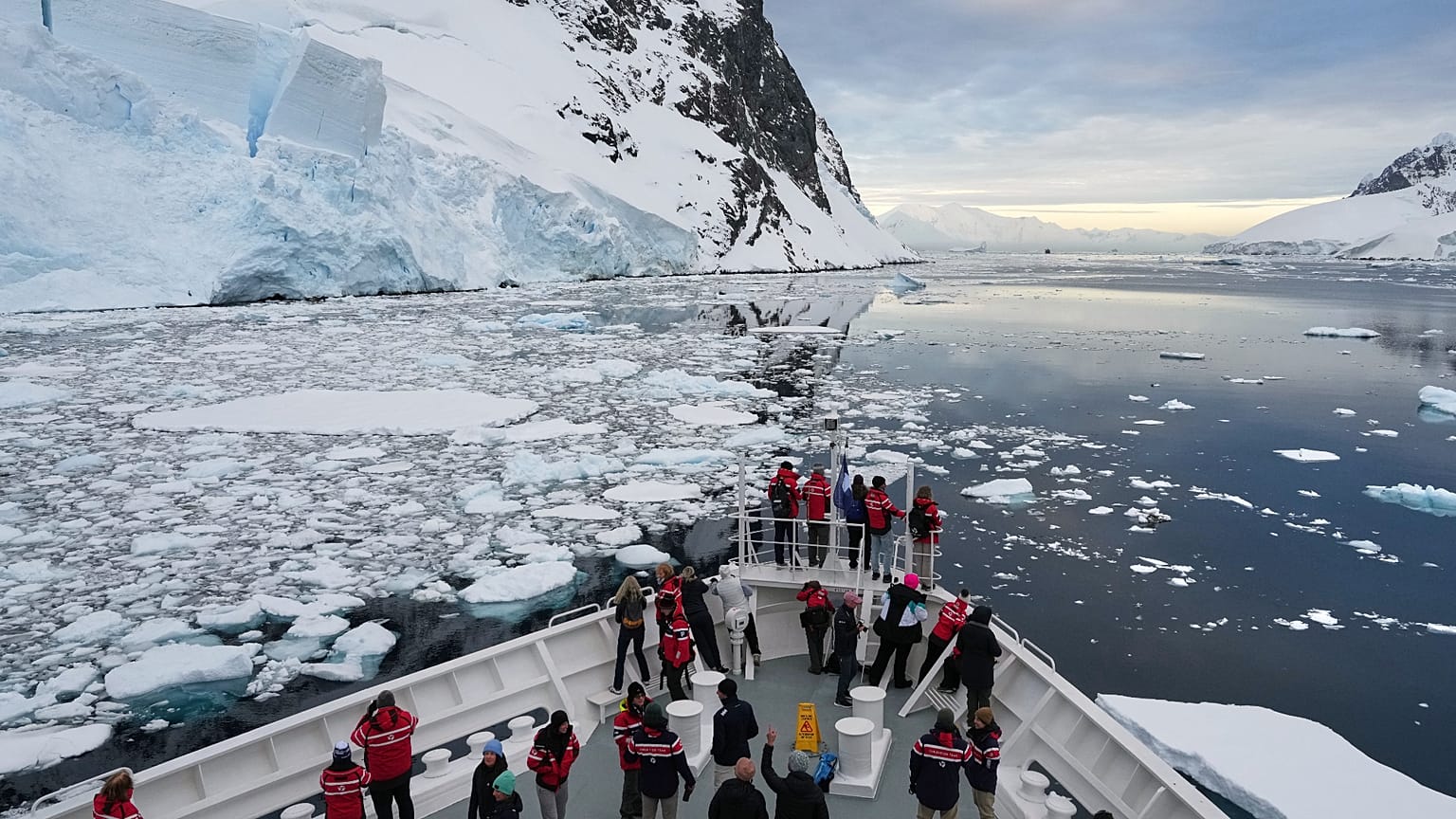
Some of the most remote destinations on Earth are irreversibly melting away, giving rise to 'last chance tourism' - an industry built around the desire to see places like Antarctica before they disappear.

But a deadly outbreak of the rare hantavirus aboard a Dutch cruise ship has experts warning that tourists can inadvertently contaminate very fragile ecosystems.

Hantavirus is confirmed to have killed two people and suspected to have killed another onboard the MV Hondius, a cruise ship which left Argentina on 1 April and visited Antarctica and several isolated islands.

The ship has been at the centre of an international health scare since Saturday, after it was revealed that the rare disease, generally spread from infected rodents, was at the centre of an outbreak onboard the "ice-strengthened cruise ship".

The 107-metre polar explorer vessel is currently off the coast of Cape Verde, awaiting the evacuation of passengers who require medical attention. From there, the ship is hoping to sail to the Canary Islands but local authorities have not yet granted permission for the boat to dock there.
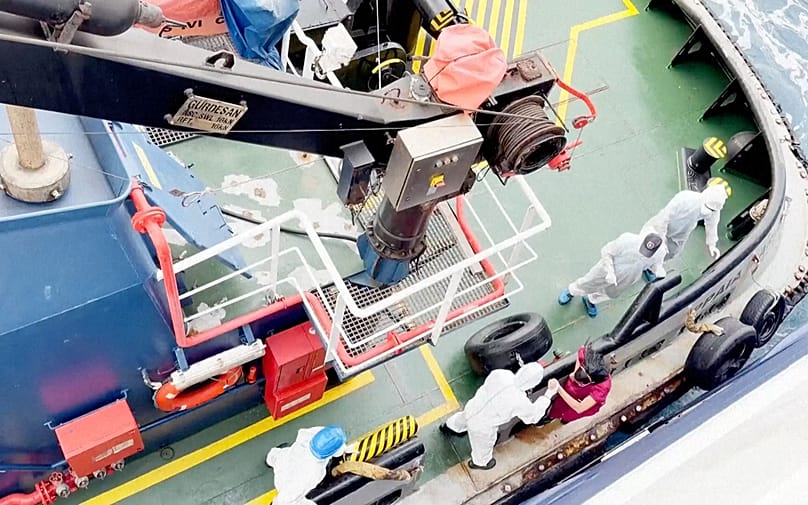
Health workers get off the Dutch-flagged MV Hondius, a cruise ship carrying nearly 150 people as it remains off Cape Verde on 4 May, 2026 Qasem Elhato via AP

The Antarctic Peninsula is one of the fastest-warming places in the world

Tourism to the bottom of the world is soaring. Experts warn that with more visitors comes an increased risk of contamination, illness and other damage to the continent.

While visitor numbers are still small – in part due to the high costs and time it can take – they are growing so fast that scientists and environmentalists are sounding alarms.

Most expeditions head to the Antarctic Peninsula, one of the fastest-warming places in the world. From 2002 to 2020, roughly 149 billion metric tons (164 billion tons) of Antarctic ice melted per year, according to the National Aeronautics and Space Administration.

A common route is to voyage south from Argentina toward Antarctica before heading north up the coast of Africa – the same route taken by the cruise ship MV Hondius.
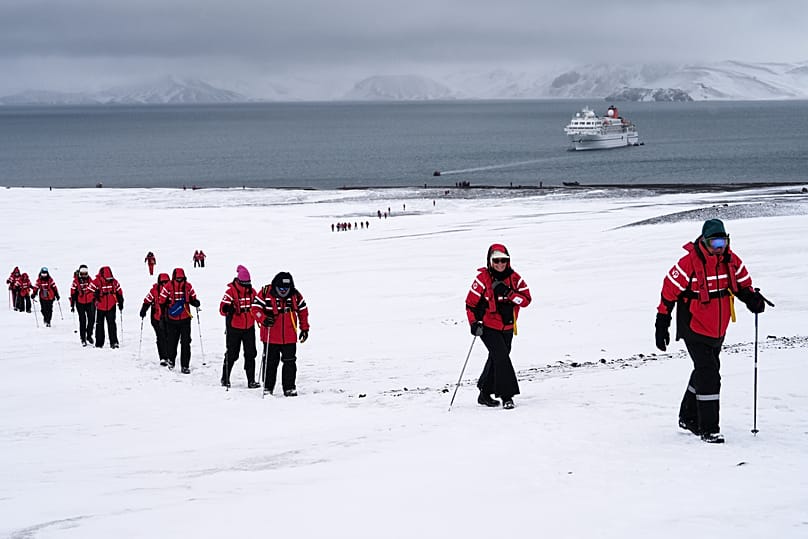
Passengers walk inside the volcano at Deception Island in Antarctica, Wednesday, Nov. 26, 2025. AP Photo/Mark Baker, File


Bird flu has spread to Antarctica


Officials have not indicated any evidence of contamination from the MV Hondius.

However, flocks of migratory birds brought avian flu from South America to Antarctica in recent years, according to the US Centers for Disease Control and Prevention.

That outbreak prompted the International Association of Antarctica Tour Operators and others to harden rules for tourists’ conduct and hygiene to protect visitors from being contaminated.

To protect the fragile ecosystem from invasive species large and microscopic, visitors are told to stay away from animals and to avoid touching the ground with anything but their feet.

“There are rules that people are bound by when they’re heading south,” Nielsen said, describing her five voyages as a former guide. Crews and passengers use vacuums, disinfectants and brushes to scrub shoes and equipment clear of bugs, feathers, seeds and microbe-carrying dirt.

“Between the tongues and the laces of the boots you can find a lot of things,” she said.

Cruise ships have been struck by outbreaks of diseases like norovirus, which can spread quickly in a ship's close quarters. In 2020, a COVID-19 outbreak on the Diamond Princess turned the cruise ship into an incubator for the then-mysterious virus.

Hantavirus usually spreads by inhaling contaminated rodent droppings.
Explosive growth of trips to the southern continent

In 2024, more than 80,000 tourists touched down on the vast ice-cloaked continent and 36,000 viewed from the safety of ships, according to data collected by the International Association of Antarctica Tour Operators.

The International Union of Concerned Scientists estimates that tourism to Antarctica has grown tenfold in the past 30 years.

That number could rise further in the next decade as costs fall with more ice-capable hulls hitting the water and technological advances, says Hanne Nielsen, a senior lecturer of Antarctic law at the University of Tasmania. Her colleagues at the university estimate the annual figure could triple or quadruple to over 400,000 visits in that time.

The Hondius' island hopping cruise

WHO is investigating possible human-to-human transmission on the cruise ship, said Dr. Maria Van Kerkhove, WHO’s director of epidemic and pandemic preparedness. Officials suspect the first infected person likely contracted the virus before boarding, she said, and officials have been told there are no rats on board.

Antarctica is governed by the Antarctic Treaty, which in 1959 enshrined the territory as a scientific preserve used only for peaceful purposes. A series of rules that followed “aim to ensure that all visits, regardless of location, do not adversely impact the Antarctic environment or its scientific and aesthetic values,” according to the treaty’s secretariat.

Companies and scientific ventures voluntarily comply with biosecurity guidelines and submit environmental impact assessments for Antarctic operations.
RelatedCruises have doubled in size since 2000: NGO calls for €50 tax to stem ‘out of control’ emissions

The treaty was written when tourism numbers were much lower, Christian said.

“Activity needs to be regulated appropriately, as you would with any of the world’s sensitive and precious ecological sites,” Christian said from Hiroshima, Japan, where she was preparing for an Antarctic Treaty Consultative Meeting. There she'll join calls to strengthen protections for Antarctica's penguins, whales, seabirds, seals and krill — tiny creatures at the base of the food chain.

For now, the lure of the frozen frontier continues to draw visitors.

“You can put a footprint in Antarctica and it’s still there 50 years later,” Christian said.


Iran exits Venice Biennale as tensions remains high in Middle East

The Islamic Republic of Iran has withdrawn from the 2026 Venice Biennale just days before the opening exhibition as fears remain high of renewed conflict in the Middle East.

FILE: The main building of the Venice Biennale covered in smoke during a protest against Israeli participation in 2019.
Copyright AP Photo

By Tokunbo Salako
Published on 

Iran has ended its part in this year's Venice Biennale just days before the exhibition's opening to the public this weekend.

In a short statement published on the exhibition website, the organisers state: "With regard to the National Participations in the 61st International Art Exhibition, In Minor Keys by Koyo Kouoh (9 May-22 November), it has been announced that the Islamic Republic of Iran will not participate."

No reason has yet been provided for the withdrawal.

The news will not come as much of a surprise to many as tensions remain high throughout the Middle East in the wake of the war waged by the United States and Israel against Tehran.

Although a fragile ceasefire has been in place for nearly a month, there are almost daily exchanges and threats from all sides as international ships and tankers remain stuck in and around the Strait of Hormuz.

Recriminations and cancellations

This year's edition has already been affected by the tragic untimely death of its curator Koyo Kouoh and the decision of the organisers to invite Russia and Israel to participate.

In response, the jury resigned en mass last week after saying it wouldn't consider entries from countries whose leaders are subject to international arrest warrants for crimes against humanity.

In the absence of a jury, the two main Golden Lion prizes for best national pavilion and best artist will now be decided by a public vote with the award ceremony now set to take place in November instead of this month.


Venice Biennale: Boycotts and threats over participation of Russia & Israel

Issued on: 06/05/2026 - FRANCE24

The Venice Biennale previewed its 61st and most chaotic edition ever on Tuesday, just days after the unprecedented resignation of its jury over the participation of Israel and Russia undermined the very structure of the world’s oldest contemporary art exhibition.


Venice Biennale in crisis: The controversies explained
DW
05/06/2026


Following the resignation of the jury over Russia's and Israel's disputed participation, the traditional Golden Lion will not be awarded this year.

Ukrainian feminist activists FEMEN joined forces with Pussy Riot to protest against Russia's inclusion at the Venice Biennale
Image: Max Avdeev


The Venice Art Biennale's official awards ceremony usually marks the event's opening, and the Golden and Silver Lion prizes typically contribute to launching artists' international careers.

But this year's Biennale — often described as the "Olympics of the art world" — is embroiled in controversy, and the traditional awarding of the coveted accolades at the start of the event on May 9 has been canceled after the entire jury in charge of selecting the prizewinners resigned, just days before the event.
Jury resigns over Israel and Russia debate

The five-member jury had previously announced in a statement that they would not consider any countries whose leaders are currently being charged by the International Criminal Court (ICC) — a decision that would have directly impacted the inclusion of Russia and Israel. The ICC has issued an arrest warrant for Russian President Vladimir Putin in 2023 based on accusations of war crimes in Ukraine, and in 2024, an ICC arrest warrant was issued for Israeli Prime Minister Benjamin Netanyahu for his country's actions in Gaza.

It remains unclear if the jury was asked to step down by the Biennale.

Instead of being selected by a jury, visitors will be invited to cast votes throughout the Biennale's run, and so-called "Visitor Lions" will be awarded on the final day of the exhibition, on November 22.

A posthumous exhibition by Koyo Kouoh

This year's event, held from May 9 to November 22, lists 100 national participations, with seven countries taking part for the first time: Guinea, Equatorial Guinea, Nauru, Qatar, Sierra Leone, Somalia and Vietnam. Iran announced its withdrawal on May 4, amid rising tensions and fears of renewed conflict in the Middle East.

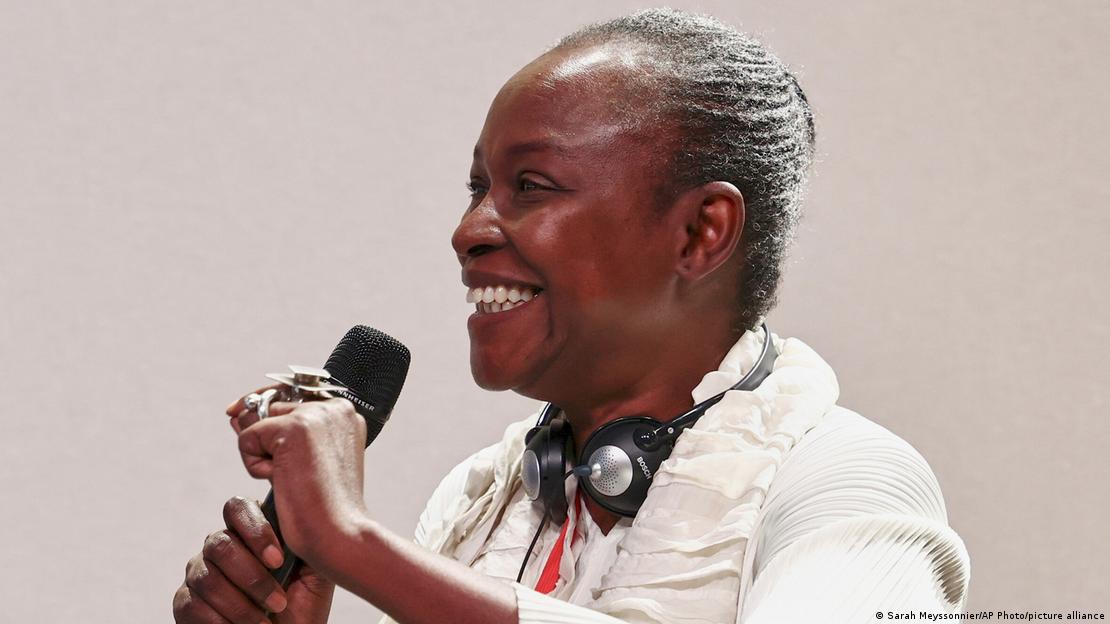
The national entries accompany the Biennale's main international art exhibition, titled "In Minor Keys," which was curated by the late Cameroonian-born artistic director Koyo Kouoh, who died of cancer in May 2025, at the age of 57.

Kouoh, the first African woman chosen to curate the prestigious show, had already developed her curatorial project before her sudden death. The Biennale decided to posthumously carry out her exhibition, which features 111 invited participants.

Cameroonian-born curator Koyo Kouoh was the first African woman to lead the main international art exhibition
Image: Sarah Meyssonnier/AP Photo/picture alliance

"In Minor Keys" focuses on marginal or overlooked voices. In her concept, Kouoh defined a restorative form of resistance, which calls for attentive listening amid the present chaos.

"The minor keys refuse orchestral bombast and goose-step military marches and come alive in the quiet tones, the lower frequencies, the hums, the consolations of poetry," Kouoh wrote in her introductory text to the exhibition. "Though often lost in the anxious cacophony of the present chaos raging through the world, the music continues."
EU threatens to cut funding over Russia's participation

Following Russia's full-scale invasion of Ukraine in 2022, the country's artists and curators had voluntarily withdrawn from the event.

Russia's announced return to the exhibition in 2026 has triggered friction between Italian institutions and the EU; even within Italy's far-right government, there is deep disagreement on the issue.

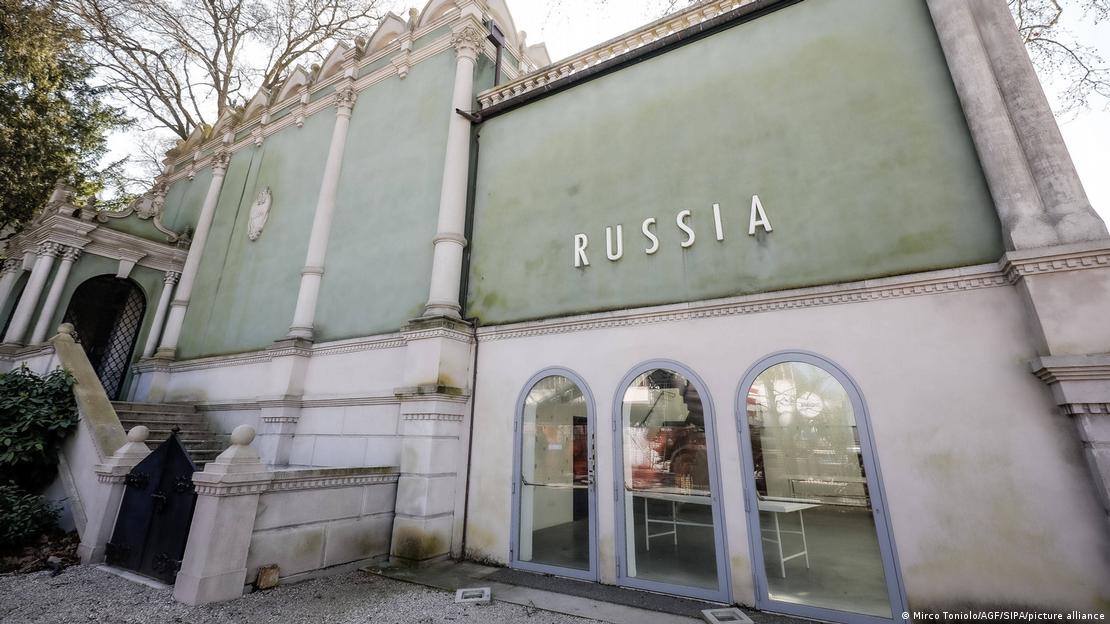
The Russian pavilion is at the center of one of the Biennale's flashpoints
Image: Mirco Toniolo/AGF/SIPA/picture alliance

The EU threatened to suspend their €2 ​million ($2.3 million) grant in funding for the next three years, after ​the Italian art exhibition allowed Russia to reopen ​its ‌pavilion at this year's event.

While Italian Prime Minister Giorgia Meloni said her government opposed Moscow's presence at the Biennale, Deputy Prime Minister Matteo Salvini described the EU's threats to cut funding as "vulgar blackmail" against "one of the most important and free cultural bodies in the world."

Venice's mayor, Luigi Brugnaro, said in March that Russia's pavilion would be shut down if it engaged in propaganda, but added that the Biennale should remain a forum for dialogue.

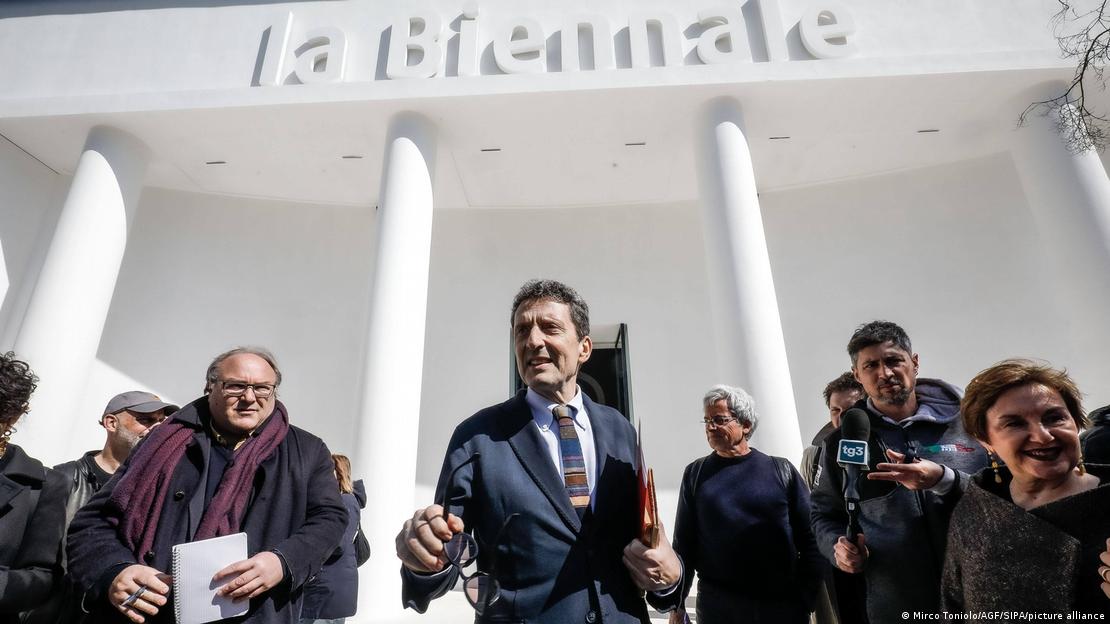
Biennale President Pietrangelo Buttafuoco presenting the renovated Giardini Central Pavilion to the press in March
Image: Mirco Toniolo/AGF/SIPA/picture alliance

Pietrangelo Buttafuoco, president of the Biennale Foundation, insists on keeping the Biennale "open to everyone. I close to no one," he told Italian newspaper La Repubblica. "There will be Russia, Iran, Israel. There will be Ukraine and Belarus. Everyone."

The Russian pavilion's commissioner, Anastasia Karneeva, is the daughter of Nikolai Volobuev, a former Federal Security Service (FSB) general — and the current deputy chief executive of Russian state-owned defense contractor Rostec.

Amid the fierce backlash, and following negotiations between the Venice Biennale leadership and Karneeva, Russia's pavilion will remain closed to the public and only be accessible during the preview days, from May 6-8. The Russian artists will be filmed during their performances and the video recordings will be broadcast in the pavilion's windows throughout the Biennale.

Pussy Riot's Nadezhda Tolokonnikova had previously condemned the Russian show: "Participating in the Biennale with an apolitical program is an attempt to polish Russia's image and make the world forget the victims of Russian terror," she told DW.

The Italian government should remove the representatives of Putin's Russia from the pavilion, Tolokonnikova suggested, "and instead present the works of Russian political prisoners who are now rotting in penal colonies because they spoke out against Russia's criminal war in Ukraine."

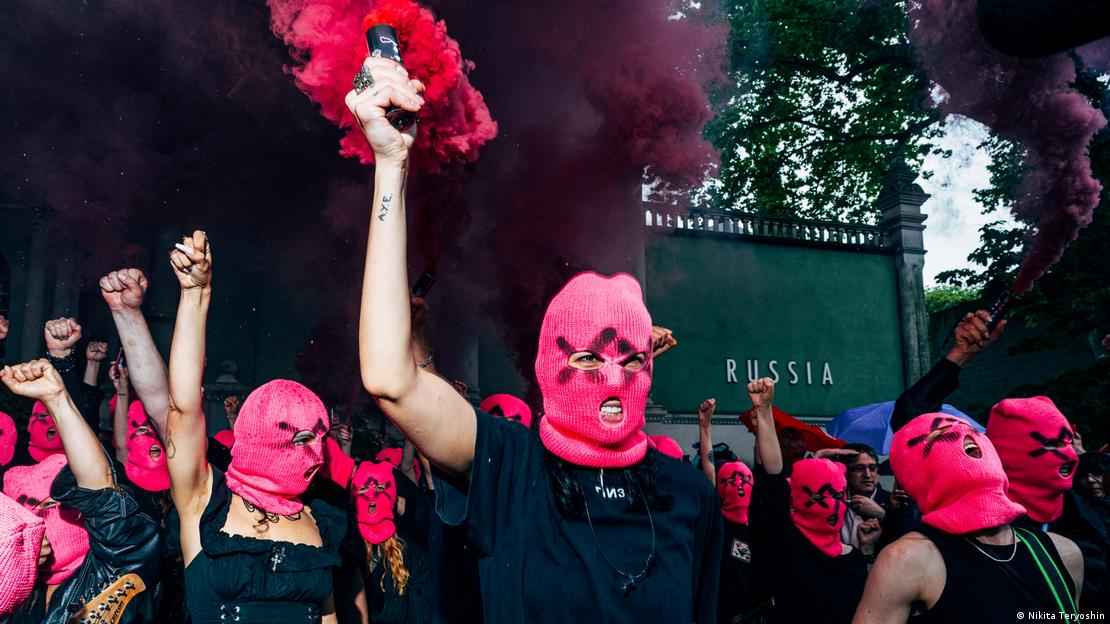
Over 50 Pussy Riot members, along with FEMEN activists, stormed the Russian Pavilion at Venice Biennale on May 6.

'Russia's best citizens are either imprisoned for anti-regime and pro-Ukraine actions or killed in jail, while Europe opens its doors to Putin's officials and propagandists,' said Pussy Riot's creator Nadya Tolokonnikova at the protest
Image: Nikita Teryoshin

South Africa's pavilion to remain empty after 'divisive' work blocked

South African contemporary artist Gabrielle Goliath had been selected to represent her home country at the Biennale.

Her performance piece was to include a tribute to Palestinian poet Hiba Abu Nada, who was killed during an Israeli airstrike in October 2023.

But South Africa's culture minister Gayton McKenzie requested several edits to the work he described as "highly divisive."

Having refused to make the changes, Goliath was blocked from the pavilion, which will remain empty, as the South African government didn't nominate a replacement for the show after it was abruptly canceled in January.

A video installation version of Goliath's project will be shown at another venue in Venice that is not part of the Biennale. Goliath is suing her country's culture minister.

Australia revoked then rehired its artist


Similarly, Australia faced backlash from the arts community after dropping its commissioned duo, artist Khaled Sabsabi and curator Michael Dagostino, due to political concerns.

Right-wing politicians had accused the Lebanon-born artist, who moved to Australia at the age of 12, of antisemitism. Sabsabi's work frequently deals with his traumatic experience of civil war, as well as with Arab immigrant identity and Islamophobia.

Following calls for boycotts and resignations, as well as an independent review by an external body, the controversial decision to drop Sabsabi and Dagostino was reversed.

Calls to exclude Israel

Nearly 200 artists, curators and workers participating in the 2026 Venice Biennale have signed a letter organized by the Art Not Genocide Alliance (ANGA), calling for Israel to be banned from the show.

A second letter, signed by more than 70 artists and curators participating in the main exhibition, similarly calls to exclude Israel, but expands the call to include all "current regimes committing war crimes," including Russia and the US.

Another point of criticism in the letters is that the Biennale is providing Israel a space in the Arsenale, the central industrial complex where Koyo Kouoh's main exhibition is also held, as the Israeli Pavilion in the Giardini section is currently closed for renovation.

Romanian-born sculptor Belu-Simion Fainaru, who lives and works in Haifa, nevertheless plans on taking part in the international art show. "As an artist, I do not support cultural boycotts," Fainaru said in a statement. "I believe in dialogue and exchange, especially in challenging times."

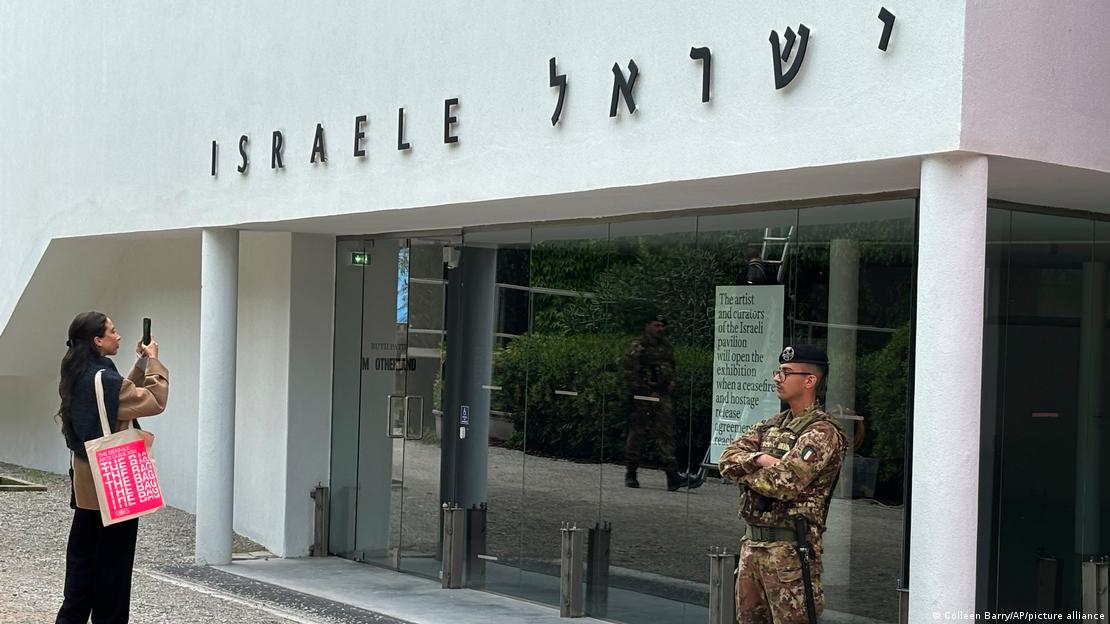
In 2024, the Israeli artist Ruth Patir and her curators decided to keep the national pavilion closed until a cease-fire in Gaza and an agreement to release hostages was reached
Image: Colleen Barry/AP/picture alliance

At the previous Biennale in 2024, artist Ruth Patir closed her exhibition at the Israeli pavilion to the public on opening day, saying she would only reopen upon the establishment of a ceasefire in Gaza.

Meanwhile, there has never been a Palestinian national pavilion at the Biennale because only countries officially recognized by Italy can participate. A side exhibition, titled "Gaza — No Words," will be held in the Italian city throughout the Biennale.
'Ruin': German pavilion features late artist

Less controversially, Germany's show, titled "Ruin" is inspired by research on the GDR and the transformation period after reunification in 1990.

German installation artist Henrike Naumann, who died of cancer in February at the age 41, had completed her contribution to the German exhibition before her sudden death. "Ruin" will also feature works by Vietnamese-born Berlin artist Sung Tieu.
Patti Smith, Brian Eno, FKA Twigs to represent the Vatican

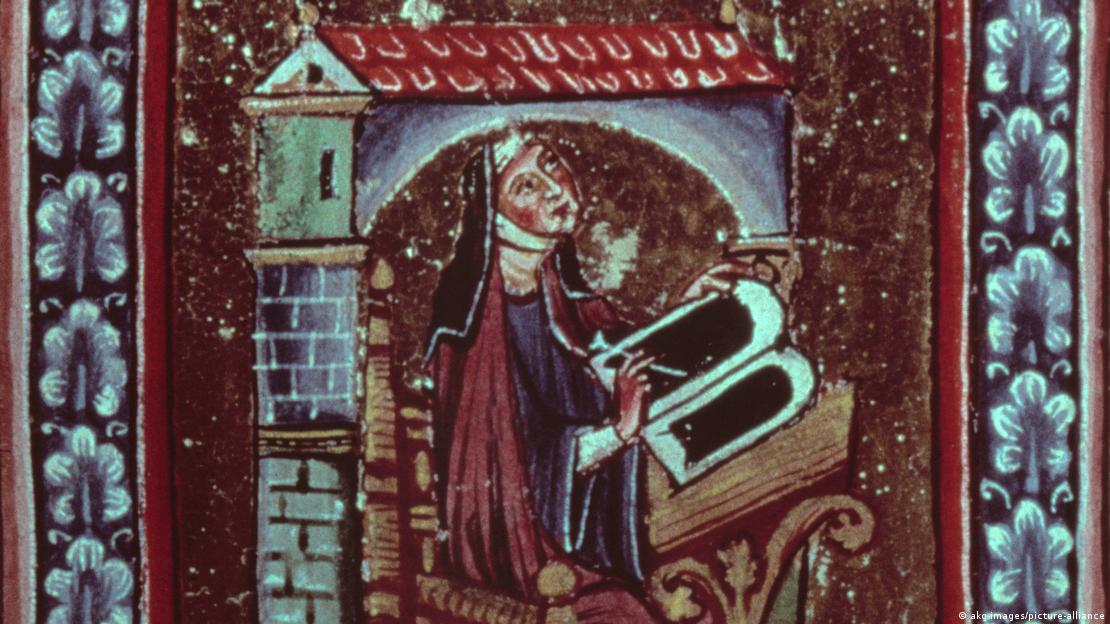
The 12th-century Saint Hildegard of Bingen, a German Benedictine abbess who is still celebrated today as a pioneer in science, ecology, music and feminist theology, will inspire the series of sonic compositions commissioned for the Vatican's exhibition, titled "The Ear is the Eye of the Soul."

It features an all-star roster of 24 artists, including Brian Eno, Patti Smith, FKA Twigs and many more.

German 12th-century mystic Hildegard von Bingen is experiencing a significant modern comeback as a 'powerhouse' woman
Image: akg-images/picture-alliance

Edited by: Sarah Hucal

This article was first published on April 23 and has been updated to reflect the ongoing changes affecting the Biennale.


Elizabeth Grenier Editor and reporter for DW Culture

SPORTSWASHING FAIL

Why Saudi Arabia is withdrawing from sport
DW
05/04/2026

There are few major sports left that are not supported by investment from Saudi Arabia. But with the kingdom pulling out of golf and canceling planned events and contracts elsewhere, is the Saudi sports era over?


Cristiano Ronaldo's move to the Saudi Pro League was a major milestone in the country's sports investment
Image: Mohammed Saad/Anadolu/picture alliance


Saudi Arabia's enormous investment in everything from football to snowboarding has been one of sport's major themes in the last decade.

The oil-rich Gulf state offered astronomical wages to footballers in the twilight of their careers, won the right to host football's World Cup after developing strong ties with FIFA, bought a Premier League club, split the golf world and sought to host all manner of events, from snooker, through women's tennis to wrestling.

The splurge was tied to the country's recently adjusted Vision 2030, a strategy to diversify its interests away from oil, and is widely considered to be a form of sportswashing, by which a country uses sports to distract from allegations of human rights abuses.
Which sports has Saudi Arabia withdrawn from?

The most high-profile withdrawal came in golf last week. LIV Golf, operated by the Saudi Public Investment Fund (PIF), an arm of the state, was canned by the country, with PIF noting that the "substantial investment" required by the event over a longer term is "no longer consistent with the current phase of PIF's investment strategy." Founded in 2021, LIV split away from the established PGA Tour and tempted away some of its top players with huge pay packets. With LIV set to fold without new investment, the passage of those players back to the PGA Tour is a point of some contention.


Former world number Jon Rahm left for LIV Golf and now faces an uncertain sporting future
Image: PETER PARKS/AFP

In football, the PIF sold a 70% stake in Saudi Pro League side Al Hilal in April, framing it as a "strategy to maximize returns and redeploy capital within the domestic economy." The PIF has made no move to sell English club Newcastle United and appears to want to keep up some investment in football ahead of hosting the 2034 World Cup. Other popular sports, such as MMA, appear on safer ground for now too.

But several events originally scheduled for the kingdom will no longer be held there. Snooker's Saudi Arabia Masters was canceled last week, two years into a 10-year deal; the women's tennis association (WTA) has had funding pulled and a season-ending event struck off; and Saudi Arabia has abandoned plans to host the 2035 Rugby World Cup and the Asian Winter Games in 2029.
Why is Saudi Arabia stopping investment in sports?

The reasons appear to be both economic and political. Last week, PIF Governor Yasir al-Rumayyan said it was "reviewing its investments and deals" and "reassessing its priorities" as a result of the fallout of the US-Israel war on Iran in the Midde East as well as minimal returns on sporting investment.

"The 2026-30 strategy marks a natural evolution as PIF moves from a period of rapid growth and acceleration to a new phase of sustained value creation, with a strengthened focus on maximising impact, raising the efficiency of investments, and applying the highest standards of gove
rnance, transparency and institutional excellence," the PIF said in a press release.


While there has been some protest, many Newcastle United fans embraced Saudi ownership
Image: Paul Ellis/AFP/Getty Images

As is the Saudi style, al-Rumayyan is also the chair of Newcastle, Saudi Arabia's state oil company Aramco and its largest mining company, Ma'aden. He is a close ally of Saudi ruler Crown Prince Mohammed bin Salman. These sorts of intertwined jobs and relaltionships help the government keep control of their sporting assets, while Aramco are also a sponsor of multiple high-profile sporting events. Such widespread and diverse investment makes unpicking Saudi Arabia's relationship with sport tricky.

Why has Saudi Arabia's investment in sports been controversial?


Human Rights Watch (HRW), in line with most other rights organizations, sees it as a clear case of sportswashing.

"PIF investments in high-profile sports and entertainment events domestically and internationally are used to whitewash the country's abysmal human rights record," according to HRW.

While there has been some dissent across the sporting world, Saudi money has been able to move quite freely in most sports. In football, Saudi Arabia has had to develop a close relationship with global governing body FIFA, but other more cash-strapped sports have found it impossible to resist the financial lure. Critics have sometimes argued this leaves many sports in a precarious position should the Saudi cash tap be turned off, as is happening now.
What other sports could be in danger of losing Saudi funding?

Formula One may be looking over its shoulder, with the Saudi Arabia Grand Prix canceled in April as a result of the war in Iran. As well as the race, the PIF has a stake in two teams and Aramco is a major F1 sponsor. Horse racing, chess, handball and many other sports are also reliant to some degree on a sporting relationship with Saudi Arabia.

From the noises made by the PIF it seems that these, and other sports running on Saudi investment will need to show a profitability that they haven't before if they are to escape becoming the next LIV Golf.

Edited by: Chuck Penfold

Matt Pearson Reporter and editor
From India to Iran: How Hitler redefined 'Aryan' for Nazism
DW
05/05/2026


According to Nazi ideology, an ideal "Aryan" was blond, blue-eyed with athletic features. The term is still tied to Nazi Germany, but its origin lies elsewhere.


This propaganda photo embodied the Nazis' ideal of the Nordic race
Image: Scherl/SZ Photo/picture alliance

Like many Germans, Adolf Hitler had neither blond hair nor was he particularly tall. That didn't stop him and his Nazi party from perpetuating the ideal of so-called "Aryans," with roots in Northern Europe, as being a superior race. Desirable Aryan traits included blonde hair, blue eyes and a tall, athletic stature.

Following Hitler's appointment as Chancellor of Germany in 1933, the notion of ancestry became more important. From 1935, all German citizens had to provide what was known as an "Ariernachweis" or "Aryan certificate" to prove that their ancestors did not include Jewish or Romani people for at least three generations. Civil servants, doctors and lawyers already had to start providing the "Ariernachweis" in 1933. Time-consuming research was often necessary before citizens could submit their documents to the Reich Office for Genealogical Research (in German, Reichsstelle für Sippenforschung) for verification.

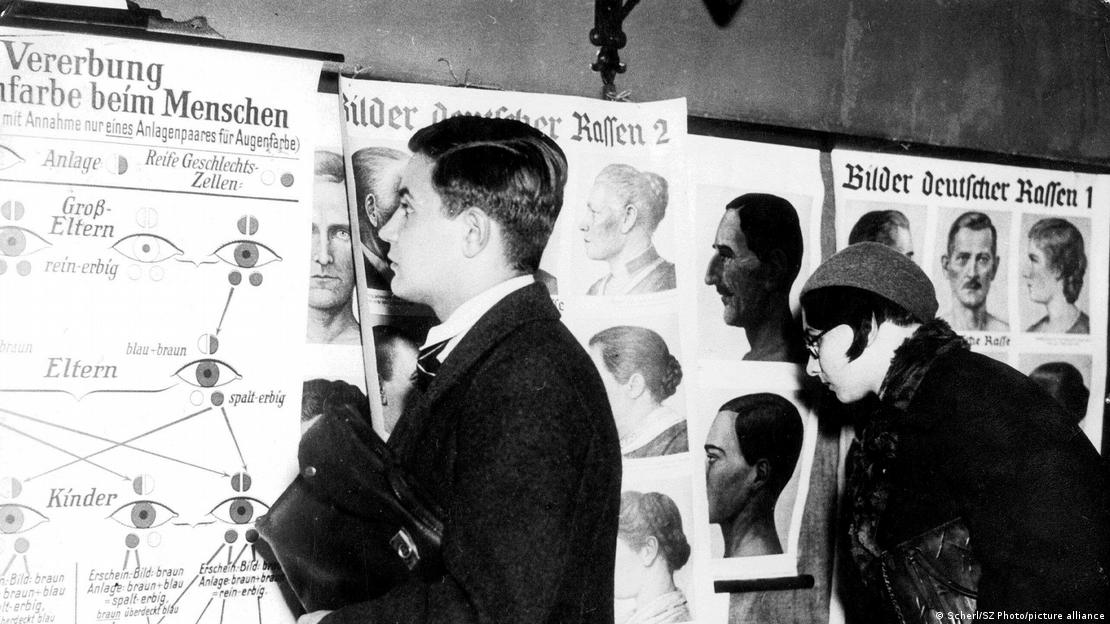
Exhibitions and classroom instruction on Nazi racial doctrine were commonplace during the Third Reich
Image: Scherl/SZ Photo/picture alliance

The Nazis considered Germans to be the "superior master race." Conversely they falsely saw Jews as an inferior race whose members had no place in Nazi Germany.

In propaganda films, the Nazis claimed that Jews wanted to destroy the world order and wrest control from the "master race." In caricatures, especially those printed in the Nazi newspaper Der Stürmer, Jews were portrayed using grotesque and antisemitic tropes, for example with hooked noses and greedy facial expressions. The Nazis used this racist ideology to first systematically exclude Jews and then to murder them.

There were other population groups that the Nazis associated with Aryan features though, especially Nordic and Scandinavian peoples. When the Nazis encountered blond and blue-eyed children in countries such as Latvia or Poland, they had no scruples about kidnapping them and sending them to homes run as part of the "Lebensborn" eugenics program. Some 200,000 of these "racially pure" children ended up in German children's homes. These homes served the purpose of "Germanization" — it was a project developed by Heinrich Himmler, the head of the Nazi regime's eletie SS guard, who sought to promote the growth of a "racially valuable" population.

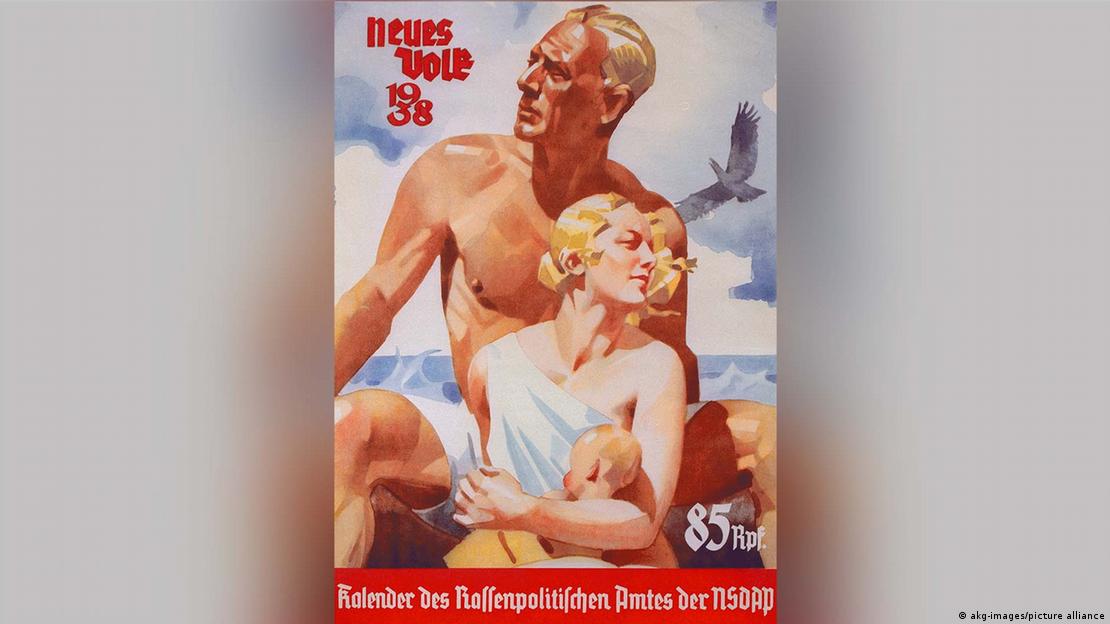
The 1938 "New People" calendar was a tool of propaganda intended to educate Germans on racial categories
Image: akg-images/picture alliance

The term Aryan also became the basis for "Aryanization" — the confiscation and transfer of ownership from Jewish businesses and Jewish property to non-Jews.
The true origin of the 'Aryans'

Even though the term Aryan was common in colloquial language, Nazi "race scientists" didn't use it much. Instead, they would refer to "German or kindred blood." They knew the term had originally been used to refer to linguistic similarities and not to inherited physical traits.

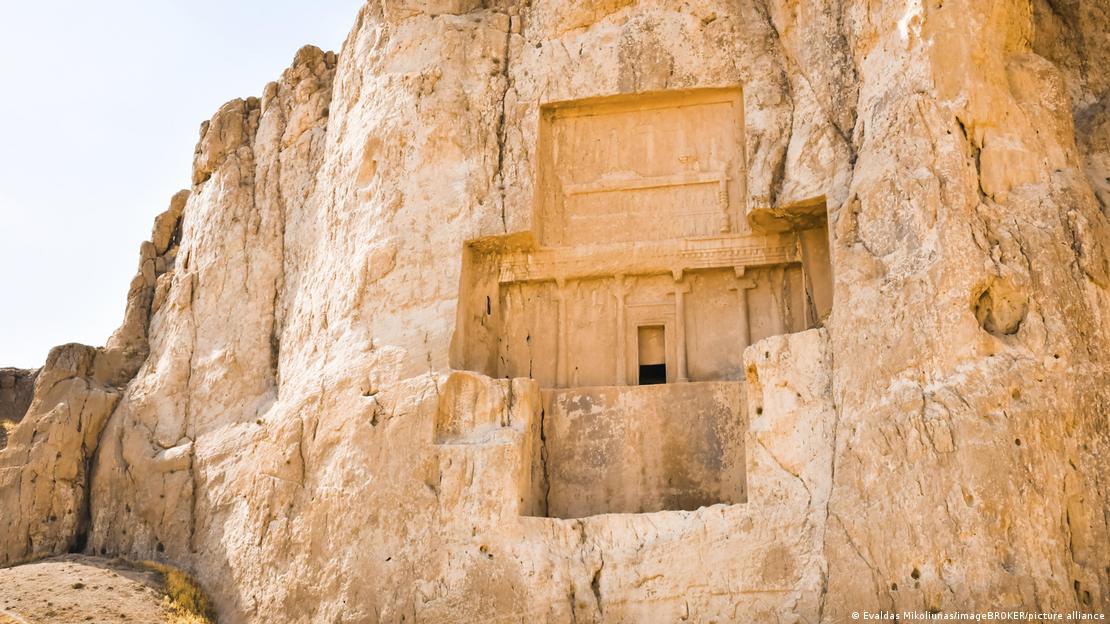
Archaeological discoveries show that the term Aryan has existed for more than two millennia. The Persian king Darius I had a rock-cut tomb carved in Naqsh-e Rostam in modern Iran. The inscription reads: "I am Darius, the great king … a Persian, son of a Persian, an Aryan, of Aryan descent." The word also appears in Sanskrit in sacred texts from India.
Darius, King of the Persians and, by his own account, an Aryan, is buried at Naqsh-e Rostam
Image: Evaldas Mikoliunas/imageBROKER/picture alliance

Originally, the term "Arya" was used to mean "noble" or "honorable" — as a self-designation by peoples in India and Iran. They are thought to have descended from nomadic peoples who migrated from the region now made up of Ukraine, Kazakhstan and southern Russia. After discovering similarities between most European languages and languages such as Persian or Sanskrit, scientists later classified Aryans as members of a shared Indo-European linguistic family.

Racist reinterpretation of the term


The racist reinterpretation of the term Aryan began in the middle of the 19th century. In his four-volume work "An Essay on the Inequality of the Human Races," French writer and diplomat Joseph Arthur de Gobineau divided humanity into three groups, the white, yellow and black races. His conclusion was that the white, Aryan original race was superior to the others, characterized by its "immeasurably superior intelligence," and was destined to rule over the others. He also warned against "racial mixing," as this would endanger both the quality of the Aryan original "race" and humanity as a whole.

Gobineau's theory was largely ignored by his contemporaries but later found traction after being appropriated and altered to serve nationalist, far-right ideology. A large number of scientists and academics subsequently used Gobineau's racial theory as a basis for their own writings on the subject.

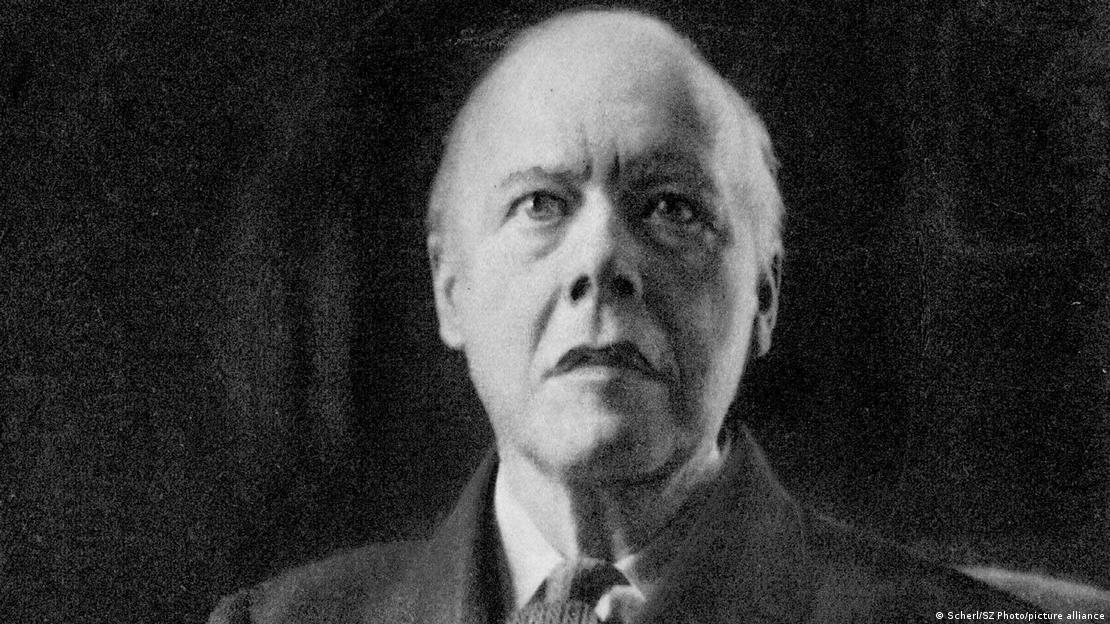
One of them was British writer Houston Stewart Chamberlain — who would later also become the son-in-law of Richard Wagner. In his 1899 book "The Foundations of the Nineteenth Century," Chamberlain raised Gobineau's racist theories to a new level.

Houston Stewart Chamberlain's antisemitic theories made a strong impression on Hitler
Image: Scherl/SZ Photo/picture alliance

Chamberlain glorified the "Germanic race". However, he was aware that not all Germans matched the physical ideal Aryan type described by Gobineau, so he based his claims on so-called German virtues that he believed were inherited through blood: honesty, loyalty and diligence. He characterized the "Jewish race" as lacking creativity and idealism and as being driven solely by material interests, thereby posing a threat to the "Germanic Aryans." While Chamberlain did ascribe a certain "noble disposition" to individual Jews, he simultaneously emphasized their alleged "incapacity and inferiority" in comparison to the "Aryan race."

Chamberlain's work was well received in Germany. Am
ong his admirers was Kaiser Wilhelm II, who repeatedly invited him to his royal court.

Brothers in spirit: Chamberlain and Hitler

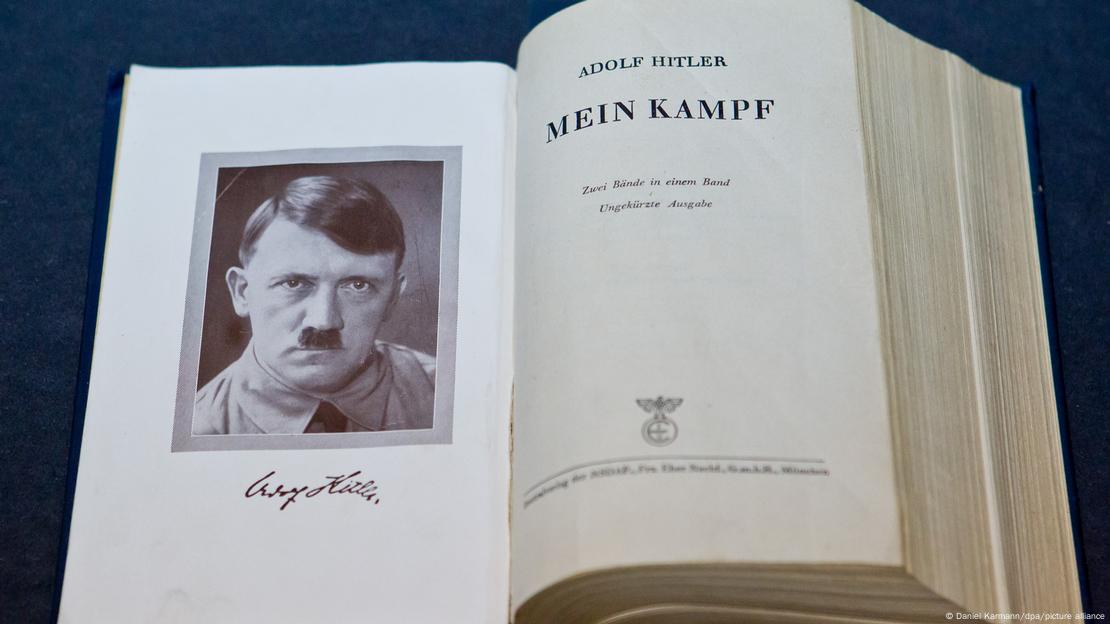
Hitler's 'Mein Kampf' — a racist work filled with hate speech and violent fantasies
Image: Daniel Karmann/dpa/picture alliance

In 1917, Chamberlain joined the far-right, nationalist and antisemitic German Fatherland Party. Adolf Hitler visited him on 30 September 1923 and apparently left a strong impression. A few days after the meeting, Chamberlain wrote to the future Führer: "That Germany in its hour of greatest need has given birth to a Hitler is proof of vitality."

Hitler, in turn, regarded Chamberlain as one of the philosophical "evangelists" of his worldview. In his book "Mein Kampf," he repeatedly refers to Chamberlain and also praises the supposed superiority of the "Aryan race."

It has long been scientifically established that there is no biological basis to "race." The Nazis misused the term Aryan to further spread and legitimize their inhumane ideology. To this day, racists around the world still use this false interpretation of the term.

This article was originally published in German.
Suzanne Cords Globetrotter with a passion for culture


Here's what happens when cities kick out cars

Zeeshan Tirmizi
DW
05/05/2026

A citizen-led campaign in Berlin is collecting signatures to create a car‑free center in the German capital. Other European cities show what happens when streets are built for people.

Berliners lost 60 hours to traffic congestion last year, which is something Oliver Collmann is hoping to change. The engineer spent years working on software for self-driving cars before realizing he really wanted to use his skills for things "that are more in the general interest of humankind."

Having eased out of his job, he joined a group campaigning for a referendum to reduce traffic in the center of Germany's capital.

"Berlin is one of the few European capitals now that are still very car centric in the traffic policy," said Collmann, who is co-spokesperson for the movement. "Cars have about 75% to 80% of the space that's available within the city."

Berlin's center is surrounded by a 37-kilometer (23-mile) circular railway, and campaigners want to see all streets inside it reclassified as "car‑reduced."

The model would mean motorized vehicles would only be permitted inside this zone in specific instances — such as for transporting people with restricted mobility, by emergency services or for large commercial deliveries. Berliners would each be permitted to drive their private car in the city center up to 12 times a year.

Collmann says the proposed law is not anti-car but "against the overuse of cars and the use of oversized cars in the city area."

He and other campaigners believe the changes would result in cleaner air and less noise, as well as creating more space for trees that would help reduce heat and contribute to better public health. Trees lower surface and air temperatures by providing shadeand cooling by absorbing water through their roots and evaporating it through their leaves.


But for Oliver Lah, an adjunct professor in spatial planning at the Blekinge Institute of Technology in Sweden, prohibition is not the answer.

"Providing something that people actually want — that's what helps," he said, adding he would like to see Berliners "find consensus on what is really sensible and useful for businesses in the city and the people living in the city center."

Other places in Europe have been experimenting with different ways to reduce traffic in city centers, including in Vienna, Copenhagen, Barcelona and Oslo.
Oslo gives priority to pedestrians

The Norwegian capital Oslo implemented its car-free program in 2017 to give pedestrians priority in the city center, while simultaneously discouraging private cars.

An automated ring toll system monitors vehicles crossing into the city and charges them for the privilege. It is cheaper to enter when in an electric car than a combustion engine model.

A 2020 evaluation conducted by city authorities showed that traffic had declined by 28% within the program area.


Electric cars pay less to enter Oslo's inner city
Image: JONATHAN NACKSTRAND/AFP

Besides reducing traffic, the program, which invited public participation, also aimed to create more space for nature and humans. In 2022, parts of central Oslo were turned into "livable streets" by temporarily closing them to private cars.

During this time, the streets were redesigned with benches, seating areas, plant beds and other natural elements like logs. Areas were filled with greenery, including flowers, shrubs, herbs and meadow plants, to create a more relaxed and inviting space for people of all ages.

Oslo's city center is busier than a decade ago, with a 38% increase in pedestrian activity on Saturdays and improved conditions for cyclists.

The number of people walking and cycling in the Norwegian capital rose from 36% in 2014 to 46% in 2023, according to city statistics. But that is not to say the streets are completely car-free.

Of all the new cars registered in Oslo so far this year, 98.1% are zero-emission ones.

Paris popularizes 15-minute cities


Paris has made a name for itself as a 15-minute city, which means designing urban areas so that most daily necessities and services are reachable within a quarter-hour walk or bike ride.

The concept was the brainchild of Franco-Colombian urban researcher Carlos Moreno but caught the attention of Anne Hidlago, former mayor of Paris.

"Have you ever stopped to ask yourself: Why does a noisy and polluted street need to be a noisy and polluted street? Just because it is? Why can't it be a calm street lined with trees, where people can actually meet and walk to the baker and kids can walk to school?" Moreno asked in a 2020 TED Talk.

As part of its 15-minute city concept, Paris has reduced cars in the city center without enforcing bans. Instead, at the end of 2024, the French capital introduced limited traffic zones in major parts of the city center.

The rule allows for traffic that starts or ends inside the zones, but drivers are not allowed to use these areas just to pass through on their way somewhere else. This rule reduced traffic by about 6% inside the restricted zone and around 8% in the surrounding central area during the last two months of 2024.

The city has not introduced any fines for breaking this rule, giving enough drivers time to adapt to the transition. Now Moreno is helping other countries, like the Netherlands, to implement the same concept in different cities.

A 2026 study shows that walkable city models like Paris exhibit lower per-capita transport emissions.

Back in Berlin, campaigners have until May 8 to collect signatures from at least 7% of eligible voters in the city for the car-free initiative. If the threshold is met, residents of the German capital could be voting in a referendum later this year that shapes the heart of their city.

Edited by: Tamsin Walker
Zeeshan Tirmizi is an Indian early-career