US President Donald Trump signed orders on Monday imposing new 50% tariffs on some Canadian goods, citing what the White House called Canada's "discriminatory treatment" of US alcohol, automobiles and dairy products. The tariffs take effect in 30 days, with energy, potash and sector-specific imports exempted, the White House said.
Issued on 21/07/2026
By: FRANCE 24

Global Container Terminals' Deltaport facility in Delta, British Columbia, Canada, July 16, 2026 © Darryl Dyck, The Canadian Press via AP
US President Donald Trump signed orders Monday to impose new 50-percent tariffs on many Canadian goods, claiming "discriminatory treatment" by Ottawa against American alcohol, automobile and dairy products.
The tariffs take effect in 30 days and cover a wide range of goods including wine, hockey sticks and cement, said the White House in a fact sheet.
Trump tapped a little-known legal provision for the new duties – Section 338 of the Tariff Act of 1930 – which allows officials to take action against countries said to engage in discriminatory trade practices.

US President Donald Trump signed orders Monday to impose new 50-percent tariffs on many Canadian goods, claiming "discriminatory treatment" by Ottawa against American alcohol, automobile and dairy products.
The tariffs take effect in 30 days and cover a wide range of goods including wine, hockey sticks and cement, said the White House in a fact sheet.
Trump tapped a little-known legal provision for the new duties – Section 338 of the Tariff Act of 1930 – which allows officials to take action against countries said to engage in discriminatory trade practices.
Cover image: © France 24
01:46
01:46
The latest duties will not apply to energy, potash and goods already impacted by sector-specific tariffs, the White House said.
Crucially, however, they will hit products covered under the US-Mexico-Canada free trade agreement (USMCA).
Canadian Prime Minister Mark Carney said in response that Ottawa stands ready to "intensify" talks with the United States, and has made proposals to resolve disputes and modernise the USMCA.
"This is the latest in a series of unilateral US trade actions that began with the US imposing a series of tariffs in direct violation of the Canada-United States-Mexico Agreement," he added.
"Canada, as is its right, has merely matched those measures," Carney said.
While Trump has slapped sweeping duties on US trading partners since returning to the presidency last year, these have generally come with broad exemptions for goods entering his country under the North American free trade pact.
His latest actions threaten to further strain ties between Washington and Ottawa, and come just days after he threatened Canada with increased tariffs over smoke from raging wildfires that drifted into the United States.
(FRANCE 24 with AFP)
O, Canada: We’re doing everything we can to put Trump back in his cage
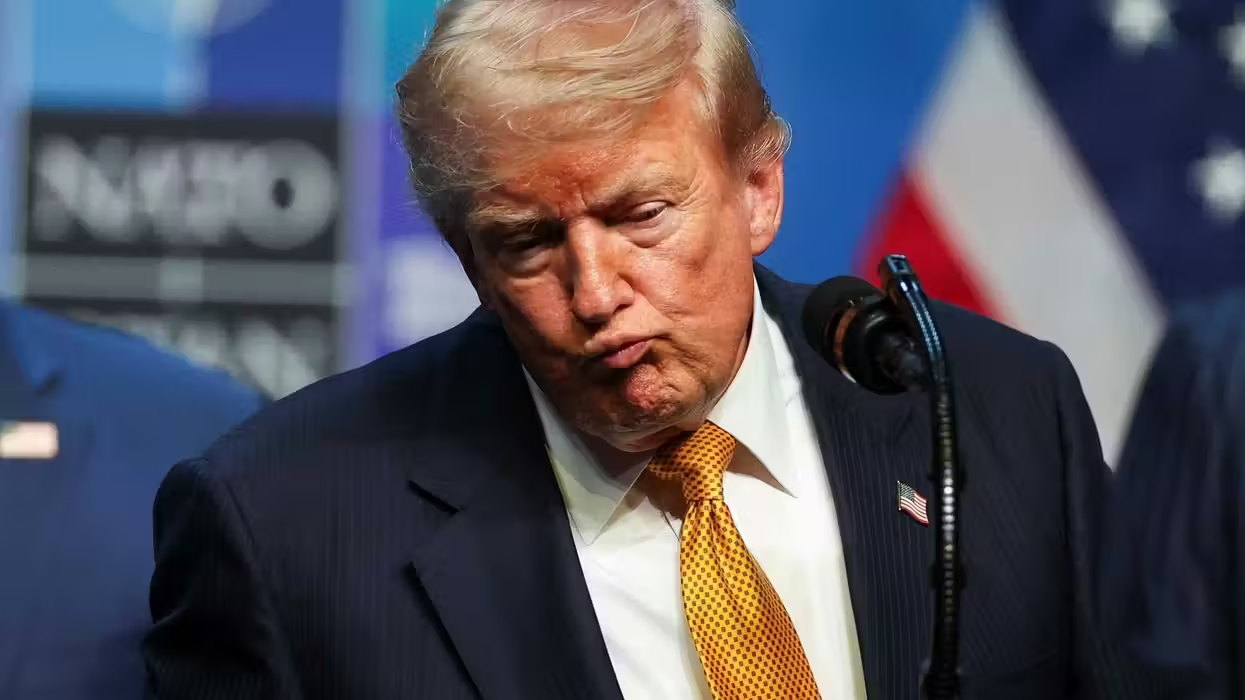
REUTERS Umit Bektas
Trump on Monday signed orders to impose a 50 percent tariff on a wide range of Canadian imports.
The White House claims the tariffs are a “punishment” for Canadian discrimination against American cars, dairy, and alcohol.
But the tariffs will also punish us. Remember, tariffs are import taxes — paid for by you and me and everyone else in America. So, we’re about to pay more for everything we import from Canada — plywood, paper, furniture, hockey sticks, cement, et al. Canada is our second-largest trading partner, for chrissake.
Even if the Supreme Court finds that Trump lacks authority to invoke these tariffs and the government must refund American importers for the extra cost — as the high court did with his first round of tariffs — you and I won’t be reimbursed for the extra costs we’ve paid.
Corporations aren’t giving their customers any of the $80 billion in refunds they’ve received from the Treasury Department for the first round of tariffs, so don’t expect any reimbursement on this second round. Which means we’re doubly screwed.
Worse yet, the Treasury isn’t really bearing the cost of the $80 billion in refunds. The cost is being borne by you and me and all other American taxpayers, because our money funds the government. And as taxpayers we’ll also be paying for the second round of refunds, assuming the Supreme Court orders them. Which means we’re triply screwed.
Actually, we’re quadruply screwed because Trump is imposing the new tariffs under the Tariff Act of 1930 — the notorious Smoot-Hawley tariff that worsened the Great Depression by causing other countries to retaliate and impose tariffs on goods coming from the United States. It’s likely to have a similar effect in coming months.
If you hadn’t noticed, the American economy is already shaky. Prices are rising faster than wages, which means most of us are becoming poorer even before Trump’s next round of tariffs. His war in Iran is pushing up the price of gas and, indirectly, food.
The real reason for the new tariffs is that Trump is pissed off that Canada had the temerity (and the right) to retaliate against his first round of tariffs, and it has resisted Trump’s calls to be annexed as the 51st state.
Why would Canadians ever want to live in a nation that could elect Trump?
In any event, I believe I can speak for most Americans when I apologize to our Canadian friends. We’re sorry we elected him. He’s made our lives worse. He’s a continuing embarrassment to us. (Did you see him grandstand at the World Cup? We have to live with this crap every day.)
Believe me, we’re doing everything we can to put him back in his cage.
Robert Reich is a professor of public policy at Berkeley and former secretary of labor. His writings can be found at https://robertreich.substack.com/.
REUTERS Umit Bektas
July 21, 2026
Trump on Monday signed orders to impose a 50 percent tariff on a wide range of Canadian imports.
The White House claims the tariffs are a “punishment” for Canadian discrimination against American cars, dairy, and alcohol.
But the tariffs will also punish us. Remember, tariffs are import taxes — paid for by you and me and everyone else in America. So, we’re about to pay more for everything we import from Canada — plywood, paper, furniture, hockey sticks, cement, et al. Canada is our second-largest trading partner, for chrissake.
Even if the Supreme Court finds that Trump lacks authority to invoke these tariffs and the government must refund American importers for the extra cost — as the high court did with his first round of tariffs — you and I won’t be reimbursed for the extra costs we’ve paid.
Corporations aren’t giving their customers any of the $80 billion in refunds they’ve received from the Treasury Department for the first round of tariffs, so don’t expect any reimbursement on this second round. Which means we’re doubly screwed.
Worse yet, the Treasury isn’t really bearing the cost of the $80 billion in refunds. The cost is being borne by you and me and all other American taxpayers, because our money funds the government. And as taxpayers we’ll also be paying for the second round of refunds, assuming the Supreme Court orders them. Which means we’re triply screwed.
Actually, we’re quadruply screwed because Trump is imposing the new tariffs under the Tariff Act of 1930 — the notorious Smoot-Hawley tariff that worsened the Great Depression by causing other countries to retaliate and impose tariffs on goods coming from the United States. It’s likely to have a similar effect in coming months.
If you hadn’t noticed, the American economy is already shaky. Prices are rising faster than wages, which means most of us are becoming poorer even before Trump’s next round of tariffs. His war in Iran is pushing up the price of gas and, indirectly, food.
The real reason for the new tariffs is that Trump is pissed off that Canada had the temerity (and the right) to retaliate against his first round of tariffs, and it has resisted Trump’s calls to be annexed as the 51st state.
Why would Canadians ever want to live in a nation that could elect Trump?
In any event, I believe I can speak for most Americans when I apologize to our Canadian friends. We’re sorry we elected him. He’s made our lives worse. He’s a continuing embarrassment to us. (Did you see him grandstand at the World Cup? We have to live with this crap every day.)
Believe me, we’re doing everything we can to put him back in his cage.
Robert Reich is a professor of public policy at Berkeley and former secretary of labor. His writings can be found at https://robertreich.substack.com/.
Trump ‘Raising Prices on Americans Again’ With 50% Tariff on Canadian Imports
“Americans have to pay high prices because Trump doesn’t understand how wind works,” quipped one critic.
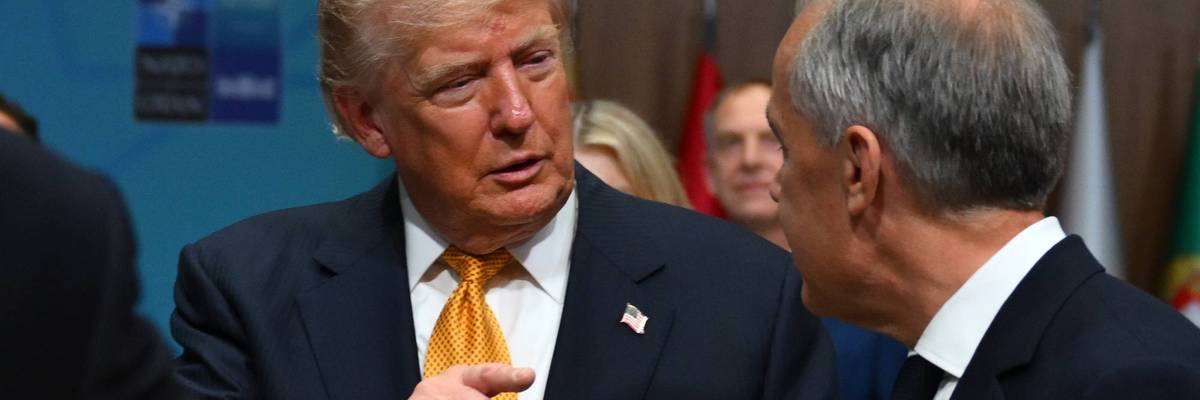
US President Donald Trump and Canadian Prime Minister Mark Carney attend the North Atlantic Council meeting held as part of the 36th NATO Heads of State and Government Summit at the Presidential Complex in Ankara, Türkiye on July 8, 2026.
(Photo by Harun Ozalp/Anadolu via Getty Images)
“Americans have to pay high prices because Trump doesn’t understand how wind works,” quipped one critic.
US President Donald Trump and Canadian Prime Minister Mark Carney attend the North Atlantic Council meeting held as part of the 36th NATO Heads of State and Government Summit at the Presidential Complex in Ankara, Türkiye on July 8, 2026.
(Photo by Harun Ozalp/Anadolu via Getty Images)
Brett Wilkins
Jul 20, 2026
COMMON DREAMS
US President Donald Trump on Monday invoked an arcane legal provision to impose 50% tariffs on most imported goods from Canada, a move that critics said will hit US consumers already reeling from an unabated cost-of-living crisis and further strain relations with the nation’s second-largest trade partner.
Trump invoked Section 338 of the Tariff Act of 1930, an unprecedented move the White House said is aimed at “offsetting the burden and disadvantage on US commerce from Canada’s discriminatory treatment of US commerce” and “leveling the playing field for crucial American exports—cars, alcohol, and dairy.”
The new tariffs exempt energy products, potash, fish, and critical minerals.
“While the administration continues to secure fair and reciprocal trade deals with our trading partners, Canada, unlike other partners and allies, continues to retaliate against the United States for its efforts to rebalance trade and protect US industry in national security-sensitive sectors,” US Trade Representative Jamieson Greer said in a statement.
“Specifically, Canada has taken US alcohol products off Canadian shelves, given better market access to dairy products from the European Union, and has put a cap on US vehicle exports to Canada from companies reshoring to the United States,” Greer added. “Today, President Trump took decisive action to hold Canada accountable for its retaliation and discrimination, delivering on his promise to correct trade imbalances and ensure fairness for American workers, farmers, and businesses.”
While the administration’s official communications cite economic reasons for the new tariffs, Trump in recent days has repeatedly cited the Canadian wildfires as justification for the move.
“I told them. I mean, you got to stop these fires from coming in, and you know poisoning our air,” Trump said of Canada on Sunday evening. “Our air has been poisoned. Maybe they should pay us some damages or something, or we should do some tariffs.”
The president’s linkage of the wildfires and tariffs drew widespread ridicule, with Democratic New York Gov. Kathy Hochul posting on X, “Only Donald Trump could see wildfire smoke and decide the answer is more tariffs.”
Pod Save America co-host Dan Pfeiffer said on social media, “Americans have to pay high prices because Trump doesn’t understand how wind works.”
According to We Pay the Tariffs, a small business coalition, Trump’s capricious tariffs have cost American businesses and consumers upward of $317 billion since March 2025.
That month, Trump imposed 25% tariffs on many Canadian goods and 10% on Canadian energy products. The administration later modified or paused some of those tariffs.
Ottawa has criticized the tariffs and rejected the US justification that Canada is unfairly restricting American products.
“I’ll never stop fighting to protect Ontario,” Doug Ford, the province’s right-wing premier, said in response to Trump’s move. “If these tariffs proceed, Canada should respond tariff for tariff, dollar for dollar.”
Some Democratic US lawmakers blasted the new tariffs.
“Trump is raising prices on Americans, again, by jacking up tariffs by 50% on Canadian goods bought by Americans,” Rep. Ted Lieu (D-Calif.) said on social media. “Democrats will flip the House. And on day one of next term, Democrats will introduce legislation to repeal Trump’s disastrous tariffs. And we will pass it.”
Jul 20, 2026
COMMON DREAMS
US President Donald Trump on Monday invoked an arcane legal provision to impose 50% tariffs on most imported goods from Canada, a move that critics said will hit US consumers already reeling from an unabated cost-of-living crisis and further strain relations with the nation’s second-largest trade partner.
Trump invoked Section 338 of the Tariff Act of 1930, an unprecedented move the White House said is aimed at “offsetting the burden and disadvantage on US commerce from Canada’s discriminatory treatment of US commerce” and “leveling the playing field for crucial American exports—cars, alcohol, and dairy.”
The new tariffs exempt energy products, potash, fish, and critical minerals.
“While the administration continues to secure fair and reciprocal trade deals with our trading partners, Canada, unlike other partners and allies, continues to retaliate against the United States for its efforts to rebalance trade and protect US industry in national security-sensitive sectors,” US Trade Representative Jamieson Greer said in a statement.
“Specifically, Canada has taken US alcohol products off Canadian shelves, given better market access to dairy products from the European Union, and has put a cap on US vehicle exports to Canada from companies reshoring to the United States,” Greer added. “Today, President Trump took decisive action to hold Canada accountable for its retaliation and discrimination, delivering on his promise to correct trade imbalances and ensure fairness for American workers, farmers, and businesses.”
While the administration’s official communications cite economic reasons for the new tariffs, Trump in recent days has repeatedly cited the Canadian wildfires as justification for the move.
“I told them. I mean, you got to stop these fires from coming in, and you know poisoning our air,” Trump said of Canada on Sunday evening. “Our air has been poisoned. Maybe they should pay us some damages or something, or we should do some tariffs.”
The president’s linkage of the wildfires and tariffs drew widespread ridicule, with Democratic New York Gov. Kathy Hochul posting on X, “Only Donald Trump could see wildfire smoke and decide the answer is more tariffs.”
Pod Save America co-host Dan Pfeiffer said on social media, “Americans have to pay high prices because Trump doesn’t understand how wind works.”
According to We Pay the Tariffs, a small business coalition, Trump’s capricious tariffs have cost American businesses and consumers upward of $317 billion since March 2025.
That month, Trump imposed 25% tariffs on many Canadian goods and 10% on Canadian energy products. The administration later modified or paused some of those tariffs.
Ottawa has criticized the tariffs and rejected the US justification that Canada is unfairly restricting American products.
“I’ll never stop fighting to protect Ontario,” Doug Ford, the province’s right-wing premier, said in response to Trump’s move. “If these tariffs proceed, Canada should respond tariff for tariff, dollar for dollar.”
Some Democratic US lawmakers blasted the new tariffs.
“Trump is raising prices on Americans, again, by jacking up tariffs by 50% on Canadian goods bought by Americans,” Rep. Ted Lieu (D-Calif.) said on social media. “Democrats will flip the House. And on day one of next term, Democrats will introduce legislation to repeal Trump’s disastrous tariffs. And we will pass it.”
Top Finance Committee Democrat Rips Trump’s New Canada Tariffs as ‘Yet Another Shakedown’
Nobel Prize-winning economist Paul Krugman described Trump’s latest tariffs as “unutterably idiotic.”
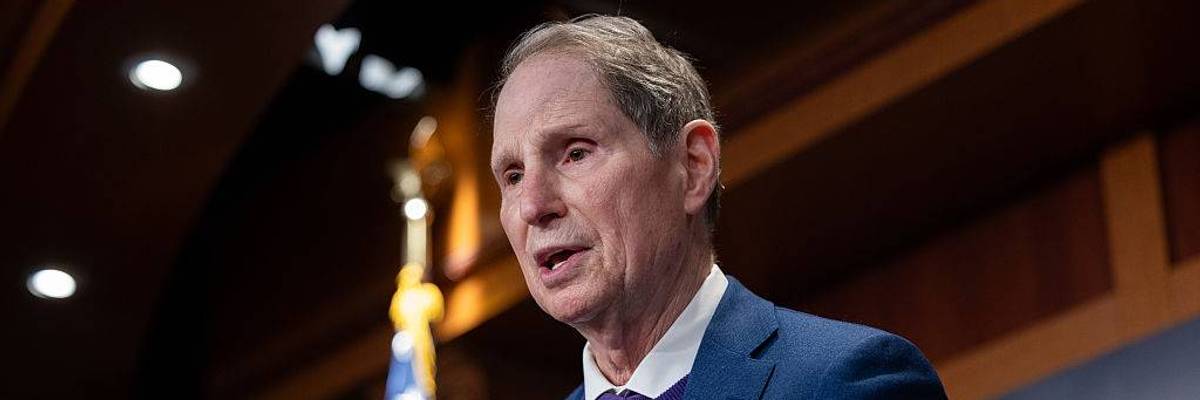
Sen. Ron Wyden (D-Ore.) speaks at a press conference on the upcoming deadline for the release of the Jeffrey Epstein files, in Washington, DC on December 16, 2025.
(Photo by Nathan Posner/Anadolu via Getty Images)
Brad Reed
Jul 21, 2026
COMMON DREAMS
Critics are piling on President Donald Trump for once again picking a fight with the United States’ top trading partner by moving to slap 50% tariffs on certain imported Canadian goods.
Sen. Ron Wyden (D-Ore.), ranking member of the Senate Finance Committee, said on Tuesday that Trump’s latest broadside against Canada was “yet another shakedown that will raise the cost of living for Americans, their families, and small businesses across the country.”
Wyden also said that Trump has “abused every trade authority at his disposal” and vowed to soon release a bill “to rein him in and put Congress back in the driver’s seat” in crafting US trade policy.
Wyden wasn’t the only Democrat to take a shot at Trump over his new economic attack on Canada.
Rep. Mike Levin (D-Calif.) called Trump’s new tariffs “really dumb” given that they violate a trade deal that Trump himself negotiated with Canada and Mexico during his first term.
“You cannot negotiate a trade agreement, sign it, celebrate it, then blow it up and expect anyone to trust the next deal,” said Levin. “And who actually pays? American importers and American families. Tariffs are a tax on us.”
Rep. Jared Huffman (D-Calif.) predicted that US consumers would once again pay the price for the president’s trade war.
“We’re the ones who will eat the cost,” wrote Huffman. “That’s what happened with Trump’s last tariff spree and it will happen again. Trump’s failed foreign and economic policies are making life worse for hardworking people.”
Nobel Prize-winning economist Paul Krugman on Tuesday published an analysis trying to make sense of the justifications for Trump’s latest trade war with Canada, but he came up mostly empty.
“The White House fact sheet claims that the new tariffs are a response to Canadian policies that discriminate against US products,” explained Krugman, “notably the moves by most Canadian provinces... to stop importation of US alcoholic beverages. But these policies were themselves a response to the tariffs on Canadian goods Trump had previously imposed.”
Krugman then noted that Trump shifted his justification for the tariffs, saying they were designed to punish Canada after smoke generated by wildfires in Ontario billowed into the US last week.
However, Krugman found this explanation even more absurd.
“Blaming Canada for not controlling fires that are, in reality, largely a consequence of global warming,” Krugman remarked, “is unutterably idiotic.”
Krugman concluded his analysis by arguing that “whatever the real motivation for these new tariffs, they are almost surely illegal,” noting that they run afoul of Trump’s own North American trade deal.
Trump on Tuesday indicated that the tariffs on Canada were not actually a response to the wildfires, though he said his administration was looking at separate measures to punish the Canadian government for purportedly doing a poor job of managing its forests.
Several studies have found that Trump’s tariffs, which he kicked off in April 2025, have cost US businesses and consumers hundreds of billions of dollars, as importers pass most of the increased costs imposed by the tariffs to consumers in the form of higher prices.
Nobel Prize-winning economist Paul Krugman described Trump’s latest tariffs as “unutterably idiotic.”
Sen. Ron Wyden (D-Ore.) speaks at a press conference on the upcoming deadline for the release of the Jeffrey Epstein files, in Washington, DC on December 16, 2025.
(Photo by Nathan Posner/Anadolu via Getty Images)
Brad Reed
Jul 21, 2026
COMMON DREAMS
Critics are piling on President Donald Trump for once again picking a fight with the United States’ top trading partner by moving to slap 50% tariffs on certain imported Canadian goods.
Sen. Ron Wyden (D-Ore.), ranking member of the Senate Finance Committee, said on Tuesday that Trump’s latest broadside against Canada was “yet another shakedown that will raise the cost of living for Americans, their families, and small businesses across the country.”
Wyden also said that Trump has “abused every trade authority at his disposal” and vowed to soon release a bill “to rein him in and put Congress back in the driver’s seat” in crafting US trade policy.
Wyden wasn’t the only Democrat to take a shot at Trump over his new economic attack on Canada.
Rep. Mike Levin (D-Calif.) called Trump’s new tariffs “really dumb” given that they violate a trade deal that Trump himself negotiated with Canada and Mexico during his first term.
“You cannot negotiate a trade agreement, sign it, celebrate it, then blow it up and expect anyone to trust the next deal,” said Levin. “And who actually pays? American importers and American families. Tariffs are a tax on us.”
Rep. Jared Huffman (D-Calif.) predicted that US consumers would once again pay the price for the president’s trade war.
“We’re the ones who will eat the cost,” wrote Huffman. “That’s what happened with Trump’s last tariff spree and it will happen again. Trump’s failed foreign and economic policies are making life worse for hardworking people.”
Nobel Prize-winning economist Paul Krugman on Tuesday published an analysis trying to make sense of the justifications for Trump’s latest trade war with Canada, but he came up mostly empty.
“The White House fact sheet claims that the new tariffs are a response to Canadian policies that discriminate against US products,” explained Krugman, “notably the moves by most Canadian provinces... to stop importation of US alcoholic beverages. But these policies were themselves a response to the tariffs on Canadian goods Trump had previously imposed.”
Krugman then noted that Trump shifted his justification for the tariffs, saying they were designed to punish Canada after smoke generated by wildfires in Ontario billowed into the US last week.
However, Krugman found this explanation even more absurd.
“Blaming Canada for not controlling fires that are, in reality, largely a consequence of global warming,” Krugman remarked, “is unutterably idiotic.”
Krugman concluded his analysis by arguing that “whatever the real motivation for these new tariffs, they are almost surely illegal,” noting that they run afoul of Trump’s own North American trade deal.
Trump on Tuesday indicated that the tariffs on Canada were not actually a response to the wildfires, though he said his administration was looking at separate measures to punish the Canadian government for purportedly doing a poor job of managing its forests.
Several studies have found that Trump’s tariffs, which he kicked off in April 2025, have cost US businesses and consumers hundreds of billions of dollars, as importers pass most of the increased costs imposed by the tariffs to consumers in the form of higher prices.
'Swinging recklessly': WSJ slams Trump's 'senseless' attack on Canada
Matthew Chapman
July 21, 2026
RAW STORY
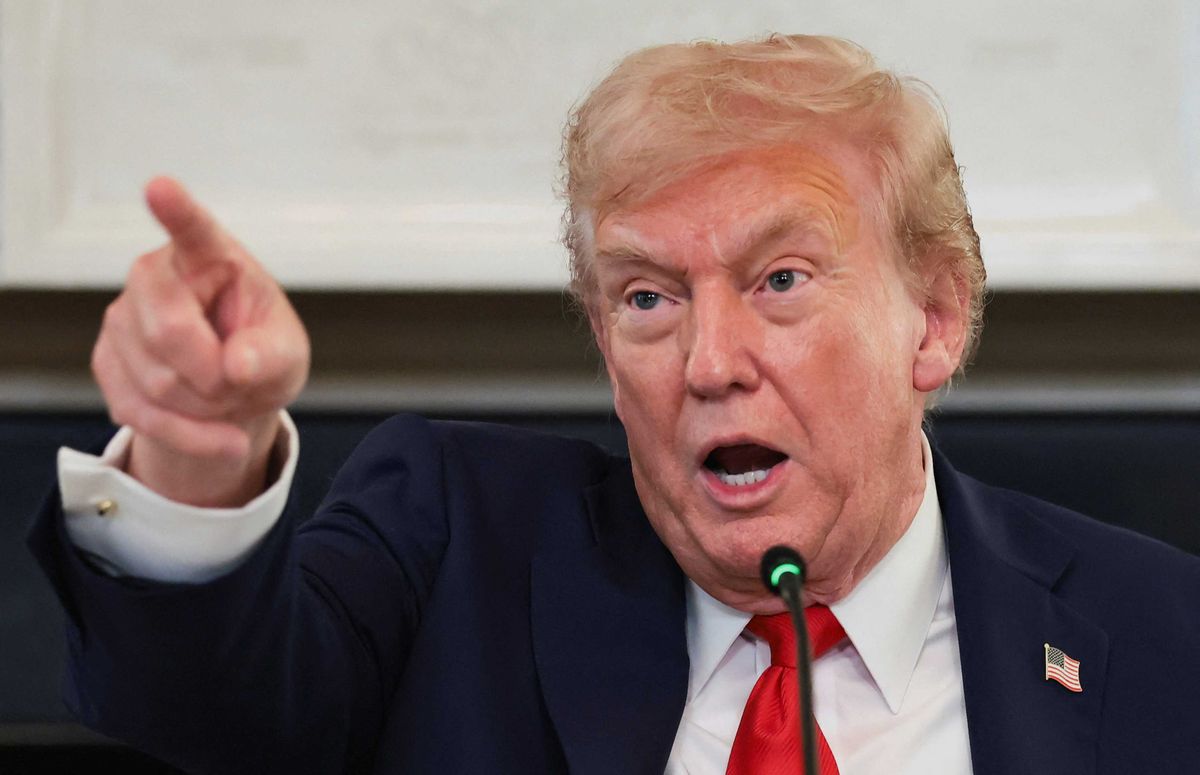
U.S. President Donald Trump points a finger as he speaks during a roundtable on antifa, an anti-fascist movement he designated a domestic "terrorist organization" via executive order on September 22, at the White House in Washington, D.C., U.S., October 8, 2025. REUTERS/Evelyn Hockstein
The conservative Wall Street Journal editorial board was none too happy about President Donald Trump's latest "senseless" tariff order — this time a 50 percent punitive attack on Canada for perceived unjust trade practices.
The president has tried multiple times to issue broad-based tariffs around the world, which federal courts have slapped down. This also comes as Trump caused international tension by delaying opening of a critical international bridge set to boost trade between the U.S. and Canada.
'The White House on Monday exhumed Section 338 of the 1930 Tariff Act to impose 50% tariffs on hundreds of Canadian goods, including hockey sticks, honey, beer, down feathers, fishing rods and golf clubs," wrote the board, noting that they don't take effect for another month — a clear indication Trump wants to use them as a bargaining chip.
This power, which comes from the so-called "Smoot-Hawley Tariff" often blamed for exacerbating the Great Depression, "was intended to let the President retaliate against countries that impose tariffs on the U.S. Mr. Trump is using the law to punish Canada for retaliating against his tariffs. His tariff order cites Canada’s 25% tariffs on U.S. cars that exceed certain quotas, which were a response to Mr. Trump’s 25% duties on motor vehicles and parts."
These moves are colossally counterproductive to the economy of both countries, the board lamented: For instance, "A study in March found that the tourist dropoff has cost between 14,000 and 42,000 jobs in the U.S. markets most exposed to Canadian tourism. Northern border areas have also suffered from a decline in cross-border trade."
The American people are already running out of patience, the board warned.
"The more Mr. Trump keeps swinging recklessly, the more Americans are likely to think there’s only madness in his tariff methods," the board wrote.
Matthew Chapman
July 21, 2026
RAW STORY
U.S. President Donald Trump points a finger as he speaks during a roundtable on antifa, an anti-fascist movement he designated a domestic "terrorist organization" via executive order on September 22, at the White House in Washington, D.C., U.S., October 8, 2025. REUTERS/Evelyn Hockstein
The conservative Wall Street Journal editorial board was none too happy about President Donald Trump's latest "senseless" tariff order — this time a 50 percent punitive attack on Canada for perceived unjust trade practices.
The president has tried multiple times to issue broad-based tariffs around the world, which federal courts have slapped down. This also comes as Trump caused international tension by delaying opening of a critical international bridge set to boost trade between the U.S. and Canada.
'The White House on Monday exhumed Section 338 of the 1930 Tariff Act to impose 50% tariffs on hundreds of Canadian goods, including hockey sticks, honey, beer, down feathers, fishing rods and golf clubs," wrote the board, noting that they don't take effect for another month — a clear indication Trump wants to use them as a bargaining chip.
This power, which comes from the so-called "Smoot-Hawley Tariff" often blamed for exacerbating the Great Depression, "was intended to let the President retaliate against countries that impose tariffs on the U.S. Mr. Trump is using the law to punish Canada for retaliating against his tariffs. His tariff order cites Canada’s 25% tariffs on U.S. cars that exceed certain quotas, which were a response to Mr. Trump’s 25% duties on motor vehicles and parts."
These moves are colossally counterproductive to the economy of both countries, the board lamented: For instance, "A study in March found that the tourist dropoff has cost between 14,000 and 42,000 jobs in the U.S. markets most exposed to Canadian tourism. Northern border areas have also suffered from a decline in cross-border trade."
The American people are already running out of patience, the board warned.
"The more Mr. Trump keeps swinging recklessly, the more Americans are likely to think there’s only madness in his tariff methods," the board wrote.
Susan Collins in full-on retreat as Trump's new attack on Canada threatens her state
Matthew Chapman
July 21, 2026
July 21, 2026
RAW STORY
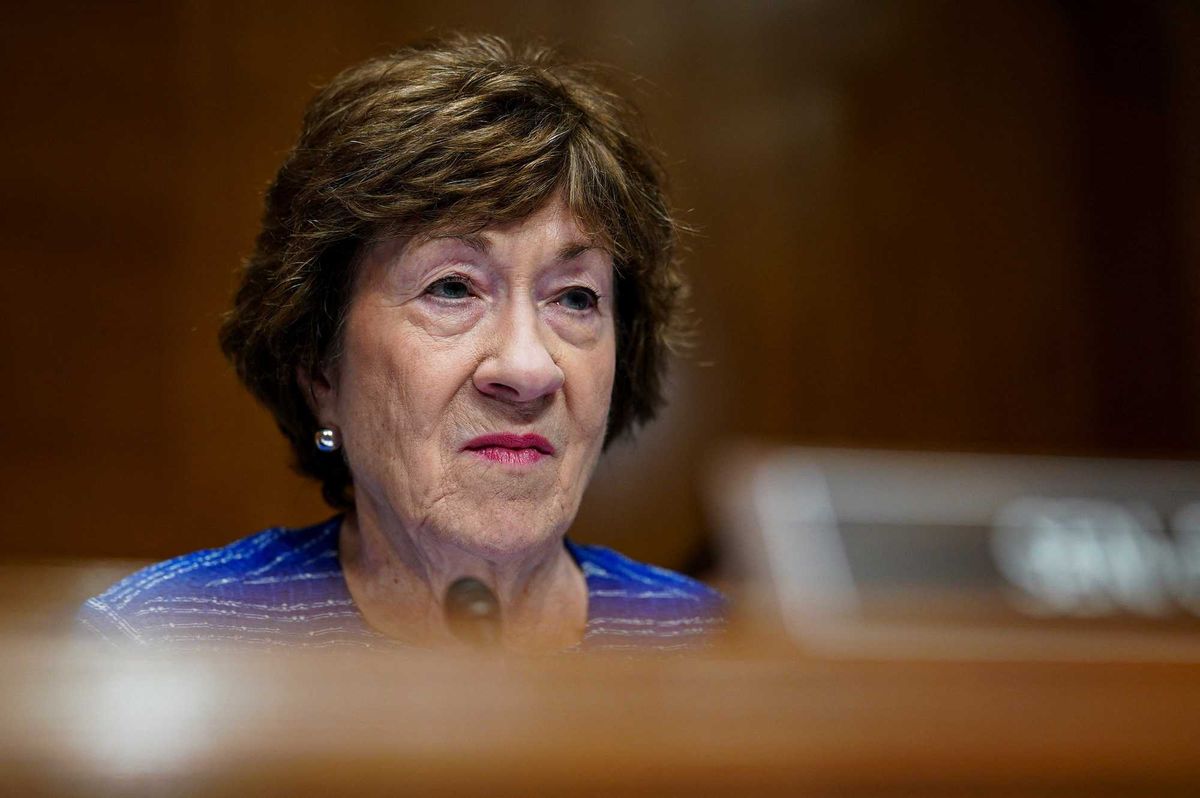
Sen. Susan Collins (R-ME) attends a Senate Health, Education, Labor, and Pensions Committee confirmation hearing for Acting U.S. Secretary of Labor Keith Sonderling to be U.S. Secretary of Labor, on Capitol Hill in Washington, D.C., on July 16, 2026. REUTERS/Al Drago
Sen. Susan Collins (R-ME) was flailing for as much distance as possible as President Donald Trump moves to impose draconian new tariffs on Canada, according to a Politico report on Tuesday.
Collins, a top target for Democrats in a battleground Senate race, represents a state that directly borders the Canadian Maritime provinces.
“I have voted repeatedly against the Canadian tariffs,” said Collins in a statement to Politico. “Maine and Canada’s economies are very intertwined. A lot of our blueberries, our potatoes, our lobster, our lumber are harvested in Maine, processed in Canada and then come back. I don’t want to see the tariffs on the books.”
Bobby Charles, the GOP's nominee for governor, concurred with Collins.
“As Governor, Bobby will always prioritize Maine, even if that means taking a position contrary to the national elites of his party,” Vincent Harris, a senior strategist for Charles, told Politico in a statement.
If elected, Charles said he will travel to Washington to argue against Trump's tariffs.
Trump's new scheme, enacted under a controversial and hardly-ever-used 1930 tariff law, would put 50 percent import taxes on a range of Canadian products.
All of this comes amid a massive shakeup of the Maine Senate race, with Democrats pressuring their nominee Graham Platner to withdraw over credible allegations of sexual assault, and coalescing instead around state lawmaker Troy Jackson.
Sen. Susan Collins (R-ME) attends a Senate Health, Education, Labor, and Pensions Committee confirmation hearing for Acting U.S. Secretary of Labor Keith Sonderling to be U.S. Secretary of Labor, on Capitol Hill in Washington, D.C., on July 16, 2026. REUTERS/Al Drago
Sen. Susan Collins (R-ME) was flailing for as much distance as possible as President Donald Trump moves to impose draconian new tariffs on Canada, according to a Politico report on Tuesday.
Collins, a top target for Democrats in a battleground Senate race, represents a state that directly borders the Canadian Maritime provinces.
“I have voted repeatedly against the Canadian tariffs,” said Collins in a statement to Politico. “Maine and Canada’s economies are very intertwined. A lot of our blueberries, our potatoes, our lobster, our lumber are harvested in Maine, processed in Canada and then come back. I don’t want to see the tariffs on the books.”
Bobby Charles, the GOP's nominee for governor, concurred with Collins.
“As Governor, Bobby will always prioritize Maine, even if that means taking a position contrary to the national elites of his party,” Vincent Harris, a senior strategist for Charles, told Politico in a statement.
If elected, Charles said he will travel to Washington to argue against Trump's tariffs.
Trump's new scheme, enacted under a controversial and hardly-ever-used 1930 tariff law, would put 50 percent import taxes on a range of Canadian products.
All of this comes amid a massive shakeup of the Maine Senate race, with Democrats pressuring their nominee Graham Platner to withdraw over credible allegations of sexual assault, and coalescing instead around state lawmaker Troy Jackson.
Trump fires warning shot at Canada: 'They need us to survive'
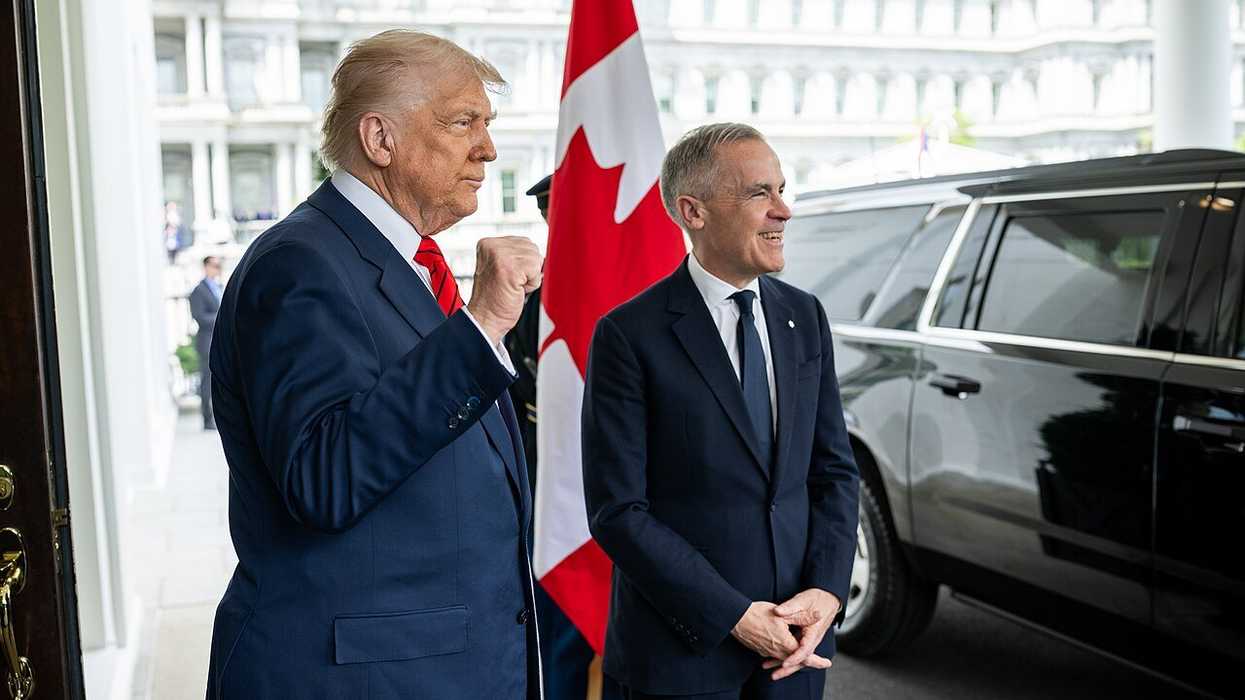
President Donald Trump with Canadian Prime Minister Mark Carney on May 6, 2025 (Official White House Photo by Daniel Torok/Flickr)
President Donald Trump with Canadian Prime Minister Mark Carney on May 6, 2025 (Official White House Photo by Daniel Torok/Flickr)
July 21, 2026
ALTERNET
President Donald Trump once again took aim at Canada after reigniting his feud with America's neighbor to the north, claiming "they need us to survive" during an Oval Office event on Wednesday.
Trump this week escalated his long-simmering feud with Canada after wildfires in the country blanketed much of the American Northeast and Midwest in dangerous levels of smoke, an occurrence becoming more common with the advance of climate change. Holding Canada responsible for the air quality threat, Trump threatened to impose new tariffs over the situation, and on Monday evening, announced that he would be setting a separate 50 percent tariff on certain Canadian goods in 30 days, claiming that this was in response to the country allegedly discriminating against U.S. exports.
Trump was pressed about the situation again during an Oval Office press conference, confirming that the newly-announced tariff is separate from the wildfire tariff, which he added that his administration is still looking at.
He also spoke further about his reasoning behind the new 50 percent tax, which Axios reported will impact things like "hockey sticks, wine and cement."
"It's a response to the way they've treated our farmers and our people," Trump said. "Canada has been very, very tough on us over the years, for many years, and no other president has done anything about it. I love Canada, I love the people of Canada, many friends that live in Canada. But their leadership from [former Prime Minister Justin] Trudeau to the current leadership, I mean, in all fairness to them, they need us to survive. Without us, there's no way they can survive. So... they've been very, very tough over a period of the last 50 years, actually."
“Over the past year, Canada has retained substantial retaliation against the United States as the U.S. imposes trade actions to reindustrialize, reshore, and support its manufacturing,” a senior Trump administration official told reporters during a call on Monday, according to The Hill. “Specifically, Canada has to be held accountable for this continued discrimination.”
President Donald Trump once again took aim at Canada after reigniting his feud with America's neighbor to the north, claiming "they need us to survive" during an Oval Office event on Wednesday.
Trump this week escalated his long-simmering feud with Canada after wildfires in the country blanketed much of the American Northeast and Midwest in dangerous levels of smoke, an occurrence becoming more common with the advance of climate change. Holding Canada responsible for the air quality threat, Trump threatened to impose new tariffs over the situation, and on Monday evening, announced that he would be setting a separate 50 percent tariff on certain Canadian goods in 30 days, claiming that this was in response to the country allegedly discriminating against U.S. exports.
Trump was pressed about the situation again during an Oval Office press conference, confirming that the newly-announced tariff is separate from the wildfire tariff, which he added that his administration is still looking at.
He also spoke further about his reasoning behind the new 50 percent tax, which Axios reported will impact things like "hockey sticks, wine and cement."
"It's a response to the way they've treated our farmers and our people," Trump said. "Canada has been very, very tough on us over the years, for many years, and no other president has done anything about it. I love Canada, I love the people of Canada, many friends that live in Canada. But their leadership from [former Prime Minister Justin] Trudeau to the current leadership, I mean, in all fairness to them, they need us to survive. Without us, there's no way they can survive. So... they've been very, very tough over a period of the last 50 years, actually."
“Over the past year, Canada has retained substantial retaliation against the United States as the U.S. imposes trade actions to reindustrialize, reshore, and support its manufacturing,” a senior Trump administration official told reporters during a call on Monday, according to The Hill. “Specifically, Canada has to be held accountable for this continued discrimination.”
White House advisers scramble to derail Trump's 'barrage' of new tariffs: report
Tom Boggioni
July 21, 2026
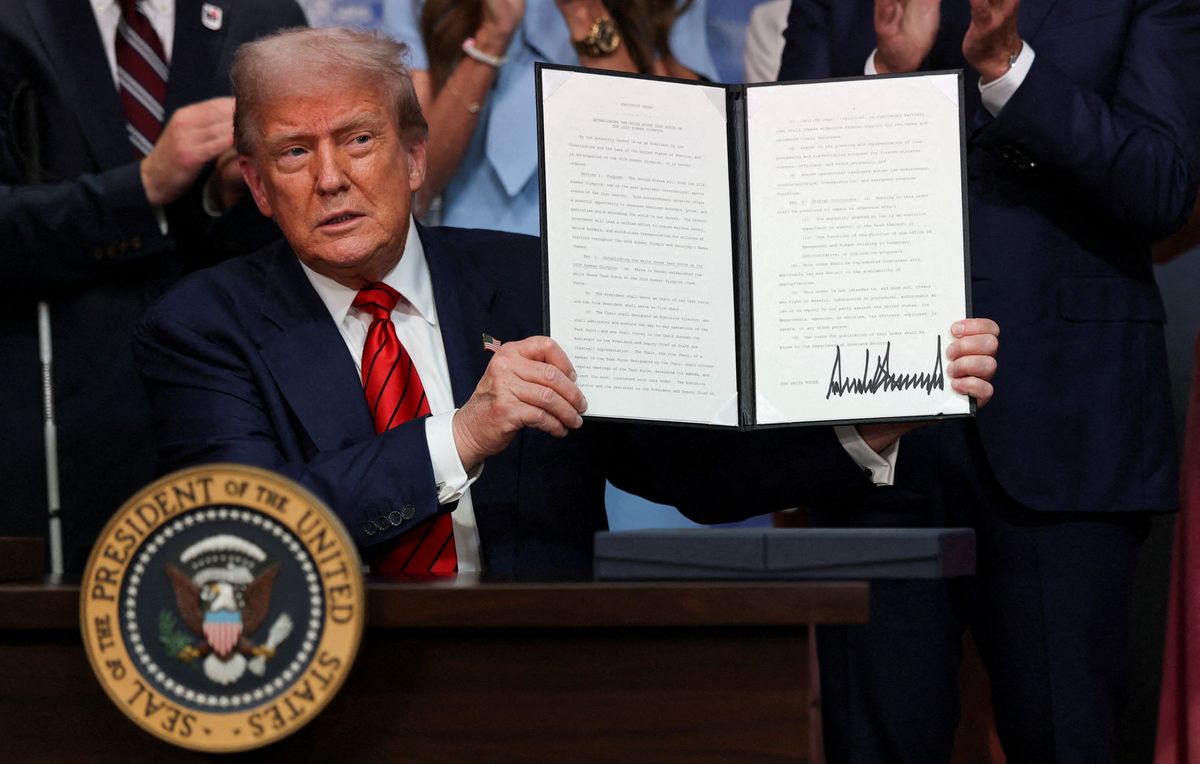
Donald Trump holds up an executive order. REUTERS/Jonathan Ernst
Faced with the possibility that the Republican Party is headed for a wipeout in the November midterms, White House insiders are attempting to head off a Friday announcement by President Donald Trump of new tariffs.
Trump is preparing to impose what the Financial Times is calling a "barrage" of fresh tariffs on dozens of countries this week, but his own advisers are urgently counseling him to step back from the brink, the outlet's report states. Senior officials worry that resurrecting his trade war—which delivered economic shocks and voter backlash in his first term—could prove "catastrophic" heading into elections Republicans are already struggling to win.
According to the report, "Behind the scenes, senior officials have been counseling the president to maintain stability with trading partners and honor the deals that Washington struck with them to reduce their tariffs in 2025, according to two people familiar with the matter.”
The timing is particularly fraught. Existing 10 percent tariffs adopted after a Supreme Court decision in February struck others down are set to expire Friday and some in the White House are engineering probes "of forced labor practices, allowing Trump to avoid using the emergency authorities knocked down by the Supreme Court."
The prospect of renewed tariffs collides with an already-deteriorating economic landscape. The escalating Iran conflict has roiled energy markets, pushing gas prices back above $4 per gallon. Voters are already furious about the cost of living and recent polling found two-thirds of Americans disapprove of how Trump is managing affordability.
Adding tariff hikes to soaring energy prices risks "inflaming voter frustration over the high cost of living," a sign that even Trump's own team recognizes the political danger, the report notes.
"This does not mean that tariff hikes are in the rear-view mirror," Wendy Cutler, a former U.S. trade official now at the Asia Society Policy Institute, told the Financial Times. "But it does suggest that a more cautious approach is now called for, par
Tom Boggioni
July 21, 2026
RAW STORY
Donald Trump holds up an executive order. REUTERS/Jonathan Ernst
Faced with the possibility that the Republican Party is headed for a wipeout in the November midterms, White House insiders are attempting to head off a Friday announcement by President Donald Trump of new tariffs.
Trump is preparing to impose what the Financial Times is calling a "barrage" of fresh tariffs on dozens of countries this week, but his own advisers are urgently counseling him to step back from the brink, the outlet's report states. Senior officials worry that resurrecting his trade war—which delivered economic shocks and voter backlash in his first term—could prove "catastrophic" heading into elections Republicans are already struggling to win.
According to the report, "Behind the scenes, senior officials have been counseling the president to maintain stability with trading partners and honor the deals that Washington struck with them to reduce their tariffs in 2025, according to two people familiar with the matter.”
The timing is particularly fraught. Existing 10 percent tariffs adopted after a Supreme Court decision in February struck others down are set to expire Friday and some in the White House are engineering probes "of forced labor practices, allowing Trump to avoid using the emergency authorities knocked down by the Supreme Court."
The prospect of renewed tariffs collides with an already-deteriorating economic landscape. The escalating Iran conflict has roiled energy markets, pushing gas prices back above $4 per gallon. Voters are already furious about the cost of living and recent polling found two-thirds of Americans disapprove of how Trump is managing affordability.
Adding tariff hikes to soaring energy prices risks "inflaming voter frustration over the high cost of living," a sign that even Trump's own team recognizes the political danger, the report notes.
"This does not mean that tariff hikes are in the rear-view mirror," Wendy Cutler, a former U.S. trade official now at the Asia Society Policy Institute, told the Financial Times. "But it does suggest that a more cautious approach is now called for, par
.jpg)