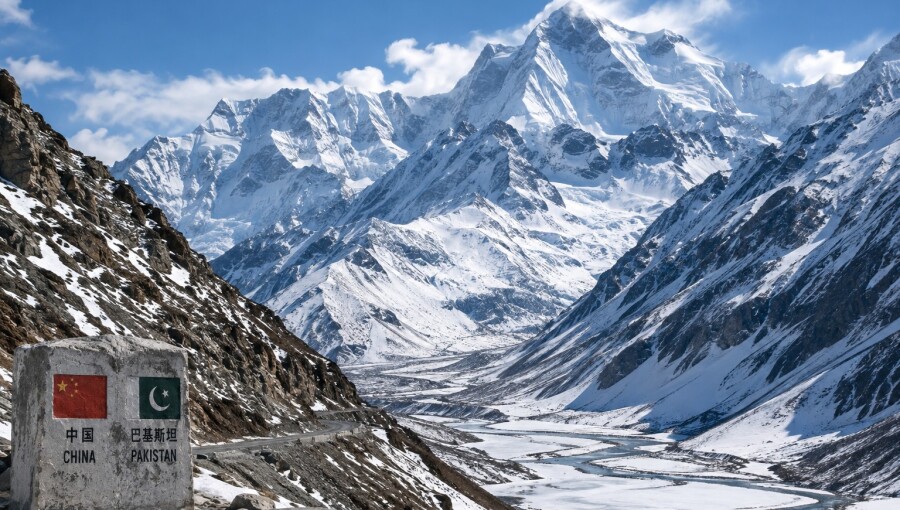
Persistent geopolitical tensions along regional borders continue to influence diplomatic stability and strategic economic corridors across South Asia. According to a statement by India’s Ministry of External Affairs (MEA), it has rejected the establishment of a joint border commission between Pakistan and China, stating that the mechanism lacks legal validity as the territory in question belongs to neither Islamabad nor Beijing but New Delhi.
The MEA’s spokesperson Randhir Jaiswal confirmed India's position, asserting that no lawful frontier exists between the two neighbouring states. Jaiswal said that India’s sovereign territories of Jammu, Kashmir, and Ladakh remain integral parts of India, invalidating third-party agreements over occupied regions.
The ministry reiterated India’s non-recognition of the 1963 bilateral frontier treaty between China and Pakistan, declaring any current boundary cooperation unacceptable. Indian authorities called for an immediate withdrawal of forces from its occupied areas, dismissing joint administrative initiatives as unlawful attempts to legitimise territorial control.
While not a direct stimulus for their stock prices, the tensions are likely to affect defence sector suppliers, including Bharat Electronics Ltd (NSE:BEL) and Hindustan Aeronautics Ltd (NSE:HAL) which are likely to see a consistent positive effect as structurally they are key to India’s military industrial complex and national security supplies.
Foreign policy analysts expect sustained diplomatic opposition to impact infrastructure planning along regional trade corridors. Investors monitor border developments closely, as geopolitical friction may influence defence allocation priorities within upcoming fiscal budgets.
Heightened border oversight will also likely require continued security expenditure, maintaining steady order pipelines for domestic military equipment manufacturers and strategic technology contractors operating across northern border territories.

No comments:
Post a Comment