Wednesday, September 09, 2026


Delay tactic or genuine solution? Carbon capture under fire again as EU invests in ‘unproven’ technology
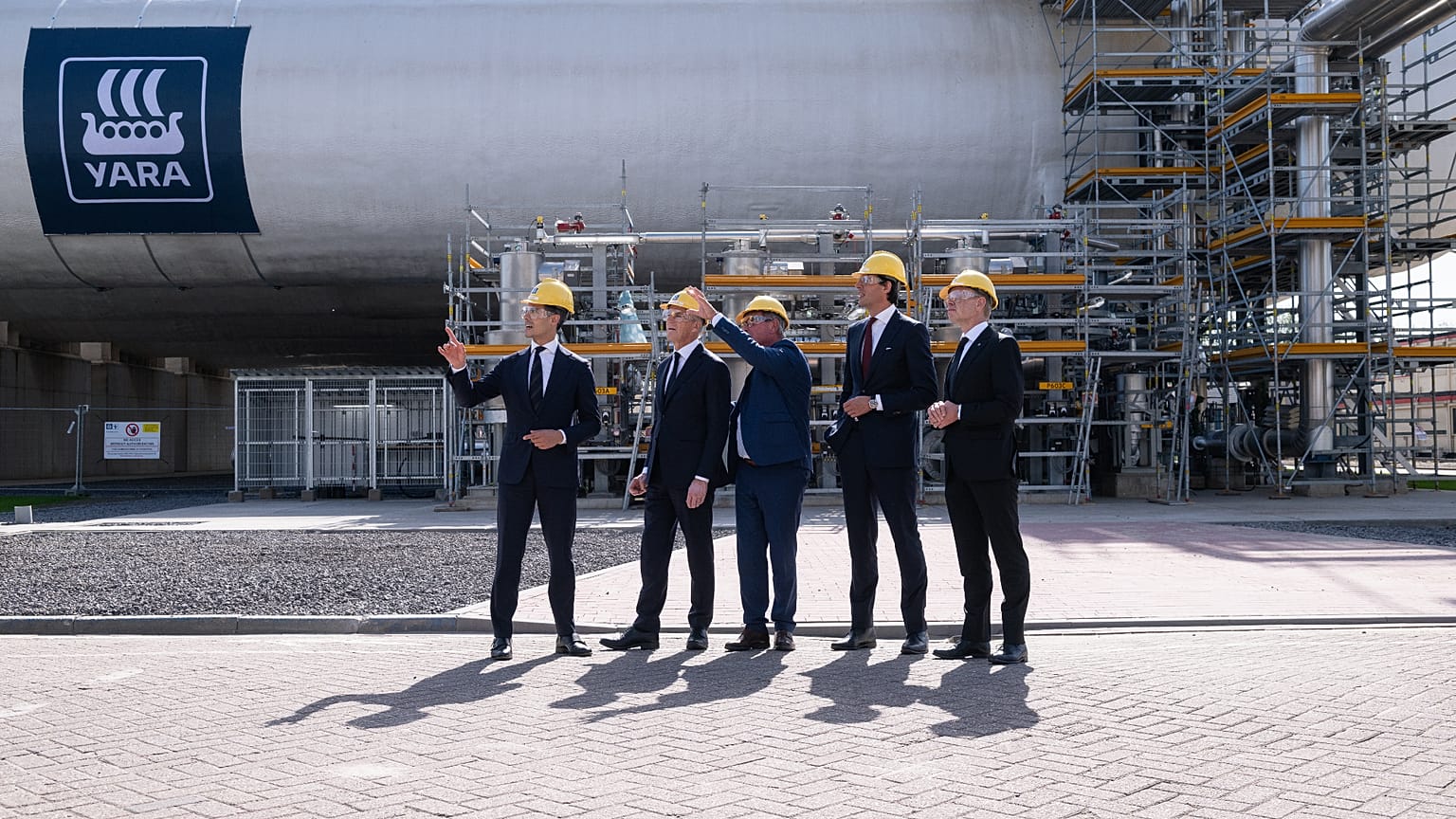
Wopke Hoekstra, European Commissioner for Climate, Net Zero and Clean Growth, second right, visits Yara Sluiskil, 7 September 2026
Copyright European Union, 2026, licensed under CC BY 4.0

By Ruth Wright with AFP
Published on

Carbon capture and storage has been found to be “technically uncertain and very high cost”.

CO2 emitted by a fertiliser factory in the Netherlands will be stored underneath the seabed in Norway, in what the owners are calling the “largest commercial carbon capture and storage (CCS) project in Europe”.

At an opening ceremony this week, the ammonia and fertiliser plant announced that it will capture 800,000 tonnes of CO2 a year then liquefy it to be sent by ship to Norway.

Having funded the project, the European Commission was keen to promote its investment – with the Commissioner for Climate, Net Zero and Clean Growth attending the inauguration alongside the Prime Ministers of both countries.

While the Commission says the Sluiskil plant, run by Norwegian chemical company Yara, is a “strategic investment”, opponents say it is “risking billions in taxpayers’ money to fund a dangerous distraction that delays climate action”.

As one of the most divisive topics in climate action, we look into the facts about carbon capture and how the EU came to be funding this experimental technology.

What is carbon capture and storage?

Carbon capture and storage (CCS) refers to technologies designed to prevent CO2 from entering the atmosphere in the first place and/or to remove it after it has been emitted.

As is done at the Sluiskil plant, most projects use a liquid to chemically remove the CO2 emitted from the production process, where it is then compressed into a liquid-like state and transported typically through a pipeline to a storage site. At that point, it’s either stored deep underground or is transformed into things like building materials or synthetic fuel. In the case of the latter, this technology is referred to as CCUS, where the ‘U’ stands for utilisation.

As of February 2026, there were 75 operational CCS projects around the world, according to climate change publication Carbon Brief. Almost all of them are at fossil-fuel extraction and processing sites, according to the IEA’s database. Together, these projects capture 62.5 million tonnes of CO2 (MtCO2) each year. This is equivalent to 0.2 per cent of total global emissions in 2025.

While Yara’s chief executive, Svein Tore Holsether, said in a statement, “The carbon capture facility in Sluiskil proves that large-scale industrial decarbonisation is possible today”, the cumulative emissions saved are a very, very tiny drop in the ocean.

US non-profit the Institute for Energy Economics and Financial Analysis (IEEFA) has conducted in-depth research into CCS. Their Energy Finance Analyst, Andrew Reid, says: “Despite the political and financial support that has been pointed to CCS over the past three to four years, it remains technically uncertain, very high cost, and reliant upon huge subsidies to move from feasibility to construction and operation.”

CCS: To help the fossil fuel industry to extract and sell more oil and gas

To understand its uses, it’s important to understand where carbon technology originates from. According to Carbon Brief, it “was originally rolled out at US and Canadian oil wells in the early 1970s as a way to achieve “enhanced oil recovery”. This involves injecting captured CO2 into depleted wells – a process that stores the gas, but also helps to extract more oil.” This is by far the most significant use for carbon capture worldwide, with three-quarters of it used for this purpose.

This means that “the majority of CO2 that is both captured and used today helps the fossil-fuel industry to extract and sell more oil and gas,” according to Carbon Brief.

How did the EU end up funding carbon capture and storage?

One of the arguments against CCS, which campaigners have been making for years, is that it is a way for polluters to keep polluting, rather than emitting less of the gases which are heating up the planet at alarming rates.

“All capture and storage projects suffer from the same problem: they distract attention and resources from cutting emissions at source and give polluting industries like fertiliser production a pass to keep on polluting,” says Rachel Kennerley, Senior International Carbon Capture Campaigner at the Center for International Environmental Law (CIEL).

Belén Balanyá, researcher and campaigner at Corporate Europe Observatory (CEO), has been tracking the lobbying efforts of the fossil fuel industry for 25 years. She has recently focussed on lobbying by the CCS industry. The outcomes of annual COP climate talks are known to be influenced by lobbyists representing industry. Balanyá found that around 500 CCS lobbyists were at COP29 in 2024. A year earlier, at COP28, CCS proponents (largely tied to fossil fuel industries) scored a significant win with the endorsement of “abatement and removal technologies” in the agreement.

Referring to fossil fuel industries, Balanyá says, “You look at what’s on the agenda and it’s always escape hatches to stay in business,” she tells Euronews Green. “It’s where they move when they’ve been forced to – when there’s more knowledge and more acceptance about climate change and their role and that they have to decarbonise.”

CCS being endorsed in a COP agreement may have contributed to its legitimacy in political circles within the EU. The CCUS Forum (now the Industrial Carbon Management (ICM) Forum), set up by the European Commission in 2021, is an annual event with working groups that feed directly into EU policymaking. CEO found that every group has been co-chaired by the fossil fuel industry or associated organisations.

A newly released report from the UN Environment Programme (UNEP) details the risks of overshooting 1.5°C of warming and how we can limit them. It assessed what it called Carbon Dioxide Removal and found that many issues remain with the technology, such as whether it can scale sustainably (due to costs, land and energy use), whether it would actually keep CO2 out of the atmosphere permanently and who’s responsible for regulation and leaks.

CCS: Good or bad?

Wherever commentators stand on CCS, there is some agreement that for some industries, the technology can be useful. Yara’s project targets emissions from ammonia production which “provides a relatively concentrated CO2 stream, making this one of the more straightforward industrial applications of carbon capture rather than an example of the very hardest emissions to abate,” according to Domien Vangenechten, Programme Lead in Clean Economy at E3G.

“The lesson should therefore not be that Europe needs CCS everywhere, but that we should pragmatically deploy it where it can cut substantial emissions today.”


 

Possible massacre and cannibalism 7,000 years ago uncovered in Granada

Found in Neolithic caves
Copyright IPHES-CERCA

By Escarlata Sánchez
Published on

Analysis of nearly 1,000 bones found in three caves in Granada shows that cannibalism was a recurring Neolithic practice, with signs of collective violence, possible rituals and skulls turned into containers.

Three caves in Granada reveal that cannibalism was a recurrent practice during the Neolithic in the south of the Iberian Peninsula. The analysis of nearly 1,000 human remains found at Malalmuerzo, Carigüela and Majólicas has made it possible to date these assemblages for the first time and determine that acts of cannibalism took place in different periods and social contexts.

One of the most striking cases is Malalmuerzo, where researchers suggest that the cave may have been the scene of an episode of collective violence followed by acts of cannibalism around 5000 BC.

More than half a century after these sites became key references for the study of prehistoric cannibalism, an international team has re-examined the remains using radiocarbon dating and new taphonomic analysis techniques.

The results indicate that Neolithic cannibalism in the Iberian Peninsula was not an isolated phenomenon, but a practice that recurred at different times and under varying social circumstances, in line with evidence documented in other regions of Europe.

The research, published in the 'Journal of Archaeological Science', involved universities and research centres in Spain, Austria, Brazil and Argentina.

The skull found in a Neolithic cave. Cortesía: IPHES-CERCA

Cannibalism in three Granada caves with different contexts

The team examined nearly 1,000 human remains from the three caves in search of evidence of deliberate manipulation. The researchers studied cut marks, fractures and tooth marks under the microscope and combined statistical analyses, machine learning and direct radiocarbon dating to determine how and when the bones were modified.

Although all three sites show evidence linked to cannibalism, such as cut marks, cooking and bite marks, each tells a different story. Malalmuerzo shows signs of violence; Carigüela reveals the recurrence of these practices and a distinctive treatment of skulls; and Majólicas points to possible ritual practices.

For decades, prehistoric cannibalism tended to be interpreted as a homogeneous phenomenon. However, the new study shows that practices that appear similar may reflect different social realities and that their meaning needs to be analysed by jointly considering chronology, the archaeological context and the evidence preserved in the bones.

This is how Antonio Rodríguez-Hidalgo, Ramón y Cajal researcher at the Institute of Archaeology of Mérida and one of the study’s authors, explains it.

A possible massacre followed by cannibalism at Malalmuerzo

The Malalmuerzo cave offers one of the most striking findings of the research. The remains point to a possible episode of collective violence around 5000 BC, involving individuals of different ages whose bodies were subsequently consumed.

In Carigüela, the new dates indicate several episodes of cannibalism throughout the Neolithic. Among the most unusual discoveries are two skulls that were modified so they could be used as containers.

The most recent episode is documented at Majólicas, around 3800 BC, and does not appear to be linked to a violent context. Some bones stained red, probably with cinnabar, point to possible ritual practices.

The remains found. IPHES-CERCA

Neolithic cannibalism was recurrent in Europe

The three Granada sites fit into a broader pattern observed in Europe. Cannibalism during the Neolithic would not have been a continuous practice, but a phenomenon that appears concentrated in specific periods and regions.

Anthropophagic practices are particularly concentrated in three phases: the late 6th millennium BC, the mid-5th millennium BC and the late 3rd millennium BC, the last already in the Bronze Age.

Although the researchers have not identified a single cause that explains all these episodes, they believe they may be linked to changes in social organisation, relations between different groups and the way in which death and violence were understood.

New techniques reveal secrets of remains excavated decades ago

The research also highlights the scientific value of historical archaeological collections and shows how new techniques can provide unprecedented information on material excavated decades ago.

Among the authors is Miguel C. Botella, then director of the Laboratory of Forensic Archaeology at the University of Granada, whose work was crucial to the study of these remains.

"His work helped establish Malalmuerzo, Carigüela and Majólicas as benchmark sites for the study of cannibalism in Europe’s late Prehistory," concludes Francesc Marginedas.


Driverless race cars compete in Italy in Europe’s first autonomous multi-car race


By Roselyne Min
Updated

The competition is fought largely through programming, simulator sessions and the constant search for a balance between speed and risk.

Italy’s Formula 1 city of Imola has hosted Europe’s first multi-car race for fully autonomous cars.

Five teams from the Abu Dhabi Autonomous Racing League (A2RL) competed at the historic Imola circuit, with cars racing without steering wheels, pedals or even drivers.

The teams represented Germany, Italy and the United Arab Emirates (UAE).

Even if the cars drive themselves, making them competitive still requires a team of humans capable of developing the best AI-driven racer.

“The teams that come here are all about winning,” said Stephane Timpano, CEO of ASPIRE, the organisation behind the event.

"They are scientists. They look like scientists, and they behave like scientists, but once the competition starts, it’s about showing that they have the best software, the best code in the car, and what they want is to win".

All teams used the same SF23 single-seaters developed by Dallara for Japan’s Super Formula series, regarded as one of the fastest racing championships outside Formula 1.

But the human controls have been taken out. Instead, the cars use cameras, radar and lidar sensors to perceive their surroundings, while an onboard computer controls the car.

Just like in any other motorsport competition, mechanics work on the cars, engines roar and engineers closely monitor streams of telemetry data.

Organisers also hope putting autonomous cars on a familiar racing stage can help build public trust in AI.

“Create trust. I think this is the biggest issue we will have with AI going forward,” Timpano said.

“A lot of people are reluctant to engage with AI, are worried about what is going to happen with their jobs, their life and what AI is able to do,” he added.

Pushing autonomous driving to its limits

For autonomous driving experts, however, the competition is fought largely through programming, simulator sessions and the constant search for a balance between speed and risk.

“The league addresses one of the biggest challenges in developing autonomous vehicles, which is testing risky scenarios in a controlled environment, at high speeds,” said Alexander Winkler, A2RL’s head of sporting.

He said racing against other vehicles travelling at similarly high or different speeds creates situations and data that would be difficult to reproduce in ordinary road testing.

“To me, as a professor, this is probably one of the most difficult engineering problems you have today. It is not just autonomous driving, but autonomous driving at the very, very limit of handling,” explained Marko Bertogna, a professor at the University of Modena and Reggio Emilia.

And once the race starts, the engineers have to let their code do the driving.

“When the race starts, it’s hands off,” said Sascha Buettner, team lead of TUM, the participating team from the Technical University of Munich in Germany.

“And so this is basically just letting a child do its thing and just looking at them and, you know, wishing them all the best, essentially hoping to be proud. But, of course, that can go wrong. Our AI driver can stumble, it is all possible.”

Despite the cars now approaching professional drivers in outright performance, organisers say AI still cannot reproduce everything a human brings to racing.

“Still today, this car is not able to reproduce the fantasy of a driver. You don’t see that in the car,” Timpano continued.

“With time, it may get there. But I see it the other way around. Our human pilot can use AI to have a better performance in the safest way.”

The winner of Saturday's 12-lap autonomous race was Kinetiz from the UAE.

Founded in 2023, A2RL is based in Abu Dhabi in the United Arab Emirates.


Vivian Wilson hits out at AI and estranged father Elon Musk in new Desigual fashion campaign

Elon Musk’s estranged daughter Vivian Wilson hits out at AI and Elon in new Desigual fashion campaign
Copyright Screenshot Instagram Desigual


By David Mouriquand
Published on

The new Desigual campaign stars Elon Musk's estranged daughter Vivian Wilson and aims to “send a clear message: the greatest rebellion is no longer about fighting against the system but about refusing to be part of it."

Elon Musk’s estranged eldest daughter Vivian Wilson is front and centre in a bold anti-AI campaign for Spanish fashion label Desigual.

The campaign, helmed by directing trio PSG (made up of Yukihiro ‘Sho’ Shoda, Pau López and Gerardo del Hierro - formerly known as TURBO), sees the transgender model, acitvist and social media personality take a stand against artificial intelligence.

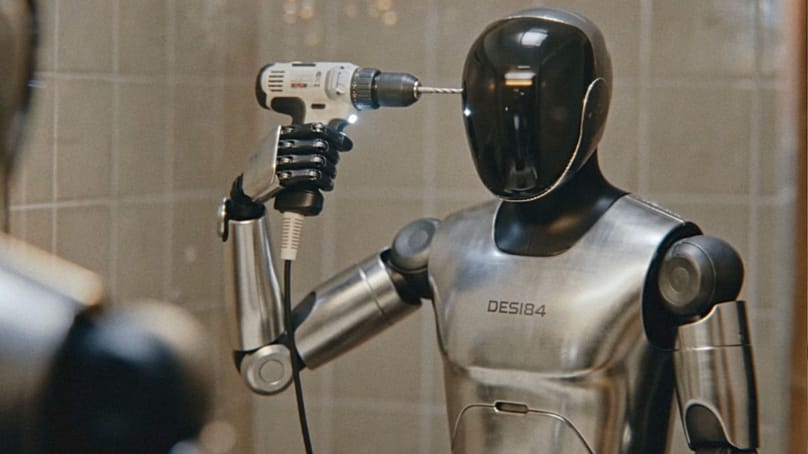
Illustrating the campaign’s title, ‘Born to Disobey’, one clip sees the 22-year-old using a robot as a golf tee, walking it like a dog on a leash, and trying to teach it to say "Desigual". Throughout, the robot malfunctions, leading Vivian to the conclusion: “Some things aren’t meant to be fixed.”

Per a press release, the campaign aims to “send a clear message: the greatest rebellion is no longer about fighting against the system but about refusing to be part of it. When everything invites you to obey, the answer is attitude, irony and the freedom to be yourself.”

Wilson told People that it was important to her to take a stance on the impact of AI on the fashion industry “because it takes jobs away from talented creatives while being detrimental for the environment.”

“Art is emotion through expression,” she added. “Since emotion is inherently human, AI takes away any underlying intention and replaces it with plagiarized colors and shapes.”

Vivian Wilson Screenshot Instagram Desigual

Beyond the obvious (and potent) anti-AI stance, it’s hard not to recognise the barely veiled dig at Elon Musk.

Born in 2004 to Elon Musk and his first wife, Justine Wilson, Vivian began her gender transition at the age of 16, with the consent of both her parents. Elon Musk later claimed that he had been “tricked into signing documents”, whilst Vivian Wilson has insisted that her ex-husband was fully aware. On her eighteenth birthday, Vivian won a court case allowing her to take her mother’s maiden name, thereby severing all ties with her father. Having become an influencer and model, she has emerged as a leading voice in the defence of trans rights in the US.

Elon has said that his child is “dead” and that Vivian was “infected by the woke mind virus”.

In this context, lines in the Desigual campaign like “He was designed to obey. Not me” and “Some things aren’t meant to be fixed” take on new meaning, appearing not only as a plea against the AI technology Elon Musk and others like him peddle, but as direct jabs possibly aimed at her estranged father.

Additionally, the malfunctioning and completely useless robot in the campaign ad, called DESI84, looks suspiciously like the Tesla Bot (Tesla Optimus) marketed by Elon Musk’s company. Coincidence?

DESI84 Screenshot Instagram Desigual

Last year, Vivian commented on commented the accusations that Elon Musk made a Nazi-like gesture at Donald Trump’s inauguration.

“I’m just gonna say let’s call a spade a fucking spade,” she wrote on Instagram’s Threads platform. “Especially if there were two spades done in succession based on the reaction of the first spade” - referring to the fact Musk did the salute twice on stage.

Wilson also hit back at claims that her father’s gesture could be explained because of his “autism”.

“I don’t know why ya’ll are reacting with such vigour, I’m clearly only talking about card suits,” she later quipped. “I mean I have ADHD and this was CLEARLY just an accident that people happened to interpret to mean something other than just card suits.”

She added: “After all, there’s no proof I’m not just talking about card suits. People assuming that I’m not just talking about card suits just goes to show how dishonest people/the media can be.”


Taiwan's TSMC building 25 chip and packaging plants this year as AI demand outruns supply

Taiwan's TSMC building 25 chip and packaging plants this year as AI demand outruns supply
/ Igor Omilaev - UnsplashFacebook
By IntelliNews - New Taipei Bureau September 8, 2026

Taiwan Semiconductor Manufacturing Co (TSMC, TWSE: 2330) is expanding production capacity five times faster than usual this year and still cannot meet demand driven by artificial intelligence, deputy co-chief operating officer Cliff Hou said, the Taipei Times reported on September 8.

The world's largest contract chipmaker is constructing 25 wafer fabrication and advanced packaging facilities globally in 2026, including 13 in Taiwan, a pace Hou described as unprecedented for the company. TSMC has historically added five or six plants a year.

Hou, who also chairs the Taiwan Semiconductor Industry Association, spoke at a chief executive summit fireside chat during the Semicon Taiwan trade show, which opened in Taipei on September 7.

The build-out extends beyond fabrication. TSMC plans to set up operations at the Baipu Industrial Park in the southern port city of Kaohsiung to speed up testing and validation of semiconductor materials and equipment, according to Jun He, vice president of advanced packaging technology and service.

The company is coordinating the project with the Ministry of Economic Affairs and the Kaohsiung City Government, He said at a 3D integrated circuit global summit held ahead of the trade show. The plan is expected to lift validation efficiency by between 25% and 50%.

The three-hectare site is to house small clean rooms and laboratories alongside a training base for advanced packaging engineers, the company said.

Advanced packaging has become a bottleneck for AI chip supply, with TSMC's chip-on-wafer-on-substrate technology used to assemble processors for AI accelerators. Elsewhere at the Taipei show, visitors viewed a 64-qubit superconducting quantum computer displayed at Fujitsu's booth.

Labour tensions surfaced in another corner of Taiwan's chip sector. Trade unions representing workers at US memory maker Micron Technology Inc's operations in Taoyuan and Taichung said they were moving towards possible strike action unless the company revamps its bonus system and distributes a larger share of profits to staff.


Robots march in Warsaw calling for AI rules and job protections

Robots march in Warsaw calling for AI rules and job protections
Footage of the protest posted on Facebook by NGO Democratism. / Demcratism via FacebookFacebook
By IntelliNews September 8, 2026

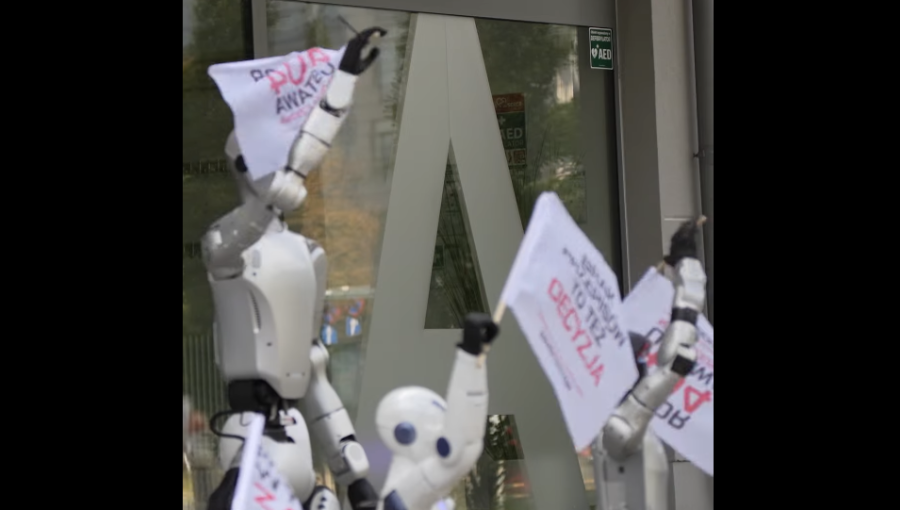
Around 30 humanoid and quadruped robots marched in circles, waved flags and "chanted" slogans outside Poland's digital affairs ministry on September 7 in a protest calling for greater scrutiny of artificial intelligence and its impact on jobs.

The unusual demonstration in Warsaw was organised by Democratism, a social movement campaigning for a public debate over how AI and automation should reshape the labour market.

"30 robots. One message: the future is already here," the organisation said in a Facebook post.

"Humanoid and quadruped robots appeared in front of Poland’s Ministry of Digital Affairs to start a public debate about AI, automation and the future of work," it said.

"We are not against technology. We are asking one question: are we ready for the speed of change?"

The organisers said the protest was intended to make the consequences of rapid technological development more tangible, rather than to oppose automation itself.

"Robots on the streets of Warsaw did exactly what they were meant to do — put an urgent issue in front of the public," Democratism said in a subsequent Facebook post.

The demonstration took place as Poland moves to establish a national framework for implementing the European Union's AI Act, with the government also considering mechanisms to oversee the development and testing of artificial intelligence.

Digital Affairs Minister Krzysztof Gawkowski told protesters that Poland was the first EU country to introduce oversight of the AI market, according to Polish media outlet Opolska360.

Gawkowski also announced plans for a Commission for the Development and Security of Artificial Intelligence and regulatory sandboxes that would allow companies to test AI solutions before putting them into wider use, the outlet reported.

In July, President Karol Nawrocki signed into law legislation proposed by the digital affairs ministry to implement the EU's AI Act in Poland. The legislation established a national authority able to enforce EU rules that had already formally entered into force.

However, Democratism argues workers and the wider public have a role in deciding how regulation of the new technology is introduced.

The organisation describes itself on its website as "a social movement opening the debate on how AI and robotisation affect the labour market."

"We can see that artificial intelligence and robotics are advancing faster than the public debate about their consequences," it says.

The group argues that automation is already moving into different industries and changing the way companies operate and the types of jobs available. It says decisions about the impact of AI and robotics on employment should involve the people affected by them, while calling for rules linking technological progress with accountability, job security and preparation for changes in the labour market.

"AI and robots are changing the way we work more and more," the website says. "Democratism is a social movement that wants to bring people into shaping the rules of that change."


Athens cracks down on e-scooters as Europe sounds safety alarm

Two girls ride their scooters inside the modern Agora walkway as the sun sets at the main Olympic complex in Athens, 5 August, 2025
Copyright AP Photo

By Symela Touchtidou
Published on

In the first eight months of 2026, a total of 6,127 checks were carried out on electric scooter users across the Attica region and 3,700 offences were recorded.

Greek traffic police service in the Attica region have launched a new round of intensive checks on electric scooters, after two serious accidents on Tinos and Glyka Nera, in which a 14-year-old girl and a 16-year-old boy were badly injured.

The checks focus mainly on the use of electric scooters by minors, as well as on general compliance with the Highway Code, while businesses that sell, supply or rent out these vehicles are also coming under scrutiny.

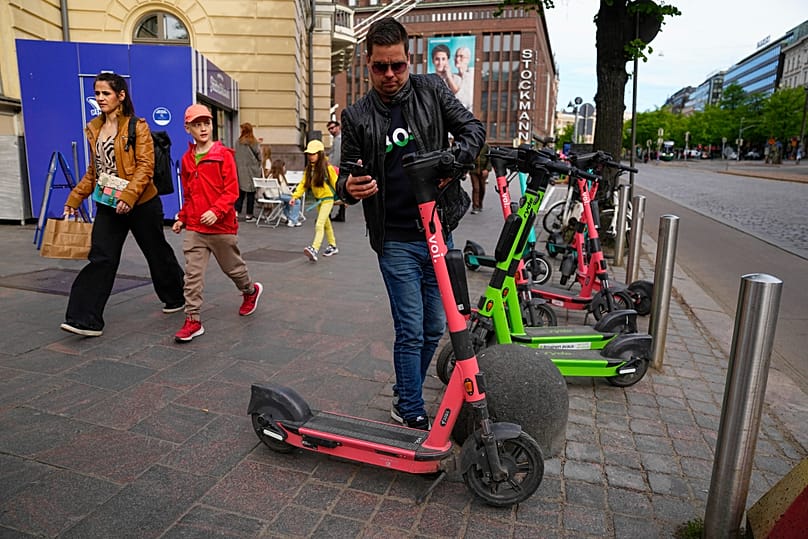
Particular emphasis is being placed on the centre of the capital Athens, where the use of electric scooters is especially widespread. At the same time, according to traffic police, there have been several complaints about scooters being abandoned on pavements, reducing available space for pedestrians.

3,700 offences in more than 6,000 checks

Data from the Attica Traffic Directorate illustrate the scale of the problem.

In the first eight months of 2026, a total of 6,127 checks were carried out on electric scooter users and 3,700 offences were recorded.

Of these, 1,844 concerned rental scooters while around 1,800 cases concerned privately owned ones.

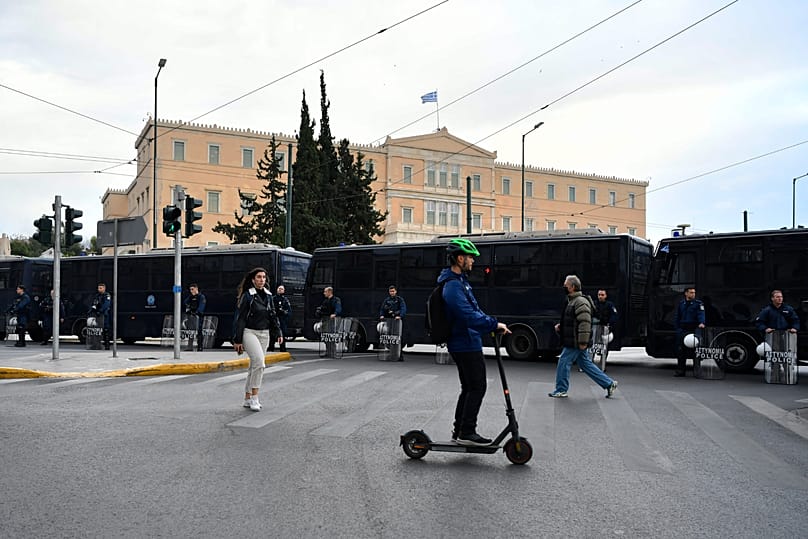
A man on a scooter in front of Parliament in Athens, 17 November, 2022 AP Photo

The vast majority of offenders were adults: 3,544 people. However, 156 underage offenders were also recorded, 20 of them aged between 12 and 15 and 136 older than 15.

The most frequent offences relate to riding without a protective helmet and excessive speed. There are also cases of electric scooters being used on high-speed roads and running red lights.

56 road accidents in eight months

The figures on accidents are even more worrying. In the first eight months of the year, 56 road accidents involving an electric scooter were recorded in Attica.

Three people were seriously injured and a further 53 suffered minor injuries.

The two recent incidents involving minors have brought the issue of enforcing the rules, especially age limits for users, back to the fore.

Greek legislation has already been tightened. The use of electric scooters is prohibited for people under 17, an insurance requirement has been introduced and stricter penalties are provided for riding them on roads where the speed limit exceeds 50 kilometres per hour.

Fines are also foreseen for businesses that sell, rent or supply electric scooters to people under 17.

Despite the stricter framework, however, the situation on the streets suggests that enforcing it remains a challenge.

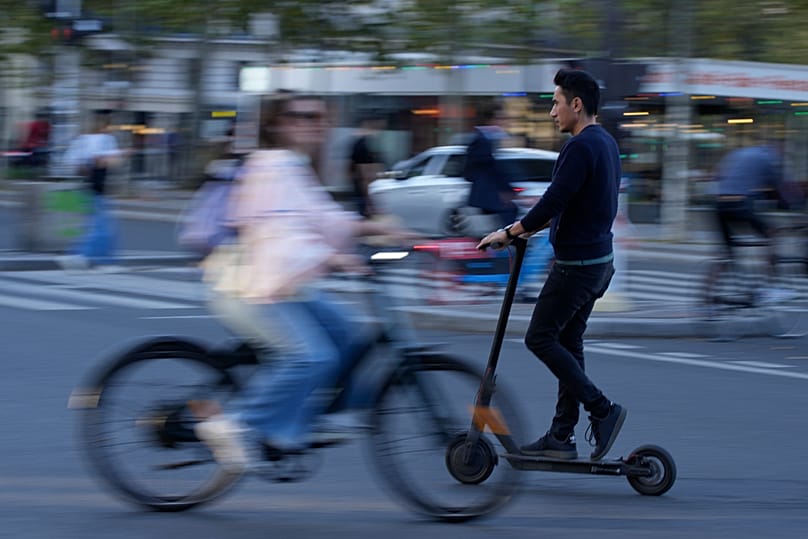
A man riding an electric scooter in Paris, 10 October, 2023 AP Photo

Europe sets limits on electric scooters

The debate is not confined to Greece. The spread of electric scooters as a means of micromobility has forced many European countries to seek a balance between alternative forms of transport, road safety and the protection of pedestrians.

The most radical example is Paris. Since September 2023, the French capital has banned dockless rental electric scooters, following a vote in which 89% of participants backed their abolition. The three companies operating in the city at the time were ordered to remove their vehicles.

Restrictions in Paris became even stricter in August 2026. Wearing a helmet and reflective equipment is now compulsory for anyone using an electric scooter on the city's public roads and the fine for not wearing a helmet is €135. The minimum age is 14 and the maximum permitted speed is 25 kilometres per hour.

Madrid has taken a similar path. In 2024 the city council revoked the licences of the three electric scooter rental firms operating in the Spanish capital and stated that it would not issue new ones.

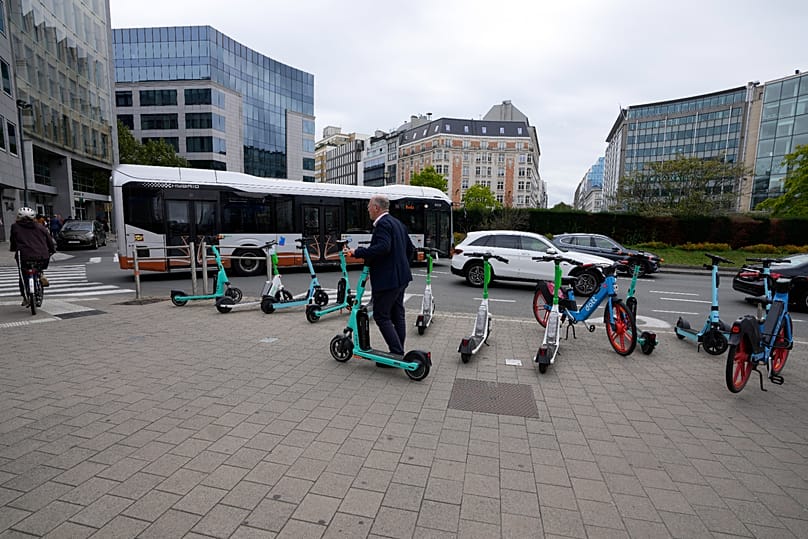
A man hires an electric scooter on Shuman Circle in the European Quarter of Brussels, 20 September, 2023 AP Photo


Among the reasons it cited were gaps in insurance cover and the failure to implement technology that would prevent the vehicles from being used or parked in prohibited areas.

In Brussels, the regional government decided on a complete ban on shared electric scooters from 1 January 2027. The licences of the existing companies expire at the end of 2026 and will not be renewed.

The decision was taken after a significant rise in accidents: in 2025, 666 injuries were recorded in incidents involving electric scooters in the Brussels Region, an increase of 26% compared with the previous year.

Authorities also point to the problems abandoned scooters cause for pedestrians, as well as their use in criminal activities.

Helmets, insurance and age limits

Italy has chosen a different approach, tightening the rules for the vehicles themselves and their riders.

Italian law now requires helmets to be worn, a specific identification mark for each electric scooter and compulsory third-party liability insurance. The insurance requirements came into force in 2026.

A man plays the piano in the street as a couple on an electric scooter ride by in downtown Madrid, 14 October, 2022 AP Photo

In Finland, since June 2025 there has been a minimum age of 15 for using most electric scooters. It is also forbidden to hand such a vehicle to a child under 15. At the same time, an alcohol limit of 0.5% was introduced and the police were given the power to carry out breathalyser tests and checks for narcotic substances on users.

In Hungary, compulsory insurance has already been extended to certain categories of electric scooters, depending on their weight and maximum speed.

In Germany, the new framework tightens the liability of electric scooter rental companies, such as Lime and Bolt, in the event of an accident.

The aim is to make it easier to compensate victims even when the rider cannot be identified, while companies may also be held liable for accidents caused by abandoned scooters left on pavements.

The figures are telling: rental scooters made up around 20% of insured electric scooters in 2023, but were linked to about 40% of related compensation claims.

A man parks an electric scooter in a street in Helsinki, 29 May, 2023 AP Photo

A stricter framework is also being promoted in Cyprus, where the minimum age for using an electric scooter has been raised from 14 to 17.

At the same time, a decree is out for public consultation that would allow electric scooters to be impounded for 30 to 90 days in the case of serious offences, such as riding by people under 17, using them on roads where they are banned or exceeding the limit of 25 kilometres per hour.

The common denominator is the attempt to address problems that have emerged alongside the rapid spread of micromobility: road accidents, use by children, riding on unsuitable roads and pavements and the uncontrolled parking of rental vehicles.