Trump, Nukes, AI, and Civilizational Suicide
The man who calls an existential threat nothing but a “hoax,” proves himself a maniac—which makes us sitting ducks.Common Dreams
As human beings we have always been sitting ducks to extinction’s cosmic whims. We are a few astronomical units away from a life-ending meteor or comet strike, the kind that wiped out the dinosaurs after they were their own animal kingdom for a couple of hundred million years. Nothing we can do about that.
For the brief time human beings have roamed the earth–less than five seconds if earth’s history were a 24-hour clock–we’ve shown nearly equal aptitude and enthusiasm for reproducing, and for suicide. Aptitude for reproduction is nothing special. As Cole Porter put it, birds, bees and even fleas do it. But you have to be human to know suicide, by which I mean the act of engaging in knowing self-destruction, as most wars of recorded and (easy to guess) unrecorded history of the last 100,000 years have been.
Those mass suicides have ended tribes, empires and civilizations, but so far not humanity itself. It is only since 1945 that we’ve acquired that skill. A global nuclear war today would end life on the planet, which would become “a republic of insects and grass,” as Jonathan Schell, the Cole Porter of nukes, put it in The Fate of the Earth (1982).
There’s a cynical glibness to how the anxieties are being dismissed as just the latest chicken-little scenario.
Nuclear war was the top public concern of 1985, even ahead of unemployment, which averaged above 6 percent all year. We worried, we debated, and to Gorbachev’s and Reagan’s credit, in that order, we got a start on arms control deals that improved with time, at least until Obama, Trump and Putin decided to bring us back near the brink, where we are now: the Bulletin of the Atomic Scientists’ famous Doomsday Clock is at 85 seconds to midnight, “the closest the Clock has ever been to midnight in its history.” Almost half of Americans think a nuclear war is likely in the coming decade, though they don’t seem to be too concerned about it, as if it were something they might still get to watch on TV: This year’s list of top concerns doesn’t even include nukes.
Since the 19th century we’d been developing a new method of global suicide, only we didn’t know it until June 23, 1988, when NASA’s James Hansen testified to Congress that “the evidence is pretty strong that the greenhouse effect is here.” The implication was that global warming was a threat, but not yet a life-ending threat. Hansen and other panelists before the Senate Energy and Natural Resources Committee happened to speak on a day when temperatures in the Washington, D.C. area neared 100. He predicted that 1988 would prove to be the warmest year on record. It was, though the record was short-lived, as have near-annual new records since. The panel said the world had, with reasonable and prudent policies, time to respond.
It didn’t. For decades the world has been aiming to limit warming to 1.5 Celsius (2.5 Fahrenheit), above pre-industrial levels, the threshold climate accords had said we cannot safely cross. We will overshoot the target by the end of the decade. That’s not bad news just for a few Pacific islanders, but for places like Flagler Beach as seas continue to rise: that extra 10 feet the designers added to the new pier opening in a few months may not look so high in a few decades.
We’ve known since 1988 that warming is an existential threat to humanity. It is now our third means of civilizational suicide. As with wars and nukes, it’s still controllable. The solution has always been in our hands.
We now have yet another existential threat to humanity, and this one, like meteors, may soon be out of our control: artificial intelligence. Unlike meteors, the chances of extinction are not near zero. Anthropic’s Evan Hubinger warns there is a greater than 10% chance AI could kill all humans within the next ten years if unregulated. You don’t have to be a genius to understand how dangerous and already out of control your peppy AI bots are. If you use anything like Gemini or ChatGPT, you know that they hallucinate and fabricate, they mislead, they get an attitude, and they double down to hide their mistakes. Every day we’re learning of dangerous AI hacking their human creators never anticipated. Let’s hope they don’t know their way to the nuclear codes.
There’s a cynical glibness to how the anxieties are being dismissed as just the latest chicken-little scenario. I was surprised to hear even my usually more prudent colleague Brian McMillan claiming on the radio Friday that he “can’t tell whether that’s Y2K-scare level or not,” and calling fears an “extrapolation.” I don’t know how a reportedly informed journalist can make that analysis when Anthropic CEO Dario Amodei last week called for a pause in the technology’s development, as did OpenAI’s Sam Altman, SpaceX’s Elon Musk, Google DeepMind’s Demis Hassabis.
Every day we’re learning of dangerous AI hacking their human creators never anticipated. Let’s hope they don’t know their way to the nuclear codes.
These men hate each other. They all agree that differences must be set aside to build guardrails–on their business. I don’t know that you can point to an instance in American history when the chief executives of their own companies called on regulatory guardrails about their own product, when you could so easily “extrapolate,” to use Brian’s word, from their fears that they don’t trust their own product. Nor do they trust each other to singly address the crisis, knowing what they know of their product and of themselves.
As a New York Times report explained it, “A.I. leaders are girding themselves for a day when an A.I. system can rely on itself to grow more advanced rather than requiring the aid of human researchers. This dynamic, which computer scientists call ‘recursive self improvement,’ is what some top A.I. developers believe may lead to the software spinning out of their control.”
The technology is new. The existential crisis is not. Oppenheimer, Szilard, Bohr, Einstein and many other scientists involved or not in the Manhattan Project that developed the first atom bombs campaigned for guardrails about what they’d wrought, but the company they were working for (Einstein wasn’t) was the American government, and their audience were the American and Soviet public–similar to the AI industry’s audience now.
As a matter of self-defense, AI is the most important scientific, ethical and moral priority of the day. We can leave the ethics and morality of it to philosophers, theologians and academics. The science is our era’s Manhattan Project. As with the Manhattan Project, the only unifying and resource-ready force to build and enforce guardrails and draft other countries to do likewise is not Anthropic or Space X. It is government, guided by reason and the better angels of our history.
Of course I don’t know what the solution is. I don’t think the AI industry knows. Not yet, anyway. This is a collective effort that requires the pooling of unimaginable thought and resources. But we have guides, we have principles.
“Even if the universe should crush him, man would still be nobler than his destroyer because he knows that he dies and he knows the advantage which the universe has over him,” Pascal wrote four centuries ago. “The universe does not know these things.” Substitute “AI” for the “universe,” and Pascal was onto something: “All our dignity, then, consists in thought. By thought we must raise ourselves, he wrote. ”Let us labor, then, to think well: that is the principle of morality.“
We don’t have a solution. But we know the essentials: we know how to get there. The rest is just thought, it’s just raising ourselves.
Instead, we are once again being debased. Donald Trump and his congressional harem now call the AI crisis a hoax. We knew they were immoral. We refused to know they would be suicidal. To his credit, Trump once fast-tracked the Covid vaccine. He has it in him, and could do with AI what he did with the vaccine, at warp speed. Instead, he is slow-walking us to a potential catastrophe as uncontrollable as a nuclear weapon’s chain reaction.
He is our dinosaur in chief, and we’re all sitting ducks.
Our work is licensed under Creative Commons (CC BY-NC-ND 3.0). Feel free to republish and share widely.
Pierre Tristam
Pierre Tristam is a journalist, writer, editor and lecturer. He is currently the editor and publisher of FlaglerLive.com, a non-profit news site in Florida. A native of Beirut, Lebanon, who became an American citizen in 1986, Pierre is one of the United States' only Arab Americans with a regular current affairs column in a mainstream, metropolitan newspaper.
Full Bio >
Amnesty Slams UEFA for Allowing Israel in Nations League Despite ‘Occupation, Apartheid, and Genocide’
“The beautiful game should bring people together, not rubber-stamp apartheid.”
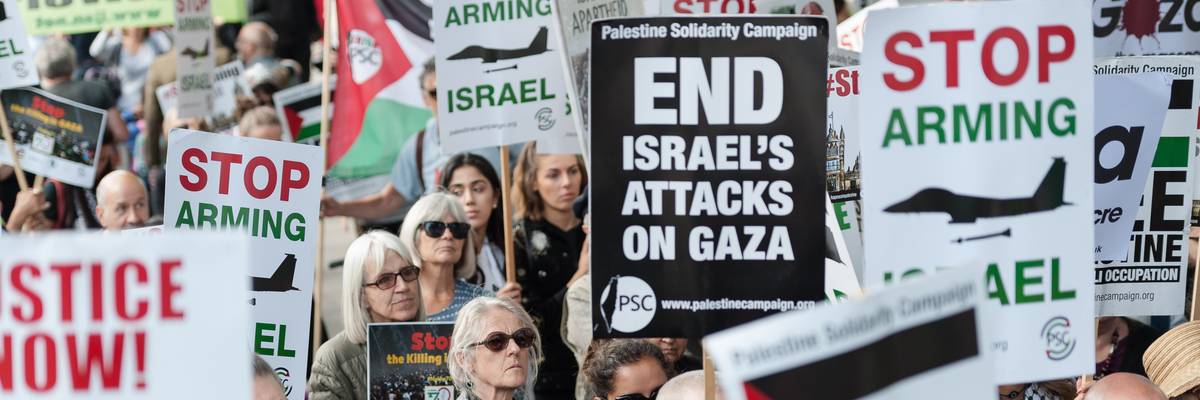
Several hundred people protest outside Downing Street in central London against Israel’s military response to demonstrations in Gaza over the blockade of the strip.
(Photo by Wiktor Szymanowicz/Barcroft Media via Getty Images)
Brad Reed
Sep 22, 2026
COMMON DREAMS
Human rights group Amnesty International on Tuesday slammed the Union of European Football Associations for allowing the Israel men’s team to participate in upcoming Nations League matches despite the Israeli government’s continued systemic human rights abuses against Palestinians.
Steve Cockburn, Amnesty International’s regional director for Europe, called Israel’s participation in the UEFA games “unconscionable,” citing “clear evidence that Israel’s football association continues to support illegal settlements.”
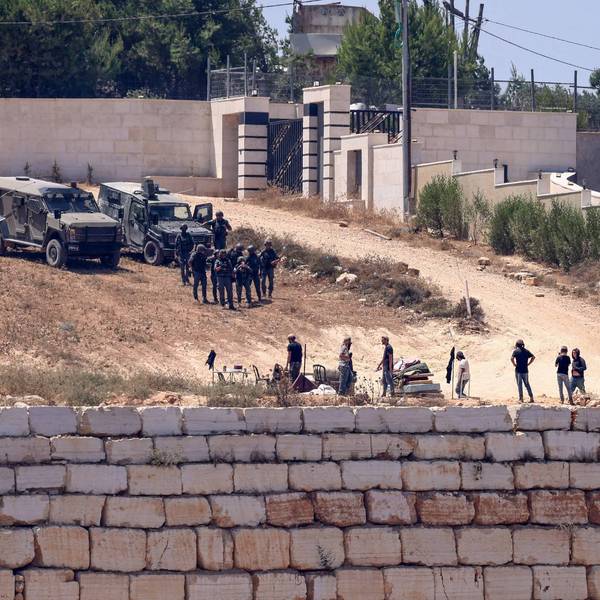
Amnesty Warns Israel Is ‘Brazenly Expanding Its Annexation Agenda’ in Occupied West Bank
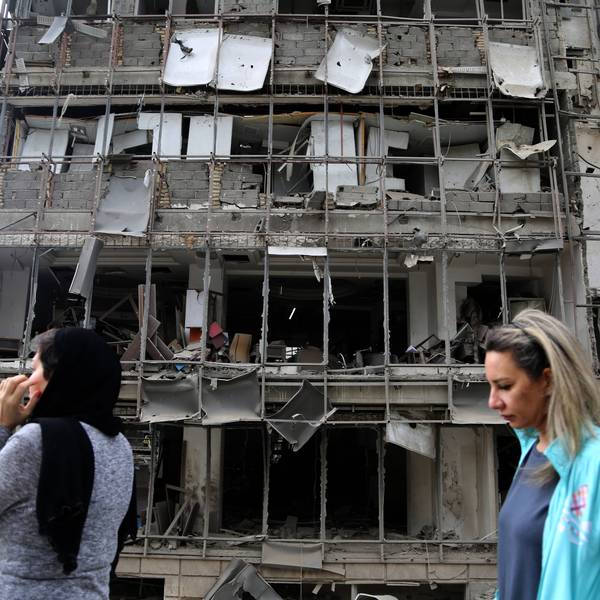
Amnesty Says US-Israeli Attacks With Indiscriminate Weapons in Tehran May Have Been War Crimes
Cockburn said that UEFA should have long ago suspended the Israel Football Association (IFA) over its “refusal to exclude clubs based in illegal settlements” in the occupied Palestinian territories.
“As the money keeps flowing from FIFA and UEFA to the IFA,” Cockburn said, “they risk contributing to the sustainability of illegal settlements and of Israel’s unlawful occupation... and therefore Israel’s violations of Palestinians’ human rights.”
“Sport should never be used as a public relations spectacle for states committing atrocities,” Cockburn added. “As the Israel team travels to Europe, Palestinian families are being displaced and dispossessed, their land stolen, their olive trees uprooted, and their histories erased by settlers with the support of the Israeli military. The beautiful game should bring people together, not rubber-stamp apartheid.”
As explained in a Tuesday report from BBC, Israeli’s inclusion in the Nations League has been a source of controversy for months.
Delegates for the Football Association of Ireland (FAI), which faced signifiant public pressure to boycott matches between Ireland and Israel, recently voted in favor of playing the matches, although roughly 30% of delegates voted in favor of a boycott.
Regardless, more than 160 Irish athletes on Monday signed an open letter organized by Irish Sport for Palestine urging FAI to reconsider its vote in favor of the matches.
Heimer Hallgrimsson, manager of the Irish men’s team, tried to justify the matches by arguing that Ireland was playing against Israel, which meant it was really playing “against genocide.”
The IFA shot back at Hallgrimsson, accusing him of “ignorance, hypocrisy, and stupidity.”
The BBC also noted that the two scheduled matches between Israel and Ireland will be played on neutral cites in Hungary and Serbia “against a backdrop of ongoing and increasingly volatile disagreement between the two countries about Israel’s military offensive in Gaza.”
Cockburn praised efforts by sports fans to keep pressure on the UEFA to “demand accountability, justice and, fair play.”
“When rules are broken, when occupation, apartheid, and genocide are ongoing,” he emphasized, “we cannot look the other way.”
The Urgency of Recognizing the Ansar Allah Government in YemenRecognition of Ansar Allah as the legitimate interim or transitional government of Yemen would be an important step to align the international response with the reality on the ground and with the Yemeni people’s desperate need for peace and self-determination.
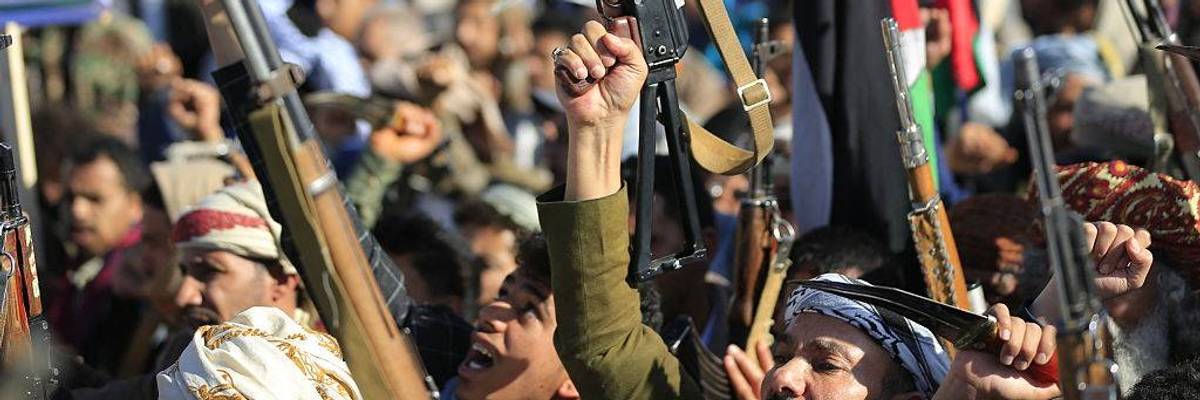
Members of Ansar Allah brandish their weapons as they rally in solidarity with Iran and Lebanon, amid the US-Israeli war with Iran, in the Yemeni capital Sana’a on March 27, 2026.
(Photo by Mohammed Huawis / AFP via Getty Images)
Common Dreams
The Trump administration came perilously close to launching another bombing campaign against Yemen this weekend. According to a September 20 New York Times report, US commanders had approved their targets, American troops were loading bombs onto warplanes, and an attack on Yemen’s Ansar Allah forces was about to begin when President Donald Trump abruptly reversed course.
For two weeks, Saudi Crown Prince Mohammed bin Salman had been pleading with Trump to intervene as Ansar Allah (Houthi) forces swept through Saudi-backed forces’ positions along Yemen’s Red Sea coast. Trump initially resisted, but after another urgent call from the Saudi crown prince, he instructed the Pentagon to prepare for airstrikes. By Sunday, he had changed his mind again, at least temporarily.
The New York Times reported that many of Trump’s closest advisers opposed joining the Saudi war. US military officials also questioned whether renewed bombing would accomplish anything, given that Ansar Allah had withstood more than 1,000 US strikes during a seven-week campaign in 2025. That operation consumed roughly $1 billion in munitions and other military resources in its first month alone.
It is simply wrong, legally and morally, to claim that a collection of Ansar Allah’s opponents holed up in Aden and hotels in Saudi Arabia are the legitimate government of Yemen, and that the government that has run the country and defended it against a decade of outside aggression is illegitimate.
Meanwhile, Ansar Allah has assured Washington that it does not intend to attack American ships. US officials recently met Ansar Allah representatives in Oman in an effort to preserve that agreement. A new American bombing campaign could undo those diplomatic gains and threaten shipping through the Bab al-Mandab Strait just as the Strait of Hormuz remains severely disrupted.
The crisis spawned by the US war on Iran spread to this dangerous new front on July 13, when the 2022 ceasefire between Saudi Arabia and the de facto Ansar Allah government in Yemen was shattered by a Saudi missile strike on the airport in Sana’a, Yemen’s capital.
The Saudi attack was designed to prevent the landing of an Iranian Mahan Air civilian plane carrying passengers returning from the funeral of Iran’s assassinated Supreme Leader Ali Khamenei in Tehran. The flight was forced to divert to Hodeidah, 140 miles away on the Red Sea coast.
Yemen’s Ansar Allah forces retaliated by attacking the Saudi airport at Abha, near the Yemeni border, with missiles and drones. Since then, hostilities have escalated dramatically.
Ansar Allah forces have captured the strategic port city of Mocha and the remainder of the Red Sea coast from Saudi-backed forces. They are still fighting to consolidate control of the Kahbub mountains that overlook the approaches to the Bab el-Mandeb Strait between the Red Sea and the Gulf of Aden, but they are already preventing Saudi ships from sailing through the Red Sea.
The Saudis have responded with hundreds of air strikes on Yemen. Ansar Allah, in turn, has attacked Saudi airbases and oil infrastructure with missiles and drones. Either the Yemenis or their allies in Iraq struck pumping stations on Saudi Arabia’s East-West Pipeline, which was the Saudis’ best alternative to the Strait of Hormuz as a route for their oil exports, shutting down the pumping stations, and full operation of the pipeline, for at least a month.
The United States has dispatched an estimated 200 additional troops to Saudi Arabia to provide intelligence and targeting expertise for Saudi airstrikes, using programs like Palantir’s Maven AI system, which the US and Israel also use in Gaza, and which US officials now admit was used in the massacre at the Minab girls’ school in Iran in February.
The US State Department has also approved a $5 billion weapons sale that would provide Saudi Arabia with 5,000 2,000-pound bombs and 5,000 500-pound bombs, along with JDAM guidance kits and fuses. This comes in addition to a planned $24 billion sale of 48 F-35 fighter jets to the Saudis and follows record US arms sales to Saudi Arabia for $110 billion in 2018 and $142 billion in 2025.
Congress has not yet consented to these latest Saudi arms sales that can only mean more death and devastation for the people of Yemen. Sen. Ed Markey (D-Mass.), backed by Sens. Jeff Merkley (D-Ore.) and Bernie Sanders (I-Vt.), has filed a Joint Resolution of Disapproval that can stop the sale if it receives enough votes. Here’s a link to ask your senators to support it.
US support for Saudi Arabia’s war on Yemen is based on US recognition of the Saudi-based Presidential Leadership Council (PLC), chaired by Rashad al-Alimi, as the government of Yemen. The council was created in 2022 after former Yemeni president Abdrabbuh Mansour Hadi resigned, following the United Nations-brokered truce.
But the renewed war raises a fundamental question: Why is the United States still treating a Saudi-based council as the legitimate government of Yemen, while refusing to recognize the government that actually controls the capital and governs most of the country’s population?
Since 2015, international recognition of Saudi-backed governments-in-exile has served to justify a decade of war and economic strangulation against 80% of Yemenis who live in the area governed by Ansar Allah, including Sana’a, the capital.
Between 2015 and 2022, with full US support, Saudi Arabia and its allies dropped over 69,000 bombs and missiles on Yemen, including thousands on civilian targets, killing at least 8,983 civilians, according to Iona Craig’s Yemen Data Project. By the end of 2021, the UN estimated that the war, blockade, and resulting humanitarian crisis had caused 377,000 deaths.
So how did Yemen end up in such a frightful predicament? How can the United States, other countries, and even the UN continue to recognize exile governments that have supported bombarding and starving their own people for over a decade?
The roots lie in Yemen’s failed political transition after the Arab Spring. In 2011, a mostly peaceful uprising brought down Yemen’s corrupt, repressive, US-backed president, Ali Abdullah Saleh. His vice president, Hadi, was appointed to a two-year term as interim president in 2012. Ansar Allah, based in Saada in north Yemen, played a leading role in the uprising against Saleh and participated in the National Dialogue that was supposed to guide the transition.
But Hadi failed to organize the planned election by February 2014. His term was extended for another year, but the transition again stalled. That’s when Ansar Allah moved south from its base in Saada, combining popular protests over fuel prices and the stalled political transition with an armed advance toward Sana’a. Its fighters entered the capital in September 2014, defeating government forces. Ansar Allah was subsequently granted seats in a UN-approved interim government under President Hadi.
But the power-sharing arrangement quickly broke down. Tensions between Ansar Allah and Hadi’s government escalated over the drafting of a new constitution and the division of political power. In January 2015, Ansar Allah seized the presidential palace, and Hadi resigned and retired to his home in Aden. Ansar Allah formed a ruling council to fill the vacuum.
However, a month later, with support from Saudi Arabia, Hadi rescinded his resignation and tried to reclaim the presidency. A few days later, he fled from Aden to Riyadh, the capital of Saudi Arabia, and, in March, 2015, the Saudis attacked Yemen, with US support. This led to a devastating seven-year-long bombing campaign, with other Arab countries sometimesproviding warplanes and ground forces. But the Saudis failed to restore Hadi to power or to capture the most populated parts of the country.
Both Hadi’s claim to the presidency and Saudi Arabia’s military intervention on his behalf lacked legitimacy from the outset. The Saudi assault on Yemen was not approved by the UN Security Council, making it a violation of the UN Charter’s prohibition on the use of military force.
As the Saudi-led, US-backed war raged on, splits appeared in both the anti-Houthi forces and the countries backing them. The UAE backed a separatist Southern Transitional Council (STC) in Aden, whose goal was an independent South Yemen.
The UAE finally withdrew its forces at the end of 2025, and the Saudi-based PLC defeated the STC in Aden. But Saudi-funded mercenaries, mostly from Sudan, and eight disparate Yemeni groups that still hold territory in the south and east, had neither the strength nor the unity to resist Ansar Allah’s offensive along the Red Sea coast.
Ansar Allah, by contrast, has grown stronger. Skilled Yemeni engineers have learned to manufacture missiles and drones, using parts imported mainly from China, and its forces have fought successful wars to defend Yemen from its enemies and exert control over shipping in the Red Sea, despite heavy US bombing campaigns in 2024 under Joe Biden and 2025 under Trump.
They have also gained global support for their defense of Palestinians when they launched missiles and drones at Israel and disrupted Red Sea shipping during Israel’s genocide in Gaza.
Ansar Allah is now a well-established, and seemingly popular, nationalist government. This reality contradicts the Western assertion that they are simply an Iranian proxy.
In fact, Ansar Allah is deeply rooted in Yemen itself, emerging from the Zaydi religious and ethnic group of northern Yemen whose Imams ruled Yemen for centuries.
Zaydis currently make up between 35% and 45% of Yemen’s population, and have historically co-existed peacefully with their Sunni neighbors. It is simply wrong, legally and morally, to claim that a collection of Ansar Allah’s opponents holed up in Aden and hotels in Saudi Arabia are the legitimate government of Yemen, and that the government that has run the country and defended it against a decade of outside aggression is illegitimate.
As the UN General Assembly meets in New York this week, world leaders have a chance to address this injustice and its catastrophic impact on the long-suffering people of Yemen. China and other countries have long called for a political settlement. In 2018, 63 US Senators voted to withdraw US support for the war after the Saudis murdered journalist Jamal Khashoggi. And in 2022, the UN successfully brokered a ceasefire that prevented large-scale hostilities for several years.
UN officials and world leaders should use this occasion to work for a diplomatic solution.
Recognition of Ansar Allah as the legitimate interim or transitional government of Yemen would be an important step to align the international response with the reality on the ground and with the Yemeni people’s desperate need for peace and self-determination.
At the very least, it is high time for the United States, the United Nations, and the media to stop referring to a self-appointed gang of Saudi collaborators as Yemen’s “internationally recognized government.”
Our work is licensed under Creative Commons (CC BY-NC-ND 3.0). Feel free to republish and share widely.
Medea Benjamin
Medea Benjamin is co-founder of Global Exchange and CODEPINK: Women for Peace. She is the co-author, with Nicolas J.S. Davies, of War in Ukraine: Making Sense of a Senseless Conflict, available from OR Books in November 2022. Other books include, "Inside Iran: The Real History and Politics of the Islamic Republic of Iran" (2018); "Kingdom of the Unjust: Behind the U.S.-Saudi Connection" (2016); "Drone Warfare: Killing by Remote Control" (2013); "Don't Be Afraid Gringo: A Honduran Woman Speaks from the Heart" (1989), and (with Jodie Evans) "Stop the Next War Now" (2005).
Full Bio >
Nicolas J.S. Davies
Nicolas J. S. Davies is an independent journalist and a researcher with CODEPINK. He is the co-author, with Medea Benjamin, of War in Ukraine: Making Sense of a Senseless Conflict, available from OR Books in November 2022, and the author of Blood On Our Hands: the American Invasion and Destruction of Iraq.
Full Bio >
Majority of Democratic Voters Want to Prosecute Both Biden and Trump Administration Officials Over GazaThe vast majority of Democratic voters believe Israel has committed a genocide in Gaza and want its supporters in both parties to face consequences.
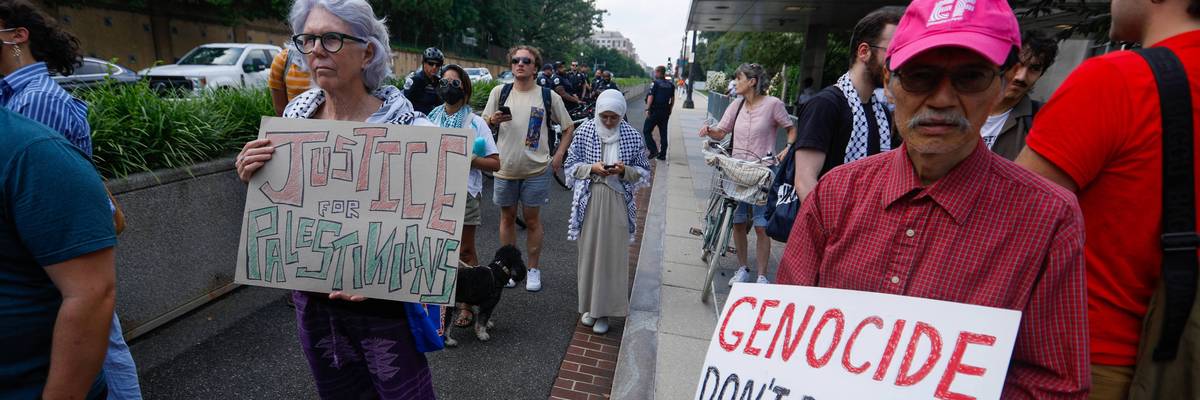
Protesters gathered in front of the US State Department demanding an immediate ceasefire in Gaza, an end to the US-backed Israeli military operations, and unrestricted humanitarian aid access on July 22, 2025, in Washington, DC.
(Photo by Yasin Ozturk/Anadolu via Getty Images)
Stephen Prager
Sep 22, 2026
COMMON DREAMS
The majority of Democratic voters believe Israel has committed genocide in Gaza for the past three years. And they want the American politicians in both parties who supported it to pay.
In a poll released on Monday by the Center for Strategic Politics and commissioned by the magazine Liberal Currents, 683 Democratic voters were asked whether the next Democratic administration should “pursue criminal prosecution of members of the Trump and Biden administrations for actions taken related to Israel’s genocide in Gaza.”
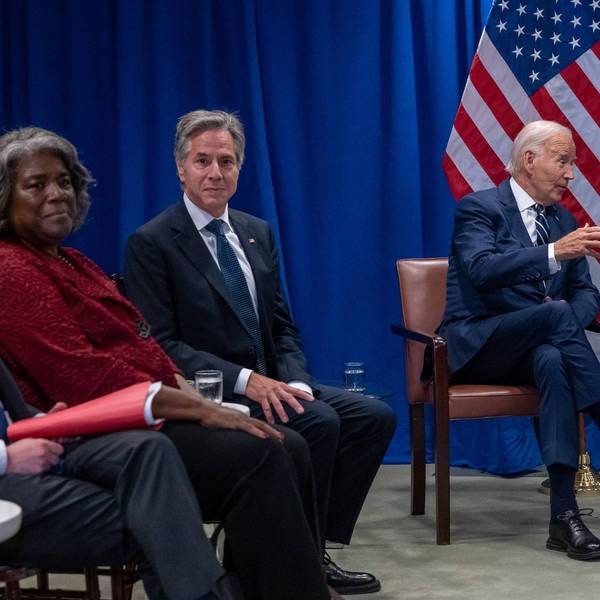
‘Drop the Genocide 20’: Activists Launch Campaign to Exclude Officials Behind Biden Gaza Policy From Democratic Politics
More than half, 57%, of the Democrats surveyed answered “yes,” while only 22% answered “no” and another 22% said they “don’t know.”
Self-described “socialists” and “progressives” were most bullish on Gaza-focused prosecutions. But so were 52% of “liberals” and even 48% of Democrats who called themselves “moderate” or “conservative.”
It is one of several questions in the poll about a hypothetical Democratic administration prosecuting its predecessors over policies considered deadly and destructive.
About two-thirds, 66%, said they wanted to see Trump administration officials prosecuted for actions taken during its aggressive war with Iran, which has led to the deaths of more than 1,700 civilians and wrought economic turmoil.
Nearly three-quarters, 72%, believed Trump officials should face similar accountability for their campaign of extrajudicial strikes on boats in the Caribbean and Pacific, which have killed more than 234 people in what a top United Nations official recently said may constitute “crimes against humanity.”
And more than three-quarters said they wanted to see Trump officials face legal penalties for actions committed by US Immigration and Customs Enforcement (ICE) and Customs and Border Protection (CBP), which have waged a violent mass deportation campaign that has entailed numerous documented due process violations, instances of racial profiling, and several shootings of immigrants and US citizens without clear justification.
The question about Gaza is the only one in the survey in which Democrats were asked about the prospect of prosecuting members of their own party as well as Republicans. And while fewer Democrats ultimately answered yes, it indicates that their ire toward the American politicians supporting the genocide transcends party loyalty.
The poll results come as some activists pursue accountability for the Biden administration in other ways. Last week, organizers launched a campaign to pressure universities and other prominent institutions to cut ties with what they called the “Genocide 20.”
These are officials like former Secretary of State Tony Blinken and former National Security Adviser Jake Sullivan who crafted and defended the administration’s policy of unrestricted military aid for Israel despite mounting evidence that it was killing scores of civilians and enacting a campaign of starvation against the people of Gaza.
The United States provided Israel with at least $17.9 billion in military assistance between October 7, 2023, and the end of former President Joe Biden’s term in January 2025, according to Brown University’s Costs of War project. During that period, more than 47,000 Palestinians were confirmed killed, according to the Gaza Ministry of Health.
Since President Donald Trump returned to office, the US has continued to provide Israel with billions of dollars in military assistance, including $3.8 billion in regular annual military aid, while the Trump administration has approved billions more in arms sales and expedited weapons deliveries. The death toll has risen to nearly 74,000, according to official figures, but independent experts have suggested this may be a significant undercount.
According to Monday’s poll, more than 4 in 5 Democrats said that “foreign policy (including Israel and Iran)” is important to them in deciding which candidates to support, compared with just 4% who said it is not.
Foreign policy has been a critical dividing line in several recent Democratic primaries, in which voters have revolted against candidates backed by the American Israel Public Affairs Committee (AIPAC).
This includes Democratic Michigan Congresswoman Haley Stevens, who was defeated by Abdul El-Sayed in a contest for the US Senate despite her more than $30 million in backing from AIPAC, which helped to turn it into the most expensive Democratic primary ever.
AIPAC-backed House candidates have similarly suffered high-profile defeats at the hands of progressives calling to cut off US funding for Israel. Some of the victors include Chris Rabb in Pennsylvania, Brad Lander and Darializa Avila Chevalier in New York, and Aisha Wahab, who won a special election in California.
THE GRIFT
‘It Should Be Illegal’: Trump’s 1,156 July Stock Trades Involved AI, Big Oil, Weapons-Makers, and More
By failing to report some transactions within 45 days, the president appears to have violated a key federal law, again.
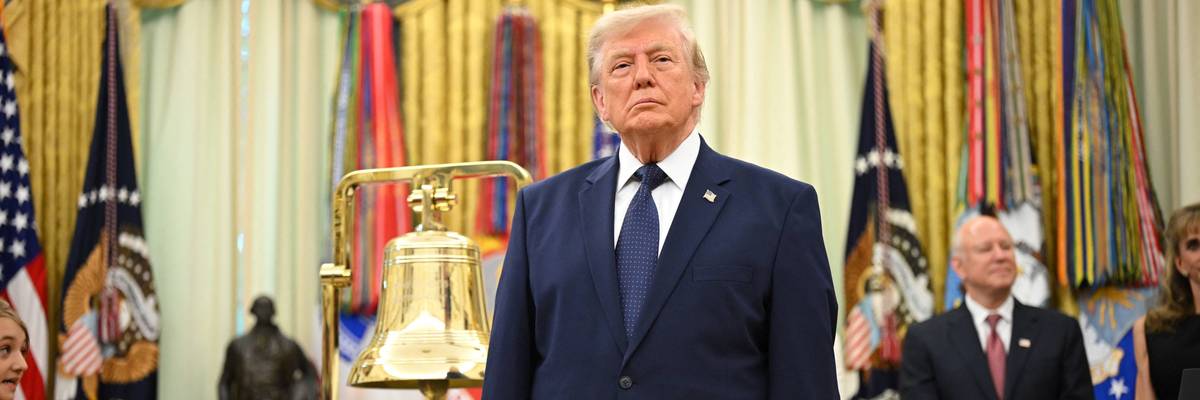
US President Donald Trump stands next to a bell before ringing it to open the New York Stock Exchange ahead of the launch of tax-deferred investment accounts for children in the Oval Office of the White House in Washington, DC, on July 6, 2026.
(Photo by Mandel Ngan/AFP via Getty Images)
Jessica Corbett
Sep 22, 2026
COMMON DREAMS
Donald Trump has been repeatedly ripped as “the most openly corrupt president in American history” by a range of critics, and the Republican faced fresh criticism on Tuesday after disclosing more than 1,100 securities transactions from July.
“The 1,156 purchases and sales totaled between roughly $79 million and $270 million,” CNBC reported. “Purchases totaled at least $43.6 million, while sales came to at least $35.6 million... in what appears to be a broad reshuffling of his portfolio.”
US Sen. Elizabeth Warren (D-Mass.), who has previously sounded the alarm over Trump’s “unprecedented” trading, said on social media Tuesday that “it should be illegal for the president to trade individual stocks—period.”
As Trump continues to rail against regulations on artificial intelligence, the filing with the Office of Government Ethics shows recent transactions involving tech giants including Alphabet, Amazon, Meta, Microsoft, Nvidia, and Oracle.
The president is also waging an illegal war on Iran with no end in sight, and those who manage his portfolio made trades involving military contractors such as GE Aerospace, Lockheed Martin, Northrop Grumman, Palantir, and SpaceX.
CNBC highlighted that the Northrop Grumman sale—worth $250,001 to $500,000—occurred the same day that “Trump signed an executive order tightening supply chain requirements for defense contractors and restricting waivers for certain critical materials sourced from China and other covered countries,” though the disclosure does not include timing.
Iran has responded to Trump’s war by restricting ship traffic through the Strait of Hormuz, which has caused fuel prices to surge worldwide. The president was accused of cashing in on the crisis he has created after he disclosed June stock transactions. The new filing shows more trades in oil and gas giants, including Chevron and ExxonMobil.
The Washington Sun pointed out that “Trump also purchased up to $500,000 worth of stock in Axon Enterprise, the manufacturer of Tasers, which has done tens of millions of dollars worth of business with US Immigration and Customs Enforcemen/t and US Customs and Border Protection.”
While “Trump is ostensibly aware of the contents of his portfolio, given that he personally certified his most recent disclosure, which bears his signature,” the Sun noted, White House spokesperson Davis Ingle tried to dismiss any allegations of corruption in a statement to multiple outlets.
“President Trump’s stock and bond portfolio is independently managed by third-party financial institutions,” Ingle said. “All holdings are maintained in discretionary accounts and invested through computer-based model portfolios that automatically replicate recognized indexes, such as the Schwab 1000.”
“Neither President Trump nor any member of his family has any ability to direct, influence, or provide input regarding how the portfolio is invested or when investments are bought or sold,” he added. “All investment decisions are made entirely by independent managers. There are no conflicts of interest.”
However, as the Sun highlighted, “a number of Trump’s trades were disclosed more than 45 days after they were made—in violation of the Stop Trading on Congressional Knowledge Act, which also applies to top officials in the executive branch. It’s not the first time the president has run afoul of the stock trading law.”
Despite bipartisan support at times, congressional efforts to fully ban trading by lawmakers, their dependents, and the president and vice president have been unsuccessful.
In July, 13 Democrats in the US House of Representatives helped Republicans pass a purported congressional stock trading ban— even though the bill wouldn’t apply to Trump or Vice President JD Vance, and the GOP tacked on a voter suppression provision demanded by the president.
The Senate has not yet acted on the bill, officially called the Stop Insider Trading Act, and condemned by critics as “a Trojan horse.”
Trump’s disclosure came a week after Bloomberg reported that “Trump has traded more securities than every member of Congress combined since he returned to office” last year. From January 2025 to June 2026, lawmakers reported a collective 22,200 transactions while the president made nearly 28,700.
Sharing the reporting on social media last week, House Democrats wrote: “The American people deserve a president that serves their interests, not his own wallet.”
Annual financial disclosures released this summer show that Trump pocketed at least $2.2 billion—over half of it from his family’s cryptocurrency grift—during his first year back in the White House.
Following that revelation, Warren, ranking member of the Senate Banking Committee, called on the chamber to pass legislation aimed at stopping “the president, vice president, senior administration officials, members of Congress, and their families from profiting off the crypto industry,” and warned that a failure to do so “will only turbocharge Donald Trump’s brazen crypto corruption.”
Extreme Heat Caused by ‘Super El Niño’ Could Kill Over 450,000 People in Coming Months: Report“This is such a large number that it can be numbing, but it is made up of parents and children, grandparents and neighbors, people going to work, caring for families, and living their lives.”
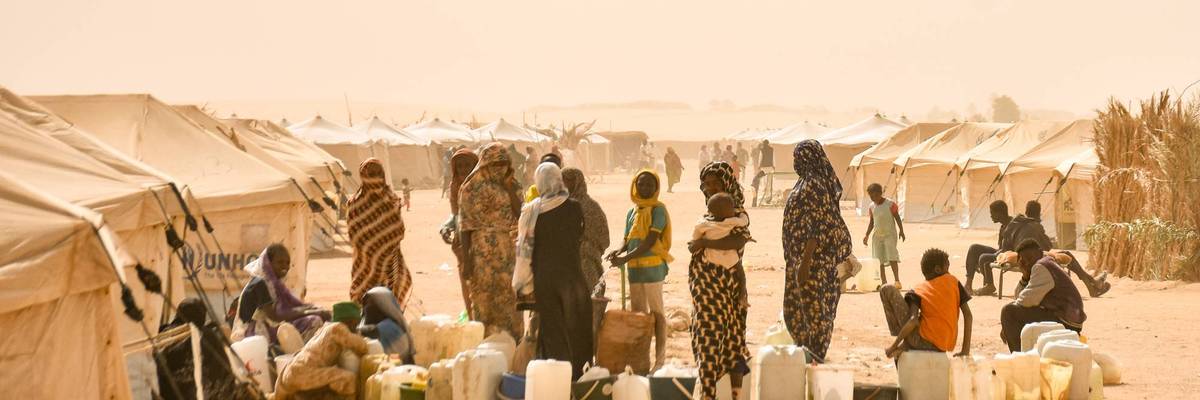
Families gather at a refugee camp in Al-Dabbah, Sudan on January 13, 2026.
(Photo by Muhammed Emin Canik/Anadolu via Getty Images)
Jake Johnson
Sep 23, 2026
COMMON DREAMS
A report published Wednesday by researchers at the University of Chicago’s Climate Impact Lab estimates that extreme heat fueled by this year’s “Super El Niño” event could kill more than 450,000 people in the coming months, in addition to deaths from drought, wildfires, and other extreme weather.
The report notes that “anomalously warm conditions” caused by the record-shattering El Niño—which refers to the warming of ocean-surface temperatures in the Pacific—“will resemble the higher temperatures that climate change is projected to deliver 20 years in the future... and will lead to 44% more extremely hot days than we would expect in a normal year.”
Climate Impact Lab researchers projected that the extreme heat will result in 451,000 more lives lost through February 2027, compared to a typical year.
“This is about 65 times larger than the 6,800 people believed to be dead or missing from the recent Nepal flash flood,” the new report observes. “With current forecasts suggesting El Niño will remain in place through spring 2027, we expect all of these numbers to grow even higher, particularly as impacts such as higher-than-average temperatures and heat-related deaths will linger into June and July.”
Nigeria is expected to see the largest number of El Niño-related deaths over roughly the next five months, at 31,400. Indonesia, Sudan, India, and Brazil will see more than 10,000 deaths each through February, according to the Climate Impact Lab.
“This is such a large number that it can be numbing, but it is made up of parents and children, grandparents and neighbors, people going to work, caring for families, and living their lives,” Michael Greenstone, a co-founder of the Climate Impact Lab, said in a statement. “This report allows decisionmakers to see exactly where emergency actions can be taken now to save tens of thousands of lives in the coming months.”
The impact lab’s report describes this year’s El Niño as a “postcard from our future,” noting that “it is bringing temperatures climate change is projected to deliver 20 years in the future.”
“Twenty years from now, once today’s extreme temperatures become the new normal,” said Tamma Carleton, faculty head of research for the Climate Impact Lab and co-author of the new report. “We don’t want to be in a constant state of emergency.”
The report was released shortly after United Nations Secretary-General António Guterres warned in his final address to the UN General Assembly in New York on Tuesday that “a supersized El Niño” is “speeding straight for humanity.”
“As tragic events have shown, impacts are arriving sooner, hitting harder, and spreading further than many anticipated,” said Guterres. “Now we face a near-certain breach of the 1.5°C limit.”
On Saturday, The Washington Post observed, the average ocean-surface temperature in a portion of the central equatorial Pacific Ocean reached 3.05°C, “the highest peak sea surface temperature anomaly on record.”
“The record anomalous reading occurred two months earlier in the year than the previous peak in November 2015 and an El Niño in 1877 that contributed to a famine that wiped out 3 to 4% of the global population,” the Post added.
‘Solar For All, Everywhere’: Global Leaders Pitch the Sun as a Solution to Climate Crisis in Open Letter
“The path forward is difficult, but the way is clear. We want solar for everyone, everywhere, before the decade is out.”

A man walks along the coast on La Jolla Shores beach near UC San Diego’s Ellen Browning Scripps Memorial Pier at sunset after a series of storms moved through the region on November 22, 2025 in San Diego, CA.
(Photo by Kevin Carter/Getty Images)
Jon Queally
Sep 23, 2026
COMMON DREAMS
As the world braces for the impacts of what’s been described as a “Godzilla El Niño” cycle—one projected to drive extreme weather events that could kill nearly half a million people in the months ahead—and heat record after heat record is shattered due to rising global temperatures, a group of global leaders published an open letter Wednesday urging people yearning for a solution to the climate crisis to look up—though reminding them to protect their eyes—to see that renewable energy remains the key to humanity turning things around.
Set to be delivered to the United Nations during this week’s meeting of the General Assembly, the open letter—which can also be endorsed by anyone who supports its demands—calls for global cooperation on “universal access” to solar power, one of the three key pillars of the renewable energy triad that also includes wind energy and battery storage.
“That clean energy trinity has broken out of its Chinese base and over the last few years expanded quickly across the planet—from Karachi to California to Cuba, solar panels are going up faster than any energy source has ever grown,” writes author and climate activist Bill McKibben, a signatory to the open letter, in a Guardian op-ed Wednesday.
“At the last possible moment, with backs to the wall, we still have our face to the sun.” —Bill McKibben
The letter speaks of “great fear” matched with “great hope” about whether humanity can or will act in time to avoid the worst impacts of a rapidly warming planet.
The letter states:
Over the last few months, we’ve seen the world set ablaze by both war and warming. From the conflict in Iran, which has claimed thousands of lives and disrupted billions more, to the series of ever worsening climate disasters, from wildfires in Europe to collapsing glaciers in Nepal, the world seems to be falling apart exactly when it needs to be coming together.
We know that these crises are connected. The oil that governments fight over is also the carbon pollution that is warming our climate. The bad air quality in Delhi, the high price of fuel in Vietnam, the cost of electricity in the United States, the terrifying floods in the Himalayas – they all connect back to fossil fuels.
Until we end that dependence, we’ll never be able to address the climate emergency and stop fighting these endless oil-soaked wars. That’s why today we are inviting the world to unite around a common cause: repowering the world with cheap, clean energy.
The signatories call on “governments, businesses, institutions and the public to work together to provide clean, affordable energy to everyone, everywhere by 2030.”
“The path forward is difficult, but the way is clear,” the letter states. “We want solar for everyone, everywhere, before the decade is out.”
As McKibben notes, the coalition behind the effort is international and diverse. The signatories to the letter, he explains,
range from the most popular active politician in the US (that would be Bernie Sanders) to the most morally grounded spokesperson of the global south (Yeb Saño of the Philippines, say, whose witness after devastating hurricanes helped produce the Paris accords). It comes from great diplomats such as Laurence Tubiana (who helped midwife those Paris agreements) and celebrities and activists such as Jane Fonda. There are leaders from the world of clean energy (Danny Kennedy, for instance, the secretary of the Global Solar Council), and stalwarts from the continents most damaged by rising temperatures (South Africa’s Kumi Naidoo, president of the Fossil Fuel Treaty Initiative). Clean energy entrepreneurs, such as Muhammad Mustafa Amjad of Renewables First in Pakistan, but also the world’s most famous rock climber, Alex Honnold, who runs his own solar non-profit.
The message of their letter, explains McKibben, “is simple, but its three words convey the solution to so many of the interlocking crises we now face: clean energy now.”
“If a resurgent movement demands action, we finally have the tools to make that demand matter – a working planet that runs mostly on sun and wind is in tantalizing reach,” he concludes. “At the last possible moment, with backs to the wall, we still have our face to the sun.”
The full text of the letter and its signatories follows:
We, the undersigned, write this letter out of great fear and great hope.
Over the last few months, we’ve seen the world set ablaze by both war and warming. From the conflict in Iran, which has claimed thousands of lives and disrupted billions more, to the series of ever-worsening climate disasters, from wildfires in Europe to collapsing glaciers in Nepal, the world seems to be falling apart exactly when it needs to be coming together.
We know that these crises are connected. The oil that governments fight over is also the carbon pollution that is warming our climate. The bad air quality in Delhi, the high price of fuel in Vietnam, the cost of electricity in the United States, the terrifying floods in the Himalayas – they all connect back to fossil fuels.
Until we end that dependence, we’ll never be able to address the climate emergency and stop fighting these endless oil-soaked wars. That’s why today we are inviting the world to unite around a common cause: repowering the world with cheap, clean energy.
We are calling on governments, businesses, institutions, and the public to work together to provide clean, affordable energy to everyone, everywhere by 2030.
From the nearly 1 billion people who still lack access to reliable electricity, to the billions more of us who pay too much for dirty fossil fuels.
We know this world is within reach.
Building clean energy is now the cheapest and fastest way to slash energy bills, reduce pollution, and provide electricity access to the places that need it most.
With cheap solar, wind and batteries, we can create huge and rapid change.
California is already using just half as much natural gas to generate electricity as it did three years ago, thanks to solar and batteries. In Pakistan, people have put up millions of solar panels in just months, relying on social media for instruction. Each month, millions more people across sub-Saharan Africa are getting electricity for the first time with home solar kits.
This energy transition is already moving quickly - but we need it to go much quicker. And so we come together to urge two steps.
First, we must build clean power for everyone. For the first time ever, we can reliably bring electricity to the 1 in 10 people on Earth living without regular access.
We ask everyone who can afford it to donate something so that others can turn the lights on for studying, cooking, and medical care - and never have to think about a gallon of diesel or gas again. It takes just $15 to give access to clean electricity for one person for a generation.
Second, we need to build clean power everywhere, and to make that happen we need to build a movement powerful and beautiful enough to force governments to take large-scale action.
Individual steps alone are not enough: too many of our leaders will resist action, until we demonstrate together how much we want them to move. We must demand that governments stop building coal, oil, and gas projects we no longer need, and start building the clean-energy systems that works - no pollution or wars required.
One important day along this path will be 20 June, as the summer solstice approaches in the Northern Hemisphere, generating the most solar power of any day on earth yet. We will celebrate that day as Sun Day, coming together to celebrate and accelerate this great shift.
The path forward is difficult, but the way is clear. We want solar for everyone, everywhere, before the decade is out.
We know that standing up to the powerful can be scary. But if there is one thing that unites us, it is that we live beneath the same sun. That unity is our strength, and we must use it to act now.
Signed,
Muhammad Mustafa Amjad- Director of Programs, Renewables First
Alyssa Barber - Content Creator, @NewLifestyleABB
Lauren Bash - Content creator and filmmaker
Rachel Bender - Disability rights advocate, @rachcutiepie
Tzeporah Berman - Chair, Fossil Fuel Treaty Initiative
Caitlin Blunnie - Content Creator, 2Liberal Jane
Jessica Craven - Content Creator, @jesscraven101
Nick Cutsumpas - Founder @ Farmer Nick
Summer Dean - Founder, Climate Diva Media
Christiana Figueres - Former UN Climate Secretary and Founding Partner, Global Optimism
Jane Fonda - Actor, activist, and founder, Jane Fonda Climate PAC
Nela Cadinanos Gonzalez
Saul Griffith - Engineer and co-founder, Rewiring America
Malynda Hale - Actor, Filmmaker, Creator
Fletcher Harper - Executive Director, Greenfaith
Alex Honnold - Professional climber and founder, Honnold Foundation
Danny Kennedy - Chair, Global Solar Council
Catherine McKenna - Founder, Climate and Nature Solutions & Women Lead on Climate
Bill McKibben - Author, climate activist, and co-founder, Third Act
Kumi Naidoo - President, Fossil Fuel Non-Proliferation Treaty Initiative
Ky Polanco - Co-Founder, @Feminist
Sean Taylor Pugerude - Creator & Community Organizer, @heyseantaylor
Abbie Richards - Researcher and Educator, @abbiesr
Tom Rivett-Carnac - Founding Partner, Global Optimism
Bernie Sanders - U.S. Senator for Vermont
Yeb Saño - Board Chair, Laudato Si’ Movement
Jacob Simon - Creator and Educator - @jacobsimonsays
Laurence Tubiana - CEO, European Climate Foundation
‘We Don’t Waste Our Time’ With Courts, Says Trump, Bragging of Extrajudicial Murders in Pacific and Caribbean
Critics have described Trump’s boat strikes as extrajudicial killings that violate due process. At a meeting during this week’s gathering of the UN General Assembly, he seemed to agree.
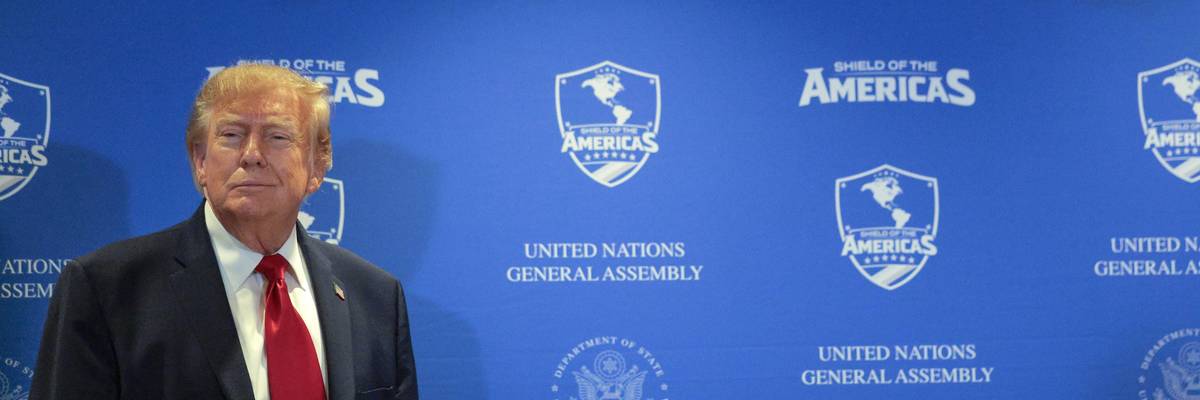
US President Donald Trump arrives for a Shield of the Americas meeting in conjunction with the 81st session of the United Nations General Assembly at the UN headquarters on September 22, 2026 in New York City.
(Photo by Chip Somodevilla/Getty Images)
Stephen Prager
Sep 23, 2026
COMMON DREAMS
Critics have often described President Donald Trump’s campaign of boat strikes in the Caribbean and Pacific—which have taken the lives of at least 234 mostly unknown people—as extrajudicial killings that flout the very basics of due process.
On Tuesday, Trump essentially described them that way too, seeming to suggest that killing people outside the law is the whole point.
“For years, administrations just played games, and they’d bring them to a court in Miami or something, and the judge would release them immediately, and they’d go back to selling drugs,” Trump said. “But now, we don’t waste our time doing it.”
He was speaking at a meeting of the Washington-led “Shield of the Americas” coalition, an alliance of leaders and foreign ministers ostensibly dedicated to stamping out drug cartels and other criminal organizations across the Americas.
The boat strike campaign—known first by the Defense Department as “Operation Southern Spear” before it was rebranded last month as Joint Task Force Western Hemisphere—is part of this effort. The administration says the more than 70 vessels it has targeted with lethal strikes since last September were engaged in “narco-trafficking,” and that killing their operators is a justifiable form of self-defense.
The principal illicit cargo on the maritime routes targeted by Southern Spear is cocaine. But the White House rarely provides any evidence publicly to substantiate that the boats it targets are involved with drug trafficking, and members of Congress have complained that even classified briefings lacked hard evidence. Some of those killed in the strikes have later been identified as ordinary fishermen and other civilians with no known ties to the drug trade.
An investigation from the Washington Office on Latin America found in July that the military has relied on extraordinarily broad criteria to launch the strikes against anyone deemed to be “affiliated” with a secret list of designated terrorist groups. They do not require the commanders launching them to know the identities of those aboard a vessel or have any evidence that it is carrying drugs at all.
Even if the boats were engaged in drug trafficking as the administration claims, wrote Ben Saul, the United Nations special rapporteur on human rights and counterterrorism, in a report released earlier this week, there are no “international legal rights to unilaterally use military force” to counter drug cartels or other organized crime groups that have not mounted any “armed attack” against the US.
The strikes, Saul added, were not a “last resort” or “necessary or proportionate” since the US had not tried to use non-lethal means like intercepting or boarding them before resorting to bombings.
Concurring with several other UN experts, he said that the strikes were “contrary to international law, violate the human right to life, and plausibly constitute crimes against humanity,” including “murder.”
Trump’s comments on Tuesday seemed to underscore what Saul and others critical of the boat bombings have emphasized: that rather than using lethal force as a last resort to repel an immediate threat, his administration was simply killing suspects as an alternative to avoid a cumbersome legal process.
Norman Ornstein, a political scientist and scholar at the conservative American Enterprise Institute, said in a post on social media that Trump’s comments were “worthy of the International Criminal Court.”
Defense Secretary Pete Hegseth has suggested the administration’s calls to “dismantle” the ICC are in part out of concern that the court, which prosecutes war crimes and other international criminality, could be used to prosecute members of the Trump administration over the boat strikes.
Trump described the ICC as “anti-American” and “evil” during a speech at the UN General Assembly earlier on Tuesday, in which he also threatened to “annihilate” Iran and celebrated that he was claiming the “spoils” of war from Venezuela.
During that same speech, he also boasted that his administration “has carried out dozens of strikes on cartel drug boats, destroying 97% of the drugs coming into the ocean and sea,” a claim that his administration has not provided evidence to substantiate.
An internal analysis by the US Drug Enforcement Agency (DEA), reported on in July by the Washington Post, found the opposite, in fact, stating that the strikes “failed to affect the supply or price of cocaine in the United States.”
As Trump heralded the boat strike campaign before the eyes of the world on Tuesday, a coalition of more than 70 lawmakers across the Americas called for the US to end what it said were “hundreds of extrajudicial killings of civilians.”
The statement was signed by 15 Democratic members of the US Congress, including Reps. Jesús “Chuy” García (D-Ill.), Greg Casar (D-Texas), Alexandria Ocasio-Cortez (D-NY), Ilhan Omar (D-Minn.), Rashida Tlaib (D-Mich.) and Pramila Jayapal (D-Wash.). It was also signed by lawmakers from Puerto Rico as well as 12 other countries across the Americas—Argentina, Brazil, Canada, Chile, Colombia, Ecuador, Guatemala, Honduras, Mexico, Paraguay, Peru, and Uruguay.
“The identities of nearly all the victims remain publicly unknown, and many families lack effective or safe avenues to obtain information or redress. Coastal and fishing communities face fear and uncertainty as these attacks put lives and livelihoods at risk,” the lawmakers wrote.
“The rights to life, due process, and protections against the arbitrary use of force are core principles of democratic rule of law that our countries have committed to uphold,” they added. “Allegations of drug trafficking, however serious, do not circumvent or override these protections, nor do they justify lethal force against people who pose no imminent threat.”
Rights Groups Detail Sweeping ‘Suppression of Pro-Palestine Speech’ on US Campuses
“The Trump administration’s targeting of students and faculty who oppose Israel’s ongoing genocide in Gaza is dangerously reminiscent of McCarthy-era censorship and a blatant violation of academic freedom.”
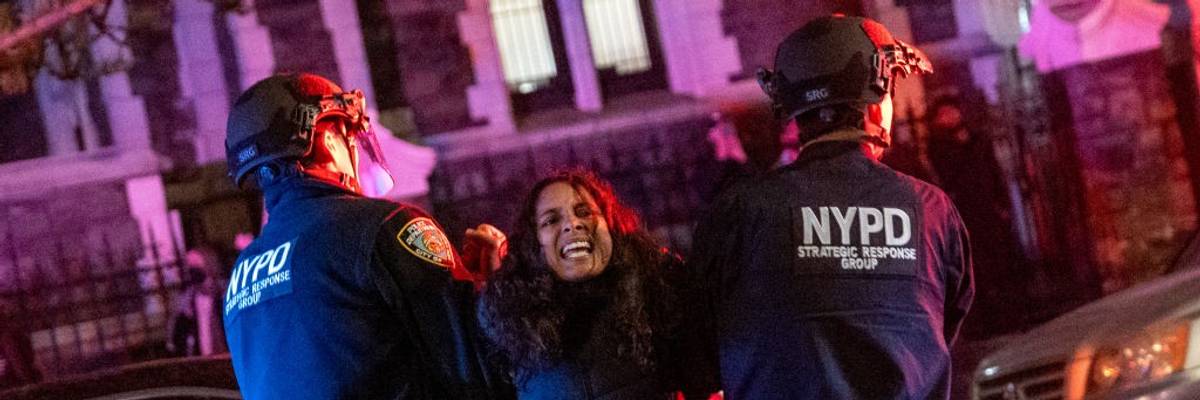
Police officers arrest protesters during a pro-Palestinian demonstration at the City College of New York during crackdowns on encampments at both CCNY and Columbia University on April 30, 2024 in New York City.
(Photo by Spencer Platt/Getty Images)
Jessica Corbett
Sep 23, 2026
COMMON DREAMS
While the traumatic experiences of foreign-born scholars such as Mahmoud Khalil and Rümeysa Öztürk have drawn international headlines, a report released Wednesday by a pair of leading rights groups highlights how their arrests by immigration agents were part of a wider assault “on free speech and association on college campuses, particularly against students, faculty, and staff protesting Israel’s war on Gaza and the US government’s political, economic, and military support of the war.”
Titled “Student Speech Under Attack: Suppression of Pro-Palestine Speech and Dissent on Campus,” the new report from the ACLU and Amnesty International USA catalogs university and law enforcement responses to protests and encampments, schools’ actions to restrict speech, the Trump administration’s crackdowns on institutions and foreign scholars, and how all of that has had a chilling effect.
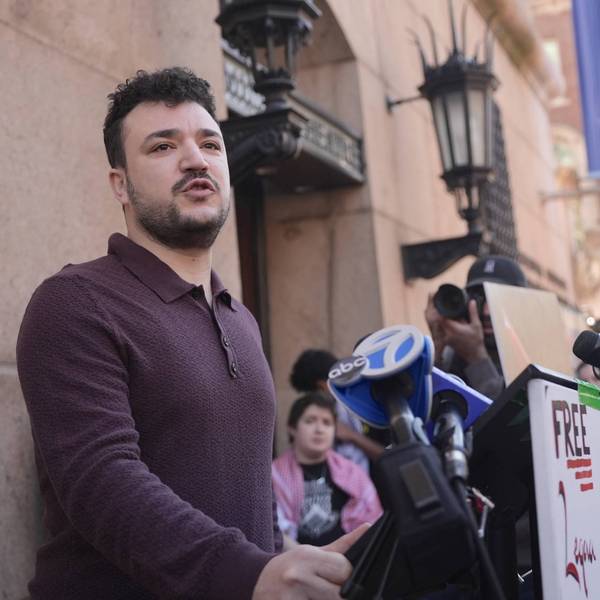
Mahmoud Khalil Leads Suit Against Columbia for ‘Systemic Discrimination’ Against Palestinian Students
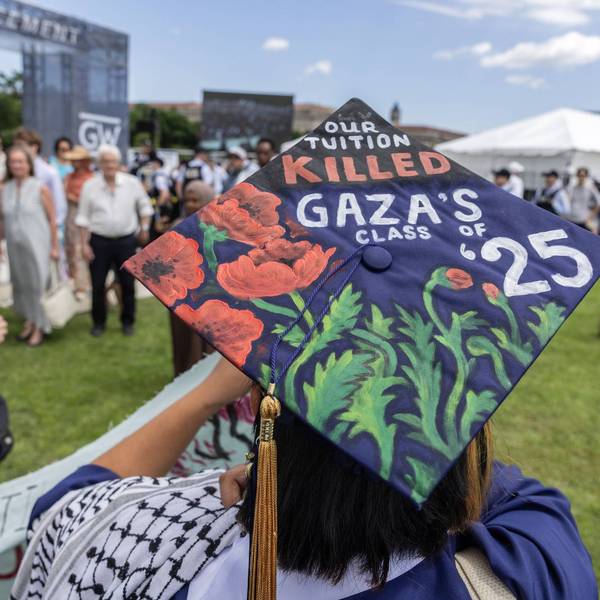
33 Dems Help Pass House Bill That Would Strip Funds From Colleges That Boycott Israel
The report also features case studies on six schools—City College of New York, Columbia University, Tulane University, University of Michigan, University of Texas at Austin, and University of California, Los Angeles—and various targeted scholars, including Khalil and Öztürk as well as Yunseo Chung, Badar Khan Suri, Leqaa Kordia, and Mohsen Mahdawi.
Like Khalil, Mahdawi was a Columbia student and lawful permanent resident of the United States. At his citizenship interview last year, masked US Immigration and Customs Enforcement (ICE) agents arrested and detained him for his advocacy in support of Palestinian rights. The Trump administration’s attempt to deport Mahdawi, who was raised in the Israeli-occupied West Bank, is ongoing.
“At the time of his arrest and detention, he was an undergraduate student at Columbia University majoring in philosophy and planning to start a master’s degree program at Columbia’s School of International and Public Affairs. Mahdawi said he dedicated himself ‘to understanding how to achieve a lasting peace for Palestinians and Israelis, particularly through the study of conflict resolution,’” the report notes.
“As a student at Columbia, Mahdawi was an outspoken critic of Israel’s military campaign in Gaza and an activist and organizer in student protests on Columbia’s campus until March 2024, after which he took a step back and was not involved in organizing,” the document details. “Mahdawi attended protests opposing military escalations in the region and gave speeches at several of these protests advocating for Palestinian human rights and a permanent ceasefire. Mahdawi appeared in numerous televised interviews and print news articles regarding the military campaign in Gaza and related protests.”
While Mahdawi was targeted by the Trump administration, not Columbia, the publication points out that he “had contacted university administrators asking for help in finding safe housing, stating that he feared abduction by ICE agents,” and, according to him, the school “did nothing in response to his request.”
The report also notes Columbia’s decadeslong reputation as “the activist Ivy,” and how “student activism in support of Palestinian rights began in October 2023... sparking a multiyear, nationwide movement of campus anti-war demonstrations calling for academic institutions to divest from what organizers and Amnesty International characterize as Israeli apartheid.”
The ACLU and Amnesty laid out how Columbia suspended student groups that held peaceful demonstrations, refused to divest from Israel, threatened to expel students who joined an encampment, and had New York Police Department officers forcibly remove protesters who occupied a campus building and dubbed it “Hind’s Hall” for a Palestinian child killed by Israeli forces.
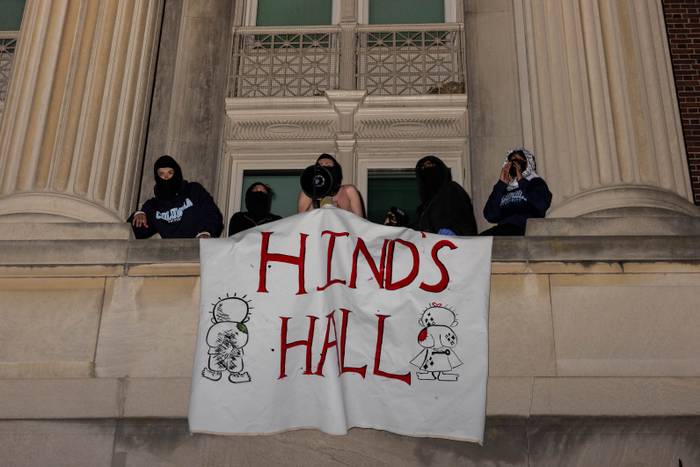
Columbia University student demonstrators unfurl a banner that reads "Hind's Hall" as they barricade themselves inside a campus building on April 30, 2024 in New York City. (Photo by Alex Kent/Getty Images)
Early last year, as Khalil was arrested outside his home and President Donald Trump threatened to pull $400 million in university funding, Columbia promised to the administration that it would add three dozen “special patrol officers” with arrest powers, and later announced that its University Judicial Board punished over 70 students.
However, as the report stresses, it’s not just Columbia. After Israel began what many experts have called a genocidal assault on Gaza following the October 2023 Hamas-led attack, “students across more than 100 universities organized, calling for educational institutions to end their financial ties to corporations linked to the war,” and their protests and encampments were often met with “university leaders’ swift and punitive responses.”
“Universities and colleges faced pressure from wealthy donors, trustees, and figures outside of university or college leadership, including members of Congress, to suppress pro-Palestinian protests and dismantle encampments,” the publication acknowledges. “By restricting or banning protests outright, involving campus police and external law enforcement in the surveillance, intimidation, and repression of participants, and pursuing students with legal and administrative consequences, university and college administrators escalated tensions.”
“During the disbandment of encampments, law enforcement forcefully pushed and arrested demonstrators, leading to concussions, cuts dislocations, and other severe injuries,” the report continues. “In many instances, demonstrators posed no threat, did not resist arrest, and were sometimes attempting to deescalate or document the protest.”
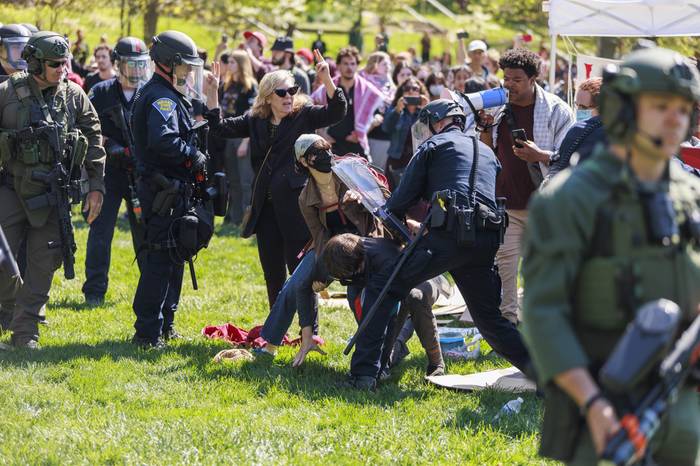
Police crack down on a pro-Palestinian protest at Indiana University in Bloomington on April 25, 2024. (Photo by Jeremy Hogan/SOPA Images/LightRocket via Getty Images)
Justin Mazzola, Amnesty’s deputy director of research, said in a statement that “universities and colleges should prepare students for open discourse in a pluralistic society. Instead, campus leadership has suppressed free speech and peaceful protest while enabling the Trump administration to advance its anti-rights agenda and seek ideological control over higher education.”
Mazzola also called out the Trump administration—which, as the report lays out, has issued related executive orders, conducted campus visits, abused Title VI investigations, conditioned funding on acquiescence, revoked student visas, targeted scholars for deportation for protected speech, and attempted to evade court reviews of deportations.
“The Trump administration’s targeting of students and faculty who oppose Israel’s ongoing genocide in Gaza is dangerously reminiscent of McCarthy-era censorship and a blatant violation of academic freedom,” he asserted. “The Trump administration must stop stifling political expression on campus and end its relentless push for ideological conformity in higher education. Students’ rights must be respected, protected, and fulfilled.”
The report features recommendations for schools, campus and local law enforcement, the Trump administration, and Congress. It also details rights on campus, reminding students and educators that they “have the right to peacefully protest, and the government has a duty to respect, protect, and facilitate that right—not suppress it.”
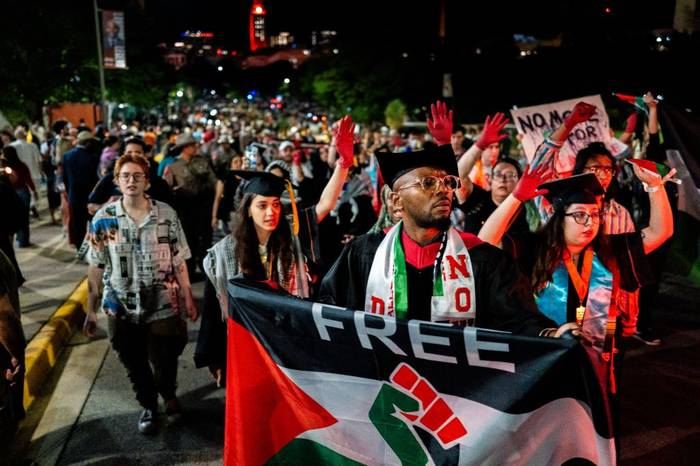
University of Texas at Austin graduate students, faculty, and demonstrators protest Israel's war on the Gaza Strip after walking out of commencement on May 11, 2024. (Photo by Brandon Bell/Getty Images)
As for US colleges and universities, they “must take all possible measures to ensure that their campuses are spaces where students may exercise their rights to freedom of speech and expression without fear of unwarranted punishment or retaliation regardless of viewpoint,” said Jennifer Turner, principal researcher in the ACLU’s Human Rights Program.
“Schools should resist the pressures placed on them to silence and punish students or faculty who engage in protest or advocacy for Palestinian rights,” Turner added. “Instead, they should stand up to the federal government’s intimidation tactics and defend the university’s core mission of fostering free-flowing inquiry and debate.”
The groups’ report was released after Khalil and other Palestine defenders sued Columbia in federal court last week over what Khalil called “gross and systemic discrimination against Palestinian students.” He vowed that “next, I will turn to the hateful individuals at Columbia who were also responsible for what we endured.”
.png)


