Thursday, September 24, 2026

There’s a reason Trump is the only one talking about 1% rates


Published:

WASHINGTON -- As a lifelong real estate investor whose businesses relied on debt and interest rates, U.S. President Donald Trump might be expected to know better: The one per cent rate he keeps demanding from the U.S. Federal Reserve is impractical and would likely backfire, according to analysts.

A policy rate slashed that low, from its current range of 3.75 per cent to four per cent, would likely touch off massive dislocation in the global financial system and end up with the U.S. government paying more to borrow than it does now in bond markets.

Some figures close to the president say his interest rate demands should be seen less as a prescription and more as a way to deflect from issues like high consumer prices ahead of midterm elections in November.

But in practical terms, a three-percentage-point cut by the Fed “seems cataclysmic,” said J. Benson Durham, founder of DASM investment research firm.

Treasury rates would climb as investors priced higher inflation, countries like Germany could soak up capital by offering just a bit more to lenders than the US, and the dollar would “plummet,” he said.

Yet despite the bond market math and concerns about Fed credibility, Trump has repeatedly called for ultra-low borrowing costs, which he says the U.S. deserves as the world’s largest economy with, he argues, the safest credit.

Trump’s demands

After the Fed under its relatively new chair, Kevin Warsh, hiked rates last week, Trump criticized the decision and repeated the one per cent figure.

“The president in his own way is saying, ‘I don’t like the pain of this,’ but he should be clear that it’s not the fault of the Fed” for having to raise rates, said Grover Norquist, head of the conservative group Americans for Tax Reform, and an outside Trump economic adviser.

Given the importance of controlling inflation ahead of the vote, some allies of the administration privately praised Warsh after the rate decision, according to one person involved in the exchanges, who requested anonymity to discuss them.

A White House ally who liaises with Warsh told Reuters the calls for one per cent are unrealistic given the workings of global bond markets.

“Can everybody just wake up? If you mess up the bond market, it’s good for the bond investor and no one else,” said the person.

The White House did not respond to requests for comment. The Fed did not comment on Trump’s remarks.

High inflation ahead of vote

Trump’s pressure on the Fed goes beyond the one per cent rate request.

He aims to oust Governor Lisa Cook, an appointee of former President Joe Biden, and is awaiting results of an inspector general’s probe of former Chair Jerome Powell’s oversight of a Fed construction project. Powell remains a Fed governor, denying Trump a new appointee at the central bank.

Some analysts say the Fed remains a useful scapegoat for Trump, who heads into the midterms with mortgage rates nearing seven per cent and prices for staples like ground beef and gasoline also rising, underlining the issue of affordability.

Inflation has increased since early in Trump’s term from the combined shocks of his tariffs and energy costs from the US war with Iran, among other things.

The Fed’s preferred inflation measure was 3.7 per cent in July and the bank doesn’t expect that rate to fall to a two per cent target before 2029, suggesting inflation could remain elevated for Trump’s entire term.

Tone shift

The president’s public comments have mostly spared Warsh, his handpicked successor to Powell, and focused more on the Fed’s other policymakers.
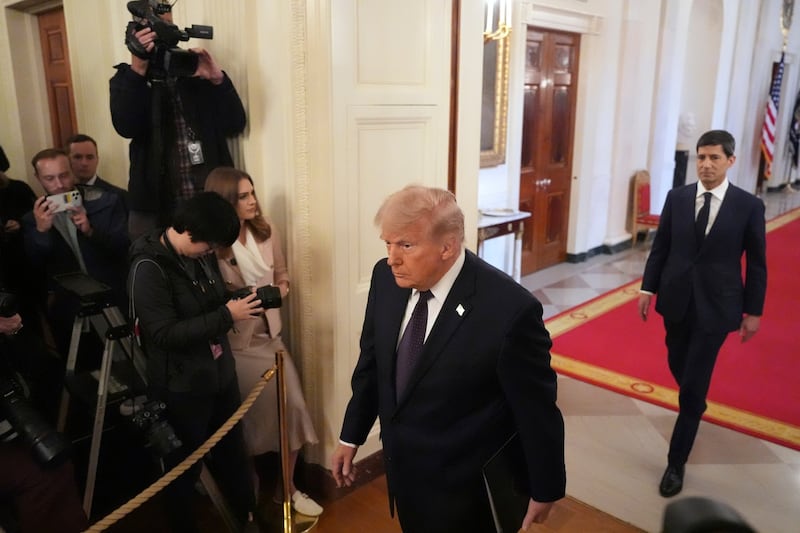
President Donald Trump, left, and Kevin Warsh arrive at a swearing-in ceremony for Warsh as Chairman of the Federal Reserve in the East Room of the White House, Friday, May 22, 2026, in Washington. (AP Photo/Alex Brandon)

When Powell as chair ignored Trump’s various calls to cut rates or not raise them, the president called him an “enemy,” a “numb skull” and other epithets.

By contrast last week, Trump characterized Warsh as being boxed in by a “political” board. After the Fed lifted rates for the first time in three years, in a unanimous vote, Trump said that he had told Warsh in a phone call beforehand to go along with the majority if necessary.

Warsh has said he won’t discuss conversations with Trump.

Long considered an inflation hawk, Warsh had weeks ago laid out the case for higher rates, surprising some analysts who had questioned his independence from Trump.

Warsh “has repeatedly said the Fed will deliver price stability. Wednesday’s rate hike shows that he means it,” Apollo Global Chief Economist Torsten Slok said after the Fed’s Sept. 16 decision.

Keeping an open line

The relative leeway Trump is giving Warsh may reflect their warmer ties early in the new Fed chief’s term.

Trump started chiding Powell early in his first presidency for raising rates, and the relationship remained tense. Powell did not openly push back against the rhetoric until early this year, when the administration sent a grand jury subpoena over the construction project.

Warsh appears to have a more congenial relationship, fielding the president’s phone calls while maintaining he’ll remain an independent broker when it comes to monetary policy.

That policy now includes a hardening stance against inflation.

Polls show that pocketbook issues including record diesel fuel prices are hitting red state rural economies and small businesses, and that Trump’s record-low approval rating is dragging down Republican congressional candidates.

A Reuters/IPSOS poll published Monday showed just 17 per cent of respondents approve of the president’s handling of the cost-of-living, the top issue Americans say will influence how they vote in six weeks.

(Reporting by Howard Schneider; Editing by Dan Burns and Jonathan Spicer)

MULTIPOLARITY

The EU moves closer to free trade deal with Philippines amid global tensions


Published:

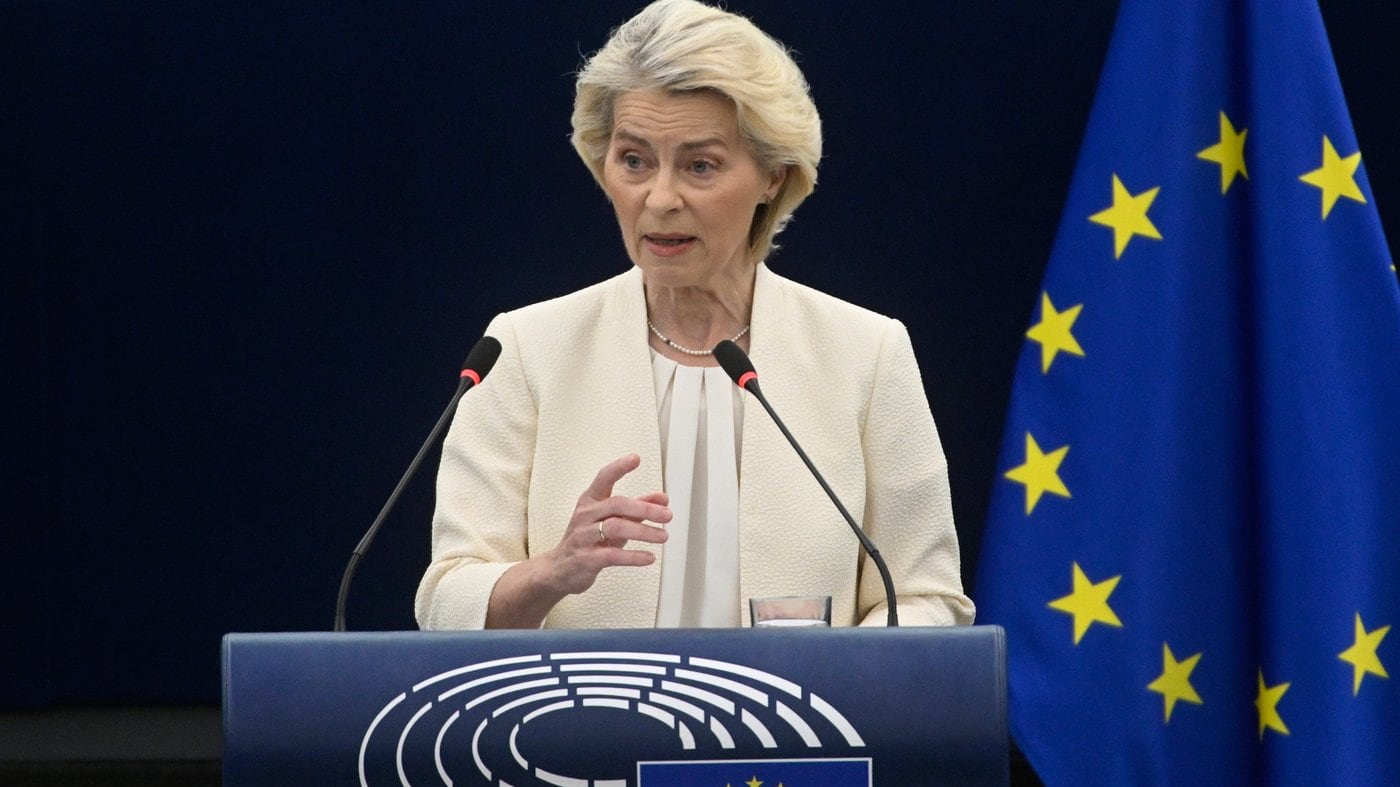
European Commission President Ursula von der Leyen delivers a speech at the annual State of the European Union at the European Parliament in Strasbourg, eastern France, Wednesday, Sept 16, 2026. (AP Photo/Pascal Bastien, File)

BRUSSELS — The European Union and the Philippines have reached substantial agreement on a new free trade deal, the latest bilateral agreement that Brussels is pursuing as it seeks to diversify its economy amid tensions with traditional trading partners including China, Russia and the United States.

European Commission President Ursula von der Leyen tweeted Tuesday, ″we just agreed on a free trade deal,″ but EU officials later clarified that it was a preliminary agreement, and that a full deal would take further negotiations.

The EU’s top trade negotiator, Maroš Šefčovič, said he and Philippine Trade Secretary María Cristina Aldeguer-Roque have been negotiating a deal aimed at boosting the nearly 30 billion euros (around $35 billion) of annual trade between the 27-nation EU and the Southeast Asian nation of 115 million people.

Šefčovič said it would create “a modern, forward-looking partnership between the EU and the Philippines, one that will open new opportunities for our exporters and investors, strengthen our supply chains and deepen bilateral economic ties for years to come.”

He said he expects it to be finalized within a year or two. Parliaments on both sides will also need to ratify it.

\\

EU-Philippine trade is dominated by electronics, with the EU exporting aircraft, pork and pharmaceuticals while importing semiconductors, integrated circuits and industrial machinery made in the Philippines.

The EU has sought growth and stability through new trade links from Australia to Argentina as the bloc itself is beset by a geopolitical maelstrom, including conflicts in the Middle East and the war in Ukraine that have throttled traditional sources of energy.

The Philippines has already reached deals with two other ASEAN members, Vietnam and Singapore. The European Commission is also negotiating separate deals with Thailand, Indonesia and Malaysia, while a broader free trade agreement between the EU and ASEAN remains a long-term goal.

Moscow, Beijing and Washington all pose their own kind of challenges to the EU: hybrid attacks that officials across the EU blame on Russia; China’s gargantuan trade imbalance and a near-monopoly over critical mineral supplies; and a Trump administration critical of European policies on defense, migration, and technology regulation.

The EU deal with the Philippines roughly tracks with the “ middle powers ” strategy laid out at the World Economic Forum in Davos, Switzerland, earlier this year by Canadian Prime Minister Mark Carney. Last week, he was the guest of honor in the European Parliament in Strasbourg at the annual State of the European Union speech by European Commission President Ursula von der Leyen.

She said then that the EU would forge a new kind of “ associate membership ” for Canada.

“In this new world, we must urgently reimagine our partnerships,” von der Leyen said during her speech.

And at the same time, nations around the world have sought out the EU to weather “sudden changes very often on the fundamental principles of how trade is being done,” said Šefčovič, the trade negotiator.

“My phone was ringing all the time,” he said. “When the world goes in such turbulence and turmoil, you work closely with your friends and close partners.”


Sam Mcneil, The Associated Press


Germany maps out fossil fuel exit, backing EVs, heat pumps

Published:

BERLIN -- Germany’s cabinet approved a roadmap on Wednesday to phase out coal, oil and gas by 2045, reaffirming a climate strategy focused on electrification despite a minister’s call for more flexibility on cars, heating and carbon pricing.

An environment ministry spokesperson said the plan would be presented at the United Nations General Assembly in New York later on Wednesday.

Germany would be the third country after France and the Netherlands to adopt a national roadmap under an international effort to move away from fossil fuels, the spokesperson added.

Spiegel magazine earlier on Wednesday reported that, under the plan, Germany will examine whether an agreed deadline to end coal-fired power generation by 2038 can be brought forward to 2035.

In transport, the plan foresees EU fleet emissions rules to lead to battery-electric cars making up 100 per cent of new passenger car registrations by 2035, Spiegel said.

That contrasts with demands from some conservatives, including Economy Minister Katherina Reiche, to preserve a larger role for combustion-engine vehicles using alternative fuels.

In buildings, heat pumps are expected to become Germany’s dominant heating system in the coming years, while oil and gas boilers using rising shares of climate-neutral fuels are mentioned only as part of the transition, according to Spiegel.

Politico also reported on the initiative earlier.

(Reporting by Kirsti Knolle)

Global diesel shortage likely to last into 2027 as storage tanks drain


Published:

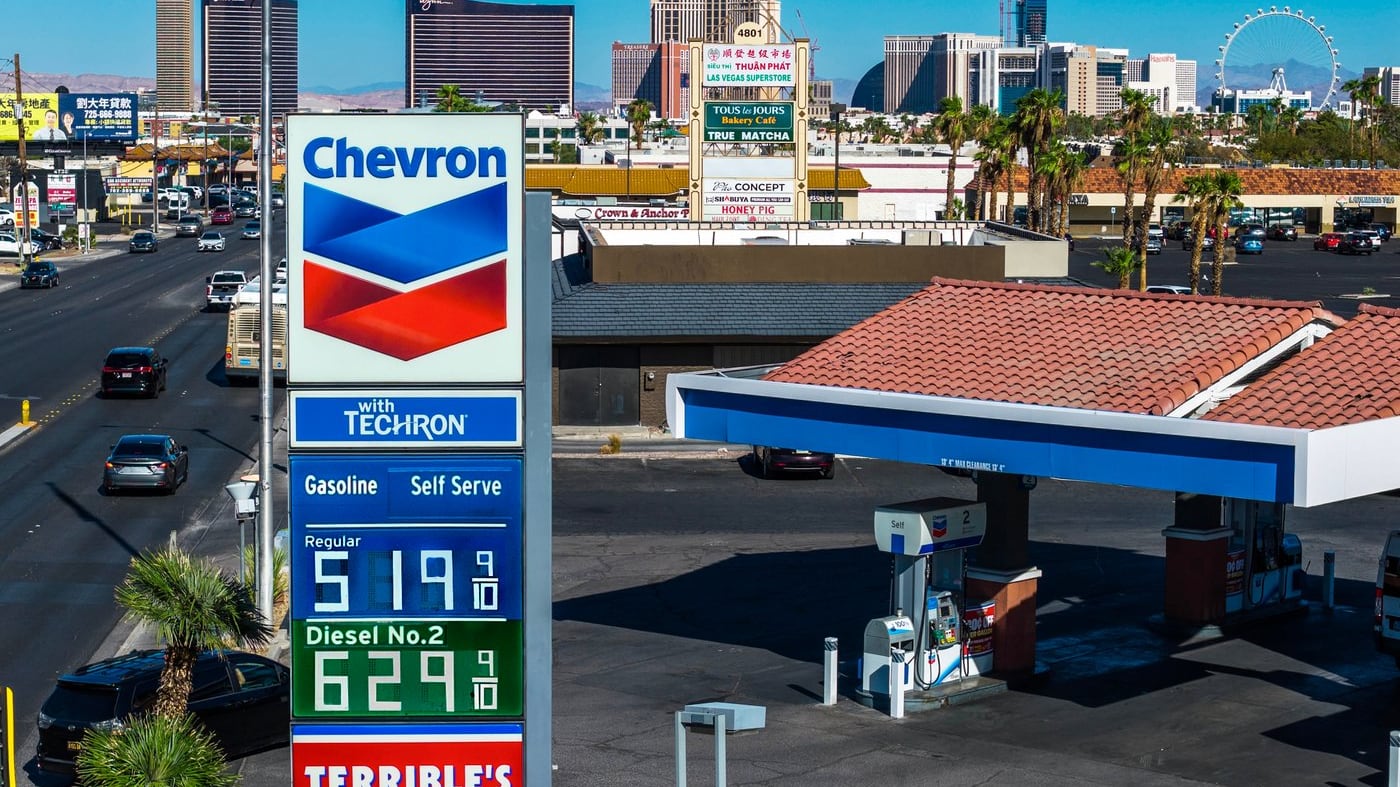
Chevron gas station prices are displayed in Las Vegas on Thursday, Sept. 3, 2026 (L.E. Baskow/Las Vegas Review-Journal via AP)

NEW YORK — A global diesel shortage fueled by wars in Iran and Ukraine is unlikely to ease before next year, according to storage market indicators and industry participants, extending a spike in fuel costs that is weighing on economies worldwide.

The wars have severely disrupted diesel supplies, stranding millions of barrels a day in the Middle East and Russia, draining inventories to historic lows and sending prices to record highs. The shortage has been a drag on economic activity, as diesel fuels agriculture, manufacturing, and heavy transportation.

In the United States, retail diesel prices topped $6 a gallon this month for the first time, squeezing farmers and truckers and stoking worries for President Donald Trump’s Republican Party ahead of the November midterm elections.

Another sign of persistent tightness is emerging in the storage market. Refiners and traders across North America are declining to renew diesel storage leases because there is little fuel available to store, data from storage broker The Tank Tiger showed.

Diesel storage capacity available for leasing in North America and the Caribbean Islands, a major trading hub, has climbed to a four-year high of 13 million barrels for October, from 11 million barrels in June, The Tank Tiger Chief Operating Officer Steven Barsamian told Reuters.

Total US diesel inventories declined to 107.9 million barrels by September 11, the lowest for this time of year since records began in 1982, according to the US Energy Information Administration.

The rapid draw of diesel from US storage indicates how tightly supplied the market has been in recent months, and the rising availability of tanks for lease underscores how long the tightness is expected to persist, Barsamian said.

The combination of falling inventories and rising storage availability suggests market participants expect supplies to remain tight into at least the first quarter of next year, Barsamian said. Storage tanks are typically leased for six months to a year.

“More storage is available for lease because no one wants to renew their existing contracts. Why would you pay for a storage tank when there is no diesel to store?” Barsamian said.

EcoBox Dumpsters, a U.S. waste management business, is limiting its rising fuel cost by using smaller trucks where possible, grouping deliveries and pickups in the same area, and confirming pickup schedules to avoid unnecessary trips.

“Each unnecessary truck movement now has a much greater cost,” said owner David Garrigus.

A GLOBAL CONCERN

The EIA also expects inventories to stay depleted.

“We forecast inventories of distillate fuel oil — often sold as diesel — in the United States to fall below 100 million barrels in September and remain below the five-year low through the end of 2026 and most of 2027,” the EIA said earlier this month.

European diesel inventories are also low. Stocks in the Amsterdam-Rotterdam-Antwerp storage, refining and trading hub were 16 per cent below the five-year average in July, according to the latest data available from Insights Global. In Singapore, total distillate inventory levels averaged about 8.2 million barrels over the past few weeks, similar to pre-Iran war levels, but below the 2025 average of 9.6 million.

“Various Asian emerging markets have been affected quite significantly,” said Andrea Pescatori, the International Monetary Fund’s Asia-Pacific deputy division chief, at the Asia Pacific Petroleum Conference in Singapore.

SOME SIGNS OF RELIEF

Industry executives expect global diesel supplies to stay tight through winter, particularly if Middle East tensions further disrupt fuel exports and Russia’s diesel export ban remains in force through October. Moscow will extend diesel export restrictions until ​the end of October, Russian business daily Vedomosti reported on Tuesday.

US diesel prices may rise further as US East Coast buyers purchase barrels ahead of the heating season, before peaking, said Alex Hodes, director of energy market strategy at StoneX.

Analysts also expect record diesel refining margins to encourage more production, limiting price increases.

The US diesel crack spread — the premium of ultra-low sulfur diesel futures HOc1 over US crude oil futures CLc1 — hit a record $118.62 a barrel on September 14.

Further relief could come from China, which has boosted exports steadily in recent months, energy economist Philip Verleger said this month.

Still, any escalation in the Iran or Russia-Ukraine wars, or a major refinery outage, could trigger fresh price spikes.

“Current fundamentals point to higher prices staying here for a while,” Hodes said.

(Reporting by Siddharth Cavale and Shariq Khan in New York: Additional reporting by Seher Dareen in London, Florence Tan and Sudarshan Varadhan in Singapore Editing by Liz Hampton and Rod Nickel)