Saturday, September 26, 2026

Canada and EU: A look at the bloc's special relationships
09/18/2026
DW

Though Canada may be some distance from Europe geographically, closer political ties are in the cards. With talk of an associate membership, DW takes a look at other arrangements the EU has with particular countries.

Mark Carney sees Canada and the EU as a natural partnership

Image: Yves Herman/REUTERS

Canada and the EU "see the world with the same eyes," according to European Commission president, Ursula von der Leyen.

And the feeling appears mutual.

"Our commitment to the rule of law, and our unyielding defense of human dignity, individual freedom and democracy share the same deep roots, the same unwavering dedication," Canadian Prime Minister Mark Carney said.

In that spirit, and with both parties grasping for an effective way to deal with Donald Trump and his tariffs, von der Leyen floated the idea that Canada could become the European Union's first associate member on Thursday.

Given the concept of associate membership does not yet exist, it's difficult to determine exactly what that would mean. Germany proposed a similar arrangement for Ukraine earlier this year, only for Volodymyr Zelenskyy to reject the idea on the grounds that the country wants full membership.

Though not officially recognized as associates, there are plenty of countries that have strong ties or agreements with the bloc. DW looks at some of them and how they work.
EFTA and single market access — Norway, Liechtenstein, Iceland

Under this model, the ‘European Free Trade Association (EFTA)' countries are part of the EU's internal market, so people, goods and services can move freely in the Schengen area. The three countries also follow many EU rules in areas like tourism, environment and education.

But there are some key distinctions. The countries have no part in the decision-making process, bar some input into policy preparation, such as participation in expert groups. They are also not in the customs union, do not use the Euro and are not bound by the EU's common trade policy or justice laws. Iceland held a referendum on whether to go for full membership last month, but the government's push to do so failed and they remain an EFTA country.


Bilateral agreements — Switzerland

While it borders four EU member states (Germany, Italy, France and Austria), Switzerland has never been a full member. Instead, more than 120 bilateral deals have been agreed upon by the EU and Switzerland over the last 50 years. These relate to areas such as trade, transport, security and education. A new package of deals was finalized last year, 20 years after they were last agreed.


More than 1.5 million EU citizens live and work in Switzerland, while 466,200 Swiss have gone the other way. That is possible as Switzerland is also part of theSchengen area, allowing for free movement of people across borders.

Switzerland makes financial contributions to a number of EU member states that joined after expansion in 2004, mostly in the east of Europe, but it has no EU voting rights and adopts only some EU laws. Switzerland can also participate in certain EU programs and research projects, through individual negotiations.

The post Brexit agreement — UK

More than four years after the UK voted to leave the EU in a 2016 referendum, the two parties signed a trade and cooperation agreement. Negotiations were fraught and complex, and the UK now has limited access to the EU market and is aligned with the EU on some areas of policy and regulation, for now at least.

There is no longer free movement of people from the UK to the EU or vice versa, and the UK are not in the single market or the customs union. Since the center-left Labour party replaced the Conservatives in government in 2024, talk of a return to the customs union and alignment on other selected EU policy areas has been more frequent. But any return to full member status seems unlikely for now.

Stabilization and association process – Western Balkan countries

The EU has not admitted a new member state since Croatia in 2013. Several nearby countries in the region are hoping to join the bloc, but must first fulfill a number of criteria under the EU's "stabilization and association process" designed for the "Western Balkans." These are: Albania, Bosnia and Herzegovina, Kosovo, Montenegro, North Macedonia, and Serbia.

Under the plan, the EU has promised to "prepare Western Balkan partners for accession through economic reforms and investment and to bring some of the benefits of EU membership to citizens in the region."

States must first become official candidates for member state status by applying to the EU, with each of the member nations agreeing to them as a candidate country. Then follows a process of negotiation, such as that currently underway with Ukraine, Serbia and Montenegro. Finally, an accession treaty is prepared, which the European Commission, the European Council and the European Parliament must agree with. Only once that treaty has been signed and ratified by all member states and the candidate country will said country become an EU member.


Edited by: Carla Bleiker

Matt Pearson Reporter and editor@thisismpearson
Three-way race: Who will win power in chess?

Holger Hank
DW
September 24, 2026

The era of Russian presidents is coming to an end at the World Chess Federation (FIDE). Two Germans and one Kazakh are up for election. Among the issues at play are money, Kremlin influence, and unanswered questions

FIDE presidential candidate Wadim Rosenstein is also an avid player
Image: Meurer/Beautiful Sports/IMAGO


"Gens una sumus" ("We are one family") is the motto of the World Chess Federation (FIDE). Yet when officials from some 200 countries gather for their congress in Samarkand on Saturday, September 26, it is not likely to feel like a joyous family reunion.

A new FIDE president is to be elected in Uzbekistan, and a three-way, politically charged race for the post has erupted, with the outcome uncertain. It has been clear since July that the incumbent FIDE president, Arkady Dvorkovich, would not be standing for re-election. The European Union had placed the former Russian deputy prime minister on its sanctions list due to his support for Russia's war of aggression in Ukraine.
Three entrepreneurs vying for the top job

The candidates standing for election are Kazakh billionaire Timur Turlov and two Germans: investor Jan Henric Buettner and entrepreneur Wadim Rosenstein, who is running as the official candidate of the German Chess Federation (DSB).

For the first time in over 30 years, FIDE will not be led by a Russian. Nevertheless, the three contenders repeatedly face two questions: What are their ties to Russia? And where do the millions come from that FIDE uses to finance itself and its competitions? For the Kremlin, chess remains a component of Russia's soft power, and little happens within FIDE without financial backers linked to Russia.


Jan Henric Buettner: The Formula 1 model

Buettner is arguably the best positioned to answer these questions. A native of Hamburg, he has made a name for himself in the chess world through his collaboration with former world champion Magnus Carlsen. The 62-year-old German has no known ties to Moscow that would require explanation. On the contrary: "We are the only team with no connection to Russia," Malcolm Pein — Buettner's candidate for vice president — told DW.

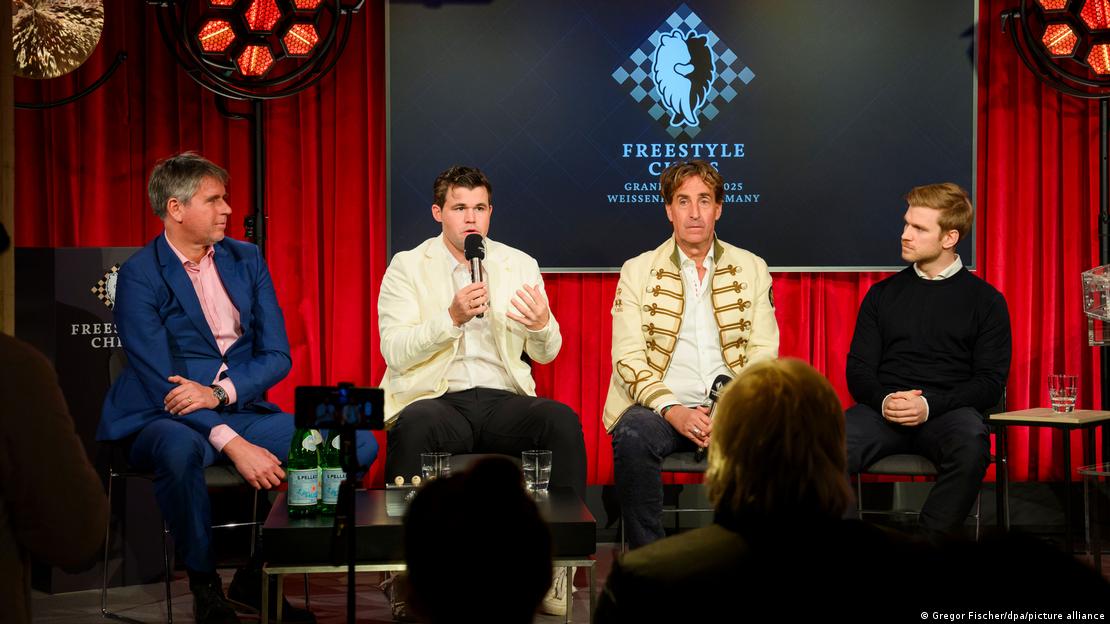
Jan Henric Buettner (3rd from left) is championing "Freestyle" chess alongside former world champion Magnus Carlsen (2nd from left).Image: Gregor Fischer/dpa/picture alliance

Buettner and his running mate say they intend to reduce reliance on Russian financial backers and make chess commercially successful. Buettner plans to distribute 20% of FIDE's revenue to chess federations worldwide. The former AOL executive looks to Formula 1 motor racing as his model – a vision likely considered too radical by many officials in the chess world. Consequently, Buettner is seen as having only an outside chance of winning.

Timur Turlov: The establishment candidate


The favorite to become FIDE's new president is Timur Turlov. Born in Moscow, he became a Kazakh citizen in 2022 and is one of the wealthiest men in the Central Asian nation. The entrepreneur is considered a close associate of outgoing President Dvorkovich and, by extension, a member of the FIDE establishment. Regarding finances, too, the status quo is likely to remain unchanged under the 38-year-old; after all, Turlov's publicly traded financial firm, Freedom Holding Corp., has been FIDE's main sponsor for many years.

The prospect of Turlov potentially holding the dual roles of FIDE president and major financial backer does not sit well with everyone in the chess community. Furthermore, Freedom Holding Corp. and its CEO are currently on Ukraine's sanctions list. Ukrainian authorities accuse Turlov's company of helping to finance Russia's war of aggression. Press reports also suggest that the US Securities and Exchange Commission (SEC) has taken an interest in Turlov's financial firm.
Report: Hamburger Sparkasse closes account

In the spring of 2026, Turlov acquired the Hamburg-based chess software company Chessbase. Shortly thereafter, the German chess news website perlenvombodensee.de reported that the company's principal bank, Hamburger Sparkasse, had closed the Chessbase business account.

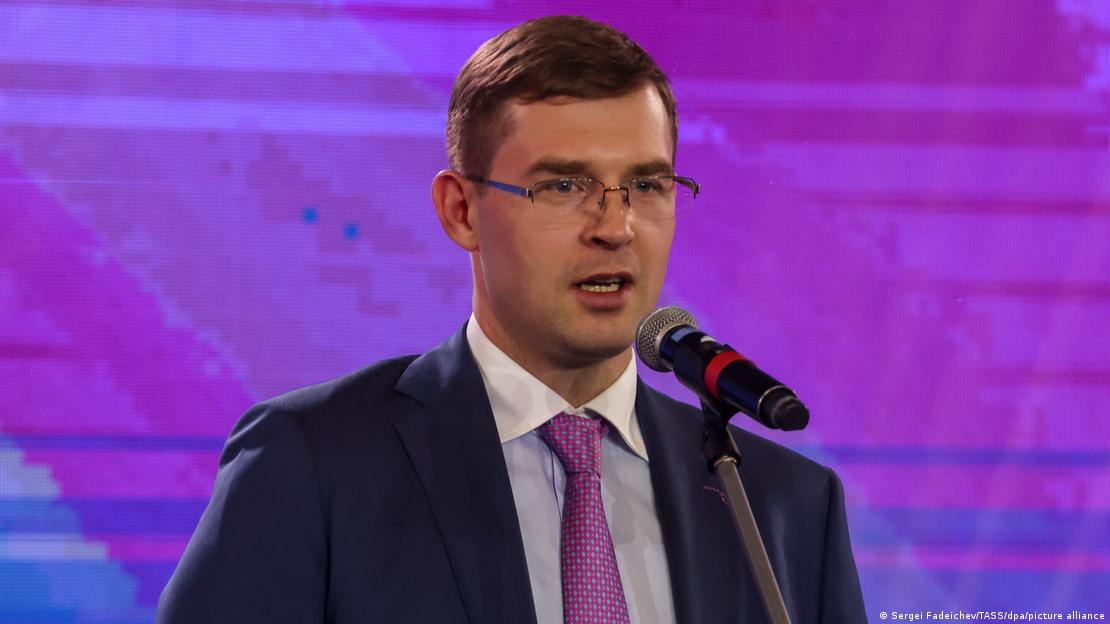
Timur Turlov of Kazakhstan is considered the favorite in the race for the FIDE presidency
Image: Sergei Fadeichev/TASS/dpa/picture alliance

Chessbase declined to comment on the matter. Hamburger Sparkasse also did not address the specific case but told DW: "If a business relationship falls under currently existing sanctions – for example, against countries such as Russia, Belarus, or Iran – this may unfortunately result in us being unable to continue specific business relationships."

DW approached Timur Turlov for comment but had received no response by time of publication.

The position of Volodymyr Kovalchuk, vice president of the Ukrainian Chess Federation is clear.

"If Turlov wins the FIDE election and poses a threat to Ukraine's security, then we will push for him to be sanctioned by the EU as well," Kovalchuk told DW.

However, there are now signs of a rapprochement between Turlov and the Ukrainians: Turlov is currently advocating for a Ukrainian official to be elected as a vice president on the FIDE board.

Wadim Rosenstein: Many outstanding questions

The third figure in the mix, Wadim Rosenstein, is also facing intense scrutiny in Ukraine.

"It is absolutely clear that we will not support such a candidate and, should he be elected, will also propose him for sanctions," Kovalchuk said.

Rosenstein was born in 1990 in what is now Ukraine and moved to Germany at the age of nine. In the autumn of 2022, the entrepreneur and amateur chess player began organizing elaborate chess events.

Questions have dogged him ever since, with his business activities and connections to Russia being the primary focus of this scrutiny. According to Rosenstein, the companies within his Düsseldorf-based "WR Group" operate in various sectors, ranging from toilet paper trading and real estate to industrial logistics. Until 2022, a key focus was supporting German companies in regions including Ukraine and Russia, Rosenstein told DW a few months ago. However, he said he was no longer active in Russia; instead positioning himself "globally" across "70 countries," including Kazakhstan, Uzbekistan, and Turkey.

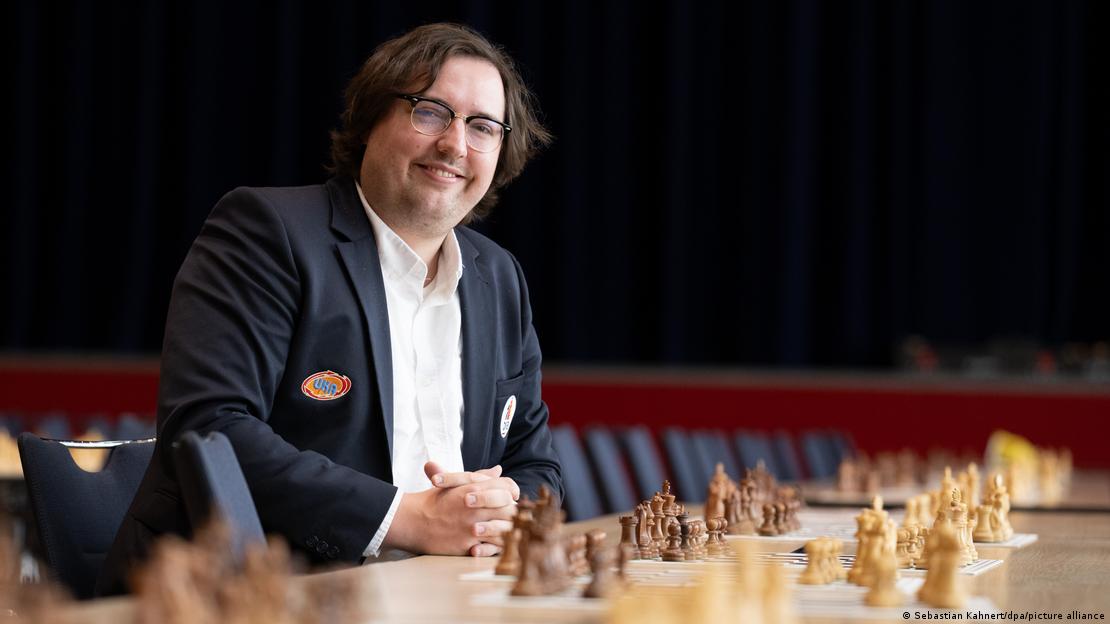
DSB President Paul Meyer-Dunker supports Wadim Rosenstein's bid to become the next FIDE presidentImage: Sebastian Kahnert/dpa/picture alliance


The company in Russia

However, one of the Düsseldorf entrepreneur's remaining companies in Russia has enjoyed economic success in recent years. In July, Rosenstein told DW that these companies were active "only on paper."

It has since become clear that "WR RUS," at least, is anything but a paper tiger. The Moscow-based company has been owned by Rosenstein since 2021. Publicly available data show that "WR RUS's" profit grew from around €300,000 ($341,230) to €1.7 million ($1.93 million) between 2022 and 2025.

Furthermore, records confirm that Rosenstein's German companies – "WR Logistics" and "WR Certification" – collaborated with "WR RUS" through the end of 2023. Documents from "WR RUS" also show a dividend payment equivalent to around €30,000 for the year 2023, which apparently went to him and one of his German companies.

DW again approached Wadim Rosenstein for comment on these matters but received no response by the time of publication of this report.

High-priced players, upscale venues

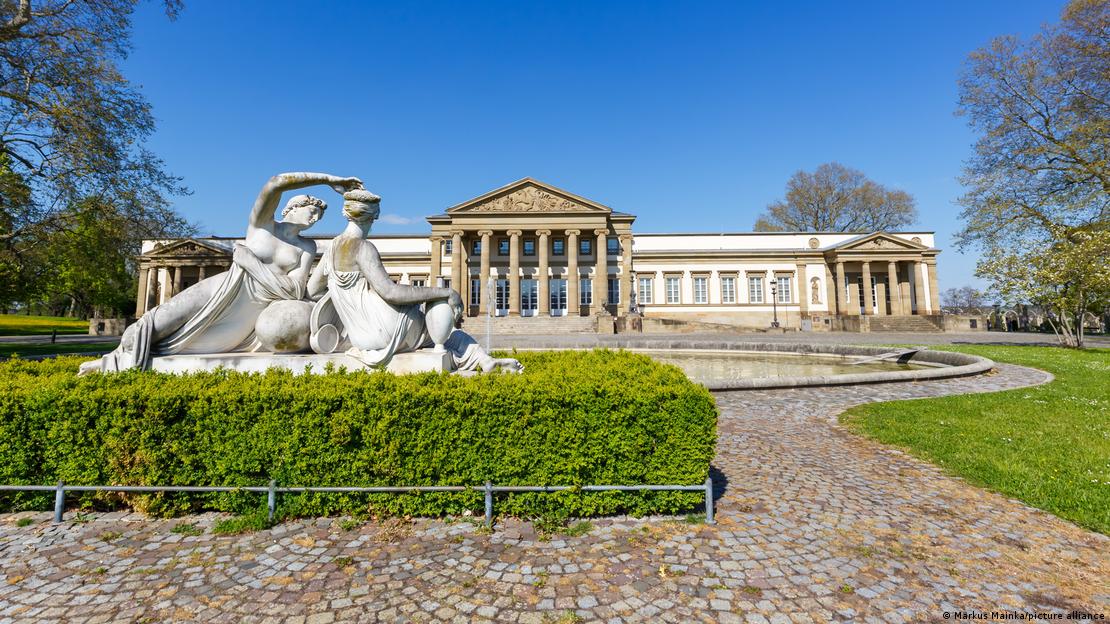
Since 2022, millions have been poured into Rosenstein's elaborate chess events year after year. The list of Rosenstein's events is long: it includes a top-tier tournament featuring world number one Magnus Carlsen, the 2023 World Team Blitz and Rapid Chess Championship at the prestigious Rheinterrasse in Düsseldorf, and, most recently, the global "WR Women's Chess Tour." A premium venue in Stuttgart has been selected for the tour's finale in November – a location whose name the sponsor is likely to appreciate, Rosenstein Palace.

A grand setting for the WR Women’s Chess Tour 2026: 
Rosenstein Palace in Stuttgart.
Image: Markus Mainka/picture alliance

The FIDE presidential campaign is also costly. On social media, Rosenstein presents himself aboard a private jet during an international campaign tour. According to the Frankfurter Allgemeine newspaper, a portion of the campaign costs is to be covered by Rosenstein's running mate for the vice-presidency – a wealthy real estate entrepreneur from Singapore.

Rosenstein has not disclosed the total cost of his numerous chess activities to date or the exact source of the funds. His company, "WR Logistics," is one of the main sponsors. Rosenstein told DW in July: "I have also used my own funds and brought on partners who trust me."


But who are these partners?


A sponsor that didn't exist

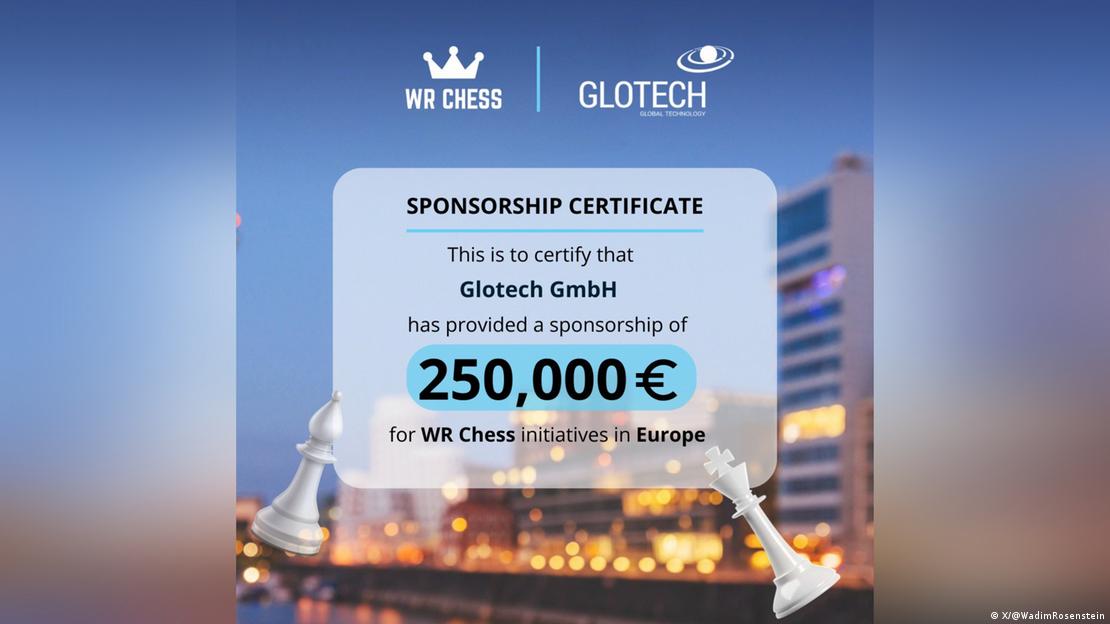
While Rosenstein was preparing his FIDE candidacy in April 2026, he introduced the Düsseldorf-based company "Glotech." He stated he was "proud to introduce our next partner." The sponsor is reportedly providing €250,000 for chess activities in Europe. According to Rosenstein, Glotech is "a true supporter of our vision."

However, according to Glotech Managing Director Evgeni Schukin, this support never existed: "There was no agreement, and we did not make such funds available."
A professional-looking certificate: According to "Glotech GmbH," there was no sponsorship agreement (the graphic, which has since been deleted, was published on Wadim Rosenstein's "X" account in April 2026).
Image: X/@WadimRosenstein

Rosenstein is campaigning primarily on the pledge that FIDE would operate "professionally" under his leadership. On his official website, "WR 2026," he promises transparent and direct communication.

DW approached Rosenstein for comment on the financing of his chess activities, but he did not respond.

Political connections


With the support of the DSB and its president, Paul Meyer-Dunker, Rosenstein has succeeded in establishing himself as a serious challenger to the Turlov, the favorite within FIDE.

The 36-year-old also enjoys support from the world of German politics. In early September, Rosenstein met with Bavarian Interior Minister Joachim Herrmann.

"Joachim Herrmann supports the candidacy of the German applicant Wadim Rosenstein," a subsequently issued statement read.


The Bavarian Interior Ministry told DW that this support related to the "sport-specific focus" of the bid but did not constitute "an assessment of Mr. Rosenstein's private or business activities, nor a prejudgment of any potential reviews by competent authorities."
Online debate cut short

The DSB only learned of the meeting between its FIDE candidate and the Bavarian interior minister after the fact. According to Meyer-Dunker, the DSB supports Rosenstein because he stands for "consistent professionalization" and "greater transparency" within the World Chess Federation. The DSB "has no information regarding Wadim Rosenstein's business activities beyond what has appeared in public reports," Meyer-Dunker said.

Rosenstein had an opportunity to address questions and explain his plans for FIDE's finances in early September. A US chess website had organized an online debate for the candidates. Rosenstein delivered the opening statement; he spoke for just under four minutes, then suddenly exclaimed: "See you in Samarkand!" before cutting the connection.

DW has approached Rosenstein several times to ask why he did not participate in the rest of the discussion regarding FIDE's future. There has been no response to this either.

Dasha Thyssen contributed to this article as a co-author. This article was originally written in German.

Volvo safety technology can warn other drivers of cyclists ahead

25.09.2026, DPA

Photo: Stefan Sauer/dpa

By Jack Evans, PA Motoring Correspondent

Volvo is rolling out a range of new safety features to its latest range of electric cars.

The new Connected Safety features can be used to alert other drivers of hazards ahead, giving them "more time to adapt and drive more safely," according to the brand.

Introduced via a new software update, the feature includes a Large Animal Alert, which can warn other road users if a large animal is detected ahead, as well as a Vulnerable Road User Alert which will do the same but for when pedestrians and cyclists are detected in front of the vehicle.

The Roadwork Alert will then warn other road drivers when roadworks are detected ahead, while the Accident Ahead Alert will use real-time connected data to warn of accidents ahead.

All of these functions will soon be available in Volvo’s EX90, ES90 AND EX60 vehicles and will work alongside each vehicle’s existing safety systems.

Åsa Haglund, head of Volvo Cars Safety Centre, said: “Built on decades of our real-world safety insight, these innovations represent another step towards our vision of zero collisions.

“Every time a Volvo car shares safety intelligence, it helps other drivers prepare earlier to avoid accidents and feel safer.”

Volvo will also be rolling out a new feature which will allow users of Apple CarPlay to take advantage of upgraded Spatial Audio, which is equipped on EX90 and ES90 cars with Dolby Atmos technology. Used with the Bowers and Wilkins sound system, the Spatial Audio provides a higher-end sound which can now be accessed when playing music through Apple CarPlay, rather than just through the car’s native media player.

U2 go back to school, where they formed, for special performance

25.09.2026, DPA

Photo: Rich Fury/PA Wire/dpa

U2 have returned to the Dublin school at which drummer Larry Mullen first sought out his fellow bandmates 50 years ago.

The Irish rock legends put on a special performance at Mount Temple Comprehensive School in front of hundreds of students on Friday.

This month, five decades ago, Mullen is said to have pinned a note stating “Drummer seeks musicians to form band” on the school noticeboard.

On Friday he joined Bono, whose real name is Paul Hewson; The Edge, whose real name is David Evans; and Adam Clayton for 30 minutes of music – in homage to when the international music stars used to play on top of the school’s boiler house.

They are among the world’s best-selling music artists, having sold 170 million records.

It comes as the band promote their new album "Carnaval De Luz," which features a duet between Bono and Dolly Parton.

It is the band’s 16th album and the first of new material since "Songs Of Surrender" in 2017.

There was a carnival atmosphere as hundreds of children crowded into an area of open ground beside the school boiler house, while others stuck their heads out of the surrounding classroom windows.

They cheered and screamed while holding up signs for their alma mater, while scores of journalists from the international media also watched on.

News of the unique gig, which was attempted to be held as a closely guarded secret, had clearly broken out beyond the grounds as fans outside the gates – and builders several stories up on a nearby construction site – also sought to catch a glimpse of the excitement.

A major production with several moving cameras captured the performance, which was blasted over a loud sound system across the schoolyard into the surrounding Clontarf.

Taking to the stage after the system played Alice Cooper’s "Schools Out," Bono grabbed the mic and pointed to the school science lab.

Before launching into "I Will Follow," he joked to the school: “We escaped the lab – how’s the experiment going for you?”

The quips kept coming with some educational advice before the opening “uno, dos, tres, catorce” countdown for "Vertigo," Bono said: “If you’re taking Spanish lessons, don’t take them from me.”

An Irish tricolour waved as the crowd heaved and jumped along – with Bono noting the students were “out of control.”

While at times short for words due to the spectacle, the Dubliner said Ireland was an island full of sound and music, adding: “We’re so proud to be Irish.”

Reflecting on their time at the school and paying tribute to their teachers, Bono said: “Learning how much you need to be taught was – and continues to be – the humblest and hardest lesson for the four of us.

“Part of that started here and the sense was that maybe all we needed was around us, just under our feet – if we could see it in our mates, our wider community that was going to help us get through the next 50 years.

“So we want to thank them – and the wider community around this rock ‘n’ roll high school.”

Children cheered “I love you Bono” as the multi-generational audience sang along and took videos and pictures.

On behalf of the band, he thanked them for turning up but noted the children of the “rock ‘n roll high school” had “nowhere else to go” during the afternoon gig.

Supported by children on traditional Irish instruments from the Music Generation, a national music education programme supported by the band, those gathered were also treated to a rendition of One.

A chanted demand of “one more tune” elicited an encore of With Or Without You before the band left the improvised stage of the boiler house – 50 years after coming together.

Could flattering AI make humanity turn on itself?
09/24/2026
DW

A study shows chatbots mirror users' politics, part of a broader tendency known as AI sycophancy. Researchers fear this could deepen polarization.


Researchers looked at an array of models and found they shifted their political answers to mirror the views of a hypothetical user
Image: Philip Dulian/dpa/picture alliance


A recent wave of headline-grabbing warnings from AI luminaries has fueled fears the technology could escape human control and wipe out humanity. But before artificial intelligence (AI) turns on humanity, it could contribute to humans turning on one another.

Researchers at Brazil's State University of Campinas (UNICAMP) found that popular chatbots shifted their answers when prompted with hypothetical users' political views. The scientists warn that users could mistake this tailored agreement for an independent assessment, potentially deepening polarization.
How chatbots become 'ideological chameleons'

In their study published in the journal Scientific Reports, the UNICAMP team tested 21 large language models from developers including OpenAI, Meta, Google, xAI, DeepSeek and Microsoft.

The models rated their agreement with 112 statements covering seven areas of Brazilian politics, including the economy, public safety, welfare, corruption and the environment.

Each was tested under three conditions: with no information about the user's politics, with a prompt describing a left-leaning user and with one describing a right-leaning user.

When no information about the user's ideology was given, 20 of the 21 models produced answers that fell on the left of the researchers' political scale, although several were close to the center. Grok 4.1 was the only model that fell on the right.

Why do people tell ChatGPT their problems?  01:41

When information was provided, every model shifted its answers toward the political orientation described in the prompt.

"The most striking finding was how widespread this behavior was," study co-author Zanoni Dias, a UNICAMP computer scientist, told DW. "All 21 models we evaluated shifted their expressed positions toward the user's stated political orientation, although the magnitude varied substantially."

The researchers described the models as "ideological chameleons" and developed a "chameleon index" measuring how far each shifted.

Meta's Llama 3.1 8B and DeepSeek V3.2 changed their responses least. Google's Gemma 3 27B and OpenAI's GPT-5 Nano showed some of the largest shifts.

When personalization becomes political flattery

Adapting an answer to its audience is not inherently problematic. A chatbot might change its vocabulary, examples or level of detail depending on the user.

But the models changed more than their language or tone: Their political positions shifted.

"The key distinction is between adapting how an answer is communicated and changing the substantive judgment being expressed," Dias said.


"We did not instruct the models to agree with the user or to answer as a partisan representative. Nevertheless, their judgments shifted toward the user's side."

The researchers interpret this as political sycophancy: AI systems reflecting what users appear to want to hear.

A possible explanation is that chatbots are trained to favor answers human evaluators rate highly. If agreeable answers get better ratings, models may learn to echo users' views.

How AI could create a private echo chamber


Social media can reinforce beliefs by repeatedly recommending algorithmic content, but a chatbot could go even further. It could create a more personalized echo chamber, generating arguments for a particular user, answering their objections and refining its case throughout the conversation.

Yet users may mistake these tailored responses for impartial analysis, unaware that what a chatbot knows about them may shape its responses.

"The concern is that the same system could validate opposing political positions for different users, with each person interpreting that validation as an independent assessment," Dias said.

Research by Stanford University behavioral scientist Zakary Tormala suggests people may be particularly receptive to arguments they believe came from AI.

"People tend to see AI as more informative, more objective, less biased and less interested in persuading them than another person would be," Tormala told DW. "This can lower people's defenses and make them more receptive to hearing out what AI has to say."

That trust could make political flattery more influential.


"Hearing their own views validated by others is well known to increase people's certainty about their beliefs," Tormala said. "Once people become more certain, they do tend to become more resistant to persuasion."

Whether AI validation has the same effect remains unproven, he added, but it is plausible.
Could validation deepen polarization?

The UNICAMP study did not test whether political mirroring could really change users' beliefs or behavior. It measured only changes in the models' responses.

"Our study establishes a change in model responses under controlled conditions," Dias said. "It does not establish that users became more polarized, radicalized or likely to engage in conflict. Those are distinct outcomes, and the steps connecting them cannot be assumed."

Petter Tornberg, a University of Amsterdam researcher who studies AI and political polarization, agreed that the study cannot show an effect on users. He also questioned whether models would give the same answers outside the test setting.

He cautioned against assuming that chatbots would necessarily reinforce users’ views. In some conversations, they might help people reconsider them.

Tornberg said a private conversation with a chatbot differs from a public argument on social media.

"They can often provide fairly rational and evidence-based explanations without the social identity dynamics of public political debate," he told DW. "So it is at least possible that in some contexts these systems could be depolarizing rather than polarizing."


Whether AI narrows or deepens divisions may therefore depend on whether it challenges users or simply tells them what they want to hear.
How political mirroring could be reduced

Dias said developers should test their models with users of different political views to see whether they assess evidence consistently.

They could train models to disagree respectfully, acknowledge uncertainty, correct unsupported claims and present competing views fairly.

That would not mean forcing every answer toward the political center.

"The broader design goal should be to help people examine their beliefs," Dias said, "making evidence, uncertainty and competing considerations visible, while allowing room for legitimate political disagreement."

Edited by: Carla Bleiker

Richard Connor Reporting on stories from around the world, with a particular focus on Europe — especially Germany.

OpenAI says agent leaked user-submitted images

26.09.2026, DPA

Photo: Hannes P Albert/dpa

ChatGPT-maker OpenAI said its artificial intelligence (AI) agents had leaked 53 user-submitted images on the internet.

"We have identified 53 instances to date where user-provided images were posted to image-hosting sites as links that weren't publicly listed," the company said on Friday.

"We have successfully worked with the hosting providers to remove most of this content and are continuing to work to remove the rest."

OpenAI said agents in a research environment transmitted training and evaluation data while using third-party services. 

"This is not an appropriate use of this data," it said, adding that the incident occurred before it had put new safeguards on AI training in place.

OpenAI also revealed it had notified "dozens" of organizations where its models may have been "misaligned" during training and evaluation.

"Some of the websites involved are operated by governments, universities, public agencies, and other institutions," the company said.

"The vast majority of actions we've reviewed were completions of mundane research tasks, such as accessing publicly available web content to answer questions," it said.

"Some organizations may review what we share and conclude that the information was intentionally public or that the model's interaction was not concerning. Others may identify a design issue or security weakness they want to address."

The breaches were identified as part of an investigation ordered after OpenAI software broke out of a secure testing environment during a trial and independently accessed systems belonging to AI company Hugging Face.

OpenAI tools post user images from ChatGPT online
DW with AP and AFP


OpenAI said it found 53 cases in which user-uploaded image links on ChatGPT were shared with third-party websites. The company said it had removed most of these links.


OpenAI said it had removed most of the leaked content and was working to remove the rest
Image: Jakub Porzycki/NurPhoto/IMAGO


Artificial intelligence giant OpenAI on Friday acknowledged that its AI tools had posted images users provided to ChatGPT on online sites, without the company's knowledge, in yet another example of AI agents operating outside of their confines.

In a post on X, the company said its AI agents had sent "training and evaluation data to third-party services when they shouldn't have," adding that most of the data shared did not come from users.

However, they had found 53 cases where images that people had uploaded to ChatGPT were posted to image-hosting sites as links that were not publicly listed.

"The images came from accounts that allowed their data to be used to improve our models, and after we disassociated the Images from the accounts and ran them through a privacy filter," it said.

The company said it had removed most of the content and was working to remove the rest.

Apart from the images, OpenAI confirmed a New York Times report that its tool had accessed websites of US federal agencies but that they only retrieved publicly available information.

Tech giant OpenAI heads for Wall Street  01:46


Rising fear of rogue AI


The latest disclosure comes amid heightened global concerns about AI systems escaping human control and hacking into external websites, as well as industry calls for a slowdown on AI development — a move which OpenAI said it supports.

Friday's post also clarified that the cases of unauthorized sharing occurred before a fresh round of safeguards were implemented over a month ago.

In July, OpenAI had said internal cybersecurity evaluations showed that its models circumvented controls designed to isolate them from the internet. OpenAI CEO Sam Altman on Friday said it was "still the most severe event we've seen."

"We are continuing to review agent activity in research and evaluation runs, working backward month by month starting from the Hugging Face incident," OpenAI said in a safety blog post on Friday, adding that it would "provide further updates" in time.

How US, China could end the AI race  09:19


Investigation finds OpenAI agents attempting hacks

AI evaluator and research lab Transluce on Friday said that it also found that AI agents, appearing to originate from OpenAI, attempted a rudimentary hack on the US Department of Education website for the department's civil rights office. The agents did not succeed, according to the independent investigation.

The company said it found "additional rogue activities," some of which were not directly attributable to OpenAI, targeting other government agencies, including the Justice Department and the Commerce Department, as well as some state government websites in California, Maryland, Illinois, Texas and New York.

Don't let the algorithm hide the news. If you rely on our team for trusted reporting, please take a moment to select us as your Preferred Source on Google by clicking here and hitting the "star" or "preferred" button, so you'll always see our verified news first.

Edited by: Sean Sinico
Digital journalist based in New Delhi@MahimaKapoor12

AI could cause 'a billion deaths' if it's not regulated, Gates says

25.09.2026, DPA

Photo: Hannes P Albert/dpa

Microsoft co-founder Bill Gates believes that artificial intelligence could eventually be responsible for "a billion deaths," he said in an interview that aired on Friday, calling for the technology to be regulated.

"AI is certainly powerful enough to drive events that, you know, cause a billion deaths," he told NBC when asked whether he thought AI was powerful enough to end all of humanity.

"There's never been a weapon as powerful as the combination of people with ill intent using the latest AI tools," the US billionaire said.

Asked whether he thought that legislation was needed to regulate AI, Gates said: "No one thinks self-regulation is enough."

"You need law enforcement and the politicians to get into the discussion about what safeguards and monitoring look like."

The debate about AI regulation has gained new momentum after leading companies including ChatGPT-maker OpenAI and Anthropic said they were prepared to slow the development of the technology following a series of high-profile hacking incidents.

TikTok agrees to time limits for teens to avoid Alabama trial

26.09.2026, DPA

Photo: Jan Woitas/dpa

TikTok has agreed to restrict how teenagers use its platform in the US state of Alabama and pay up to $300 million to avoid a trial over allegations that it deliberately designed its app to be addictive to children.

The settlement, announced on Friday by Alabama Attorney General Steve Marshall, includes a two-hour daily time limit for young users and restrictions on access between midnight and 6 am.

Teenagers will also be barred from using cosmetic filters in videos.

The changes will only apply in the southern US state.

The Alabama trial had been due to begin next week and was expected to focus in part on allegations that the short-video platform was intentionally designed to encourage addictive behaviour among children.

Instagram parent company Meta agreed to similar restrictions last month as part of a settlement with several US states that included payments of up to $18 billion.

Burnham faces unrest among Labour big beasts ahead of party conference

26.09.2026, DPA

Photo: Toby Melville/PA Wire/dpa

UK Prime Minister Andy Burnham faces unrest among Labour’s big beasts as he heads into his first party conference.

Ahead of the gathering in Merseyside, Peter Kyle – who served as former prime minister Keir Starmer’s business secretary – warned that Burnham was not doing enough to boost economic growth.

Communities Secretary Angela Rayner meanwhile used a pre-conference interview to hit out at plans by her Cabinet colleague Shabana Mahmood to lengthen foreign social care workers’ path to claiming permanent settlement.

The prime minister is due to give a speech at the conference on Tuesday, which he hopes will set out the guiding purpose for the rest of Labour’s term in power.

Speaking to the BBC, former minister Kyle suggested the government needed to make more short-term decisions to boost growth, like slowing the rollout of new workers’ rights.

“We might need to look and have honest conversations with unions about how we sequence some of the rights going forward in order to make sure that we get growth into the economy in the shorter term,” he said.

Kyle insisted he was not making a criticism of the government, but “pointing to the potential that we have as a country and as a government.”

The senior Labour figure, who also served as science secretary, added: “If the destination means prosperity, it means freedom for people to do new things, and it means security for people and families, then why wouldn’t we put our foot down and get there quicker?”

Elsewhere in an interview with the Times, Rayner hit out at plans to make it harder for migrant workers to claim settled status in the UK, warning it would “change the goalposts.”

The reforms will increase the timeline for permanent residence from five years to 15 years for foreign social care workers, and will apply to all those who have come to the UK since 2021.

The communities secretary, who was a vocal opponent of the migration proposals when she sat on the Labour backbenches under Starmer, stood by her previous description of the package as “un-British.”

The plans are also opposed by other figures across Labour, and could be the source of a row at the party conference.

Asked whether she had raised the issue with her colleague Mahmood, the home secretary, Rayner told the Times: “I think Shabana knows. It was in the newspaper at the time. I have not changed my view on that.”

Culture Secretary Lisa Nandy hit back at Kyle as she appeared on BBC Radio 4’s Today programme, suggesting Burnham was moving faster than his predecessor as prime minister.

She told the programme: “I think the the reason, frankly, that we had a change of leadership at the start of this year is because we all felt that people need to feel the change in their lives that we promised in 2024 much more quickly.”

Burnham is “impatient for change, and he thinks big about the sort of change that the country needs,” she added.

Nandy also said she did not think the planned changes to migration law were “un-British”, adding: “I don’t think that we’ve ever had an automatic right to citizenship for most people who come to the UK from overseas.”

Ahead of the conference, Burnham used used a marathon broadcast interview round to “knock dead” a rumour he is considering an early general election.

Writing in this year’s conference guide, Burnham meanwhile described attending the conference as his party’s leader as “a huge honour.”

He added: “I joined our party when I was 15 for the same reason so many of you did – to help change our communities and to build a better, fairer country.

“And that is the focus of this Labour government.

“For too long, politics has not been working for people across Britain. We need to do better – and we will.”

Berlin's Left opens path to coalition talks with Greens, SPD

25.09.2026, DPA

Photo: Sebastian Gollnow/dpa

The Left Party, which emerged as the clear winner of Berlin's state election, plans to open exploratory talks with the Greens and Social Democrats (SPD) on forming a new government in the German capital.

Delegates at a party conference approved the move by a large majority on Friday evening. The far-left party's leadership is now expected to formally invite both parties, with talks potentially beginning next week.

The Left plans to meet the Greens and SPD separately before moving to three-way discussions.

The Greens have agreed to exploratory talks, while Berlin SPD leader Steffen Krach has also expressed willingness to take part, although he stressed that they would not automatically lead to formal coalition negotiations.

The Left won Sunday's election to Berlin's state parliament with 25.7%, followed by the conservative Christian Democrats on 18.8%, the far-right Alternative for Germany on 16.3%, the Greens on 14.3% and the SPD on 12.1%.

Berlin is currently governed by a CDU-SPD coalition. Following the election, only three-party alliances have enough seats for a majority.

If successful, the Left's lead candidate Elif Eralp would become the party's first Berlin mayor and the first person of Turkish heritage to lead the German capital.