Saturday, September 26, 2026

Bulgaria's battery boom: From zero to global leader


Mihail Ivanov  
in Sofia
DW

In under two years, Bulgaria has become one of the world's most battery-intensive energy markets. Can the surge last — and what will it mean for conventional power generators?


Powerhouse in southeastern Europe: Bulgaria has one of the world's highest ratios of battery storage to total power capacity in the world. Pictured here: a solar park with storage batteries in Maglizh, Bulgaria
Image: Tsvetelina Belutova/Capital


The international energy sector currently has a curious case study in an unlikely place: Bulgaria, a country in southeastern Europe with a population of just 6.4 million, now has one of the world's highest ratios of battery storage to total power capacity, outpacing markets like California, Germany and China.

In less than two years, Bulgaria's battery storage capacity has gone from zero to making up nearly a quarter of the country's total installed power capacity, fueled by EU funding and private capital worth close to €3 billion ($3.4 billion), according to calculations by Bulgaria's leading business publication Capital.

Bulgaria was lucky enough to escape the worst of the heatwaves and droughts that forced a cut in nuclear and hydro output in Hungary and Romania this summer.

During that period, it turned its batteries into a key grid stabilizer for neighboring markets and profited by storing cheap solar power and selling it in the evening when prices spike
.
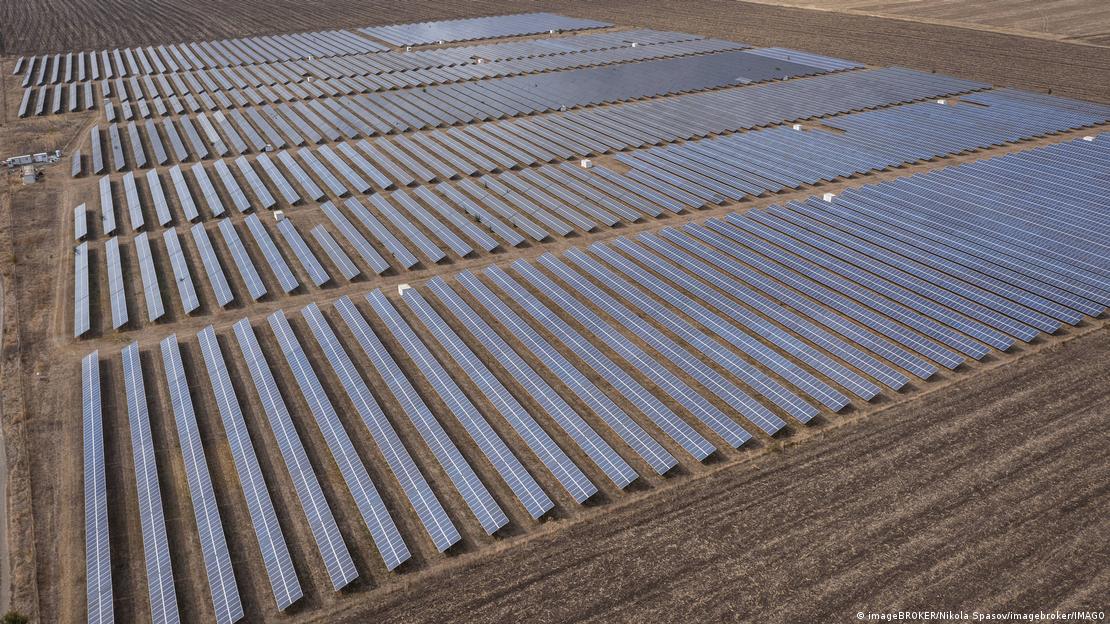
Bulgaria used its batteries this summer as a key grid stabilizer for neighboring markets
imageBROKER/Nikola Spasov/imagebroker/IMAGO

And while experts say the Bulgarian battery boom went "under the radar," it remains to be seen how this rapid development will affect the other generators of power, whether the current business model is sustainable and whether private investment will dictate a shift in the national strategy for the country's energy transition.

What is the Bulgarian battery boom?


In January 2026, a report by the energy think tank Ember estimated Bulgaria's battery capacity — both operational and in the pipeline — to be 1.66 GW.

Eight months later, capacity had more than tripled to 5.4 GW, according to data from ENTSO-E. Bulgaria's Ministry of Energy told AFP it had already reached 5.7 GW.

"Two years ago, no one imagined we would have even half of this capacity," Ivaylo Stanchev, editor-in-chief of the business publication Capital, told DW.

Stanchev compiled one of the country's most comprehensive lists of battery projects, filling a gap left by the absence of an official public database. The list itself reflects investment levels that have outpaced official forecasts.
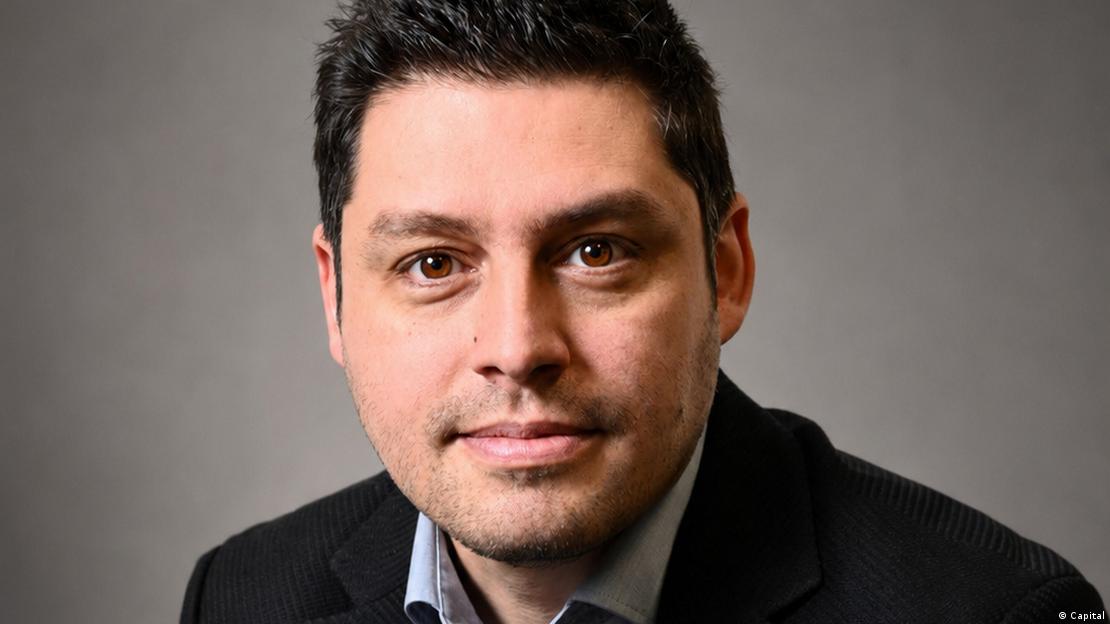
Ivaylo Stanchev, editor-in-chief of the business publication Capital, says that Bulgaria having this kind of battery capacity was unimaginable just two years ago
Image: Capital

While the rapid battery buildout was sparked by the Next Generation EU recovery fund and the subsequent RESTORE programs, which approved €700 million ($797 million) in funding for 113 projects, Stanchev estimates that private investment amounted to almost three times that figure: roughly €2 billion.

Although most of the lithium batteries come from China, the investors are mostly from Bulgaria or from other European countries, which see potential in the growing niche.

How much can the batteries store?

"When fully charged, the batteries can store enough energy to power the whole country for several hours," said Stanchev, drawing a comparison that, although practically impossible, illustrates the scale of the development.

Its effects are already tangible: Bulgaria produces a large amount of solar energy and buys more from Greece and Romania.

Daily prices during the summer tend to be low or even negative during the sunniest hours of the day, allowing batteries to buy cheap energy, store it and discharge it in the evening, when local and international markets need it, at a higher price.

The main export destination is Romania, which was particularly badly hit during the summer as it had to reduce nuclear capacity because of the drought along the Danube.

Bulgaria, historically a net exporter, has thus turned into a regional battery hub, with an operational storage capacity that is now greater than that of Greece and Romania combined.

What is the impact of this rapid development?

There is no measurement that isolates the batteries' specific electricity price contribution, but Bulgaria's average price fell relative to other countries in the region during the first summer of large-scale battery operation.

And while households in Bulgaria are subject to fixed electricity prices set by the state and have not yet seen a reduction in their electricity bills, industrial companies benefited from the change.

"Between August 1 and August 16, the average day-ahead electricity price per MWh in Bulgaria was €132.2 — almost €14 lower than the price in Romania, even though they used to be almost equal," said Stanchev, adding that the difference comes mainly from the evening hours where the batteries' effect is most at play.

Additionally, the batteries bring more security to the grid both domestically and regionally — as well as more revenue from exports and potential tax revenue from the company profits, he explained.
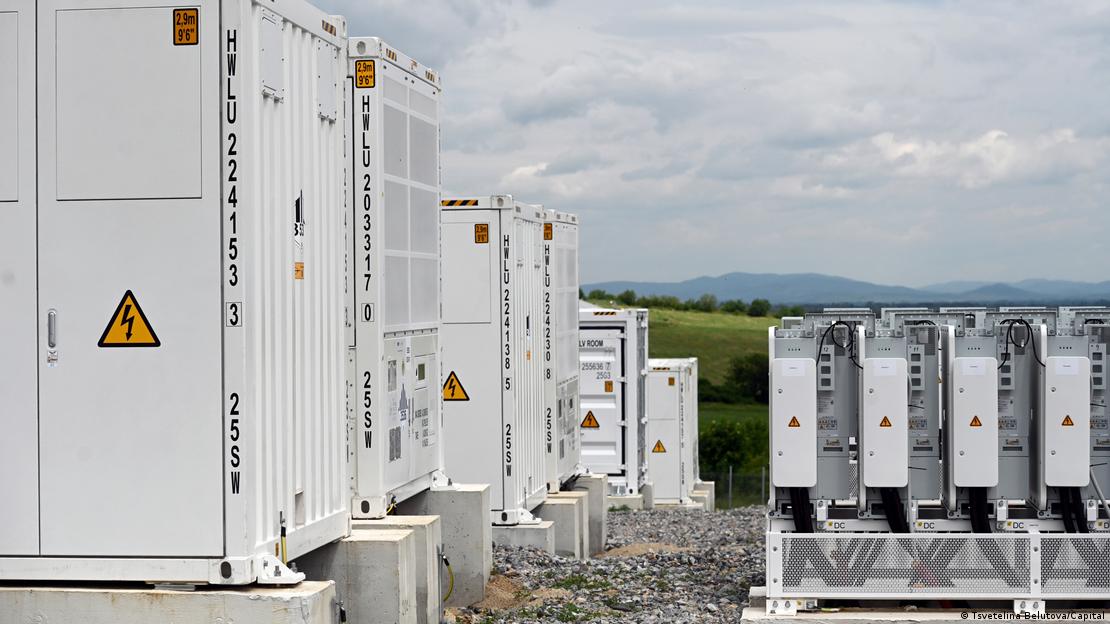
It is estimated that approx. €700 million in EU funding and roughly €2 billion in private money have powered Bulgaria's battery storage boom
Image: Tsvetelina Belutova/Capital

Yet, these effects are part of the summer period snapshot, raising questions about the sustainability of the model throughout the year.
Is this all good news?

"Such record development should always be taken with a pinch of salt," said Kaloyan Staykov, chair of the Management Board of the Energy Management Institute in Bulgaria, adding that the year-long effects of the vast battery buildout "are yet to be seen."

Staykov argues that, while a positive development for the market overall, the shift has come at a cost for conventional energy generators.

"While the electricity price during the evening peak is now down, the generation that used to be more profitable during those hours needs to make up for the lower revenue stream, which pushes up the baseload price," he said.

This issue points to a broader one. "Investments in batteries go beyond any national strategy for what the sector will look like in 10 or 20 years' time," he said, adding that "the role of national strategic roadmaps is changing from a leading one, to a following one."

This comes at a time when Bulgaria is slowly pursuing a transition away from coal, including the expected phase-out of coal mining.

At the same time, the country is advancing the rehabilitation of a massive pumped-storage hydropower plant (Chaira) and intends to build two new nuclear reactors at the Kozloduy Nuclear Power Plant in the years to come.
The rise in renewable energy and the risk of cannibalization

Between 2022 and 2026, photovoltaic buildout in Bulgaria more than quadrupled, according to data from ENTSO-E.
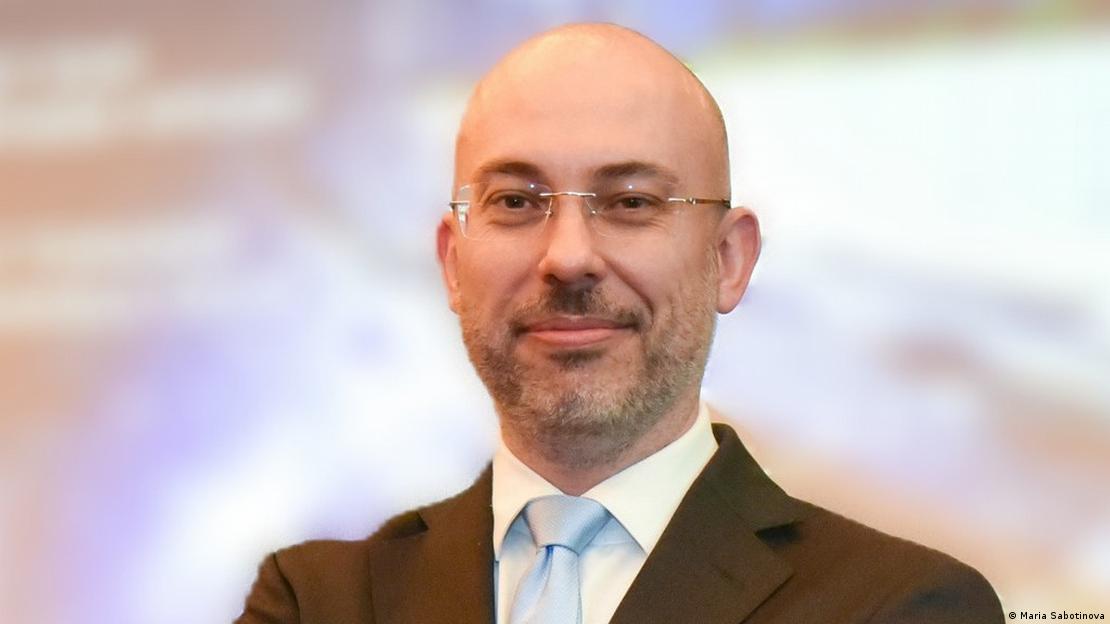
Kaloyan Staykov of the Energy Management Institute in Bulgaria cautions that the year-long effects of the vast battery buildout 'are yet to be seen'
Image: Maria Sabotinova

Private investors seized on the potential offered by this technology by building battery storage at solar parks and elsewhere — a development that was facilitated by the fact that it is in general easy to obtain permits for such batteries in Bulgaria.

Delyan Dobrev, a former MP and energy minister from the center-right GERB party who has recently stepped down from politics, announced in an interview with Focus news agency in September what he describes as advanced talks with US giant Tesla for an additional battery complex — one he says is expected to be among "the largest in Europe."

Yet Staykov warned that it remains to be seen how much more growth the market and grid can absorb in the short-term, as the system adjusts to this new reality and investors realize the first-mover advantage may already be shrinking.

As more batteries connect to the grid, revenue per unit can fall. Yet both Staykov and Stanchev agree that introducing ancillary services that allow batteries to discharge energy to stabilize the grid will be key in the future.

Such a development would be new for Bulgaria and might ease concerns about potential cannibalization, in other words batteries competing away their own margins as capacity grows.

"This year we managed to capitalize on the situation, although no one can predict what the markets will look like this autumn or in three years' time," said Staykov.

Edited by: Aingeal Flanagan


Mihail Ivanov Reporter and correspondent for DW's Bulgarian Service
Why farmers are pairing crops with solar panels
DW
September 25, 2026

From cooler soil to paid grazing land, farmers in the US are finding that solar panels can do more than generate power.


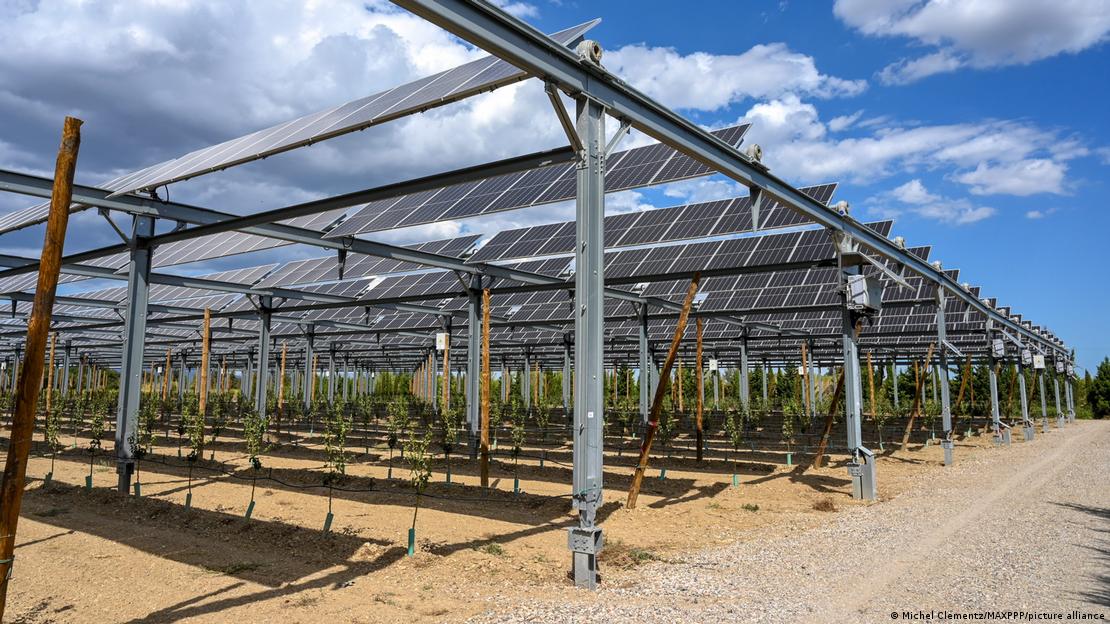
An agrivoltaic pilot project shades a pear orchard in Llupia, France, part of a push to protect crops from droughts, frost and other extreme weather
Image: Michel Clementz/MAXPPP/picture alliance

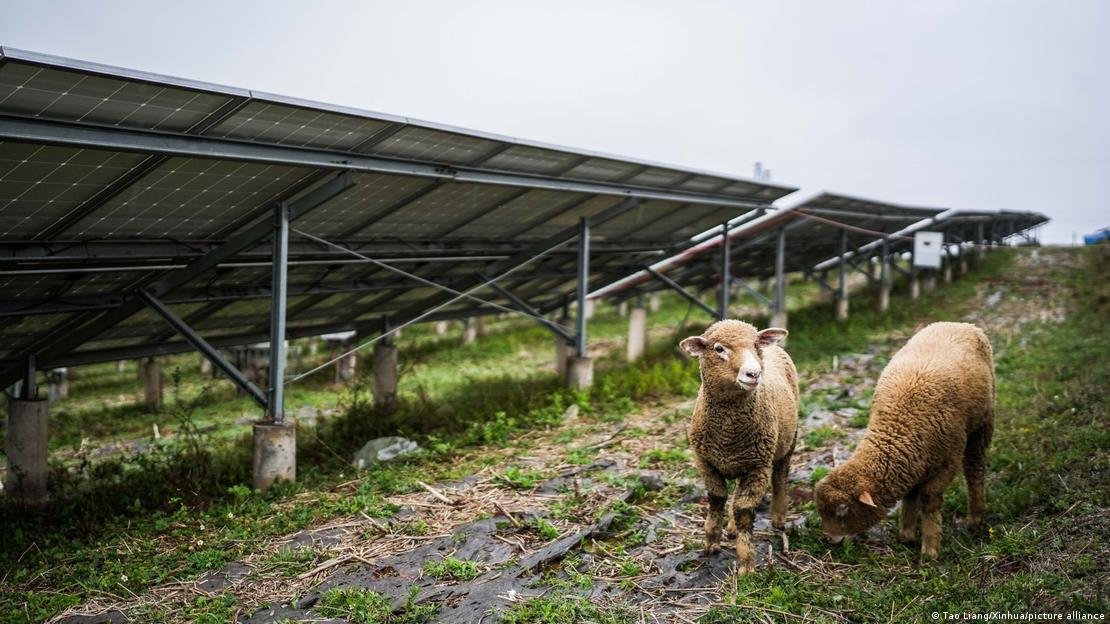
Traditionally, solar panel farms are quiet — save for the faint hum of the inverter. But on about one in 10 of American solar farms, there's a new sound reverberating through fields: baaaa.

Letting sheep roam under solar panels is just one of many forms of a burgeoning strategy called agrivoltaics, where crops grow or livestock graze in tandem with renewable energy infrastructure.

It's not only of potential benefit for the animals, which get additional shade. The panels can also protect crops from the elements as well as divert water to them, creating cooler, damper conditions that even boost yields.

And even the solar panels themselves tend to respond well to this co-existence — as the cooler they are, the more electricity they produce per watt of sunlight.

"Having concrete or something underneath the solar panels — you're going to have lower efficiency than having something like plants that are transpiring and cooling off on the land surface," Carl Bernacchi, professor of plant biology and crop sciences at the University of Illinois Urbana-Champaign, told DW.

While the potential is enormous, especially as climate change puts more and more heat stress on agriculture, the practice is still in its infancy. In Europe, if agrivoltaics were implemented on just 1% of available agricultural land, the continent could exceed its solar energy targets for 2030.

But uptake has been slow: agrivoltaics represents just 18.4 gigawatts of energy worldwide as of mid-2025, less than 1% of the world's solar capacity.

Sheep graze under solar panels in Guizhou province, southwest China, part of a growing practice of pairing livestock with solar energy production
Image: Tao Liang/Xinhua/picture alliance

What thrives under the panels


The idea for agrivoltaics dates back to 1981, when two German scientists published an article titled "Kartoffeln unter dem Kollektor" (or "Potatoes beneath the collector"). But the first pilot project didn't begin until 2004 in Japan, a land-constrained country, where there's particular concern over balancing solar deployment with the protection of farmland.

There are three main types of agrivoltaics: horizontal, where panels look directly up at the sky, vertical, where they're placed in large rows, perpendicular to the ground, and integrated, often installed atop greenhouses.

Research suggests shade-tolerant crops stand to benefit. That includes berries, grapes and tomatoes — where the panels' steel framing often doubles as trellises — as well as peaches and peppers.

The panels can also prevent water from fully evaporating, creating a more humid microclimate that benefits the soil — though humidity is a double-edged sword, sometimes introducing plant disease.

Sheep have also proven to be a particularly good match. Compared to cattle or goats, they're generally easier to manage around solar infrastructure, less likely to damage equipment, and small enough to fit comfortably beneath panels. The practice has other sustainability upsides too: sheep manure fertilizes the soil, and sites require less herbicide.

"If we look at the sheep industry, this has been a real paradigm shift for them, where instead of having to pay to lease land to graze their animals — now they're actually getting paid to graze," said Austin Kinzer, an agrivoltaics specialist at the American Farmland Trust conservation movement . "So it completely puts the economics on its head and is a huge opportunity for the sheep industry, which is really struggling in the US pretty much since World War II."


Solar panels raised on steel supports shade a French orchard, one of several agrivoltaic setups now in use across Europe
Image: Michel Clementz/MAXPPP/picture alliance


A double climate win

Agrivoltaics sit at a rare intersection of climate mitigation (cutting emissions) and adaptation (adjusting to a warming planet).

"It is both, which is pretty unique as far as climate solutions go," Kinzer said.

The practice offers one answer to where solar panels could go, helping to produce cheaper and more efficient energy, while also benefiting crops that might struggle due to rising temperatures or volatile weather.

And research suggests that climate change will only make regions grow drier, "broadening areas where agrivoltaics can mitigate crop yield penalties (even boosting yield) and improve overall profitability," writeresearchers in a journal article for Proceedings of the National Academy of Sciences (PNAS).

A dual-income stream can also offer farmers some insurance should temperature or weather knock out a season's plantings.

"Being able to have that alternate form of income, it's massive for folks who are depending on weather to make their living that is becoming increasingly more extreme and varied," Kinzer said.

Not every farm benefits


So why has adoption been so slow?

"In theory, it's a win-win scenario," Bernacchi said. "But of course, with any technologies, there are always caveats and issues."

One reason is that agrivoltaics don't work everywhere. In America's arid West, where heat stress and less available water can threaten crops, yields stayed the same or even rose under panels. In the humid Midwest, on the other hand, panel shading limited photosynthesis and led to reduced yields in maize and soybeans.

For cash crops, where there's a very small margin for profit, even a minor reduction in yield is a no-go for many farmers.

Then there's the expense. For solar producers, every added inch to mount panels higher means more labor and steel costs. And farmers might need to find new equipment or change methods to adapt to a new system.

"Farmers want to learn from other farmers," said Kinzer, who works with farmers across the US to see how agrivoltaics are being adopted. "They want to hear from folks who are doing it. And so there's a little bit of a chicken-and-the-egg problem for farmers: In most cases, they can't just go across the street or into the next county over and see a project like this and talk to the farmers doing it."

Bridging the divide between farmers and solar

Solar power's land footprint has made it controversial in certain communities — some farming associations have protested converting farmland into acres of solar panels, arguing their members cease to be farmers and become energy producers instead.

It's a tension agrivoltaics helps to address.

One survey found that more than 80% of Americans would be more likely to support solar development in their community, if it allowed for the co-production of energy and agriculture — about 10% more than those that support solar development in general.

"There's this cultural conflict between the farmers who want to farm and the solar companies that want to produce electricity," Bernacchi said. "And agrivoltaics really does bill itself as sort of a middle ground. You can still farm and still get the electricity from the same land."


Edited by: Tamsin Walker

Josh Axelrod Reporter covering extremism, disinformation and technology.
Three-way race: Who will win power in chess?

Holger Hank
DW
September 24, 2026

The era of Russian presidents is coming to an end at the World Chess Federation (FIDE). Two Germans and one Kazakh are up for election. Among the issues at play are money, Kremlin influence, and unanswered questions

FIDE presidential candidate Wadim Rosenstein is also an avid player
Image: Meurer/Beautiful Sports/IMAGO


"Gens una sumus" ("We are one family") is the motto of the World Chess Federation (FIDE). Yet when officials from some 200 countries gather for their congress in Samarkand on Saturday, September 26, it is not likely to feel like a joyous family reunion.

A new FIDE president is to be elected in Uzbekistan, and a three-way, politically charged race for the post has erupted, with the outcome uncertain. It has been clear since July that the incumbent FIDE president, Arkady Dvorkovich, would not be standing for re-election. The European Union had placed the former Russian deputy prime minister on its sanctions list due to his support for Russia's war of aggression in Ukraine.
Three entrepreneurs vying for the top job

The candidates standing for election are Kazakh billionaire Timur Turlov and two Germans: investor Jan Henric Buettner and entrepreneur Wadim Rosenstein, who is running as the official candidate of the German Chess Federation (DSB).

For the first time in over 30 years, FIDE will not be led by a Russian. Nevertheless, the three contenders repeatedly face two questions: What are their ties to Russia? And where do the millions come from that FIDE uses to finance itself and its competitions? For the Kremlin, chess remains a component of Russia's soft power, and little happens within FIDE without financial backers linked to Russia.


Jan Henric Buettner: The Formula 1 model

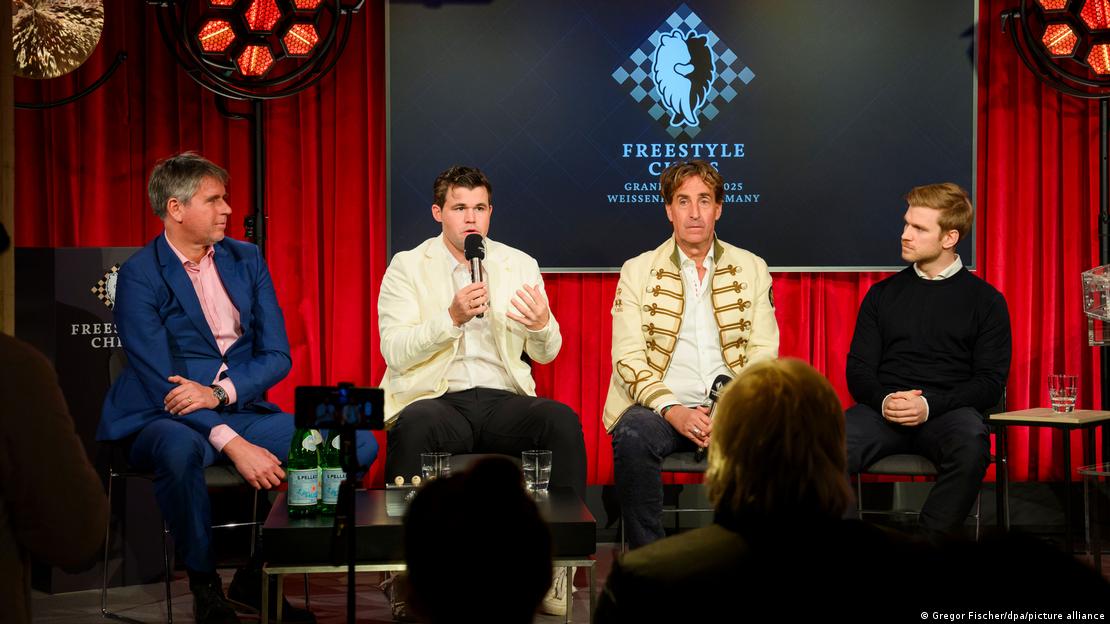
Buettner is arguably the best positioned to answer these questions. A native of Hamburg, he has made a name for himself in the chess world through his collaboration with former world champion Magnus Carlsen. The 62-year-old German has no known ties to Moscow that would require explanation. On the contrary: "We are the only team with no connection to Russia," Malcolm Pein — Buettner's candidate for vice president — told DW.

Jan Henric Buettner (3rd from left) is championing "Freestyle" chess alongside former world champion Magnus Carlsen (2nd from left).Image: Gregor Fischer/dpa/picture alliance

Buettner and his running mate say they intend to reduce reliance on Russian financial backers and make chess commercially successful. Buettner plans to distribute 20% of FIDE's revenue to chess federations worldwide. The former AOL executive looks to Formula 1 motor racing as his model – a vision likely considered too radical by many officials in the chess world. Consequently, Buettner is seen as having only an outside chance of winning.

Timur Turlov: The establishment candidate


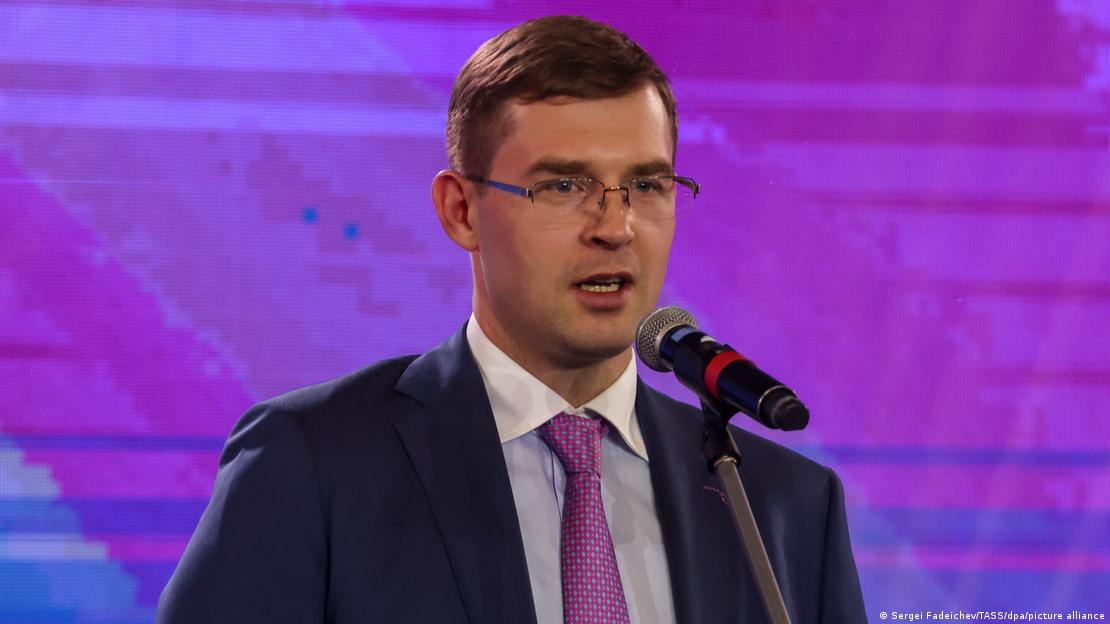
The favorite to become FIDE's new president is Timur Turlov. Born in Moscow, he became a Kazakh citizen in 2022 and is one of the wealthiest men in the Central Asian nation. The entrepreneur is considered a close associate of outgoing President Dvorkovich and, by extension, a member of the FIDE establishment. Regarding finances, too, the status quo is likely to remain unchanged under the 38-year-old; after all, Turlov's publicly traded financial firm, Freedom Holding Corp., has been FIDE's main sponsor for many years.

The prospect of Turlov potentially holding the dual roles of FIDE president and major financial backer does not sit well with everyone in the chess community. Furthermore, Freedom Holding Corp. and its CEO are currently on Ukraine's sanctions list. Ukrainian authorities accuse Turlov's company of helping to finance Russia's war of aggression. Press reports also suggest that the US Securities and Exchange Commission (SEC) has taken an interest in Turlov's financial firm.
Report: Hamburger Sparkasse closes account

In the spring of 2026, Turlov acquired the Hamburg-based chess software company Chessbase. Shortly thereafter, the German chess news website perlenvombodensee.de reported that the company's principal bank, Hamburger Sparkasse, had closed the Chessbase business account.

Timur Turlov of Kazakhstan is considered the favorite in the race for the FIDE presidency
Image: Sergei Fadeichev/TASS/dpa/picture alliance

Chessbase declined to comment on the matter. Hamburger Sparkasse also did not address the specific case but told DW: "If a business relationship falls under currently existing sanctions – for example, against countries such as Russia, Belarus, or Iran – this may unfortunately result in us being unable to continue specific business relationships."

DW approached Timur Turlov for comment but had received no response by time of publication.

The position of Volodymyr Kovalchuk, vice president of the Ukrainian Chess Federation is clear.

"If Turlov wins the FIDE election and poses a threat to Ukraine's security, then we will push for him to be sanctioned by the EU as well," Kovalchuk told DW.

However, there are now signs of a rapprochement between Turlov and the Ukrainians: Turlov is currently advocating for a Ukrainian official to be elected as a vice president on the FIDE board.

Wadim Rosenstein: Many outstanding questions

The third figure in the mix, Wadim Rosenstein, is also facing intense scrutiny in Ukraine.

"It is absolutely clear that we will not support such a candidate and, should he be elected, will also propose him for sanctions," Kovalchuk said.

Rosenstein was born in 1990 in what is now Ukraine and moved to Germany at the age of nine. In the autumn of 2022, the entrepreneur and amateur chess player began organizing elaborate chess events.

Questions have dogged him ever since, with his business activities and connections to Russia being the primary focus of this scrutiny. According to Rosenstein, the companies within his Düsseldorf-based "WR Group" operate in various sectors, ranging from toilet paper trading and real estate to industrial logistics. Until 2022, a key focus was supporting German companies in regions including Ukraine and Russia, Rosenstein told DW a few months ago. However, he said he was no longer active in Russia; instead positioning himself "globally" across "70 countries," including Kazakhstan, Uzbekistan, and Turkey.

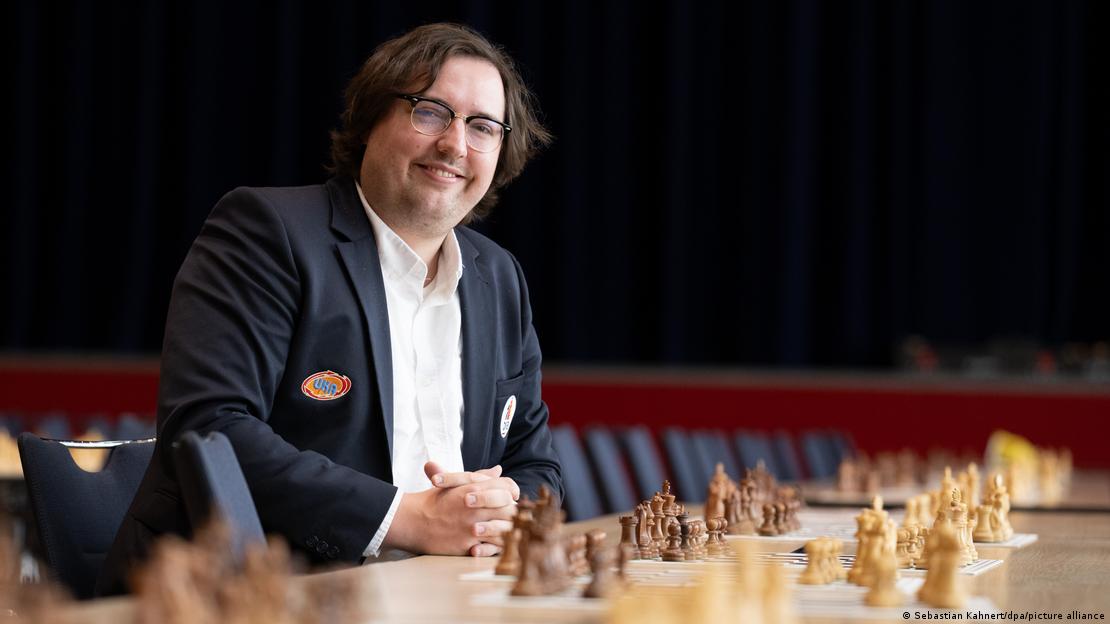
DSB President Paul Meyer-Dunker supports Wadim Rosenstein's bid to become the next FIDE presidentImage: Sebastian Kahnert/dpa/picture alliance


The company in Russia

However, one of the Düsseldorf entrepreneur's remaining companies in Russia has enjoyed economic success in recent years. In July, Rosenstein told DW that these companies were active "only on paper."

It has since become clear that "WR RUS," at least, is anything but a paper tiger. The Moscow-based company has been owned by Rosenstein since 2021. Publicly available data show that "WR RUS's" profit grew from around €300,000 ($341,230) to €1.7 million ($1.93 million) between 2022 and 2025.

Furthermore, records confirm that Rosenstein's German companies – "WR Logistics" and "WR Certification" – collaborated with "WR RUS" through the end of 2023. Documents from "WR RUS" also show a dividend payment equivalent to around €30,000 for the year 2023, which apparently went to him and one of his German companies.

DW again approached Wadim Rosenstein for comment on these matters but received no response by the time of publication of this report.

High-priced players, upscale venues

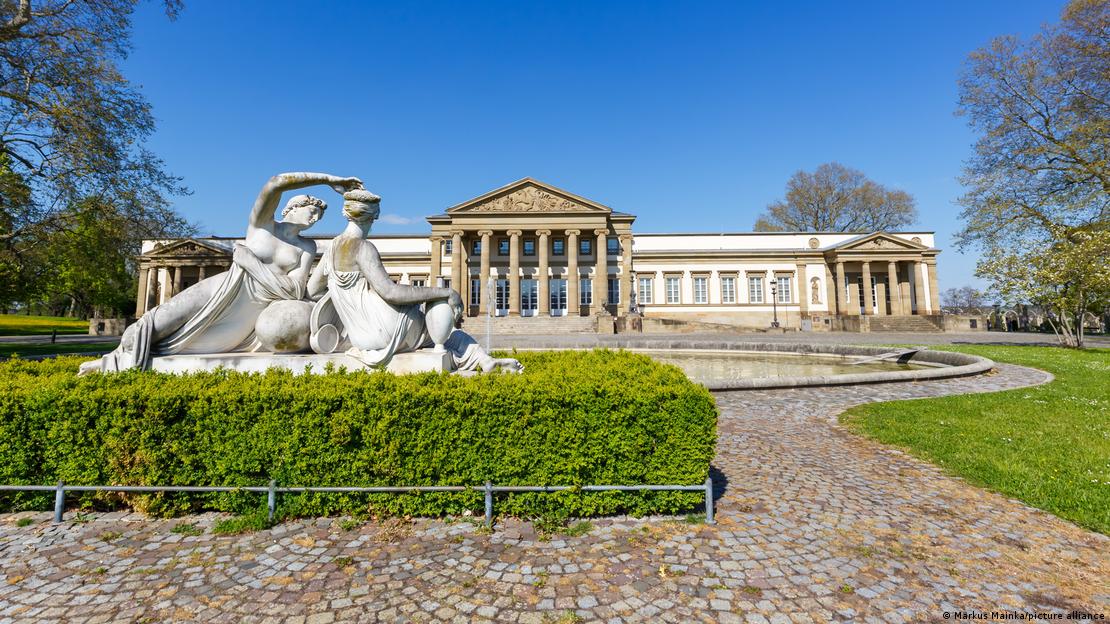
Since 2022, millions have been poured into Rosenstein's elaborate chess events year after year. The list of Rosenstein's events is long: it includes a top-tier tournament featuring world number one Magnus Carlsen, the 2023 World Team Blitz and Rapid Chess Championship at the prestigious Rheinterrasse in Düsseldorf, and, most recently, the global "WR Women's Chess Tour." A premium venue in Stuttgart has been selected for the tour's finale in November – a location whose name the sponsor is likely to appreciate, Rosenstein Palace.

A grand setting for the WR Women’s Chess Tour 2026: 
Rosenstein Palace in Stuttgart.
Image: Markus Mainka/picture alliance

The FIDE presidential campaign is also costly. On social media, Rosenstein presents himself aboard a private jet during an international campaign tour. According to the Frankfurter Allgemeine newspaper, a portion of the campaign costs is to be covered by Rosenstein's running mate for the vice-presidency – a wealthy real estate entrepreneur from Singapore.

Rosenstein has not disclosed the total cost of his numerous chess activities to date or the exact source of the funds. His company, "WR Logistics," is one of the main sponsors. Rosenstein told DW in July: "I have also used my own funds and brought on partners who trust me."


But who are these partners?


A sponsor that didn't exist

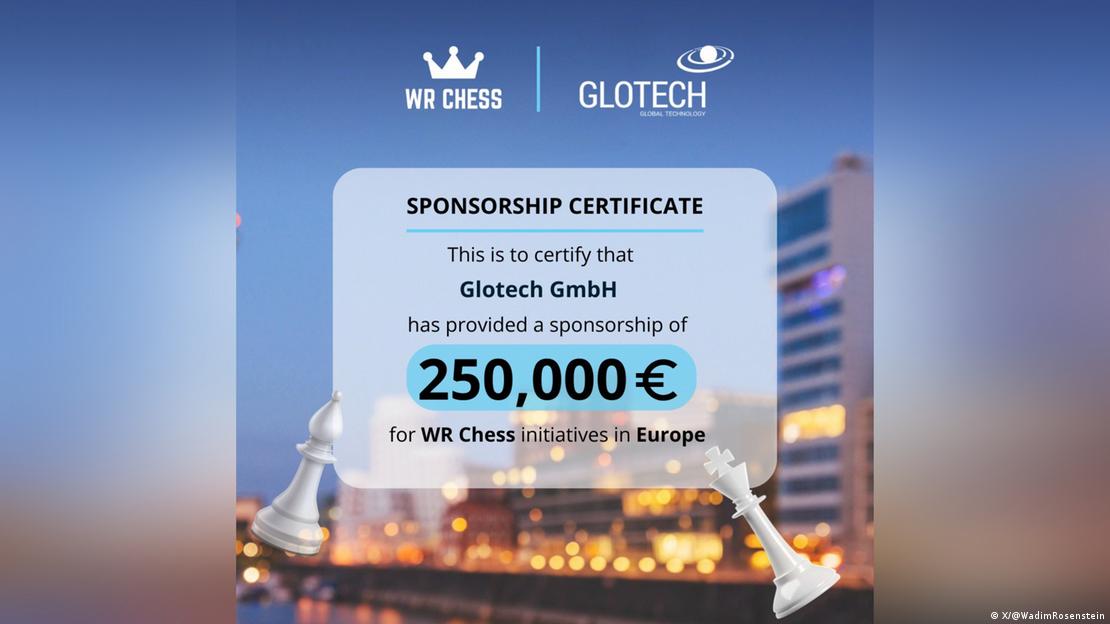
While Rosenstein was preparing his FIDE candidacy in April 2026, he introduced the Düsseldorf-based company "Glotech." He stated he was "proud to introduce our next partner." The sponsor is reportedly providing €250,000 for chess activities in Europe. According to Rosenstein, Glotech is "a true supporter of our vision."

However, according to Glotech Managing Director Evgeni Schukin, this support never existed: "There was no agreement, and we did not make such funds available."
A professional-looking certificate: According to "Glotech GmbH," there was no sponsorship agreement (the graphic, which has since been deleted, was published on Wadim Rosenstein's "X" account in April 2026).
Image: X/@WadimRosenstein

Rosenstein is campaigning primarily on the pledge that FIDE would operate "professionally" under his leadership. On his official website, "WR 2026," he promises transparent and direct communication.

DW approached Rosenstein for comment on the financing of his chess activities, but he did not respond.

Political connections


With the support of the DSB and its president, Paul Meyer-Dunker, Rosenstein has succeeded in establishing himself as a serious challenger to the Turlov, the favorite within FIDE.

The 36-year-old also enjoys support from the world of German politics. In early September, Rosenstein met with Bavarian Interior Minister Joachim Herrmann.

"Joachim Herrmann supports the candidacy of the German applicant Wadim Rosenstein," a subsequently issued statement read.


The Bavarian Interior Ministry told DW that this support related to the "sport-specific focus" of the bid but did not constitute "an assessment of Mr. Rosenstein's private or business activities, nor a prejudgment of any potential reviews by competent authorities."
Online debate cut short

The DSB only learned of the meeting between its FIDE candidate and the Bavarian interior minister after the fact. According to Meyer-Dunker, the DSB supports Rosenstein because he stands for "consistent professionalization" and "greater transparency" within the World Chess Federation. The DSB "has no information regarding Wadim Rosenstein's business activities beyond what has appeared in public reports," Meyer-Dunker said.

Rosenstein had an opportunity to address questions and explain his plans for FIDE's finances in early September. A US chess website had organized an online debate for the candidates. Rosenstein delivered the opening statement; he spoke for just under four minutes, then suddenly exclaimed: "See you in Samarkand!" before cutting the connection.

DW has approached Rosenstein several times to ask why he did not participate in the rest of the discussion regarding FIDE's future. There has been no response to this either.

Dasha Thyssen contributed to this article as a co-author. This article was originally written in German.

Volvo safety technology can warn other drivers of cyclists ahead

25.09.2026, DPA

Photo: Stefan Sauer/dpa

By Jack Evans, PA Motoring Correspondent

Volvo is rolling out a range of new safety features to its latest range of electric cars.

The new Connected Safety features can be used to alert other drivers of hazards ahead, giving them "more time to adapt and drive more safely," according to the brand.

Introduced via a new software update, the feature includes a Large Animal Alert, which can warn other road users if a large animal is detected ahead, as well as a Vulnerable Road User Alert which will do the same but for when pedestrians and cyclists are detected in front of the vehicle.

The Roadwork Alert will then warn other road drivers when roadworks are detected ahead, while the Accident Ahead Alert will use real-time connected data to warn of accidents ahead.

All of these functions will soon be available in Volvo’s EX90, ES90 AND EX60 vehicles and will work alongside each vehicle’s existing safety systems.

Åsa Haglund, head of Volvo Cars Safety Centre, said: “Built on decades of our real-world safety insight, these innovations represent another step towards our vision of zero collisions.

“Every time a Volvo car shares safety intelligence, it helps other drivers prepare earlier to avoid accidents and feel safer.”

Volvo will also be rolling out a new feature which will allow users of Apple CarPlay to take advantage of upgraded Spatial Audio, which is equipped on EX90 and ES90 cars with Dolby Atmos technology. Used with the Bowers and Wilkins sound system, the Spatial Audio provides a higher-end sound which can now be accessed when playing music through Apple CarPlay, rather than just through the car’s native media player.

U2 go back to school, where they formed, for special performance

25.09.2026, DPA

Photo: Rich Fury/PA Wire/dpa

U2 have returned to the Dublin school at which drummer Larry Mullen first sought out his fellow bandmates 50 years ago.

The Irish rock legends put on a special performance at Mount Temple Comprehensive School in front of hundreds of students on Friday.

This month, five decades ago, Mullen is said to have pinned a note stating “Drummer seeks musicians to form band” on the school noticeboard.

On Friday he joined Bono, whose real name is Paul Hewson; The Edge, whose real name is David Evans; and Adam Clayton for 30 minutes of music – in homage to when the international music stars used to play on top of the school’s boiler house.

They are among the world’s best-selling music artists, having sold 170 million records.

It comes as the band promote their new album "Carnaval De Luz," which features a duet between Bono and Dolly Parton.

It is the band’s 16th album and the first of new material since "Songs Of Surrender" in 2017.

There was a carnival atmosphere as hundreds of children crowded into an area of open ground beside the school boiler house, while others stuck their heads out of the surrounding classroom windows.

They cheered and screamed while holding up signs for their alma mater, while scores of journalists from the international media also watched on.

News of the unique gig, which was attempted to be held as a closely guarded secret, had clearly broken out beyond the grounds as fans outside the gates – and builders several stories up on a nearby construction site – also sought to catch a glimpse of the excitement.

A major production with several moving cameras captured the performance, which was blasted over a loud sound system across the schoolyard into the surrounding Clontarf.

Taking to the stage after the system played Alice Cooper’s "Schools Out," Bono grabbed the mic and pointed to the school science lab.

Before launching into "I Will Follow," he joked to the school: “We escaped the lab – how’s the experiment going for you?”

The quips kept coming with some educational advice before the opening “uno, dos, tres, catorce” countdown for "Vertigo," Bono said: “If you’re taking Spanish lessons, don’t take them from me.”

An Irish tricolour waved as the crowd heaved and jumped along – with Bono noting the students were “out of control.”

While at times short for words due to the spectacle, the Dubliner said Ireland was an island full of sound and music, adding: “We’re so proud to be Irish.”

Reflecting on their time at the school and paying tribute to their teachers, Bono said: “Learning how much you need to be taught was – and continues to be – the humblest and hardest lesson for the four of us.

“Part of that started here and the sense was that maybe all we needed was around us, just under our feet – if we could see it in our mates, our wider community that was going to help us get through the next 50 years.

“So we want to thank them – and the wider community around this rock ‘n’ roll high school.”

Children cheered “I love you Bono” as the multi-generational audience sang along and took videos and pictures.

On behalf of the band, he thanked them for turning up but noted the children of the “rock ‘n roll high school” had “nowhere else to go” during the afternoon gig.

Supported by children on traditional Irish instruments from the Music Generation, a national music education programme supported by the band, those gathered were also treated to a rendition of One.

A chanted demand of “one more tune” elicited an encore of With Or Without You before the band left the improvised stage of the boiler house – 50 years after coming together.

Burnham faces unrest among Labour big beasts ahead of party conference

26.09.2026, DPA

Photo: Toby Melville/PA Wire/dpa

UK Prime Minister Andy Burnham faces unrest among Labour’s big beasts as he heads into his first party conference.

Ahead of the gathering in Merseyside, Peter Kyle – who served as former prime minister Keir Starmer’s business secretary – warned that Burnham was not doing enough to boost economic growth.

Communities Secretary Angela Rayner meanwhile used a pre-conference interview to hit out at plans by her Cabinet colleague Shabana Mahmood to lengthen foreign social care workers’ path to claiming permanent settlement.

The prime minister is due to give a speech at the conference on Tuesday, which he hopes will set out the guiding purpose for the rest of Labour’s term in power.

Speaking to the BBC, former minister Kyle suggested the government needed to make more short-term decisions to boost growth, like slowing the rollout of new workers’ rights.

“We might need to look and have honest conversations with unions about how we sequence some of the rights going forward in order to make sure that we get growth into the economy in the shorter term,” he said.

Kyle insisted he was not making a criticism of the government, but “pointing to the potential that we have as a country and as a government.”

The senior Labour figure, who also served as science secretary, added: “If the destination means prosperity, it means freedom for people to do new things, and it means security for people and families, then why wouldn’t we put our foot down and get there quicker?”

Elsewhere in an interview with the Times, Rayner hit out at plans to make it harder for migrant workers to claim settled status in the UK, warning it would “change the goalposts.”

The reforms will increase the timeline for permanent residence from five years to 15 years for foreign social care workers, and will apply to all those who have come to the UK since 2021.

The communities secretary, who was a vocal opponent of the migration proposals when she sat on the Labour backbenches under Starmer, stood by her previous description of the package as “un-British.”

The plans are also opposed by other figures across Labour, and could be the source of a row at the party conference.

Asked whether she had raised the issue with her colleague Mahmood, the home secretary, Rayner told the Times: “I think Shabana knows. It was in the newspaper at the time. I have not changed my view on that.”

Culture Secretary Lisa Nandy hit back at Kyle as she appeared on BBC Radio 4’s Today programme, suggesting Burnham was moving faster than his predecessor as prime minister.

She told the programme: “I think the the reason, frankly, that we had a change of leadership at the start of this year is because we all felt that people need to feel the change in their lives that we promised in 2024 much more quickly.”

Burnham is “impatient for change, and he thinks big about the sort of change that the country needs,” she added.

Nandy also said she did not think the planned changes to migration law were “un-British”, adding: “I don’t think that we’ve ever had an automatic right to citizenship for most people who come to the UK from overseas.”

Ahead of the conference, Burnham used used a marathon broadcast interview round to “knock dead” a rumour he is considering an early general election.

Writing in this year’s conference guide, Burnham meanwhile described attending the conference as his party’s leader as “a huge honour.”

He added: “I joined our party when I was 15 for the same reason so many of you did – to help change our communities and to build a better, fairer country.

“And that is the focus of this Labour government.

“For too long, politics has not been working for people across Britain. We need to do better – and we will.”

Berlin's Left opens path to coalition talks with Greens, SPD

25.09.2026, DPA

Photo: Sebastian Gollnow/dpa

The Left Party, which emerged as the clear winner of Berlin's state election, plans to open exploratory talks with the Greens and Social Democrats (SPD) on forming a new government in the German capital.

Delegates at a party conference approved the move by a large majority on Friday evening. The far-left party's leadership is now expected to formally invite both parties, with talks potentially beginning next week.

The Left plans to meet the Greens and SPD separately before moving to three-way discussions.

The Greens have agreed to exploratory talks, while Berlin SPD leader Steffen Krach has also expressed willingness to take part, although he stressed that they would not automatically lead to formal coalition negotiations.

The Left won Sunday's election to Berlin's state parliament with 25.7%, followed by the conservative Christian Democrats on 18.8%, the far-right Alternative for Germany on 16.3%, the Greens on 14.3% and the SPD on 12.1%.

Berlin is currently governed by a CDU-SPD coalition. Following the election, only three-party alliances have enough seats for a majority.

If successful, the Left's lead candidate Elif Eralp would become the party's first Berlin mayor and the first person of Turkish heritage to lead the German capital.

German chemicals giant BASF sounds out Evonik over potential takeover

25.09.2026,

dpa
Photo: Uwe Anspach/dpa

By Marco Engemann, dpa

German specialty chemicals group Evonik confirmed on Friday that larger rival BASF has made a non-binding approach over a possible takeover of the Essen-based company.

BASF has also later confirmed exploratory contacts with Evonik and its largest shareholder, the RAG Foundation, over a potential acquisition.

"The course and outcome of the exploratory talks are currently open," the Ludwigshafen-based chemicals giant said.

Evonik said BASF's non-binding approach concerned a possible voluntary public takeover offer for all of the company's shares. 

But no talks are currently taking place, it added.

BASF said it regularly examines potential acquisitions as part of its corporate strategy, including deals that could strengthen its core businesses and promote profitable growth and value creation.

The confirmations followed reports by the Financial Times and Bloomberg. According to Bloomberg, BASF has been exploring a possible deal with advisers for several months.

The Financial Times, citing people familiar with the matter, reported that BASF had discussed a potential takeover not only with Evonik but also with the RAG Foundation.

The foundation confirmed that BASF had approached it about a possible voluntary public takeover offer but declined to comment further.

The RAG Foundation holds around 43.8% of Evonik, meaning its position would be crucial to any potential deal. It also noted that it currently has three outstanding bonds carrying rights to be exchanged for Evonik shares.

BASF seeks to strengthen position

According to the Financial Times, BASF sees an acquisition as a way to expand its geographic footprint and product portfolio and strengthen its position against Chinese competitors.

A takeover would be a major deal given Evonik's market capitalization of more than €8 billion ($9.1 billion).

The potential deal comes as the chemicals industry grapples with sharply higher energy costs stemming from the war in the Middle East, although shortages of some products have allowed certain companies to benefit from higher selling prices.

BASF has been cutting jobs and restructuring its operations. The company said in July that it had eliminated around 7,000 jobs worldwide between January 2024 and the end of June 2026.

At the same time, higher prices allowed BASF chief executive Markus Kamieth to raise the company's profit forecast for the current year.

Alongside job cuts, particularly at its main Ludwigshafen site, BASF has been reshaping its portfolio.

At the end of June, it completed the sale of a 60% stake in its automotive coatings business to US investment firm Carlyle. BASF retains 40% of the resulting joint venture, Surventis, but ultimately plans to exit the business completely.

The company also plans to list its agricultural business on the Frankfurt stock exchange.

Evonik also cutting costs

Evonik is also pursuing cost reductions despite raising its earnings outlook over the summer.

The company plans to cut another 3,200 jobs by the end of 2029, including 2,150 in Germany. It has also announced plans to discontinue its unprofitable polyester business, which generates annual sales of around €150 million.

Evonik is also withdrawing from commodity businesses, with further divestments planned. The company is seeking to separate its standard chemicals activities in the Performance Materials division.

Chief executive Christian Kullmann is currently absent due to illness following an operation, with Asia chief Claus Rettig standing in for him.

WTO takes up Russian challenge to EU carbon trade measures

25.09.2026, DPA

Photo: Patrick Pleul/dpa

The World Trade Organization (WTO) is to examine a Russian complaint alleging that the European Union's carbon border levy and its emissions trading system violate international trade rules.

Russia submitted a second request for a WTO dispute panel to determine whether the EU's Carbon Border Adjustment Mechanism (CBAM) and an alleged export subsidy under its Emissions Trading System (ETS) are consistent with the bloc's WTO commitments.

The EU had blocked Russia's first request for a panel in July. Under WTO rules, however, a panel is automatically established following a second request.

Russia argues that CBAM creates significant trade barriers for goods imported into the EU.

The mechanism is designed to ensure that certain imports face carbon costs comparable to those imposed on products manufactured within the bloc, with the aim of preventing companies from shifting carbon-intensive production abroad.

Moscow also argues that the EU's allocation of emissions allowances to certain companies under the ETS amounts to an export subsidy intended to make European industries more competitive.

The EU said it was extraordinary that Russia, which it said continues to "wage its war of aggression against Ukraine," was seeking to invoke international law to improve access for its exports to the European market.

It said it would participate in the proceedings to reaffirm its support for the rules-based multilateral trading system rather than to legitimize Russia's actions.

The EU also expressed confidence that both CBAM and the ETS comply with WTO rules.

Ai Weiwei places new art outside Sydney museum inspired by Ukraine war


25.09.2026, DPA

Photo: Bianca De Marchi/AAP/dpa

Chinese artist Ai Weiwei unveiled an installation of 500 cast-iron combat helmets outside the Museum of Contemporary Art Australia in Sydney on Friday, inspired by Germany's controversial decision to send helmets rather than weapons to Ukraine in early 2022. 

The 40-metre-long installation, entitled "Mushrooms," has been displayed on the public green space Tallawoladah Lawn, overlooking the city's famous harbour. 

The helmets are arranged in 10 even rows on a raised platform, with a central walkway allowing visitors to pass through the middle of the work.

The individual helmets are replicas of various 20th-century combat helmets, complete with their inner padding, and represent both the protection and the vulnerability of human life.

In a statement published by the museum on Friday, the artist said: "In the era we live in, the 21st century, wars have not ceased." 

"We continue to exist in a time where war and peace interchangeably assume each other's roles, shaping the identity of our age. I hope this work prompts people to reflect on war and peace," he said. 

The work is closely linked to a controversial episode in German policy on Ukraine. According to the museum, the starting point for "Mushrooms" was the government's decision to supply Ukraine with around 5,000 protective helmets in early 2022.

Ai Weiwei said the title "Mushrooms" refers to the appearance of the helmets, but also to the properties of fungi: They transform decaying material into new life and represent growth in darkness. He added that the term also evokes mushroom clouds from nuclear explosions.

The installation is free to visit until 2028.