Monday, September 21, 2026

At least four killed as Typhoon Dujuan hits Japan

22.09.2026, DPA


At least four people have died in Japan after Typhoon Dujuan brought heavy rain, flooding and landslides to areas around Tokyo, local media reported on Tuesday.

Six people were reported missing in the greater Tokyo area, public broadcaster NHK said.

Although sunny weather has returned to many places, the ground remains saturated after the heavy rain, raising the risk of further landslides.

The 25th typhoon of the season triggered landslides and flooding in Chiba and Kanagawa prefectures, which both border Tokyo.

In Chiba, three people died as a result of landslides, local media reported.

In Kanagawa, a woman was killed when a landslide struck her home and sent mud pouring into the building.

Dozens of homes were damaged in Chiba and Kanagawa, as well as in Ibaraki prefecture. Roads were flooded, while local rail and air services were also temporarily disrupted.

The typhoon moved past parts of Japan's east coast before heading north-east over the sea.

At least two killed as Typhoon Dujuan hits Japan

22.09.2026, dpa

At least two people have died in Japan after Typhoon Dujuan brought heavy rain, flooding and landslides to areas around Tokyo, local media reported.

Four people were still missing in the greater Tokyo area, public broadcaster NHK said.

Although sunny weather has returned to many places, the ground remains saturated after the heavy rain, raising the risk of further landslides.

The 25th typhoon of the season triggered landslides and flooding in Chiba and Kanagawa prefectures, which both border Tokyo.

In Chiba, a man died in hospital after his excavator was buried by a landslide, local media reported.

In Kanagawa, a woman was killed when a landslide struck her home and sent mud pouring into the building.

Dozens of homes were damaged in Chiba and Kanagawa, as well as in Ibaraki prefecture. Roads were flooded, while local rail and air services were also temporarily disrupted.

The typhoon moved past parts of Japan's east coast before heading north-east over the sea.

Huge typhoon kills two, triggers landslides near Tokyo

Huge typhoon kills two, triggers landslides near Tokyo
/ Pexels - CC - Earth PlanetFacebook
By IntelliNews - Tokyo Bureau September 21, 2026

Two people were killed and at least four were unaccounted for after Typhoon No. 25 triggered landslides across Japan's Kanto region on September 21, the Yomiuri Shimbun reported on September 21.

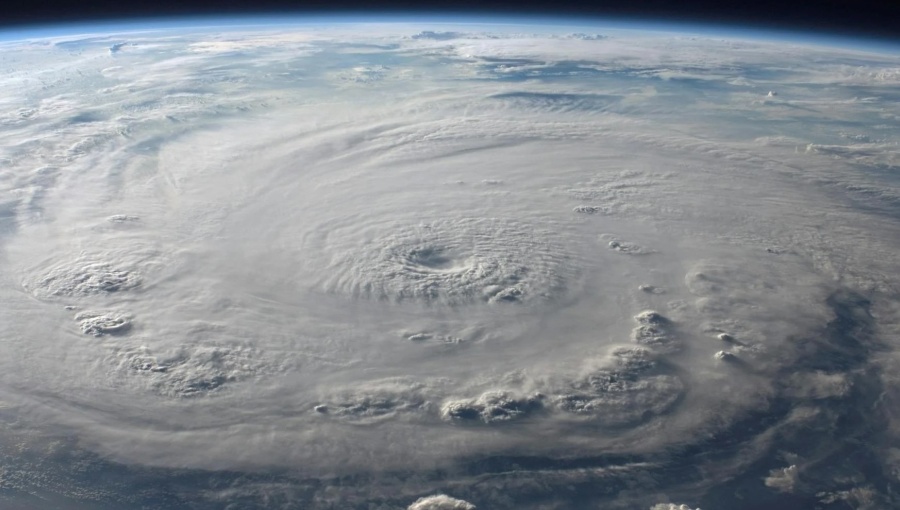
The storm, described by the Japan Meteorological Agency as large and strong, tracked northeast over waters around Tokyo's Izu Islands to the south of the capital and passed closest to the Kanto region during the day, dumping rainfall that in places exceeded a full month's average in 24 hours.

The agency issued a Level 5 landslide emergency warning for the town of Oshima in the Izu Islands at 12:40pm. The alert is the highest of the five warning levels and was only the fourth such issuance, following one covering Oshima and other areas on September 7. It was downgraded to a Level 4 landslide warning at 11pm.

Oshima recorded 686.5mm of rain in the 24 hours to 5:20pm, twice the September monthly average of 341.3mm, according to the agency. Rain intensified across the Tokyo metropolitan area and Shizuoka Prefecture during the afternoon, with hourly totals of 69.0mm in Izu, Shizuoka Prefecture, and 61.0mm in Katori, Chiba Prefecture. Roads were flooded in a number of areas.

The cities of Miura and Yokosuka on the Miura Peninsula in Kanagawa Prefecture said four houses were struck by landslides and five residents were believed to have been caught, including women in their 20s, 30s and 60s and a man and a woman in their 70s. The prefecture confirmed the death of the woman in her 60s in Yokosuka. It requested a disaster relief deployment of the Self-Defence Forces to Miura on September 21.

In Sodegaura, Chiba Prefecture, a 51-year-old man was buried along with his heavy machinery while clearing soil from a road on the afternoon of September 21. He later died in hospital according to reports.

As of 9pm on September 21, the typhoon was about 130km southeast of Choshi, Chiba Prefecture, moving northeast at 35kph with a central pressure of 960 hectopascals and maximum sustained winds near its centre of 40 metres per second. It was forecast to move away to the east of Japan on September 22.

Is Russia going to war with Europe?

Is Russia going to war with Europe?
Europe has stopped simply paying for Ukraine's war and started manufacturing it, and the Kremlin is not happy. Whether that makes a wider war likelier is a separate question, and the analysts closest to the Russian order of battle say it does not. / bne IntelliNews
By Ben Aris in Berlin September 21, 2026

Is Russia about to launch an attack on Europe? In the last few weeks the rhetoric has rapidly escalated and the number of sabotage and arson incidents linked to Russia have escalated fanning the flames of fear. How close is the start of WWIII?

Polish Prime Minister Donald Tusk told parliament on September 17 that allied intelligence pointed to Russian drones and missiles testing Europe’s eastern flank, entering Polish airspace and then being explained away afterwards as accidents. The design is to leave member states that Nato’s "Article 5 is more theoretical than practical". Poland scrambled fighter jets on September 17 as jet-powered drones crossed western Ukraine, and put ground-based air defence on high alert.

"In the Russian plan, according to intelligence assessments, there are also hybrid drone, and missile strikes on countries supporting Ukraine, including Poland," Tusk said. "The threat of provocations by Russia is real and could materialize at any moment."

French President Emmanuel Macron said the next day that Russian hybrid operations were now aimed directly at France and ordered new protection for critical infrastructure and defence-industry sites, Reuters reported.

When CIA Director John Ratcliffe made an unannounced trip to Moscow in August, reportedly to warn against a Russian attack on Nato. The last time the CIA director made an unannounced trip to Moscow was shortly before the Russian invasion of Ukraine in 2022. However, after the trip Lithuanian and Estonian officials reported no increase in the military threat afterwards.

And countries along both sides of the border are making active preparations. Ukraine has already reinforced its border with Belarus. The Baltic states have put up fences and built defences, and Finland completed similar reinforcements this month. Poland's East Shield covers some 700 km of its borders with Belarus and Kaliningrad at a cost of about €2.4bn.

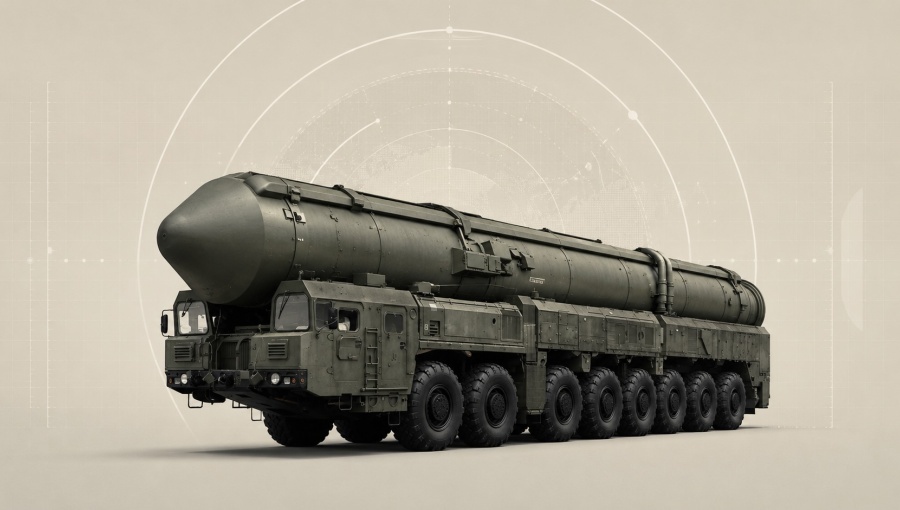
Russia recently built ten new missile launch-pad bases on its side of the Ukrainian and Belarusian borders that now put six Nato states inside Geran range. Behind them sit the powerful Oreshnik and the Iskanders ballistic missiles in Belarus and Kaliningrad that can hit any major capital in Europe.

More worryingly, Belarus ran tank and mechanised battalion exercises from September 15 to 18 at ranges roughly 15 km and 60 km from the Polish border and at Gozha on the Lithuanian frontier, beside the Suwalki Gap, the 104-km corridor that is the only land link between the Baltic states and the rest of the alliance – long seen as the favoured invasion point for Russian troops to take the Baltic states. Minsk called the drills "purely defensive", said they fell below the notification thresholds of the 2011 Vienna Convention and has not disclosed how many troops took part

Belarus President Alexander Lukashenko has also restarted radio relay stations used to guide Russian drones attacking targets in northern Ukraine, after he turned them off following Ukrainian President Volodymyr Zelenskiy’s threat to attack Belarus if they stayed in place.

"On his territory, along two regions bordering Ukraine, there is equipment directing fire at the Ukrainian population," Zelenskiy said in June. "Turn it off, take it down, and show us that it's been taken down. If they don't take it down, we'll take them down." Now the repeater stations are back on, there is a chance that Zelenskiy will follow through on his threat to strike them.

Fears of an invasion have risen to the point where Estonia has put in place plans to evacuate the entire population to Finland if Russia invades. Lithuania has published evacuation routes from Vilnius towards Poland. And both Russia and Germany have released plans to allow hospitals in the region to cope with a sudden surge of mass casualties should hostilities break out.

Dutch Prime Minister Rob Jetten said on September 18 that it was "no coincidence" Tusk was speaking so strongly and that the warning had to be taken "very seriously"; the Dutch defence ministry's own strategy, published in June, put a limited war against Nato members as possible within a year of the Ukraine war ending. But that timely appears to have been brought forward now.

European Commission President Ursula von der Leyen sounded the alarm during her Strasbourg state of the nation speech on September 16, telling the European Parliament that the union was "now dealing with an openly hostile world" and that the EU is now “surrounded by enemies.”

Her list was hybrid rather than military: "cyberattacks and sabotage, arson and drone incursions. They are ramping up every day." She proposed a European version of Article 4 — an emergency security protocol for members that are threatened rather than attacked — and a European Security Council to sit above it.

As tensions escalate, Putin denied Russia has any plans to attack Europe: "We don't want to fight you, we want to cooperate with you… I want to say once again: Russia has no aggressive intentions toward Europe or European countries. We are ready for cooperation and for restoring relations with our European neighbours," Putin told his military-industrial commission on September 18 in televised comments. But then he denied Russia had any intention of invading Ukraine as well, right up to the day before Russians tanks rolled across the border on February 24, 2022.

Another “turning point"?

The “enemies at the gate” rhetoric is reminiscent of the talk of a “turning point” that swamped the airwaves in the run up to the Ankara Nato summit on July 8, where Bankova, Ukraine’s presidential administration, Nato and EU leaders hyped Ukrainian gains ahead of the meeting in an effort to raise a fresh €70bn in funding and more missiles supplies. That talk rapidly faded away after the summit was over that largely failed to meet any of these goals.

Now Ukraine has its back against the wall and the calls for money and missiles are louder than ever. Ukrainian President Volodymyr Zelenskiy revealed in his Independence Day speech earlier this month that the government had a $27bn hole in its defence budget it cannot fill just as it ran out of interceptor missiles completely.

The war in Ukraine has been through a phase change, switching from four and half years of a war of attrition to a full scale total war. This summer Zelenskiy has taken the fight to Russia using new medium- and long-range drones and missile targeting, first Russian oil refineries, and since the end of July Russia's retail sector.

Russian President Vladimir Putin has responded in kind, warning that Bankova had opened “Pandora’s box” and unleashed a brutal retaliation. That includes an effort to systematically destroy Ukraine’s retail infrastructure, taking out 90% of the country’s modern warehousing, hitting megamalls and petrol stations, and most recently targeting over 300 locomotives. The shelves in Ukraine’s supermarkets are emptying, and the country is anticipating the most brutal winter of the war when the heating season starts in November.

As the conflict expands it is now increasingly spilling over into Europe as Ukraine’s only remaining ally goes from funding the fighting to building its weapons. Moscow says that takes Europe from “supporting” Ukraine to become an “active participant” in the war and warns that European defence factors are now “legitimate military targets.”

Fresh interceptor missiles are coming in, in dribs and drabs, and Ukraine’s Ministry of Finance (MinFin) is asking for the second tranche of the €90bn loan, due next year, to be pulled forward to this year. Without it, Ukraine is again facing the same macroeconomic collapse it faced in April, before the €90bn was approved.

With a massive barrage of Russian ballistic missiles and the freezing subzero temperatures of winter looming, Bankova’s need for help is urgent and time is running out fast. Everyone knows what is coming.

Arms production

What has changed is the arms production. Ukraine has all but run out of the critical interceptor missiles it needs to bring down Russian ballistic missiles and the US has halted arms deliveries since US President Donald Trump took over. Ukraine has been reduced to hunting Russian launchers rather than shooting down what they fire. In recent months, Zelenskiy is starting to sound increasingly desperate.

Russia's missile production already vastly outpaces Ukraine's. This week Putin claimed a more than 22-fold increase in deliveries of ammunition and weapons, which has not been independently verified. European stockpiles have been run down to the bottom of the barrel, so to keep Kyiv supplied, dozens of joint ventures have been launched under the so-called Danish model to make weapons in European factories to which are then shipped to the frontline in the Donbas and elsewhere.

Particularly effective have been British-made Nyan drones which only carry a 20kg payload, but as they can fly thousands of kilometres and have state-of-the-art guidance systems, they can pinpoint the most sensitive parts of Russian refineries and put them out of action for months at a time. Previously Ukrainian drones did little more than cause superficial fires and refineries were back in action after only a few days. The Kremlin said the Callen-Lenz factory in Wiltshire that makes the Nyan is now a legitimate target, but has not suggested targeting it with Russia’s ICBMs yet.

In April the Russian defence ministry published the addresses of 21 facilities in 11 European countries making drones for Ukraine — sites in London, Munich, Riga, Vilnius, Prague, Madrid and Venice among them — and Dmitry Medvedev, deputy chairman of Russia's Security Council, called the list a “register of potential legitimate targets for the Russian armed forces.”

And European money is being poured into Ukraine’s defence sector.  The €90bn loan package agreed on in April earmarks €60bn for defence across 2026 and 2027, with the first €5.9bn tranche reserved for Ukrainian-made drones. In particular, Germany has begun series production of long-range drones for Ukraine, and a Ukrainian-European joint venture started building long-range strike drones on EU soil this month – standing on Euro Nato territory that should, in theory, give them Nato Article 5 protection. European leaders are now starting to question the validity of that theory.

Is Europe ready for war with Russia?

Polish Foreign Minister Radoslaw Sikorski told the Yalta European Strategy meeting in Kyiv on September 11-12 that Europe enjoys "overwhelming air superiority", that its air forces could destroy what remains of Russia's refining industry "in six weeks".

“If Russia attacked us and we took our gloves off, I think we would defeat Russia quite quickly,” he said, arguing that Nato enjoys a large advantage in airpower.

“If after six months Ukraine can cause a fuel crisis in Russia with its limited airpower, we can do the same in six days,” said Sirkovsky, estimating that European Nato has some 2,500 more planes than Russia.

Those comments set off a debate on how effective Europe’s airpower is. Kremlin aide and former FSB head, Nikolai Patrushev replied that if Poland tried that, it would “lose its statehood within days.”

Russia has around 1,500 advanced jet fighters and bombers in its fleet that are under a single command and are veterans of a four and half war. Europe’s air forces are divided amongst 21 European commands with little hands-on experience. Eight fleets hold about three quarters of the total: Turkey around 300, France 260, Germany 220, Greece 215, Italy 190, Spain 180, the UK 150 as well as Poland with fewer than 70 planes. Currently, Europe’s air defences are coordinated by a US general based in Ramstein, but the Pentagon told Europe explicitly early this year it was withdrawing from this role next year as part of the Trump administration’s new National Security Strategy (NSS) released last December. If the US general withdraws from running Europe’s logistics, currently, the system requires all 32 Nato members to make logistic decisions by committee unless a new commander is appointed.

Latvian President Edgars Rinkevics has put it flatly. "We are not ready. That's absolutely clear," he said in an interview. "We can't keep simply hoping for a situation where the US remains much involved in Europe."

And there is a “Babel problem”: although these forces are supposed to be Nato-compatible, in reality there are 172 types of major weapons systems in European service across eleven categories, against 32 in American service, according to McKinsey. This problem has already come up on the Ukrainian battlefield where nominally identical EU-made 155mm artillery shells won’t work in guns made by another country due to local “refinements.”

Poland also has a formidable army with some 220,000 men under arms and the highest defence spending in Europe of 4.68% of GDP, with ambitions to create the largest conventional army in Europe. But its military is still dwarfed by Russia’s.

The International Institute for Strategic Studies’ Douglas Barrie said in a report that Europe’s air force is more advanced, more capable and better trained than Russia’s but still doubts Nato could win air superiority over Russia. The obstacle is not Russian aircraft but Russian ground-based air defence — the advanced S-400, S-300, Pantsir and Tor batteries stacked across Russian territory, as well as the effective electronic warfare systems protecting them. Thanks to the thirty year “peace dividend” since the fall of the Soviet Union, Europe has not invested into anything similar.

The issue was put to the test during the Polish drone incursion last September when six unarmed Russian reconnaissance drones flew almost across the entire Polish territory unchallenged. Warsaw scrambled its air force, fired off $1.4bn of air defence missiles and eventually called in the Danish air force for help to eventually bring the Styrofoam drones costing about $10,000 each. Since then Russian drone incursions have become common over Poland, Romania and Moldova.

Clement Molin, the French open-source milblogger argues that Polish and Baltic border defences are patchy at best and ill-equipped to deal with 1,000-strong Russian drone swam. Russia has been investing heavily into both drone production and development. It is on course to make 10mn drones this year and has recently switched to the more advanced jet powered Geran-4 drone that can evade Ukraine’s best interceptor drones. In addition it has rolled out the Geran-5 drone, a lightweight and inexpensive cruise missile, and the Banderol light weight cruise missile.

European leaders have talked about setting up a “drone wall” to protect Europe’s eastern flank. Warsaw has since joined an anti-ballistic missile coalition with Ukraine and other allies, despite the fact that no one has enough ammo. Germany has a licence to make the Patriot PAC-3 interceptor missiles but won’t go into production until next year. The total European drone production is currently estimated to be on the order of 300,000-400,000 drones. Just how unprepared Nato is was shoved in Nato commanders face during the Hedgehog military exercises in Estonia this May, when a ten-man detachment of Ukrainian operators destroyed an entire battalion of Nato troops. Twice. Before the lunch break.

A 24-year-old Ukrainian operator at the exercise said: "They paused the exercises three times to determine how to improve, but if this had been real life, they would already be dead."

The Armed Forces of Russia (AFR) is just as well versed in drone warfare. It would take years of investment to catch up to where Russia is today, and Putin has already put the whole Russian economy on a full war footing.

"What we see is that air defence, drone defence, anti-ballistic defence has serious problems," Latvian President Edgars Rinkevics, speaking in Washington on September 19, said. "Because if Russia decides to use a couple of missiles in that territory, I think that would be a serious challenge today for many countries to cope with that."

Hybrid attack

As von der Leyen pointed out, Russia’s attack, if any comes, is likely to be hybrid – enough to cause destruction, but not enough to trigger an unavoidable Article 5 collective response.

"I don't believe in the threat of a land operation, even a limited one, in Europe," Molin said. “Moscow would instead intensify what he called its "indirect war" against Europe.”

Those fears were stoked by the discovery of a bomb in a bag at the Leipzig-Halle airport next to a Ukrainian Antonov cargo plane ferrying French ammunition to Kyiv that was linked to Russia by Germany’s intelligence services. Medvedev wrote on Telegram, "Germany deserves[s] a direct strike on all German military equipment production facilities for the Bandera clique. And quite possibly on several other locations in Berlin as well," after Russia was accused of planting the bomb.

The contradiction at the heart of the fearmongering amongst European leaders warning of an imminent Russian attack is on the one hand they point to a full scale invasion of the Nordic countries; on the other they scoff at Russia’s failure to take more than 20% of Ukrainian territory after four years of full scale war and its inability to even capture the small chunk of the Donbas Russia still does not control. Russia can’t attack Nato unless the AFU’s defence of Ukraine collapses and frees Russian troops for other duties.

"More than 90% of the Russian army is currently on the Ukrainian front," Molin wrote, with most of the air force, recruits and munitions committed there. "The Russian army has no major forces in Kaliningrad, which would make any offensive against an EU state suicidal for that strategic territory."

Ukraine’s shortage of men, money and missiles is acute, but Russia, while better off, is in the same boat. To raise the additional million men that an invasion of Europe would require, would mean a general mobilisation – something Putin has been very careful to avoid - and that could trigger wide scale protests in Russia.

"As long as the war in Ukraine continues, without a Ukrainian collapse, Europe is not at much risk", because "the Ukrainians have lined up more than 1mn men, which would be impossible to replace by European armies in a few months".

A land invasion remains off the cards for now, but a hybrid attack on the already weakened Europe economy is already underway. Analysts warn that critical infrastructure - refineries, ports, airports, power stations, rail networks and command centres – need to be prepared now.
Missile War Monitor: Russian missiles halt 90% of Ukraine's steel output

Missile War Monitor: Russian missiles halt 90% of Ukraine's steel output
Metinvest and ArcelorMittal confirm their plants have stopped, as Ukrainian drones keep working through Russia's refining capacity / bne IntelliNews / bne IntelliNewsFacebook
By IntelliNews September 21, 2026

Russian ballistic missiles have disabled Ukraine's three remaining major steel plants, halting about 90% of national output, Metinvest and ArcelorMittal confirmed on September 20.

The two companies said the affected plants, in Zaporizhzhia and Dnipropetrovska oblasts, had suspended all production while technical teams assessed whether damaged components could be restored. ArcelorMittal said primary steel production at Kryvyi Rih had been halted for repairs, with the rest of the plant idled or running at minimum levels. Metinvest is preparing to declare force majeure on some contracts, its chief operating officer Oleksandr Myronenko told Forbes Ukraine.

"As of today, Ukraine no longer has a steel industry," said Oleksandr Vodoviz, head of the office of Metinvest's chief executive.

That is the clearest statement yet of what this campaign is for. Neither side is trying to storm the other's civilian economy. Both are dismantling it in pieces, and the pieces chosen are the ones that are expensive to rebuild, impossible to defend everywhere at once and quietly load-bearing for everything else. Steel is the Ukrainian example. Refining is the Russian one.

Zaporizhstal, which employs 8,500 people, has been struck four times in about a month, taking 17 ballistic missiles since August, according to the Kyiv Independent. Kamet Steel, with about 8,000 staff, has also stopped.

What the strikes cost, in figures

The Financial Times reported on September 20 that the three plants account for 90% of Ukraine's steel output and that 17 workers had been killed. The named company and agency statements available separately account for 16 deaths, spread between August 11 and September 14 rather than falling in September alone: seven at Zaporizhstal on August 11, two at ArcelorMittal Kryvyi Rih in mid-August, five at Kametstal on September 5 and two contractors at Kryvyi Rih on September 14.

On warehousing, the same reporting gives 2.1mn square metres of Ukraine's modern warehouse space destroyed out of a total stock of 5mn square metres, with 900,000 square metres of that lost in recent months. Those figures are attributed to Ruslan Shostak, the entrepreneur who founded the Eva and Varus retail chains, rather than to a government body.

Prime Minister Serhiy Koretskyi put the tax revenue Ukraine stands to lose from the strikes at $1.5bn. He set that against a budget deficit he estimated at $27bn for this year, which is a pre-existing hole the strikes make harder to fill rather than damage they caused.

In August 372 civilians were killed and 2,349 injured in Ukraine, according to the UN Human Rights Monitoring Mission, the second highest monthly toll of 2026 after July, when 448 were killed and 2,675 injured.

Where the goods sit still

The same pattern ran through the past 24 hours at a smaller scale, and it ran in daylight.

Russian jet-powered drones were tracked over Boyarka in Kyiv region at 10:40 and again at 12:26 on September 20. An industrial warehouse in the town, a private enterprise in the village of Novosilky and a finished-goods storage building were damaged, the Boyarka city territorial community said. Warehouses also caught fire in Boryspil district, where local media identified one of them as a distribution warehouse of the Eco-Market retail chain at Shchaslyve. Neither the company nor Kyiv oblast governor Tymur Tkachenko named an operator. One man was lightly injured and declined hospitalisation.

Fires burned in four districts of the region through the day, including a production facility in an industrial zone in Fastiv district and a vehicle service station in Bucha district. No source reports that any plant stopped production.

In Zhytomyr region a transport infrastructure facility caught fire at 17:15, the site unnamed. Firefighters could not start work immediately because bomb-disposal teams had to sweep for unexploded ordnance first, a precaution taken because such sites have been struck twice in quick succession. "The enemy continues to systematically strike civilian infrastructure in the Zhytomyr region," said Vitalii Bunechko, head of the regional military administration.

An energy facility near the village of Zamirtsi in Kharkiv region's Derhachi district was struck at about 21:10, leaving most of the settlement without power, according to Vyacheslav Zadorenko, head of the Derhachi military administration. He gave no consumer count.

The day's heaviest economic cost was a timetable. Ukrzaliznytsia said the Dnipro to Uzhhorod and Zaporizhzhia to Przemysl services each ran 13 hours 40 minutes late, with Cherkasy to Uman about four and a half hours behind and Samiylivka to Dnipro four hours. The railway said rolling stock may be halted altogether if the danger level rises, and told passengers to keep more than 200 metres from railway infrastructure. A railway station at Berestyn in Kharkiv region and the infrastructure of Kyiv's circular commuter line were seriously damaged on September 17.

Overnight into September 21 Russia sent 172 attack drones, 64 of them jet-powered, alongside Gerbera and Parodiya decoys and one Banderol or Dan-T, Ukraine's air force said. It put 147 drones and the single cruise missile down or under electronic suppression and recorded hits at 14 locations with debris at four more. A drone-only night, with no ballistic or cruise missiles in the tally beyond that one round. One of Zaporizhzhia's shopping centres and a university building caught fire; the number injured there rose to five. A woman was killed in Sumy.

Nine of those 14 impact points were still unaccounted for in public reporting at the time of writing.

Ukraine's grid held. Ukrenergo forecast no consumption restrictions for September 21, its wording being that "the application of consumption restriction measures is not planned". Neither it nor DTEK published any damage statement for September 20 or 21, and the energy ministry's last operational update is dated September 18. For a raid of 172 drones with 14 impact points, that silence is worth recording.

No Ukrainian port, grain terminal, silo, ship or Danube facility was reported struck on either day. Russia's defence ministry said on September 20 that it had struck port infrastructure and vessels. No Ukrainian official reported any such damage.

Ufa, and a night still being reported

On the Russian side, Ukrainian outlets reported drones over the Bashneft refining complex in the Chernikovka industrial zone of northern Ufa on the morning of September 21, about 1,600 km from the Ukrainian border. Residents described a series of explosions, video showed smoke over the industrial zone and Ufa airport suspended civil operations from about 07:00. RBC-Ukraine said on preliminary data that Bashneft refining infrastructure may have been hit.

No fire at a named unit, no shutdown and no throughput loss is stated by any source. Neither Bashkortostan's head Radiy Khabirov nor Bashneft nor Rosneft has said anything. Reports do not agree on which of the three plants on the site was the target, or whether the time given is local or Moscow time. Kyiv has not claimed the strike.

Russia's defence ministry said at 08:42 Moscow time that it had destroyed 244 drones overnight across 19 regions and the Black Sea, Bashkortostan among them. That claim is the only Russian official acknowledgement that anything flew there. The ministry declined to break the figure down by region. Neither Moscow oblast nor Crimea appears in the list, which makes this a different wave from the raid of September 19 to 20.

Rostov governor Yuri Slyusar said at 07:22 Moscow time that about 50 drones had been brought down over six rural districts and that information on casualties and destruction on the ground had not been received and would be clarified. Two and a half hours later nothing had been clarified. The Crimean Bridge road crossing closed for about 52 minutes overnight; the operator gave no reason.

This edition therefore carries the Russian half of the night as a set of interception claims and closures with no damage layer behind them. That is the state of the reporting rather than the state of the war, and this monitor has been wrong before by treating an empty page as an empty night.

Weapons and technology

The week's most consequential weapons story is not a weapon but a feedstock. Politico Europe reported on September 20, from documents it obtained, that Russia's state nuclear corporation Rosatom has a plan to expand its Alabuga-Volokno carbon fibre plant in Tatarstan, adding 500 tonnes a year of military-grade aerospace carbon fibre. David Albright of the Institute for Science and International Security estimates that would be enough for 28,000 more attack drone airframes a year, an increase of 78% on the more than 36,000 Ukraine believes Russia can already build.

"Without the carbon fibre, they can't make the drone," Albright said. The plant and its parent, Rosatom's advanced materials division UMATEX, are already under UK, US and other Western sanctions, and it is the same site that took a disguised 46-tonne shipment of carbon fibre chemicals from a Chinese state corporation earlier this year. Rosatom plans a polyacrylonitrile plant alongside it, because Russia is not getting enough of the precursor tow for its defence needs. Rosatom declined to comment.

The documents were reviewed and judged authentic by the US House Select Committee on China and by the Ukrainian government, according to officials on each side who were not named. The reported completion dates do not agree: the capacity gain is given as reaching Russia by 2029, while Albright describes a 2027 completion timeline requiring rapid construction. Russia aims to build about 130,000 drones by 2030 under its national unmanned systems project, rising to 350,000 by 2035, according to CSIS.

"The expansion of Alabuga and its affiliated enterprises should be viewed not merely as a problem for the Ukrainian front, but as a long-term challenge to the security of the whole of Europe," said Serhii Kuzan of the Ukrainian Security and Cooperation Centre.

On the other side of the ledger, Fire Point, the Ukrainian manufacturer of the FP-1 drone used against Moscow, says the strike forced the Moscow refinery to pause refining and lifted the total share of Russian refining capacity offline from 10% to 14%. Fire Point built the weapon and is an interested party in the assessment of its effect.

An independent read points the same way. Michael Bohnert, an engineer at RAND, puts Russian national refining at about 3.2mn barrels a day, down from 4.1mn a month earlier, against typical domestic use of 3.2mn to 3.8mn b/d. "Russia is importing product, but global capacity is tight," he wrote, arguing that once the middle estimate stays below 3.2mn b/d shortages stop being regional queues and become outages in whichever oblasts the Kremlin is willing to starve to keep Moscow and St Petersburg supplied. He is careful about what he does not know, adding that Russian interception claims routinely exceed any plausible launch count and that Kyiv does not publish the other side of that ledger either.

The Moscow refinery itself processed 11.6mn tonnes of crude in 2024, producing 2.9mn tonnes of petrol and 3.2mn tonnes of diesel, and stands 18 km from the Kremlin. Ukraine's Special Operations Forces call the September 19 to 20 strike the third on the plant; the outlet The Insider counts at least the fourth since mid-May.

The disputed new weapon is still disputed. President Volodymyr Zelenskiy listed ten Ukrainian systems used against Moscow, ending with Pelican, named for the first time. Army Recognition, dev.ua and the Kyiv Post identified it as the Fire Point FP-7 ballistic missile and called it a combat debut; RBC-Ukraine and the Kyiv Independent reported that it is an aircraft-type drone and that the ballistic missile identification was wrong. The volunteer Serhiy Sternenko noted the arithmetic problem: the FP-7's declared range is up to 350 km and Moscow is about 500 km away.

Russia launched more than 2,000 attack drones at Ukraine in the week to September 20, most of them jet-powered and capable of 600 km per hour, along with 1,700 aerial bombs and 19 missiles, Zelenskiy said. The US State Department approved a possible $2.7bn sale of air defence systems and related equipment to Ukraine on September 18.

Nothing new was withdrawn from publication. Ukraine's air force stopped giving exact daily ballistic missile counts on August 8 and confirmed the change through spokesman Yurii Ihnat on August 13, and it published a full drone tally for the latest night. Oreshnik, Kinzhal and intercontinental types: nothing. Record-distance strikes: nothing beyond the roughly 3,200 km reach to Novy Urengoy on September 9. Electronic warfare, fibre-optic drones, interceptor drones and propulsion: nothing.

Arson and sabotage in the EU

Luxembourg Airport, the country's only airport, suspended flight operations on the evening of September 18 after reporting unauthorised unmanned aircraft systems over and near the grounds. Operations resumed at about 01:20 local time and 19 flights were diverted. Nothing was damaged.

The government opened an investigation on September 19 and said that "at this stage, the information available does not allow for definitive conclusions to be drawn", adding that analysis was continuing with international partners. Prime Minister Luc Frieden said the objects were "potentially bigger drones". No arrest has been made, no charge brought and no Luxembourg official has named Russia or any other state. The number of drones was not specified.

That reticence is worth matching. A specialist aviation site has published an analysis arguing the Luxembourg sightings were misidentified crewed aircraft. It could not be read and is not relied on here, but European drone reports have deflated before, and the table records a reported sighting rather than an established incursion.

Poland scrambled fighter jets and put air defences at maximum readiness on September 19 during heavy Russian drone activity near its border. The Polish Operational Command confirmed no airspace violation occurred, so it gets no row. Warsaw's answer to the problem remains the drone wall.

Nothing else happened. No arson at a warehouse, shopping centre, factory or defence plant; no rail signalling sabotage; no undersea cable, pipeline or port incident; no parcel or incendiary device in the post; no new GPS jamming case; no arrest, charge, indictment, trial or conviction; no diplomatic expulsion. Each category was searched between September 17 and 21 and each was empty.

One attribution point needs carrying forward, because it is being summarised wrongly elsewhere. The coordinated sabotage of the Dutch rail network on September 15 is being investigated with radical farmers' protest groups as the suspected perpetrators. No arrests have been made for the sabotage itself, no group has claimed responsibility and no Dutch authority has mentioned Russia. It does not belong in a list of Russian hybrid operations.

Major strikes and targets

Table one records Russian strikes on economic infrastructure in Ukraine and now runs to 195 rows. Table two records Ukrainian strikes on economic infrastructure in Russia and occupied territory and runs to 120 rows. Table three records arson, sabotage, drone incursions and unexplained fires at defence, aviation and energy sites in the EU and the UK and runs to 37 rows.


Arson, sabotage, drone incursions and unexplained fires at defence, aviation and energy sites in the EU and the UK, August 4 to September 19 2026. Non-exhaustive. Attribution is given as the authorities state it and no further.

Tit for tat, on different clocks

The two halves of this war are reported at different speeds, and a morning edition sees them unevenly.

Ukraine strikes Russian refining and logistics at night and its own General Staff confirms it by mid-morning, naming units and plants. Russia strikes Ukrainian steel, warehousing, rail and substations, and Ukrainian officials, companies and the emergency service publish names, districts and figures within hours. Russian regions report late or not at all, so on any given morning the Ukrainian half of the previous night is legible and the Russian half is a list of closed airports.

The economics underneath are symmetrical even where the tempo is not. Steel and refining are both capital that took decades to build and cannot be replaced inside a war. A blast furnace that stops is not a factory lost for a week, and a crude distillation unit that burns is not a month's petrol. Both are the floor under everything else the economy does.

Which is why the most telling line of the week came from a company rather than a ministry. Ukraine no longer has a steel industry, Metinvest says. Nobody on the Russian side has said the equivalent about refining, and on the current trajectory the question is how long that holds.

Indonesia doing 'everything' but still struggling to curb fires

Pontianak (Indonesia) (AFP) – Indonesia is doing "everything" to fight huge forest fires but dozens of planes and thousands of personnel are still struggling to contain them, a senior official said on Monday.

Issued on: 21/09/2026 - RFJ

Firefighters have been battling blazes for weeks in Borneo and Sumatra that have blanketed parts of the country, as well as neighbouring Malaysia and Singapore, in toxic haze.

The government has deployed 64 aircraft and 54,000 personnel to the islands since last month to try and put out the fires by water bombing, Cabinet Secretary Teddy Indra Wijaya said.

"From the air to the ground, all forces continue to move. Everything is being done to extinguish the fires, reduce the impact of the smoke, and, most importantly, protect the public from the threat of forest and land fires," he said.

"The vast size of the territory and the challenging conditions of peatlands pose serious difficulties in dealing with forest and land fires in various regions."

Daniel Sinyor, a spokesman for the disaster mitigation agency for West Kalimantan, one of the most-affected areas, said the varied depths of the fires burning inside local peat soils was adding to the difficulty.

"Another challenge is the limited water sources available to this ground task force. In general, water sources decrease or even disappear in areas affected by the fires," he said.

Last week, Indigenous and civil society groups in West Kalimantan filed a class action lawsuit against the government, including the president and the governor, for allegedly failing to prevent the fire.

"This is not a new disaster. This is a disaster that occurs every year. This recurring pattern proves our view that the defendants knew about the potential haze disaster and the risks of disaster from forest and land fires," the group's lawyer Glorio Sanen said in a statement at the time.

Around 350 members of Japan's Self-Defence Forces arrived in West Kalimantan this month to assist with firefighting efforts.

Indonesian President Prabowo Subianto has also expressed readiness to accept help from Malaysia.

Indonesia regularly battles wildfires during the dry season, which typically runs from July to October.

But the blazes are more intense this year, coinciding with what is expected to be the strongest El Nino climate phenomenon since comparable records began four decades ago.

Experts also blame climate change, decades of forest degradation and slash-and-burn land-clearing practises that have changed the naturally fire-resistant landscape.

More than 202,000 hectares of land were burned across Indonesia between January and July, according to the government.

The Nusantara Atlas project put the figure at close to 300,000 hectares over the same period, and estimated that the total area affected was nearly 896,000 hectares when including August.

© 2026 AFP


Large wildfire threatens nature reserve near Colombian tourist town


22.09.2026, dpa

Photo: -/Colombian Air Force via Colprensa/dpa

A large wildfire has broken out near the Colombian tourist town of Villa de Leyva, burning across hundreds of hectares, authorities said.

Around 290 hectares had been affected, Colombia's disaster management agency UNGRD said on Monday.

Several residents have been evacuated, along with guests from two hotels, as a precaution. No deaths or serious injuries have been reported.

Thirty-seven people have received medical treatment, most of them emergency workers, according to radio station Blu Radio.

More than 400 emergency personnel and volunteers are working to bring the fire under control.

"There is also a major risk that one of Colombia's most important nature reserves for wildlife and plant life, the Iguaque Nature Reserve, could suffer irreversible damage," Boyacá Governor Carlos Amaya told Caracol Radio.

Villa de Leyva has declared a state of disaster because of the fire.

Around half of the blaze is now considered under control, but strong winds in the mountainous region are making firefighting more difficult and could cause new fires to break out.

The cause of the fire remains unclear, with authorities also investigating whether human activity may have played a role.

Villa de Leyva, around 165 kilometres north of the capital Bogotá, is a popular tourist destination known for its well-preserved colonial architecture and historic centre.


Forest fire threatens tourist town in Colombian Andes

Villa de Leyva (Colombia) (AFP) – A forest fire was burning Sunday in central Colombia near the popular tourist town of Villa de Leyva, officials said.

Issued on: 21/09/2026 - RFI

The flames were visible from the central square of the Andean town, known for its colonial architecture and cobblestone streets, that attracts more than a million tourists each year.

More than 200 hectares (494 acres) have been affected, local official Jose Castro told AFP, four times the area reported on Sunday morning.#photo1

Some 250 local firefighters and residents were fighting the blaze in the afternoon, about 24 hours after it began Saturday in a nearby forest.

Two helicopters from the governor's office and two military helicopters joined the effort, as did firefighters from Bogota.

The country's Disaster Risk Management agency said in a statement that the fire was 50 percent "under control" by Sunday afternoon.

Environment Minister Fabio Arjona said on X that the fire may have been "deliberately set."
'They abandoned us'

"Villa de Leyva is not alone," Colombian President Abelardo de la Espriella said on X.

"We will deploy all state resources to fight this fire and protect its inhabitants, its heritage, and its natural wealth," he added.#photo2

Authorities in Villa de Leyva declared a state of "public calamity" and suspended classes in local schools on Monday.

Mayor Nicolas Mendez told Caracol TV on Sunday evening that there were still "many active fire fronts."

"The resources we have are being overwhelmed," he said, calling for "urgent support" from national authorities.

Hotel manager Eliana Suarez said staff evacuated around 20 guests as the flames advanced along the hillside toward the hotel.

The fire later reached the roofs of some of its country cabins.

"They abandoned us when we needed it most and we are still asking for help and no one listens to us," the 24-year-old told AFP.#photo3

Forest fires are common during the dry season in the Andean region near the equator, but conditions have been intensified during the current El Nino weather pattern, which is bringing drought and high temperatures.

There are about 18 active forest fires in Colombia, according to the latest official data.

© 2026 AFP