Thursday, September 24, 2026

Critics Warn Trump-Backed Diesel Export Ban Could Further Drive US Economy Into the Ground

“The proposed diesel export ban is a short-sighted ‘America First’ response to a global crisis his reckless war helped create.”
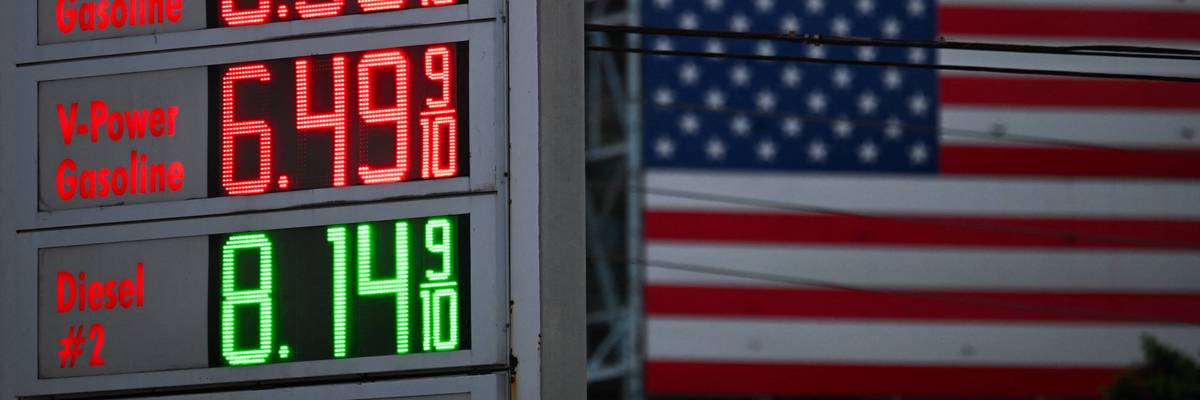


Gas prices at a Shell gas station above $6 a gallon for regular gasoline and $8 a gallon for diesel are displayed across from a US flag outside of the Marathon Petroleum Corp. Los Angeles Refinery in Carson, California on September 22, 2026.

(Photo by Patrick T. Fallon/AFP via Getty Images)


Stephen Prager
Sep 23, 2026
COMMON DREAMS

In an effort to blunt price hikes from his war with Iran, President Donald Trump is reportedly preparing a 90-day ban on diesel exports from the United States.

The cost of diesel—which is used to power semitrucks, trains, construction and farm equipment, and other large machines—has soared since Trump launched the war at the end of February, prompting Iran to restrict oil shipments through the critical Strait of Hormuz.

As of Wednesday, according to the American Automobile Association, average US diesel prices have jumped to $6.52 per gallon, a 77% increase from last year. Over the past month, as Trump has ramped up hostilities with Iran, prices have risen by 91 cents a gallon, a 16.2% increase.

Heightened diesel prices increase the cost of everything else—including food, transportation, and other energy sources. And while Trump claimed earlier this month to be bringing prices “way down, way, way down,” the latest federal data show consumer prices rising 0.4% in August—four times July’s monthly increase—and 3.4% over the past year.

With the midterms less than two months away and many voters blaming Trump for the strain on their pocketbooks, several GOP members of Congress, including some facing tough Senate races, such as Sen. Dan Sullivan (Alaska) and Rep. Ashley Hinson (Iowa), have cheered the idea.


During a press conference on Tuesday, Trump told reporters: “I’ve said let’s not send out the diesel. We make a lot of diesel. It could have a little bit of an effect on regular automobile gasoline because when you do that, you know, it’s a sort of a flow. It’s a balance. But no, I’ve called for it. I’ve called for it within my people. I’ve been talking about it.”

But while the plan may help to keep diesel prices down for long enough to help Republicans stop the bleeding before November, some economists are warning that it could make things much worse in the long term.

“The US Gulf Coast would get a temporary pump price dip, at the cost of likely higher coastal prices [elsewhere] and eventually, higher prices for everyone as investment gets scared away,” explained Bob McNally, president of Rapidan Energy Group and a former White House energy adviser under the administration of former President George W. Bush.

“You would get a short-term, abrupt collapse in pump prices” in some regions, McNally said, but “the US would shatter its reputation as a safe place to invest for a generation.”

Energy economist Philip Verleger said that a ban, even if temporary, “would have the same long-term effect as President [Richard] Nixon’s soybean embargo: the world would no longer view the United States as a dependable source.”

Speaking to Reuters, Verleger warned that in an already undersupplied market, removing US barrels could potentially double global prices.

But the short term seems to be all Trump and those around him pushing the ban are considering. An oil industry executive who discussed the proposed ban with White House officials told Politico that Trump viewed any fallout as “a December problem.”

He said that “cooler heads” in the White House have been “overpowered” by the “political camp” that has a “sky-is-falling, we-have-to-do-something concern about prices at the pump.”

Lorne Stockman, research director at Oil Change International, argued that there was a much simpler solution: ending the war that has caused oil prices to spike in the first place.

“The proposed diesel export ban is a short-sighted ‘America First’ response to a global crisis his reckless war helped create,” Stockman said. “The US exports about 5% of global diesel, and a ban risks turning a severe shortage into a global economic disaster.”

“It could send international prices soaring, drive up the cost of food, fertilizer, and essential goods, deepen hunger, and push already-struggling economies toward recession,” he continued. “At the same time, it would likely do nothing for people in the US, as refineries would cut production and gasoline prices would rise even further.”

He said, “Congress should use its constitutional powers to stop Trump’s war, tax the oil industry’s soaring windfall profits, and support farmers and other hard-hit sectors, and accelerate renewable energy and electrification, not hoard fuel and force the rest of the world to pay the price.”

Global diesel shortage likely to last into 2027 as storage tanks drain


Published:
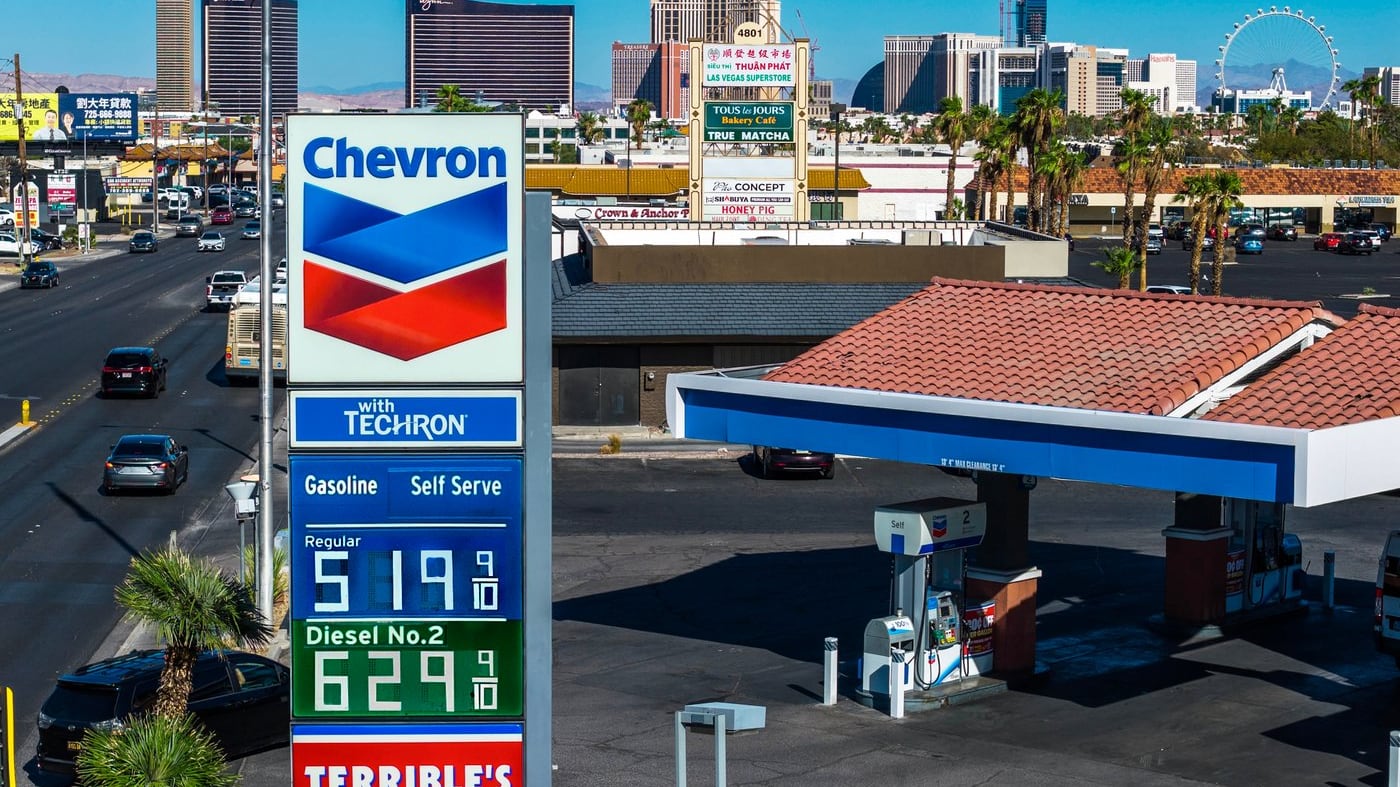
Chevron gas station prices are displayed in Las Vegas on Thursday, Sept. 3, 2026 (L.E. Baskow/Las Vegas Review-Journal via AP)

NEW YORK — A global diesel shortage fueled by wars in Iran and Ukraine is unlikely to ease before next year, according to storage market indicators and industry participants, extending a spike in fuel costs that is weighing on economies worldwide.

The wars have severely disrupted diesel supplies, stranding millions of barrels a day in the Middle East and Russia, draining inventories to historic lows and sending prices to record highs. The shortage has been a drag on economic activity, as diesel fuels agriculture, manufacturing, and heavy transportation.

In the United States, retail diesel prices topped $6 a gallon this month for the first time, squeezing farmers and truckers and stoking worries for President Donald Trump’s Republican Party ahead of the November midterm elections.

Another sign of persistent tightness is emerging in the storage market. Refiners and traders across North America are declining to renew diesel storage leases because there is little fuel available to store, data from storage broker The Tank Tiger showed.

Diesel storage capacity available for leasing in North America and the Caribbean Islands, a major trading hub, has climbed to a four-year high of 13 million barrels for October, from 11 million barrels in June, The Tank Tiger Chief Operating Officer Steven Barsamian told Reuters.

Total US diesel inventories declined to 107.9 million barrels by September 11, the lowest for this time of year since records began in 1982, according to the US Energy Information Administration.

The rapid draw of diesel from US storage indicates how tightly supplied the market has been in recent months, and the rising availability of tanks for lease underscores how long the tightness is expected to persist, Barsamian said.

The combination of falling inventories and rising storage availability suggests market participants expect supplies to remain tight into at least the first quarter of next year, Barsamian said. Storage tanks are typically leased for six months to a year.

“More storage is available for lease because no one wants to renew their existing contracts. Why would you pay for a storage tank when there is no diesel to store?” Barsamian said.

EcoBox Dumpsters, a U.S. waste management business, is limiting its rising fuel cost by using smaller trucks where possible, grouping deliveries and pickups in the same area, and confirming pickup schedules to avoid unnecessary trips.

“Each unnecessary truck movement now has a much greater cost,” said owner David Garrigus.

A GLOBAL CONCERN

The EIA also expects inventories to stay depleted.

“We forecast inventories of distillate fuel oil — often sold as diesel — in the United States to fall below 100 million barrels in September and remain below the five-year low through the end of 2026 and most of 2027,” the EIA said earlier this month.

European diesel inventories are also low. Stocks in the Amsterdam-Rotterdam-Antwerp storage, refining and trading hub were 16 per cent below the five-year average in July, according to the latest data available from Insights Global. In Singapore, total distillate inventory levels averaged about 8.2 million barrels over the past few weeks, similar to pre-Iran war levels, but below the 2025 average of 9.6 million.

“Various Asian emerging markets have been affected quite significantly,” said Andrea Pescatori, the International Monetary Fund’s Asia-Pacific deputy division chief, at the Asia Pacific Petroleum Conference in Singapore.

SOME SIGNS OF RELIEF

Industry executives expect global diesel supplies to stay tight through winter, particularly if Middle East tensions further disrupt fuel exports and Russia’s diesel export ban remains in force through October. Moscow will extend diesel export restrictions until ​the end of October, Russian business daily Vedomosti reported on Tuesday.

US diesel prices may rise further as US East Coast buyers purchase barrels ahead of the heating season, before peaking, said Alex Hodes, director of energy market strategy at StoneX.

Analysts also expect record diesel refining margins to encourage more production, limiting price increases.

The US diesel crack spread — the premium of ultra-low sulfur diesel futures HOc1 over US crude oil futures CLc1 — hit a record $118.62 a barrel on September 14.

Further relief could come from China, which has boosted exports steadily in recent months, energy economist Philip Verleger said this month.

Still, any escalation in the Iran or Russia-Ukraine wars, or a major refinery outage, could trigger fresh price spikes.

“Current fundamentals point to higher prices staying here for a while,” Hodes said.

(Reporting by Siddharth Cavale and Shariq Khan in New York: Additional reporting by Seher Dareen in London, Florence Tan and Sudarshan Varadhan in Singapore Editing by Liz Hampton and Rod Nickel)

No comments: