Saturday, September 26, 2026

‘Drop the Genocide 20’: Activists Launch Campaign to Exclude Officials Behind Biden Gaza Policy From Democratic Politics

The organizers said the “culture of bipartisan elite immunity” was why “Biden officials knew they could arm, defend, and cover up the genocide in Gaza for 15 months, and simply move back into liberal spaces.”
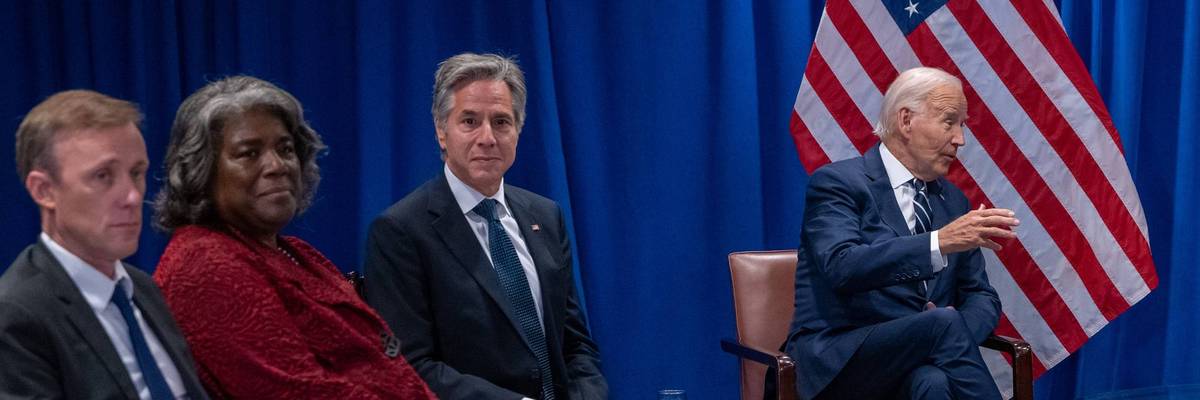


US President Joe Biden is joined by members of his cabinet, including Secretary of State Antony Blinken, US Ambassador to the UN Linda Thomas-Greenfield, and National Security Advisor Jake Sullivan at the United Nations headquarters on September 24, 2024, in New York City.
(Photo by Spencer Platt/Getty Images)

Stephen Prager
Sep 17, 2026
COMMON DREAMS

As another presidential election approaches and a new Democratic administration may be on the horizon, human rights campaigners are trying to ensure that it won’t be staffed with the same policy officials who architected former President Joe Biden’s Gaza policy.

Most Democratic voters are now appalled by Israel’s military campaign in Gaza, which leading human rights groups and scholars have recognized as a genocide. It has led to the deaths of at least 73,000 Palestinians, including more than 21,000 children, according to official totals, and left most of the population displaced and living amongst rubble.

But many of the Biden advisers and appointees who gave cover to Israel during its pivotal, exceptionally deadly early months have settled comfortably back into the respectable liberal intelligentsia, with roles at universities, think tanks, and media outlets.

As 2028 inches closer, a coalition of peace groups is urging these institutions to pledge that they will “drop the Genocide 20,” a group of 20 ex-Biden officials they deemed “responsible for promoting, lying about, and covering up the Gaza genocide,” even as Israeli officials made numerous statements indicating intent to fully destroy Gaza and its people.


The list, published Thursday on the coalition’s website, includes:

Former Secretary of State Antony Blinken, who denied before Congress that Israel was blocking aid to Gaza despite his own State Department’s assessment, a falsehood that allowed him to avoid following a US law that would have required the US to restrict weapons shipments to Israel. (Blinken is now a board member at the Center for American Progress.)

Former National Security Adviser Jake Sullivan, who said in May 2024 the administration categorically “does not believe” that Israel was committing a genocide. The International Court of Justice had already found a “plausible” genocide risk was present, while the United Nations special rapporteur for the Palestinian territories said there were “reasonable grounds” to believe a genocide was occurring. The Integrated Food Security Phase Classification, meanwhile, had reported that Israel’s “siege” cutting off humanitarian aid had left more than 1.1 million Palestinians facing “catastrophic” food insecurity and on the brink of famine. (Sullivan is now the Kissinger professor of the practice of statecraft and world order at Harvard’s Kennedy School and a co-host of The Long Game, a national security podcast for Vox.)

Former National Security Council Coordinator for the Middle East and North Africa Brett McGurk, who in November 2023 endorsed Israel’s strangling of humanitarian relief as part of a method to secure the release of Israeli hostages held by Hamas and later denied a US Agency for International Development (USAID) report of starvation in Northern Gaza after Israel dismissed it. (McGurk is now a global affairs analyst at CNN and a partner at the New York-based venture capital firm Lux Capital.)

Former Deputy National Security Advisor Jon Finer, who falsely claimed the US was putting “pressure” on Israel to reach a ceasefire and promoted Israel’s false narrative that the Al-Shifa Hospital in Gaza was a “command and control facility” for Hamas, helping to justify an attack that rendered the territory’s largest medical facility “completely nonfunctional,” according to the World Health Organization. (Finer is now a senior fellow with Yale Law School’s Tsai Leadership Program and co-hosts The Long Game with Sullivan.)

Former White House National Security Communications Adviser John Kirby, who claimed that the Biden White House had “not seen any indication [Israeli forces] have violated international humanitarian law,” in April 2024, at which point more than 33,000 Palestinians had been killed, and systemic attacks on civilian homes, medical aid workers, and schools had been widely documented.

Former UN Ambassador Linda Thomas-Greenfield, who vetoed three ceasefire resolutions brought before the UN Security Council and denied that Israel was blocking aid.

“The purpose of the list is to demand these officials be removed from future Democratic administrations, as well as think tanks and academic and liberal spaces,” said the coalition, which includes Just Foreign Policy; Palestinian Youth Movement; Track AIPAC, which tracks lobbying by pro-Israel donors; Peace Action; the Democratic Socialists of America; and About Face, a group representing anti-war veterans.


“The culture of bipartisan elite immunity is what drives US war crimes and support for war crimes. From the Vietnam War to post-9/11 torture to the Iraq War, elite war criminality never receives any meaningful sanction from either party. It is treated as a mere policy disagreement among friends,” the coalition said. “This dynamic is a key reason Biden officials knew they could arm, defend, and cover up the genocide in Gaza for 15 months, and simply move back into liberal spaces, nonprofits, and future governments.”

The campaign urged these organizations to oppose any efforts to give the 20 people on the list “institutional or political power that positions them to continue to perpetrate harm.”

Rep. Rashida Tlaib (D-Mich.), the only Palestinian American lawmaker in the US House of Representatives, has signed the pledge, as has Pennsylvania state Rep. Chris Rabb, who is likely to enter the US House in January after winning the Democratic primary for Pennsylvania’s 3rd Congressional District earlier this year.

Zeteo reporter Prem Thakker, who first broke news of the coalition’s effort, said more lawmakers were expected to join in support.


The coalition noted that there were “far more than 20 people in the US government responsible for the US-backed genocide in Gaza” but acknowledged that it needed to limit itself to those most responsible to remain actionable.

It also said that a parallel effort was in the works to hold members of the Trump administration accountable for their own policies in Gaza and elsewhere.

“The Trump administration’s time will come, especially given its attack on Iran and war crimes against the Iranian people,” the coalition said.

But for now, the activists are putting their focus on the Biden administration because “that’s who is currently out of power and actively engaging in reputation laundering and historical revisionism.”

The pledge comes as increasing numbers of Democratic politicians describe Israel’s conduct in Gaza as constituting a genocide, a position shared by the majority of Democratic voters. The coalition said that without consequences, this is meaningless.

“The word ‘genocide’ has certain implications and obligations. It’s not a buzzword,” the coalition said. “If an elected [official] says Israel committed genocide, as 22 members of Congress have, then it logically follows they would agree to not hire, work with, or otherwise validate those most responsible for that which they themselves argue is a genocide. It’s common sense.”
Markey, Merkley, and Sanders Lead Charge Against Trump’s $5 Billion Saudi Weapons Deal

The effort comes as senators also sound the alarm about a possible nuclear energy agreement and the administration continues to greenlight arms sales to the kingdom.


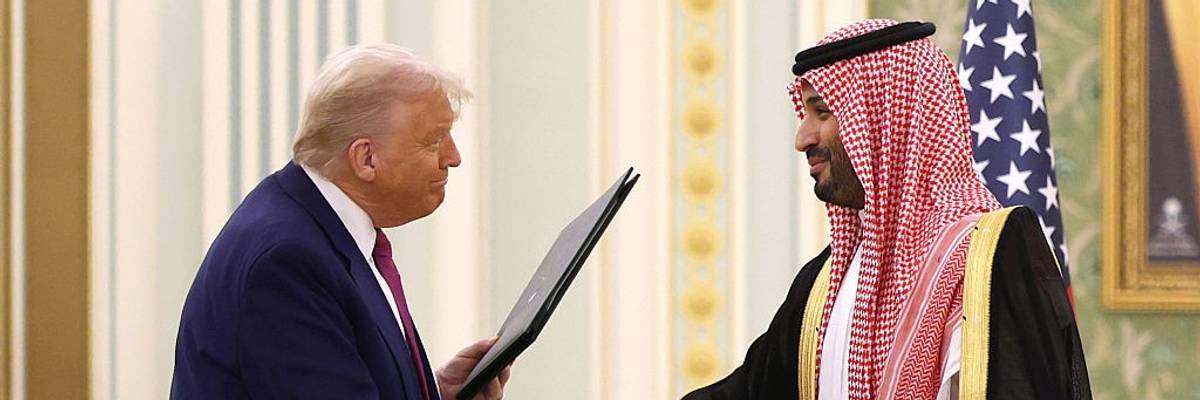
US President Donald Trump and Saudi Crown Prince Mohammed bin Salman attend a signing ceremony on May 13, 2025, in Riyadh, Saudi Arabia.
(Photo by Win McNamee/Getty Images)

Jessica Corbett
Sep 18, 2026
COMMON DREAMS

A trio of progressive US senators this week introduced legislation to block a $5 billion conventional weapons sale to Saudi Arabia while also pushing for the release of more details about President Donald Trump’s proposed nuclear cooperation agreement with the Middle Eastern kingdom.

“The United States must not send thousands of conventional weapons to Saudi Arabia or allow it to develop a nuclear program,” said Sen. Ed Markey (D-Mass.) in a Thursday statement—a day after he partnered with Sens. Jeff Merkley (D-Ore.) and Bernie Sanders (I-Vt.) to introduce the joint resolution of disapproval, which was referred to the Senate Foreign Relations Committee.

“I am deeply concerned by the kingdom’s human rights abuses, the security of the region as the war in Iran rages on, and the proxy war that is escalating between Iran and Saudi Arabia in Yemen,” Markey explained. “Further escalation in the Saudi-Iran proxy war will worsen an already dire humanitarian catastrophe in Yemen and risks setting off a nuclear arms race between Iran and Saudi Arabia.”

The resolution targets a sale approved by the US State Department on September 4 that includes over 10,000 joint direct attack munition (JDAM) guidance kits. As Breaking Defense detailed, “The prospective transaction includes a similar number of dumb bombs—split almost evenly between 500 lb. and 2,000 lb. munitions—which, when equipped with a JDAM, can be used as a precision weapon.”

The bill does not apply to the other possible sale to Saudi Arabia endorsed by the department that same day—$750 million for AGT-1500 engines and related equipment—or the $24.3 billion deal for F-35 Lightning II fighter jets, which the Trump administration greenlit Thursday, after the resolution was introduced.

The latest approval “comes nearly two months after Saudi Defense Minister Khalid bin Salman traveled to Washington to lobby senior Trump administration officials on the sale, with Riyadh hoping to advance the deal ahead of the midterms,” Semafor noted. The upcoming US elections could lead to Trump’s Republican Party losing control of Congress.

The warplanes sale could also face pushback from Congress. According to Politico, Rep. Raja Krishnamoorthi (D-Ill.), who sits on the House Intelligence Committee, warned that “it could put the crown jewels of American military technology within reach of the Chinese Communist Party.”


In addition to unveiling their resolution about the JDAMs and bombs on Wednesday, Markey and Merkley, co-chairs of the bicameral Nuclear Weapons and Arms Control Working Group, led a bipartisan group of senators—including Sanders—in urging a pair of Trump Cabinet members to declassify two side letters associated with the administration’s proposed nuclear deal.

The administration submitted the pending 30-year agreement—which would allow US companies to share nuclear power technology with the kingdom—to Congress after it was signed by US Energy Secretary Chris Wright and Saudi Energy Minister Prince Abdulaziz bin Salman in July.

Under Section 123 of the Atomic Energy Act, Congress has 90 days of continuous session to review the deal and either move to block it or let it take effect. The senators’ new letter to Wright and Secretary of State Marco Rubio notes that “in previous 123 agreements, the executive branch publicly released the agreement along with side letters and related documents.”

“Access to the full text is required for the Senate and the public to have a clear understanding of the commitments being made on the nation’s behalf and those being made by Saudi Arabia to the United States,” the senators argued. “Their public release would also allow civil society, independent experts, and other affected stakeholders to scrutinize the deal.”

“Transparency and open debate are cornerstones of our democracy,” they emphasized. “Congress and the American public must have a meaningful opportunity to review and debate the key components of the US-Saudi nuclear deal before it potentially enters into force. To that end, we call on you to declassify and release the two side letters without delay.”
Working-Class Taxpayers Subsidize Billionaires’ Climate-Killing Private Jets: Report

“It’s time to stop making taxpayers subsidize luxury private jet travel and use our resources to green other industries,” said one of the report’s authors.


People raise a toast while traveling aboard a private jet in this undated stock photo.
(Photo by Getty Images)


Brett Wilkins
Sep 18, 2026
COMMON DREAMS

A handful of the world’s wealthiest people are traveling aboard some of the planet’s most polluting vehicles while receiving substantial public subsidies, according to a new report documenting how taxpayers and commercial airline passengers are funding billionaires’ private jet lifestyles due to corporate lobbying, tax breaks, and other policies.

The Institute for Policy Studies’ (IPS) “High Flyers 2026: The High Cost of Private Jet Excess,” released on Friday, notes that only about 256,000 people around the world—roughly 0.003% of the global population—fly on private jets. Yet these ultrawealthy travelers account for a disproportionate share of aviation activity while paying a fraction of the taxes that fund air traffic infrastructure.

According to the report—which is co-authored by Chuck Collins, Omar Ocampo, Kalena Thomhave, and Emily Wagner—private jets and charter services account for roughly 16% of flight operations handled by the US Federal Aviation Administration (FAA), while noncommercial private jets account for about 7% of airspace activity.


However, private jets contribute less than 0.6% of the taxes flowing into the Airport and Airway Trust Fund, which helps finance FAA operations.

“We all pay for the harms of private jet excess,” the report states. “US taxpayers and commercial air travelers subsidize the luxury private jet transportation sector. Private jets fail to pay their fair share of their use of airspace and the costs of their carbon pollution, shifting the burden to everyone else.”

The disparity is particularly stark when the climate consequences of private aviation are taken into account. IPS found that a passenger traveling by private jet is responsible for roughly 10 to 14 times the emissions of a passenger on a commercial airline and around 50 times those of a passenger traveling the same route by rail. On some low-carbon rail systems, the disparity can exceed 200-fold.

“Private jets are the super-polluters. On a warming planet, private jet operations are indefensible,” the report’s authors wrote. “Private jets account for a small sliver of aviation activity, but they are the most polluting form of transport and represent the fastest-growing segment of aviation emissions.”

The report also found that at least half of private jet operations are for recreational, vacation, and personal luxury travel.

“The ultrarich and greedy corporations are private jet-setting at the expense of the rest of us,” Collins told The Guardian on Friday. “The rest of us should not have to pay for the luxury excess of the private jet billionaire class.”

The report comes amid increasing criticism of tax policies that have made private aircraft particularly lucrative investments for wealthy Americans. Last year, US President Donald Trump signed legislation permanently implementing 100% bonus depreciation for qualifying business assets, allowing full tax deductions for certain purchases—including private aircraft—in the year they are acquired.

In a May opinion piece published by Common Dreams, Collins and Wagner slammed what they described as “a massive tax break for billionaires and centimillionaires that use the most polluting form of transportation on the planet.”

A corporation that buys a $50 million private jet could potentially deduct the entire purchase price from its taxes in the year of acquisition, meaning “ordinary taxpayers pick up the tab for the private jet industry and billionaire high flyers,” according to Collins and Wagner.

The Trump administration has also recently declined to close another tax loophole benefiting wealthy private jet users. A proposal by Democratic senators would have changed the rules governing the so-called Standard Industry Fare Level method for calculating the taxable value of personal flights aboard corporate aircraft. The lawmakers argued that the system allows wealthy executives to substantially undervalue their personal use nof company jets.

“While working families struggle to afford groceries, housing, and gas,” Sen. Chris Van Hollen (D-Md.) said earlier this month, the Trump administration “focuses on tax breaks for billionaires—including tax breaks for private jets. What a disgrace.”

The private jet industry has also benefited from efforts to shield aircraft owners from scrutiny. Earlier this year, House Republicans sought to restrict government use of flight tracking data that can help identify privately owned aircraft for taxation purposes.

“Oh look—Republicans helping private-jet billionaires avoid paying taxes,” Sen. Sheldon Whitehouse (D-RI) quipped in June. “If only they worked that hard for consumers.”

IPS noted the private aviation industry’s substantial political influence. The National Business Aviation Association spent approximately $2 million lobbying for the sector in 2025, including on policies concerning tax breaks and private flight secrecy.

The report’s authors list policy changes they say would help “decarbonize private jet users’ indefensible behavior.”

“A luxury tax of 10% on used jets and 5% on new jets could have raised more than $3 billion in 2025, funds that could be invested in sustainable ground transportation,” they asserted.

“Congress should strip a private jet tax avoidance provision from the pending air traffic safety legislation, the ALERT Act,” the authors argued.

The report also calls for:
Stopping another pending private jet tax break;
Repealing accelerated bonus depreciation of private jet purchases and passing the End Subsidies for Private Jets Act;

Increasing taxes on private jet fuel;
Rolling back secrecy provisions; and
Ending funding and construction of new private jet infrastructure.

“Since we first released our analysis on the costs of private jet travel to taxpayers and the planet in 2023, we’ve seen a shocking and irresponsible rise in the use of private jet travel,” Ocampo said in a statement.

“Unfortunately, the private jet lobby has worked hard to lower the tax obligations of the ultrawealthy,” he added. “Meanwhile, the aviation industry pushes false solutions on the climate crisis. It’s time to stop making taxpayers subsidize luxury private jet travel and use our resources to green other industries.”
‘Misled’ and ‘Strung Along’ by Trump, Financial Pain of Farmers Grows as Costs Continue to Skyrocket

“I think a lot of people expected that maybe the war would wrap up and the prices would go down some... then it just skyrocketed,” said one farmer of the cost of diesel.


Alan Montag, a third-generation Iowa farmer, and his son Aden load soybean seed into a planter on May 6, 2026 near West Bend, Iowa.
(Photo by Scott Olson/Getty Images)

Brad Reed
Sep 18, 2026
COMMON DREAMS

Farmers across the US are speaking up about their struggles as President Donald Trump’s illegal war with Iran and trade war with Canada are taking a hammer to their finances.

In an interview with CBS News published Thursday, North Carolina farmer Matt Bell revealed that “I have never worried and stressed like I have the last year,” thanks to the soaring costs of fuel, fertilizer, and farm equipment, all of which have gotten more expensive thanks to Trump’s policies.

“The fertilizer, fuel, chemicals, seed, parts—you know, the whole nine yards,” said Bell, “everything that we touch has gone up.”


Bell, who voted for Trump, said he feels “misled” and “strung along” when it comes to the president’s rationale for attacking Iran without congressional authorization in February.

The North Carolina farmer said his costs for diesel fuel have doubled in the last year, driven in large part by Trump’s war.

According to data released Friday by the American Automobile Association, the average price of diesel in the US now stands at a record-high $6.45 per gallon, a 74% increase of the average price of diesel one year ago.

“We are fighting for survival,” Bell emphasized, “and we’re running out of options.”

Bell is far from the only farmer struggling.

Theresa Sisung, commodity and regulatory relations manager at the Michigan Farm Bureau, said in an interview with Up North Live that farmers in the state are about to “use a ton of fuel on their farms” due to the start of harvest season, making the record-high diesel prices particularly inconvenient.

“We have seen a slight increase in farm bankruptcies across the nation,” said Sisung. “We are seeing those farms that are more stressed. We’ve had some negative margins for farms for a few years now, so there is certainly stress out in the countryside.”

Michigan farmer Russell Ketchum told Up North Live that the high diesel prices have made what was already a challenging year and farming even more difficult.

“We started out the year with a lot of cold weather, a lot of freeze damage,” Ketchum explained, “so we’ve been working on short crops all year and then the diesel fuel prices and the gas prices all on top of that, they made everything challenging to say the least.”

North Dakota farmer Chris McDonald told the North Dakota Monitor in an interview published Wednesday that diesel prices have climbed so high that they “can erase your profit.”

McDonald also tied the increase in diesel costs directly to Trump’s war, which the president said would only last a matter of weeks but has since dragged on for more than six months.

“I think a lot of people expected that maybe the war would wrap up,” said McDonald, “and the prices would go down some, and they never really did drop very much. Then it just skyrocketed.”

The Iran War isn’t the only Trump policy that’s hurting US agriculture and bringing pain to US farming families, as a Tuesday NPR report highlighted the impact that the president’s trade war with Canada is having on farmers in Montana.

As noted by NPR, Canada is Montana’s biggest trading partner, as it accounts for “$1 billion in cross-border sales.” But the tariffs imposed by Trump, and the counter-tariffs imposed by Canada, have both harmed Montana farmers’ sales and made the equipment they buy more expensive.

Steve Sheffels, a Montana wheat farmer, told NPR that he’d like to buy “a new drill” and some “grain bins that come out of Canada,” but now fears that “I won’t be able to afford them” thanks to the trade war.

Sheffels, whose wife is Canadian, also told NPR that he was not happy to see America’s relationship with its largest trading partner deteriorate throughout Trump’s second term.

“You don’t treat your neighbors like this,” he said.

Donald Trump hit with 26 articles of impeachment


Billal Rahman
Sat, September 26, 2026

President Donald Trump has been slapped with 26 new articles of impeachment by a House Democrat, accusing him of abuses of power, violations of his oath of office, and a sweeping range of other alleged misconduct.

Representative Steve Cohen, a Tennessee Democrat and senior member of the House Judiciary Committee, introduced the articles on September 24, just nine days after the House rejected a separate impeachment effort brought by Democratic Representative Al Green of Texas.

The latest effort comes as Democrats remain divided over pursuing impeachment against Trump.

Green's resolution was shelved by the House in a 232-147 vote on September 15, with 18 Democrats joining nearly all Republicans in voting to table it and another 47 lawmakers voting present. Those voting present included House Democratic leaders Hakeem Jeffries, Katherine Clark and Pete Aguilar.

What Are the 26 Articles of Impeachment Against Trump?

Cohen's resolution is considerably wider than Green's. Its 26 articles encompass allegations involving Trump's immigration policies, the use of military power, federal spending, tariffs, presidential pardons, the federal workforce, universities, law firms, the media, and alleged personal financial benefit from the presidency.

View embedded content

The first article accuses Trump of "undermining democracy" by sowing doubt in elections, while the second alleges an abuse of power by waging war on Iran without congressional approval. Another concerns alleged extrajudicial killings in international waters off Venezuela, while a fourth targets the deployment of military forces against U.S. cities.

Immigration features prominently in the resolution. The articles target Trump's birthright citizenship executive order and the administration's use of the Alien Enemies Act to deport Kilmar Abrego Garcia to El Salvador. They also make allegations concerning conditions at El Salvador's CECOT prison and accuse the administration of defying court orders in immigration enforcement.

Other articles accuse Trump of unlawfully withholding congressionally appropriated funds, imposing loyalty tests on the federal workforce, improperly terminating inspectors general, and abusing presidential pardon powers.

Cohen also targets Trump's dealings with the press, law firms and universities. Two articles accuse the president of attacking press freedom, including by excluding reporters from the White House over coverage and allegedly coercing CBS and ABC to alter editorial content.

The press-freedom allegations come amid an ongoing legal battle over Trump's banishing of CNN, MS NOW and Politico reporters from the White House, with the three outlets suing to regain access.

Others concern executive actions against law firms and the withholding of federal funds from universities.

The final article alleges that Trump violated the Constitution's emoluments provisions by "profiting personally and directly from the presidency." The claims contained in the resolution are allegations made by Cohen and do not themselves establish that Trump committed impeachable offenses.

"Trump is clearly the most impeachable President our country has ever endured. His continued presence in office is a danger to our democracy," Cohen said in a press release.

"That the sycophantic Republican majority in Congress is derelict in its duty does not mean that I must abandon my responsibilities. I took an independent oath to support and defend the Constitution. That commitment compels me to introduce this resolution today. When historians write about this period, and our constituents ask who stood up to President Trump's lawlessness, this resolution is the answer."

Cohen has acknowledged that the effort is unlikely to advance. "I know they won't go anywhere, but I'm not going to stop standing up for my constituents and for democracy," he told Nexstar.

The White House has been contacted for comment.

Democrats Divided Over Impeachment

The new resolution arrives amid clear differences among House Democrats over how and when to pursue impeachment.

Green's September effort focused much more narrowly on the Trump administration's immigration crackdown. His resolution accused Trump of abusing presidential powers in connection with immigration operations in which federal officers killed several civilians. The administration defended the officers' actions, saying they had feared for their lives and acted in self-defense.

Democratic leaders did not endorse Green's effort and said impeachment should follow formal investigations and hearings that had not taken place.

Aguilar, the House Democratic Caucus chairman, also said shortly before the Green vote that impeachment was not at the top of House Democrats' agenda.

There is some overlap between the two efforts, particularly over immigration enforcement. Cohen's articles include allegations involving Abrego Garcia, CECOT, and the administration's compliance with court orders in immigration cases. Green's September resolution, by contrast, centered on the immigration crackdown and civilians killed during federal enforcement operations.

Previous Trump Impeachment Efforts

Both Cohen and Green have a history of seeking Trump's impeachment dating back to his first term.

Cohen introduced five articles against Trump in November 2017 while serving as the ranking member of the House Judiciary Subcommittee on the Constitution and Civil Justice.

Green also pursued impeachment during Trump's first year in office. He introduced an impeachment resolution in 2017 accusing Trump of conduct that Green argued had fueled bigotry and hatred and brought the presidency into disrepute.

When Green forced a House vote on an impeachment resolution in December 2017, lawmakers voted 364-58 to table it, with Republicans and most Democrats opposing an effort that Democratic leaders at the time argued was premature.

Trump was impeached twice by the House during his first presidency.

The first came on December 18, 2019, when the House approved articles accusing him of abuse of power and obstruction of Congress following an investigation centered on his dealings with Ukraine. The Senate acquitted Trump on both articles in February 2020.

The House impeached Trump for a second time in January 2021 on a charge of incitement of insurrection following the January 6 attack on the U.S. Capitol. He was subsequently acquitted by the Senate.

The latest 26-article resolution does not mean Trump has been impeached again. An individual House member can introduce articles of impeachment, but impeachment occurs only if the House votes to approve at least one article. Cohen's effort also enters a House controlled by Republicans, and the recent Green vote demonstrated that even Democrats are not united behind another impeachment push.


Nader Rips ‘Feeble, Weak, Cowardly’ Democrats for Eschewing Trump Impeachment

“The Democrats and electorally frightened Republicans pushed Richard Nixon out in 1974 for far, far lesser transgressions than those committed by Trump in a week.”


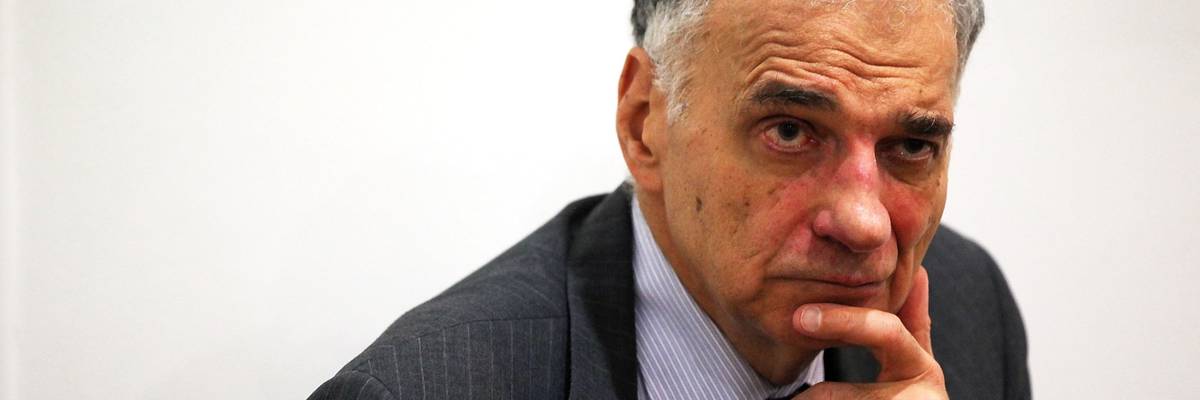
Former presidential candidate Ralph Nader listens during a news conference  at Public Citizen in Washington, DC.
(Photo by Alex Wong/Getty Images)

Brett Wilkins
Sep 17, 2026
COMMON DREAMS


As Democrats campaign for the November midterm elections after helping kill the latest congressional effort to impeach President Donald Trump, progressive consumer advocate and four-time presidential candidate Ralph Nader this week renewed attacks on the party’s leadership for abandoning their constitutional responsibility to hold the president accountable.

In a September 14 essay published by Current Affairs, Nader argued that Democratic leaders have effectively given up on impeachment even as Trump’s second administration faces continuing allegations of executive overreach and misconduct.

“The chronic prevaricator and delusionist Donald J. Trump knows that the worse his outlaw actions become, the less likely the Democrats in Congress are to impeach him,” the Public Citizen co-founder wrote. “The massive number of blatant, impeachable acts by the lawless, corrupt, violent, systemically racist, unstable, dangerous tyrant increases by the day.”

“The American public knows it,” Nader continued. “The majority of Americans favor impeaching Trump. Among Democrats, it’s 84% in favor, as well as a majority of independents. Polling even shows that most Americans think Trump is a ‘dangerous dictator whose power should be limited before he destroys American democracy.’”

Yet, “when asked about impeachment, House minority leader Hakeem Jeffries [D-NY] replied: ‘We haven’t ruled anything in and we haven’t ruled anything out,’” he noted. “What? Every day, the mega-arsonist is burning down our republic and its Constitution, with tens of millions of Americans suffering and endangered. Yet Jeffries has been noncommittal about whether Democrats would pursue impeachment even if they had a congressional majority.”

In a column republished by Common Dreams earlier this month, Nader wrote, “What must Tyrant Trump be thinking about his opponents’ feeble, weak, cowardly responses to his daily torrent of serious, impeachable offenses?”

“Even his egomaniacal narcissism cannot fully explain his amazing good luck,” he opined.

Earlier this week, the House of Representatives voted 232-147 to table an impeachment resolution introduced by Rep. Al Green (D-Texas), effectively ending the measure’s consideration. Eighteen Democrats joined Republicans in voting to table it, while 46 Democrats—including House Minority Leader Hakeem Jeffries—voted “present.”

Green’s resolution accused Trump of high crimes and misdemeanors arising from the administration’s deadly anti-immigrant crackdown, including alleged violations of civil liberties and due process. Green said before the vote that the Constitution contains no provision requiring Congress to wait before confronting impeachable conduct.

Democratic leaders have attempted to justify their decision not to support Green’s resolution by arguing that impeachment requires a substantial investigative record, hearings, witness testimony, and document review. Jeffries, along with Democratic leaders Katherine Clark of Massachusetts—the House minority whip—and Pete Aguilar of California, the House Democratic Caucus chair, said they would vote “present” because “none of that serious work has been done,” as they jointly explained.

Nader rejects that reasoning. In Current Affairs, he argued that saying Democrats “don’t have the votes” misses the purpose of a sustained impeachment campaign, which he described as a way of building public pressure and organizing voters.

“Impeachment is a mobilizer for get-out-the-vote efforts,” he wrote, as well as “for educating and energizing the people back home.”

Trump has already been impeached twice by the House, although the Senate failed to convict him either time. No other president has been impeached multiple times. Nader has pointed out that Trump’s high crimes and misdemeanors are more grave than those for which then-President Nixon resigned from office in 1974 rather than face impeachment, and that Democrats’ fear of the consequences for impeaching Trump again is no excuse for their cowardice.

“The Democrats and electorally frightened Republicans pushed Richard Nixon out in 1974 for far, far lesser transgressions than those committed by Trump in a week,” he wrote.

‘Every Taxpayer... Should Be Outraged’: Anger Spreads Over ‘Illegal’ US-Funded Pro-Trump Ad

“This is the sort of government propaganda one might expect in North Korea, not the United States of America, and it is an egregious and utterly illegal misuse of Americans’ hard-earned tax dollars,” said four lawmakers.


US President Donald Trump is seen in a screen shot of a taxpayer-funded ad begging Americans to love him.
(Photo by US government/X/screen shot)


Brett Wilkins
Sep 25, 2026
COMMON DREAMS


Outrage mounted Friday over a taxpayer-funded television advertisement glorifying President Donald Trump, with critics describing the 30-second spot as self-aggrandizing propaganda and questioning whether the administration violated federal law restricting the use of public money for partisan communications.

The ad—which aired this week on outlets including Fox News, Newsmax, and CBS—features a dizzying montage of Trump at rallies, White House events, sporting events, and alongside military personnel, captioned, “AMERICA WILL NEVER BE A COMMUNIST COUNTRY.”

The refrain of R&B singer JMSN’s “Love Me” plays over the rapid-fire images. The spot concludes with a voiceover from Ultimate Fighting Championship CEO Dana White praising Trump as “the toughest, most resilient person that I’ve ever met.”

At the bottom of the screen, an alarming disclosure appears, reading, “Paid for by the US government.”

The White House dismissed criticism of the ad—which aired ahead of November’s midterm elections—by calling the spot a “public service announcement” intended to remind Americans “to love their country and understand what makes it worth defending.”

However, on Friday, US Sens. Patty Murray (D-Wash.) and Jack Reed (D-RI), along with Reps. Rosa DeLauro (D-Conn.) and Steny Hoyer (D-Md.), excoriated the clip.

“This is the sort of government propaganda one might expect in North Korea, not the United States of America, and it is an egregious and utterly illegal misuse of Americans’ hard-earned tax dollars,” the four senior congressional appropriators said in a joint statement.

“The law is not complicated,” the lawmakers added. “You cannot use taxpayer dollars for political advertisements.”

Federal appropriations law—including the funding bill Trump signed earlier this year—prohibits the use of government funds for unauthorized “publicity or propaganda purposes,” while the Government Accountability Office (GAO) has interpreted the prohibition to encompass communications whose obvious purpose is “self-aggrandizement” or “puffery,” as well as “purely partisan” communications.

The consumer advocacy watchdog group Public Citizen on Friday filed a complaint with the GAO alleging the ad “violates laws prohibiting the use of government resources for propaganda, the Hatch Act, and other related laws.”

“Whether or not President Trump was personally involved in the ad, it was conceived, produced, and distributed by Trump’s White House staff,” Public Citizen said.

US Sen. Chris Murphy (D-Conn.) said Friday on social media that “every taxpayer, no matter your party, should be outraged by this.”

“Your money is being used to fund campaign ads for Trump,” the senator added. “It’s totally, completely [illegal]. He’s stealing your money for his campaign.”

“The advertisement raises deep concerns about the Trump administration’s use of taxpayer dollars and its compliance with federal laws that prohibit the use of appropriated funds for the promotion of a political party or candidate,” Sen. Maggie Hassan (D-NH) said Thursday.

“This taxpayer-funded political advertisement serves as yet another troubling example of President Trump’s growing list of expensive vanity projects—including the White House ballroom—that are estimated to cost over $1.8 billion, money that could have instead [been] spent lowering costs for Americans.”

Sam Stein, co-host of “The Bulwark Podcast,” said, “What possible rationale could there be for using tax dollars to play that ad? This is just pure cult propaganda paid for by us.”


Noting that Trump’s approval rating has plunged below 30%, Stein added: “People are abandoning him... members of his own party are starting to distance themselves from him, and he uses that moment to have an ad [saying] please love me... It’s desperate.”

Tim Miller, Stein’s co-host, called the ad “alarming” and “Orwellian.”

Virginia Kase Solomón, president and CEO of the advocacy group Common Cause, said Friday in a statement that “taxpayer dollars should never be used to bolster the president’s self-esteem because his ego has been damaged.”

“Running political messaging stamped with ‘Paid for by the US Government’ dangerously crosses the line from public service into authoritarian self-promotion,” she added. “It also raises serious questions about whether it violates federal law barring tax dollars from being used for publicity or propaganda.”

Others noted that the ad blasted communism as Trump rolled out the red carpet at a state dinner for Chinese President Ji Xinping, who is also the secretary general of the Chinese Communist Party.

“The clip’s heavy-handed anti-communist messaging also strikes a wildly hypocritical note, if not for anything but the fact that the Supreme Leader that ran it followed up by hosting China’s Xi Jinping with open arms, a flyover of US military planes, and a statue of a bald eagle,” Jezebel’s Danielle Han wrote on Friday.

Meanwhile, the controversy has spread beyond politics. JMSN—whose real name is Christian Berishaj—said that he never authorized Trump to use “Love Me,” writing that he would “never authorize my music to be used for ANY political agenda or campaign.”

“I am looking at lawyers,” he added, “and handling this internally.”

Trump ‘Gleefully Eviscerating’ Efforts to Help Families With ‘Illegal’ Pocket Rescission

“Donald Trump knows he can’t get these cuts through Congress, so he is illegally making them through the back door,” said the House Budget Committee’s top Democrat.


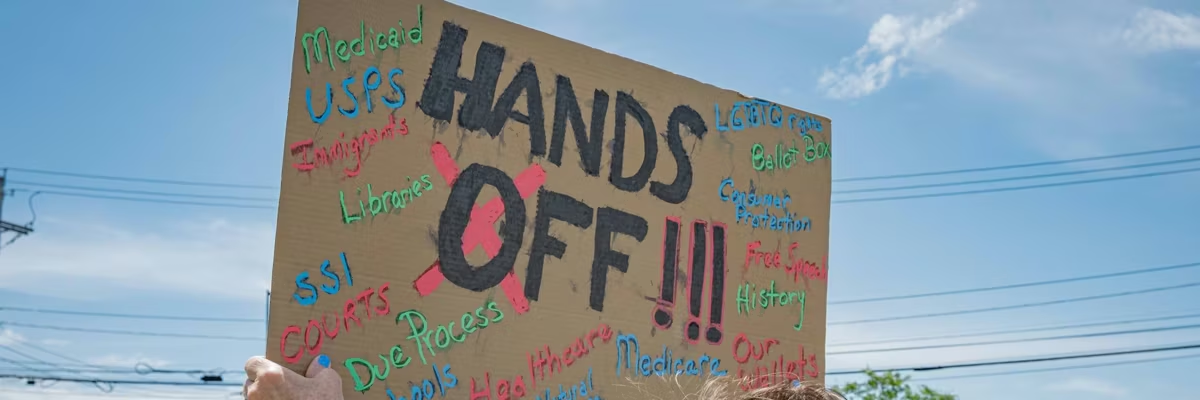
A protester holds a sign during a demonstration against President Donald Trump’s attacks on working families in Nanuet, New York on May 22, 2026.
(Photo by Erik McGregor/LightRocket via Getty Images)


Jessica Corbett
Sep 26, 2026
COMMON DREAMS


Elected Democrats—and even the Senate’s top Republican appropriator—blasted President Donald Trump late Friday for rescinding nearly $1 billion in congressionally approved spending that the White House deemed “wasteful and harmful” through a legally contested process.

In a statement announcing what was targeted, the administration celebrated funding cuts for what it called “pro-illegal immigration programs,” a “nefarious” Department of Justice subagency, a program that “propagates America Last climate alarmism,” an office that promotes diversity, equity, and inclusion (DEI)—or “discrimination, and radical woke ideologies”—and more.

House Budget Committee Ranking Member Brendan Boyle (D-Pa.) responded in a statement that “Donald Trump knows he can’t get these cuts through Congress, so he is illegally making them through the back door.”

“Trump’s actions are a blatant attack on Congress’ constitutional power of the purse,” he added. “It is exactly why we need to pass my Congressional Power of the Purse Act and stop any president from illegally overriding Congress.”

The Associated Press reported that “under federal law, Congress has 45 days to review the president’s proposed spending cuts before they take effect. But Trump made that all but impossible by announcing them with just five days left in the federal fiscal year and the House out of session through the November election.”

Senate Budget Committee Ranking Member Jeff Merkley (D-Ore.) stressed on social media that “a pocket rescission is an illegal line-item veto. It is the president saying that he and he alone will convert a bipartisan spending bill (that has been signed into law) into a partisan spending bill. He is canceling the lines of spending he doesn’t like.”

“This violates the core separation of powers embedded in our Constitution in which it is the Congress, not the president, who decides what programs are designed and at what level they are funded,” he continued. “Republican colleagues said they would never let this happen. Well, here it is. They should ask themselves: ‘How would I like to have a Democratic president canceling out the Republican flavored programs he or she doesn’t like in a bipartisan spending bill that has been signed into law?’ If they have any integrity or any spine, they will join us in ending this practice.”

Noting that the cuts will impact everything from critical health research, to combating the international illicit narcotics trade, Senate Appropriations Committee Vice Chair Patty Murray (D-Wash.) declared: “This is theft from the American people, plain and simple. These are funds Congress has delivered on a bipartisan basis and should be helping people—not cut off by a president more focused on building a ballroom than investing in families.”

She specifically called out Office of Management and Budget (OMB) Director Russell Vought—a co-author of Project 2025, the Heritage Foundation-led blueprint for a right-wing overhaul of the federal government, who was recently condemned as an “unelected shadow president” by the House Democrat who introduced impeachment articles against him. According to Murray, “Every Republican who voted for these bills should be furious because Vought is saying their votes don’t count.”

Murray also pointed out that during negotiations for the recently enacted stopgap spending legislation, “Democrats fought to include language to prevent the Trump administration from once again usurping Congress’ power—but for the second time in a year, Republicans refused to take common sense action and prevent this from happening.”

“While Trump spends tax dollars on ads promoting himself, Congress needs to reassert its powers to help people, and it’s past time Republicans join us in that fight,” she argued. “Russ Vought’s message to Congress is that your votes don’t count, and your laws are optional. It is now time for my Republican colleagues who said they would never let this happen to stand up and join us to stop this, and remind this administration this is not how this works.”


Senate Minority Leader Chuck Schumer (D-NY) emphasized the impact of the administration’s move, saying that “Trump is gleefully eviscerating programs and protections that help hardworking American families live a safe and healthy life, all while he continues to punish them with skyrocketing gas and grocery prices.”

“With this rescissions package, the Trump administration is illegally stripping nearly $1 billion in critical funding that supports kids, K-12 students, small businesses, and health and clean air research,” he highlighted. “Americans are crying out for relief.”

“Instead of ending his Iran War and tariff chaos that are driving up costs, Trump is rolling out the red carpet for our adversaries while stealing funds meant to help American families,” he added. “Senate Democrats will challenge Trump’s illegal cuts at every turn and continue the fight to help American families, lower healthcare costs and secure our communities.”

The administration’s rescission announcement came less than six weeks away from the midterm elections. Democrats aim to win majorities, while Trump’s Republican Party is fighting to keep control of both chambers of Congress. One of the nationally watched races is that of Senate Appropriations Committee Chair Susan Collins (R-Maine).

As some congressional Republicans cheered the Friday action, Collins put out a statement denouncing it. She said that “without warning or consultation, Congress just received an $810 million package of pocket rescissions from the administration,” which she called OBM’s most recent attempt “to undermine Congress’ constitutional power of the purse.”

“This move shows that OMB intentionally withheld these funds for months to execute this unlawful cancellation of appropriations that were approved on a bipartisan basis and signed into law,” Collins continued. “Not only is the delay itself an impoundment that was not reported to Congress, but also it is a usurpation of Congress’ appropriations powers. OMB is an agency of the executive branch. It does not get to decide which programs are worth funding.”

“The independent Government Accountability Office has concluded that pocket rescissions are unlawful and not permitted by the Impoundment Control Act,” she added. “Any effort to rescind appropriated funds without congressional approval is a clear violation of the law. I will work with my colleagues to address these illegal actions.”


While some Democrats had called for their Republican colleagues to make such promises, Sen. Chris Murphy (D-Conn.) fired back at Collins on social media, writing that “Senate Republicans had chance after chance to stop Trump’s illegal seizure of taxpayer money. Time after time, they pledged allegiance to Trump instead of to citizens. And he’ll keep rolling them if the Senate doesn’t change hands.”

So did Troy Jackson, the former Democratic Maine Senate president running to unseat Collins. He said that “Susan Collins voted for Trump’s pick to lead the OMB. Now she’s surprised he’s doing exactly what he promised to do? She’s the appropriations chair who voted with Trump 96% of the time. Expressing concern isn’t enough. Mainers see through the bullshit.”


 Trump administration uses rare authority to claw back nearly $1B in spending approved by Congress


KEVIN FREKING and JONATHAN J. COOPER
Fri, September 25, 2026
AP


FILE - The U.S. flag flies in font of the Capitol, on June 8, 2026, in Washington. (AP Photo/Mariam Zuhaib, File) (AP Photo/Mariam Zuhaib)

WASHINGTON (AP) — President Donald Trump is canceling nearly $1 billion in spending approved by Congress, the White House announced on Friday, using a rare and contested power to axe funding for immigrant services and diversity-focused initiatives.

Trump's Office of Management and Budget described the funding cut as focused on "the most harmful government spending."

Most of the cuts are focused on Health and Human Services programs that serve refugees and unaccompanied minors accused of being in the country illegally. The administration says the funds are no longer necessary because illegal border crossings have diminished considerably.

Also targeted for cuts were a Department of Education program for migrant students, a Department of Justice office focused on reducing racial tensions, a business development initiative for minority entrepreneurs, housing counseling services from the Housing and Urban Development Department and a series of grants from the Health and Human Services Department that the administration called "outright harmful and blatantly ideological."

A White House press release announcing the funding rescissions notes that some of the organizations are led by people who worked in the administration of Democratic President Barack Obama.

Trump's move was condemned by Sen. Susan Collins of Maine, a Republican in a tough reelection campaign and chair of the Senate Appropriations Committee.

Collins said in a statement that the action came without warning or consultation. She also said she would work to address with colleagues "these illegal actions."

"Not only is the delay itself an impoundment that was not reported to Congress, but also it is a usurpation of Congress's appropriations powers," Collins said. "OMB is an agency of the executive branch. It does not get to decide which programs are worth funding."

Under federal law, Congress has 45 days to review the president's proposed spending cuts before they take effect. But Trump made that all but impossible by announcing them with just five days left in the federal fiscal year and the House out of session through the November election. The Government Accountability Office, which is an arm of Congress, says the maneuver known as a "pocket rescission" is illegal.

Collins called it the latest attempt by OMB to "undermine Congress's Constitutional power of the purse."

A year ago, Trump issued a pocket rescission for the first time in nearly 50 years by blocking $4.9 billion in congressionally approved foreign aid. The U.S. Supreme Court declined to block those rescissions, saying that Trump's authority over foreign affairs weighed heavily in its decision. This year, Trump is targeting domestic spending.

The use of a "pocket rescission" fits into a broader pattern by the Trump administration to exert greater control over the U.S. government, eroding Congress's power.

What was essentially the last pocket rescission occurred in 1977 when then-Democratic President Jimmy Carter rescinded it, and the Trump administration argues it's a legally permissible tool, despite some murkiness, since Carter had initially proposed the clawback well ahead of the 45-day deadline.


The administration has also fired federal workers, imposed a historic increase in tariffs, and started the war in Iran without going through Congress, putting the burden on the judicial branch to determine the limits of presidential power.

Sen. Patty Murray of Washington, the lead Democrat on the Senate Appropriations Committee, described the White House action as "theft from the American people, plain and simple."

"These are funds Congress has delivered on a bipartisan basis and should be helping people—not cut off by a president more focused on building a ballroom than investing in families," Murray said.

Murray said that in recent spending negotiations, Democrats fought to include language to prevent the administration from usurping Congress' power on spending decisions, but Republicans have declined to go along.

"While Trump spends tax dollars on ads promoting himself, Congress needs to reassert its powers to help people, and it's past time Republicans join us in that fight," she said.

In addition to immigrant services, the White House said it was rescinding $70 million for what it called "woke" international education programs, $28 million in grant funding for Health and Human Services research programs, and $9 million in debt relief for foreign countries that fund climate change policies. Another $10 million was being withheld from a minority business development program.

In latest blow to Obamacare, Trump is threatening the entire US health system

Melody Schreiber
Fri, September 25, 2026 
THE GUARDIAN


Between February 2025 and February 2026, 3 million people lost their ACA health insurance coverage.
Photograph: Joe Raedle/Getty Images


The Trump administration is removing 760,000 people enrolled in the Affordable Care Act (ACA) marketplace on allegations of fraud, officials said on Tuesday – adding to previous efforts to chip away at federally subsidized insurance programs and likely causing some of the lowest-income Americans to forego healthcare, experts said.

The US government is also investigating about 420,000 people whom they suspect of fraud, and they are putting a six-month enrollment moratorium on new agents and brokers selling Obamacare policies, officials said at a press conference.

The removed enrollees are a mixture of "phantoms" and "ghosts" as well as people who don't meet the eligibility requirements of Obamacare, said Mehmet Oz, the administrator for the Centers for Medicare and Medicaid Services (CMS).

"These are not real people," he said, claiming that expelling them from the ACA marketplace would save the federal government $2.2bn.

JD Vance, who is leading a federal taskforce on fraud, claimed: "We're actually making sure that the people receiving Obamacare subsidies are actually entitled to receive them."

No details were provided about how many enrollees were fictional, enrolled by fraudulent brokers without their knowledge or expelled because of income restrictions.

"There's no transparency about who these people are and why they're being disenrolled, but I think it's a reasonable concern that some number are being disenrolled inappropriately," said Edwin Park, a research professor at the Center for Children and Families at Georgetown University's McCourt School of Public Policy. "A common theme here is to make it incredibly burdensome for individuals to enroll and stay enrolled in their health coverage."

Without more information, "there is no way to know how many legitimately enrolled people had their plans canceled", said Cynthia Cox, senior vice-president and director of the Program on the ACA at KFF, an independent health policy organization.

The move follows recent rules and legislation to reduce enrollment in Medicaid, Medicare and the ACA, said Park, who added: "A lot of these actions are intended to sharply undercut the success of and the long-term viability of the ACA's coverage expansions, which have been an incredible success in terms of reducing the number of people without health insurance."

About 19.2 million Americans are enrolled in the ACA marketplace, but nearly 3 million people lost their coverage between February 2025 and February 2026, according to the Center on Budget and Policy Priorities.

The fraud taskforce has also withheld $2.2bn in Medicaid payments from California and Minnesota over alleged fraud – primarily in home health aide programs, which disability advocates say are a lifeline.

Officials followed an unusual path to verify ACA enrollment, experts said. The administration sent to insurers a list of more than a million people suspected of being fraudulently enrolled in the ACA marketplace, also known as Obamacare. Officials said on Tuesday that they used AI tools to identify the enrollees.

The people were identified by three factors: they'd been enrolled by a broker or agent, had all of their ACA premium paid by the tax credit, and they had not supplied social security numbers or immigration documents.

Insurers were asked to try to make contact with those enrollees; they were permitted to filter out people who had a previous claim or had communicated with the insurer. The enrollees had 30 days to respond, or their coverage was canceled.

"It is entirely possible that many of these people were enrolled without their knowledge or were so-called phantom enrollees," Cox said. "It is also entirely possible that many of these people were legitimately enrolled and simply did not respond in time."

People can appeal and be reinstated once they prove their identities – but this will likely function as an additional hurdle making it harder for people to stay enrolled, Park said.

"We know that when you add a lot of red tape, increase the amount of complexity and the requirements for paperwork," Park said, that "leads to eligible people being disenrolled."

Vance spoke of two fraudulent brokers who were convicted of quietly enrolling people to collect commissions from insurance companies, acknowledging that "some of those people were probably legitimate", but he did not speak of the steps necessary to reinstate them or to prevent future disenrollments.

Ending unscrupulous broker practices has been a bipartisan issue, and the Biden administration was the first to act, finalizing a rule to crack down on shady brokers. Officials under Biden decertified about 200 such brokers – but Trump administration officials recertified them last year.

About 35% of ACA enrollees have never used their health insurance, Oz said. "That's just not possible," he said, adding, "So we know there is fraud."

But it's not unusual for healthy people to be enrolled in insurance and not need to use it, Park noted: "You can expect in any insurance risk pool that there's going to be a lot of people who don't use much healthcare or use healthcare at all." By removing lower-risk enrollees, insurance premiums could increase or insurers could decide to leave markets entirely, he said.

Some enrollees also appear to have been cut because they are low-income. The Affordable Care Act was intended to include a Medicaid expansion for those living under the poverty line, but a supreme court decision made the expansion optional. In states that chose not to expand Medicaid, there is a group of low-income people who make too much money to qualify for Medicaid – earning between $16,000 and $22,000 per year – but don't make enough to qualify for the ACA.

"We're going to make sure that they actually meet the income threshold requirements in order to receive these Obamacare benefits," Vance said of this group. Oz called their disenrollment "a little bit painful".

Park said that there have been a series of "at best misleading" allegations arguing that a large share of current marketplace plan enrollees are fraudulently or inappropriately enrolled. Reports from the Paragon Institute and the US Department of Health and Human Services (HHS) have indicated millions of fraudulent enrollees – but those analyses are "flawed", Park said.

These reports directly compare administrative data and unadjusted census data, but income and household sizes are calculated differently in these two measures. The census counts all individuals living in the household, while Medicaid and the ACA marketplace exclude non-dependent relatives.

"That has a big effect on the number of people who appear to be in certain income ranges," Park said. "That has been used to say a huge percent of people don't look like they have incomes in the right eligibility range."

These disenrollments are happening in the context of major cuts to the marketplace. Premiums skyrocketed, doubling or tripling for some enrollees, after Republicans opposed extending the enhanced tax credits at the end of last year. Alongside other financial pressures, like higher energy and food costs, "there's going to be an increasing number of people who can no longer afford their share of the premium", Park said.

The healthcare cuts of the budget reconciliation law HR1 "in many ways were designed to undermine the Affordable Care Act coverage expansions" without explicitly repealing it – a longtime Trump promise, Park said.

The Trump administration has also created new regulations to restrict marketplace enrollment, he noted, adding: "You add it all together, and you're going to have certainly significant reductions in enrollment – with those enrollment losses increasing over time."

When people lose their health insurance, it has ripple effects – including added pressure on health systems that affect all patients.

"Providers, particularly safety net providers, operate under thinner operating margins. If they're facing payment cuts, they're facing higher uncompensated care costs, as a result of more uninsured [patients]," Park said, which may lead hospitals to cut services or staff, or close their doors entirely. "And that makes it harder for everyone to access the care they need."


Trump Is Wrong: Internationalism Is the Only Path Forward


In the face of health and climate crises and unilateral wars, we can’t afford to ignore internationalism or to quietly retreat from institutions meant to buffer those most at risk.


Kellea Miller
Sep 25, 2026
Common Dreams


This week, I watched New York’s East River swell with armed speedboats as cars, ferries, and planes ground to a halt for President Donald Trump’s motorcade to the United Nations General Assembly’s 81st session. Stranded temporarily, I had plenty of time to consider Trump’s winner-takes-all rejection of the United Nations.

And yet, as UNGA81 continues, this dismissive bluster aims to hide the global ripple effects of a crumbling world order. Organisation for Economic Co-operation and Development oil inventories are at their lowest in decades as the US and Israel continue strikes on Iran, and as Russia continues to wage its war on Ukraine. The real costs continue to fall on those with the least cushion, including the 50 million people the World Food Program says will be pushed into acute hunger. While only 15% of the world’s population lives in what we call the Global North, that 15% continues to drive the greatest of climate and economic catastrophes imposed on the Global Majority.

Last year, the United Nations General Assembly felt like a descent into surrealism. This year, the world order is fully under attack. In the face of health and climate crises and unilateral wars, we can’t afford to ignore internationalism or to quietly retreat from institutions meant to buffer those most at risk.

Trump may have usurped the podium at UNGA to malign multilateralism, but we’re doing the work beyond the podium.

This does not mean wholesale protection of multilateralism as we know it. From foundation leaders to UN officials to civil society, we hear calls for “reimagining” the UN and global governance. Indeed, we cannot build a future fit for purpose for us all if we don’t bring the lifelines we need—from the International Criminal Court to the Paris Agreement.

That is what makes this week so critical. UNGA takes place in the shadow of elections in Russia that are anything but free or fair and heading into midterms in the United States that, while free, rest under the pressure cooker of strong and clear cross-border efforts to attack open societies. If internationalism is to survive, we have to make the case for multilateral cooperation and global funding. Internationalism is the only way we can see ourselves through the crises that we’re facing.

Crises from the Covid-19 pandemic to the risks of unregulated AI have shown us that if we go at it alone or try to address just one country or one policy at a time, we will invariably fail all. We cannot withstand the polycrises we face if we don’t consider ourselves intrinsically linked to movements around the world. And philanthropy’s purpose is precisely to fund what markets won’t.

We—those who seek to protect human dignity and rights—are not alone. Autocratic leaders, who bask in impunity and lambast institutions like the UN, have a secret: They are the ultimate internationalists, under the guise of nationalism.

The irony is that autocratic forces have mobilized with one another, carefully, strategically, and across borders, over the last 20 years. They have trained each other, learned how to keep and barter power, and worked with the very same billionaires to mobilize breathtaking amounts of money to dismantle and destroy progressive policies and strip away our basic civil and political rights. “Make America Great Again” and “Russia United” are playing by the same authoritarian playbook to keep the opposition in check.

They have another secret: They need us, too. Leaders like Trump and Israeli Prime Minister Benjamin Netanyahu are still showing up to UNGA81 (albeit in a flurry). They still care enough to ridicule allies, to bully others into foreign aid budget cuts their citizens oppose, and to push back wherever they could be held to account, whether by the International Criminal Court or reports by the UN High Commissioner for Human Rights. Indeed, 10 countries—including the US, Russia, Israel, and North Korea—opposed an extended four-year mandate for the UN High Commissioner for Human Rights, Volker Türk.

These debates are not symbolic. They are signals that descent into isolationism and away from multilateralism is not a foregone conclusion. They point to where the fight is—and the spaces we must not cede. And, lest we lose sight of the larger lesson, the possibilities indeed, in a new world order: 144 countries voted in favor of extending High Commissioner Türk’s mandate.

So, how can we lead internationalism into its next era with conflicts multiplying, the Sustainable Development Goalss off track, and AI reshaping global governance? How can we protect human dignity and human rights for all people? By getting more creative in shaping our shared future—without wholesale retreat from the institutions that bring us together. Just this week, Canada invited the United Kingdom to join the economic alliance it is negotiating with the European Union, days after the commission floated a first-ever associate status. This year, countries committed to moving us away from fossil fuels came together despite China, Russia, and the US to implement just transitions. The Global Alliance for Human Rights is a perfect example of adaptation—convened by the Office of the United Nations High Commissioner for Human Rights (OHCHR), the alliance is a multi-stakeholder, cross-regional mobilization that connects people across sectors and generations, without any single person, organization, or country that is responsible for the lion’s share.

As many of us gather this week—itself a signal—from UNGA to Climate Week, the Clinton Global Initiative to the Devex Impact House, it is time to reimagine what kind of leadership can carry internationalism through its most consequential transition in decades. At Human Rights Funders Network, we believe that better preparedness means building infrastructure for coordination, improving funding flows, and connecting diverse sectors, so movements can survive today’s crises and thrive tomorrow. And we plan to make the case for development and multilateralism to a new United States and policymakers worldwide. We are two years away from the 80th anniversary of the UN Declaration of Human Rights. What we do, say, and create in the next two years will determine whether we are celebrating a new era of our shared humanity or if we have ceded to the divisions some would have us believe are inevitable.

The US war on Iran has shown how quickly one region’s crisis becomes everyone’s. Leaders who treat their constituencies as separate are ignoring what the past seven months have made plain. Trump may have usurped the podium at UNGA to malign multilateralism, but we’re doing the work beyond the podium—at coffeetables, halls, and on the streets—to ensure the very best of the internationalism system is protected.


Our work is licensed under Creative Commons (CC BY-NC-ND 3.0). Feel free to republish and share widely.


Kellea Miller
Kellea Miller is the head of the Human Rights Funders Network.
Full Bio >