Oppose repression of mass uprising in Pakistan-administered Jammu Kashmir
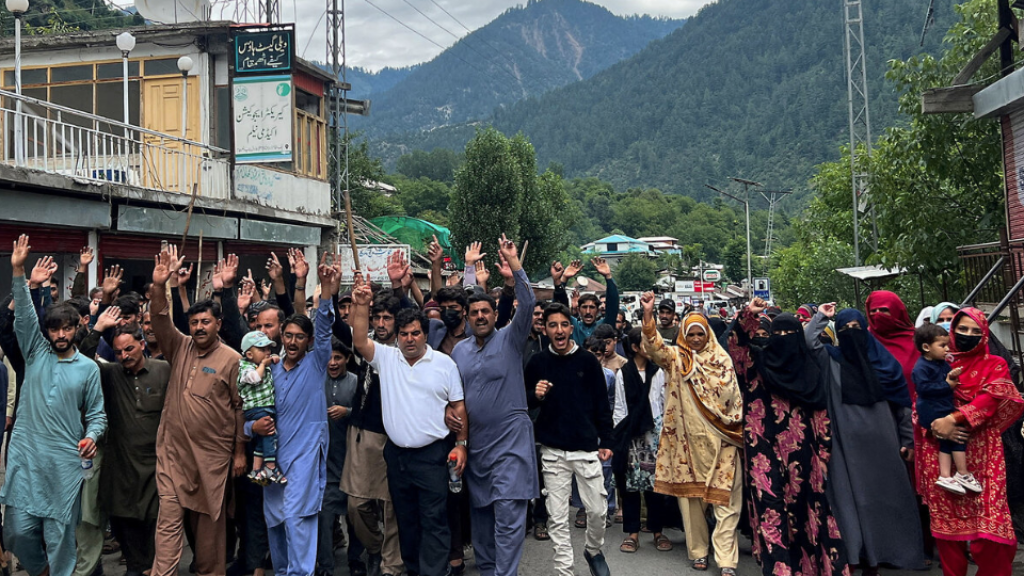
In one of the most brutal attacks on an unarmed rally, Pakistani rangers and police killed at least 18 Kashmiris, and left dozens injured, on July 28.
The direct firing by state forces on demonstrators was without any provocation. Participants of the Long March to Kashmir capital Muzafarabad were camping for over a month in the outskirts of Rawalakot, one of the main cities in Pakistani-controlled Jammu Kashmir.
Thousands joined the call of the Jammu Kashmir Joint Awami Action Committee (JAAC), a non-partisan civil society mass organisation who had led earlier mass campaigns for lowering electricity prices.
This time they were asking for election reforms to enable real representation for Kashmiris. They were demanding an end to the 12 seats for Muhajirs (migrants) Kashmiris settled in Pakistan. These seats were mainly a political gimmick used to form governments in Jammu Kashmir.
JAC was banned after lengthy negotiations with them by the state ministers that failed. The JAAC was deemed a terrorist organisation linked to India, and its main leaders as agents of India’s RAW [Research and Analysis Wing foreign intelligence agency]. Most of the main leaders were arrested. A curfew was imposed in Rawalakot, the main centre of resistance to state repression.
However, in one of the most glaring examples of mass awakening, the whole Kashmir was almost shut down on the call of JAAC. No shops opened and there was no internet or people in the streets. JAAC had become the real representative of Kashmiris.
The government wanted to go ahead with the scheduled July 27 general elections. However, a mass boycott of the whole process meant very small numbers of people voted.
The same day, JAAC announced its Long March to Muzafarabad, which was fired upon and attacked with tear gas.
One of the main characteristics of this mass movement for civil and political rights was the participation of women, who came in thousands every day to the sit-in outside Rawalkot for over a month. They brought food for participants and ensured the sit-in could continue.
Never has such a brave mass movement been witnessed in this region as the one currently unfolding in Pakistani-controlled Jammu Kashmir. More than 50 protesters have been killed by state forces since the movement started a month ago.
The Long March has started again from Rawlakot where, despite the bloodshed, participants were able to enter the city despite the security forces’ barriers.
Solidarity from international labour and civil society movements is urgently needed. Please condemn the deaths and repression by sending protest letters to Pakistan embassies. Please raise the issue wherever possible. The death of innocent Kashmiris should not go unheard.
The names of the July 28 martyrs are listed below.
1. Naeem Butt – Kotli, Pakistan-administered Jammu Kashmir
2. Usman Nazir – Rawalakot, Pakistan-administered Jammu Kashmir
3. Nisar Ahmed – Baloch, Pakistan-administered Jammu Kashmir
4. Kashif Yaqoob – Rawalakot, Pakistan-administered JammuKashmir
5. Sardar Fida Hussain – Tatrinote, Pakistan-administered Jammu Kashmir
6. Muzammil – Ali Sojal, Pakistan-administered JammuKashmir
7. Basit Shah – Hajira, Pakistan-administered Jammu Kashmir
8. Fahim Afzal – Chhota Gala, Rawalakot, Pakistan-administered Jammu Kashmir
9. Kamran Mushtaq – Panakha, S/o Mushtaq, Hajira, Pakistan-administered Jammu Kashmir
10. Zargham Khalil – Darek, Rawalakot, Pakistan-administered Jammu Kashmir
11. Saqib Hanif – Reerh Bann, Rawalakot, Pakistan-administered Jammu Kashmir
12. Saqib Ishaq – Numb, Gawara, Palandri, Pakistan-administered Jammu Kashmir
13. Areej Asghar – Tatta Pani, Pakistan-administered Jammu Kashmir
14. Usman Gul – Darek Dhok, Rawalakot, Pakistan-administered Jammu Kashmir
15. Jaffar Pehlwan – Tatrinote, Pakistan-administered Jammu Kashmir
16. Nisar Shaheen – Pakho, Narbai, Pakistan-administered Jammu Kashmir
17. Ali Hussain – Khari Sharif, Mirpur, Pakistan-administered Jammu Kashmir
18. Khawaja Abrar Latif Dar – Khurshidabad, Haveli, Pakistan-administered Jammu Kashmir
Deaths in Pakistani controlled Kashmir
Thursday 30 July 2026, by Farooq Sulehria, Farooq Tariq
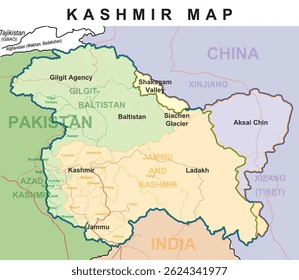
Farooq Sulehria made this podcast for Struggle TV about events in Kashmir. International Viewpoint brings you the transcript. Farooq Tariq wrote on the same subject, his article follows. An appeal for solidarity has already been published “Jammu-Kashmir progressive organisations call for global solidarity”.
I’m doing this program with a very heavy heart. Yesterday in Rawalakot, another twenty one people were killed. This is second time in almost seven weeks that Rawalakot has been the site of another massacre.
Earlier, on the night, between 6 and 7 June, the security forces fired on a peaceful sit in in Rawalakot. And at least ten people were killed at that time. What is going on in Kashmir has largely been ignored in global media. Not only global media. Even the Pakistani mainstream media is either not covering it or is simply busy doing an ugly propaganda against an Intifada-like movement which has gripped Pakistani controlled Jammu and Kashmir.
I perhaps need to offer a bit of context to an international audience listening to this podcast. Well, there was a long march announced by Joint Awami Action Committee (or Joint People’s Action Committee), which is an organizational form of a huge social movement that has gripped this region of Jammu and Kashmir in about three years.
This was third time that they had announced a long march from Mirpur, which is an important town in one corner of the Jammu and Kashmir. And they were supposed to march on Muzaffarabad, the capital of Jammu and Kashmir. Jammu and Kashmir is an autonomous region. In a way, it is not part of Pakistan. It is not integrated into Pakistan the way India has integrated the occupied part of Jammu and Kashmir that India controls.
Jammu and Kashmir under Pakistani control, has its own parliament, own prime minister, own Supreme Court and elections were supposed to be held on 27 July, yesterday. The first round of elections was held in fact, yesterday, and it was largely boycotted. There were hardly any voters turning out to vote anyway.
Ahead of these elections, the Joint Action Committee had announced a long march on Muzaffarabad, and the key demand was to rescind twelve seats reserved for the refugees. The refugees from Indian held Jammu and Kashmir, who migrated to Pakistan and were settled in Pakistan for last about eighty years. There are twelve seats reserved for them now. The problem was: through these reserved seats. Islamabad, the capital of Pakistan. Or, you know, the Pakistani state, would control the election system and form a government of their choice in Muzaffarabad. So there was this demand by Joint Awami Action Committee to eliminate these seats, to end these reserved quotas for refugees, so that a genuine government that represents the people of Jammu and Kashmir, in Pakistani controlled Kashmir, can form a government of their choice. Ahead of this Long March, which was supposed to begin on 9 June, the security forces tried to kidnap one of the key leaders, Umar Nazir. Kashmiri, who comes from Rawalakot and Rawalakot, has been the hub of this movement. That’s where this movement started and was translated into an organizational form called Joint Awami Action Committee.
This Joint Awami Action Committee has a core committee. It has almost thirty three core members, and they represent all parts of Jammu and Kashmir. That is to say, Pakistani controlled Jammu and Kashmir. Every district has a branch of Joint Awami Action Committee. These people are elected by the by the residents of that area. The attempt to kidnap Umar Nazir Kashmiri outside of Rawalakot on 5 June, actually led to the killing of his close associate, Shahzeb, his close comrade. He was killed, a young man in his early thirties, and Umar Nazir Kashmiri himself was injured in the police firing. The residents of Rawalakot started a sit in with the dead body of Shahzeb outside of the local military hospital, and next night, the security forces, fired live ammunition on the agitators. And at least ten or twelve people were killed in the incident. This really agitated the entire region. And despite the atmosphere of fear, the Long March was started from Mirpur and on its way to Rawalakot, which is halfway Muzaffarabad, the long march was fired upon yet again, and at least five people were killed. And according to different accounts, seven people were killed. Well, this long march arrived, Rawalakot. Meantime, Rawalakot was under curfew and the whole region was under the siege, the state of Pakistan stopped the trucks bringing food for the region.
This is a landlocked region. Every food item, medicine, everything comes through. Pakistan. Internet shutdown has been imposed. It has largely been imposed ever since fifth or sixth of June, especially in Rawalakot region. It is very difficult to communicate with people. Even mobile services were disconnected, shut down. Anyhow, when this Long March arrived, Rawalakot, they started a sit in, a huge sit in which went on for over fifty days. In fact fifty three days until 26 July.
The security forces yet again attacked the sit in at least two times or three times. Some deaths occurred. So far, at least over seventy people have been killed in state violence from, you know, 5, 6 June to yesterday. But yesterday was the most violent day. At least, twenty one people, as I said earlier, have been killed.
Yesterday, the sit in which started its march yet again entered the city of Rawalakot, which was under curfew. Hundreds and hundreds of people. I do not have confirmed figure, but at least fifty to sixty thousand people were marching in the processions. From different sides, they entered the town. They wanted to end the siege of the town, curfew in the town and live ammunition was fired on the marchers. The violence continues. I’m doing this podcast at a time when I’m receiving more unsettling news from Mirpur, where a small protest demonstration was held to protest against the killings in Rawalakot yesterday.
More violence is feared, according to the reports that are pouring in. The security forces are still shelling at the the protesters, there is firing. There is use of tear gas. And the protesters, they are holding their ground. They refuse to budge. And they promise to continue their march on Muzaffarabad. I think by the end of this day, many people are fearing more deaths. This is a kind of very sad situation. And, even bigger tragedy is the fact that, this incident has been and the entire movement, which is in fact very promising, very progressive from many viewpoints, has been ignored internationally.
Now, the urgent appeal is to show solidarity, to speak about this ongoing Movement. The State of Pakistan should show restraint. Progressive forces all over the world should send protest and should show solidarity with this movement. Hopefully we expect that there will be some sort of dialogue process. And this violence will come to an end. Some of the key demands should be met. Even if Joint Action Committee has watered down its demands, the state is not listening them. The state is bent upon crushing this movement. State is bent upon showing zero tolerance, as they call it, for the movement. I will try to update you later this evening or maybe tomorrow morning. Let’s hope things de-escalate.
28 July 2026
Deaths in Pakistani controlled Kashmir
Farooq Tariq
Last night, on 27th July, in one of most brutal attack on an unarmed rally, Pakistani rangers and police have killed at least 19 Kashmiris, Dozens were injured.
This direct firing by state forces on the demonstrators was without any provocation. The participants of the long march to Kashmir capital Muzafarabad were camping for over a month in the outskirts of Rawalakot, one of main city of Pakistani controlled Kashmir.
They were in thousands who came on the call of Jammu Kashmir Joint Awami Action Committee, a non partisan civil society mass organisation who had led earlier mass campaigns for lowering of electricity prices.
This time they were asking election reforms which enable Kashmiris for real representation. They were demanding an end of 12 seats for Muhajirs (migrants) Kashmiris settled in Pakistan. These seats were mainly a political gimmick used to form the governments in Kashmir.
JAC was banned after lengthy negotiations with them by the state ministers that failed. The JAC was termed as a terrorist organisation linked to India and main leaders as Indian RAW agents. Most of the main leaders were arrested. A curfew was imposed in Rawalakot, the main centre of resistence to state repression.
However, in one of most glaring example of mass awakening, whole Kashmir was almost shut down on the call of JAC, no shops opened and no internet and no people in the streets. JAC had become the real representative of Kashmiris.
The Government wanted to go ahead with the scheduled general elections on 27th July 2026. It did go for general elections with a mass boycott of the whole process and very small numbers of people voting.
The same day, on 27th July, JAC had announced the long march to Muzafarabad, which was met with direct firing and tear gas.
One of the main characteristics of this mass movement for civil and political rights was the participation of women who came in thousands every day at the sit in outside Rawalkot for over a month. They brought food for the
Participants of the sit in and did all efforts that could help to continue the sit in.
Never ever such a brave mass movement is witnessed by this region as this one from Pakistani controlled Kashmir. Over 50 have been killed by the state forces since the movement started a month ago. Now around 20 more last night.
The long march will start again today from Rawlakot where despite the bloodshed, the participants were able to enter the city and break the barriers of the state to stop them.
This is to demand solidarity form the international labour and civil movements. Please condemn the death and direct firing and send protest letters to Pakistan embassies. Please raise the issue where ever possible. The death on innocent barre Kashmiris should not go unheard.
28 July 2026
Farooq Sulehria made this podcast for Struggle TV about events in Kashmir. International Viewpoint brings you the transcript. Farooq Tariq wrote on the same subject, his article follows. An appeal for solidarity has already been published “Jammu-Kashmir progressive organisations call for global solidarity”.
I’m doing this program with a very heavy heart. Yesterday in Rawalakot, another twenty one people were killed. This is second time in almost seven weeks that Rawalakot has been the site of another massacre.
Earlier, on the night, between 6 and 7 June, the security forces fired on a peaceful sit in in Rawalakot. And at least ten people were killed at that time. What is going on in Kashmir has largely been ignored in global media. Not only global media. Even the Pakistani mainstream media is either not covering it or is simply busy doing an ugly propaganda against an Intifada-like movement which has gripped Pakistani controlled Jammu and Kashmir.
I perhaps need to offer a bit of context to an international audience listening to this podcast. Well, there was a long march announced by Joint Awami Action Committee (or Joint People’s Action Committee), which is an organizational form of a huge social movement that has gripped this region of Jammu and Kashmir in about three years.
This was third time that they had announced a long march from Mirpur, which is an important town in one corner of the Jammu and Kashmir. And they were supposed to march on Muzaffarabad, the capital of Jammu and Kashmir. Jammu and Kashmir is an autonomous region. In a way, it is not part of Pakistan. It is not integrated into Pakistan the way India has integrated the occupied part of Jammu and Kashmir that India controls.
Jammu and Kashmir under Pakistani control, has its own parliament, own prime minister, own Supreme Court and elections were supposed to be held on 27 July, yesterday. The first round of elections was held in fact, yesterday, and it was largely boycotted. There were hardly any voters turning out to vote anyway.
Ahead of these elections, the Joint Action Committee had announced a long march on Muzaffarabad, and the key demand was to rescind twelve seats reserved for the refugees. The refugees from Indian held Jammu and Kashmir, who migrated to Pakistan and were settled in Pakistan for last about eighty years. There are twelve seats reserved for them now. The problem was: through these reserved seats. Islamabad, the capital of Pakistan. Or, you know, the Pakistani state, would control the election system and form a government of their choice in Muzaffarabad. So there was this demand by Joint Awami Action Committee to eliminate these seats, to end these reserved quotas for refugees, so that a genuine government that represents the people of Jammu and Kashmir, in Pakistani controlled Kashmir, can form a government of their choice. Ahead of this Long March, which was supposed to begin on 9 June, the security forces tried to kidnap one of the key leaders, Umar Nazir. Kashmiri, who comes from Rawalakot and Rawalakot, has been the hub of this movement. That’s where this movement started and was translated into an organizational form called Joint Awami Action Committee.
This Joint Awami Action Committee has a core committee. It has almost thirty three core members, and they represent all parts of Jammu and Kashmir. That is to say, Pakistani controlled Jammu and Kashmir. Every district has a branch of Joint Awami Action Committee. These people are elected by the by the residents of that area. The attempt to kidnap Umar Nazir Kashmiri outside of Rawalakot on 5 June, actually led to the killing of his close associate, Shahzeb, his close comrade. He was killed, a young man in his early thirties, and Umar Nazir Kashmiri himself was injured in the police firing. The residents of Rawalakot started a sit in with the dead body of Shahzeb outside of the local military hospital, and next night, the security forces, fired live ammunition on the agitators. And at least ten or twelve people were killed in the incident. This really agitated the entire region. And despite the atmosphere of fear, the Long March was started from Mirpur and on its way to Rawalakot, which is halfway Muzaffarabad, the long march was fired upon yet again, and at least five people were killed. And according to different accounts, seven people were killed. Well, this long march arrived, Rawalakot. Meantime, Rawalakot was under curfew and the whole region was under the siege, the state of Pakistan stopped the trucks bringing food for the region.
This is a landlocked region. Every food item, medicine, everything comes through. Pakistan. Internet shutdown has been imposed. It has largely been imposed ever since fifth or sixth of June, especially in Rawalakot region. It is very difficult to communicate with people. Even mobile services were disconnected, shut down. Anyhow, when this Long March arrived, Rawalakot, they started a sit in, a huge sit in which went on for over fifty days. In fact fifty three days until 26 July.
The security forces yet again attacked the sit in at least two times or three times. Some deaths occurred. So far, at least over seventy people have been killed in state violence from, you know, 5, 6 June to yesterday. But yesterday was the most violent day. At least, twenty one people, as I said earlier, have been killed.
Yesterday, the sit in which started its march yet again entered the city of Rawalakot, which was under curfew. Hundreds and hundreds of people. I do not have confirmed figure, but at least fifty to sixty thousand people were marching in the processions. From different sides, they entered the town. They wanted to end the siege of the town, curfew in the town and live ammunition was fired on the marchers. The violence continues. I’m doing this podcast at a time when I’m receiving more unsettling news from Mirpur, where a small protest demonstration was held to protest against the killings in Rawalakot yesterday.
More violence is feared, according to the reports that are pouring in. The security forces are still shelling at the the protesters, there is firing. There is use of tear gas. And the protesters, they are holding their ground. They refuse to budge. And they promise to continue their march on Muzaffarabad. I think by the end of this day, many people are fearing more deaths. This is a kind of very sad situation. And, even bigger tragedy is the fact that, this incident has been and the entire movement, which is in fact very promising, very progressive from many viewpoints, has been ignored internationally.
Now, the urgent appeal is to show solidarity, to speak about this ongoing Movement. The State of Pakistan should show restraint. Progressive forces all over the world should send protest and should show solidarity with this movement. Hopefully we expect that there will be some sort of dialogue process. And this violence will come to an end. Some of the key demands should be met. Even if Joint Action Committee has watered down its demands, the state is not listening them. The state is bent upon crushing this movement. State is bent upon showing zero tolerance, as they call it, for the movement. I will try to update you later this evening or maybe tomorrow morning. Let’s hope things de-escalate.
28 July 2026
Deaths in Pakistani controlled Kashmir
Farooq Tariq
Last night, on 27th July, in one of most brutal attack on an unarmed rally, Pakistani rangers and police have killed at least 19 Kashmiris, Dozens were injured.
This direct firing by state forces on the demonstrators was without any provocation. The participants of the long march to Kashmir capital Muzafarabad were camping for over a month in the outskirts of Rawalakot, one of main city of Pakistani controlled Kashmir.
They were in thousands who came on the call of Jammu Kashmir Joint Awami Action Committee, a non partisan civil society mass organisation who had led earlier mass campaigns for lowering of electricity prices.
This time they were asking election reforms which enable Kashmiris for real representation. They were demanding an end of 12 seats for Muhajirs (migrants) Kashmiris settled in Pakistan. These seats were mainly a political gimmick used to form the governments in Kashmir.
JAC was banned after lengthy negotiations with them by the state ministers that failed. The JAC was termed as a terrorist organisation linked to India and main leaders as Indian RAW agents. Most of the main leaders were arrested. A curfew was imposed in Rawalakot, the main centre of resistence to state repression.
However, in one of most glaring example of mass awakening, whole Kashmir was almost shut down on the call of JAC, no shops opened and no internet and no people in the streets. JAC had become the real representative of Kashmiris.
The Government wanted to go ahead with the scheduled general elections on 27th July 2026. It did go for general elections with a mass boycott of the whole process and very small numbers of people voting.
The same day, on 27th July, JAC had announced the long march to Muzafarabad, which was met with direct firing and tear gas.
One of the main characteristics of this mass movement for civil and political rights was the participation of women who came in thousands every day at the sit in outside Rawalkot for over a month. They brought food for the
Participants of the sit in and did all efforts that could help to continue the sit in.
Never ever such a brave mass movement is witnessed by this region as this one from Pakistani controlled Kashmir. Over 50 have been killed by the state forces since the movement started a month ago. Now around 20 more last night.
The long march will start again today from Rawlakot where despite the bloodshed, the participants were able to enter the city and break the barriers of the state to stop them.
This is to demand solidarity form the international labour and civil movements. Please condemn the death and direct firing and send protest letters to Pakistan embassies. Please raise the issue where ever possible. The death on innocent barre Kashmiris should not go unheard.
28 July 2026
Farooq Tariq
Farooq Sulehria
Urgent appeal: Stand in solidarity with the people of Jammu Kashmir
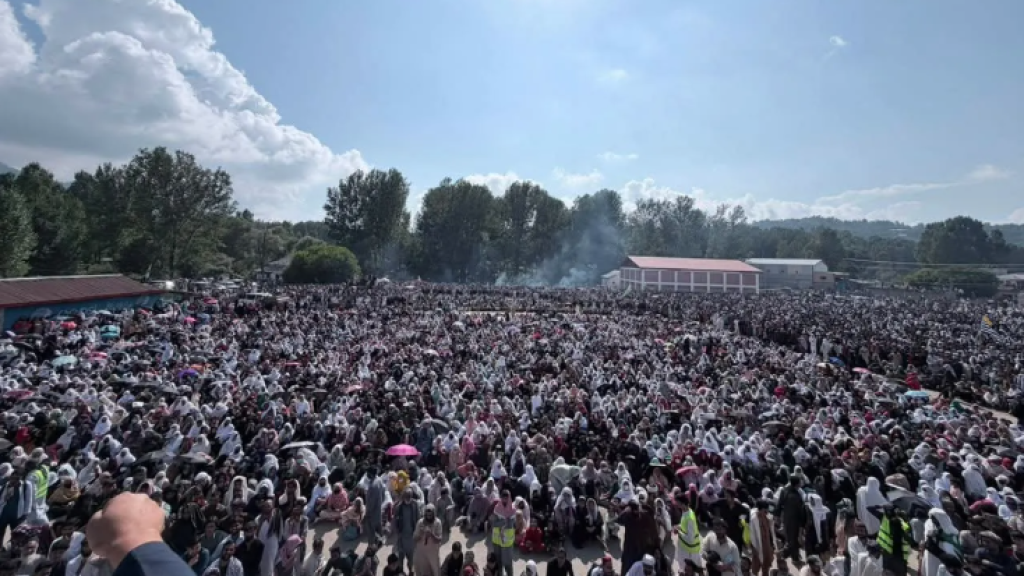
The people of Pakistan-administered Jammu Kashmir (PaJK) are facing one of the bloodiest episodes of state repression in recent history. A mass movement built around economic and democratic demands has been met with curfews, communication blackouts, live ammunition, and collective punishment.
The administration in PaJK has once again exposed itself as a puppet of the Pakistani state, implementing policies dictated from Islamabad rather than responding to the democratic aspirations of the people. The Jammu Kashmir Joint Awami Action Committee (JAAC) had announced a Long March on June 9 after months of mobilizing around economic and democratic demands. Instead of addressing these legitimate demands, the Pakistani state launched a sweeping crackdown on June 5. Internet and mobile services were suspended, raids and arrests intensified, and security forces attempted to crush the movement before it could gather momentum.
Between June 5 and July 27, at least 45 people were martyred. Despite this repression, thousands of people established sit-ins on the outskirts of Rawalakot city and remained there even after repeated attempts by authorities to disperse them through force. Throughout this period, JAAC consistently reaffirmed its willingness to engage in peaceful dialogue and resolve the crisis through negotiations. The Pakistani state repeatedly used these negotiations as a delaying tactic while continuing its repression and preparing for further violence.
On July 27, the Long March began. Defying curfew and state intimidation, thousands marched towards Rawalakot. Security forces opened fire on unarmed protesters, martyring 21 people.
Despite these killings, the people successfully pushed back the Rangers (para-military troops) and continued their advance. On July 28, the massacre escalated further as another 14 people were martyred in Rawalakot, Mirpur, and other cities across PaJK. The repression has extended far beyond the use of lethal force. The Pakistani state has deliberately restricted access to food supplies and obstructed access to hospitals in Rawalakot, subjecting people of Jammu Kashmir to collective punishment in an attempt to break the movement. These actions constitute a grave assault on fundamental democratic rights and basic human dignity.
We call upon the international working class, students, academics, trade unions, democratic, progressive, and socialist organizations to stand in solidarity with the people of Jammu & Kashmir.
We urge organizations and activists across the world to organise demonstrations outside Pakistani embassies and consulates in their respective countries and to send protest letters/emails to the Ministry of Foreign Affairs of Pakistan, the Federal Minister for Kashmir Affairs and Gilgit-Baltistan (see below), and Pakistani diplomatic missions, demanding an immediate end to the massacre, the withdrawal of security forces from the streets, the restoration of internet and mobile services, unrestricted access to food supplies and medical care, the release of all detained protesters, and an independent investigation into the killings.
The people of Jammu Kashmir are resisting extraordinary repression with immense courage. Their struggle deserves the active solidarity of workers, students, and all those committed to democracy and the right of oppressed peoples to determine their own future!
Emails:
Federal Minister for Kashmir Affairs and Gilgit-Baltistan: info@kagbsafron.gov.pk
Ministry of Foreign Affairs of Pakistan: spokesperson.office1@mofa.gov.pk

No comments:
Post a Comment