Spain government in disarray as conflicting reports swirl over Morocco’s role in Ceuta
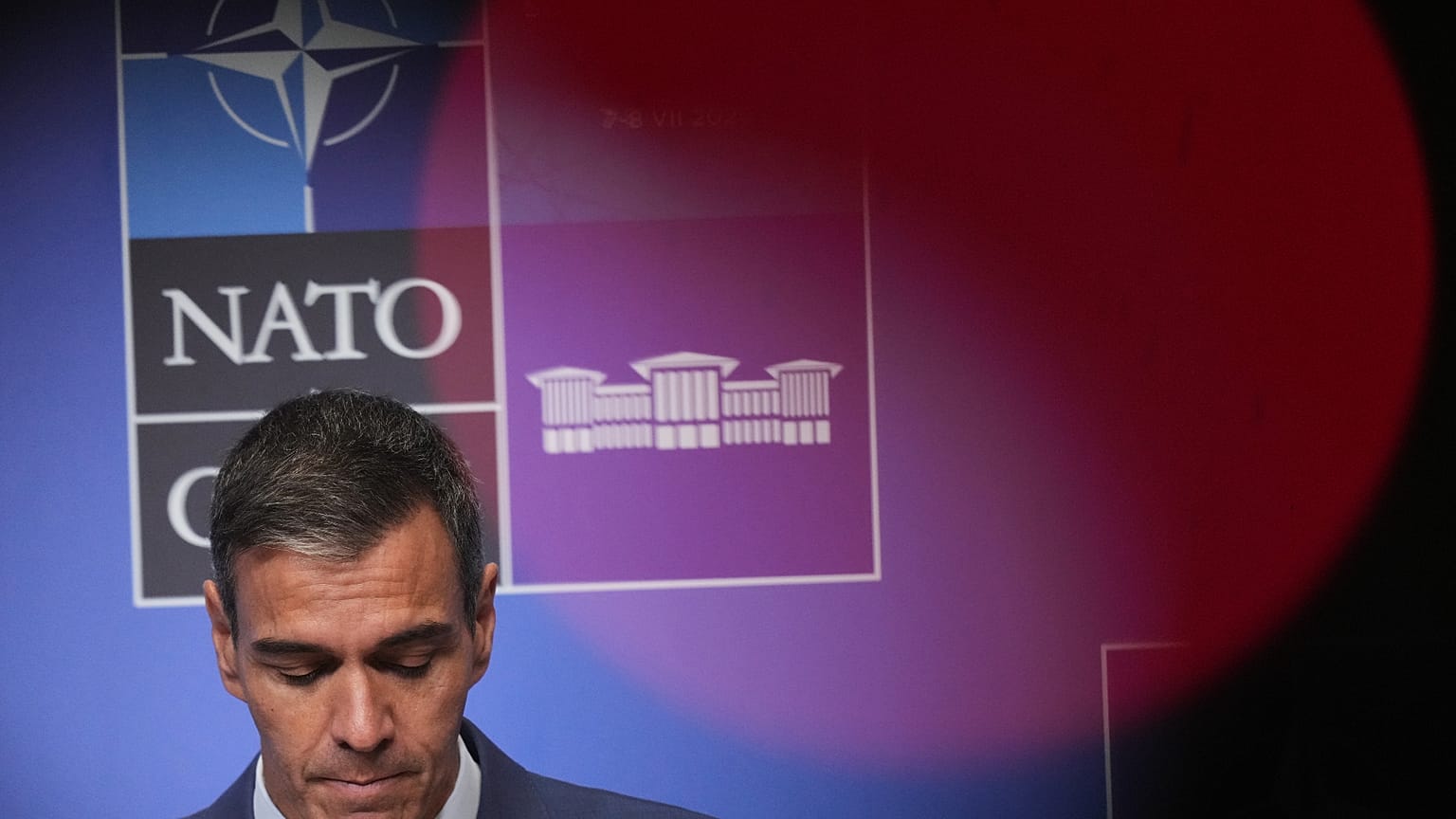
The crisis deepened Wednesday after a leaked report alleging Moroccan forces helped push migrants across the border blindsided the government. Madrid denies having ignored warnings of an imminent breach.
The Spanish government was plunged into crisis on Wednesday after a leaked police report suggested Moroccan forces played a role in pushing migrants into Ceuta in an unprecedented border violation, putting Madrid on the defensive.
Multiple media outlets, citing a law enforcement document, alleged Moroccan authorities helped push migrants by sea, acted “passively” and concluded that the mass influx of around 80,000 migrants into the Spanish enclave was not accidental.
The allegations have triggered a political frenzy, putting Spain’s Interior Ministry on the back foot.
The Spanish Interior Minister, Fernando Grande-Marlaska, under fire for his handling of Spain's most serious national security breach in modern history, ordered police to clarify the claims, which directly contradict the government's narrative.
A senior police official later denied that any report directly blaming Morocco exists, but the statement did little to calm tensions as the Sánchez government struggles to contain the crisis, with thousands of migrants still stranded in the city to the frustration of local residents.
Protests in support of Ceuta took place across Spain on Wednesday.
The war of leaks also indicates the Spanish interior ministry, one of the most politically sensitive government departments, seems to have lost control of a part of its police, looking to either embarrass the government or bring to light new information.
It is not uncommon for the Spanish government and opposition to accuse each other of “lawfare”, in reference to courts or police departments seen as politically aligned for partisan gains.
The question of how much the Spanish government knew in the hours prior is central to its political survival as Sánchez faces his most serious crisis to date ahead of an election in 2027.
Opposition leader Alberto Núñez Feijóo told reporters that the government “knew it — and covered it up.”
Serious consequences
Spain has not blamed Morocco, even after it described the dramatic events in Ceuta, where more than 150 people died at sea, as a violation of its territorial integrity while calling for solidarity from its European neighbours.
Instead, Madrid has pointed to false social media claims pegged to a court ruling and human traffickers as the principal drivers of the mass influx— a position echoed by the European Commission, which, even as the border collapsed, continued to describe Morocco as a “trusted partner” in tackling irregular migration.
A spokesperson for the European Commission refused to comment on the leaked report, describing it as a national matter.
Earlier this week, Sánchez also suggested that Russia and Israel played a role in amplifying disinformation. Spain and Israel have clashed over the war in Gaza.
Still, questions remain over how Moroccan authorities, who also patrol the border, failed to detect and break up the buildup of migrants along the border.
Juan Fernando López Aguilar, a former socialist justice minister and a member of the European parliament, told Euronews this week "it is only obvious, it couldn't have happened without some overlooking by the Moroccan authorities."
“That’s common sense. But the government has to act based on facts and evidence,” he told Euronews’ flagship show Europe Today.
Spanish ministers have given conflicting accounts of what they knew in the days prior and whether intelligence agencies had passed on critical information.
The issue is politically sensitive: any failure to act on warnings related to national security would amount to serious negligence and could fuel calls for a vote of no confidence in the prime minister and his government.
Ceuta ‘at breaking point’
Beyond the politics, the Spanish government is also facing serious operational difficulties on the ground in Ceuta, where around 5,000 migrants — about half of them understood to be minors — remain in the city. Local authorities put the figure closer to 10,000.
On Wednesday, Ceuta President Juan Jesús Vivas said the city was at breaking point, directly blaming Morocco and accusing Rabat of harassment.
“Morocco has had and continues to have an unwavering objective: to suffocate, harass and bring down our two cities,” he said, referring to Ceuta and its twin city, Melilla, also located in North Africa.
“I think no one doubts that what has happened to us is not a migration crisis. What has happened is that Spain’s territorial integrity has been violated.”
Vivas has demanded that all migrants be returned, describing this as the only way to restore normality in Ceuta. But Spanish authorities face a difficult balancing act.
Strict laws protecting minors prevent immediate returns, even if they crossed illegally, while local authorities have yet to facilitate public spaces for migrant identification, leading to more administrative delays.
Facing scrutiny from its European neighbours, Madrid has also pledged that the situation in Ceuta will not affect the Schengen area, which allows for free movement of people in the EU, but that is limiting its ability to transfer migrants to mainland Spain away from Ceuta to provide relief.
Faced with the complex situation, Spanish authorities have now requested assistance from Frontex, the EU agency responsible for the bloc’s external borders.
Moroccan authorities have argued that Spain’s mass regularisation plan announced earlier this year may have acted as an incentive for migrants to cross.
No Evidence Morocco Was Behind Ceuta Surge, Says Spanish PM Sánchez

Spain's Prime Minister Pedro Sánchez. Photo Credit: Video screenshot @sanchezcastejon,
By Inés Fernández-Pontes
Key Takeaways:
- After a month of silence, PM Pedro Sánchez told Cadena Ser that Spain has no intel pinning Morocco for the late-July rush of ~80,000 into Ceuta; he blames social-media rumors about a Supreme Court bar on immediate sea-arrival returns, plus alleged Russian, Israeli, and far-right disinfo.
- Israel’s FM Gideon Saar called that a “brazen lie”; Spanish opposition, experts, and some former officials still say Moroccan border forces opened or stood down a militarized crossing.
- Madrid has not summoned Ambassador Benyaich (unlike 2021 after 10,000 crossed) and Sánchez called trust in Rabat “necessary” despite Moroccan ministers restating claims on Ceuta and Melilla.
(EurActiv) — Pedro Sánchez, Spain’s prime minister, has moved to clear Morocco of any role in the late-July influx of 80,000 into Ceuta, blaming social media disinformation for triggering the unprecedented crisis.
Breaking a month of public silence – and under mounting party criticism over his response – Sánchez defended his handling of the episode on Monday, insisting “it is still not clear” what happened on 30-31 July in the tiny Spanish city in North Africa
“We are still investigating,” the prime minister said in an interview with radio network Cadena Ser. “There is no information from the state security forces and bodies, nor from our own or any intelligence centre, that casts doubt on the participation of the Moroccan authorities.”
Instead, Sánchez pointed to the official line backed by Madrid and Rabat: that online disinformation surrounding an earlier Spanish Supreme Court ruling helped trigger the rush. The ruling barred the immediate return of migrants arriving by sea in Ceuta and Melilla, Spain’s other North African exclave.
“After July 30 and 31, rumours and disinformation spread on social networks linked to Russia and Israel, and to an ultra-right international that always uses migration to attack both Spain and Europe and divide it,” he said.
Israel reacted with anger, accusing the Spanish leader of “lying shamelessly”. “This is a brazen lie. Continuing to spread defamatory lies will not distract from Sanchez’s disgraceful failure to manage his country’s affairs,” Israel’s Foreign Minister Gideon Saar wrote on X.
Spanish lawmakers across the political spectrum, along with experts and former top officials, have pointed at Moroccan border forces for either actively or passively allowing the mass crossing through a normally heavily militarised border.
Sánchez’s ruling Socialists, however, have so far shown little appetite for a public showdown with Rabat.
Despite the prime minister initially condemning a “violation of Spain’s territorial integrity”, Foreign Minister José Manuel Albares has not yet summoned the Moroccan ambassador to Spain, Karima Benyaich. Nor have Spanish ministers taken action over repeated comments in recent weeks by Moroccan ministers claiming Ceuta and Melilla.
Pressed on Rabat’s annexation claims over the Spanish cities, the prime minister dodged the question and said cooperation with Morocco is not only “positive” but “necessary”.
“A lack of trust in Morocco would only further aggravate an already complex situation,” he said. “Certain accusations are being made that are very serious, dangerous, and also gratuitous.”
During the past 2021 migrant crisis, in which an enraged Morocco eased border controls allowing 10,000 migrants to storm Ceuta, Albares’ predecessor did summon the Moroccan ambassador to express the government’s “rejection” of the mass influx.
The move came in retaliation for Spain allowing Sahrawi leader Brahim Ghali to receive medical treatment in the country.
Spanish police chief denies existence of report blaming Morocco for Ceuta migrant crossings
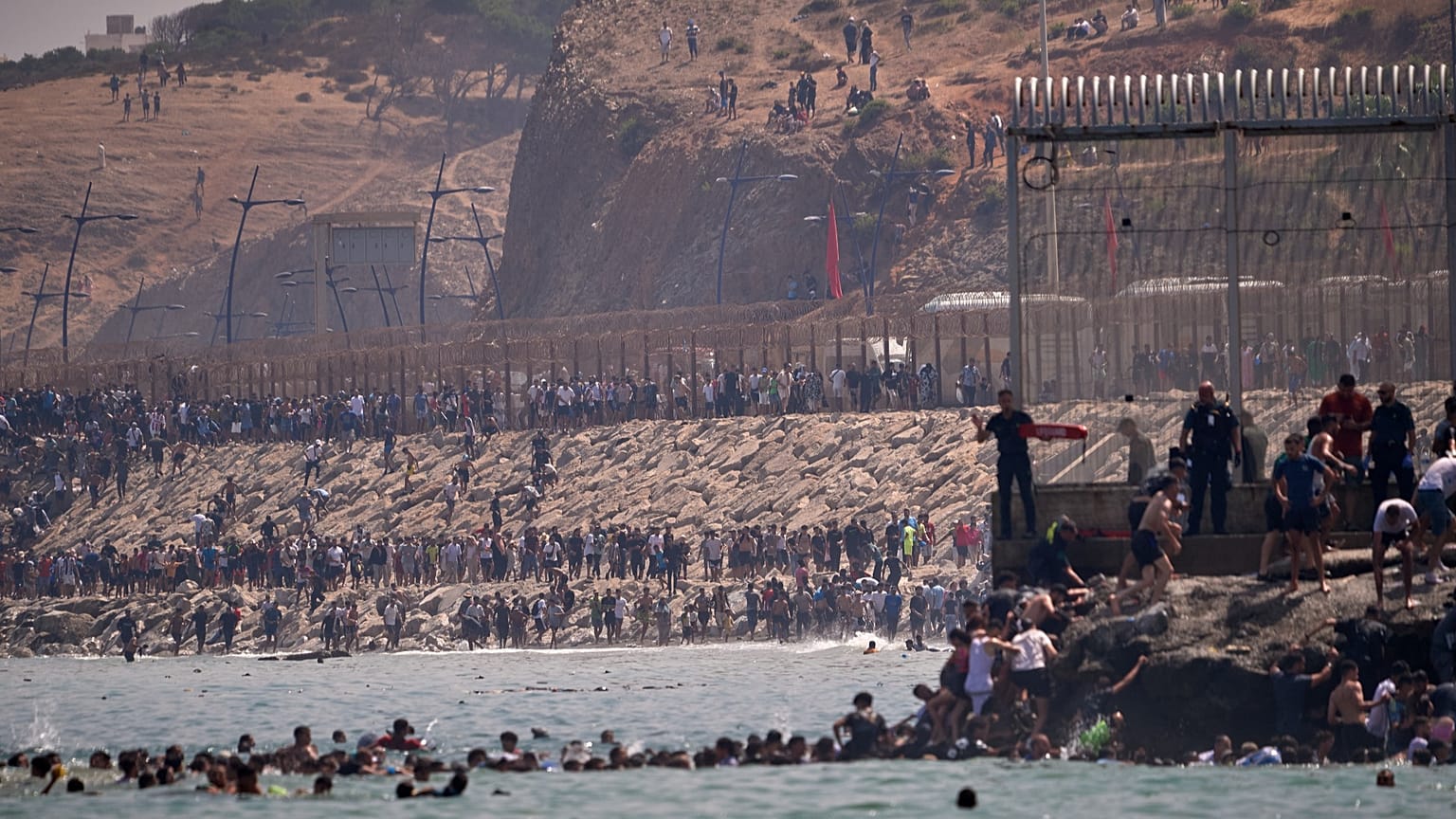
Madrid demanded an explanation from its own police after an explosive leaked police report suggested that Moroccan security forces were involved in transporting and pushing migrants towards the border.
Spain's police chief, Francisco Pardo, has told Interior Minister Fernando Grande-Marlaska that there is no police report attributing to Moroccan security forces the planning or execution of the events in Ceuta at the end of July.
The response comes after Marlaska asked police to clarify a leaked report in which Spanish police blamed Moroccan security forces for orchestrating a mass entry of migrants to the enclave of Ceuta last week, ministry sources said on Wednesday.
Spanish Prime Minister Pedro Sánchez said on Monday that Morocco was not responsible, instead accusing Israel, Russia and the far right of spreading disinformation about the mass entry of around 70,000 migrants into Ceuta.
Sánchez told Cadena SER radio that "no intelligence service with which the Spanish government normally cooperates" had suggested "any involvement in one way or another of the Moroccan authorities."
Online newspaper El Español reported on Tuesday that Spain's National Centre for Immigration and Borders (CENIF) said the incident "was guided by Moroccan security forces...with an objective other than migration" in an explosive leaked report.
Interior Minister Fernando Grande-Marlaska demanded police chief Francisco Pardo to check and clarify the information, which was reportedly sent to a judge collecting information on the incident, according to ministry sources.
In his comments, Grande-Marlaska implies the Spanish government found out through media reports about allegations, which would put in question Madrid's narrative that the influx was mostly led by social reports and amplified by human traffickers.
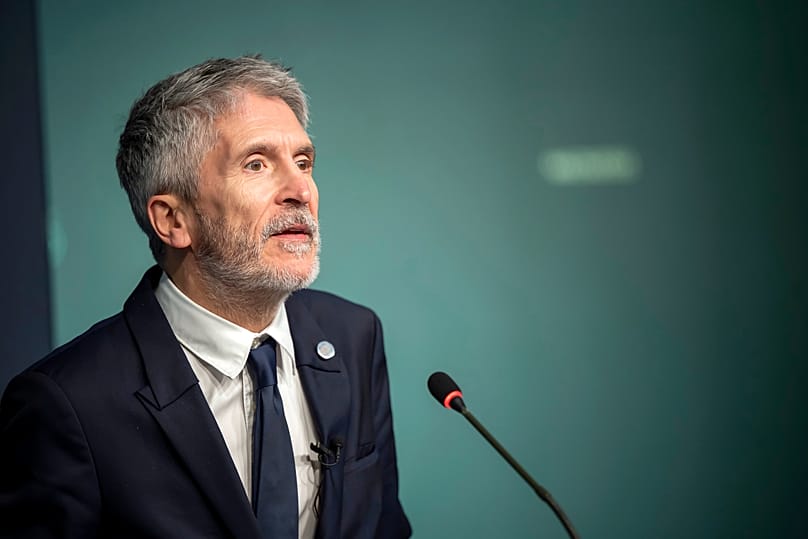
"Any such information should have immediately been made available to the National Security Council...and to other bodies with powers in this field," the minister said in his letter to the police chief, sent after the newspaper report was published.
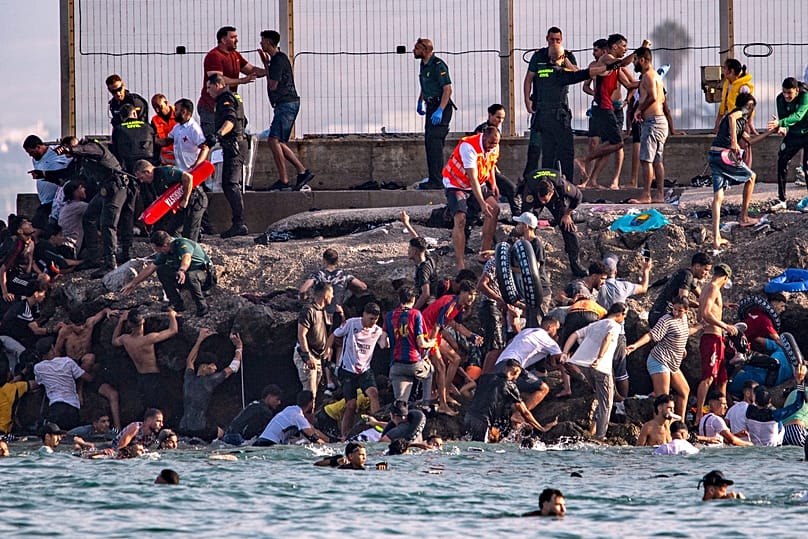
More than 70,000 migrants entered the small Spanish territory in north Africa on 30-31 July, swimming or crossing on foot from neighbouring Morocco in an unprecedented rush that left scores dead.
Some analysts have suggested the crisis may have been a message sent to Spain by Morocco over the disputed Western Sahara after Sánchez visited Rabat's historic enemy Algeria in July.
The Western Sahara is a former Spanish colony largely controlled by Morocco but claimed by the Algerian-backed pro-independence Polisario Front.
Political flashpoint
The influx triggered fresh tensions within the European Union over the sensitive topic of immigration and dealt a blow to one of its main achievements, the Schengen free-travel zone.
Italy's right-wing government imposed border checks for one month on travellers from Spain after the crisis, with Madrid reciprocating a week later.
Both governments announced a 15-day extension of the controls on Monday.
Although the vast majority of the migrants returned to Morocco within hours, thousands remain in the tiny territory of 18 square kilometres and 84,000 inhabitants, many living rough on the streets.
Their fate has become a major political flashpoint, with the conservative and far-right opposition demanding that all those who entered Ceuta, including minors, be returned to Morocco.
Ceuta residents have held regular demonstrations over what they say are security and hygiene problems linked to the influx.
Sánchez said that 6,000 spaces at reception centres would soon be available in the territory for migrants, whose status must be verified by the Spanish authorities before any possible return to Morocco.
He also pledged an additional €168 million in aid for Ceuta to respond to the crisis.
At the end of August, Madrid asked the European Commission (EC) for the support from Frontex, Europol and the European Union Agency for Asylum (EUAA) to assist with the screening and processing of migrants who are staying irregularly in Ceuta.
Conservative and far-right MEPs rally against Spain’s government over Ceuta crisis
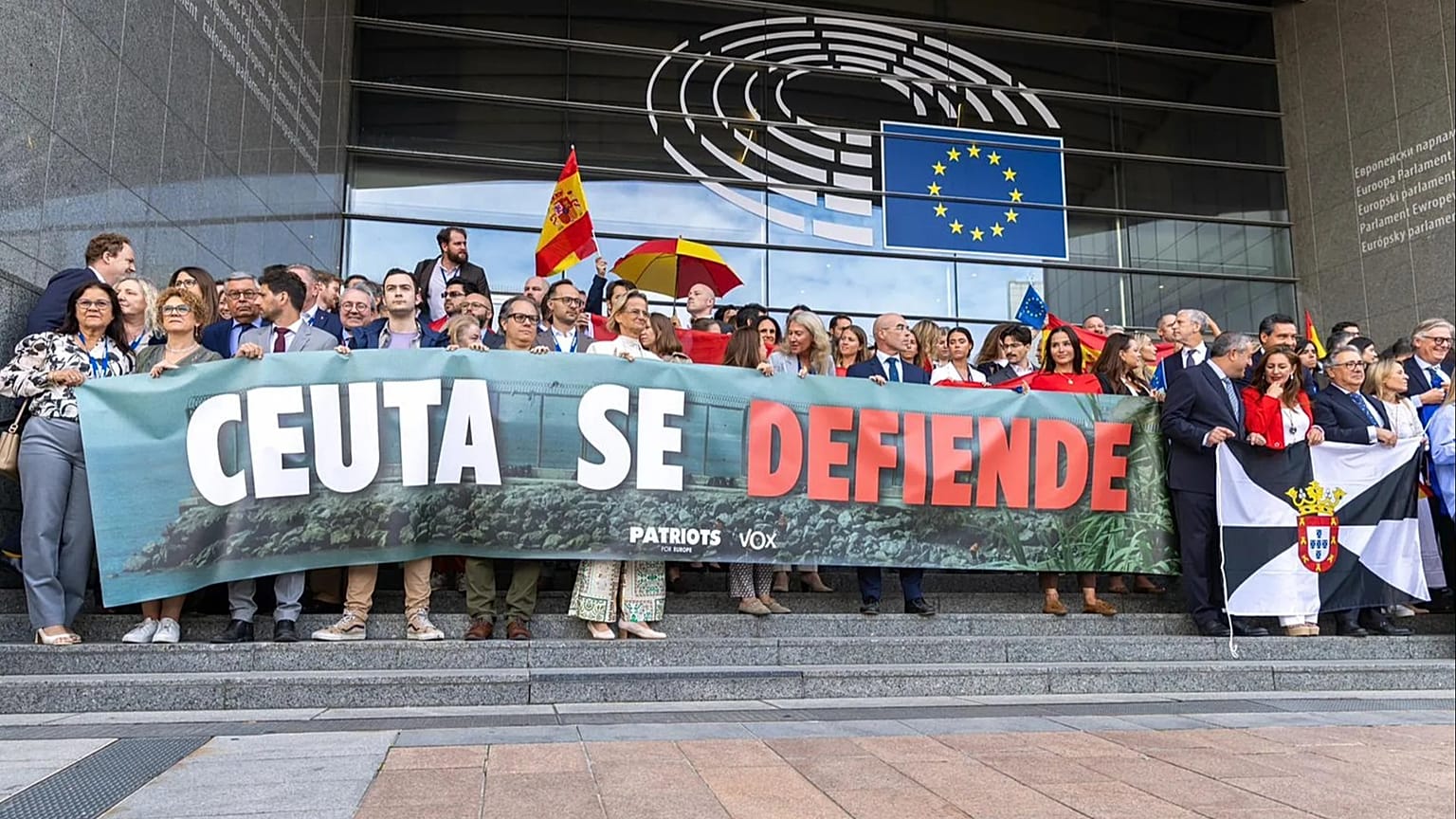
Lawmakers from the European People’s Party and Patriots for Europe are accusing Pedro Sánchez of abandoning the Spanish exclave, as a press report suggests the mass entry incident was guided by Moroccan security forces.
Around 500 people gathered in front of the European Parliament in Brussels on Wednesday to protest against the Spanish government’s handling of the crisis in Ceuta, where several thousand of more than 70,000 migrants who arrived in the exclave on 30 July remain.
MEPs and staffers from the centre-right European People’s Party and far-right Patriots for Europe gathered in the area in front of Parliament, waving the flags of Ceuta and Spain, and accusing Spanish Prime Minister Pedro Sánchez of failing to defend Spain’s territorial integrity and sovereignty.
Two separate demonstrations were launched by Spain’s Popular Party and Vox in Brussels on Ceuta Day. Despite being organised separately, both gatherings took place at the same time and in the same location, with EPP and PfE lawmakers standing side by side.
“Sánchez has handed over responsibility for the security of Ceuta to a third country,” EPP vice-president Dolors Montserrat told reporters, claiming the Spanish Prime Minister “is bowing” to Morocco.
Online newspaper El Español reported on Wednesday that Spain's National Centre for Immigration and Borders (CENIF) had concluded the incident "was guided by Moroccan security forces", contradicting Sánchez’s stance that there is no proof of any involvement by the authorities in Rabat.
Madrid has so far avoided publicly blaming Rabat for the incident. It generally considers Morocco a cooperative partner in migration management.
Spanish Interior Minister Fernando Grande-Marlaska asked police chief Francisco Pardo to verify the information, which CENIF reportedly sent to a judge gathering information on the incident, according to ministry sources.
Vox, the leading Spanish far-right party, claims Sánchez has “betrayed” his own country and is pushing to activate Article 102 of the Spanish Constitution, which would trigger a criminal trial against the prime minister and his cabinet.
“The situation is untenable. This government cannot continue to lead Spain,” Vox MEP Jorge Buxadé Villalba told reporters, claiming this is the “hardest hour” for the country since the Catalan attempted secession in 2017.
Vox’s MEPs also sent a letter to Commission President Ursula von der Leyen, EU foreign policy chief Kaja Kallas and Home Affairs Commissioner Magnus Brunner.
They call for condemning and sanctioning Morocco, declaring the massive entry “an act of hybrid warfare” and immediately suspending all international agreements between the EU and Morocco, as well as the granting of visas to Moroccan citizens.
The European Commission told Euronews it will not comment on leaks and considers the ongoing investigation into Morocco’s involvement “a matter for the national authorities.”
Spanish PM Sanchez says Israel and Russia spread disinformation on Ceuta migrant crisis
Centre-left Spanish Prime Minister Pedro Sanchez on Monday alleged that social networks linked to Israel and Russia had spread disinformation about the July migrant crisis in the Spanish exclave of Ceuta. He said the alleged smear campaign, which he maintained had also been magnified by far-right networks, had been driven in part by Madrid's opposition to the wars in Ukraine and the Middle East.
Issued on: 31/08/2026 -

Russia and Israel both spread and amplified disinformation related to the mass entry of migrants into Spain's North African exclave of Ceuta last month, Prime Minister Pedro Sanchez said on Monday, citing research by the European Union's foreign policy body, the European External Action Service (EEAS).
"After July 30 and 31, there was a spread of rumours and disinformation, from social networks linked both to Russia and to Israel, and to an ultra-right international that always uses migration not only to attack Spain, but also to attack Europe and divide it," Sanchez told Cadena Ser radio.
Sanchez said it was "evident" that the two countries had used the crisis to criticise the Spanish government, as they were at odds with Madrid over its position on the wars in Ukraine and the Middle East.
The prime minister also ruled out any responsibility on the part of the Moroccan authorities in the sudden influx of migrants who arrived in the Spanish territory.
"No intelligence service with which the Spanish government normally cooperates sheds any doubt, or rather, suggests any doubt, about the involvement in one way or another of the Moroccan authorities," he said.
Israel's Foreign Minister Gideon Saar on Monday snapped back at the Spanish PM, saying he was "lying shamelessly" about the accusations made against Israel.
"In his interview with Cadena SER today, he lied again, astonishingly accusing Israel of disseminating misleading information regarding the events in Ceuta. This is a brazen lie. Continuing to spread defamatory lies will not distract from Sanchez's disgraceful failure to manage his country's affairs," Saar wrote on X.
The vast majority of the roughly 70,000 people to have entered Ceuta have since been returned to Morocco, according to Spanish authorities.
Spain's left-wing government has said between 3,500 and 7,000 migrants remain in the territory, including unaccompanied minors. Ceuta's right-wing leaders allege it is at least 10,000.
Sanchez said on Monday that at the time of the influx, disinformation was being spread online – including by human trafficking groups. Incorrect statements included that migrants cannot be deported if they enter Ceuta by swimming – a claim that remains false.
"We are continuing to investigate" what happened, Sanchez said.
(FRANCE 24 with Reuters and AFP)


Newleftreview.org

No comments:
Post a Comment