Tuesday, November 10, 2020

GREEN CAPITALI$M
Rishi Sunak: UK to issue first green bond and require firms to disclose climate risk
Chancellor unveils raft of green finance plans



Rishi Sunak said the government will issue the UK's first Sovereign Green Bond in 2021
Michael Holder
10 November 2020

The government plans to cement the UK's position as a global centre for green finance received a significant boost yesterday (9 November), with the Chancellor Rishi Sunak unveiling proposals to issue the country's first sovereign green bond next year and make climate risk disclosure mandatory for major companies from 2025


In a statement to Parliament yesterday, Sunak said the government would issue the UK's first Sovereign Green Bond in 2021, subject to market conditions. He also promised that the initial bond would be followed by a series of further issuances designed to meet growing investor demand for green bond instruments.

"This will be the first in a series of new issuances as we look to build out a green curve over the coming years, helping to fund projects to help tackle climate change, finance much needed infrastructure and investment and create green jobs across this country," said Sunak.

The global green bonds market has surged in recent years, with analyst Moody's recently projecting total issuance worldwide could grow to between $175bn and $225bn by the end of 2020. But while a growing number of countries, including the likes of Germany and Sweden have issued sovereign green bonds, the UK has yet to do so.

Meanwhile, the fast-growing sector has been dogged by concerns that a lack of clarity over what constitutes a green or climate bond could result in some nominally green funding being channelled to support polluting infrastructure.

However, Sunak this afternoon said the UK would, in addition to issuing its first green gilts, seek to implement a green taxonomy that he hoped would provide a common framework for determining which activities can be defined as environmentally sustainable, building on the EU's on-going efforts to develop its own green taxonomy.

The UK taxonomy would take the scientific metrics established by the EU taxonomy as its basis, with a new UK Green Technical Advisory Group established to ensure the approach is fit for purpose for the UK market, according to the Treasury. Sunak said the efforts were aimed at "robustly classifying what we mean by green to help firms and investors".

Moreover, the Chancellor confirmed plans set out earlier today by the Financial Conduct Authority (FCA) to introduce stricter rules on climate risk disclosure for large companies and investors, in line with the guidelines developed by the global Taskforce on Climate-related Financial Disclosures (TCFDs).

First outlined by the FCA earlier this year, the new rules require all large UK companies with a premium listing - currently representing a market capitalisation of around £1.9tn - to publicly disclose the risks they face from climate change and the net zero transition, or explain why not, by the end of 2023.

Sunak said that from 2025 the rules would be tightened further to make the TCFD guidelines fully mandatory, going beyond the 'comply or explain' approach, and making the UK the first country in the world to make climate risk disclosures obligatory.

The upcoming rules will capture a significant portion of the economy, including listed commercial companies, UK registered large private companies, banks, building societies, insurance companies, UK-authorised asset managers, life insurers, FCA-regulated pension schemes, and occupational pension schemes, according to the Treasury.

Sunak said the green finance measures announced today would help position the UK as a "world leader in green finance".

"As we leave the EU we have an opportunity to set out a new vision for this sector - a vision based not on a race to the bottom, but on a financial services industry that is open, innovative and leads the world in the use of green finance," he told MPs. "This new chapter means putting the full weight of private sector expertise, innovation and capital behind the critical global effort to tackle climate change and protect the environment."

Reacting to Sunak's statement in Parliament yesterday afternoon, Labour's Shadow Chancellor Anneliese Dodds said action to ramp up green finance "can't come soon enough", but called on the Treasury to go further and not wait until 2025 to bring in mandatory TCFD reporting rules.

She also urged the government to ban overseas fossil fuel financing and loans through UK Export Finance, and criticised the UK's £5bn green recovery commitments, which she argued paled in comparison with the green stimulus plans from France and Germany that have assigned £27bn and £36bn respectively to climate-related projects.

"Where is this government's ambition for a green recovery from the coronavirus crisis?" she asked. "And where is the replacement for the Green Investment Bank that the Conservatives sold off?"

Reaction elsewhere to Sunak's green finance announcements tended towards cautious optimism. Greenpeace UK's policy director Doug Parr broadly welcomed moves to make climate risk disclosure mandatory, but warned the new rules must be "compulsory and thorough".

"The real win would be to make all financial institutions put in place plans to meet the Paris Agreement by the end of next year, steadily choking off the supply of cash to planet wrecking activities," he said. "Disclosure is a route to making that happen, but not an end in itself."

Similarly, former Bank of England senior economist Carsten Jung, who now works for the IPPR think tank, said Sunak's announcements today were "really just a bare minimum of what would be needed to make finance support the climate transition" and labelled green bonds as "largely a cosmetic move".

He argued the climate risk disclosure rules should also include Scope 3 emissions disclosures for company supply chains and products sold, but that disclosure in itself would "not do much to advance the climate transition". Firms should additionally be forced to set binding targets for emissions reductions, he said.

But Stephanie Pfeiffer at the Institutional Investors Group on Climate Change offered a more effusive welcome to the new proposals.

"Investors applaud the measures on green finance announced by the Chancellor today," she said. "The financial impacts of climate change are colossal and pose an unprecedented systemic risk to the UK economy as a whole. Plans for UK green gilts will help to unlock investment in the net zero economy while also supporting the country's recovery from the pandemic. Mandatory TCFD reporting will help to ensure robust governance and reporting on climate-related risks.

"The UK was one of the first countries to enshrine a commitment to achieve net zero emissions in law. Investors now have greater clarity that the UK is serious about delivering a net zero economy and secure its future as a global leader in sustainable finance. They can count on the support of the investment sector in getting there."

The moves came as Bank of England Governor Andrew Bailey yesterday (9 November) confirmed plans to carry out a climate risk 'stress test' for financial institutions in June next year, having been forced to delay the move by a year as a result of the coronavirus crisis.

"Our goal is to build a UK financial system resilient to the risks from climate change and supportive of the transition to a net-zero economy," he said. "Compared to the financial crisis and the pandemic, the risks from climate change are even bigger and more complex to manage. And acting now gives us the best opportunity to manage those risks."

Meanwhile, Business Secretary and COP26 President Alok Sharma said global climate action had reached an "important inflection point", with the torrent of net zero pledges announced by state and private actors in recent months providing evidence of a growing consensus in support of a zero carbon future.

Speaking at the launch of the 'Race to Zero Dialogues' yesterday - a series of virtual events being hosted by UN climate change secretariat UNFCCC over the next fortnight - Sharma urged more organisations to commit to achieving net zero emissions and called on countries to boost their short-term climate ambition.

"We know, that to achieve the Paris goals we must halve global emissions over the next decade, and rapidly adapt to our warming climate," he said. "To do this we must all move faster. Now whilst I recognise that time is short, and that the world is facing an immense challenge with Covid-19 we urgently need to raise our ambition."

The UK alongside the UN and several other major economies are set to host a Climate Ambition Summit next month aimed at encouraging countries to come forward with more ambitious climate action commitments in support of the Paris Agreement.

Sharma urged regions, cities, businesses and universities to join the UNFCCC-backed Race to Zero coalition, a global alliance of organisations committed to reaching net zero by mid-century at the latest, and called on governments to submit enhanced 2030 climate targets that would put nations on track to reaching net zero.

"The shift to a zero-carbon economy is underway," Sharma said. "Only by continuing to come together can we build the zero carbon, climate resilient future that is essential for our people and our planet."

The UK government is expected to publish its own 10 point green recovery plan ahead of the December event, while hopes are also building that Joe Biden's election victory and his promise to return the US to the Paris Agreement with immediate effect next January will help encourage more countries to announce their own net zero strategies in the coming weeks and months.

This story first appeared on Professional Adviser's sister title Business Green
Loss of permafrost - a global cause for concern
 
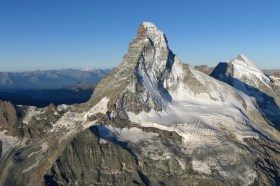
Permafrost is present above 2,500 metres. Melting permafrost was the cause of a landslide on the Matterhorn (pictured), at Zermatt in southern Switzerland, in summer 2003.
 Keystone / Alessandro Della Bella

Switzerland is a pioneering country in the study of permafrost. The thawing of terrain that used to be permanently frozen is becoming more and more prevalent, and it has planet-wide repercussions. 

 This content was published on November 10, 2020

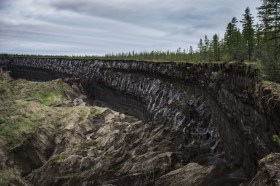
The locals call it "Hell’s Gate" because of the noises that seem to come from the bowels of the earth. For scientists, the Batagaika crater, in Eastern Siberia, has nothing very diabolical about it. The sounds it makes are the result of a geophysical phenomenon that has been known for quite some time: the melting of permafrost, the layer of permanently frozen ground.
 
The Batagaika crater in northeast Russia is 1.5km wide and up to 100 metres deep. It is the largest crater in the world and was caused by the thawing of permafrost. ©yuri Kozyrev / Noor

This change, driven by global warming, is happening not just on the Siberian tundra, but throughout a northern hemisphere area of about 23 million square km, or twice the size of the US. Found mainly in the Arctic regions, from Russia to Canada, permafrost is also present in the high mountain terrain right across the Alps. In Switzerland, it is found above an altitude of 2,500 metres.

As well as causing major disturbances to the terrain itself, thawing of permafrost can undermine the stability of mountain slopes and trigger natural disasters. These developments are a worry to people living in the affected regions, but the potential repercussions around the world are also a major cause of concern. According to a 2019 report by the United Nations, the loss of permafrost is one of five major threats to the environment that have hitherto been underestimated.

Permafrost warms up


Some 5% of Switzerland’s national territory is made up of permafrost, mostly in terrain covered by rock debris and on cliff walls at high altitudes. In comparison, the proportion covered by glaciers is about 2.5%.

"It is clear that in the past twenty years, the temperature of permafrost has been rising throughout the Swiss Alps", says Jeannette Noetzli of the Institute for Snow and Avalanche Research.

It’s not just the temperature of the surrounding air that determines the condition of the permafrost, she points out. The sun’s rays and the snow cover have to be taken into account as well.

Unlike peaks above the 4,000-metre level and the polar regions, where permafrost is really cold, in Alpine regions most of its temperature is close to zero, Noetzli explains. "So we have less of a thermic 'reserve' and we are that much closer to melting point."

What is known as the “active layer” is getting thicker. This is the top level of the permafrost which melts during the summer and freezes again in the winter.
External Content

Sensors and cameras on the Matterhorn

Jeannette Noetzli heads PERMOS, the permafrost monitoring network in Switzerland. Created in 2000, it is the first national network dedicated to studying change in permafrost. Switzerland has the world’s largest collection of data on high-altitude permafrost, and it includes a chronological series covering a period of over 30 years.

Researchers are able to make use of advanced technologies: probes that go down a hundred metres, devices to measure the terrain’s electrical resistance, GPS, wireless sensors and high-resolution video cameras. On the Hörnli ridge of the Matterhorn, 3,500 metres up, a network of 17 sensors is transmitting data in real time to the computing centre at the Federal Institute of Technology in Zurich (this is the PermaSense project).
 
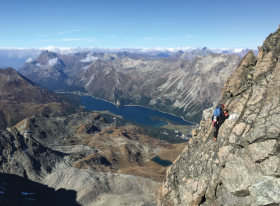
Replacement of a temperature-measuring device above the Corvatsch-Murtèl glacier in canton Graubünden in southeast Switzerland. Jeannette Noetzli, PERMOS

Risk of landslides


The unfreezing of the permafrost has a negative impact on the stability of mountainsides, because it takes away their “stickiness”, as Cécile Pellet of the geosciences department at the University of Fribourg explains.

"Losing the permafrost can lead to rockslides", she told the Valais newspaper Le Nouvelliste. However, as the PERMOS researcher points out, there can be more than one reason when this kind of event happens, as was the case in Bondo in 2017. The geology of the place itself may be a contributing factor.

It would be too much of a generalisation to say that the Alps are going to become a more dangerous place due to global warming and the melting of permafrost, thinks Noetzli. "But we are noticing major changes in sensitive areas. As a result, mountain climbers may have to look for different routes to take in some places".

Danger for tourist infrastructure


One thing is certain, however: the decline of the permafrost and the increasing movement seen in rock debris has the potential to be a problem for buildings and structures of all kinds sited at a high altitude: chalets for mountain-climbers, cableways, railways, telecommunications equipment, avalanche barriers, and so on.

All this infrastructure is important for tourism, communication, power supply, and prevention of natural hazards in Switzerland. For example, the Gornergrat railway near the Matterhorn and the Jungfrau railway in the Bernese Alps were built partly over permafrost.

Cable-car operators will need to invest in new construction to strengthen the pillars supporting their infrastructure. In canton Uri, for exmaple, a new concrete base has had to be put in for the Gemsstock cable car line, which goes up to an altitude of almost 3,000 metres.
Worrying global trends

The repercussions of the thawing of permafrost will be seen not just at local or regional level.

As the permafrost melts, ancient microorganisms trapped inside the ice could get out into the atmosphere and become reactivated, infecting humans and animals. To learn more, see our article on this topic featuring Swiss expert Beat Frey, who is a researcher at the Snow and Avalanche Institute studying Alpine permafrost. He calls this issue "a major unknown".

Furthermore, organic carbon which has accumulated over the course of millennia in the ice layer will increasingly find itself being released into the atmosphere in the form of CO2 and methane, which is likely to add to global warming – a vicious circle.

This issue concerns above all the Arctic regions, where rising temperatures (two to four times the global average) are bringing the collapse of the permafrost that much closer, experts warn. According to the estimates, frozen terrain holds about 1,600 billion metric tons of carbon – double what is in the atmosphere.

Toshiba stops taking orders for coal-fired power plants


Company plans $1.5bn investment in renewables as PM Suga targets zero-carbon goal

Toshiba is ditching its coal-related businesses for cleaner sources of energy. (Source photos by AFP/Jiji and AP) 

Nikkei staff writers November 10, 2020 

TOKYO -- Toshiba will stop taking orders for coal-fired power plants in line with growing global trends toward reducing carbon emissions, Nikkei learned on Tuesday, as Prime Minister Yoshihide Suga pledges to reduce Japan's greenhouse gas emissions to zero by 2050.

Shifting its priority in the energy business to renewables, Toshiba will increase investment in them fivefold to 160 billion yen ($1.52 billion) by fiscal 2022.

With Mitsubishi Heavy Industries joining American and European heavy-machinery makers in reducing their coal-energy businesses, competition in the renewable energy sector is likely to be driven by the ability to adapt to rapidly changing demand.


Toshiba holds 11% of the global thermal-power generation market, excluding China. This includes building power plants, producing steam turbines and providing maintenance. While the company will stop accepting new orders for coal-burning plants, it will build 10 stations under existing orders in Japan, Vietnam and other countries.

Toshiba chalked up nearly 3.4 trillion yen in consolidated sales in fiscal 2019 ended March. Sales related to construction of thermal and hydraulic power plants totaled 223 billion yen, or about 40% of the global energy sector. Although the company will continue producing turbines mainly for replacements, it will drastically reduce sales in its thermal-power generation business.

The increased use of renewable energy -- along with more attention to environmental, social and corporate governance -- is weakening global demand for coal-fired power plants, which generate large amounts of greenhouse gases.

Suga has pledged that Japan will reduce the country's net carbon emissions to zero by 2050, while presumed incoming U.S. President Joe Biden has also declared a similar goal.

Demand for coal-fired power remains strong among countries in Southeast Asia. In January, however, Environment Minister Shinjiro Koizumi said he would call for reviewing a Japanese-led project to build a coal-fired power plant in Vietnam.

In 2019, Toshiba won orders for building the plants overseas. But as the number of projects dwindled, the company has decided to stop the construction of new coal-burning power plants.

Toshiba will boost investment in research and development of offshore wind power and next-generation photovoltaic cells. It also hopes to expand its renewable energy business to 650 billion yen by 2030, from 190 billion in 2019.

Earlier this month, Toshiba decided to enter the "virtual power plant" business, buying electricity from renewable-energy power plants across Japan for resale to local power companies.

Among Japanese companies, Mitsubishi Heavy Industries, which holds a 12% share of the global thermal power generation market, is also facing headwinds. Mitsubishi Power, a subsidiary established from the integration of Hitachi's power-generation businesses in 2014, has struggled to find business as demand for coal-fired thermal power plants falls. Sales of turbines and other power-generation facilities have also remained sluggish.

Maintenance and other services generate 40% of Mitsubishi Heavy's sales of coal-fired thermal power-generation facilities. The company plans to raise the ratio to about 80%. The company has also decided to cut about 20,000 employees by around 30% by curbing hiring and reshuffling personnel in fiscal 2021 and beyond.

Overseas heavy electric machinery makers are also scaling back businesses. General Electric in September announced that it will stop building new coal-fired thermal power stations and supplying facilities. The U.S. company will shift its focus from the building of new power stations to maintenance and other services.

Siemens of Germany in April spun off its electricity and gas division, with plans to scale back its coal-fired power generation business, including a possible withdrawal.

Japan's coal-fired power generation industry has pointed to its environmental performance, but a movement toward decarbonization is causing companies to review the use of coal itself.

General trading houses have helped Japanese makers win orders for building power stations overseas. As far as facilities are concerned, IHI and Sumitomo Heavy Industries have produced boilers, while Mitsubishi Electric have made generators. These companies will also be forced to shift their strategies, including expanding their renewable energy business.

SECRETS OF THE DRUIDS

Trees set sixth-graders up for success

UNIVERSITY OF ILLINOIS COLLEGE OF AGRICULTURAL, CONSUMER AND ENVIRONMENTAL SCIENCES

Research News

URBANA, Ill. - The transition to middle school is undeniably tough for many sixth-graders, even in the best of times. Mounting academic demands, along with changes in peer dynamics and the onset of puberty, result in a predictable and sometimes irreversible slump in academic performance.

A new University of Illinois study suggests an unexpected but potentially potent remedy: trees.

"Hundreds of studies show a positive link between contact with nature and learning outcomes, but the studies on nature near schools focus on young children or older learners. We wanted to make sure the same pattern was true in this vulnerable and overlooked population," says Ming Kuo, associate professor in the Department of Natural Resources and Environmental Sciences at Illinois.

It was. Even after taking a whopping 17 variables into account including student demographics, school resources, and neighborhood characteristics, Kuo and her co-authors found that the more tree cover around a school, the better its standardized test scores in both math and reading. The study included 450 middle schools and nearly 50,000 students in urban, suburban, and rural communities in Washington State.

But why would trees boost test scores? Kuo's previous work points to a cause-and-effect relationship between nature and learning, with more exposure to nature resulting in improved concentration, greater classroom engagement, and less disruptive behavior. No surprise, then, that greener schools perform better.

Samantha Klein, a master's student who worked with Kuo on the study, made a point to compare different kinds of vegetation at different distances from schools.

"We wanted to offer concrete guidance to landscape architects, principals, and school boards interested in putting the greenness-achievement link to work, giving them clues as to what should be planted, and where," Klein says.

Kuo, Klein, and their team were able to differentiate tree cover from grass and shrubs using satellite imagery. "From a practical standpoint, trees cost more to install than grass. So if school districts could get away with just putting grass everywhere, that would be really helpful to know," Klein explains.

Unfortunately, that wasn't the case. Trees were far and away more impactful for test scores than other types of vegetation. Still, Kuo emphasizes that compared with other school resource investments planting trees around a schoolyard is still an incredibly cheap and effective intervention. But it could take a sea change before school districts accept school greening when other demands seem so much more pressing.

"I think school boards have always been faced with distributing very limited funds, especially in the poorest areas. They might think that, with all the other pressing needs for funding, school landscaping is the least of their concerns. Little do they suspect that a treeless schoolyard may actually be contributing to poor school performance," Kuo says.

The satellite images also helped Kuo's team pinpoint where tree cover mattered most. They compared the importance of greenness in different buffer zones around schools, within 250 meters (around two blocks) and 1000 meters. It turned out trees closer to the schools made all the difference, even when controlling for greenness at farther distances. In other words, even if the larger neighborhood was leafy, students were no better off if the schoolyard wasn't.

These findings extend previous discoveries in Chicago public schools. Kuo's work there showed the importance of tree cover near schools in low-income urban districts. But since her current study includes 450 schools across a wide spectrum of populations, she's confident her results apply more broadly.

"One of the nice things about this study is not only the sheer number of schools and students we're looking at, but the huge range in Washington State. We've captured everything from extremely urban to totally rural areas; rich schools and poor schools; schools with predominately white, Hispanic, Black, or American Indian student bodies; and every level of greenness represented within each of those samples," Kuo says. "The fact that the greenness-achievement link is true here is encouraging to me. It gives us some confidence that our recommendations apply to a whole variety of schools."

How does all this apply against the backdrop of remote learning during the COVID-19 pandemic? School greenness won't make much of a difference if kids aren't leaving the house. But whether they are physically in school or not, Kuo thinks contact with nature could be critical right now.

"I think the need for trees is more acute at this time. One of the big benefits of greenery, and one of the reasons we think it affects academic achievement, is it's a really potent stress reliever. Kids are aware that things are weird and that a lot of adults are kind of freaked out. And so having access to nature might be even more important than usual."


###

The article, "Greening for academic achievement: Prioritizing what to plant and where," is published in Landscape and Urban Planning [DOI: 10.1016/j.landurbplan.2020.103962]. Authors include Ming Kuo, Samantha Klein, Matthew H.E.M. Browning, and Jaime Zaplatosch. Support for this research was provided by a USDA NIFA McIntire-Stennis capacity grant (ILLU-875-972).

The Department of Natural Resources and Environmental Sciences is in the College of Agricultural, Consumer and Environmental Sciences at the University of Illinois at Urbana-Champaign.


  • Home - Richard Louv

    richardlouv.com

    Books on the Benefits of Nature—for Children & Adults Last Child in the Woods: Saving Our Children from Nature-Deficit Disorder. In his groundbreaking international... Vitamin N. Vitamin N (for “nature”) is the comprehensive practical handbook that readers of Last Child in the Woods and... The ...

  • Children and Nature Movement - Richard Louv

    richardlouv.com/books/last-child/children-nature-movement

    The children and nature movement is fueled by this fundamental idea: the child in nature is an endangered species, and the health of children and the health of the Earth are inseparable. Howard Frumkin, director of the National Center for Environmental Health at Centers for Disease Control, recently described the clear benefits of nature experiences to healthy child development, and to adult well-being.


  • The ecology of crop pests

    Ecological theory provides insights on pesticide use in agriculture

    UNIVERSITY OF CALIFORNIA - SANTA BARBARA

    Research News

    As agriculture in the United States evolves, it's becoming more intensive and less complex. That means larger fields, more cropland and less crop diversity with fewer crops in rotation.

    Ecological theory generally holds that diversity promotes stability in biological systems. Ashley Larsen, an assistant professor at UC Santa Barbara's Bren School of Environmental Science & Management, was curious how these tenets translate to agricultural landscapes, particularly with respect to crop pests.

    Larsen and her colleague Frederik Noack, at the University of British Columbia, analyzed 13 years of data from Kern County, California -- which consistently tops lists of the nation's most valuable agricultural counties -- and discovered that less diverse croplands led to greater variability in pesticide use as well as to higher peak pesticide application. Their findings appear in the journal Nature Sustainability.

    The idea that greater diversity stabilizes an ecosystem emerged around the 1940s, relatively early in the development of ecology as a field. The theory has encountered some skepticism throughout the years, and there's recently been a resurgence of interest in investigating this relationship.

    Kern County provided a fantastic opportunity for the two researchers to study the phenomenon; in this case, how changes in crop and landscape diversity affect populations of crop pests.

    "The U.S. has seen a shift toward larger agricultural enterprises," said Larsen. "So instead of small family farms we now have much bigger agricultural conglomerates." That has accompanied the trend of increasing field size and decreasing crop diversity. She suspects these all relate back to farmers taking advantage of the economy of scale.

    Although Kern keeps extensive agricultural records, no one tracks the populations of pests, per se. This meant the researchers had to use a proxy: insecticide use. Only later did they appreciate how much this decision expanded the implications of their findings.

    "Once you introduce insecticides into the study, then it's not just about diversity and stability in this ecological theory," Larsen said. "Now it has implications for environmental impacts and food security."

    Larsen and Noack scoured the county records from 2005 through 2017 focusing on factors such as field size, as well as the amount and diversity of croplands. What they saw seemed to sync with their predictions. "We find increasing cropland in the landscape and larger fields generally increase the level and variability of pesticides, while crop diversity has the opposite effect," the authors wrote.

    As field size increases, the area gets larger more quickly than the perimeter. This means that smaller fields have proportionally larger perimeters. And a larger perimeter may mean more spillover from nearby predators like birds, spiders and ladybugs that eat agricultural pests.

    Smaller fields also create more peripheral habitat for predators and competitors that can keep pest populations under control. And since the center of a smaller field is closer to the edge, the benefits of peripheral land in reducing pests extends proportionally farther into the small fields.

    Landscapes with diverse crops and land covers also correlated with reduced pesticide variability and overall use. Different crops in close proximity foster a variety of different pests. Though this may sound bad, it actually means that no single species will be able to multiply unimpeded.

    "If agriculture is very simplified, there's little stopping a big outbreak of one type of pest," Larsen said. "If you're a pest in a monoculture, and that's your host crop, you have almost unlimited food resources."

    Larsen and Noack's findings immediately suggest strategies for increasing food production while minimizing the impact of pesticides on human health and the environment. The study could not only help farmers make more informed decisions about field size and crop diversity, but also guide policy with the aim of decreasing insecticide use.

    The Department of Agriculture's Farm Service Agency oversees several conservation-related programs addressing a number of different issues, including habitat preservation. Larsen suggests that tailoring these efforts to the nuances of different crop types could provide even greater benefits.

    What's more, these voluntary programs currently focus on efforts by individual farmers. "Based on our results, we need to think, ideally, at more of a landscape scale," Larsen said.

    It's difficult to untangle confounding factors in the relationship between land use and insecticide use. For instance, farmers put a lot of thought into how they plant their crops, potentially planting more valuable crops in larger fields or less diverse areas, Larsen explained. At the same time, farmers invest more in pest control, including chemical pesticides, for these high value crops, making it hard to tease apart the effect of landscape characteristics from these difficult-to-observe decisions.

    The authors addressed these concerns using a combination of techniques borrowed from the economics literature in an attempt to establish a more causal understanding of the relationship between landscape characteristics and insecticide use.

    California produces a diverse array of high-valued crops, from grapes and berries to almonds and citrus. This contrasts with regions like the Midwest and its amber waves of grain. Fields of cereals, like corn and wheat, can extend across vast swaths of the American heartland in virtual monocultures. What's more, these crops aren't nearly as valuable on a per-acre basis.

    All these factors influence the risks associated with pests and the economics of pesticide application. "So it's hard to say whether these results would translate well to areas with very low value cropland because the incentives to really scout your pests might be much lower," Larsen said.

    She has continued to investigate the effects of land use on agricultural production at both regional and national scales. In a recent paper published in the journal Landscape Ecology, she evaluated how both changing land use and climate may impact insecticide use throughout the U.S. While both are expected to increase future insecticide use, crop composition and farm characteristics are highly influential.

    Unfortunately, national data does not provide the same high-resolution information as Kern County, Larsen explained. She plans to continue her work to bridge the detail and scale gap to better understand how land use impacts agricultural pests and pesticide use.

    ###


    Global analysis of forest management shows local communities often lose out

    UNIVERSITY OF MANCHESTER

    Research News

    Maintaining forest cover is an important natural climate solution, but new research shows that too often, communities lose out when local forest management is formalised.

    The new study published today in Nature Sustainability, led by Dr Johan Oldepkop at The University of Manchester and Reem Hajjar at Oregon State University, is based on 643 case studies of community forest management (CFM) in 51 different countries, from 267 peer-reviewed studies.

    It provides the most comprehensive global analysis of CFM to date and shows that whilst CFM policies often have positive environmental and economic impacts, CFM often results in weakened rights and less access to forests for local populations.

    Around the world, 1.6 billion people live within 5km (3 miles) forest, with 71% located in low or middle income countries.

    "Improving forests can be a vital way to both tackle climate change and address poverty - however, our study shows that too often local communities lose out when the management of community forests is formalised by governments," said Dr. Oldekop. "With the clock ticking on catastrophic climate change, the world needs to learn from successes in countries like Nepal, where we saw some cases with simultaneous economic, environmental, and resource rights outcomes."

    Previous research by Dr. Oldekop demonstrated that community-forest management in Nepal led to a 37% relative reduction in deforestation and a 4.3% relative reduction in poverty.

    Around the globe, forests regulate climate, sequester carbon, are home to a large proportion of the worlds plants and animals and contribute substantially to the livelihoods of people living in or near them.

    "Around 14% of forests worldwide and 28% of forests in low-middle-income countries are formally owned or managed by Indigenous people and local communities," said Reem Hajjar. "Case studies that show positive outcomes abound. But gaining a better understanding of the trade-offs - this outcome got better but at the expense of other outcomes getting worse - is critical for understanding forest governance systems' potential for addressing multiple sustainability objectives at the same time".

    The new study analysed 643 examples of CFM in Latin America, Africa and Asia-Pacific, to gain a better understanding of the social, economic and environmental trade-offs which are occurring and what changes can help ensure goals across the spectrum are successful.

    • Of the 524 cases that tracked the environmental condition of a forest following a formalised CFM initiative, 56% cited improvement but for 32% it decreased.
    • Of the 316 cases that reported on livelihoods, 68% found an increase in income, 36% showed no change and 6.3% reported a fall.
    • Among the 249 cases reporting on resource access rights, 34% indicated an increase compared to 54% that showed a decrease.

    However, clear trade-offs were visible in cases which assessed joint outcomes. Of the 122 studies which looked at all three CFM goals, just 18% reported positive outcomes across the three goals.

    "Community Forest Management can improve both forests and the lives of the people near them. While it is heartening to see improving incomes in 68% of cases, reduced environmental impacts in 56% and gains in resource rights in 34% of cases, the overall results are significantly less transformative than they could be. Governments need to do more to ensure it's a triple win for people and the environment, rather than a series of trade-offs between them," added Dr Oldekop.

    ###

    YouTube video: https://youtu.be/Onbi6SVMRYo

    CAPTION

    Forest management 1

     THE FUNGUI FROM YOG SOGOTH

    For asymbiotic growth of arbuscular mycorrhizal fungi, feed them fatty acids

    SHINSHU UNIVERSITY

    Research News

    IMAGE

    IMAGE: SCIENTISTS AROUND THE WORLD HAVE BEEN WORKING TO GROW ARBUSCULAR MYCORRHIZAL FUNGI WITHOUT THEIR HOST PLANTS BECAUSE THEY CAN BE USED AS ORGANIC FERTILIZER IN AGRICULTURE AND FORESTRY. AM FUNGI... view more 

    CREDIT: ASSOCIATE PROFESSOR KATSUHARU SAITO, SHINSHU UNIVERSITY, JAPAN

    Scientists around the world have been working to grow arbuscular mycorrhizal fungi without their host plants because they can be used as organic fertilizer in agriculture and forestry. AM fungi help plants receive nutrients from the soil through a network that is efficient and far more reaching than their own roots can provide. A group led by graduate students Yuta Sugiura, Rei Akiyama and Associate Professor Katsuharu Saito of Shinshu University successfully demonstrated that AM fungi can be grown asymbiotically when given myristate as a carbon and energy source.

    The history of the relationship between AM fungi and plants growing on land goes back 460 million years. For the first time in its 460 million year history, arbuscular mycorrhizal is about to gain independence from plants, so that it can be used to help plants grow in less fertile soil. Corresponding author Professor Saito states "although it was considered difficult, AM fungi has been successfully grown in a culture medium. With advancements, microbial materials for agricultural use can be produced."

    "The growth speed and efficiency is still low and we are working on spore formation so the next generation can be grown. We hope to work on a collection of cultures that can be grown independently and be applied for use in agriculture." Currently, the only way for AM fungi to be used in agriculture is with their host plants, making its use as fertilizer expensive and hard to implement. With the advancement in asymbiotic culture, the hope is that less chemical fertilizer will be needed for use in agriculture.

    ###

    For more information, please read: Myristate can be used as a carbon and energy source for the asymbiotic growth of arbuscular mycorrhizal fungi


    Distinct slab interfaces found within mantle transition zone

    CHINESE ACADEMY OF SCIENCES HEADQUARTERS

    Research News

    IMAGE

    IMAGE: SEISMIC OBSERVATIONS (A) AND A CONCEPTUAL CARTOON SUMMARIZING THE ORIGIN OF IMAGED SLAB INTERFACES (B) view more 

    CREDIT: CHEN QIFU'S GROUP

    Oceanic lithosphere descends into Earth's mantle as subducting slabs. Boundaries between the subducting slab and the surrounding mantle are defined as slab interfaces, whose seismic imaging is the key to understanding slab dynamics in the mantle. However, the existence of slab interfaces below 200 km remains elusive.

    Prof. CHEN Qifu's group from the Institute of Geology and Geophysics, Chinese Academy of Sciences (IGGCAS) and their collaborators observed two distinct seismic discontinuities within the mantle transition zone (~410 km to 660 km) beneath the western Pacific.

    The two discontinuities represented the upper and lower boundaries of the subducted Pacific high-velocity slab, corresponding to the slab Moho and the surface of partially molten sub-slab asthenosphere, respectively.

    This work was published in Nature Geoscience on Nov. 9.

    The subduction process transports chemically differentiated and hydrated rocks into Earth's mantle, driving the cycles of heat and material changes between Earth's surface and its deep interior.

    At shallow depths (<200 km), a variety of seismic reflection studies of subduction zones have identified the upper and/or lower interfaces of subducting slabs, all of which are characterized by sharp seismic velocity discontinuities.

    The slab interfaces can be seismologically detected at shallow depths. However, how deep the seismic velocity discontinuities at slab interfaces can extend remains unclear, mainly due to the lack of high-resolution imaging of slab interfaces at depths below 200 km.

    To understand the existence and origin of deep slab interfaces, the researchers took advantages of the dense seismic arrays in northeast China to study the upper mantle structures in the region.

    They found sharp-dipping, double seismic velocity discontinuities within the mantle transition zone (~410 km to 660 km) beneath the western Pacific that coincide spatially with the upper and lower bounds of the high-velocity slab.

    "Based on detail seismological analyses, the upper discontinuity was interpreted to be the Moho discontinuity of the subducted slab," said Prof. CHEN. "The lower discontinuity is likely caused by partial melting of sub-slab asthenosphere under hydrous conditions in the seaward portion of the slab."

    The imaged distinct slab-mantle boundaries at depths between 410 and 660 km, deeper than previously observed, suggest a compositionally layered slab and high-water contents beneath the slab.

    ###

    The study was done in collaboration with California Institute of Technology, Rice University, China University of Petroleum (Beijing), Earth Observatory of Singapore, Nanyang Technological University, Peking University, Institute of Earthquake Forecasting, China Earthquake Administration, and University of Illinois Urbana-Champaign.

    The work was supported by the Strategic Priority Research Program (B) of Chinese Academy of Sciences and the National Natural Science Foundation of China.