Tuesday, September 02, 2025


Volkswagen's dark Brazilian chapter ends in $30mn court ruling

Volkswagen's dark Brazilian chapter ends in $30mn court ruling
The cattle ranch scandal forms part of a broader pattern of Volkswagen's collaboration with Brazil's military regime, which ruled from 1964 to 1985.
 / bne IntelliNews
By bnl editorial staff September 2, 2025

Volkswagen's Brazilian subsidiary has been ordered to pay BRL165mn ($30mn) in what marks the largest compensation award of its kind in Brazil, after a labour court found the German carmaker guilty of subjecting hundreds of workers to conditions "analogous to slavery" at an Amazon cattle ranch during the 1970s and 1980s.

The August 29 ruling by a Pará state labour court breaks new ground in Brazil's reckoning with corporate abuses during its military dictatorship era, when multinational companies partnered with the authoritarian regime to develop the Amazon region.

Volkswagen do Brasil announced it would appeal against the decision, maintaining that it "consistently upholds the principles of human dignity and strictly complies with all applicable labour laws and regulations," as reported by AFP. The Wolfsburg-based company, which has operated in Brazil for 72 years, said it would "continue its defence in pursuit of justice and legal certainty before higher courts."

According to the Washington Post, Judge Otávio Bruno da Silva Ferreira determined that workers at the Santana do Araguaia ranch had been subjected to "debt labour, violence and submitted to degrading conditions" that met "the definition of contemporary slave labour." Beyond the financial penalty, the court mandated that Volkswagen issue a formal apology and publicly acknowledge the abuses.

“Slavery is a ‘present past,’ because its marks remain in Brazilian society, especially in labour relations,” Ferreira stated.

The case sheds light on a largely forgotten chapter of Brazilian economic history. The Volkswagen ranch, acquired in the mid-1970s as part of a government scheme to encourage Amazon settlement, became a site of systematic exploitation. Workers were recruited through labour contractors known as "gatos," who lured impoverished labourers from rural towns with false promises of high wages.

"If anyone tried to escape, the guards went after them and shot them," José Pereira, a former worker, told German broadcaster ARD in 2022, describing the armed surveillance that enforced the debt bondage system.

The compensation will not go directly to victims but rather to a Pará state fund dedicated to promoting dignified working conditions and eradicating slave labour. This decision has disappointed some survivors, though they expressed relief at the formal recognition of their suffering.

Long road to justice

The case owes much to the persistence of Ricardo Rezende Figueira, a Catholic priest who spent decades documenting the abuses, the Washington Post reported. Now 73 and a human rights professor in Rio de Janeiro, Rezende first investigated the ranch in the early 1980s, gathering testimonies from dozens of labourers who had escaped.

His 1983 public denunciation — "Priest says there are slaves on Volks farm," as the Correio Braziliense newspaper reported — triggered multiple official investigations that confirmed forced labour conditions. Yet no action was taken for decades.

The breakthrough came in 2019 when Rezende, observing that Volkswagen Brazil had acknowledged political persecution of factory workers during the dictatorship, submitted his 1,000-page dossier to federal prosecutors. The documentation identified 69 alleged victims, backing up their cases with notarised declarations, police statements and parliamentary reports.

Corporate complicity under dictatorship

The cattle ranch scandal forms part of a broader pattern of Volkswagen's collaboration with Brazil's military regime, which ruled from 1964 to 1985. Christopher Kopper, a historian at Germany's Bielefeld University commissioned by Volkswagen to investigate its Brazilian operations during the dictatorship, uncovered systematic cooperation with security forces.

"VW worked closely with the dictatorship's security apparatus," Kopper told DW, noting that this extended beyond the ranch to the company's main factories. "Correspondence with the board of directors in Wolfsburg documents full acceptance of the military dictatorship up until 1979."

The parallels with Volkswagen's notorious origins in Nazi Germany, where the company systematically exploited forced labour, have not gone unnoticed. Kopper noted that many VW managers in Brazil during the 1950s and 1960s "had been army officers and Nazi party members" in their youth.

The Fazenda Volkswagen itself was established in 1974 under Swiss agricultural economist Friedrich-Georg Brugger. Whilst directly employed VW workers enjoyed proper housing, schools and medical facilities, subcontracted labourers faced vastly different conditions.

"They worked under conditions akin to indentured servitude," Kopper explained, adding that management consistently deflected responsibility by claiming they were not accountable for subcontractors' treatment of workers.

The long shadow of corporate accountability

Federal prosecutors hailed the ruling as potentially transformative for corporate accountability in Brazil, where the crime of "reducing someone to conditions analogous to slavery" carries no statute of limitations.

"It is without doubt a historic mark," said Ulisses Dias de Carvalho, a federal prosecutor on the case, as quoted by the Washington Post. "This sentence will serve as an example for the next cases and open up the opportunity to hold other companies to account."

Rafael Garcia, who leads the Brazilian Labour Ministry's slave labour division, called it a "historic" decision for a nation that has never fully confronted the human suffering inflicted during Amazon development. "This conviction is for the country. It is a day to celebrate the struggle for human rights."

Volkswagen's ambitious expansion plans in Brazil — recently revised upward to BRL16bn ($2.9bn) by 2028 — are now tarnished by the shadow of this ruling. The company, which opened Latin America's first VW production facility outside Germany in São Paulo in the 1950s, has positioned itself as a modernising force in Brazilian industry.

Yet as Brazil continues to grapple with its authoritarian past, the scandal demonstrates that corporate complicity in historical abuses remains a live issue, one that carries both reputational and financial consequences decades after the fact.


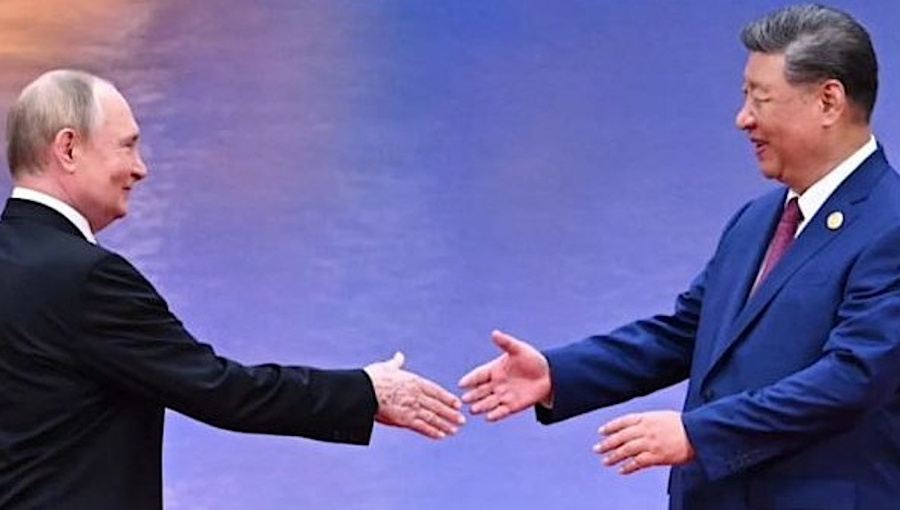

 

Xi pitches an equitable “multipolar” world order leveraging Global South “mega-markets power” at SCO summit

Xi pitches an equitable “multipolar” world order leveraging Global South “mega-markets power” at SCO summit
What started as a “marriage of convenience” has become increasingly ideological as Xi and Putin attempt to build a new world order to challenge the Western dominated system made up of Global South countries. / bne IntelliNews
By Ben Aris in Berlin September 2, 2025

Chinese President Xi Jinping and Russian President Vladimir Putin called on Global South leaders to leverage their "mega-scale market" and strive for a new equalitarian multipolar world order at the Shanghai Cooperation Organization (SCO) summit in Tianjin on September 1.

The SCO had set a model for a “new type of international relations,” Xi said in opening remarks to 26 assembled leaders from emerging markets in Eurasia and beyond. He urged the assembled countries to find common ground and “oppose hegemony and power politics.”

"We should advocate for equal and orderly multipolarisation of the world, inclusive economic globalisation and promote the construction of a more just and equitable global governance system," he said, as cited by Reuters.

"We must take advantage of the mega-scale market... to improve the level of trade and investment facilitation," said Xi, urging the bloc to boost cooperation in fields including energy, infrastructure, science and technology, and artificial intelligence.

Putin echoed the same "genuine multilateralism", highlighting the multipolar world order he has been championing with Xi for years to replace what they called the unipolar order dominated by the US.

Putin also pointed to the growing settlement of trade deals in national currencies increasingly used in mutual settlements as concrete progress towards breaking up the old system.

"This, in turn, lays the political and socio-economic groundwork for the formation of a new system of stability and security in Eurasia," he said.

"This security system, unlike Euro-centric and Euro-Atlantic models, would genuinely consider the interests of a broad range of countries, be truly balanced, and would not allow one country to ensure its own security at the expense of others.”

Putin and Xi have gone beyond the pragmatic “marriage of convenience” their relation was described as in the early days and are becoming increasingly ideologically aligned. Payment systems to undermine the leading role of the US dollar in international trade deals was also a key feature of the BRICS Kazan summit held in Russia last September, the last time Putin and Xi met in person.

The Dragon, the Bear and the Elephant 

The SCO has come of age. Among the concrete initiatives floated at the SCO summit is a Chinese proposal to set up a SCO development bank to work in parallel with the China-based New Development Bank (NDB, formerly known as the BRICS Bank). Xi said China will provide CYN2bn ($280mn) to capitalise the new bank and another CYN10bn of loans to get it started. China has already invested $84bn in member countries and would provide another $1.4bn in loans over the next three years, he said.

Far from looking isolated, despite extreme international sanctions on Russia and an issued an arrest warrant for Putin personally, Putin was Xi’s guest of honour, standing next to the Chinese leader in the photo call and sitting next to him at the gala dinner.

Amongst the other prominent guests was Indian Prime Minister Narendra Modi as well as other leaders from Central Asia, the Middle East, South Asia and Southeast Asia. Modi was in China for the first time in seven years and was hoping to improve ties with China. The two countries have suffered from prickly relations for years, but Modi, like Putin, is increasingly being driven into China’s arms, by the aggressive tariff policy followed by the Trump administration. New Delhi and Beijing are seeking a reset in their relations as the leading Emerging Markets increasingly circle their wagons in the face of US pressure.

Amongst the other meetings, Xi also pledged to support Myanmar to “unify all domestic political forces as much as possible and restore stability” in a meeting with Min Aung Hlaing, the head of the country’s military. Myanmar's brutal military dictatorship is under sanctions by the West and counts China and Russia as amongst its few friends. 


China is offering a new deal based on mutual respect and strict non-interference in each other’s domestic affairs that is very appealing to Global South governments that have grown tired of lecturing by the G7 nations and punishments with missiles or sanctions when they don’t comply.

Xi called his partners to "oppose Cold War mentality and bloc confrontation" and to support “multilateral” free trade systems as he rallied the delegates in what has emerged as an anti-Trump alliance in the short-term and an alternative to the Western-dominated institutions of the international system in the long-term, although this very much remains a work in progress.

Speaking on the sidelines of the event, United Nations Secretary-General Antonio Guterres, who is one of the few Western guests, said China played a "fundamental" role in upholding global multilateralism.

A huge military parade is schdeuled for September 3 in Beijing to mark the 80th anniversary of victory in World War II by China over the Japanese. North Korean leader Kim Jong Un, despite not attending in Tianjin, is expected to join Putin and Xi on the rostrum overlooking Tiananmen Square for the parade

In a follow up meeting the Brazilian government has announced that it will organize an extraordinary BRICS summit in Kazakh  soon, Valor Econômico writes. During the event, the country's President Luiz Inacio Lula da Silva plans to discuss and develop a joint response by the association's members to threats to cooperation from the US.


El Salvador breaks up Bitcoin stash amid quantum security concerns

El Salvador breaks up Bitcoin stash amid quantum security concerns
The move follows warnings from investment giant BlackRock in May about quantum technology potentially undermining the cryptographic algorithms supporting prized digital assets. / pixabay
By Mathew Cohen September 2, 2025

El Salvador will redistribute its Bitcoin reserves across multiple new addresses to mitigate potential quantum computing threats, the country's National Bitcoin Office announced on X. The cryptocurrency holdings, currently stored in a single address, will be divided into wallets containing up to 500 Bitcoin each, worth approximately $54mn per wallet according to exchange rates cited by Reuters.

According to 36Crypto, El Salvador's total Bitcoin reserves valued at $682mn will be split across 14 separate wallets for enhanced security. A public dashboard will maintain transparency by displaying the full balance across all addresses.

"Quantum computers have the theoretical capability to break public-private key cryptography using Shor's algorithm," the National Bitcoin Office explained in its X post, noting that this cryptography underpins not only Bitcoin but also banking, email, and communications systems. The office warned that when Bitcoin transactions are broadcast, public keys become visible on the blockchain, potentially exposing addresses to quantum attacks that could discover private keys.

The move follows warnings from investment giant BlackRock in May about quantum technology potentially undermining the cryptographic algorithms supporting prized digital assets.

Quantum computing researcher Project Eleven estimates roughly 6 million bitcoin could be vulnerable to quantum machines because of exposed public keys, the Independent reported.

But some industry figures have downplayed these concerns. MicroStrategy's Michael Saylor, whose company holds 629,000 bitcoins, suggested to CNBC that software upgrades could address quantum threats.

El Salvador's Bitcoin strategy, championed by President Nayib Bukele, has attracted scrutiny from the International Monetary Fund (IMF), which initially required the country to reduce cryptocurrency purchases. However, the IMF clarified in July that continued Bitcoin accumulation remains consistent with El Salvador's Extended Fund Facility (EFF) programme requirements.

This proactive security measure demonstrates El Salvador's commitment to protecting its pioneering digital asset reserves amid evolving technological threats, though the quantum computing timeline and Bitcoin's adaptive capabilities remain subjects of ongoing debate.


Happy music could help you recover from motion sickness


Listening to joyful music helped study participants with motion sickness recover better than other participants — while sad music helped less than doing nothing


Frontiers


Scientists studying ways of improving motion sickness have found that playing different types of music may help people recover more effectively. Using a specially calibrated driving simulator, they induced car sickness in participants and then played different types of music while they tried to recover. Soft and joyful music produced the best recovery effects, while sad music was less effective than doing nothing at all.  

“Motion sickness significantly impairs the travel experience for many individuals, and existing pharmacological interventions often carry side-effects such as drowsiness,” explained Dr Qizong Yue of Southwest University, China, corresponding author of the article in Frontiers in Human Neuroscience. “Music represents a non-invasive, low-cost, and personalized intervention strategy.” 

Controlling carsickness 

For those who get carsick, there’s nothing worse — and feeling tense in anticipation of possible sickness can trigger a physical reaction, bringing sickness on more quickly. Because music can be used to alleviate tension, Yue and his team wondered if it could help people who get carsick. 

The researchers started by developing a model to induce motion sickness. They recruited 40 participants to screen routes on a driving simulator and select the best route for making people feel carsick. They then screened a group of participants for their previous susceptibility to carsickness and selected 30 who reported moderate levels of past carsickness.  

These participants wore electroencephalogram (EEG) caps, to try to identify quantifiable signals of carsickness in the brain’s activity. They were divided into six groups —  four that received a music intervention, one that received no music, and one whose simulators were stopped when they started to report that they might feel slightly carsick. The last group acted as a comparative sample for the EEG data. They’d received the same stimuli as the other 25 participants, but weren’t allowed to become nauseous, so the difference between their brain activity and the other participants’ should help identify signals characteristic of carsickness. 

First, the participants sat still in the simulator for a few minutes to capture baseline EEG signals from their brains. Then they performed a driving task and reported their level of carsickness to the scientists. Once they stopped driving, the participants in the music groups were played music for 60 seconds, and then asked to report how sick they felt.   

All in your head? 

The scientists found that joyful music alleviated carsickness the most, reducing it by 57.3%, very closely followed by soft music, at 56.7%. Passionate music reduced motion sickness by 48.3%, while playing sad music turned out to be slightly less effective than doing nothing. The control group reported a reduction of carsickness symptoms by 43.3% after their rest, while those who listened to sad music reported a reduction of only 40%.  

The EEG data, meanwhile, showed that participants’ brain activity in the occipital lobe changed when they reported carsickness. The EEG measured less complex activity in this brain region when participants said they felt quite sick. The better recovering participants said they felt, the more the activity measured by the EEG returned to normal levels. It’s possible that soft music relaxes people, relieving tension which exacerbates carsickness, while joyful music might distract people by activating brain reward systems. Sad music could have the opposite effect, by amplifying negative emotions and increasing overall discomfort.  

However, the scientists pointed out that further work is needed to confirm these results. “The primary limitation of this study is its relatively small sample size,” explained Yue. “This constraint results in limited statistical power.” 

More research with larger samples will be needed to validate EEG patterns as a quantitative indicator of motion sickness, and to improve our understanding of the impact of music on motion sickness. The researchers also call for studies under real-life conditions, which could impact the brain differently compared to simulated roads. They plan to follow up these experiments with investigations of different forms of travel-sickness and the role played by personal musical taste.  

“Based on our conclusions, individuals experiencing motion sickness symptoms during travel can listen to cheerful or gentle music to achieve relief,” said Yue. “The primary theoretical frameworks for motion sickness genesis apply broadly to sickness induced by various vehicles. Therefore, the findings of this study likely extend to motion sickness experienced during air or sea travel.” 


Fossil fish sheds new light on extra teeth evolution to devour prey


University of Birmingham
Platysomus parvulus 

image: 

Fossils over 300 million years old reveal the evolution of a tongue bite in an ancient group of deep-bodied ray-finned fishes, such as Platysomus parvulus.

view more 

Credit: Joschua Knüppe


Experts have uncovered the earliest known example of a fish with extra teeth deep inside its mouth - a 310-million-year-old fossilised ray-finned fish that evolved a unique way of devouring prey.

Platysomus parvulus had a unique way of eating never seen in ray-finned fish from that time – a ‘tongue bite’, using a special set of teeth on the floor and roof of the mouth to help it crush and chew tough food like shells or insects.

Most fish today use their jaws to bite and chew, but some also have tongue bites, which work like a second set of jaws. Until now, the oldest known fish with such a dental arrangement lived about 150 million years later

Publishing their findings today (3 Sep) in Biology Letters, the international research team used high-resolution CT scanning to reconstruct the internal anatomy of the fossil, which was discovered in Carboniferous rock formations in the UK county of Staffordshire.

Supported by the Royal Society, the National Science Foundation, and the Natural Environment Research Council, the researchers discovered a sophisticated arrangement of tooth plates on the roof of the fish’s mouth and the gill skeleton.

Lead author Professor Sam Giles, from the University of Birmingham, commented: “Our discovery helps us understand how fish evolved after the End-Devonian Mass Extinction, which wiped out many species. After this extinction event, fish started to change and develop new body shapes and ways of feeding.

“Tongue bites have evolved many times in different fish groups - including in modern ones such as trout and bonefish, demonstrating that it is a useful tool that helps fish eat a wider variety of food and survive in different environments.”

The tongue bite mechanism involves opposing sets of teeth—one on the roof of the mouth and another on the gill skeleton—that work together to grip and crush prey.

The Platysomus fossil studied is uniquely preserved in 3D, allowing researchers to peer inside its mouth and digitally dissect its anatomy. This reveals a multi-part lower tooth plate and narrow upper plate, both bearing a single layer of pointed teeth - suggesting a transitional stage in the evolution of more advanced tongue bite systems seen in later fish like Bobasatrania.

Co-author Dr Matthew Kolmann, from the University of Louisville, commented: “Later fish, like the Bobasatrania group, had more advanced tongue bites and did not use their jaws at all, relying on their tongue bite to crush hard food. Platysomus parvulus is like a missing link between simple jawed fish and more advanced tongue-biters.”

The discovery supports a model of rapid innovation in early ray-finned fishes following the End-Devonian Mass Extinction, with ray-finned fishes' experimentation with new feeding strategies.

Co-author Prof Matt Friedman, from the University of Michigan, commented: “Tongue bites are just one of many feeding innovations that emerged during this time. This fish represents a key evolutionary step and helps us understand how ancient ecosystems functioned and how modern fish lineages came to be.”

For more information, please contact the University of Birmingham press office on pressoffice@contacts.bham.ac.uk or +44 (0) 121 414 2772.

Image caption – please credit Joschua Knüppe:

  • Fossils over 300 million years old reveal the evolution of a tongue bite in an ancient group of deep-bodied ray-finned fishes, such as Platysomus parvulus.

Notes to Editors

  • The University of Birmingham is ranked amongst the world’s top 100 institutions, its work brings people from across the world to Birmingham, including researchers and teachers and more than 8,000 international students from over 150 countries.
  • 'Tongue bite apparatus highlights functional innovation in a 310-million-year-old ray-finned fish’ - Sam Giles, Matthew Kolmann, and Matthew Friedman is published in Biology Letters.
  • Participating institutions: University of Birmingham, UK; Natural History Museum, London, UK; University of Louisville, USA; and University of Michigan, USA


Desert soils emit greenhouse gases in minutes — even without live microbes


Ben-Gurion University study reveals surprising sources of climate-relevant emissions from dryland soils


Ben-Gurion University of the Negev


SDE BOKER, Israel, September 3, 2025 — A groundbreaking study from researchers at Ben-Gurion University of the Negev reveals that desert soils can emit powerful greenhouse gases within minutes of being wetted—even in the absence of microbial life.

Published by Dr. Isaac Yagle and Prof. Ilya Gelfand at BGU's Blaustein Institutes for Desert Research in Scientific Reports, the study challenges long-standing assumptions that soil microbes are solely responsible for post-rain “pulse emissions” of gases like carbon dioxide (CO₂), nitrous oxide (N₂O), and nitric oxide (NO). These gas bursts—common in drylands after rainfall—are known to contribute significantly to atmospheric warming and pollution.

Using laboratory experiments, the team compared emissions from natural and sterilized desert soils collected near the Dead Sea. The sterilization, achieved through high-dose gamma irradiation, eliminated most living organisms from the soil. Yet, even without live microbes, the sterilized soils released large quantities of N₂O and NO immediately after wetting—up to 13 times more NO and 5 times more N₂O than the live soils.

“Our results show that chemical reactions—not just biology—drive these immediate emissions, especially for nitrogen-based gases,” said Dr. Yagle. “This changes how we understand and model greenhouse gas emissions from soils in drylands.”

While CO₂ emissions remained higher in live soils due to microbial respiration, a substantial portion was still generated through non-biological processes, such as reactions involving soil carbonates and physical gas release.

These findings are particularly important as drylands expand globally due to climate change. With increasingly erratic rainfall patterns, the frequency of soil wetting and drying cycles is rising—potentially increasing the contribution of these abiotic emissions to the global greenhouse gas budget.

“Our work highlights the need to factor in abiotic processes when assessing the environmental impact of dryland soils,” added Prof. Gelfand. “Ignoring them may lead to underestimation of regional and global emissions.”

The research was supported by the Israel Science Foundation (Grant No. 305/20) and the Ministry of Science, Technology and Space of Israel (Grant No. 16797-3).