Monday, June 16, 2025

Scientists Are Getting Closer to Finding Evidence of the Fifth Force

If it’s out there, could we observe it soon?
Published: Jun 14, 2025
 Popular Mechanics


Here’s what you’ll learn when you read this story:Some physicists believe that a fifth fundamental force could be the cause of some observational anomalies.
A study is investigating ways to closely examine the trajectories of well-documented asteroids to hopefully detect anomalies that could provide evidence of such a force.
Although the study shows no fifth force anomaly present in the asteroid Bennu, future explorations of the asteroid Apophis could provide an even better chance to find this elusive force—if it exists at all.

According to the current Standard Model, four fundamental forces underpin all known physics: electromagnetism, gravity, and the strong and weak nuclear forces. However, since the mid-1980s, physicists have wondered if a fifth fundamental force could exist, which would help to explain some observational anomalies. And since then, many studies have boldly claimed discovery of this elusive force.

In 1986, for example, scientists at MIT thought that antigravity could maybe could be a fifth force, and in 2000, another group named the force “quintessence” as a way to explain dark energy. In 2015, a study by the Hungarian Academy of Sciences discovered a particle 30 times heavier than an electron that could form the basis of a fifth force, and the U.S.-based Fermilab stated boldly that they were on the cusp of discovering this mysterious force in 2023.

Related Story
Pop Mech Explains the Universe

And, of course, there’s a strong contingent of physicists who think a fifth force doesn’t exist at all.

One proposed way of examining if such a force could exist is by closely monitoring asteroid trajectories, and few near-Earth asteroids are as well observed as Bennu. A study by an international team of scientists analyzes Bennu to try and placing constraints on a possible fifth fundamental force in the search of ultralight dark matter.

Bennu, one of the most dangerous near-Earth objects, has been meticulously tracked by optical and radar astrometric data since it was discovered in 1999. As the destination for the OSIRIS-REx asteroid retrieval mission, additional X-band radiometric and optical navigation tracking data added even more trajectory precision.

The idea is that any deviation in the expected trajectory of the asteroid could be the result of an unknown fifth force at work. The results of the study were published in the journal Nature Communications Physics.

“Interpreting the data we see from tracking Bennu has the potential to add to our understanding of the theoretical underpinnings of the universe, potentially revamping our understanding of the Standard Model of physics, gravity and dark matter,” Yu-Dai Tsai, the lead author on the paper, said in a press statement. “The trajectories of objects often feature anomalies that can be useful in discovering new physics.”

The trajectories of heavenly objects have yielded incredible discoveries before. Neptune, for example, was first “discovered” not through a telescope, but by the meticulous calculations of Uranus’ orbit and discovery of gravitational anomalies therein. However, such a technique isn’t foolproof, as some scientists also believed that a planet named Vulcan existed between the Sun and Mercury. This, obviously, turned out to be false.
Related Storie
s
Our Universe May Be a Simulation, Scientist Says

“These results highlight the potential for asteroid tracking as a valuable tool in the search for ultralight bosons, dark matter, and several well-motivated extensions of the Standard Model,” Sunny Vagnozzi, assistant professor at the University of Trento in Italy and study co-author, said in a press statement.

While this study didn’t find “evidence in the data for the presence of a fifth force affecting the motion of Bennu,” the ORSIRIS-REx’s sequel, OSIRIS-APEX, could provide even more data as the mission zooms onward toward the asteroid Apophis. Because this asteroid will zoom by Earth in 2029, a detailed study of its trajectory will deliver even further restrictions on the fifth force than what Bennu could provide.

So, while the ongoing exploration of the fifth force continues in accelerator labs around the world, some scientists are turning toward space to answer the deepest mysteries of physics.


Darren Orf
Contributing Editor
Darren lives in Portland, has a cat, and writes/edits about sci-fi and how our world works. You can find his previous stuff at Gizmodo and Paste if you look hard enough.
Psilocybin induces large-scale brain network reorganization, offering insights into the psychedelic state

by Eric W. Dolan
June 14, 2025
 PsyPost .


A new study published in Translational Psychiatry has provided the most detailed look yet at how psilocybin affects brain activity in rodents. Researchers found that psilocybin produces widespread changes in brain network organization, disrupting normal patterns of communication between brain regions and creating a unique state of high-frequency neural connectivity. These effects varied depending on dose and time, revealing two distinct phases of brain dynamics.

Psilocybin is the active compound found in certain mushrooms and has gained attention for its potential to treat conditions such as depression, anxiety, and addiction. When consumed, psilocybin is converted into psilocin, a substance that binds to serotonin receptors in the brain and produces profound changes in perception, emotion, and sense of self. In humans, psilocybin is known to temporarily alter how different parts of the brain interact, but less is known about how these effects emerge over time or whether animal models can capture the complexity of the psychedelic state.

“We use neurochemical and neurophysiological approaches, including brain network changes, to understand the mechanistic basis of different states of consciousness and our ongoing work with psychedelics is another step in that direction,” explained study author Dinesh Pal, an associate professor at the University of Michigan.

“One of the primary challenges of studying psychedelics in animal models is the lack of a verbal report, but that also makes it fascinating, because any evidence (e.g., EEG based metrics) for a ‘psychedelic’ state in animal models, akin to what occurs in humans, would bring us closer to the idea that consciousness is a universal phenomenon; it just manifests in different ways in different species.”

To address this, the researchers used high-resolution electroencephalography (EEG) to monitor brain activity across 27 sites in the rat cortex. EEG is a noninvasive technique that measures electrical activity in the brain using sensors placed on the scalp. It records the brain’s natural oscillations, or “brain waves,” which reflect patterns of neural communication across different regions. The goal was to map how psilocybin changes the organization of brain networks and to identify specific patterns of activity that might reflect altered states of consciousness.

The study involved 12 adult Sprague Dawley rats—six male and six female—that were surgically implanted with EEG electrodes. Each rat received intravenous infusions of psilocybin at three different doses (0.1, 1, and 10 milligrams per kilogram), as well as a saline control, on separate days. The researchers recorded EEG data before, during, and after each 60-minute infusion and also monitored behavior through video recordings and movement sensors. By using a continuous infusion method rather than a single injection, the researchers were able to observe gradual changes in brain activity as the drug took effect.


The team focused on three specific frequency bands in the EEG data: theta (4–10 Hz), medium gamma (70–110 Hz), and high gamma (110–150 Hz). These frequencies are thought to play a role in coordinating communication between brain regions. Psilocybin altered both the strength and organization of activity in these bands, but not in a simple or linear way.

At moderate doses (1 mg/kg), psilocybin increased activity in the posterior theta network and strengthened communication between frontal and parietal brain areas in the gamma bands. This state was marked by widespread increases in high gamma activity in the frontal cortex and greater connectivity across distant brain regions. The researchers also found that psilocybin disrupted the normal relationship between theta and gamma activity, a phenomenon known as phase-amplitude coupling. This decoupling was most evident in frontal areas and occurred in a dose-dependent fashion.

At higher doses (10 mg/kg), a different pattern emerged. Early in the infusion, the brain showed a similar increase in gamma connectivity, but as the dose accumulated, theta connectivity in posterior regions decreased, and the gamma network in the frontal cortex became more dominant. These changes unfolded over time, revealing a shift from one state of brain organization to another as psilocybin levels rose. Notably, these effects occurred even as the rats became less physically active, suggesting the brain changes were not simply a result of movement or arousal.


The behavioral data supported this nonlinear pattern. Moderate doses of psilocybin increased the number of head-twitch responses—a common indicator of psychedelic activity in rodents—and briefly heightened movement. But at the highest dose, movement decreased significantly after about 30 minutes, even though gamma connectivity continued to increase. This suggests that the changes in brain dynamics were not just reflections of behavior but may correspond to a unique internal state.

“It was a bit surprising to note that the changes in EEG gamma connectivity – shown to be closely linked to states of consciousness – occurred in the absence of any behavioral activity or after the psilocybin-induced locomotion and/or head twitches ceased,” Pal told PsyPost. “This dissociation suggests the need for a careful assessment of head twitch response as a surrogate for psychedelic or non-ordinary states induced by psychedelic drugs in rodents.”

To quantify brain network organization, the researchers used measures such as node degree (the number of connections a brain region has) and the strength of synchronization between regions. These metrics showed that psilocybin reorganized networks in both frequency-specific and region-specific ways. The theta network, typically involved in memory and attention, became stronger in posterior regions at moderate doses but weakened at higher doses. In contrast, the high gamma network, which is thought to reflect localized activity and potentially neuroplasticity, became stronger in frontal areas as the dose increased.


One of the most striking findings was the decoupling of gamma activity from the theta phase. Under normal conditions, gamma bursts tend to occur at specific points in the theta rhythm, a coupling that is thought to help organize information flow in the brain. Psilocybin disrupted this timing relationship, particularly at higher doses, suggesting a breakdown in the usual coordination between local and long-range neural signals. This kind of decoupling has been observed in other psychedelic states and is believed to reflect a loosening of the brain’s typical constraints, allowing for more flexible or unusual patterns of thought and perception.

While the study does not prove that rats experience anything like a human psychedelic trip, the results suggest that the psilocybin state is marked by identifiable changes in brain network architecture that can be studied in animal models. These findings align with reports from human studies showing increased connectivity between distant brain regions and decreased segregation of functional networks during psychedelic experiences.

“Our findings related to brain network changes in this study, along with the data from other laboratories showing cellular and molecular level neural changes, show that rodents could indeed be a good model system to study non-ordinary states of consciousness such as a psychedelic state,” Pal said.


But there are important limitations to consider. Because rodents cannot report their subjective experiences, the researchers could not directly link changes in brain activity to changes in perception or emotion. Also, although the results support a role for serotonin receptor signaling, the study did not manipulate specific receptors to determine their causal role. Additionally, the EEG method used in this study does not measure deep brain structures like the thalamus or claustrum, which are also thought to be involved in the psychedelic state.

Despite these caveats, the findings have important implications for future research. The ability to map dynamic changes in brain networks during a psychedelic experience opens new avenues for understanding how these drugs affect consciousness and cognition. The study also provides a foundation for testing how different psychedelics might produce similar or distinct patterns of brain activity.

“One of our main focus areas is to understand if there is any unique neurophysiological or neurochemical signature that can be associated with a ‘psychedelic’ state in animal models,” Pal explained. “To that end, we have completed studies using diverse psychedelics, including subanesthetic ketamine, nitrous oxide, N’N-dimethyltryptamine, and psilocybin in the recent paper. We intend to mine these datasets for shared EEG signatures across psychedelics. In addition, we are conducting animal studies to determine the therapeutic potential of psychedelics in alleviating chronic pain (PMID: 38113836).”


The study, “Intravenous psilocybin induces dose-dependent changes in functional network organization in rat cortex,” was authored by Brian H. Silverstein, Nicholas Kolbman, Amanda Nelson, Tiecheng Liu, Peter Guzzo, Jim Gilligan, UnCheol Lee, George A. Mashour, Giancarlo Vanini, and Dinesh Pal.


Tiny Ant Brains Create Highway Crews That Work Before Traffic Jams Happen

June 14, 2025
Frontiers 

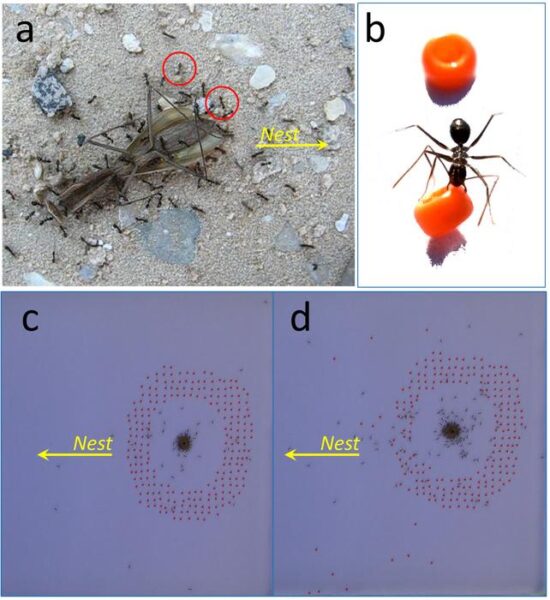
Examples of experimental set-up and close-up of collective transport of prey and of obstacle-clearing behavior

Scientists have discovered that longhorn crazy ants operate like miniature highway departments, clearing obstacles from roads before their teammates even arrive with bulky cargo.

The finding reveals how collective intelligence emerges from creatures whose brains contain fewer neurons than a human thumb has cells.


When these ants work together to haul large food items back to their nest, some workers sprint ahead to remove pebbles and debris from the anticipated path. It’s the first time researchers have documented such forward-looking behavior during cooperative transport in any ant species.

“Here we show for the first time that workers of the longhorn crazy ant can clear obstacles from a path before they become a problem – anticipating where a large food item will need to go and preparing the way in advance,” said Dr Ehud Fonio, a research fellow at the Weizmann Institute of Science in Israel and corresponding author of the study published in Frontiers in Behavioral Neuroscience.

Highway Engineering Without Engineers

The discovery happened by chance when researchers noticed individual ants picking up tiny gravel pebbles near groups carrying large insect prey. What seemed like random housekeeping turned out to be sophisticated logistics.

“When we first saw ants clearing small obstacles ahead of the moving load we were in awe. It appeared as if these tiny creatures understand the difficulties that lie ahead and try to help their friends in advance,” said Dr Ofer Feinerman, a professor at the Weizmann Institute.

But appearances can deceive. Through 83 carefully controlled experiments, the team discovered something even more remarkable than individual foresight: the ants were responding to chemical signals without understanding the bigger picture.

The clearing crews focus their efforts about 40 millimeters from food sources, specifically targeting the route back to the nest. They carry obstacles roughly 50 millimeters before dropping them away from the main highway. One particularly industrious ant cleared 64 obstacles in succession – a record that would impress any road crew supervisor.


Chemical Triggers and Traffic Management

The key breakthrough came when researchers realized that obstacle-clearing behavior depends entirely on pheromone trails – chemical breadcrumbs that recruiting ants leave behind. These scent marks, deposited every 0.2 seconds as ants run back to alert their sisters about food discoveries, serve as the trigger mechanism.

When researchers examined 155 cases of ants encountering obstacles, they found that 97.2% of clearing decisions happened only when fresh pheromone marks were nearby. Ants that couldn’t detect these chemical signals simply walked around obstacles instead of removing them.

The behavior proves remarkably context-sensitive. When researchers offered the same food type in small crumbs that individual ants could carry alone, clearing activity dropped dramatically. The ants cleared 32 times fewer obstacles and moved them much shorter distances when cooperative transport wasn’t needed.


Even more telling: ants cleared obstacles in response to pheromone trails even when no large food load existed. This happened when researchers introduced tuna oil that triggered exceptionally high recruitment responses, with 89.5% of arriving ants leaving pheromone marks.

Distributed Intelligence in Action


Perhaps most surprising is what the ants don’t know. Nearly half of the clearing crews never actually touched the food they were helping to transport. Some cleared obstacles without ever coming close to the cargo.

“Taken together, these results imply that our initial impression was wrong: in reality, individual workers don’t understand the situation at all. This intelligent behavior happens at the level of the colony, not the individual,” concluded Dr Danielle Mersch, formerly a postdoctoral researcher at the institute.

The research reveals how simple rules can generate complex, seemingly planned behavior. Each ant follows basic chemical cues without grasping the overall strategy, yet together they create efficient transportation networks.

Beyond Simple Reflexes

The obstacle-clearing dramatically improves efficiency. When researchers blocked narrow passages with plastic beads, transport time increased 18-fold compared to clear corridors. The ants had to remove most obstacles before their cargo could pass through.

Individual ants carrying small food items, however, experienced minimal delays from the same obstacles – they simply navigated around them. This suggests the clearing behavior specifically evolved to support group transport of oversized loads.

The timing also matters. Obstacle clearing occurs within minutes of food discovery, much faster than the days-long trail maintenance documented in other ant species. About 25% of clearing ants become repeat performers, systematically working the same sectors around food sources.

“Humans think ahead by imagining future events in their minds; ants don’t do that. But by interacting through chemical signals and shared actions, ant colonies can behave in surprisingly smart ways – achieving tasks that look planned, even though no single ant is doing the planning,” Feinerman explained.

The findings offer insights into how distributed intelligence systems can solve complex problems without central coordination. From robotic swarms to traffic management algorithms, understanding how simple agents create sophisticated group behaviors could influence engineering approaches that don’t rely on top-down control.

For the longhorn crazy ants, whose individual brains contain only 0.25 to 1 million neurons compared to humans’ 86 billion, collective intelligence proves that sometimes the whole truly exceeds the sum of its parts.

Ants Do Poop and They Even Use Toilets to Fertilize Their Own Gardens

Do ants poop? Discover how these social insects have developed ingenious methods to manage their waste.

By Avery Hurt
Jun 14, 2025
DISCOVER


(Image Credit: Michael Siluk/Shutterstock)


Key Takeaways on Ant Poop

Do ants poop? Yes. Any creature that eats will poop and ants are no exception.


Because ants live in close quarters, they need to protect the colony from their feces so bacteria and fungus doesn't infect their health. This is why they use toilet chambers.


Whether they isolate it in a toilet chamber or kick it to the curb, ants don’t keep their waste around. But some ants find a use for that stuff. One such species is the leafcutter ant that takes little clippings of leaves and uses these leaves to grow a very particular fungus that they then eat.


Like urban humans, ants live in close quarters. Ant colonies can be home to thousands, even tens of thousands of individuals, depending on the species. And like any creature that eats, ants poop. When you combine close quarters and loads of feces, you have a recipe for disease, says Jessica Ware, curator and division chair of Invertebrate Zoology at the American Museum of Natural History.

“Ant poop can harbor bacteria, and because it contains partly undigested food, it can grow bacteria and fungus that could threaten the health of the colony,” Ware says.

But ant colonies aren’t seething beds of disease. That’s because ants are scrupulous about hygiene.

Ants Do Poop and Ant Toilets Are Real


Ant colony underground with ant chambers. (Image Credit: Lidok_L/Shutterstock)

To keep themselves and their nests clean, ants have evolved some interesting housekeeping strategies. Some types of ants actually have toilets — or at least something we might call toilets.

Their nests are very complicated, with lots of different tunnels and chambers, explains Ware, and one of those chambers is a toilet chamber. Ants don’t visit the toilet when they feel the call of nature. Instead, worker ants who are on latrine duty collect the poop and carry it to the toilet chamber, which is located far away from other parts of the nest.

Read More: Ants May Amputate Other Ants to Save Them – Is This a Sign of Empathy?

What Does Ant Poop Look Like?

This isn’t as messy a chore as it sounds. Like most insects, ants are water-limited, says Ware, so they try to get as much liquid out of their food as possible. This results in small, hard, usually black or brownish pellets of poop. The poop is dry and hard enough so that for ant species that don’t have indoor toilet chambers, the workers can just kick the poop out of the nest.

Ants Use Poop as Fertilizer

Whether they isolate it in a toilet chamber or kick it to the curb, ants don’t keep their waste around. Well, at least most types of ants don’t. Some ants find a use for that stuff. One such species is the leafcutter ant.


“They basically take little clippings of leaves and use these leaves to grow a very particular fungus that they then eat,” says Ware. “They don't eat the leaves, they eat the fungus.” And yep, they use their poop to fertilize their crops. “They’re basically gardeners,” Ware says.

If you’d like to see leafcutter ants at work in their gardens and you happen to be in the New York City area, drop by the American Museum of Natural History. They have a large colony of fungus-gardening ants on display.

Other Insects That Use Toilets

Ants may have toilets, but termites have even wilder ways of dealing with their wastes.

Termites and ants might seem similar at first sight, but they aren’t closely related. Ants are more closely related to bees, while termites are more closely related to cockroaches, explains Aram Mikaelyan, an entomologist at North Carolina State University who studies the co-evolution of insects and their gut microbiomes. So ants’ and termites’ styles of social living evolved independently, and their solutions to the waste problem are quite different.

“Termites have found a way to not distance themselves from the feces,” says Mikaelyan. “Instead, they use the feces itself as building material.”

They’re able to do this because they feed on wood, Mikaelyan explains. When wood passes through the termites’ digestive systems into the poop, it enables a type of bacteria called Actinobacteria. These bacteria are the source of many antibiotics that humans use. (Leafcutter ants also use Actinobacteria to keep their fungus gardens free of parasites.) So that unusual building material acts as a disinfectant. Mikaelyan describes it as “a living disinfectant wall, like a Clorox wall, almost.”

Insect Hygiene

It may seem surprising that ants and termites are so tidy and concerned with hygiene, but it’s really not uncommon.

“Insects in general are cleaner than we think,” says Ware. “We often think of insects as being really gross, but most insects don’t want to lie in their own filth.”


Read More: An Ancient Ant Army Once Raided Europe 35 Million Years Ago

Article Sources

Our writers at Discovermagazine.com use peer-reviewed studies and high-quality sources for our articles, and our editors review for scientific accuracy and editorial standards. Review the sources used below for this article:

The American Society of Microbiology. The Leaf-cutter Ant’s 50 Million Years of Farming

Avery Hurt is a freelance science journalist. In addition to writing for Discover, she writes regularly for a variety of outlets, both print and online, including National Geographic, Science News Explores, Medscape, and WebMD. She’s the author of Bullet With Your Name on It: What You Will Probably Die From and What You Can Do About It, Clerisy Press 2007, as well as several books for young readers. Avery got her start in journalism while attending university, writing for the school newspaper and editing the student non-fiction magazine. Though she writes about all areas of science, she is particularly interested in neuroscience, the science of consciousness, and AI–interests she developed while earning a degree in philosophy.
Women Rate Women’s Looks Higher Than Even Men

Across cultures, both sexes find female faces more attractive—especially women.

byTudor Tarita
June 14, 2025
Edited and reviewed by Tibi Puiu
ZME

Credit: Pexels.

In portraits, in poems, and in proverbs, the world has long insisted that women are the more beautiful sex. Charles Darwin puzzled over it. Artists have painted it. Advertisers have exploited it. But despite this deep-rooted assumption, no one had ever put it to a rigorous scientific test.

Now, a global team of psychologists and neuroscientists has done just that. Drawing on data from over 12,000 people and 11,000 facial images collected across 28 studies on five continents, researchers have confirmed what most suspected: across nearly every culture and age group studied, women’s faces are consistently rated as more attractive than men’s—by both men and women.

The Muse

In most animals, it’s the males who get the flashy traits—think peacock tails and lion manes—while females do the choosing. Yet humans, for all our evolutionary parallels, seem to have flipped the script. “Females are usually the choosy sex,” Eugen Wassiliwizky, a neuroscientist at the Max Planck Institute for Empirical Aesthetics and the lead author of the new study, told New Scientist. “This is the mechanism that made males look more flamboyant.”

But in humans, from Renaissance paintings to romantic clichés, it’s women who are idealized. Darwin himself remarked on this reversal, noting that humans seem to be unusual in regarding females as “the fairer sex”. And yet, as the new study points out, the assumption that women are more attractive than men had never been directly and empirically tested—until now.

The team combed through a decade’s worth of open-access datasets that had been collected for other studies on facial attractiveness perception, research into topics like the effects of masks or emotional expressions on how we perceive others. In all, they compiled ratings from over 12,000 heterosexual participants across more than 50 countries, looking at how male and female raters scored male and female faces.

The results were clear. Female faces were rated as more attractive than male faces across nearly all regions and ethnic groups. This held true for both same-sex and opposite-sex raters, though the effect was strongest among women rating other women.
Physical Beauty—or Gendered Perception?

What makes a face attractive is not just in the eye of the beholder. It’s also in the bone structure.

To understand what was behind the “Gender Attractiveness Gap,” the researchers went a step further. They conducted a mediation analysis—essentially, a statistical test to see if the difference in ratings could be explained by differences in the facial structures of men and women.

They found that about two-thirds of the gap could be chalked up to “sexual shape dimorphism”—the subtle structural cues that make a face appear masculine or feminine. These include things like jawline shape, cheekbone prominence, and forehead curvature.

But the other third? That came down to something more intangible: knowing whether the person was male or female.

In other words, even when male and female faces were equally feminine or masculine in structure, raters still gave higher scores to faces they knew belonged to women.


The Paradox of Peer Generosity

One of the most surprising findings was who gave the highest ratings to female faces. Not men. Women.

That doesn’t square easily with evolutionary theories of mate selection. If women in the study were primarily heterosexual, why didn’t they rate men as more attractive?

Wassiliwizky offers a few theories. “Women might show solidarity to each other, or appreciate each other’s beauty more,” he suggests. It’s also possible, he says, that women evaluate male faces using more complex criteria—inferring things like personality or trustworthiness—which could dilute their ratings of pure physical appeal.

Social norms might also play a role. “They know the data that they type into the computer are scrutinised, so maybe they don’t feel comfortable with that,” Wassiliwizky adds. In other words, women might hesitate to rate male faces highly if they believe their answers will be judged.

Peer generosity—or even a form of beauty solidarity—might also explain the pattern. In many cultures, women are socialized from a young age to value appearance and are exposed to idealized images of female beauty more often than men are. This may make them more attuned to—and appreciative of—what makes a woman’s face aesthetically pleasing.

The Exceptions That Prove the Rule


There were outliers though. Sub-Saharan Africa was the only region where the gender gap in attractiveness ratings was not statistically significant. Likewise, faces identified as African were the only group where male and female ratings did not differ too much.

Karel Kleisner, a co-author and evolutionary biologist at Charles University in Prague, points out that “some populations in Africa have the least sexual dimorphism in faces.” In other words, male and female faces may be less structurally distinct there. Cultural aesthetics might also play a role: “A major limitation of the study is its lack of sensitivity to the specific aesthetics of African beauty,” Kleisner says.

These nuances are a reminder that beauty isn’t just biology. It’s also shaped by culture, identity, and context.

The findings open the door to deeper questions. Why do some cultures prize femininity so highly? Are these biases learned, inherited, or both? And how might these perceptions affect everything from dating to hiring to politics?


The findings were published in the preprint server bioRxiv


Tudor Tarita
Aerospace engineer with a passion for biology, paleontology, and physics.
Out-of-Body Experiences Could Be Coping Mechanisms Instead of Pathology, New Research Suggests
June 14, 2025
DEBRIEF


By Rad el Baluvar - Own work, CC BY-SA 3.0, https://commons.wikimedia.org/w/index.php?curid=8530981


Out-of-body experiences (OBEs), where experiencers feel like their mind and/or spirit is detached from their body, may be symptoms of traumatic experiences or high stress situations, new research has shown.

The new findings point to traumatic events, which often occur during childhood, as a likely cause of OBEs as opposed to poor mental wellness, as past research has suggested. The scientists behind the discovery suggest that viewing OBEs as symptoms rather than causes could improve treatment options for experiencers who have been diagnosed with a mental health condition.

“If OBEs are understood not as symptoms of pathology but as coping mechanisms – especially in response to trauma – this reframing can lead to several important shifts in clinical practice, research and public understanding,” explained Marina Weiler, PhD from the University of Virginia’s (UVA) School of Medicine and the lead author of a study detailing the findings.
The Connection Between Out-of-Body Experiences and Mental Health

Previous efforts to study out-of-body experiences found a statistical correlation to poor mental health. The authors of the new study say these findings, and the general attitudes of medical professionals tasked with understanding and treating experiencers suffering from both OBEs and mental health conditions, have resulted in experiencers avoiding seeking out treatment due to stigma.

“Many people believe that having OBEs means there’s something wrong with them, so they often keep it to themselves out of fear of being judged or seen as mentally ill,” Weiler, who is also a neuroscientist with UVA’s Division of Perceptual Studies, explained. “Unfortunately, many mental health professionals still view these experiences in the same way.”


Surprisingly, the researchers said that an examination of prior research into the potential causes and effects of OBEs revealed a much more nuanced picture where many people don’t consider the experiences themselves as negative. For example, many experiencers say they are more open to new ideas about the nature of existence, experience greater inner peace, and often report they are less afraid of dying.

According to Weiler and colleagues, one previous study found that 55% of experiencers felt the experience permanently changed their lives. 71% of the same study participants said they experienced lasting benefits of their OBE. And nearly half (40%) said the out-of-body experience was the single “greatest thing” that had ever happened to them.


Hoping to determine why something many consider beneficial was still treated as a cause of poor mental health and not a symptom of something else, the researchers collected online questionnaire data from OBE experiencers. Along with establishing whether the person was confident that they had undergone an authentic out-of-body experience, this questionnaire asked about the experiencer’s medical and mental health history.
Survey Results Show OBEs May Be a Symptom and Not a Cause

After reviewing the online survey responses, the team found several interesting trends. Four out of five respondents reported between one and four out-of-body experiences, while the remaining one out of five reported five or more OBEs. 74% of the experiencers described the event as “spontaneous,” 9% reported the use of psychoactive compounds in conjunction with the experience, and 8.2% described the OBEs as self-induced through meditation, visualization, or other non-pharmacological techniques. Only 0.7% reported hypnosis as the cause.


On average, Weiler said experiencers “tend to report poorer mental health” compared to non-experiencers, supporting the findings of previous studies. The results also showed that the younger the experiencer was during their first OBE, the more likely the experiencer was also diagnosed with a concurrent mental health condition.

Notably, the team found that the average first-reported OBE occurred at a young age, often during childhood, and experiencers also reported significantly higher levels of childhood trauma than non-experiencers. These correlations led the team to propose that OBEs may not be a cause, but rather a “dissociative response to overwhelming stress or emotional pain.”

“Our findings also suggest that OBEs may function as a coping mechanism in response to past trauma, rather than serving as a cause of mental illness,” Weiler said.

See Also

The researchers said this view of OBEs “shifts the focus from causation” to the possibility that OBEs “may also emerge as a consequence, a coping strategy for navigating difficult or traumatic experiences.”

Building ‘Community and Resilience’ Among OBE Experiencers

In the study’s conclusion, the authors reaffirm the idea that out-of-body experiences may be a reaction to events and that the correlation to poor mental health may, in some part, be attached to the unwillingness of experiencers to seek treatment. As a result, Weiller says she and her colleagues “encourage mental health practitioners to reconsider the way they interpret these experiences and to approach them with greater openness and sensitivity.”

The research team also suggested further research exploring the mental health care that OBE experiencers receive could further the goal of better treatment and reduced stigma.

“Ultimately, we hope to reduce the stigma around this topic, encourage help-seeking, and build community and resilience among experiencers,” Weiler said.

Christopher Plain is a Science Fiction and Fantasy novelist and Head Science Writer at The Debrief. Follow and connect with him on X, learn about his books at plainfiction.com, or email him directly at christopher@thedebrief.org.


Rarest plant flowers at secret nursery refuge

2 days ago
Paul Pigott
BBC News
Robbie Blackhall-Miles
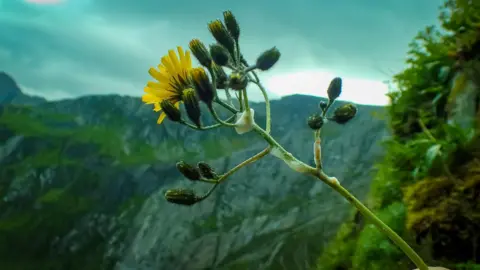
It may look like a dandelion, but this is one of just four Snowdonia Hawkweeds known to exist in the wild

One of the world's rarest plants - with just four known examples left in the wild - has flowered at a nursery set up to try to prevent the decline of Wales' Arctic alpine species.

Snowdonia hawkweed - nicknamed "the Welsh dodo" - was thought to be extinct until a plant was found in 2002 in Eryri National Park.

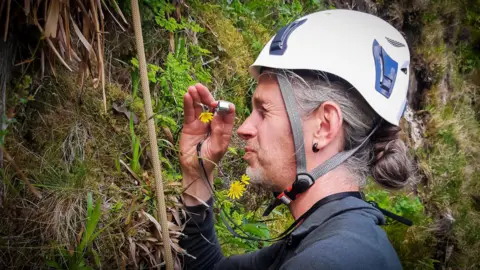
Ecologist Robbie Blackhall-Miles scaled a cliff face somewhere in the Ogwen Valley above Bethesda in 2023 to document the remaining plants and take a cutting to replant.

He now has about 50 Snowdonia hawkweeds blooming at a secret location as part of a National Lottery Heritage Fund project called jewels of the mountain, or Tlysau Mynydd Eryri in Welsh.

Mr Blackhall-Miles said his work for Plantlife Cymru, under an initiative called Natur Am Byth [nature forever], involves the 10 most threatened species living in the Arctic-like environment of Welsh mountain peaks.

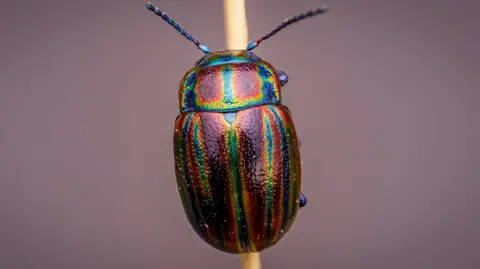
The list of rare things under his watch includes the exquisite Snowdon rainbow beetle, found only above 400m (1,300 feet) on Yr Wyddfa, or Snowdon, an Arctic clam the size of a sesame seed, as well as ferns, saxifrages, avens and the Snowdonia hawkweed (hierachium snowdoniense).

When an example was found in 2002, it had not been seen in the wild for 50 years.

Slag heaps could be Wales' nature hero, ecologist says


Extinct ‘mountain jewel’ plant returned to wild - in secret location


Sensors protect rare plants from mountain climbers


"This is a species that's been here longer than any other in Wales," he said, explaining how it was a living relic of the last ice age, surviving on peaks that stayed above the glaciers.

"As those glaciers retreated, these plants crept down the mountains, and they were the first things that were in the new Welsh landscape," he said.

The hawkweed and its fellow Arctic alpine specialists got along fine alongside man until the advent first of industrial scale grazing, followed by the plants being dug up and sold in a 19th Century craze for exotic species to fill Victorian herbariums and ferneries.

Alex Turner
Ecologist Robbie Blackhall-Miles belayed off a cliff to reach the last Snowdonia hawkweeds left in the wild

"I've got the opportunity to correct the wrongs of the past," he said, adding the Treborth Botanic Gardens and the National Botanic Gardens are now helping with his nursery.

There are plans to plant cultivated hawkweeds in Cwm Idwal, a National Trust site where grazing animals can be controlled.

The species is related to dandelions and is from a group of plants that are evolving quickly, which Mr Blackhall-Miles said makes them important to understanding how species will cope with climate change.

"Making sure that the plants have that opportunity to continue that process of evolution is really important," he said.

"For a species like Snowdonia hawkweed to become extinct creates a dead end, especially if that extinction is brought on by inappropriate grazing or over collection, something that's not part of the natural cycle."

Robbie Blackhall-Miles
Snowdonia hawkweeds flowering at a secret nursery location

Reaching the species involved what Mr Blackhall-Miles said his mountain leader described as "the sketchiest piece of climbing ever done".

"In Britain, where we think everything is accessible and open, there are places which are really difficult to get to and this is one of those places," he said.

"Actually, there are cliffs here in Eryri where we don't know what's growing."

He said he hopes to get back to the last Snowdonia hawkweed plants this summer, even if it is just to see them through binoculars.

What has not been seen, going back now to 2023, is the Snowdon rainbow beetle.

Benjamin Fabian
The Snowdon Rainbow Beetle has not been seen since 2023

"We've started work on a project to use sniffer dogs to find the beetles for us," he said.

Grazing is tricky for the beetles. Too little and there is not enough of the food they like, too much at the wrong time and the eggs they lay on blades of grass get eaten.

So the plan is to get that balance right in perfect habitat for the beetle along the banks of Snowden Mountain Railway.

"It is right on the edge of the busiest path up Snowdon so everybody will be able to scan the QR codes on the fence posts and be able to learn about what's happening," he said.

There has also been good news on the Arctic pea clam, which has been confirmed in two more Welsh lakes, bringing the total to four, while DNA evidence shows it is the same species as clams in Siberia.

Robbie Blackhall-Miles
Arctic pea clams, found in four Welsh lakes, are the size of a sesame seed

"It is amazing because you can imagine a mollusc doesn't really move around the landscape very easily," he said.

"So how did how did a tiny little clam find its way here in Wales, as the glaciers were melting?

"We can only presume it came on bird's feet."

Mr Blackhall-Miles, 48, has already helped to bring back the rosy saxifrage, which was declared extinct in the wild in Wales in 1962.

Cultivated plants were reintroduced last year.

"I'm really pleased to say that it flowered really well in the wild this year," he said.

"It's been visited by goats and sheep which haven't bothered it, which is also really good.

"I've worked internationally in plant conservation, but to bring an extinct species back in my home country is one of the best things I've done," he said.

"For me this forms part of my heritage as a Welsh person, it's not just about bringing a species back."
With cancer the leading cause of death for firefighters, 1 Bay Area fire department is partnering with biotech to improve the odds

By Chase Hunter, 
The Mercury News
Published: June 14, 2025, 
Hayward firefighter Frank Crespo, left, Deputy Chief Ryan Hamre, center, and Captain Andrew Ghali at the Hayward Firefighters Local 1909 office on Thursday, May 29, 2025, in Hayward, California. A new partnership between the Hayward Fire Department and biotech firm Prenuvo, is offering firefighters access to MRIs to scan for cancer. 
(Aric Crabb/Bay Area News Group/TNS)

Every day, firefighters are exposed to cancer-causing chemicals from the scorched aftermath of forest fires, the melting pot of kitchen cleaning supplies in burning homes, and abandoned polyurethane appliances and bags in homeless encampment blazes.

Cancer has jumped to the leading cause of death among firefighters; they have a 9% greater risk of being diagnosed with the disease, and a 14% higher risk of dying from it than the general population, according to a study published by the National Institutes of Health on the occupational hazards of firefighting. According to the International Association of Fire Fighters, 66% of line-of-duty firefighter deaths from 2002 to 2019 were caused by cancer.

“The job just puts people in positions that are going to put them at risk; they are going to be exposed to carcinogens,” said Hayward Fire Department Deputy Chief Ryan Hamre. “We can limit it, but we can’t eliminate it.”

To combat this endemic threat of cancer, the Hayward Fire Department has partnered with the Redwood City-based biotech company Prenuvo to offer full-body MRI scans to firefighters and identify cancer early on, when effective treatment options have a better chance of eliminating the disease and keeping it in remission.

The inspiration for this early-detection effort was HFD Captain Steve Holt, who died of cancer on Nov. 29, 2017. Holt had worked at the Hayward Fire Department since 1987; he responded to the Loma Prieta earthquake in 1989 and the Oakland hills fire in 1991, receiving accolades for his work.

“At his daughter’s cheerleading camp, (Holt) passed out, woke up in the hospital, and was diagnosed with lung cancer that spread to his brain and spinal cord,” Hayward Firefighters Union President Andrew Ghali said.

His death caused Ghali to reexamine preventative care and early cancer detection at the Hayward Fire Department. But he found that many health insurance companies do not offer services to detect cancer without pre-existing conditions, such as a history of smoking or age — and do not make exceptions for firefighters.

“I started calling the American Lung Association because I saw a low-dose CT scan to detect early lung cancer,” Ghali said. “When I went online and filed (for) a test, it had a little quiz that said, ‘How many packs of cigarettes do you smoke a day?’ and, ‘Are you above the age of 50?’ I said ‘No, no,’ and I was denied the opportunity to have one.”

Hayward firefighter Frank Crespo said he was frustrated by health insurance companies that only took care seriously after it was too late.

“It’s kind of more of a ‘sick care’ system than it is true health care,” Crespo said. “Only when you’re sick does this system start to allow payments for workups, for further diagnostics. So we’re kind of stuck in this limbo, knowing that we’re exposed to this stuff chronically, but not sick enough at any point to justify further diagnostics.”

Ghali sought alternative health care options that could identify cancer before it could mature and metastasize in himself and his colleagues. He eventually settled on Prenuvo, he said, because its detailed MRI could detect early signs of cancer, as well as respiratory issues, cardiac disease and thyroid problems.

The Hayward Fire Department signed a $100,000 contract with Prenuvo on Jan. 1, funded through the city of Hayward, to provide head and torso MRI scans.

Hamre and Ghali joined the fire department to defend their community, well aware of the risks associated with a career shrouded in smoke and fire. But their priorities have shifted now with families of their own. They’re more aware of the daily exposure to carcinogens that has taken friends and colleagues away from their families.

“I was 22 when I got hired here, and none of this was on my mind,” Ghali said. “But then, as you start to mature and you get older and you understand the risk, and you have three kids and a wife that depend on you, and you want to see them grow up, and you want to have a long, happy life with your family.”
Tectonic plates can spread subduction like a contagion — jumping from one oceanicte to another
published 2 days ago

Evidence from Earth's deep past suggests dramatic subduction zones can spread like a contagion.

The Andes Mountains formed from the convergence of the Nazca plate and the South American plate. Aracar, seen in a satellite image from Feb. 20, 2000, is one of many volcanoes in the Andes range. (Image credit: Universal History Archive via Getty Images)

Subduction zones, where one tectonic plate dives underneath another, drive the world's most devastating earthquakes and tsunamis. How do these danger zones come to be? A study in Geology presents evidence that subduction can spread like a contagion, jumping from one oceanic plate to another — a hypothesis previously difficult to prove.

This result "is not just speculation," says University of Lisbon geologist João Duarte, who was not involved in the research. "This study builds an argument based on the geological record."

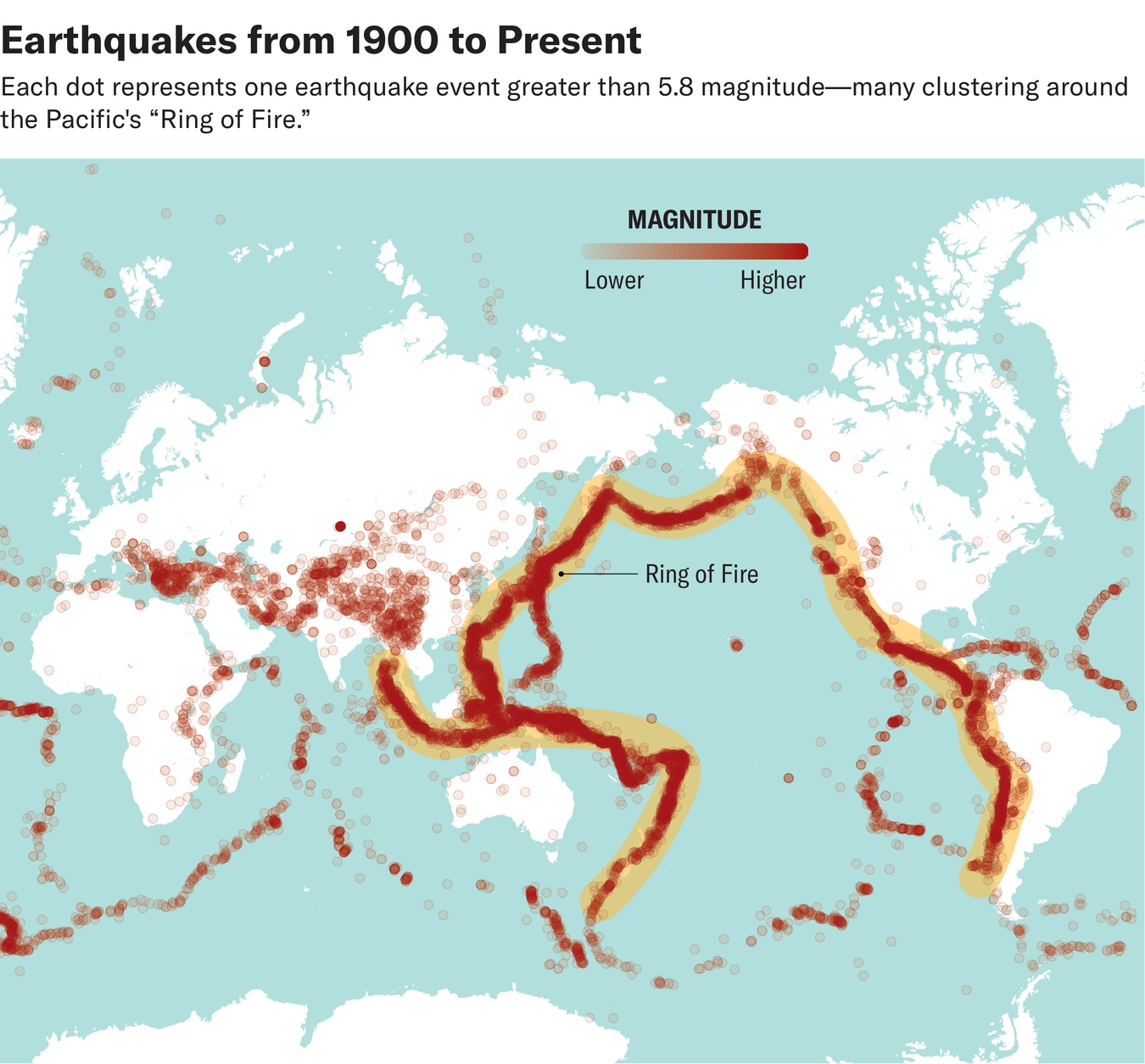
Because subduction drags crust deep into the earth, its beginnings are hard to examine. The new study provides a rare ancient example of potential subduction "infection." Its authors say they've discovered evidence that neighboring collisions triggered East Asia's "Ring of Fire," a colossal subduction system currently fueling earthquakes and volcanoes from Alaska to the southern Indian Ocean.

Nearly 300 million years ago China was a scattering of islands separated by the ancient Tethys and Asian oceans. Established subduction zones consumed these oceans, welding the landmasses into a new continent and raising mountains from Turkey to China. By 260 million years ago this subduction seems to have spread and begun pulling down the neighboring Pacific plate.

(Image credit: Ripley Cleghorn; Source: USGS Earthquake Catalog (data))

"The dying act of those closing oceans may have been to infect the Pacific plate and start it subducting westward under the Asian continent," says study lead author Mark Allen, a geologist at Durham University in England. "In one form or another, it's been diving down ever since."

The smoking gun in this case is the "Dupal anomaly," identified by a geochemical fingerprint from the ancient Tethys Ocean and what is now the Indian Ocean. When the study authors unexpectedly found this signature in volcanic rocks from the western Pacific, they surmised that material from the Tethys had spread eastward across a plate boundary from one subduction zone to another — triggering the neighboring plate's descent. "It's like seeing someone's fingerprint at a crime scene," Allen says.


But the mechanism of spread remains mysterious. The researchers suspect that transform faults — boundaries where plates slide past one another, like the San Andreas Fault — may act as weak spots where slight changes in collision angle or speed can destabilize dense oceanic crust, causing it to sink. Duarte compares the scenario to aluminum foil in water. "The foil floats," he says, "but the slightest tap will cause it to sink."

If subduction spreads this way, could the Atlantic Ocean's relatively quiet plate margins be next? The massive 1755 Lisbon earthquake hints at early subduction invasion there. Duarte suggests parts of Iberia and the Caribbean are undergoing this process's initial stages: "In another 100 million years a new Atlantic 'Ring of Fire' may form — just as it once did in the Pacific."

This article was first published at Scientific American. © ScientificAmerican.com

The World Birth Rate Is Now Dropping Precipitously

Maybe children are not the future?
Jun 14,  2025
by Sharon Adarlo

Whoever wrote in the Book of Genesis "be fruitful and multiply" never accounted for the cost of children these days, especially when you factor in expenses like college tuition, sports, tutors, clothes and childcare.

And that's one of the reasons why people are having less kids, according to new reporting from the BBC.

A new paper from the United Nations Population Fund (UNFPA) has revealed that one in five adults in 14 countries don't have, or think they won't have, their preferred number of children, the BBC reports. About 14,000 people from across a wide range of income levels were surveyed in countries including the United States, South Africa, South Korea and Italy.

"The world has begun an unprecedented decline in fertility rates," Natalia Kanem, UNFPA executive director, told the BBC. "Most people surveyed want two or more children. Fertility rates are falling in large part because many feel unable to create the families they want. And that is the real crisis."

This jives with dire statistics that 76 percent of the world — 155 countries out of 204 — will have far fewer children being born by 2050. All these negative fertility replacement rates will likely have drastic and difficult-to-predict impacts on society and the world economy — in a worst case perhaps approaching something like the grim futuristic movie "Children of Men."

The UNFPA report found that increased financial security would remove a lot of barriers to reproduction. Of those surveyed, "39 percent reported that financial limitations had affected or would affect their ability to realize their desired family size," the report read.

"The real solution to the crisis of reproductive agency we are facing is to build a more equitable, sustainable and caring world that supports individuals to have the families they aspire to," the report continues.

Other barriers to reproduction include that people feel their living expenses are too high, or that the world seems more dangerous or uncertain, especially in light of climate change and armed conflicts. (And that's without getting into the rise of AI, which industry leaders insist will soon take many human jobs.)

Hopefully we can solve this huge issue. Our future depends on it — and besides, babies are cute.
U$A

'One Big Beautiful Bill' Would Batter Rural Hospital Finances, Researchers Say
— Experts fear risk of closure, service reductions, or ending inpatient care


by Jazmin Orozco Rodriguez,
 KFF Health News
June 14, 2025 •


Cuts to Medicaid and other federal health programs proposed in President Donald Trump's budget plan would rapidly push more than 300 financially struggling rural hospitals toward a fiscal cliff, according to researchers who track the facilities' finances.

The hospitals would be at a disproportionate risk of closure, service reductions, or ending inpatient care, according to a report authored by experts from the Cecil G. Sheps Center for Health Services Researchopens in a new tab or window following a request from Senate Democrats, who released the findings publicly Thursday. Many of those hospitals are in Kentucky, Louisiana, California, and Oklahoma, according to the analysis.

Trump's budget plan, dubbed the "One Big Beautiful Bill Act," contains nearly $800 billionopens in a new tab or window in Medicaid cuts, according to the nonpartisan Congressional Budget Officeopens in a new tab or window. House Republicans passed the bill in late May, and it now awaits Senate consideration.

The proposed cuts to Medicaid raise the stakes for rural hospitals nationwide, many of which already operate on razor-thin, if not negative, margins. Diminished reimbursements from the state-federal health insurance program for those with low incomes or disabilities would further erode hospitals' ability to stay open and maintain services for their communities -- populations with more severe health needs than their urban counterparts.

"It's very clear that Medicaid cuts will result in rural hospital closures," said Alan Morgan,opens in a new tab or window CEO of the National Rural Health Association, a nonprofit advocacy and research organization.

The Senate Democrats sent a letteropens in a new tab or window to Trump, Senate Majority Leader John Thune (R-S.D.), and House Speaker Mike Johnson (R-La.) asking them to reconsider the Medicaid cuts.

Sen. Edward Markeyopens in a new tab or window (D-Mass.), one of the Senate Democrats who requested the information from Sheps, in a statement said communities should know exactly what they stand to lose if Congress approves the reductions to Medicaid.

"People will die" if rural hospitals close, he said. "No life or job is worth a yes vote on this big billionaire bill."

The legislation passed by the House in May would require most working-age, nondisabled Medicaid beneficiaries to prove they're working, studying, or volunteering to retain coverage, and it would cut Medicaid reimbursement to states that use their own money to extend coverage to immigrants living in the country without authorization. Also, the bill would curtail taxes that nearly every state levies on providers to help draw down billions in additional federal money, which generally leads to more money for hospitalsopens in a new tab or window.

The Congressional Budget Office has estimatedopens in a new tab or window that the bill's Medicaid provisions would lead to 7.8 million people becoming uninsured by 2034.

Johnson has repeatedly claimed that the bill's reductions in federal Medicaid spending don't amount to cuts to the program. "If you are able to work and you refuse to do so, you are defrauding the system," Johnson said May 25 on the CBS show "Face the Nation."

Hospitals that do stay afloat likely will do so by cutting services that are particularly dependent on Medicaid reimbursements, such as labor and delivery units, mental health care, and emergency departments. Obstetric services are among the most expensive and are being eliminated by a growing number of rural hospitalsopens in a new tab or window, expanding the areas that lack nearby maternity or labor and delivery care. Iowa, Texas, and Minnesota had the most rural obstetrics service closures between 2011 and 2023, according to the health analytics and consulting firm Chartisopens in a new tab or window, which also studies rural hospital finances.

Nearly half of rural hospitals are operating in the red and 432 are vulnerable to closure. Medicaid cuts would push them further into financial peril.

That vulnerability stems at least partly from rural Americans' being more likely to depend on Medicaid than the general population. For instance, nearly 50% of rural births are covered by the program, compared with 41% of births overall. But Medicaid covers only about half of what private insurance reimburses for childbirth-related services. Rural health systems have been struggling to meet the needs of their communities without the cuts to Medicaid, which brings in $12.2 billion, or nearly 10% of rural hospital net revenue, according to a Chartis report from May.

Hospitals in rural areas would collectively lose more than $1.8 billion with a 15% cut to Medicaid. That loss in revenue is roughly equivalent to 21,000 full-time hospital employees' salaries.

Rural hospitals' margins have been deteriorating for 10 to 15 years, said Michael Topchikopens in a new tab or window, executive director for the Chartis Center for Rural Health, which analyzes and consults on rural hospital finances. Ten years ago, about one-third of rural hospitals were operating in the red. That's closer to 50% now, he said.

It's even higher in the 10 states that did not expand Medicaid eligibility under the Affordable Care Act, with 53% of rural hospitals there already operating in the red and more than 200 vulnerable to closure.

Other policies continue to affect rural hospitals, according to Chartis. Facilities will lose $509 million this year due to a 2% Medicare reimbursement cut -- what's known as sequestration -- and $159 million in reimbursement for bad debt and charity care combined.

Some rural hospitals have responded to the increasing financial pressures in recent years by joining larger networks, such as Intermountain Health or Sanford, which are connected to facilities in the Mountain West and Midwest. But about half of rural hospitals are still independent, Topchik said, and struggle with a perennial collision of low patient volume and high fixed costs.

"We can't Henry Ford our way out of this by increasing volumes to dilute costs and reduce prices," he said. "It's expensive, and that's the reason the federal government, for a long time, has reimbursed rural hospitals in a variety of manners to help keep them whole."

Rural hospitals play an important role in their communities. They provide healthcare to Americans who are older, sicker, and pooreropens in a new tab or window and have less access overall to providers compared with people who live in urban areas. In many cases, a local rural hospital is the largest employer in a community and can trigger substantial local economic declines if it closes.

"When you close a hospital, oftentimes, the community follows," Morgan said.

More than 10 million Americans enrolled in Medicaid live in counties that have at least one rural hospital, according to Chartis estimates. Kentucky, Texas, New York, North Carolina, California, and Michigan have the largest estimated populations of rural Medicaid enrollees.

And while Utah is not a state identified as especially vulnerable, health leaders there are concerned about rural hospital closures if Medicaid funding is cut, said Matt McCullough, PhD, the rural hospital improvement director for the Utah Hospital Association.

Facilities in rural parts of Utah are often governed by a board made up of community members -- farmers, ranchers, and business owners who care about keeping their hospitals open, McCullough said, because they were born there and their kids were born there.

"They'll do anything to see it stay open and provide good quality care to their neighbors, family members," he said. "It's people that they know and care about."

KFF Health Newsopens in a new tab or window is a national newsroom that produces in-depth journalism about health issues and is one of the core operating programs at KFF -- an independent source of health policy research, polling, and journalism. Learn more about KFFopens in a new tab or window.

UPDATE

14,000-year-old ice age 'puppies' were actually wolf sisters that dined on woolly rhino for last meal


By Kristina Killgrove published 2 days ago

A pair of canines found in Siberian permafrost were wolf sisters that died shortly after eating.

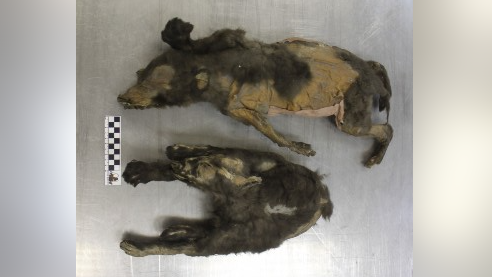
Two ice age pups found near Tumat, Siberia. (Image credit: University of York)

A pair of 14,000-year-old "puppies" found melting out of the permafrost in Siberia have undergone genetic testing, proving they were actually wolf cub sisters and not domesticated dogs as was previously assumed.

"Whilst many will be disappointed that these animals are almost certainly wolves and not early domesticated dogs, they have helped us get closer to understanding the environment at the time, how these animals lived, and how remarkably similar wolves from more than 14,000 years ago are to modern day wolves," Anne Kathrine Runge, an archaeologist at the University of York in the U.K., said in a statement.

Runge led an international team of researchers in analyzing the bones and DNA of the puppies. Their study, published Thursday (June 12) in the journal Quaternary Research, revealed that the mummified "puppies" were wolf littermates that died somewhere between 14,100 and 15,000 years ago.You may like'

The remarkably preserved and mummified animal carcasses were found in 2011 and 2015 near the rural settlement of Tumat in far northern Siberia. Along with the two canines, scientists discovered woolly mammoth (Mammuthus primigenius) bones that appeared to have been cut and burned by humans. This archaeological evidence suggested that the canines could have been very early domesticated dogs that were seeking food from humans — such as a piece of woolly rhino meat that was discovered in the belly of one of the animals.

Dogs and wolves are closely related, but they diverged genetically between 20,000 and 40,000 years ago. Humans then domesticated wild dogs around 15,000 years ago. But the title of the world's oldest domesticated dog has never been clearly claimed. One possibility is the Bonn-Oberkassel dog, found in Germany in a human burial dated to 14,200 years ago.

Because they were older than this, the ice age Tumat canines were previously assumed to be among the oldest domesticated dogs in the world. But DNA testing in 2019 showed that they likely belonged to a now-extinct wolf population unrelated to today's dogs.

In the new study, Runge and colleagues built on the 2019 study by analyzing genetic data from the animals' gut contents and investigated chemical "fingerprints" in their bones, teeth and tissue to learn more about the famous cubs.

The cubs — genetically determined to be sisters — were only a couple of months old when they died, but both were eating solid food, including meat from a woolly rhino (Coelodonta antiquitatis) and a small bird called a wagtail — but not from a mammoth, which may have indicated that ice age humans had fed them leftover scraps. Additionally, both were still being nursed by their mother, the researchers discovered.

"It was incredible to find two sisters from this era so well preserved, but even more incredible that we can now tell so much of their story, down to the last meal they ate," Runge said in the statement.

But there's no indication that the Tumat pups got this food directly from humans or even from scavenging humans' mammoth butchering sites, according to the researchers. The sisters "inhabited a diverse landscape that was also occupied by humans," they wrote, but "this study found no evidence that can conclusively link them to human activities."

How the cubs died remains a mystery, as well. Given the cubs' lack of injuries, they may have been resting in an underground den when it collapsed, trapping them inside, the researchers wrote in the study.

"Today, litters are often larger than two, and it is possible that the Tumat Puppies had siblings that escaped their fate," study co-author Nathan Wales, an ancient-DNA specialist at the University of York, said in the statement. "There may also be more cubs hidden in the permafrost."

Additional research on the Tumat cubs may yet produce more information about ancient wolves and their evolutionary line, Wales noted in the statement.