Monday, July 21, 2025

Why Cartken pivoted its focus from last-mile delivery to industrial robots


Image Credit: Cartken


Rebecca Szkutak
 July 20, 2025
TOKYO


Autonomous robotics startup Cartken, known for its four-wheeled robots that deliver food on college campuses and through Tokyo’s bustling streets, has found a new area of focus: industrials.

Cartken co-founder and CEO Christian Bersch told TechCrunch that applying its delivery robots to industrial settings was always in the back of his mind as they built the startup. When companies started reaching out about using their robots in factories and labs, Cartken took a closer look.

“What we found is that actually there’s a real big need in industrial and onsite use cases,” said Bersch, who co-founded the startup along with other former Google engineers behind the Bookbot project. “Sometimes there have even [been] more direct value to companies optimizing their material flows or their production flows.”

In 2023, the startup landed its first big industrial customer, German manufacturing company ZF Lifetec. Initially, ZF Lifetec used its existing delivery robots, called the Cartken Courier, which can hold 44 pounds and resembles an Igloo cooler on wheels.

“Our food delivery robot started moving production samples around, and it’s quickly turned into our busiest robot of all,” Bersch said. “That’s when we said, hey, there’s like real use cases and real market need behind it, and that’s when we started targeting that segment more and more.”

At the time, Cartken was still pressing ahead on its delivery sidewalk business, including locking in partnerships with Uber Eats and GrubHub for its last-mile delivery operations across U.S. college campuses and in Japan.

But that early success with ZF, encouraged the startup founders, which includes Jake Stelman, Jonas Witt and Anjali Naik, to expand its business model. Switching Cartken’s robots from food delivery to an industrial setting, wasn’t much of a challenge, Bersch said. The AI behind the robots is trained on years of food delivery data and the devices are designed to traverse various terrains and weather conditions.

This means the robots can travel between indoor and outdoor settings. And thanks to data collected from delivering food on Tokyo streets, the robots are able to react and maneuver around obstacles.

Image Credit: Cartken

Cartken, which has raised more than $20 million from 468 Capital, Incubate Fund, Vela Partners, and other venture firms, has started to build out its robotic fleet to reflect its pivot to industrials. The company released the Cartken Hauler earlier this year, which is a larger version of the Cartken Courier and can hold up to 660 pounds. The company also released the Cartken Runner, designed for indoor deliveries, and is also working on something similar to a robotic forklift.

“We have a navigation stack that is parameterizable for different robot sizes,” Bersch said. “All the AI and machine learning and training that went into that is like transferring directly to the other robots.”

Cartken recently announced that it was deepening its four-year relationship with Japanese automaker Mitsubishi, which originally helped the company get the needed certifications to operate their delivery robots on the streets of Tokyo.

Melco Mobility Solutions, a company under the Mitsubishi umbrella, just announced that it will be buying nearly 100 Cartken Hauler robots for use in Japanese industrial facilities.

“We’re definitely seeing a lot of traction across various industrial and corporate sites, from automotive companies to pharmaceutical to chemical,” he said. “All these companies typically have people moving stuff from one building to another, whether it’s being by hand, on a cart ,or a small forklift, and that is really what we’re targeting.”

Cartken will still continue its food and consumer last-mile delivery business, but it won’t be expanding it, Bersch said, adding they still do a lot of testing for new capabilities on these existing last-mile delivery routes.


Turkey calls for new deal with Iraq over suspended oil pipeline

A senior Turkish official says Ankara wants to negotiate a new agreement with Iraq to revive operations at an oil pipeline between the two countries that were halted during a dispute over unauthorised Iraqi exports.

Will Iraq negotiate a new agreement with Turkey?

ANKARA - Turkey wants to negotiate a new agreement with Iraq to revive operations at an oil pipeline between the two countries that were halted during a dispute over unauthorised Iraqi exports, a senior Turkish official told Reuters on Monday.

In a decision published in its Official Gazette on Monday, Turkey said the existing deal dating back to the 1970s - the Turkey-Iraq Crude Oil Pipeline Agreement - and all subsequent protocols or memorandums would be halted from July 27, 2026.

Iraq and Turkey have been working to resume oil flows from the pipeline running to Turkey's Ceyhan port following Turkey's move to halt them in March 2023 after the International Chamber of Commerce ordered Ankara to pay Baghdad $1.5 billion in damages for unauthorised exports between 2014 and 2018.

Turkey has appealed against the ruling.

Ankara has said it is ready to resume operations, but talks to do so hit a snag in March over payments and contracts.

The official said the pipeline had the potential to become a "highly active and strategic pipeline for the region."

The person added that Turkey had invested heavily in its maintenance, and noted its importance for regional projects like the Development Road - a planned trade route involving Turkey and Iraq.

"A new and vibrant phase for the Iraq-Turkey pipeline will benefit both countries and the region as a whole," the official said, without giving details of what Ankara wanted the new agreement to include.

There was no immediate comment from Iraq on the decision.

Spotify threatens to pull out of Turkey over rows on playlists targeting Erdogan's spending

Turkey’s deputy culture and tourism minister, Batuhan Mumcu, accused Spotify of sharing “content that targets our religious and national values and insults the beliefs of our society.”


JULY 21, 2025 
JERUSALEM POST

Popular music streaming service Spotify has threatened to withdraw from Turkey after Turkish ministers slammed the company for playlists mocking Recep Tayyip Erdogan and his wife for their lavish spending, according to international media reports from last week.

Turkey’s deputy culture and tourism minister, Batuhan Mumcu, accused Spotify of sharing “content that targets our religious and national values and insults the beliefs of our society.”

Mumcu took particular issue with the “insidious and provocative” playlists which he claimed were “incompatible with the cultural and moral values of our nation, and targets the unity and solidarity of our society.”

The “Emine Ergodan hotgirl playlist”, “Songs Emine Erdogan listened to when her golden faucet broke” and “The songs Emine Erdogan listens to while cleaning the palace” all target the lavish spending of Erdogan’s wife Emine.

Erdogan's life of luxuryNearly one-third of Turkey’s population is currently at risk of poverty or social exclusion, the Turkish Statistical Institute reported in 2023 - making rumors of Erdogan’s lavish spending a particular source of anger for local populations.

Designing taste itself for you. Spotify (credit: REUTERS/CHRISTIAN HARTMANN/FILE PHOTO)

In 2015, it was rumored by an opposition figure that the Turkish president had a golden toilet installed in their 1,000 room Ankara palace. Denying that a golden toilet was ever installed in the $400 million palace, Erdogan threatened legal action against the opposition figure responsible for the rumor and the accusation was later withdrawn.

“Despite international digital platforms like Spotify having a significant user base in the Turkish market, they have neither established a local representation nor taken responsibility for supporting local music culture,” Mumcu accused.“Aside from the failure to fulfill tax obligations, prioritising sensation over quality in content algorithms — promoting content that encourages slang, violence, and the use of prohibited substances in playlists — is an unacceptable choice.”

Despite his accusations Ifod, the Turkish freedom of expression organization reportedly confirmed last week that left-wing Turkish bands had been censored from Spotify on government orders.


Argentina's stolen children grapple with finding their place in history

SACHA PFEIFFER, HOST:

There's a Spanish term that arose in Argentina during its military dictatorship that still brings chills to many people there. It's los desaparecidos. It means the disappeared. It refers to a traumatic period of the country's history in the 1970s and 1980s when thousands of people were kidnapped, tortured and just vanished. Some later showed up dead, many others were never found. Haley Cohen Gilliland was a reporter in Argentina for years, and something in particular about that tragic history haunted her.

HALEY COHEN GILLILAND: I became absolutely obsessed with the Abuelas de Plaza de Mayo, a incredibly intrepid group of grandmothers that banded together at immense risk to themselves when people were still disappearing in droves in Argentina, to find these stolen babies, their stolen grandchildren.

PFEIFFER: Now Gilliland has written a book about a group of mothers and grandmothers who dedicated themselves to finding their missing children and grandchildren. It's called "A Flower Traveled In My Blood," and Haley Cohen Gilliland joins us now to talk about her book. Hi, Haley.

GILLILAND: Hi, Sacha. Thanks for having me.

PFEIFFER: This group of mothers and grandmothers started small, and they endured a lot of disappointment and harassment along the way. Describe that evolution from being written off to commanding respect.

GILLILAND: Each week, they gathered in front of the presidential palace at 3:30 on the dot to march arm-in-arm around the monument there, eventually tying white diapers over their heads in memory of their children and to draw more attention to their cause. And their circle started very small, as you mentioned, but each week, it grew larger and larger and larger, because so many people were disappearing and their loved ones were looking for them, that after a couple of months, the circle had grown to hundreds. And it was impossible for the government to ignore anymore.

PFEIFFER: In terms of the scale of the numbers of missing people, how many people total and then how many babies? How many children are we talking about?

GILLILAND: Estimates of how many people disappeared during Argentina's dictatorship continue to be blurry. And that is a sign of the dictatorship's success in its mission to not only commit these crimes but obscure the evidence of them such that the exact number of desaparecidos will likely never be known. The most widely accepted estimate that is promoted by human rights groups in Argentina is 30,000. And the abuelas estimate that among these 30,000 Argentines that were disappeared, there were hundreds of pregnant women, and 500 babies were stolen.

PFEIFFER: The work these women were doing to publicize this was emotionally agonizing. It was also dangerous. It also involved complicated investigative work. I'm thinking, what drove them to do this?

GILLILAND: There was a force within them that was much stronger than fear, and that was the love for their children who had disappeared and also their yearning for their grandchildren, the only remnants of their children that were left on the Earth. And so these forces overwhelmed their fear and drove them forward, even when they recognized that doing so was immensely dangerous and they might face the same fate as their children had for doing it.

PFEIFFER: At the same time these terrifying kidnappings were happening - sometimes in broad daylight, people snatched off the street - Buenos Aires was this cosmopolitan city. The two images don't match. You even wrote about what you call the illusion of Argentina as a cultured place full of civilized people. How do you explain that disconnect?

GILLILAND: The military's mission was to purge Argentina of anyone that it deemed, quote, "to have ideas that were contrary to Western and Christian civilization." But it didn't want evidence of that purge to reach the outside world - either to reach Argentina or to reach the international community. And in order to commit this purge quietly, it relied on disappearances. And so instead of killing people and keeping records of those extrajudicial murders, the military's main manner of killing people was to sedate them, load them into planes, strip them of their clothing, and then fly up above the river - the wide and powerful river - the Rio de la Plata that runs next to Buenos Aires, and push them out over the river so that the current would take their bodies away.

PFEIFFER: Right. These are death flights - just appalling.

GILLILAND: Death flights, absolutely appalling - during the dictatorship, silence and terror really reigned. And that extended to the institutions that usually shed light on injustices happening in a country. And so the media was completely silenced, both out of fear, because lots of journalists were disappeared during this period, and sometimes out of complicity, because there were outlets that agreed with the military's ideology and were not reporting for that reason.

Also, the Argentine church had a very tightly intertwined relationship with the military, and the military was very influenced by Catholic ideology. And in some cases, Catholic priests actually participated in some of the torture and disappearances. And so the institutions that would normally decry these types of events remained silent during this period, which allowed the military to continue on with its brutality without the majority of the Argentine public really catching on for a very long time.

PFEIFFER: Your book has a lot of history. It has a lot of politics. It also has a lot of science because over time, there were genetic developments that helped identify missing people and prove who their parents or grandparents were.

GILLILAND: So some of the grandmothers had met their grandchildren before they were taken away. They were taken in raids alongside their parents when they were babies or toddlers. And in those cases, those grandmothers perhaps knew their names, knew their sexes, knew their eye colors - things like that. But many of the grandmothers had never met their grandchildren. They were taken away when still in utero, and so they didn't know anything about them. And they were very prescient and realized early on that they would need to find a tool to identify those grandchildren that was objective, that would allow them to link themselves to their grandchildren, and also something so convincing that a court would accept it and return those grandchildren to their rightful families. And they recognized those answers would probably come from science.

And they started traveling the world and talking to any scientists who would listen and asking them whether they could help develop a grandpaternity test. And this was the late 1970s, early 1980s, before DNA testing was widely available. Paternity testing was available, but grandpaternity testing had never been done. And so they met largely with shrugs until eventually they were connected with an American geneticist named Dr. Mary-Claire King. Together, the abuelas and Dr. King were able to develop a pioneering new form of genetic testing called the grandpaternity index that allowed the abuelas to connect themselves to their stolen grandchildren genetically at a time when that was completely unheard of.

PFEIFFER: The science was often proving that certain people were raising a stolen baby. But then emotions came in because sometimes by the time these stolen kids were identified, they hadn't seen their real parents or grandparents since they were babies. They sometimes wanted to stay with their adoptive parents, even if they were stolen. That caused a lot of strife and heartbreak. Explain how that sometimes played out.

GILLILAND: What the abuelas discovered as they were successful in their efforts to find their grandchildren was that finding the grandchildren was not always the most difficult situation that they encountered. When their grandchildren were still minors and under the age of 18, they sometimes had to confront really fierce custody battles with these other families who had stolen their grandchildren but did not want to give them up. And in other cases, as you mentioned, especially once the grandchildren reached an age where they were able to express themselves to the media, those grandchildren sometimes expressed a desire to stay with the family that had raised them since they were babies, even knowing that they were not their true, biological families. And this was extremely difficult for the abuelas to navigate, and they had different responses in different situations.

PFEIFFER: Argentina really struggled with how to move forward after a trauma like this. Do you forgive and forget? How much do you dwell on the past when you're trying to heal? Describe that debate over balancing peace with justice.

GILLILAND: Argentina has really wrestled with how to grapple with the trauma of that period. And these debates are very live. This continues to play out in Argentina to this day. The current president of Argentina, Javier Milei, promotes a very different version of what happened during the dictatorship than human rights groups do. He views what happened during the dictatorship period as a justified war in which, quote, "excesses" were committed, and he has clashed constantly with human rights groups since holding office. And this is a very tense time for the abuelas and their work, but they continue on with their mission to today, resolutely. And actually, just earlier this month, they were able to recover a grandchild. So these bigger questions of how to achieve peace and reconciliation and healing have continued on to today, as has the grandmother's mission.

PFEIFFER: Haley Cohen Gilliland is the author of "A Flower Traveled In My Blood." Haley, thank you.

GILLILAND: Thank you so much, Sacha.

(SOUNDBITE OF ALLAH-LAS' "NO WEREWOLF")

Copyright © 2025 NPR. All rights reserved. Visit our website terms of use and permissions pages at www.npr.org for further information.

Accuracy and availability of NPR transcripts may vary. Transcript text may be revised to correct errors or match updates to audio. Audio on npr.org may be edited after its original broadcast or publication. The authoritative record of NPR’s programming is the audio record.

Russia Accused Of ‘Stealing’ Ukraine’s Future With Forced Deportation Of Children – Analysis

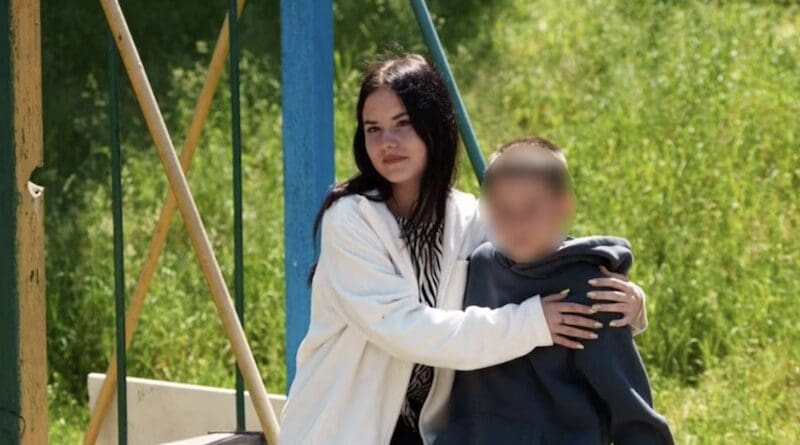
Ksenia Koldin with her brother Serhiy were forced to leave Ukraine for Russia. Both have since returned home. Photo Credit: Ksenia Koldin

By 

By Una Cilic, Maryana Sych and Kateryna Farbar


(RFE/RL) — When Russia launched its full-scale invasion of Ukraine in Februry 2022, Ksenia Koldin was finishing grade 11 in Vovchansk, a city some 70 kilometers from her native Kharkiv.

Six months later, with the country at war, she and her younger brother were forced to go to Russia. They weren’t on the front lines, but the two some of the thousands of casualties from the conflict nonetheless.

Earlier this month, the European Court of Human Rights (ECHR) found Russia guilty of implementing an organized system of human rights violations, including the forced deportation of children.

But a new report by the global think tank Globsec goes a step further, echoing growing accusations of Moscow’s aim to “steal” Ukraine’s future.

“Russia’s weaponization of population displacement and the deportation of children represents one of the most deliberate and devastating assaults on a civilian population in modern European history,” the report, authored by Associate Fellow Megan Gittoes, says, noting the strategy in the global context of mass refugee movements exposes millions to the risks of trafficking and exploitation.


“Far from being unintended consequences of war, these are core components of the Kremlin’s hybrid warfare strategy, designed to weaken Ukraine’s demographic resilience in what has become a protracted conflict,” it adds.

Amid massive drone strikes, battlefield clashes, and ruined cities, thousands of Ukrainian children have been taken from their homes and sent to Russian-controlled parts of Ukraine or locations in Russia and its ally, Belarus.

Some have been placed with Russian foster families or at “reeducation camps” while many others like Koldin, went to school — in Russia.

There, she recounts experiences that come across more as indoctrination than education.

“Every Monday we had ‘talks about important things’ lessons. This is the famous Russian propaganda about how great Russia is. Then we had to sing the national anthem,” she told RFE/RL.

Koldin stayed in school for three months during which she said her teachers and the administrator of the college tried constantly to persuade her to take Russian citizenship saying she could get money and housing if she did. She refused.

Around 19,546 children have been deported to Russia since the start of the invasion in 2022, and just about 1399 children have been returned to Ukraine, according to data from Bring Kids Back UA.

Russia has been accused of changing the Ukrainian children’s names in an attempt to deprive them of access to relatives.

Mariam Lambert, co-founder of Emile Foundation that works on the process of returning forcibly deported children, says the pressure put on Ukrainian children now in Russia is a “deliberate and organized crime.”

“In Ukraine, children are targeted by Russia to wipe out their identity,” Lambert said in an interview with RFE/RL.

“The whole goal is to create a new generation in Russia. And that’s a crime according to the Geneva Convention.”

Moscow has denied committing any crimes with the moving of the children, says it is saving them from the war.

The International Criminal Court (ICC) sees it otherwise.

In March 2023 it issued arrest warrants for Russian President Vladimir Putin and Maria Lvova-Belova, Russia’s commissioner for children’s rights.

The court alleges responsibility for the war crime of the unlawful deportation and transfer of children during the war.

Ukrainian Ombudsman Dmytro Lubinets, who represents the state in efforts to bring back civilians and military personnel, says Russia hasn’t been forthcoming with information regarding children from Ukraine.

“From our perspective, we clearly see the main goal of deporting Ukrainian children: to use them as the next generation of Russian soldiers,” Lubinets told RFE/RL.

“Their documents are changed, all of them, including birth certificates and education records. They are forced to speak only Russian and to identify themselves as Russian,” he added.

Those parents trying to find their children and repatriate them after being separated appear to back up Lubinets’ claims.

The Globsec report cited the testimony of several parents saying Russian officials put up obstacles to try and make the return of children more difficult.

‘Brainwashing’

One of them, a woman named Tatyana, said when she tried to secure the return of her son, who was transferred to a camp in Crimea in 2023, she was accused by Russian officials of acting on behalf of Ukrainian intelligence and detained her for several days.

Koldin said she experienced another issue when trying to secure the return of her brother, now 14, after they were separated in Russia.

He had spent five weeks at a summer camp and then moved in with the new Russian family to Abinsk, a city in the Krasnodar region.

There, she said, “they started brainwashing him.”

“They said that the Nazis were operating in Ukraine, that they wanted to kill him, that no one needed him in Ukraine, that there was a war there and that he shouldn’t go there,” Koldin said.

He was reluctant to go, having made new friends and fearing what awaited him in Ukraine after hearing how bad it was.

“We talked for three hours, during which I tried to persuade him to agree to go with me. He absolutely did not want to go,” Koldin recounts.

“He said the same things about the Nazis being there, that he wanted to stay here, that there was a war, that they were bombing.”

He finally relented, with his Russian foster mother telling them as they left: “Go, go to your Ukraine, it will soon become Russia anyway.”

Ukraine has made the return of children a key point in struggling peace talks with Russia.

Lubinets says Russian officials are reluctant to return the children “because they fully understand that every returned child is a potential witness.”

“We must acknowledge that Russian propaganda works on them every single day,” he says.

Ksenia Koldin says it took several months for her brother to re-assimilate.

She says her brother now goes to school and lives under the care of a “good Ukrainian foster family.” They both live in Kyiv and see each other on the weekends.

She also continues to fight for others who have not been as fortunate. Koldin is an ambassador for Save Ukraine, and the voice of children who were deported and had similar experiences to her.

  • Una Cilic is a correspondent for RFE/RL’s Balkan Service.
  • Maryana Sych is a correspondent for RFE/RL’s Ukrainian Service.
  • Kateryna Farbar is a journalist with RFE/RL’s Ukrainian Service.

RFE RL

RFE/RL journalists report the news in 21 countries where a free press is banned by the government or not fully established.