Tuesday, October 07, 2025

Turkey’s Halkbank takes stock market hit as US Supreme Court chucks out Iran sanctions-busting appeal

Turkey’s Halkbank takes stock market hit as US Supreme Court chucks out Iran sanctions-busting appeal
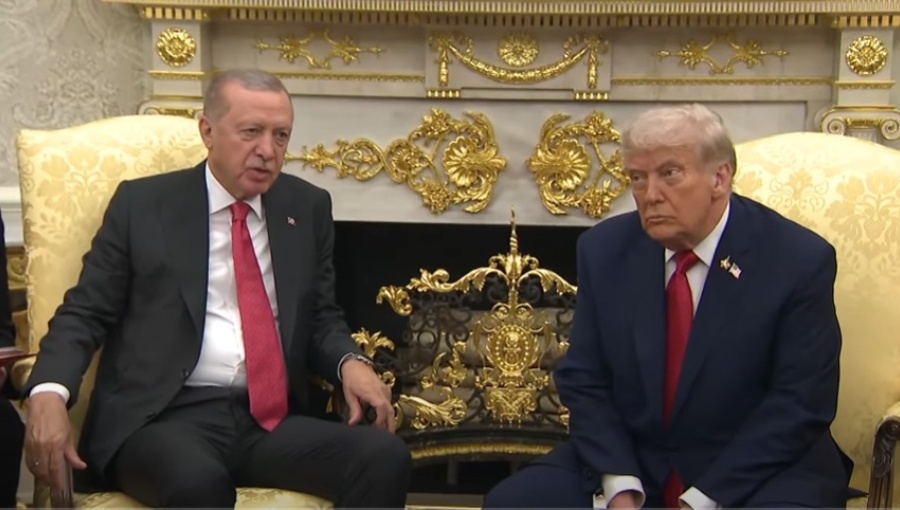
When Erdogan met Trump at the White House on September 25, he talked about a reset in Turkey-US relations. / The White House, Youtube, screenshot
By bne IntelliNews October 6, 2025

Shares in Turkey's state-controlled Halkbank closed 10% down on October 6 after the US Supreme Court declined to hear the lender’s latest appeal against a lower court ruling that it can be tried on criminal charges that it assisted Iran in dodging US sanctions.

Halkbank in May requested that the top court scrap the ruling on the basis that it should have sovereign immunity from prosecution as a state bank, but the Supreme Court decision on the matter means the criminal case brought by federal prosecutors in Manhattan in 2019 can proceed.

The Supreme Court announcement that it will not consider the case on appeal comes after, as reported by bne IntelliNews, Halkbank in July quietly returned to the eurobond market after a nine-year absence.

The bank is accused of helping evade sanctions in laundering at least a billion dollars that went through the American financial system.

Turkey’s president, Recep Tayyip Erdogan, who referred to the prosecution as an “unlawful, ugly” step when it was announced six years ago, tried to have the case dropped by making personal appeals to Donald Trump when he was serving his first term as US president. It is believed he also discussed the issue with Trump when he met him at the White House on September 25 and told media he was expecting a reset in Turkey-US relations.

Questions have long been raised about what Erdogan knew about the claimed sanctions-busting conspiracy, though he has always denied any wrongdoing. The 2019 indictment alleged wrongdoing right to the top of his administration. At one point, after failing to send representation to a hearing, Halkbank was deemed to be a “fugitive” by prosecutors.

Manhattan federal prosecutors claim Halkbank covertly transferred $20bn of restricted Iranian funds, with $1bn or more violating US federal law by passing through the American financial system. Fines for the offence can run up to twice the transaction value.

Halkbank said in a Borsa Istanbul filing that the Supreme Court’s decision “does not mean that the legal proceedings are finalised”.

“Initiatives to find a legal consensus within the framework of agreements between the United States and Türkiye are also continuing in a positive direction,” it said.

The bank in arguing that it is immune from prosecution as an institution more than 90%-owned by the Turkish state, also contends that its conduct took place outside the US and that it is beyond the jurisdiction of US courts. A federal appeals court rejected its immunity defence last year.

In March 2016, the US investigators arrested Turk Reza Zarrab in Miami. He was accused of being a central figure in the sanctions-busting scheme that breached American sanctions on Iran between 2012 and 2013.

Zarrab later on turned state witness. Nowadays, he is running a horse farm in the US.

In March 2017, the US judiciary arrested Halkbank’s then deputy general manager Hakan Atilla, who was in the US for a eurobonds roadshow.

In 2017, Trump, whose first term in the White House stretched from January 2017 to January 2021, fired the prosecutor, namely Preet Bharara, who was conducting the Halkbank case.

Turkey’s sovereign wealth fund (TWF/TVFcontrols a 91.5% stake in Halkbank, while the remaining 8.5% is listed on Borsa Istanbul.

FASCIST FRONT IN CENTRAL EUROPE

Babiš in talks with far-right and anti-green parties after Czech election win

Babiš in talks with far-right and anti-green parties after Czech election win
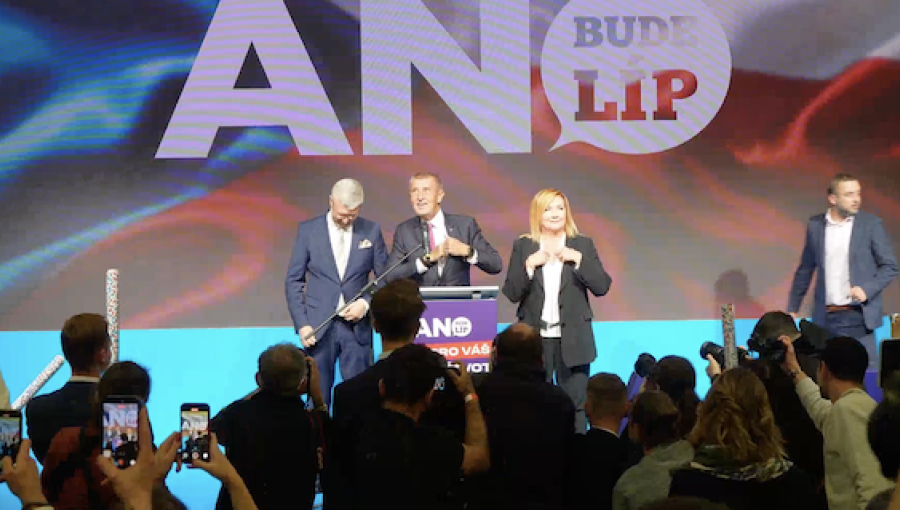
Andrej Babis addresses supporters after his ANO party's election win. / Andrej Babis via Facebook
By Albin Sybera in Prague October 7, 2025

Czech billionaire ex-prime minister Andrej Babiš, the leader of the populist ANO party, is in talks with the far right and anti-EU Freedom and Direct Democracy (SPD) party and anti-green and staunchly Eurosceptic Motorists for Themselves to form the next government in Prague, after ANO's victory in the Czech general election this weekend.

Although it is not yet clear whether Babiš will be able to form an ANO minority cabinet, backed by SPD and the Motorists in the parliament, or bring SPD and the Motorists to government positions, it is likely that Czechia will have the most Eurosceptic cabinet yet seen.

“I will be a strong leader,” Babiš was quoted as saying by Czech Television (CT) on October 6, when he met SPD deputy Radim Fiala, sidelining earlier speculation that ANO’s number two Karel Havlíček could replace Babiš as the party’s nominee for prime minister to address his conflict of interest stemming from his ownership links to food, agriculture and chemical conglomerate Agrofert.

“There are talks between ANO, SPD and Motorists taking place, and these will certainly take place in many further rounds,” the country’s liberal President Petr Pavel was quoted as saying by Czech Radio (CRo), after he held talks with five party leaders at the Prague Castle.

Pavel is expected to task the scandal-hit Babiš, who is standing trial in a subsidy fraud case, with forming the cabinet despite the ANO leader’s controversies.

“We are putting together bodies of the Chamber of Deputies, that is, leadership and committees,” Fiala said after meeting Babiš, fuelling speculation that SPD leader Tomio Okamura could become the next parliament speaker. Okamura faces police charges following the investigation into the anti-immigration campaign carried out by the SPD last year.

Member of the European Parliament and the Motorists’ honorary chairman, Filip Turek, widely known since the European Parliament elections for his home collection of Nazi-era memorabilia, was more open with CT, telling the broadcaster that the Motorists could take the foreign affairs, environment and culture portfolios.

The Motorists became newcomers to the parliament after they made pledges not to take Czechia out of the EU and Nato in the latter part of their campaign. They also pushed to diffuse the controversies surrounding Turek, which include allegations of domestic violence, threats and rape of his ex-partner.

Motorists chairman Petr Macinka, a former aide to eurosceptic ex-president Václav Klaus, was clear in an interview with CRo that “the ambitions of the Motorists are to be part of the next government”. 

Macinka also said that “I cannot imagine programme agreement with other political parties” besides ANO and the SPD, “because they want something totally contradictory to what we want”. 

Macinka also pointed to previous cooperation between ANO and the Motorists in the Patriots for Europe European Parliament grouping. He concluded that he even expects to reach an agreement with ANO on budget issues, where the ANO programme requires more public spending while the Motorists campaigned on an austerity ticket.

ANO, like the Motorists, stated previously they it doesn’t want to challenge the country's  EU and Nato memberships, in tune with largely pro-EU and pro-Western sentiments in the Czech society, but the SPD has repeatedly called for an EU membership referendum.

Georgia’s ruling party claims landslide win in partially boycotted local election

Georgia’s ruling party claims landslide win in partially boycotted local election
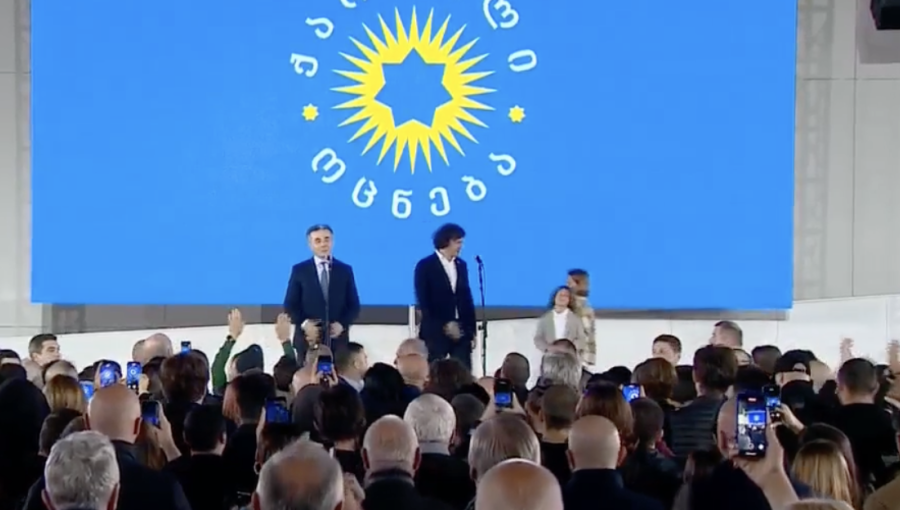
Georgian Dream leaders celebrate the party's local election victory. / Georgian Dream via Facebook
By bne IntelliNws October 6, 2025

Georgia’s ruling Georgian Dream party secured a sweeping victory in nationwide local elections on October 4, according to preliminary results from the Central Election Commission (CEC). 

The opposition partially boycotted the polls, which were held under what critics describe as an increasingly repressive political climate. On the day of the vote, an estimated 100,000 protesters gathered in Tbilisi in one of the country’s largest demonstrations in nearly a year.

With all 3,061 precincts counted, Georgian Dream won 80.8% of the vote in municipalities across the country, data from the CEC showed. In many constituencies, the party’s share exceeded 80% or even 90%, and its mayoral candidates ran unopposed in several races. 

Official turnout was 40.93%, well below the level recorded in the previous municipal elections. Participation in the capital was the lowest nationwide, with only 31.08% of eligible voters casting ballots in Tbilisi, where incumbent mayor Kakha Kaladze was re-elected.

As voting was underway, tens of thousands of demonstrators filled Rustaveli Avenue and Liberty Square in central Tbilisi, calling for the resignation of the government and the formation of a “technical government.” The rally was one of the largest since protests began in late 2024 after Georgian Dream halted the country’s EU integration process.

The demonstration, mainly peaceful, turned chaotic in the evening when a group of protesters attempted to storm the presidential palace, as reported by bne IntelliNews' correspondent in Tbilisi. Riot police dispersed the crowd after clashes broke out. 

The opposition had hoped the mass turnout would reinvigorate the protest movement that has persisted for months but failed to translate the show of support into a broader political breakthrough. By 9 pm, most demonstrators had left the area.

The local elections, which saw limited independent observation, are likely to further entrench the ruling party’s dominance in national politics and deepen divisions in Georgia.

Georgian Dream, founded by billionaire Bidzina Ivanishvili, has faced mounting criticism from Western governments and local activists for what they describe as democratic backsliding and pressure on independent media and civil society.

As the results came in, EU Enlargement Commissioner Marta Kos wrote on X: "Yesterday’s local elections in Georgia were held after months of increasing repression … Citizens’ rights to freedom of assembly & expression must be upheld.”


Bangladesh’s coming political reset

Bangladesh’s coming political reset
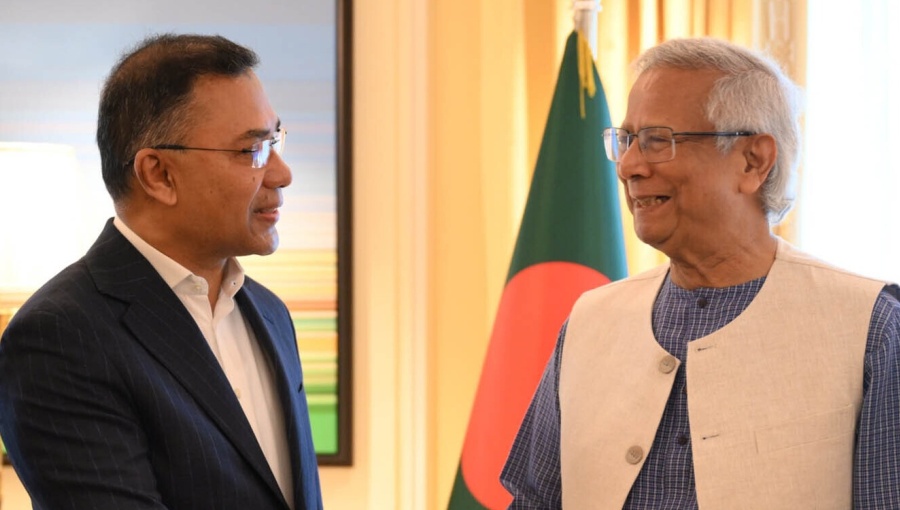
Tarique Rahman and Prof. Dr. Yunus meeting in London / Press Information Dept - pressinform.gov.bd - PD
By bno Chennai Office October 8, 2025

Tarique Rahman’s announcement of his imminent return to Bangladesh has overnight redefined the country’s political narrative after nearly two decades of exile. As acting chairman of the Bangladesh Nationalist Party (BNP), his statement to the FT that the “time is very close” for his return signals the beginning of a high-stakes political transition ahead of the general elections expected in February 2026.

The BNP’s resurgence, following the downfall of Sheikh Hasina’s Awami League government in 2024, will reshape Bangladesh’s domestic governance, its foreign alignments, and its relationships with neighbours like India and Pakistan. Tarique Rahman’s re-emergence marks the most significant leadership shift in Bangladeshi politics since his mother Khaleda Zia’s decline from active politics due to health issues. In his interviews with the FT and BBC Bangla, Tarique projected confidence that the BNP could “form the government alone,” but also suggested openness to alliances with new political movements that arose during the 2024 uprising that ended Hasina’s rule. His framing of the BNP as a unifying force for democracy draws heavily on public fatigue with authoritarianism and political violence. However, Tarique’s own history complicates his reformist image.

During BNP’s 2001–2006 tenure, Transparency International ranked Bangladesh the most corrupt country globally for five consecutive years. A 2008 US diplomatic cable described Tarique as a “symbol of kleptocratic governance.” Though he argues these accusations were politically motivated and all charges have been legally dismissed, the challenge lies in convincing domestic and international stakeholders that the BNP has undergone credible institutional reform. His claim that around 7,000 party members were disciplined for retaliatory conduct since 2024 is likely intended to present this image of internal cleansing.

If Tarique returns to power as prime minister, governance in Bangladesh will hinge on two competing expectations, popular optimism for stability after political unrest, and concerns over the BNP’s record and Tarique’s credibility. Rahman’s repeated references to “Bangladesh before all” suggest an emphasis on economic nationalism and institutional sovereignty. The BNP could accelerate diversification of the export base, reduce Dhaka’s dependence on India for energy and transit access, and court investment from the Middle East and China. However, its approach will need to balance this economic pragmatism with assurances of political inclusivity, especially if the Awami League remains legally marginalised and unable to contest elections.

For India, BNP’s return represents both an opportunity and a diplomatic challenge. Successive Indian governments, particularly under Prime Minister Narendra Modi, developed a robust partnership with Sheikh Hasina, built around counterterrorism coordination, connectivity, and border management. Under Hasina, Dhaka curbed cross-border insurgency support and approved transit links that enhanced India’s access to its northeastern states.

A BNP-led government could recalibrate this equation. Tarique has explicitly described the India–Bangladesh relationship as “one-sided,” signalling a desire for symmetrical engagement rather than dependency. He has also stressed the need to “reset” the bilateral partnership while maintaining a pragmatic tone that prioritises trade and energy cooperation.

Still, New Delhi remains cautious. Indian Foreign Secretary Vikram Misri recently reiterated that India has “no favourites” in Bangladesh’s internal politics, but also indicated that Sheikh Hasina’s presence in India is a “legal matter” requiring bilateral dialogue, a statement reflecting India’s discomfort in being seen as sheltering the ousted leader of a longtime ally. If BNP adopts a more assertive regional stance, for instance revisiting water-sharing negotiations over the Teesta River or revising port and power project terms, India could perceive a gradual erosion of its established strategic leverage.

Conversely, BNP’s nationalist rhetoric may strengthen its domestic legitimacy by appealing to constituencies that view India’s relationship with Hasina as too close. Islamabad on the other hand views BNP’s resurgence as a chance for a subtle diplomatic thaw after years of estrangement. The Awami League’s historical emphasis on the 1971 Liberation War and its continued denunciation of Pakistan’s wartime atrocities had long constrained meaningful engagement.

The BNP, though not openly pro-Pakistan, traditionally supports a more neutral foreign policy orientation that is less steeped in liberation-era narratives. Pakistan may attempt to revive trade and defence cooperation under the guise of South Asian regionalism through platforms like the South Asian Association for Regional Cooperation (SAARC).

However, Tarique has clarified that his administration will not overlook controversial historical roles, indirectly referring to the islamist Jamaat-e-Islami party’s wartime legacy. This suggests that while Pakistan could find greater diplomatic access, BNP’s primary focus will be internal stability and restoring Bangladesh’s global credit standing rather than ideological alignment.

The region’s geopolitical balance depends on how Bangladesh navigates its post-Hasina realignment. With the US States keenly observing events, having previously criticised the Awami League’s democratic backsliding, a BNP government perceived as elected through a fair contest could earn early Western goodwill.

Washington and the European Union have both signalled interest in deepening ties with a pluralistic Dhaka that safeguards labour rights and democratic reforms, especially as Western brands increasingly diversify sourcing away from China. China’s calculus is more transactional. It built strong infrastructure and energy links under Hasina, including projects within the Belt and Road Initiative framework. Tarique’s pledge of “Bangladesh before all” may translate into renegotiations of Chinese project loans to reduce debt exposure, but he is unlikely to sever ties given Bangladesh’s industrial reliance on Chinese machinery and capital inputs.

The strategic outcome could be a more balanced foreign policy, maintaining ties with Beijing while restoring credibility with Western donors and India alike. While Tarique Rahman seeks to symbolise closure after a turbulent political era, his return carries inherent volatility. His polarising image, long period abroad, and limited organisational control over provincial branches may hinder rapid consolidation. Moreover, the question of whether the Awami League will be allowed to contest the 2026 election remains sensitive. Tarique’s evasive remarks in the interview with FT and BBC, suggesting those “convicted as criminals” cannot contest, has triggered concerns over reciprocation of political exclusion, particularly towards Awami League.

If BNP governance begins with vengeful prosecutions or overreach, Bangladesh risks re-entering the cycle of political vendetta it has endured for decades. Institutional credibility will also depend on how the BNP manages security agencies that were restructured under Hasina’s centralisation of power. Reasserting civilian supremacy, depoliticising the police, and advancing judicial independence will determine whether Tarique can transform rhetoric into durable governance.
Claudia Sheinbaum’s first year tests Mexico’s new direction

Claudia Sheinbaum’s first year tests Mexico’s new direction
Sheinbaum’s popularity remains remarkably high, supported by tangible welfare gains and the perception of a government more attentive to the working majority than its predecessors.
By Alek Buttermann in Berlin October 7, 2025

President Claudia Sheinbaum's first year in office has brought a combination of political stability, expansive social policies and cautious diplomacy, all set against the backdrop of a slowing economy and growing institutional concentration. As Mexico's first woman head of state, Sheinbaum has inherited the political machinery of her predecessor Andrés Manuel López Obrador while seeking to shape her own approach to governance.

Official data and media reports depict a government intent on demonstrating continuity with the so-called Fourth Transformation, or 4T, but now starting to face limits to its flagship economic and political model. El Financiero reported that Sheinbaum entered her second year with a 73% approval rating, five points above López Obrador’s figure at the same stage, driven by social spending and welfare expansion. However, fiscal and structural pressures are beginning to surface.

According to AFP, government investment in social programmes reached about $54.3bn in 2025, equivalent to 12% of the national budget. These resources funded pensions, scholarships and direct aid to over 20mn beneficiaries, including farmers, students and retirees. The same report noted that such spending has coincided with widening fiscal deficits, which Valmex economist Gerónimo Ugarte attributed to increased debt servicing and persistent low growth. The Bank of Mexico forecasts a GDP expansion of just 0.5% for 2025 and up to 1.4% in 2026, underscoring the fragility of the recovery.

On the diplomatic front, Sheinbaum has sought to project moderation and cool-headed pragmatism. In a documentary marking her first year, she stressed that her administration had achieved “a reasonable agreement” with the United States over tariff disputes under President Donald Trump, avoiding massive economic disruptions while “defending national sovereignty”. That negotiation, which secured continued access to the US market, is seen as vital given that over 80% of Mexican exports are destined for the United States. Speaking at a rally in Mexico City, Sheinbaum said she was “confident of reaching good trade agreements” not only with the US but also within the broader North American framework (USMCA).

Domestically, her administration has overseen improvements in security and social welfare indicators. El Financiero reported a 32% reduction in homicides and a significant decrease in fentanyl trafficking towards the United States, attributed to strengthened border enforcement and the deployment of 10,000 National Guard troops in cooperation with Washington. At the same time, Sheinbaum’s team claims to have reduced poverty from 45% in 2008 to 29% in 2025, a figure echoed in El Economista’s coverage of her first annual report.

Infrastructure and industrial policy have also featured prominently. During her first 100 days, Sheinbaum launched “Plan México”, described as a joint initiative between government and private investors to expand the country’s productive capacity. The scheme aims to keep investment above 25% of GDP, add 1.5mn jobs in the manufacturing and energy sectors and position Mexico among the world’s ten largest economies by 2026. Complementing this, El Financiero detailed a 10-year strategic plan for state-owned oil company Petróleos Mexicanos (Pemex) designed to address the firm’s nearly $100bn debt and boost production. Energy Secretary Luz Elena González outlined 11 measures targeting both financial restructuring and operational efficiency.

Despite these ambitious initiatives, though, structural vulnerabilities remain visible. Declining remittance inflows—five consecutive months of contraction as of August, according to AFP—have hit domestic consumption. Meanwhile, corruption allegations involving figures close to Sheinbaum, including former interior minister Adán Augusto López Hernández and his alleged links to organised crime, have tested the administration’s claims of ethical renewal. El Economista noted that these scandals, coupled with visible signs of opulence among some senior officials, have begun to erode the government’s moral narrative of austerity and “just middle living”.

In political terms, Sheinbaum’s communications strategy, particularly her daily press briefings, has become a central mechanism for framing national discourse. Critics warn that this narrative control limits pluralism and marginalises opposition parties such as the PAN and PRI. While not overtly repressive, the administration’s approach reflects a subtle consolidation of influence through media dominance and social policy dependence, traits described by analysts as indicative of a “soft authoritarian” style.

Still, Sheinbaum’s popularity remains remarkably high, supported by tangible welfare gains and the perception of a government more attentive to the working majority than its predecessors. As she told supporters at the Zócalo, her leadership seeks to promote “justice, dignity and sovereignty” after what she termed “decades of neoliberal decline”. Yet when such centralised systems confront fiscal or political limits, they risk reverting to more coercive tendencies rather than broadening democratic participation.

After one year, Sheinbaum’s cabinet appears both steady and constrained: socially expansive, diplomatically cautious and politically cohesive, but increasingly reliant on centralised authority to sustain legitimacy. Whether this balance will hold amid economic headwinds, geopolitical tensions and institutional strain remains uncertain.


Nigeria’s president approves $2.6bn bond to clear GenCos’ debts

Nigeria’s president approves $2.6bn bond to clear GenCos’ debts
/ bne IntelliNews
By bne IntelliNews October 7, 2025

President Bola Tinubu has approved a NGN4 trillion ($2.6bn) bond programme to settle verified debts owed to power generation companies (GenCos) and gas suppliers, Power Minister Adebayo Adelabu said, in a move aimed at restoring liquidity and investor confidence in Nigeria’s electricity market.

Speaking at a sector briefing in Abuja, the minister said the bond will be issued by the federal government to clear legacy arrears accumulated across the power value chain. The payment plan covers verified obligations owed to GenCos and gas suppliers by government agencies and market operators, according to TheCable and BusinessDay Nigeria.

Nigeria’s grid currently has about 14 GW of installed capacity but typically generates 3–5 GW due to liquidity, gas supply and transmission constraints. Adelabu described the measure as essential to “revitalising the power sector and sustaining electricity generation,” adding that it followed a detailed audit and verification process to ensure only eligible claims are honoured.

Adelabu said the liquidity squeeze had constrained GenCos’ ability to maintain plants and meet gas-payment obligations, worsening generation shortfalls and contributing to load-shedding. The settlement, he said, should free up capital and improve generation capacity.

The minister also confirmed that the government is preparing a targeted subsidy scheme to protect vulnerable consumers while pushing the market towards cost-reflective tariffs. The reforms form part of the administration’s Power Sector Recovery Programme, launched to stabilise the industry.

However, local media report that some GenCos said they had not yet received formal notice of the debt-clearance plan or bond structure, raising questions about implementation timing and communication.

Industry sources told BusinessDay Nigeria that the government’s decision follows repeated warnings from GenCos about rising receivables. Liquidity challenges have persisted since the 2013 privatisation round, leaving the market with NGN3 trillion to NGN5 trillion in unpaid obligations.

While details of the bond’s structure and issuance schedule have yet to be disclosed by the Ministry of Finance, the Energy Transition Office is expected to oversee execution jointly with the ministry and the Debt Management Office.

While the measure could ease liquidity constraints in the electricity market, it will test fiscal discipline, as Nigeria’s public debt stock already exceeds NGN97 trillion ($62bn).