Saturday, November 01, 2025

Cold Peace At China’s Doorstep: The Frozen War And The Return Of Great Power Rivalry In Myanmar – Analysis


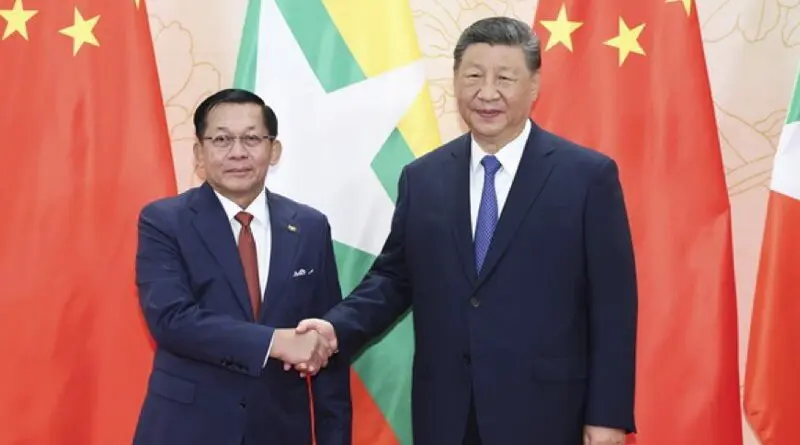
President Xi Jinping meets Myanmar’s Acting President Min Aung Hlaing at the Tianjin Guest House, August 30, 2025. Source: Ministry of Foreign Affairs, People’s Republic of China.

November 2, 2025 
By Scott N. Romaniuk, Khandakar Tahmid Rejwan and László Csicsmann

Beijing’s Quiet War Management

Since late 2023, Beijing has shifted from passive bystander to active broker in Myanmar’s sprawling civil war—trading silence on human rights for silence along its border. Through a series of discreet negotiations in Kunming and Yunnan’s border towns, China has engineered local ceasefires between the Myanmar military (Tatmadaw) and ethnic armed organisations (EAOs) such as the Ta’ang National Liberation Army (TNLA) and its allies.


These arrangements—including the January 2024 truce in northern Shan State and renewed understandings reached by October 2025—have calmed the gunfire but not the grievances.

Behind the veneer of mediation lies a policy of containment rather than reconciliation. China’s ‘ceasefire diplomacy’ seeks to stabilise the frontier, safeguard trade corridors, and protect strategic assets—from oil pipelines to the Kyaukphyu port—while keeping Myanmar within its sphere of influence. Each truce buys temporary calm and commercial continuity, yet leaves the deeper political crisis untouched.

In practice, Beijing acts less as a peacekeeper than as a conflict manager—a power that freezes wars it has no intention of ending. What emerges is a fragile equilibrium: a managed quiet that serves China’s strategic and economic interests while deepening Myanmar’s internal fractures. The illusion of calm masks a deeper disorder—a ‘frozen war’ sustained by Beijing’s preference for stability without reform, peace without justice, and dialogue without inclusion.
Beijing’s Strategic Objectives

China’s engagement in Myanmar follows a pragmatic approach shaped by geography and security rather than ideology. Its primary goals are threefold:Border stability. Cross-border fighting, refugee flows, and smuggling threaten to spill into Yunnan, disrupting local economies and complicating China’s internal security management. Beijing’s mediation aims to contain these pressures within Myanmar, preventing them from destabilising its southwestern provinces. By brokering localised truces and maintaining communication channels with EAOs, China reduces the immediate risk of armed clashes crossing the border, secures key transit points, and manages humanitarian fallout—all while projecting an image of responsible regional stewardship.
Protection of economic interests. Major Chinese projects—including oil and gas pipelines, mining concessions, and the deep-sea port at Kyaukphyu—depend on predictable security conditions to function effectively and generate returns. Northern and eastern Myanmar also host significant deposits of rare earth elements (REEs), gemstones, and other strategic minerals essential to China’s high-tech and defense sectors. Stability along the border enables Beijing to secure continued access to these resources while shielding mining operations from conflict-related disruption or international scrutiny. By ensuring the safe movement of goods, the integrity of energy corridors, and the uninterrupted operation of strategic extractive projects, China positions itself to protect both immediate commercial gains and long-term industrial priorities. Each truce buys temporary calm and commercial continuity, yet leaves the deeper political crisis untouched.
Regional influence. By positioning itself as the indispensable mediator, Beijing ensures that no Western or ASEAN-led initiative can proceed without its involvement, effectively shaping the regional order to its advantage. Its unique combination of economic leverage, historical ties, and access to local actors allows China to dictate the terms of engagement and assert soft power across Myanmar’s borderlands. Beyond immediate conflict management, this influence reinforces China’s strategic narrative: that stability, trade, and development in Southeast Asia are best maintained under Beijing’s watchful eye. Such dominance strengthens China’s diplomatic position with neighboring states, deters external interference, and embeds its presence within regional decision-making processes—extending the logic of containment from the battlefield into the broader geopolitical arena.

This ‘stability-first’ approach has long defined Chinese policy toward Myanmar, but recent escalation in the north compelled Beijing to play a more visible diplomatic role. When the Three Brotherhood Alliance (3BHA) launched Operation 1027 in late 2023—seizing strategic towns and border gates—Chinese trade and logistics networks were disrupted. Beijing’s immediate priority became crisis management, not democratisation or federal reform.


Anatomy of China-Brokered Ceasefires

The ceasefires emerging from China’s mediation share several recurring features. They are geographically limited, applying only to specific border corridors, transport routes, or economic zones rather than establishing nationwide truces. Their scope reflects Beijing’s preference for local containment over a holistic political process.

Most agreements involve tactical concessions: halting offensives, partial withdrawals from contested areas, or reopening key trade checkpoints. These commitments are narrowly practical—aimed at restoring commerce and quiet along the frontier—while avoiding discussion of Myanmar’s constitutional structure or political legitimacy.

Equally striking is the weakness of enforcement mechanisms. The agreements rely on ad hoc communication channels or bilateral monitoring committees, without third-party verification or credible sanctions for violations. China assumes that economic incentives—such as the resumption of border trade or promises of development assistance—will sustain compliance.

This blend of transactional diplomacy and selective engagement underscores Beijing’s belief that prosperity and stability are mutually reinforcing, even in the absence of genuine reconciliation.

The January 2024 truce in northern Shan State exemplified this approach. It halted major offensives near Muse and Lashio and reopened freight routes, easing pressure on China’s cross-border economy. By October 2025, the Kunming agreement with the TNLA went further, providing for limited withdrawals from key townships and a mutual commitment to avoid airstrikes. Yet none of these arrangements addressed the underlying political questions of federalism, representation, or the junta’s future—issues that continue to drive the country’s fragmentation.
China’s Leverage—and Its Limits

China’s ability to bring warring actors to the table stems from its longstanding relationships with armed groups along the border. Many EAOs maintain offices and logistical hubs in Yunnan, depend on trade through Chinese territory, and rely on Chinese intermediaries to communicate with the junta. This grants Beijing significant convening power and economic leverage—but not decisive authority.

Several factors constrain China’s capacity to enforce peace. The conflict remains highly fragmented, involving more than a dozen major EAOs and numerous militias, each pursuing localised agendas. A ceasefire with one coalition rarely influences others operating elsewhere. Moreover, many resistance actors view Beijing’s mediation as self-serving—an effort to safeguard the China–Myanmar Economic Corridor (CMEC) rather than advance political reform.

Beijing’s aversion to direct intervention further limits its leverage. Unlike Western-led peacekeeping or UN-monitored ceasefires, China avoids deploying personnel or creating formal verification structures. Its role is confined to diplomatic pressure, trade facilitation, and occasional closure of border crossings to signal disapproval. The result is a pattern of episodic mediation—powerful enough to broker temporary pauses in fighting, yet too cautious to impose or sustain a comprehensive settlement.

Beijing thus acts as an arbiter of convenience: influential, indispensable, but unwilling to risk deeper entanglement.
Political and Humanitarian Consequences

China’s ceasefire diplomacy has produced a paradoxical blend of relief and stagnation. On one level, temporary truces in northern Shan State have clearly reduced violence, enabling displaced civilians to return and trade to resume. For border communities, the reopening of transport routes has brought tangible economic benefits and limited humanitarian respite.

Yet these gains are fragile and selective. By freezing front lines, China’s initiatives often consolidate the junta’s control over key territories, providing the Tatmadaw with breathing space rather than accountability. EAOs may use the lull to regroup, but the absence of political concessions leaves their grievances unresolved.

Without robust monitoring, violations—particularly airstrikes and artillery attacks—resume with little consequence. Civilians continue to bear the brunt of uncertainty. Humanitarian access remains tightly restricted, and China’s ceasefire agreements rarely include provisions for aid delivery or civilian protection.

Politically, Beijing’s insistence on dealing solely with “the existing authorities” reinforces the junta’s legitimacy while marginalising the National Unity Government (NUG) and allied resistance movements. This selective diplomacy delivers what might be termed stability without accountability: a frozen conflict that benefits state and corporate interests while excluding the voices of Myanmar’s broader society.
India: A Strategic Balancing Act

For India, China’s assertive diplomacy in Myanmar presents both a challenge and an opportunity. Myanmar is a cornerstone of India’s ‘Act East’ strategy, serving as the land bridge connecting South and Southeast Asia. Major initiatives such as the Kaladan Multi-Modal Transit Transport Corridor and the India–Myanmar–Thailand Trilateral Highway depend on predictable security conditions along the western frontier.

However, Beijing’s predominance in ceasefire mediation complicates New Delhi’s strategic calculus. Persistent instability in Chin and Sagaing States has disrupted several flagship Indian connectivity and development initiatives—including the Kaladan Multimodal Transit Transport Project (KMTTP), the India-Myanmar-Thailand (IMT) Trilateral Highway, and projects under the India–Myanmar Border Area Development Programme (BADP), which aim to enhance cross-border infrastructure through roads, schools, and health facilities.

Simultaneously, China’s expanding influence in northern Myanmar risks further marginalising India’s regional footprint. The continuing influx of refugees into Mizoram and Manipur also imposes administrative burdens and exacerbates ethnic sensitivities within India’s border states.

Faced with these pressures, India must pursue a delicate balancing act: maintaining functional ties with the junta to protect its infrastructure projects while quietly coordinating with ASEAN, Japan, and Western partners to hedge against China’s expanding sway. Myanmar has effectively become another front in the broader strategic contest between India and China for influence across the Indo-Pacific.
Bangladesh: Between Refugees and Realpolitik

Bangladesh continues to shoulder the humanitarian consequences of Myanmar’s instability, most visibly through the protracted Rohingya crisis. Nearly one million refugees remain confined to camps in Cox’s Bazar, and sporadic violence across the border perpetuates insecurity.

While China has occasionally served as an intermediary in repatriation discussions, its overriding goal has been to shield Myanmar’s junta from Western censure rather than to address the structural causes of displacement. Should China’s mediation succeed in calming Rakhine State, Dhaka could benefit from reduced border tensions and modest trade gains along the Bay of Bengal.

Significantly, the recent rise of the Arakan Army, which now controls most of the Myanmar side of the border and roughly 90 percent of Rakhine State, has complicated any prospect of a unilateral solution imposed by the junta under Chinese pressure. Although Beijing maintains considerable influence over the Arakan Army, any meaningful progress remains contingent on China’s willingness to support Rohingya repatriation—something it has thus far avoided.

A conflict-ridden Myanmar increasingly dependent on Beijing leaves Bangladesh with shrinking diplomatic space to manoeuvre. Without genuine political progress inside Myanmar, repatriation efforts will remain stalled, and the protracted refugee crisis will continue to strain Bangladesh’s social cohesion and security.
Thailand: Quiet Endorsement, Lingering Risks

Thailand’s proximity to Myanmar makes it an immediate stakeholder in any reduction of violence. Sharing a long and porous border across the Karen and Karenni regions, Bangkok has discreetly welcomed China’s limited success in calming the north. The easing of hostilities stabilises cross-border trade and reduces the risk of sudden refugee surges.

Nonetheless, this relief is tempered by unease over Beijing’s growing dominance in regional crisis management. China’s monopolisation of ceasefire diplomacy has marginalised both Thailand’s own influence and ASEAN’s collective role. Continued instability in southeastern Myanmar, meanwhile, threatens to displace populations southward, imposing fresh humanitarian and administrative burdens on Thai provinces.

Thailand’s strategy has therefore been one of utilitarian restraint. It tacitly supports China’s stabilisation efforts while maintaining autonomy in border management and humanitarian policy. Bangkok’s balancing act typifies Southeast Asia’s broader approach: cautious acceptance of Chinese leadership coupled with discreet hedging to avoid overdependence.
The U.S.: Watching, Waiting, and Widening Its Footprint

While China dominates conflict diplomacy, the U.S. has re-entered Myanmar’s periphery as part of its broader Indo-Pacific recalibration. For much of the post-coup period, Washington confined itself to sanctions and rhetorical support for the exiled National Unity Government But as of mid-2025, signs of a deeper, quieter engagement have emerged.

A massive new U.S. consulate complex in Chiang Mai, northern Thailand, is nearing completion—an intelligence and coordination hub intended to monitor northern Myanmar and southwestern China. Once operational, it will enhance Washington’s ability to liaise with resistance networks, regional partners, and humanitarian missions. At the same time, Washington has encouraged Bangkok to assume a more active diplomatic role, despite Thailand’s reluctance to challenge Beijing directly.
Washington and Beijing: A New Cold Front in Myanmar

Myanmar has thus become a testing ground for U.S.–China rivalry in miniature. Beijing seeks to contain conflict and secure its assets; Washington seeks to prevent Beijing from monopolising outcomes in Myanmar. China freezes the war; the U.S. probes the freeze.

Strategically, Washington’s focus on Rakhine State and the Bay of Bengal makes sense. A friendly or semi-autonomous zone along Myanmar’s western flank could disrupt China’s Yunnan-to-Kyaukphyu corridor—its critical ‘Malacca bypass’. There has been speculation that the U.S. has discussed contingencies such as limited air-denial operations or humanitarian ‘no-fly zones’ in the event of rising civilian casualties. Even if unrealised, these deliberations reveal how Myanmar now figures within the architecture of the U.S. Indo-Pacific strategy, alongside the Quadrilateral Security Dialogue (Quad) and the trilateral security partnership between Australia, the UK, and the U.S. (AUKUS).

Yet Washington’s leverage remains constrained. Distance, limited economic exposure, and China’s entrenched regional networks all curb U.S. influence. Beijing’s proximity and financial reach allow it to shape outcomes directly, while Washington must rely on intermediaries—Thailand, India, Bangladesh—and covert intelligence sharing. Its approach is one of managed disruption, designed to complicate Beijing’s dominance without inviting direct confrontation.

For the rest of the region, this sharpening U.S.–China rivalry over Myanmar compounds the dilemma of how to engage Beijing’s ceasefire diplomacy without deepening dependency.
Implications for Regional Actors

China’s role in Myanmar presents regional and external actors with a difficult dilemma: how to engage with Beijing’s ceasefire diplomacy without reinforcing Myanmar’s authoritarian stagnation. For ASEAN, Japan, India, and Western governments, the challenge lies in recognising the short-term benefits of reduced violence while addressing the long-term risks of political ossification.

Comprehensive condemnation of China’s involvement is neither realistic nor productive, given Beijing’s unparalleled access to all sides of the conflict. Yet uncritical acceptance risks entrenching a peace process that excludes key stakeholders and normalises a fragmented, militarised order.

A more constructive path would involve complementary diplomacy—working alongside China’s stabilisation initiatives but insisting upon inclusivity, transparency, and independent monitoring. In this sense, Myanmar could serve as a testing ground for regional burden-sharing: combining China’s local leverage with ASEAN’s normative frameworks and the developmental capacities of other partners.
Cold Peace at China’s Doorstep: Beijing’s Managed War and Washington’s Return to Myanmar

Beijing’s mediation in Myanmar has bought quiet, not peace. Each China-brokered ceasefire lowers the volume of gunfire along the Yunnan frontier but raises the cost of genuine political resolution. What appears as diplomacy is, in truth, border management by other means — a calculated effort to keep the conflict just stable enough for trade to flow and investments to remain secure.

The result is a cold peace: a landscape of truces without trust, settlements without justice, and borders secured at the expense of those trapped behind them. For China, this is success — a conflict frozen in place, predictable and profitable. For Myanmar, it is paralysis. The country remains carved into zones of uneasy calm and hidden violence, where local deals replace national reconciliation and sovereignty bends towards Beijing’s convenience.

Yet the freeze is no longer China’s alone to manage. Washington’s quiet re-entry — through its Chiang Mai hub, expanding co-operation with Thailand and Bangladesh, and growing attention to the Bay of Bengal — signals a new layer of strategic contestation. Where Beijing practises managed stability, Washington experiments with managed disruption. The U.S. does not seek to unfreeze Myanmar’s war so much as to prevent China from controlling its thaw.

The paradox of China’s engagement thus widens into a regional one. Two powers now compete to define what ‘stability’ means in Myanmar — one through containment, the other through complication. The outcome may be less a resolution than a duopoly of influence, where the war remains suspended between rival imperatives rather than ended through shared purpose.

By prioritising border security and economic continuity over governance and justice, Beijing has stabilised the symptoms of Myanmar’s crisis while leaving the disease untouched. Its model of selective engagement secures China’s interests but entrenches Myanmar’s political stalemate. For Washington, contesting this model may offer leverage, but it also risks deepening the militarisation of diplomacy in a country already saturated with conflict.

Regional actors face a difficult choice. Engaging with China’s ceasefire diplomacy may ease humanitarian suffering and open limited space for dialogue, yet uncritical co-operation risks legitimising an order built on coercion and exclusion. The added presence of the U.S. may diversify diplomatic options, but it also internationalises Myanmar’s deadlock, turning the country into yet another frontier of strategic friction.

China’s strategy appears to have worked — but only on its own terms. It has silenced the guns, not the grievances; stabilised the border, not the nation. The war has not ended — it has merely been placed on ice, waiting for the next thaw.

About the authors

:Scott N. Romaniuk: Senior Research Fellow, Centre for Contemporary Asia Studies, Corvinus Institute for Advanced Studies (CIAS), Corvinus University of Budapest, Hungary.

Khandakar Tahmid Rejwan: Research Data Analyst, Bangladesh Peace Observatory, Centre for Alternatives (CA), Dhaka, Bangladesh.

László Csicsmann: Full Professor and Head of the Centre for Contemporary Asia Studies, Corvinus Institute for Advanced Studies (CIAS), Corvinus University of Budapest, Hungary; Senior Research Fellow, Hungarian Institute of International Affairs (HIIA).


Russia faces $50bn annual losses from oil sanctions as Lukoil exits international assets

Russia faces $50bn annual losses from oil sanctions as Lukoil exits international assets
Russia is expected to lose $50bn of revenues this year from Trump's new oil sanctions. / bne IntelliNews
By Ben Aris in Berlin October 31, 2025

Russia is expected to lose at least $50bn annually due to oil-related sanctions, as Moscow’s largest private oil producer Lukoil agrees to sell its international assets and Germany considers nationalising operations owned by state-run Rosneft.

Ukrainian President Volodymyr Zelenskiy said the projected losses align with estimates from Western partners, amounting to roughly $5bn per month. He added that he expects further tightening of restrictions, citing market stability in global oil supply. “There is no shortage of supply,” Zelenskiy said, referring to the impact of sanctions on Russian exports.

Following the imposition of new tough oil sanctions by the Trump administration on October 22, privately-owned Russian oil major Lukoil has agreed to divest its foreign operations to Gunvor Group, a commodities trading company with long-standing ties to Russia. The deal includes Lukoil International GmbH, headquartered in Vienna, which oversees more than 100 subsidiaries across 50 countries. The transaction also involves Litasco, a trading arm based in Geneva and Dubai.

Gunvor, which was previously linked to Russian President Vladimir Putin, was the subject of a 2014 statement by US authorities alleging that Putin had investments in the company. While Gunvor denied the claims, the announcement renewed scrutiny over the firm's connections in Russia’s energy sector.

Gunvor Group is one of the world’s largest independent commodity trading companies, specialising primarily in energy markets, particularly the trading of crude oil and refined petroleum products. The company also has growing interests in natural gas, liquefied natural gas (LNG), and power trading, along with investments in logistics and infrastructure such as pipelines, refineries, and storage facilities.

It was founded in 2000 by Swedish oil trader Torbjörn Törnqvist and Russian businessman Gennady Timchenko, a close Putin ally from his days in St Petersburg. In the early 2000s Guvnor rose to prominence by facilitating oil exports from Russia and other former Soviet states, eventually expanding globally. From its Kremlin-friendly days, Gunvor has in recent years tried to distance itself from Russia and diversify.

In 2014, just before the US imposed sanctions on Timchenko, formerly Putin’s judo sparring partner, he sold his 43% stake in Gunvor to Törnqvist. This sale was reportedly completed the day before the sanctions took effect.

Since then, Törnqvist has been the majority and controlling shareholder of the group, holding more than 85% of the company as of recent public information.

Today Gunvor is headquartered in Geneva, Switzerland, with trading offices around the world, including Singapore, Dubai, London, and Houston. The company also owns physical assets such as oil terminals and refineries, which help support its trading operations.

Gunvor is privately held and does not disclose detailed financials, but in 2022, it reported revenue of around $150bn, driven by high energy prices amid geopolitical tensions and supply disruptions.

Trump’s oil sanctions have constrained the operations of companies like Lukoil, compelling them to retreat from key foreign markets. However, as bne IntelliNews reported, the effect on oil export volumes is expected to be limited and temporary.

Simultaneously, discussions have re-emerged in Germany over the possible nationalisation of Rosneft’s local assets, including the Schwedt refinery near Berlin, a major refinery that supplies the majority of the German capital’s fuel needs. According to Russian media, Rosneft’s German operations are valued at approximately $7bn, although Western officials believe the actual figure could be significantly higher.

The Ukrainian government and its allies continue to push for more comprehensive sanctions against Russia's energy sector, arguing that current measures are beginning to erode the Kremlin’s revenue base.

Chicken and chips in Seoul - for Nvidia, Samsung and Hyundai

Chicken and chips in Seoul - for Nvidia, Samsung and Hyundai
/ Gabe Pierce - Unsplash
By bno - Busan Office October 31, 2025

In a low-key fried chicken shop in southern Seoul, the leaders of Nvidia, Samsung Electronics and Hyundai Motor held an informal meeting on the evening of October 30, Korea JoongAng Daily reports. Nvidia CEO Jensen Huang, Samsung Electronics Executive Chairman Lee Jae-yong and Hyundai Motor Executive Chair Euisun Chung met ahead of major announcements expected during Huang’s visit for the APEC CEO summit. Their discussion reportedly centred on reinforcing semiconductor supply networks, advancing AI infrastructure and exploring collaboration in robotics.

The chosen venue,  a branch of the well-known Korean fried chicken franchise Kkanbu Chicken, was handpicked by Huang, who enjoys trying local eateries during overseas trips and specifically wanted to try out Korea’s “chimaek” culture, a combination of fried chicken and beer.

Once the gathering became known, the quiet street quickly drew a crowd. More than a thousand onlookers, journalists and company staff filled the area. Police eventually stepped in to control the crowd and set up barricades as the scene overflowed onto the road.

The meeting took place just before Nvidia is expected to finalise large AI chip supply agreements with four major Korean conglomerates — Samsung, SK, Hyundai Motor and Naver — deals estimated to be worth several trillion won.

According to Korea JoongAng Daily, Samsung revealed during a conference call that it is supplying Nvidia with its latest high-bandwidth memory (HBM3E) chips and has already begun sending samples of its upcoming HBM4 line to clients. The company stated that the new chips can exceed speeds of 11 gigabits per second while remaining energy-efficient, and that it has secured orders for increased HBM production next year.

SK hynix, another major memory manufacturer, announced that its 2026 memory supply is already sold out and that it plans to significantly expand investment in memory production. The company expects to begin supplying HBM4 chips to key clients in the fourth quarter.

Hyundai Motor and Nvidia already partnered earlier this year on software-defined vehicles, robotics, autonomous technology, digital twins, smart factories and infotainment.

Later on October 31, Huang is expected to travel to Gyeongju to speak at the APEC CEO Summit and meet SK Group Chairman Chey Tae-won. Lee and Chung will also return to attend a dinner involving China’s President Xi Jinping. A casual meal may look ordinary, yet it signals how future technology alliances are increasingly forged through informal, human moments rather than traditional boardroom ritual.

Ukraine’s elite HUR forces turn the tide in the battle for Pokrovsk, as Russia’s effort to capture key logistics hub fails

Ukraine’s elite HUR forces turn the tide in the battle for Pokrovsk, as Russia’s effort to capture key logistics hub fails
In the morning of November 1 it looked like the key logistics hub of Pokrovsk was about to fall to the Russian invaders. Then a bold counter attack by elite Ukraine intelligence agency forces turned the tide. / Euromaidan Press
By Ben Aris in Berlin November 1, 2025

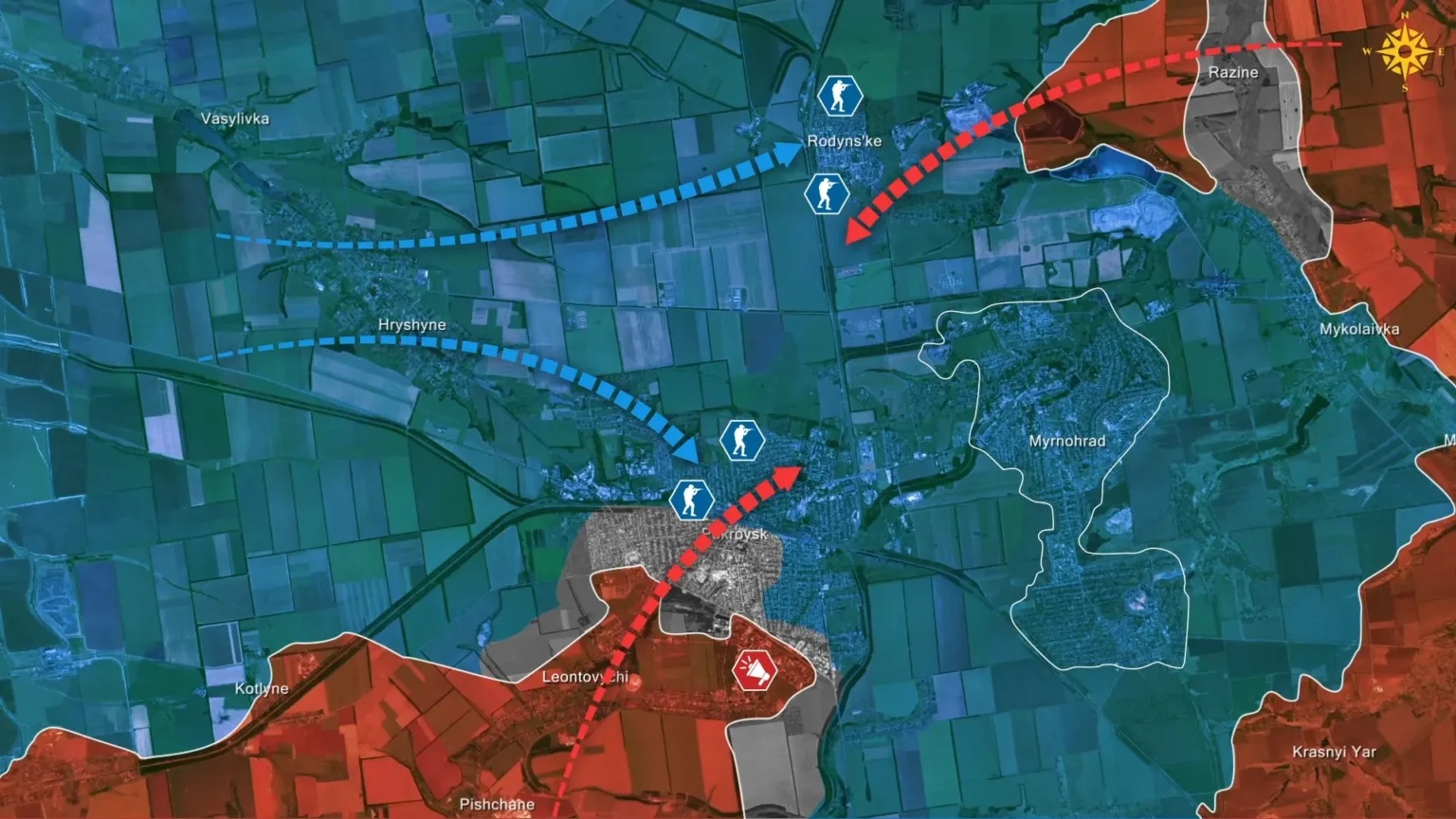
The battle for Pokrovsk became intense on November 1. In the first part of the day it looked like the fall of the key logistics hub to Russia that could end the war was imminent. But a bold special operation by Ukraine’s elite forces seems to have turned the tide at the last moment, according to military blogger reports coming out of the city.

It's hard to be sure of what is happening and there is little formal reporting on this key battle, but milbloggers in touch with individual soldiers are posting updates on social media. In addition, think tanks like the Institute for the Study of War (ISW) have access to satellite imagery that is also a source of information.

As bne IntelliNews reported, at the start of last week, Russia's chief of the general staff Valery Gerasimov has triumphantly reported to President Vladimir Putin that the city was surrounded by the Armed Forces of Russia (AFR). By the end of the week, the situation had become critical as Russian forces broke into the city and fierce street battles broke out.

However, the situation deteriorated further by the start of November 1 as Russian forces captured increasing sections of the city as well as pushing Armed Forces of Ukraine (AFU) troops out of their defensive pockets and the supply lines to the city were almost completely cut, threatening to trap hundreds of defenders in pockets, surrounded by Russian forces.

In desperation, Ukraine mounted a daring counter operation, flying in elite troops by US-made Black Hawk helicopters and dropping them behind enemy lines who appear to have struck a devastating blow that has reversed the tide, according to unconfirmed reports from the city. The offensive was reported by Kyrylo Budanov, Ukraine’s spy master and chief of the Main Directorate of Intelligence of the Ministry of Defence of Ukraine himself, the architect behind much of Ukraine’s defensive strategy, and was spotted on the ground in Pokrovsk leading the defence.

As the day ends, Pokrovsk remains in Ukrainian hands, but with a reported 11,000 AFR troops massed for the assault, intense fighting is expected to resume tomorrow.

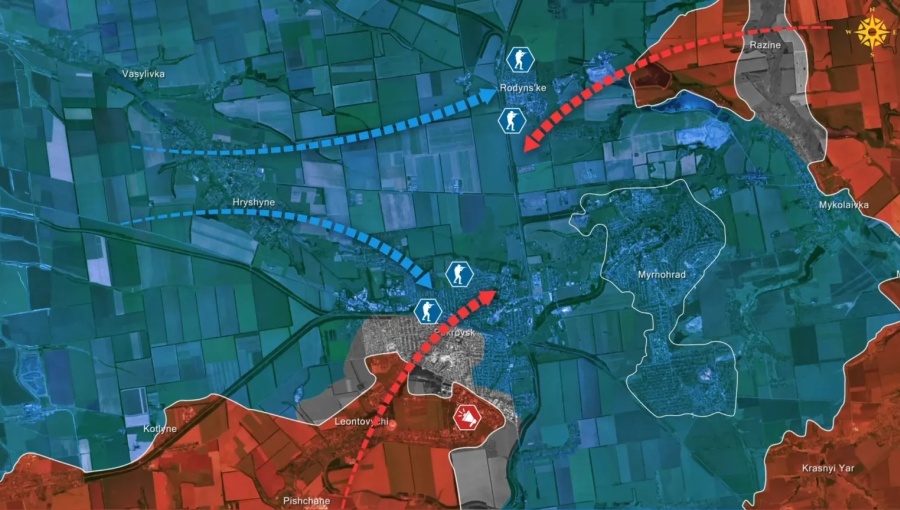
Pokrovsk and Myrnohrad encirclement

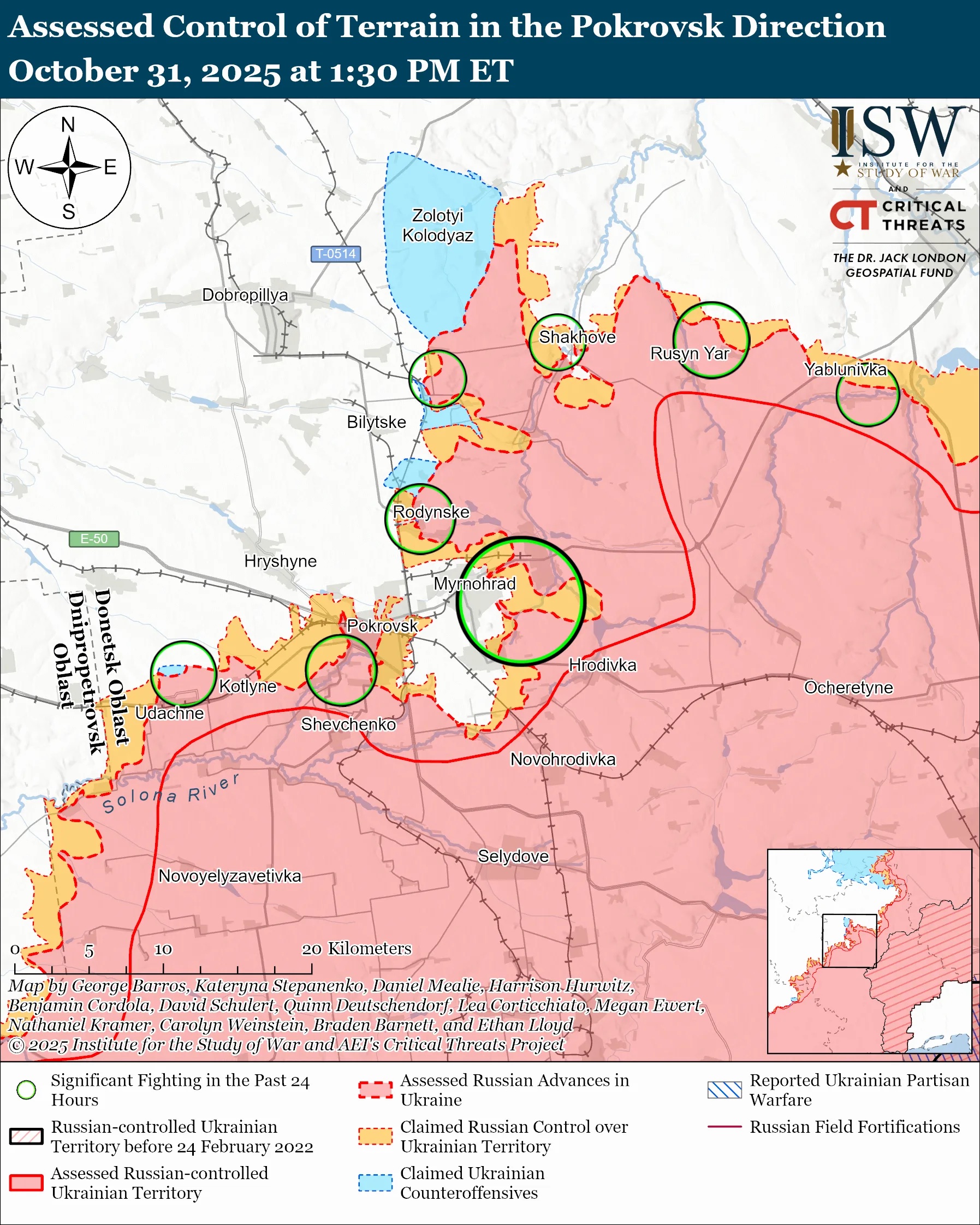
The AFU remains on its backfoot. Despite having repelled the onslaught, the cities of Pokrovsk and the neighbouring city of Myrnohrad, which is supplied from Pokrovsk, are almost encircled by the “steady but slow” AFR advances, reports Institute for the Study of War (ISW), at the culmination of weeks of preparatory strikes and infiltration missions. Russian forces have been taking advantage of the kilometre-long holes that have appeared in Ukraine’s lines, due to the increasingly acute manpower shortage and more than 200 AFR soldiers broke into the city this week. AFR forces were clearing Ukrainian defensive pockets and asserting growing control over the course of the last week, with Russian drones targeting Ukrainian reconnaissance and supply operations with increasing effectiveness.

Nevertheless, Ukrainian forces had managed limited tactical gains during the week. “Ukrainian forces marginally advanced during recent counterattacks north of Pokrovsk… Geolocated footage published on October 31 indicates that Ukrainian forces recently marginally advanced in eastern Rodynske. Additional geolocated footage… shows Ukrainian forces striking Russian positions in northern Pokrovsk and eastern Rih… ISW assesses that these infiltration missions did not change the control of terrain or the forward edge of the battle area (FEBA),” according to the ISW analysts.

While Russian troops had infiltrated Pokrovsk in small groups, the city remained a “contested grey zone” for most of last week.

By the morning of November 1 the defence of the city looked to be close to collapsing. Russian milblogger @Zlatti71 claimed that Pokrovsk’s defenders were “hours away from encirclement”

“Only a few kilometres remain before Russian forces close the ring… a thousand-strong contingent of the Armed Forces of Ukraine — including the 25th Airborne, 79th Air Assault, and 82nd Air Assault Brigades — will be completely trapped,” @Zlatti71 said in a social media post.

He reported that HUR special forces had been dispatched to break the encirclement, but Russian drones were already tracking their movements. Russian units were also said to be consolidating control of Pokrovsk’s northern outskirts, enabling forward movement of assault troops and had cut supply lines into the city. AFU reports said that troops were still receiving supplies that were being delivered by drones.

However, by around mid-day reports of a Ukrainian special operations forces coordinated counter-attack appeared from within Pokrovsk itself. Acting on Budanov’s direct orders, these HUR units conducted counter-sabotage sweeps across key areas of the city, targeting Russian defence positions and recapturing parts of the city taken by the AFR.

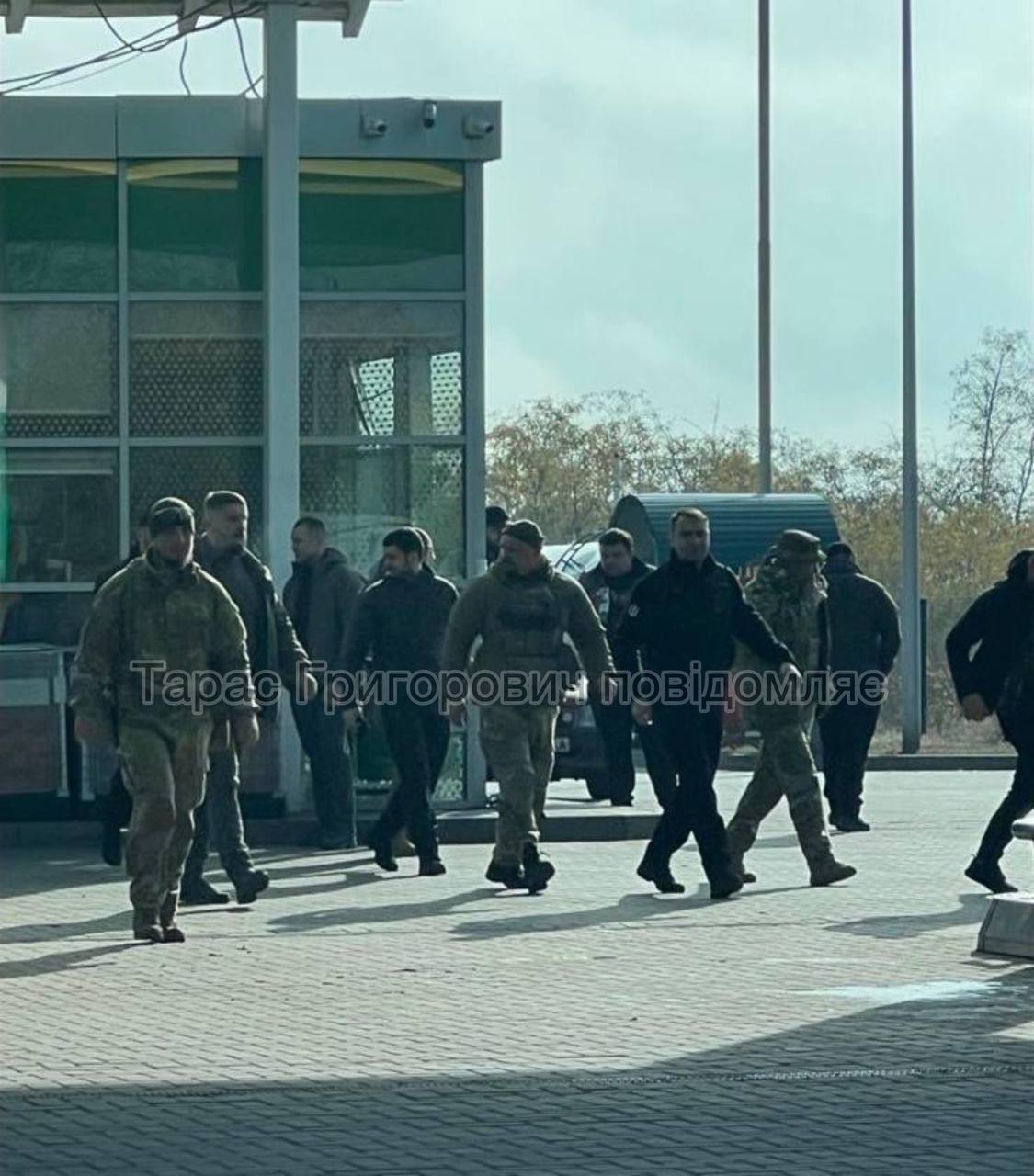
“Ukrainian media report HUR chief Budanov was spotted in Pokrovsk personally overseeing the operation,” military bloggers said, releasing an image of Budanov in fatigues at a field command post.

Within hours, several Russian operatives were captured—including members of Russia's own military intelligence service (GRU), milbloggers reported. Drone footage showed Ukrainian operators ambushing isolated Russian soldiers who had been misled by their own command to believe the city was already completely under Russian control.

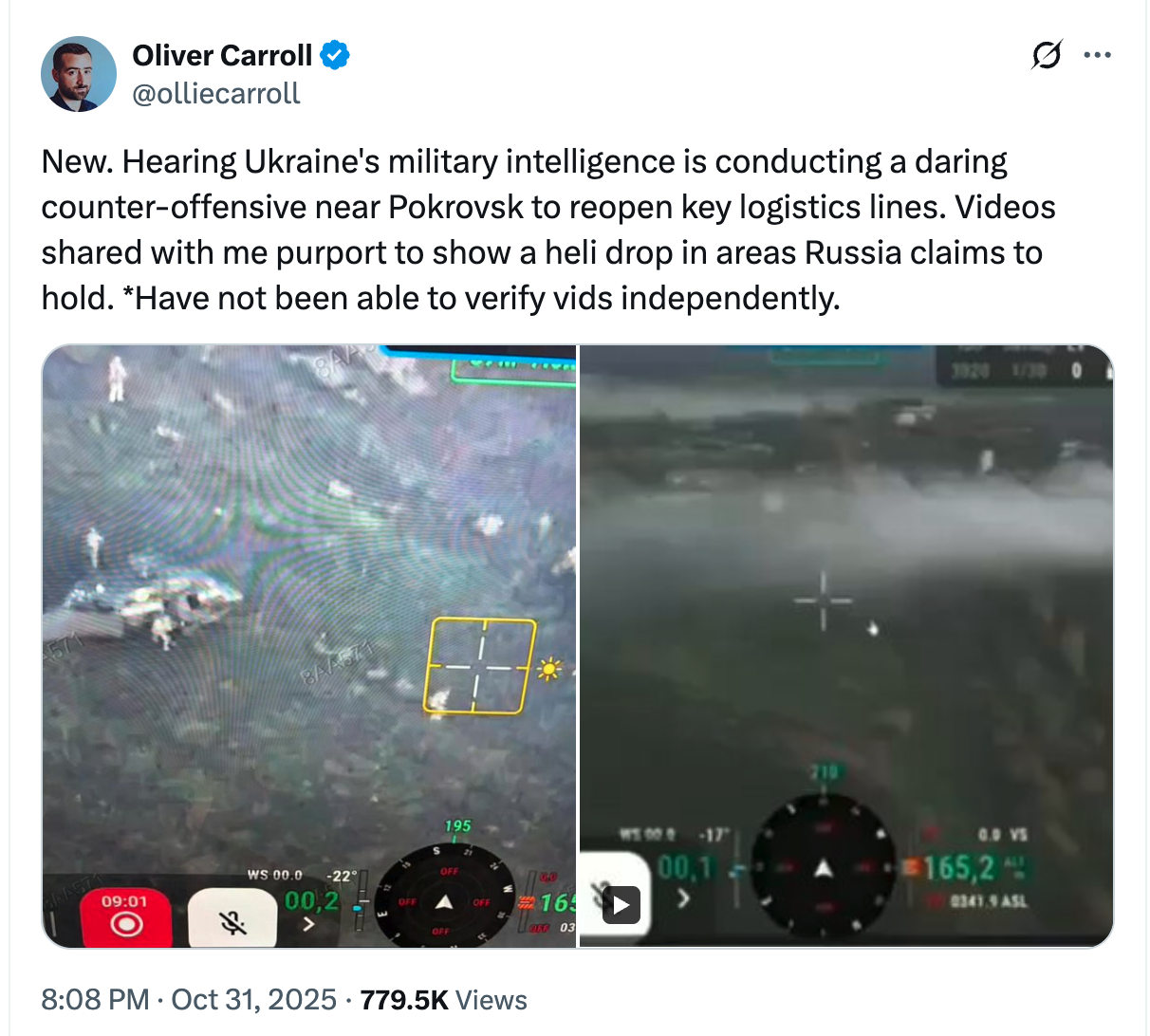
Reports of the HUR special operations first appeared the previous evening when The Economist correspondent Oliver Carroll posted video of a Ukrainian operated Black Hawk helicopter landing in a field purportedly near Pokrovsk.

“New. Hearing Ukraine’s military intelligence is conducting a daring counter-offensive near Pokrovsk to reopen key logistics lines. Videos shared with me purport to show a heli drop in areas Russia claims to hold. Have not been able to verify videos independently,” Carroll posted.

It is not clear how big the HUR operation was. In addition to Carroll’s video another video surfaced showing two more Black Hawks flying into the Pokrovsk area, but given the effectiveness of the counter punch it seems likely that more HUR forces were deployed.

Still, the cost was high. One Black Hawk insertion attempt on the northwestern outskirts of Pokrovsk ended in disaster.

As milblogger @OSINTWarfare reported: “Most of the deployed troops were killed or wounded, and the American-made UH-60 Black Hawk helicopter that transported them was destroyed.”

@AMK_Mapping later detailed how the 11 Ukrainian soldiers seen deploying from the drop into the surrounding countryside were hunted down by Russian FPV drones shortly afterwards. Russia confirmed the kill, releasing video from some of the drones as they targeted the fleeing soldiers as well as footage of the helicopter being destroyed by a Russian missile.

Crucial battle

The battle for Pokrovsk is even more important than those for Bakhmut Avdiivka, which both eventually fell to Russia after many months of fighting in May 2023 and February 2024 respectively and allowed Russia to advance deeper into the Donbas. Pokrovsk lies at the nexus of several important road and rail lines that supply most of the AFU’s defence of the Donbas.

If it falls to Russia there is a chance that the whole AFU defence of the Donbas region could collapse shortly afterwards. There are also no more major defensible cities beyond Pokrovsk that would allow Russian troops to advance almost unimpeded all the way to the Dnipro River that divides Ukraine in two and allow them to occupy almost all of the eastern half of the country.

The significance of Pokrovsk is not lost on Ukrainian soldiers. A serviceman with the callsign “Kyianyn” told @SitrepLinks: “There are virtually no fortifications behind these towns. A flat road leads directly to the city of Pavlohrad.”

The political consequences would be significant too. Completing the capture of Donbas is one of Russian President Vladimir Putin’s stated war goals and the collapse of the proposed meeting between between Putin and US President Donald Trump in Budapest this month was due to the Russian president’s refusal to compromise on his demand that the AFU completely quit the Donetsk region, which Russia doesn’t entirely control, according to a report by the Financial Times.

Shortly after the announcement that the meeting has been “postponed” Trump introduced his new oil sanctions, hitting Russia’s two biggest oil companies, the state-owned Rosneft and privately owned Lukoil.

The prominent and public use of US-made Black Hawk helicopters strongly suggests the US were involved in planning and providing satellite intelligence for the HUR’s special operation. The US has not officially admitted to supplying Ukraine with these sophisticated helicopters, although sightings of UH-60A Black Hawks with Ukrainian markings were reported by outlets including The Drive – The War ZoneForbes, and Militarnyi in February 2023. But there have been no other reports that bne IntelliNews could find since then. The helicopters are controlled by Budanov’s HUR, according to local reports, but are not widely used.

Ukraine and its European allies also have very little or no capacity to provide detailed satellite intelligence on Russian troop movements that would allow the selection of suitable drop sites for troops behind enemy lines. Kyiv is entirely reliant on the US for this sort of information. The US admitted this month that it has also provided Ukraine with satellite intelligence in his strikes on Russian refineries using its homemade long distance drones.

HUR elite troops turn the tide

The HUR operation appears to have been a big success and turned the tide in the battle for Pokrovsk. By lunchtime on November 1 reports started coming in of Ukrainian troops recapturing sections of the city taken by the AFR and surrounding villages, suggesting that the scale of the operation was much larger than the scant video of a few helicopters flying over the countryside on their way to Pokrovsk suggests. And it came just in time as the Ukrainian defence seems to be collapsing.

By roughly midday, milblogger @AMK_Mapping described the situation as “catastrophic”: “In Pokrovsk City, Russian forces continued their advance… capturing the rest of the northwestern industrial zone, the administrative building, and the railway station.”

In Myrnohrad, 5km to the southeast of Pokrovsk, Ukrainian forces were withdrawing under heavy bombardment, and Russian troops were consolidating gains in the city’s high-rise districts and industrial zones. At least 500 Ukrainian troops were reportedly cut off in and around Myrnohrad, with several units attempting to escape through narrow corridors under drone and artillery fire.

But perhaps most critically, Russian troops began attempting to cross the dam near Hryshyne, a village 3km to the west of Pokrovsk, threatening to outflank and encircle Ukrainian units stationed there.

Russian heavy FAB glide bombs, including the massive FAB-3000 that can smash any defences the AFU has, were used to destroy entrenched positions—a tactic that has become a hallmark of Russian urban assaults. More of a gravity bomb than a missile, Ukraine has no defences against these hugely powerful WWII-vintage munitions.

In addition to the major pushes in Pokrovsk and Myrnohrad, @AMK_Mapping also noted a series of coordinated Russian advances in smaller but strategically significant locations around the frontline:

  • Lysivka and Sukhyi Yar, towns located deep inside the emerging pocket, were reportedly still under Ukrainian control, raising questions about Kyiv’s priorities in defending what some now call “PR cities.”
  • Russian forces advanced from the Kapitalna Industrial Zone into the low-rise residential areas of Myrnohrad, taking control of at least 12 blocks.
  • In the northeastern suburbs of Myrnohrad, Russian troops entered and fortified at least 10 high-rise buildings, consolidating gains with support from artillery and air strikes.
  • The southern Myrnohrad garrison withdrew from 3-storey residential blocks after intense FAB strikes, leaving minimal presence in the southern suburbs.
  • In northern Myrnohrad, Russian forces pushed through forested areas and dachas to establish a foothold in local schools and residential quarters.
  • In Pokrovsk’s eastern suburbs, Russian troops bypassed the high-rise district to seize control of a church and a major factory, pushing further west.

These smaller breakthroughs are not isolated gains; they represent a cumulative tightening of the noose around Ukrainian defensive positions across the axis by the massed troops Putin is using in what he clearly hoped would be a knock-out blow. Each one chips away at Ukrainian ability to manoeuvre and resupply, and together they could enable a larger breakthrough if left unchecked.

Russia's commander in chief Gerasimov was ebullient and reportedly met Putin to tell him the encirclement was complete and presumably that he was confident the AFR was on the verge of taking the Pokrovsk.

But a few hours later it all began to unravel. Reports began to emerge that the much-vaunted encirclement was falling, and the HUR were sweeping through the city with devastating effect.

Launching an attack from the north of Pokrovsk, according to Euromaidan Press, Ukrainian units from the 14th Chervona Kalyna Brigade cleared Russian infiltration groups from Rodynske, a small town located immediately north-east of Pokrovsk, using another bit of top flight Ukrainian kit, the BTR-4E armoured personnel carrier (APC) developed and produced in Ukraine, guided by drone reconnaissance. The same forces then withdrew before Russian drones could retaliate.

“The supposed encirclement never materialised… Russian generals appear to have oversold their progress to the Kremlin, while Ukrainian special forces systematically dismantled the infiltration attempt,” Euromaidan Press enthusiastically reported.

Despite Russia’s Ministry of Defence claiming a successful encirclement after reporting directly to Putin a few hours earlier, the Ukrainian forces managed to keep the supply routes open and remain active in both Pokrovsk and Myrnohrad, pushing the AFR back.

Russian analysts celebrated the AFR infiltration tactics but offered contradictory narratives—on the one hand claiming that Ukrainian drones were neutralised, and on the other lamenting continued drone strikes and resistance.

Maybe an appropriate parallel for the stunning turnaround would be the Athenians defence of their city in the face of Emperor Darius’ overwhelming invasion force at the battle of Marathon, where the massively outnumbered army of motivated free men defeated the invaders, fighting for their homes and families against an army of slaves.

Bravery and boldness played a key role, but Ukraine’s mastery of drones has also been the lethal sling and stone in the outnumbers and outgunning AFU army’s hand. A video filmed by Russian soldiers themselves showed a sky "swarming with Ukrainian drones", refuting earlier Russian claims that they had successfully eliminated the drone operations.

“This exposed the Russian announcement for what it was—another premature declaration meant to please political leadership rather than reflect battlefield truth,” Euromaidan Press concluded.

Russian encirclement narrative collapses

In the final analysis, Ukraine's ability to quickly deploy elite forces, supported by real-time intelligence, strategic use of its best Western-supplied weapons and precision strikes, appears to have blunted Russia’s encirclement attempt—at least for now. Ukrainian General Staff confirmed that while the situation remains “extremely difficult,” the defenders are not encircled and will live on to fight another day.

Still, the broader threat remains. Russia’s ability to concentrate firepower—especially through air-delivered munitions—and its use of infiltration groups and “meat assaults” presents a continuing challenge to Ukraine’s overstretched front. The AFU showed similar tenacity at the battle for Bakhmut but was eventually overwhelmed by Wagner PMC leader Evgeny Prigozhin’s tactic of simply throwing in wave after wave convict soldier on the calculus that it didn’t matter how many Russians died, as long as they managed to kill some Ukrainian soldiers in each attack to eventually wear the defence down. And it worked, after eight months of fighting and massive Russian casualties.

But for now, the defenders are still holding the line.

Bruised but determined, the Ukrainian people fight on

Thursday 30 October 2025, by Dominique

While diplomatic manoeuvres take centre stage, the Ukrainian people, in an increasingly difficult context, continue to resist, including in the occupied zones.

Trump’s incessant U-turns maintain a climate of uncertainty, seeking to push Ukraine and Russia to negotiate a ceasefire, to the detriment of genuine peace negotiations. Freezing the conflict on the current front lines would be to Ukraine’s disadvantage. It would be a major gain for Putin.

Faced with the Russians’ double game (talking of negotiations while stepping up military operations), the European Union is unable to find a common position of effective support for Ukraine. Its military aid remains below what is needed. It is struggling to assert itself in the negotiations and is reluctant to use the Russian assets frozen since the start of the large-scale invasion (nearly €200 billion).
The civilian population is paying a heavy price

The drone and missile attacks on the energy infrastructure are leading to the risk of a partial collapse of ‘normal life’, with no heating, electricity or water. This week, the Russians bombed homes and a nursery school in Kharkiv, with children inside. They are conducting a veritable hunt for civilians with FPV drones in the towns, notably Kherson. In violation of international law, the occupiers are transferring and placing thousands of Ukrainian children to ‘Russify’ them.

On a front line that is generally frozen, infiltration attempts by Russian troops are keeping up the pressure on the Ukrainian army: while their gains remain limited, this war of attrition is imposing an enormous human, material and economic cost on Ukraine.

By targeting refineries and ammunition depots inside Russia, the Ukrainian forces are dealing serious blows to the Russian economy. Rising prices and fuel shortages are beginning to take their toll on people’s daily lives and morale. These successful strikes are exacerbating the regime’s financial difficulties.
Fierce resistance

Encouraged by the success of the anti-corruption protests in July, the unions and citizens’ associations are fighting back. The unions are challenging draft laws that weaken workers’ rights and working conditions, notably Be Like We Are in the health sector. Bilkis, a feminist, inclusive and anti-capitalist association, provides basic necessities and medicines to women, displaced persons and vulnerable people.

Many others, such as Solidarity Collectives, the student union Priama Diia and the political organisation Sotsialnyi Rukh, combine active, concrete solidarity with the defence of everyone’s rights and the prospect of a Ukraine freed from the yoke of the oligarchs and the neo-liberal agenda.

In Crimea and the occupied areas, semi-clandestine movements are stepping up their activities against the occupiers, forced militarisation and the imposition of Russian nationality. Atesh (Ukrainian partisans, Tatars, Russian opponents) and Yellow Ribbon combined symbolic appearances with sabotage operations targeting enemy logistics (railway lines, ammunition depots).
On the front line, in the rear, in the occupied territories, despite the exhaustion and suffering of nearly four years of a murderous war, in the uncertainty of diplomatic negotiations, the Ukrainian people are resisting.

30 October 2025

Translated by International Viewpoint from l’Anticapitaliste.

Attached documentsbruised-but-determined-the-ukrainian-people-fight-on_a9241.pdf (PDF - 905.5 KiB)

Extraction PDF [->article9241]

Ukraine
Energy, Infrastructure, and Civilians Targeted: Ukrainian Trade Unions Call for Solidarity
Unwavering support for Ukraine
War of drones or war of nerves
Return from Ukraine
Message of Sotsialnyi Rukh (Social Movement) to Freedom Flotilla

Dominique is a member of the NPA active in Ukraine Solidarity.


International Viewpoint is published under the responsibility of the Bureau of the Fourth International. Signed articles do not necessarily reflect editorial policy. Articles can be reprinted with acknowledgement, and a live link if possible.