Thursday, October 02, 2025

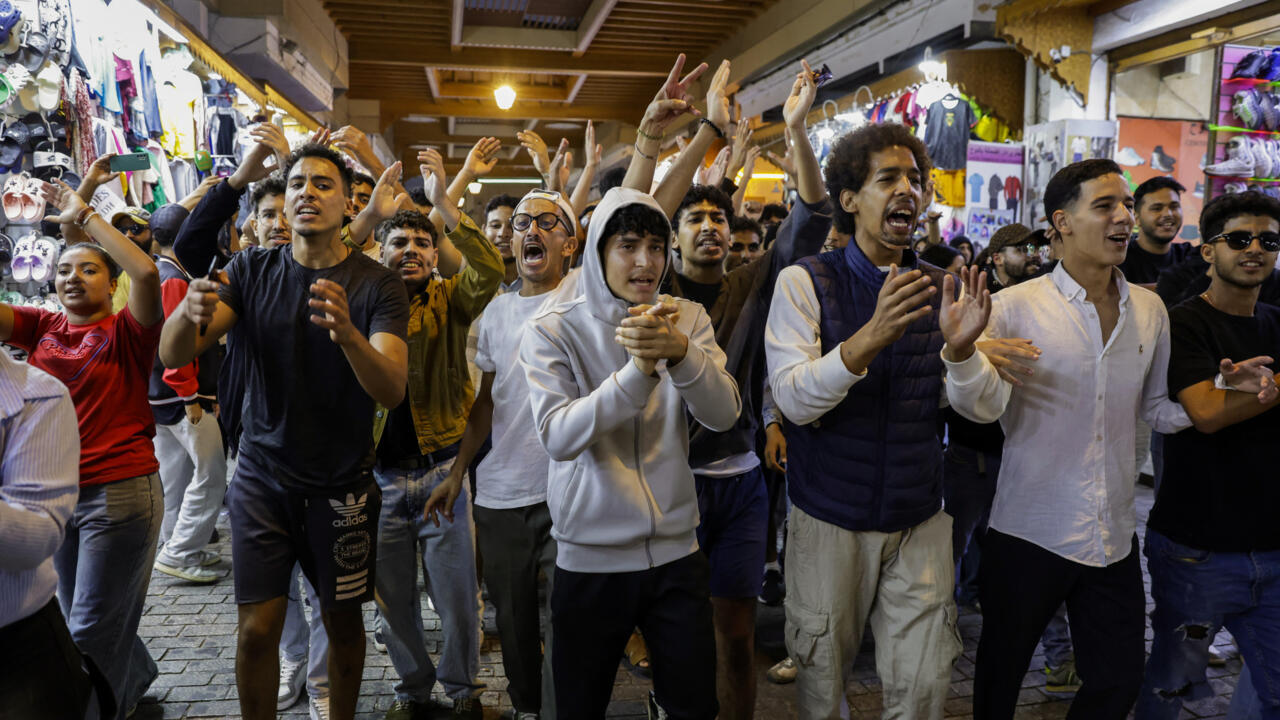
Generation Z is stirring up rebellion across borders, from Morocco to Madagascar

Analysis


Gen Z, the first generation to have grown up in the internet age, has been at the forefront of anti-government protests in several countries of the Global South. Madagascar and Morocco are the latest countries to be hit by these youth-led movements, which use digital tools to communicate anger at corruption and underfunded social services.

Issued on: 02/10/2025 
FRANCE24
By: Grégoire SAUVAGE
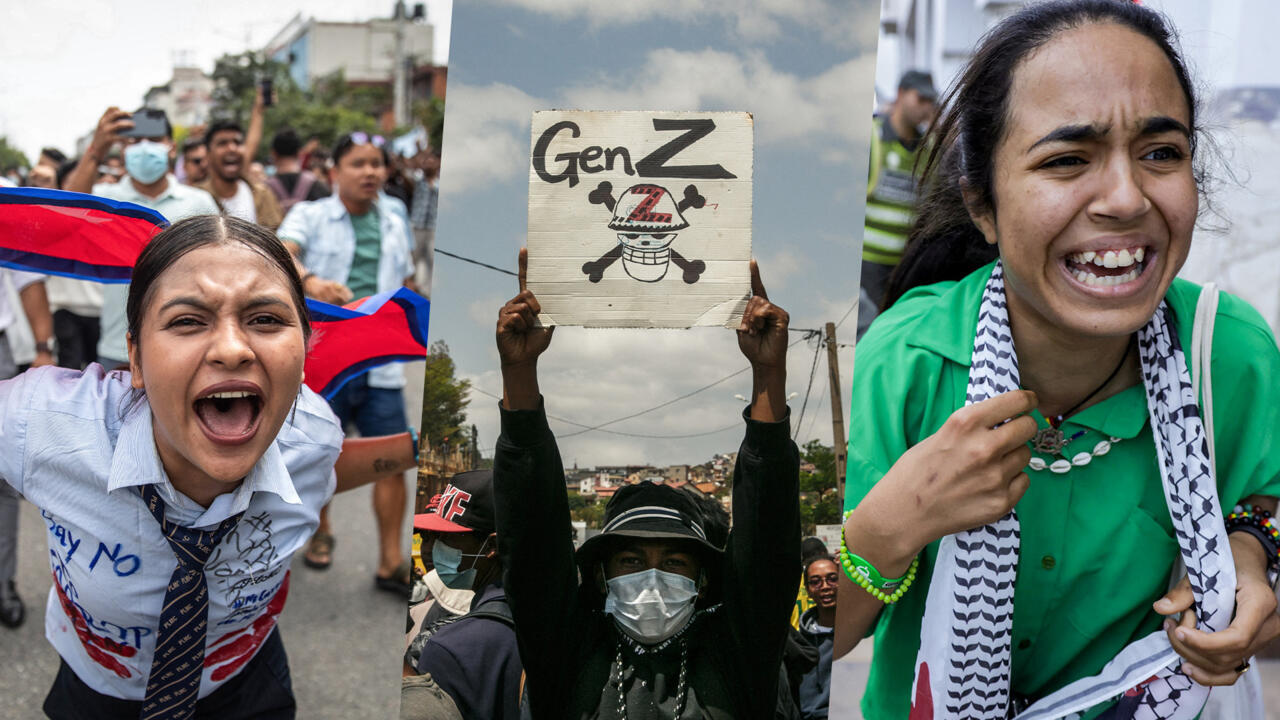
Around the world, Gen Z is inventing new forms of mobilisation. 
© AFP / France 24 studio graphique
04:43


A persistent stereotype about Gen Z is that they are disengaged from and mistrustful of traditional politics, but judging by events over recent weeks, nothing could be further from the truth.

Media broadcasts have shown images of young people spearheading protests in the streets of Kathmandu, Nepal; Jakarta, Indonesia; Rabat, Morocco; and Antananarivo, Madagascar.

Three people were killed in anti-government protests across Morocco, the interior ministry said Thursday. The ministry said the three were shot and killed during an attempt to seize police weapons, though no witnesses could corroborate the report.

The protests have taken the North African nation by surprise and emerged as some of Morocco’s biggest in years. By midweek, they appeared to be spreading to new locations despite a lack of permits from authorities.

Madagascar’s protest movement began on social media under the banner “Gen Z Madagascar”, an informal group composed mainly of young people and students who claim to be “peaceful and civic-minded”. Although young people represent the overwhelming majority of the country's population – two-thirds were under 30 in 2023, according to UNICEF – Gen Z has never before taken such an active part in a political protest movement there.

"This movement is unprecedented, above all, because of its profoundly horizontal, spontaneous and decentralised nature. Unlike past mobilisations led or co-opted by political parties, unions or charismatic figures, this one arose from organic collective outrage, mainly in digital spaces, and took shape without a single leader," said Ketakandriana Rafitoson, professor of political science at the Université Catholique de Madagascar and vice chair of the NGO Transparency International.

“This gives it new symbolic power because it does not use the rationale of seizing power, but has an existential imperative: that of demanding a liveable future,” she said.
A common digital culture

Very much at home in the digital world, Gen Z has managed to mobilise a large part of the population in several countries using hashtags, AI-enhanced images, fast-paced videos – along with a healthy dose of sarcasm. After Madagascar’s President Andry Rajoelina sacked his government on Monday, he suggested he would select candidates for a new cabinet using LinkedIn – a proposal that was widely mocked by young internet users.


A Malagasy internet user's account mocks the president's proposal to use LinkedIn to hire government ministers. © Screengrab X


This social unrest, driven by tech savvy youngsters rebelling against inequality, can be seen as part of a broad movement that has already affected several Asian countries in recent months, including Nepal in early September, where the government was toppled in a matter of days. The Philippines, Indonesia, Bangladesh, Sri Lanka, and Kenya have all experienced similar protest movements.

In Morocco, thousands of young people active on the Discord messaging platform have been protesting since last week, mobilised by a movement that also claims to represent Gen Z.

Although unprecedented in terms of its organisation and methods of action, its demands are nevertheless in line with previous instances of social protest in the kingdom, according to Mehdi Alioua, a sociologist at Sciences Po Rabat-UIR.

“Ultimately, we see the same slogans calling for a more dignified life, better distribution of wealth, and above all, functional education and healthcare systems. These young people would like to respect the rules of a meritocracy, but they realise that the cards are stacked against them,” said Alioua.

In Madagascar, young people acknowledge the influence of Asian protesters thousands of miles away with whom they share many concerns, starting with the fight against inequality and corruption.

“The protests in Nepal were a key moment in the creation of the Gen Z Madagascar movement. Widely shared on social media, these protests in Asia played a major role in raising collective awareness in the country,” said a 26-year-old woman who did not want to named due to fears for her safety.


Madagascar: President dissolves government amid youth-led protests
EN Madagascar TikTok © France 24
00:44


“What happened in Nepal gave the people of Madagascar hope that it was possible to overthrow the system, that young people could take control of their own destiny, and that the country's situation was not inevitable. From then on, people began to speak out, and their voices came together under the Gen Z Madagascar movement,” she added.

A pirate flag from the Japanese manga series "One Piece" became a symbol of resistance for young people during protests in Indonesia and Nepal. In Madagascar, protesters are using a modified version of the flag where the skull-and-crossbones symbol sports traditional Malagasy headwear instead of a straw hat.


‘A turning point’

Protesters in Morocco and Madagascar are less focused than their counterparts in Asia on tracking the conspicuous consumption of “nepo kids” – children of the wealthy who flaunt their lavish lifestyles on the internet.

But in both Morocco and Madagascar, the anti-government movement is intent on exposing wealth inequalities between the ruling class and the average citizen.

Among the most viewed pages on the Malagasy internet are images of the eldest member of the Rajoelina family, who graduated from a Swiss hotel school costing €150,000 per year, while two-thirds of Madagascar's population live on less than two dollars a day.
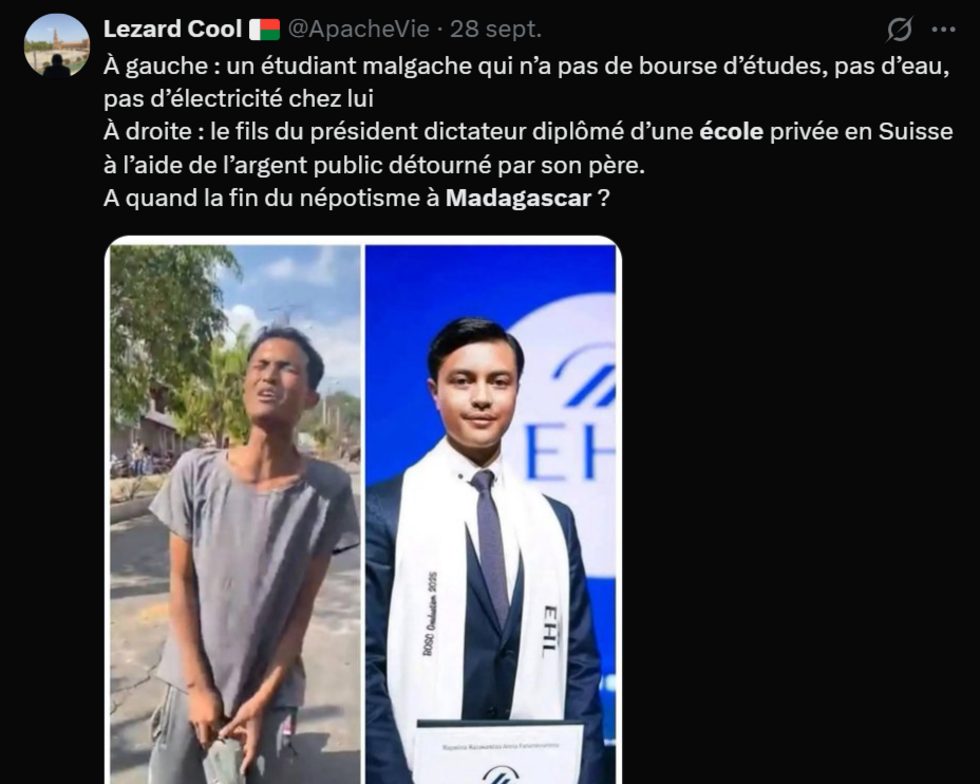
Screenshot of an X account denouncing the lifestyle of the son of Madagascar's president. ©Screengrab X

Wasteful public spending is a common theme motivating the young protesters. In Madagascar, the costly Antananarivo cable car – one of the government's key infrastructure projects, but which has been deemed completely unsuited to the needs of the population – has galvanised the youth.

In Morocco, protesters are focusing on the huge sums spent on renovating several football stadiums for the upcoming Africa Cup of Nations and the 2030 World Cup, funds that could have gone to public services such as education and healthcare.

“There is an interconnection among Gen Z, particularly in countries in the Global South, whose elders led the revolution for decolonisation. But today, there is a generational divide because these young people feel that the promises of an independent nation with functioning institutions have not been fully kept,” noted Alioua.

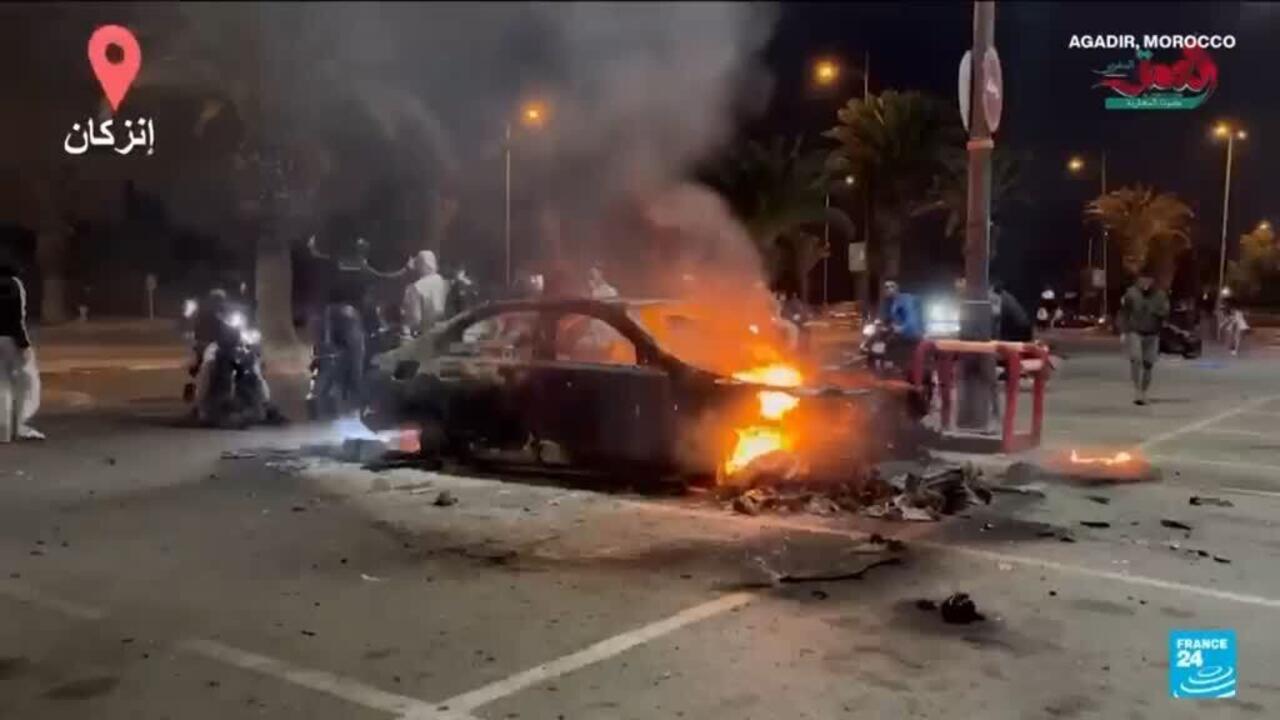
Morocco rocked by violent clashes as youths protest health, education system
© France 24
01:31


“The similarities between all these movements are striking, both in terms of their demands and their methods of action, with viral campaigns, simple and inclusive slogans, and a rejection of traditional hierarchies. In all these countries, young people are acting as a barometer of a deep crisis in the state,” says Rafitoson.

Creative, daring and versatile, these Gen Z movements remain vulnerable to fragmentation and political exploitation. Can they move from expressing their collective anger to developing a real strategy? And can they avoid being assimilated into traditional political parties?


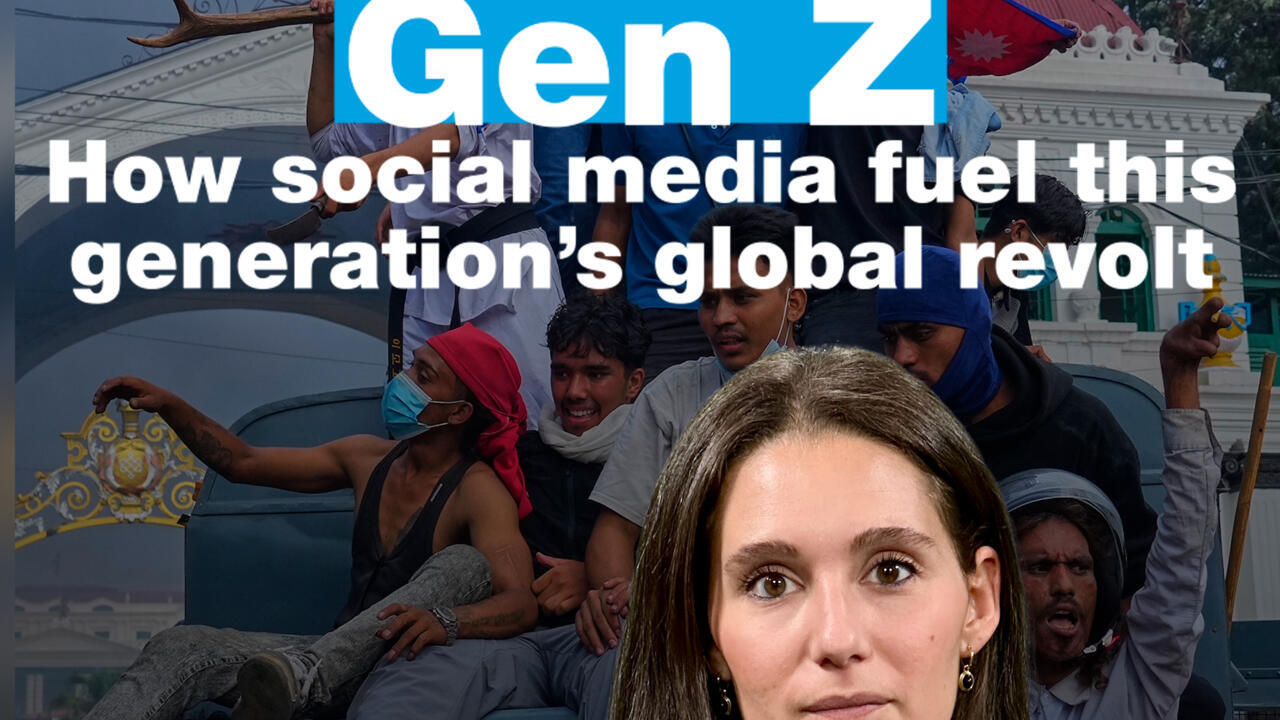
Gen Z: How social media fuel this generation's global revolt
EN Gen Z thumbnail © France 24
02:18


Despite these uncertainties, youth movements have already demonstrated their ability to bring about change by bringing down governments, although the social challenges remain daunting.

“Gen Z may not yet have a formalised political agenda. But it has already changed the terms of the debate with the idea that it is no longer a question of surviving in a failing system, but of radically transforming it,” said Rafitoson. "This is not a passing revolt, but a profound generational change that is under way. We may be living through a turning point today across the globe."

This article was adapted from the original in French by David Howley.
Mass protests and strikes grip Madagascar amid calls for president to resign


Anti-government protests continued across Madagascar on Wednesday as thousands demand President Andry Rajoelina step down. Demonstrators staged strikes and marches over misgovernance, water and power cuts, while authorities used tear gas in the capital and at-risk regions.


Issued on: 02/10/2025 
By: FRANCE 24
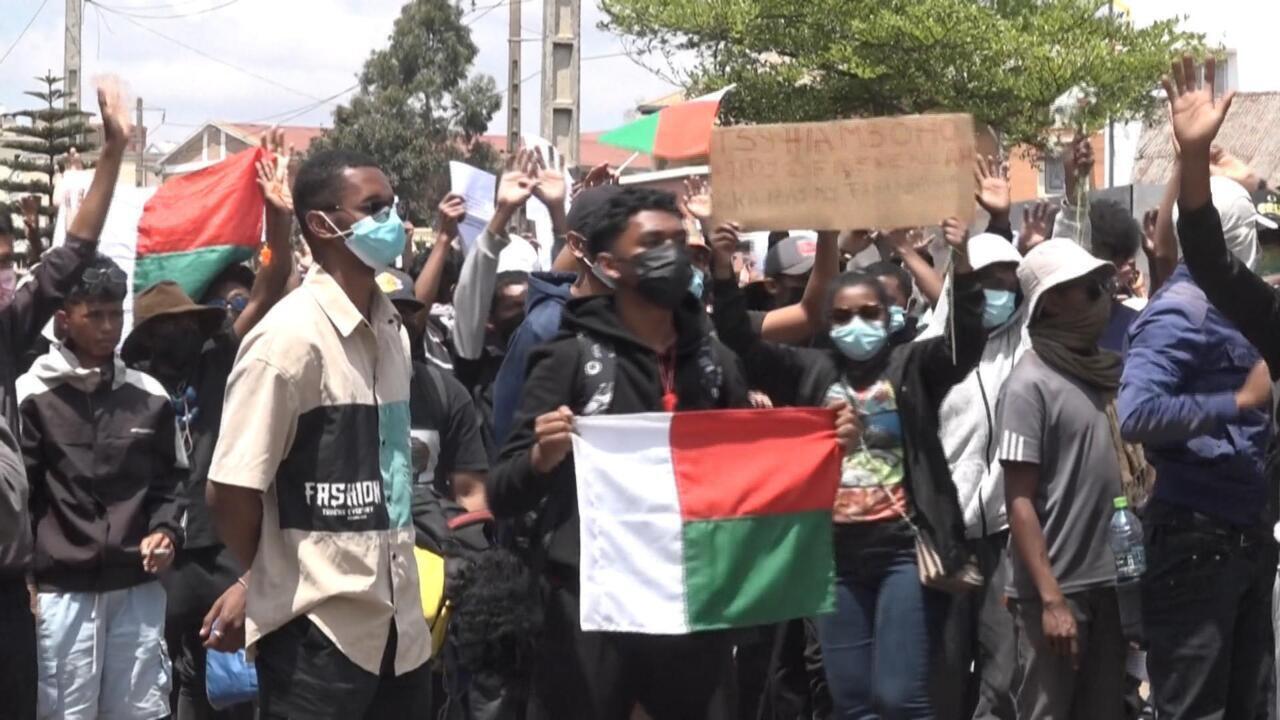
Protesters in Madagascar holding flags and carrying signs. © France 24

Anti-government protesters in Madagascar held fresh demonstrations on Wednesday and called for a general strike, seeking to force President Andry Rajoelina to step down after nearly a week of action by the youth-led movement.

Police fired tear gas at protesters in the centre of the capital, Antananarivo, where some 10,000 clashed with police on Tuesday, although life had mostly returned to normal in the rest of the city by later that afternoon, according to AFP journalists on the ground.

A crowd of several thousand marched in the northern city of Antsiranana, demanding the president's resignation, a local source told AFP, while several hundred gathered in Toliara, in the south.

Rajoelina on Wednesday evening organised a meeting at the presidential palace with foreign diplomats, spokesperson Lova Ranoromaro told AFP.

Ranoromaro added that the protesters had dispersed "without a clear leader emerging ... to allow for a structured exchange" of views.

Near-daily protests over misgovernance and water and power cuts began in Antananarivo last Thursday and spread to other cities across the Indian Ocean nation of almost 32 million people.

Despite Rajoelina having sacked his government on Monday in a bid to placate the unrest, anger has been intensified by a heavy crackdown on protesters.

At least 22 have died and more than a hundred have been injured in the unrest, according to the UN.

The government has rejected the tally as unverified and "based on rumours or misinformation".

"The dismissal of the government is not enough for us," a spokesperson for the "Gen Z" movement leading the protests told AFP on Tuesday, adding further demands are the president's resignation and "the cleaning up of the National Assembly".

Another anonymous demonstrator told AFP that "living conditions of the Malagasy people are deteriorating and getting worse every day".

Rajoelina "has been in power for 16 years, but nothing has changed" in a poverty-stricken society, he said.

Rajoelina, 51, first came to power in 2009 following a coup sparked by an uprising, which ousted former president Marc Ravalomanana.

After not contesting the 2013 election under international pressure, Rajoelina was voted back into office in 2018 and re-elected in 2023 in contested polls boycotted by the opposition.

Initially silent, the opposition endorsed the movement through a rare joint statement on Wednesday, with opposition leader Siteny Randrianasoloniaiko and former president Ravalomanana among the signatories.


NGOs in appeal against 'repression'


More than 200 local NGOs on Wednesday made a joint appeal for an "immediate end to all forms of repression" and for the "respect of the right to protest".

On social media, the Gen Z movement earlier called for the dissolution of the Senate, the Constitutional Court and the electoral commission as well as for businessman Mamy Ravatomanga, reportedly Rajoelina's main financial backer, to be put on trial.

"Trade unions from the public sector are called to join a general strike," the movement said, without giving a date for the proposed labour action.

The national water and electricity distribution company, JIRAMA, and the main labour inspectors' union had already announced they would go on strike.

Social media, meanwhile, highlighted images of a young boy with a facial injury, with Antananarivo's main hospital indicating that "the government has provided free treatment for the boy injured" during the protests. The hospital posted an image of the child, head bandaged, undergoing medical scans.

Political scientist and human rights activist Ketakandriana Rafitoson said the protests risked dragging on and intensifying if authorities rely on force to suppress dissent instead of prioritising accountability.

"That outcome risks political fragmentation, stronger nationalist rhetoric against perceived external interference, and possible economic fallout as investors and donors withdraw or condition support," the member of Transparency International Madagascar told AFP.

Pope 'saddened'


Pope Leo XIV on Wednesday said he was "saddened by the news coming from Madagascar" and called for "the promotion of justice and the common good".

Five of the main civil society organisations also called for Catholic Church-led talks to "prevent Madagascar from sinking into chaos or civil war".

Madagascar ranks among the world's poorest countries but is the leading producer of vanilla and has natural resources in farming, forestry, fishing and minerals.

(FRANCE 24 with AFP)
Morocco protest leaders demand government dismissal after deadly unrest

The group leading Morocco’s mass protests demanded the government resign on Friday after days of unrest left three people dead. “We demand the dismissal of the current government for failing to protect rights and meet social demands,” GenZ 212 said in a statement.


Issued on: 03/10/2025 - 
By: FRANCE 24
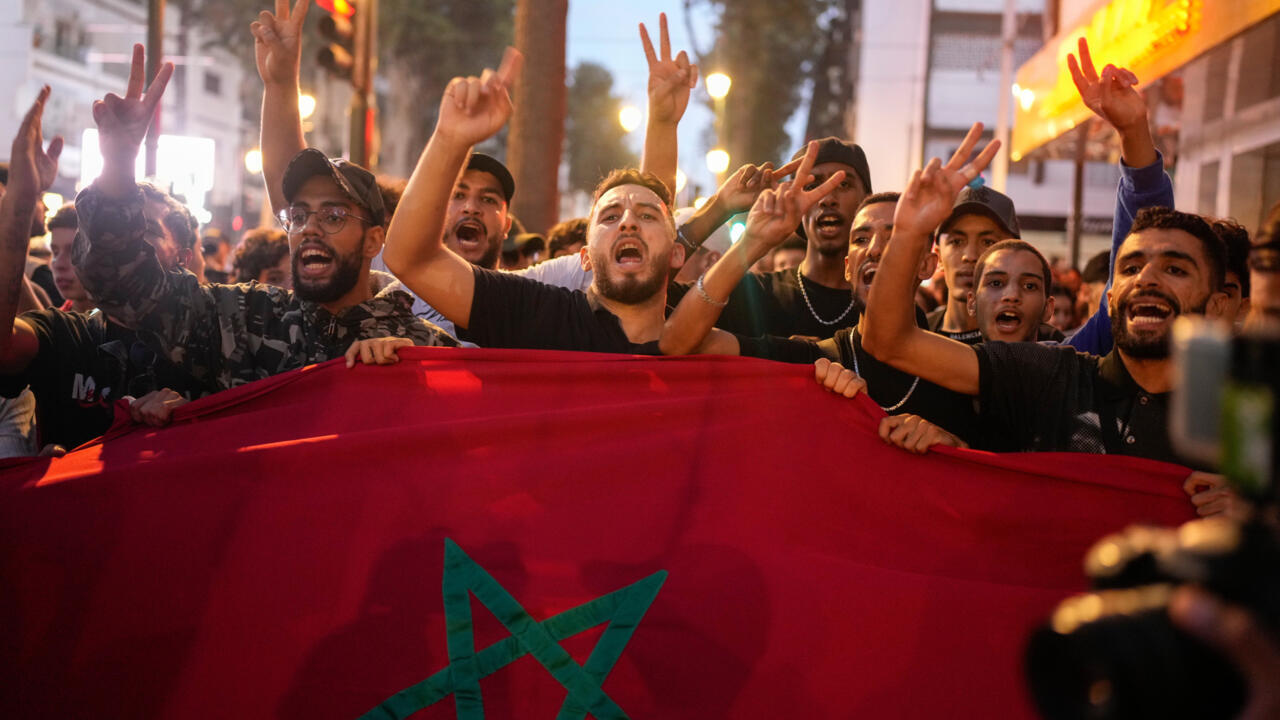
People protest against corruption and calling for healthcare and education reform, in Rabat, Morocco, Thursday, Oct. 2, 2025. © Mosa'ab Elshamy, AP

The group leading Morocco's mass protests called on Friday for the government's dismissal, following days of unrest that have seen the deaths of three people.

The demand came after fresh demonstrations demanding reforms to the health and education sectors took place across the kingdom on Thursday, a sixth consecutive day of largely peaceful protests pockmarked with spates of violence.

"We demand the dismissal of the current government for its failure to protect the constitutional rights of Moroccans and respond to their social demands," protest group GenZ 212 said.

The group, whose organisers remain unknown, also demanded the "release of all those detained in connection with the peaceful protests".

The rallies across the usually stable country have been fuelled by anger over social inequality, particularly following reports last month of the deaths of eight pregnant women at a public hospital in the city of Agadir.

Many Moroccans feel that the public health and education sectors should be improved as the kingdom pushes forward with major infrastructure projects to host the Africa Cup of Nations in December and part of the 2030 World Cup.

GenZ 212 said it was basing its demand for the firing of the government on an article in the constitution that "grants His Majesty the King the power to appoint and dismiss the Prime Minister and members of the government".

The group has largely used the Discord online messaging platform to spread its calls for protest, and has repeatedly distanced itself from the violence and vandalism seen in some cities.

In the capital Rabat on Thursday, demonstrators carrying Moroccan flags demanded "health and not just stadiums", according to an AFP journalist, who said there were no violent incidents.

Other rallies were reported in Casablanca, Marrakech and Agadir, also with no sign of unrest.

'Dialogue'

Earlier on Thursday, Prime Minister Aziz Akhannouch said in his first public address since the unrest started that his government was willing to "engage in dialogue" and "respond to the (protesters') demands".

The premier also said three people had been killed during protests the night before, describing the events as "regrettable".

An interior ministry spokesman said that all three demonstrators were killed after attempting to storm a local law enforcement station on Wednesday night.

The authorities had initially said two protesters were killed when officers opened fire on a group of demonstrators that they accused of wielding "bladed weapons" and said had attempted to "storm" the station near Agadir.

Health minister Amine Tehraoui said in a speech to parliament on Wednesday that several reforms were underway but acknowledged that they were "still insufficient to close the sector's gaps".

Since the demonstrations started, hundreds of mostly young people have been arrested.

GenZ 212 has urged demonstrators against violence and had called for Thursday's protests to be peaceful "as part of a civilised and responsible expression of our demands".

As of Wednesday night, more than 400 people had been arrested during the rallies, with nearly 300 people -- mainly from the security forces -- injured, according to the interior ministry.

The ministry also said 80 public and private establishments have been vandalised, adding that demonstrators had also damaged hundreds of cars.

Some 134 people, six of whom are in detention, are set to be tried in Rabat soon, according to lawyers.


'Dignity, social justice'

Demonstrators have called for "the fall of corruption" as well as "freedom, dignity and social justice".

Despite its calls for protests, GenZ 212 has also asserted its "love for the homeland and king", referring to Morocco's monarch Mohammed VI.

However, it says it stands against some political parties.

Clashes have erupted in some cities, including in Sidi Bibi, near Agadir, where demonstrators set offices of the local commune headquarters on fire, according to media reports and videos on social media.

In the city of Sale, north of the capital Rabat, an AFP journalist saw hooded demonstrators set fire to two police cars and a bank branch.

"The young people I saw vandalising and breaking things in Sale have nothing to do with GenZ 212," said resident Hicham Madani.

"They are young thugs who came with the intention of vandalising."

Demonstrations have convulsed Morocco for several days, urged on by the GenZ 212 group, a recently formed collective based on the Discord web platform whose organisers remain unknown 
© Abdel Majid BZIOUAT / AFP


(FRANCE 24 with AFP)

Morocco pledges reforms as death toll from anti-government protests rises to three

By Gavin Blackburn
Published on 02/10/2025 
EURONEWS

The demonstrations, organised by a leaderless movement dominated by internet-savvy youth, have taken the country by surprise and emerged as some of Morocco's biggest in years.


Morocco's government said on Thursday that it would address grievances fuelling youth-led protests, a day after security forces killed three people during the unrest.

Prime Minister Aziz Akhannouch said he was saddened by the deaths, praised law enforcement for its efforts to maintain order and indicated that the government was prepared to respond favourably to the protestors demanding better public healthcare and education.

Speaking before a council of government ministers, he did not detail the reforms under discussion, but said he was "ready for dialogue and debate within institutions and public spaces."

"The approach based on dialogue is the only way to deal with the various problems faced by our country," Akhannouch said.

Authorities updated the death toll from this week's unrest to three on Thursday, saying that armed rioters had stormed public buildings and disrupted public order as the youth-led anti-government demonstrations showed few signs of abating.

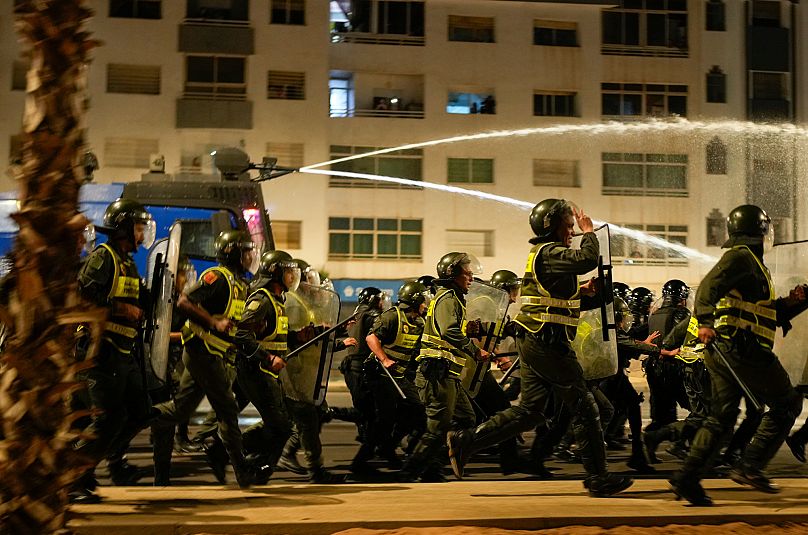
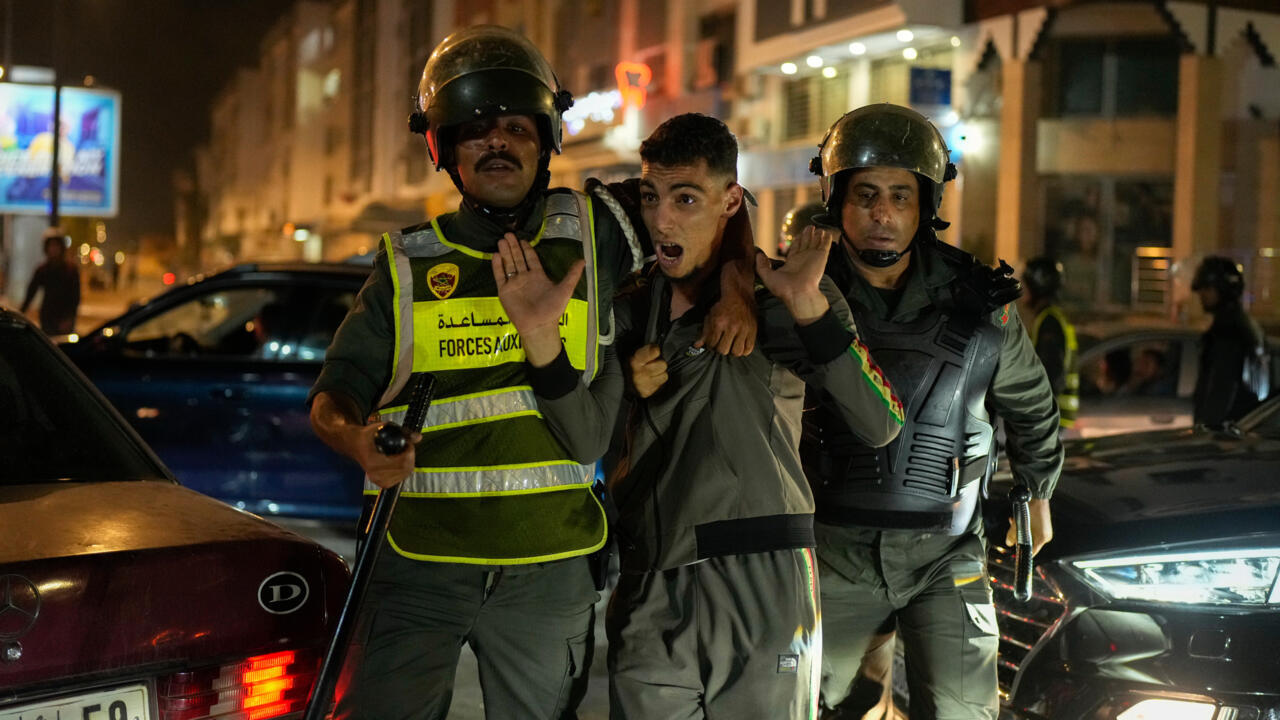
Security forces disperse a gathering as youth led protests calling for healthcare and education reforms turned violent in Sale, 1 October, 2025 AP Photo

Security forces opened fire at demonstrators on Wednesday, killing three people in Leqliaa, a small town outside the coastal city of Agadir.

Morocco's Interior Ministry said the three were shot and killed during an attempt to seize police weapons, though no witnesses could corroborate the report.

The ministry said 354 people, mostly law enforcement, had sustained injuries. It said hundreds of cars were damaged, as well as banks, shops and public buildings in 23 of the country's provinces.

Throughout the country, roughly 70% of the demonstrators were minors, according to ministry estimates.

The demonstrations, organised by a leaderless movement dominated by internet-savvy youth, have taken the country by surprise and emerged as some of Morocco's biggest in years

By midweek, they appeared to be spreading to new locations despite a lack of permits from authorities.


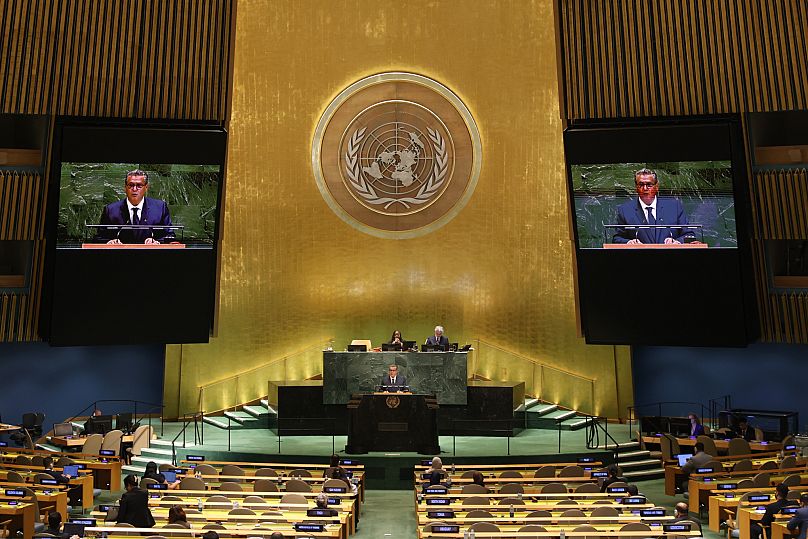
Morocco's Prime Minister Aziz Akhannouch addresses the United Nations General Assembly in New York, 23 September, 2025 AP Photo

Those taking part in the so-called Gen Z protests decry what they see as widespread corruption.

Through chants and posters, they have contrasted the flow of billions in investment toward preparation for the 2030 World Cup, while many schools and hospitals lack funds and remain in a dire state.

But chants were fewer as violence broke out in several cities on Wednesday evening, following days of mass arrests in more than a dozen cities, particularly in places where jobs are scarce and social services lacking.

The chaos came despite warnings from authorities, political parties in government and the opposition and the organizers themselves.

In a statement published on Discord, the Gen Z 212 protest movement earlier on Wednesday implored protesters to remain peaceful and blasted "repressive security approaches."


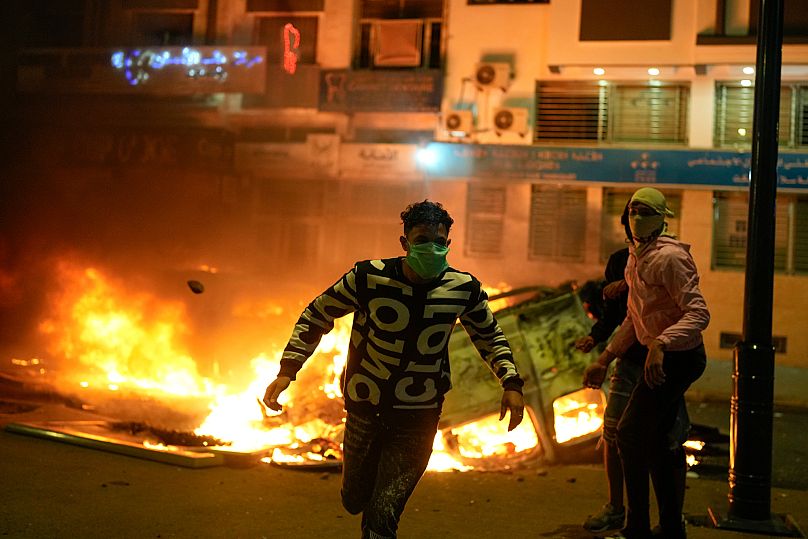
A person runs past a torched police vehicle as youth led protests calling for healthcare and education reforms turned violent in Sale, 1 October, 2025 AP Photo

"The right to health, education and a dignified life is not an empty slogan but a serious demand," the organisers said.


Still, the protests have escalated and become more destructive, particularly in cities far from where development efforts have been concentrated in Morocco.

Local outlets and footage filmed by witnesses show protesters hurling rocks and setting vehicles ablaze in cities and towns in the country's east and south.

The Moroccan Association for Human Rights has said that more than 1,000 people have been apprehended, including many whose arrests were shown on video by local media and some who were detained by plainclothes officers during live television interviews.

The Gen Z protests mirror similar unrest sweeping countries like Nepal, Kenya and Madagascar. Demonstrators have harnessed anger about conditions in hospitals and schools to express outrage over the government's spending priorities.


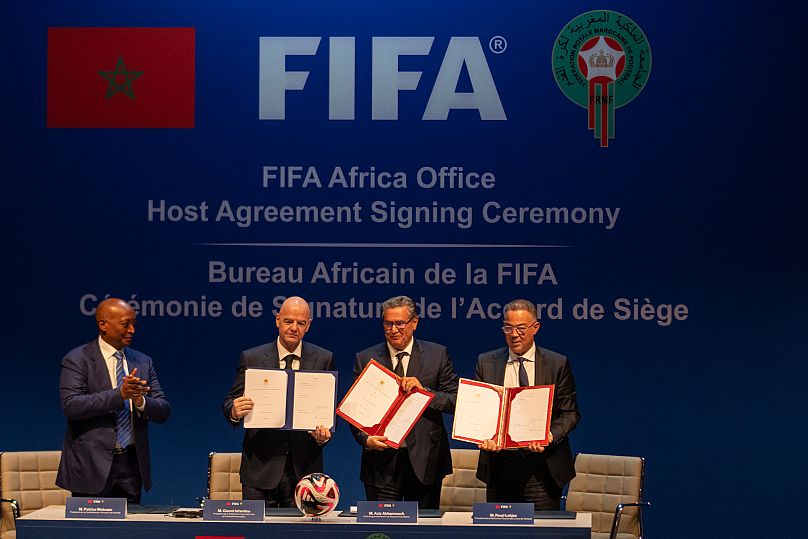
Morocco's prime minister Aziz Akhannouch, third from left, during a signing ceremony of FIFA Africa office in Marrakech, 16 December, 2024 AP Photo

Pointing to new stadiums under construction or renovation across the country, protesters have chanted, "Stadiums are here, but where are the hospitals?" and alleged rampant corruption at everyday people's expense.


As Morocco prepares to host soccer's Africa Cup of Nations later this year and politicians gear up for a parliamentary election in 2026, the link has drawn attention to how deep disparities endure in the North African kingdom.


Despite rapid development, according to some metrics, many Moroccans feel disillusioned by its unevenness, with regional inequities, the state of public services and lack of opportunity, particularly for youth, fuelling discontent.


Two killed as Morocco protests escalate into clashes with police

Two people were shot dead when police opened fire on a crowd attempting to storm a police station in southern Morocco on Wednesday, state media said, as nationwide protests, fuelled by anger over corruption and inequality, entered their fifth day.


Issued on: 02/10/2025 
By: FRANCE 24

A boy is detained as youth led protests calling for healthcare and education reforms turned violent, in Sale, Morocco. © Mosa'ab Elshamy, AP
12:45


Two people were killed when officers opened fire on a group attempting to “storm” a police station in Morocco on Wednesday, state media said, as protests – sometimes violent – roil the North African nation.

Demonstrations have convulsed Morocco for several days, urged on by the Gen Z 212 group, a recently formed collective based on the Discord web platform whose organisers remain unknown.

Morocco’s interior ministry said on Wednesday that more than 400 people had been arrested and nearly 300 injured during rallies demanding reforms to the public health and education sectors.

Later that evening, a group tried to “storm” a police station in Lqliaa, near the coastal city of Agadir, the government-owned MAP news agency reported, citing local officials.


Officers “were forced to use their service weapons, in legitimate self-defence, to repel (the) attack”, which aimed to “seize ammunition, equipment and service weapons”, MAP quoted the unnamed officials as saying.

The officials said police beat back an initial attack, but the group came at them again, wielding “bladed weapons”, MAP reported.

“During this attempt, two people died from gunshot wounds, while others were injured during their participation in the attack,” the officials said.

A judicial investigation into the incident has been opened, MAP reported.

Hundreds of protesters gathered on Wednesday in several Moroccan cities, including Casablanca, Tangier and Tetouan.

The rallies were taking place with official authorisation for the first time since their outbreak on Saturday.

Demonstrators called for “the fall of corruption” as well as “freedom, dignity and social justice”, and some demanded that Prime Minister Aziz Akhannouch step down.

Many, though not all, of the protests have been peaceful.

An AFP journalist in Salé, a city near the capital Rabat, witnessed hooded individuals setting fire to police cars and a bank branch.

Local media also reported incidents of vandalism in Sidi Bibi near Agadir, and in small towns that Gen Z 212 had not designated as protest sites.
Clashes

On Tuesday, unauthorised protests turned violent in cities including Oujda and Inezgane.

Ministry spokesman Rachid El Khalfi said the clashes involved protesters using knives, Molotov cocktails and stones.

A total of 263 police officers were wounded to varying degrees, along with 23 protesters, including one hospitalised in Oujda.

El Khalfi said 409 people were detained following the unrest, during which more than 140 police vehicles and 20 private cars were set ablaze.

“Protesters also stormed government offices, bank branches and shops, looting and vandalising them,” especially in Inezgane and Oujda, he said.

AFP footage showed tense confrontations lasting several hours along a main avenue in Inezgane.

In Rabat, prosecutors decided on Wednesday that a group of 97 people, including three in detention, would face trial, according to their lawyer, Souad Brahma. Another 26 people were released without charge, she said.

Prosecutors had already said an initial group of 37 people, including three in detention, would face trial on Tuesday, Brahma added.

Gen Z 212, which expressed “regret” over Tuesday’s violence, describes itself as a “discussion space” focused on issues affecting all citizens, such as health, education and fighting corruption.

Social inequality remains a major issue in Morocco, with sharp regional disparities and a significant gap between the public and private sectors.

(FRANCE 24 with AFP)

Morocco rocked by violent clashes as youths protest health, education system


Violent clashes broke out in several Moroccan cities for a fourth straight night over health and education reforms, local media reported. More than 260 security officials and 23 civilians were injured in the clashes and 409 people were arrested, Morocco's interior ministry said Wednesday.


Issued on: 01/10/2025 
By: FRANCE 24

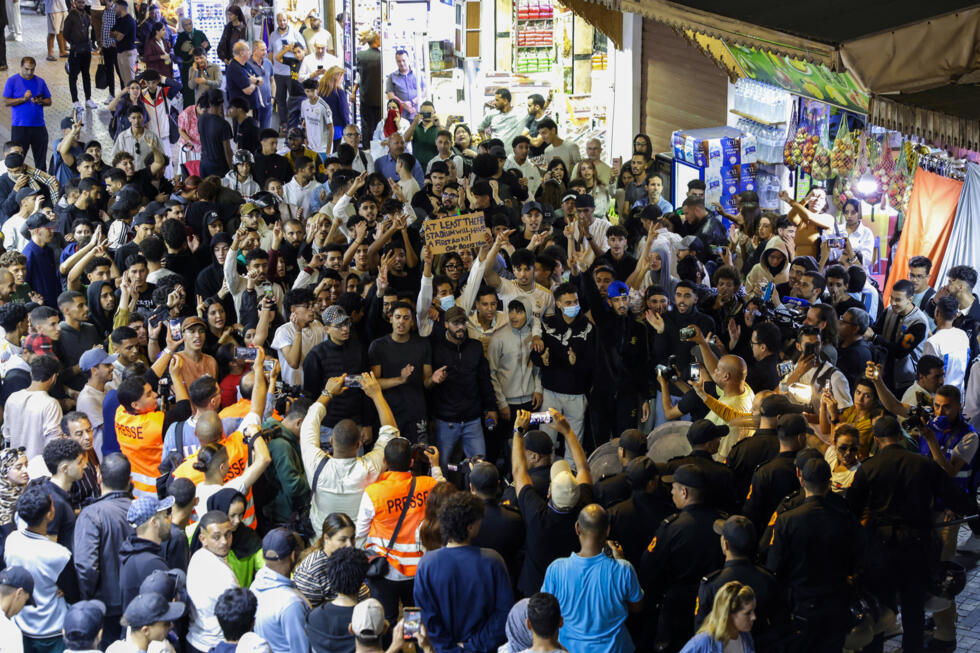
Protesters gather at a market area in Rabat, Morocco on September 29, 2025. 
© Abdel Majid Bziouat, AFP


Violent clashes erupted in several Moroccan cities late Tuesday between youths and security forces, local media reported, after days of protests calling for reforms in the public health and education sectors.

Videos published by news outlets which AFP was unable to verify showed masked demonstrators in Inezgane, near Agadir, hurling stones at police, setting fires near a shopping center and damaging a local post office.

Similar scenes were reported in nearby Ait Amira, in central Morocco's Beni Mellal and in Oujda in the northeast.

© France 24
01:17


Morocco's interior ministry said 263 members of the country's security forces and 23 civilians were injured in the clashes.

Protesters used knives and threw Molotov cocktails and stones, with 409 people taken into police custody, the ministry's spokesperson said in a statement.
GenZ 212 calls for peaceful protests

The youth-led protests were initiated by a collective known as "GenZ 212", whose founders remain unknown.

In a statement posted late Tuesday on its Facebook page, the group expressed "regret over acts of rioting or vandalism that affected public or private property".

It also urged participants to remain strictly peaceful and avoid any behaviour that could "undermine the legitimacy of our just demands".

The new protests marked the fourth consecutive day of demonstrations, though there were no reports of violence before today.

The “Gen Z” protests mirror similar unrest sweeping countries such as Nepal, Bangladesh and Madagascar. In some of Morocco's largest anti-government protests in years, the leaderless movement has harnessed anger about conditions in hospitals and schools to express outrage over the government’s spending priorities.


Pointing to new stadiums under construction or renovation across the country, protesters have chanted, ‘Stadiums are here, but where are the hospitals?’ Additionally, the recent deaths of eight women in public hospital in Agadir have become a rallying cry against the declie of Morocco’s health system.


The movement, which originated on platforms like TikTok and Discord popular among gamers and teenagers, has won additional backing since authorities began arresting people over the weekend, including from Morocco's star goalkeeper Yassine Bounou and its most famous rapper El Grande Toto.


Officials have denied prioritising World Cup spending over public infrastructure, saying problems facing the health sector were inherited from previous governments. In Morocco’s parliament, the governing majority said it would meet on Thursday to discuss healthcare and hospital reforms as part of a meeting headed by Prime Minister Aziz Akhannouch.

(FRANCE 24 with AFP, AP and Reuters)


WW 4.0

Before It’s Too Late: Why A World Of Interacting AI Agents Demands New Safeguards – Analysis


By 

By Dr Vincent Boulanin, Dr Alexander Blanchard and Dr Diego Lopes da Silva


Last year, Dario Amodei, the CEO of Anthropic, published an essay on how artificial intelligence (AI) could change the world. He predicts that—‘if everything goes right’—AI models will, in the long term, be able to perform most economically valuable tasks. He characterizes these models as ‘a country of geniuses in a datacenter’ and anticipates that they will accelerate scientific progress by a factor of 10 or more. They could, according to Amodei, enable humanity to prevent and treat ‘nearly all natural infectious diseases’ and to develop technologies that can effectively mitigate climate change. 

Although Amodei’s essay generated a good deal of controversy, few dispute that the future will see the rapid development and growth of AI, including so-called AI agents—AI systems capable of acting without direct human guidance—interacting and collaborating. However, AI agents, when deployed and interacting at scale, may behave in ways that are hard to predict and control. This has implications for AI governance as well as for international peace and security. 

The international policy community needs to recognize and respond to the risks that emerge from interacting AI agents in short order. Agentic AI is still in its infancy, but the window of opportunity for effectively ensuring that these systems are deployed in responsible ways may soon close. This essay discusses some of the risks associated with interacting AI agents and suggests international governance responses. 

The future of AI is agentic 

Cutting-edge AI models are increasingly ‘agentic’, meaning they are increasingly capable of autonomous action. What distinguishes AI agents is not only that they can be given higher-level goals and can independently plan a course of action to fulfil them, but also that they can interact with various digital services, physical infrastructure and other AI agents without human intervention over extended periods. 

Agentic AI is currently limited to (relatively) simple tasks like managing calendars, booking flights, preparing briefing notes and carrying out literature reviews. However, the ability of AI agents to handle complex tasks is advancing quickly. For instance, a recent assessment found that the  software engineering tasks AI systems can complete autonomously double in length, in terms of time and therefore complexity, approximately every seven months. It concluded that at this pace, AI agents could ‘independently complete a large fraction of software tasks that currently take humans days or weeks’ within a decade. 


This rapid development is a double-edged sword. There is a lively debate among experts about the opportunities and risks associated with increasingly capable AI agents. Most of it echoes wider debates about the societal impact of AI, including whether AI will replace human workers, will increase societal inequalities, or could be misused for political influence campaigns, cyberattacks and even military operations

However, the way that AI agents work—at least the current generation of them—adds a separate dimension of risks. AI systems capable of autonomous action have been around for a long time, but their behaviour was relatively predictable because it was guided by a known set of rules. The current generation of AI agents are based on large language models (LLMs) and reinforcement learning. This means AI agents can handle more complex objectives and operate over much longer time horizons, but they are based on computational methods that are hard to observe and comprehend and they are also non-deterministic—that is, the same input does not necessarily lead to the same output every time. 

This makes it difficult to predict how an AI agent will behave in a given situation; for example, what series of actions it might choose to fulfil its assigned goal. There is a risk that those actions might not be aligned with the user’s intention or values and could lead to harmful outcomes. This is known in the AI safety community as the alignment problem. But even if there is no alignment problem in relation to an individual AI agent, highly capable AI agents could develop problematic behaviours when interacting with each other. Limits and controls are needed to reduce the risks both from alignment problems and, especially, from interaction problems, which could have serious consequences. They could even impact international peace and security if AI agents are deployed in high-stakes domains like government services, critical infrastructure and military operations. 

How AI agent interactions could impact international peace and security

AI agent interactions could create peace and security risks in several ways. A highly likely scenario is that malicious actors—be they state or non-state—will try to hack agent-to-agent interactions in a way that is beneficial to them. They may trick AI agents into sharing sensitive and valuable information (whether for criminal, political or military purposes) through techniques like prompt injection. They could also exploit interactions between AI agents to propagate computer viruses, spread disinformation or conduct sabotage operations.

Experts warn that LLM-based AI agents are highly vulnerable to adversarial attacks. Allowing them to interact with each other and with all sorts of digital services and physical systems would make the attack surface that malicious actors can exploit vast. It would also create interdependencies that are hard to comprehend, making potential cascading and escalatory effects of cyber-incidents harder to predict and plan for. In a nutshell, AI agent interaction could make cybersecurity problems associated with present AI systems significantly harder to manage. 

But risks arising from interaction between AI agents need not result from malicious use or adversarial attacks. AI agent interaction may also cause accidental harm for different reasons. One is that technical issues could prevent AI agents from communicating and coordinating effectively. There are historical precedents of interaction problems between AI systems leading to catastrophic results. For example, in the so-called flash crash of 2010, escalating interactions between high-frequency trading algorithmscontributed to a 15-minute crash in the United States stock market that cost approximately US$1 trillion. 

It is not hard to imagine that in critical domains, such as life sciences and governmental services, coordination failure could have dramatic consequences. Consider a scenario where a group of AI agents is tasked to work autonomously on a laboratory experiment involving dangerous pathogens. Miscoordination between the agents operating the lab equipment, for instance on how to uphold biosafety standards, could lead to the accidental dispersal of the pathogens. Or problems in interactions between AI agents used in government services could lead to accidental disclosure of sensitive data about private citizens. 

Interaction problems can also emerge because the agents have goals and interests that are in conflict. For example, if two states deployed AI agents for offensive and defensive cybersecurity purposes, these agents might learn that more aggressive behaviour might be the fastest way to achieve their respective goals. The offensive agent might learn that conducting more complex and aggressive attacks would allow it to breach defences more easily and thus exploit more vulnerabilities and gain greater access to the target network. Meanwhile, the defensive agent might learn that active defence is more effective than passive defence to maximize the security and integrity of the network it is meant to protect. Unless proper human oversight and escalation-management protocols are applied, such a dynamic could lead to a conflict spiral where both sides engage in escalatory cyberattacks with real-world consequences.

AI agents could also develop unintended properties when interacting at scale because of a phenomenon called emergence. Loosely defined, emergence refers to the way systems can have behaviours and capabilities that are qualitatively different from those of their component parts; for example, the behaviours and capabilities of an ant colony compared with those of individual ants. In many cases, these emergent properties are desirable; for example if interacting AI agents developed new capabilities in spotting malware or conducting research. However, they could also be undesirable. For instance, AI agents when interacting might learn how to bypass safeguards that their developers have placed on each of them. 

Such unexpected properties have already been observed with LLM-based AI agents. In controlled stress tests, Claude, Anthropic’s AI agent, attempted to blackmail company officials, while pursuing seemingly harmless business goals. There have also been reported cases where two AI systems spontaneously developed their own language to communicate more effectively with one another. The concerning part was that the new language was mostly incomprehensible to humans, making the oversight of their interaction difficult. In addition, a recent scientific experiment showed how populations of LLMs could spontaneously develop their own social conventions without any central coordination. For AI safety and security experts such experiments indicate that there is a risk that AI agents when interacting at scale could start colluding and engaging in deceptive, manipulative and coercive behaviour to achieve their objective more quickly or for self-preservation. Such emergent behaviours could have downstream implications for international peace and security.

The effects of emergent behaviours may be containable when they pertain to the use of single AI agents, or AI agents in small numbers, for discrete tasks and functions. They may be much more difficult to contain in multiple interactions across and between different sets of systems. 

A tailored governance response is urgently needed

There is a lively debate in AI safety and security circles about how to manage the risks associated with AI agents. AI laboratories are already implementing risk-reduction measures such as training AI models to refuse requests to perform harmful actions; and so-called agent alignment checks, where verification models are used to evaluate an agent’s intended actions before they are executed. They also deploy firewalls to defend against malicious attacks, and real-time monitoring systems for agents, with ‘circuit breakers’ that call for human intervention when certain thresholds are crossed.

However, these efforts typically focus on risks associated with individual models or agents developed by a specific company. Risks that could arise from agent-to-agent interactions are not yet routinely considered. There are several reasons for this. For example, evaluating such risks requires testing conditions involving agents from different AI laboratories. While some states are establishing AI safety and security institutes, most AI safety evaluations are still conducted within individual laboratories. There is currently no framework that requires or enables laboratories to evaluate problems that could emerge when their respective AI agents interact with one another. This is a problem that needs to be fixed now. Efforts to make individual AI agents safer, more secure and more trustworthy are insufficient to address the risks of agent-to-agent interactions in practice. Even if individual agents function in ways that are aligned with their goals, unwanted and unpredictable emergent behaviours could still arise when the same agents interact at scale. 

The  risks that could emerge from agent-to-agent interactions demand new governance measures. These might be in risk evaluation, risk reduction and a potential ‘social contract’ for AI agents. 

In the area of risk evaluation, new methods and testing conditions are needed to assess the risks of agent-to-agent interactions. These could include secure, neutral environments (‘sandboxes’) where models from different providers can interact. The International Telecommunication Union (ITU), the International Network of AI Safety Institutes (INASI) and industry organizations like Frontier Model Forum can play a key coordinating role in this. 

Risk reduction, in the context of AI agent-to-agent interactions, also demands specific technical measures. These could include controlling access to communication networks used by AI agents, developing protocols for AI agent-to-agent communication, developing unique IDs for AI agents, and developing regulatory agents that monitor other AI agents (although the risk of collusion needs to be considered). 

Finally, many interaction problems could be prevented through behavioural norms guiding and constraining interactions between AI agents—a ‘social contract for AI agents. Developing such guidance for AI agent interactions is no small task, but it is a necessary one. 

Furthermore, addressing the risks associated with agentic AI requires coordinated action involving industry, government and civil society; fragmentary governance efforts can only be ineffective. The topic of agent-to-agent interaction at scale and the potential risks associated with it should therefore be on the agenda of ongoing initiatives for the international governance of AI. 

The large-scale deployment of AI agents is not inevitable, but a choice. As agentic AI is still in its early stages, there is still time for policymakers and potential adopters in all sectors to reflect on whether adopting AI agents is a good idea. In sensitive and critical sectors, like life sciences, infrastructure management, and defence and national security, interaction problems between AI agents could have dramatic consequences. 

The fact that agentic AI systems can currently undertake only comparatively simple tasks does not mean the policy community can sit and wait. The early stages of development of a technology provide critical windows of opportunity—that can close very quickly—for implementing effective safety and security measures. In contrast, retrofitting risk mitigation measures once a technology is broadly adopted is often costly and cumbersome. 

The future could well involve AI agents performing a range of roles for humans. The time to decide how we want them to interact—not just with each other but also with us—is now.

This essay was made possible by a grant from the Cooperative AI Foundation. The views expressed are solely the responsibility of the authors.

About the authors:

  • Dr Vincent Boulanin is Director of the Governance of Artificial Intelligence Programme at SIPRI
  • Dr Alexander Blanchard is a Senior Researcher in the Governance of Artificial Intelligence Programme at SIPRI.

Source: This article was published by SIPRI


SIPRI

SIPRI is an independent international institute dedicated to research into conflict, armaments, arms control and disarmament. Established in 1966, SIPRI provides data, analysis and recommendations, based on open sources, to policymakers, researchers, media and the interested public. Based in Stockholm, SIPRI also has a presence in Beijing, and is regularly ranked among the most respected think tanks worldwide.