It’s possible that I shall make an ass of myself. But in that case one can always get out of it with a little dialectic. I have, of course, so worded my proposition as to be right either way (K.Marx, Letter to F.Engels on the Indian Mutiny)
Friday, May 30, 2025
Quebec tables bill to eliminate interprovincial trade barriers on sale of goods
Quebec Minister for the Economy, Minister Responsible for the Fight Against Racism Christopher Skeete tables legislation at the legislature in Quebec City, Wednesday, Dec. 4, 2024. THE CANADIAN PRESS/Jacques Boissinot
QUÉBEC — Quebec is moving to lower interprovincial trade barriers, as part of a push by provinces and the federal government to increase domestic trade in response to U.S. President Donald Trump’s tariffs.
Minister for the Economy Christopher Skeete tabled a bill on Friday to remove all restrictions on the use and sale of products from other provinces and to facilitate labour mobility – with some exceptions.
Skeete told reporters in Quebec City that the bill sends a message the province is ready to drop barriers and stimulate trade between regions.
“If you look at what Quebec is doing today, we’re leading the charge,” he said. “We have one of the most ambitious bills in the federation right now. It’s something we’re very proud of and it’s something that will have lasting change going forward.”
The bill states that goods from other provinces and territories may be “commercialized, used or consumed” in Quebec without further requirements relating to their manufacturing, composition or classification.
The proposed legislation also aims to make it easier for workers who are certified in other provinces to have their credentials recognized in Quebec.
In addition, the bill would allow the government to exclude some goods, and Skeete acknowledged Friday that significant exceptions would apply.
The credential recognition would not extend to the construction industry, he said, because many provinces don’t have the equivalent of the certificates that Quebec requires. He said alcohol, as a controlled substance, would be subjected to a different regime to be tested through a pilot project.
The proposed legislation also “in no way limits the application of the provisions aimed at protecting the French language,” its text states.
Skeete, however, maintained that the bill was ambitious. He said the province would proceed on a “general principle of openness,” which presumes trade will be opened unless an exemption is requested. He said the bill also does not depend on reciprocity, meaning Quebec will reduce barriers even without a commitment from other provinces to do the same.
When asked to provide examples of goods from other provinces that will be allowed by the proposed rules, Skeete mentioned scooters as well as the easing of labelling rules for some milk and eggs products.
The bill states that the government must publish a list of exempted goods online.
Skeete defended barriers for workers in Quebec’s highly-regulated construction industry, which has long been a trade irritant for other provinces. He noted that Quebec’s professional orders set regulations that may not be matched in other provinces.
“What we’re introducing today is legislation that allows the recognition of permit to permit,” he said. “So, if the permit doesn’t exist elsewhere, of course we can’t recognize it,” he said.
However, he said other workers, including lawyers or doctors, can get their credentials recognized in days or weeks.
Canada has made previous attempts to lower trade barriers, notably with the Canadian Free Trade Agreement of 2017. However, Skeete said that the trade war with the United States has given all the provinces the push to drop remaining barriers and “friction points” that had previously been left alone.
“There’s always a good reason not to want to do more, not to want to look at ways of changing the way you’re doing things,” he said. “The impetus that we’re faced with today obviously has greased the wheels, and that makes it easier for us to have the conversations.”
He said Legault would be discussing trade with his counterparts at next week’s first minister’s meeting. He said the premier would urge them to follow Quebec’s example by tabling their own legislation.
This report by The Canadian Press was first published May 30, 2025.
– With files by Morgan Lowrie in Montreal
By Patrice Bergeron, The Canadian Press
Which major companies in Canada have asked staff to return to the office?
A few years after the COVID-19 pandemic, more employers are focusing on in-person collaboration, with one workplace culture expert saying some are asking workers to return to the office.
“We’re seeing a shift in employer priorities because organizations coming back from (COVID-19) are emphasizing more collaboration, culture and oversight, especially in jobs or in roles where teamwork and client engagement are emphasized,” Candy Ho, a consultant for HR departments from different companies, said in a video interview with CTVNews.ca on Friday.
While more companies have moved away from fully remote work since the days of lockdowns and COVID-19 concerns, Ho, a professor at Kwantlen Polytechnic University near Vancouver, expects the trend to “stabilize” rather than continue to accelerate.
“It resides with individual employers ... when they look at their profitability, for instance, and productivity levels of employees, and whether or not they’re working from home and in person, there are two sides of the coin.”
Ho, a board member of the Canadian National Career Development Association, says employees may be more productive when they have more control and flexibility working from home. On the flip side, people with jobs that require more collaboration may find it makes more sense to be in the office.
With news this week of Royal Bank of Canada shifting away from fully remote work, here are some of the major companies in the country that have made similar moves:
Royal Bank of Canada
RBC asked some employees to be in the office four times a week beginning in September, Reuters reported Thursday. Memos were sent by business leaders from the Toronto-based bank on Thursday, following the announcement of its second-quarter earnings, which were lower than analysts’ expectations. The policy doesn’t apply for fully remote workers and those who are already working in the office full-time, according to Reuters. A spokesperson was quoted as saying that RBC “is a relationship-driven bank and in-person, human connection is core to our winning culture.”
Some staff complained about the move during conversations in internal chat groups, noting the extra travel time and expenses, Reuters reported.
RBC didn’t immediately respond to CTVNews.ca’s request for comments.
“At National Bank, each team defines its way of working based on its specific needs and those of our clients,” a spokesperson wrote in an email to CTVNews.ca on Friday. “Some teams work entirely on-site, while others follow a hybrid model that combines in-person and remote work.”
The spokesperson didn’t respond to CTVNews.ca’s request for more details.
Canadian Imperial Bank of Commerce
CIBC began asking staff from its global corporate and investment-banking unit to return to the office five days a week, Bloomberg reported in January 2025. The news outlet cited people with knowledge of the situation.
CIBC didn’t immediately respond to questions from CTVNews.ca about its current policy.
“At CIBC, the amount of time employees spend in the office depends on their role, taking into consideration things like the nature of their work and where they’ll best meet our clients’ needs,” spokesperson Andrew McGrath was quoted as saying in the Bloomberg report in January. “For some teams, that may mean more days in the office, and for others, it may mean more days working remotely.”
CIBC had asked staff in Canada to work remotely amid growing concerns about COVID-19 in December 2021, Reuters reported at the time. In 2021, the Toronto-based bank said staff who had returned on-site were asked to work remotely again.
JPMorgan Chase
Hybrid workers from New York-based bank JPMorgan Chase, which has more than 600 workers in Canada, have been asked to work in the office for five days a week since March, Reuters reported.
JPMorgan Chase didn’t immediately respond to CTVNews.ca’s question about whether its Canadian staff was affected.
Facebook
Meta Platforms Inc., parent company of Facebook, was a strong advocate of remote work during the pandemic, but Bloomberg reported in March 2023 the company encouraged staff to return to the office.
CEO Mark Zuckerberg said in a statement at the time that some early analysis suggests “engineers who either joined Meta in-person and then transferred to remote or remained in-person performed better on average than people who joined remotely,” according to the news report.
Meta had created a policy in 2021 to allow all staff to work remotely if they could work outside the office, even after the pandemic.
When asked what is Meta’s current back-to-office policy in Canada, a spokesperson said in an email to CTVNews.ca on Friday that its policy currently allows employees to work three days a week in office, and those who’ve been with the company for more than 18 months are eligible to apply for remote work.
The spokesperson did not immediately provide more information when asked for more details.
Amazon
Amazon has decided in-office work is best for employees.
Amazon CEO Andy Jassy shared guidelines about its policy, which also applies to staff in Canada, in a message in September 2024. In the letter addressed to all staff, Jassy said the advantages of being together in the office “are significant” after the company observed the situation with those working in the office at least three days a week over the past 15 months.
Jassy said this policy will allow people to be “better set up to invent, collaborate, and be connected enough to each other and our culture to deliver the absolute best for customers and the business.”
Still, Jassy said it will continue to allow people to work remotely, as it did in some cases even before the pandemic, for “extenuating circumstances,” such as family emergencies like a sick child, or if staff are approved to work outside the office.
Minister of Jobs and Families Patty Hajdu rises during question period in House of Commons on Parliament Hill in Ottawa on Thursday, May 29, 2025.
THE CANADIAN PRESS/Sean Kilpatrick
Minister of Jobs and Families Patty Hajdu is urging Canada Post and the Canadian Union of Postal Workers (CUPW) to come to an agreement that works for both parties.
Hajdu, with Secretary of State John Zerucelli, met with CUPW and Canada Post earlier today.
Canada Post requested the minister’s office to direct that a vote take place on the final offer submitted by the company on Wednesday.
The minister said her office “is reviewing this order and will have more to say soon.”
“In the meantime, federal mediators will remain available to continue the work at the negotiating table.”
This is a breaking news update. Below is The Canadian Press’ previous story…
OTTAWA — Canada Post says it has asked Jobs Minister Patty Hajdu to force a union vote on the proposals the Crown corporation presented to members earlier this week.
Canada Post presented its “final offers” to the union representing 55,000 workers on Wednesday, with concessions including an end to compulsory overtime and a signing bonus of up to $1,000.
But it stuck to a proposal for a 14 per cent cumulative wage hike over four years and part-time staff on weekend shifts - a major sticking point in the talks.
Canada Post says in a statement that the parties are at an impasse and it believes the best hope of reaching a new collective agreement is a vote administered by the Canada Industrial Relations Board.
The Crown corporation said this week it logged nearly $1.3 billion in operating losses last year, raising further questions about its business model as letter volumes plunge and fears of a second strike in six months persist.
Union representatives met with Hajdu on Friday and say rallies are planned across the country on Saturday.
Lynn Chaya CTVNews.ca Breaking Digital Assignment Editor
U.S. court case sees Saks Global accuse lender of contributing to Bay’s demise
A Saks Fifth Avenue sign is shown in San Francisco, Sunday, March 17, 2024. (AP Photo/Jeff Chiu)
TORONTO — Saks Global is putting some of the blame for Hudson’s Bay’s demise on one of the faltering department store’s top lenders.
A letter Saks Global filed earlier this month in a New York lawsuit against Pathlight Capital LP said the lender was a “direct cause” of Hudson’s Bay’s inability to secure “much-needed financing.”
“As a result of these actions and inactions by Pathlight, HBC was forced to initiate restructuring proceedings under the Companies’ Creditors Arrangement Act (CCAA) in Canada,” Saks Global chief legal officer Andrew Woodworth said in a March 26 letter to Pathlight’s managing director.
“Pathlight’s ongoing intransigence further frustrated HBC’s CCAA proceedings, and, on March 21, 2025, forced HBC to announce a near total liquidation.”
After the letter was sent on March 26, Hudson’s Bay determined that it was not going to find the money it needed to keep all of its stores alive. With little hope left, Canada’s oldest company decided to take its liquidation even further and is due to sell off all merchandise at its 80 stores and 16 under the Saks name by Sunday.
The Saks stores in Canada were operated through a license Hudson’s Bay had with Saks Global.
Neither company nor lawyers for the firms or Pathlight immediately responded to a request for comment.
Saks Global was formed last year, when Hudson’s Bay purchased Neiman Marcus and Bergdorf Goodman and spun them out with its existing Saks Fifth Avenue into a new company.
Court documents say that transaction was made possible in part because Pathlight agreed to release Saks Global from obligations under a loan the Bay had in exchange for millions in payments.
Now, Pathlight is suing Saks Global because it has yet to be paid US$8.8 million it is owed.
Saks is refusing to pay the sum because it says Pathlight “cannot and should not benefit from its own actions,” which hurt the Bay.
At the start of Hudson’s Bay’s creditor protection case in Canada, Pathlight was listed as a secured creditor owed more than $95 million.
Tara Deschamps, The Canadian Press
CEO pay rose nearly 10% in 2024 as stock prices and profits soared
Ted Sarandos arrives at the premiere of "The Electric State" on Monday, Feb. 24, 2025, at The Egyptian Theatre in Los Angeles.
(Photo by Jordan Strauss/Invision/AP, File)
The typical compensation package for chief executives who run companies in the S&P 500 jumped nearly 10 per cent in 2024 as the stock market enjoyed another banner year and corporate profits rose sharply.
Many companies have heeded calls from shareholders to tie CEO compensation more closely to performance. As a result, a large proportion of pay packages consist of stock awards, which the CEO often can’t cash in for years, if at all, unless the company meets certain targets, typically a higher stock price or market value or improved operating profits.
The Associated Press’ CEO compensation survey, which uses data analyzed for The AP by Equilar, included pay data for 344 executives at S&P 500 companies who have served at least two full consecutive fiscal years at their companies, which filed proxy statements between Jan. 1 and April 30.
Here are the key takeaways from the survey:
A good year at the top
The median pay package for CEOs rose to $17.1 million, up 9.7 per cent. Meanwhile, the median employee at companies in the survey earned $85,419, reflecting a 1.7 per cent increase year over year.
CEOs had to navigate sticky inflation and relatively high interest rates last year, as well as declining consumer confidence. But the economy also provided some tail winds: Consumers kept spending despite their misgivings about the economy; inflation did subside somewhat; the Fed lowered interest rates; and the job market stayed strong.
The stock market’s main benchmark, the S&P 500, rose more than 23 per cent last year. Profits for companies in the index rose more than 9 per cent.
“2024 was expected to be a strong year, so the (nearly) 10% increases are commensurate with the timing of the pay decisions,” said Dan Laddin, a partner at Compensation Advisory Partners.
Sarah Anderson, who directs the Global Economy Project at the progressive Institute for Policy Studies, said there have been some recent “long-overdue” increases in worker pay, especially for those at the bottom of the wage scale. But she said too many workers in the world’s richest countries still struggle to pay their bills.
The top earners
Rick Smith, the founder and CEO of Axon Enterprises, topped the survey with a pay package valued at $164.5 million. Axon, which makes Taser stun guns and body cameras, saw revenue grow more than 30 per cent for three straight years and posted record annual net income of $377 million in 2024. Axon’s shares more than doubled last year after rising more than 50 per cent in 2023.
Almost all of Smith’s pay package consists of stock awards, which he can only receive if the company meets targets tied to its stock price and operations for the period from 2024 to 2030. Companies are required to assign a value to the stock awards when they are granted.
Other top earners in the survey include Lawrence Culp, CEO of what is now GE Aerospac e ($87.4 million), Tim Cook at Apple ($74.6 million), David Gitlin at Carrier Global ($65.6 million) and Ted Sarandos at Netflix ($61.9 million). The bulk of those pay packages consisted of stock or options awards.
The median stock award rose almost 15 per cent last year compared to a 4 per cent increase in base salaries, according to Equilar.
“For CEOs, target long-term incentives consistently increase more each year than salaries or bonuses,” said Melissa Burek, also a partner at Compensation Advisory Partners. ”Given the significant role that long-term incentives play in executive pay, this trend makes sense.”
Jackie Cook at Morningstar Sustainalytics said the benefit of tying CEO pay to performance is “that share-based pay appears to provide a clear market signal that most shareholders care about.” But she notes that the greater use of share-based pay has led to a “phenomenal rise” in CEO compensation “tracking recent years’ market performance,” which has “widened the pay gap within workplaces.”
Some well-known billionaire CEOs are low in the AP survey. Warren Buffett’s compensation was valued at $405,000, about five times what a worker at Berkshire Hathaway makes. According to Tesla’s proxy, Elon Musk received no compensation for 2024, but in 2018 he was awarded a multiyear package that has been valued at $56 billion and is the subject of a court battle.
Other notable CEOs didn’t meet the criteria for inclusion the survey. Starbucks’ Brian Niccol received a pay package valued at $95.8 million, but he only took over as CEO on Sept. 9. Nvidia’s Jensen Huang saw his compensation grow to $49.9 million, but the company filed its proxy after April 30.
The pay gap
At half the companies in AP’s annual pay survey, it would take the worker at the middle of the company’s pay scale 192 years to make what the CEO did in one. Companies have been required to disclose this so-called pay ratio since 2018.
The pay ratio tends to be highest at companies in industries where wages are typically low. For instance, at cruise line company Carnival Corp., its CEO earned nearly 1,300 times the median pay of $16,900 for its workers. McDonald’s CEO makes about 1,000 times what a worker making the company’s median pay does. Both companies have operations that span numerous countries.
Overall, wages and benefits netted by private-sector workers in the U.S. rose 3.6% through 2024, according to the Labor Department. The average worker in the U.S. makes $65,460 a year. That figure rises to $92,000 when benefits such as health care and other insurance are included.
“With CEO pay continuing to climb, we still have an enormous problem with excessive pay gaps,” Anderson said. “These huge disparities are not only unfair to lower-level workers who are making significant contributions to company value – they also undercut enterprise effectiveness by lowering employee morale and boosting turnover rates.”
DEI
Some gains for female CEOs
For the 27 women who made the AP survey — the highest number dating back to 2014 — median pay rose 10.7 per cent to $20 million. That compares to a 9.7 pre cent increase to $16.8 million for their male counterparts.
The highest earner among female CEOs was Judith Marks of Otis Worldwide, with a pay package valued at $42.1 million. The company, known for its elevators and escalators, has had operating profit above $2 billion for four straight years. About $35 million of Marks’ compensations was in the form of stock awards.
Other top earners among female CEOs were Jane Fraser of Citigroup ($31.1 million), Lisa Su of Advanced Micro Devices ($31 million), Mary Barra at General Motors ($29.5 million) and Laura Alber at Williams-Sonoma ($27.7 million).
Christy Glass, a professor of sociology at Utah State University who studies equity, inclusion and leadership, said while there may be a few more women on the top paid CEO list, overall equity trends are stagnating, particularly as companies cut back on DEI programs.
“There are maybe a couple more names on the list, but we’re really not moving the needle significantly,” she said.
Prioritizing security
Equilar found that a larger number of companies are offering security perquisites as part of executive compensation packages, possibly in reaction to the December shooting of UnitedHealthCare CEO Brian Thompson.
Equilar said an analysis of 208 companies in the S&P 500 that filed proxy statements by April 2 showed that the median spending on security rose to $94,276 last year from $69,180 in 2023.
Among the companies that increased their security perks were Centene, which provides health care services to Medicare and Medicaid, and the chipmaker Intel.
__
Reporters Matt Ott and Chris Rugaber in Washington contributed.
Mae Anderson And Paul Harloff, The Associated Press
Trump doubles steel tariffs to 50% in ‘major announcement’
U.S. President Donald Trump announced Friday that he would set tariffs on steel imported into the United States at 50%, double their current rate.
At a US Steel facility in West Mifflin, Pennsylvania, Trump said he had a “major announcement.” To an applauding crowd of US Steel employees, Trump said he would jack up the tariff to protect America’s steelworkers.
“We are going to be imposing a 25% increase,” Trump said. “We’re going to bring it from 25% to 50%, the tariffs on steel into the United States of America, which will even further secure the steel industry in the United States. Nobody’s going to get around that.”
Trump said he was considering a 40% tariff, but industry executives told him they wanted a 50% tariff.
“At 25% they can sorta get over that fence,” Trump said. “At 50% nobody’s getting over that fence.”
Trump on March 12 imposed sweeping 25% tariffs on all steel and aluminum imports, which were met with immediate retaliation from Canada and dismay from America’s auto industry. The European Union also lashed out and announced retaliatory tariffs that it ultimately rescinded.
Trump on Friday praised his tariffs for saving the US steel industry, claiming American steelmaking would have disappeared if he hadn’t acted to impose tariffs. He said all steel would have been foreign-made and factories would have closed.
Although tariffs may have given the moribund American steel business a much-needed boost, they could raise prices on a key ingredient for American construction and manufacturing – two industries Trump has said he wanted to support. Spot prices for domestically-sourced steel have increased since the announcement of the 25% tariff in March, as American producers didn’t have to worry about as much competition from foreign steel.
In 2018, when Trump imposed some steel tariffs in his first term, US production expanded modestly, but it sent costs rising for cars, tools and machines and shrank those industries’ output by more than $3 billion in 2021, the International Trade Commission found in a 2023 analysis. The costs may have outweighed the benefits.
Trump used a law commonly referred to as Section 232, which gives the president the authority to impose higher tariffs on national security grounds, to put increased levies on foreign steel.
In total, the US imported $31.3 billion worth of iron and steel last year, according to data from the US Commerce Department. (The government data groups iron and steel together.) Canada was the top source of iron and steel, shipping $7.6 billion worth it to the US. ‘Watching over you’
Trump during Friday’s speech also celebrated the deal he approved to allow Japan’s Nippon Steel to buy a controlling stake in US Steel.
During his campaign, Trump opposed US Steel being purchased by a foreign entity. It was one of the few things he and former President Joe Biden agreed on: Biden blocked the deal, citing a national security threat.
But Trump on Friday said he became convinced that Nippon could ultimately save US Steel and its workers.
“US Steel was being sold into foreign hands with no protections for our great steel workers,” Trump said. “And I said there’s no way we’re gonna let that happen. I was watching over you.”
But then Trump said Nippon and US Steel’s executives continued to push the issue, and the deal became good enough for Trump to ultimately relent. One key factor, he said, was a so-called golden share that gives the United States a say in how the company is run.
“They kept asking me and I kept rejecting them: No way, no way, no way,” Trump said. “Every time they came in, the deal got better and better and better for the workers.”
“I’m going to be in Washington; I’m gonna be watching over it,” Trump added.
With the new tariffs and the Nippon deal, Trump said US Steel workers had much to celebrate. He invited several workers on stage who lamented the state of America’s steel industry and offered praise for Trump.
“This is going to be a very big day,” Trump said. “This is going to be one of the biggest days in your life.”
Trump holding Pennsylvania rally to promote deal for Japan-based Nippon to ‘partner’ with U.S. Steel
The United States Steel logo is pictured outside the headquarters building in downtown Pittsburgh, April 26, 2010. (AP Photo/Gene J. Puskar)
HARRISBURG, Pa. — U.S. President Donald Trump is holding a rally in Pennsylvania on Friday to celebrate a details-to-come deal for Japan-based Nippon Steel to invest in U.S. Steel, which he says will keep the iconic American steelmaker under U.S.-control.
Though Trump initially vowed to block the Japanese steelmaker’s bid to buy Pittsburgh-based U.S. Steel, he changed course and announced an agreement last week for what he described as “partial ownership” by Nippon. It’s not clear, though, if the deal his administration helped broker has been finalized or how ownership would be structured.
Trump stressed the deal would maintain American control of the storied company, which is seen as both a political symbol and an important matter for the country’s supply chain, industries like auto manufacturing and national security.
Trump, who has been eager to strike deals and announce new investments in the U.S. since retaking the White House, is also trying to satisfy voters, including blue-collar workers, who elected him as he called to protect U.S. manufacturing.
U.S. Steel has not publicly communicated any details of a revamped deal to investors. Nippon Steel issued a statement approving of the proposed “partnership” but also has not disclosed terms of the arrangement.
State and federal lawmakers who have been briefed on the matter describe a deal in which Nippon will buy U.S. Steel and spend billions on U.S. Steel facilities in Pennsylvania, Indiana, Alabama, Arkansas and Minnesota. The company would be overseen by an executive suite and board made up mostly of Americans and protected by the U.S. government’s veto power in the form of a “golden share.”
In the absence of clear details or affirmation from the companies involved, the United Steelworkers union, which has long opposed the deal, this week questioned whether the new arrangement makes “any meaningful change” from the initial proposal.
“Nippon has maintained consistently that it would only invest in U.S. Steel’s facilities if it owned the company outright,” the union said in a statement. “We’ve seen nothing in the reporting over the past few days suggesting that Nippon has walked back from this position.”
The White House did not offer any new details Thursday. U.S. Steel did not respond to messages seeking information. Nippon Steel also declined to comment.
No matter the terms, the issue has outsized importance for Trump, who last year repeatedly said he would block the deal and foreign ownership of U.S. Steel, as did former President Joe Biden.
Trump promised during the campaign to make the revitalization of American manufacturing a priority of his second term in office. And the fate of U.S. Steel, once the world’s largest corporation, could become a political liability in the midterm elections for his Republican Party in the swing state of Pennsylvania and other battleground states dependent on industrial manufacturing.
Trump said Sunday he wouldn’t approve the deal if U.S. Steel did not remain under U.S. control and said it will keep its headquarters in Pittsburgh.
In an interview on Fox News Channel on Wednesday, Pennsylvania Republican Rep. Dan Meuser called the arrangement “strictly an investment, a strategic partnership where it’s American-owned, American run and remains in America.”
However, Meuser said he hadn’t seen the deal and added that “it’s still being structured.”
Pennsylvania Republican Sen. David McCormick came out in favor of the plan, calling it “great” for the domestic steel industry, Pennsylvania, national security and U.S. Steel’s employees. A bipartisan group of senators, joined by then-Senate candidate McCormick, had opposed Nippon Steel’s initial proposed purchase of U.S. Steel for US$14.9 billion after it was announced in late 2023.
In recent days, Trump and other American officials began touting Nippon Steel’s new commitment to invest $14 billion on top of its $14.9 billion bid, including building a new electric arc furnace steel mill somewhere in the U.S.
Pennsylvania’s other senator, Democrat John Fetterman — who lives across the street from U.S. Steel’s Edgar Thomson Steel Works blast furnace — didn’t explicitly endorse the new proposal. But he said he had helped jam up Nippon Steel’s original bid until “Nippon coughed up an extra $14B.”
The planned “golden share” for the U.S. amounts to three board members approved by the U.S. government, which will essentially ensure that U.S. Steel can only make decisions that’ll be in the best interests of the United States, McCormick said Tuesday on Fox News.
Gov. Josh Shapiro, a Democrat who is seen as a potential presidential candidate, had largely refrained from publicly endorsing a deal but said at a news conference this week that he was “cautiously optimistic” about the arrangement.
In an interview published Thursday in the conservative Washington Examiner, Shapiro said: “The deal has gotten better. The prospects for the future of steelmaking have gotten better.”
Chris Kelly, the mayor of West Mifflin, Pennsylvania, where U.S. Steel’s Irvin finishing plant is located, said he was “ecstatic” about the deal, though he acknowledged some details were unknown. He said it will save thousands of jobs for his community.
“It’s like a reprieve from taking steel out of Pittsburgh,” he said.
___
Michelle L. Price And Marc Levy, The Associated Press
CUTTING NOSE TO SPITE FACE
$14 billion in clean energy projects have been cancelled in the U.S. this year, analysis says
A view of a solar farm west of Rio Rancho, N.M., on June 15, 2021. (AP Photo/Susan Montoya Bryan, File)
More than $14 billion in clean energy investments in the U.S. have been cancelled or delayed this year, according to an analysis released Thursday, as President Donald Trump’s pending megabill has raised fears over the future of domestic battery, electric vehicle and solar and wind energy development.
Many companies are concerned that investments will be in jeopardy amid House Republicans’ passage of a tax bill that would gut clean energy credits, nonpartisan group E2 said in its analysis of projects that it and consultancy Atlas Public Policy tracked.
The groups estimate the losses since January have also cost 10,000 new clean energy jobs.
The tax credits, bolstered in the landmark climate bill passed under former President Joe Biden in 2022, are crucial for boosting renewable technologies key to the clean energy transition. E2 estimates that $132 billion in plans have been announced since the so-called Inflation Reduction Act passed, not counting the cancellations.
Last week’s House bill effectively renders moot many of the law’s incentives. Advocacy groups decried the potential impact that could have on the industry after the multitrillion-dollar tax breaks package passed.
“The House’s plan coupled with the administration’s focus on stomping out clean energy and returning us to a country powered by coal and gas guzzlers is causing businesses to cancel plans, delay their plans and take their money and jobs to other countries instead,” E2 executive director Bob Keefe said.
The Senate is now reviewing the bill with an informal July 4 deadline to get it to the president’s desk.
What has been canceled
Some of the most recent cancellations include the Kore Power battery factory in Arizona and BorgWarner’s closure of two EV manufacturing sites in Michigan. Bosch suspended a $200 million investment in a hydrogen fuel cell factory in South Carolina, citing changes within the market over the past year in a statement to The Associated Press.
Tariffs, inflationary pressures, nascent company struggles and low adoption rates for some technologies may also have been reasons for these companies’ plans changing. For instance, the battery storage and electric vehicle sectors have seen the most impact in 2025, with the latter especially having had had a difficult past few years. Several projects spurred by the IRA were also canceled prior to 2025.
Of the projects canceled this year, most — more than $12 billion worth — came in Republican-led states and congressional districts, the analysis said. Red districts have benefited more than blue ones from an influx of clean energy development and jobs, experts say.
Georgia and Tennessee are particularly at risk because they are highly invested in EV and battery production, said Marilyn Brown, an energy policy professor at the Georgia Institute of Technology who was not involved in the analysis.
“If all of a sudden these tax credits are removed, I’m not sure how these ongoing projects are going to continue,” said Fengqi You, an engineering professor at Cornell University who also was not involved.
A handful of Republican lawmakers have urged the continuation of energy tax credits, with some saying in an April letter to Senate Majority Leader John Thune, R-S.D. that a repeal could disrupt the American people and weaken the county’s position as a global energy leader.
The U.S. and the global stage
The Trump administration has sought to dismantle much of Biden’s environmental and climate-related policy — what he calls the Democrats’ “green new scam” — withdrawing again from the Paris climate agreement, rolling back countless landmark pollution regulations and environmental initiatives, reconsidering scientific findings supporting climate action, blocking renewable energy sources and more in an effort to bolster a fossil fuel-led “American energy dominance” agenda.
Meanwhile other countries are proceeding with green investments. The European Parliament is committing to the European Union Carbon Border Adjustment Mechanism, a policy meant to prevent “carbon leakage,” or companies moving production to countries where climate policies are less strict. And the International Maritime Organization is moving toward a global carbon tax on shipping.
In a sign that not all hope is lost for the future of renewables in the U.S., April alone saw nearly $500 million in new development, with Japanese manufacturing company Hitachi’s energy arm building out transmission and electrification operations in Virginia and materials and technology company Corning investing in solar manufacturing in Michigan.
Still, $4.5 billion in development was canceled or delayed last month, according to E2’s tally.
__
The Associated Press’ climate and environmental coverage receives financial support from multiple private foundations. AP is solely responsible for all content. Find AP’s standards for working with philanthropies, a list of supporters and funded coverage areas at AP.org.
Alexa St. John And Isabella O’malley, The Associated Press
Associated Press writer Matthew Daly in Washington contributed to this report.
SCI-FI-TEK
Type One Energy Completes Initial Design Review for Fusion Power Plant
Type One Energy has completed the first formal design review of its 350 MWe Infinity Two fusion power plant, a key milestone for what could become the world’s first commercially viable stellarator-based fusion energy facility.
The U.S.-based company said the successful review confirms that the Infinity Two design aligns with the expectations of the Tennessee Valley Authority (TVA) and broader market requirements for a clean, reliable baseload power source. The plant, based on stellarator technology, aims to deliver 350 megawatts of electricity to the grid by the mid-2030s.
The Infinity Two concept is founded on what Type One Energy describes as the world’s only implementable, peer-reviewed physics basis for a fusion power plant, published recently in the Journal of Plasma Physics. The design has drawn growing interest from utilities and industrial players, according to the company.
“This is the first serious fusion power plant design I’ve seen,” said Dr. George H. “Hutch” Neilson of Princeton Plasma Physics Laboratory, who participated in the review board. “It provides a sound foundation for what could be the first system to produce net electricity from fusion.”
The Infinity Two reactor will feature a two-year operating cycle with planned 30-day maintenance outages, using current-generation materials and enabling technologies. Unlike tokamak designs, the stellarator’s unique twisted geometry enables steady-state plasma confinement, offering enhanced stability and lower operational complexity.
The initial design was developed through a partner-rich strategy, including collaboration with firms such as AtkinsRéalis. CEO Christofer Mowry emphasized that the approach reflects the company’s goal of pursuing the “lowest risk, shortest schedule path” to fusion commercialization.
The project complements a February agreement between Type One Energy and TVA to explore the deployment of Infinity Two in the Tennessee Valley. The plant could repurpose existing fossil fuel infrastructure or be built on greenfield sites to support regional energy needs.
The next phase of development is expected to focus on refining systems-level integration ahead of site-specific planning and regulatory engagement.
Uprated NuScale SMR design gets US approval
Friday, 30 May 2025
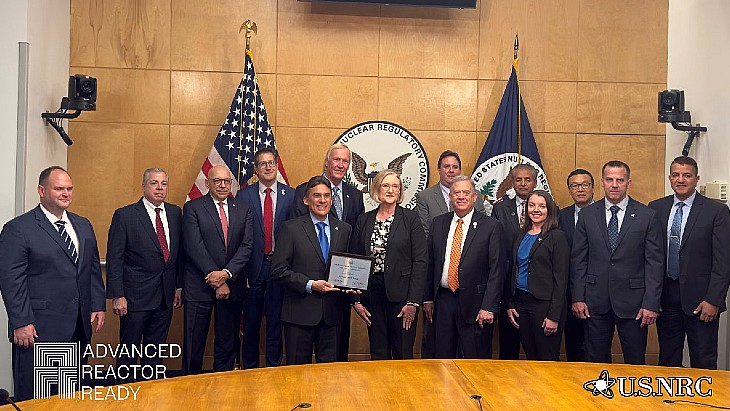
The US Nuclear Regulatory Commission has approved the 77 MWe version of NuScale Power's NuScale Power Module small modular reactor design. The regulator had previously approved a 50 MWe version of the design.
(Image: NRC)
The Nuclear Regulatory Commission (NRC) accepted NuScale's design certification application for a plant comprising up to twelve 50 MWe power modules in March 2017. The regulator certified the design in January 2023, making it the first SMR design to be cleared by the regulator for use in the USA.
NuScale subsequently uprated the capacity of the power unit to 77 MWe and in January 2023 submitted an application for NRC approval of a six-unit configuration based on the uprated design. The application was accepted for NRC review in July 2023.
The NRC has now announced that it has approved the uprated SMR design. "The standard design approval is based upon the staff's final safety evaluation report, issued 28 May," it said. "This completes the NRC's technical review ahead of schedule and under budget, demonstrating the agency's commitment to safely and efficiently enable new, advanced reactor technology."
A standard design approval indicates that a proposed reactor design meets applicable NRC safety requirements. Companies that seek to use the design would have to file applications seeking permission to construct and operate a nuclear reactor using the approved design.
NuScale said its uprated design features the same fundamental safety case and passive safety features previously approved by the NRC with "a power uprate and select design changes to support growing capacity needs".
"The US NRC's uprate approval of the NuScale SMR technology now strengthens ENTRA1 Energy to produce and deliver energy as the most near-term American SMR power solution via ENTRA1 Energy Plants with NuScale SMR technology inside," NuScale said. "ENTRA1 Energy is NuScale's partner and independent power plant development platform, which holds the global exclusive rights to the commercialisation, distribution, and deployment of NuScale's SMRs."
It added that NRC approval of the uprated design enables ENTRA1 Energy to "provide a wider range of off-takers and consumers with reliable, carbon-free energy".
"We are thrilled that the NRC has approved our second SDA application, this time for our 77 MWe design," said NuScale President and CEO John Hopkins. "This marks a historic moment not only for NuScale, but the entire industry, as NuScale and ENTRA1 move closer to meeting the demands of clean energy users.
"For more than a decade, our team has proudly worked alongside the NRC to achieve the successful approval of our designs. The NRC is domestically and internationally recognised and respected for its rigorous safety standards, and this approval is a crucial step toward meeting our goal of providing clean, reliable, and, most importantly, safe energy to off-takers and consumers."
New Era of Nuclear Power Hinges on Seawater Uranium Extraction
Global nuclear energy generation is expected to reach record levels in 2025, leading to an increased demand for uranium and a need for innovative extraction methods.
Chinese scientists have developed a new electrochemical method to extract uranium from seawater that is significantly cheaper and more efficient than previous methods, potentially transforming the uranium market.
The ability to extract uranium from seawater could provide energy security for countries lacking land-based uranium reserves and support the transition to a post-fossil-fuel future.
This year, the world will generate more nuclear energy than ever before. “The market, technology and policy foundations are in place for a new era of growth in nuclear energy over the coming decades,” the International Energy Agency (IEA) wrote in a report published last month.
“It’s clear today that the strong comeback for nuclear energy that the IEA predicted several years ago is well underway, with nuclear set to generate a record level of electricity in 2025,” stated IEA Executive Director Fatih Birol. “In addition to this, more than 70 gigawatts of new nuclear capacity is under construction globally, one of the highest levels in the last 30 years, and more than 40 countries around the world have plans to expand nuclear’s role in their energy systems.”
All that extra nuclear power generation is going to require a huge expansion of nuclear fuel production. So much, in fact, that the expansion of nuclear energy production capacity is expected to outpace the expansion of uranium production capacity on a global scale, and by a wide margin. This is expected to create a tight market and heightened competition to establish new uranium supplies.
As a response, scientists are trying to get creative about new ways to create or circumvent the need for uranium. And so far, China is winning the race. Chinese scientists are making great progress of developing nuclear energy reactors that are powered by thorium instead of uranium, and another team of researchers also just made a major breakthrough in a new way to source uranium from seawater.
This last development may mark a major breakthrough, as the world’s oceans are home to vast untapped reserves of the 92nd element. According to reporting from Semafor, “oceans are estimated to hold 5 billion tons of uranium, 1,000 times more than can be mined.” However, “the dissolved minerals are dilute and difficult to gather.” But a team of researchers from across China, in addition to a colleague from Taiwan, may have just cracked the code.
The scientists “developed an upgraded electrochemical method that requires less money and energy than any other seawater-extraction technique,” according to MSN News. The exact figures are nothing short of staggering. The method was able to extract 100 percent of the uranium present in waters from the East China Sea and 85 percent from the South China Sea. However, when using larger electrodes, the scientists were reportedly able to achieve 100 percent extraction from the South China Sea waters as well.
“The experiments also showed the energy required was more than 1000-fold less than other electrochemical methods,” writes New Scientist. “The whole process cost about $83 per kilogram of extracted uranium. That is twice as cheap as physical adsorption methods, which cost about $205 per kilogram, and four times as cheap as previous electrochemical methods, which cost $360 per kilogram.”
This breakthrough stands to solidify China’s place at the helm of the global nuclear energy industry. Currently, Canada, Kazakhstan and Australia are the largest global producers of uranium, accounting for nearly 70 percent of global production thanks to their naturally rich reserves. These new findings could allow China to join those ranks.
But the ability to extract uranium from sweater could also provide a critical point of entry for other countries that are not naturally rich in mineable uranium. “We need nuclear power as a bridge toward a post-fossil-fuel future,” Professor Steven Chu, a Nobel Prize-winning physicist, told the Stanford Report way back in 2017, when this technology was a distant theoretical possibility. “Seawater extraction gives countries that don’t have land-based uranium the security that comes from knowing they’ll have the raw material to meet their energy needs.”
By Haley Zaremba for Oilprice.com
Nordic nuclear regulators seek to enhance cooperation
Tuesday, 27 May 2025
A working group formed of representatives from the radiation and nuclear safety authorities of Denmark, Finland, Iceland, Norway and Sweden has released a strategy, which provides recommendations for strengthening cooperation between them.
(Image: Nordic Strategy Group)
At their annual meeting in Reykjavik, Iceland, in August 2023, the directors of the Nordic radiation and nuclear safety authorities decided to explore possible common strategic priorities for Nordic authorities in the current context to determine if and how such priorities may be reflected in existing cooperation forums and ways of working. This task was assigned to an ad hoc working group - the Nordic Strategy Group - representing all Nordic nuclear and radiation safety authorities. The authorities are: the Danish Emergency Management Agency (DEMA), the Norwegian Radiation and Nuclear Safety Authority (DSA), the Icelandic Radiation Protection Institute (GR), Denmark's National Institute of Radiation Protection (SIS), the Swedish Radiation Safety Authority (SSM) and Finland's Radiation and Nuclear Safety Authority (STUK).
The working group focused on aspects of cooperation that are likely to be particularly affected by the change in the authorities' operating environment resulting from the current geopolitical situation and the increased interest in nuclear power. It has now published its cooperation strategy - titled The Nordic Strategy Group Report: Enhancing Nordic Cooperation in Nuclear and Radiation Safety.
"There is a long tradition of successful cooperation among Nordic countries sustained by the historical, cultural and geographical proximity of the countries," the report says. "This tradition also carries through to the Nordic radiation and nuclear safety authorities, which have well established cooperation on multilateral and bilateral bases."
However, it notes that "the current operational environment of the Nordic radiation and nuclear safety authorities is very dynamic and changing rapidly. These changes are driven by the growing energy needs, connected to the green transition and a potential revival of nuclear energy, as well by the changes in the global and regional security environment leading to the emergence of new threats and a need for deeper regional cooperation."
The report contains 13 recommendations for further developing cooperation. The strategy divides these further goals into five main areas: knowledge sharing and joint training on permits and supervision of nuclear installations and materials; increased information exchange within radiation protection; expanded cooperation on preparedness for radiological and nuclear incidents; strengthened Nordic cooperation on international support for, among other things, Ukraine; and increased Nordic cooperation on visibility and joint Nordic influence in international cooperation forums.
"Implementation of the recommendations is suggested to be executed through the authorities' regular work and in different Nordic cooperation forums and working groups," the report says.
In the coming months, the Nordic authorities will prepare an action plan that will propose concrete implementation of the report's recommendations.
"Energy policy in Finland and Sweden encourages the construction of new nuclear power plants," STUK said. "In Norway, a government-appointed nuclear power working group is currently preparing a report on nuclear power. The topics are also part of the public debate in Denmark, where both the political climate and public attitudes towards nuclear power have changed due to the war in Ukraine. All Nordic authorities are challenged to prepare for future developments, including the development of regulation, supervisory practices and expertise."
"The Nordic countries need to have the capacity to deal with serious radiological accidents," GR said. "They need to have the capacity to measure the effects, to be able to quickly take appropriate safety measures and to communicate information to the public. They also need to have the knowledge and ability to accept foreign assistance, as each country has limited human resources and equipment to deal with major radiological accidents."
Article researched and written by WNN's Warwick Pipe
IAEA assesses safety at Dutch and Slovenian plants
Friday, 30 May 2025
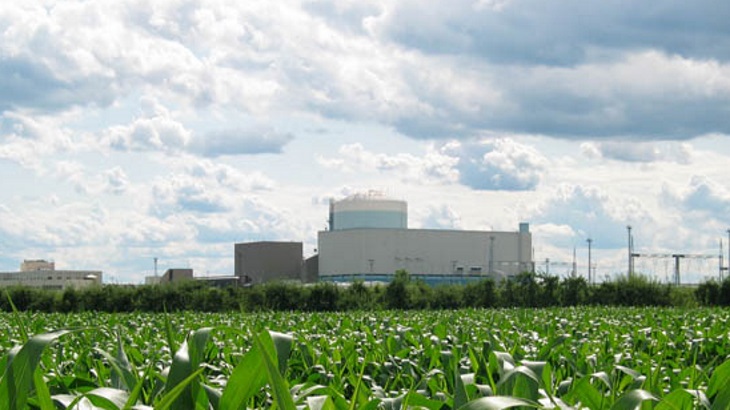
The operator of the Borssele nuclear power plant in the Netherlands has demonstrated a commitment to its operational safety, an International Atomic Energy Agency mission has concluded. Meanwhile, another IAEA mission has completed a review of long-term operational safety of the Krško plant in Slovenia.
The Borssele plant (Image: EPZ)
The 485 MWe (net) pressurised water reactor at Borssele - operated by EPZ - has been in operation since 1973 and accounts for about 3% of the country's total electricity generation. It is scheduled to close in 2033, but the government has requested it remain in operation until 2054, if this can be done safely.
An Operational Safety Review Team (OSART) mission, conducted at the request of the Netherlands, took place 19-23 May. The aim of OSART missions is to assess safety performance against IAEA safety standards, highlight areas of good practice and propose improvements. This was a follow-up mission to a 2023 OSART peer review mission to Borssele, which also found the plant to be committed to ensuring operational safety and reliability.
The majority of the recommendations and suggestions from the 2023 mission for improvement were found to be fully completed. It was concluded that a few points were satisfactorily addressed and still require some time to be fully completed.
"The plant has already implemented many actions to enhance worker engagement in safety-related initiatives to achieve excellence in operational performance," said team leader Yury Martynenko, Senior Nuclear Safety Officer at the IAEA. "We recognise the plant's defined new actions to continue the way towards a culture of continuous improvement."
"I am very pleased with the result and especially the way in which this has been achieved with a lot of engagement of our employees across the whole organisation," said EPZ CEO Carlo Wolters. "EPZ is very committed to continue the improvement journey to achieve the highest level of excellence in safe and reliable operations of the power plant."
The OSART team provided a draft report of the mission to the plant management. They will have the opportunity to make factual comments on the draft. These comments will be reviewed by the IAEA, and the final report will be submitted to the Netherlands within three months.
Slovenian mission
A ten-day Safety Aspects of Long Term Operation (SALTO) review mission to Slovenia's Krško plant - requested by the plant's operator, Nuklearna Elektrarna Krško (NEK) - ended on 22 May. An initial pre-SALTO mission was held at the plant in 2021.
Krško is a Westinghouse pressurised water reactor located on the Sava River. It is unusual in being jointly owned by two countries: Slovenia, where it is located, and Croatia, both of which were parts of the former Yugoslavia when Krško came online in 1981. It supplies as much as 40% of Slovenia's electricity. In 2023, the plant's operating licence was extended from initially 40 years to 60 years until 2043.
The Krško plant (Image: NEK)
A SALTO peer review is a comprehensive safety review addressing strategy and key elements for the safe long-term operation (LTO) of nuclear power plants. SALTO missions complement OSART missions which are designed as a review of programmes and activities essential to operational safety.
The IAEA team noted the progress in measures taken by the operator to ensure safe LTO. "The professionalism, openness and receptiveness for improvements of plant staff to meet and move beyond the IAEA safety standards is commendable," said team leader and IAEA Nuclear Safety Officer Martin Marchena, who noted that most ageing management and LTO activities were already in alignment with IAEA safety standards. "We encourage the plant to address the review findings and proceed with the implementation of all remaining activities for safe LTO."
"We appreciate the IAEA's support to our plant in ageing management and preparation for safe LTO," said Gorazd Pfeifer, President of the Krško board of management. "It is very important for us to get an external view on our business. The competencies and experience of the IAEA team enable us to effectively identify areas for improvement. The results of this mission will help us to improve our activities for safe LTO and to further align them with IAEA safety standards."
The team provided a draft report to the plant management and to the Slovenian Nuclear Safety Administration (SNSA) at the end of the mission. The plant management and SNSA will have an opportunity to make factual comments on the draft. A final report will be submitted to the plant management, SNSA and the Slovenian government within three months.
EDF 'just seeking to ensure Czech project meets EU rules'
Friday, 30 May 2025
French company EDF says the goal of its legal challenge to the decision to award the contract for new nuclear capacity in the Czech Republic to Korea Hydro & Nuclear Power is to ensure it is "in accordance with European regulatory rules".
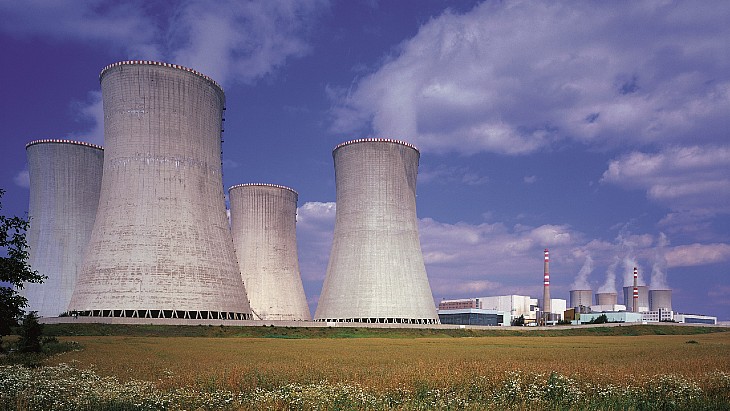
There are currently four units the Dukovany nuclear power plant (Image: CEZ)
The background
The Czech Republic is planning new nuclear capacity and in July last year announced KHNP was the preferred bidder, ahead of EDF. The KHNP bid was said to be for around CZK200 billion (USD8.6 billion) per unit, if two were contracted. EDF brought a case to the Czech competition authority challenging the tender process, which was dismissed last month. That cleared the way for the planned signing of the official contracts with KHNP on 7 May. However EDF succeeded in securing a last-minute court injunction in a Czech regional court on 6 May to stop the contract being signed until its case relating to the tender process has been heard in court. Last week the project development company Elektrárna Dukovany II appealed to the Czech Supreme Administrative Court to get the injunction lifted, with KHNP also filing an appeal.
In addition to the court cases, it also emerged that Stéphane Séjourné, European Commissioner for Industrial Strategy, had written on 2 May to ask for the contract signature to be postponed because the European Commission had started a preliminary review "to assess whether potential foreign financial contributions received by the Party (KHNP) constitute foreign subsidies and, if so, whether those foreign subsidies distort the internal market with respect to the project". The Czech Ministry of Industry and Trade dismissed the request, calling it a "courtesy letter" that was not legally binding.
Following Czech-EU talks there was an agreement last week to act quickly to start consultation to "clarify all legal and technical issues related to the EPC contract". According to a Reuters report this week the signing of the final contract might now be delayed until after the Czech general election in October.
What is EDF's case?
Throughout the legal challenge the French company has largely avoided public statements about the case, but Vakis Ramany, EDF's Senior Vice President International Nuclear Development, has now given his first interview since last September, to Czech media outlets including Info.cz. In it he said that the KHNP offer price and the inclusion of a guarantee that the construction would not be delayed or become more expensive, would be "unfeasible without illegal state aid given the prices in the nuclear industry". He said EDF's case was of their rival bidder having state support which would breach European Union rules. The EDF allegation was based on "information that is publicly available, including in the Korean press, and on the basis of statements by the Czech government, in particular on 17 July last year". (which was when the result of the tender was announced).
Asked about the anger and concern in the Czech Republic caused by the legal challenge, he said: "I understand that. That is why we are trying to explain our actions. But I want to make it clear to everyone that at this moment, it is absolutely not in France's interest to prevent the construction of new nuclear reactors in the Czech Republic ... our goal is clear. To ensure that the project to be built in the Czech Republic is implemented in accordance with European regulatory rules. And that it will be beneficial for Europe, but first and foremost for the Czech Republic and its industry ... If it is proven that there is no state subsidy from South Korea, then we understand that it is in your interest to build a new Korean nuclear power plant in the Czech Republic."
On the price offered, Ramany said that the KHNP reactor has a capacity of 1000 MW and EDF's one is 1200 MW and "when we convert that to the same capacity, our offer comes out almost the same ... the difference was really minimal. I am bound by a confidentiality agreement, but the price difference was a few percent".
Asked about the lack of a guarantee against price increases and delays, he said that EDF had learned from its Olkiluoto 3, Flamanville and Hinkley Point C projects, saying it had "become clear how enormous the risks are in today's highly complex European regulation and law, and that companies cannot directly influence them. That is why I argue that no-one without state subsidies is able to fully assume these risks. Economically, it simply cannot work. I know what I'm talking about. We've been through it. And we are the only Western company currently building in Europe".
He said EDF can guarantee the technology it supplies, the EPR reactor, and full support for the licensing process and it 100% guarantees the time and price of that work. It also guarantees the procurement. Together these account for more than 50% of the total price, he says. But he adds that they cannot have full control of construction as "this is where Czech and European laws and regulations come into play, which open up enormous possibilities for various obstructions and delays". "How can we guarantee how quickly the Czech authorities will decide on all the necessary construction permits? How can we influence who appeals against it and how? How quickly will the courts decide? Bear in mind that this will be the first nuclear reactor to be built here in 25 years. None of those who will be making the decisions have any recent experience with licensing nuclear reactors," he says.
On the issue of localisation of work, he says that EDF's bid guaranteed 40% of the total contract for Czech companies which could increase to 60% and "if four units were to be built, Czech companies would receive contracts worth CZK350 billion". He said their bid also "includes a share for Czech suppliers in other contracts in Europe" and "with 16 European projects under consideration in France and other countries, that would be CZK750 billion".
What have the Czech side, and KHNP said?
When the contract was announced in July last year KHNP's CEO Jooho Whang said: "I believe the primary reason the Czech government selected KHNP as the preferred bidder is because they recognised KHNP’s excellence in project management and construction capabilities, demonstrated by construction of 36 Korean nuclear reactors at home and abroad.
"Following KHNP’s successful project in the UAE, I expect that KHNP will play a pivotal role not only for Korea but globally in achieving energy security and carbon neutrality by constructing Korean nuclear reactors in the Czech Republic. A nuclear project involves long-term cooperation spanning approximately 100 years, covering construction through to operation. KHNP aims to solidify a 100-year friendship between the Czech Republic and Korea by constructing an APR1000 nuclear power plant. We will remain dedicated and exert our utmost efforts until the closing moments as we approach the upcoming negotiations with the project owner to ensure that the APR1000 reactor is built in the country."
Also on that day, Czech Minister of Industry and Trade Jozef Síkela said "it is clear that the preferred bidder offered a better price and more reliable guarantees of cost control, as well as the schedule of the entire project".
After the court injunction was granted earlier this month, KHNP issued a statement saying that it would "respect the Czech legal procedures and faithfully comply with all related laws and regulations" but believes the bidding process "was conducted fairly, transparently, and legally" and it was "very sorry about the competitor’s continued attempts to undermine the bidding results".
The Dukovany II Power Plant (EDU II) project company is seeking to lift the court injunction and it said earlier this month that the tender for the supplier of the new nuclear units "was carried out in all phases in a fully transparent manner and under fair conditions". In a 12 May statement it added: "EDF is at the same time challenging the Foreign Subsidies Regulation. EDF is concerned that the Korean side has given such favorable terms that they cannot be true. We consider this to be speculation by the unsuccessful bidder - the tender participants do not and must not have any information about the content of other bids except their own."
A statement published by the Czech Ministry of Industry and Trade on 14 May said Vlček had promised "all necessary cooperation" with the European Commission and also said that, "according to the expert opinion of the Ministry of Industry and Trade, the EPC contract with the company KHNP was not subject to the Regulation on Foreign Subsidies. This was due to both the nature of the contract itself and the fact that the tender procedure had been initiated before the effective date of this Regulation".
Nuclear power in the Czech Republic
The Czech Republic currently gets about one-third of its electricity from the four VVER-440 units at Dukovany, which began operating between 1985 and 1987, and the two VVER-1000 units in operation at Temelín, which came into operation in 2000 and 2002.


_39739.jpg)
_83768.jpg)