Gaza is suffering “man-made mass starvation” caused by the blockade of aid into the territory, the head of the World-Health Organization, Tedros Adhanom Ghebreyesus, has said, as more than 100 humanitarian agencies urged Israel to allow supplies in to alleviate the crisis.
In the face of this catastrophe, Canada must urgently deploy peacekeeping forces to break Israel’s blockade of Gaza and end what U.N. Special Rapporteur on the Right to Food, Michael Fakhri, has called “the fastest starvation campaign we’ve seen in modern history.” More than 18,000 Canadians have already signed Parliamentary e-petition 6619, calling on the Canadian government to “work with international partners, including the United Nations, to urgently deploy peacekeeping forces to Gaza for the protection of civilians, to support the delivery of humanitarian aid.” The petition, sponsored by NDP Member of Parliament Heather McPherson, affirms that “impartial international peacekeeping forces have historically played a vital role in protecting civilians and facilitating humanitarian aid in areas of armed conflict.”
Yet when JURIST reached out to Canada’s current ambassador to the United Nations, Bob Rae, to inquire why Canada has not publicly supported the deployment of peacekeeping troops to Gaza to help end mass starvation, no response was given. The lack of response highlights a broader hesitation within the Canadian government to translate growing public concern into concrete international action—despite Canada facing a formal UN investigation for its complicity in enabling Israeli atrocities.
Editor’s note: After the publication of this piece, JURIST received the following response from UN Ambassador Bob Rae:
In order for there to be a peacekeeping operation, there has to be a ceasefire and the release of hostages held by Hamas. Those discussions are currently underway. Canada has long been calling for such a [ceasefire]. We support the full withdrawal of Israeli troops from Gaza and the West Bank. A peacekeeping force would require authorization by UN and whether Canada would join would depend on agreement / but security and safety must return to the region.
In a comment to JURIST, Western University law professor emeritus and former UN Special Rapporteur on the Occupied Palestinian Territories, Michael Lynk, stated:
The United Nations General Assembly has affirmed, on numerous occasions, its permanent responsibility with respect to the Question of Palestine until it is satisfactorily resolved in all of its aspects.
Given that Israel is conducting an unlawful occupation—as determined by the International Court of Justice in July 2024 and accepted by the General Assembly in September 2024—and has shown no indication of ending this occupation by the September 2025 deadline, and given its repeated defiance of legally binding provisional measures issued by the Court in January, March, and May 2024, the United Nations has the legal responsibility to take all feasible steps to end both the occupation and the military assault on Gaza.
This would include sending peacekeeping forces and a peacekeeping administration to all parts of the occupied Palestinian territory (as was done in East Timor) to facilitate the transition to a genuine Palestinian state.
The legal pathway for such intervention exists through established UN mechanisms that circumvent Security Council paralysis. As Fakhri notes, “when the Security Council is in a deadlock because of a veto, the United Nations General Assembly has the authority to call for peacekeepers to accompany humanitarian convoys to enter Gaza.” Canada should immediately invoke the “Uniting for Peace” resolution and work with like-minded nations to authorize a robust peacekeeping mission through the General Assembly. The East Timor precedent that Lynk references provides a concrete example of how the UN can deploy comprehensive peacekeeping missions to facilitate transition to statehood when occupation powers refuse to comply with international law.
Canada’s moral authority to lead such an initiative is undercut by growing international scrutiny of its own role in the humanitarian catastrophe. In May 2025, the UN Committee on the Elimination of Racial Discrimination launched a formal inquiry into Canada’s military exports to Israel, expressing “deep concern” that these transfers may be facilitating “crimes against humanity, war crimes, and genocide” in Gaza. This marks the first time a UN treaty body has formally examined Canada’s potential legal responsibility in connection with Israel’s assault on Gaza’s civilian population.
The operational rationale for deploying peacekeepers centers on breaking Israel’s blockade on Gaza that has precipitated an unprecedented humanitarian collapse. Current conditions in Gaza represent a complete breakdown of civilian protection, with Amnesty International documenting how “hundreds of Palestinians have been killed and thousands injured either near militarized distribution sites or en route to humanitarian aid convoys.” Displaced Palestinians like Ghada al-Fayoumi describe how “there’s no food, no bread, no drinks, no rice, no sugar, no cooking oil, no bulgur, nothing.”
A recent Leger poll demonstrates that Canadian public opinion aligns with this legal imperative, showing “49 per cent” of Canadians “agree that Israel is committing genocide in the Gaza Strip,” with “more than 60 percent of Liberal Party, NDP, Green Party and Bloc Quebecois supporters” believing “Israel’s actions amount to genocide.” This public consciousness creates political space for Canada to lead an international peacekeeping mission that could break Israel’s blockade and save thousands of lives— while addressing the profound contradiction of a country under UN investigation for enabling the atrocities in Gaza.
A Canadian-led multinational peacekeeping force could fulfill three urgent roles:
- Physically breaking the blockade by securing humanitarian corridors;
- Protecting civilians from ongoing violence; and
- Creating space for sustainable political solutions
The mission would require sufficient mandate and resources to deter attacks on civilians and aid operations, potentially including naval vessels to secure sea-based aid delivery and air assets to monitor compliance with international humanitarian law. Canadian Forces could coordinate with nations like France, Ireland, Norway, and South Africa—countries that have shown strong support for Palestinian rights—to deploy a comprehensive mission combining military protection and humanitarian capacity.
However, Canada cannot credibly lead such a mission while simultaneously undermining Palestinian self-determination through Operation Proteus and supplying military goods that may support Israeli war crimes. Operation Proteus, whereby Canadian police train Palestinian security forces in the West Bank to suppress protest against Israel’s occupation, fundamentally contradicts Canada’s stated commitment to protect Palestinian civilians and erodes Canadian credibility before a single Canadian peacekeeper is even deployed into Gaza.
Prime Minister Mark Carney has already acknowledged that Israel’s “denial of humanitarian aid in Gaza is a violation of international law” and called for replacing “Israel’s control of aid distribution” with “comprehensive provision of humanitarian assistance led by international organizations.” This statement provides a policy foundation for peacekeeping deployment, while international momentum builds with France’s decision to recognize Palestinian statehood creating diplomatic opportunity for coordinated action.
The UN investigation into Canada’s complicity underscores a stark reality: continuing with the current policy of passive alignment with Israeli actions while claiming to champion human rights is an unsustainable and morally bankrupt position.
Canada’s path forward demands immediate and decisive action:
- Terminate Operation Proteus to eliminate policy contradictions
- End all direct and indirect exports of military goods to Israel to address UN concerns about complicity
- Mobilize international partners to pursue General Assembly authorization for a peacekeeping mission; and
- Deploy Canadian peacekeepers with a clear mandate to break the blockade and secure humanitarian access
History will judge Canada’s response to this crisis. Canada has a legal and moral obligation to meet the moment.
Canada urges 'Israel to unblock humanitarian aid immediately'
'As I will discuss at the United Nations next week, Canada is committed to a two-state solution where Palestinians and Israelis can live peacefully side by side,' says foreign minister
Merve Aydogan |25.07.2025 - TRT/AA
HAMILTON, Canada
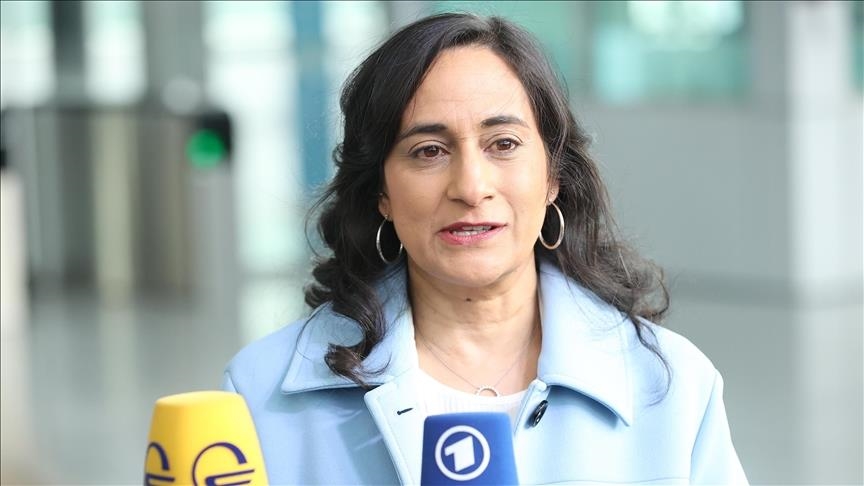
Canadian Foreign Minister Anita Anand called on Israel Friday to "immediately" allow the flow of humanitarian aid into the Gaza Strip, where deaths by starvation have climbed in recent days.
"Today, I spoke with Minister Gideon Saar. I underlined the urgent need for Israel to unblock humanitarian aid immediately, of which Canada has committed over $300 million, and to end the unnecessary humanitarian crisis in Gaza," Anand said in a post on X.
She said Canada remains committed to efforts to restore peace and stability in the region.
"I also reiterated Canada’s ongoing support for an immediate ceasefire. Hamas must release all hostages, lay down its arms and play no role in the governance of a Palestinian State," she said.
She confirmed her attendance to upcoming UN conference in New York on the two-state solution, and said: "Canada is committed to a two-state solution where Palestinians and Israelis can live peacefully side by side."
Canadian Prime Minister Mark Carney on Thursday had condemned Israel's failure to prevent a humanitarian crisis in Gaza, urging the Israeli government to relinquish control over aid distribution and allow international organizations to take the lead.
"Israel’s control of aid distribution must be replaced by comprehensive provision of humanitarian assistance led by international organizations," he said on X.
Palestine urges Canada to recognize statehood amid growing global momentum
Palestinian Foreign Minister Farsin Aghabekian Shahin during phone call with his Canadian counterpart Anita Anand cites Gaza crisis, stalled revenues, and rising global support as key reasons for Ottawa to act
Aysar Alais and Tarek Chouiref |25.07.2025 - TRT/AA
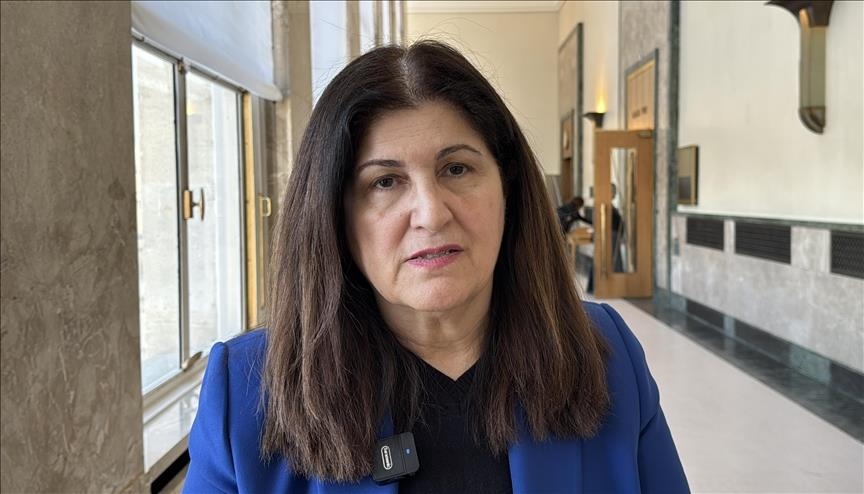
RAMALLAH, Palestine / ISTANBUL
Palestinian Foreign Minister Farsin Aghabekian Shahin on Friday called on Canada to recognize the State of Palestine, saying the move is vital to protect the two-state solution from further erosion.
Shahin made the appeal during a phone call with Canadian Foreign Minister Anita Anand, according to a statement from the Palestinian Foreign Ministry.
She said Canadian recognition would “help preserve the political horizon for peace” and counter Israel’s continued unilateral actions.
The call comes amid renewed diplomatic momentum for Palestinian statehood.
On Thursday, French President Emmanuel Macron announced that Paris would officially recognize Palestine during the UN General Assembly in September.
So far, 149 of the UN’s 193 member states have recognized Palestine—a number that has steadily risen since Israel began its war on Gaza in October last year.
Shahin and Anand also discussed the worsening humanitarian crisis in Gaza and efforts to revive international engagement toward a comprehensive peace, the statement said.
Shahin stressed the urgent need for a cease-fire, unhindered humanitarian access, and an end to what she called Israel's use of starvation as a weapon of war, which violates international law.
She urged Canada to take a more active role in pressuring Israel to release Palestinian clearance revenues it has withheld for months.
“These funds are essential for the Palestinian Authority to continue providing basic services to its people,” she said, warning that the financial strain could undermine regional stability.
The Palestinian Authority has not been able to pay full salaries to public employees for the past two months. Since 2019, Israel has withheld portions of Palestinian tax revenues under various pretexts, totaling more than $2.7 billion.
Israel has killed more than 59,700 Palestinians, most of them women and children, in the Gaza Strip since October 2023. The military campaign has devastated the enclave, collapsed the health system, and triggered famine-like conditions.
Last November, the International Criminal Court issued arrest warrants for Israeli Prime Minister Benjamin Netanyahu and his former Defense Minister Yoav Gallant for war crimes and crimes against humanity in Gaza.
Israel also faces a genocide case at the International Court of Justice over its war on the enclave.