Saturday, June 14, 2025

LAPD Running Amok, Dishing out Numerous Injuries to Protesters and Journalists in LA

Protesters confront police on the 101 Freeway near the Metropolitan Detention Center of downtown Los Angeles, Sunday, June 8, 2025, following last night's immigration raid protest. (AP Photo/Jae C. Hong)

On 11 June, the Substack, Closer to the Edge, penned a letter to the Los Angeles Police Department, and the opening graph says it all:

You shot a journalist on live television. You struck another in the forehead while he was standing alone under a freeway. You sent one man into emergency surgery after punching a hole in his leg with a “less-lethal” round. You bruised a New York Times reporter’s ribcage. You gassed a foreign correspondent while she was wearing a press badge. You shot a 74-year-old woman in the back. You nailed a man in the chest with a 40mm grenade while he was holding a phone. And you left a woman bleeding from the skull in the middle of the street while people begged your officers to call an ambulance—and they didn’t.

And now you’re “investigating.”

Closer to the Edge maintains it has “completed a full, verified investigation of eight people injured by law enforcement during the protests in Los Angeles. Seven were journalists. One was a protester. All of them were harmed under your watch.”

The Substack notes that it is “publishing” the stories of the victims of police violence “[w]ith verified quotes. With real names. With witness footage, medical updates, and your own damn statements when available. You told the public you’re investigating? Then we’ll do it faster, better, and with the one thing your officers seem allergic to: accountability.”

Reuters is reporting that there has been over 30 incidents of police violence against journalists as tracked by the LA Press Club. According Reuters Helen Coster, “Journalists have been among those injured during protests” in recent days.

Among the injured were Lauren Tomasi (Nine News Australia) who was struck by a rubber-bullet projectile; Toby Canham, freelance photojournalist for the New York Post, was hit in the forehead by a “hard rubbery” projectile; Nick Stern, a British photojournalist, was shot in the thigh with a projectile and required emergence surgery.

Bill Berkowitz is a longtime observer of the conservative movement. Read other articles by Bill.
The battle of Los Angeles

Saturday 14 June 2025, by Tempest Collective


As the mass ICE raids began on Friday, June 6 in Los Angeles, members of Tempest’s LA branch participated in rapid response and other protest efforts with mass organizations into the weekend. The Community Self-Defense Coalition, in which Tempest members participate, is a key formation that coordinates LA’s rapid response efforts. Branch members were actively involved in defense efforts during skirmishes across downtown LA, the pitched battle in the city of Paramount, and rapid response efforts to repel ICE in the city of Pasadena. They compile and record their experiences in this report throughout the weekend, covering the first days of mobilization.


FRIDAY JUNE 6

The first day involved nearly a dozen raids near downtown Los Angeles, Sun Valley and North Hollywood neighborhoods, and LA County suburbs, including Pomona. Emergency rallies were called and converged around the downtown Metropolitan Detention Center. After dispersing protesters there, different law enforcement officers went over to the adjacent district of Chinatown to stage late night around 9pm. There was lots of contradictory and confusing information spread across different protest chats throughout the night. At first, we were told that they were setting up for a night raid; later, word on the block was that they were setting up for Trump’s ‘border czar’ Tom Homan’s press conference at 7 am the next morning. Dozens of FBI agents stationed in a parking lot in Chinatown on Hill St., later joined by Border Patrol, LAPD, and Homeland Security. Protesters quickly gathered to monitor and heckle them, soon outnumbering law enforcement, which also reinforced their numbers. Know Your Rights information was blasted on megaphones in English, Spanish, and Cantonese, as protesters informed local residents of their rights.

Things became more intense as armored personnel carriers and additional law enforcement personnel poured in, although it was still unclear why they were staging in Chinatown. Some protesters, including bikers, tried to block vehicles from entering the lot. Some identified undercover officers and their vehicles on the protesters’ side and successfully heckled them to leave. Others followed various vehicles exiting the lot to figure out where they were going. Soon, law enforcement occupied the whole street beyond the lot to pressure the protesters out. Loud popping sounds started, with some claiming that they were sound cannons being blasted by the police. The pressure from protesters continued into midnight, after which all law enforcement retreated without explanation. There were no further reports of mass raids and Homan’s press conference the next day. (Homan later appeared on television the next afternoon to announce the deployment of the National Guard.)

SATURDAY JUNE 7

On the second day, rapid responders rushed to the city of Paramount in the morning, located about a half hour drive south of LA, upon reports of an ICE raid at a Home Depot. Paramount developed into a war zone throughout the day. Paramount is a majority low-income and Latinx area, and one of LA’s key industrial regions. The organized left has little presence in this area, but the militancy seen on June 7 demonstrates the spontaneous power of Brown working-class youth in defending their communities. ICE cars were seen burning. Hundreds of law enforcement officers were deployed throughout Paramount, throwing tear gas and flash bombs as protesters fought back and the Home Depot barricaded itself for safety.

As the Paramount battle stretched on, supporters continued to respond to different reports of ICE raids across LA, as some continued to support detainees at the downtown detention center. More people began gathering back at the detention center early in the evening. Around 100-150 protesters were there around 7pm. LAPD gathered en masse to use tear gas and shoot pellets at protesters in this area between 8-10pm. Most of the street around the detention center was cleared out and occupied by hundreds of LAPD officers. In the meantime, Homan confirms on national television that he’ll be federalizing the California National Guard for deployment in LA, against Governor Gavin Newsom’s dissent. It was unclear that night what this meant or when exactly the Guard would arrive. The day-long battles in Paramount stretched west into the city of Compton, which was one of the last sites where militant mobilization continued that day.

There were reported ICE sightings at probably six other locations throughout southern California but the majority of protest and state activity occurred primarily in the vicinity of the Home Depot in Paramount and Compton that went into the early morning Sunday, and again at the Downtown LA Metropolitan Detention Center where protesters had been gathered the entire day.

SUNDAY JUNE 8

LOS ANGELES

On June 8, Angelenos woke to the news that over 2000 National Guard had been deployed. A protest in the predominantly Latinx working-class Boyle Heights neighborhood was planned by Centro CSO and other immigrant rights and local groups for the morning. Crowds had also already begun to gather back at the detention center downtown.

Activists gathered at Mariachi Plaza to protest the ICE raids of the previous two days. Speakers included labor movement icon Dolores Huerta. Speakers generally emphasized not only the rights of immigrants but also applauded the courage and rapid response of the activists gathered, as well as the importance of showing the Trump administration that people will continue to fight back against his draconian methods. The gathering mobilized to march down 1st Street for 1.5 miles to the Federal Metropolitan Detention Center on Alameda Street where they met a larger crowd of activists that had been gathering from the previous two days. Within minutes of arrival, the authorities fired upon the crowd of protesters, presumably with only tear gas, and the front of the crowd began to disperse. There did not appear to be any serious injuries, though many seemed unprepared for tear gas, and some were adversely affected. The Centro CSO organizers, worried about crowd safety, encouraged those remaining from the Mariachi Plaza rally to return to Boyle Heights. Many of us stayed to record the events, in particular the fully militarized presence of local, state, and federal authorities, including the National Guard. I left soon afterward when the tear gas became too overwhelming.

The crowd at the detention center remained at about 100-300 people for the next two hours and had not yet encountered further violence. Protesters stood off with the 20 California National Guard members stationed at the rear of the building. Eventually, a squadron of 15 LAPD cars arrived further down the road, prepositioned to block one exit along the walled-in road. A large portion of the crowd then moved around the guarded door and went around the corner, escaping a potential kettle. The police formed a line around their vehicles and appeared to fully surround a portion of the protesters, but did not make arrests.

Around this time, a rally called by the Party for Socialism and Liberation (PSL) at the city hall nearby began to march toward the detention center. It was unclear whether the march was part of the original rally plan or if the crowd spontaneously decided to march. This mass contingent arrived just in time to reinforce the surrounded protesters near the detention center. As they arrived, the police were forced to retreat promptly. Thousands of protesters continued to flood the streets outside the Detention Center throughout the afternoon and occupied the nearby intersection at Alameda and Temple. Some remained around the intersection while others continued to march. This contingent went through Little Tokyo back to the Federal Building.

At this point, the crowd was too large to be effectively organized. Some remained at the Detention Center, others continued to march, while a smaller group occupied the freeway.

A formation of LAPD officers opposed the crowd of 200 protesters, who kept a close distance from the line. The police continued to shoot volleys of less-lethal weapons into these different sites, though protesters remained steadfast for hours. Pro-Palestine slogans and clothing were not only ubiquitous, but many of those furthest in the front defending the protests from the police were wearing keffiyehs. We witnessed multiple people around us injured. Street medics helped many protesters tend to their injuries. The police soon declared unlawful assembly but were unable to fully sweep the intersection for hours. At one point, the police declared that they would begin arrests in a minute, but were halted by a protester’s car that slowly rolled through the intersection with a child sitting at the window, raising a Mexican flag with his fist up. The crowd protected them, and the sweeps were delayed for another half an hour.

After another stand-off, the protesters crossed over the median of the freeway, stopping the flow of traffic in the opposite direction. As soon as this happened, the police widened their line and began shooting flash bangs in the sky above the protesters on the freeway. Peaceful protesters were met with disproportionate state violence that increased with time, including being fired on with less-lethal guns from rooftops. Several Waymo automated cars were burned. Significant numbers of protesters remained in the streets at various points around downtown LA into the evening and after nightfall. They were forced off the freeway but continued to march to other locations. As the protesters’ numbers grew thinner, police aggression increased. By sunset, the remaining protesters were forced to construct makeshift barricades using benches and signs.

PASADENA

In Pasadena, word got out early in the morning across rapid response chats that ICE and DHS agents were staying at three local hotels: the Westin, Dena Hotel, and the new AC Hotel. There were reports of ICE agents questioning hotel workers who were servicing the rooms. By noon, Unite Here and the National Day Laborers Organizing Network brought out more than one hundred people from Pasadena and Altadena to inquire about and protest ICE’s presence. Faith leaders, community organizations and politicians, including Mayor Victor Gordo, showed up afterwards, and the crowd swelled to several hundred. Speakers at the rally denounced the intimidation and the hotel’s collaboration with ICE as they profit from family separation.

Throughout the day, protesters marched and circled the block, vowing to stay until ICE left. Some of the ICE vehicles’ tires were damaged. The protest served as a rallying point for the community. Community organizations like AUSIIME and the pro-immigrant band Los Jornaleros del Norte kept spirits high throughout the day with chants, cumbia, and anti-ICE songs. After several hours of protests, local politicians who had been intermediating with management announced that ICE had been asked to leave the hotel, and the crowd erupted in jubilation. Still, protesters did not leave until the agents had checked out and continued waiting, anticipating any movement. Since the morning, workers had been informing the rally of potential ICE movements, and everyone anticipated the humiliating exit from the hotel. After fixing their popped tires under the hot sun, ICE agents began to exit swiftly from the parking structure where protesters waited for them at all exits. As vehicles swerved through the parking structure, they were chased out by triumphant protesters who celebrated their victory, chanting “Si se pudo!” — (We did it!).

MONDAY JUNE 9

Early in the morning, families of several workers (mostly women and youth) who were detained in Friday’s mass raid at Ambiance garment factory, gathered for a press conference, assisted by the Garment Workers Center and other community organizations. A Tempest member assisted with security. The detained workers were the main providers in their families, and the families shared that they have not been able to hear from them yet. They called on ICE to free them, and to leave our communities. A group of over 100 people gathered to support them, including Palestinian and Palestine solidarity organizations, Indigenous organizations, progressive clergy, and other community nonprofits. The families also shared that Ambiance has still not released the workers’ owed wages to them, and a delegation of them went to the company offices after the press conference to demand these wages. There was no visible police presence or counter-protests, but many of us were informed throughout the event that ICE activity was beginning again in other parts of LA, including in Huntington Park, and the Fashion District again just a mile away from us. Many attendees went directly to the Grand Park rally to support David Huerta and SEIU right after.

Later that morning at 11 am, there was a rally at Grand Park in downtown led by SEIU in support of SEIU California President David Huerta, who was detained for participating in the protest against the mass raids at the detention center on Friday. There was curiously light police presence at first, despite the clashes over the weekend. In addition to SEIU International and various locals, many other major unions were present, including AFSCME, UHW, LULAC, Teamsters, UNITE HERE!, ILWU, LIUNA, IBEW, and IATSE. There were also representatives of various civic and community organizations, like Clergy and Laity United for Economic Justice (CLUE), LAUSD, CARECEN, UCLA Labor Studies, and LA County. The DSA-endorsed City Councilmember Ysabel Jurado was also present and spoke.

The general theme was that David Huerta’s arrest is also an injury to all of us. It was a demonstration of around two to three thousand people that affirmed courage in the face of the federal presence sent by Trump. A band, Las Cafeteras, performed some songs like “La Bamba,” “If I Was President,” “Stand By Me,” which also asked the audience what they would change if they were president for a day. Prominent labor leaders spoke and affirmed labor’s role in the fight against fascism, including SEIU president April Verrett, Dolores Huerta, NAACP president David Johnson (who connected workers’ and civil rights, drawing on the Black struggle). Johnson powerfully declared that the Black struggle has taught him that saying nothing about the oppression of the most vulnerable would be an invitation for more abuses against everyone. Representatives from Justice for Janitors USWW, like Luis Fuentes, spoke about David Huerta’s labor bona fides.

But there was little emphasis on the need to build a resistance outside of the Democratic Party. Dolores Huerta emphasized nonviolence and the need for electoral strategies during the midterms, which was reaffirmed by the SEIU Political Policy director. Another policy representative spoke about the importance of forming coalitions with allies in other movements, emphasizing the need for strength in numbers and solidarity.

Police presence and pressure began to ramp up toward the end of the rally, as a student walkout that morning converged at the nearby Federal Building. Hundreds of students and other community members began to join, and police vehicles from other cities, such as Vernon, Torrance, and San Marino, appeared.

The Trump administration announced the deployment of Marines into LA around this time, as mass raids ramped up targeting many cities across Orange County, south of LA.

The situation remains highly fluid, and more protests are sure to occur in the coming days and weeks. There have already been reports of heightened ICE activity for the next 30 days. Tempest LA branch members will continue to participate and report on any resistance activities.

9 June 2025

Source: Tempest.


Attached documentsthe-battle-of-los-angeles_a9044-2.pdf (PDF - 924.2 KiB)
Extraction PDF [->article9044]


Tempest Collective sees the activity of the vast majority of the world’s population whose ability to work is their only means of survival as the crucial factor in building the socialist movement and winning reforms. The working class is the agent of social transformation – of ridding our society of capitalism, addressing the existential environmental catastrophe, and building a socialist society – if we can organize ourselves.

International Viewpoint is published under the responsibility of the Bureau of the Fourth International. Signed articles do not necessarily reflect editorial policy. Articles can be reprinted with acknowledgement, and a live link if possible.

 

Critical minerals and genocide in the Congo

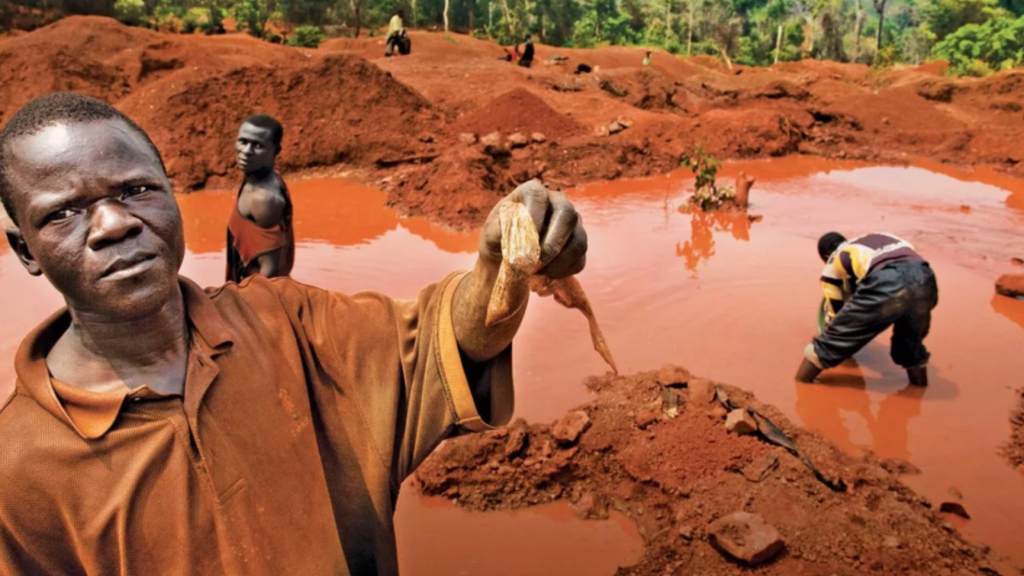
A miner shows a bag containing coltan in the Democratic Republic of the Congo

When people hear the word “genocide”, they probably think of Gaza, maybe Sudan. But the world’s worst genocide has been occurring in the Democratic Republic of the Congo (DRC), where vicious wars have been fought for nearly three decades for power and control over critical minerals.

In the wars from 1998 to 2012, the national army fought local militias as well as the armies of neighbouring Rwanda and Uganda, while six African countries intervened as a peacekeeping force. Estimates of the numbers killed range from four to six million. 

Now violence has erupted again, with the Rwanda-backed M23 militia driving the DRC army out of Goma in January. Tens of thousands have since fled the North Kivu capital, adding to the estimated 750,000 people in refugee camps. In February, the South Kivu capital, Bukavu, was surrendered to the M23 without a fight.

Since the M23 militia invaded North and South Kivu provinces and captured their capitals Goma and Bukavu, it is reckoned that 3000 people have been killed. Local journalists said the streets of Goma were littered with bodies, many appearing to be civilians. 

Violence against the civilian population is widespread, with huge levels of sexual violence against women. Twenty years ago it was said the DRC was the world’s capital of rape. 

Today, the term rape goes nowhere near describing the unspeakable atrocities committed against women by all forces involved in the conflict. Sexual violence has a precise function — causing dread among the civilian population and forcing obedience or flight. 

New inter-imperialist competition

North and South Kivu, along with Katanga further to the south, are home to vast amounts of critical minerals, including gold, diamonds, coltan, cobalt and the 17 so-called rare earth minerals needed in electronic devices of all kinds (see Appendix 1), plus other minerals such as lithium, needed in electric car batteries. 

The search for critical minerals is part of the new inter-imperialist competition. European Commission President Ursula von der Leyen visited Kigali in 2023 and met with Rwandan president Paul Kagame to discuss EU mineral deals.

Luxembourg-based company Traxys is regarded as the main conduit of so-called “blood minerals” to EU manufacturers. In April, NGO Global Witness accused Traxys of knowingly trading coltan from militia-controlled areas in North Kivu (see Appendix 2).

Demand for critical minerals is rapidly rising because of accelerating demand for electronic devices, but also because the dominant models of green transition depend on vast numbers of batteries and magnets. 

Wind turbines are widespread and there will be 1.4 billion electric cars by 2050. Simultaneously the intensification of high-tech weapons production (and the cloud computing to support it) require large amounts of rare earth and other minerals.

We have reached the threshold of a new period of catastrophic wars, in which ultra-high technology is used to find targets — weapons systems, soldiers, civilians, public infrastructure — and destroy them with what the US military terms “maximum lethality”. 

This has tipped the world into a new arms race, which exceeds the old Cold War in the extent to which there is constant invention and use of new and more lethal weapons.

The imperial powers’ utter disdain for human life can be seen in Russia’s use of white phosphorus in Syria, the former Bashar al-Assad government’s use of chemical weapons against the Islamist hold-out areas in northern Syria, and the plethora of drones and missiles used by Russia in Ukraine. 

At the same time, the US has given Israel 14,000 2000-pound bombs — the bomb that destroyed Hiroshima was equivalent to 15 tons, which is why Gaza looks as if it has been hit by several nuclear bombs.

Future green transition

There are many questions surrounding the green economy of the future, which is to be built around machines that need finite critical minerals. 

By 2050, the vast energy consumption of electronic devices and data centres will pose major questions about the model of green transition that has been adopted by energy and computing corporations, as well as governments.

Infinite demand for finite resources could lead to another catastrophe. 

US President Donald Trump is facing in two directions on this question. On the one hand, he says climate science is rubbish; on the other hand he wants the US to join the fight for critical minerals needed for the green transition. 

At the Singapore regional security conference on May 30, French president Emmanuel Macron called on Asian and European countries to stand together against the attempt by major powers (the US and China) to control resources, such as minerals and fisheries, and push out smaller nations. Macron focused his appeal on countries such as Indonesia and the Philippines. 

The next day, US defence secretary Pete Hegseth argued the US had always been an Indo-Pacific power and claimed China could be on the verge of launching an attack on Taiwan. 

Hegseth was trying to swivel the debate onto the military/security terrain. His pitch was to stress that Asian countries could only secure their defence by standing shoulder to shoulder with US militarism.

Imperialist exploitation

The effect of imperialist domination on the DRC can be seen in the contrast between the extraordinary mineral wealth of the country and the dire poverty of most of its inhabitants. 

In terms of mass poverty, the DRC is rated fifth in the world. The average income per person is just $449 a year and 75% of the population lives on less than $2 a day. 

The mineral wealth of the country is effectively shared between the corrupt rulers of the DRC, Rwanda and Uganda and their respective capitalist classes — a narrow band of people with a stake in trading mineral wealth, through their links to the army, militias and governmental state apparatuses.

If we contrast the situation in the DRC with Norway’s huge mineral wealth (oil and, to a lesser extent, gas), then the price of imperialist intervention becomes clear. 

Norway’s oil industry was nationalised from the moment North Sea oil was discovered in 1969. It financed the creation of a sovereign wealth fund, now called the National Investment Fund. The value of this fund is now just under $1.8 trillion. 

The average Norwegian salary is more than $60,000 a year and the country has the highest income per capita of any country. 

The imperialist seizure of the DRC’s wealth has brought its population poverty, continual displacement and endless violence. 

The capitalist classes of poorer countries, such as the DRC, who trade away their national wealth, enriching themselves in the process, are what Marxists call “comprador capitalists”. 

Rwanda president Paul Kagame has a neat twist on this, which is to enrich himself and the Rwandan capitalist class by selling off the wealth not only of his own country but of a neighbouring country with much bigger mineral reserves – the DRC.

No infinite consumption on a finite planet

The battle for control over critical minerals is part of a new phase of imperialism. 

Trump, as the figurehead of the fascist MAGA movement, is attempting to sabotage the globalisation phase of world capitalism. At the same time, major capitalist states have embarked on a green transition involving the use of huge quantities of critical metals. 

But these metals are finite. 

For capitalists around the world seizing on the green transition to make money, this means the continual production of new commodities, spurring ever larger consumption of finite resources. 

The spectacle of contemporary capitalism continually generates the delusion that people can live like rich celebrities through the accumulation of fast fashion, fast cars and home ownership, for example. 

But they cannot — not now and not under socialism.


Appendix 1: Rare earth metals

According to the Opera browser’s AI:

Rare earth metals are a distinct group due to their unique chemical properties and their position in the periodic table. Here’s a breakdown of why they are considered a distinct group, how they are related, and their various uses:

Why they are a distinct group

  1. Chemical similarity: Rare earth metals share similar chemical properties, which makes their separation challenging. They often exhibit similar ionic radii and oxidation states.

  2. Position in the periodic table: They are located in the f-block of the periodic table, specifically in the lanthanide and actinide series.

  3. Scarcity: Despite their name, they are not necessarily rare in terms of abundance in the Earth's crust, but they are rarely found in economically exploitable concentrations.

How they are related

  • Lanthanides: This group includes elements from lanthanum (La) to lutetium (Lu), which are known for their similar properties.

  • Actinides: This group includes elements from actinium (Ac) to lawrencium (Lr), which also share similar characteristics but are primarily radioactive.

Uses of rare earth metals

Rare earth metals are crucial in various high-tech applications, including:

  1. Electronics: Used in smartphones, digital cameras, and computer hard drives.

  2. Lighting: Essential for manufacturing LED lights and fluorescent lamps.

  3. Magnets: Neodymium, for example, is used to create powerful magnets found in loudspeakers and motors.

  4. Medical Imaging: Employed in MRI machines and other imaging technologies.

  5. Renewable Energy: Important for wind turbines and electric vehicle batteries.

These metals play a vital role in modern technology, making them indispensable in various industries. 


Appendix 2: Traxys and critical minerals

A new investigation by NGO Global Witness has raised serious questions about the European Union’s responsibility in the ongoing conflict in eastern DRC. 

The report reveals that Traxys, a Luxembourg-based commodities trader, bought large quantities of coltan officially exported from Rwanda in 2024 — yet much of it is believed to have originated in Rubaya, a mining area in North Kivu under the control of the M23 armed group. 

According to customs data obtained by Global Witness, Traxys imported 280 tons of coltan from Rwanda in 2024. However, two Congolese coltan smugglers interviewed by Global Witness claimed the material had been mined in Rubaya, where the M23 has established military and administrative control. One source explained that the rebel group levies a 15% tax on every load of coltan passing through its territory. 

This mineral, once refined into tantalum, is a vital component in smartphones, electric vehicles, and other technologies central to the global energy transition.

Source: Business and Human Rights Resource Centre

Pyrrhic victory for South Korea’s liberals? 

The significance of Lee Jae-myung’s presidential election win


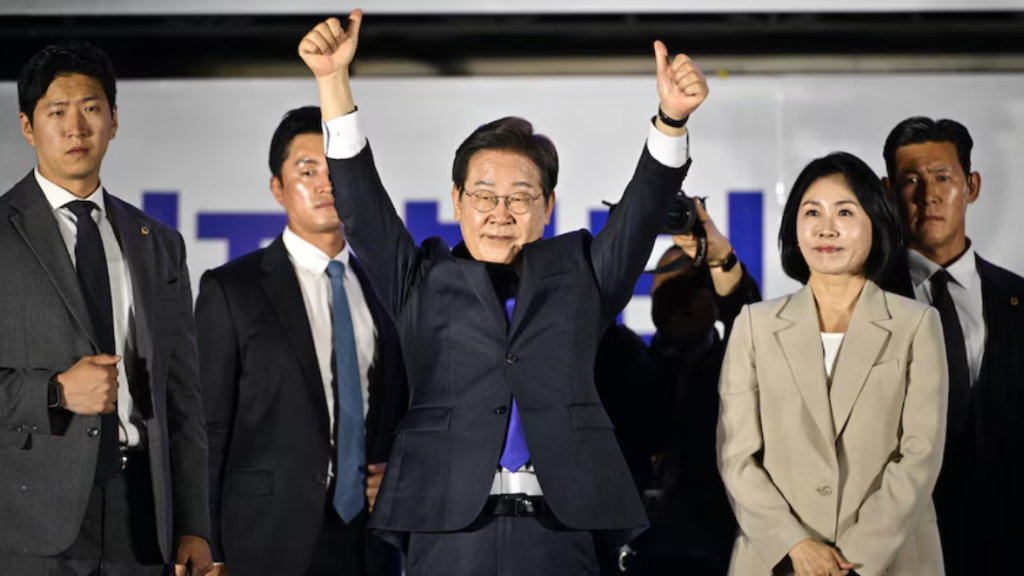
Lee Jae-myung

[Editor’s noteYoungsu Won, director of Pnyx — Korean Institute for Marxist Studies, will be speaking at Ecosocialism 2025, September 5-7, Naarm/Melbourne, Australia. For more information on the conference visit ecosocialism.org.au.]

Democratic Party (DP) candidate Lee Jae-myung defeated his main rival, Kim Moon-soo from the ruling conservative right People Power Party (PPP), in South Korea’s June 3 presidential vote. 

Lee’s victory marks the official end of the political crisis that erupted with former PPP president Yoon Suk Yeol’s failed December 3 self-coup. Pro-coup forces have finally lost power and the liberals are back in government as a result of the anti-coup people’s power candlelight revolution that swept the nation.

The DP, however, failed to win its expected absolute majority of votes or defeat Kim by more than 10%. The “New Right” candidate performed better than polls predicted, with the PPP reaping considerable support despite the damage suffered from Yoon’s coup attempt. 

The result leaves the new president and his government in a troublesome position. As this was a snap election, Lee was immediately sworn in on June 4 and will have to work with Yoon’s ministers, at least until a new cabinet is named.

From self-coup to impeachment

Despite mobilising troops, trying to occupy the National Assembly and seeking to arrest key political leaders, Yoon’s self-coup failed within hours after parliamentarians voted to annul his martial law decree. They did so as people mobilised all over the country, forcing soldiers involved in the plot back into their barracks. Parliament then voted on December 4 to impeach Yoon, who was subsequently arrested on January 15 on charges of leading a rebellion against the constitution. 

In response, reactionary forces fought back, led by Christian fundamentalists and extreme-right groups with the backing of the crisis-stricken PPP. This led to a delay in the Constitutional Court’s ruling on impeachment, and Yoon’s release from prison on March 8. Elated by these wins, extreme right forces stepped up their aggressive and violent anti-impeachment offensive, as the situation turned more tense and uncertain. 

But on March 4, the Constitutional Court ultimately voted to ratify Yoon’s impeachment, triggering a presidential election.

Anti-coup vs pro-coup election

The PPP was divided throughout the coup fiasco, with the pro-impeachment Han Dong-hoon leadership being overthrown by a pro-Yoon extremist faction. Under the control of the pro-Yoon faction, the PPP increasingly drifted towards forming a de facto alliance with the extra-parliamentary extreme right, characterised by anti-Communist, pro-US and Christian fundamentalist views.

Seen by many as the most viable candidate to defeat the PPP, Lee easily won the DP’s preselection race with 89.77% of votes. In contrast, the PPP’s preselection campaign was marked by dirty infighting between little-known politicians with few chances of defeating the DP. Kim’s preselection was largely a reflection of the PPP’s abrupt turn to the extreme right.

Kim was a former student leader who was also deeply involved in the trade union movement in the 1970s and ’80s. After the failure of the left-wing Popular Party, which he helped establish in the early ’90s, he began shifting right and joined the conservatives. 

After serving three terms as a local MP (1996-2006) and twice as Governor of Gyeonggi Province (2006-14), Kim continued shifting in a conservative direction to become a leader of the New Right. 

Yoon appointed Kim as Minister of Employment and Labour, the former labour leader transforming into the country’s most anti-labour minister. During the anti-impeachment campaign, Kim consistently sided with Yoon.

Though Kim won the primaries, he was not the candidate preferred by PPP leaders, who believed Kim had little chance. They instead backed Prime Minister Han Duck-soo, who served as acting president after Yoon’s impeachment. 

Han claimed he had opposed Yoon’s coup, but covertly defended Yoon during the impeachment trial and maintained Yoon’s ultra-conservative regime while briefly in power. Despite the uneven election playfield and various technical irregularities, PPP members opted for Kim over Han.

Lee Joon-seok, a young conservative expelled from the PPP, also ran as a maverick candidate for the New Reform Party, managing to gain strong support from many young anti-feminist men. 

On the progressive side, Justice Party figurehead and veteran labour leader Kwon Young-gook stood for the Democratic Labor Party (DLP) coalition, which also included the Green Party and the Labor Party. The only other progressive candidate, Kim Jae-yeon from the Progressive Party (PP), stood down during the race to support Lee Jae-myung.

In the end, the four-way contest pitting three anti-coup parties against the only pro-coup party turned into a two-horse race, especially as the extreme right’s persistent protests and violent actions consolidated the now ultra-conservative PPP’s traditional support base. 

Election result

This was not enough, however, to save the PPP. Lee Jae-myung became South Korea’s 21st president and only the fourth DP president since the democratisation process began in 1987. Lee Jae-myung won 17,287,513 votes (49.42%) to Kim’s 14,395,639 votes (41.15%), the margin being smaller than expected (one major exit poll indicated the result would be 51.7% to 39.8%).

The vote was disappointing for Lee Jae-myung and the DP, who wanted an overwhelming victory. On the other hand, Kim’s support was much higher than expected, given his approval rate was below 10% earlier this year while Lee Jae-myung’s support was more than 40%. 

Though Kim lost, his trajectory from outsider to ruling party candidate is alarming in many ways. Paradoxically, his relatively strong showing has exposed the PPP’s vulnerabilities and the difficulties it faces in carrying out the reforms needed to survive as a viable ruling conservative party.

Positioning himself as an alternative candidate of reformed conservatism against the hopeless ultra-conservatism of the PPP, Lee Joon-seok won 2,917,523 votes (8.34%). He won support from many young men due to his strong anti-feminist views and sexist remarks during the campaign, which were both an asset while limiting his support among other sectors. 

As the only progressive candidate, Kwon won 344,150 votes, falling short of the 1% target (0.98%) and well below that obtained by previous progressive candidates in the past two decades.

A more detailed analysis of the votes is needed, but it appears that regionalism also was a strong factor. For example, in Yeongnam, a PPP stronghold in the south east, there was a strong showing for Kim, especially in the cities of Busan and Daegu where he won an absolute majority.

The left

Labour and social movements played a key role in the struggle against Yoon’s self-coup and for his impeachment. However, in the context of a snap election, their role was severely limited as the major institutional players quickly came to dominate the political scene, leaving little room for progressive politics. 

Radicalised young women, who played a very prominent role in the candlelight revolution — also known as the glow stick revolution due to young people swapping candles for glow sticks normally seen at K-Pop concerts — were largely marginalised in the campaign.

The PP — the largest political current on the left, which emerged after the Park Geun-hye government banned the Unified Progressive Party (UPP) in 2014 — opted to join the liberal bourgeois coalition backing Lee Jae-myung. 

They did the same in the April 2024 general election, when they joined the pro-DP coalition in return for securing some seats. Obtaining two party list seats and one constituency seat, the PP ensured it overcame the ongoing political and organisational impact of the UPP’s ban and expulsion of its five MPs from parliament.

The Justice Party, in contrast, went into crisis after defeat in the 2024 general election reduced it to an extra-parliamentary party. Subsequent internal disputes over the party’s direction only further demoralised its ranks. 

In this context, the JP reluctantly participated in a broad progressive pre-selection process, in which Kwon ultimately won over former Korean Confederation of Trade Unions (KCTU) president Han Sang-gyun by 4565 votes to 1913. 

Han Sang-gyun is a well-known labour leader due to his militant role in the 76-day Ssangyong Motors strike in 2009. However, his team was poorly organised and failed to win any official support from the KCTU. 

Despite various difficulties, Kwon worked hard to raise progressive and labour issues as the only progressive candidate. However, his campaign and result was not enough to help the JP overcome the multiple crises it faces.

KCTU’s fiasco

The most bitter pill for progressive politics was the KCTU’s decision to not support any progressive candidate. While the DP’s long history of anti-labour policies made it hard for the KCTU to openly support Lee Jae-myung, leaders remained divided over who to support. 

KCTU president Yang Kyung-soo, from the pro-PP faction, was unable to impose support for the DP on KCTU-affiliated unions and members. Many KCTU leaders from other factions criticised Yang's indecision, urging him to instead support Kwon. 

Yang refused and ensured the KCTU’s National Executive Committee did not take a position. He later apologised for the KCTU’s failure to adopt a position on the election, but refused to step down.

The country’s two biggest industrial unions — the Korean Metal Workers’ Union (KMWU) and the Korean Public Service and Transport Workers’ Union (KPTU) — did support Kwon and protested the KCTU’s indecision. But several other industrial and individual unions backed Lee Jae-myung and the DP.

Founded in 1995, the KCTU played a key role in establishing the former Democratic Labour Party in 2000, but ultimately could not prevent the party from falling into internal strife and eventually splitting in 2008. This left the KCTU having to simultaneously support various divided progressive parties.

Fight the right, deepen democracy

In the course of Yoon’s impeachment, popular mobilisation enabled the DP to defend South Korea’s democracy. However, in the process up until Yoon’s eventual dismissal it was challenged by extreme-right forces. Clearly, the foundations of the democracy South Koreans have struggled for over so many years still need to be consolidated.

Labour and social movements have been key agents in this process of social and political democratisation. However, three decades of neoliberal counteroffensive has left democracy weakened, with hard-won rights constantly under attack from conservative governments. 

The capacity of the Lee Jae-myung government to bring about democratic reform is yet to be seen. But considering the historic record of DP governments, not much can be expected. Though Lee Jae-myung is considered a progressive reformist, he will have to confront enormous challenges, as well as overwhelming internal and external pressures.

People’s power, together with labour and social movements, will have to pressure the DP government to respect the people’s will and implement its promised grand reform project for South Korean society. At the same time, there is no doubt that extreme-right forces will seek to further gather strength to push their reactionary agenda. 

As with elsewhere in the world, the struggle against this fascist and extreme right-wing offensive will have to be tied to the fight to deepen democracy, in the process paving the way to build alternatives beyond capitalism.

Youngsu Won is director of Pnyx — Korean Institute for Marxist Studies.

Statements: 

Stop Israel now! No war on Iran!

A collection of statements opposing Israel’s military strikes on Iran released by the following socialist organisations: Partido Lakas ng Masa (The Philippines), Communist Party of India (Marxist-Leninist) Liberation, Fourth International, Awami Workers Party (Pakistan) and International Marxist-Humanist Organization. 
 

Partido Lakas ng Masa (Party of the Labouring Masses, The Philippines): Israel-US, Hands off Iran!

We condemn in the strongest possible terms Israel’s attack on Iran and residential neighbourhoods in the capital, Tehran, where civilians were killed.

This is a further escalation by this genocidal state of its war offensive in the Middle East — genocide and ethnic cleansing in Gaza, the West Bank, Lebanon, Yemen, Syria and Iran. 

Israel acts with such impunity because it has the support of the United States and other imperialist powers. 

Militarism and wars are an imperative of the imperialist system, historically and today, with imperialism once again on the war path. 

We therefore support the right of sovereign nations in the Global South to protect themselves against imperialist coups and other forms of aggression, including through military means, as a deterrence. 

While we also support all genuine peoples movements in the Global South struggling against capitalist and authoritarian regimes, ‘regime change’ should be the act of the masses themselves and in their interests, not a result of some imperialist plot. 

In the case of Iran, where imperialism has had a long-term objective of regime change, we support Iran’s right to defend itself.

Israel-US, Hands off Iran!

No to imperialist wars! 

Free Palestine!

June 13, 2005


Communist Party of India (Marxist-Leninist) Liberation: On Israeli military aggression against Iran 

The Communist Party of India (Marxist-Leninist) Liberation strongly condemns the recent military aggression by the Israeli state against Iran. On June 13, Israel launched large scale attack against Iran’s civil nuclear installations and other infrastructures. This reckless escalation is part of a deliberate strategy by the US-Israel axis to impose regional imperialist dominance, destabilise West Asia, and provoke widespread conflict. 

The far-right Netanyahu regime, facing increasing global isolation and domestic discontent amid the ongoing Genocidal war on Gaza, is now attempting to widen the conflict and externalise its crisis by targeting Iran and threatening Lebanon, Yemen, Syria, and beyond.  

Israel’s so-called “pre-emptive” strike follows the familiar script of US imperialism, echoing the 2003 invasion of Iraq under the false pretext of weapons of mass destruction.  

A key turning point was the Trump administration’s unilateral withdrawal from the Joint Comprehensive Plan of Action (JCPOA) in 2018, which dismantled a widely supported diplomatic framework and reignited tensions. Since then, Iran has faced escalating economic sanctions, acts of sabotage, and targeted assassinations, culminating now in open military threats. 

It is increasingly clear that the goal of the US-Israel axis is to burn West Asia to crush sovereign nations, and impose control over the region’s geopolitical and energy landscape.  

Israel’s action not only threatens West Asia, but the entire world. Israel has become a rogue state, brazenly violating international law and conventions with the full backing of the United States.

India must break its silence and take all possible steps to stop Israel. Silence and inaction will amount to complicity and India must not be bracketed with the US-Israel axis in its escalating crimes against humanity.

Central Committee, CPI(ML) Liberation

June 13, 2025


Fourth International: Stop Israel now!

Israel's unprecedented attack on Iran is a direct result of the impunity it has enjoyed while carrying out a live-streamed genocide in Palestine over the past 20 months. Under the false pretext of "self-defense," Israel has escalated its long-standing policy of Palestinian erasure into full-scale genocide. Now, it extends that aggression by bombing Iran, claiming to defend itself from a hypothetical nuclear threat—despite not being a signatory to the Nuclear Non-Proliferation Treaty and remaining unaccountable for its own nuclear arsenal.

This impunity is made possible by the United States and other governments that continue to arm Israel—supplying weapons, funding, and political cover as it carries out mass atrocities across the region. The U.S. has emphasized that Israel acted unilaterally in its strike on Iran and has denied any involvement while being the primary supplier of the weapons used in this attack.  Alongside other governments that arm and shield Israel, the U.S. is complicit in enabling Israel's expanding aggression across the region. They are all partners in atrocity.

This belligerence has not only claimed civilian lives, but it also threatens the long and courageous struggle of the Iranian people against a repressive regime, of which the latest high point was the movement "Woman, Life, Freedom". History shows clearly: there is no path to democracy under the shadow of war.

We stand firmly with the people of Iran—both in their ongoing resistance to dictatorship and in their right to live free from foreign military aggression. We denounce Israel's attack on Iran and demand international pressure to stop its reckless regional escalation now.

We urgently demand:

Hands off Iran!
An immediate end to regional escalation!
Solidarity with political prisoners and human rights defenders in Iran, and vigilance against further repression by the regime.

As we have done for months, we continue to demand:

Sanctions on Israel now!
An immediate end to all arms trade with Israel!
Global mobilization to stop the genocide in Palestine!

Executive Bureau, Fourth International

June 13, 2025


Awami Workers Party (Pakistan): On the cowardly attack by Israel on Iran

The Awami Workers Party (AWP) strongly condemns Israel’s unprovoked attack on Iran, mourns the deaths of civilians and warns that the US-backed Zionist regime is threatening to spark not only unprecedented military conflict in the Middle East but also potentially the world. The AWP also condemns the role played by Iran’s neighbouring Muslim countries, including Jordan, UAE, Qatar, Saudi Arabia, in facilitating Israel’s bombardment, much like these Muslim rulers have betrayed the Palestinian cause.

AWP secretary general Bakhshal Thalho has said in a statement that the Israeli and US states are the world’s biggest perpetrators of mass terror and have repeatedly demonstrated that they will act unilaterally and in complete contravention of all international covenants to both subdue the oppressed peoples of the Middle East as well as spark wider military conflagrations. Both states deploy the language of ‘counter-terrorism’ to justify imperialist wars in the region, a tactic that has now been adopted by Muslim rulers from Egypt to Pakistan to quell internal dissent and buttress their own militaristic designs.

The present attack on Iran has been justified in the name of neutralising Iran’s nuclear arsenal, exposing a ridiculous double standard on the part of the US, Israel and other so-called ‘civilised’ countries like France and the UK who themselves have built up massive nuclear weapons capacities. The rhetoric around Iran’s nuclear weapons mimics that which preceded the US war on Iraq in 2003 in the name of pre-empting ‘weapons of mass destruction, which in fact the US (and Israel) possess more than any other countries in the world. The AWP believes that Iran retains the right to defend itself and to deter further attacks by the Zionist entity.

The AWP has always opposed US imperialist wars and those waged by its Zionist satrap. The AWP believes that by target killing Iran’s senior-most military personnel, Israel and the US are sending the region and world spiraling towards unending war, hate and militarisation, which will benefit only the military-industrial complexes that rule in both countries, and indeed the world.

The AWP also views the Pakistani state’s toothless positions on imperialist wars in the Middle East with great suspicion. Pakistan’s military establishment has long pandered to the whims of US imperialism, including the 20-year occupation of Afghanistan, as well as its policy of encircling Iran. The Pakistani people firmly oppose the US-Israel nexus in the Middle East, as well as our own region, and the AWP appeals to all progressive forces to forge a mass anti-imperialist politics that can articulate solidarity with Iranians and Palestinians as well as oppressed peoples within Pakistan that continue to bear the brunt of wars, occupation and structural violence.

June 13, 2025


International Marxist-Humanist Organization: Oppose apartheid Israel’s attack on Iran!

Israel’s June 13 attack on Iran, beginning at 3:00 AM local time, was a reckless, barbarous act that threatens to set the entire region aflame. Some 200 Israeli planes, as well as missiles and drones, bombarded the country, destroying military bases and nuclear infrastructure, the avowed aim of the attacks. Israel also assassinated, apparently in their homes, several important military, political, and scientific leaders, among them the commander of the Islamic Revolutionary Guard Corps, the country’s most important military leader. Its strikes also killed the chief-of-staff of the Army and four nuclear scientists. Reports from Iranian civilians suggest that many of the attacks struck residential areas of Tehran and other cities. To the extent that regime officials were killed in their homes, this constitutes a major violation of the laws of war, apart from the utterly innocent civilians also killed in such actions.

Israel clearly wants to stop any possibility of another US-Iran nuclear deal and may have moved more quickly to attack than even Trump wished. But now that Iran has counterattacked, the US will jump to Israel’s defense. This only underlines the need to cut off all military funding and aid to Israel, as we have been demanding since the genocidal Gaza war of 2023

Israel’s stated aims are to incapacitate or decisively delay Iran’s nuclear weapons capabilities, to destroy its long-range missiles, and to decapitate its military and nuclear research infrastructures. It promises, with strong US support so far, to deal such a decisive blow to Iran as to remove it as a threat to US-Israeli hegemony in the region. This, like its aim of “eliminating” Hamas in Gaza, is in the long run Quixotic. In truth, Israel has incomparably less chance of destroying Iranian military capacities. It will, however, be able to inflict untold suffering on the Iranian people.

How could such a miscalculation be possible? First, Israel and the US seem to believe that with Iran’s allies in Syria and Lebanon having been destroyed or severely weakened, that it will be hard for Iran to stage a serious counterattack against Israel. Thus, now is the time to take advantage of Iran’s weakness. This is a grand illusion if it means that Iran can be eliminated as a factor in the region rather than temporarily weakened.

Second, Israel seems to believe that the Iranian people will support their attack, and perhaps even rise up to overthrow the regime. While the regime’s popular support is weaker than ever since the 2023 mass uprising of women and ethnic minorities, this is an even greater illusion. This is the error of believing one’s own propaganda. The illusory character of such aims is seen in the horror almost all Iranians are feeling at this clearly unwarranted aggression, as seen in this post on social media from inside the country just hours after the attacks began: “The people of Iran must not be sacrificed again. Not for the Islamic Republic. Not for Zionist militarism. And not for those who, from abroad, mistake bloodshed for liberation.”

Finally, Israel is playing both the antisemitism and the Islamophobia cards, claiming that the Iranian regime is some kind of inherent threat to Israel, just because its rhetoric ever since 1979 has referred to the “destruction” of Israel. Also, because at some time in the future it could conceivably attain a nuclear weapons capability, Israel claims that Iran would then move to attack even if that meant suicide vs. Israel’s actual nuclear weapons, not least because its religious fundamentalism extolls martyrdom. Here, Israel is under the illusion that, just as largely spurious charges of antisemitism have been used to justify the repression of the pro-Palestinian movement in the West, and in the US, outright attacks on major universities, it could play that card again to gain support for its military adventurism. Given the relative silence of US liberals, and the support of the Trump administration, this may be the case. But for how long, especially if the US is drawn in or Israel asks it to take a direct part?

At the same time, our opposition to this military aggression in no way constitutes any kind of political support for the Iranian regime. The genuine left has opposed the Islamic Republic from day one. Back in 1979, we supported the feminists, the independent wing of the workers councils, and the leftist tendencies that wanted to turn to the revolution against the shah into something socialist, secular, and democratic. This kind of support for the progressive opposition needs to continue, just as we supported uprisings like the ones in 2023, or earlier, 2009. It can also be pointed out that the regime is weaker and more dysfunctional internally that it seemed, given how easily its leaders were picked off by Israel on June 13.

But these kinds of considerations in no way lessen our opposition to this new wave of Israeli-US aggression.

Written by Kevin B Anderson and approved as a statement by the Steering Committee of the International Marxist-Humanist Organization.

June 14, 2025

Scott Ritter: “We are at war with Iran.”


On Russia’s Sputnik News, Scott Ritter, who has honestly reported on this matter for over 25 years, said on June 13, that the Trump Administration worked with the Netanyahu Administration to plan this strike against Iran and is therefore already at war against Iran, and that almost certainly America will also become militarily engaged in it. He also says that the strike was devastatingly effective and was directed at and achieved three objectives: 1. decapitation; 2. eliminating air-defense; 3. greatly weakening Iran’s retaliatory capability.

The decapitation was like what Israel had earlier achieved also against Hezbollah. Elimination of air-defense knocked out Iran’s Russian S-300 and S-400 air-defense systems, which perhaps had not been placed on high alert. Retaliatory capability was thus enormously weakened by the surprise attack taking-out much of Iran’s above-ground air force.

Trump had participated by feigning to be negotiating with Iran and saying that Iran might experience a devastating Israeli invasion if Iran fails to accept Trump’s terms at the final talks that had been scheduled with Iran on Sunday June 15. Iran had carefully planned for that scheduled meeting. They trusted that Iran didn’t need to go undergound  yet (place all critical people and assets underground) until then. All of Iran’s leaders were to go to their bunkers, if needed, only on or after June 15 (if the alleged negotiations were to fail). The Trump-Netanyahu plan was for Iran’s top assets to be sitting ducks for this surprise attack. Iran fell for their con.

Here are the sources:

“Scott Ritter: US Lulled Iran to Sleep Using Nuclear Talks Deception, Allowing Israel to Strike”

13 June 2025

Israel has carried out an unprecedented attack on Iran, targeting its nuclear program, scientists, and senior military leaders. Sputnik asked veteran ex-Marine intelligence officer Scott Ritter what just happened, and what comes next.

The months of Iran-US nuclear talks essentially gave “Israel the opportunity for maximum surprise to achieve maximum damage,” with the strikes effectively amounting to “a joint US-Israeli attack on Iran,” Scott Ritter said. … “This, by any definition of the word, was a joint US-Israeli attack on Iran.” … “We are at war with Iran,.” … “If the Iranians have the capabilities that they claim to have and the resilience they claim to have, we will see an escalation. We will see Iran retaliating in a way that is not sustainable for Israel. But this is part of the Israeli trap to create the perception of existential struggle so that the United States will be confronted with a choice, let the Israeli ally suffer and perhaps be defeated, or to intervene and administer the coup de grâce against Iran. So, you know, we are looking at a long, drawn-out process that ultimately, I believe, will result in the United States entering this conflict on the side of Israel directly.” …

“Scott Ritter: US Used Nuclear Talks to Set Up Israeli Strike on Iran | APT”

13 June 2025

“I believe that Israel and the United States coordinated very closely on this attack. This attack was a surprise attack. The Iranians were lulled into a false sense of complacency by the American insistence on focusing on a 6th round of negotiations that was scheduled to take place on Sunday. Israel was working with the United States on that narrative, saying that if there wasn’t a deal reached Sunday, then Israel would be considering an attack. This was very closely coordinated in order to give Israel the maximum opportunity for surprise to achieve maximum damage. … This was … a joint Israeli-American attack on Iran. … This attack was initiated with a decapitation strike that found many of the Iranian leaders in their homes. Had Iran been on high alert, these leaders would have been in a bunker. …”

*****

Anyone who continues to think that Trump is ‘the peace candidate’ is just as misinformed or stupid as Iran’s Supreme Leader was to think that the U.S. Government is serious about achieving peace instead of using ‘negotiations’ ONLY as a ploy to fool and thus defeat the countries it has already decided to “regime-change.” The U.S. regime is bipartisanly neoconservative. The only path to peace would be to replace it. Replacing one Party by another can’t even possibly free the American people from this dictatorship (which America became on 25 July 1945).

Eric Zuesse is an investigative historian. His new book, America's Empire of Evil: Hitler’s Posthumous Victory, and Why the Social Sciences Need to Change, is about how America took over the world after World War II in order to enslave it to U.S.-and-allied billionaires. Their cartels extract the world’s wealth by control of not only their ‘news’ media but the social ‘sciences’ — duping the public. Read other articles by Eric.

‘Unacceptable’: Iranians seethe after Israeli onslaught


IRAN HAS THE RIGHT TO DEFEND ITSELF!


By AFP
June 13, 2025


Iran's emergency services respond to an Israeli air strike which reduced much of a Tehran residential building to rubble. - Copyright TASNIM NEWS/AFP MEGHDAD MADADI

Mostafa Dadkhah, Majid Sourati and Sebastien Ricci

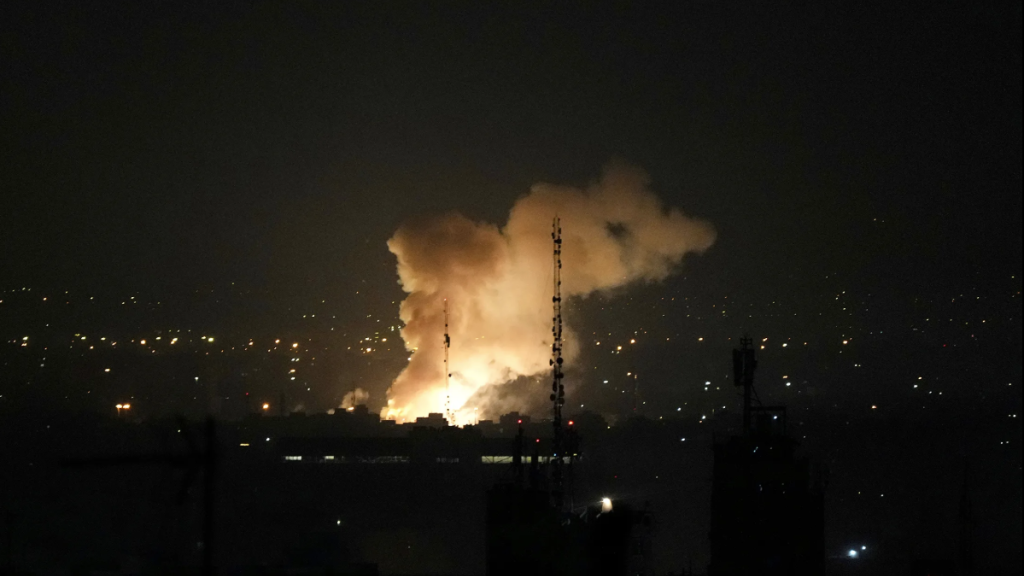
Iranians called for revenge on Friday demanding a swift response to a dizzying wave of strikes by Israel, as some took to the streets in protest, while others sheltered inside, unsure what would happen next.

The aerial onslaught killed several of the military’s top brass, targeted an array of leading scientists and struck military and nuclear sites across Iran in an unprecedented attack that left many seething with anger.

“How much longer are we going to live in fear?” asked Ahmad Moadi, a 62-year-old retiree. “As an Iranian, I believe there must be an overwhelming response, a scathing response.”

The raids appeared to push the longtime enemies into full-blown conflict following years of fighting a shadow war mostly conducted through proxies.

Iran regularly arrests individuals it accuses of spying for Israel amid a flurry of targeted assassinations and acts of sabotage targeting its nuclear programme in recent years.

At least six scientists involved in Iran’s nuclear programme were killed in Friday’s strikes.

“They’ve killed so many university professors and researchers, and now they want to negotiate?” Moadi exclaimed, referring to calls for Iran to go ahead with nuclear talks with Israel’s US ally planned for this weekend.

As Iran continued to assess the damage, some residents rallied in the streets of Tehran chanting: “Death to Israel, death to America,” while waving Iranian flags and portraits of supreme leader Ayatollah Ali Khamenei.

State television said similar demonstrations were held in cities across the country.

The Israeli strikes followed repeated threats from Prime Minister Benjamin Netanyahu, who appeared to finally cap a years-long quest to strike Iran’s nuclear programme.

“We can’t let this bastard continue, or we’ll end up like Gaza,” Abbas Ahmadi, a 52-year-old Tehran resident, told AFP from behind the wheel of his car.

“Iran must destroy him, it must do something.”


– ‘If God wills it’ –


Friday’s attacks came after more than a year of soaring tensions as Israel took on Iran’s regional allies Hamas in Gaza, Hezbollah in Lebanon and the Huthis in Yemen.

Amid the tensions, Israel and Iran exchanged aerial barrages on two separate occasions last year. while stopping short of a full-scale war.

But following Friday’s attack, all bets were off over what would come next, with Khamenei warning Israel faced a “bitter and painful” fate, while the Iranian military said there would be “no limits” to its response.

Apart from scattered protests, Tehran’s streets were largely deserted, except for queues at petrol stations, a familiar sight in times of crisis.

Air traffic was halted at Tehran’s Imam Khomeini International Airport amid disruption across the region.

In the upscale district of Nobonyad in north Tehran, rescuers continued to comb through the rubble of two apartment blocks targeted in Israeli strikes.

Families with tear-streaked faces gathered nearby.

“They want to deprive us of our nuclear capability — that’s unacceptable,” said Ahmad Razaghi, 56, calmly echoing the official line.

For Farnoush Rezaei, a 45-year-old nurse wearing a colourful hijab, Friday’s attacks represented a final act by Israel — a country “on its last breath”.

Iranian leaders have for decades insisted that Israel will “soon” disappear. “If God wills it, at least a bit of peace will come from this,” said Rezaei.


Israel Strikes Iran


Rogue States and Thought Crimes


Pre-emptive attacks in international law are rarely justified. The threat must evince itself through an obvious intent to inflict injury, evidence preparations that show the threat to be what Michael Walzer calls a “supreme emergency”, and arise in a situation where risk of defeat would be dramatically increased if force is not used.

Reaching an assessment on that matter is almost impossible. Evidence of such a threat by the aggressor state is bound to be speculative, concealing other strategic objectives that make that action amount to illegal, preventive war. Israel’s ongoing attacks on Iran’s nuclear infrastructure are taking place in the absence of nuclear weapons, motivated by the hypothetical scenario that such weapons would be irretrievably developed and used against the Jewish state. Iran, in other words, was being punished for a thought crime.

The Israeli Defense Forces released a statement expressing the rationale: “Weapons of mass destruction in the hands of the Iranian regime are a threat to the State of Israel and a significant threat to the entire world. The State of Israel will not allow a regime whose goal is the destruction of the State of Israel to possess weapons of mass destruction.”

There is even a concession on the part of IDF officials that triumphant success in the operation is not assured; Israelis needed to brace themselves before the inevitable reaction. “I can’t promise absolute success,” declared Lieutenant General Eyal Zamir. Tehran “will attempt to attack us in response, the expected toll will be different to what we are used to.”

The Defence Minister Israel Katz offers some wishful thinking in justifying the attack. “We are now at a critical juncture. If we miss it, we will have no way to stop Iran from obtaining nuclear weapons that will endanger our very own existence.” Prime Minister Benjamin Netanyahu preferred lashings of hyperbole. “If we don’t attack, then it’s 100% that we will die,” he declared in a video statement to the nation.

This is the language of self-denial, both on the issue of preventing Iran from acquiring a nuclear option indefinitely – an unsustainable policy in the absence of peaceful dissuasion – and the belief that such operations will result in some form of contained, well-behaved retaliation. With typical perversity, these attacks are taking place in step with demands by US President Donald Trump that Tehran resort to meek diplomacy, an effort that is bound to have been extinguished by these attacks.

And what of the threat posed by Iran? In March this year, the US Director of National Intelligence Tulsi Gabbard told the Senate Intelligence Committee that the assessment was “that Iran is not building a nuclear weapon and Supreme Leader Ayatollah Ali Khamenei has not authorized the nuclear weapons program he suspended in 2003.” But Netanyahu had already given a directive in November 2024 to thwart alleged efforts by Tehran to build a nuclear device. “The directive,” he confirms, “came shortly after the assassination of [Hezbollah leader Hassan] Nasrallah”.

The broader Israeli logic here is less the coherence of the nuclear threat than one of settling scores and crippling a rival it has long accused of directing operations against its interests, if not directly than through its proxy militias.

As for the logic of non-acquisition, not much can be made of it. The advent of the Colt 45 revolver in the late 1800s arguably calmed the American West by granting those with less power and influence a means of asserting their will against the powerful and landed. It became “the Peacemaker”, sometimes described as “the Great Equalizer.” As part of that same logic, the late international relations theorist Kenneth N. Waltz proposed that nuclear weapons made war less likely, believing that “the gradual spread of nuclear weapons is to be more welcomed than feared.” He even went so far as to argue in 2012 that Iran’s acquisition of nuclear weapons would “most likely […] restore stability to the Middle East.” It was Israel’s durable nuclear monopoly in the Middle East that “long fueled instability” in the region.

The invention of nuclear weaponry was a statement of intent that possessing such a weapon would be akin to acquiring the shielding protection of a patron deity. This is a lesson the Israelis should know better than most, having themselves stealthily acquired an undeclared nuclear inventory. To not have it would weaken you, diminish international standing, making the non-possessor vulnerable to attack.

North Korea learned this salutary lesson, motivated by two supreme examples: the illegal invasion of Iraq in 2003 by the US-led “Coalition of the Willing”, and the collective attack on Libya in 2011, ostensibly under the doctrine of responsibility to protect. The disarmament efforts made by Saddam Hussein’s Iraq and Muammar Gaddafi’s Libya rendered them vulnerable to attack. Lacking a terrifying deterrent, they were contemptuously rolled.

Attempts to control proliferation have been imperfect, largely because the nuclear option has never been entirely demystified. Despite the admirable strides made in international law to stigmatise nuclear weapons, best reflected in the Treaty on the Prohibition of Nuclear Weapons, not to mention the tireless labours of the International Campaign to Abolish Nuclear Weapons, the nuclear weapons club remains a permanent provocation and incitement to non-nuclear weapons states. It is the red rag to the bull.

These attacks will do little to weaken the resolve of the mullahs in Tehran. They are roguish undertakings, murderous in their scope (the killing of scientists and their families stands out), and sneering of international law. Netanyahu’s absurd lecturing to the Iranian populace – we are bombing you to free you – will fall flat. Most consequential will be confirmation on the part of the Islamic State that acquiring a nuclear weapon is more imperative than ever.

Binoy Kampmark was a Commonwealth Scholar at Selwyn College, Cambridge. He lectures at RMIT University, Melbourne. Email: bkampmark@gmail.comRead other articles by Binoy.


The Middle East is on Fire because Israeli and U.S. Imperialism Lit the
Match

Overnight, the Zionist entity of Israel escalated its war of aggression against Iran by launching unprovoked attacks on the Islamic Republic. The notion that a rogue ethnostate that is currently carrying out a genocide believes that it possesses the right to determine which countries can and cannot develop a nuclear weapon is both bizarre and egregious as well as brazenly hypocritical, and further demonstrates that the State of Israel operates firmly within the structures of white “supremacy” ideology, colonialism, and imperialism. Iran, like all sovereign nations, has the right to defend itself from aggression and uphold its security in the face of repeated threats and acts of war. This stands in stark contrast to Israel, which operates a settler colonial occupation of Palestine, as well as portions of Lebanon and Syria.

The idea of Israel, the Zionist occupation, claiming a moral position is absurd. And the fact that the international community continues to give Israel any credibility is a dereliction of duty and forms a vacuum of morality for all of those who do not stand resolutely against its genocide in Palestine and its attacks on Lebanon, Yemen, Syria, and Iran. Israel’s immunity granted by Western colonial nations is a further reflection of the moral gulf between these states and the vast majority of humankind that subscribes  to values that uphold People(s)-Centered Human Rights, self-determination, and dignity.

Israel’s unprovoked attack is another example of the lawlessness that is fully supported by the U.S. The Black Alliance for Peace (BAP) rejects the notion that the U.S. was unaware of this attack. The U.S. had the ability to stop this attack if it was serious about containing Israel’s perpetual war crimes and disregard for international law, which is a  major threat to any form of true peace. The combination of Israel’s continued genocidal assaults and ethnic cleansing against the Palestinian people, and its bombings and occupations of portions of the sovereign nations of Syria and Lebanon prove that Israel and the U.S. are the most dangerous nations in the world. Their power must be dismantled.

To conflate Israel’s actions with Jewish values is the height of antisemitism. Zionism, an ideology of white “supremacy,” must be wholly separated from Judaism’s teachings of justice, human rights, and inclusivity. Israel is no more a “Jewish state” than the U.S. is a “Christian state.” Both are violent constructs of ethnonationalism. BAP firmly rejects the conflation of Judaism with the barbarism of Zionism, just as we denounce the antisemitic trope that equates Zionism with Judaism itself.

Israel’s militarism further threatens global stability by spiking the price of oil by 8 percent in one night. This economic shockwave further demonstrates why we must continue linking the devastation of war with the devastation associated with the climate catastrophe that is fueled by capitalist war profiteering interests of fossil fuel cartels and the military industrial complex who both benefit from the Israeli war machine at the expense of human life and the ecosystems necessary to sustain it. Israel’s aggression is capitalism’s credit card with an unlimited spending limit.

History will remember this moment and Israel’s barbaric acts as an indelible and ignominious stain on international “law” and cooperation, people(s)-centered human rights and the basic tenets of human dignity.

In Response, BAP Demands that : 

  • The UN Security Council and European Union impose immediate sanctions and consequences for Israel’s illegal acts, and institute an arms embargo.
  • The international community must expel Israel from the United Nations. It has no place among fraternal nations.
  • The international community categorically reject Israel’s fraudulent claims to jurisdiction over Iran’s lawful nuclear energy program.
  • The IAEA investigate Israel’s unregulated nuclear program with the same rigor applied to others.
  • U.S. lawmakers enforce laws prohibiting military aid to human rights violators by cutting off all arms transfers to Israel or face prosecution at the ICC and ICJ for complicity in war crimes.
  • The ICC indict and prosecute Israeli and U.S. officials for continued war crimes throughout West Asia and the lawlessness of genocide perpetuated against the Palestinian people.
  • All anti-imperialist, anti-war, pro-peace movements and organizations support Iran’s right to sovereignty, self-defense, and self-determination against Israel’s murderous aggression.
The Black Alliance for Peace (BAP) seeks to recapture and redevelop the historic anti-war, anti-imperialist, and pro-peace positions of the radical black movement. Read other articles by Black Alliance for Peace, or visit Black Alliance for Peace's website.