Thursday, July 03, 2025


Ventilation Shutdown Is One Of The Cruelest Ways To Kill Animals – OpEd
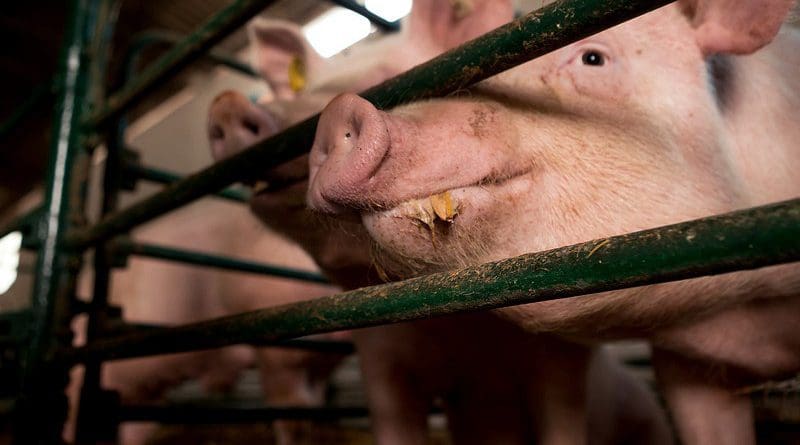
pigs farm cage

By 

Ventilation shutdown plus (VSD+) is an incredibly inhumane method of killing lots of animals at once by shutting off the air supply and driving up temperatures, causing organ failure and suffocation. It must stop.


Surging temperatures from heat pumped into an airless shed leave animals trapped inside, making it increasingly challenging for them to breathe. Eventually, after enduring hours of suffering, these animals suffocate and die in agony. This scenario is real, and the results are intentional. VSD+ is a brutal method of putting an entire flock—or herd—of animals to death all at once.

No animal should ever endure hours of suffering to die in extreme heat. However, in 2022, millions of chickens were killed through this horrific practice due to the avian influenza, or bird flu, which reemerged in bird populations across the United States, including the earlier outbreak in 2020. According to the U.S. Department of Agriculture, between February 2022 and August 2024, 100.71 million poultry were affected in the United States, including both commercially raised and backyard flocks. To stop the highly infectious virus from spreading, poultry farmers began culling entire flocks of chickens and turkeys raised to produce eggs or meat, meaning millions of birds were put to death using VSD+.

Inhumane Killing: Ventilation Shutdown and Ventilation Shutdown Plus

VSD+ is a process in which barns or sheds, where chickens or other animals live, are closed tightly, ventilation is sealed, fans are turned off, and heat, steam, or gas is turned on. As the temperature inside the building soars above 100 degrees Fahrenheit, the animals inside die from suffocation, heat stroke, and organ failure. This process occurs over long hours, where animals are essentially baked alive.

Ventilation shutdown (VSD) is the process of shutting off ventilation, allowing temperatures inside a building to rise or fall naturally. Ventilation shutdown plus (VSD+) is a specific method of depopulation that involves shutting off ventilation and pumping in heat or carbon dioxide.

It would be criminal to deliberately allow a pet to die through forced heat and suffocation. Therefore, it is unacceptable to allow farm animals to perish in this way. This thought process has led veterinarians to demand that the American Veterinary Medical Association (AVMA) reclassify VSD+ as “not recommended.”


There’s a problematic loophole in which the AVMA approves VSD+ for culling chickens and pigs in “constrained circumstances.” This method of slaughter is anything but humane, as animals die in a long and painful fashion from VSD+. This raises the question: Why is VSD+ happening in the first place? The answer has everything to do with the rampant spread of disease on factory farms.

Disease Spreads Quickly on Factory Farms

When animals are packed together, diseases can spread rapidly. This can also occur within crowds of people—close proximity increases the likelihood of transmitting the disease. Think of the way COVID-19 quickly spread in nursing homes, or of how the Black Death claimed the lives of more than 50 percent of a crowded city’s inhabitants.

A whopping 94 percent of animals raised for food (or to provide products like milk and eggs) live on factory farms, where crowding and unsanitary conditions are rampant. Due to this, factory farms can become breeding grounds for infectious diseases to emerge, spread, and travel from animals to humans.

Germs that jump from animals to humans are known as zoonotic diseases. While COVID-19 brought the connection between infectious disease and animal cruelty into the spotlight, other illnesses remain of great concern. The sad truth is that the threat of zoonotic disease isn’t going away. A United Nations report suggests we may see an increase in zoonotic diseases due to unsustainable farming practices, climate change, and wildlife exploitation.

The validity of this theory is reflected in the avian influenza outbreak that began in 2020. Avian influenza, also known as bird flu, is a contagious respiratory disease that spreads through direct contact with infected birds. It can also spread through contact with contaminated water, feed, equipment, or materials. Chickens raised on factory farms make up nearly 90 percent of all land animals raised for food in the U.S., and they suffer incredible abuse. Living in cramped, filthy sheds with thousands of other birds, even a single sick chicken can quickly lead to a sick flock.

Bird flu travels fast in crowded factory farms—but it’s worth remembering that factory farms are crowded because our broken food system prioritizes scale and profit. The spread of bird flu is a symptom of industrialized animal agriculture. When a few chickens in a large flock contract avian influenza, the response is to euthanize the affected birds through depopulation.

Animal Depopulation

Animal depopulation is a term for killing large numbers of animals all at once—namely, pigs, cows, or chickens. Depopulation generally happens in response to a crisis and should only ever occur on rare occasions when a humane method of slaughter, like euthanasia, is not possible.

Unfortunately, the American Veterinary Medical Association (AVMA) currently approves depopulation methods like VSD+ in “constrained circumstances.” This has been interpreted as a go-ahead in response to events such as the surplus of pigs during the COVID-19 pandemic or the avian influenza outbreak that occurred in 2022. In both cases, farmers turned to VSD+ to kill vast numbers of pigs (during COVID-19) and chickens (during avian influenza), allowing countless herds and flocks to die slowly and painfully in unbearable heat. Of the 95 million birds depopulated between February 2022 and July 2024, most were killed in gas chambers, by firefighter foam, or with VSD+.

Pigs and Chickens: The Main Victims

To date, poultry (primarily chickens and sometimes turkeys) and pigs are most commonly culled through ventilation shutdown plus (VSD+). VSD+ has been most widely used in response to crises affecting pigs and chickens, but the practice is now on the rise. In 2023, the Department of Agriculture paid poultry farmers more than half a billion dollars in compensation for birds culled after being infected with the H5N1 strain–compensation that was only paid for culled birds, not those that died of the infection.

While this strategy may have helped slow the spread of the virus, it did nothing to incentivize system change. Instead, it encouraged farmers to persist in business practices that aggravated the infections (housing animals in overcrowded, stressful, and unsanitary conditions) while simultaneously awarding them for exceptionally cruel depopulation practices such as VSD+.

A research group at North Carolina State University received a grant from the U.S. Poultry and Egg Association to validate VSD+ as a method for culling chickens. After that single industry-funded study was published, the American Veterinary Medical Association (AVMA) listed ventilation shutdown plus as “permitted in constrained circumstances,” which the poultry industry interprets as “veterinary approved.”

Since then, VSD+ has become increasingly prevalent and is now being practiced at unprecedented rates. During 2022, when the virus began infecting commercial birds in large numbers in the United States, VSD+ became the preferred method of killing millions of chickens nationwide.

When slaughterhouses closed during the COVID-19 pandemic, factory farming led to what the industry considered a surplus of pigs. To address this, farmers turned to VSD+, eradicating entire herds of pigs by forcing them to swelter to death. It’s time to demand change, starting with asking the AVMA to revoke its endorsement of VSD+ through petitions and awareness campaigns.

Working to End VSD+

Despite the blatant cruelty of VSD+, the AVMA continues to endorse the practice—an endorsement based on one poultry industry-funded study. It’s time for that to change.

Veterinarians are trusted partners in the care of all animals, regardless of species, and veterinarians joined together to call on the AVMA to rescind VSD+ and help prevent more animals from being killed in this manner. It is essential, now and in the future, to send a powerful message that it’s time to stop the suffering and horrific slaughter of millions of animals.

  • About the author: Michael Windsor is the senior director of corporate engagement at The Humane League, a global nonprofit working to end the abuse of animals raised for food. He is a contributor to the Observatory.

  • Source: This article was produced by Earth | Food | Life, a project of the Independent Media Institute.

Beasts of Burden: Capitalism - Animals -. Communism. Published October 1999 by ... to the Criminal Justice Bill. •. Baker, Steve (1993) Picturing the Beast: ...

AU CONTRAIRE

Defunding Gavi: An Important Step Toward Decolonization? – OpEd

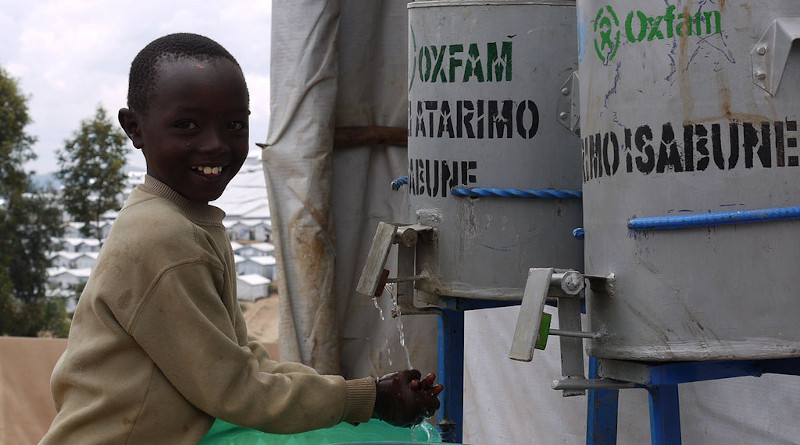
Child washing hands. Photo Credit: Laura Eldon/Oxfam, (CC BY 2.0). This photo has been cropped. (https://www.flickr.com/photos/oxfameastafrica/8073670225/sizes/l/)

By 

The primary reason people in wealthy countries live longer than those in poorer countries is that they have better sanitation (e.g. clean water, hygiene), nutrition (especially fresh food), living conditions (e.g. housing), and access to basic healthcare – like antibiotics for childhood pneumonia. This should be uncontroversial – it was taught in medical schools a few decades ago when evidence formed the basis of medicine. 


The fact that it is now widely forgotten, or ignored as a matter of convenience, explains why there is such a fuss over the United States administration defunding Gavi – the ‘Vaccine Alliance’ based in Switzerland.

Our Age-Old Argument with Pathogens

As most public health people seem unaware, and many of the public also, let us review why so many of us now reach old age. Humans are constantly exposed to microbes that could cause harm. The vast majority don’t, as our forebears spent hundreds of millions of years evolving defenses against them, even as the microbes evolved new ways to use our bodies to multiply their own. Mostly, we live in harmony with bacteria – our gut is full of them, but they also cohabit in our bloodstream and elsewhere – even possibly in our brain, as that is demonstrated in other vertebrates. Most of the cells we lug around are actually not us, but bacteria that live with us. 

Some microbes (bacteria, viruses, fungi, protozoa) and even small worms of various sorts can, however, cause us great harm (they become pathogens). Their genetic code is, like ours, designed to reproduce itself, and to do this they need to eat part of us or hijack the metabolism of our cells. In doing so, they can sicken or kill us.

We have evolved very effective ways to prevent this, by developing skin and mucosal barriers that hamper them from entering our bodies, and producing cells that eat or otherwise destroy them (our immune system). The brilliance of our immune system is that it has a memory. Once it has developed an effective chemical or cellular response to a pathogen, it stores that code so that an effective response can be very rapidly reactivated if the same pathogen comes along in the future. Some pathogens frequently change their chemistry to try to get around this and still reproduce within us, and our immune response has to keep adjusting.

The Growth of Human Resilience

So, back to sanitation, nutrition, and living conditions. Relatively recently, we figured out what pathogens are (bacteria, viruses, protozoa, nematode worms, and the like) and better understood how to avoid them altogether. Many of the pathogens that used to kill us spread from person to person through a ‘fecal-oral’ route, as it is euphemistically called. They reproduce within the body, and the resulting multitude move on when we defecate. If someone then drinks water contaminated by that, they get infected. Cholera, typhoid, and E. coli are well-known examples. Beyond aesthetics, this is why we have sewerage systems in towns and cities. We stopped most deaths from these simply by drinking clean water untainted by someone else’s toilet. 


Pathogens that spread by respiratory routes to cause disease (e.g. influenza, Covid-19) are more likely to pass between people if they live in a confined space with poor air circulation. This raises the chance of breathing in air others have breathed out, and increases the number of organisms that infect us at once (i.e. infective dose or ‘viral load’). A high infective dose makes it more likely that we get very sick before our immune system can mount an effective response. 

Good nutrition is absolutely essential for us to mount an effective immune response, whether to an organism or a vaccine. The cells in the immune system have specific requirements, such as Vitamins D, K2, C, and E, and zinc and magnesium, and cannot function well without an adequate concentration of them. They can also be impaired in their function when our general metabolism is impaired, such as in diabetes, starvation, or chronic diseases and anemia.

As we have improved access to fresh and varied food over the past two centuries, we have allowed our immune systems to function more optimally. We may still get infected, but we nearly always win the human-pathogen battle. 

Over the past few hundred thousand years or so, our ancestors also developed a compendium of plants that, if eaten, helped rid us of the sicknesses that microbes cause. In the past hundred years, our increasing knowledge of bacteria in particular has enabled us to understand their metabolism and develop specific antibiotics to slow their growth or kill them (we also have some against viruses and fungi). Antibiotics have helped enormously, but even they are often useless without a functional immune system. This is why people with no immune cells (e.g. due to cancer treatment) have to remain in sterile tents until immune competence returns.

We have also developed vaccines – starting with smallpox well over 250 years ago but with most developed only in the past 50 years, well after most early mortality from infectious diseases had gone away in wealthy countries. Vaccines work by tricking the immune system, presenting it with something with very similar chemistry to one of these harmful pathogens so that it develops an immune memory that can be activated if the real pathogen comes along. Providing the vaccine is far less harmful than the pathogen, it is a really clever trick.

Gavi and Survival

This brings us back to Gavi – the Vaccine Alliance. This public-private partnership was formed in 2001 at a time when biotech (clever stuff that can profitably help reduce sickness and death) was really taking off, and private finance (especially from very wealthy individuals running rapidly expanding software companies) was accordingly becoming interested in public health. Gavi is solely devoted to supporting the distribution and sale of vaccines to low-income countries. These populations have not undergone the full transition to longer lifespans that improved economies brought elsewhere. Much of its funding is public (taxes), while private pharmaceutical interests help direct its work. Its many hundreds of staff have been successful in getting vaccines to more people more cheaply. 

Mortality was declining pre-Gavi due to improved nutrition, sanitation, living conditions, and access to antibiotics, as low-income economies slowly improved. We can assume this decline would have persisted without the addition of mass vaccination (this much is obvious). Disease incidence would have been higher (more pathogens circulating), but the pathogens were becoming less deadly overall as human resilience improved. What we don’t know is whether mass vaccination, and the work of Gavi within this, made much difference. It really may have, helping accelerate the transition to better survival, or it may not have done much at all. Saving a malnourished child from measles so that they die from pneumonia or malaria is not really a saved life, so comparisons between interventions are difficult to make.

This uncertainty was fixed by calling many infections ‘vaccine-preventable diseases.’ Thus, reducing them becomes, in people’s minds, dependent on vaccination rather than improved food, water, and living space. This helps Gavi to claim many millions of lives saved, which is important for donors. While training more health workers, improving access to fresh food, or improving sewers and water quality may save more lives overall, it is really hard to put firm numbers on these. At least you know how many vaccines were dispensed.

Conversely, defunding Gavi – as the US government announced last week – is being said to be risking millions of children. This is an unbalanced claim, as people with a balanced brain can see. 

Firstly, this would depend on whether there are other mechanisms to distribute vaccines – and of course, there are. Countries could buy and distribute vaccines themselves if given the money directly, without an army of exorbitantly paid foreigners weighing in as intermediaries from Lake Geneva. 

Secondly, the money could be diverted to the basic drivers of improved survival (nutrition, sanitation….). This would not only reduce mortality from ‘vaccine-preventable diseases,’ but also reduce mortality from a stack of other ailments for which we don’t have vaccines. It would also improve child performance in education, improving future economies (and health). 

Thirdly, without large Western-based agencies with thousands of well-paid Western staff to keep the rest of the world honest, low-income countries would have to find ways to support their own healthcare. Doing this abruptly could be harmful, but we have actually been on the opposite trajectory for years, steadily building up centralized agencies, NGOs, and government aid organizations, draining competent people from these countries in the process. Free money also renders efforts of recipient countries toward self-reliance politically hard for their leaders.

So, why would the international public health community not see great opportunity in reduced funding for Gavi, the World Health Organization, USAID, and UK Aid and the bevy of non-government organizations (NGOs) that have been living off them? Why is the idea of building capacity within low-income countries rather than in Switzerland not attractive? The charitable view would be that they think the change is too rapid, or that they simply don’t understand public health and the main drivers of longevity (long life). The alternate view would be self-interest. It’s probably a mix.

Recalling When Honest Public Health Was Not Far-Right

Decades ago, in 1978, the Declaration of Alma-Ata proclaimed the importance of primary health care and community control in effective public health. It was a time when solid ‘left-wing’ values included individual sovereignty (bodily autonomy), decentralization of control, and human rights in general. These were then synonymous with public health. Decolonization was an actual thing, not a filler in the reports of expanding Western-centric agencies. However, whilst giving others control over their own destiny is easy when one has nothing to lose oneself, it is much harder when it involves sacrificing a generous salary, children’s educational allowance, health insurance, and fun trips on business class.

As big money moved into global health, and new agencies like Gavi grew and expanded, the global health workforce grew accordingly. The newcomers trained at schools funded by the same wealthy benefactors and corporatists who direct the work of the new commodity-based public-private partnerships such as Gavi, Unitaid, and CEPI. They also fund and direct the NGOs that implemented their work, the modeling and research groups who create the ‘need,’ and even, increasingly, the WHO itself.

All the incentives for this expanding global health workforce push them to support centralized, vertical approaches to public health. To be healthy, people now needed manufactured stuff, and only wealthy, Western-trained people can be trusted to make them have it. Healthy left-wing values are now instilled by rich Western capitalists and multinational corporations, while decentralization, individual, and national sovereignty (i.e. decolonization) are, the media assures us, ‘far-right.’

The world does not have to be like this. We managed to decolonize, to a large extent, two or three generations ago. Rich industrialists come and go through history, but the basic ideals of equality and truth survive. 

We can pretend public health was on the right course prior to the new US administration, and that ever-enlarging ‘Global Health’ workforces in Switzerland and the United States were a mark of this success. Or we can recognize that this was a broken and failing system that was serving big Pharma and the interests of the wealthy. 

Nutrition funding declined since 2020, but who cared?

A new round of decolonization is way overdue. While chipping away at disease by disease with manufactured commodities like vaccines has proven lucrative to manufacturers and the health bureaucracy, it is not building the capacity and independence that offers a way out. Equity and resilience are not achieved by enforcing dependency, but through self-determination. 

Downsizing Gavi provides an opportunity to turn such endless rhetoric into reality. The public health world should embrace it.


David Bell

David Bell, Senior Scholar at Brownstone Institute, is a public health physician and biotech consultant in global health. He is a former medical officer and scientist at the World Health Organization (WHO), Programme Head for malaria and febrile diseases at the Foundation for Innovative New Diagnostics (FIND) in Geneva, Switzerland, and Director of Global Health Technologies at Intellectual Ventures Global Good Fund in Bellevue, WA, USA.