Saturday, August 23, 2025

'Pro-Satan?’ GOP strategist stuns CNN panel after blurting out Target stores accusation


Alexander Willis
August 23, 2025
RAW STORY


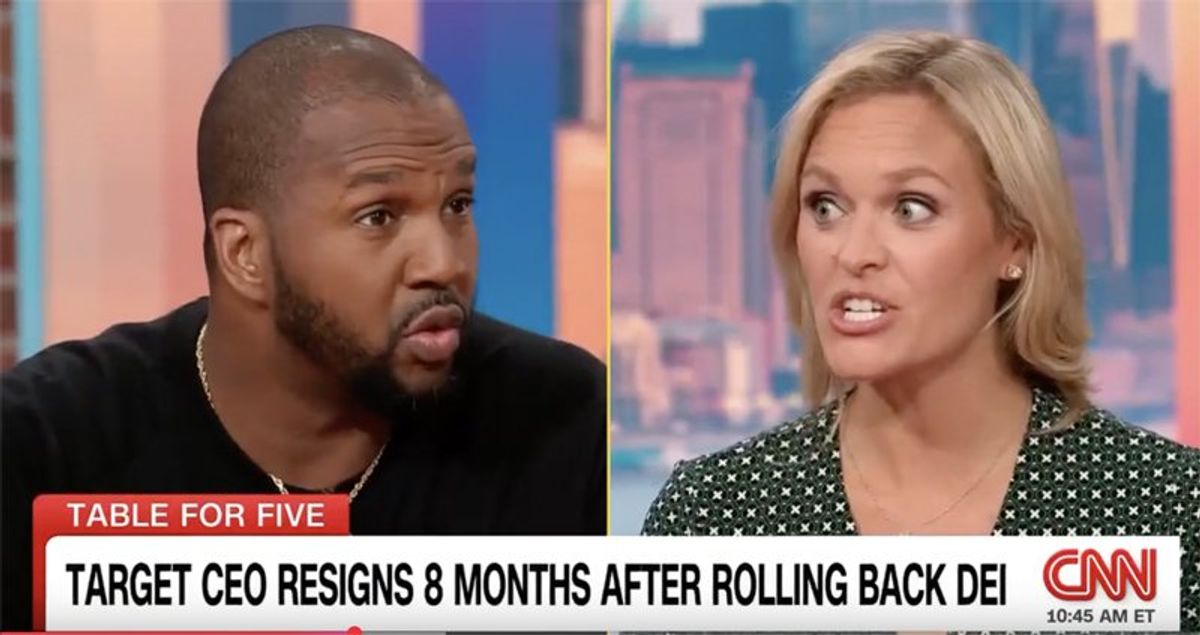
Van Latham, Kristen Davison (CNN screengrab)

GOP strategist Kristin Davison stunned a CNN panel Saturday after blurting out a bizarre and debunked claim regarding merchandise carried at the retail store franchise Target.

The discussion on CNN’s “Table for Five” Saturday centered around Target’s latest quarterly earnings report, which showed the franchise taking a 42% nosedive in share value. The retailer’s poor performance comes in the wake of the 2023 conservative backlash against the chain for its initiatives on diversity, equity and inclusion, which the company started rolling back in response earlier this year.

“Target thumbed their nose at their customer base, and they are paying a business price for that, to try to align themselves with the political whims of the moment, and that seems like a bad decision from a capitalist's perspective,” said Abby Phillip, host of the “Table for Five” panel.

It was then that Davison laid the blame on target, specifically singling out a supposed line of products they carried.

“Well, it was probably also a bad decision when they went the other way,” Davison said. “I haven't shopped at Target since May 2023 because they had, frankly, evil things; pro-Satan, pro-everything.”

“Pro-Satan?” other members of the panel collectively said in response.

“A T-shirt, images, it was images,” Davison said.

Davison was likely referring to Target having partnered with the designer Abprallen for its 2023 Pride collection. While the designed had marketed a product that bears the phrase “Satan respects pronouns” on his own shop, Target never carried any products designed by Abprallen that made reference to Satan, or any products referencing Satan.

Following backlash, Target also ended its partnership with Abprallen, and no longer sold their products in its stores.

Watch the video below or use this link.


Trump, Fossil Fuels, and Insurers Are Making Hurricane Season Even More Dangerous

With the federal government abdicating its responsibility, state and local leaders must step up. They have the power and duty to act.


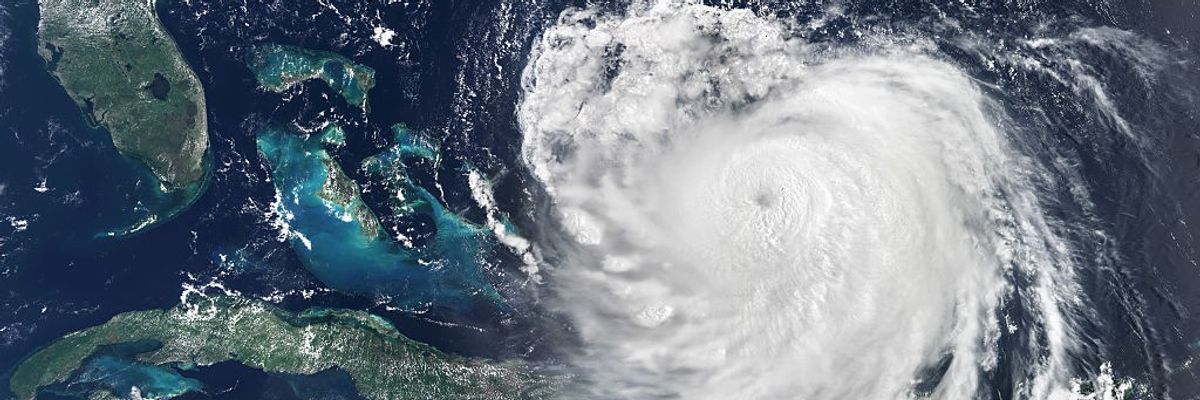
A Satellite view shows Hurricane Erin in the Atlantic Ocean on August 18, 2025.

Photo by Gallo Images/Orbital Horizon/Copernicus Sentinel Data 2025

Aug 23, 2025
CIEL Blog

A deadly storm has already claimed at least 120 lives and caused widespread devastation in Texas. Hurricane Erin has now unleashed catastrophic flooding in North Carolina before racing toward the Northeast—and hurricane season has only just begun. Storms are growing more destructive, driven by fossil fuels that warm our oceans and destabilize the climate, while the vulnerable petrochemical infrastructure in their path multiplies the danger. As the storms strengthen, US protections are unraveling, leaving millions exposed.

Every year, hurricanes grow more intense—fueled by warming oceans and a rapidly changing climate driven by fossil fuels. But it’s not just the storms becoming more dangerous. It’s the fossil fuel infrastructure in their path. It’s the toxic pollution released when storms strike. It’s the insurance companies abandoning communities in the aftermath. And it’s the US government retreating from its duty to protect.


Together, we can defend the truth when it’s under siege.


Our fearless reporting exists only because of readers like you. With your support, we can continue delivering independent journalism that democracy depends on.


The Gulf Coast—home to more than 84% of US plastics’ production and to nearly half of US petroleum refining capacity—is bracing for more than five major hurricanes predicted for the Atlantic Ocean this year. With each hurricane comes the risk of fires, explosions, and toxic releases—not just for these facilities, but for the surrounding communities. More than 870 highly hazardous chemical facilities are located within 50 miles of the hurricane-prone Gulf Coast, and more than 4 million residents and 1,500 schools sit within a 1.5-mile radius of a high-risk chemical facility in the region.

Nationally, 39% of the US population lives within 3 miles of a high-risk chemical facility.

And yet, as we brace for the next deadly storm, US President Donald Trump has axed critical weather forecasting jobs and announced plans to eliminate the Federal Emergency Management Agency (FEMA) altogether, leaving communities even more vulnerable in the face of escalating disaster.

But the threats don’t stop there. The US government is systematically dismantling our first line of defense. Since Trump took office in 2024, the administration has:Cut staff at the National Oceanic and Atmospheric Administration and the National Weather Service, weakening our ability to forecast storms and warn the public;
Dismantled the Chemical Safety Board, which investigates chemical disasters to prevent future ones;
Proposed rolling back the Risk Management Program (RMP), which requires nearly 12,000 high-risk chemical facilities to plan for disasters, protect workers, and inform communities;
Warned they will phase out FEMA, leaving frontline communities to weather storms and rebuild without aid; and
Deleted the RMP public data tool, cutting off public access to health and safety information.
A Climate of Injustice

Fossil fuel infrastructure isn’t just at risk during storms—it supercharges the storms themselves. The industry is a major driver of global warming, accelerating the rising temperatures and warming oceans that exacerbate hurricanes. And even as storms grow more destructive, the industry is doubling down: 80% of proposed new petrochemical projects are sited within 20 miles of a hurricane or tropical storm’s path over the past decade. This means entire corridors already battered by climate disasters are being locked into even greater danger.

When disaster strikes, oil, gas, and petrochemical facilities release hazardous pollutants into the air and water, compounding the crisis for nearby communities, which are often low-income and disproportionately Black, brown, and Indigenous.

When Hurricane Katrina struck, it slammed into 466 facilities that handle hazardous chemicals and petrochemicals. More than 200 onshore releases of hazardous chemicals, petroleum, or natural gas were reported. The storm caused at least 10 oil spills, releasing more than 7.4 million gallons of oil into Gulf Coast waterways—more than two-thirds the volume spilled during the Exxon Valdez disaster, one of the worst in US history. Together, Hurricanes Katrina and Rita, just a month apart, shut down nearly a quarter of the country’s refining capacity.

And during Hurricane Harvey, Houston’s petrochemical plants and refineries released millions of pounds of pollutants. Flooding at the Arkema Petrochemical plant disabled the plant’s refrigeration system, triggering a massive explosion that sent black plumes and toxic fumes into the skies and forced evacuations across a community already on edge. An investigation by the Chemical Safety Board—recently dismantled by the Trump administration—determined that requirements of the Environmental Protection Agency’s Risk Management Program—currently being rolled back by the EPA—could have prevented this very disaster.
A Rigged System

As extreme weather events surge, so do insurance premiums—while coverage vanishes for those living in harm’s way.

For many climate-vulnerable communities, home insurance is no longer affordable—or available. Since 2019, US home insurance rates have jumped nearly 38%. Louisiana, Texas, and Pennsylvania—all major fossil fuel corridors—rank among the top six most expensive states to insure a home. Home insurance premiums rose by 10% or more across 40 states from 2021 to 2024. Renters aren’t immune as landlords pass along skyrocketing insurance costs.

Insurance math: Communities facing hurricanes, flooding, and fires? Too risky to insure. Companies driving the disasters? Coverage and cash.

Insurers claim payouts from climate disasters are driving up costs. The truth is, insurers are investing in the very industries making those disasters worse—and raking in profits. In Louisiana, insurance companies are making $55 in profits for every $1 in underwriting losses. This profitability is not unique: NAIC data shows the property and casualty sector made an all-time high of $167 billion profits in 2024—up 91% from 2023, and 330% from 2022.

At the same time, the US insurance industry continues to bankroll fossil fuels, holding more than $500 billion in fossil fuel-related assets as of 2019 (the most recent data set available); a pattern of investing that is unlikely to have substantially changed since. While refusing to insure homeowners in climate-exposed communities, many insurers are simultaneously underwriting new fossil fuel infrastructure. At least 35 insurance companies are backing methane gas (LNG) export terminals across the Gulf South—some of the very same companies, including AIG, Chubb, and Liberty Mutual, that are raising premiums or pulling out of the housing market in vulnerable regions entirely.

Insurance math: Communities facing hurricanes, flooding, and fires? Too risky to insure. Companies driving the disasters? Coverage and cash.

Rather than confronting the crisis, insurance companies are fueling it—protecting profits and abandoning people. This isn’t just hypocrisy, it’s a business model, one built on extraction and shifting costs onto the public.

The system is rigged. Those most responsible are rewarded, while those most vulnerable are left to suffer the storms alone.


Lead Now or Pay Later: States Must Decide

We all deserve somewhere safe to live—free from the dread of the next hurricane, the next explosion, or the next rollback of basic protections. But fossil fuel polluters—and the insurance companies profiting from their harm—are robbing us.

We will not accept this endless cycle of crisis. We deserve safety, especially from the governments whose duty it is to protect us. We deserve safety from storms and from toxic spills. We deserve a government that protects its people—and agencies that do their jobs: defending public health and the environment, not doing the bidding of polluters.

With the federal government abdicating its responsibility, state and local leaders must step up. They have the power and duty to act. It’s time for states, especially those in the eye of the storm, to lead where the federal government is failing. States must:
Enforce strong petrochemical safety rules;
Stop new fossil fuel expansion in at-risk communities;
Hold polluters accountable for the harms they cause; and
Refuse to let insurance companies cherry-pick who gets covered while abandoning those most in need.

When Hurricane Katrina devastated Louisiana, it left behind a $170 billion bill. The federal government stepped in for $120 billion. But with FEMA on the chopping block, that kind of relief may never come again. If federal protections vanish, the financial and human cost of the next disaster will fall squarely on states—and the people who live in them.

The climate crisis isn’t waiting. The storms are here. Will our leaders meet the moment—or leave us to weather the disaster alone?

© 2024 Center for International Environmental Law

Lindsey Jurca Durland
Lindsey Jurca Durland (she/her) is a senior communications campaign specialist with CIEL’s Fossil Economy Program. Based out of California, her work focuses on exposing the petrochemical industry for its role in threatening human health and precipitating the climate crisis.
Full Bio >

Charles Slidders
Charles Slidders is the senior attorney for financial strategies in CIEL’s Climate & Energy Program.
Full Bio >

Barnaby Pace
Barnaby Pace (he/him) is a senior researcher in CIEL’s Fossil Economy Program. He is based in the U.K. His work focuses primarily on petrochemicals, agrichemicals, and carbon capture and storage.
Full Bio >


Trump plan to kill FEMA risks 'extreme state of turmoil,' officials warn
States Newsroom
August 23, 2025

LONG READ


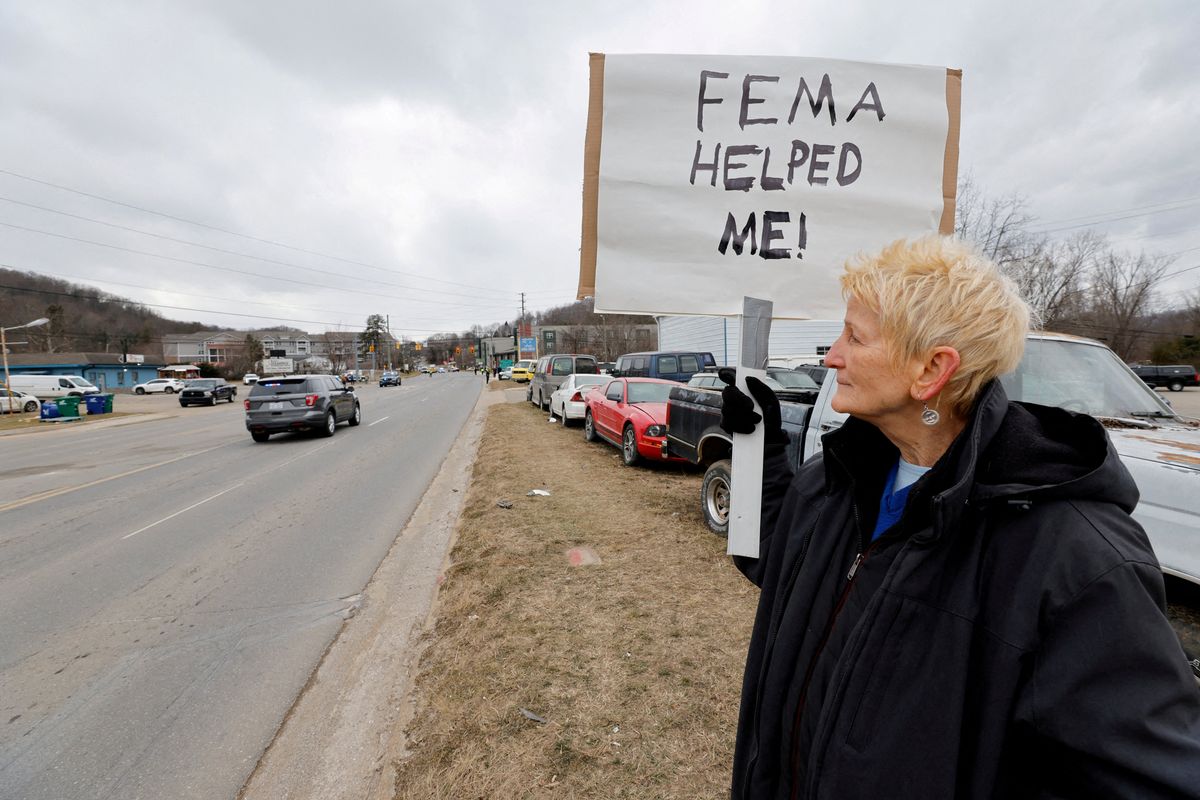
FILE PHOTO: Swannanoa resident Lucy Bickers, who received assistance from FEMA after Hurricane Helene damaged her property, holds a sign in support of the government agency in Swannanoa, North Carolina, U.S., January 24, 2025. REUTERS/Jonathan Drake/File Photo


WASHINGTON — The Federal Emergency Management Agency could look significantly different by next year’s hurricane season, with state and local governments shouldering more of the responsibility for natural disaster response and recovery.

Members of both political parties have long criticized FEMA, but a bipartisan bill moving along in Congress combined with President Donald Trump’s disdain for the agency may provide momentum for a big shift in emergency management.

Trump has said repeatedly he doesn’t support FEMA’s current structure and wants to see a special review council he put together propose a complete overhaul of the agency, possibly eliminating it entirely. That’s provoked deep concern among some local and state officials who don’t see how they would have the funding or background to handle a sudden natural disaster.

“We want to wean off of FEMA and we want to bring it down to the state level,” Trump said in June. “We’re moving it back to the states so the governors can handle it. That’s why they’re governors. Now, if they can’t handle it, they shouldn’t be governor.”

Trump’s FEMA Review Council, a 12-member board led by Homeland Security Secretary Kristi Noem and Defense Secretary Pete Hegseth, has until mid-November to write a report detailing its recommendations for the president.

But, as Noem has noted several times during the group’s two public meetings, Congress holds authority over FEMA and would need to sign off on any major changes.

Lawmakers, some of whom have spent years working on federal emergency management issues, aren’t waiting for the review council’s report to get started.

House Transportation and Infrastructure Committee Chairman Sam Graves, R-Mo., ranking member Rick Larsen, D-Wash., Florida Republican Rep. Daniel Webster and Arizona Democratic Rep. Greg Stanton released their bill in late July, before the review council held its second meeting. It does not aim to eliminate FEMA.

“FEMA is in need of serious reform, and the goal of the FEMA Act of 2025 is to fix it,” Graves wrote in a statement. “This bill does more than any recent reforms to cut through the bureaucracy, streamline programs, provide flexibility, and return FEMA to its core purpose of empowering the states to lead and coordinating the federal response when it’s needed.”

Separately, a U.S. House spending committee is recommending a substantial boost in FEMA funding for the next fiscal year.

Make FEMA a Cabinet-level agency?

Stanton said during an interview with States Newsroom on Wednesday the Transportation Committee’s bill “recognizes the challenges we have learned from past disasters; that sometimes the rules and regulations in place make it very difficult for victims of natural disasters to get the help that they need, whether it be housing or even financial assistance.”

The legislation, he said, focuses on four broad improvements:Making FEMA a Cabinet-level agency instead of housing it within the Department of Homeland Security;
Emphasizing mitigation projects that lessen the impact of natural disasters;
Streamlining processes that have become too complex over the years; and
Adding flexibility so states can choose the type of housing or other support that best helps their residents following a natural disaster.

Stanton does not support Trump’s inclination to eliminate FEMA, arguing the federal government should help when local and state governments are overwhelmed by the scale of a natural disaster.

“That’s the whole point of it, that Americans help our fellow Americans at their point of greatest need,” he said.

But Stanton added he’s willing to read through the FEMA Review Council’s report once it’s released and work with its members to improve the agency.

“I’m open-minded,” Stanton said. “If they have good ideas that actually will strengthen FEMA, I’m all ears.”

The bill, while a sign of bipartisan progress in an increasingly polarized Congress, still has several steps to go before reaching Trump’s desk. To gain his signature, lawmakers may need to blend in some of the review council’s recommendations later this year.

A handful of outside groups, including the National Emergency Management Association, sent the committee a letter applauding the bipartisan group for its work so far but hinting they expect changes in the coming months.

“We recognize and appreciate that the legislation is part of an ongoing effort to modernize FEMA and ensure its programs reflect current and emerging challenges,” the four organizations wrote. “In that spirit, we also await the work of the FEMA Review Council and understand that its recommendations may inform refinements to the legislation.”

‘We’re going to have to turn to our own resources’

The review council’s two public meetings so far haven’t included much debate. The members have mostly shared general statements about grievances with FEMA and issued some warnings for state governments that rely heavily on the federal government.

Phil Bryant, former Republican governor of Mississippi, said that states should prepare to begin spending much more on natural disasters.

“We’re going to have to turn to our own resources,” Bryant said. “States are going to have to develop that emergency response fund, take some of their rainy day funds or funds that they may want to use for musical events and put it into disaster recovery.”

Larger states or those with strong economies may be able to absorb some of the cost that the federal government has carried for years, but other members of the council have cautioned their colleagues against going too far.

Virginia Gov. Glenn Youngkin said the committee will need to clearly explain what costs state and local governments will be responsible for and which will be covered by the federal government.

He also highlighted the challenges of completely reshaping FEMA while it’s in the middle of responding to natural disasters ranging from hurricanes to wildfires to tornadoes.


“We’re going to be changing the tires on this car while this car is barreling 100 miles an hour,” Youngkin said.

Jane Castor, mayor of Tampa, Florida, signaled the panel’s recommendations should take into consideration that many small or rural areas won’t be able to raise the amount of funds they’ve received from FEMA.

“The locals should be prepared to respond to these incidents in the immediate aftermath,” Castor said. “But as was stated before, there are some — London, Kentucky, and Asheville, North Carolina — (where) this is probably the first time that they’ve probably experienced anything like this. And so we have to be there to help them through the worst of their time.”

Noem has been blunt in her assessment of FEMA, calling the agency “disastrous” and “incompetent.”

She’s also been clear that Trump doesn’t expect incremental changes but an entirely new approach to how the federal government responds to natural disasters.

“The president’s vision is that FEMA would not be in the long-term recovery model,” Noem said. “He wants the state and local governments and emergency management directors to lead response immediately when something happens in a state or jurisdiction and for us to be in a supporting role; a financial role that would be there much in a state block grant model.”

A wary eye on Trump panel


Local and state officials throughout the country are keeping a close eye on the Trump administration’s review council, wary of the implications a loss in federal disaster response would have on local and state governments.

Houston, Texas, Controller Chris Hollins said on a call with reporters in August the city has typically put away between $25 million and $30 million for natural disasters with the expectation that FEMA would help with additional costs.

After Trump proposed eliminating FEMA, Hollins began encouraging city leaders “to take a broader look at what’s going to be necessary to be self-reliant. But that’s an incredibly tall task.”

“If we’re all on our own, it’s going to put our individual finances in an extreme state of turmoil, because we’re either going to have to tax our citizens and our residents at extremely high rates to have enough money to be prepared, or we’re going to intentionally roll the dice and run the risk of being unprepared when these moments come,” Hollins said. “And you know, both of those are unacceptable predicaments.”

Minnesota Auditor Julie Blaha said on the same call that some communities will need years or even decades to build up the type of reserve needed to cover just one major natural disaster.

“In a small town it’s going to be pretty hard to put away millions of dollars, and by the time you can get a reserve of millions of dollars, you are likely to have another disaster,” Blaha said. “The only way to respond to that, you have to go into debt, and you have again increased costs.”

Two committees and a funding boost


Congress has a two-track system for determining the size and scope of federal departments like FEMA — authorizing committees, which set policy and generally determine each agency’s mission, and the appropriations committees that provide funding through annual bills.

The House Transportation and Infrastructure Committee’s bipartisan bill represents a significant step on the authorizing side. But the legislation still has to make it through committee debate, the House floor and the Senate before it could reach Trump’s desk.

Separately, the House Appropriations Committee released a partisan bill earlier this summer that would provide a robust $31.8 billion for FEMA during the next fiscal year, $4.5 billion higher than the agency’s current spending level.

During debate on the legislation, Florida Democratic Rep. Debbie Wasserman Schultz proposed an amendment that would have blocked any federal funding from being used to eliminate FEMA.

“Yes, FEMA needs fixes but FEMA helps all of our communities and we can make it better and should be making it better without killing it,” Wasserman Schultz said. “The states cannot handle the responsibilities of FEMA in the aftermath of a storm on their own. That is simply not possible.”

Republicans opposed the amendment, arguing the spending panel shouldn’t do anything that would tie the hands of the review council, the authorizing committees, or Trump.

Oklahoma Republican Rep. Stephanie Bice sharply criticized FEMA during debate, saying the agency “isn’t working anymore” and has “become bloated.”

But Bice also made the point that federal funding is necessary, saying she was trying to address issues within her district “where FEMA hasn’t paid for disaster debris removal for two years.”

“These communities cannot afford the huge costs of debris removal for two years or more when FEMA doesn’t pay them, reimburse them for the services that they have provided,” Bice said. “This can’t continue.”

Dems say Congress in charge

Democrats on the committee, including Maryland Rep. Steny Hoyer, urged their GOP colleagues to support the amendment, pressing for any changes to FEMA to be made solely by Congress.

“If FEMA needs reforming, and I may certainly agree with that, we are the reformers,” Hoyer said.

North Carolina Republican Rep. Chuck Edwards, who represents western sections of the state devastated by Hurricane Helene, said he opposed the amendment because he wanted to see a complete overhaul of FEMA — though he appeared to back the idea that lawmakers should decide what changes and when.

“There are few people in this room that have more up close and personal interaction with FEMA over the last eight months than I,” Edwards said. “Up until Sept. 27, FEMA was nothing more than a line item on a budget for me. Since Sept. 27, I’ve very much been getting an education.

“I can tell you that FEMA needs major reform and Congress is best suited to do that.”

This story was published in partnership with the States Newsroom collaborative. Read the full story and original headline here.
Hydrological predictors: Identifying landslide threats


By Dr. Tim Sandle
EDITOR AT LARGE
DIGITAL JOURNAL
August 23, 2025


Nguyen Thi Kim sitting on a pillar of a destroyed house at the original site of Lang Nu village in Lao Cai province, after part of it was wiped away in a landslide triggered by Typhoon Yagi - Copyright AFP Nhac NGUYEN

Rainfall intensity, soil saturation and snowmelt drive widespread landslide pathways, according to a new scientific study.

Current methods to predict landslides rely primarily on rainfall intensity. In contrast, the research presents a new model that combines various water-related factors with machine learning. When the model was applied to more than 600 landslides in California, the model identified the conditions that caused 89% of the events.

Northwestern University and University of California, Los Angeles (UCLA) scientists have collaborated to develop a new process-based framework that provides a more accurate and dynamic approach to landslide prediction over large areas.

This new approach integrates various water-related processes with a machine-learning model. By accounting for diverse and sometimes compounding factors, the framework offers a more robust understanding of what drives these destructive events.

With further development, the new framework could help improve early warning systems, inform hazard planning and enhance strategies for climate resilience in regions vulnerable to landslides. Ultimately, these approaches could help save lives and prevent damage.

Different landslides can be caused by different hydrological processes. Hence, the researchers are trying to identify which landslides are caused by which processes.

Simulating a ‘parade’ of storms

Dangerous flows of water, mud and rocks, landslides can be difficult to predict — especially across large areas with varied landscapes and different climates. To better understand how and why widespread landslides occur, scientists looked to one month of extreme weather in California.

During the winter of 2022-23, California experienced an unprecedented “parade” of nine consecutive atmospheric rivers, which caused catastrophic flooding and more than 600 landslides. To understand the pathways that caused these landslides, the scientists adopted a community-developed computer model that simulates how water moves through the environment, including rain infiltrating into the ground, running off on the surface, evaporating, and freezing or melting of snow and ice.

To drive the model, the team used a diverse array of meteorological, geographical and historical data. This included information about terrain, soil depth, past wildfires, precipitation, and meteorological and climatic conditions.

Using model outputs, the team developed a metric, called “water balance status” (WBS), to assess when there is too much water in a particular area. A positive WBS means there’s more water than the ground can handle through absorption, storage, evaporation or drainage. This also means there’s higher potential for landslides.

Identifying main pathways

The scientists applied a machine-learning technique to group together similar landslides based on their sites’ specific conditions. Through this technique, they identified three main pathways that led to the California landslides: intense rainfall, rain on already saturated soils and melting snow or ice.

The research predicts that heavy, rapid downpours caused about 32% of the landslides. Roughly 53% of the landslides occurred after moderate rain fell on soils already saturated from previous storms. And about 15% of the landslides were linked to snow or ice, with rain accelerating the snowmelt or ice thaw.

When the scientists compared these events to their model, they found a significant majority (89%) of California’s landslides occurred in areas where the WBS was positive. This finding validated that the metric can accurately identify conditions ripe for landslides.

The research appears in the journal Geophysical Research Letters. The research paper is titled “Mixed hydrometeorological processes explain regional landslide potential.”
UK’s mass facial-recognition roll-out alarms rights groups

 a 39-year-old black man living in London, said he was arrested after being wrongly identified as a criminal by one of these cameras and has filed an appeal against the police.


By AFP
August 24, 2025


A van being used by the metropolitan police as part of their live facial recognition operation is pictured ahead of the 2023 coronation of King Charles III - Copyright AFP Will EDWARDS


Clara LALANNE

Outside supermarkets or in festival crowds, millions are now having their features scanned by real-time facial-recognition systems in the UK — the only European country to deploy the technology on a large scale.

At London’s Notting Hill Carnival, where two million people are expected to celebrate Afro-Caribbean culture over Sunday and Monday, facial-recognition cameras are being deployed near entrances and exits.

The police said their objective was to identify and intercept wanted individuals by scanning faces in large crowds and comparing them with thousands of suspects already in the police database.

The technology is “an effective policing tool which has already been successfully used to locate offenders at crime hotspots resulting in well over 1,000 arrests since the start of 2024,” said Metropolitan Police chief Mark Rowley.

The technology was first tested in 2016 and its use has increased considerably over the past three years in the United Kingdom.

Some 4.7 million faces were scanned in 2024 alone, according to the NGO Liberty.

UK police have deployed the live facial-recognition system around 100 times since late January, compared to only 10 between 2016 and 2019.

– ‘Nation of suspects’ –

Examples include before two Six Nations rugby games and outside two Oasis concerts in Cardiff in July.

When a person on a police “watchlist” passes near the cameras, the AI-powered system, often set up in a police van, triggers an alert.

The suspect can then be immediately detained once police checks confirm their identity.

But such mass data capture on the streets of London, also seen during the coronation of King Charles III in 2023, “treats us like a nation of suspects”, said the Big Brother Watch organisation.

“There is no legislative basis, so we have no safeguards to protect our rights, and the police is left to write its own rules,” Rebecca Vincent, its interim director, told AFP.

Its private use by supermarkets and clothing stores to combat the sharp rise in shoplifting has also raised concerns, with “very little information” available about how the data is being used, she added.

Most use Facewatch, a service provider that compiles a list of suspected offenders in the stores it monitors and raises an alert if one of them enters the premises.

“It transforms what it is to live in a city, because it removes the possibility of living anonymously,” said Daragh Murray, a lecturer in human rights law at Queen Mary University of London.

“That can have really big implications for protests but also participation in political and cultural life,” he added.

Often, those using such stores do not know that they are being profiled.

“They should make people aware of it,” Abigail Bevon, a 26-year-old forensic scientist, told AFP by the entrance of a London store using Facewatch.

She said she was “very surprised” to find out how the technology was being used.

While acknowledging that it could be useful for the police, she complained that its deployment by retailers was “invasive”.

– Banned in the EU –

Since February, EU legislation governing artificial intelligence has prohibited the use of real-time facial recognition technologies, with exceptions such as counterterrorism.

Apart from a few cases in the United States, “we do not see anything even close in European countries or other democracies”, stressed Vincent.

“The use of such invasive tech is more akin to what we see in authoritarian states such as China,” she added.

Interior minister Yvette Cooper recently promised that a “legal framework” governing its use would be drafted, focusing on “the most serious crimes”.

But her ministry this month authorised police forces to use the technology in seven new regions.

Usually placed in vans, permanent cameras are also scheduled to be installed for the first time in Croydon, south London, next month.

Police assure that they have “robust safeguards”, such as disabling the cameras when officers are not present and deleting the biometric data of those who are not suspects.

However, the UK’s human rights regulator said on Wednesday that the Metropolitan Police’s policy on using the technology was “unlawful” because it was “incompatible” with rights regulations.

Eleven organisations, including Human Rights Watch, wrote a letter to the Metropolitan Police chief, urging him not to use it during Notting Hill Carnival, accusing him of “unfairly targeting” the Afro-Caribbean community while highlighting the racial biases of AI.

Shaun Thompson, a 39-year-old black man living in London, said he was arrested after being wrongly identified as a criminal by one of these cameras and has filed an appeal against the police.


Study finds wide variation in Amazon’s response to degradation and climate change


The research by Yale School of the Environment scientists highlights the need to reduce the “hammer” of human impact and deforestation rather than focus on an all-encompassing climatic tipping point


Yale University


As deforestation and climate change threaten to transform the Amazon, there is growing concern that the ecosystem may be reaching an irreversible tipping point, beyond which self-reinforcing feedback loops would lock the system in a degraded state and lead to the Amazon flipping from a carbon sink to a carbon emitter. 

However, a new study, led by Yale School of the Environment scientists, found that there is no evidence of a single, basin-wide tipping point. Instead, there is wide variation in how the ecosystem is responding to human activity, and the more urgent concern in most areas is the repeated “hammer blows” to the system from direct human activities like deforestation, logging, species loss, and burning.

“The biggest concern is not the feedback loops we might have 30 or 50 years from now. It’s the sheer size and intensity of direct human impact today,” said Paulo Brando, associate professor of ecosystem carbon capture at YSE and the study’s lead author. “The forest shows massive resilience to these shocks, but we are, in many places, already surpassing that resilience.” 

The analysis by the international team of researchers, published in the Annual Review of Environment and Resources, emphasized the impacts of unsustainable land-use on biodiversity, livelihoods, and the global climate. 

The Amazon stores an amount of carbon equivalent to about ten years of global carbon dioxide emissions and across the globe, tropical forests account for approximately 55% of global forest above ground-carbon stock and 40% of the total global terrestrial carbon sink. Previous research has suggested some landscapes of tropical forests may be losing their capacity to sequester carbon.

The tipping point idea is increasingly the foundation of a lot of conservation policy in the region, Brando noted. It assumes that, beyond a quantifiable threshold, the forest would be so fundamentally changed that it could no longer sustain itself, driven by cascading feedback loops and lack of regeneration that the authors liken to falling dominos. In some drier regions, these loops include worsening fires that lead to a sparser tree canopy, the accumulation of new growth, and the spread of flammable vegetation, leaving the forest more vulnerable to the next fire. 

Yet, there was no scientific consensus of whether a single threshold exists to set off this spiral of total forest collapse. The researchers found many ecological processes in the Amazon that are interacting in different ways in different regions, making it unlikely that a single domino falling could force the entire system to collapse. While some parts of the basin, such as the southeast, may experience climate change-driven tipping points, the primary threat in most areas is more like a hammer, with activities like deforestation chipping away at the health of the ecosystem with each blow.

The study also noted that the Amazon remains surprisingly resilient. Climate change alone appears unlikely to lead to a total collapse, and vast areas of the forest have a high potential to recover — if humans stop the hammering. Brando likens the situation to the difference between a leak slowly eroding the foundation of a house versus a wrecking ball that will demolish it. 

“Your house could collapse either way,” Brando said. “But if you stop the wrecking ball, you might actually have a chance to fix the leak and save your foundation.”

These findings point to the continued need for sustainable land use and local solutions, such as reducing fire activity, promoting ecosystem restoration, and, in particular, curbing deforestation, to ensure the long-term health of the Amazon, he said.

“If we do stop these drivers of change, these hammers, then we still may give the forest a chance to bounce back,” Brando said. “Every action — little, big, short-term, long-term — may have a benefit.”


US oil and gas air pollution causes unequal health impacts


Air pollution from oil and gas is causing 91,000 premature deaths and hundreds of thousands of health issues across the United States annually, with Black, Asian, Native American and Hispanic groups consistently the most affected, finds a major new study


University College London

Air pollution from oil and gas is causing 91,000 premature deaths and hundreds of thousands of health issues across the United States annually, with Black, Asian, Native American and Hispanic groups consistently the most affected, finds a major new study led by researchers at UCL and the Stockholm Environment Institute (SEI).

The research, published in Science Advances, is the first to comprehensively quantify the health impacts of outdoor air pollution across all stages of the US oil and gas lifecycle, from extraction to end-use (cars, power plants), as well as to analyse the associated racial and ethnic disparities in exposure and health burden.

In addition, the researchers found that 10,350 pre-term births and 216,000 new cases of childhood asthma per year were attributable to oil and gas air pollution, as well as 1,610 lifetime cancers across the US.

For the study, the research team used advanced computer models to map air pollution from oil and gas activities across the US. They then used this information, along with established health risk data, to estimate the number of severe health outcomes like asthma, preterm birth, and early death. 

Lead author, Dr Karn Vohra (UCL Geography, now at University of Birmingham) said: “We used a state-of-the-science air quality model to separate air pollution caused by each major stage of the oil and gas lifecycle from other sources of air pollution. This enabled us to work out and compare health outcomes. What we found was striking: one in five preterm births and adult deaths linked to fine particulate pollution are from oil and gas. Even more concerning is that nearly 90% of new childhood asthma cases tied to nitrogen dioxide pollution were from this sector.”

The US has one of the world’s largest oil and gas industries but the health impacts and inequities from its air pollution have been poorly characterized. The research quantifies the health impacts of air pollution across all oil and gas lifecycle stages, from exploration, extraction and drilling (upstream), through to compression, transport and storage (midstream), refinement or transformation into petrochemical products (downstream) and consumer end-use.

The researchers found that the final end-use stage, mostly from burning fossil fuels, overwhelmingly contributes the greatest detrimental health burden, accounting for 96% of total incidents linked to the oil and gas sector. The five states that experience the greatest total health burden from all stages are amongst the most populated (California, Texas, New York, Pennsylvania, New Jersey). When normalised for population, residents in New Jersey, the District of Columbia, New York, California, and Maryland are subject to the greatest health impacts.

Unmasking a hidden health toll

Across the US, marginalised ethnic and racial groups face the greatest exposure to air pollution and health impacts across all stages. Native American and Hispanic populations are most affected by upstream and midstream stages while Black and Asian populations are most affected by downstream and end-use stages.

On a national scale, downstream activities cause far less pollution than upstream and end-use activities, but this stage is the cause for greatest relative adverse health outcomes for the Black population, particularly in Southern Louisiana (the region known as “Cancer Alley”) and eastern Texas. The health outcomes for the Black population that are more severe than national incidences include premature mortality, preterm births, and development of asthma amongst children.

Much of the disparity in exposures and health outcomes stem from a legacy of zoning practices, such as “redlining,” that relegated certain populations to live near pollution hotspots such as industrial areas or high-traffic roadways. Permitting of large factories that produce products from oil and gas is another contributing factor.

Senior author, Professor Eloise Marais (UCL Geography), said: “It is well known that air pollution from oil and gas activities causes certain communities to experience worse health outcomes. These communities are already aware of this unjust exposure and the disproportionately large health burdens they experience. Our study puts science-backed numbers on just how large these unfair exposures and health outcomes are.”

The researchers were also able to track air pollution across borders, attributing 1,170 early deaths in southern Canada and 440 early deaths in northern Mexico to oil and gas air pollution from the US.

Co-author Dr Ploy Achakulwisut (SEI) said: “Our study provides yet another compelling case for why we need to accelerate the phase-out of oil and gas production and combustion with hard numbers: hundreds of thousands of children, adults, and the elderly in the US could be saved from illnesses and early deaths every year. We therefore have an imperative to not only urgently transition away from fossil fuels to achieve net-zero emissions to save lives in the long term from climate devastation, but also to save lives and minimize environmental injustices in the near term from air pollution exposure.”

The researchers developed a comprehensive inventory of oil and gas air pollution sources, then ran it through a computer model that calculates the complex air chemistry that forms harmful pollutants across the US. They then used these air pollutant concentrations with epidemiological evidence of the relationship between exposure and health risk along with census and health data to determine multiple adverse health outcomes and racial-ethnic disparities.

The researchers compiled data for the year 2017, the most recent year of complete data available. They added that their estimates are most likely conservative as US oil and gas production has increased by 40% and consumption by 8% between 2017 and 2023, and their work only focused on outdoor air pollution.

This analysis was carried out by researchers from UCL, the Stockholm Environment Institute (SEI), George Washington University and University of Colorado Boulder.


Notes to Editors

For more information or to speak to the researchers involved, please contact Michael Lucibella, UCL Media Relations. T: +44 (0)75 3941 0389, E: m.lucibella@ucl.ac.uk

Karn Vohra, Eloise A. Marais, Ploy Achakulwisut, Susan Anenberg, and Colin Harkins, ‘The health burden and racial-ethnic disparities of air pollution from the major oil and gas lifecycle stages in the United States’ will be published in Science Advances on Friday 22 August 2025, 19:00 UK time, 14:00 US Eastern Time, and is under a strict embargo until this time.

Following publication, the paper will be available at: https://www.science.org/doi/10.1126/sciadv.adu2241

Supplementary material will be at: https://www.science.org/doi/suppl/10.1126/sciadv. adu2241/suppl_file/sciadv.adu2241_sm.pdf

Tableau dashboard: https://bit.ly/US_oilgas_healthburden_dashboard 


Additional material


About UCL – London’s Global University

UCL is a diverse global community of world-class academics, students, industry links, external partners, and alumni. Our powerful collective of individuals and institutions work together to explore new possibilities.

Since 1826, we have championed independent thought by attracting and nurturing the world's best minds. Our community of more than 50,000 students from 150 countries and over 16,000 staff pursues academic excellence, breaks boundaries and makes a positive impact on real world problems.

The Times and Sunday Times University of the Year 2024, we are consistently ranked among the top 10 universities in the world and are one of only a handful of institutions rated as having the strongest academic reputation and the broadest research impact.

We have a progressive and integrated approach to our teaching and research – championing innovation, creativity and cross-disciplinary working. We teach our students how to think, not what to think, and see them as partners, collaborators and contributors.  

For almost 200 years, we are proud to have opened higher education to students from a wide range of backgrounds and to change the way we create and share knowledge.

We were the first in England to welcome women to university education and that courageous attitude and disruptive spirit is still alive today. We are UCL.

www.ucl.ac.uk | Follow @uclnews on X (formerly Twitter) | Read news at www.ucl.ac.uk/news/ | Listen to UCL podcasts on SoundCloud | View images on Flickr | Find out what’s on at UCL Minds


Scientists reveal how microbes collaborate to consume potent greenhouse gas


Microbes that filter methane from the ocean floor may hold new clues to addressing climate change, USC Dornsife researchers and collaborators find


University of Southern California


Methane — a potent greenhouse gas — constantly seeps from the ocean floor and can rise into the atmosphere. Now, an international team led by scientists with the USC Dornsife College of Letters, Arts and Sciences has uncovered how tiny microorganisms work together as a living electrical network to consume some of this gas before it escapes, acting as a powerful living filter. 

By revealing how these microbes naturally reduce methane emissions, the findings could lead to innovative strategies to better control methane release in both natural and engineered environments.

The study, published in the journal Science Advances, sheds light on a unique partnership between two very different microbes: anaerobic methanotrophic archaea (ANME) and sulfate-reducing bacteria (SRB). 

Alone, neither microbe can consume methane. When ANME break down methane, the process releases electrons that must be offloaded — a process known as a redox reaction, in which electrons move from one molecule to another — much like how humans rely on oxygen to accept electrons. Without an electron acceptor, methane consumption stalls. 

This is where their bacterial partners step in. 

While unable to consume methane themselves, the SRB help by accepting the electrons released during the process and transferring them to SRB’s electron acceptor, sulfate, which powers their own metabolism.

“These two very different microbes come together into physically interconnected bundles,” said Moh El-Naggar, Dean’s Professor of Physics and Astronomy and professor of chemistry and biological sciences at USC Dornsife and one of the study’s lead researchers. “And the whole process works because conductive redox proteins link them up into functioning electrical circuits.”

Using specialized electrochemical methods, the international research team — including scientists from Caltech, Peking University and the Max Planck Institute of Marine Microbiology — measured this electron exchange in the lab for the first time, using samples collected from different marine methane seeps, including the Mediterranean Sea, Guaymas Basin and the California coast.

“These microbial partnerships act as natural sentries, playing a crucial role in limiting the release of methane into the ocean and atmosphere,” said Hang Yu, the study’s lead author, who began this research nine years ago during his PhD at Caltech and focused on it as a postdoctoral fellow at USC Dornsife. Now an assistant professor at Peking University, Yu added, “By uncovering how these partnerships function, we gain insight into how life has evolved over billions of years, even in extreme environments, to consume potent greenhouse gases.”

The researchers say the discovery offers new insight into how unseen microbial activity may influence Earth’s systems in ways we’re only beginning to understand.

“It may surprise people to know that microbes, even in the remotest of places, work together in sophisticated ways that influence processes on a planetary scale,” said Victoria Orphan, James Irvine Professor of Environmental Science and Geobiology at Caltech and co-author of the study. “This discovery, the result of nearly a decade of multidisciplinary research, is a testament to persistence and collaboration in science. It underscores how much we still have to learn about the microbial ecosystems we depend on.”

About the study:
The research was conducted by an international team that also included Shuai Xu and Yamini Jangir, former USC and Caltech postdoctoral scholars, and Gunter Wegener, a senior scientist at the Max Planck Institute of Marine Microbiology. The study was funded by the U.S. Department of Energy, the Air Force Office of Scientific Research, the National Natural Science Foundation of China and Germany’s Excellence Initiative.