Sunday, August 24, 2025

The ‘Amazon Delivery’ effect: How the gig economy fuels road accidents


ByDr. Tim Sandle
EDITOR AT LARGE
DIGITAL JOURNAL
August 24, 2025


Image: — © AFP Patrick T. Fallon

New UK research shows that gig delivery drivers, such as those working for Amazon or Uber Eats, face higher risks of collisions and unsafe driving behaviours due to intense delivery deadlines. Legal Expert explains the challenges in determining liability when accidents occur in the gig economy.

With the rise of online shopping and app-based food delivery, British streets are seeing more delivery vans, motorbikes, and cyclists than ever before. While this convenience is unmatched, new research suggests it comes with a cost: increased accident risk.

According to Angel Reyes and Associates’ UK study on delivery rider safety, motorcyclists have the highest fatality rate per billion passenger miles of any road user in the UK. Gig riders, those working for platforms like Amazon Flex, Uber Eats, and Deliveroo, face even greater risks compared to traditionally employed riders.

Survey findings reveal that gig workers were more likely to be distracted by their phones, commit speeding or red-light offences, and accumulate more penalty points. They also reported higher accident involvement, with 25% experiencing vehicle damage and 11% sustaining injuries in a crash.

One of the driving forces behind this behaviour is work pressure. Gig riders often feel compelled to meet strict deadlines, pushing them to take more risks. Employed riders, by contrast, report less stress, fewer traffic violations, and lower accident rates.

Who is Liable in a Gig Worker Crash?

If an Amazon Flex driver or gig motorcyclist causes an accident, liability becomes complex. Depending on the case, the responsible party could be:The individual driver
The small subcontracted delivery firm
The platform or retailer (e.g., Amazon), though this is harder to prove due to their use of independent contractor agreements.

The findings tally with the gig economy transforming. At the same time this e-commerce revolution has blurred traditional lines of responsibility in accident cases.

Legal Expert, Elliot Johnson from Angel Reyes and Associates tells Digital Journal: “Platforms like Amazon Flex and Uber Eats structure their contracts so that riders are classified as independent contractors, not employees. This arrangement allows the platform to argue they are not directly responsible for the driver’s negligence. In practice, if you’re injured in a collision involving a gig worker, the claim may be against the driver’s personal insurance, and in some cases, the small company they contract through. Proving that the platform bears liability requires showing that they exercised significant control over the driver’s work, such as setting unrealistic delivery targets that encourage unsafe driving.”

Johnson adds: “From a legal standpoint, victims should gather as much evidence as possible: dashcam footage, witness statements, app delivery records, and communications from the platform, to establish fault. The gig economy’s speed-driven business model can and does create environments where safety takes a back seat to deadlines. Until legislation catches up, holding large platforms accountable will remain an uphill legal battle”.
'Hoo boy!': MSNBC hosts stunned by Trump mainstreaming far-right ideology in second term

Robert Davis
August 24, 2025 
RAW STORY

MSNBC screenshot

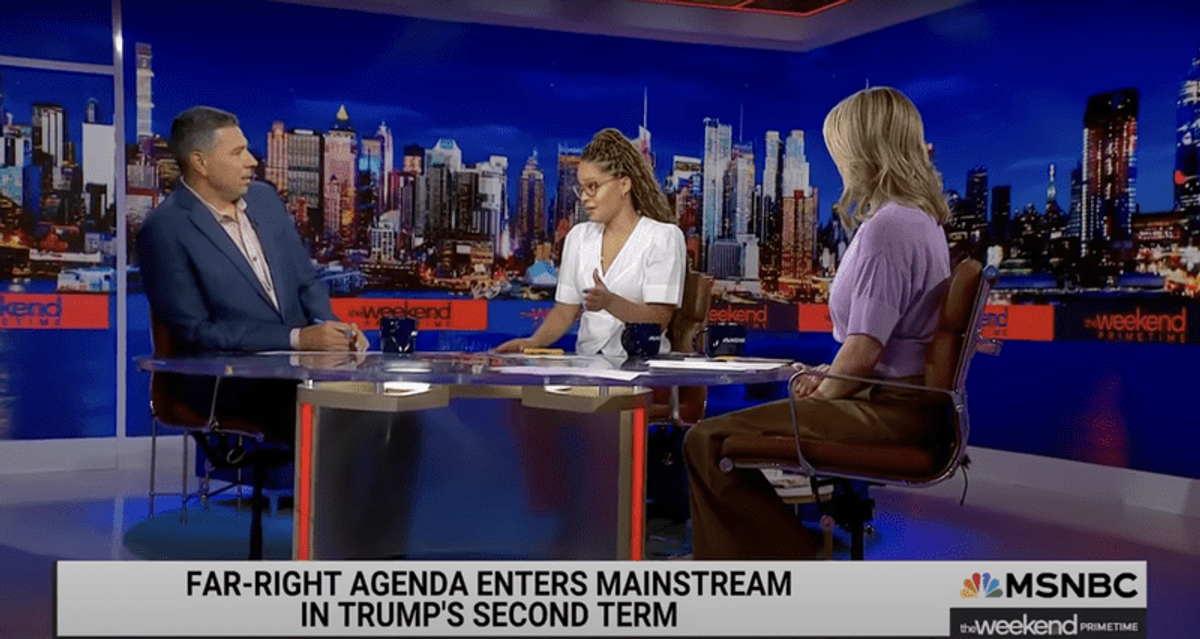
President Donald Trump's efforts to provide a platform for far-right ideologies within his second administration stunned an MSNBC panel on Sunday night.

The panel on MSNBC's "The Weekend: Primetime" discussed a recent report from The New York Times that named Trump administration officials who have espoused far-right rhetoric. For example, the report names podcast host Paul Ingrassia, who was picked to lead the Office of the Special Counsel. Ingrassia has previously claimed that "exceptional white men" are most capable of "appreciating the fruits" of Western civilization.

The show's hosts played a short montage of other similar comments Trump administration officials have made, which the hosts claimed were statements that used to get people fired from government positions.

"Hoo boy!" host Antonia Hylton said. "It's not like we haven't covered this in the past, but reading it out loud like that is depressing."

"When you have people like Stephen Miller in charge of immigration policy in this country, and I think Elon Musk has now completely turned X into a platform for extremist and white nationalist voices in this country, it is a convergence, Ayman Mohyeldin replied.

The NYT report notes that white nationalist organizations have been particularly fond of the Trump administration because it is echoing some of their talking points. For example, several administration officials have espoused the Great Replacement Theory, which likens immigration to the U.S. to a military invasion.

Mohyeldin added that these groups seem to be "happy with the space that's been created for them."

"They see in this administration more than the dog whistles that they need to know they have been empowered and they can speak up in this county in ways they haven't been able to for decades," he added.

Watch the entire clip below or by clicking here.

Israel's War on the Palestinian Thinker Is Doomed to Fail

Ideas are not tied to specific individuals, and resilience and resistance are a culture, not a job title.


People honor the names of 243 journalists killed in Gaza including Al Jazeera correspondent Anas Al-Sharif and his team, on the 18th day of the Gaza solidarity vigil outside the Dutch Ministry of Foreign Affairs in The Hague, Netherlands on August 11, 2025.
(Photo by Mouneb Taim/Anadolu via Getty Images)

Ramzy Baroud
Aug 24, 2025
Common Dreams


The killing of seven Palestinian journalists and media workers in Gaza on August 10 has prompted verbal condemnations, yet has inspired little to no substantive action. This has become the predictable and horrifying trajectory of the international community's response to the ongoing Israeli genocide.

By eliminating Palestinian journalists like Anas al-Sharif and Mohammed Qraiqeh, Israel has made a sinister statement that the genocide will spare no one. According to the monitoring website Shireen.ps, Israel has killed nearly 270 journalists since October 2023.

More journalists are likely to die covering the genocide of their own people in Gaza, especially since Israel has manufactured a convenient and easily deployed narrative that every Gazan journalist is simply a "terrorist." This is the same cruel logic offered by numerous Israeli officials in the past, including Israeli President Isaac Herzog, who declared that "an entire nation" in Gaza "is responsible" for not having rebelled against Hamas, effectively stating that there are no innocent people in Gaza.

This Israeli discourse, which dehumanizes entire populations based on a vicious logic, is frequently repeated by officials who fear no accountability. Even Israeli diplomats, whose job in theory is to improve their country's image internationally, frequently engage in this brutal ritual. In comments made in January 2024, Israeli ambassador to the United Kingdom, Tzipi Hotovely, callously argued that "every school, every mosque, every second house has access to tunnels," implying that all of Gaza is a valid military target.

With foreign media forbidden from operating in the strip per Israeli orders, the Gazan intellectual rose to the occasion and, in the course of two years, managed to reverse most of Zionism's gains over the past century.

This cruelty of language would be easily dismissed as mere rhetoric, except that Israel has, in fact, according to Euro-Med Human Rights Monitor reports, destroyed over 70% of Gaza's infrastructure.

While extremist language is often used by politicians around the world, it is rare for the extremism of the language to so precisely mirror the extremism of the action itself. This makes Israeli political discourse a uniquely dangerous phenomenon.

There can be no military justification for the wholesale annihilation of an entire region. Yet again, the Israelis are not shying away from providing the political discourse that explains this unprecedented destruction. Former Knesset member Moshe Feiglin chillingly said, last May, that "every child, every baby in Gaza is an enemy… not a single Gazan child will be left there."

But for the systematic destruction of a whole nation to succeed, it must include the deliberate targeting of its scientists, doctors, intellectuals, journalists, artists, and poets. While children and women remain the largest categories of victims, many of those killed in deliberate assassinations appear to be targeted specifically to disorient Palestinian society, deprive it of societal leadership, and render the process of rebuilding Gaza impossible.

These figures powerfully illustrate this point: According to a report released by the United Nations Office for the Coordination of Humanitarian Affairs, based on the latest satellite damage assessment conducted in July, 97% of Gaza's educational facilities have been affected, with 91% in need of major repairs or full reconstruction. Additionally, hundreds of teachers and thousands of students have been killed.

But why is Israel so intent on killing those responsible for intellectual production? The answer is twofold: one unique to Gaza, and the other unique to the nature of Israel's founding ideology, Zionism.

First, regarding Gaza: Since the Nakba in 1948, Palestinian society in Gaza has invested heavily in education, seeing it as a crucial tool for liberation and self-determination. Early footage shows classrooms being held in tents and open spaces, a testament to this community's tenacious pursuit of knowledge. This focus on education transformed the strip into a regional hub for intellectual and cultural production, despite poorly funded UN Relief and Works Agency for Palestinian Refugees in the Near East schools. Israel's campaign of destruction is a deliberate attempt to erase this generational achievement, a practice known as scholasticide, and Gaza is the most deliberate example of this horrific act.

Second, regarding Zionism: For many years, we were led to believe that Zionism was winning the intellectual war due to the cleverness and refinement of Israeli propaganda, or hasbara. The prevailing narrative, particularly in the Arab world, was that Palestinians and Arabs were simply no match for the savvy Israeli and pro-Israeli public relations machine in Western media. This created a sense of intellectual inferiority, masking the true reason for the imbalance.

Israel was able to "win" in mainstream media discourse due to the intentional marginalization and demonization of Palestinian and pro-Palestinian voices. The latter had no chance of fighting back simply because they were not allowed to, and were instead labeled as "terrorist sympathizers" and the like. Even the late, world-renowned Palestinian scholar Edward Said was called a "Nazi" by the extremist, now-banned Jewish Defense League, who went so far as to set the beloved professor's university office on fire.

Gaza, however, represented a major problem. With foreign media forbidden from operating in the strip per Israeli orders, the Gazan intellectual rose to the occasion and, in the course of two years, managed to reverse most of Zionism's gains over the past century. This forced Israel into a desperate race against time to remove as many Palestinian journalists, intellectuals, academics, and even social media influencers from the scene as quickly as possible—thus, the war on the Palestinian thinker.

The Israeli logic, however, is destined to fail, as ideas are not tied to specific individuals, and resilience and resistance are a culture, not a job title. Gaza shall once more emerge, not only as the culturally thriving place it has always been, but as the cornerstone of a new liberation discourse that is set to inspire the globe regarding the power of intellect to stand firm, to fight for what is right, and to live with purpose for a higher cause.


Our work is licensed under Creative Commons (CC BY-NC-ND 3.0). Feel free to republish and share widely.


Ramzy Baroud
Ramzy Baroud is a journalist and the Editor of the Palestine Chronicle. He is the author of five books including: "These Chains Will Be Broken: Palestinian Stories of Struggle and Defiance in Israeli Prisons" (2019), "My Father Was a Freedom Fighter: Gaza's Untold Story" (2010) and "The Second Palestinian Intifada: A Chronicle of a People's Struggle" (2006). Dr. Baroud is a Non-resident Senior Research Fellow at the Center for Islam and Global Affairs (CIGA), Istanbul Zaim University (IZU). His website is www.ramzybaroud.net.
Full Bio >
If the Dems Want to Beat Trump, They Should Embrace Medicare for All

If Democrats want to convince voters that they will make their lives better, they need to be identified with policies that will make their lives better.


Bill Weber of Portland and Marie Follayttar of South Portland unfurl a see-through banner at the start of a rally at Lincoln Park in Portland on Saturday as part of a national effort to demand improved and expanded Medicare for everyone.
(Staff photo by Ben McCanna/Portland Press Herald via Getty Images)


Dean Baker
Aug 24, 2025
Beat the Press

At a time when we don’t know if we will have real elections in 2026 and 2028, it may seem a bit absurd to be plotting an agenda for Democrats, but it is essential. While polls show approval for US President Donald Trump and Republicans is plummeting, people are not flocking back to the Democrats.

A major reason is that people don’t know what Democrats stand for, other than not being Donald Trump. While that is an important credential, democracy does still mean something to many people, and that alone is not likely to convince voters to come out and pull the Democratic lever.

Most people do feel they are being screwed by the rich. They have a good case, which has gotten a lot better in the seven months Donald Trump has been in office. His endless tax breaks for the rich and corporations, coupled with all sorts of government giveaways from his crypto scams to giving the right to dump their crap on our lawns (i.e. pollute without constraints), should convince any doubters that we have a government by and for the rich.

But the Democrats need to make the case that they are something different. That will be hard when so many are openly in bed with crypto scammers and other Wall Street high rollers.

Moving to universal Medicare will be difficult both politically and practically, but it can be done.

If they want to convince voters that they will make their lives better, they need to be identified with policies that will make their lives better. Some of these should be obvious.

Raising the minimum wage to $18 an hour is a straightforward one. Minimum wage hikes always poll well, and when referendums have appeared on the ballot, they win even in heavily Republican states like Arkansas. And there is now extensive research showing that modest increases in the minimum wage do not result in job loss.

Workers want to join unions but are stifled by current labor law. Strong protections for worker rights should go a long way here. Suppose we not only had a worker-friendly National Labor Relations Board, but we also had serious sanctions for violations. I suspect fewer bosses would break the law if they were looking at jail time.

That would at least be symmetric. A union official faces jail time if they ignore a court’s back to work order. It seems an employer who continually breaks the law to obstruct workers’ efforts to organize should face similar consequences.

But an item that really should be top of the list is universal Medicare. This had seemed like a big lift to me and many others, which would require a long phase-in period. But Trump and the Republicans’ radical attack on the current hodgepodge system of providing healthcare, coupled with Trump’s extreme uses of executive power, convinced me that we can move quickly in this direction.
The Budget and the Resources for Universal Medicare

In moving toward universal Medicare, it is important to recognize the distinction between the budgetary implications and the real demands on resources. There is no doubt that a universal Medicare program will require a large amount of additional spending, although the increase can be exaggerated.

We will save at least $400 billion a year (5% of the federal budget) on what we pay the insurance industry to shuffle papers and deny people care. Prescription drugs and other pharmaceutical products would also be cheap if the government didn’t give out patent monopolies for these items. We will spend over $700 billion this year for drugs that would likely cost around $150 billion in a free market. The difference of $550 billion comes to $4,400 per household annually.

Contrary to what is often asserted, government makes drugs expensive. We need less government to make them cheap, not more. The same is true for medical equipment, like scanning machines.

We do need to provide incentives to develop new drugs and equipment, but there are alternatives to granting patent monopolies. We can pay people. The National Institutes of Health and other government agencies used to spend over $50 billion a year on biomedical research.

Insofar as it is necessary to raise revenue, Trump has shown us how easy it can be.

We can triple this sum and make all findings fully open source so that new drugs can be produced as generics the day they are approved. This would both make drugs cheap and eliminate most of the motivation for corruption in the pharmaceutical industry.

It’s also worth pointing out that a major reason insurers are so determined to limit care is the high prices of drugs and medical equipment. If a year’s treatment with a drug costs $100,000, as is the case with some new cancer drugs, an insurer will try to avoid paying it. If the cost were around $1,000, which would likely be the case in the absence of patent monopolies, there would be little concern about using the drug, if a doctor determined it to be the best treatment.

But even moving quickly to bring costs down in the healthcare sector, we will still need considerably more money to pay for a universal healthcare system than what the government pays for our current system. This is a place where Trump’s erratic policies have done us a great service.

First, we need to remember that the actual constraint to the government’s spending is not revenue, it is the availability of real resources. In the case of universal Medicare that means the doctors, physicians’ assistants, nurses, medical technicians, home healthcare aides, and other people who directly provide healthcare to patients.

We currently have over 18 million employed in these jobs. We would need considerably more to adequately meet the country’s healthcare needs. We already have shortages in many occupations, and there is a huge problem of access in rural areas and some inner-city neighborhoods.

We can’t immediately fill this shortfall since many of these fields require years of training. If the country moved to universal Medicare, radically ramping up training programs in healthcare fields should be a top priority. We need to go the Immigration and Customs Enforcement route here and offer huge recruitment bonuses. People can be paid tens of thousands of dollars for entering and then completing programs in physical therapy, nursing, and other health-related fields.

We also should be turning to foreign countries for assistance. There already are large numbers of immigrants working in healthcare in the United States. The Trump administration is hard at work deporting many of them. That will make it more difficult to attract foreign healthcare workers in the future, but hopefully a progressive Democratic administration can convince the world that the United States has returned to sanity.

There is an issue that by bringing large numbers of healthcare workers to the United States, especially doctors, we will be depriving poorer countries of desperately needed healthcare providers. There is a simple answer to this. We pay these countries to train two or three healthcare workers for every one that comes here.

This is a classic story of the winners from trade compensating the losers that economists always talk about when pushing trade deals through Congress, but never actually happens after they take effect. The logic is actually solid; the problem is the political will. Anyhow, we can give this compensation and create a win-win situation, if there is political support for it.

Getting back to the budget situation, the problem from large deficits is that they can push the economy beyond its capacity and lead to inflation. That doesn’t seem to be the problem at present, where the economy is showing considerable weakness. It’s hard to say what the world will look like if and when a progressive Democratic administration comes into power.

Insofar as it is necessary to raise revenue, Trump has shown us how easy it can be. He set the country on a course to raise close to $400 billion a year in taxes (more than $4 trillion over a decade), without even getting approval from Congress.

His method of ad hoc tariffs is probably about the worst way to raise revenue, but it does show that it is possible to raise large amounts of revenue. The better routes would be raising income taxes on high-end earners and a corporate income tax that we actually collect. (Either mandate companies give the government non-voting shares of corporate stock, or make returns to shareholders the basis for the income tax; proposals that are too simple for great policy minds to understand.)

We also should apply a modest sales tax to stock trades of say 0.1%. This will hugely reduce the bloat in the financial sector and cost the vast majority of households nothing. The politicians whining that a middle-class family with $400,000 in a 401(k) could end up paying another $100 a year in taxes should be told to eat shit and die. They are shilling for Wall Street: full stop.

Anyhow, the dire budget calculations showing that if we never do anything about deficits, in 2040 or 2050 we will have an incredibly high interest burden might be a good way to employ budget wonks, but they should not be treated as serious basis for policy. We can and do change budgets all the time, and if we do face problems where deficits are pushing the economy beyond its capacity, we know how to raise taxes and, if need be, cut less useful spending.

Moving to universal Medicare will be difficult both politically and practically, but it can be done. Democrats really should have it at the center of their political agenda.


This work is licensed under a Creative Commons Attribution 4.0 International License


Dean Baker
Dean Baker is the co-founder and the senior economist of the Center for Economic and Policy Research (CEPR). He is the author of several books, including "Getting Back to Full Employment: A Better bargain for Working People," "The End of Loser Liberalism: Making Markets Progressive," "The United States Since 1980," "Social Security: The Phony Crisis" (with Mark Weisbrot), and "The Conservative Nanny State: How the Wealthy Use the Government to Stay Rich and Get Richer." He also has a blog, "Beat the Press," where he discusses the media's coverage of economic issues.
Full Bio >


Watch: Historian warns Nobel-winning economist midterms could spark a 'dark' global period

Alex Henderson,
 AlterNet
August 24, 2025 


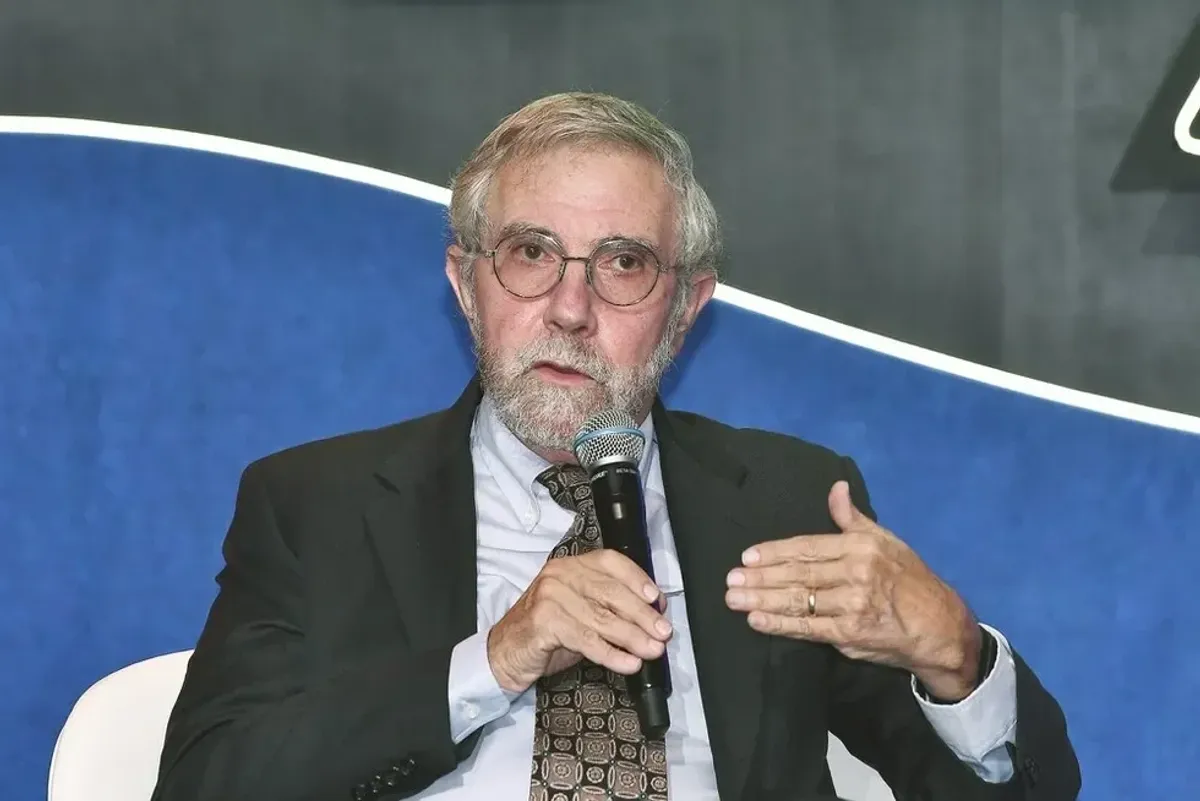
Economist Paul Krugman, economist during FIDES 2023 in Rio de Janeiro, Brazil on September 25, 2023 (A.PAES/ Shutterstock.com)

During his four years as president, Joe Biden worried that if Donald Trump ever returned to the White House, it would pose a major threat to the North Atlantic Treaty Organization (NATO). Trump, during his first term, toyed with the idea of withdrawing the U.S. from NATO — whereas Biden, as president, aggressively championed NATO's expansion when Sweden and Finland opted to join the alliance.

Seven months into Trump's second presidency, the U.S. is still a NATO member. But author/military historian Phillips O'Brien, during an interview with economist Paul Krugman, stressed that Trump's return to the White House marks a dramatic change in U.S./Europe relations.

Krugman, on August 23, posted video of the interview on his SubStack page and also published it as a Q&A article. And O'Brien voiced major concerns about the United States' relationship with Europe.

"The United States is going to great lengths to antagonize its allies," O'Brien told Krugman. "I don't get it. None of this makes any sense to me."

The author/historian said of the Ukraine/Russia War, "I think what happens to Ukraine will determine how Europe deals with this. If Ukraine is sacrificed, I think Europe is going to have a terrible future. Because it's going to be dependent on the U.S., which has basically sacrificed Ukraine to (Russian President Vladimir) Putin's Russia. Europe might even break apart, structurally, such that you'll have the Central Eastern Europeans, the ones who want to stand by Ukraine, the Finns, the Baltics, the Nordics going one way and then the Western Europeans sort of pretending things are OK."

O'Brien added, "So, I think people are underrating the chance of Europe splitting over Ukraine, which is why it's so important, I think, that Ukraine comes out of the war in good shape."

According to O'Brien, U.S. allies in Europe will be paying very close attention to the outcome of the United States' 2026 midterms.

"Well, that's the key thing, isn't it? The 2026 midterms," O'Brien told Krugman. "I don't think people are paying enough attention, because they have to be run fairly. I do think the Democrats have a very good chance of winning them if they are run fairly and happen under normal conditions. But they could also be easily perverted…. I would say that 2026 elections will show not whether America can come back, but whether it has a chance to come back — or whether the period we're going into could be a lot longer and darker than we imagined."

Paul Krugman's full interview with Phillips O'Brien is available on his SubStack page as a video and a Q&A article.

'Danger remains': Nobel-winning economist issues warning about 'drag' of Trump's policies


Robert Davis
August 24, 2025 
RAW STORY


A Nobel Prize-winning economist issued a dire warning on Sunday about the potential impact of President Donald Trump's signature economic policies.

Paul Krugman, who won the Nobel in 2008 for his work on trade theory, wrote in a new Substack essay that Trump's deportation and tariff policies could create stagflation, or a period characterized by low economic growth, high inflation, and high unemployment.

"Stagflation is very much on people’s minds again, for good reason," Krugman wrote. "The Trump administration’s tariff and deportation policies are creating a significant inflationary shock. They’re also imposing a significant drag on economic growth."

Krugman added that there has been one saving grace to Trump's economy: investments in artificial intelligence. Several AI companies from NVIDIA to Apple and Taiwan Semiconductor Manufacturing Company have made centi-billion-dollar investments in the U.S. during Trump's second term, according to figures from the White House.

However, Krugman warned that any slowdown to the AI space could spell trouble for the U.S. economy.

"Today, it’s likely that the United States would be heading into a recession under the weight of higher prices and slower growth if the economy weren’t being supported by a huge boom in AI-related investment," Krugman added. "And this danger remains: if the AI boom goes bust, the odds are high that the US economy will be plunged into a recession."


Read the entire essay by clicking here.
'Not what I voted for!' MAGA fans slam Trump's latest 'socialist' move

ALL CAPITALI$M IS STATE CAPITALI$M

Carl Gibson, 
AlterNet
August 22, 2025 


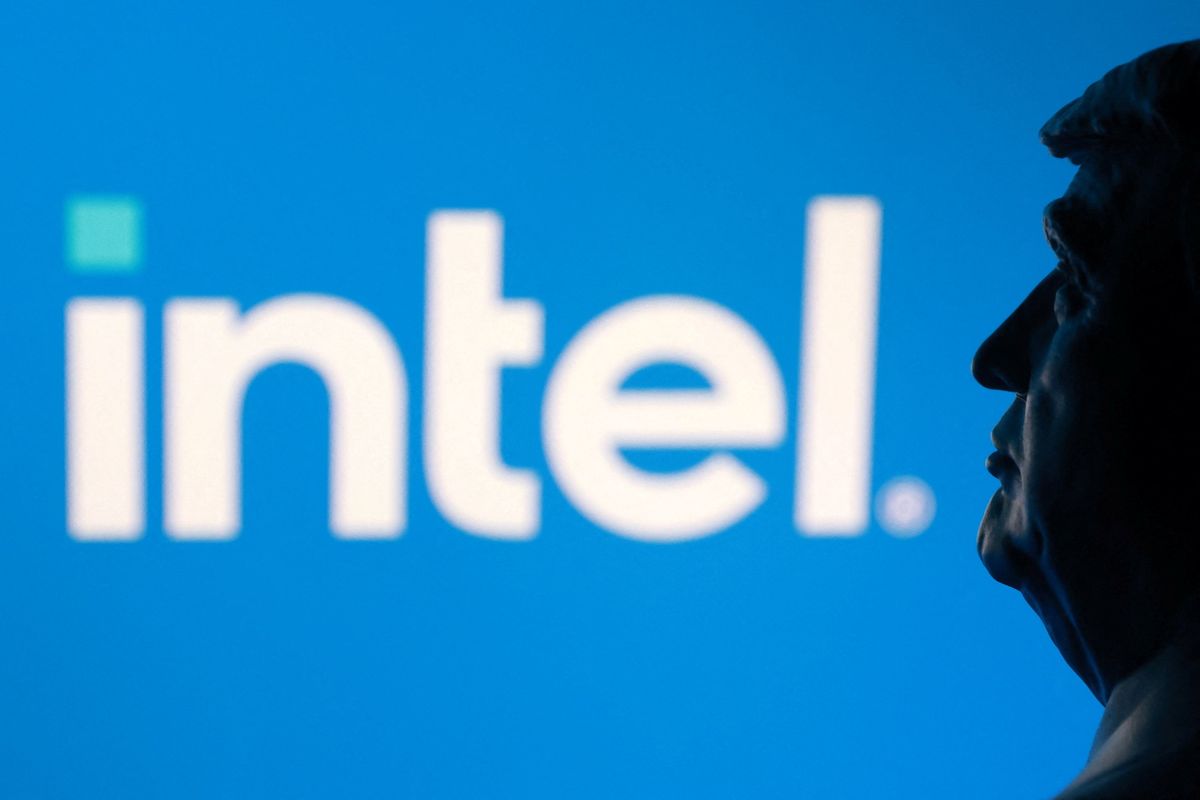
A 3D-printed miniature model depicting U.S. President Donald Trump and Intel logo are seen in this illustration taken August 22, 2025. REUTERS/Dado Ruvic/Illustration

On Friday, President Donald Trump announced that the U.S. government was now a part-owner of a major publicly traded tech company. The reaction among his base was less than enthusiastic.

Trump announced via his Truth Social platform that as of Friday the U.S. is a multibillion-dollar shareholder in Intel as part of an agreement with CEO Lip-Bu Tan — with the U.S. supposedly paying nothing for its new stake. The announcement notably came roughly two weeks after Trump's angry social media tirade against Tan, in which he demanded that Tan "resign immediately" from his role due to his investments in Chinese tech companies.

"It is my Great Honor to report that the United States of America now fully owns and controls 10% of INTEL, a Great American Company that has an even more incredible future," Trump wrote in his signature style of oddly placed capital letters. "I negotiated this Deal with Lip-Bu Tan, the Highly Respected Chief Executive Officer of the Company. The United States paid nothing for these Shares, and the Shares are now valued at approximately $11 Billion Dollars. This is a great Deal for America and, also, a great Deal for INTEL. Building leading edge Semiconductors and Chips, which is what INTEL does, is fundamental to the future of our Nation. MAKE AMERICA GREAT AGAIN! Thank you for your attention to this matter.

While some of the responses to the Trump administration's post on X announcing the news were complimentary, many replies were deeply critical of the government taking ownership of a private company. One user who described themselves in their bio as a "Constitutional Conservative" wrote: "Not what I voted for. I voted against this specifically." Conservative podcast host @amandatalks_ tweeted: "ngl [not gonna lie] don't love this guys."

"I'm a Republican but I do not agree with this," another user posted. "Government and privately owned businesses should not mix."

"Governments shouldn't own private business," tweeted retired Naval officer Mike Rodman.

Aerospace engineer Michael Heil also weighed in, responding to the White House's post by writing: "Not good. Even partial government ownership of private industry is socialism."


'Washington is becoming Chinatown': Wall Street Journal bashes Trump's 'statism' move

Robert Davis
August 24, 2025
RAW STORY


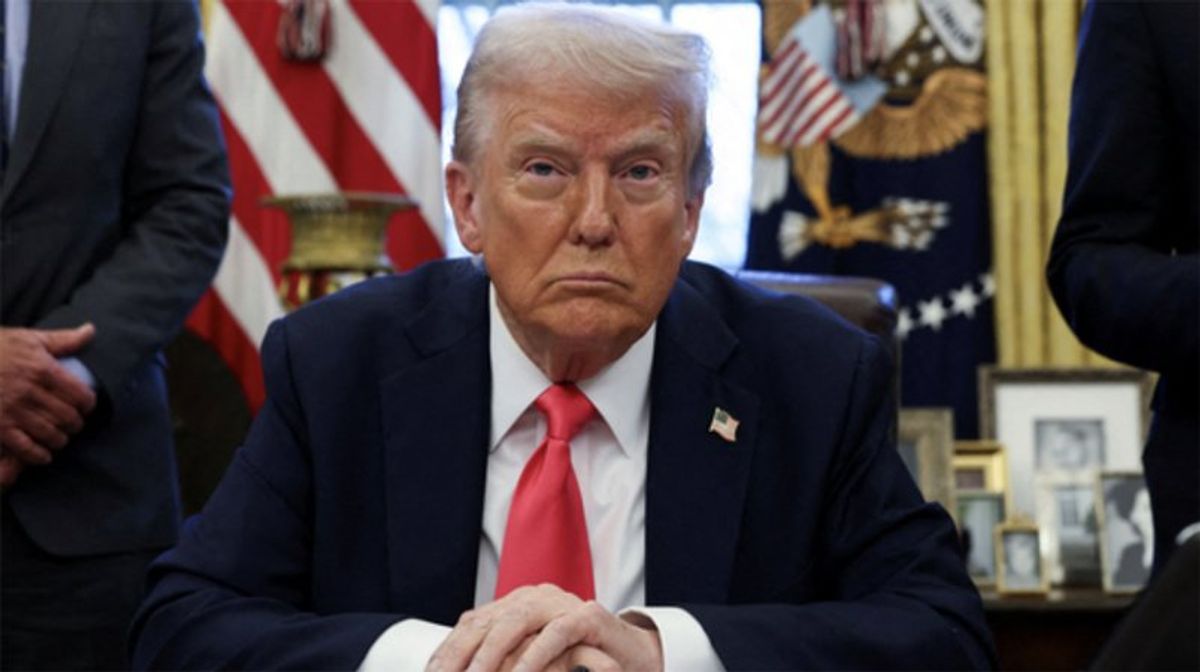
Donald Trump (Photo via Reuters)

The Wall Street Journal's conservative editorial board bashed President Donald Trump's latest business move, arguing that it models China's "statism."

On Friday, Trump announced that the U.S. government is taking a 10% stake in computer chip-maker Intel. The government is paying the company $8.7 billion in all, with the funds coming from an approved but not yet paid grant under the U.S. CHIPS and Science Act and the Secure Enclave program, according to a statement from the company.

The Wall Street Journal's editorial board slammed the deal in a new op-ed, arguing that the deal will stifle innovation at the struggling company

"In the name of competing with China, the U.S. is imitating its model of state-run business," the editorial reads in part. "Washington is becoming Chinatown."

"Mr. Trump accused Kamala Harris of being a socialist, but the Biden Administration never nationalized companies," the editorial continues.

The Journal's editors also found it curious that Trump's policies have not yet received significant pushback from Republicans in Congress.

Why aren’t Republicans pushing back on Mr. Trump’s Intel deal?" the editors asked. "They might consider how the next Democratic President could use the government’s stake to press the left’s political imperatives—Intel profits to build low-income housing? Statism is gaining currency on the political left and right, resulting in a bizarre fusion of ideas."

Read the entire editorial by clicking here.


Trump thinks owning a piece of Intel would be a good deal for the US. Here's what to know

An Intel sign is shown at the chipmaker's global headquarters in Santa Clara, Calif. on Friday, Aug. 8, 2025. (AP Photo/Terry Chea · Associated Press

MICHAEL LIEDTKE
Wed, August 20, 2025 


SAN FRANCISCO (AP) — President Donald Trump wants the U.S. government to own a piece of Intel, less than two weeks after demanding the Silicon Valley pioneer dump the CEO that was hired to turn around the slumping chipmaker. If the goal is realized, the investment would deepen the Trump administration's involvement in the computer industry as the president ramps up the pressure for more U.S. companies to manufacture products domestically instead of relying on overseas suppliers.


What’s happening?

The Trump administration is in talks to secure a 10% stake in Intel in exchange for converting government grants that were pledged to Intel under President Joe Biden. If the deal is completed, the U.S. government would become one of Intel's largest shareholders and blur the traditional lines separating the public sector and private sector in a country that remains the world's largest economy.

Why would Trump do this?

In his second term, Trump has been leveraging his power to reprogram the operations of major computer chip companies. The administration is requiring Nvidia and Advanced Micro Devices, two companies whose chips are helping to power the craze around artificial intelligence, to pay a 15% commission on their sales of chips in China in exchange for export licenses.

Trump’s interest in Intel is also being driven by his desire to boost chip production in the U.S., which has been a focal point of the trade war that he has been waging throughout the world. By lessening the country's dependence on chips manufactured overseas, the president believes the U.S. will be better positioned to maintain its technological lead on China in the race to create artificial intelligence.

Didn’t Trump want Intel’s CEO to quit?

That's what the president said August 7 in an unequivocal post calling for Intel CEO Lip-Bu Tan to resign less than five months after the Santa Clara, California, company hired him. The demand was triggered by reports raising national security concerns about Tan's past investments in Chinese tech companies while he was a venture capitalist. But Trump backed off after Tan professed his allegiance to the U.S. in a public letter to Intel employees and went to the White House to meet with the president, who applauded the Intel CEO for having an “amazing story.”

Why would Intel do a deal?

The company isn't commenting about the possibility of the U.S. government becoming a major shareholder, but Intel may have little choice because it is currently dealing from a position of weakness. After enjoying decades of growth while its processors powered the personal computer boom, the company fell into a slump after missing the shift to the mobile computing era unleashed by the iPhone’s 2007 debut.

Intel has fallen even farther behind in recent years during an artificial intelligence craze that has been a boon for Nvidia and AMD. The company lost nearly $19 billion last year and another $3.7 billion in the first six months of this year, prompting Tan to undertake a cost-cutting spree. By the end of this year, Tan expects Intel to have about 75,000 workers, a 25% reduction from the end of last year.

Would this deal be unusual?

Although rare, it’s not unprecedented for the U.S. government to become a significant shareholder in a prominent company. One of the most notable instances occurred during the Great Recession in 2008 when the government injected nearly $50 billion into General Motors in return for a roughly 60% stake in the automaker at a time it was on the verge of bankruptcy. The government ended up with a roughly $10 billion loss after it sold its stock in GM.

Would the government run Intel?

U.S. Commerce Secretary Howard Lutnick told CNBC during a Tuesday interview that the government has no intention of meddling in Intel's business, and will have its hands tied by holding non-voting shares in the company. But some analysts wonder if the Trump administration's financial ties to Intel might prod more companies looking to curry favor with the president to increase their orders for the company's chips.


What government grants does Intel receive?

Intel was among the biggest beneficiaries of the Biden administration’s CHIPS and Science Act, but it hasn’t been able to revive its fortunes while falling behind on construction projects spawned by the program.

The company has received about $2.2 billion of the $7.8 billion pledged under the incentives program — money that Lutnick derided as a “giveaway” that would better serve U.S. taxpayers if it’s turned into Intel stock. “We think America should get the benefit of the bargain,” Lutnick told CNBC. “It’s obvious that it’s the right move to make.”


'Something needs to change': Anti-Trump vendors flood Bernie Sanders resistance rally
RAW STORY
August 24, 2025


Stan Sinberg with his wagon dubbed “The Roving Anti-Trump ‘Save Democracy Tour!’ Band-Wagon.” (Photo by Alexandria Jacobson/Raw Story)


CHICAGO — From crude to punny, rebellious to pleading, outside of Sen. Bernie Sanders’ “Fighting Oligarchy” rally in Chicago on Sunday, dozens of vendors sold a colorful array of shirts, hats and buttons slamming President Donald Trump.

Stan Sinberg traveled from San Francisco with a blue wagon he dubbed the “The Roving Anti-Trump ‘Save Democracy Tour!’ Band-Wagon.”

“Now in its 9th WTF Year!” read a sign Sinberg affixed atop an array of buttons he created and sold for $5.

Their slogans: “Non-Felon for President”

“Deport ICE”

“Don’t Drink the Bleach!”

“Border Personality Disorder" with a frowning photo of Trump.


Buttons on Stan Sinberg's wagon dubbed “The Roving Anti-Trump ‘Save Democracy Tour!’ Band-Wagon.” (Photo by Alexandria Jacobson/Raw Story)

For seven years, Sinberg has traveled with his “band-wagon” to protests across the country.

“When [Trump] lost in 2020, I had a banner that said ‘happily going out of business sale,’ but he didn’t leave,” Sinberg said.

“He tried to steal the election, and then he just kept being a presence.”

Sinberg has been protesting against Trump since he secured the Republican nomination for president the first time in 2016.


“I wanted to do what I could to prevent him from foisting himself on the rest of the country,” said Sinberg, who was living in Trump’s native New York at the time.

Sinberg wasn’t the only vendor to travel thousands of miles to sell merchandise outside the University of Illinois Chicago Isadore and Sadie Dorin Forum.

Bobby Murray from Alabama sold T-shirts and hats with JR Concessions featuring a range of rallying cries from “MAGA More Are Getting Arrested” to simply “F— Trump."

“I like old Bernie,” Murray said.

“Something needs to change, that’s for sure.”


Bobby Murray sells T-shirts outside Sen. Bernie Sanders' "Fighting Oligarchy" rally. 
(Photo by Alexandria Jacobson/Raw Story)


Terrill Leathers sold black “Rage Against the Machine” shirts showing Sanders resisting arrest at a Chicago civil rights protest in 1963.

“It should be important for all Americans to come out because the things that’s going on right now is outrageous,” Leathers said.


Terrill Leathers sells "Rage Against the Machine" shirts in Chicago. (Photo by Alexandria Jacobson/Raw Story)

A button vendor, Sunshine Tea, who uses a “stage” last name, lives on the South Side of Chicago but spent years in Vermont and once met Sanders.

“When I met him, he was in the grocery store,” Tea said. “He was sick, and he was a senator. He was buying his own groceries, so I know for a fact he’s the only congressperson that knows what a gallon of milk costs.”


Sunshine Tea sells buttons outside the "Fighting Oligarchy" rally in Chicago. (Photo by Alexandria Jacobson/Raw Story)

Tajh Pordos from St. Louis sold T-shirts featuring the "Fight Oligarchy" slogan with photos of Sanders and Rep. Alexandria Ocasio-Cortez (D-NY), who has shown up at some of Sanders' events on the tour.

“I really feel like this is a very good hustle,” Pordos said. “Overall, it’s a good thing.”


Tajh Pordos sells "Fight Oligarchy" shirts in Chicago. (Photo by Alexandria Jacobson/Raw Story)

Sanders, an independent from Vermont, spoke alongside Rep. Delia Ramirez (D-IL), a member of the progressive "Squad" with Ocasio-Cortez, and Illinois Sen. Robert Peters, who is running for Congress in Illinois' 2nd Congressional District.

Sanders called Trump "the most dangerous president in perhaps the history of this country" at the Chicago event.

"This is a demagogue whose function in life is to serve the oligarchy and to try to divide us up," Sanders said.


Alexandria Jacobson is a Chicago-based investigative reporter at Raw Story, focusing on money in politics, government accountability and electoral politics. Prior to joining Raw Story in 2023, Alex reported extensively on social justice, business and tech issues for several news outlets, including ABC News, the Chicago Sun-Times and the Chicago Tribune. She can be reached at alexandria@rawstory.com. More about Alexandria Jacobson.


Evidence, not ideology, must guide preventive health care


Canadian Medical Association Journal


A recent review of the Canadian Task Force on Preventive Health Care underscores the need for expert bodies to produce evidence-based guidance and that Canada should ensure a renewed task force is adequately funded and supported, argues a commentary in CMAJ (Canadian Medical Association Journalhttps://www.cmaj.ca/lookup/doi/10.1503/cmaj.251038.

Dr. Vivek Goel, President and Vice-Chancellor of the University of Waterloo and author of the commentary, chaired the External Expert Review panel that reviewed the task force’s structure, methodologies, and clinical practice guidelines, and looked at international best practices along with input from various groups.

“Our review affirmed that we need expert bodies like the task force, now more than ever, to produce evidence-based guidance for the public, health care practitioners, and health systems,” writes Dr. Goel.

There have been several versions of the task force that, over decades, helped to change the way medicine is practised, moving from opinion-based medicine to evidence-based medicine.

“Those with stature, influence, and authority could drive care and policy in entire populations, with the potential to lead to substantial harm,” writes Dr. Goel. “The task force pioneered the now-standard methods of evaluating clinical interventions not by tradition or authority but according to rigorous scientific evidence. The evidence-based medicine movement, whose development was led by clinicians at McMaster University, transformed preventive medicine globally and is among the most important achievements in health care worldwide.”

He calls for adequate funding and support to help the task force provide timely guidance on a national scale. The modernized task force should incorporate updated methodologies, take an inclusive, transparent approach in its work, and have protection from political interference.

“For decades, this important body has delivered high-impact work on a shoestring budget, relying on the time and expertise of many volunteers,” Dr. Goel writes.

With Robert F. Kennedy Jr.’s directives affecting many similar guideline-producing bodies in the United States, this could be an opportune time for Canada.

“Canada has the opportunity to reclaim global leadership in preventive health. A modernized Canadian body that makes national preventive care recommendations will not just improve care — it will be a statement of Canadian values. As others retreat from science, Canada can lead with integrity, inclusiveness, and evidence, with a strong, independent body that is well resourced to produce high-quality guidance,” Dr. Goel concludes.


Gun injury odds up to 20x higher for kids in disadvantaged ZIP codes


Most hospitalizations for gun injuries among kids are the result of unintentional shootings


Northwestern University


  • Study analyzed nearly 7,000 pediatric gun injuries and mapped odds by ZIP code

  • Kids in ‘low-opportunity’ neighborhoods far more likely to be shot than those in ‘high-opportunity’ areas
  • ‘High-opportunity’ kids are far less likely to be shot, but twice as likely to die when it happens
  • Authors stress urgent need for safe storage and firearm safety education

CHICAGO --- Children residing in “very low-opportunity” neighborhoods are up to 20 times more likely to be hospitalized for gun injuries than those living in the most advantaged areas, reports a new multi-state study led by Northwestern Medicine.

The study also found that most hospitalizations for gun injuries among children under 18 are the result of unintentional shootings — incidents caused by mishandling or accidental discharge of a gun.

The paper, which was funded by families who have lost children to firearm injuries, will be published on Monday (Aug. 25) in the journal Pediatrics.

“Our study shows that where you and your family live is directly tied to your child’s odds of being injured or killed by a firearm,” said senior study author Dr. Anne Stey, assistant professor of surgery at Northwestern University Feinberg School of Medicine and a Northwestern Medicine trauma surgeon. “Unintentional injuries, which are often preventable, make up the largest share of these cases.”

“The fewer opportunities a child has in their neighborhood, the greater their odds of ending up in the hospital with a firearm injury,” added study co-author Dr. Mehul Raval, professor of surgery at Northwestern University Feinberg School of Medicine and head of pediatric surgery at Ann & Robert H. Lurie Children's Hospital of Chicago.

This is the first study to examine, across multiple states, how children’s neighborhood conditions are linked to firearm injuries, which is currently the leading cause of death among U.S. children.

How the study was conducted

Stey and her team analyzed hospital discharge data for nearly 7,000 gun injuries among children ages 0 – 17 between 2016 and 2021, capturing every documented case in Florida, Maryland, New York and Wisconsin.

Then they paired those records with Child Opportunity Index (COI) ZIP code data, which ranks neighborhoods from very low- to very high-opportunity based on education, health and socioeconomic factors. This allowed them to identify “hot spots” of firearm injury and see how odds varied by communities.

The findings

More than one in four ZIP codes (28%) in very low–opportunity neighborhoods were hot spots for pediatric firearm injuries, compared with just 5% in very high–opportunity areas.

In Maryland, children in very low–opportunity areas were more than 20 times more likely to be hospitalized with a gun injury than those in the most advantaged neighborhoods. That disparity was nearly 19 times in Wisconsin, 16 in New York, and eight in Florida.

Unintentional shootings were the leading cause of pediatric firearm injuries in all four states, accounting for roughly 57 — 63% of all hospitalizations, followed by assaults (32 to 39%) and self-inflicted injuries (1 to 7%).

Children in high-opportunity neighborhoods were far less likely to be injured, but more than twice as likely to die when they were — in part because self-inflicted injuries were more common in these areas.

Prevention strategies

Because most injuries were unintentional, the Northwestern team emphasized implementing prevention strategies at both the policy and community levels in neighborhoods identified as gun violence hot spots. These strategies include safe storage and firearm safety education. They also noted that health systems serving children in low-opportunity areas should anticipate higher volumes of firearm injuries.

“Child Access Prevention laws, which require safe storage of guns, have already been shown to reduce accidental and suicide-related deaths among children,” Stey said. “Our next step is to measure how these interventions can further lower unintentional firearm injuries.”

Limitations

The study only included children who presented to an acute care hospital following a firearm injury. Therefore, it misses those who died before reaching a hospital or never sought medical care.

This study, titled “Pediatric Firearm-Related Hospital Encounters by Child Opportunity Index Level,” was made possible by the philanthropic support of families who have lost children due to firearms.