Photo by Andra C Taylor Jr on Unsplash
June 01, 2025 |
Democrats took to the floor of the Texas House on Saturday to label a ban on clubs that support gay teens the work of “monsters” and to say the ban endangers children and strips them of their dignity.
The Democratic representatives grew emotional in opposition to a bill that would ban K-12 student clubs focused on sexuality and gender identity.
Senate Bill 12, authored by Sen. Brandon Creighton, won final legislative passage Saturday after lawmakers in both chambers adopted the conference committee reports that specifically clarified that schools will be banned from authorizing or sponsoring student clubs based on sexual orientation or gender identity.
Backers proclaimed that the bill enshrines a parent’s rights and puts the parent not just at the table, but at the head of the table where the child’s best interests are decided. They also targeted diversity, equity and inclusion (DEI) policies, claiming that they project ideologies on students and put too much focus on race, sexuality and gender identity instead of the quality of education.
Rep. Gene Wu, D-Houston, emphasized that these clubs exist because of a long history of oppression against the LGBTQ+ community. He warned against demonizing students and teachers for discussing gender and sexuality.
“The real monsters are not kids trying to figure out who they are,” Wu said during the House discussion. “The monsters are not the teachers who love them and encourage them and support them. They are not the books that provide them with some amount of comfort and information. The real monsters are here.”
Lawmakers shared personal stories about LGBTQ+ youth. Rep. Rafael Anchía said his daughter was a vice president of a pride club at her school. He stressed that these clubs “are no more about sex than 4-H or ROTC or the basketball team.”
“It wasn't a sex club,” Anchía said. “They'd get together and they'd watch movies. They'd color. They'd go to musicals. It was about a kid who felt weird who found her people and everything about it was good. I don't know why grown-ups in this body are so triggered with my daughter getting together with her classmates in a school-sponsored activity.”

Anchía also told the Texas Tribune he “didn’t sign up for five anti-LGBT bills this session.”
Rep. Jolanda Jones, D-Houston, shared her experience as a Black woman and a lesbian, saying she didn’t come out until the age of 50 because she knew “the world wasn't safe.” She warned that banning LGBTQ+ clubs could worsen bullying.
“And we have the nerve to say that we care about mental health,” Jones said. “We've passed bill after bill about access to care, about youth suicide, about prevention and treatment. But this bill makes kids sicker, sadder, more alone. This bill doesn't protect children. It endangers them. It doesn't give parents more rights. It strips children of their dignity.”
SB 12 is often referred to as the “Parental Bill of Rights” because it claims to give parents more control over their children’s schools. But Rep. Erin Zwiener, D-Driftwood, addressed those who are “afraid that your kids or your grandkids might grow up queer,” warning that the bill could harm family relationships.
“Getting silence in schools from the LGBTQ community, which is what this bill is designed to do, will not stop your kids from being gay,” Zwiener said. “It will just make them afraid to come out. It will make them afraid to live their lives as their full selves. It will make them afraid to tell you when they figure out that they're LGBTQ and it might damage your relationship with them forever.”
Rep. Nicole Collier, D-Fort Worth, argued that allowing religious organizations in schools but banning “clubs that allow students to be who they are, is a double standard that flies in the face of the principles you say you support.”
“An LGBTQ person can't change who they are any more than the fact that I can't change that I'm Black,” Collier said. “What you're saying to students today is that you will be accepted as long as you are who we say you should be.”
If signed by the governor, the bill will become law on Sept. 1.

Rep. Jolanda Jones, D-Houston, shared her experience as a Black woman and a lesbian, saying she didn’t come out until the age of 50 because she knew “the world wasn't safe.” She warned that banning LGBTQ+ clubs could worsen bullying.
“And we have the nerve to say that we care about mental health,” Jones said. “We've passed bill after bill about access to care, about youth suicide, about prevention and treatment. But this bill makes kids sicker, sadder, more alone. This bill doesn't protect children. It endangers them. It doesn't give parents more rights. It strips children of their dignity.”
SB 12 is often referred to as the “Parental Bill of Rights” because it claims to give parents more control over their children’s schools. But Rep. Erin Zwiener, D-Driftwood, addressed those who are “afraid that your kids or your grandkids might grow up queer,” warning that the bill could harm family relationships.
“Getting silence in schools from the LGBTQ community, which is what this bill is designed to do, will not stop your kids from being gay,” Zwiener said. “It will just make them afraid to come out. It will make them afraid to live their lives as their full selves. It will make them afraid to tell you when they figure out that they're LGBTQ and it might damage your relationship with them forever.”
Rep. Nicole Collier, D-Fort Worth, argued that allowing religious organizations in schools but banning “clubs that allow students to be who they are, is a double standard that flies in the face of the principles you say you support.”
“An LGBTQ person can't change who they are any more than the fact that I can't change that I'm Black,” Collier said. “What you're saying to students today is that you will be accepted as long as you are who we say you should be.”
If signed by the governor, the bill will become law on Sept. 1.

This article originally appeared in The Texas Tribune at https://www.texastribune.org/2025/05/31/texas-house-tempers-flare-gay-club-ban/.
The Texas Tribune is a member-supported, nonpartisan newsroom informing and engaging Texans on state politics and policy. Learn more at texastribune.org
The Texas Tribune is a member-supported, nonpartisan newsroom informing and engaging Texans on state politics and policy. Learn more at texastribune.org
Pride Organizers Are Doubling Down on Teaching Radical Histories of Resistance
In the fight for dignity and democracy, trans people have much to teach.
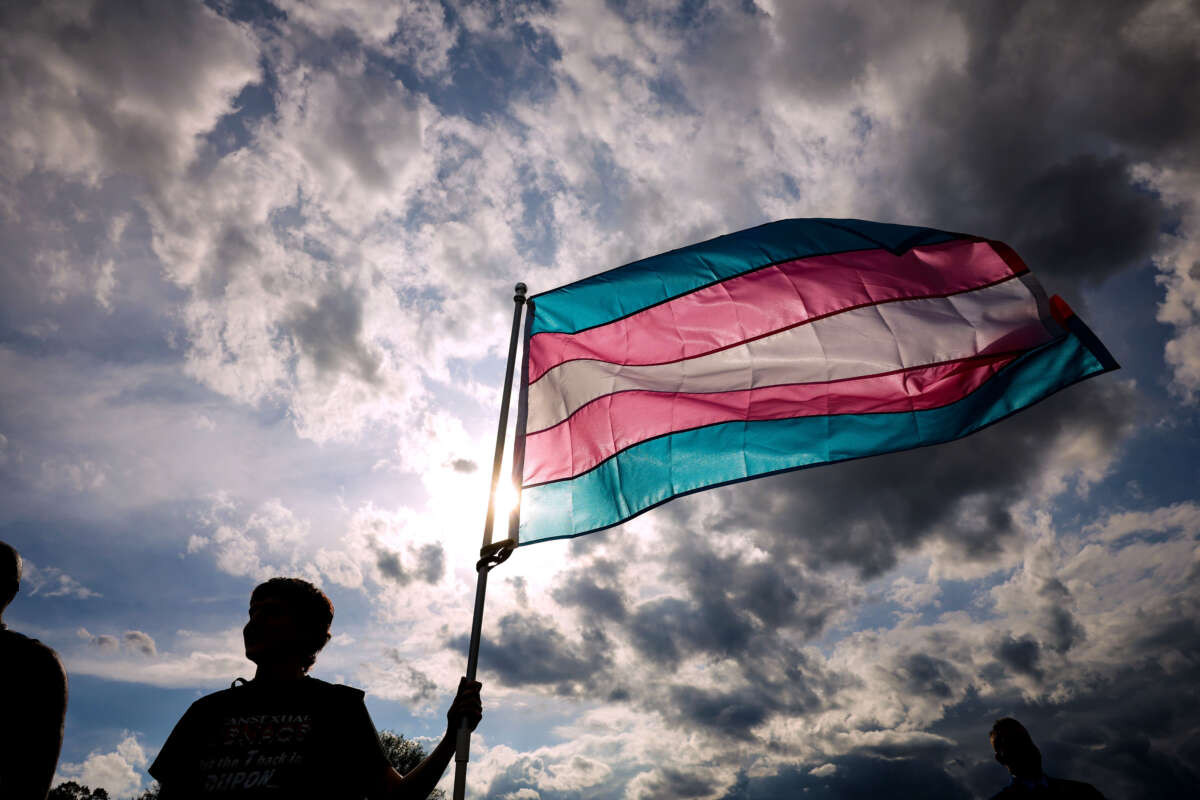
In the fight for dignity and democracy, trans people have much to teach.
June 3, 2025
A transgender rights activist holds a flag during the Trans Day of Visibility rally on the National Mall on March 31, 2025, in Washington, D.C.Kayla Bartkowski / Getty Images
This year, Pride Month arrives at an especially dire moment for the LGBTQ+ community. Under the second Trump administration, homophobic vitriol and violence are on the rise. On Elon Musk’s X platform, a “deepfake” video of Donald Trump canceling Pride Month has gone viral. And even as Pride celebrations continue as planned (in many places without as many corporate contributions), the attacks against LGBTQ+ people, especially transgender people, seem to be on steroids. After all, since taking office a second time, Trump has issued executive orders that ban transgender women in sports and transgender troops in the military, while limiting federal recognition to two genders. And his executive actions are only the spear tip of a significantly larger legislative attempt to target and scapegoat transgender people, who make up just over one percent of the U.S. population.
Believe it or not, so far this year, 701 anti-trans bills have been introduced in American legislative bodies at both the state and federal levels. More than $215 million was spent on anti-trans television advertisements during the 2024 election season alone. Now, Trump’s “big, beautiful bill,” barely passed by the House and at present in the Senate — which would gut Medicaid, the Supplemental Nutrition Assistance Program (SNAP), and other lifesaving safety-net programs — takes explicit aim at gender-affirming care for Medicaid and Children’s Health Insurance Program (CHIP) patients. If the Senate passes it, the result will be devastating for trans people, who are already twice as likely as the general population to be unemployed and unhoused and four times as likely to live in extreme poverty. It should be no surprise, then, that almost half of transgender adults in this country have already relocated or are considering relocating to more trans-affirming places.
While executive orders, budget cuts, and other attacks threaten all trans and nonbinary people, the most vulnerable are, of course, at greatest risk, including the poor, people of color, the young, the disabled, and the incarcerated.
This year, Pride Month arrives at an especially dire moment for the LGBTQ+ community. Under the second Trump administration, homophobic vitriol and violence are on the rise. On Elon Musk’s X platform, a “deepfake” video of Donald Trump canceling Pride Month has gone viral. And even as Pride celebrations continue as planned (in many places without as many corporate contributions), the attacks against LGBTQ+ people, especially transgender people, seem to be on steroids. After all, since taking office a second time, Trump has issued executive orders that ban transgender women in sports and transgender troops in the military, while limiting federal recognition to two genders. And his executive actions are only the spear tip of a significantly larger legislative attempt to target and scapegoat transgender people, who make up just over one percent of the U.S. population.
Believe it or not, so far this year, 701 anti-trans bills have been introduced in American legislative bodies at both the state and federal levels. More than $215 million was spent on anti-trans television advertisements during the 2024 election season alone. Now, Trump’s “big, beautiful bill,” barely passed by the House and at present in the Senate — which would gut Medicaid, the Supplemental Nutrition Assistance Program (SNAP), and other lifesaving safety-net programs — takes explicit aim at gender-affirming care for Medicaid and Children’s Health Insurance Program (CHIP) patients. If the Senate passes it, the result will be devastating for trans people, who are already twice as likely as the general population to be unemployed and unhoused and four times as likely to live in extreme poverty. It should be no surprise, then, that almost half of transgender adults in this country have already relocated or are considering relocating to more trans-affirming places.
While executive orders, budget cuts, and other attacks threaten all trans and nonbinary people, the most vulnerable are, of course, at greatest risk, including the poor, people of color, the young, the disabled, and the incarcerated.
In a recent report, the ACLU offers a horrific insight into this reality: