Wednesday, May 21, 2025

A new technology for extending the shelf life of produce


Researchers used microneedles to inject fresh-cut crops with melatonin and delay spoilage.


Massachusetts Institute of Technology

Plant micro needles 

image: 

MIT and SMART researchers developed a way to extend the shelf life of vegetables by injecting them with melatonin using biodegradable microneedles.

view more 

Credit: Yangyang Han


We’ve all felt the sting of guilt when fruit and vegetables go bad before we could eat them. Now, researchers from MIT and the Singapore-MIT Alliance for Research and Technology (SMART) have shown they can extend the shelf life of harvested plants by injecting them with melatonin using biodegradable microneedles.

That’s a big deal because the problem of food waste goes way beyond our salads. More than 30 percent of the world’s food is lost after it’s harvested — enough to feed more than 1 billion people. Refrigeration is the most common way to preserve foods, but it requires energy and infrastructure that many regions of the world can’t afford or lack access to.

The researchers believe their system could offer an alternative or complement to refrigeration. Central to their approach are patches of silk microneedles. The microneedles can get through the tough, waxy skin of plants without causing a stress response, and deliver precise amounts of melatonin into plants’ inner tissues.

“This is the first time that we’ve been able to apply these microneedles to extend the shelf life of a fresh-cut crop,” says Benedetto Marelli, the study’s senior author, associate professor of civil and environmental engineering at MIT, and the director of the Wild Cards mission of the MIT Climate Project. “We thought we could use this technology to deliver something that could regulate or control the plant’s post-harvest physiology. Eventually, we looked at hormones, and melatonin is already used by plants to regulate such functions. The food we waste could feed about 1.6 billion people. Even in the U.S., this approach could one day expand access to healthy foods.”

For the study, which will appear in Nano Letters, Marelli and researchers from SMART applied small patches of the microneedles containing melatonin to the base of the leafy vegetable pak choy. After application, the researchers found the melatonin was able to extend the vegetables’ shelf life by four days at room temperature and 10 days when refrigerated, which could allow more crops to reach consumers before they’re wasted.

“Post-harvest waste is a huge issue. This problem is extremely important in emerging markets around Africa and Southeast Asia, where many crops are produced but can't be maintained in the journey from farms to markets,” says Sarojam Rajani, co-senior author of the study and a senior principal investigator at the Temasek Life Sciences Laboratory in Singapore. 

Plant destressors

For years, Marelli’s lab has been exploring the use of silk microneedles for things like delivering nutrients to crops and monitoring plant health. Microneedles made from silk fibroin protein are nontoxic and biodegradable, and Marelli’s previous work has described ways of manufacturing them at scale.

To test microneedle’s ability to extend the shelf life of food, the researchers wanted to study their ability to deliver a hormone known to affect the senescence process. Aside from helping humans sleep, melatonin is also a natural hormone in many plants that helps them regulate growth and aging.

“The dose of melatonin we’re delivering is so low that it’s fully metabolized by the crops, so it would not significantly increase the amount of melatonin normally present in the food; we would not ingest more melatonin than usual,” Marelli says. “We chose pak choy because it's a very important crop in Asia, and also because pak choy is very perishable.”

Pak choy is typically harvested by cutting the leafy plant from the root system, exposing the shoot base that provides easy access to vascular bundles which distribute water and nutrients to the rest of the plant. To begin their study, the researchers first used their microneedles to inject a fluorescent dye into the base to confirm that vasculature could spread the dye throughout the plant.

The researchers then compared the shelf life of regular pak choy plants and plants that had been sprayed with or dipped into melatonin, finding no difference.

With their baseline shelf life established, the researchers applied small patches of the melatonin-filled microneedles to the bottom of pak choy plants by hand. They then stored the treated plants, along with controls, in plastic boxes both at room temperature and under refrigeration.

The team evaluated the plants by monitoring their weight, visual appearance, and concentration of chlorophyll, a green pigment that decreases as plants age.

At room temperature, the leaves of the untreated control group began yellowing within two or three days. By the fourth day, the yellowing accelerated to the point that the plants likely could not be sold. Plants treated with the melatonin-loaded silk microneedles, in contrast, remained green on day five, and the yellowing process was significantly delayed. The weight loss and chlorophyll reduction of treated plants also slowed significantly at room temperature. Overall, the researchers estimated the microneedle-treated plants retained their saleable value until the eighth day.

“We clearly saw we could enhance the shelf life of pak choy without the cold chain,” Marelli says.

In refrigerated conditions of about 40 degrees Fahrenheit, plant yellowing was delayed by about five days on average, with treated plants remaining relatively green until day 25.

“Spectrophotometric analysis of the plants indicated the treated plants had higher antioxidant activity, while gene analysis showed the melatonin set off a protective chain reaction inside the plants, preserving chlorophyll and adjusting hormones to slow senescence,” says Monika Jangir, co-first author and former postdoc at the Temasek Life Sciences Laboratory.

“We studied melatonin’s effects and saw it improves the stress response of the plant after it’s been cut, so it’s basically decreasing the stress that plant’s experience, and that extends its shelf life,” says Yangyang Han, co-first author and research scientist at the Disruptive and Sustainable Technologies for Agricultural Precision (DiSTAP) interdisciplinary research group at SMART.

Toward postharvest preservation

While the microneedles could make it possible to minimize waste when compared to other application methods like spraying or dipping crops, the researchers say more work is needed to deploy microneedles at scale. For instance, although the researchers applied the microneedle patches by hand in this experiment, the patches could be applied using tractors, autonomous drones, and other farming equipment in the future.

“For this to be widely adopted, we’d need to reach a performance versus cost threshold to justify its use,” Marelli explains. “This method would need to become cheap enough to be used by farmers regularly.”

Moving forward, the research team plans to study the effects of a variety of hormones on different crops using its microneedle delivery technology. The team believes the technique should work with all kinds of produce.

“We’re going to continue to analyze how we can increase the impact this can have on the value and quality of crops,” Marelli says. “For example, could this let us modulate the nutritional values of the crop, how it’s shaped, its texture, etc.? We're also going to continue looking into scaling up the technology so this can be used in the field.”

The work was supported by the Singapore-MIT Alliance for Research and Technology (SMART) and the National Research Foundation of Singapore.

###

Written by Zach Winn, MIT News


Yes, social media might be making kids depressed


University of California - San Francisco


As rates of depression and suicide in youth spike, experts are asking whether social media makes kids depressed — or do depressed kids simply spend more time on social media?

A new study provides answers. Researchers at UC San Francisco found that as preteens used more social media, their depressive symptoms increased. Yet the reverse wasn’t true — a rise in depressive symptoms didn't predict a later increase in social media use.

On average, kids' social media use rose from seven to 73 minutes per day over the three years of the study and their depressive symptoms went up 35%. The study, which was supported by grants from the National Institutes of Health (NIH), was published in JAMA Network Open.

The research team, led by Jason Nagata, MD, MSc, associate professor in UCSF’s Department of Pediatrics, examined data following nearly 12,000 kids aged 9 to 10 years and then three years later at 12 to 13. The study is among the first to use within-person longitudinal data, meaning researchers could track changes over time in each child to accurately assess the link between social media and depression.

“There has been ongoing debate about whether social media contributes to depression or simply reflects underlying depressive symptoms,” said Nagata. “These findings provide evidence that social media may be contributing to the development of depressive symptoms.”

While it’s unclear why social media increases depressive symptoms, prior research points to risks such as cyberbullying and disrupted sleep. In fact, Nagata and team just published a separate study in The Lancet Regional Health - Americas looking at the same cohort of participants, focusing instead on the effects of cyberbullying.

The study found kids aged 11 to 12 years who were cyberbullied were 2.62 times more likely to report suicidal ideation or a suicide attempt one year later. Additionally, those kids were also 2.31 times more likely to experiment with a substance (4.65 times more likely with marijuana, 3.37 with nicotine, and 1.92 with alcohol) in the following year.

Increasingly, the youngest generations find themselves facing a catch-22, with growing evidence that social media is associated with depressive symptoms and risky behavior, yet it is also a primary area for them to connect and communicate with friends.

To address this reality, the American Academy of Pediatrics suggests using the tools in its Family Media Plan to create healthier digital habits for both kids and parents.

“As a father of two young kids, I know that simply telling children to ‘get off your phone’ doesn’t really work,” said Nagata. “Parents can lead by example with open, nonjudgmental conversations about screen use. Setting screen-free times for the whole family, such as during meals or before bed, can help build healthier digital habits for everyone, including adults.”


Authors: UCSF authors are Jason M. Nagata, M.D., Christopher D. Otmar, Ph.D., Joan Shim, M.P.H., Priyadharshini Balasubramanian, M.P.H., Chloe M. Cheng, M.D., Elizabeth J. Li, M.P.H., Abubakr A.A. Al-Shoaibi, Ph.D., and Iris Y. Shao, Ph.D. For all authors, see the paper.

Funding: This work was supported by the National Institutes of Health (K08HL159350 and R01MH135492) and the Doris Duke Charitable Foundation (2022056). For all funding, see the paper.

Disclosures: Fiona C. Baker, PhD, reported receiving grants from the National Institutes of Health (NIH) during the conduct of the study. No other disclosures were reported.

About UCSF Benioff Children’s Hospitals
UCSF Benioff Children’s Hospitals are among the nation’s leading pediatric specialty hospitals, according to U.S. News & World Report  2024-25 rankings. Their expertise covers virtually all pediatric conditions, including cancer, heart disease, neurological disorders, pulmonology, diabetes and endocrinology, as well as the care of critically ill newborns. The two campuses in San Francisco and Oakland are known for basic and clinical research, and for translating research into interventions for treating and preventing pediatric disease. They are part of UCSF Health, whose adult hospital ranks among the top medical centers nationwide and serves as the teaching hospital for the University of California, San Francisco, a national leader in biomedical research and graduate-level health/sciences education. Visit https://www.ucsfhealth.org

###

Follow UCSF
ucsf.edu | Facebook.com/ucsf | YouTube.com/ucsf

Trump launches knock-out assault on dying honeybees

Adam Nichols
May 21, 2025 
RAW STORY


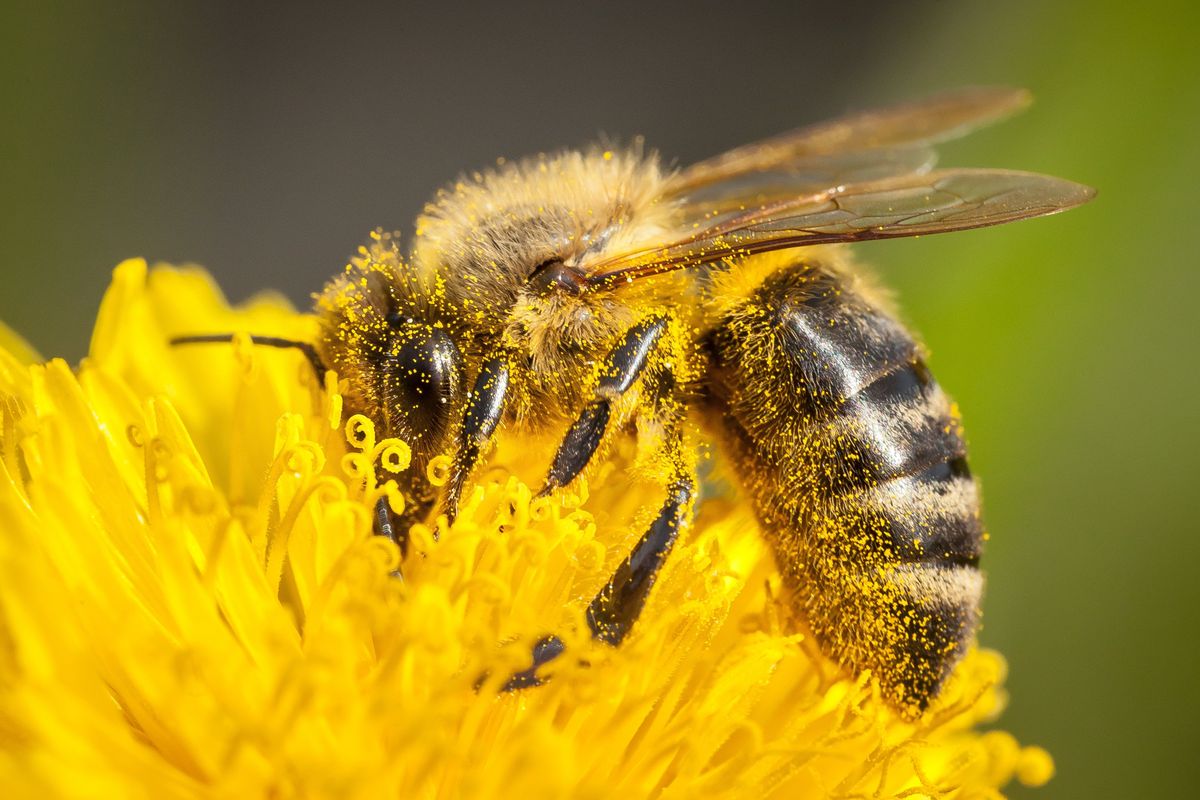
A honeybee. (Shutterstock)

Already decimated honeybee colonies are the latest victims of President Donald Trump’s policies, a new report revealed Wednesday.

Since June last year, the U.S.’s honeybee industry has seen its worst period ever, The Atlantic reported. More than 60 percent of the insects mysteriously perished.

It threatened devastation for the industry that ships millions of colonies of the pollinators to farms and orchards across the country.

The government stepped in, sending samples to the Department of Agriculture’s five bee-research laboratories in a desperate effort to find the cause.

But, in just a few weeks, Trump has virtually killed that research, the Atlantic reported. Massive funding cuts across the department — along with the rest of government — crippled the ongoing work.

“Now scientists, farmers, and beekeepers alike are racing to recover and prevent the next massive die-off before it’s too late,” The Atlantic reported.

The cuts put the whole industry is in limbo, unable to rebuild wiped out colonies or treat surviving bees because beekeepers have no idea of the cause of the deaths, the magazine stated.

“Until they have results from the samples that were taken, they don’t know if it’s safe to rebuild with that equipment,” said Danielle Downey, executive director of the non-profit bee group Project Apis m.

“It’s a little frightening,” said California beekeeper Russell Heitkam.


The Atlantic reported that the Trump cuts had resulted in 800 Agricultural Research Service workers being fired. That’s the branch of the USDA that runs the honeybee labs.

“More than 90 commercial crops in the U.S. are pollinated by bees, including staples such as apples and squash,” The Atlantic reported.

“Even a modest reduction in crop yields, courtesy of honeybees dying off or beekeepers quitting the business, would force the U.S. to import more produce — which, with tariffs looming, is unlikely to come cheap.”


Researchers identify a dual origin of cells controlling puberty and reproduction


The Francis Crick Institute

Gonadotrophs in pituitary gland 

image: 

Two adult mouse pituitary glands. On the left, gonadotrophs derived after birth from stem cells appear in yellow. On the right, gonadotrophs in the embryo appear in green/yellow in the centre of the gland. The postnatal population invades the whole gland whereas cells born in the embryo are confined to this small central region.

view more 

Credit: Sheridan, D. et al. (2025). Nature Communication


Researchers at the Francis Crick Institute have shown that gonadotrophs, cells in the pituitary gland with a key role in puberty and reproduction, come from two different populations, with the majority produced after birth rather than in the embryo, as previously thought.

A better understanding of when these important cells develop could help researchers and clinicians understand and treat disorders that impact puberty and fertility.

In the pituitary, a small gland located in the middle of the head and connected to the brain, gonadotrophs release hormones that stimulate the ovaries or testes to mature and start making eggs or sperm. Gonadotrophs first appear in the embryo and expand in number after birth.

A research team at the Crick previously identified a population of tissue-specific stem cells in the pituitary gland, which are cells that can self-renew or specialise into any cell type making up the tissue they are in.

These had no obvious function, although they could become any hormonal cell type in special contexts. Now, in research published today in Nature Communications, the same lab identified that these stem cells give rise to the bulk of the gonadotroph population after birth.

The team worked this out by genetically marking and tracing the descendants of the stem cells as they developed into different types in the pituitary gland in mice.

By following the markers from birth up to one year, the team saw that the stem cell pool almost exclusively became gonadotrophs rather than other types of pituitary cells. This process started after birth and continued until puberty in what is known as the ‘minipuberty’ period in mice.

They also showed that the two populations are located in separate compartments in the pituitary gland and that the embryonic gonadotrophs stay put throughout life, while the stem cell-derived population spread across the gland after birth.

The right recipe to produce gonadotrophs

Next, the team aimed to understand what stimulated the stem cells to become gonadotrophs specifically. They confirmed it needed to be something present in the body, because once isolated in the lab, the stem cells could become any pituitary cell type and not, as seen in the young animal, almost exclusively gonadotrophs.

The researchers first blocked a hormone made in the brain called gonadotrophin-releasing hormone (GnRH), which stimulates gonadotrophs to release hormones. This caused smaller ovaries and testes but still didn’t stop the stem cells from becoming gonadotrophs, suggesting that GnRH isn’t the signal stimulating their development. Similarly, removing sex hormones like testosterone, by giving the mice chemical blockers or removing the ovaries and testes, had no impact.

As GnRH and sex hormones didn’t play a role in generating gonadotrophs, the team speculate that something about the physiological context, such as leaving the mother’s body at birth, is important for gonadotrophs to develop at the right time.

Minipuberty: a window of opportunity

People with a rare genetic disorder called congenital hypogonadotropic hypogonadism (CHH) don’t produce GnRH. This means gonadotrophs aren’t stimulated to produce hormones that kickstart puberty, leading to absent or incomplete sexual development.

Similar to mice, humans also go through minipuberty, where a surge of activity in the pituitary gland takes place just after birth and lasts from a few months to years. The researchers also believe the same two subpopulations of gonadotrophs may exist in humans, suggesting that gonadotrophs are also mainly produced during minipuberty.

This highlights that there is a window of opportunity in early life to diagnose disorders like CHH or to check and intervene if gonadotrophs are forming properly. Identifying this earlier could prevent children from failing to go through puberty later in life.

Karine Rizzoti, Principal Laboratory Research Scientist in the Stem Cell Biology and Developmental Genetics Laboratory at the Crick and co-senior author, said: “We’ve known about this population of stem cells in the pituitary for a while, but it took the right tools used at the right time to see just how important they are. Instead of the previously held idea that gonadotrophs all have the same origin, we instead found that there are two waves of generation, before and after birth.”  

Daniel Sheridan, former PhD student at the Crick and first author, said: “Our discovery that gonadotrophs are mainly produced after birth is important as it highlights an opportunity to intervene, which would be difficult if they were mainly produced in the embryo. We haven’t yet found what stimulates the stem cells to become gonadotrophs, which would help us understand how to treat conditions affecting puberty.”

Robin Lovell-Badge, Principal Group Leader of the Stem Cell Biology and Developmental Genetics Laboratory at the Crick and co-senior author, said: “Now that we know there are two discrete populations of gonadotrophs, we can start to unpick which group is affected during disorders like CHH that cause delayed or absent puberty. The next step is to look at the role of each population in mice with similar disorders in puberty.”

The researchers worked with many teams at the Crick, including the Biological Research Facility, the Genetic Modification Service and theBioinformatics and Biostatistics,Advanced Light Microscopy, Genomics, Flow Cytometry, and Histopathology teams.

-ENDS-

For further information, contact: press@crick.ac.uk or +44 (0)20 3796 5252

Notes to Editors

Reference: Sheridan, D. et al. (2025). Gonadotrophs have a dual origin, with most derived from early postnatal pituitary stem cells. Nature Communications. 10.1038/s41467-025-59495-7.

The Francis Crick Institute is a biomedical discovery institute with the mission of understanding the fundamental biology underlying health and disease. Its work helps improve our understanding of why disease develops which promotes discoveries into new ways to prevent, diagnose and treat disease.

An independent organisation, its founding partners are the Medical Research Council (MRC), Cancer Research UK, Wellcome, UCL (University College London), Imperial College London and King’s College London.

The Crick was formed in 2015, and in 2016 it moved into a brand new state-of-the-art building in central London which brings together 1500 scientists and support staff working collaboratively across disciplines, making it the biggest biomedical research facility under a single roof in Europe.

http://crick.ac.uk/


Extreme weather cycles change underwater light at Tahoe


UV radiation fluctuates amid wet-dry extremes in clear water bodies


University of California - Davis

Lake Tahoe diver 

image: 

Brant Allen of UC Davis Tahoe Environmental Research Center dives in Lake Tahoe. 

view more 

Credit: Brandon Berry/UC Davis TERC


Lake Tahoe is experiencing large-scale shifts in ultraviolet radiation (UV) as climate change intensifies wet and dry extremes in the region. That is according to a study led by the University of California, Davis' Tahoe Environmental Research Center and co-leading collaborator Miami University in Ohio.

For the study, published in ASLO, the journal of the Association for the Sciences of Limnology and Oceanography, scientists analyzed an 18-year record of underwater irradiance at Lake Tahoe, which is renowned for its clear blue waters. They found up to a 100-fold difference in UV radiation between a wet and dry year.

These large fluctuations were associated with wet and dry extremes in the local climate, which caused variations in particulate matter and colored dissolved organic matter in the lake.

UV radiation penetrates most deeply in clear water bodies, such as alpine or polar lakes, so the research carries implications for those water bodies. In less transparent lakes, UV radiation may reach only a few inches into the water. In clear systems like Lake Tahoe, it can reach dozens of feet down.

“In a wet year, UV radiation penetrates shallower,” said lead author Shohei Watanabe, an associate project scientist with UC Davis Tahoe Environmental Research Center. “In a drought year, more UV radiation is slicing through the water. It’s a bit like reducing the lake’s ‘sunscreen,’ making it susceptible to severe sunburn.”

The role of UV radiation

UV radiation has wide-ranging effects on aquatic ecosystems. It affects the carbon cycle and behavior of fish and zooplankton. It can suppress photosynthesis, which forms the basis of the lake ecosystem. Understanding how it is changing can help natural resource managers and others anticipate changes while building lake resilience.

In revealing the close tie between UV radiation changes and wet-dry cycles, the study also suggests that monitoring underwater radiation can help serve as a sentinel for climate-driven disturbances in lakes.

Long-term monitoring

Long-term observation of underwater UV radiation in lakes is rare. UC Davis researchers have been continuously monitoring Lake Tahoe since 1968. Specialized equipment to measure underwater UV radiation was introduced as a part of a collaborative research project with Miami University in Ohio in 2006. Since then, UV monitoring has been integrated into the long-term monitoring program. This study analyzed 18 years of that data through 2023.

“To understand what’s really happening in nature, the long-term data set is quite important,” Watanabe said. “One or two years of data couldn’t reveal this kind of huge fluctuation related to climatic perturbations.”

The study’s coauthors include Erin Overholt and Craig Williamson of Miami University in Ohio, Geoffrey Schladow of UC Davis, and Warwick Vincent of Laval University in Canada. It received funding from the National Science Foundation and philanthropic gifts to UC Davis TERC.  


Shohei Watanabe of the UC Davis Tahoe Environmental Research Center collects data from a UC Davis-NASA research buoy at Lake Tahoe.

Credit

Karin Higgins/UC Davis

'Gonna look kind of bad': ABC News head told 'The View' hosts to tone down Trump criticism

Carl Gibson,
 AlterNet
May 22, 2025

LOS ANGELES - JUL 20: Whoopi Goldberg at the "A Night With Whoopi" Event at the 57 Windward on July 20, 2024 in Venice, CA. (Photo credit: Kathy Hutchins / Shutterstock)

Hosts for one of the most-watched daytime news shows were recently asked to back off from criticizing President Donald Trump, according to a new report.

The Daily Beast reported Wednesday that both ABC News president Almin Karamehmedovic and Disney CEO Bob Iger communicated to the hosts of "The View" that their political coverage should be toned down in favor of softer, more celebrity-focused segments. The Beast cited unnamed sources who confided that the hosts didn't take kindly to the suggestion, with co-host Ana Navarro pointing out that a major sector of their audience watches them for political analysis.

The source emphasized that the request to talk less about the Trump administration was not an "edict" and that the hosts still had free rein to decide what topics to discuss for each episode. But the show's on-air talent still reportedly bristled at the suggestion.

"This is what our audience wants," one of the hosts reportedly said during the exchange with executives. "Isn’t it gonna look kind of bad if we’re all of a sudden not talking about politics?

"The View" co-host Ana Navarro reportedly had a private conversation with Iger in which she thanked the Disney CEO for allowing them editorial control. And while Iger communicated that he still supported the show and the hosts, he echoed Karamehmedovic's wishes that the show's five hosts tone down their Trump criticism.

The Beast's source said that the suggestion from network executives to focus less on political topics was "based on viewer feedback," but the outlet noted that "The View" was the #1 daytime news show for the first quarter of 2025, beating out its top competitor shows on Fox News and NBC.

ABC — which is owned by Disney — settled a defamation lawsuit that Trump filed against the network last year, agreeing to pay him $15 million (along with an additional $1 million for legal expenses) with Trump arguing that ABC journalist George Stephanopoulos defamed him when saying that Trump was found liable for sexually assaulting writer E. Jean Carroll. Technically, the verdict was for sexual abuse rather than rape, though U.S. District Judge Lewis Kaplan, who presided over the case, later clarified that in terms of the public's understanding, the two were the same.

Click here to read the Beast's report in full (subscription required).

Disney dumps Venezuelan cast members as the 'House of Mouse' aligns with Trump


Sarah K. Burris
May 21, 2025 
RAW STORY


People gather ahead of the "Festival of Fantasy" parade at the Walt Disney World Magic Kingdom theme park in Orlando, Florida, U.S. July 30, 2022. REUTERS/Octavio Jones/File Photo

The "most magical place on Earth" is no longer welcoming Venezuelan employees who are losing their temporary legal residency in the United States.

Bloomberg reported that those working at the Florida-based Disney company were told that after President Donald Trump revoked protections they're no longer able to work for "The House of Mouse."

"The company sent an email to employees under Temporary Protected Status (TPS) on Tuesday stating they had been placed on a 30-day unpaid leave effective on May 20," the report said.

Those unable to give work authorization after 30 days will be fired, said the email shared with Bloomberg.

“As we sort out the complexities of this situation, we have placed affected employees on leave with benefits to ensure they are not in violation of the law,” the Disney email said. “We are committed to protecting the health, safety, and well-being of all our employees and their families, and our HR and legal teams assist employees who may be navigating changing immigration policies and how they could impact them or their families.”

One employee was already turned away from work on Tuesday, they said, due to their temporary protective status.

The company said that about 45 employees are impacted out of the 360,000 total people with protected status in Florida, the report said. Approximately 60% of those are Venezuelan. The decision could affect more than half of the 600,000 Venezuelans in the United States.

The Supreme Court ruled on Friday to extend "an order that blocks the administration from using a wartime law" used to send individuals accused of being in a Venezuelan gang to a Salvadoran prison.

However, the report explained that the latest decision from the high court allows the Department of Homeland Security to cancel a TPS extension created under President Joe Biden's administration.

Congress created TPS in 1990, and there are currently 17 countries that fall under the status.

Read the full report here.
'Probably not': CNN analyst casts doubt on Trump's plan to 'weaponize space'

Travis Gettys
May 21, 2025
RAW STORY


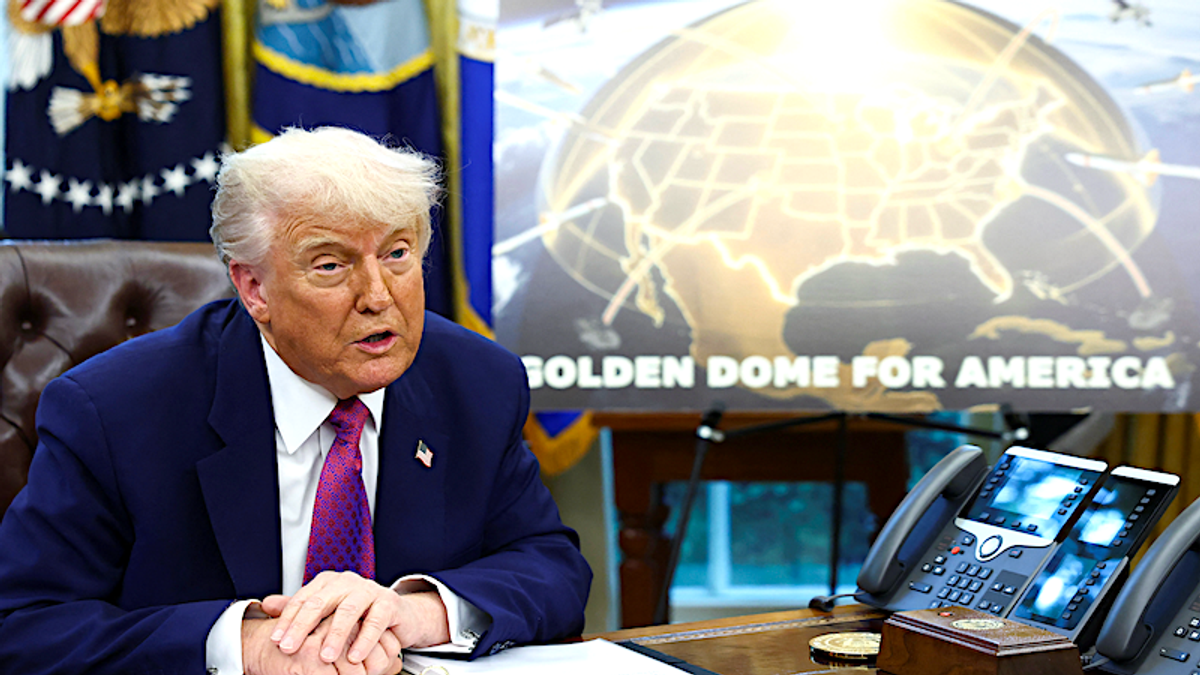
An analyst cast doubt on president Donald Trump's pledge to build a massive and expensive national missile defense system before the end of his term.

The president on Tuesday announced the so-called "Golden Dome" defense system missiles, satellites and sensors similar to to Israel's "Iron Dome," and he tasked Space Force vice chief of operations Gen. Michael Guetlein with leading the ambitious project, but CNN's global affairs analyst Kimberly Dozier expressed skepticism about its success.

"Look, the kid in me that grew up in the 'Star Wars' generation, with sci-fi as the backdrop," Dozier said. "I want this to work as an American who knows that China has a successful hypersonic missile system, that China and Russia are testing space-based weapons, and that Russia may have even armed some of its satellites. I can see the need for this, but weapons experts say it could cost as much as $500 billion, not $175 [billion], finishing it in three years. You're talking about creating new technologies, new systems to control them, integrating them into our existing command and control and weapons system, and covering this huge, vast area."

Israel's defense system cost about $100 million per battery to produce and has 10 batteries, but the U.S. is 400 times larger than Israel, which is about the size of New Jersey, and the nonpartisan Congressional Budget Office estimated the total cost over 20 years as $161 billion to $831 billion.

"Great idea," Dozier said, "but executing it this cheaply and this fast? Probably not."

Former president Ronald Reagan proposed a similar system in the early 1980s derisively nicknamed after the blockbuster "Star Wars" movie franchise that never materialized but escalated the Cold War arms race with the Soviet Union, and Dozier said Trump's "Golden Dome" would likely have a similar impact.

"There's absolutely an arms race, and there's a gray area in terms of what you can put it in the atmosphere," Dozier said. "There was a 1967 treaty for outer space that says you can't put weapons of mass destruction up there, like nuclear weapons, et cetera. But the problem is, once you weaponize space and you've got satellites that can target each other, that can create the kind of space debris that renders whole sections of space unusable."

"We've seen the Chinese test things where they use one satellite to hit and take out another satellite, but we're not certain that anyone has got a laser or something similar in space," she added. "So it is fraught with. complications, but also second- and third-order effects, like there are nuclear weapons treaties that are dependent on the countries watching ground-based stuff to see which side, you know, what the trust is built into, what they can see, and once you've got a layer of weapons in space that you think might just be satellites, but might be something else, all those treaties could go out the window."

Watch below or click the link here.