Thursday, July 17, 2025

Tech giants can easily check age of child users, says Danish minister


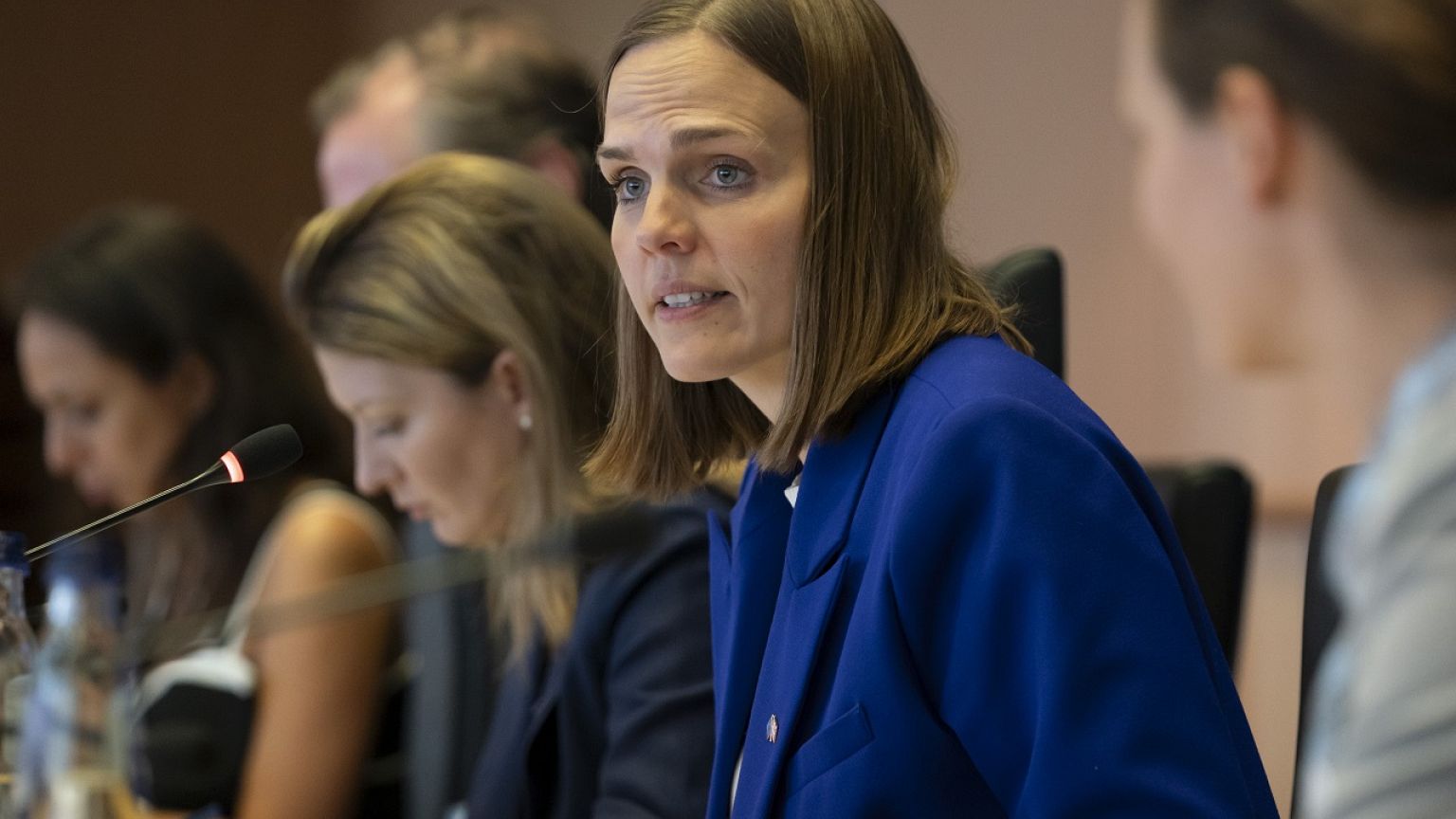
Copyright Philippe BUISSIN/ European Union 2025 - Source : EP

By Cynthia Kroet
Published on 17/07/2025 - 

Online platforms are facing increasing pressure to implement the tools to protect children from harmful content online.

The largest online platforms should not have any issues implementing looming age verification solutions, Denmark's digital minister told Euronews in response to heavy lobbying around online child protection measures by the tech industry.

“They are the biggest companies in the world, with a bigger economy than most of our countries could ever dream of. I think they will manage to find a solution,” Caroline Stage Olsen said.

On Monday, Stage Olsen together with the EU Technology Commissioner Henna Virkkunen, said five EU countries – Denmark, France, Greece, Italy and Spain – plan work on a customised national age verification application in a bid to shield children from harmful content online.

This app should allow users to easily prove they are over 18 when accessing restricted adult content online. In the long term, the Commission hopes to integrate age verification functionalities within digital identification tools, European Digital Identity Wallets (eID), which will be rolled-out next year.

Big tech companies face increasing pressure to implement age verification tools to combat the spread of child sexual abuse material (CSAM). The CSAM regulation, proposed in 2022 and currently under debate in the Council of the EU, also relies heavily on identifying minors online to shield them from predators.


Protecting children online: The time to act is now

Some companies have now implemented AI powered solutions to tackle the problem, but Stage Olsen said that she is confident online platforms will find the money to work on the tools. “I’m sure that they will manage to have hired some of the brightest heads in the world concerning technology,” she said.

US tech giant Meta last year proposed a harmonised age verification and safety standard system for apps and online services to the Commission. If an underaged child wants to download an app, app stores would be required to notify their parents under Meta's proposal.

The 27 EU member states are currently free to set their own rules for age verification and there are no EU standards, although some of the EU rules foresee improved age verification to protect minors including the Digital Services Act (DSA) and Audiovisual Media Services Directive (AVMSD).

Denmark, which started chairing meetings of EU ministers this month, said it has put several child protection measures on top of the agenda during the country's chairmanship.

“I will use the presidency to put this on top of the agenda and set a clear, political ambition that can shape EU policy in the years to come,” Stage Olsen said.

One way of making the tools mandatory would be introducing these measures in a planned Digital Fairness Act, rules the Commission will put forward early next year to protect consumers online.


Deepfakes And The Digital Wild West – OpEd


By 

By Jake Scott


Denmark’s government has announced plans to expand copyright law in “a pioneering measure that would allow people to demand that social media platforms take down digital forgeries” as part of an amendment to the existing Danish Copyright Act. The proposed change does not come under its own legislation, so it does not have a specific name like the UK’s “Online Safety Act” or the US’s “Take It Down Act.” Instead, it would be an alteration to pre-existing legislation.

According to the Danish government, the revised legislation will grant individuals legal control over their digital likenesses, voices, and facial features, thereby mitigating the risks associated with unauthorized AI-generated content.

If you’ve ever seen a video comparing AI-generated videos from just two years ago to those today, you’ll appreciate the jump in progress, and the feeling of whiplash it causes.

Videos generated in 2023 were, frankly, abominations: clunky, looking like they were drawn by a kindergartener, and with physics-breaking movements. In 2025, however, they are terrifyingly real. Your own face could be looking back at you, speaking words you never spoke, in your voice and cadence, so convincing that you might believe you are watching a video of yourself.

AI offers a world of opportunities. In the same way that people born even in my generation never imagined a powerful computer in their pockets capable of connecting people with video calls across the world, answering questions in mere seconds, or broadcasting thoughts instantly, imagining that AI could become powerful enough to produce an entirely fake video about people who have never existed was the stuff of science fiction. And yet, here we are.


Just as superfast Internet speeds changed the way we interact with and even perceive the world around us, AI seems to be the next quantum leap in changing mankind’s relationship with technology. Already, many are using AI in their daily lives, from innocuous uses of making themselves look like Studio Ghibli characters, to asking ChatGPT or Grok to write them an email they’re too busy (or too lazy, depending on who you ask) to compose. But just as people once complained about the proliferation of the mobile phone, there will always be skeptics about technology and its effects on society.

This is not without justification. Already this year, in my country, someone was arrested for using AI to “create deepfake porn,” having manipulated images shared by a woman he knew to imitate pornographic content. The sentencing judge commented, “These people had a right to post their images on social media platforms without fear of those images being warped for sexual purposes,” and of course, he’s right.

But—and I am not defending this evil man at all, or minimizing his crimes—this isn’t really a “deepfake.” That term gives it a level of sophistication that it didn’t involve. What this man did was make some crude Photoshop edits, and that’s been around as long as the Internet has existed. People have long edited images of each other, faked messages, attributed quotes, and all sorts—do you remember “Let Me Tweet That”? I recall a student at my high school having his face put on the naked body of a female porn star. It’s crude, and it’s always been there—but it clearly was not a believable image.

But the increasing realism in images means that plausible fakes of real people are here. The sophistication that AI has reached now goes far beyond putting someone’s face on another’s body. It is building, from the ground up, a convincingly realistic and almost undetectably fakeimage or video of a person without his or her consent or knowledge. That is the key distinction between modern AI deepfakes and the primitive photoshops of the past.

Britain has tried to make it illegal to create sexually explicit “deepfakes” as part of the Crime and Policing Bill (2025), but the proposed legislation is, again, too generous to what these things actually involve, casting a wide net for “creating a sexually explicit deepfake of someone without their consent.”

There is a risk though: Denmark’s law and Britain’s are playing catch-up with a technology changing so rapidly that the use of the law disappears before the ink is dry. Denmark seems aware of this—Danish Culture Minister Jakob Engel-Schmidt emphasized that “technology has outpaced our current legislation.”

That’s why Denmark has sought to define a “deepfake” in its law: “very realistic digital representation of a person, including their appearance and voice.” By baking the “digital” aspect of the imitation into the law, Denmark is explicitly focused on AI-generated content, and—quite importantly—has included an exemption for parodies and satires.

With such laws, there are concerns over the limitations they impose on free speech and free expression. They are vague and imprecise, and for that reason they must be viewed with caution. While Denmark’s law has made attempts to define “deepfakes,” the law’s broad definition of deepfakes as “very realistic digital representations” could be interpreted to cover content that is neither harmful nor misleading, meaning that comedy or even just simply artistic expression is made illegal. Even if this is considered an acceptable trade-off, it opens the door to the definition of satire being set by the government, and not by the people.

Similarly, “parody” remains ill-defined. Is a mocking video of a major politician made to say things he or she obviously does not believe or agree with parody, satire, or abuse? Pornographic deepfakes are clearly not acceptable, but laws need to be more precise both to identify harm and then to tread that line between free expression and protecting those at risk.

  • About the author: Dr Jake Scott is a political theorist specialising in populism and its relationship to political constitutionality. He has taught at multiple British universities and produced research reports for several think tanks. 
  • Source: This article was published by FEE
FEE

The Foundation for Economic Education's (FEE) mission is to inspire, educate, and connect future leaders with the economic, ethical, and legal principles of a free society. These principles include: individual liberty, free-market economics, entrepreneurship, private property, high moral character, and limited government. FEE is a tax-exempt, 501(c)3 educational foundation

Czech Distrust In EU Runs High Ahead Of October Vote


By 

By Aneta Zachová


(EurActiv) — A large share of Czechs believe the EU may interfere in the country’s parliamentary elections in October, despite government reassurances that such fears are “groundless.”

new survey by the Central European Digital Media Observatory (CEDMO) found that 41% of Czechs believe the EU is likely to interfere in the vote, just behind the 42% who suspect Russia. The findings echo persistent Euroscepticism in the country, with only 29% of Czechs viewing the EU positively – well below the bloc-wide average of 43% – while 27% hold negative views and 44% are neutral, according to a spring Eurobarometer survey.

CEDMO’s findings suggest that the perception of EU interference reflects longstanding mistrust rather than any recent developments. “Respondents who view EU interference as likely predominantly supported Eurosceptic parties in previous elections,” said CEDMO analyst Ivan R. Cuker.

European Affairs Minister Martin Dvořák dismissed the claims of EU interference as “groundless” and driven by “enemies of democracy.”

“The EU has neither the interest nor the instruments to influence elections in its member states,” he told Euractiv Czechia.


Still, disinformation narratives continue to spread on Facebook and encrypted platforms like WhatsApp and Telegram, often driven by domestic political actors, according to Cuker.

False narratives include claims that the EU plans to introduce a mandatory asset registry or could invalidate the national election results. A previous CEDMO study found that a quarter of Czechs believed the latter claim.

Government steps

To address these mounting concerns, the interior ministry has launched a cybersecurity task force to monitor the election process. The unit will monitor system logs, test defences against DDoS attacks, and prepare technical and organisational countermeasures.

Ministry spokesperson Hana Malá warned that disinformation tactics seen in Romania and Germany, such as the reactivation of “sleeper” accounts, bot-driven content amplification, and micro-influencer messaging, may also appear in Czechia.

“It can be assumed that similar patterns of influence may be present in the Czech information space,” Malá told Euractiv Czechia.  

The ministry will also soon launch a voter awareness campaign to explain voting safeguards and new procedures, including digital ID and postal voting.

Neighbouring countries have recently shown similar suspicion towards Brussels.

In Slovakia, 46% of the CEDMO survey respondents said the EU posed the greatest risk of election interference, ahead  of the US (39%) and Russia (38%). In Poland, 47% still view Russia as the biggest threat, but 39% believe the EU is also likely to interfere, more than those who suspect the US (35%).


EurActiv publishes free, independent policy news and facilitates open policy debates in 12 languages.

Pope Urges Immediate Ceasefire After Deadly ZIONIST Attack On Catholic Parish In Gaza


By 

By Victoria Cardiel


Following an airstrike against the Holy Family Church, the only Catholic Church in Gaza, which left at least two dead on Thursday, Pope Leo XIV issued an urgent call for an immediate ceasefire.

In a telegram signed on the pope’s behalf by the Vatican Secretary of State, Cardinal Pietro Parolin, the pontiff expressed his “deep sadness” over the military attack and offered his prayers for “the consolation of those who are mourning and for the healing of the wounded.”

“Pope Leo renews his profound hope for dialogue, reconciliation, and lasting peace in the region,” the message stated. 

Finally, the Holy Father entrusted the souls of the deceased “to the loving mercy of Almighty God” and assured his “spiritual closeness” to all those affected. 

The pope also posted a message on social media platform X, where he said “Only dialogue and reconciliation can ensure enduring peace!”


According to humanitarian aid organization Caritas Jerusalem, the two victims were outside the parish building — converted into a shelter for more than 500 people since the war began in October 2023 — at the time of the projectile strike.

Saad Salameh, 60, the parish caretaker, was in the courtyard and Fumayya Ayyad, 84, was sitting inside a Caritas psychosocial support tent when the explosion sent shrapnel flying and caused debris to fall in the area.

Both were rushed to Al-Mamadani Hospital, just over half a mile from the church, but died shortly afterward due to a “severe shortage of medical resources and blood units in Gaza,” the statement said.

Caritas Jerusalem denounced these deaths, saying they represent “a painful reminder of the impossible conditions faced by civilians and medical personnel under siege.” 

The humanitarian aid organization’s teams in Gaza are “in a state of shock and mourning,” having witnessed “another senseless loss of innocent lives,” the group said.

In response to the tragedy, Caritas Jerusalem issued a new appeal to the international community: “Once again, we urgently call for swift action to protect civilians, places of worship, and humanitarian spaces, and to ensure that people in Gaza have access to the most basic right: the opportunity to survive.”

“May Saad and Fumayya rest in peace. We carry their memory with us,” the message concludes.

For his part, the Latin Patriarch of Jerusalem, Cardinal Pierbattista Pizzaballa, expressed doubt that the attack was not deliberate. 

“They say it was a mistake by an Israeli tank, but we don’t know; it hit the church … directly,” Pizzaballa told Vatican News. In addition to the two deaths, the explosion caused five injuries, including to the parish priest, Father Gabriel Romanelli, who suffered a minor leg injury.

Pizzaballa acknowledged that it is still too early to fully assess the consequences of the attack, but he insisted on the need to clarify what happened and protect the local community.

“Now is too early to talk about all this; we need to understand what happened, what must be done, above all, to protect our people, naturally trying to ensure that these things don’t happen again, and then we will see how to continue,” he said.

The patriarch reaffirmed the Catholic Church’s closeness and commitment to the Christians of the Gaza Strip: “We always try to reach Gaza in every possible way, directly and indirectly.”

Following the attack, Israeli Foreign Minister Oren Marmorstein in a message posted on the social media platform X expressed the Israeli government’s “deep sorrow for the damage to the Holy Family Church in Gaza City and for any civilian casualties.”

The Israeli foreign minister indicated that the Israel Defense Forces (IDF) are examining the incident, the details of which “are still unclear.” 

“The results of the investigation will be published with complete transparency,” he said.

In his statement, the minister stressed that “Israel never targets churches or religious sites” and regretted “any damage to a religious site or to uninvolved civilians.”


The Catholic News Agency (CNA) has been, since 2004, one of the fastest growing Catholic news providers to the English speaking world. The Catholic News Agency takes much of its mission from its sister agency, ACI Prensa, which was founded in Lima, Peru, in 1980 by Fr. Adalbert Marie Mohm (†1986).


An Assessment Of Decommissioning Of Obsolete Coal-Fired Power Plants In Turkey And Consequences – OpEd


By 

In recent years, several aging, inefficient, and technologically outdated coal-fired power plants (CFPPs), formerly owned by Turkish state institutions, have been sold off to private entities. These sales were often conducted at prices well below the plants’ real market value, prompting questions about transparency and public interest[^1]. However, the more serious issues began after the transfer of ownership.


Upon acquisition, many private operators delayed essential environmental investments—particularly flue gas treatment systems—by exploiting legal exemptions or leveraging political connections[^2]. This allowed the plants to continue operating with outdated, highly polluting technology, reaping short-term financial benefits at the expense of public health and the environment.

Over time, the local coal reserves these plants were originally designed to burn have become depleted. In response, operators turned to nearby agricultural zones, including olive groves and fertile farmlands, attempting to convert them into new lignite mines. This not only caused severe environmental degradation but also provoked public backlash. The new coal sources, when found, were typically low in calorific value and costly to extract, further undermining the plants’ economic viability[^3].

Some companies have proposed converting these facilities to run on imported coal or natural gas. However, boilers and combustion systems built 40–50 years ago for domestic lignite are generally unsuitable for other fuels without extensive modifications. The high cost of such retrofitting—coupled with the plants’ advanced age—has rendered conversion projects largely impractical. As a result, most plants have failed to meet modern environmental standards or extend their operational lifespans.

This situation highlights a core contradiction in Turkish energy policy: short-term profitability has often taken precedence over long-term environmental and technical sustainability. Had timely modernization been pursued—or had newer, more efficient, and environmentally friendly plants been built in the first place—both environmental damage and societal costs could have been significantly reduced. As it stands, many of these facilities are now idle, their coalfields exhausted, and their contribution to sustainable energy generation marginal at best[^4].

There are notable exceptions. The Soma, Tunçbilek, and ÇatalaÄŸzı plants differ in that they lack their own coal mines and rely heavily on state-run coal suppliers—namely, TKİ (Turkish Coal Enterprises) and TTK (Turkish Hard Coal Enterprises). In Soma, for example, TKİ maintains long-term contracts with multiple small-scale producers. These producers supply washed lignite suitable for industrial use, but also generate substantial amounts of low-quality, dusty coal that only power plants can consume. If the plants shut down, this low-grade coal becomes unsellable, creating financial strain for TKİ. Consequently, continuing to operate these plants—even at a loss—has become a necessity to sustain state-run coal production[^5].


Recently, market conditions have become increasingly unfavorable for domestic coal-fired generation. Renewable energy sources are becoming cheaper, while prices for imported coal and natural gas have also declined. This undermines the competitiveness of plants running on Turkish lignite. Additionally, firms operating under royalty-based models (rödovans) must pay high fees to the state, further inflating fuel costs. Under these circumstances, only facilities like Tufanbeyli might manage to remain profitable. For others, a structured shutdown plan seems inevitable, and the country’s carbon neutrality goals may be achieved more by market dynamics than government policy[^6].

However, shutting down Soma, Tunçbilek, and ÇatalaÄŸzı would significantly reduce TKİ and TTK’s production capacities. This would likely face strong resistance from labor unions and opposition parties. Ironically, the same groups often oppose government subsidies for these plants, highlighting a complex policy dilemma. Some smaller plants, such as Cates and Eren, produce almost exclusively for internal consumption. Their closure might not cause noticeable disruption, yet decommissioning them remains politically and logistically challenging.

Turkey’s energy strategy must evolve beyond financial metrics. Environmental sustainability, social impact, and technical feasibility must all be considered as integral parts of long-term energy planning.

Footnotes

[^1]: “Kamu Santrallerinin ÖzelleÅŸtirilmesi ve DeÄŸerleme Sorunları,” TMMOB Makina Mühendisleri Odası Raporu, 2022.

[^2]: Çelik, A., “Enerji Yatırımları ve Çevre Mevzuatında Muafiyetler,” Enerji ve Hukuk Dergisi, 2021.

[^3]: Yılmaz, E., “Zeytinliklerin MadenciliÄŸe Açılması ve Hukuki Sonuçları,” Ã‡evre ve Enerji AraÅŸtırmaları Merkezi, 2023.

[^4]: Direskeneli, H., “The Real Cost of Delayed Modernization in Turkish Thermal Power Plants,” Energy Insight Weekly, 2024.

[^5]: TKİ Faaliyet Raporu, 2023.

[^6]: International Energy Agency (IEA), “Turkey Energy Profile 2024: Trends and Carbon Neutrality Pathways,” Paris, 2024.


Haluk Direskeneli, is a graduate of METU Mechanical Engineering department (1973). He worked in public, private enterprises, USA Turkish JV companies (B&W, CSWI, AEP, Entergy), in fabrication, basic and detail design, marketing, sales and project management of thermal power plants. He is currently working as freelance consultant/ energy analyst with thermal power plants basic/ detail design software expertise for private engineering companies, investors, universities and research institutions. He is a member of Chamber of Turkish Mechanical Engineers Energy Working Group.